THE INFLUENCE OF NUTRITION ON MUSCLE WASTING
IN CRITICALLY ILL PATIENTS – A PILOT STUDY
Andonovska Biljana
, Andonovski Alan, Kuzmanovska Biljana,
Kartalov Adrijan, Temelkovski Zlatko
University Clinic of Traumatology, Orthopedic Surgery, Anesthesiology, Intensive Care and Emergency Center – Intensive Care Unit – Skopje, Macedonia
Primljen/Received 21. 08. 2018. god. Prihva}en/Accepted 01. 11. 2018. god.
Abstract:Introduction:Adequate nutrition is ne-cessary to prevent muscle wasting in critically ill pati-ents. Decision about enteral or parenteral nutrition is always questionable.Objective:The aim of our study was to assess the impact of nutrition on muscle wasting in critically ill patients with trauma injury. Material and methods:The study was conducted in the period from January to December 2017 and included 30 criti-cally ill patients with trauma injury hospitalized on the Intensive care unit (ICU) of the University clinic for anesthesiology and intensive care in Skopje. Included patients were divided into two groups:group E- pati-ents where enteral nutrition was conducted after the third day of their admission in ICU andgroup P- pati-ents where total parenteral nutrition was implemented in the first 24 hours of their admission.
The study monitored the impact of two different types of nutrition on muscle wasting evaluated by ultra-sound measurements of m.quadriceps femoris thickness and biochemical measurements of the serum creatinine level.Results:In group E there was statistically signifi-cant muscle wasting evaluated by ultrasound between the1stand the 3rdand the1stand the 7thday. Difference in measured muscle thickness was 1.90 ± 1.49 mm betwe-en the 1stand the 3rd(p = 0.015) and 4.46 ± 2.81 mm bet-ween the 1stand the 7thday (p = 0.006). In group P mus-cle wasting in the same period was without statistical significance. Both groups showed statistically signifi-cant decrease in serum creatinine levels between the 1st and the 3rd(p = 0.003, p = 0.03) and the 1stand 7th(p = 0.003) day. The values of differences between the 1stand the 3rdand the 1stand the 7thday were 7.57 ± 4.12 mg/dl and 10.71 ± 5.79 mg/dl in group E and 11.43 ± 10.66 mg/dl and 15.28 ± 8.28 mg/dl in group P.
Conclusion:In our study we determined a signifi-cant decrease of muscle mass evaluated by ultrasound
measurements of m.quadriceps femoris thickness in patients with enteral nutrition after the third day.
Key words: Critically ill patients, Enteral or pa-renteral nutrition, Muscle wasting, Ultrasonography, Serum creatinine concentration.
INTRODUCTION
In critically ill patients there is often muscle mass wasting and impaired muscle function. This leads to prolonged treatment, delayed rehabilitation, and redu-ced quality of life even up to five years after the acute suffering (1, 2). Muscle wasting as a complex problem beside from malnutrition it can be is also caused by im-mobilization, inflammation, and hyperglycemia. In or-der to prevent muscle-protein depletion and to provide nitrogen balance over the years, numerous strategies have been proposed. One of these strategies is adequa-te nutrition, which plays an important role in the gene-ral therapy of critically ill patients. Entegene-ral nutrition has been always the primary alternative for nutrition in critically ill patients, and it is a superior nutritional type. The importance of the intestines as a part of the systemic response to injury and trauma is well known (3, 4). The non-use of the gastrointestinal tract leads to changes in intestinal microflora, impaired mucosal and immunological barrier leading to septic complications and organic failure (5). Unfortunately even in patients without contraindications for enteral nutrition, efforts to ensure proper nutrition through this pathway in the early stages of the disease are often hampered by the symptoms of gastrointestinal intolerance. In that case, the next option is parenteral nutrition. The parenteral nutrition is often called hyperalimentation, although it does not provide excessive caloric value. However, the parenteral nutrition sometimes is associated with
seve-2018; 13(3): 235–241 ID: 271630860
ral complications and harmful effects on the immune system to the extent that it is often called a “total poiso-nous diet”. The recent studies and obtained data do not agree with previously mentioned conclusions (6, 7).
Despite the advances in nutritional therapy, its main goal to prevent further protein loss often cannot be achieved. Patients in intensive care units (ICU) are continuously nourished and they do not starve, but ca-tabolism and muscle reduction continues for a longer period of time. The muscle wasting in patients can be masked by the excess fat in sarcopenic obesity or fluid retention that can account for 10 to 20% of the body weight of critically ill patients (8, 9).
There are several methods for assessing muscle mass and muscle wasting. Ultrasonography is a new non-invasive technique that allows identification of chan-ges in the muscular structure and morphology (10). Campbell et al. showed that ultrasonography allows iden-tification and quaniden-tification of muscle wasting in edema-tous patients with multiple organic weaknesses (11). Al-so, the measures obtained by ultrasonography correlate with the measures obtained with CT diagnostics (12).
Creatinine is an endogenous substance with mus-cle origin generated by non-enzyme conversion of cre-atine and crecre-atine phosphate (13). It is filtered through the kidneys without tubular reabsorption. So, the se-rum creatinine concentration is used to estimate glo-merular filtration and renal function. It is also a power-ful predictive indicator for mortality and outcome for hospital patients (14). As a consequence of the confir-med correlation between the serum creatinine and mu-scle mass, the serum creatinine concentration is used as a surrogate measure of muscle mass wasting (15).
The aim of the studywas to assess the impact of two different types of nutrition on muscle wasting pri-mary evaluated with ultrasound measurements of of m. quadriceps femoris muscle thickness and secondary evaluated by serum creatinine level determination in critically ill patients with trauma injury.
MATERIAL AND METHODS
The study was conducted in the period from January to December 2017., and included 30 critically ill patients with trauma injury hospitalized on the ICU of the Univer-sity clinic for anesthesiology and intensive care. The in-cluded patients had mean age of 34 years ( range from 16 to 50 years) and were equally divided into two groups: group E– with 15 patients where enteral nutrition was conducted after the third day of their admission and gro-up P–with 15 patients where total parenteral nutrition was implemented in the first 24 hours of their admission. The aim of both types of nutrition was to obtain energy requirements with 20-25 kal/kg/day for each patient.
The study included patients older than 18 years of age where there was a need for intubation and mechani-cal ventilation, the need for treatment in ICU for more than seven days, patients with relative contraindications for enteral nutrition and indication for hospitalization due to polytrauma graded with medium to heavy Injury severity scores (ISS) (16). The study excluded the pati-ents who did not meet the before mentioned criteria, pregnant women, patients with lower limb amputation and those with primary neuromuscular disease, dissemi-nated carcinoma, renal disease, acute shock with systo-lic blood pressure less than 90 mm Hg or median arterial pressure below 70 mmHg, nutritional allergy, and abso-lute contraindication for enteral nutrition.
Absolute contraindication for enteral nutrition was: - Massive intestines resection, with or without co-lon resection
- Proximal fistula with high output - Perforation of the small intestines
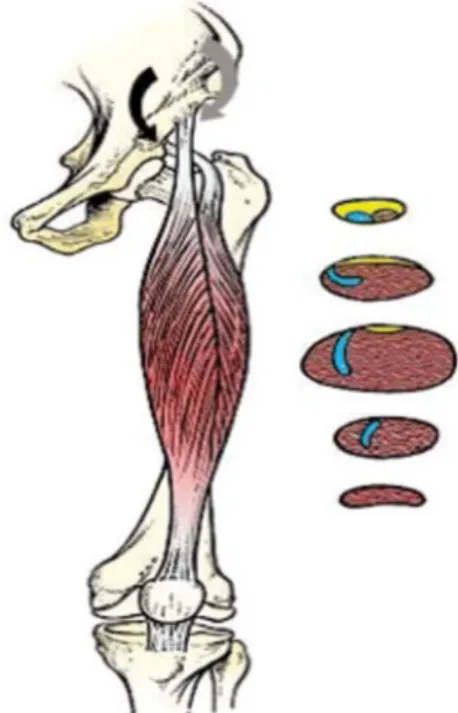
The study evaluated the effect of two types of nu-trition on patients muscle wasting which was measured by ultrasonography on the 1st, 3rd, and 7thday of their admission in ICU. The measurements were carried out by a single operator with a portable ultrasonograph Si-emens Acuson X 300 and transducer VF13-5 (Figure 1). To determine muscle wasting, the thickness of m. quadriceps femoris (m. vastus intermedius and m. rec-tus femoris) - was measured at a two precisely determi-ned points: the point between the lower third and the upper two-thirds of m. quadriceps femoris and the me-dian point between the spina illiaca anterior superior and the upper pole of the patella, with the patientin the supinated position and the leg relaxed in extension (Fi-gure 2).The mean value of the measurements at both points was calculated finally.
Biochemical analysis of serum creatinine concen-tration was performed on the 1st, 3rd, and 7thday of the admission in ICU.
Randomization was performed with closed enve-lopes, with number 1 for E group and number 2 for P group. The relatives of the patients were familiar with this research and they voluntarily signed a document for informational consent and took part in randomiza-tion.The research was prospective and randomized.
Statistical analysis
All data were presented as a mean value ± stan-dard deviation and analyzed with SPSS 12.0 software. The comparison between the groups was made with t test and the difference of p < 0.05 was considered stati-stically significant.
RESULTS
Ultrasound analysis
Analysis between the 1stand the 3rd, the 1stand the 7th, as well as the 3rdand the 7thday (Table 1) showed that in group E with enteral nutrition there is a statistically sig-nificant decrease in muscle mass between the 1stand the 3rdday (p = 0.015) and between the 1stand the 7thday (p = 0.006). The difference between the 3rdand the 7thday was near the border of statistical significance (p = 0.065).
Analysis between the 1stand the 3rd, the 1stand the 7th, as well as the 3rdand the 7thday in the group P with early parenteral nutrition in all cases showed a decrea-sed muscle mass but without statistical significance (Table 2). The greatest reduction in muscle mass was seen between the 1stand the 7thday (p = 0.070).
Serum creatinine analysis
Analysis of serum creatinine level measured in group E showed that there is a decreasing in the measu-Figure 2.Picture with anatomic presentation
of m. vastus intermedius and m. rectus femoris
Time intervals for Ultrasound measurements
Differences in Ultrasound measured muscle thickness (mm)
MV± SD Min - Max p value
1-3 day 1,81 ± 3,25 1,19 – 4,82 0,190
1-7 day 2,44 ± 2,94 0,27 – 5,16 0,070
3-7 day 0,63 ± 2,67 1,84 – 3,09 0,556
Table 2.Differences in muscle mass loss (mm) at different time intervals in group P with early parenteral nutrition measured by ultrasonography Time intervals for
Ultrasound measurements
Differences in Ultrasound measured muscle thickness (mm)
MV± SD Min - Max p value
1-3 day 1,90 ± 1,49 0,51 – 3,29 0,015
1-7 day 4,46 ± 2,81 1,86 – 7,06 0,006
3-7 day 2,56 ± 3,00 0,22 – 5,34 0,065
Table 1. Differences in muscle mass loss (mm) at different time intervals in group E with enteral nutrition measured by ultrasonography
Time intervals for serum creatinine measurements
Differences in serum creatinine measurements (mg/dl)
MV± SD Min - Max p value
1-3 day 7,57 ± 4,12 3,76 – 11,38 0,003
1-7 day 10,71 ± 5,79 5,35 – 16,07 0,003
3-7 day 3,14 ± 5,30 1,76 – 8,05 0,168
red values of serum creatinine concentration with stati-stical significant difference between the 1standthe 3rd(p = 0.003) andthe 1stand the 7th(p = 0.003) day (Table 3).
The analysis of serum creatinine level measured in group P showed that there is a decreasing in the measu-red values of serum creatinine concentration with statis-tical significant difference between the 1stand the 3rd(p = 0.03) and the 1stand the 7th(p = 0.003) day (Table 4).
DISCUSSION
In healthy persons, skeletal muscles are maintai-ned as a balance between protein synthesis and protein digestion. Any prolonged change in balance will result in increased or decreased muscle mass (17).
Negative nitrogen balance and loss of muscle mass in correlation with trauma was described for the first time in 1932. Trauma is a cascade of inflammatory, immune, endocrine, and metabolic changes and it causes catabo-lism characterized by loss of body weight, muscle mass and strength reduction, as a consequence of the dominant proteolysis in terms of protein synthesis. Critically ill pa-tients in the catabolic phase excreted 15 grams of nitro-gen in urine versus normal losses of 0.7 to 1.4 grams per day, which is 94 grams of muscle protein or daily loss of 0.47 kg muscle mass. It’s extremely severe muscle reduc-tion (18). That is why critically ill patients need nutrients either in the form of enteral or parenteral nutrition, in or-der to avoid the energy deficiency which can lead to pro-tein utilization and muscle tissue wasting (19). It is esti-mated that most patients in intensive care units receive only 49% to 70% of estimated caloric needs (20, 21). Alt-hough there is general agreement that excessive hypo-ca-loric or hyper-cahypo-ca-loric nutrition should be avoided, there is still no consensus on how much the daily needs should be (22). Except the right caloric intake nutrition must also obtain the right protein intake in order to prevent muscle mass wasting (23, 24, 25, 26). Although there are some investigations, the pathophysiology of muscle wasting and the influence of nutrition on muscle wasting is still not well known. Different studies present different results according to this pathology.
Puthucheary et al. (27) showed that the catabolic condition and rapid muscle wasting in the first week of
the critical illness may be independent of enteral nutri-tion. Using ultrasonography they determined 17% mus-cle mass wasting of rectus femoris musmus-cle in the first 7 days of hospitalization. Contrary to expectations, in the-ir study, high delivery of proteins through a nasogastric probe in the first week of a critical illness was associated with greater muscle wasting, thus challenging the idea that the beginning of enteral nutrition is beneficial. The criteria and timing of parenteral nutrition are also debat-able. The study from Ferrie et al. (28) showed that the patients who took parenteral nutrition with 1.2 g/kg/day proteins had less muscle wasting of rectus femoris mus-cle than those who took 0.8 g/kg/day. Opposite to this study the EPaNIC study did not find any benefit of early parenteral nutrition on muscle wasting in the first days of hospitalization. According to the study from Casaer et al. (29) the early parenteral nutrition is associated with inhibited autophagy and impaired muscle integrity. Tolerating the macronutrient deficiency in the first week reduces the risk of muscle wasting. Hermans et al.consi-dering the EPANIC study, concluded that the muscle wasting in patients with late parenteral nutrition group is slightly lower than in patients with early parenteral nu-trition (30). Opposite to him Doig et al. (31) found lower muscle wasting in the early parenteral nutrition group. In another large multicentre study in patients with relati-ve contraindication for enteral nutrition, the early appli-cation of parenteral nutrition reduced the duration of mechanical ventilation and potentially reduced the risk of muscle wasting (32, 33).
In our study, it was found that in Group E with pa-tients who received enteral nutrition after the third day, there was a progressive muscle mass wasting with a statistical significance between the first and the third (p = 0.015) and the first and the seventh (p = 0.006) day. In group P patients who began to receive parenteral nu-trition in the first 24 hours, did not show significant muscle mass wasting. Our results correlate with the re-sults of the Doig et al. who reported lower muscle wa-sting in the group with early parenteral nutrition versus the group with standard nutrition (31). In our study to determine muscle wasting, the thickness of m. quadri-ceps femoris (m. vastus intermedius and m. rectus fe-moris) was measured by ultrasonography. Measure-Table 4.Differences in serum creatinine concentration (mg/dl) at different time intervals
in group P with early parenteral nutrition
Time intervals for serum creatinine measurements
Differences in serum creatinine measurements (mg/dl)
MV± SD Min - Max p value
1-3 day 11,43 ± 10,66 1,57 – 21,29 0,030
1-7 day 15,28 ± 8,28 7,63 – 22,94 0,003
ment of muscle wasting by ultrasonography in patients in intensive care units is selected as a very practical one and at the same time the only possible solution compa-red to other techniques such as computed tomography, magnetic resonance, densitometry and others (34, 35, 36, 37). So far, different muscle measurements have been described to determine muscle mass wasting (38, 39, 40, 41). As in other studies, m. quadriceps femoris was used in our evaluation study as a muscle that is well described and easily visualized in conditions of impaired muscular architecture (36, 37).
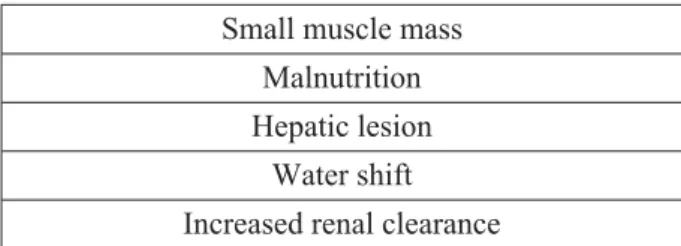
To determine muscle wasting we also measured the concentration of serum creatinine. The leading cau-se of low cau-serum creatinine concentration is low muscle mass (Table 5). The correlation between muscle mass and serum creatinine in one of the studies is r = 0.734 Š95% CI 0.656 to 0.797¹ and r = 0.706 Š95% CI 0.620; 0.774¹; with a significance (p = 0.0001). In other words, malnourished people with lower muscle mass have lower levels of serum creatinine (42). In our study, the values of serum creatinine in group E signifi-cantly decreased between the first and third day and between the first and the seventh day p = 0.003. The sa-me decrease in serum creatinine values occurred in the group P with statistical significance of (p = 0.03) bet-ween the first and the third day, and betbet-ween the first and the seventh day (p = 0.003).
CONCLUSION
From a brief review through the literature, it can be concluded that controversies about providing opti-mum energy, form of nutrition, and timing of initiation exist continuously, especially in the early phase of the critical illness. The nutritional strategy and goal should be personalized for individual patients. Muscles wast-ing measured with ultrasonography and serum creati-nine analysis, are indicators of malnutrition, but also conditions subjected to other influences. In our pilot
study, we determined a significant reduction in muscle mass in patients with relative contraindication of ente-ral nutrition and beginning of enteente-ral nutrition after the third day, versus patients with early beginning of pa-renteral nutrition where we came to the conclusion that there is a decrease in muscle mass, but without statisti-cal significance. Regarding the values of serum creati-nine in both groups, there was a significant decrease in values in the both groups. The series of patients inclu-ded in the study was small, and the reliability of the re-sults required an extension of the study.
DECLARATION OF INTEREST
The authors declare that there are no conflicts of interest.
Ethical approval
This study is the part of a doctoral study. The local institutional review board approved this study.
Abbreviations
ICU— Intensive care units CT— Computer tomography ISS— Injury Severity Score
Licensing
This work is licensed under a Creative Commons Attribution 4.0 International (CC BY 4.0) License.
Small muscle mass
Malnutrition
Hepatic lesion
Water shift
Increased renal clearance
Table 5.Factors affecting low serum creatinine levels
Sa`etak
UTICAJ ISHRANE NAGUBITAK MI[I]A KOD KRITI^NO
OBOLELIH PACIJENATA - PILOT STUDIJA
Andonovska Biljana,Andonovski Alan, Kuzmanovska Biljana, Kartalov Adrijan, Temelkovski Zlatko
University Clinic of Traumatology, Orthopedic Surgery, Anesthesiology, Intensive Care and Emergency Center – Intensive Care Unit – Skopje, Macedonia
Uvod: Adekvatna ishrana je neophodna kako bi se spre~io gubitak mi{i}a kod kriti~no obolelih pacije-nata. Odluka o enteralnoj ili parenteralnoj ishrani uvek je dovedena u pitanje.
Cilj:Cilj na{e studije bio je utvrditi uticaj ishrane na gubitak mi{i}a kod kriti~no obolelih pacijenata sa
REFERENCES
1. Herridge MS, Tansey CM, Matté A, Tomlinson G, Di-az-Granados N, Cooper A et al. Functional disability 5 years af-ter acute respiratory distress syndrome. N engl J Med. 2011; 364(14): 1293-304.
2. Iwashyna TJ, Ely EW, Smith DM, Langa KM. Long-term cognitive impairment and functional disability among survivors of severe sepsis. JAMA. 2010; 304(16): 1787-94.
3. Souba WW, Klimberg VS, Plumley DA, Salloum RM, Flynn TC, Bland KI et al. The role of glutamine in maintaining a healthy gut and supporting the metabolic response to injury and infection. J Surg Res. 1990; 48(4): 383-91.
4. Lacey JM, Wilmore DW. Is glutamine a conditionally essential amino acid? Nutr Rev. 1990; 48(8): 297-309.
5. Aziz M, Choudhary TJ, Shafiq M, Qureshi KH. Nutri-tion in surgical patients; role of partial parenteral nutritriNutri-tion and total parenteral nutrition in immediate post operative period. Professional Med J. 2017; 24(3): 441-4.
6. Marik PE, Pinsky M. Death by parenteral nutrition. In-tensive Care Med. 2003; 29(6): 867-9.
7. Weiman A, Adra J, Sablotzki A. Nutrition in the criti-cally ill. Dtsch Med Wochenschr. 2011; 136(44): 2251-62.
8. Prado CM, Heymsfeld SB. Lean tissue imaging: a new era for nutritional assessment and intervention. J Parenter Ente-ral Nutr. 2014; 38(8): 940-53.
9. Reid CL, Campbell IT, Little RA. Muscle wasting and energy balance in critical illness. Clin Nutr. 2004; 23(2): 273-80.
10. Parry SM, El-Ansary D, Cartwright MS, Sarwal A, Berney S, Koopman R et al. Ultrasonography in the intensive care setting can be used to detect changes in the quality and qu-antity of muscle and is related to muscle strength and function. J Crit Care. 2015; 30(5): 1151.e9-e14.
11. Tonelli M, Klarenbach SW, Lloyd AM, James MT, Bello AK, Manns BJ, et al. Higher estimated glomerular filtra-tion rates may be associated with increased risk of adverse out-comes, especially with concomitant proteinuria. Kidney inter-national. 2011; 80(12): 1306-14.
12. Puthucheary ZA, Rawal J, McPhail M, Connolly B, Ratnayake G, Chan P et al. Acute skeletal muscle wasting in cri-tical illness. JAMA. 2013; 310(15): 1591-600.
13. Andrews R, Greenhaff P, Curtis S, Perry A, Cowley AJ. The effect of dietary creatine supplementation on skeletal muscle metabolism in congestive heart failure. Eur Heart J. 1998; 19(4): 617-22.
14. Thongprayoon C, Cheungpasitporn W, Akhoundi A, Ahmed AH, Kashani KB. Actual versus ideal body weight for acute kidney injury diagnosis and classifcation in critically ill patients. BMC Nephrol. 2014; 15: 176.
15. Schutte JE, Longhurst JC, Gaffney FA, Bastian BC, Blomqvist CG. Total plasma creatinine: an accurate measure of total striated muscle mass. J Appl Physiol Respir Environ Exerc Physiol. 1981; 51(3): 762-6.
16. Palmer C. Major trauma and the injury severity sco-re-where should we set the bar. Annu Proc Assoc Adv Automot Med. 2007; 51: 13–29.
17. Morton RW, McGlory C, Phillips SM. Nutritional in-terventions to augment resistance training-induced skeletal mu-scle hypertrophy. Front Physiol. 2015; 6: 245.
18. Hoffer Lj, Bistrian BR: Appropriate protein provision in critical illness: a systematic and narrative review. Am J Clin Nutr. 2012; 96(3): 591–600.
19. Alberda C, Gramlich L, Jones N, Jeejeebhoy K, Day AG, Dhaliwal R, et al. The relationship between nutritional inta-ke and clinical outcomes in critically ill patients: Results of an international multicenter observational study. Intensive Care Med. 2009; 35(10): 1728–37.
20. Heyland DK, Schroter-Noppe D, Drover JW, Jain M, Ke-efe L, Dhaliwal R, et al. Nutrition support in the critical care set-ting: Current practice in Canadian ICUs—Opportunities for impro-vement?. JPEN J Parenter Enteral Nutr. 2003; 27(1): 74–83.
21. RiceTW, Swope T, Bozeman S, Wheeler AP. Variation in enteral nutrition delivery in mechanically ventilated patients. Nutrition. 2005; 21(7-8): 786–92.
22. Stapleton RD, Jones N, Heyland DK. Feeding criti-cally ill patients: What is the optimal amount of energy? Crit Ca-re Med. 2007; 35(9 suppl): S535–40.
23. Bellomo R, Cass A, Cole L, Finfer S, Gallagher M, Lee J, et al. Calorie intake and patient outcomes in severe acute kid-ney injury: Findings from the Randomized Evaluation of Nor-mal vs. Augmented Level of Replacement Therapy (RENAL) study trial. Crit Care. 2014; 18(2): R45.
24. Weijs PJ, Looijaard WG, Beishuizen A, Girbes AR, Oudemans-van Straaten HM. Early high protein intake is asso-su bili uklju~eni u studiju, bili asso-su podeljeni u dve
gru-pe: grupu E - sa pacijentima kod kojih je enteralna is-hrana sprovedena tre}eg dana nakon njihovog prijema u JIN i grupu P - sa pacijentima kod kojih je kompletna parenteralna ishrana sprovedena u prva 24 sata od pri-jema u JIN.
Studija je pratila uticaj dva razli~ita tipa ishrane na gubitak mi{i}ne mase evaluirane ultrazvu~nim me-renjem debljine m. quadriceps femorisa i biohemij-skim merenjem nivoa kreatinina u serumu.Rezultati: U grupi E je postojao statisti~ki zna~ajan gubitak mi-{i}ne mase procenjen ultrazvukom izme|u 1. i 3. i 1. i 7. dana. Razlika u debljini mi{i}a iznosila je 1,90 ± 1,49 mm izme|u 1. i 3. (p = 0,015) i 4,46 ± 2,81 mm
ciated with low mortality and energy overfeeding with high mortality in non-septic mechanically ventilated critically ill pa-tients. Crit Care. 2014; 18(6): 701.
25. Artinian V, Krayem H, DiGiovine B. Effects of early enteral feeding on the outcome of critically ill mechanically ventilated medical patients. Chest. 2006; 129(4): 960–7.
26. Harvey SE, Parrott F, Harrison DA, Bear DE, Segaran E, Beale R, Bellingan G et al. Trial of the route of early nutritio-nal support in critically ill adults.. N Engl J Med. 2014; 371(18): 1673–84.
27. Puthucheary ZA, Rawal J, McPhail M, Connolly B, Ratnayake G, Chan P et al. Acute skeletal muscle wasting in cri-tical illness. JAMA. 2013; 310(15): 1591–600.
28. Ferrie S, Allman-Farinelli M, Daley M, Smith K. Pro-tein requirements in the critically ill: a randomised controlled trial using parenteral nutrition. JPEN J Parenter Enteral Nutr. 2016; 40(6): 795-805.
29. Casaer M, Mesotten D, Hermans G, Wouters R, Schetz M, Meyfroidt G et al. Early versus late parenteral nutrition in critically Ill adults. N Engl J Med 2011; 365(6): 506-17.
30. Hermans G, Casaer MP, Clerckx B, Güiza F, Vanhulle-busch T, Derde S, et al. Effect of tolerating macronutrient deficit on the development of intensive-care unit acquired weakness: A subanalysis of the EPaNIC trial. Lancet Respir Med. 2013; 1(8): 621–9.
31. Doig GS, Simpson F, Sweetman EA, Finfer SR, Coo-per DJ, Heighes PT, et al. Early parenteral nutrition in critically ill patients with short-term relative contraindications to early enteral nutrition: A randomized controlled trial. JAMA. 2013; 309(20): 2130–8.
32. Preiser C, van Zanten AR, Berger MM, Biolo G, Casaer MP, Doig GS, et al. Metabolic and nutritional support of critically ill patients: Consensus and controversies. Crit Care. 2015; 19: 35.
33. Dellinger P, Levy MM, Rhodes A, Annane D, Gerlach H, Opal SM, Sevransky JE et al. Surviving sepsis campaign
gui-delines committee including The pediatric subgroup, surviving sepsis campaign: International guidelines for management of severe sepsis and septic shock, 2012.Intensive Care Med. 2013; 39(2): 165–228.
34. Manning EM, Shenkin A. Nutritional assessment in the critically ill. Crit Care Clin. 1995; 11(3): 603–34.
35. Chi-Fishman G, Hicks JE, Cintas HM, Sonies BC, Gerber LH. Ultrasound imaging distinguishes between normal and weak muscle. Arch Phys Med Rehabil. 2004; 85(6): 980–6.
36. Bleakney R, Maffulli N. Ultrasound changes to intra-muscular architecture of the quadriceps following intramedul-lary nailing. J Sports Med Phys Fitness. 2002; 42(1): 120–5.
37. Uremovic M, Pasic MB, Seric V, Solter VV, Budic R, Bosnjak B, et al. Ultrasound measurement of the volume of mu-sculus quadriceps after knee joint injury. Coll Antropol. 2004; 28 (Suppl 2): 227–33.
38. Abe T, Kawakami Y, Suzuki Y, Gunji A, Fukunaga T. Effects of 20 days bed rest on muscle morphology. J Gravit Physiol. 1997; 4(1): S10–4.
39. Ellis S, Kirby LC, Greenleaf JE. Lower extremity mus-cle thickness during 30-day 6 degrees head-down bed rest with isotonic and isokinetic exercise training. Aviat Space Environ Med. 1993; 64(11): 1011–5.
40. Ohata K, Tsuboyama T, Ichihashi N, Minami S. Mea-surement of muscle thickness as quantitative muscle evaluation for adults with severe cerebral palsy. Phys Ther. 2006; 86(9): 1231–9.
41. Akima H, Kawakami Y, Kubo K, Sekiguchi C, Ohshi-ma H, Miyamoto A, et al. Effect of short-duration spaceflight on thigh and leg muscle volume. Med Sci Sports Exerc. 2000; 32(10): 1743–7.
42. Park J, Mehrotra R, Rhee CM, Molnar MZ, Lukowsky LR, Patel SS et al. Serum creatinine level, a surrogate of muscle mass, predicts mortality in peritoneal dialysis patients. Nephrol Dial Transplant. 2013; 28(8): 2146-55.
Correspondence to/Autor za korespondenciju Biljana Andonovska
Tel: ++389 70 212 880