ORIGINAL RESEARCH ARTICLE
Contraceptive Use in Nigeria: Does Social Context Matter?
DOI: 10.29063/ajrh2020/v24i1.14
Dorothy N. Ononokpono
1*, Clifford O. Odimegwu
2and Nsidibe A. Usoro
1Department of Sociology and Anthropology,University of Uyo, Uyo,Nigeria1; Demography and Population Studies Programme, Schools of Public Health and Social Sciences, University of the Witwatersrand, Johannesburg, South Africa2
*For Correspondence: Email: [email protected]; Phone: +2348104277552
Abstract
Contraceptive use in Nigeria has remained low despite the efforts of government and non-governmental agencies to increase its uptake. Most studies on contraceptive use have focused on individual-level determinants and evidence is sparse on the influence of social or community context. This study examines the influences of contextual factors on modern contraceptive use in Nigeria. We used data from the 2013 Nigeria Demographic and Health Survey, and a sample of 12,186, currently married women aged 15-49 years. Multilevel logistic regression which provides a flexible modeling for hierarchical data was used to examine the effects of contextual factors on contraceptive use. Findings revealed considerable low usage of contraception across the regions of Nigeria. Living in high and moderate ethnically diverse communities and communities that have high proportion of educated women was significantly associated with increased usage. The findings provide useful information for policy makers to consider the social milieu in which women live for effective family planning interventions. (Afr J Reprod Health 2020; 24[1]: 133-142).
Keywords: Contraception, community, ethnic-diversity, multilevel, social milieu
Résumé
L'utilisation des contraceptifs au Nigéria reste toujours faible malgré les efforts du gouvernement et des agences non gouvernementales pour accroître son utilisation. La plupart des études sur l'utilisation des contraceptifs se sont concentrées sur les déterminants au niveau individuel et les preuves sont rares sur l'influence du contexte social ou communautaire. Cette étude examine les influences des facteurs contextuels sur l'utilisation des contraceptifs modernes au Nigéria. Nous avons utilisé les données de l'enquête démographique et de santé au Nigéria de 2013 et un échantillon de 12 186 femmes actuellement mariées âgées de 15 à 49 ans. Une régression logistique à plusieurs niveaux qui fournit une modélisation flexible des données hiérarchiques a été utilisée pour examiner les effets des facteurs contextuels sur l'utilisation des contraceptifs. Les résultats ont révélé une faible utilisation considérable de la contraception à travers les régions du Nigéria. Le fait de vivre dans des communautés ethniques qui sont hautement ou relativement diverses et ayant une forte proportion de femmes instruites, était significativement associé à une utilisation accrue. Les résultats fournissent des informations utiles aux décideurs politiques pour considérer le milieu social dans lequel les femmes vivent pour des interventions efficaces de planification familiale. (Afr J Reprod Health 2020; 24[1]: 133-142).
Mots-clés: Contraception, communauté, diversité ethnique, multiniveaux, milieu social
Introduction
Most countries in sub-Saharan Africa are characterized by high fertility, maternal and infant mortality which in most cases are due to poor contraceptive usage1. About 830 women die from pregnancy or childbirth-related complications around the world everyday1. In 2015, an estimated 303, 000 women died during pregnancy and
childbirth and most of these deaths occurred in developing countries2,3. With an estimated 59,000 maternal deaths annually, Nigeria accounts for about 10% of the world‘s maternal deaths4
.
globally are because of unsafe abortions related to poor contraceptive usage1. A systematic review of contraceptive practices in Nigeria showed that abortions account for 20%–40% of maternal deaths in the country6.
.
Notably, poor reproductive health situation is a good indicator of the current state of health care and family planning in any country7 and contraception is one of the recommended strategies to reduce unwanted pregnancy, unsafe abortion and consequent maternal mortality1. Unfortunately, in Nigeria - the most populous country in Africa, the rate of contraceptive use remains low8. An estimated 15 percent of married women in the country use contraception, and 16 percent reported unmet need for contraception9. A study in Nigeria observed a high rate of non-use of contraception in different zones of the country10. Lending support to this, in Edo state, South-South Nigeria, it was observed that out of 81 women that delivered within one year only 11.4 percent used contraception11. Furthermore, evidence from 2013 Nigeria Demographic and Health Survey report showed that contraceptive use among married women varied by region, ranging from about 2.7% and 3.6% in North East and North West respectively to 24.9% in South West9. Because of low contraceptive use in Nigeria, fertility rates have remained high. The current fertility rate in the country is estimated at 5.5 children per woman9. Despite concerted government efforts to increase contraceptive coverage and uptake, low contraceptive use remains a major reproductive health challenge in Nigeria. Several researchers however, have made considerable efforts to understand the factors driving this phenomenon. The finding of a previous study revealed that fertility norms, gender norms and inequalities, and health knowledge were significant predictors of contraceptive use in Africa12. Evidence from a study in Tanzania revealed that proximity to a private health facility, husband‘s willingness and positive support from sisters-in-law as well as mothers-in-law were significantly associated with contraceptive use13. Women‘s autonomy, female education, participation in labor market, Islamic religion and the role of partner were found to be strong predictors of contraceptive use14. Other
studies found that age, husband‘s objection and lack of cooperation were associated with non-use of modern contraceptives1,15.
Furthermore, studies in Kenya and Vietnam observed that high parity, sex of children, husband‘s education, urban and rural residence, and region of residence were strong predictors of contraceptive use16,17. Some studies in Nigeria revealed that women‘s low educational status, desire for more children, religious beliefs, and poor knowledge of available methods and husband‘s approval were major determinants of contraceptive use10,18,19. Limited availability, quality, cost of family planning services, lack of female autonomy and household poverty have been identified as key influences on contraceptive use6. Perceptions and spousal communication concerning family planning as well as exposure to family planning messages through the media have been found to increase the propensity to use contraception in Nigeria20,21.
While most of the previous studies have focused on individual and familial determinants, the influence of social context (community context) has received less attention22. However, the literature shows that individual decisions can also be influenced by community characteristics, thus knowledge of contraceptive behaviour based solely on individual characteristics is not sufficient to promote health behaviour change23. There is thus the need to examine more dynamic, collective and interactive elements of communities that may influence contraceptive usage. Similarly, other studies have emphasized the need to examine the influence of contextual factors and social environment on health behaviour24,25.
studies by examining the influence of contextual factors including ethnic diversity on contraceptive use in Nigeria.
Social contexts include neighborhood characteristics and community relationships that could influence individual health behaviour28,29. In sum, these are factors that could influence access and constitute barriers to health care and the ability to mobilize resources to meet an individual‘s health care needs. Burke and colleagues emphasized that understanding social context is very important for effective public health interventions aimed at changing health and contraceptive behaviour29.
Furthermore, Stokols‘ social ecological model of health promotion developed in 1996 established the influence of individual-level factors and environmental conditions on health behaviour30. Social environmental conditions such as community-level education, ethnic diversity, and region of residence and community poverty can influence a woman‘s use of contraception. Motivated by the debate on the influence of social context and guided by the theoretical frameworks reviewed, this study seeks to answer one important research question: To what extent do community contexts influence contraceptive use in Nigeria?.
Methods
Data from the Nigeria Demographic and Health Survey (NDHS) 2013 are utilized for this study. The 2013 NDHS obtained detailed information on contraceptive use for urban and rural areas of all the regions of the country. The survey also collected information women‘s demographic and socioeconomic characteristics. The 2013 NDHS was designed to provide population and health indicators at the national and state levels. The sample frame used in the survey was lists of enumeration areas (EAs) developed from the 2006 population census. The primary sampling unit (PSU), which is referred to as the cluster, was selected from the lists of EAs. The sample for 2013 NDHS was stratified sample selected in three stages. In the first stage, 893 localities were selected, while a total of 904 EAs was selected in the second stage. The third stage involved the
selection of a weighted probability sample of 40,680 households from both urban and rural areas. Details of the survey are provided elsewhere9. In the 2013 survey, a total sample of 38,522 women aged 15-49 was interviewed. Analysis was restricted to 12,186 currently married and fecund women aged 15-49. We excluded infecund and pregnant women from the analysis.
Community education is the proportion of women with secondary and higher education in the primary sampling unit (PSU). This measure was divided into tertiles and categorized as low, middle and high. Community poverty is the proportion of women who live in poor households in the PSU. The proportion was divided into three tertiles and categorized as low, medium and high. Ethnic diversity is defined as the proportion of women from different ethnic groups in the community (PSU). This measure was divided into three tertiles and categorized as low (ethnically homogeneous), medium (mixed) and high (heterogeneous). The community variables were constructed by aggregation of the individual variables.
The study employed bivariate and multi-level logistic regression analyses. Bivariate tabulations were used to identify distributions of the outcome variable by selected independent covariates. The relationship of the bivariate distributions was tested using chi square. Multi-level modeling was employed to examine the association between contraceptive use and the independent variables. Multi-level logistic regression was deemed appropriate because of the hierarchical nature of the DHS.
Three models were estimated. The first model (Model 1) is the null or empty model and contains no variables. It partitions the variance into two component parts. The second model (Model 2) examined the effects of the individual-level variables on modern contraceptive use. The third Model (Model 3) which is the final model contains both individual and community level variables and examined the effects of both individual and community factors including ethnic diversity on modern contraceptive use. We estimated fixed effects which are the measures of associations and were expressed as odds ratio (ORs) and p values. The random effects are measures of variation in modern contraceptive use and were expressed as intra-class correlation (ICC) and proportional change in variance (PVC).
Results
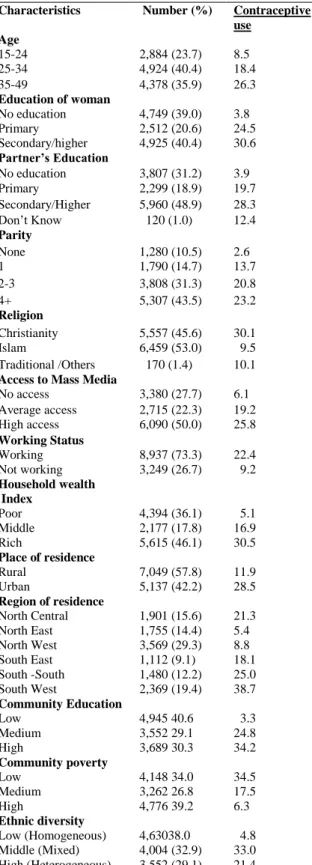
Table 1 presents the distribution of the study population by selected background characteristics
and contraceptive use. About 39% of the women had no education, 40.4% had secondary/ higher education, close to half (48.9%) of their partners had secondary/higher education and 31.2% were not educated. A considerable proportion (43.5%) had four or more children. While more than half (53%) of the women were Muslims, 45.6% were Christians. Half of the study population had access to mass media. Generally, the respondents were evenly distributed across wealth status and less than half (46.1%) were in the rich wealth quintile, whereas slightly over one third were in the poor wealth quintile. Close to one third resided in the North-West, while 15.6% and 14.4% resided in the North Central and North Eastern regions respectively. The lowest proportion lived in the South East (9.1%), and less than half of the women (40.6%) lived in communities that had low proportion of educated women. About one third of the women lived in high poverty and high ethnically diverse (heterogeneous) communities.
Table1: Percent distribution of currently married women age 15-49 who were fecund and using modern contraceptives by background characteristics, Nigeria 2013 DHS
Characteristics Number (%) Contraceptive use
Age
15-24 2,884 (23.7) 8.5
25-34 4,924 (40.4) 18.4
35-49 4,378 (35.9) 26.3
Education of woman
No education 4,749 (39.0) 3.8
Primary 2,512 (20.6) 24.5
Secondary/higher 4,925 (40.4) 30.6
Partner’s Education
No education 3,807 (31.2) 3.9
Primary 2,299 (18.9) 19.7
Secondary/Higher 5,960 (48.9) 28.3
Don‘t Know 120 (1.0) 12.4
Parity
None 1,280 (10.5) 2.6
1 1,790 (14.7) 13.7
2-3 3,808 (31.3) 20.8
4+ 5,307 (43.5) 23.2
Religion
Christianity 5,557 (45.6) 30.1
Islam 6,459 (53.0) 9.5
Traditional /Others 170 (1.4) 10.1
Access to Mass Media
No access 3,380 (27.7) 6.1
Average access 2,715 (22.3) 19.2
High access 6,090 (50.0) 25.8
Working Status
Working 8,937 (73.3) 22.4
Not working 3,249 (26.7) 9.2
Household wealth Index
Poor 4,394 (36.1) 5.1
Middle 2,177 (17.8) 16.9
Rich 5,615 (46.1) 30.5
Place of residence
Rural 7,049 (57.8) 11.9
Urban 5,137 (42.2) 28.5
Region of residence
North Central 1,901 (15.6) 21.3
North East 1,755 (14.4) 5.4
North West 3,569 (29.3) 8.8
South East 1,112 (9.1) 18.1
South -South 1,480 (12.2) 25.0
South West 2,369 (19.4) 38.7
Community Education
Low 4,945 40.6 3.3
Medium 3,552 29.1 24.8
High 3,689 30.3 34.2
Community poverty
Low 4,148 34.0 34.5
Medium 3,262 26.8 17.5
High 4,776 39.2 6.3
Ethnic diversity
Low (Homogeneous) 4,63038.0 4.8
Middle (Mixed) 4,004 (32.9) 33.0
High (Heterogeneous) 3,552 (29.1) 21.4
Multilevel analysis
Table 2 presents the multilevel analysis of the covariates of contraceptive use. We estimated 3 models to examine the effects of individual and community level covariates. Result in the null Model shows a significant variation in the likelihood of modern contraceptive usage across communities. This is indicated by intra-community correlation (ICC) of 67.7% which is variability in the outcome variable at the community level.
Model 2 included only the individual-level factors. The ICC of 33.4% and the proportional change in variance (PCV) of 76.1%, indicates that the clustering of contraceptive usage across communities could be attributed to individual characteristics. In other words, Individual-level factors were significantly associated with contraceptive use.
Table 2: Multilevel regression odds ratio of the effects of individual and community contextual factors on contraceptive use among married women in Nigeria, 2013 DHS
Characteristics Model 1
(Empty Model)
Model 2 Model 3
Odds ratio (95% CI) Odds ratio (95% CI)
Fixed effects Age
15-24 1 1
25-34 0.69 (0.49-0.97) * 0.63 (0.45-0.87) *
35-49 1.04 (0.72-1.51 0.86 (0.60-1.24)
Education of woman
No education 1 1.00
Primary 4.24 (2.69-6.68)*** 2.57 (1.71-3.87)***
Secondary/Higher 5.66 (3.41-9.41)*** 3.48 (2.20-5.51)***
Partner’s Education
No education 1 1
Primary 1.69 (1.13-2.54)** 1.36 (0.92-2.01)
Secondary/Higher 1.96 (1.31-2.93)*** 1.45 (0.99-2.12)*
Parity
None 1 1
1 10.62 (4.97-22.69)*** 8.66 (4.16-18.01)***
2-3 26.72 (11.17-63.9)*** 21.53 (9.18-50.44)***
4+ 57.82 (21.14-158.07)*** 49.28 (18.07-134.41)***
Religion
Christianity 1 1
Islam 0.40 (0.29-0.55) 0.51 (0.37-0.69)***
Traditional /Others 0.24 (0.08-0.72) 0.23 (0.08-0.67)*
Access to mass media
No access 1 1
Average access 1.68 (1.17-2.40)*** 1.56 (1.11-2.20)**
High access 2.01 (1.41-2.86)*** 1.68 (1.20-2.33)**
Working Status
Working 1 1
Not working 0.78 (0.60-1.03) 0.90 (0.69-1.17)
Household wealth index
Poor 1 1
Middle 2.77 (1.84-4.14)*** 1.79 (1.22-2.62)**
Rich 5.82 (3.51-9.63)*** 2.46 (1.55-3.90)***
Community variables Place of residence
Rural 1
Urban 1.15 (0.85-1.55)
Region of residence
North Central 1
North East 0.35 (0.21-0.58)***
North West 0.85 (0.48-1.48)
South East 0.36 (0.20-0.67)***
South -South 0.35 (0.23-0.56)***
South West 1.00 (0.67-1.48)
Community Education
Low 1
Middle 3.45 (2.09-5.67)***
High 3.65 (2.09-6.41)***
Community poverty
Low 1
Middle 0.84 (0.60-1.17)
Ethnic Diversity
Low (homogeneous) 1
Middle (Mixed) 4.02 (2.31-7.01)***
High (Heterogeneous) 3.15 (1.79-5.52)***
Random effects Empty Individual Community/Individual
Community level Variance (SE)
6.89 (1.44) *** 1.65 (0.39)*** 0.85(0.23)
ICC (%) 67.7 33.4 20.5
Explained variance (PCV in %) Reference 76.1 87.7
Log likelihood -5234.9225 -4709.5271 -4582.8088
Model fit statistics (AIC) 10475.84 9459.054 9229.618
The empty model does not contain any variable, SE = Standard error, VPC= Variance Partition Coefficient, PCV = Proportional Change in Variance, AIC=Akaike information criterion.
Significance level ***p<0.001 **p<0.01 *p<0.05
index showed that the poor women were less likely to use contraception relative to those from the rich (OR 5.82, CI 3.51-9.63) and middle (OR 2.77, CI 1.84-4.14) wealth quintiles.
Model 3 (final Model) incorporated both individual and community-level factors. Results revealed a statistically significant association between all the individual variables and contraceptive use. Interestingly, religion which was not significant in Model 2 became significant, while place of residence and community poverty were not statistically significant. Women‘s affiliation to Islam and traditional religion reduced the odds of using modern contraceptive by 49% and 77% respectively, compared with affiliation to Christian religion. Other community variables such as region of residence, community education and ethnic diversity were significantly associated with contraceptive use. Compared with the North Central region, all the regions of the country had significantly reduced odds of modern contraceptive usage. However, the likelihood of using modern contraceptive was 3.7 times and 3.5 times higher for women living in communities which had high and middle proportion of educated women respectively compared with women residing in communities where the proportion of educated women was low. Residing in high ethnically diverse (heterogeneous) communities (OR 3.15, CI 1.79-5.52 and communities with medium (mixed) (OR 4.02, CI 2.31-7.01) proportion of women from different ethnic groups increased the odds of modern contraceptive use.
In comparison to Model 2, the variation in contraceptive use between communities remained
significant in Model 3. The estimate of ICC at 20.5% and the 87.7% PCV across individual and community levels indicates that the variations in contraceptive usage could be explained by the individual and community-level contextual factors. However, 12.3% of the variations cannot be accounted for by the individual and community-level factors and thus could be attributed to unobserved factors. Overall, model 3 provides real improvement over model 2 due to the inclusion of the community-level factors, suggesting that community contexts (community-level factors) are important predictors of contraceptive use.
Discussion
women who had high and average access to mass media may be due to greater awareness of available family planning services which in turn may increase contraceptive usage.
The inverse significant relationship found between socio-economic factors (primary education and poor wealth status) supports a previous study that identified socio- economic status as an important factor influencing health behaviour as it shapes individual opportunities and resources over the life course33. Furthermore, given that contraceptive access and usage in Nigeria is mainly out-of-pocket-payment, there is need to improve female education and empower women in poor households to enable them increase access and usage of modern contraceptive.
Interestingly, variations in contraceptive usage were significantly explained by community characteristics. Results revealed huge low contraceptive usage across the various regions of Nigeria as observed by previous studies34,35,27. The low usage of contraception observed in this study reflects the persistent poor contraceptive behaviour of women in the country and could be attributed to unobserved neighbourhood characteristics. For instance, proximity to family planning facilities, norms, cultural practices, religious beliefs and cost of health care in the community which were not considered in this study due to limited data.
The finding also established higher likelihood of contraceptive use among women living in communities with high proportion of educated women which could be due to greater knowledge and awareness of available contraceptive methods in the community. Further, ethnic diversity was found to be significantly associated with contraceptive use. Compared with living in low ethnic diversity (homogeneous) communities, residing in ethnically medium (mixed) and diverse (heterogeneous) communities increased the likelihood of contraceptive usage. The plausible explanation could be that women living in ethnically diverse communities have the tendency to share cultural practices and traditions of other women regarding contraceptive use which in turn could have led to increased use of contraception36.
One of the limitations of this study is the use of cross sectional individual level data which does not allow for cause-effect relationships. The study used primary sampling units as proxy for community and this could lead to bias particularly where respondents are classified into wrong administrative boundaries37. Community data used in the study were generated by aggregating individual variables and we could not control for some important contextual variables including norms, cultural and religious practices because they were not available in the DHS dataset. These limitations notwithstanding, the study provides empirical evidence that information about social contexts or community-level contextual factors are important for a better understanding of contraceptive usage in Nigeria.
Conclusion
This study has demonstrated that social or community context is important in understanding contraceptive behaviour. Results highlight how contextual characteristics can influence a woman‘s likelihood of using modern contraceptive. Results established that region of residence; community-level education and ethnic diversity were significantly associated with contraceptive use. Community interventions aimed at increasing modern contraceptive usage in Nigeria should focus on empowering women educationally and economically, while considering the social milieu in which women live particularly ethnically homogeneous communities where contraceptive usage and coverage were considerably low.
Acknowledgments
The authors wish to thank Measure DHS and ICF International for permission to use the 2013 Nigeria DHS Data.
Contribution of Authors
References
1. Ali AAA, Rayis DA, Mamoun M and Adam I. Use of family planning methods in Kassala, Eastern Sudan. BMC Res Notes. 2011;4(1): 43-43. doi: 10.1186/1756-0500-4-43
2. World Health Organization. Maternal Mortality. Geneva, Switzerland: World Health Organization; 2016 3. Glasier A, Gülmezoglu A, Metin SGP, Moreno CG and
Look PFAV. Sexual and reproductive health: A matter of life and death. Lancet. 2006;368(9547):1595-1607. doi: 10.1016/50140-6736 (06)69478-6
4. Babalola S and Fatusi A. Determinants of use of maternal health services in Nigeria - looking beyond individual and household factors. BMC Pregnancy Childbirth. 2009;9: 43. doi: doi:10.1186/1471-2393-9-43
5. Okonofua F. Need to intensify safe motherhood interventions in Africa. Afr J Reprod Health. 2003;7(3):7-12.
6. Monjok E, Smesny A, Ekabua JE and Essien EJ. Contraceptive practices in Nigeria: Literature review and recommendation for future policy decisions. Open Access J Contracept. 2010;1: 9-22. 7. Bartfan GY. Emergency contraception in clinical
practice: Global perspective. Int. J. Gynaecol and Obstet. 2000;70:49-58.
8. Umoh AV and Abah MG. Contraception awareness and practice among antenatal attendees in Uyo, Nigeria. Pan Afr Med J. 2011; 10: 53
9. National Population Commission (NPC) and ICF International. Nigeria Demographic and Health Survey 2013. Abuja, Nigeria, and Rockville, Maryland, USA: NPC and ICF International; 2014 10. Oye-Adeniran BA, Adewole IF, Umoh AV, Oladokun
A, Gbadegesin A, Ekanem EE, Yusuf B, Odeyemi, KA, Iwere N and Mahmoud P. Community-based study of contraceptive behaviour in Nigeria. Afr J Reprod Health. 2006;10(2):90-104.
11. Osubor KM, Fatusi AO and Chiwuzie JC. Maternal health-seeking behavior and associated factors in a rural Nigerian community. Matern Child Health J. 2006; 10(2):159-169. doi: 10.1007/s10995-005-0037-z
12. Elfstrom KM and Stephenson R. The role of place in shaping contraceptive use among women in Africa. PLoS One. 2012;7(7): e40670. https://doi.org/10.1371/journal.pone.0040670 13. Irani LL, Speizer II and Barrington C. Attitudes and
cultural norms around contraceptive use among young adults of urban Dar es Salaam, Tanzania. Paper presented at the Population Association of America Annual Meeting, Washington D.C; 2011. 14. Giusti C and Vignoli D. Determinants of contraceptive
use in Egypt: A multilevel approach. Stat. Method. Appl. 2006;15(1): 89-106. doi: 10.1007/s10260-006-0010-z
15. Chacko E. Women‘s use of contraception in rural India: a village-level study. Health Place. 2001; 7:197-208.
16. Njogu W. Trends and determinants of contraceptive use in Kenya. Demography. 1991;28(1): 83-99. doi: 10.2307/2061337
17. Dang, Anh. 1995. Differentials in contraceptive use and method choice in Vietnam. Int. Fam Plan Perspect. 1995; 21(1): 2-5.
18. Sule ST, Umar HS and Madugu NH. Knowledge and use of modern contraception among Muslim women in Zaria, Nigeria. J Indian Med Assoc. 2006;38(1): 10-16.
19. Moronkola OA. Ojediran MM and Amosu A.
Reproductive health knowledge, beliefs and determinants of contraceptives use among women attending family planning clinics in Ibadan, Nigeria. Afri Health Sci. 2006;6(3), 155-159.
20. Odimegwu CO. 1999. "Family planning attitudes and use in Nigeria: A factor analysis". Int Fam Plan Perspect. 1999;25(2):86-91.
21. Okezie CA, Ogbe AO and Okezie CR. . Socio-economic determinants of contraceptive use among rural women in Ikwuano Local Government Area of Abia State, Nigeria. Int NGO J. 2010;5(4):74-77. 22. Stephenson R and Tsui AO. Contextual influences on
reproductive health service use in Uttar Pradesh, India". Stud Fam Plan. 2002;33(4):309-320. doi: 10.1111/j.1728-4465.2002.00309.x
23. Mackian S. 2003. "A review of health seeking behaviour: problems and prospect" Working paper 5. Manchester: University of Manchester; 2003 24. Stokols D. Translating social ecological theory into
guidelines for community health promotion. Am J Health Promot. 199610(4):282-298.
25. Williamson D. Health behaviours and health: evidence that the relationship is not conditional on income adequacy. Soc Sci Med. 2000;51:1741-1754. 26. Aremu O. The influence of socioeconomic status on
women‘s preferences for modern contraceptive providers in Nigeria: a multilevel choice modeling. Patient Prefer Adherence. 2013; 2013(7):1213-1220. doi https://doi.org/10.2147/PPA.S51852 27. Ejembi CL, Dahiru T and Aliyu AA. Contextual factors
influencing modern contraceptive use in Nigeria. DHS Working Papers No. 120. Rockville, Maryland, USA: ICF International; 2015.
28. Earle L and Earle T. Social context theory. South Pac J Psychol. 1999;11(2):1-12.
29. Burke NJ, Joseph G, Pasick RJ and Barker JC.
Theorizing social context: Rethinking behavioral theory. Health Educ Behav. 2009;36(5Suppl):55S-70S. doi: 10.1177/1090198109335338.
30. Rutstein SO and Johnson K. The DHS Wealth Index. The DHS Wealth Index DHS comparative report. Calverton, Maryland USA: United States Agency for International Development; 2004.
care and supervised deliveries in Nigeria. Health Place. 2011;17(2):480-489. doi: 10.1016/j.healthplace.2010.12.003
32. Uthman OA and Kongnyu EJ. A multilevel analysis of effect of neighbourhood and individual wealth status on sexual behaviour among women: evidence from Nigeria 2003 Demographic and Health Survey. BMC Int Health Hum Rights. 2008;8:9. https://doi.org/10.1186/1472-698X-8-9
33. Adebayo SB, Gayawan E, Ujuju C and Ankomah A. Modeling geographical variation and determinants of use of modern family planning methods among women of reproductive age in Nigeria. J Biosoc Sci. 2012;45:57–77.
34. Ononokpono DN, Odimegwu CO, Adedini SA and Imasiku ENS. Ethnic Diversity and Maternal Health Care in Nigeria. Women’s Reprod Health, 2016;3(1): 45–59
35. Stephenson R, Baschieri A, Clements S, Hennink M and Madise N. Contextual influences on modern contraceptive use in sub-Saharan Africa. Am J Public Health. 2007;97(7), 1233–1240. doi: 10.2105/AJPH.2005.071522)