spring 2011, volume 5, issue 1, art. #11050102, pp. 19-39
•Correspondence: Alexander Deweppe, Institute of Psychoacoustics and Electronic Music, Department of Arts-, Music- and Theatersciences, Faculty of Arts and Philosophy, Ghent University; tel: +32 9 264 41 26, fax: +32 9 264 41 43, e-mail: [email protected]
• Received: 13 October 2010; Revised: 6 June 2011; Accepted: 22 June 2011 • Available online: 30 July 2011
• doi: 10.4407/jims.2011.07.002
A methodological framework for the development and
evaluation of user-centered art installations
Alexander Deweppe, Nuno Diniz, Pieter Coussement and Marc Leman
Institute for Psychoacoustics and Electronic Music, Department of Arts-, Music- and Theatersciences, Faculty of Arts and Philosophy, Ghent University
Background in New Media Sound Art.Immersive art installations can employ technologies that capture movement to control sound manipulation. Intuitive natural mediation between the human body and an immersive environment is key to connecting underlying cognitive processes and sonic environments. Motion capture systems can support, extend and improve natural ways of interacting with musical content. This embodiment aims at meaningfully harnessing and exploiting the relation between body and sound in responsive or interactive music applications.
Background in Computer Science. The technological requirements for new media art installations can be met with hardware that registers relevant corporeal articulations to activate sonic content, and with flexible software to support it. In interactive art, issues like input device selection, beneficial mapping strategies, distributed processing and relevant properties for embodied music mediation technologies can be investigated and modularized efficiently.
Aims. The goal was to develop a user-oriented design methodology that allows for the extraction, implementation and evaluation of action-reaction couplings in the context of installation art.
Main contribution. A user-oriented methodology was developed to evaluate early prototypes of interactive art installations. This methodology is linked with the paradigm of embodied music cognition, currently a pivotal topic in systematic musicology. Our contribution lays a foundation for the development of a modular user-oriented design and development method, envisioning meaningful interaction in new media sound art and computer science. This method holds the promise of improving the design and development cycle of interface installations that operate on the borderline of new media sound art and computer science. We show that the field of systematic musicology provides a natural bridge between these two areas. Consequently, a number of principles from human-computer interaction (HCI) and usability studies were applied throughout different development stages to improve ergonomics and evaluate the technology’s applicability, relevance, functionality and intelligibility, thus guiding future developers towards a better understanding of user-to-system-communication and action-to-sound-coupling-strategies within immersive, interactive environments.
Implications. The proposed method provides an elementary but effective strategy to evaluate sonic and visual action-reaction-couplings and advances the field of new media sound art and computer science. The interdisciplinary and user-oriented development strategy we employ improves the quality and quantity of conceivable embodied music mediation applications. It entails progress in the interactivity of individual and collaborative gesture-based music controllers, and is indispensable to eventually achieving ecological validity and the cultural implementation of these types of music mediation technologies.
Keywords: embodied music cognition, HCI, software framework development, new media sound art, interactive art installations.
1. Introduction
Over the last few decades, new and fascinating technologies based on bio-sensors, motion sensors, motion tracking systems, etc. have been developed, which allow non-traditional, gestural ways for interacting with musical content. These technologies have been used in academic music research as well as in the cultural and creative industry, where they have become very popular in entertainment and gaming (cf. Wii, Kinect). However, in the music sector, the use of these gestural technologies is not widespread, notwithstanding a number of notable exceptions, e.g. Björk performing with the ‘ReacTable’ (Jorda et al., 2007), Richie Hawtin’s alter ego ‘Plastikman’ and the ‘SYNK’ application, or Praga Kahn, performing with the ‘Xsense’ on their Frame by Frame tour.
Clearly, in order for these state-of-the-art technologies to function effectively within the music sector, new research is required that combines views from both new media art and computer engineering. The international music research community on sound and music computing (S2S2 roadmap, 2007) aims at working – by means of proactive research – towards the integration of these technologies within the different domains of the cultural economy and the cultural-creative sector (http://www.keanet.eu/en/ecoculturepage.html). It has been argued that systematic musicology may provide a common ground as a basis for this type of research (Parncutt, 2007; Leman, 2008a).
Therefore, we investigate what shortcomings and requirements can be reported from new media art on the one hand and from computer science on the other, in order to develop a methodology that integrates user-testing with technological development. This approach can indicate how progress might be made in the development of a framework that enables this type of testing.
In view of the goal outlined above, this paper describes the genesis of an interdisciplinary project situated in the nexus between the arts, musicology and computer engineering. The paper presents a user-oriented methodology, extracted and developed through a number of different experiments from both research fields that finally led to ‘Soundfield’, an audiovisual platform for social interaction.
First, the theories that underpin the user-oriented methodology as well as the artistic view that inspired it are presented. Second, a section follows that advocates the artistic context, states the requirements for the application of the technologies, and briefly discusses the necessary and available evaluation techniques. Third, we discuss the different stages in the design (and evaluation) process and how different requirements were met. And fourth, the prototype version of the audiovisual platform is discussed and some preliminary conclusions pertaining to the future development of this user-tailored immersive augmented reality environment are offered.
2. Theoretical background
Technological advance is one of the motors that drive the evolution of culture and cultural artifacts (Pacey, 1983). As music is not an exception to this, new and innovative technologies have usually been eagerly embraced by musicians and music-related industries (Théberge, 1997). Moreover, the pace, scale and manner in which this is happening today is unprecedented and the incorporation of sensor-based technologies have opened up new ways of interacting with music. The last few decades have seen an exponential rise in the number of new interfaces that support unconventional types of interaction (Lähdeoja et al., 2010). Furthermore, embodied music cognition has been proposed as a research paradigm for gestural music technologies (Leman, 2008b). In this theory, the body is seen as the natural go-between for musical experiences and the physical environment. The paradigm implies, for example, that during the encoding and decoding of musical information, the technology should allow the body to function as a mediator in its own right, without re-directing the energy of the human motor system onto an instrument that only allows a fixed mode of musical interaction (Miranda & Wanderley, 2006). The study and exploration of an embodied way of interacting with musical content and the flexible relationship between musical experience and physical environment that these devices convey have become an important topic in music research over the last decades. The use of new technologies means that musically relevant action strategies are not fixed, allowing mediation devices to function as a natural extension of the human body. As a consequence, the guidelines for proper tool/instrument operation become heavily subject-dependent and limited only by the constraints of the human body (Godoy, 2004). In this respect, the new technologies severely put the imagination of new instrument designers to the test as they do not only bring about great freedom but also great challenges and uncertainty (Miranda & Wanderley, 2006). Given this context, embodied music cognition research has focused on the shift from perception to action, as the act of music making (i.e. the musical gesture) is considered equally important as the produced and the perceived music itself (Godoy & Leman, 2010).
2.1. The body as a mediator
In the paradigm of embodied music cognition, the body is seen as a natural mediator between musical experiences and the environment. Technological mediators are seen as extensions of the human body, and thus as prostheses that may increase the operational range of the human body. One of the goals of the mediation technology is to achieve the illusion of non-mediation, in which the subject views the mediation technology (traditionally the musical instrument) as being part of their own body. Accordingly, together with the technological mediator, the (human) body can be considered the instrument that expands the musical experience within a technologically extended environment. It is an aspiration of both the scientific community and the cultural-creative sector to allow the embodied mind to express its musical intentions through these new technologies for interactive sound creation. The
goal is to build an embodied music controller that is unhindered and unbound by the fixed interaction principles that are often prescribed by traditional interfaces. This human-machine interaction paradigm (Godoy & Leman, 2010) is based on the idea that action and perception are tightly coupled and embedded within sonic action-reaction-cycles (Leman, 2008b) that are linked with a repertoire of gestures and actions (referred to as human action-oriented ontology and affordances; Gibson, 1977). Closing the semantic gap, i.e. the discrepancy between the users’ high level cognitive representations and the low level measurable attributes in music (Leman, 2008b), can only be achieved by finding the appropriate correlations between corporeal articulations (gestures) and moving sonic forms (music).
The musical communication process that results from these technologies ideally occurs between multiple participants and within an interactive environment in which social and musical interactions can take place. Within a supportive, engaging and communicative environment, which is not merely a catalyst for communication, an interactive augmented reality environment can take on the role of social agent (Leman, 2008b). Theoretically, this opens up a whole range of possibilities for new and meaningful musical interactions, as well as opportunities for social interactions. This is because the participants of the social and musical communication process are no longer tied to stationary control or interface devices. However, this also raises a range of new questions (preferably not answered solely by its designers), as the technologies involve the prospective technology-users in decision-making processes such as mapping, sonification and social interaction strategies.
2.2. A user-inspired development strategy
The need for user-involvement stems from the fact that new gesture-based technologies have a high degree of flexibility and adaptability. If, on the one hand, it makes these technologies more versatile compared to more traditional musical instruments, the high degree of variability regarding possible manipulation strategies makes the connection with human body movement less straightforward. Since, independently of the interface that is used, mappings can be based on interaction patterns that are considered musically meaningful by users, the operation of these tools may be interpretable by any user.
Furthermore, the paradigm of embodied music cognition assumes that everyone can make use of the same natural mediator, i.e. the human body. As a result, developers aim to employ gestures that bear an obvious connection to musical features and that are universally understandable, regardless of cultural background, and use them as the controls of an interactive music tool that ideally can be operated by most users. However, what constitutes musically meaningful interactions is not a fixed principle and may be considered to depend both on the corporeality of the individual user and their cultural background. This highlights the need for prospective users to be systematically consultated to evaluate and assess their involvement with these tools, during the development, testing and ultimately usage. User-inspired implementation strategies aim at testing various aspects of tools and frameworks should be used to
ensure the success of user-group-inspired and user-approved music mediation systems. Moreover, this is the only approach that may result in a viable set of scenarios or conventions for applying movement to the sculpting of sound. Through this user involvement, interactive applications can be made sufficiently malleable to accommodate a wide range of different users, not so as to fit possible marketing strategies, but to meet the requirements of various types of music performance. In this respect, the involvement of prospective users offers a new ad hoc perspective on culture-creation, inspired by a natural way of moving, linked as closely as possible to the innate human properties.
2.3. Artistic proposal
Art has traditionally been used as an instrument for communication by employing the ‘laws’ of aesthetics and iconography that are understood by the culture in which the art production is embedded. Since the advent of conceptual art, the cultural norms of iconography and aesthetics have become broader - at times blurred - and art creation has in some instances become more intuitive, a less culturally constrained practice. It may be argued that because of this, the nature of art has become more open-ended (Sabbe, 1989). Nevertheless, this shift from art as a defined way of communication towards open expression has often resulted into an ever-increasing illegibility. This incomprehensibility can be considered itself an obstacle, yet in combination with (hard to use) interfaces, such as the ones currently employed in new media art, it becomes very problematic, especially for interactive art where the participation of the audience is key to defining the meaning of the art-piece (Manovich, 2001). Therefore, the goal of introducing an embodied foundation for making new media art is to instigate meaningful interaction, as well as to provide the content, the intention behind it and the function of the art-piece (Coussement et al., 2010). New technologies based on gestural devices that are connected with the human body can be developed; with a user-centered design strategy, media art is regarded as the enabler of this methodology.
3. Requirements and criteria for user-centered development,
implementation and evaluation of new media arts.
The following presents an approach for the development of a gesture-based media art application in collaboration with users. First, we discuss why we believe that the development of this technology within a real life artistic environment has an advantage over solely lab-based technologies. Second, we discuss a number of functional requirements that need to be met in the development of systems that use embodied music mediation technologies. Third, we offer an overview of a number of applicable evaluation methods.
3.1. Art as an ecological testbed for research
In a laboratory context, experiments are designed to limit the number of variables in play. This allows for the systematic exclusion of confounding factors and generally makes data analysis more straightforward and the results more compelling. However, a laboratory setup often presents circumstances that are rather detached from real-life, which can make the experience unnatural for the participants, especially when dealing with interactive technologies. Consequently, although suited to research purposes such as prototype evaluation, experiments conducted in a lab-context do not convey the same information as tests done in more everyday cultural settings. As a result, there is a need to achieve a balance between the accuracy of hypotheses testing in experiments and the naturalness of the experience and situation.
Science, especially cognitive science and research on computer and human-robot interaction, uses interactive art as a testbed in order to study action, perception, and cognition (Seifert, 2008). In addition, new media exhibitions and (interactive) art can enable user-oriented research, serving as a valid and a genuine context in which to conduct user-oriented tests. The contextual, iconographic and aesthetic aspects of the art piece can guide the user with respect to the purpose of the experiment, without limiting the overall experience. Consequently, to meet the functional needs of a given artistic context and assess an artistic purpose of the technology, we advocate that experiments with slightly more advanced setups should be conducted in the cultural sector. New media festivals (e.g. Ars Electronica, Transmediale) form an excellent ecological testbed for this type of research.
3.2. Design guidelines and functional requirements
For the iterative design process of the mediation technology to be successfully implemented, a setup was developed that used interrelated modular components to accommodate different implementation strategies in a flexible way. These components were 1) device-related, 2) user-related and 3) feedback-related, following Blaine and Fels (2003).
3.2.1. Device-related elements
The device-related elements influence the design choices that need to be made in the early stages and throughout the development process. These elements consist of: (i) the choice for interface type(s) and the interface interaction, i.e. what sensors are used and how they can actively or passively be controlled; (ii) the location and context, i.e. whether the application is, for example, presented as a secure and immersive environment or in a more public context; (iii) the scalability of the used technology; i.e. the flexibility in the actual size and number of possible participants within a given application.
3.2.2. User-related aspects
User-related aspects can be associated with: (iv) the objective and focus of the application, i.e. the goal and the implementation strategy; (v) the level of expertise that will be required, i.e. balancing skills and challenges to prevent either boredom or frustration; (vi) the required level of physicality, i.e. the amount of movement required to effect change between users and between user and interface; (vii) the user interaction, i.e. the level of social interaction the application allows or assumes. These considerations and choices have a profound influence on all stages of the development; early in the development process they can be used to assess the goal, whereas in later stages, when the device's basic operation has been decided upon, other purposes or interactions may completely alter and improve the nature of a given tool.
3.2.3. Feedback-related considerations
Feedback-related considerations are always related to, and take shape as a direct consequence of the choices made in connection with the user-related aspects of the development. These considerations involve: (viii) the used media, i.e. visual and/or sonic feedback; (ix) the controllable musical range, which is generally closely related to the maximum number of participants, the level of control, and based on the users’ ability to discern their proper input in relation to what is presented in terms of feedback.
Changing the parameters or properties of any of these components almost always has repercussions for the other elements. This is the reason why, during the first stages of the development process, the design is kept relatively open and generic. Over the course of the design process the features become more specific, increasingly well-defined and inevitably more fixed. However, modularized components allows changes to be made to a setup, while keeping elements that proved to be succesful. In parallel with these considerations, Ulyate & Bianciardi (2002) proposed a number of complementary design guidelines to be upheld in the development process of music mediation tools. In these guidelines, a distinction can be made between the interaction parameters and the (re)presentation parameters. First, concerning interaction parameters, any given application should have a simple and entertaining manipulation strategy, as well as a self-explanatory mapping strategy. Second, where decisions concerning the aspects of (re)presentation are to be made, the rule of thumb is that responsiveness is more important than resolution. Furthermore, the application should offer an immediate and continuous reward, and finally, it is imperative for a functional application to render an identifiable and aesthetically coherent response. So far, the described steps focus on keeping the design of an application and its contents as open for as long as possible. However, at a certain point in the development, well-informed decisions concerning the concrete execution of a certain design will become inevitable. When a setup materializes into an actual
implementation, a number of usability inspection methods can be applied to help define and evaluate the specific functions of the given application, whether the purpose be educational, therapeutic, compositional, choreographic, etc. In this respect, the methods are not solely used to enhance the ergonomics of a system, but are of vital importance to help define the objective of that interface. As previously mentioned, the strength of music mediation devices that rely on the theory of embodiment is their flexibility and openness. This in turn can be considered a weakness when it comes to goal assessment of these devices. User-involvement is therefore vitally important when it comes to defining purpose, which improves the well-informed implementation of the technology.
3.3 Evaluation techniques from human-computer interaction applied to systematic musicology
The incorporation of new technologies that depart from a more traditional approach to instrument building, art production and perception implies the creation of devices that can adapt to user-specific goals, needs and aspirations. To test, examine and evaluate the operation of tools using embodied mediation technologies, usability testing methods adopted from human-computer-interaction studies can provide an important contribution to the field of music research, as they improve and accelerate the development process of embodied music mediation tools (Stowell et al., 2008). The incorporation of these usability methods into systematic music research is a valuable contribution to the field for a number of reasons. The first reason is that the incorporation of use-cases by test-persons (as well as real-life users in realistic settings) is imperative in order to make developmental progress. That induces the need to evaluate these tools and their operation. Since human-computer-interaction studies are by default user-centered and include a number of efficient and cost-effective methods that allow for advances to be made in the overall usability of these tools, it is recommended that these techniques be used to develop systematic musicology.
The second reason is that a considerable number of developments in systematic musicology are determined by computer-mediated relationships between user and sound. Therefore, usability-studies can provide suitable strategies for development. The active participation of users in the development process is indispensable to make well-informed and acceptable design-decisions (e.g. What sound should be induced by what corporeal articulation, What movement is befitting to what sound, etc.). The third reason is that, even though human-computer interaction can be considered a fairly new aspect of systematic musicology research, to an extent certain elements are already in practice. Consequently, usability evaluations should be performed in a more systematic way and existing methods need to be improved and adapted to this specific research field in order to extend the scope of individual case studies (Kiefer, et al. 2008). Therefore, through application and standardization, research will stimulate progress and effectively give rise to new ideas for implementing better evaluation methods.
Next we present a selection of the methods that are applicable to the domain of music mediation technology based on the paradigm of embodiment. The combination of different elements, techniques and methods described here creates the opportunity to fully apply user-feedback in the prototyping and evaluation of various tools. A first set of methods can be described as “usability inspection methods” (Nielssen, 1994), which are commonly applied in this stage of development. These inspection methods are comprised of ‘cognitive walkthrough’ (Seago, 2004), heuristic (Mankoff et al., 2003) and task evaluation (Sutcliffe & Gault, 2004), interaction (Borchers, 2001; Barrass, 2008) and participatory design (Kensing, 1998; Caroll & Rosson, 2007), and so on. Usability inspection methods are a group of evaluation techniques that allows interfaces to be quick assessed by examining the features and proposed operation. This assessment would normally be based on past experiences, psychological principles, or a set of predefined operational guidelines. In the case of music tools, these methods have their use prior to or in addition to actual testing with users, accompanied by other (more empirical) evaluation methods. These more empirical methods consist of “user-inspection methods” and “user-experience evaluation methods”. The user inspection methods are applicable before and during early design stages and are intended to investigate the prospective and intended users of a new technology (Ijsselsteijn et al., 2007). They apply a number of qualitative approaches that generally precede the actual use-case-testing, which are normally made using focus group sessions, interviews and pre-interaction questionnaires (de Kort et al., 2007) that establish user-profiles. More empirical user-experience evaluation methods are used to investigate the interaction of test-subjects and (prospective) users with an application that implements embodied music cognition principles. These methods (Strickler, 1999) generally apply qualitative approaches such as questionnaires and interviews immediately after tool-interaction, and reassess the technology based on the user-inspection methods available. As such, they make an indispensable addition to the quantitative data provided by the used sensor or motion capture technologies. This overview is not an exhaustive list of human-computer-interaction evaluation methods; however, these methods are already in use or readily applicable to this field of music research. Since music application development strongly resembles mainstream HCI-research, it is quite natural that techniques from the field of HCI and usability research are being developed, borrowed, customized and made available for this specific purpose (Wanderley & Orio, 2002).
To summarize, the development of new technologies that yield corporeal control over music is an integral part of interdisciplinary and systematic musicology. The development of these technologies greatly benefit from the feedback that users provide. To a large extent, some of the discussed methods are still application-specific. It is a challenge to formalize and systematize user-oriented research in such a way that the findings can improve and contribute to ongoing research.
4. User-driven development: an illustration
The considerations discussed above and evaluation techniques for gesture-based technologies for media art, as well as the necessity of a more user-inspired development process for embodied music mediation technologies, have instigated the adoption of a far-reaching user-oriented approach for the development of embodied mediation technologies. In what follows, we present an overview of different steps that led to this approach.
First, we describe a number of earlier use-cases and installations that highlight the issues at hand. They provided the groundwork for the interactive platform and the foundations of our profoundly user-oriented methodology, which finally led to the technological development for an interactive installation, called SoundField.
4.1. Early Use cases
Some preliminary user-tests were done in the context of a number of small applications, called “Beat it” and “Dance2 the music”. The first application presented three participants with music tracks when correctly entraining and attuning the intensity of their movements with each other. The second allowed four participants to simultaneously control a number of musical parameters of prerecorded tracks. However, the results of the movement analysis were inconclusive and during post interaction interviews, a large number of test-subjects reported that over the course of the game they either became confused, bored or frustrated with the applications. This aptly demonstrated the need for more user-involvement in the development.
The first serious attempt to make a more systematic user-experience evaluation of an application under development was made during multiple experimental and demonstration sessions of a collaborative music game, namely the ‘Sync-in-Team’ game (Leman et al., 2009). In Deweppe et al. (2009), we explored how prospective users could and wanted to use the technology, how well they experienced control and what they liked and didn’t like about the prototype. Within the setup, we aspired (1) to evaluate the properties and qualities of the existing game, (2) to gain insight in the shortcomings participants felt the setup had, and (3) to gather feedback on changes and additions that should be made. Finally, we wanted to establish how well feedback regarding the application could be recorded and applied for further development. Using a selection of heuristics adapted from the heuristic evaluation and interaction design method, some initial problems with the tool’s operation (relating to the algorithms, hardware and visualizations) could be located and remedied. Also, initial inquiries were made that dealt with the properties of different input devices in order to establish the best use of this technology.
After the initial design and evaluation stage, further usability testing was done in combination with actual participant-testing of the application. A first set of tests was done in the lab, after which the game was presented to the general public during three events. The users’ interaction was recorded on video and after playing the game a
random selection of people that had interacted with the game-prototype were interviewed. The interviews consisted of a pre-established set of questions that were presented after the game to the contestants in a semi-structured way. The topics that were addressed in this investigation related to the users’ experience of affordance, usability and game enjoyment (Ijsselsteijn et al., 2008). The interview investigated how transparent the objective of the game was to the participants and how successful their used strategy was. Furthermore, the participants were tested on how well they understood set tasks, assessed strategies and goals, and how easily they could achieve them. The participants were also asked questions to probe the level of concentration required to perform the task, the level of control they experienced, and to evaluate the musical and visual features of the game, both aesthetically and functionally. Some follow-up questions dealt with the creativity, focusing on the representation, gaming strategies, making and correcting of mistakes, the amount of challenge that was experienced, and the gratification (or frustration) they felt after playing the game. Finally the respondents were asked to make recommendations for changes or additions to make the game more appealing. To improve the affordance and usability of the application, an interface evaluation test was performed with three different input devices during the public events, where the application was shown to establish what interface had the best properties and yielded the best control.
The user-experience evaluation of the prototype was an apt means to address flaws and strengths in the design, all of them pointed out by users, as users were given an active role in the design process. The improvement of a setup thus became an integral part of this iterative feedback design process. Additionally, this study showed that the constructive implementation of user-feedback, in parallel with user-evaluation research (e.g. user profiling), is very useful in aiding the development of interactive or collaborative embodied music gaming applications from an early stage onwards. Finally, this methodology is sufficiently flexible for it to be adapted towards an evaluation of comparable applications.
4.2. Art-driven projects
People working within HCI and the arts interpret the term “interactivity” in slightly different ways. Whereas interactivity in HCI often relies heavily on the relationship between user and technology, in the arts it often resides on a more psychological level, where the art work acts often as a mediator, allowing a two way communication (at times very imbedded within the art piece itself) between artist and public. ‘Heart as an Ocean’ and ‘Lament’ are both art installations that aim to investigate how to make this communication as fluid or seamless as possible.
Both installations serve as a mediator, translating the artist’s ideas via sound. Rather than communicating in one direction, the intention of the artist is to gain knowledge concerning the public’s reaction; how they adapt their actions according to their surroundings, how they experience the installation, or whether or not the installation invites the public to react to each other’s actions.
Figure 1. Heart as an Ocean, action-perception coupling using biometric feedback.
The first installation, ‘Heart as an Ocean’ (Figure 1), was meant to be experienced alone, and a strong action-perception-coupling between the user and the installation was sought using a biometric feedback loop of an EEG-signal, sonified as waves crashing onto a shore (Coussement et al., 2008). The artist’s hypothesis was that people would become more at ease by listening to the sound, which was a direct consequence of their own brain activity. This hypothesis was investigated through previous interviews with the audience, and the artist hoped to make it more concrete, using a combination of objective measurements (comparing the heart rate over time) and a short tailored questionnaire. Although there was no confirmation of the hypothesis in the objective measurements that were made, all the users reported feeling more relaxed after their participation. To complement the objective measurements, a semi-fixed interview was prepared to evaluate user-experience within the context of this artwork. In addition to demographic information, some questions were asked that dealt with comprehension, perceived purpose, evaluation, operation and sensory perception within the installation. Even though most of the participants were willing to partake in the interview, the results tended demonstrated how difficult it was to successfully gather user-feedback with a finished art work and within an artistic context.
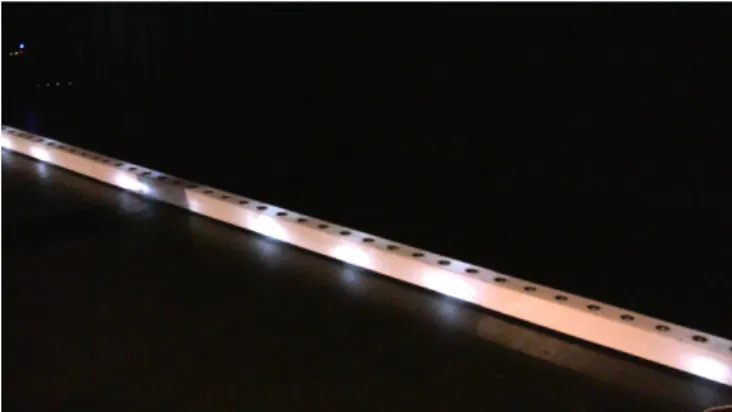
The second installation, ‘Lament’ (Figure 2), was designed to provoke people to work together. To attract people, the whole installation acted as a macro-organism engaging with the environment by listening to the surrounding sound. It responded to the sound the public made by softly ‘singing’. The use of five suspended megaphones gave the installation its iconographic visual identity. Each of these megaphones listened individually to what was nearest to them. When a participant spoke directly into one of the megaphones, the preset amplitude threshold was crossed, triggering a second level, in which that particular megaphone ‘sung’ out loud. Each megaphone had an individual voice, which led to participants investigating the different megaphones. Next to the installation, a computer terminal enabled the public to report on their experience by filling out an online questionnaire. Quite early on in the exhibition it became apparent that very few people took the time to comment on their experience,
even though they were made aware of the possibility by posters hanging around the exhibition space.
Figure 2. Lament, installation presented at the music centre Bijloke, Ghent.
Approximately 15.000 visitors attended the exhibition at music centre Bijloke in Ghent, Belgium. An online questionnaire was prepared and positioned next to the artwork to evaluate user-experience feedback. The first set of questions pertained to the participants’ awareness of the installation, the functional and aesthetic properties of the artwork, responsiveness and interaction. The second part of the questionnaire asked about demographic information, cultural activity and background, and specific familiarity with new media and installation art. An open invitation to participate in the questionnaire during the week-long exhibition rendered less than 50 full responses. Combined with the experiment ‘Heart as an Ocean’, it was clear that merely exhibiting a finished art piece in a museum context was not an efficient way of conducting research on interactivity, or of developing our proposed methodology.
4.3. Sound-based multivariate exploration through interactive sonification
In parallel with the design of the previous artworks, the development of a software framework was initiated, aiming at providing an adaptable platform for deploying user-centered interfaces. The latter were to be developed through a prototyping approach and were to be initially confined to a specific domain, namely interactive sonification. The goal of this interactive sonification was to enable users to access multiple information levels in non-speech sound-based communication (Diniz et al., 2010).
The design was based on the incorporation of theoretical concepts into the software architecture (such as sound objects, corporeal motor composition, embodied music cognition). As such, the architectural framework was based on the functional division of modalities into individual branches around a virtual-scene representation. Following a top-down approach, it was composed of abstract managing cores and their respective elements per modality – visual, auditory and human input – which
provided a unified, scalable interface between the elements that constituted a particular use-case. The concrete low-level functionality was then implemented via a bottom-up procedure through the use of adequate external software libraries. As a result of this encapsulation, the concrete implementation of the virtual worlds and their modal representation and manipulation could be either refined or substituted according to the desired performance, access or functional needs.
In the following subsections the use of virtual objects as the chosen mediator paradigm and two exploratory use cases are addressed.
4.3.1 Virtual objects as a mediator principle
In order for this project to have a mediation methodology that would satisfy the adaptability and scalability requirements of user-centered interfaces, an approach based on the expansion of the mediating role of the body through virtual entities was followed. In relation to a previous study (Mulder, 1997), this chosen direction established a base for a conceptual bridge between the architectural nature that one can identify in sound objects (Chion, 2000), the motor constraints of the human body (Godoy, 2004), embodied mediation technology (Leman, 2008b) and an object oriented software paradigm. As a consequence, mediators capable of representing multilevel mapping layers were generated in an environment that stimulated the immersion of the natural communication tools of the users. Furthermore, such a close relationship between user and the previously described mediation technology was expected to provide a solid ground for the application of user-oriented methods.
4.3.2 Use cases
4.3.2.1 The virtual string
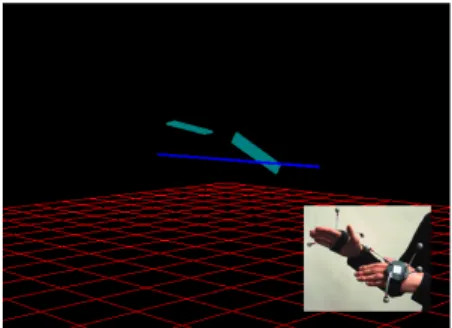
This use case assessed the suitability of the mediation principle described above. Additionally, it tested both the design and the performance of the framework’s preliminary implementation. The use case entailed “playing” a virtual string object, using two virtual objects that are controlled by the user’s hands (Figure 3). Thus, a physical space was mapped onto the virtual world in which a cylindrical object representing the sound producing string was positioned in the middle. Through 3D positioning and orientation, by means of optical tracking, the users could “pluck” the string when it collided with the users’ tracked “hands” (also represented through virtual objects). Initial assessments were drawn from the users’ comments that followed the interaction sections. This information provided further implementation guidelines regarding the configuration and morphology of the virtual object in the following use case.
Figure 3. Virtual string prototype composite screenshot.
4.3.2.2 Music-based interactive sonification
Based on the feedback from the virtual string project, we developed a new and more advanced interactive sonification system that targeted the interactive exploration of multivariable data through non-speech audio communication (Diniz et al., 2010). The goal of this implementation was to investigate, through the application of concepts used in electroacoustic musical composition, the possibility of establishing a unified context between individual sound streams that are exposed simultaneously through time.
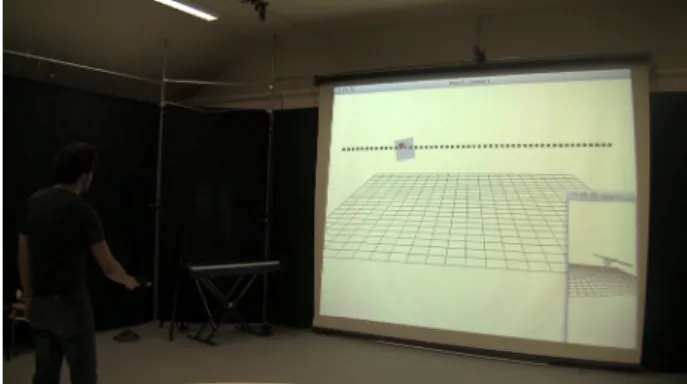
As in the previous use case, the inspection process was conducted through the interaction with virtual objects in an immersive 3D environment (Figure 4). This extended the study of the relationship between the users’ embodied behavior and the virtual entities, and the different sound levels. The present use case’s conceptual design was based on the combination of two main metaphors: the virtual inspection window, providing access points to the variables and their values belonging to a given dataset, and the virtual microphone, which implemented a sonic inspection tool controlled by the user’s hand (in relation to Stockhausen, 1965). Each independent virtual object belonging to the virtual inspection window functioned as a sound source. The sonic representation of its value was activated through collision detection, when the inspection volume of the virtual microphone intersected the virtual objects. Moreover, two additional sonic representations of the relationship between the data’s values were made available, interval and chord, in order to provide a sonic feedback of proportions in the data. In addition, the position of the activated objects in the inspection volume of the virtual microphone influenced the respective output in terms of auditory relevance.
In summary, the adopted interface paradigms can convey multiple perspective views between different levels in the form domain by representing the evolution of the sound object/data in time and in structure, and by establishing and comparing different groupings of N variables.
Finally, a preliminary user test was conducted. Although revealing some issues concerning the ad hoc configuration, the task performance improvement as well as the overall positive feedback concerning the base methodology was encouraging. As such, we concluded that the adopted approach could help to close the semantic gap between the user and data through sound.
Figure 4. User operating the music-based framework implementation for interactive sonification.
Nevertheless, although providing insights into the relationship between task performance and user appreciation, the exploration of features through use cases confined to a specific domain proved to be too restricting. More specifically, this limitation was present in the interaction features’ assessment and in the structuring process, a fundamental condition for the adaptability adherent to the rapid prototyping requirement. Therefore, a need for a broader, more ecological context that would allow the extraction of features based on demand and experimentation was identified. This strategy would result in a more focused and comprehensive bottom up listing, while guiding the top down background and mediation paradigms preliminary decisions. This new development context was created in SoundField, the focus of following section.
4.4. SoundField
The initial testing, the development and deployment of the previous use cases resulted in ‘SoundField’, an immersive augmented reality environment. Using a multi-view orthographic projection and a combination of infrared motion tracking and custom user-interface devices, SoundField provided access in the real world of objects existing in the virtual world. More than merely functioning as a testbed for different modes of interaction, usability and use cases, ‘SoundField’ is an artistic installation. The levels of interaction (Figure 5) were derived from theories relating to social interaction, and accordingly the installation represented various levels. The more people interacted, the greater the potential level of human-computer interaction. As a result, the different levels of human computer interaction could only be accessed when people worked together within the system. And as such, ‘SoundField’ functions more as a catalyst for social interaction than as an interactive human computer interface.
The levels of interactivity were defined by increasing spatial dimensions: from a point over a line, connecting two points, to a surface, where three points are interconnected.
In addition, each of these dimensions corresponded to an equivalent aural dimension, where sounds gained in complexity throughout the increased dimensionality. A single user could access the first level, which he could reposition and alter by using his movements with the aid of a controller. Access to the second level, visually represented by a line, was only granted when a second person occupied the same space. An additional premise was the way the two users interacted: the line could only be instantiated when the users, individually interacting on the level of points, were positioned close enough to each other and face one another. Following this, they had the freedom to stretch the line until a certain breaking point, where the strain would become too large, mimicking the behavior of a real string. Accessing the third level, where surfaces acted or mimicked the behavior of a drum, required yet another participant.
Figure 5. SoundField, levels of social interaction and spatial counterparts.
A first demonstration was presented during an artistic summer school in July 2011 (at Destelheide, an education centre in Dworp, Belgium). This summer academy annually brings together people from all ages and diverse fields in the arts. This provided a very varied sample of potential users. Our test audience was asked to interact with a mockup, solely laptop-based demonstrator. After their interaction with the demonstrator, participants were gathered into small focus groups. During open interviews with these focus groups, the envisioned immersive environment setup was explained and questions were asked concerning functionality and goal assessment, tool operation, social interaction patterns, sonic and visual components and aesthetic properties.
At the beginning of October 2010, a first set of usability inspection tests was performed with the fully deployed version of the demonstrator (Figure 6, left). Furthermore, in collaboration with the instructors of ‘Wisper’ (a cultural organization that provides workshops and courses in dance, literature, music, theater, sculpture and audiovisual arts), a similar combination of demonstrations and focus group sessions was organized (Figure 6, right).
From both sessions, several ideas emerged, some of which crystallized into specific interaction strategies or that were subsequently implemented in user-cases. Finally,
from October 2010 to May 2011, in close collaboration with the Flanders “Youth and Music” program (that ran at Destelheide) the ‘SoundField’ installation was presented to a broad audience. During this period, several fully functional implementations of the technology were developed according to the prospective users’ requirements, gathered during the user evaluation sessions. These requirements were incorporated (to the extent of what was achievable through rapid prototyping) and presented to the same user groups. After another set of tests and interaction sessions, the specifications of the given use case, and the experience of the users with the technology was recorded, in order to incorporate this knowledge in the following user-cases. In summary, the iterative development process, which included 1) demonstration, 2) interrogation, 3) implementation, 4) interaction and 5) evaluation was carried out throughout the entire duration of the project.
Figure 6. Mockup laptop-based demonstration of ‘SoundField’ presented in July 2011 (left), and the first interaction session with the ‘SoundField’prototype, early October 2011 (right).
5. Conclusions and outlook
The presented methodology and concepts are a good example of how user-inspired research can be executed and applied to the development of an immersive augmented reality environment. It is by no means the goal of this paper to present a fixed design method, but rather to offer a viable, cost-efficient design strategy that successfully results in intuitive embodied music mediation technologies.
Most of the described processes dealt with applications that worked in their own right; yet, it was the close, fruitful and egalitarian collaboration between researchers from the arts, musicology and computer sciences that enabled the improvement. A great challenge of this pro-active research is to successfully make the transition from laboratory context and research environment into the “real world”, by striving to make a more spontaneous and natural way of meaningful musical interaction acceptable to the cultural-creative sector, its stakeholders, institutions and participants. In that respect, the offered perspective helps to support ecological validity, aid future cultural embedding, and make immersive virtual environments acceptable within the cultural-creative sector.
References
Barrass, S. (2008). Creative practice-based research in interaction design. Computers in
Entertainment (CIE), 6, 1-17.
Blaine, T., & Fels, S. (2003). Contexts of Collaborative Musical Experiences. In: F. Thibault (Ed.), Proceedings of the 2003 New Interfaces for Musical Expression Conference,
NIME-03, Montréal, May 22-24, 2003 (pp. 129-134). Montréal, Canada: McGill University.
Borchers, J. O. (2001). A pattern approach to interaction design. AI & Society, 15, 359-376. Carroll, J.M., & Rosson, M.B. (2007). Participatory design in community informatics. Design
Studies, 28, 243-261.
Chion, M. (1983). Guide des objets sonores: Pierre Schaeffer et la recherche musicale. Paris: INA-GRM/Buchet-Chastel. [Retrieved from: http://www.ears.dmu.ac.uk/.].
Coussement, P., Leman, M., Demey, M., & Diniz, N. (2008). The Heart as an Ocean exploring meaningful interaction with biofeedback. In: Proceedings of the 5th Audio Mostly
Conference, Piteå, September 15-17, 2010 (pp. 132-134). New York, NY, USA: ACM.
Coussement, P., Demey, M., & Leman, M. (2010). Dynamic Mapping Strategies for Interactive Art Installations: an embodied combined HCI-HRI-HHI approach. In: L. Valbom. (Ed.)
Proceedings of the 5th International Conference on Digital Arts (ARTECH) “Envisioning
Digital Spaces”, Guimarães, April 22-23, 2010 (pp. 45-51). Guimarães, Portugal: School of
Architecture, University of Minho.
de Kort, Y.A.W., IJsselsteijn, W.A., & Poels, K. (2007). Digital games as social presence technology: Development of the Social Presence in Gaming Questionnaire (SPGQ). In:
Proceedings of PRESENCE 2007: The 10th International Workshop on Presence,
Barcelona, October 25-27, 2007 (pp. 195-203). Eindhoven, The Netherlands: Eindhoven
University of Technology.
Deweppe, A., Leman, M., & Lesaffre, M. (2009). Discerning User Profiles and Establishing Usability for the Interactive Music Applications that Use Embodied Mediation Technology. In: J. Louhivuori, T. Eerola, S. Saarikallio, T. Himberg, P.-S. Eerola (Eds.) Proceedings of
the 2009 European Society for the Cognitive Sciences of Music Conference, Jyväskylä,
August 12-16, 2009 (pp. 74-78). Jyväskylä, Finland: University of Jyväskylä.
Diniz, N., Deweppe, A., Demey, M., & Leman M. (2010). A Framework for music- based interactive sonification. In: Proceedings of 16th International Conference on Auditory
Display (ICAD), Washington, June 9-15, 2010 (pp. 345-351). Washington DC, USA:
George Washington University.
Gibson, J.J. (1977). The theory of affordances. In R. Shaw, J. Bransford (Eds.) Perceiving,
acting and knowing: toward an ecological psychology (pp. 67-82). Hillsdale, NJ: Lawrence
Erlbaum.
Godoy, R.I., & Leman, M. (2010). Musical Gestures: Sound, Movement and Meaning. New York, NY: Routledge, Taylor & Francis Group.
Godoy, R.I. (2004). Gestural Imagery in the Service of Musical Imagery. In: A. Camurri, G. Volpe (Eds.), Lecture notes in Computer Science: Vol. 2915. Gesture-Based Communication
in Human-Computer Interaction, 5th International Gesture Workshop, GW, Genova, April
15-17, 2003 (pp. 99-100). Berlin, Germany: Springer Verlag.
IJsselsteijn, W., de Kort, Y., Poels, K., Jurgelionis, A., & Bellotti, F. (2007). Characterising and measuring user experiences in digital games. In: M. Inakage, N. Lee, M. Tscheligi, R. Bernhaupt, S. Natkin (Eds.) Proceedings of the International Conference on Advances in
Computer Entertainment Technology, ACE 2007, Salzburg, June 13-15, 2007. [Retrieved
from: http://repository.tue.nl/661449]
IJsselsteijn, W., Van den Hoogen, W., Klimmt, C., de Kort, Y., Lindley, C., Mathiak, K., Poels, K., Ravaja, N., Turpeinen, M., & Vorderer, P. (2008). Measuring the experience of digital game enjoyment. In: E.J. Spink, M.R. Ballintijn, N.D. Bogers, F. Grieco, L.W.S. Loijens,
L.P.J.J. Noldus, G. Smit, P.H. Zimmerman. (Eds.), Proceedings of 6th International Conference on Methods and Techniques in Behavioral Research Measuring Behavior,
Maastricht, August 26-29, 2008, (pp. 88-89). [Retrieved from:
http://repository.tue.nl/668640]
Jordà, S., Geiger, G. Alonso, M., & Kaltenbrunner, M. (2007). The reacTable: exploring the synergy between live music performance and tabletop tangible interfaces. In: Proceedings of the Conference on Tangible and Embedded Interaction, TEI, Baton Rouge, February 15-17,
2007 (pp. 139-146). New York, NY, USA: ACM.
Kensing, F. (1998). Participatory design: Issues and Concerns. Computer supported
cooperative work, 7, 167-185.
Kiefer, C., Collins, N., & Fitzpatrick, G. (2008). HCI Methodology For Evaluating Musical Controllers: A Case Study. In: Proceedings of the conference on New Interfaces for Musical
Expression, NIME '08, Genova, June 5-7, 2008 (pp. 87-90). Genova, Italy: Università degli
Studi di Genova.
Lähdeoja, O., Navarret, B., Quintans, S., & Sedes, A. (2010). The Electric Guitar: An Augmented Instrument and a Tool for Musical Composition. Journal of interdisciplinary
music studies, 4, 37-54.
Leman, M. (2008). Systematic musicology at the crossroads of modern music research. In Schneider, A. (Ed.), Systematic and comparative musicology: concepts, methods, findings
(pp 89-115). Frankfurt am Main: Peter Lang.
Leman, M. (2008). Embodied Music Cognition and Mediation Technology. Cambridge, MA: MIT Press.
Leman, M., Demey, M., Lesaffre, M., van Noorden, L., & Moelants, D. (2009). Concepts, Technology, and Assessment of the Social Music Game 'Sync-in-Team'. In: Proceedings of
the 12th International IEEE Conference on Computational Science and Engineering
(CSE'09). Vancouver, August 29-31, 2009. (pp. 837-842). Vancouver, Canada: IEEE.
Miranda, E., & Wanderley, M. (2006). New Digital Musical Instruments: Control And
Interaction Beyond the Keyboard (Computer Music and Digital Audio Series). Wisconsin:
A-R Editions.
Mankoff, J., Dey, A. K., Hsieh, G., Kientz, J., Lederer, S., & Ames, M. (2003). Heuristic evaluation of ambient displays. In: C.-M. Karat, A. Lund, J. Coutaz, & J. Karat (Eds.)
Proceedings of the Conference on Human factors in computing systems, CHI 2003, New
Horizons, Fort Lauderdale, April 5-10, 2003 (pp. 169-176). New York, NY, USA: ACM.
Manovich, L. (2001). The language of new media. Cambridge, MA: MIT Press.
Mulder, A., Fels, S., & Mase, K. (1997). Mapping virtual object manipulation to sound variation. In: T. Rai and R. Basset (eds.) IPSJSIG notes, Vol. 122 (pp. 63-38). Japan: Information Processing Society of Japan.
Nielsen, J. (1994). Usability inspection methods. In: B. Adelson, S. Dumais, J.S. Olson (Eds.),
Proceedings of the Human Factors in Computing Systems Conference, ACM CHI 94,
Boston, April 24-28, 1994, (pp. 413-414). Boston, MA, USA: ACM.
Pacey, A. (1983). The culture of technology. MIT Press.
Parncutt, R. (2007). Systematic musicology and the history and future of Western musical scholarship. Journal of interdisciplinary music studies, 1/1, 1-32.
S2S2 Consortium. (2007). Sound to Sense, Sense to Sound; A Roadmap for Sound and Music
Computing.
Sabbe, H. (1989). Open Structure and the Problem of Criticism: Reflections on De Lio's Circumscribing the Open Universe. Perspectives of New Music, 27/1, 312-316.
Seago, A. (2004). Analysis of the synthesizer user interface: cognitive walkthrough and user tests. Tech report TR2004/15. Department of Computing, Open University.
Seifert, U., Kim, J.H., & Moore, A. (2008). Paradoxes of Interactivity: Perspectives for Media
Theory, Human-Computer Interaction, and Artistic Investigations. Bielefeld, Germany:
Stockhausen, K. (1965). Mikrophonie I, fr Tamtam, 2 Mikrophone, 2 Filter und Regler [in: Stockhausen, K. (1965). Texte zur Musik 3 (p. 5765). Cologne: Verlag M. DuMont Schauberg.]
Stowell, D., Robertson, A., Bryan-Kinns, N., & Plumbley, M.D. (2009). Evaluation of live human–computer music-making: Quantitative and qualitative approaches. International
journal of human-computer studies, 67/11, 960-975.
Strickler, Z. (1999). Elicitation methods in experimental design research. Design issues, 15/2, 27-39.
Sutcliffe, A., & Gault, B. (2004). Heuristic evaluation of virtual reality applications. Interacting
with Computers, 16/4, 831-849.
Théberge, P. (1997). Any sound you can imagine: Making music/consuming technology. Wesleyan University Press.
Ulyate, R., & Bianciardi, D. (2002). The interactive Dance Club: Avoiding Chaos in a Multi-Participant Environment. Computer Music Journal, 26/3, 40-49.
Wanderley, M. M., & Orio, N. (2002). Evaluation of Input Devices for Musical Expression: Borrowing Tools from HCI. Computer Music Journal, 26/3, 62-76.
Biographies
Alexander Deweppe graduated with a Masters degree in Art History from Ghent University in 2006, and in 2008 started a PhD researching sociomusicology at the Institute of Psychoacoustics and Electronic Music (IPEM) at Ghent University.
Nuno Diniz graduated with a Masters degree in Informatics and Computer Engineering at Instituto Superior Técnico in Lisboa in 2004, and started a PhD researching auditory display and multimodal interaction at the IPEM in 2008.
Pieter Coussement graduated with a Masters degree in Art at the Royal Academy for Fine Arts in Ghent in 2003, and started his PhD researching the position of the body in interactive art at IPEM in 2008.
Marc Leman is a research-professor in systematic musicology, the head of the Department of Arts-, Music and Theater sciences of the Faculty of Arts and Philosophy of Ghent University, and the director of the Institute for Psychoacoustics and Electronic Music (IPEM) at Ghent University.