ASSESSING THE IMPACT OF INTERGOVERNMENTAL ORGANIZATIONS AND STRUCTURAL EFFECTS IN THE INTERNATIONAL TRADE NETWORK
Zhengqi Pan
A thesis submitted to the faculty of the University of North Carolina at Chapel Hill in partial fulfillment of the requirements for the degree of Master of Arts in the Department of Political Science (International Relations).
Chapel Hill 2013
ABSTRACT
ZHENGQI PAN: Assessing the Impact of Intergovernmental Organizations and Structural Effects in the International Trade Network
(Under the direction of Thomas Oatley.)
ACKNOWLEDGMENTS
TABLE OF CONTENTS
LIST OF TABLES . . . vi
LIST OF FIGURES . . . vii
Introduction . . . 1
Definition and a Brief Background of IGOs . . . 4
Differentiating IGOs by Function Type . . . 6
Economic IGOs . . . 6
Social IGOs . . . 8
General Purpose IGOs . . . 11
The Internal Organization of IGOs . . . 13
Reconceptualizing International Trade . . . 14
A New Methodological Approach . . . 16
Overview of the Model and Some Basic Mechanics . . . 18
Data and Variable Construction . . . 20
The Dependent Variable and Threshold Setting . . . 20
Independent Variables and Controls . . . 22
Running the Models, Robustness Tests and Results . . . 25
Conclusion . . . 29
APPENDIX . . . 32
Appendix A: . . . 32
Appendix B: . . . 33
Appendix C: . . . 34
Appendix D: . . . 35
LIST OF TABLES
Table
LIST OF FIGURES
Figure
1 IGOs Grouped by Function and by Internal Organization . . . 33 2 Different Types of Network Configuration . . . 34 3 MCMC-MLE Algorithm Used to Estimate ERGMs (Source: Cranmer
Introduction
Much research on intergovernmental organizations (IGOs) has examined the rela-tionship between joint IGO memberships and peace.1 Comparatively less research has been done in looking at how the complex web of joint IGO memberships affect bilateral trade.2 Even less research has been done in examining how specific types of IGOs, both economic and non-economic, affect trade (Ingram, Robinson and Busch (2005)). This paper primarily seeks to examine the importance of three main IGO types – eco-nomic, social and general purpose – in helping states to establish major trading partner relations3 , taking into account interdependencies and endogenous effects in the world trade network.4 I assert that common memberships in either economic, socio-cultural or general purpose IGOs have a significant positive impact on establishing strong bilat-eral trade. Moreover, I argue that endogenous network effects are both substantively and empirically significant in international trade. Importantly, this paper makes three major contributions to the international political economy literature by: (1) providing an interdisciplinary and more nuanced theoretical discussion of how different types of IGOs play a part in establishing strong bilateral trade, drawing from political science, sociology and economics; (2) moving away from traditional dyadic analysis to concep-tualizing and examining the world trade network as a whole, and (3) applying a new network analysis method developed by Hanneke, Fu and Xing (2010), called the Tempo-ral Exponential Random Graph Model (TERGM), that takes into account endogenous structural effects and interdependencies in the world trade network.
1See Russett and Oneal (2001), Boehmer, Gartzke and Nordstrom (2004), Ward, Siverson and Cao
(2007), and Dorussen and Ward (2008).
2See Ward and Hoff (2008) and Zhou (2010).
3
The emphasis is on strong and meaningful trading ties. Focussing on major trading partners will also allow me to thin the international trade network more (otherwise it will be almost completely connected, which does not yield very meaningful analysis), as well as to conduct a more conservative test on the effects of IGOs on bilateral trade. More will be explained in section V (under thresholding of the dependent variable) of this paper.
4I will also examine how the internal organization of IGOs affects bilateral trade, but that is not the
In the areas of international political economy, researchers often focus only on eco-nomic IGOs and investigate how they matter in establishing bilateral trade.5 More notably, existing scholars emphasize specific economic IGOs such as the World Trade Organization (WTO). However, evidence are often mixed. For instance, Subramanian and Wei (2007) argue that GATT/WTO memberships are effective in bringing down trade barriers between countries and thus help to increase bilateral trade between mem-bers. Moreover, Goldstein, Rivers and Tomz (2007) argue that the WTO/GATT not only promotes trade among its signatories, but also has a broad positive spillover effect on trade that extends beyond its membership. On other hand, Rose (2004) argues that the WTO has little or no effect on bilateral trade, noting that “bilateral trade cannot be strongly or dependably linked to membership in the WTO or its predecessor the GATT” (p.112). Consequently, researchers do not have clear theory and evidence as to whether economic IGOs such as the WTO promote trade.6
Ingram, Robinson and Busch (2005) argue that “the mixed record is the result of a failure to account fully for the social structural implications of IGOs” (p.826). To elabo-rate, the complex IGO network that states are embedded in help to influence and shape trade relations among states not only through economic means via economic IGOs, but also through socialization, common identity creation and information diffusion through socio-cultural IGOs. As Uzzi (1996) and Granovetter (1985) have pointed out, the range of informal and formal connections between actors help to smooth exchanges between them. Thus, while the agenda of social IGOs such as UNESCO are non-economic in nature as they aim to promote peace and intercultural dialogues among countries, social IGOs create a sense of shared empathy and help to strengthen cultural affinity among members. This in turn may lead to greater trust and credible commitments among members that help to spur trade. Moreover, current literature such as Guiso, Sapienza and Zingales (2009), Combes, Lafourcade and Mayer (2005) and Rauch and Trindade (2002), all point to the importance of culture and social networks in trade. The authors note that cultural affinity is one of the significant components for strong bilateral trade.
5Non-economic IGOs are often disregarded in explaining bilateral trade between countries. The link
between non-economic IGOs and bilateral trade seems to be indirect, tenuous, and not very well-theorized in general (see Ingram, Robinson and Busch (2005)).
6
Apart from social IGOs, general-purpose IGOs might also help to facilitate exchanges among countries. General purpose IGOs are umbrella organizations that help to fa-cilitate a wide-range of political, social and economic activities. In a sense, general purpose IGOs can also be conceived as hybrid organizations that perform functions of both socio-cultural and economic IGOs. For instance, the Nordic Council helps to not only encourage cross-border communications among its members through educational exchanges and scientific research, but also aims to weave comparatively advantaged industries such as Infocomm Technologies in the Nordic region together for scientific and economic growth.7 Indeed, general-purpose IGOs serve as multi-functional and flexible organizations that provide ample opportunities for information sharing and re-peated interactions through diverse issue areas, thereby increasing familiarity of member states and making it easier for reputation costs to be incurred if a state reneges on an agreement. Compliance with international agreements might thus be enhanced through general purpose IGOs.
In addition, IGOs can also be classified according to their internal organization. As such, researchers should also look at how the internal structure of IGOs affects trade. Intuitively, we would think that highly institutionalized IGOs with dispute settlement mechanisms, such as the WTO, would be more important for major trading relations than minimally organized IGOs without an extensive bureaucracy, such as the Associ-ation of Tin Producing Countries (ATPC). To note, the different structural IGO types are - Lastly, moving away from strictly dyadic analysis and conceptualizing the world trade network as a massive complex system with a large number of actors8 and intri-cate trading relations, I also test for the endogenous structural effects (popularity and
triangles)9 after accounting for the covariates and control variables in my models. None of the current literature investigating the impact of IGOs on the world trade network accounts for endogenous network effects. Following Cranmer and Desmarais (2011), I use the Temporal Exponential Random Graph Model (TERGM) in my analysis. Indeed, examining the world trade network as a whole provides a more accurate analysis in my
7See Nordic Council website:
http://www.norden.org/en/about-nordic-co-operation/areas-of-co-operation/information-technology
8I have only looked at states and IGOs in this paper, but in reality, the world trade network is much
paper and might address some of the inconsistent results in traditional dyadic research. Consequently, this paper advances traditional research in that it not only unpacks the IGO predictor into more nuanced functional and structural types, but also views the world trade web as a massive network of economic, socio-cultural and political interde-pendencies.10 In my analysis, I find that only general-purpose IGOs are significant in encouraging major trading ties, out of the three main IGO functional types. The re-sult points to the explanation that general purpose IGOs provide multiple, flexible and repeated opportunities for interactions to occur across political, economic and social issues, resulting in greater reputation costs if a state reneges on an agreement, as well as more holistic information exchanges that are critical to forming strong trade relations. In addition, within economic IGOs only PTAs are impactful, while the WTO and other economic IGOs such as regional banks are not. There is also inconclusive evidence while looking at structured versus minimal IGOs. Nonetheless, my empirical evidence suggests that endogenous network effects are positive and significant across all my models. This paper serves a a first step in examining the endogenous structural effects of the world trade network.
This paper is organized as follows: section II provides an overview of IGOs and discusses the theoretical importance of economic, social, and general purpose IGOs with respect to bilateral trade. Section III examines and compares the impact of structured versus minimal IGOs. Section IV reconceptualizes world trade as one massive network of complex trading relations and introduces a network (TERGM) approach of analyzing bilateral trade. Section V provides an overview of the data and variables used in my models and section VI discusses the results. Lastly, I conclude the paper with some recommendations for future research.
Definition and a Brief Background of IGOs
Pevehouse, Nordstrom and Warnke (2004) operationally defined an IGO as (1) con-sisting of at least three members of the Correlates of War (COW) state system, (2) an
10Note that this paper mainly extends the debate by Ingram, Robinson and Busch (2005) and focuses
organization that holds regular plenary sessions at least once every ten years, and (3) an organization that possesses a permanent secretariat and corresponding headquarters.11 Examples of prominent IGOs include the European Union (EU), the World Trade Or-ganization (WTO) and the World Health OrOr-ganization (WHO). Several other smaller IGOs (both in membership and in function) exist. Till date, almost five hundred IGOs have been present in the international system.12
According to the COW IGO data, the oldest extant IGO is the Central Commission for the Navigation of the Rhine, which was formed in 1815 “in response to the economic interdependence of states along one of Europes most important rivers” (Russett and Oneal (2001), p.160). Since 1815, IGOs have been increasingly ubiquitous in the world. Furthermore, as Russet and Oneal (2001) note, the phenomenon of IGOs is primarily a twentieth-century one: the growth of IGOs has been particularly great since the end of World War II (ibid).
From their inception, IGOs are created to deal with economic, political and socio-cultural problems in world politics. While some IGOs such as the European Space Agency exist to handle specific issues, others such as the United Nations and the Nordic Council are umbrella organizations that provide a multilateral platform for a myriad of issues to be discussed. Moreover, both specialized and general purpose IGOs might work together to pool information and expedite international agreements. In this paper, three main types of IGOs are discussed: (1) economic, (2) socio-cultural, and (3) general purpose.
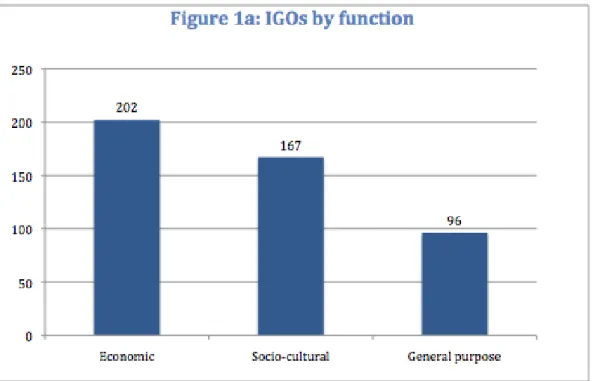
Figure 1a shows the respective proportions of IGOs grouped by function. From Figure 1a, there are 202 economic IGOs, 167 socio-cultural IGOs, and 96 general purpose IGOs in the international system.13 Thus, economic IGOs form the largest proportion of IGOs compared to socio-cultural and general purpose ones. However, this is not to say that other types of IGOs are unimportant as they still constitute a considerable
11Note that the authors criteria of an IGO are modified from those provided by Wallace and Singer
(1970).
12I have taken into account only those IGOs that are coded in the COW data.
13
number of IGOs in the world.
Many notable large-n studies in international trade use aggregate joint IGO mem-bership as a variable of interest.14 Few studies break down total joint IGO membership into its constituents and analyze their respective individual effects.15 Consequently, as Ingram, Robinson and Busch (2005) note, economic IGOs such as the WTO and the IMF are being treated equivalently to socio-cultural organizations such as UNESCO and the World Health Organization when researchers analyze the effects of IGOs on bilateral trade. For a more accurate investigation, it is necessary to differentiate IGOs into different types. Indeed, researchers who don’t differentiate the types of IGOs risk overwhelming his/her results with the effects of economic IGOs since these IGOs con-stitute the largest proportion of all IGOs in the world. Moreover, different types of IGOs constitute sub IGO networks that can impact trade in theoretically interesting and different ways. The next few sections will tease out the substantive importance of each of the IGO types and attempt to establish the causal link between each particular type of IGO and bilateral trade.
Differentiating IGOs by Function Type
Economic IGOs
Economic IGOs as a whole facilitate the diffusion of information. For instance, the Asia-Pacific Economic Cooperation (APEC) is active in disseminating ideas and policies of economic liberalization among its members. In addition, APEC and other economic IGOs such as the OECD frequently release economic reports and data of member states to decrease uncertainty and facilitate trade. These economic reports may contain important findings of meetings, as well as particular responses of countries dealing with commodity or international financial crises. Indeed, economic IGOs help to spread information, ideas and policies to connecting states. Consequently, being
14
See Ward and Hoff (2008), Ward, Ahlquist and Rozenas (2013), and Zhou (2010).
15
a member in an economic IGO will increase its economic transparency and visibility to other members. Moreover, as information uncertainty often shrouds healthy trade relations among countries, economic IGOs thus help to reduce uncertainty and promote trade in the international system.
Economic IGOs also promote standardization and harmonization among members in the respective organizations. Moreover, some economic IGOs such as the WTO, Mercosur and the OECD directly affect trade among member states. For instance, the WTO sets out the rights and obligations of trade based on the core principles of market liberalism and non-discrimination. Other economic IGOs such as the Asian Develop-ment Bank (ADB) also facilitate trade among its members through standardized trade regulatory frameworks and policies. Infrastructure projects spearheaded by the ADB in various developing member states will also help facilitate trade indirectly through lowering transaction costs. In addition, economic IGOs also help to protect property rights and facilitate international transactions. As Souva and Rowan (2008) point out, market-protecting institutions have the most positive, direct and significant impact on trade compared to security and democratic institutions. The authors posit that the most important institutions affecting transaction costs are not security or democratic institutions, but institutions that protect private property, establish banking and in-surance laws, and create common standards of measurement. Indeed, economic IGOs promote a safe environment for trade to occur via the protection of private property as well as lower transaction costs by establishing common standards, rules and regulations. Notably, countries that aspire to become major trading partners with one another need to leverage the functions of economic IGOs to forge strong trading relationships.
of cooperation among member states. Russett and Oneal (2001) assert that the legal16 and adjudicating role of IGOs are significant because “they reduce the cost of enforcing contracts, encourage their creation, and promote exchange” (p.163; also see Stone Sweet and Brunell (1998)). The mediation role of some IGOs thus provides member states with an additional avenue for conflict resolution under anarchy in the international system. Moreover, by ameliorating tensions between member states, IGOs help to maintain and sustain ties in the network.
Furthermore, even for economic IGOs that do not have the power to adjudicate disputes, member states often engage in repeated interaction17 , thereby widening the shadow of the future and allowing credible commitments to be made (Abbott and Snidal (2000), and Keohane (1984)). In addition, as quasi-supranational entities, IGOs also act as whistleblowers that identify states that do not comply with agreements. As a result, states that renege on international agreements are likely to suffer reputation costs that might thwart their future attempts for cooperation with other states to reap joint gains. Thus, through communication, arbitration, repeated interactions and scrutiny, member states in economic IGOs are able to escape the Prisoner’s Dilemma predicament that is typical of international politics.
Social IGOs
Formed explicitly for socio-cultural purposes, social IGOs help to forge common understanding in a variety of areas and further strengthen the relations of member states. Uncertainties and tensions among members might thus be reduced. Importantly, socio-cultural IGOs help form the social glue that is required for more lasting and stronger trade ties among countries, paving way for major trading relations to occur. For instance, social IGOs such as UNESCO aim to promote intercultural dialogues and exchanges among its members, thus reducing cultural barriers and enhancing communication flows among member states. Moreover, as Granovetter (1985) notes, trust, empathy and sympathy may arise from relationships, that are ultimately important for exchange. Indeed, bilateral trade between countries occur not only in the economic realm, but
16
As per international law.
is also based on the larger social context of trading partners. The social network that countries are based in help to regulate economic activities between them. In other words, countries that can easily identify with each other through a shared sense of community, values and social norms might better engage in bilateral trade. In addition, Reigrotski and Anderson (1959) note that social contacts between citizens of two countries help to promote positive stereotypes and reduce aversion. In sum, Ingram, Robinson and Busch (2005) posit two arguments that illustrate the causal explanation of how social IGOs affect trade: (1) social IGOs “increase awareness, sympathy, empathy and even trust between the citizens of different countries”, leading to (2) a shift in cross-national relations and perceptions that results in more trade (p.830). In their study, Ingram, Robinson and Busch (2005) also found evidence that socio-cultural IGOs are significant in encouraging bilateral trade flows, providing evidence for the authors’ assertion on the importance of socio-cultural IGOs in trade.
To elaborate further, social IGOs are multilateral platforms designed to create a sense of joint purpose and might further increase affinity among members. Moreover, social IGOs often advocate a joint purpose that is is targeted at certain existing social norms such as human or environmental rights. For instance, the Valdivia Group, com-prising of six member states18 from three distinct cultural regions around the world, has the shared purpose of promoting environmental and social justice through innova-tive biodiversity and climate change programs.19 In this case, a member state might also be more willing to engage in trade with another member since that member is also likely to safeguard certain environmental rights. In addition, social IGOs act as a com-mon platform to help states toidentify other similar states in the international system. Trade relations can thus be further established. Moreover, as Ingram, Robinson and Busch (2005) asserts, “there is plentiful evidence from social psychology that groupings produce affinity to group members, the ubiquitous in-group/out-group effect” (ibid). A further test by Ingram, Robinson and Busch (2005) reveals that social IGOs were a more positive influence compared to economic IGOs on bilateral affinity, a measure created by Gartzke (2000) that depicts the rank order correlation of states’ voting in the United Nations General Assembly. Bilateral affinity might thus manifest into mutual trust,
18
which has important implications on bilateral trade. In their study, Guiso, Sapienza and Zingales (2009) note that “lower bilateral trust leads to less trade between two countries, less portfolio investment, and less direct investment, even after controlling for the characteristics of the two countries” (p.1095). Countries that trust each other more might thus be more willing and confident of engaging in bilateral trade.
Helping to forge a sense of community and shared purpose, social IGOs decrease the cultural distance among member states. This entails greater familiarity among members which in turn might raise the repetutation costs of reneging agreements in bilateral trade. In addition, a country that reneges on a trade agreement might signal to another country in the same social IGO that it might also be unreliable in noneconomic or social agreements. In this way, membership social IGOs might help to enhance the accountability of states in international agreements.
Importantly, bilateral trade between countries also comprise of “cultural goods” such as foreign films, artwork, newspapers, books, and apparel to name a few. For instance, member states of the Nordic Children’s Film Council might increase bilateral trade in films and theatre-related books through specific programs of the IGO. As such, countries in the same social IGO might enjoy greater bilateral trade in these goods when cross-cultural communication and exchanges are enhanced. Other examples may include the Valdivia Group and the Commonwealth Science Council, in which members increase cooperation and trade in scientific advancements such as biotechnology and water-treatment technologies following membership. Consequently, social IGO might directly affect bilateral trade among member states.
General Purpose IGOs
General purpose IGOs are umbrella organizations that focus on communication be-tween and the administration of governments. General IGOs such as the United Nations (UN), Nordic Council, African Civil Service Observatory and the Association of South-east Asian Nations (ASEAN) perform multiple functions of standardizing, harmonizing, monitoring, and administrating agreements among their members (Ingram, Robinson and Busch (2005)). Furthermore, diplomatic negotiations often include politics and se-curity affairs such as counter-terrorism measures, anti-piracy collaboration to ensure maritime security, as well as measures to protect the environment. Together, these help to create about a more conducive and stable political and economic environment for strong trading relations to occur.
Multi-functional and inter-disciplinary in nature, general purpose IGOs can thus be conceived as hybrid organizations that perform functions of economic and socio-cultural IGOs. For instance, the Nordic Council helps to not only encourage cultural communica-tions among its members through educational exchanges and scientific research, but also links up comparatively advantaged industries in the Nordic region, such as Infocomm Technologies, together for scientific and economic growth. Moreover, like many other general purpose IGOs, the Nordic Council also seeks to connect its members to other countries such as the Baltic states of Estonia, Latvia and Lithuania as well as Russia for stronger cultural and economic exchanges in the Baltic sea region.20 Indeed, general-purpose IGOs serve as multi-functional organizations that will have a significant impact on trade among member states. Consequently, general purpose IGOs are an important set of organizations that not only enhance bilateral social ties but also bilateral trade, resulting in robust trade partnerships.
In some cases, general purpose IGOs can also directly influence trade policies and bilateral trade among members. For instance, ASEAN members have established an ASEAN Free trade Area (AFTA) since 1992, which aims to reduce tariff rates on a wide range of products traded among members.21 Known as the Common Effective Preferential Tariff (CEPT) Agreement, tariff rates on a diversity of goods are reduced
20
See Nordic Council website: http://www.norden.org/en/nordic-council/international-co-operation
to 0-5%.22 Other non-tariff barriers are also reduced or eliminated. Indeed, one of the important aims of AFTA is to encourage long-term economic competitiveness of its members through trade liberalization, as well as provide a greater diversity of goods and services for consumers within the region. Notably, ASEAN members are also main trading partners with one another, reflecting the significance of the organization.23
States that have multiple joint memberships in general IGOs may thus establish more linkages across a variety of issue areas, which may result in greater diplomatic and economic interdependence. Due to its diverse functions, general IGOs provide a greater chance for repeated interactions and information sharing compared to both social and economic IGOs, which are more specific in their scope. As a result, repeated interactions across various political, economic and social issues may further increase familiarity and also reputation costs from reneging on promises. Credible commitments and compliance to international agreements may thus be enhanced through joint memberships in general IGOs.
Consequently, through interactions across diverse issues, members in general IGOs provide a more holistic picture of themselves and their credibility in various international agreements. General IGOs thus provide transparency and opportunities for members to access each other more accurately in individual issue areas and as a whole. Indeed, general IGOs provide a flexible platform for members to interact with each other. As such, general IGOs are importantbecause they are broad in scope and are flexible, giving opportunities for a diverse network of ties to be established. In a sense, the discussion on general IGOs also reflect the importance of political and socio-cultural linkages in trade relations. Indeed, trade is a complex and multifaceted phenomenon that is also dependent on political and socio-cultural activities. With the theoretical discussion developed so far, I form the following hypotheses:
Hypotheses 1a-c: H1(a)-(c): As joint membership in either (a) economic, (b)
social, or (c) general purpose IGOs between two countries increases, the countries are
more likely to establish major trading ties.
22See ASEAN AFTA website: http://www.aseansec.org/12021.htm
23
The Internal Organization of IGOs
Thus far, we have only differentiated IGOs according to the primary functions they serve. However, IGOs can also be classified according to their institutional capacity or internal organization. Wallace and Singer (1970) first highlighted the issue that IGOs are heterogenous in their institutional capacity. Since then not much research has been made to distinguish IGOs from their internal organization.24 Boehmer, Gartzke and Nordstrom (2004) note that treating IGOs homogeneously when they are in fact heterogenous distorts and obscures the impact of more powerful or structured IGOs on state foreign policies. Indeed, some IGOs might be more effective in facilitating and organizing bilateral trade than others due to their internal organization. As Ingram, Robinson and Busch (2005) note, “even casual observers of international organizations realize that IGOs vary in their capacities to affect their members and achieve their goals, and that it would be a mistake to ignore the distinction between minimalist organizations (such as the International Wool Study Group) and more powerful ones (like the WTO)” (p.832). To add, we would think that highly institutionalized IGOs with dispute settlement mechanisms, such as the WTO, would be more important for major trading partners than minimally organized IGOs without an extensive bureaucracy, such as the Association of Tin Producing Countries (ATPC) or the International Wool Study Group.
Following Ingram, Robinson and Busch (2005), this paper will test the effects of two types of IGOs based on their internal structure: (1) minimal and (2) structured IGOs.25 To operationalize, minimal IGOs are are those IGOs that contain plenary meetings, committees, and possibly a secretariat without an extensive bureaucracy be-yond research, planning, and information gathering (see also definitions by Boehmer, Gartzke and Nordstrom (2004)). On the other hand, structured organizations contain structures of assembly, executive (nonceremonial), and/or bureaucracy to implement policy, as well as formal procedures and rules. In addition, structured IGOs may also contain mechanisms for mediation, arbitration and adjudication, and/or other means to
24
For a more thorough elaboration, see Volgy, Elizabeth Fausett and Rodgers (2008).
25Since I am using the coding scheme supplied by Ingram, Robinson and Busch (2005), it makes sense
enforce organizational decisions and norms.
To elaborate, minimal IGOs have little or no institutional capacity to coerce mem-ber states. The only way for minimal IGOs to shape states’ behavior is through “soft” methods such as norm and identity creation, as well as facilitating information and communication flows. Structured IGOs on the other hand are likely to use both so-cialization and coercion. In some cases, structured IGOs can also use their mediation mechanisms to further shape the preferences of states and impact their behavior. As a result, structured IGOs are likely to provide greater stability and certainty of trade outcomes, and are thus viewed as a much better alternative to minimal IGOs. Figure 1b shows the respective proportions of IGOs grouped by institutional type: minimal IGOs greatly outnumber structured ones (303 versus 192). Importantly, it also makes sense to empirically differentiate between structured and minimal IGOs, otherwise the effect of minimal IGOs is likely to eclipse that of structured IGOs leading to bias results. I expect the following:
Hypothesis 2: Joint membership through structured IGOs has a greater positive
effect on bilateral trade than does joint membership through minimal IGOs.
Reconceptualizing International Trade
Before delving into the empirical analysis to test for the effects of the different types of IGOs, we first need to have an accurate and holistic conceptualization of the inter-national trade system so as to explain our dependent variable more meaningfully. As we investigate the effects of IGOs on bilateral trade between countries, we need to be cognizant of the intricate interdependencies inherent in the international trade network. As Ward, Ahlquist and Rozenas (2013) remarked, “Bilateral transactions are necessar-ily embedded in a larger web of trade”. For instance, bilateral trade between Sweden and Denmark is unlikely to be independent of say, trade between Sweden and Norway. Scholars should thus study bilateral trade in the larger framework of the world trade network, accounting for complex interdependent relations.
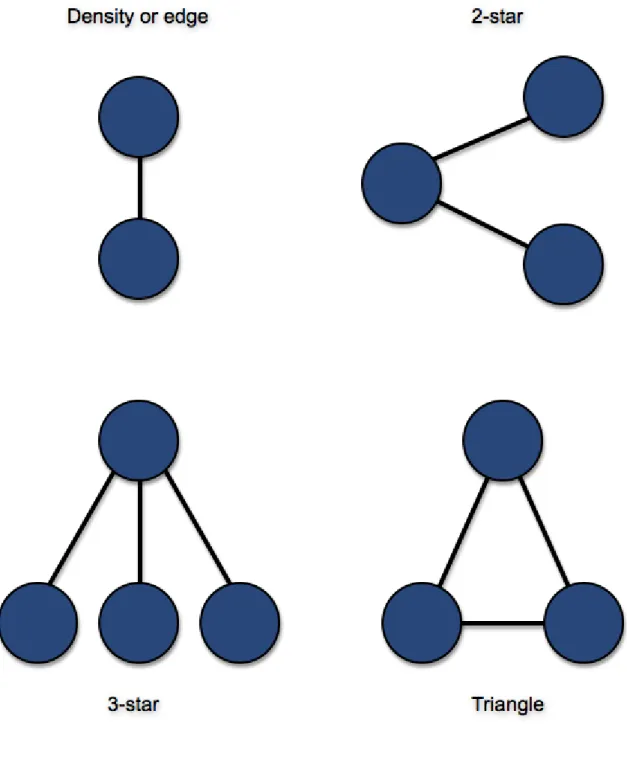
exogenous factors. Drawing from network science and theory, I examine some of the most basic endogenous or network effects by looking at what is commonly called “k -stars” in the network literature.26 k-stars refer to the “tendency for individuals to have connections with multiple network partners” (Robins, Pattison and Woolcock (2008)). The most basic form of k-star is the 2-star, which is the case where state x shares a connection with two other states,y and z, but y andz are not connected to each other (Frank and Strauss (1986)). In addition, a 3-star is formed when statex is connected to statesy,z, andq, buty,z, andqare unconnected. Notably, 2-stars form the fundamental blocks of higher order stars (3, 4,5...k). As such, the use of 2-star is usually sufficient in empirical testing. Moreover, it might also be a rare case that we find very high order stars in the world trade network as this entails that all those countries connected to the central state are unconnected to each other.27 As a visual description, figure 2 shows the various star configurations for non-directed networks.
Substantively in the network literature, stars are often used to capture ‘popularity effects’, also known as ‘preferential attachment’ (Cranmer, Desmarais and Menninga (2012), p.300). Maoz (2012) notes that “states prefer central trading partners because those tend to either have competitive prices and/or produce commodities that are desir-able by many other states” (p.346). Popular states such as the US, China and Germany might also have large amount of economic resources relative to the rest of the world that attract other states to form major trading relations with them. In addition, many of these other states might not trade with each other due to long distances apart, or other economic or political factors. For instance, Venezuela and South Korea are both significant trading partners with the US (and vice versa)28 , but the two countries are not significant trading partners with each other.29 Other similar instances might be present in the world trade network. I thus develop my third hypothesis:
26
See Cranmer, Desmarais and Menninga (2012). Their article presents an ERGM analysis on the global alliance network.
27
Another (practical) consideration is that it takes a much longer time even for a supercomputing cluster to calculate network models which have 3-stars and above for a large dataset (with nboot=500).
28
See US State Department website: http://www.state.gov/r/pa/ei/bgn/2800.htm and http://www.state.gov/r/pa/ei/bgn/35766.htm
29
Hypothesis 3: States in the international system are likely to establish strong
trad-ing ties with a popular state in the world trade network.
Extending from the argument on 2-stars, if one adds a connection between the two actors that are previously unconnected, then we would have a ‘triangle’.30 Some states in the international system might want to develop closed triangles of major trading partners to leverage synergistic effects of trade, in which the utility derived from triadic closure ties will be greater than the utility gained by the sum of the dyadic level ties.31 Substantively, one can think of this as a close cluster of major trading partners pooling resources together, resulting in greater information sharing as well as greater trust and commitments to trade. The collective gains of a closely tied triadic network of trading partners might thus be more than the sum of the bilateral gains from trade.
Consequently, it might not be surprising to see two major trade partners of a third state being major trade partners themselves to reap major joint gains in trade. For instance, the Baltic states of Latvia, Lithuania and Estonia are all close or major trading partners with each other. Other instances include close trading relations among Russia, Finland and Lithuania. Importantly, from the examples, we see that both 2-stars and triangles can exist in the world trade network. As research by Kali and Reyes (2007) has further shown, there is a prevalence of triangles between 1992 and 1998 (p.602).32 I develop my fourth hypothesis:
Hypothesis 4: Two major partners of a third state are likely to establish major
trading ties with each other, forming a closed triangle of major trading partners.
A New Methodological Approach
Traditional statistical approaches assume that the variables are independent and identically distributed (i.i.d), and hence cannot be used to model complex interdepen-dencies. The trade data that I am using, however, encompass intricate interdependent relations. Indeed, as discussed above, bilateral trade among countries in the globalized
30
A visualization of triangles can also be seen in figure 2.
31See Cranmer, Desmarais and Kirkland (2012) for an explanation on synergistic effect of closed
triangles in alliance networks.
32
world should be viewed as a large network of interconnected trading relations instead of an aggregation of independent ties. Despite this, political scientists have traditionally relied on common statistical methods such as the generalized linear model on network data, since methods for the statistical inference on networks are not well advanced in the field. As Cranmer and Desmarais (2011) note, common statistical methods of rela-tional data in political science often assume that the “covariates in a dyadic regression model are sufficient to account for the dependence among the observations” (p.66). How-ever, this assumption will cause bias results as relationships among observations cannot be modeled as a covariate, thus violating the assumption of conditional independence among observations in common statistical regressions. Failure to model dependencies when they exist will also falsely attribute explanatory power to covariates in traditional statistical analysis.
Some social scientists have also tried to condition out interdependence “through the use of innovative random effects” (p.66). However, complex random effects specifications do not allow precise structural effects and interdependence that characterize the data to be modeled. No doubt, some of the unmodeled structural effects may be of both theoretical and empirical importance to social scientists. For example, popularity and triangle-closure (e.g. the friend of my friend is likely to be my friend)33 go unmodeled using regression analysis. As Cranmer and Desmarais (2011) further note, “even if the researcher is only interested in evaluating a particular hypothesis about a covariate, bias due to the omission of relevant structural effects can compromise the analysis” (p.67). Consequently, the use of common regression on network data often leads to insufficient models and bias results.
In order to model and account for structural effects and interdependence in my data across time, I use an extension of the Exponential Random Graph Model (ERGM) called the Temporal Exponential Random Graph Model (TERGM) in my analysis, originally developed by Hanneke, Fu and Xing (2010) and further extended by Cranmer and Des-marais (2011).34 As a statistical network approach, the TERGM allows me to estimate
33
The next few paragraphs will give a thorough explanation of the terms “popularity” and “triangle”.
34An earlier version of this paper employs the latent space network model developed by Hoff, Raftery
structural characteristics for networks over time without the independence assumption of common statistical approaches. Furthermore, the TERGM can model both exogenous effects (covariates) and the structural effects that are endogenous to the network such as popularity and the triangle. Consequently, “researchers can proceed with the ERGM [or TERGM] analysis based on hypothesis similar to those that would produce regression specifications (i.e. covariatex is expected to affect the outcomey), and as much network structure (dependence) as they see fit” (Cranmer and Desmarais (2011), p. 67).
Overview of the Model and Some Basic Mechanics
Originally developed by Wasserman and Pattison (1996), the ERGM is a statistical network approach that treats a network as asingle multivariate observation rather than a large number of relational observations. The modeling objective of the ERGM is examining the probability of observing the network wedid observe over the networks we
could have observed. Thus, if there areN possible networks with the same number of nodes or actors N, then it must be N∈ N and we want to knowp(N). Mathematically, the ERGM of the networkN is specified as:
P(N,θ) = exp{θ 0
Γ(N)}
P
N∗∈Nexp{θ
0 Γ(N∗)}
Here, θ is a parameter vector, Γ(N) is a vector of statistics computed on the net-work, and the object of inference is the probability of the observed network among all possible permutations of the network given the network statistics. The denominator, P
N∗∈Nexp{θ
0
Γ(N∗)} is the normalization constant, which is typically intractable to compute. As noted by Cranmer and Desmarais (2012b), “the Γ(N) term is what gives the ERGM much of its power: this vector can contain statistics to capture the interde-pendence structure of connectivity in the network – statistics can be included to capture reciprocity35, transitivity, cyclicality, and a wide variety of other endogenous structures
uses the dynamic latent space model, their R code remains private). In other words, we are only able to look at snapshots of the network and effects of the respective covariates without taking into account dynamic or time effects. Consequently, results from the latent space model at a single point in time are not very informative in this research. Furthermore, the latent space model does not allow for the modeling of endogenous structural effects. Thus, I use the TERGM instead.
35
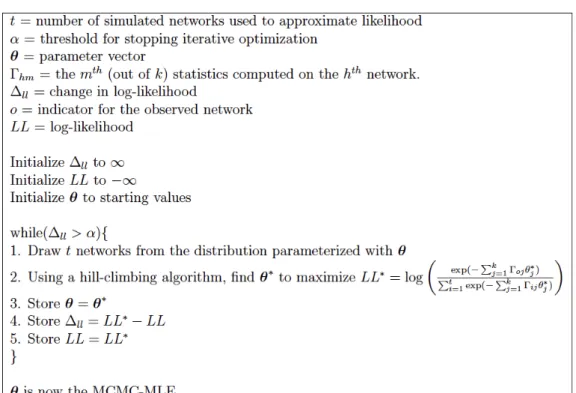
– as well as the effects of exogenous covariates” (p.1).36 The basic assumptions of the ERGM given a set of network statistics are that (1) there is equal probability of ob-serving any two networks with the same values of those statistics, and (2) the observed network exhibits the average value of those statistics over the networks that could have been observed. A brief outline of the ERGM algorithm is shown in figure 3.
Often, one is also interested in modeling the dynamics and evolution of a network over multiple sequential observations. Consequently, the ERGM can also be extended to accommodate inter-temporal dependence. This is accomplished by adding functions involving past realizations of N to the set of Γ(.). Moreover, we also assume that the network is observed in T discrete time periods. Time dependencies can thus be built into the model by conditioning on previous realizations of the network. Thus, instead of examining P(N|θ) as the probability of interest, we estimate a model with K-order dependencies: P(Nt|Nt−K,...Nt−1), whereNt is the network at some discrete period of observation. In other words, the realization ofN at timet is conditioned on the previous
K realizations. Moreover, as Hanneke, Fu and Xing (2010) note, “one way to simplify a statistical model for evolving social networks is to make a Markov assumption on the network from one time step to the next” (p.587). As such, we might assume that Nt
is independent ofN1...Nt−2 given Nt−1. Mathematically, under Markov assumption, a sequence of observations N1...Nt has the property that:
P(N2,N3...Nt|N1) = P(Nt|Nt−1)P(Nt−1|Nt−2)...P(N2|N1)
Thus, if the time-dependent model is well-specified and given the Markov assumption, the best predictor of a given network may be its last realization. In other words, Nt
is dependent only on Nt−1. Mathematically, the general formula for the first-order TERGM model would be written as:
P(Nt|Nt−1,θ) = c(θ,N1t−1) exp{θ 0
Γ(Nt,Nt−1)}
36
Data and Variable Construction
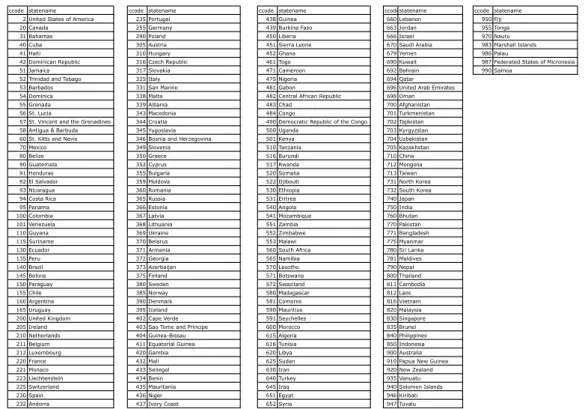
I use the trade dataset compiled by Kristian Skrede Gleditsch over the time pe-riod 1965-2000.37 The IGO data38 used is compiled by Pevehouse, Nordstrom and Warnke (2004) and is obtained from the Correlates of War (COW) website. The classifi-cation scheme of IGOs according to their functional and structural types were obtained from Paul Ingram39 and then applied to the COW IGO dataset to generate subsets of IGO data. Control measures such as distance, alliance, contiguity, democracy scores, and ongoing conflict are all generated by EUGene40 for all dyads from 1965 to 2000. Additional controls such as culture and geographical region are obtained from CEPII (French Research Center in International Economics)41 and Fearon (2003) respectively. The datasets are subsequently merged to obtain a master dataset containing all dyads from 1965 to 2000 with a total sample size of 761286. A list of states in the sample for the year 2000 is shown in figure 442 :
The Dependent Variable and Threshold Setting
Major partner trading relations between states in the international system are char-acterized by a high level of bilateral trade.43 Focussing on major trading partners as opposed to states that merely trade with one another will allow me to thin the in-ternational trade network much more, otherwise the network will be almost completely connected, which does not yield very meaningful analysis.44 Importantly, the emphasis on strong and meaningful trading ties among states will also allow me to conduct a more
37
The Gleditsch trade dataset runs from 1950 to 2000 but IGO data only runs annually from 1965 onwards (before 1965, IGO data was collected at 5-year periods). As the TERGM is based on Markov assumption and requires sequential time periods to run, I test my analysis from 1965 to 2000.
38Version 2.3
39
Courtesy of Paul Ingram; also see Ingram, Robinson and Busch (2005).
40EUGene is an acronym for “Expected Utility Generation and data management program”; see
Bennett and Stam (2000).
41See http://www.cepii.fr/CEPII/en/welcome.asp
42
Note that the number of states fluctuate from year to year and I have only included the year in which the number of states is at its highest count.
43
The threshold to determine major trading relations will be discussed later in this section.
44
conservative test on the effects of IGOs on bilateral trade.
In general, bilateral trade is the total trade (Tijt) between two countriesi and j in a particular year t. Mathematically, it is given by Tijt =Xijt+Xjit, where Xijt denotes exports from country i to countryj in year t. Modeling bilateral trade between major trading partners as it is will result in a weighted network as dependent variable. How-ever, this is problematic because the ERGM/TERGM has only been developed to model binary ties, so we cannot apply ERGM analysis on weighted networks. Nonetheless, this problem can still be overcome by thresholding, as seen in other social science literature such as Faust and Skvoretz (2002), Fowler (2006), and Cranmer and Desmarais (2011). Moreover, the use of thresholding is also quite common in modeling the world trade network and a few prominent contributions have used a binary network analysis (Kim and Shin (2002), Serrano and Boguna (2003), Garlaschelli and Loffredo (2004), and Gar-laschelli and Loffredo (2005))45. Furthermore, as Serrano et al. (2010) note, although a binary network is necessarily a condensed version of reality, this most basic representa-tion of internarepresenta-tional trading relarepresenta-tions have already provided significant and important information about the world trade system. Indeed, a binary network analysis is the first step to investigate how the topography and structure of the world trade network affects trading relations among states in the international system.
In order to convert our weighted dependent variable to a binary one, we need to first assign a threshold or cut-point. Thus, any bilateral trade volume that has a value at or more than the threshold (which can be an absolute value or a percentage) will be assigned ‘1’, and those values below the threshold will be assigned ‘0’. Importantly, existing literature does not have a standard in choosing the threshold for bilateral trade and different authors have their own ways of determining the threshold. For instance, Kim and Shin (2002) test and use absolute value thresholds of 1 million and 10 million, while Kali and Reyes (2010) construct their models using percentage thresholds of zero, one, and two percent. Notably, a 0% threshold just indicates the mere existence of trade among two countries and hence it is the least restrictive threshold. Nonetheless, other papers such as Serrano and Boguna (2003), Garlaschelli and Loffredo (2005), and Kali and Reyes (2007) just define a straightforward link using a 0% threshold.
45Much of the literature on the world trade network are from econophysics, which is a new
Since I am dealing with bilateral trade across years in a large dataset, I will use a percentage threshold for greater flexibility. Following Kali and Reyes (2010) and upon inspection of the data, a 1-2 percent of a state’s total trade for a given year is sufficient to capture the state’s top 20-25 trading partners in the international system.46 For greater robustness, I conduct preliminary tests using 1% and 2% thresholds and found that the results were largely similar. In order to yield more conservative results and thin the world trade network more, I select the 2% threshold.47 More formally, lettingy
ijt
to represent my outcome variable, I have:48
yijt=
1 if bilateral trade for year t,Tijt ≥2% of total trade for each state in dyad 0 otherwise
Notably, this study uses an undirected network to analyze international trade. How-ever, the world trade network can also be constructed as a directed one, which allow for more precise endogenous effects such as reciprocity, transitive triples and cyclic triples to be captured.49 Although directed networks might shed further light on the in-herent dynamics of international trade and better reflect the reality of trade, the time and computational power required to process the directed network statistics on massive trade datasets might make this an inefficient endeavor. As such, I employ an undirected network for this paper.
Independent Variables and Controls
The main covariates in my dataset are measures of IGO functional types (general purpose, economic and social) as well as IGO structural types (structured and minimal). In addition, note that measures of popularity and triangle are not represented by any of the covariates in the dataset since they are endogenous to the network. Since I have
46
This is fairly consistent across years from 1965 to 2000.
47This threshold will result in a much sparser network, with only 1.27% of the total number of
observations across all years assigned as having major trading partner ties.
48This implies thatbothstates are major trading partners with each other. By this method, I further
thin the network and adopt a highly conservative measure.
49Reciprocity is a more precise measure ofk-star(2), and transitive/cyclic triples more precisely
already discussed at length the main covariates and the endogenous effects in the earlier sections, I will give an overview of the control variables here instead:
Distance: Existing research has shown that the greater the distance, the higher the costs of transporting the goods. Thus, greater distances decreases the gains of trade and reduces trade itself. In general, countries that are geographically far apart are unlikely to become major trading partners with each other. In my analysis, I follow Russett and Oneal (2001), and Glick and Rose (2002) to estimate the log of the distance between the capital cities of two countries.
Ongoing conflicts: Bilateral trade is likely to be weak or even nonexistent as a result of conflict between two states. Having weak or reduced bilateral trade due to ongoing conflicts is not only to signal hostility towards an adversary, but also to put pressure on the other state to threaten its survival. Moreover, “private actors have their own incentives to restrict trade with countries with whom relations are not reliably peaceful” (Russett and Oneal (2001), p.220). Indeed, states that are in conflict pose heightened investment risks and uncertainty for private actors or firms. Consequently, the existence of ongoing military conflicts between two countries reduces the likelihood of major trad-ing ties between them. This is captured by a dummy variable with ‘1’ indicattrad-ing an ongoing conflict in the dyad and ‘0’ otherwise.
Alliance: States are likely to maintain strong economic interdependence with those with which they have good relations. Moreover, as Russett and Oneal (2001) posit, “a state is apt to trade more with an ally because it need not fear that the economic gains that arise from their commercial relations will be used to threaten its security” (p.136). Furthermore, since wealth and technological gains from trade might also increase military effectiveness of the trading partners involved and hence strengthen the resulting alliance network as a whole, states might also aim to enhance the prosperity of their allies via healthy trading relations. In this paper, alliance is defined similar to Leeds and Anac (2005): “an alliance is a formal agreement among independent states to cooperate militarily” (p.185). This variable is captured as a dummy with ‘1’ indicating an alliance between two countries and ‘0’ otherwise.50
50
Direct contiguity: Similar to the explanation for distance, the more contiguous two countries are, the greater the probability of them being major trading partners. Six levels of specifications exist for direct contiguity. According to the EUGene codebook, the first five levels follow the COW specifications for the types of contiguity: (1) land contiguity or shared borders; (2) contiguous for up to 12 miles of water; (3) contiguous for 13 to 24 miles of water; (4) contiguous for 25 to 150 miles of water; (5) contiguous for 151 to 400 miles of water. Level 6 indicates that the states are not contiguous (or are contiguous over more than 400 miles of water). Following the recommendations by Russett and Oneal (2001), I transform direct contiguity into a dummy variable, with ‘1’ representing contiguity up to 150 miles of water (levels 1 to 4) and ‘0’ representing more than 150 miles of water (levels 5 and 6).
Democratic dyad: Among many international relations scholars, democracies are of-ten thought to be trade enhancing.51 Morrow, Siverson and Tabares (1998b)52 , and Bliss and Russett (1998) were among the first scholars to analyze the effect of joint democracy on trade and they found strong positive significant relationship between the two. Furthermore, Mansfield, Milner and Rosendorff (2000) also found that democratic dyads have more open trade relations than mixed pairs. Following the literature, demo-cratic dyads are more likely to result in major trading relations than non-demodemo-cratic pairs. As asserted by Russett and Oneal (2001), the argument is two-fold: (1) democratic institutions provide accountability and transparency in political and economic affairs, hence decreasing uncertainties and increasing business confidence, and (2) democratic nations share the same norms of civil liberties and limited self-government, and thus democratic countries have an affinity. I define democratic dyads as two countries scoring a 6 or above each on the combined autocracy-democracy Polity IV scale (see Marshall, Jaggers and Gurr (2011)). The resulting democratic dyad is a dummy variable, with ‘1’ indicating that the two countries are democratic, and ‘0’ indicating that both countries are not democratic or a mixed dyad.
Culture:Countries with similar culture might be more inclined to form major trading ties with each other due to greater affinity and trust. In this paper, two countries are
51
There is also the famous democratic peace theory stating that democracies rarely fight each other.
coded to have similar culture if they share the same first official language. Although this measure is not perfect given that culture is a complex social phenomenon, it captures at least the linguistic aspect of culture in countries. This variable is also used to control for selection into socio-cultural IGOs. Dyads with similar culture are coded as ‘1’ and ‘0’ otherwise.
Geographical Region: States in the same region are near to each other for ease of trade and are likely to be immersed in similar cultural roots. As such, countries in the same geographical region have a high chance of becoming major trading partners with each other. In addition,geographical region can also be an added proxy to culture. Dyads in the same geographical region are coded as ‘1’ and ‘0’ otherwise.
Running the Models, Robustness Tests and Results
Four separate models are being run. In general, all four models consist of the control variables and capture the relevant structural effects, but the main covariates are different: (1) Model 1 comprises of the baseline model that aggregates all types of IGOs into one general covariate53; (2) Model 2 comprises of the different IGO function types (general, social and economic); (3) Model 3 is an added robustness check for model 2, in which I further separate economic IGOs into PTAs, a GATT/WTO dummy, and other economic IGOs that include regional banks and other economic institutions; (4) Model 4 comprises of the two IGO structural types. I do not test all the main covariates in one single model as that might lead to problems of multicollinearity.
Maximum Pseudo Likelihood (MPL) is used to produce consistent estimates of the parameters.54 In addition, the computational tractability of the pseudo-likelihood function makes it a very attractive alternative to the common full likelihood function. As Cranmer and Desmarais (2011) note, “the computational burden associated with the use of MCMC-MLE is insurmountable given current technology” (p.81). Besides using the MPL method, I also implement a bootstrap resampling method for computing the
53As discussed earlier, this model characterizes existing empirical tests on the determinants of bilateral
trade – many scholars agree that joint memberships in IGOs enhance bilateral trade, but they do little to differentiate the effects of the different types of IGO membership on trade.
54
95% confidence intervals.55 500 bootstrap iterations are used in each of my models and the respective confidence intervals are calculated using the 2.5th and 97.5th percentiles of the sample of 500 bootstrap estimates. Results of the TERGM are reported in table 1.
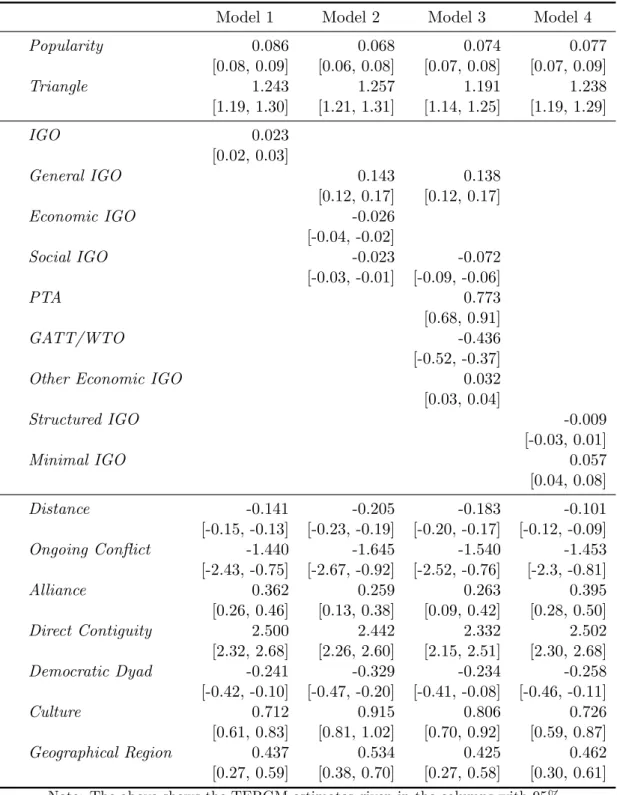
From table 1, we see that results from the TERGM confirm our expectations re-garding the world trade network structure. Firstly, the two-star coefficients measuring “popularity” are all positive and significant at the 0.05 level across the three models, indicating that besides the covariates, the structure of the world trade network matters in motivating the collection of states to form major trading ties with popular or central states. Secondly, the positive and significant effect of triangles across all three models at-test to the hypothesis that tight clusters (or multiple triangles) of major trading partners exist in the world trade web to leverage synergistic effects. Consequently, it is prevalent that two major trading partners of a third state are themselves major partners. Indeed, endogenous structural effects are significant both substantively and empirically in the world trade network. Furthermore, as mentioned earlier, both two-stars and triangles can exist in the world trade network (although in this case the effect of triangles far eclipse that of popularity effects, as reflected in the coefficient estimates). Not modeling these structural effects in the statistical analysis will bias the results.
From Model 1, we see that IGO is both positive and significant at the 0.05 level. However, the coefficient estimate of IGO is very small, which makes it important to compare results from the other models. In addition, the control variables across all four models also fit our expectations except for democratic dyad, which is negative and statistically significant. This result might be due to the prevalence of mixed and non-democratic dyads in the international system. Notably, non-democratic dyads, in which both states have a score of 6 or higher on the Polity IV scale, constitute only 9.69% of total dyads in the dataset.
Interestingly in Model 2, we see that only General Purpose IGO has a positive coefficient estimate and is statistically significant at the 0.05 level. Economic and social IGOs seem to have little effect on helping countries to establish major trading ties as their coefficient estimates are very small (-0.026 and -0.023 respectively). The result for
55
economic IGOs is surprising as one would expect economic IGOs to be a strong driving force for the establishment of major trading ties. As a robustness check, I further split economic IGOs into more nuanced constituents: Preferential Trade Agreements (PTAs), GATT/WTO, and other economic IGOs that include regional banks and other economic institutions.56 Note that PTAs considered here are all multilateral in nature (consistent with the COW IGO data v2.3 coding rules) and include common markets, economic unions, free trade area as well as customs and monetary unions. Both PTA
andOther Economic IGO are count variables representing number of joint memberships, while GATT/WTO is a binary variable.
Model 3 thus consists of the subcategories of economic IGOs with the same the endogenous and control variables as the other models.57 From Model 3, we see that
General Purpose IGO is still positive and significant, while the effect of Social IGO
remains almost negligible, with a very small coefficient estimate. Of particular interest is PTA and Other Economic IGO, which are both positive and significant at the 0.05 level. However, the coefficient estimate of Other Economic IGO is very small, which reflects its weak role in establishing major partner trading relations. As such, PTAs may be the only trade-enhancing force behind economic IGOs: states develop major trading ties through preferential access and information sharing within PTAs. On the other hand, WTO is negative and significant, which corresponds to the results in Rose (2004). This begs the basic question of whether (and under what circumstances) the WTO enhances trade between pairs of countries. One important explanation to note is that even if the WTO helps to establish and enhance trade between members, it may not be significant enough in helping members tobecome major trading partners. More important factors are at play.58 The negative sign might also reflect the uneven (and evolving) functions and memberships of the GATT/WTO across the years from 1965 to 2000. Other scholars such as Dutt, Mihov and Zandt (2012) has sought to address this conundrum by delving deeper into the trade effects of the WTO, but that is beyond the
56Empirically, the three new variables were created and split from my original set of economic IGOs
and the respective joint memberships were computed accordingly.
57I have not included a detailed theorization of the different categories of economic IGOs in the theory
scope of this paper. Overall, the results reflect the longstanding debate on the effects of the WTO on bilateral trade.
In Model 4, the variable Structured IGO is negative but not statistically significant. This means that the effect ofStructured IGO is not distinguishable from zero at the 0.05 level. The result of Structured IGO is thus inconclusive. Furthermore, the coefficient estimate of structured IGOs is also very small (-0.009). On the other hand, Minimal IGO is positive and statistically significant, confirming part of our expectation. This is somewhat puzzling as I expect the relationship of structured IGOs to be significant and positive since structured IGOs provide elaborate and organized arbitration platforms to smoothen diplomatic ties and lessen tensions, enhance understanding across multiple dimensions, and create a more formalized in-group identity through its rules and pro-cedures. All these factors are thus hypothesized to aid in establishing strong bilateral trade among the members. One reason for the result could be due to unreliable data of IGO structural type as pointed out by Ingram, Robinson and Busch (2005) in their appendix (p. 855). Indeed, more accurate data collection and compilation are required. Interestingly, the results hint at the importance of contiguity, ongoing conflict and (regional) trading clusters. From all four models, we see that Direct Contiguity, Tri-angle, and Ongoing Conflict have the greatest effects, which means that strong trading ties mainly occur in countries that are contiguous and not at war with one another. Moreover, countries in the same region might also form close trading clusters to further reap joint gains from trade. Importantly, through closer inspection of the data, most general purpose IGOs are regional in nature, which further reinforces the point that it might be contiguity, the absence of war and trading communities that characterize international trade.59 In other words, although international institutions might still be important in bilateral trade relations, traditional factors such as contiguity and ongoing conflict, as well as structural factors such as triangles, might be the primary drivers of bilateral trade.
Notably, while the TERGM results provide association between particular types of joint IGO membership and the establishment of major trading partner ties, the evidence
59
does not demonstrate the direction of causality. At the general level with reference to results in model 1, does the problem of reverse causality exist? Do countries join IGOs because they were already major trading partners with each other? Theoretically, the assertion of reverse causality is hard to be established as aggregate IGO count is a complex measure, which consists of general purpose, socio-cultural and economic IGO memberships, that spans beyond the economic dimension. Similarly, from the results in model 2, it is unlikely that countries join general purpose IGOs because they trade a lot with each other. In other words, countries are unlikely to join an umbrella organization such as the Nordic Council or the African Civil Service Observatorybecause of existing trading ties.60 On the other hand, the problem of reverse causality might be more significant in the case of economic IGOs. In this case, countries might join certain economic IGOs because they already trade strongly with each other and they need to find trustworthy, conducive and sustainable platforms for trade. However, countries that are not major partners with each other previously might also be brought closer together due to preferential access and information sharing of some economic IGOs such as PTAs and hence establish strong bilateral trade with each other. Lastly, the problem of reverse causality is not significant in model 3 as it is highly unlikely that countries join minimally structured IGOs because they trade with each other. It might be that countries that trade with each other would want to join structured IGOs that are better in mediating and moderating tensions, but the variableStructured IGO is not statistically significant. Thus, reverse causality should not be a major problem in this paper.
Conclusion
This paper presents a first step in examining the importance of various IGO types in establishing major trading partner relations within the broader context of the world trade network. While previous studies largely ignore or try to condition out network effects in their statistical models, this paper incorporates these effects in testing how certain types of IGOs matter in international trade. Importantly, while the TERGM enables us to model network effects, it also has its pitfalls and flaws: since we are
60I have omitted the discussion on social IGOs as the effect is almost negligible. Also, it is highly
using maximum pseudo likelihood and not the maximum likelihood in our analysis, we are unable to assess model fit adequately using commonly used information-theoretic parametric measures such as the AIC or the BIC. Current goodness-of-fit (GOF) tests of the ERGM are also not readily applied to the temporal extension. Nonetheless, some papers such as Cranmer and Desmarais (2012a) have shown that TERGMs provide a better fit than other dynamic network models such as SIENA, giving us more confidence in the TERGM. This paper, however, does not provide a similar GOF testing due to the very large dataset involved and the technical complications of testing TERGM models.61
From the results, network effects are significant in describing the world trade web. Moreover, general purpose IGOs and PTAs also impact trade positively. While some of my results remain inconclusive, more reliable data collection is necessary to advance the research agenda in future. Moreover, I call for more efforts to make data on IGO type publicly available and urge more replication of similar research. Importantly, since research on IGOs have only recently focussed on its functional type and internal orga-nization, greater theorization is also required in future research.
In addition, as this paper leverages on large-n analyses, the causal mechanisms de-scribed in the theory might be too broad. More nuanced theorization of causal chains analyzing how specific IGOs influence states’ decisions in trade policy62 or how IGOs affect firms within states to engage in strong bilateral trade may provide deeper insights to the questions raised in this paper. To add, since trade flows are primarily driven by firms, which operate under the constraints of government policies, it might also be helpful to see whether or not certain joint IGO memberships encourage firms of two countries to trade with one another. Of course, the empirical analysis would require much more nuanced data on firms and might not be easily captured using large-n stud-ies. Thus, due to data and measurement limitations, case studies might better serve this particular type of research. Case studies might also explore how joint IGO memberships affect firms in particular sectors of the economy.
Future research can also investigate the strategic interaction between states and particular IGO types. Is the role of the state more marked in economic and general
61
Future extensions might provide this, as well as other out-of-sample predictions of my TERGM models.
purpose IGOs compared to social IGOs? What about minimal versus structured IGOs? In other words, is the use of state power (especially for large and power states) more prevalent in the decision making process of some IGOs relative to others? How might that undermine the effects of IGOs? Indeed, it might be interesting to see the interactions and strategic dynamics between particular IGO types and states.