The Native Health Initiative’s Hip Hop and Health Approach:
Social Justice Hustlers and Community Generated Youth Empowerment
By Sophia Malik
A Master’s Paper submitted to the faculty of the University of North Carolina at Chapel Hill
in partial fulfillment of the requirements for the degree of Master of Public Health in
the Public Health Leadership Program.
Artist Credit: Randolph Sabaque (SABA)
Graffiti art created during NHI Winter Celebration, December 2010
TABLE of CONTENTS
Abstract 4
Acknowledgements 5
Introduction 7
Systematic Review Introduction 9
Methods 12
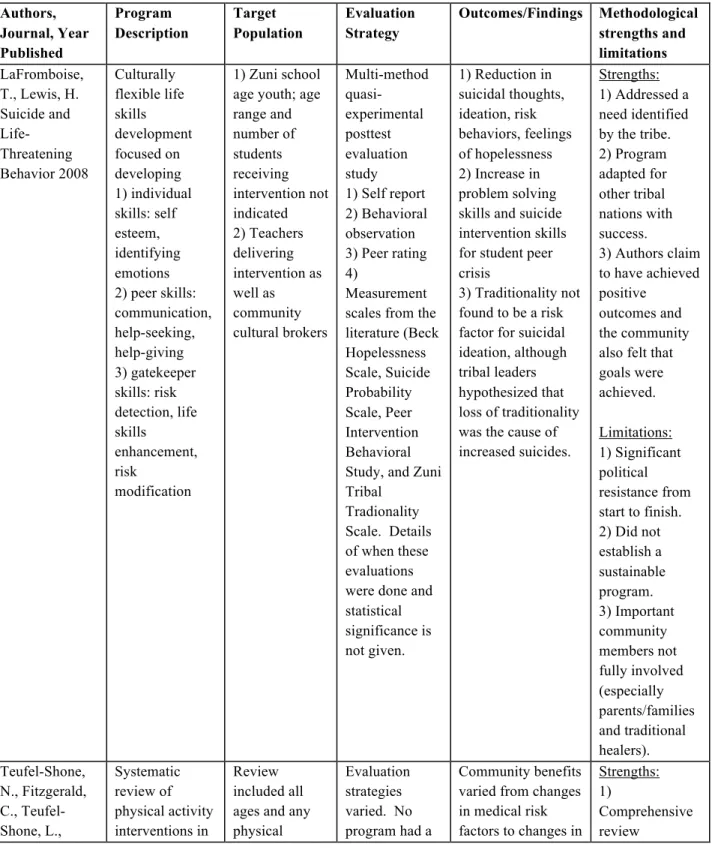
Summary of Papers/Programs 14
Analysis and Conclusion 23
Program Plan Overview of the Plan 25
Context of Program Plan 26
Relevant Program Theories 32
Goals and Objectives 35
Logic Model 37
Program Implementation 38
Evaluation Plan Rationale and Approach to the Evaluation 45
Evaluation Study Design 47
Evaluation Study Methods 47
Evaluation Planning Tables 48
Dissemination Plan 54
IRB Considerations 55
Discussion 57
References 59
Appendix Table 1: Summary of Papers Reviewed for Systematic Review 64
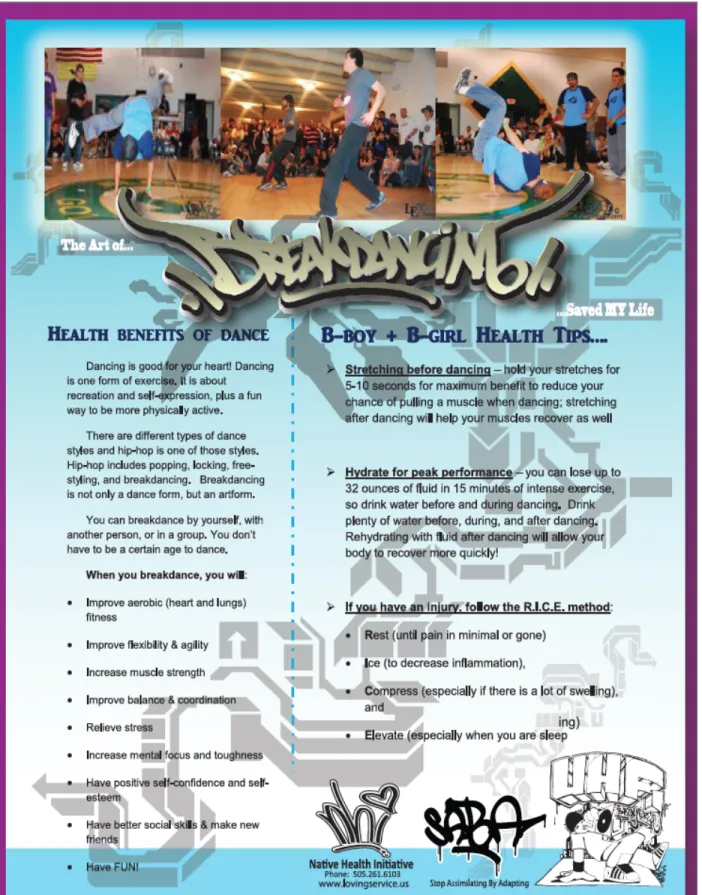
Figure 1: “The Art of Breakdancing Saved My Life” 67
Document 1: Positively Hip Hop Grant 68
Figure 2: NHI Circle of Healing 70
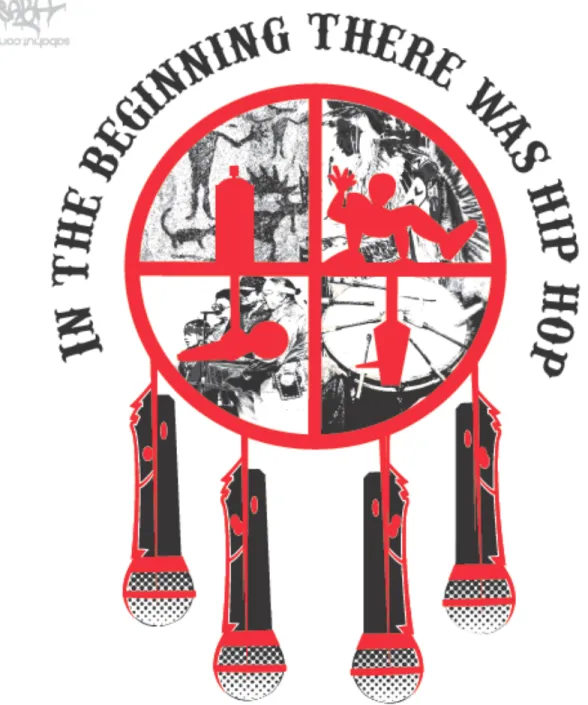
Figure 3: “In the Beginning there was Hip Hop” 72
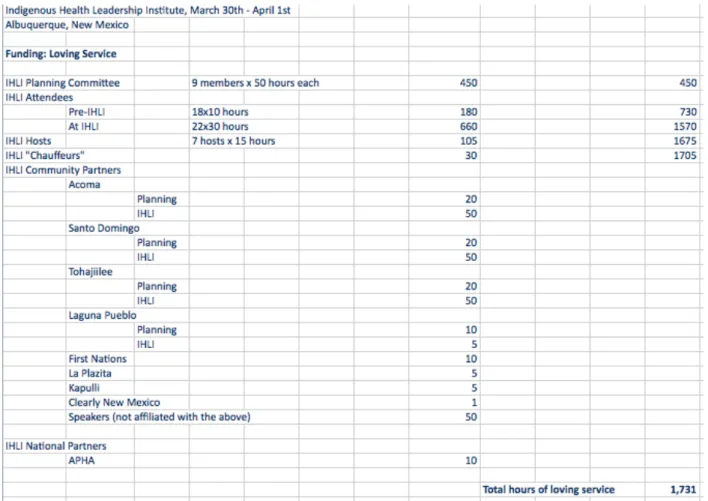
Table 2: Indigenous Health Leadership Institute Budget 73
ABSTRACT
The Native Health Initiative (NHI) is a partnership between Indigenous communities and health profession students. NHI uses community asset identification and support to address health inequities. This work is done with an approach called “loving service” which means that relationships and humanity are the starting point for all efforts, rather than monetary funding being the seed for change.
One of NHI’s four areas of focus is youth empowerment. Programs used towards youth empowerment are internships, workshops on health careers, and youth-led project grants. The Positively Hip Hop Grant component of NHI’s youth empowerment programs began in 2012. This program component bridges Hip-hop, Indigenous culture, and health. The creation and success of this grant program works as an example of Positive Youth Development in action. More importantly, NHI recognizes that a critical aspect of the health of Indigenous youth is to identify with, be knowledgeable about, and live their cultural tradition, religion, and ceremonies.
ACKNOWLEDGEMENTS
Although my name is listed as the author of this paper, my writing represents a collective, shared knowledge. Here I have attempted to acknowledge the many people who set the key and tempo of this paper so that I could overlay a melody. Thank you to the following people who, in spirit, wrote this paper with me:
Shannon and Anthony, for welcoming me in their home and teaching me what loving service is.
Dr Calleson, who as a true mentor was the sunlight and water allowing me to grow.
Sarah Mian and Michael Brown, program planning alums whose master’s papers served as guidance and clarity. Their work heavily influenced my own.
Farhan, for proofreads and brainstorming.
Adnan, for driving me to New Mexico and back.
Freddie Montoya, for inspiring the title of my paper. He is the original social justice hustler.
SABA, who I did not meet, but I have heard the sound of his art speaking loudly for justice.
Jake Forman, who revealed to me the “energetic level” of programs and encouraged me to escape measurements or units that are arbitrary and imposed.
Shane Montoya (aka Suga Shane), who does this every day.
All of the other loving people I met in New Mexico who welcomed and taught this stranger—Janice Pilcher and Samuel Smith, Lucia Garcia and the elders from Acoma Pueblo, Gregory Chino, Dr. Nicolette Teufel-Shone, Moneka Stevens-Cordova, Cesar Gonzales, Denise Griego de Angel, Alma Olivas, Albino Garcia, Daryl and Leah, Dr. Ziwasimon-Zeller, Janice Atencio, Doreen Bird, and many more.
INTRODUCTION
The Native Health Initiative (NHI) is a partnership between Indigenous communities and health profession students. Health disparities have been a persistent reality for Indigenous
populations since the time of colonization (Jones, 2006). NHI uses community asset identification and support to address health inequities. This work is done with an approach called “loving service” which means that relationships and humanity are the starting point for all efforts, rather than funding being the seed for change. While the significant health disparities and inequities experienced by Indigenous communities are recognized, NHI focuses on
“identifying and amplifying” inherent community assets that can be used towards empowering community members, improving equity, and teaching future health professionals.
A major purpose of NHI’s work is youth empowerment. One of the tools used towards youth empowerment are youth project grants. The Positively Hip Hop Grant component of NHI’s youth empowerment programs began in 2012. The creation and success of this grant program works as an example of Positive Youth Development in action. PYD is an approach for engaging youth in a way that recognizes and builds upon their strengths (Interagency Working Group on Youth Programs, ). By providing the resources, relationships, and support they need, youth can thrive as equal community partners (IWGYP). More importantly, this program has recognized that when youth can identify with, be knowledgeable about, and live their cultural tradition, religion, and ceremonies, they have attained a strong positive predictive health determinant.
This paper describes the program plan and evaluation strategies for NHI’s youth
SYSTEMATIC REVIEW
INTRODUCTION
My involvement with NHI began in 2008 when I volunteered as an intern. The experience I gained was very meaningful to me and played a role in my decision to apply to medical school. Since that time, I have intended to make further contributions to this organization. The work presented in this systematic review builds on the work of many other people, perhaps most importantly on the program planning and evaluation Dr. Anthony Fleg produced in 2007 as a student in UNC’s MD-MPH program.
As detailed in his paper, Dr. Fleg developed the idea for NHI in 2005 after experiencing many challenges in attempting to become involved with service in AI communities (A. Fleg, 2007). As a health profession student desiring to contribute his time, love, and skills, he felt frustrated that doing so was incredibly difficult. He also felt that the education provided by the UNC SOM regarding native health was particularly weak. In the context of medical education, American Indians had become an “invisible minority.” NHI would provide an opportunity for health profession students to learn from North Carolina’s AI communities and thus be
empowered to better advocate for native health needs. Dr. Fleg described this relationship as “service between two equally needy parties” (A. Fleg, 2007). Native communities could benefit from the skills, knowledge, and time contributed by health profession students. The students would in return gain new skills and knowledge as well as the privilege of being welcomed not only into the AI community but into the homes of community members.
The goals of NHI are constantly evolving to meet the needs as described and prioritized by the community (A. Fleg, 2007). One goal that has been constant throughout the last five years is youth empowerment (S. Fleg & Fleg, n.d.). The youth empowerment aspect of the program has 3 key general goals:
1. Youth members will be empowered to live healthy. This includes a broad definition of health, from improving health literacy to enabling youth to make positive choices when it comes to health problems that are linked to modifiable behaviors.
2. Youth members will become health leaders in their communities. As future leaders of a community that has inherited a history of health injustices, youth
members have an intrinsic motivation to fight for their own community. Importantly, youth members must first learn self-expression; by identifying and expressing their own needs they can ultimately be better empowered to speak on the behalf of others.
3. Youth members’ involvement with NHI will lead to an increase in AI health
providers. There is not a sufficient number of AI health professionals. NHI activities hope to increase youth interest in and educational opportunities for post-secondary or health profession education.
Challenges in Meeting Aims
community for a short period of time such as during spring or summer break. Increasing the quantity of projects did not correlate with desired outcomes either. After experiencing these initial changes, NHI did begin to respond by changing the types of interventions used as well as approaches of the volunteers.
Past and Current Youth Activities
In a way, all of NHI’s activities are youth activities as serving the greater good of the community serves the youth. While the following is not an exhaustive list of all the youth focused activities, it provides an idea of the types of interventions being implemented (S. Fleg & Fleg, n.d.):
• Spring and Fall Internships for students and youth to create and carry out a project • Youth Leading the Way project grants
• Hip Hop and Health
• Positively Hip Hop project grants • Summer Health Justice Internships
• Healers of Tomorrow mentorship program and Following the Healing Ways workshop • Decolonize Tobacco: Breath Tradition Not Addiction campaign
• Education is Ceremony college scholarships • Tar Wars
Program Components Used in Guiding Literature Search
Dr. Fleg’s original paper included a search for American Indian service learning
development of NHI by trying to identify whether there were any other programs that shared the unique characteristics of this planned program.
The purpose of my literature review is to contribute evidence based suggestions for NHI to use in program planning of youth oriented interventions, especially those activities that involve culture and/or physical activity. Core components of youth programs (1):
• Activities are tribe-directed and always focus on benefiting the native community.
Although activities are American Indian focused, collaboration with non-native community partners is encouraged.
• Activities draw from American Indian culture as well as modern pop culture.
Self-expression through the arts is used as a tool of empowerment.
• Activities should be sustainable in the relative long-term. Past programs have faced
challenges in success when relying on short-term volunteers. Activities should require minimal funding and be sustainable through community and volunteer generated resources (“loving service”).
METHODS
Research Question
either health or leadership? Special attention was paid to funding/sustainability aspects of the literature to answer the secondary of whether love is an effective funding source for NHI.
Search Strategy
I conducted a literature search of three electronic databases: Cochrane Library, PubMed, and Web of Science. Search terms used were "Native American" AND empowerment AND (youth OR teens OR adolescents OR adolescence OR teen OR child OR children) AND (assessment OR evaluation OR impact). Different combinations of these terms were used in each search depending on the MeSH terms provided by the database. Titles and abstracts were reviewed for inclusion/exclusion criteria.
Exclusion Criteria:
• Article is focused on treatment of a specific disease rather than on prevention. • Study population was adults (over age 18).
• Study designed for a target population of immigrants such as a Latino or African
immigrant community.
• Intervention could not be a for profit use of art (such as a tour group).
The Cochrane Library: Using the MeSH terms “Native American,” empowerment, and “dance therapies,” no articles met the inclusion/exclusion criteria.
impact of the participation in performing arts on behavior of adolescents. Even though the program in Ottawa may have provided excellent insights, it was excluded because program participants were mainly immigrants and the program was bilingual French-English.
Web of Science
The search in this database used the terms Topic=("American Indian" OR "Native American") AND Topic=(empowerment OR leadership) AND Topic=(youth OR teens OR adolescents OR
adolescence OR teen OR child OR children) AND Topic=(assessment OR evaluation OR
impact). Relevant articles included a systematic review of physical activity interventions in
AI/AN populations in the US and Canada and the Zuni Life Skills Program.
SUMMARY of PAPERS/PROGRAMS
The Zuni Life Skills Development Program/ American Indian Life Skills Development
Curriculum
This program was initially developed in response to rising rates of suicide in 1987 in a Zuni community in New Mexico (LaFromboise & Lewis H., 2008). Core components of this program were: 1) native focused 2) curriculum of life skills development. The native focus of this program was maintained from the outset, as the second author of the paper was a community leader and invited the first author at the request of the community. The authors obtained
extensive input from tribe members and modified the program planning accordingly.
Life skills development was used as it was determined to be the most effective approach to prevent suicide and related risk factors (LaFromboise & Lewis H., 2008). Life skills
curriculum was also very culturally flexible and was made as relevant as possible to life on the reservation. By modifying underlying areas of vulnerability the authors hoped to minimize high-risk behavior. Important skills that were taught were help seeking and help-giving behaviors. Community and school gatekeepers were also trained in not only detecting risks but also how to modify risks.
Program evaluation was through a “multi-method” “quasi-experimental” post-test (LaFromboise & Lewis H., 2008). Methods included self-report or participants, behavioral observations, and peer ratings. The authors reported that these tests revealed reduced suicidal thoughts, suicidal behaviors, and feelings of hopelessness as well as increases in problem solving and suicide intervention skills. However, the program was discontinued before the intended three years could be completed. Despite overcoming initial resistance from the community for this program, support for the intervention waned after the positive initial results as key
Systematic Review of Physical Activity Interventions Implemented with American Indian
and Alaska Native Populations in the US and Canada
Inclusion criteria for this systematic review was for papers published between 1986-2006 on physical activity related interventions in American Indian, Alaska Native, aboriginal, native Hawaiian, and native US Samoan populations (Teufel-Shone, Fitzgerald, Teufel-Shone, & Gamber, 2009).
In total 64 interventions were discussed. Twenty-eight were from peer-reviewed journals. These interventions were typically more structured with pre and post intervention testing and were often focused on specific medical outcomes.
Thirty-six were from the gray literature. The authors wanted to accurately portray all of the different types of programs. For varying reasons, tribal or community leaders frequently use methods of information dissemination such as conferences, web sites, and lay publications rather than peer reviewed journals. By including searches in this type of literature, the authors were able to be as thorough as possible.
The authors found that the programs described in the gray literature were typically tribally administered and community based. However, it was difficult to discern whether these programs had an explicit focus on cultural relevance. This contrasted with programs described by non-native authors who may have felt more compelled to highlight this aspect of their program planning when applicable. Interventions in the gray literature were also more
Findings from this systematic review were that the most effective programs had two important components: 1) empowering community members to develop interventions in line with local cultural relevance 2) nurturing a balanced relationship between community members and outside health professionals that emphasized leadership by the tribal partner even if funding was provided by the outside health institution 3) involving all age groups in the community. The authors described successful outcomes as those which were longest running 4) less likely to use school based approaches. Even if initial positive outcomes were not maintained, the persistence of the program itself represented a change in cultural perceptions and social norms about
physical activity. Also, by including all age groups in the community this sent a powerful message that everyone can benefit from reducing their risks with physical activity and contributed to the sustainability of the program. School based approaches were often not
successful because the reservation community may not view the school as an integral part of the community. This is an interesting similarity with the Zuni Life Skills Program, where a school-based approach was not successful in the long term as it failed to involve the key community stakeholders.
Youth empowerment strategies were noticeably absent from the programs in this review. Only one paper involved a youth training component where youth were trained to deliver
education interventions. Had there been more programs with this type of component, it may have been considered an important part of sustainability and success by the authors.
One weakness of this review is that use of community assets were not described.
External grants, when present, were mentioned, and only one program described had funds from the tribe provided for the program. This portrayed a limited view of program sustainability.
Another weakness is the review’s emphasis on statistically significant quantitative outcomes. This means that numerical outcomes, such as changes in weight, were compared before and after the intervention to determine whether the intervention had led to a statistically notable change. Programs that did not have statistically significant outcomes were deemed less effective. This is a weakness because it puts an emphasis on very specific, narrow outcomes and ignores the possibility of more nuanced, qualitative outcomes. In addition, many of the
programs that had the financial resources to carry out such robust calculations after the
intervention did not have the resources to continue the intervention or the evaluation long-term. I interpreted this to mean that the review preferred studies that were limited in the scope of their evaluation as well unsustainable for the participating communities.
Despite discussing the difficulty in developing and maintaining evaluation strategies, there were no clear recommendations on how programs can obtain and use feedback after interventions. They seemed to imply that resources are best used in program maintenance and that a program continuing past five years was a sign of success. However, without a system of feedback no one can be sure that such programs are achieving appropriate goals.
The authors also noted that evaluation is critical in competing for limited grant funding. However, they did not acknowledge that showing program success would be important in
shown to be effective. The success of the youth is important first to the participants themselves, and competing for grant funding should be a secondary concern. If funding is so limited, the authors could have contributed some discussion as to how communities sustain programs despite the lack of resources. This is a topic I was hoping to read more about but it was not discussed in this review.
The authors may have overestimated the importance of external funding. Two programs in the review had corporate sponsorship from Nike. Despite this type of support, outcomes were not particularly impressive from these two programs. I tried to find detailed evaluation
information for both T.R.A.I.L. (Together Raising Awareness for Indian Life) and Wings of America. Outcomes for T.R.A.I.L. have not yet been described and apparently funding for evaluation purposes has been a challenge (Halpern, 2007). The Wings of America website had some claims about positive outcomes but did not clarify who the statistics were referring to (Wings of America, 2013). This was particularly worrisome as the program has been in existence since the 1980s and participating or interested communities need access to more specific outcomes data.
The Impact of Participation in Performing Arts on Adolescent Health and Behavior: A
Systematic Review of the Literature
This review included studies published from 1994 to 2004 on performing arts
of dance and music interventions. Other art forms such as poetry and the visual arts were excluded. Ultimately, 15 studies were reviewed.
The authors of this review focused heavily on evaluation and outcome aspects of the programs. Also, it was difficult to determine which aspect of multi-faceted programs contributed to positive outcomes.
Most programs lacked robust evaluation. The authors explained that it is likely “not yet culturally central” to art focused health interventions. Another challenge in developing
evaluation strategies was the need for broad definitions of health. Lacking these definitions often led to poor clarity of program goals. Even if qualitative or descriptive methods were used, they were often not described thoroughly and lacked interpretation. Another issue with most evaluations was that they were short term and reported immediate effects. This failed to
demonstrate any sustained impact on participants. The authors also noted that these self-reported changes should not be considered equivalent to actual changes in behavior.
A strength of this systematic review is that it tried to account for the situation specific context of interventions and also involved an adequate respect for and discussion of qualitative methods of evaluation. Both a strength and a limit of this review is that the studies included were so heterogeneous that it was difficult to make clear recommendations based on the findings.
A major limitation of this review is that only drama interventions were included. Not only would it have been helpful to have some music or dance interventions discussed, but also other types of art such as creative writing. This may have led to a more comprehensive review. Another limitation is that when outcomes were reported as significant, this term was not defined and magnitude of effects was never discussed. This made it very difficult to interpret the
effectiveness of the programs. Peer interaction was described as strong evidence of program impact, but considering that peer interaction was required for the drama interventions this does not provide very helpful information.
Getting to Social Action: The Youth Empowerment Strategies (YES!) Project
The YES! Project is a strengths-based empowerment program that recognizes the skills youth already have and guides them to achieve social action projects (Wilson, Minkler, Dasho, Wallerstein, & Martin, 2008). The target population for this program is multi-ethnic urban youth in disadvantaged school districts. In this particular study, students were recruited from fifth grade classrooms and there was also a small number of sixth graders who had continued involvement in the study from the previous year.
development of SAPs of four types: awareness campaigns, behavior campaigns, clean-up projects, and improving school spirit.
The authors reported that the success of SAPs varied and discussed extensively the challenges in achieving successful SAPs. However, I did not find this discussion helpful. The idea behind YES! is that the outcomes of individual SAPs developed by students are an
intermediary step towards the eventual end goal of improved health outcomes in participants. Unfortunately discussion of such end health outcomes was sparse.
The authors provided several possible definitions for evaluating the success of SAPs and measuring the degree of youth empowerment that resulted from involvement in the project. While it was interesting to consider how such qualitative definitions can vary, no firm suggestions were made based on lessons learned from the YES! program.
A strength of this study is that community assets were considered. The authors described the advantages of school-based programs, such as students having potential allies available through their classmates or administrators as well access to school resources.
A major limitation of this study was the high attrition. The YES! program is intended to be a three-year after school program but most students did not continue as planned. Another major weakness is the curriculum did not adequately address challenges in project development. Social action projects were developed without ensuring that the project addressed the underlying cause of the issue that students were trying to change. Time was also cited as a frequent
ANALYSIS and CONCLUSION
Unfortunately, outcome reporting and evaluation strategies of the interventions studied for this review were particularly weak. This makes it difficult to produce strong
recommendations for NHI’s future youth empowerment programs.
Program Planning
Culturally appropriate interventions were a constant theme throughout this review. As discussed by LaFromboise and colleagues, there is not definitive proof in the literature that culturally flexible programs confer added benefit (LaFromboise & Lewis H., 2008). The impact of culture on outcomes is incredibly difficult to measure. Ultimately, respect of participant culture is more important than the strength of available evidence. The Zuni Life Skills Program had the most helpful model of using an iterative process where their life skills curriculum was continually modified in response to community concerns (LaFromboise & Lewis H., 2008). Unfortunately, this was not successful in the end as the program still lost the support of the community and was not sustainable. Considering that the Positive Youth Development
Framework (PYD) states that implementation fidelity is an important aspect of program success, it is difficult to make a recommendation regarding the variation and modification of programs (Catalano, Berglund, Ryan, Lonczak, & Hawkins, 2004).
While the PYD framework suggests that effective interventions should be nine months or longer, it is not truly possible to quantify the time needed to change a life (Catalano et al., 2004). Perhaps the most useful reflection on program duration was Teufel-Shone and colleagues’
Attrition was a common challenge in many of the programs, yet no recommendations were made on how to reduce this factor.
Program Evaluation
NHI has a unique opportunity to contribute to the literature. While NHI currently has a website and blog detailing in a journalistic way the activities of their organization, more detailed descriptions of outcomes would be incredibly valuable to maintaining support for these types of interventions, as well as encouraging other communities to continue any similar efforts. While Wilson and colleagues were right in discussing all of the different ways participants can define outcomes that are important to them, it is evident from the two systematic reviews discussed that description of these qualitative measures are needed (8,4,7).
A challenge to developing this type of framework is appreciation of holistic models of health (Daykin et al., 2008). Programs with a broad definition of health may have difficulty developing focused aims and following outcomes (Daykin et al., 2008). However, if we truly believe in holistic models of health, we must find a way to effectively try to achieve them and show that our efforts are working. This is infinitely difficult because truly empowering a young person does not come down to specific life skills but creating paradigm shifts. Post-intervention surveys cannot capture this kind of a change.
PROGRAM PLAN
OVERVIEW
The Native Health Initiative (NHI) is a partnership that addresses health inequities in American Indian (AI) communities. In order to understand the priorities of NHI, it is important to describe the health inequities that exist for AIs on a population level. Although NHI has had projects in California, Connecticut, North Carolina (NC), and New Mexico (NM), the latter two states will be discussed in more detail because projects there are currently the focus of greater activity.
Nationally, there are 5.2 million people who identify as American Indian or Alaskan Native (Norris, Vines, & Hoeffel, 2012). In NC, there are 122,110 AIs, making up 1.28% of the state’s population (U.S. Census Bureau, n.d.b). Despite this small proportion, AIs carry
significant health inequities. American Indians in NC are not only more likely to have chronic diseases such as diabetes, but diabetes death rates are twice that of European Americans (Office of Minority Health and Health Disparities, 2010). Behavioral risk factors for chronic diseases like smoking tobacco and physical inactivity are also significantly higher (Office of Minority Health and Health Disparities, 2010).
New Mexico has the fourth largest AI population in the nation, with 193,222 AIs, making up 9.38% of the state population (U.S. Census Bureau, n.d.a). American Indians in NM have the highest disparities compared to other racial groups for several important health indicators,
There are considerable challenges in obtaining and understanding health data to use in setting priorities for interventions in AI communities. For example, for census purposes, Americans choose how to identify themselves on surveys. This can create confusion in
interpretation of trends; changes in population may be a result of actual shifts or to social factors changing how individuals are reporting their race (Snipp, 2002). Data on specific tribes are even more limited, especially for tribes that are state recognized but not federally recognized
(Letorneau & Crump, 2009).
Despite the limitations on information collection, the data discussed above can help us to begin to understand the health inequities NHI is trying to address.
CONTEXT of PROGRAM PLAN
Funding of Health Services
Any program that intends to serve an AI community must understand and address the intricate context of AI health inequities. Federally recognized tribes are “domestic, dependent nations” with local sovereignty towards which the United States government has unique
The current manifestation of this provision of health services to federally recognized tribes is the Indian Health Service (IHS) (Department of Health and Human Services [DHHS], n.d.). By design of current legislation, adequate funding for the IHS is not guaranteed ((U.S. Commission on Civil Rights, 2003). Insufficient funding is one of many reasons why the federal government has persistently not met the basic health needs and rights of AI communities (U.S. Commission on Civil Rights, 2003).
Tribes that are only state recognized do not have access to the services of the IHS (Letorneau & Crump, 2009). In North Carolina, there are eight state recognized tribes ((Office of Minority Health and Health Disparities, 2010). Only one of those tribes, the Eastern Band of Cherokee, is federally recognized. This has important implications for health care access (Office of Minority Health and Health Disparities, 2010). Members of state recognized tribes typically obtain health services through private insurance (Letorneau & Crump, 2009). With more than twenty percent of AI families in NC living below the poverty line and having high
unemployment rates, the majority of tribe members are left uninsured or underinsured
(Letorneau & Crump, 2009; Office of Minority Health and Health Disparities, 2010). In fact, AIs in NC are uninsured at rates twice that of European Americans (Office of Minority Health and Health Disparities, 2010).
Acceptability of Programs
conducted in AI communities (Straits et al., 2012). Although these are presented as guidance in research, they can also be applied to program planning.
Any collaboration with native communities requires first developing a cultural
understanding of the core values of the community (Straits et al., 2012). Once this knowledge is obtained, it must be continually applied throughout interactions with the community as well as reviewed and improved upon with the acknowledgement that cultural competence can never be completely mastered.
Another key guiding principle is that any research or work done with the community must be driven by the needs of the AIs, not by the outside researchers or public health workers. This means that goals are set in such a away that they are focused on achieving what the
community deems necessary.
Introduction to Program Approach
The complexity of resource availability and the challenges in developing successful collaborations with outside parties are major reasons why the Native Health Initiative developed an approach termed “Loving Service” (S. Fleg & Fleg, n.d.). First, this approach upholds traditional AI values that prioritize individual human interaction over money.
Second, there is a focus on an important guiding principle that strengths of native
Third, loving service is an approach that is sustainable and community-driven. By pulling together the resources that are available in the community, as it exists right now, the stage is set for continuing efforts. Dependency on external funding introduces an aspect of uncertainty and unsustainability – if that source of funding is no longer available, the continuity of the program is in jeopardy. Also, program efforts will focus on the needs and criteria of the community, rather than on the requirements of external funders. This human centered approach serves as a possible solution to addressing inequities in the context of the AI experience.
New Program Component
As described in the Literature Review, NHI is involved in a diverse array of activities. The activities generally fall under the headings of either health profession education or youth empowerment. Starting in 2012, NHI has expanded their youth empowerment programs to include activities driven by Hip-hop culture. The following section provides context as to why this new component has been added.
HEALING AND ART
Arts and Native America
people see painting as indistinct from dancing, dancing as indistinct from worship, and worship as indistinct from living.” (Dufrene, 1994)
There is often a tendency to focus on negative health statistics and disadvantages that AI communities face. However, all community work must be done with a positive framework in mind (Straits et al., 2012). Building on the positive qualities and strengths of the community is where all work should start (Straits et al., 2012). NHI’s involvement in projects of artistic expression builds on the value of beauty through art, ritual, and worship.
This aspect of Native culture has been a major reason that communities have been able to remain resilient in the face of devastating tragedies. Bien described that “creative
expression…can awaken the innate desire for balance and provides the means for restoring personal equilibrium” (Gray, 2010). Active self-expression can facilitate a state of
consciousness where a person is able to reflect on their personal experiences, reaffirm their traditional values, and feel empowered to work towards positive growth and change (Gray, 2010).
Hip-hop as Social Activism
“Here’s the fact, true Hip-hop is so much more than that. So much more than rap, so much more than beats. Hip-hop is about victory over the streets…Hip-hop is an awareness. Rap we do, Hip-hop we live.” (KRS-ONE, 2003)
These artistic vehicles are used to give voice to people who historically unheard (Cermak, 2012; Sheffield, 2011).
A key reason that Hip-hop is an effective tool of empowerment is the immediacy with which it can be used to spread a message. Music can be heard, break dancing can be seen and experienced, and graffiti can beautify immediately (Sheffield, 2011). This is in contrast to more scientific or academic interventions that not only run the risk of alienating the community but also struggle in developing a situation where participants are employing their natural language and culture (Cermak, 2012; Gray, 2010).
Another reason that Hip-hop culture is powerful is because it promotes an attitude of perseverance. This is best described in Cermak’s (2012) definition of empowerment as “critical thinking without fatalism” (p.200). The Hip Hop Doc, Dr. Rani Whitfield, describes this
fatalistic attitude that has to be overcome in one of his songs: “Whatever! Keep saying whatever and you’re going to whatever yourself out of school, out of a job, in jail, in the hospital, and maybe into the grave” (Whitfield, 2009). Hip-hop is revolutionary in that it defies indifference and calls for action (Sheffield, 2011).
Hip-hop, Healing, and NHI
NHI’s Hip-hop specific youth grants began when students from the Native American Community Academy (NACA) applied for a Youth Leading the Way Grant in January 2009 (A. Fleg & Fleg, 2013). Vandalism and gang tagging had become such an issue in their school’s bathrooms that students were not allowed to use the restroom unattended. Believing that the vandalism had become a health issue, a group of students applied for a grant to create a graffiti art mural that would send a strong reminder of NACA’s value of respect (Felipe, Daw, Stands, Haskie, & Xavier, 2009). Because of the unwritten rule of Hip-hop conduct that graffiti art is not to be messed with once it is created, this strategy for stopping the vandalism was incredibly effective. Still, in 2013, the school’s bathrooms proudly display the artwork of this group, with no gang-related vandalism to be found.
After this project, NHI developed the Positively Hip Hop Grant. The idea was simple – support artists and activists to create programs that would use Hip-hop culture to improve the health and well-being of their communities. The first grant went to an established event called Breakin’ Hearts. The event was in its 10th year, but NHI wanted to act as a sponsor in order to support Hip-hop as a health medium (A. Fleg & Fleg, 2013). A health education pamphlet created for this event by Shuga Shane, NHI, and SABA is included as Figure 1 in the Appendix.
RELEVANT PROGRAM THEORIES
The program planning theories that best overlap with NHI’s youth empowerment goals and principles for engaging with AI communities are Social Cognitive Theory and Community Organization Theory. These theories help to guide the choice of activities and set a framework for how to reach desired outcomes. While this program component has its own defined goals and objectives, it is important to keep in mind that it is largely inseparable from the overall mission of NHI as a whole.
Social Cognitive Theory
Social Cognitive Theory (SCT) sets a framework for understanding how the dynamic interaction between individual persons and their environment affects individual behavior (National Cancer Institute [NCI], 2006). A key construct of SCT is the development of self-efficacy (National Cancer Institute [NCI], 2006). Youth members of NHI must develop a sense of personal agency before they can confront the significant challenges that lay before them (National Cancer Institute [NCI], 2006). This is especially important in the program goals of developing young leaders and of enabling youth members to make healthy life choices.
Another relevant construct in SCT is behavioral capability. Youth members must receive training that will impart the necessary skills to perform certain behaviors (National Cancer Institute [NCI], 2006). For example, self-expression is a skill that can be learned. This skill must be mastered before a youth member can go on to become a leader advocating for their community.
in the development and maintenance of new skills. This concept helps to guide the interaction between NHI youth with coordinators, advisors, interns, mentors, and volunteers. While there is no hierarchy in the NHI program, younger members have much to gain from the time, energy, and love of elder dedicated program members.
Community Organizing
Community Organization Theory (COT) has important areas of overlap with NHI’s goals. One of the most important pillars of this program is that all activities are “Native
Centered” (S. Fleg & Fleg, n.d.; Straits et al., 2012). In COT, this is described as a community-driven approach in which the community identifies, assesses, and solves health and social problems (National Cancer Institute [NCI], 2006). This approach is essential for two reasons. First, community-driven efforts are more likely to succeed (National Cancer Institute [NCI], 2006). Second, and more importantly, AI communities have been subject to a long history of being promised by outsiders that research or other health related projects in the community would provide benefits for the AI community when in reality outsiders did not have the best interests of AI people in mind (Straits et al., 2012). In response to enduring injustices and continuing health inequities, social action type community organizing is a model that underlies all work done by NHI.
Social Networks/ E-Health Strategies
A significant and established tool used by NHI for community organization is electronic social networking. While minority or marginalized communities typically do not have the power to advocate for themselves through mass media, social media such as Facebook or blogs provide an alternative. Working together with other program members, the organization can create a dialogue that highlights their community’s priorities. Looking at the community on a national level, American Indians often are geographically dispersed (U.S. Census Bureau, 2012). Using social media increases the reach of NHI’s message (National Cancer Institute [NCI], 2006). Although program activities are currently more locally focused, all of the work and energy of NHI is intended to be shared as a national resource for American Indians. Creating an online community helps to reinforce real-people meeting locally as well as gathering people from other geographic locations (Hopkins, 2006).
GOALS and OBJECTIVES
These goals and objectives:
• Are directed towards NHI youth activities that involve the performing arts, including Hip
Hop and Health and social action project internships.
• Address both those with the responsibility of activity development and those who are
primarily participants in the activities. These groups will likely overlap.
• Do not indicate specific periods of time because of the persistently innovative approach that
NHI takes. NHI members continually create new social action projects and these activities vary in their duration, from one day to several months.
Goal: Participants will have a shared vision of the activity’s purpose.
• Short Term Objectives
o Before and after activity initiation, 100% of participants will have thought about their own personal goals and have the chance to communicate these thoughts with other participants.
• Long Term Objectives
o After activity completion, at least 50% of activity leaders will feel that their activity was an important part of the fabric of the community, and that their efforts both supported, and were supported by, the community.
Goal: Activities will be sustainable.
• Short Term Objectives
o 100% of activity leaders who are a temporary member of the community (i.e. visiting interns) will begin any activity with a plan for how the activity objectives can
continue to be successful after their departure.
• Long Term Objectives
o 100% of activity leaders will have an understanding of “loving service” and will make all efforts to fund activities through love.
Goal: Participants will experience enhanced empowerment and sense of well-being.
• Short Term Objectives
o At least 75% of activity participants will learn new skills or enhance present skills that serve as vehicles for self-expression.
o At least 75% of activity participants will be empowered to make choices that further their own health and needs.
• Long Term Objectives
o At least 75% of activity participants will reflect that their participation in the activity was qualitatively a meaningful life experience.
o At least 75% of activity participants will continue to be empowered to make choices that further their own health and needs.
o At least 75% of activity participants will feel that participation in the program led to an improved quality of life and change in social consciousness.
o At least 75% of activity participants will feel that the activity addressed their individual needs for being successful participants (their feedback was used towards iterative program modification).
LOGIC MODEL
As described previously, NHI’s youth programs are very diverse. The program developer, duration of activity, and other details vary. However, the overall goals of
continuous processes. This logic model represents NHI’s current approach to youth programming. To see NHI’s original overall program logic model, or the “NHI Circle of Healing,” see Figure 2 in the Appendix.
PROGRAM IMPLEMENTATION
A. Organizational
1. Identification of Relevant Activities
organized by other community groups for which NHI becomes involved as a co-sponsor are identified via NHI email listserv, Facebook page, Blog, website, and word of mouth.
2. Engagement of Youth
Recruiting and engaging youth participants is key for preventing underinclusion. When underinclusion occurs, it often means that underlying program weaknesses such as lack of appealing programs or unidentified barriers exist, which would mean that NHI is not achieving its overall goals (Issel, 2009). NHI will avoid such issues by letting youth take the lead in program development as they are best equipped to identify the activities that will meet their needs. Second, NHI will actively assist the community in identifying available resources to overcome barriers through a method of helping the community to help themselves.
3. Output Tracking
Tracking the units of service provided by NHI is important for showing the reach of the program, building community momentum, and most of all for describing the hard work achieved by the community (Issel, 2009). A potential weakness of NHI’s current plan is that output tracking is currently maintained by the program founders and a mechanism is not in place to continue this process if they become unavailable. A plan for sustainability or sharing responsibility needs to be developed so that other members can step in to complete this task.
4. Active Communication through Social Networks
5. Evaluation
The implementation plan for short and long-term evaluation is described in the Program Evaluation section of this paper.
B. Scope of Arts Events/ Activities
1. Language and Music: Spoken word performances, poetry writing, rapping/ MCing, song, recording and sharing of oral history.
Example: Summer Battle Jam
The Summer Battle Jam was a concept developed by the Sons of the Most High and Choyse Music P (Montoya & Sons of the Most High, 2013). The first Jam took place in August 2012 and was sponsored in part by NHI’s Positively Hip Hop Grant. Event organizers created an open invitation to community youth who wanted to participate in an MC Battle (A. Fleg & Fleg, 2013). The only instructions given to the MCs was “keep it clean,” and despite no specific topic being designated, the majority of the youth shared stories about how addiction had played a role in their own lives and the lives of their families and classmates (A. Fleg & Fleg, 2013). While local support and recovery programs were present to offer information on their opiate addiction services, the event ended up being a bidirectional conversation, where both the youth and addiction professionals gained knowledge. Information was shared that may have never been revealed in a clinic setting. The second annual Jam, which will occur this year, will also involve graffiti art as a “microphone” for expression of both the literal artistic battle and the personal, real-life battles that youth face (Montoya & Sons of the Most High, 2013).
2. Dance: B-boying/ break-dancing, Powwow gatherings. Example: Sacred Cypher
Hop Grant program in collaboration with the Chief Rockas (A. Fleg & N.H.I., 2012). The event has taken place for the last two years at the end of Gathering of Nations weekend. The concept combines the “cypher” or spontaneous and powerful energy that comes from Indigenous dance and drum, with Hip-hop break dancing, MCing, and beatboxing to achieve a healing energy (A. Fleg & N.H.I., 2012).
By combining Hip-hop and powwow culture, youth who understand and live Hip-hop, but are not as aware of Indigenous culture, can learn new concepts through a language already familiar to them (A. Fleg & Fleg, 2013). An image by SABA that demonstrates how Hip-hop can be used to translate Indigenous culture is included as Figure 3 in the Appendix. This cultural enrichment also benefits Native youth, as enhanced self-knowledge serves as a positive health indicator (A. Fleg & Fleg, 2013).
A video clip from this event can be seen at
http://www.youtube.com/watch?v=jBsC9_UCVCg.
3. Visual arts: aerosol art/ graffiti beautification, digital media/ videos/ documentaries, clothing design.
Example: Hip Hop Medicine
NHI provided a Positively Hip Hop Grant to support an after school Street Art program led by the Court Youth Center (CYC) (Light, 2012). This after school program provides a legal graffiti art space called ARTyard 417 (Light, 2012). Providing a safe and legal space for youth to express themselves through the medium of graffiti is an example of positive youth
their own messages for, and pride in, their community.
Artist Credit: Randy Sabaque (SABA)
Graffiti art created on water tanks in Navajo Nation to bring attention to water rights issues.
C. Resources
1. Human
sustainable after the intern leaves.
Another fluid aspect of the participant base is that the community is constantly holding short-term cultural events. These single events such as a one-day Powwow or three-day Break-dance competition cannot be viewed as individual interventions but as part of a larger approach towards community engagement. The role of community partners in sustaining the number and quality of such events is critical.
2. Financial
Loving Service vs. Community Service
As discussed previously, NHI’s work is based on the concept of “loving service” instead of being based on funding as a starting point for community work. This is because NHI takes an asset based approached, “identifying and amplifying” the humanity and love that is present in the community. Also, the results of hours and resources pulled together by the community serve as a source of inspiration and continued efforts. Love as a starting point is sustainable, while funding may or may not be available. An organization dependent on funding for its existence is
essentially more vulnerable. Budgeting Love
The main way that NHI maintains accounts of loving service is through totaling hours. These totals are treated with the same attention as monetary totals. An example of this can be seen in Table 2 of the Appendix.
NHI usually translates these totals into an estimate of how many full time staff would have been required to achieve the same amount of loving service hours. An example of this can be seen in Figure 4 of the Appendix.
EVALUATION PLAN
RATIONALE for PROGRAM EVALUATION
Background
Although my literature review did not identify any programs completely analogous to NHI, useful program evaluation lessons were gleaned from the available literature. For the most part, these lessons highlighted challenges and flaws that exist in cultural community programs. Evaluation strategies lacked the following key characteristics:
• Sustainability • Dynamism • Commitment
• Real world, Qualitative measures
It is also possible that similar programs exist, who are meeting these characteristics, but have not described their strategies in any accessible literature. Considering these factors, the main
motivations for developing and maintaining an evaluation strategy are:
• Establish documentation of evaluation strategies so that the knowledge can be
shared with other similar communities and efforts.
• Give all program participants an opportunity to reflect on program impact. • Portray the successes achieved through “loving service.”
• Attempt to measure growth in community strength.
Participatory Evaluation and Evaluator Characteristics
As described by John Brandl, quality of evaluation does not correlate with the amount of money spent on the program evaluation (Patton, 2008). Evaluators must be inspired, loyal, and virtuous in their approach, independent of financial incentives (Mastoroudes, 1989). A
commitment to the community and NHI’s mission are also key characteristics.
Stakeholder Involvement
The stakeholders that need to be involved in the evaluation include NHI members and community partners. Key questions they would be concerned with are:
• Was there a shared vision of what the current program was meant to accomplish
before the event?
• What were the short-term outcomes and opinions of the event?
• What are the lessons learned from this event that can be applied to similar subsequent
events?
• What will be the long-term impact of the event?
Stakeholders will be involved by defining, based on their own experiences and knowledge, more specifically how these general questions should be measured.
Potential Challenges
strategy leaves out measures that may be more readily generalizable (Kubisch, Schorr, & Weiss, 1995). This allows some flexibility for evaluators who understand how broad community outcomes can be, both from the perspective of who has been impacted by the CCI, and how that impact has manifested (Curnan et al., 1998).
This approach is particularly important when it comes to cultural expression, since the action of expressing one’s self artistically may be considered more important than a downstream impact (Gray, 2010). However, this line of thought also introduces a controversial question as to
whether community action without evaluation is an adequate strategy.
EVALUATION STUDY DESIGN
Considering the inherent challenges of evaluating a continuous series of varied events and activities, the best study design for this program is the patched-up cycle design. This design allows evaluators to compare information from consecutive but different groups (Issel, 2009). Using this design, evaluators can focus on active participants and will not have to identify a comparison group. Also, despite potential scientific biases in this design, it is more realistic and provides program evaluators with an approach for trying to document the effect of the program over time in the community. As mentioned in my literature review, most programs that were similar to NHI did not have any documented qualitative results available.
In order for an evaluation of NHI’s community cultural activities to be successful, the evaluation methods must be simple, inexpensive, and not obstructive to the goals of program implementation. The evaluation methods most conducive to these requirements include focus groups, surveys (questionnaires), and interviews. Deciding which of these methods to use depends on:
1. Which stakeholders are involved in achieving the objective being evaluated and 2. How the activity structure makes stakeholders available for participation in evaluation.
For example, in the first short term objective of making sure that all participants have been able to consider and communicate their personal goals, engaging the actual group participating in the activity, or a smaller cohort of that group, in a focus group would mean that most of the
important stakeholders for that activity would be available. The second short term objective, however, focuses on a specific individual or small team, and thus an interview may allow for more in depth answers from that individual. If an interview is not possible, a questionnaire can be used to at least elicit a basic understanding of the stakeholder’s point of view.
EVALUATION PLANNING TABLES
In order for an evaluation of NHI’s community cultural activities to be successful, the evaluation methods must be simple, inexpensive, and not obstructive to the goals of program implementation.
The following tables contain an outline of evaluation questions pertinent to the program objectives. These tables represent a comprehensive list of possible topics and methods to use in the program evaluation. However, in practice, these are suggestions that can be tailored by activity organizers. Depending on the group of participants and the nature of the activity, the questions and methods can be adjusted accordingly.
Short Term Objectives
1. Before and after activity initiation, 100% of participants will have thought about their own personal goals and have the chance to communicate these thoughts with other participants.
Evaluation Question Participant Evaluation Method
Did all participants have an opportunity to consider their goals before the activity? How would they describe their goals and expectations?
If they did not create goals for themselves, why?
Were participants able to share their goals with each other at the start of the activity? If they were not able to share their goals, why not?
What barriers did they face in creating and discussing goals? What suggestions do they have for improving the process?
Activity participants/ NHI youth
2. 100% of activity leaders who are a temporary member of the community (i.e. visiting interns) will begin any activity with a plan for how the activity objectives can continue to be successful after their departure.
Evaluation Question Participant Evaluation Method
Did the activity leader clearly define the objectives of the activity?
Did the activity leader feel that the objective could be achieved during their time? If not, did they feel that a plan was in place to successfully continue the attainment of this objective after their departure? What barriers did activity leaders face in defining and planning their objectives?
Activity leaders Survey
Interviews
3. 100% of participants will feel that they were able to express themselves in their own language and culture, as they choose to define it.
Evaluation Question Participant Evaluation Method
Did all participants feel that they were supported in expressing themselves? What factors contributed to them feeling that they were able to express themselves? If they did not feel able to freely express themselves, why not?
What suggestions to participants have for
improving the environment of self-expression?
Activity participant/ NHI youth
Survey Focus groups Interviews
Evaluation Question Participant Evaluation Method Did participants learn new
skills in self-expression? If so, what skills did they learn?
If not, why not?
What activities were most helpful in the development of new skills?
Activity participant/ NHI youth
Survey Focus groups Interviews
5. At least 75% of activity participants will be empowered to make choices that further their own health and needs.
Evaluation Question Participant Evaluation Method
Did participants report improved health-related decision-making and strive for behavior change? (Brown, 2011)
Did participants increase their level of confidence in their ability to make positive health choices? (Brown, 2011) What factors contributed to feeling empowered?
If they did not, why not? How do they think the activity can be improved to support their empowerment? What types of positive changes have they noticed after the activity?
Did the activity make them feel supported to make these positive changes?
How can the activity promote more positive changes among activity participants?
Activity participant/ NHI youth
Survey (Questionnaire) Focus groups
Evaluation Question Participant Evaluation Method Did participants feel
empowered?
What factors contributed to feeling empowered?
If they did not, why not? How do they think the activity can be improved to support their empowerment? What types of positive changes have they noticed after the activity?
Did the activity make them feel supported to make these positive changes?
How can the activity promote more positive changes among activity participants?
Activity participant/ NHI youth
Survey Focus groups Interviews
Long Term Objectives
1. After activity completion, at least 50% of activity leaders will feel that their activity was an important part of the fabric of the community, and that their efforts both supported, and were supported by, the community.
Evaluation Question Participant Evaluation Method
Did activity leaders feel that their activity positively
contributed to the community? If not, why not?
Did activity leaders feel that their efforts were appreciated? What could have been done differently to improve a positive and communal environment?
Activity leaders Interviews
Evaluation Question Participant Evaluation Method Did activity leaders feel that
they could define loving service?
Did activity leaders feel that increased funding would have improved the activity?
If so, why?
Activity leaders Interviews
3. At least 75% of activity participants will reflect that their participation in the activity was qualitatively a meaningful life experience.
Evaluation Question Participant Evaluation Method
Did activity participants feel that their participation in this activity was meaningful? What specific components held meaning for them? If not, why not?
In what way has their opinion of the activity changed as time has passed?
Activity participants/ NHI youth
Survey Focus groups Interviews
4. At least 75% of activity participants will continue to be empowered to make choices that further their own health and needs.
Evaluation Question Participant Evaluation Method
Did participants experience growth in their confidence in making healthful decisions? (Brown, 2011)
If so, what kind of positive choices in their life were influenced by activity participation?
If not, what could be done in future activities to increase participant confidence and
Activity participants/ NHI youth
ability for making positive choices?
5. At least 75% of activity participants will feel that participation in the program led to an improved quality of life and change in social consciousness.
Evaluation Question Participant Evaluation Method
Did participants feel that participation in the program led to an improved quality of life?
If so, what components of the activity made them feel this way?
In what way did activity participation change their way of thinking?
Activity participants/ NHI youth
Survey Focus groups Interviews
6. At least 75% of activity participants will feel that the activity addressed their individual needs for being successful participants (their feedback was used towards iterative program modification).
Evaluation Question Participant Evaluation Method
Did participants feel that their individual needs were
addressed during the activity? If not, what specific
frustrations or
disappointments did they feel after the activity?
What changes could be made to better incorporate
participant feedback?
Activity participants/ NHI youth
Survey Focus groups Interviews
DISSEMINATION PLAN
The following table is copied from the CDC’s guide to Developing an Effective
Evaluation Plan, and is modified to reflect the goals of this program (Centers for Disease Control [CDC], 2011).
Target Audience Goals Tools
Program Implementation Team (Activity organizers, NHI youth, NHI interns, community
partners)
Relatively immediate feedback on activities so that adjustments can be made
Group meetings
Regular NHI meetings
Program Stakeholders (community at large and participants)
Informing the community and participants about program progress and successes
Regular NHI meetings
Special presentations
NHI Newsletter
NHI listserv
NHI Blog
NHI Facebook page
NHI Website
Communication Plan Table (CDC, 2011)
Because this evaluation would be done in a patch-cycle method, members from the implementation team would have to decide on an individual basis which dissemination tools are most appropriate for communicating results. This will be an ongoing process of using immediate feedback to modify current and upcoming programs, and using long-term feedback to celebrate and encourage the community’s efforts.
The evaluation plan outlined previously would be used for internal program
improvement, and not for the purposes of publishing results (Issel, 2009). Institutional Review Board (IRB) approval will not be pursued for this effort. However, in the following paragraph I consider issues that would be important if I was applying for IRB approval.
The main risk for participants would involve threats to anonymity. This is mainly because the group of participants is relatively small, and therefore it could be easy for others familiar with the program to identify to which participant the information referred (Society for Science, ). Similarly, confidentiality may also be an issue while using the information to make changes to the program, or while sharing evaluation information with partnering organizations or in the gray literature.
DISCUSSION
Current Status of Program
NHI is approaching its tenth year of existence. Throughout this time, they have had numerous partnerships, meaningful activities, and a consistent focus on community strengths and relationships as the starting point for all work. Over the last two years, the Positively Hip Hop grants and other related programs have stood as an example of how to identify youth passions and to support youth in utilizing their strengths to manifest their visions for change.
Reflections
Describing this program plan and evaluation strategy was challenging for many reasons. First, I struggled in being geographically separated from the location of the program. While having the semester to think about the program helped me in my conversations and knowledge seeking once I arrived in New Mexico, I would suggest to any future students studying a similar program to try their best to have their practicum experience first. Information will be more readily available, and then you will have made the human connections needed to adequately capture the spirit of your program.
The other, more important, challenge I faced was the limitation of language afforded by my academically focused education. I am gracious to have learned during this year how to approach scientific evaluations, but those methods are not uniformly accepted by all
the possibilities. I have hope that programs like NHI will help to continue a trend of branching community priorities like storytelling and process with priorities like statistically significant outcomes held by most major funders. Also, I encourage students to always try to learn what units of time, methods of measurement, and language are meaningful to their community. Do not become frustrated if you cannot show an effect that impresses the academic community, and remember that there are immeasurable program effects that may manifest generations from now. Building relationships and changing our worlds cannot be assigned a confidence interval.
Future Implications
I envision that NHI will continue to respond to youth passions and adapt its programming to respond to those ever changing trends and interests. This program has demonstrated the importance of cultural and spiritual self-knowledge. Also, it is critically important that programs cross cultures, as overlapping languages and mediums help us to translate and better understand each other and ourselves.