Improving Communication at The End of Life
Kyle Lavin
A Master’s Paper submitted to the faculty of the University of North Carolina at Chapel
Hill in partial fulfillment of the requirements for the degree of Master of Public Health in
the Public Health Leadership Program.
Chapel Hill
2010
Advisor and First Reader
Date
Second Reader
ii
Abstract
Patients and physicians are faced with extremely challenging choices during advanced
cancer care. This study addresses care for terminally ill cancer patients with a particular focus
on communication between patients and physicians about end of life care and what steps need
to be taken to improve outcomes for this patient population. In addition to conducting a
systematic review of the literature on end of life [EOL] communication between physicians and
advanced cancer patients, as well as a review of the health quality indicators available in cancer
care, I interviewed oncology health care providers, both internists caring for cancer patients and
oncologists, to gain a unique perspective – that of the provider’s approach to end of life – on the
current status of end of life communication between physicians and advanced cancer patients.
The synthesis of data from the literature review and interviews indicates that EOL discussions
are typically initiated too late in the disease course, at a time when patients’ quality of life is too
low to assure that they can make treatment decisions that best align with their values and
preferences. Many barriers prevent physicians from engaging patients in these discussions at
an earlier point in the disease course, but the most important barrier is physicians’ own lack of
comfort with these discussions, complicated by patients’ and families’ discomfort, and driven by
the fear of death and dying, and the stigma attached to them. In order to overcome these
barriers, physicians and patients must work toward shifting the current perception of EOL care
and focus on creating an environment in which these topics can be broached earlier and
iii
Acknowledgements
This project would not have been possible without the guidance and support of
my readers Dr. Sue Tolleson-Rinehart and Dr. Donald Rosenstein. Special thanks to the
physicians who gave up their time to participate in this study: Their perspectives, insights, and
iv
Table of Contents
Abstract... ii
Acknowledgements ... iii
Table of Contents ... iv
List of Tables and Figures ... v
Introduction ... 1
Methods ... 3
Results ... 5
Discussion ... 9
Appendix 1: Systematic Literature Review ... 18
Appendix 2: Quality Indicators for Cancer Care at the End of Life ... 24
Appendix 3: Interview Protocol ... 29
Appendix 4: List of Interviewees
...
33v
List of Tables and Figures
Figure 1.Model For Discussion of Cancer Care After Failure of 1st Line Treatment ... 15
Figure 2. How Quality of Life Can Improve With Earlier EOL Discussions ... 15
Figure 3. A Model for Viewing Barriers to Initiating EOL Conversations ... 16
Table 1. Barriers to Improving End of Life Communication……….…..16
Introduction
Nearly a million and a half people were expected to be diagnosed with cancer in 2009.
More than 562,000 cancer patients were expected to die in 2009, at a rate of 1,500 each day1.
Despite the fact that over the past decade therapeutic advances in oncology care have led to
increased survival for many patients with cancer, many cancers remain without curative
treatment. Along with improvements in therapeutic interventions, the palliative care field has
also experienced an increase in resources available to improve the quality of patients’ lives
during and after treatment. As a result of these improvements, we now often identify a clear
terminal phase,2 which allows for the opportunity to achieve a “good death,” defined by the
Institute of Medicine’s Committee on Care at the End of Life as one “free from avoidable
distress and suffering for patients, families and caregivers; in general accord with the patients’
families’ wishes; and reasonably consistent with clinical, cultural and ethical standards.” 3
Despite these opportunities, increases in the number of active treatment interventions,
as well as an increase in spending on end of life care, continue, without a corresponding
increase in satisfaction with care4-6. Previous data suggest that outcomes from standard
therapy in many advanced cancer settings are poor. There are many aspects of advanced
cancer care which require improvement. One area that remains inadequately addressed is
improving communication between physicians and patients at the end of life. Detailed
discussions about patients’ prognosis, care options, and end of life concerns and preferences
are frequently delayed until very late in the course of illness. One consequence of delayed or
inadequate conversations about end of life care for patients with advanced cancer is a
continued high rate of patients being treated with chemotherapy in the last weeks of life.4,7
Some of this use reflects appropriately informed decisions, but some evidence suggests that
when options are adequately discussed, fewer patients decide to receive chemotherapy when
2
Several lines of evidence have demonstrated substantial shortcomings in the care ofpatients with terminal cancer. When confronted with the reality that they have a terminal illness
and that they will receive limited benefit from standard therapy, patients with advanced cancer
are frequently forced to make a series of very difficult decisions. The patient and physician face
complicated choices about treatment plans, symptom management, psychosocial needs, and
end of life care. Although none of these problems has a simple solution, effective
communication between the patient and his/her caretakers and the health care providers is
likely to facilitate choices that are in line with the patient’s preferences. Unfortunately, it has
been well established in the literature that communication between patients and physicians is
lacking,9-14 on all counts, from a failure to have these communications at all, to the often
inadequate or poorly timed communication that does occur.
The majority of cancer care is appropriately focused on the treatment of advanced
cancer, with the goal of preventing the progression of disease. This focus is particularly
prevalent in the United States, where the culture of medicine is one in which the US prides itself
on having the preeminent and most advanced forms of treatment that can “cure” and “conquer”
diseases. This aggressive curative ideology has lead to the development of many
breakthroughs in various medical fields. However, this focus may obfuscate opportunities for
critical discussions about prognosis, supportive options, potential trade-offs between quality of
life and aggressive treatment approaches and the psychosocial and spiritual needs of patients.
Difficult decisions about patients’ “end of life care” are often delayed until very late in the
patients’ course of illness. Consequently, patients are deprived of the opportunity to make fully
informed decisions about their care at a time when they have a reasonable quality of life and
can make choices that best reflect their values.
Limited research suggests that earlier initiation of discussions about prognosis and
treatment can positively influence the outcomes that patients have at the end of life8 (See Figure
3
clinically meaningful is yet to be determined. Almost all health care providers agree that there isno universally “correct” decision for patients facing advanced cancer. Since each patient has
very different values and beliefs, and each case of cancer has a unique course,
physician-patient communication in this context is critical. This study addresses the subject of care for
terminally ill cancer patients with a particular focus on communication between patients and
physicians about end of life,15 and what steps need to be taken to improve outcomes for this
patient population.
Methods
In order to incorporate a variety of opinions and perspectives, this study triangulated
several different strategies for gathering information about physician-patient communication
about end-of-life care. In addition to conducting a systematic review of literature on
physician-patient communication about end-of-life care, I conducted a separate literature search on quality
of life indicators for cancer care at the end of life. Finally, I conducted in-depth interviews with
physicians interested in end-of-life care for cancer patients, who were able to provide
perspectives and insights otherwise unavailable in the literature.
Systematic review of literature on communication between physicians and terminally ill patients.
I searched PubMed, beginning with the following search terms: neoplasms;
communication; physician-patient relations; and end-of-life care. Those terms yielded 5924
articles published in the last 5 years. Narrowing to a final search algorithm of “neoplasms and
4
Inclusion criteria for this search were that the articles focus on either physiciancommunication with terminally ill cancer patients, or their caregivers, or that they directly
addressed the communication desires of this patient population. Inclusion criteria also required
that sources were not editorials. Evidence from the systematic review, including a critical
appraisal table, is presented in Appendix 1. Further evaluations of the literature on quality
indicators are presented in greater detail in Appendix 2.
In-depth interviews with oncologists
After receiving approval from the Institutional Review Board at UNC-CH, I conducted 5
interviews with physicians who have demonstrated interest on this topic and expert informed
opinions on end of life care for terminally ill cancer patients. In order to recruit participants, I
sent email messages to those whose names I had identified in the published literature, those
who had been recommended by colleagues, or those who were identified by contacting
academic cancer care centers. I scheduled telephone interviews with physicians who affirmed
their willingness to be interviewed. At the beginning of each interview I read a standard
explanation of the project, and asked respondents to agree to be recorded and identified. I
gave those who declined to be identified complete anonymity. I interviewed 2 internists with an
end of life care focus, 2 practicing oncologists, and a former neuro-oncologist now training to be
a psychiatrist. The complete interview protocol and list of respondents is presented in full in
Appendix 4.
I used the interviews to supplement my understanding of the literature on end of life care
for terminally ill cancer patients, and used this data to help me develop policy recommendations
5
Results: Physicians’ Orientations to End of Life Communication
In this section I synthesize the results of the literature search with insights from individual
physician’s experiences of communication at the end of life.
Timing of end of life conversations. The literature shows that the timing of end of life
(EOL) conversations has an influence on EOL outcomes. Earlier EOL discussion is associated
with fewer aggressive medical interventions, earlier hospice admissions and better quality of life
for both patients and caregivers.6,16,17 However, despite the strong association between early
discussion and better outcomes, too few patients get such timely communication from their
physicians. Too often, physicians fail to communicate with patients whose cancer is advanced,
and thereby fail to elicit their preferences for EOL care and decision making11,18,19.
I addressed the issue of the timing of the EOL conversation with my 5 physician
respondents. The overwhelming theme from these interviews was that the best time to initiate
these talks varies from patient to patient. There is a spectrum along the course of the disease
when it may be appropriate to initiate these conversations. Overall, 4 of the 5 physicians
agreed that the timing of these conversations has an effect on the outcomes at the end of life.
The one physician who disagreed responded to the question of whether or not the timing of
these conversations influenced patient outcome by saying, “not as much as people think it
does.20” However, the context of this response was an emphasis of the point that if you are just
having one conversation about EOL care, then it is probably too late in the process, so it is
important to have these discussions early and several times, over the entire course of the
illness, rather than thinking of one specific time to initiate the EOL conversation.
One physician seemed to sum up both her opinion and the prevailing group opinion this
way: “I think that’s one of the biggest problems in dealing with [initiating EOL discussions], is
how it’s such a heterogeneous issue, in terms of when people are sort of emotionally ready to
6
A common theme within these interviews was the fact that these conversations need totake place at an earlier time, when patients have a better quality of life and are more able
effectively and fully to participate in EOL decision making. This assumption about the most
helpful stage at which to initiate EOL discussion is represented in Figure 1 (p 15). Their
reasons for this conclusion varied, but all 5 of the physicians indicated that it was imperative for
the patient to be able to make informed decisions that best reflected his/her value preferences,
and that these decisions are best made when quality of life is higher, which is almost always
earlier in the disease course.
In certain circumstances, patients continue to receive care with the misconception that
the treatment may be improving their chances of survival. One of my respondents noted this
trend by saying, “I’ve seen a lot of patients who are getting aggressive care at the EOL who
think that they are going to have their cancer cured and they don’t quiet understand that they
have a non-curable disease21.” She also stated that this lack of communication is not always
due to the fact that the doctor failed to tell the patient, but because patients are so overwhelmed
that they often “hear what they want to hear21.” In her opinion, “when [patients] don’t have these
more frank discussions, they don’t hear potentially negative things, and I don’t think that they
prepare themselves adequately21.”
My interviews with these physicians illuminated the heterogeneity of the cancer disease
process and the differing preferences of patients; my respondents’ answers made clear that the
most important aspect of communicating with terminally ill patients is being able to engage the
patient in order to identify his/her preferences. If these conversations are so important, why are
they not happening, and what is the best way to engage patients in them?
Barriers to initiating discussion. Both the literature and my respondents described
many different barriers to engaging patients in earlier EOL discussions. Barriers emerging from
7
difficulty of the subject matter, emotionally draining nature of the conversation, lack of time, lackof reimbursement, a fear that the conversation would result in loss of hope, the culture of
medicine and the fear of failure, and physicians’ sense that they have neither the skill nor the
comfort level they need to have EOL discussions. In order to emphasize the gap between the
need for effective communication and providers’ ability to do it, one of my physician respondents
pointed out that that “¾ of the time when the patient brings up an emotional issue, the
physicians are likely to ignore it. That’s a huge gap. We know that they never ask patients what
their understanding is of their illness, based on our data and based on other peoples data and
its consistent across different countries, so yeah, huge gap.” 22
All 5 respondents independently argued that despite the fact that most health care
practitioners are beginning to recognize the importance of initiating EOL discussions at an
earlier stage, the United States medical system is farther away from being at a point where
meaningful change can be enacted than it ought to be. One respondent illustrated this by
noting that in a survey she did 2 years ago, “the majority of doctors were willing to say that they
would not talk about EOL issues with the patient with 4 months to live, until they didn’t have
anymore chemotherapy to offer them; you know, to me, if oncologists are willing to say that in a
survey, where there is sort of a socially desirable answer, which is, I should do it now, because
that’s what the guidelines say, then I think that we are far from being ready.”21
With 4 out of the 5 physician respondents who spoke to me, I was able to ask them
about their own personal best and worst case scenarios. Of these 4 physicians, all of them
were able to recall a specific worst case scenario – but only one of the 4 was able to recall a
specific time when the conversation went well. Physicians might be more easily able to
remember the bad discussions due to the emotionally challenging experience that a bad EOL
conversation can be. One consequence of these difficult conversations is that physicians could
be less likely to initiate these discussions with specific patients because they fear the possibility
8
Interventions. Two different approaches to improving communication emerged from my
research. These approaches are focused on developing patient-centered tools or
physician-centered tools. In my discussions with physicians, patient-physician-centered tools were identified as
standardized tools, such as questionnaires or screening assessments, which could target a
patient’s readiness to initiate the end of life discussion. One physician said that “taking it out of
the doctor’s hands to standardize it more has a lot of potential.21” Standardization was
mentioned as a potential advantage of these patient centered tools by 4 of my 5 physician
respondents. One of the problems with improving EOL communication is that a lack of standard
quality measures has made quality improvement a challenge, since improvement requires
measurement of processes and outcomes. Standardized “readiness for conversation” tools
would offer opportunities for commencement of improvement in performance.
Another advantage to using patient-centered tools is that they empower the patient and
create a consistent means of tracking where the patient is in the process of understanding the
meaning and consequences of his or her disease progression. Such tools also have the
substantial advantage of relieving physicians’ fears that they may bring EOL up with a patient
who is not yet ready to talk about it and subsequently cause irreparable emotional damage.
One of my respondents considered physician-centered tools, such as communication
training classes, role playing, and communication literature, to be a much more reasonable and
effective form of training than to train patients to use assessment tools. In his mind it was unfair
to focus on patients in the setting of communicating about EOL decision-making. He thought
that, in order for physicians to be trained effectively, the most important aspects are
“observation and feedback.”22 When I asked about the concern that some physicians may be
afraid to discuss these issues because they do not want to dash patients’ hope, he responded,
“You don’t have to be afraid. I find that I rarely scare patients and usually people are grateful,
9
Discussion
The end of life decision making process has been, and will continue to be, a very
important topic in both the field of medicine and the field of politics. The confluence of
complicated economic, cultural and emotional variables makes this area of medicine one that
has been difficult to improve. Despite the fact that both patients and physicians seem to agree
that earlier and more forthright EOL conversations are desirable, there continues to be a lack of
ability to enact meaningful systematic change17-24.
In the course of completing research on this topic, I realized that patient and physician
decision making at the end of life is more a political than a medical issue. The United States
medical system is founded in a competitive, capitalistic culture, which results in a medical
system which is often driven by profit, and a “treat first” mentality. These structural impulses
join a general American cultural proscription on death and dying as taboo subjects and,
particularly, not something that patients or physicians are comfortable with in the context of
treatment. The literature and my interviews with physicians demonstrate that the greatest
barrier to improving EOL communication between patients and physicians is the fear of death
and dying. Although there are other aspects that tie into the politics of EOL care, which will be
touched on briefly, this fear is the major driver behind many of the decisions that are made at
the end of life.
In order to analyze what specific variables are contributing to the fear and stigma
surrounding EOL communication, and the subsequent hesitance to initiate these conversations,
I used the framework propounded by political scientists M. Kent Jennings and David Sears.25,26
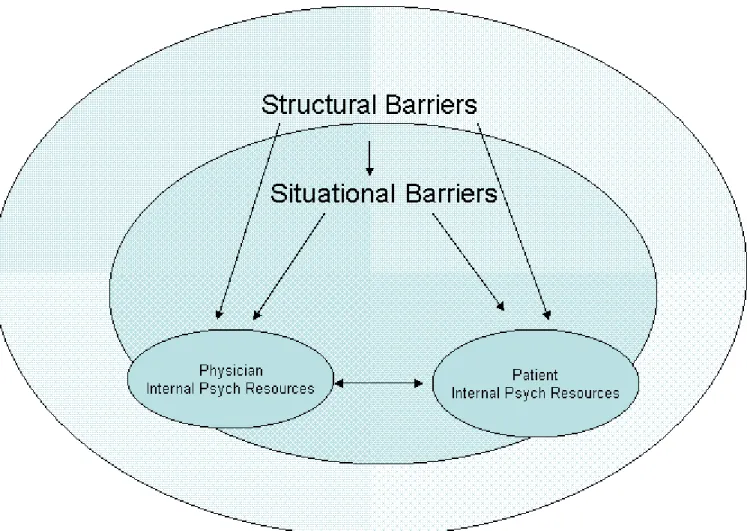
In this framework, the barriers to initiating EOL discussions can be viewed as structural,
situational, or individual (See Figure 3 and Table 1). The variables I identified as structural are
10
those that apply to specific practices, and vary from practice to practice, depending on theindividual practice culture. The barriers that had to do with the internal psychological resources
of individual patients and physicians are those that interact most heavily with the stigma
surrounding death and dying. These barriers ranged from the fear of ruining the patient’s hope
for survival, to the fear of these conversations causing intense family conflict. All of these
barriers are important obstacles to improving EOL communication, but only the individual
psychological barriers are analyzed in depth in this paper.
The continued aggressive care for terminally Ill cancer patients at the end of life is likely
and importantly a product of the current reimbursement system (another variable contributing to
aggression is, no doubt, the American medical culture’s general orientation toward more rather
than less treatment). The facts that chemotherapy is one of the most highly reimbursed
interventions and that complicated, time-consuming EOL discussions are poorly reimbursed,
create an incentive system for physicians in which they are rewarded for treating for as long as
possible, as opposed to having EOL discussions. Although this system is not likely to enter
consciously into the decision making process of physicians, it may well influence these
decisions on a subconscious level. In the long term, the reimbursement system needs to be
changed to better align incentives. However, in the short term we need to focus on the
variables that can more easily be altered.
The political and personal values that contribute to the individual psychological barriers
preventing patients and physicians from feeling comfortable with these discussions can be
viewed from several different angles. According to Jennings and Niemi, comparisons of
generations and individuals over time require examination of four phenomena: (1) continuity
over time; and discontinuity as a function of (2) life-cycle effects, (3) generational effects, and
(4) period effects26. Furthermore, it is necessary to consider periodic effects of interventions or
life events, which may shift the way an entire population views EOL decision-making. Finally, it
11
variables that should be pursued as physicians continue to try and improve EOLcommunication.
Recent evidence has shown that younger physicians are more comfortable initiating
EOL conversations27,28. This may be the result of a potential generational effect, in which
younger physicians are receiving more effective communication training and are therefore more
comfortable with these discussions, or it may be a product of the fact that younger physicians
are typically more idealistic and optimistic about the usefulness of these conversations, and that
older physicians have greater experience with the difficulties and are therefore more skeptical
about the benefits. If these changes are the product of a renewed dedication to communication
training and focusing on the humanistic side of medicine, then the system changes that are
being implemented have been effective and will be more evident with the gradual generational
replacement of health care professionals. However, if these reported changes are the product
only of younger physicians publishing literature on the subject, then the system changes that
have been instituted may not have been effective.
It is important that future research be directed towards establishing whether the current
improvement in communication training for recent medical graduates is sustainable or more a
product of recent medical graduate’s optimism for EOL communication. It would be helpful to
analyze published literature on EOL communication to see when the authors were trained, and
whether or not the timing of this training had a “generational effect” on EOL outlooks. If it were
determined from the literature that more recent graduates, no matter the era, were likely to have
more progressive views on EOL care and that more established clinicians were less likely to
believe in the effectiveness of communication training, then it would highlight the fact that
sustained, consistent change is not occurring in our medical system – rather, that in each
generation a few providers will publish on the topic, without effecting system change – and that
12
communication and that this information is disseminated into practice, rather than beingrepresented only in the literature.
It is helpful to think about the level of patient and physician comfort with these
conversations as either an “open” life cycle model or a “closed” life cycle model, as a way of
understanding how barriers might affect patient-physician communication. In the open life cycle
model, the level of comfort with these discussions is subject to change based on some external
event or intervention. However, if the level of comfort with these discussions is viewed as
following the closed life cycle model, then no matter what changes or resources are provided,
patients and physicians will continue to be uncomfortable and afraid of having these
conversations, and as they have bad experiences they will become less and less comfortable
with these conversations and therefore have them less and less frequently (See Figure 4, p 18).
I would argue that those barriers that fall into the category of individual internal
psychological barriers are barriers that can be overcome by providing patients and physicians
with the appropriate tools and training resources to learn from these difficult encounters and
subsequently feel more comfortable having them. Unfortunately, it is difficult to determine what
tools and resources are most likely to create that comfort in physicians and patients. One of the
main reasons for this is that there are very few validated health quality indicators for cancer
patients at the end of life (See Appendix 2). In the absence of valid and reliable measures, it is
difficult to provide quantitative evidence demonstrating what type of communication training and
resources are most.
However, despite this lack of validated quality indicators, research has shown that
current communication training is effective18,28. The challenge is instituting an infrastructure and
a culture within the medical training community that emphasizes the importance of
communication training. The physicians I spoke with also highlighted the potential of focusing
on standardized patient-centered tools that work toward validly and consistently assessing
13
invaluable clinically, and that they can help to take some of the pressure off the individualphysician, and mitigate the concern about having an inappropriately timed EOL discussion.
One concern about emphasizing such patient centered tools is that by focusing on the
patient, we will reduce the emphasis we place on training physicians, that we will rely more on a
screening tool assessing patients’ readiness, and less on training physicians who know what to
do once the patient is ready. This “either-or” choice does not have to be our only option. The
current large gap between what we know works and what most usually happens at the end of
life, a lack of physician patient communication, can only be closed with strategies that employ
both patient-centered and physician-centered tools.
Although this study produced some very interesting results, the very small sample is
made up of only those who are willing to talk about the question -- and those who are willing to
talk may, indeed, have genuinely different views than do those who are reluctant to talk about
the question. So in addition to having a small sample of convenience, of people I could reach,
their insights may not be representative of all oncologists but, rather, of those oncologists who
are also troubled by what they see as failures in end of life care. To that end, these
respondents' insights generate more hypotheses than they test. These hypotheses revolve
around the idea that despite the general recognition of the fact that both patients and physicians
would benefit from a more full and open discourse regarding end of life care, both sides
continue to avoid these discussions. Research must be directed towards identifying how we
can implement meaningful systematic change which will allow these conversations to happen
on a more regular basis.
Conclusion: Barriers Can Be Dismantled
The barriers that are preventing patients and physicians from improving communication
14
deep entrenchment makes the prospect of improving communication very daunting andcomplicated. However, if we are able to recognize, as a medical community and as a society,
that these barriers exist, this is the first step in beginning to overcome them. No single
intervention or validated quality indicator will immediately improve EOL communication.
Improvement in EOL communication, rather, will depend on our collective recognition of the
current gap in care, a concerted effort to minimize the stigma associated with death and dying,
and our willingness to embrace the fact that in some circumstances death is an inevitable
outcome, and it is our duty to maximize the quality and comfort of this experience. Death is
something that we all must inevitably face. However, it is not something we have to necessarily
face alone. If physicians can cultivate an end of life experience where patients are able to
overcome the fear and stigma of death and achieve a sense of willing acceptance and peace,
this will be more effective than any medical intervention. As Dr. Jennifer Quinn told me, “I think
that if we continue to view death as an individual experience, and what happens to me doesn’t
affect the rest of society, then I don’t think the culture will ever change.”24
15
Figure 1. Model for Discussions of Cancer Care Figure 2. How Quality of Life Can Improve with Earlier EOL After Failure of First Line Therapy Conversations0 5 10 15 20 25 30 35
Time after failure of 1st line therapy, in weeks
Q
ua
li
ty
of
Li
fe
0 5 10 15 20 25 30 35
Time after failure of 1st line therapy, in weeks
Q
ua
li
ty
of
Li
fe
B. Opportunities for Earlier
Advanced Cancer Care Discussions
A. Typical Initial End of Life Discussion
B. Earlier Advanced Cancer Care Discussion
16
Figure 3: A Model for Viewing Barriers to Initiating EOL ConversationsTable 1: Barriers to Improving End of Life Communication
Structural Barriers Reimbursement system, lack of time, culture of medicine in the
US
Situational Barriers Culture of medicine at individual practice
Individual Internal Psychological Barriers for Physicians and Patients
17
Figure 4: Evolution of Physician Comfort with EOL Discussions Over Time:Potential Differences in Physician Response to Difficult Situations
Comfort with EOL
discussions
baseline
---physCian accused of contributing to patient suicide
---
---
_,~-"'-
---physCian feces significant family conflict
...
-
_, _ _, ______ / 'physCian teas that conversation caused patient to relinquish hope
Physicians with adequate internal psych resources and communication training
Physicians with inadequate internal psych resources and communication training
18
Appendix 1: Systematic Literature Review
Methods:
Identification of literature. I conducted a review of the literature addressing the
communication between physicians and terminally ill cancer patients. Within PubMed, the key
search terms that were originally used were “neoplasms and communication or
physician-patient relations and end-of-life care”. However, even when limited to the previous 5 years this
yielded 5924 articles. The final algorithm was “neoplasms and communication and terminal
care/psychology”. This search resulted in 63 articles.
Data extraction. Of these articles identified in the literature search, inclusion criteria
were that the articles focused on either physician communication with terminally ill cancer
patients, or their caregivers, or that they directly addressed the communication desires of this
patient population. Inclusion criteria also required that sources were not simply in a narrative
format.
Results
Literature search. I excluded 52 articles because they were not focused specifically on
communication. Of the 11 studies selected for analysis, 9 were qualitative assessments of
communication needs of terminally ill cancer patients, 1 was a systematic review of the
literature, and another was a narrative literature review on the topic. Study populations ranged
in size from 492 to 37. Participants included adult patients with an advanced life-limiting cancer
in any care setting, other than the Intensive Care Unit, with a life expectancy of less than 2
years, their caregivers, and participating healthcare providers [HPs]. All of the studies were
19
Lack of communication from HPs. The majority of studies found a clear lack of
communication between HPs and the patients’ and their families. The area most commonly
focused upon was a lack of psychosocial support and medical communication/information10-13.
Several articles also highlighted the fact that the diagnoses of cancer carries such an emotional
burden with it that patients may be overwhelmed to the point that they are unable to entirely
comprehend what is happening to them. As a result, it is important to have supportive
caregivers who are available and involved in the process29,30.
Shinjo et al. established three specific areas of communication that need to be addressed: effective coaching of the family on how to care for the patient; allowing the family
enough time to grieve; and ensuring that the family cannot overhear the conversations of the
medical staff when they are standing outside the room10 .
Racial and ethnic variance in EOL communication. Several cultural variations affect
patients’ desires for EOL communication, as well as what communication physicians’
provide11,30,31. Non-western countries have typically taken a more paternalistic view in
communication of prognostic information and EOL care. However, recent studies have shown
that these countries are moving toward a model of more emphasis on patient/caregiver
involvement and informed decision making.
Racial disparities have been observed in EOL communication and care. For example, it
has been shown that blacks in the United States have received less aggressive and curative
treatment early in their disease, but that they receive more aggressive care and less palliative
care at EOL, resulting in more ICU admissions, higher cost of care, and lower rates of
satisfaction11. It is important that examples like these be taken seriously and that further
research determines whether these discrepancies are a result of true cultural differences or a
20
Maintaining hope while receiving prognostic information. Balancing the need to
provide realistic information to patients and to have upfront candid conversations about the EOL
with the desire to maintain hope is a difficult task. Despite the fact that physicians consistently
overestimate the life expectancy of terminally ill cancer patients and fail to initiate conversations
about the EOL in a timely manner, it has been shown that awareness of illness is not
necessarily associated with increased anxiety and depression and may be related to an
increase in spiritual well-being3233. Maintaining and fostering hope are crucial components
throughout the process of discussions surrounding prognosis and EOL care. Hope is best
engendered by a combination of empathy and honesty34.
Conclusion
Enhanced clarity of communication about prognostic information and EOL care is an
important and unmet need for terminally ill cancer patients. The nature of the problem makes it
difficult to perform quantitative research to provide clear answers as to how to best improve
communication between HPs and cancer patients. Nonetheless, it is essential that research
strive to develop a framework by which these questions can be systematically reviewed and
addressed.
Although psychosocial support and communication have traditionally been given less
emphasis by the oncology community, it is becoming clear that the lack of attention to these
problems is causing an increasing burden of suffering for the terminally ill cancer population,
and causing the medical system to miss the opportunity to provide peaceful and satisfying EOL
21
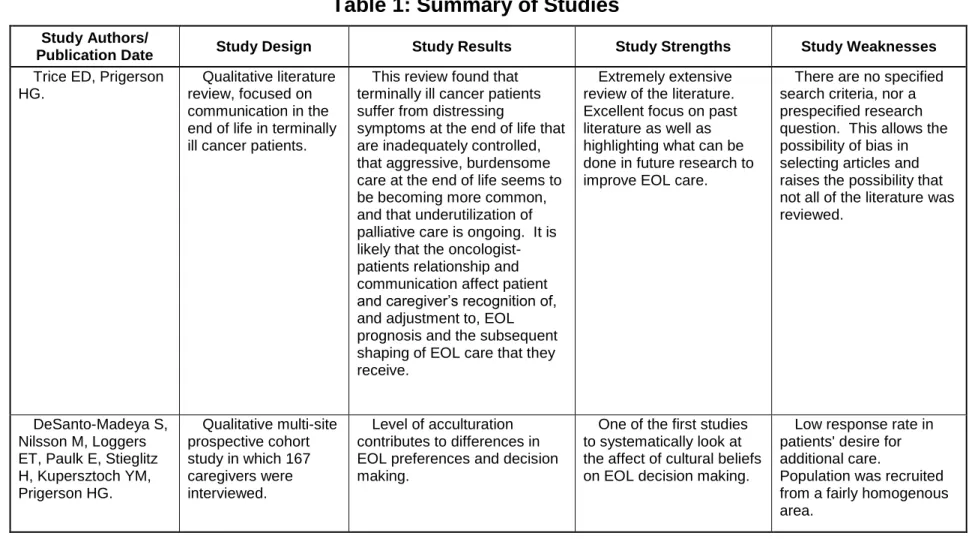
Table 1: Summary of Studies
Study Authors/
Publication Date Study Design Study Results Study Strengths Study Weaknesses
Trice ED, Prigerson HG.
Qualitative literature review, focused on communication in the end of life in terminally ill cancer patients.
This review found that terminally ill cancer patients suffer from distressing
symptoms at the end of life that are inadequately controlled, that aggressive, burdensome care at the end of life seems to be becoming more common, and that underutilization of palliative care is ongoing. It is likely that the oncologist-patients relationship and communication affect patient and caregiver’s recognition of, and adjustment to, EOL prognosis and the subsequent shaping of EOL care that they receive.
Extremely extensive review of the literature. Excellent focus on past literature as well as highlighting what can be done in future research to improve EOL care.
There are no specified search criteria, nor a prespecified research question. This allows the possibility of bias in selecting articles and raises the possibility that not all of the literature was reviewed.
DeSanto-Madeya S, Nilsson M, Loggers ET, Paulk E, Stieglitz H, Kupersztoch YM, Prigerson HG.
Qualitative multi-site prospective cohort study in which 167 caregivers were interviewed.
Level of acculturation contributes to differences in EOL preferences and decision making.
One of the first studies to systematically look at the affect of cultural beliefs on EOL decision making.
Low response rate in patients' desire for additional care.
22
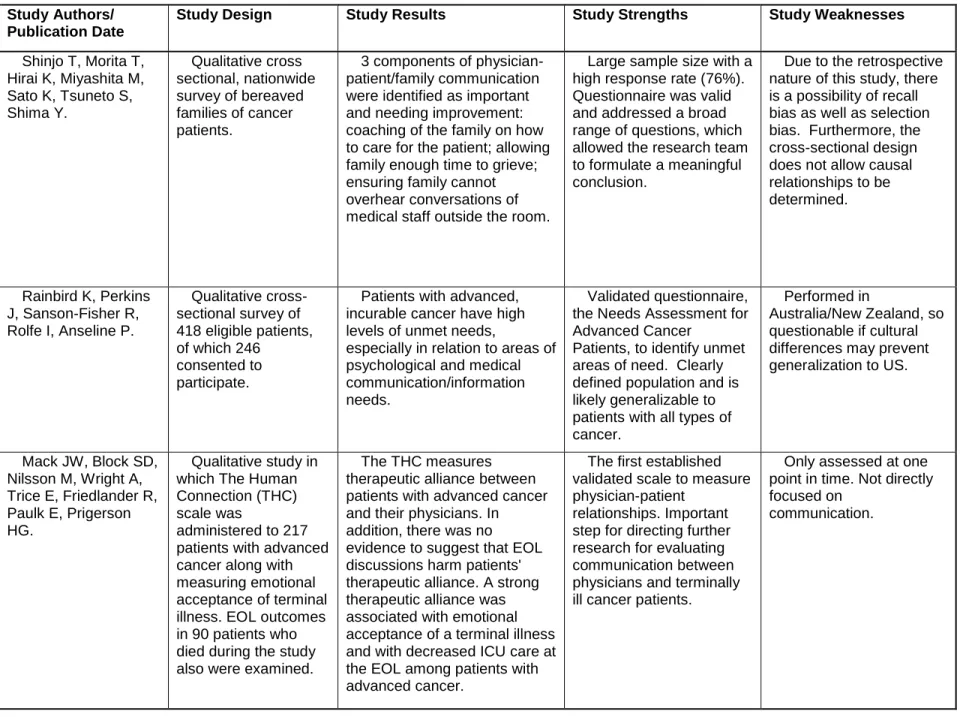
Table 1 contStudy Authors/ Publication Date
Study Design Study Results Study Strengths Study Weaknesses
Shinjo T, Morita T, Hirai K, Miyashita M, Sato K, Tsuneto S, Shima Y.
Qualitative cross sectional, nationwide survey of bereaved families of cancer patients.
3 components of physician-patient/family communication were identified as important and needing improvement: coaching of the family on how to care for the patient; allowing family enough time to grieve; ensuring family cannot overhear conversations of medical staff outside the room.
Large sample size with a high response rate (76%). Questionnaire was valid and addressed a broad range of questions, which allowed the research team to formulate a meaningful conclusion.
Due to the retrospective nature of this study, there is a possibility of recall bias as well as selection bias. Furthermore, the cross-sectional design does not allow causal relationships to be determined.
Rainbird K, Perkins J, Sanson-Fisher R, Rolfe I, Anseline P.
Qualitative cross-sectional survey of 418 eligible patients, of which 246
consented to participate.
Patients with advanced, incurable cancer have high levels of unmet needs,
especially in relation to areas of psychological and medical communication/information needs.
Validated questionnaire, the Needs Assessment for Advanced Cancer
Patients, to identify unmet areas of need. Clearly defined population and is likely generalizable to patients with all types of cancer.
Performed in
Australia/New Zealand, so questionable if cultural differences may prevent generalization to US.
Mack JW, Block SD, Nilsson M, Wright A, Trice E, Friedlander R, Paulk E, Prigerson HG.
Qualitative study in which The Human Connection (THC) scale was
administered to 217 patients with advanced cancer along with measuring emotional acceptance of terminal illness. EOL outcomes in 90 patients who died during the study also were examined.
The THC measures therapeutic alliance between patients with advanced cancer and their physicians. In addition, there was no evidence to suggest that EOL discussions harm patients' therapeutic alliance. A strong therapeutic alliance was associated with emotional acceptance of a terminal illness and with decreased ICU care at the EOL among patients with advanced cancer.
The first established validated scale to measure physician-patient
relationships. Important step for directing further research for evaluating communication between physicians and terminally ill cancer patients.
Only assessed at one point in time. Not directly focused on
23
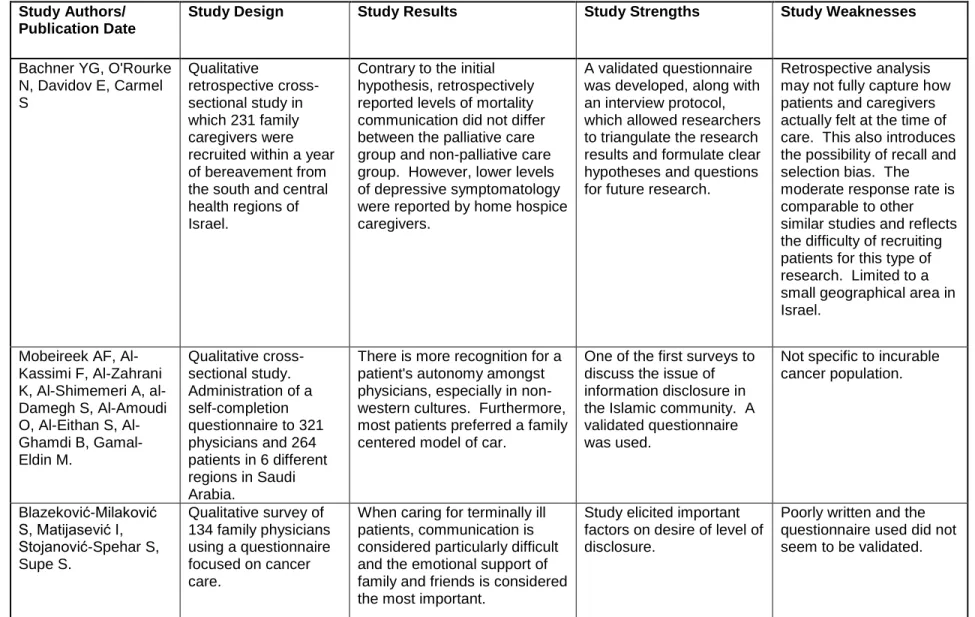
Table 1 contStudy Authors/ Publication Date
Study Design Study Results Study Strengths Study Weaknesses
Bachner YG, O'Rourke N, Davidov E, Carmel S
Qualitative
retrospective cross-sectional study in which 231 family caregivers were recruited within a year of bereavement from the south and central health regions of Israel.
Contrary to the initial hypothesis, retrospectively reported levels of mortality communication did not differ between the palliative care group and non-palliative care group. However, lower levels of depressive symptomatology were reported by home hospice caregivers.
A validated questionnaire was developed, along with an interview protocol, which allowed researchers to triangulate the research results and formulate clear hypotheses and questions for future research.
Retrospective analysis may not fully capture how patients and caregivers actually felt at the time of care. This also introduces the possibility of recall and selection bias. The moderate response rate is comparable to other similar studies and reflects the difficulty of recruiting patients for this type of research. Limited to a small geographical area in Israel.
Mobeireek AF, Al-Kassimi F, Al-Zahrani K, Al-Shimemeri A, al-Damegh S, Al-Amoudi O, Eithan S, Al-Ghamdi B, Gamal-Eldin M.
Qualitative cross-sectional study. Administration of a self-completion questionnaire to 321 physicians and 264 patients in 6 different regions in Saudi Arabia.
There is more recognition for a patient's autonomy amongst physicians, especially in non-western cultures. Furthermore, most patients preferred a family centered model of car.
One of the first surveys to discuss the issue of information disclosure in the Islamic community. A validated questionnaire was used.
Not specific to incurable cancer population.
Blazeković-Milaković S, Matijasević I, Stojanović-Spehar S, Supe S.
Qualitative survey of 134 family physicians using a questionnaire focused on cancer care.
When caring for terminally ill patients, communication is considered particularly difficult and the emotional support of family and friends is considered the most important.
Study elicited important factors on desire of level of disclosure.
24
Appendix 2: Quality Indicators for Cancer Care at the End of Life.
Health care institutions and professionals are under increasing pressure to provide high
quality care that can be measured and improved. Cancer care is one of the areas that has
received the most attention recently, due to the devastating burden this disease places on
patients, family, caregivers and the health care system35. Over the past decade therapeutic
advances in oncology care have led to increased survival for many cancers. However, many of
these cancers remain without a curative treatment. Along with improvements in therapeutic
interventions, the palliative care field has undergone many improvements that allow healthcare
providers to improve the quality of patient’s lives during and after treatment. Nonetheless, there
remain few validated quality indicators to evaluate the quality of cancer care at the end of life.
Although oncologists and palliative care specialists have dedicated significant time in recent
years to developing validated quality measures, there remains little consensus about which
ones should be used.
This appendix aims to assess the current standard of care in end of life decision making
for terminally ill cancer patients, by looking at what gaps exist in the formation of quality
indicators for palliative cancer care. I will begin with a look at the current health quality
indicators for cancer care at the end of life. Next I will look at a specific framework9 that
attempts to address the gaps in the quality of care of terminally ill cancer patients, by presenting
a standard method to develop and assess health quality indicators. Finally, I will conclude with
what research needs to be done in order to continue to improve care for cancer patients at the
end of life.
. As cancer progresses, it causes various symptoms that may lower the patient’s quality
of life. Pain, dyspnea, and depression, along with advance care planning are issues that have
been shown to be important to both terminally ill cancer patients and their families.36 Based on
25
dyspnea, depression and advanced care planning, I determined that although there are manyindicators or measures for these problems, few of them have been tested specifically in a
cancer population. Furthermore, there is little information in the literature regarding the validity
of these indicators and whether or not they have helped promote quality improvement9,37,38.
Another difficulty in palliative cancer quality measurement is that although pain
management of patients has been identified as a problem that doctors were able to evaluate
consistently, none of the studies that I reviewed took into consideration the possibility of
patients’ impaired ability to competently report their own symptoms and preferences towards the
end of life. Cognition of cancer patients at the end of life may be affected by temporary delirium,
or by permanent changes such as brain metastases or dementia. Delirium has been reported in
up to 50% of cancer patients and is likely even more prevalent in ICUs and nursing homes.39
Although public and scholarly concern over quality of care has increased over the last
decade, it continues to be difficult for oncology providers to agree on consistent and valid quality
indicators for EOL care. One of the main reasons for this is that every patient has a notably
different end of like experience. Unlike other common medical conditions, in which most people
have similar experiences, the end of life experience is unique for every patient and family. As a
result, it has been a challenge to establish finite quantitative indicators. Subsequently, recent
works have looked at patient satisfaction as a measure of success in end of life care.
However, the challenge has been to define satisfaction in this patient population. Dy et
al defined satisfaction in end of life care to include accessibility and coordination, competence in
symptom management and comfort with dying, communication and education, emotional
support and personalization of care, and support of patients’ decision making.40 This definition
came from a systematic review in which only one of the studies used a satisfaction
questionnaire which was designed for and had been psychometrically evaluated in the
terminally ill population. In most studies, researchers have measured satisfaction
26
perceptions about grief or anger from death or suffering and the inherent difficulties of usingproxy reports for an experience – death – that the family member him or herself can only
witness but cannot have firsthand.
The systematic review performed by Dy et al. on the satisfaction with care at the end of
life was not specifically related to terminally ill cancer patients, but, especially given that we do
not have consistent, established quality indicators for advanced cancer patients (despite the fact
that the qualitative literature has identified many domains and themes), it is reasonable for us to
extrapolate this review to the terminally ill cancer population. The lack of agreed-upon quality
indicators threatens to disrupt the attempt to document improved quality of palliative cancer care
in terminally ill patients.
As the field of palliative care and end of life care continues to expand, it is critical that we
work to develop validated measurements which ensure that patients are receiving the highest
quality care possible. As Dr. Kutner points out, “achieving this goal will require maximizing the
use of existing validated instruments, conducting rigorous studies of interventions designed to
improve the quality of care, and assuring that clinical organizations that care for persons at the
end of life have the necessary training and infrastructure to participate in studies.”41
Recognizing the current lack of valid quality indicators, Seow et al. 42 present a
framework that identifies five steps for developing and assessing a quality indicator for end of
life care: define the 1 population of focus, 2 broad quality domains, 3 specific target areas, 4
steps of the care process, and 5 evaluation criteria for quality indicators.
In order to define the population of focus, this framework adapts the NCP palliative care
population definition42 to focus more specifically on terminally ill cancer patients at the end of
life, as well as family members. Defining the “end-of-life” population is inherently difficult, due to
the lack of agreement about what duration of prognosis should qualify as terminally ill, as well
27
order to ensure generalizability, this framework intentionally uses a broad end of life definition toaddress a larger range of quality issues, rather than define the population specifically.
In order to account for the complexity of quality of end of life care, the framework defines
broad quality domains. These domains were related to health related quality of life, and
communication and decision making,9 and were based on the domains of quality palliative care
as defined by the NCP and NQF.44 However, since these domains were not specific to cancer
patients, the framework added two domains, ”psychiatric” and “psychosocial” the better to
match the needs of cancer patients as defined by Institute of Medicine Report.45
Within each broad domain, the framework lists specific target areas. This aspect of the
model is the one which is the most difficult to validate. It is challenging to know which specific
target areas are most important and are most closely related to satisfaction with care. Although
the framework recognizes this limitation, it strives to lay out the targets that fit best with cancer
specific indicator sets.9
Cancer care is a process ranging from screening to end-of-life care. Quality measures
must be evaluated in every step of this process. Quality indicators may focus on steps in the
care of process, such as the time between diagnosis and treatment, or the transitioning from
one care team to another. It is important to document and define the steps of the care process,
so that it is possible to identify where quality care may be compromised.
Finally, quality indicators must be evaluated. In order to do this, the framework uses the
current NQF criteria for evaluating quality indicators: importance, scientific acceptability,
usability and feasibility9. These criteria can be used to ensure that the quality indicators being
used are beneficial to the patient population.
Although this framework is not perfect, it is an important step towards creating an
organized structure which will allow end-of-life care to be objectively analyzed and evaluated in
28
as the field of palliative care continues to grow, it is necessary that we develop the tools todetermine if the care that we are providing to patients is effectively satisfying their needs.
Whether or not providers use this framework as we move forward, simply establishing a
framework is only the first step. Future research will need to be done in order to develop the
most important quality indicators for various settings and populations. It is clear that patients
with advanced cancer sometimes do not receive adequate information, coordination of care, or
control of pain symptoms40. This has been established from the few indicators that are currently
available. However, much more work needs to be done in order to establish more relevant
indicators and to ensure that quality indicators are an accepted part of measuring the quality of
29
Appendix 3: The In-Depth Interview
Fact Sheet and Agreement Form:
All research on human volunteers is reviewed by a committee that works to protect your rights and welfare. If you have questions or concerns about your rights as a research subject, or if you would like to obtain information or offer input, you may contact the Institutional Review Board at 919-966-3113 or by email to [email protected].
End Stage Cancer Care: An Assessment of Patient-Physician End-of-Life
Communication Preferences.
Kyle Lavin
University of North Carolina at Chapel Hill
IRB Study #:
10-0602
Consent Form Version Date: April 1, 2010
Principal Investigator: Kyle Lavin
UNC-Chapel Hill Department: Public Health Leadership
Faculty Advisor: Sue Tolleson-Rinehart, PhD
UNC-Chapel Hill Department: Public Health Leadership & Pediatrics
Advisor Phone #: 919.843.9477
Advisor E-mail: [email protected]
Study Contact Phone #: 919-270-3660
Study Contact E-mail: [email protected]
[Introductory script, embedding study information and agreement to participate:]
Hello, I am Kyle Lavin. Thank you so much for talking with me today. I am an MD/MPH
candidate at the University of North Carolina at Chapel Hill. Currently, I am conducting research to fulfill the requirements of the Masters of Public Health degree in the Health Care & Prevention program at UNC.
I have asked to interview you because you are an oncologist who has given thought to how best to communicate with your patients when they may be reaching the end of their lives as a result of their cancer.
My advisor for this research is Dr. Sue Tolleson-Rinehart, who is a faculty member of the UNC Schools of Public Health and Medicine. We hope that this project can advance understanding of quality of care at the end of life. To this end, we hope that the results of this study will be published in a scholarly journal but our main emphasis is completing this research for my master’s degree.
30
minutes to one hour, depending on the availability of your time and what you want to tell me. You have the right to end the interview at any time. I would like to record this interview on a digital voice recorder to ensure that I have the most accurate record of your comments. However, I will not record this interview without your permission.If you do grant permission for this conversation to be recorded, you have the right to revoke recording permission at any time. The digital interview files created will be kept password-protected on my computer and the computer of my faculty advisor, Dr. Tolleson-Rinehart, until I transcribe the interview. After the transcript is made, the files will be deleted. This transcript will also be kept password-protected on our computers, and only Dr. Tolleson-Rinehart and I will know this password. I will be happy to provide you with a copy of the interview’s transcript at your request.
I will not identify your comments by name in my written work unless you grant me permission to do so today. If you do not grant this permission, I will identify you by position only – for
example, “An oncologist at an Eastern academic medical center.”
If you have any questions about the research now, please ask. If you have questions later about the research, please contact me by phone at 919-270-3660 or by e-mail at
[email protected] or [email protected]
Dr. Tolleson-Rinehart and I hope to publish the results of this project, and will be glad to make findings available to you. If you wish to ask Dr. Tolleson-Rinehart any questions about the study, please send a message to [email protected] or call 919.843.9477.
Before we continue, would you please agree to any or all of the statements I’m about to read?
I AGREE to having this interview tape recorded with a digital voice recorder.
I GIVE PERMISSION for the following information to be included in publications resulting from this study:
my name my title direct quotes from this interview
. .
Name of Participant Date
31
Interview Protocol1. As you know, the health care system has been increasingly concerned with quality of care during potentially terminal illnesses. The literature shows that both oncologists and patients are not always comfortable starting the end of life conversation. Can you tell me what you think about having these conversations?
[Follow-ups and probes if needed] That is, I’d like your views on when the conversation should start, and under what circumstances.
2. Ideally, what do you think are the best ways to have these conversations?
3. And similarly, hypothetically, what do you think are the biggest barriers to having them?
4. And now I’d like to ask about your own experience. Can you give me examples of the best and worst end of life conversations you yourself have been a part of?
5. Do you think the timing of such conversations influences the patient’s end of life experience?
6. Who initiates these conversations? That is, I understand that patients can be very different, but in general, how do you see this process unfolding?
7. Do you think oncologists have the resources they need to handle end of life
conversations appropriately? That is, I’d like to ask you whether you think some things would be more or less helpful:
a. Would it help to have some scripts, or other training resources, to help oncologists prepare for these conversations?
b. Would it be useful to have a resource for patients, like a questionnaire or study guide or something else to help them to think these questions through before having the conversation with their oncologist?
32
Thank you very much for your time! I greatly appreciate it! Is there anything I haven’t thought of that you’d like to add?33
Appendix 4: List of Interviewees
MD, MPH, Hematologist Oncologist. University of Virginia, Charlottesville Va. An expert in chemotherapy, multidisciplinary treatment of gastrointestinal cancers, and the use of
chemotherapy in the elderly.
Carrie Lee, MD, MPH. Associate Medical Director of Medical and Scientific Services, Quintiles Transnational Corporation, and Adjunct Clinical Assistant Professor of Oncology, UNC Chapel Hill.
Nancy L. Keating, MD, MPH, is an associate professor of medicine and of health care policy at Harvard Medical School and an associate physician at Brigham and Women’s Hospital. Dr. Keating’s research focuses on the quality of care delivered to patients with cancer and the influence of physicians, hospitals, and health care systems on care delivery. Other work has assessed communication between patients and physicians and among physicians.
MD, Internal Medicine, Experience in Palliative care and extensive publications on physician-patient communication during terminal illness.
34
References
(1) American Cancer Society. http://www.cancer.org/downloads/STT/500809web.pdf.
(2) McCarthy EP, Phillips RS, Zhong Z, Drews RE, Lynn J. Dying with cancer: patients' function, symptoms, and care preferences as death approaches. J.Am.Geriatr.Soc. 2000 May;48(5 Suppl):S110-21.
(3) Field, MJ, & Cassel, CK. Approaching death: Improving Care at the End of Life.Washington, DC.: Institute of Medicine National Academy Press. .
(4) Earle CC, Neville BA, Landrum MB, Ayanian JZ, Block SD, Weeks JC. Trends in the
aggressiveness of cancer care near the end of life. Journal of Clinical Oncology 2004;22(2):315. (5) Patrick DL, Curtis JR, Engelberg RA, Nielsen E, McCown E. Measuring and improving the quality of dying and death. Ann.Intern.Med. 2003;139(5; PART 2):410-415.
(6) Harrington SE, Smith TJ. The role of chemotherapy at the end of life:" When is enough, enough?". JAMA 2008;299(22):2667.
(7) Emanuel EJ, Young-Xu Y, Levinsky NG, Gazelle G, Saynina O, Ash AS. Chemotherapy use among Medicare beneficiaries at the end of life. Ann.Intern.Med. 2003;138(8):639.
(8) Associations between advanced cancer patients' end-of-life conversations and cost experiences in the final week of life. ASCO Meeting Abstracts; 2008.
(9) Seow H, Snyder CF, Mularski RA, Shugarman LR, Kutner JS, Lorenz KA, et al. A
Framework for Assessing Quality Indicators for Cancer Care at the End of Life. J.Pain Symptom Manage. 2009.
(10) Shinjo T, Morita T, Hirai K, Miyashita M, Sato K, Tsuneto S, et al. Care for Imminently Dying Cancer Patients: Family Members' Experiences and Recommendations. Journal of Clinical Oncology 2010;28(1):142.
(11) Trice ED, Prigerson HG. Communication in end-stage cancer: review of the literature and future research. J.Health Commun. 2009;14 Suppl 1:95-108.
35
(14) Ferris FD, Bruera E, Cherny N, Cummings C, Currow D, Dudgeon D, et al. PalliativeCancer Care a Decade Later: Accomplishments, the Need, Next Steps--From the American Society of Clinical Oncology. Journal of Clinical Oncology 2009;27(18):3052.
(15) Matsuyama R, Reddy S, Smith TJ. Why do patients choose chemotherapy near the end of life? A review of the perspective of those facing death from cancer. Journal of clinical oncology
2006;24(21):3490.
(16) Wright AA, Zhang B, Ray A, Mack JW, Trice E, Balboni T, et al. Associations between end-of-life discussions, patient mental health, medical care near death, and caregiver bereavement adjustment. JAMA 2008;300(14):1665.
(17) Zhang B, Wright AA, Huskamp HA, Nilsson ME, Maciejewski ML, Earle CC, et al. Health care costs in the last week of life: associations with end-of-life conversations. Arch.Intern.Med.
2009;169(5):480.
(18) Back A, Arnold R, Tulsky J. Mastering communication with seriously ill patients: balancing honesty with empathy and hope. New York: Cambridge Univ Pr 2009.
(19) Arora NK. Interacting with cancer patients: the significance of physicians' communication behavior. Soc.Sci.Med. 2003;57(5):791-806.
(20) Sanoff, H. Phone Interview, 2010. .
(21) Keating, N. Phone Interview, 2010. .
(22) Tulsky, J. Phone Interview, 2010. .
(23) Lee, C. Phone Interview, 2010. .
(24) Quinn, J. Phone Interview, 2010. .
(25) Sears DO, Huddy L, Jervis R. Oxford handbook of political psychology. : Oxford University Press, USA; 2003.
(26) Jennings MK, Niemi RG. Generations and politics: A panel study of young adults and their parents. : Princeton University Press; 1981.
(27) McCarthy EP, Burns RB, Ngo-Metzger Q, Davis RB, Phillips RS. Hospice use among Medicare managed care and fee-for-service patients dying with cancer. JAMA
2003;289(17):2238.
(28) Keating NL, Landrum MB, Rogers SO,Jr, Baum SK, Virnig BA, Huskamp HA, et al. Physician factors associated with discussions about end-of-life care. Cancer 2010 Feb 15;116(4):998-1006.
(29) Blažeković-Milaković S, Matijašević I, Stojanović-Špehar S, Šupe S. FAMILY