Breaking Down Barriers to Postpartum Depression Screening
By
April Miller
A Master’s Paper submitted to the faculty of the University of North Carolina at Chapel Hill in partial fulfillment of the requirements for the degree of Master of Public Health in the Public
Health Leadership Program.
Chapel Hill
2011
_________________________________ First Reader:
_________________________________ Date ______________________________________________
Second Reader:
Table of Contents
Abstract ... 3
Systematic Review ... 5
Abstract ... 5
Introduction ... 7
Methods ... 8
Results ... 9
Discussion ... 15
References ... 17
Figures and Tables ... 19
Appendices ... 23
Original Research Paper ... 28
Abstract ... 28
Introduction ... 30
Methods ... 32
Results ... 34
Discussion ... 37
Conclusion and Next Steps ... 39
References ... 41
Appendix ... 47
Abstract
Introduction: Postpartum depression (PPD) affects many women and is one of the most common complications during the postpartum period. Health care providers who care for women and/or their children are in a position to assist women during this difficult time in their lives.
Objectives: The goals of the original manuscript are to assess North Carolina
obstetricians/gynecologists (OB/GYNs) and certified nurse midwives (CNMs) attitudes and practice patterns towards PPD screening as well as assess what barriers hinder PPD screening particularly in lower income/underserved populations of NC. The goals of the systematic review are to assess providers’ attitudes and practice patterns regarding PPD screening, diagnosis, and treatment as well as to assess barriers to PPD screening.
Methods: A pre-validated survey was administered to NC OB/GYNs and CNMs via the
American College of Obstetricians/Gynecologists and the American College of Nurse Midwives. The systematic review was developed through a search via Medline of the current literature on providers who see women and/or their children during the postpartum period attitudes and practice patterns regarding PPD screening, diagnosis, and treatment.
including lack of time to screen, lack of knowledge about PPD, and lack of mental health professionals of whom to refer.
Systematic Review Abstract
Objective: To assess obstetric providers’ and providers who see women and/or their children during the postpartum period attitudes and practice patterns regarding postpartum depression screening, diagnosis, and treatment as well as to assess barriers to screening, diagnosing, and treating postpartum depression.
Data Sources and Study Selection: Medline was searched for articles published within the last 10 years and hand searches of bibliographies were also performed to identify articles assessing providers’ who see women and/or their children during the postpartum period
(obstetricians/gynecologists, family medicine physicians, nurse practitioners, and pediatricians) attitudes and practice patterns regarding postpartum depression screening and barriers to
screening.
Data Extraction:A single author extracted articles, reviewed abstracts and full texts, and assigned study quality. Data extracted included health care providers’ attitudes regarding depression screening, diagnosis, and treatment; practice patterns regarding depression screening; and perceived barriers to postpartum depression screening, diagnosis, and treatment.
Data Synthesis: Studies that assessed providers’ attitude regarding their responsibility to screen for postpartum depression found that over 50% of providers thought screening was their
screen (up to 81% reported), lack of education about postpartum depression, and lack of training on postpartum depression screening (up to 53% in some reported).
Conclusion: Although the majority of providers reported that screening for postpartum
Introduction
Depression is one of the most common complications during the postpartum period.1,2 Postpartum depression is defined as major or minor depression that occurs either during
pregnancy or within 12 months after delivery.1 Consequences of postpartum depression include poor mother-child interaction, marital distress, delays in infant growth, suicidal ideation, and thoughts of harming the infant. Risk factors include a history of depression, poor social support, and life stressors.3 Although it is a common complication of pregnancy with an estimated 5-25% of women experiencing postpartum depression1, it often goes unrecognized by health care providers.4
Because women may not spontaneously express to providers their concernabout depression in the postpartum period, identification of postpartum depression can be improved with screening. Multiple depression screening tools are available to health care providers including the Edinburgh Postnatal Depression Scale (EPDS)3, the Postpartum Depression Screening Scale (PDSS)3, and the Patient Health Questionaire-9 (PHQ-9).3 Most of these tools have specificity from 77% to 100%, and the EPDS has a sensitivity of 84%.3 These tools are easy-to-use and take about 10 minutes or less to complete.3
include obstetric health care providers’attitudes, practice patterns, and perceived barriers toward screening.
The goal of this review is to examine health care providers’ attitudes and practice patterns regarding postpartum depression screening as well as to assess potential barriers to postpartum depression screening. This review is valuable because assessing providers’ attitudes and practice patterns regarding screening can inform the development of interventions to increase screening.
Methods
Data Sources and Searches
In collaboration with a medical librarian, MEDLINE (March 2011) was searched using MeSH headings "depression, Postpartum", “postpartum depression”, "mass screening", and “barriers”, “obstacles”,“attitudes”, “attitudes of health personnel”. Only articles published in the last ten years were included. Each search was limited to studies in humans and those published in English. The reference lists of identified articles were searched for additional citations.
Study Selection
midwives, nurse practitioners, advanced practice nurses, or pediatricians. Pediatricians were included because oftentimes they are the only health care provider who interacts with mothers during a child’s early years.5 Studies not conducted in the US were excluded due to lack of generalizability. Finally, to be included articles had to be available full text online via the University of North Carolina at Chapel Hill (UNC-CH) Heath Science Library (HSL) system.
Data Extraction and Quality Assessment
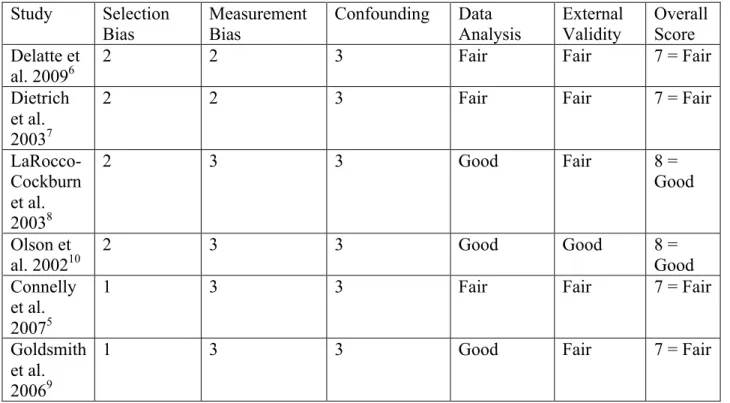
Inclusion was determined bytitles, abstracts, and if necessary full article review. Quality grading schemes were used for both quantitative and qualitative study designs. Quantitative studies were assessed based on criteria assessed included in Appendix I. Quantitative studies were given a score from 1-3 for 3 categories (potential for selection bias, potential for
measurement bias, potential for confounding) (Table 2). These factors were used to determine the study’s overall internal validity. Data analysis and external validity were also factored into a study’s overall score. Studies with overall scores of 3-5 were given a poor grade, 6-7 were given a fair grade, and 8-9 were given a good grade. Qualitative studies were assessed based on
criteria in Appendix I. Qualitative studies were given a score from 1-3 for 4 categories (study design, sampling of target group, data collection, and data analysis) (Table 2). Studies with overall scores of 4-7 were given a poor grade, 8-10 were given a fair grade, and 11-12 were given a good grade. All articles were quality assessed by a single author (AM).
Results
Search Results
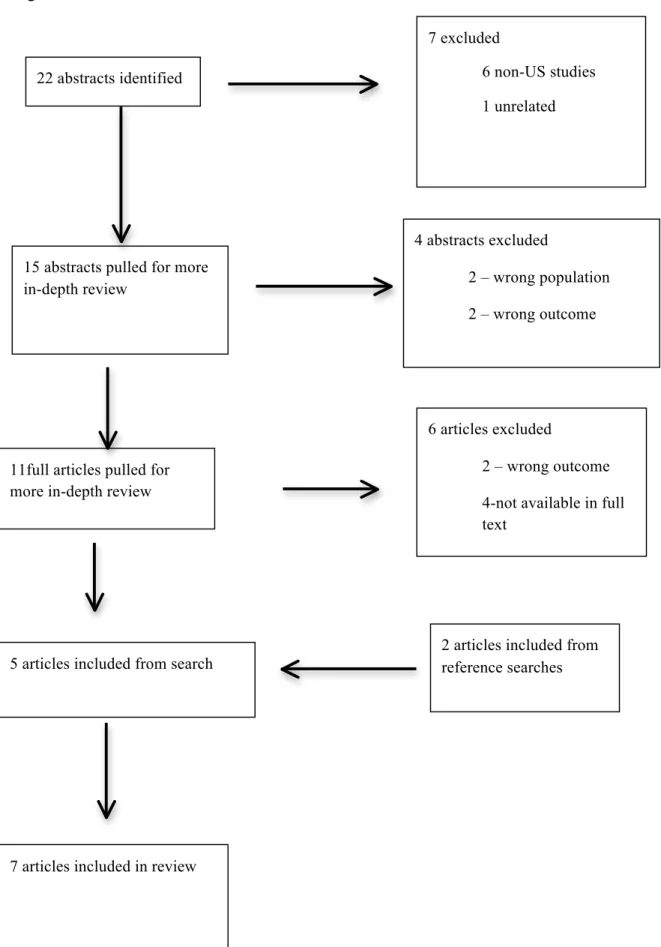
in-depth review. Two abstracts were excluded because the studies assessed patients’ views on PPD screening rather than providers’ views. Two abstracts were excluded because the outcomes were not the outcome of interest for this review. Thirteen full articles were then pulled for a more in-depth review. Four full articles were excluded because they were not available on the UNC HSL database. Two full articles were excluded because they did not assess the outcome of interest. This resulted in 5 articles that were included in this review. Two additional articles were found from reviewing the reference lists of identified articles. This resulted in seven included articles.
Study Characteristics
Six of the included studies were cross-sectional surveys5-10 and one was a qualitative study that used structured interviews to collect data11 (Table 3). Two articles implemented national surveys7,10, two implemented a state surveys8,9, another two articles implemented surveys at academic medical centers6,11 and one article implemented a survey in a large metropolitan area.5 The articles that implemented national and state surveys7-10 obtained participant information from physician groups including the American College of
Obstetricians/Gynecologists (ACOG)8,the American Academy of Pediatrics (AAP),10 and the American Academy of Nurse Practitioners (AANP).9 Four articles surveyed OB/GYN providers,6-8,11 two articles surveyed pediatricians,5,10 and one article survey family nurse practitioners (FNPs).9 Four articles6-8,10 had response rates greater than 50%.Two articles5,9 had response rates less than 50%.
measured attitudes and practice patterns regarding other forms of maternal depression including antepartum maternal depression as well as major and minor depression.7
Health Care Providers’ Attitudes Regarding Depression Screening, Diagnosis, Management, and Treatment
Screening and Diagnosis
Six of the seven included studies assessed participants’ attitudes regarding their
responsibility to screen for depression.5-8, 10-11 Delatte et al. found that all participants thought it was their responsibility to diagnosis PPD and Dietrich el al. found that 94% of their participants felt responsible for identifying depression including PPD, major depression, and minor
depression.6,7 However LaRocco-Cockburn et al. found that only 65% of participants thought that OB/GYNs should screen for depression.8 Kim et al. found that most obstetricians and nurse midwives in their study supported postpartum depression screening if it was within a structured program that assumes responsibility for processing the screens.11 Olson et al. found that 57% of pediatricians thought they were responsible for identifying maternal depression while Connelly et al. found that 80% of pediatric physicians and advanced practice nurses believe screening for PPD was their responsibility.5,10
Management/Treatment of PPD
0.01).7 Olson et al. found that only 7% of pediatricians surveyed felt they were responsible for treating maternal depression.10 A survey study conducted within the OB/GYN department at an academic medical center found that 100% of respondents (n=183 ) felt that diagnosing PPD was their responsibility, but only 76% would initiate treatment with medications, and only 70% would counsel and educate their patients about PPD.6
Health Care Providers’ Practice Patterns Regarding Depression Screening
Screening and Diagnosis
Dietrich el al. found that the most common cue for detecting postpartum depression was a direct question from the patient.7 Most study providers diagnosed depression through general impression of the patient and a few questions about symptoms. Some study providers used a formal screening instrument (26%). When postpartum depression was suspected, participants most commonly assessed the patient’s history of depression (86%), physical causes of depression such as hypothyroidism (62%), and relationship with the patient’s spouse (64%).7
Among a sample of OB/GYNs (n=282), LaRocco-Cockburn et al. found that 44% often or always screen for depression, 41% sometimes screen, and 15% never screen for depression.8 Of the participants who do screen, most (81%) use their own questions about mental health, 32% use a shortvalidated tool, and 7% use a validated interview.8 Among FNPs, 41.7% never screen for depression, 16.7% screen but do not use a screening tool, 14.1% use a screening tool with less than half of their patients, and 13.5% use a screening tool with greater than half of their patients.9
Delatte et al. found that among a sample of OB/GYN attendings, residents, nurse
universal postpartum depression screening program, documentation of postpartum depression screening was as high as 94% but differed based on provider type. Residents documented screening the least (17%), followed by OB/GYN attendings (42%), CNMs (67%), and NPs (94%).6
In a qualitative study of obstetric providers and nurse midwives, Kim et al. found that on average 52% of participants screened for postpartum depression but 95% of participants
overestimated their own screening rates.11 Another 67% incorrectly thought they screened 100% of their patients. Practitioners who were more involved in the office-based screening process had higher screening rates than practitioners who were less involved in the office-based screening process.11
Pediatricians were the least likely group in this review to screen for postpartum
depression. When postpartum depression was suspected, only 48% of pediatricians performed any additional assessment. Most pediatricians used the mother’s or child’s behaviors,
appearance, or patient complaints to identify depression.10 Connelly et al. found that 88% of pediatric providers in their study used the mother’s behavior (sad appearance, crying, lack of sleep) to identify PPD.5 Only 4% of pediatricians used formal diagnostic criteria when
postpartum depression was suspected. In a study conducted by Olson et al.10 none used a formal questionnaire Connelly et al. found similar results (3% of pediatric providers used a formal diagnostic tool).5
Management/Treatment of PPD
an OB/GYN only, the most common treatment modality was counseling plus an anti-depressant medication.7 Among pediatricians, when postpartum depression was suspected 32% counseled the mother for at least 5 minutes.10 Other interventions included referral to mental health (29%), recommended lifestyle changes (27%), and referral to the mother’s primary care providers (22%).10 Among pediatric providers, Connelly et al. found that referral to the mother’s primary care provider or a mental health professional was the most common next step in management of the mothers’ PPD given (80%). Counseling with less than 5 minutes was performed by 36% of pediatric providers.5 A survey study conducted within the OB/GYN department at an academic medical center found that 100% of respondents felt that diagnosing PPD was their responsibility but only 76% would initiate treatment with medications and only 70% would counsel and educate their patients about PPD.6
Perceived Barriers to PPD Screening
Discussion
PPD is a common disease that affects 5-25% of women.1 Health care providers who see women during and after pregnancy can play an integral role in screening, diagnosing, managing, and treating this disease. This review sought to examine health care providers who see women during and after pregnancy attitudes and practice patterns regarding PPD screening, diagnosis, management, and treatment. This review also sought to examine the barriers to PPD screening. Overall most providers are willing to screen for PPD but fewer are willing to manage and/or treat PPD. This occurs for a variety of reasons including lack of training on PPD
management/treatment, lack of time to screen/diagnosis, and lack of available mental health professionals.
Providers were more likely to screen for postpartum depression if it is integrated into routine obstetric care such as glucose tolerance testing and within a program that assumes responsibility for processing screens.11 Higher screening rates were associated with an established office prompt for screening and inclusion of screening into established practice procedures.11 But even when postpartum depression screening with a validated screening tool such as the EPDS was incorporated into routine practice at an academic medical center, rates of documentation of screening and triage of patients based on the screening varied considerably by provider type.6
responsibility to screen for postpartum depression. The majority of pediatricians who do screen and diagnosis PPD refer the mother to her primary care provider or to a mental health
professional. Although pediatricians may not directly treat postpartum depression, they could play an integral role in recognizing it, determining its severity, and recommending further steps.10
This review has demonstrated that the majority of OB/GYNs and more than half of pediatricians report positive attitudes regarding PPD screening and feel responsible forPPD screening. However, actual screening practices differ based on whether the provider is in a practice where there is a structured PPD screening program11 the providers’ attitudes about PPD screening, and education/training about PPD screening, diagnosis, and treatment.
Moreover, multiple barriers exist that may prevent screening by medical personnel. These include needing more time to screen; more training to identify, diagnosis and treat postpartum depression; and more resources such as available mental health professionals to whom screen-positive patients could be referred.
Limitations
References
1. Gavin NI, Gaynes BN, Lohr KN, Meltzer-Brody S, Gartlehner G, Swinson T. Perinatal depression: A systematic review of prevalence and incidence. Obstetrics & Gynecology. 2005;106(5 Part 1):1071.
2. Hirst KP, Moutier CY. Postpartum major depression.AmFam Physician. 2010;82(8):926-933.
3. American College of Obstetricians and Gynecologists. Committee on Obstetric Practice. Committee opinion no. 453: Screening for depression during and after pregnancy. Obstet Gynecol. 2010;115(2 Pt 1):394-395.
4. Perinatal and postpartum depression a top priority at annual conference of ob-gyns.
Washington, DC: The American College of Obstetricians and Gynecologists; 2010:1. Available from: http://www.acog.org/from_home/publications/press_releases/nr05-17-10-2.cfm.
5. Connelly CD, Baker MJ, Hazen AL, Mueggenborg MG. Pediatric health care providers' self-reported practices in recognizing and treating maternal depression. PediatrNurs. 2007;33(2):165-72, 127.
6. Delatte R, Cao H, Meltzer-Brody S, Menard MK. Universal screening for postpartum depression: An inquiry into provider attitudes and practice. Am J Obstet Gynecol. 2009;200(5):e63-4.
7. Dietrich AJ, Williams JW,Jr, Ciotti MC, et al. Depression care attitudes and practices of newer obstetrician-gynecologists: A national survey. Am J Obstet Gynecol. 2003;189(1):267-273.
9. Goldsmith ME. Postpartum depression screening by family nurse practitioners. J Am Acad Nurse Pract. 2007;19(6):321-327.
10. Olson AL, Kemper KJ, Kelleher KJ, Hammond CS, Zuckerman BS, Dietrich AJ. Primary care pediatricians' roles and perceived responsibilities in the identification and management of maternal depression. Pediatrics. 2002;110(6):1169-1176.
Figures and Tables
Figure 1: Flowchart of Article Selection
22 abstracts identified
7 excluded
6 non-US studies
1 unrelated
15 abstracts pulled for more in-depth review
4 abstracts excluded
2 – wrong population
2 – wrong outcome
11full articles pulled for more in-depth review
6 articles excluded
2 – wrong outcome
4-not available in full text
5 articles included from search 2 articles included from reference searches
Table 1. Quality Assessment of Quantitative Studies Study Selection
Bias
Measurement Bias
Confounding Data Analysis External Validity Overall Score Delatte et
al. 20096
2 2 3 Fair Fair 7 = Fair
Dietrich et al. 20037
2 2 3 Fair Fair 7 = Fair
LaRocco-Cockburn et al. 20038
2 3 3 Good Fair 8 =
Good
Olson et
al. 200210 2 3 3 Good Good 8 = Good
Connelly et al. 20075
1 3 3 Fair Fair 7 = Fair
Goldsmith et al. 20069
1 3 3 Good Fair 7 = Fair
4-7 = Poor study quality 8-10 = Fair study quality 11-12 = Good study quality
Table 2. Quality Assessment of Qualitative Studies Study Study Design Study
Population Data Collection Data Analysis Overall Score Kim et al.
2009 11 2 2 1 3 8 = Fair
Table 3. Summary of Included Articles Source Design Quality
Grade
Setting Sample Size
Respon se Rate
Outcome Delatte et
al. 20095
Survey Score: 7 Fair
Ob/gyn department of UNC Hospitals
47 77% Majority of providers feel comfortable and confident in screening for PPD Kim et al.
2009 11
Qualitative Score: 8 Fair Academic Medical Center with hospital-employed and private practice physicians
22 Obstetricians and
certified nurse midwives generally expressed supportive attitudes toward postpartum depression
screening in the context of a
structured program that assumes responsibility for processing screens, conducts follow-up assessments and provides referrals to community-based mental health professionals. Dietrich et al. 20037 Cross sectional survey Score: 7 Fair National survey of ob/gyn physicians in their final year of residency or recent residency graduates
437 64% Senior residents and newly
tranedob/gyns feel responsible and confident in recognizing depression but are less confident about depression management LaRocco-Cockburn et al. 20038 Cross sectional Survey Score: 8 Good Washingto n State ACOG Members
depression
screening but they report depression screening is difficult to do in everyday practice Olson et
al. 200210
Cross Sectional Survey Score: 8 Good US National survey of primary care pediatrician s
508 57% Pediatricians attitudes and skills related to
postpartum depression limit their ability to effectively recognize and manage PPD Connelly et al. 20075 Cross Sectional Survey Score: 7 Fair Physicians and advance practice nurses in a large metropolita n area of South California and
participatin g in the Partnership for Smoke-Free Families
98 37% Self-reported practice in recognizing and treating maternal depression among pediatric health care providers Goldsmit h et al. 20069 Cross sectional survey Score: 7 Fair Family Nurse Practitioner s in Illinois and
Wisconsin
Appendices
Appendix I. Appraisal Tool for Quantitative Studies
Citation (JAMA style)
Study Question and Research Design Source Population Study Population (descriptive: demographics, eligibility
criteria) and how chosen (volunteers, recruitment, tertiary care clinics, population-based, etc) Initial Comparability of groups (ie, randomization or group composition; concealment of allocation) Drop outs (no endpoint data), adherence, crossovers (attrition, loss to follow up) Potential for selection bias (+ to +++) and explain
confounders, and outcomes; reliability and validity of measurement; how performed, blinding Potential for measurement bias (+ to +++)
Potential confounders (name and describe how each was controlled for) Potential for confounding (+ to +++) Analysis
overall
conclusions/inter pretation (include consistency with other studies; biologic plausibility; conflicts of interest; selective endpoint
Appendix II. Appraisal Tool for Qualitative Studies
Author, Year:_________________________________ _______________ Reviewer ______ Short Title:________________________________________________________
Question Response Criteria
1. Appropriate Design for Question Posed
Good ☐ 3 Hypothesis generating question. Doesn’t seek to test associations, causal pathways, mediators, or moderators of effect.
Fair ☐ 2 Some of the above features.
Poor ☐ 1 None of the above features.
2. Creation of a Representative Group
Good ☐ 3 Random sampling of appropriate target group or purposive sampling to include individuals of various risk groups/ risk
factors/genders/ethnicity’s. Continues with recruitment until ideas from groups reach saturation. Fair ☐ 2 Some of other features above.
Poor ☐ 1 Convenience sampling and none of the other features above.
3. Data Collection Good ☐ 3 Systematic data collection process. Attempts to minimize bias (non-influential moderator).
Poor ☐ 1 None of the above.
4. Data Analysis Good ☐ 3 Starts with theoretical model. Uses combination of inductive and deductive processes, searching for new themes. Multiple coders of data. Use of qualitative software.
Triangulation of data using external observers or surveys.
Fair ☐ 2 Some of the features above.
Original Research Paper Abstract
Objectives: To identify barriers to postpartum depression (PPD) screening by
obstetricians/gynecologists and certified nurse midwives practicing in lower income or under-served areas of North Carolina (NC).
Methods: A survey was administered to obstetricians/gynecologists (OB/GYNs) and nurse midwives who provide obstetrical care in NC to assess their attitudes, practice patterns, and perceived barriers to PPD screening.
Results: A total of 183 surveys were completed, one hundred twenty seven by OB/GYNs and 55 by nurse midwives (69% and 30% respectively). The total response rate for those who were sent the email request was 13.6% (n=1359). Ninety-two percent of providers responding to the survey report that they perform some type of clinical screen for PPD (93% of OB/GYNs and 92% of nurse midwives), but only 69% work in a clinic that uses a formal screening instrument.
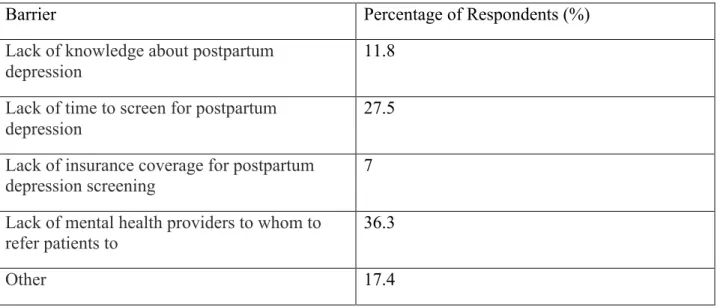
Reported barriers to PPD screening included lack of knowledge about PPD (11.8%), lack of time to screen for PPD (27.5%), lack of insurance coverage for PPD screening (7%), and lack of
mental health professionals to whom to refer (36.3%).
Introduction
Postpartum depression (PPD) is one of the most common complications of pregnancy. An estimated 10-15% of women will experience depression during the perinatal period (during pregnancy and within the first few months postpartum).1 Although PPD is common, fewer than half of women suffering from it are actually appropriately screened and diagnosed.2 Women in lower income/underserved areas have the added challenges of low socioeconomic status, health disparities, and limited services3 that often prevent them from receiving effective diagnosis and treatment of PPD.
Risk factors for PPD include: 1) a prior history of PPD, 2) antenatal history of depression, 3) major life stressors during pregnancy, 4) poor social support, and 5) a family history of PPD.4 Consequences of PPD include impaired interactions between mother and child with negative outcomes on child development, impaired child safety practices in the home, increased risk of maternal suicide, and thoughts of harming the infant or infanticide.2
Despite the high prevalence of PPD, recent studies have documented that PPD is often underdiagnosed or misdiagnosed in obstetrical settings.5 PPD has many symptoms similar to other depressive disorders but some studies have shown that women with PPD have less suicidal ideation and depressed mood. Also, changes in appetite and sleep disturbances, both symptoms of depressive disorders, are common during the postpartum period. To increase detection of PPD, screening tools are needed to more accurately detect PPD.6
These tools can be easily implemented within office settings that provide routine prenatal and postpartum care. One example of a PPD screening tool is The Edinburgh Postnatal
PPD. It has been proven to effectively identify PPD in women and to be of great assistance as a triage instrument to community health providers because it is an easy to administer tool that can be used as an adjunct for clinical evaluation of PPD.7,8 The EPDS was validated with the
Research Diagnostic Criteria9 as the criterion standard and has a sensitivity of 84%, and a specificity of 88%.9 Other commonly used screening instruments include the Beck Depression Inventory (BDI) and the General Health Questionnaire (GHQ).10 However, although the EPDS and other depression screening instruments are both widely available and effective, there remain many barriers which impede the implementation of routine screening, diagnosis and treatment of PPD.
Literature within primary care settings has shown that there are three categories of barriers to effective diagnosis and treatment of depression: 1) patient-centered (e.g. lack of insurance coverage), 2) physician-centered, (e.g. lack of time to screen), and 3) system barriers, (e.g. separation of primary care and mental health services).2 Although some barriers to PPD screening are described in the literature, most prior studies have not focused on providers and patients who practice and live in lower income/underserved areas. In fact, a Medline search identified only a few prior studies that examine screening practices within low income or rural populations.3,11
Therefore, in order to address this gap in the literature, we designed a cross-sectional study of obstetricians/gynecologists (OB/GYNs) and certified nurse midwives (CNMs) in North Carolina (NC) to assess their attitudes, practice patterns, and perceived barriers to PPD
screening. The aims of this study are to identify barriers to PPD screening by OB/GYNs and CNMs particularly those practicing in lower income or under-served areas of NC. In later
Methods Study Design
The study design was a cross-sectional survey administered to NC (OB/GYNs) and CNMs. We revised and adapted a survey that was used in a prior study examining providers’ attitudes and practice patterns of PPD screening at the University of North Carolina Hospitals Department of Obstetrics and Gynecology.5 In this new study, we focused our attention on underserved and rural areas of North Carolina. The new adapted survey was distributed to obstetricians/gynecologists and certified nurse midwives throughout NC.
Study Population
Eligible participants were obstetrical health care providers who practiced in North Carolina who were members of the American College of Obstetricians/Gynecologists or the American College of Nurse Midwives. Health care providers who did not practice in North Carolina or who did not care for women during the postpartum period were not eligible to participate. Eligibility was determined through a survey question in which providers were asked where they practice and if they had seen a patient for a routine postpartum visit (generally at 6 weeks postpartum) in the last year.
Shortage Areas (HPSAs) or Medically Underserved Areas/Populations (MUA/P) databases designated by the Health Resources and Services Administration (HRSA).12
HPSAs are defined as having a shortage of either primary care, dental care, and mental health care providers and may be demographic, geographic, or institutional. MUA/Ps are areas designated as having too few primary care providers, high infant mortality rates, high poverty and/or a high elderly population.12 To also determine if the study participants provided care to lower income/underserved populations, the survey asked the participants to estimate the percentage of their patients who are either uninsured or receive Medicaid.
Survey Implementation
The survey was designed on Qualtrics, an online survey tool.13 A link to access the survey was emailed to practitioners in the sample. Practitioners’ emails were obtained from the mailing lists of the American College of Obstetricians/Gynecologists (ACOG) and the American College of Nurse Midwives (ACNM). To increase response rate, three reminder emails were sent at two-week intervals. A paper form of the survey was also distributed to physicians at the annual NC Obstetrical and Gynecological Society Meeting.
The email link included the following information: 1) an introductory letter with details about the goals and contents of the survey, 2) consent information for the participants, 3) the survey itself, and 4) a thank you letter. The survey (Appendix 1) consisted of 28 multiple choice and Likert scale questions and was used to assess the practice setting of the participants, the demographics of the patients in their practices (including socioeconomic status (SES)),
assessed the availability of mental health providers in participants’ area of practice and their perceived barriers to PPD screening in the area where they practiced.
Data Collection
Data were collected in Qualtrics.13 Data obtained from physicians at the annual NC Obstetrical and Gynecological Society Meeting was entered into Qualtrics by the study principle investigator.
Data Analysis
Health care provider demographic characteristics including both practice location and patient population were described using summary statistics. Likert scale questions were
collapsed into three categories for analysis with “unlikely” and “somewhat likely” kept the same and “likely” and “very likely” coded as likely. “Very confident” and “mostly confident” were coded as confident, “somewhat confident” and “not confident were kept the same. Other Likert scale questions were collapsed into three categories. “Strongly agree” and “agree” were coded as agree and “disagree” and “strongly disagree” were coded as disagree, and “neither agree nor disagree” was kept the same. “Very often” and “often” were coded as often, “rarely” and “never” were coded as never, and “sometimes” was kept the same.
Results
10.8% and the response rate for those who opened the email (n=441) was 29.5%. The response rate from nurse midwives was 34.6% (n=159). The total response rate was 13.6% (n=1359).
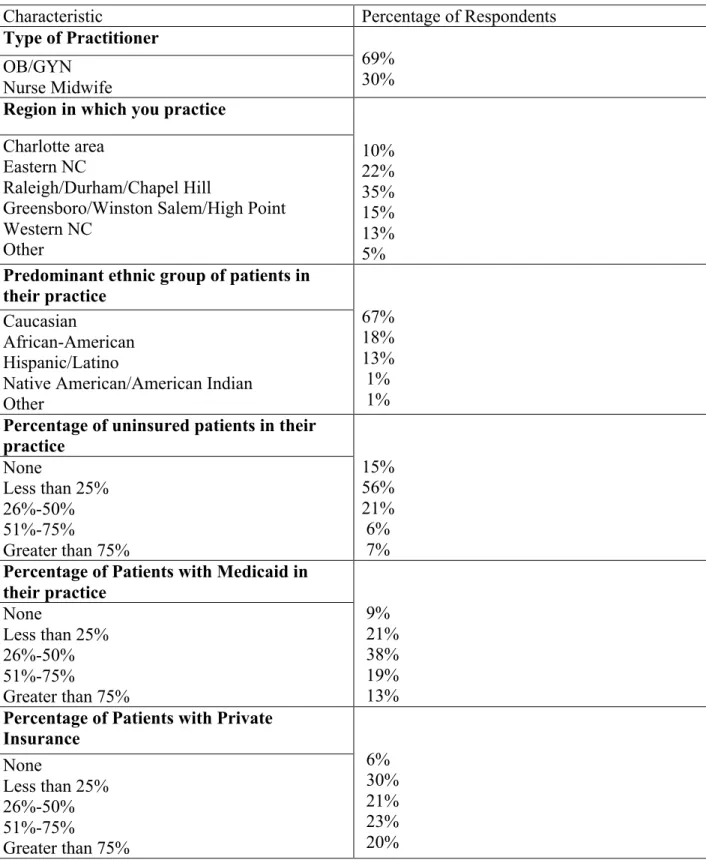
Approximately one-third (35%) of the respondents practice in the Piedmont area of North Carolina (eg. Raleigh/Durham). Other regions in which respondents practice are Eastern NC (ex. Rocky Mount, Greenville) (22%), the Charlotte area (10%), the Triad (eg. Greensboro, Winston Salem) (15%), Western NC (eg. Asheville) (13%) (Table 1). The racial/ethnic categories of patient populations in the respondents’ practices were: Caucasian (67%), African-American (18%), Hispanic/Latino (13%), and Native American (1%) (Table 1).
In terms of insurance status of patients in providers’ practices, 13% of respondents answered that greater than 50% of their patients are uninsured.; 32% responded that greater than 50% of their patients received Medicaid; and 30% answered that less than 25% of their patients have private insurance. Forty-nine percent of respondents reported that they saw 1-25 women for a postpartum visit in the last 3 months, and 35% of respondents reported that they saw 25-50 women for a postpartum visit in the last 3 months (Table 1).
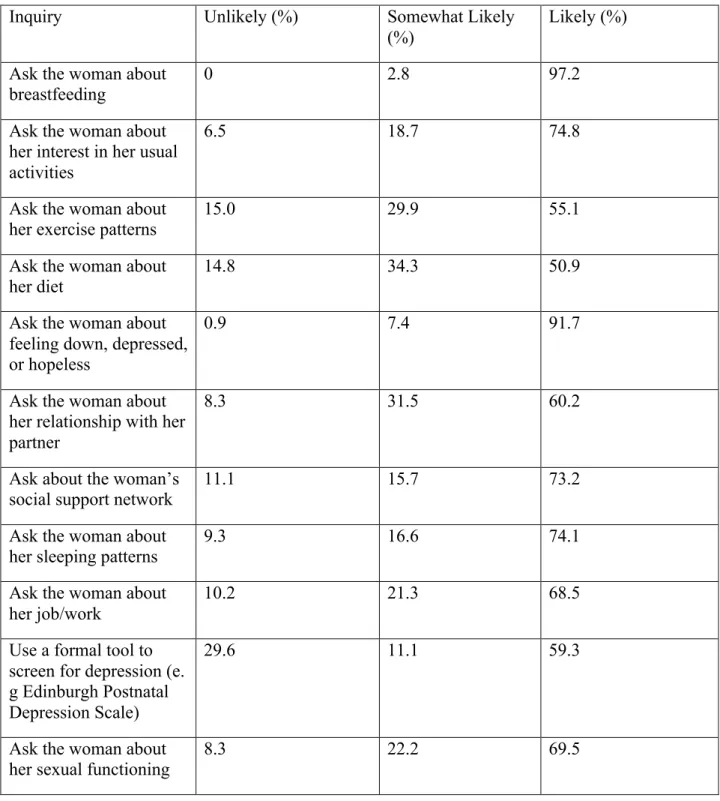
about a woman’s social support, and 59.3% were likely or very likely to use a formal screening tool for PPD (Table 2).
Respondents were then asked about their routine practice patterns regarding PPD screening including when they screen, type of screening instrument used, and how they assess/triage patients with a positive screen. The majority of respondents (90% of nurse midwives and 77% of OB/GYNs) screen during both pregnancy and at 6 weeks postpartum:. Ninety-two percent routinely screen for PPD (92% of nurse midwives and 93% of OB/GYNs). We found that % work in a clinic that uses a screening instrument for PPD, with the EPDS being used by 95% of those who use a screening instrument.
Respondents who work in a clinic that routinely uses a screening instrument for PPD were asked about their familiarity with the EPDS with 85% reporting feeling “ at least somewhat familiar” with the screening tool. These respondents were also queried about their knowledge of what cut-off score on the EPDS prompts concern for suspected PPD and what score prompts consideration for initiation of treatment for PPD. Most (84%) reported having concern with a cut-off EPDS score of 8-10. Forty-two percent responded that a score of 10 prompts them to consider treatment for PPD, and 27% responded that a score of 12 prompts them to consider treatment for PPD.
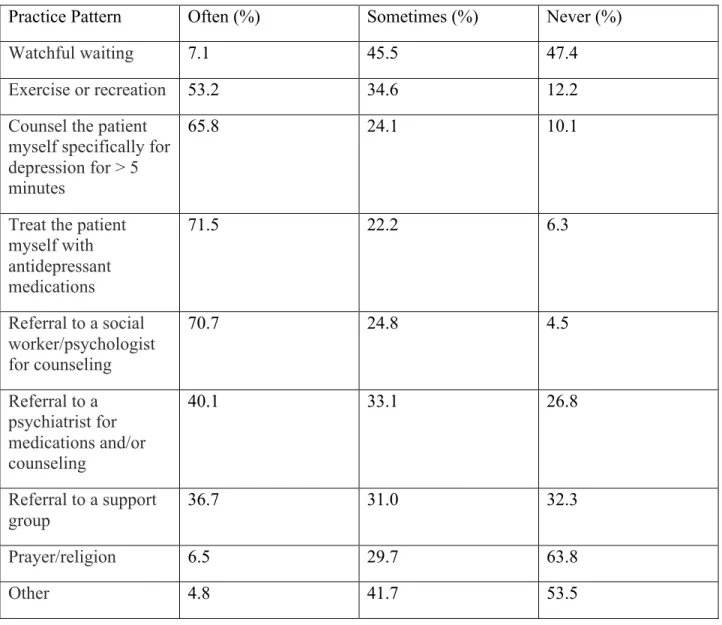
Respondents were asked how often they recommend various treatment options when they suspect a patient has PPD. Treatment options included “watchful waiting”, counseling for greater than 5 minutes”, “treating the patient with antidepressant medications”, or “referral to
counsel for greater than 5 minutes, and 55.4% refer to a psychiatrist and/or social worker for counseling and/or medications (Table 3).
Thirty-three percent responded that there are adequate mental health professionals for patient referral in their practice area, and 41% responded there are not adequate mental health professionals for referral in their area. Respondents who answered somewhat or no to the prior question were asked if the lack of mental health professionals in their area affects their
willingness to screen for PPD. One percent responded they are unwilling to screen because of the lack of mental health professionals to refer patients to in their area; 97% would be willing to screen if mental health professionals were available, and 1% responded they would not be willing to screen even if there were mental health professionals in their area.
Lastly, respondents were asked what they believe to be the largest barrier to screening for PPD in their practice. Barriers included lack of knowledge about PPD (11.8%), lack of time to screen for PPD (27.5%), lack of insurance coverage for PPD screening (7%), and lack of mental health professionals in their practice area for referral (36.3%) (Table 4).
Discussion
rates of depression symptoms3, 14 we focused our research on health care providers who practice in lower income/underserved areas of NC.
Webelieve that our survey assessed a diverse representation of obstetrical providers across NC and that the respondents who completed the survey provide an accurate representation of NC OB-GYNS and nurse midwives, including those providers who practice in lower
income/underserved areas of NC. For example the ethnic/racial breakdown of providers’ patients in this study was 67% Caucasian, 20% African-American, 10% Hispanic or Latino, and 1% Native American. This is a good representation of the actual racial/ethnic makeup of NC as measured in the most recent U.S. census data.15
Practice Patterns
Respondents had varying practice patterns regarding postpartum care and PPD screening. Although the vast majority of respondents screen for PPD in some form, only 59.3% use a
formal screening tool such as the EPDS. When PPD is suspected, the majority of providers (over 70%) treat the patient either by prescribing anti-depressants, counseling patients themselves, and referral to a psychiatrist or social work. It appears that most providers in underserved areas are attempting to screen for PPD in their patient populations but are limited by multiple barriers including lack of knowledge about PPD, lack of time to screen for PPD, lack of mental health resources and professionals, and lack of insurance coverage for PPD. Overall, OB/GYNs and nurse midwives reported similar practice patterns and limitations.
Barriers to PPD Screening
of insurance coverage for PPD screening. According to the HRSA, many respondents practiced in counties with a shortage of mental health care providers including Robeson, Gaston, Sampson, and Hertford counties.12 This finding is consistent with previous literature that documents that lack of mental health professionals is a barrier to effective diagnosis and treatment of PPD.2
Limitations
The study sample was drawn from members of ACOG and ACNM, which could hinder the ability to generalize the results to other OB/GYNs and nurse midwives. This study is also subject to responder bias. Because this study was a voluntary survey only data from those who completed the survey are included. Study participants could have various factors that are different from non-participants including an interest in PPD and available time to complete the survey.
Conclusion and Next Steps
References
1. Perinatal and postpartum depression a top priority at annual conference of ob-gyns .
Washington, DC: The American College of Obstetricians and Gynecologists; 2010:1. Available from: http://www.acog.org/from_home/publications/press_releases/nr05-17-10-2.cfm.
2. Gjerdingen DK, Yawn BP. Postpartum depression screening: Importance, methods, barriers, and recommendations for practice. J Am Board Fam Med. 2007;20(3):280-288.
3. Price SK, Proctor EK. A rural perspective on perinatal depression: Prevalence, correlates, and implications for help-seeking among low-income women. J Rural Health. 2009;25(2):158-166.
4. Hirst KP, Moutier CY. Postpartum major depression. Am Fam Physician. 2010;82(8):926-933.
5. Delatte R, Cao H, Meltzer-Brody S, Menard MK. Universal screening for postpartum depression: An inquiry into provider attitudes and practice. Am J Obstet Gynecol. 2009;200(5):e63-4.
6. Breese McCoy SJ. Postpartum depression: An essential overview for the practitioner. South Med J. 2011;104(2):128-132.
7. Cox J, Holden J, Sagovsky R. Detection of postnatal depression. development of the 10-item edinburgh postnatal depression scale. The British Journal of Psychiatry. 1987;150(6):782.
8. Evins GG, Theofrastous JP, Galvin SL. Postpartum depression: A comparison of screening and routine clinical evaluation. Obstet Gynecol. 2000;182(5):1080-1082.
10. Gavin NI, Gaynes BN, Lohr KN, Meltzer-Brody S, Gartlehner G, Swinson T. Perinatal depression: A systematic review of prevalence and incidence. Obstetrics & Gynecology. 2005;106(5, Part 1):1071.
11. Boyd RC, Mogul M, Newman D, Coyne JC. Screening and referral for postpartum depression among low-income women: A qualitative perspective from community health workers. Depress Res Treat. 2011;2011:320605.
12. U.S. department of health and human services health resources and services administration. http://www.hrsa.gov.libproxy.lib.unc.edu/index.html. Accessed 05/20, 2011.
13. Qualtrics. Qualtrics survey software. 2011. Available from: https://uncodum.qualtrics.com/.
14. Hobfoll SE, Ritter C, Lavin J, Hulsizer MR, Cameron RP. Depression prevalence and incidence among inner-city pregnant and postpartum women. J Consult Clin Psychol. 1995;63(3):445.
15. US Census Bureau. North Carolina QuickFacts.
Table 1. Characteristics of Respondents and Patients in their Practices
Characteristic Percentage of Respondents
Type of Practitioner
69% 30% OB/GYN
Nurse Midwife
Region in which you practice
10% 22% 35% 15% 13% 5% Charlotte area Eastern NC Raleigh/Durham/Chapel Hill
Greensboro/Winston Salem/High Point Western NC
Other
Predominant ethnic group of patients in their practice 67% 18% 13% 1% 1% Caucasian African-American Hispanic/Latino
Native American/American Indian Other
Percentage of uninsured patients in their practice 15% 56% 21% 6% 7% None
Less than 25% 26%-50% 51%-75%
Greater than 75%
Percentage of Patients with Medicaid in their practice 9% 21% 38% 19% 13% None
Less than 25% 26%-50% 51%-75%
Greater than 75%
Percentage of Patients with Private Insurance 6% 30% 21% 23% 20% None
Less than 25% 26%-50% 51%-75%
Table 2. Respondents Practice Patterns during a Postpartum Visit
Inquiry Unlikely (%) Somewhat Likely
(%)
Likely (%)
Ask the woman about breastfeeding
0 2.8 97.2
Ask the woman about her interest in her usual activities
6.5 18.7 74.8
Ask the woman about her exercise patterns
15.0 29.9 55.1
Ask the woman about her diet
14.8 34.3 50.9
Ask the woman about feeling down, depressed, or hopeless
0.9 7.4 91.7
Ask the woman about her relationship with her partner
8.3 31.5 60.2
Ask about the woman’s social support network
11.1 15.7 73.2
Ask the woman about her sleeping patterns
9.3 16.6 74.1
Ask the woman about her job/work
10.2 21.3 68.5
Use a formal tool to screen for depression (e. g Edinburgh Postnatal Depression Scale)
29.6 11.1 59.3
Ask the woman about her sexual functioning
Table 3. Respondents Practice Patterns when they Suspect a Patient has PPD
Practice Pattern Often (%) Sometimes (%) Never (%)
Watchful waiting 7.1 45.5 47.4
Exercise or recreation 53.2 34.6 12.2
Counsel the patient myself specifically for depression for > 5 minutes
65.8 24.1 10.1
Treat the patient myself with antidepressant medications
71.5 22.2 6.3
Referral to a social worker/psychologist for counseling
70.7 24.8 4.5
Referral to a psychiatrist for medications and/or counseling
40.1 33.1 26.8
Referral to a support group
36.7 31.0 32.3
Prayer/religion 6.5 29.7 63.8
Table 4. Largest Barrier to Screening for Postpartum Depression in their Practice
Barrier Percentage of Respondents (%)
Lack of knowledge about postpartum depression
11.8
Lack of time to screen for postpartum depression
27.5
Lack of insurance coverage for postpartum
depression screening 7
Lack of mental health providers to whom to
refer patients to 36.3
Appendix I
Survey of Study Practices on Postpartum Depression Screening 1. What is your role in the clinic?
a. Certified Nurse Midwife b. Family Medicine Physician c. Nurse Practitioner
d. Obstetrician/Gynecologist
2. In which region of North Carolina do you predominately practice a. Charlotte area
b. Eastern North Carolina (ex. Greenville/Rocky Mount) c. Raleigh/Durham/Chapel Hill area
d. Triad (ex. Greensboro/Winston Salem/High Point) e. Western North Carolina (ex. Asheville/Boone) f. Other region
g. Please write specific area _________________________________________ 3.. What is the major race/ethnic group of the patients in your practice?
a. Caucasian
b. African-American c. Hispanic or Latino
d. Native American/American Indian e. Other
b. 25% or less c. 25%-50% d. 50%-75%
e. Greater then 75%
5. Approximately what percentage of the patients in your practice receive Medicaid? a. None
b. 25% or less c. 26%-50% d. 51%-75%
e. Greater than 75%
6. Approximately what percentage of the patients in your practice have private insurance? a. None
b. 25% or less c. 26% - 50% d. 51%-75%
e. Greater than 75%
7. Approximately how many women did you see for a postpartum visit during the past 3 months?
a. More than 100 b. 76-100 c. 51-75 d. 26-50 e. 1-25 f. None
a. >50% b. 41-50% c. 31-40% d. 21-30% e. 10-20% f. <10%
9. What is your estimate of the prevalence of postpartum depression is among your patients? a. >50%
b. 41-50% c. 31-40% d. 21-30% e. 10-20% f. <10%
10. How likely are you to do each of the following during a postpartum visit? (Circle one number on each line)
Unlike ly
Somewhat likely
Very likely
Almost certain
a. ask the woman about breastfeeding? 1 2 3 4
b. ask the woman about her interest in her usual activities?
1 2 3 4
c. ask the woman about her exercise patterns? 1 2 3 4
d. ask the woman about her diet? 1 2 3 4
e. ask the woman about feeling down, depressed, or hopeless?
1 2 3 4
her partner?
g. ask about the woman’s social support network?
1 2 3 4
h. ask the woman about her sleeping patterns? 1 2 3 4
i. ask the woman about her job/work? 1 2 3 4
j. use a formal tool to screen for depression (e.g. Beck Depression Inventory, Edinburgh )?
1 2 3 4
k. ask the woman about her sexual functioning?
1 2 3 4
11. During the course of caring for pregnant women, when do you ask about symptoms of depression?
a. at no point/not at all Within 6 weeks postpartum b. During the pregnancy
c. Both during the pregnancy and 6 weeks postpartum 12. Do you routinely screen for PPD?
a. Yes b. No
13. Does your clinic site use a screening instrument for postpartum depression? a. Yes – skip to Q14
b. No
c. I don’t know
14. Which screening tool does your clinic site use? a. Edinburgh Postnatal Depression Scale
c. Patient Health Questionnaire (PHQ-9)
d. Center for Epidemiologic Studies Depression Scale (CES-D) 15. How familiar are you with the Edinburgh Postnatal Depression Scale?
a. Very familiar b. Somewhat familiar c. Not at all familiar
16. On the Edinburgh Postnatal Depression Scale, what score prompts your concern for postpartum depression?
a. 3 b. 5 c. c. 8 d. 10
17. On the Edinburgh Postnatal Depression Scale, what score prompts you to consider treatment of postpartum depression?
a. 8 b. 9 c. 10 d. 12
18. How confident do you feel about your ability to do each of the following? (Circle one number on each line)
Very confident
Mostly confident
Somewhat confident
Not confident a. Diagnose postpartum
depression.
4 3 2 1
b. Treat postpartum depression with medication.
4 3 2 1
with counseling.
d. Address the needs of patients who have postpartum depression.
4 3 2 1
eI can manage postpartum depression overall
4 3 2 1
19. Please indicate whether you strongly agree, agree, disagree or strongly disagree with each of the following statements?
Strongly agree Agre e Disagr ee Strongly disagree a. I prefer to Refer women with postpartum
depression to another provider
4 3 2 1
b. Diagnosing postpartum depression is part of my clinical practice
4 3 2 1
c. Treating postpartum depression is part of my clinical practice
4 3 2 1
20. How often do you use or recommend the following for PPD: Very often Somewhat
often
Less often Not at all
a. Watchful waiting 4 3 2 1
b. Exercise or recreation 4 3 2 1
c. Counsel the patient myself specifically for depression for > 5 minutes
4 3 2 1
d. Treat the patient myself with antidepressant medications
4 3 2 1
e. referral to a social worker/psychologist for
counseling
f. referral to a psychiatrist for medications and/or counseling
4 3 2 1
g. referral to a support group 4 3 2 1
h. prayer/religion 4 3 2 1
i. other 4 3 2 1
21. Do you routinely start anti-depressant medications for women with PPD? a. Yes – skip to Q22
b. No
22. How many weeks later do you usually schedule a woman’s follow-up visit? (circle one)
a. 1-2 weeks
b. 3-4 weeks c. 5-6 weeks d. 7-8 weeks
e. more than 8 weeks
23. Do you feel there are adequate mental health professionals in your area to refer patients with PPD to?
a. Yes, I think there is adequate referral for mental health in my area b. Somewhat - skip to Q25
24. Is there a provider to whom your regularly refer patients with PPD? a. Yes
b. Somewhat c. No
25. If there is no referral in your area, how does the lack of available referral affect your willingness to screen for PPD?
a. Unwilling to screen because there is no one to refer patients to b. Would be willing to screen if referral were available
c. Would not be willing to screen at all
26. Do you think there is adequate time during an average postpartum visit to screen for postpartum depression
a. Yes b. No
27. What do you think is the largest barrier to screening for postpartum depression in your practice?
a. Lack of knowledge about postpartum depression b. Lack of time to screen for postpartum depression
c. Lack of insurance coverage for postpartum depression screening d. Lack of mental health providers to whom to refer patients to