•
Adolescent Obesity & Type 2 Diabetes Mellitus: A Systematic Review of the Literature
By
Janelle A. Shumate
A Master's Paper submitted to the faculty of the University ofNorth Carolina at Chapel Hill
In partial fulfillment of the requirements for the degree of Master of Public Health in
the Public Health Leadership Program.
Chapel Hill
Table of Contents Table of Contents
--- ii
Abstract
---
iiiPreface & Definitions --- 1
Introduction --- 3
Background Adolescent overweight . . . 5
Pediatric type 2 diabetes . . . 6
Review Question . . . 7
Methods --- 8
Results Overview ... 11
Critical Appraisal of included literature . . . .. 12
Summary of the Evidence... . . . 14
Non-quantitative data synthesis . . . 24
Discussion Principal findings . . . 24
Limitations of review ... 25
Limitations ofliterature ... 26
Other considerations ... 27
International efforts ... 27
BMI as measurement tool.. ... 29
Implications for healthcare policy ... 30
Implications for future research ... 31
Implications for health of adolescents ... 33
Conclusions _______________________________________ 33 Acknowledgements _______________________________________ 33
References ____________________________ 34
Abstract
BACKGROUND:
Adolescents, aged 12-19 years, represent the fastest growing segment of the population affected by the obesity (overweight) epidemic. A simultaneous and equally important trend in the United States (U.S.) is the increasing prevalence of children and adolescents with type 2 diabetes mellitus (DM). Although type 2 DM is an obesity-related disease in adults, a causal relationship between
adolescent overweight and pediatric type 2 DM is suspected but not established.
OBJECTIVES:
The main objective of this review is to systematically explore the association between overweight and type 2 DM in adolescents, and consider the magnitude of any identified association. The principal question is: Within the U.S. adolescent population aged 12-19 years old, is overweight- defined as Body Mass Index (BMl) -for-age 2: 95th percentile (with 85th to <95th percentile considered at risk for overweight)- associated with the development of type 2 diabetes mellitus during adolescence?
METHODS:
Search Strategy- I obtained studies through systematic electronic database
searches ofMedline via PubMed and the Cochrane library, supplemented by a manual search of selected journals and bibliographies. Selection
criteria-Original research articles published in English, involving the U.S. adolescent population, and addressing overweight and/or type 2 DM were eligible for inclusion. Data collection & analysis: The primary author independently
reviewed relevant studies and extracted evidence into tabular format for analysis.
MAIN RESULTS:
Eight studies were relevant to the key question (or its pre-defined subcomponent) and rated as fair or good quality. Study designs were prospective longitudinal, cross-sectional, and retrospective cohort, and sample sizes ranged from 36 to 1,242. Outcome measures included BMl, type 2 DM, impaired glucose tolerance, and hyperinsulinism. All studies had flaws, including small sample size, general methodological inconsistencies, and compromised internal validity.
CONCLUSIONS:
Overall, the body of evidence identified for this review concentrates on an
association between overweight and metabolic disturbances related to type 2 DM, rather than on type 2 DM specifically. Insufficient evidence is available to reliably conclude on a causal association between overweight status and
Preface & Definitions Overweight vs. Obesity
Some authors use the terms obese and overweight interchangeably in
regards to the pediatric population. Others define overweight in the range of
851h -951h percentile body mass index-for-age (BMI-for-age) aod reserve the
term obesity for those at greater thao the 951h percentile. The latter parameters
are based appropriately on the 2000 Centers for Disease Control and
Prevention (CDC) BMI-for-age growth charts, but use nomenclature common
to adults. These multiple definitions provide inconsistencies in educating
patients aod further difficulty in keeping current, stable information among
practitioners.1
As of 2000, the pediatric criteria used by the CDC designate overweight as
::':951h percentile BMI for age; while a BMI between the 851h and 951h
percentile is considered being at risk for overweight2 This paper relies on the
CDC definitions and focuses on those individuals in the overweight category.
[Note: the title page uses the term obesity in reference to the adolescent
obesity epidemic in its global sense].
Definition of Adolescent:
The defining age limits for the adolescent population vary depending on
the resource used; the lower limit raoges from 12 to 13 years of age, and the
upper limit from 18 to 19 years of age. For the purposes of this discussion, I
will define adolescents as individuals whose age raoges from 12 to 19 years
grouping used by the United States Preventive Services Task Force (USPSTF)
and the National Health and Nutrition Examination Survey (NHANES).
Nomenclature of Diabetes:
Diabetes mellitus (DM) consists of two traditionally recognized entities,
type one and type two. Over the years, a number of synonymous terms have
come to represent each form. For example, type one DM was originally
termed insulin-dependent diabetes mellitus (IDDM), juvenile-onset, or written
as type I using Roman numeral format. Similarly, type two DM was termed
non-insulin dependent diabetes mellitus (NIDDM), adult-onset, and
documented as type II. Although each of these expressions continues to be
widely used in the literature, this paper distinguishes forms of diabetes by
using the terminology type 1 DM or type 2 DM.
This latter terminology is preferable for several reasons. First, the terms
NIDDM and adult-onset are obsolete given that many so-designated patients
actually require insulin injections and have not reached adulthood. Second,
use of the Roman numeral format in written medical records can lead to
clerical and interpretation errors. Finally, the numerical nomenclatures
recognize etiology of disease rather than treatment outcomes. However, in
direct quotes or in evidence tables, I use the referenced authors' preferred
(documented) nomenclature rather than assuming he I she means type 1 or
Introduction
Over the past several decades, the prevalence of childhood overweight has
reached epidemic proportions in the US. Adolescents (aged 12-19years)
represent the fastest growing segment of the population affected by this
condition. The increased rate of adolescent overweight is concerning,
particularly when compared to the remainder of the pediatric subset. The
most recent data released by the National Health and Nutrition Examination
Survey (NHANES) approximates that 16.1% of children aged 6-19 years meet
the definition of overweight (BMI-for-age ::0: 95th percentile)3 While the
percent of overweight children aged 6 to 11 years more than doubled (6.5% to
15.3%) from the late 1970s to 2000, the percent of overweight adolescents
actually tripled (5.0% to 15.3%) during those same decades4
A simultaneous and equally important trend in the US is the increasing
prevalence of children and adolescents with type 2 diabetes mellitus (DM).
Although population-based data are not yet published, available statistics
indicate a rising incidence rate. For example, in Cincinnati, the incidence of
adolescent type 2 DM increased from 0.7/100,000 new cases per year in 1982
to 7.2/100,000 in 19945 Overall, type2 DM represents 8% to 45% of all
cases of diabetes currently diagnosed in pediatric centers. 6
In spite of type 2 DM being an obesity-related disease in adults, a causal
relationship between adolescent overweight and pediatric type 2 DM has not
been established. According to one source, being overweight puts adolescents
non-overweight children. 7 One recent study of overweight youth found that 21%
of the 112 adolescents studied had impaired glucose tolerance that placed
them at high risk for developing type 2 diabetes8
The potential association between overweight and type 2 DM in
adolescents is a public health concern for a number of reasons. First, the rates
of overweight and type 2 DM are not only rising within the entire population,
but also affiicting children at increasingly younger ages6' 9 Second, although
the direct adulthood consequences of pediatric overweight remain unclear, the
best predictor of becoming an overweight adult is being an overweight
adolescent.10 According to Whitaker et al., 80% of children with BMls C':95th
percentile become overweight adults. 1
°
Finally, type 2 DM in adolescents may represent a direct consequence of overweight which actually manifests prior toadulthood. The implications of such an association for policy change,
targeted prevention, and health education are many.
Consider, for example, how the changing demographics of type 2 DM
may affect pediatric education and training. Many pediatric care providers are
unaccustomed to seeing patients with type 2 DM because it was previously an
adult-associated condition. Updating the knowledge of practitioners will
require additional training at multiple levels, including medical I nursing
schools, residency programs, and continuing medical education. Also, the
medical community will require a set of standards for treatment and diagnosis
specific to this population. A recent survey of health care providers, the
obstacles to caring for adolescents with type 2 DM.11 Seventy three percent of
respondents listed a lack of evidence-based practice guidelines as one such
barrier11
This paper will systematically explore the association between overweight
and type 2 DM in adolescents, and consider the magnitude of any identified
association.
Adolescent Overweight
Burden of Suffering:
Background
The percentage of adolescents who are overweight has tripled from
1980-2002, and an estimated 15-30% (9 million) of children and adolescents (aged 6-19
years) are overweight.12 According to the Centers for Disease Control and
Prevention( CDC), overweight status puts youth at 10 times greater risk for
hypertension, 3-8 times the risk for dyslipidemia, and greater than two times that
of normal children for diabetes mellitus7 Other co-morbidities that increase with
being overweight include asthma, pseudotumor cerebri, slipped capital femoral
epiphysis, and cholelithiasis1, as well as depressed self-esteem and problematic
social interaction. 12
Risk Factors:
The etiology of overweight is multicausal, and genetic factors are usually
associations exist between increased weight and certain ethnic groups. Currently,
Mexican-American boys and African-American girls have the highest prevalence
among U.S. adolescents3 Also, a sedentary lifestyle is thought to contribute
profoundly. According to the Department of Health and Human Services (2001),
half of U.S. young adults (aged 12-21 years old) are not active on a regular basis;
and approximately 14% report no physical activity at all.
Other postulated risk factors include: low parental education, social deprivation,
early puberty, gestational diabetes, and infant feeding patterns. 12
Pediatric Type 2 Diabetes Mellitus
Burden of Suffering:
Previously recognized as a disease of adulthood, type 2 DM now occurs in
younger and younger age groups. 13 Most of the current prevalence data comes
from case reports in clinic populations, so the precise national incidence rate
remains unknown. However, type 2 DM in youth is the most rapidly growing
form of diabetes in the U. S.14 The National Diabetes Education Program15 cites
two clinic-based studies illustrating that the percentage of newly diagnosed
diabetic children with type 2 DM has risen from <5% before 1994 to 30-50% in
subsequent years.16'17
Risk Factors:
Although the term type 2 DM denotes a metabolic disorder characterized by
insulin resistance, various degrees of beta-cell failure, insulin deficiency, and
young people are unknown. Also, some characteristics of youth-onset type 2 DM
overlap with those of type 1 DM, making diagnosis more difficult.
To further complicate the clinical picture, the onset and course of type 2 DM
in the pediatric population is unpredictable. Authors disagree on the typical
presentation. Libman, eta!., suggest that up to 50% of youth with type 2 DM are
asymptomatic, and that diagnosis is often based on an incidental finding of
glucosuria or hyperglycemia.20 In contrast, a study conducted by Lipton, eta!., suggest that the majority of young patients present with severe onset of signs and
symptoms, regardless of type 1, type 2 or undetermined status. 21.
Review Question
Despite ambiguity, one consistency is that youth with type 2 DM tend to be
overweight.13' 17 This systematic review seeks to answer the following key
question: Within the U.S. adolescent population aged 12-19 years old, is
overweight- defined as BMl-for-age 2: 95th percentile (with 85th to <95th
percentile considered at risk for overweight) - associated with the development of
type 2 diabetes mellitus during adolescence? A related subcomponent question
is: Within the U.S. adolescent population, is overweight associated with the
development of conventional precursors of type 2 diabetes mellitus during
adolescence - namely insulin resistance or insensitivity, impaired glucose
Methods
For this systematic review, I consulted various sources for design and
implementation22"26, but served as the primary investigator and author.
Search strategy:
Appendix B outlines the search strategy. To identify relevant literature, I
obtained studies through electronic database searches ofMedline via PubMed and
the Cochrane library. With the assistance of a medical librarian, I searched
Medline using the following Medical Subject Headings (MeSH) terms and
combinations: "Obesity"[MeSH] combined with "Adolescent"[MeSH] OR
"Adolescent Health Services" [MeSH] OR "Adolescent Nutrition"[MeSH] OR
"Adolescent Behavior" [MeSH] OR "Adolescent. (Repeating the search with
"Obesity"[MeSH] limited to Adolescents yielded identical results). I then
combined the preceding search history with "Diabetes Mellitus, Type 2" [MeSH].
The date of the Medline search was December 16th, 2006. I placed no limits on
publication date such that the full extent ofPubMed entries (i.e. dated back to
1966) was potentially available. I supplemented this electronic search with a
manual search of selected journals and bibliographies.
Study Selection:
Tvoes of Studies: I included only original research, meaning no letters to
the editor, non-systematic review articles, commentaries, or conference
proceedings. Acceptable study designs were observational (cross-sectional,
eligible studies were published in English. I placed no limitations on study
duration or sample size in order to capture an adequate number of publications.
Twes of Participants: All study populations included, but were not limited
to, the adolescent age group - 12 to 19 years old. Additionally, I required that the
research deal with participants residing in the U.S. The reason for this latter
criterion was to focus on the immediate population that American-based health
care providers encounter. Also, the time and resource limitations of this review
were not conducive to international query.
Twes of Outcome Measures: Acceptable diagnostic criteria for
overweight included BMI-for-age percentiles defined by the 2000 CDC growth
charts; crude BMI; or the author's statement of diagnosis. Acceptable diagnostic
criteria for diabetes included those defined by the American Diabetes Association
(ADA 1997); the World Health Organization (WHO 1985); the National Diabetes
Data Group standards (NDDG 1979); or the author's statement of diagnosis.
Data extraction strategy:
I independently reviewed eligible studies and extracted evidence into
tabular format for analysis.
Study quality assessment:
I derived quality assessment criteria from a critical appraisal template
developed for Health Care and Prevention at the University ofNorth Carolina at
Chapel Hill (see Appendix A); and used example coding instructions for quality
assessmene6 to adapt checklist questions. I assessed internal validity by
rates. I assessed external validity based on each study's applicability to
overweight adolescents in the U.S. This assessment was separate from, and had
no influence on, determination of internal validity.
In order to rate the overall quality of evidence, I relied on the Grades of
Recommendation Assessment, Development and Evaluation (GRADE) Working
Group approach. The GRADE working group describes quality of evidence as
"the extent to which one can be confident that an estimate of effect is correct. "23
Definitions of quality grade are as follows: High indicates that further research is
very unlikely to change confidence in the estimate of effect; Moderate indicates
that further research is likely to have an important impact on confidence in the
estimate of effect and may change the estimate; Low indicates that further
research is very likely to have an important
impact on confidence in the estimate of effect and is likely to change the estimate;
and Very Low indicates that any estimate of effect is very uncertain. 23
Data synthesis approach:
I used a non-quantitative data synthesis approach because the studies were
too heterogeneous in nature to perform a quantitative analysis. Not only did
studies differ in terms of results, but also in terms of participant characteristics
and outcome measures (clinical heterogeneitl6) as well as study design
(methodological heterogeneity26). I used recommendations outlined by the Centre
Results Overview of included I excluded studies:
Appendix C presents the flow of the literature in a quorum tree. In total, I
found 423 citations potentially relevant to the research question. The electronic
literature search ofMedline (via PubMed) yielded 403 citations, and I identified
an additional20 pertinent citations through manual exploration of bibliographies
from selected review articles and letters. I independently reviewed all titles and
citations, liberally applied the pre-determined selection criteria (see Appendix D)
to available abstracts, and then stringently reapplied the selection criteria (see
Appendix E) to remaining full text articles.
I excluded 394 citations, abstracts, and full text publications for the
following reasons: 151 were not related to diabetes I obesity or had an
inappropriate outcome; 103 were not original research; 98 did not involve United
States participants; 29 did not encompass the adolescent population; 5 had the
wrong study design; 4 were unavailable in full text; and 4 were not published in
English.
In all, I included 9 publications in the systematic review: 5 concurrent
cross-sectional studies, 2 cross-sectional studies using retrospective chart review,
and 2 prospective longitudinal cohort studies. For each study, I extracted data
Critical appraisal of included literature:
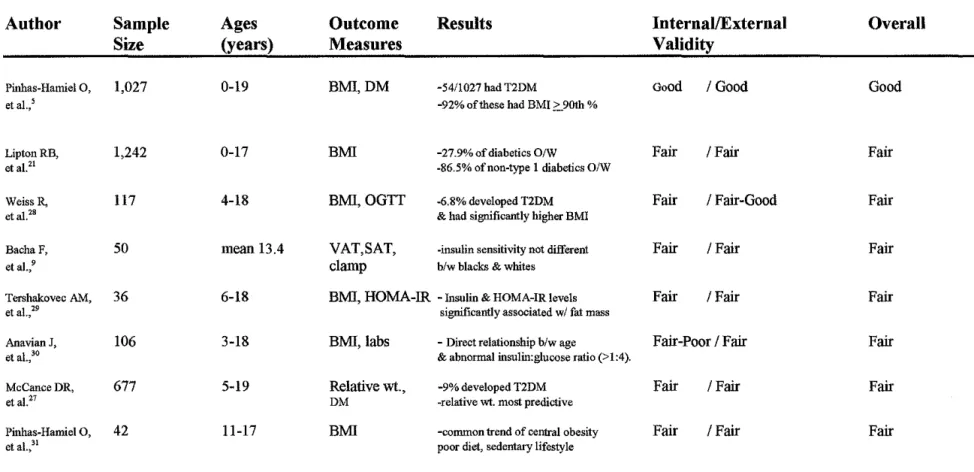
Table 1 summarizes the quality ratings (including internal and external
validity) for each of8 articles that received an overall rating of good or fair. I
assigned quality ratings based on the categories of appraisal detailed in each full
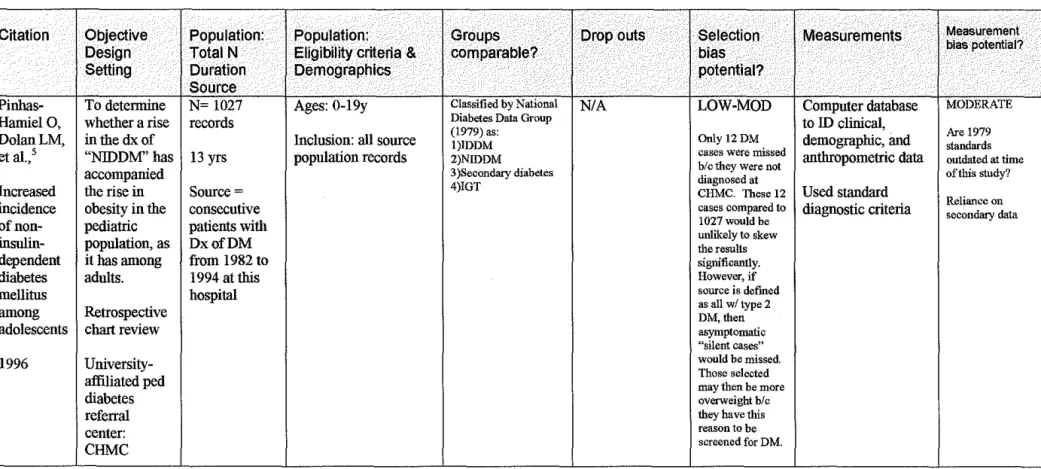
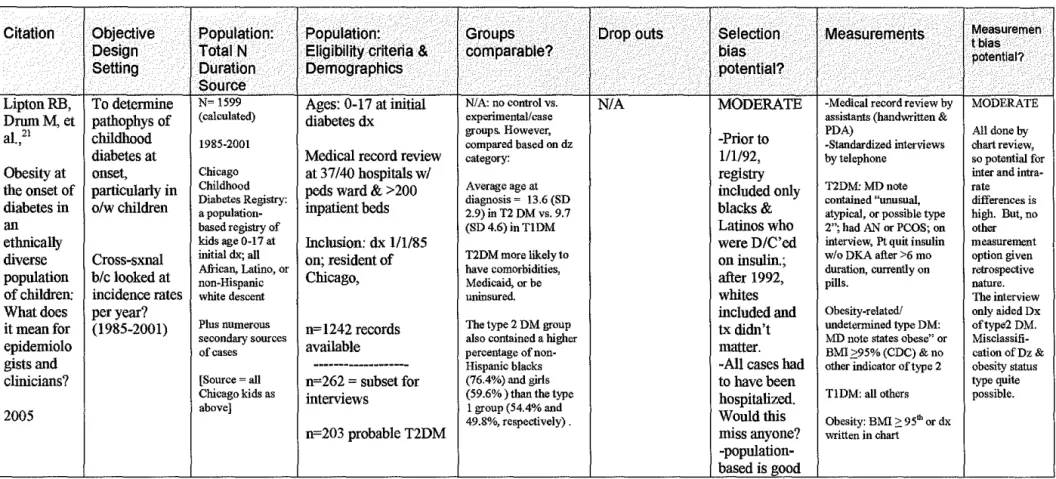
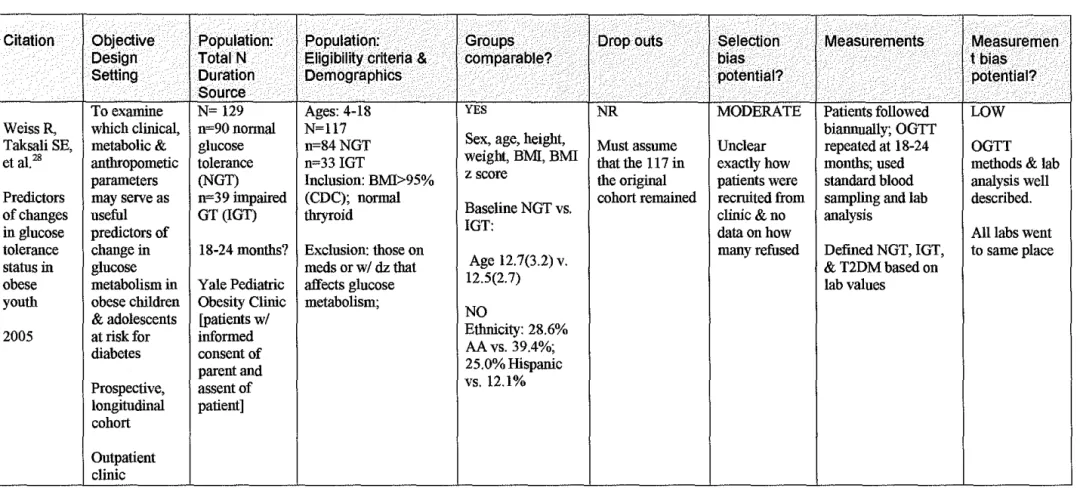
evidence table (Table 2a- 2h). The best evidence identified was a
cross-sectional, retrospective chart review conducted by Pinhas-Hamiel, Dolan, et al., to
determine whether the recent rise in the diagnosis of type 2 DM corresponds with
the rise in pediatric overweight. 5
Internal Validity:
The aforementioned study5 received a good quality rating for internal
validity. The authors addressed selection bias by searching for all cases of type 2
diabetes that were not diagnosed at their institution, the Children's Hospital
Medical Center (CHMC) in Cincinnati, during the study time period. Only 12
cases were diagnosed outside ofCHMC, compared to 1027 diagnosed within the
institution. These 12 cases are unlikely to skew the results, and the potential for
selection bias is low. This rating is based on the strict definition of the source
population as those patients diagnosed with diabetes from 1982 to 1994 at
CHMC. However, if the intended source population was all adolescents with type
2 DM, the potential for selection bias increases due to possible undiagnosed
"silent cases" that were not overweight. In other words, the authors could have
selected a more overweight population of type2 diabetics because they were the
selection bias, the internal validity of this study is good. The authors also
addressed multiple confounders in their research methods, including: referral
pattern, change in the total number of patients seen at CHMC, location of
residence, and changes in ethnicity or other characteristics of the population over
time.
The remainder of studies had fair internal validity, primarily due to
unacceptable potential for selection bias or confounding. For example, three
authors excluded data on how the study population was chosen from the source
population27-29; one author employed a selective recruitment strategy by
advertising in the newspaper only; and one author did not report data needed to
calculate attrition rates28 Measurement bias tended to be moderate in all studies
because of the inherent subjectivity of anthropometric measurements and the
unreliability of secondary data used to conduct retrospective reviews.
External Validity:
The leading study, by Pinhas-Hamiel, Dolan, eta!., 5 also received the only
good quality rating for external validity. Authors used a relatively large sample
size; accounted for all possible cases in their catchment area, which included
more than one state; and showed that the incidence rates of type 2 DM at their
institution were comparable to national rates.
The remaining six studies had fair applicability to overweight adolescents
in the United States. Several studies included children aged 12-19 years but did
involved both children and adolescents, but had a mean age so low (11.8 +/- 0.5
years) that the number of adolescent participants had to be minimal. 29 Two
authors focused on a particular racial, ethnic, or high-risk group21• 27; thus, the
results only relate to those specific groups. Finally, although the topic of this
review lends itself to relatively few patients, studies with a particularly small
1 . 9 29 31 1 l'k 1 h . 1 . f.
samp e s1ze · · were east 1 e y to represent t e entire popu atwn o mterest.
Overall Quality:
Based on the ratings for internal and external validity, I rated 5 studies as
fair, one study as fair/good, and one study as good. (see Table 1). In sum, the body of literature addressing adolescent overweight and type 2 DM is
characterized by a limited number of studies with small sample sizes, inconsistent
internal and external validity, and general methodological flaws. Using GRADE
criteria23, the overall quality of evidence is essentially moderate -meaning that
further research will likely have an important impact on confidence in the
estimate of effect and may change the estimate.
Summary of the Evidence:
Key question: Within the U.S. adolescent population aged 12-19 years old, is
overweight associated with the development of type 2 diabetes mellitus during
adolescence?
Two studies - one of good quality and one of fair quality - contained
explicit language in their objectives that was pertinent to the key question above.
a rise in the diagnosis of noninsulin-dependent diabetes mellitus (NIDDM) has
accompanied the rise in obesity in the pediatric population, as it has among
adults."5 Lipton, Drum, eta!., aimed to determine the pathophysiology of
childhood diabetes at onset, particularly in overweight children."21
The commonalities of these studies include a large sample size, long study
duration, and population-based approach. Also, each study involved a
retrospective chart review and included both children as well as adolescents.
Finally, as described in detail below, both analyses showed that well over 80% of
children with type 2 DM (in these populations) were also overweight. Again,
however, the inclusion ofumecognized, asymptomatic (i.e. non-overweight) cases
may dilute this estimate.
The first study, conducted by Pinhas-Hamiel, Dolan, et a!., received an
overall quality rating of good. 5 The authors reviewed the charts of 1,027
consecutive patients, aged 0-19 years, diagnosed with diabetes at CHMC from
1982 to 1994. They used a computer database to identify clinical, demographic,
and anthropometric data.
Using National Diabetes Data Group standards (1979), the authors
classified patients into one offour groups: ( 1) IDDM, heretofore referred to as
type 1 DM; (2) NIDDM, heretofore referred to as type 2 DM; (3) secondary
diabetes; and (4) impaired glucose tolerance. To evaluate weight status, the
authors defined the 90th percentile BMI-for-age as 27 kg/m2 based on population
data32• 33, and then reported the percentage of participants who fell at or above this
Fifty four out of 1,027 (5.3%) patients with diabetes met the criteria for
type 2 DM. Among those aged 10-19 years, 33% of new cases were type 2 DM
in 1994, compared to less than 10% before 1992. Although overweight was not a
major impetus for presentation (only one patient was diagnosed during evaluation
for overweight), the type 2 diabetic population was overwhelming
overweight-with a mean BMl of37.7 +/- 9.6 kg/ m25 In total, 92% had aBM12: 27 (the 90th percentile-for-age according to before mentioned data), 38% had a BMl > 40, and
17%hadaBM1>45.
Strengths of this study include a large total sample size and catchment
area, a thorough assessment for potential confounders, and good internal and
external validity (as discussed above). A major limitation, however, is that the authors did not report a test of correlation between BMl and type 2 DM, nor did
they include data that would allow such a calculation. In the absence of this data,
a direct association between overweight and type 2 DM cannot be quantified.
The second study, conducted by Lipton, Drum, et a!., received a fair
overall quality rating. 21 Researchers examined the medical records of 3 7
Chicago area hospitals to find cases of type 2 DM initially diagnosed in
individuals aged 0 to 17 years between 1985 and 2001. After limiting
demographic criteria to African, Latino, or non-Hispanic white descent, a total of
1242 records were available for review.
The authors defined "obesity" (heretofore referred to as overweight) as a
diagnosis written in the chart or BM12: 95th percentile by 2000 CDC growth chart
classified by a physician note containing "unusual, atypical, or possible type 2"21,
the presence of acanthosis nigricans or polycystic ovarian syndrome, current oral
medication use, or any patient who quit insulin treatment without experiencing
diabetic ketoacidosis after at least six months duration. Second, obesity-related I
undetermined type DM was classified by a physician note containing "obese"21 or
BM12: 95th percentile, and no other indicators of type 2 DM. All others were
classified as type 1 DM21
Of the 1242 diabetic children studied, 27.9% were overweight. None of
the patients with type 1 DM were classified as overweight. In contrast, 73.4% of
type 2 diabetics and 100% of obesity-related I undetermined type diabetics were
overweight21 In total, then, 86.5% of non-type 1 diabetics were overweight.
The rates of overweight for individuals aged 12 to 19 cannot be ascertained
because the authors did not stratify results by age. However, average age at
diagnosis for type 2 DM was 13.6 years (SD 2.9)- and 12.5 years (SD 3.5) for
obesity-related I undetermined type diabetes21 Thus, while adolescents
comprised the majority of individuals with type 2 DM, the total non- type 1
diabetic population included some individuals too young for such classification.
Strengths of this study include hosting a relatively large, population-based
sample (n=1242) and covering medical records from an extensive time frame
(1985 to 2001 ). However, the potential for misclassification of diabetes I
overweight status and ethnicity cannot be ignored. The definitions and methods
used to define each of these categories were not based solely on accepted
1& 2 vs. obesity-related I undetermined type diabetes, the authors did not
calculate an odds ratio for overweight as a predictor of type 2 DM
Together, these data indicate a substantially higher rate of overweight in
adolescent patients with type 2 DM compared to those with type 1 DM.
Collectively, these studies support a relationship between overweight and type 2
DM among adolescents; but, they do not have the appropriate measures of
association to make a conclusive statement.
Subcomponent of Key Question: Within the U.S. adolescent population aged
12-19 years old, is overweight associated with the development of precursors to type
2 diabetes mellitus during adolescence - namely insulin resistance or
insensitivity, impaired glucose tolerance (JGT), or hyperinsulinism?
The remaining 6 studies were not directly applicable to the key question of
this systematic review. Rather, they addressed a relevant subtopic within the
association of adolescent overweight and type 2 DM. One prospective
longitudinal cohort study examined impaired glucose tolerance28; two
cross-sectional studies looked at insulin insensitivity"· 29; one prospective longitudinal
cohort and one cross-sectional study addressed hyperinsulinism27• 30; and one
cross-sectional study examined various physical, behavioral, and environmental
Impaired glucose tolerance
Weiss, Taksali, et al., prospectively evaluated 117 overweight children
and adolescents - aged 4 to 18 years old - who were considered to be at risk for
diabetes. They defined overweight as BMI :::: 95th percentile according to 2000
CDC growth charts. Participants completed an oral glucose tolerance test and
standardized lab evaluations in order to be classified as normal versus impaired
glucose tolerance (NGT vs. IGT) or diagnosed with type 2 DM. For 18 to 24
months, researchers followed 84 participants who had normal glucose tolerance at
baseline and another 33 with baseline impaired glucose tolerance28
Of the 117 overweight participants in the initial cohort, 8 (6.8%)
developed type 2 DM28 All 8 of these patients had IGT at study baseline,
suggesting that IGT is a "pre-diabetic" state28 None of the participants who
entered the study with normal glucose tolerance went on to develop type 2 DM.
However, 8 (9.5%) of these participants did develop impaired glucose tolerance.
Analysis of the patients who developed type 2 DM revealed that they had
significantly higher BMI and BMI z scores than the other groups (P=0.006)28
Furthermore, among subjects with IGT, the BMI z score was significantly greater
in those who developed T2DM (2.76 +/-0.21 vs. 2.32 +/-0.40, P=0.001). 28 In a
subgroup analysis of subjects with initial IGT, participants who developed type 2
DM were significantly more overweight (mean BMI 44.8 +/- 9 vs. 33.1 +/- 6.9
P=0.01) at baseline; gained a significantly larger amount of weight (27.3kg
1.06 +/-2.56; P=0.025) more during the course of the study than those who
reverted to NGT.
The data in this study arise from a methodologically sound background;
however, the study is limited by incomplete reporting of data to calculate attrition
rates and lack of age-specific measures of association. Also, the mean age of
participants (12.5 +/- 3.2 years with NGT and 12.7 +/- 2.7 years with IGT) 28
suggests that many of the individuals included in data analysis do not belong in
the adolescent category.
Insulin insensitivity
Two authors conducted cross-sectional studies pertaining to insulin
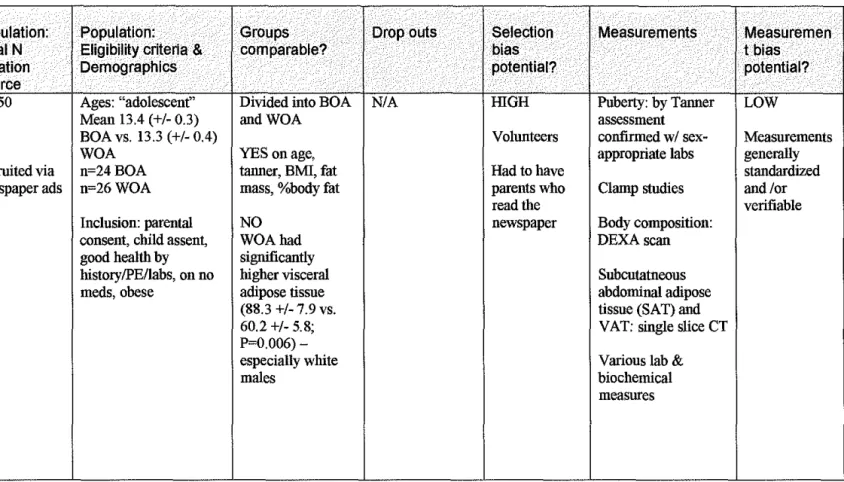
sensitivity in overweight children and adolescents. Bacha, Saad, et al., used
hyperglycemic and hyper- insulinemic euglycemic clamps and compared African
American and white overweight adolescents with a mean age of 13.4 +I-0.3 years
to 13.3 +I-0.4 years, respectively9 Tershakoec, Kuppler, eta!., also compared
African American and white participants, but evaluated the homeostasis model
assessment of insulin sensitivity (HOMA-IR) in children and adolescents aged
6-18 years old (mean age 11.8 +/- 0.5 years)29
In a sample of 50 subjects, Bacha, Saad, et a!., found that insulin
sensitivity, insulin clearance, and first phase insulin were not different between
overweight African American and white adolescents9 Yet second phase insulin
secretion was higher in whites compared to blacks (2015.4 +/- 180.6 vs. 1468.7
lipid levels, more hepatic glucose production, and more visceral fat than their
black counterparts- all of which were considered to be diabetogenic factors.
In a sample of36 participants, Tershakoec, Kuppler, et al., found that
insulin & HOMA-IR levels were significantly associated with fat mass (Spearman r=0.40; P=0.03; and r=0.38; P=0.04) and leptin (Spearman r =0.73; P<0.0001)29
However, ethnic group differences in fat mass (abdominal and visceral),
subcutaneous fat, insulin level, and HOMA-IR were not significant after adjusting
for age & pubertal status.
Both of these fair quality studies are limited by a small sample size. With
a focus on comparing ethnic groups, these data contribute little to an association
between overweight and precursors of diabetes in adolescence. Further
limitations include an unspecified time frame of recruitment29 and lack of age-stratified data.
Hyperinsulinism
Two fair quality studies tackled the association of hyperinsulinism with
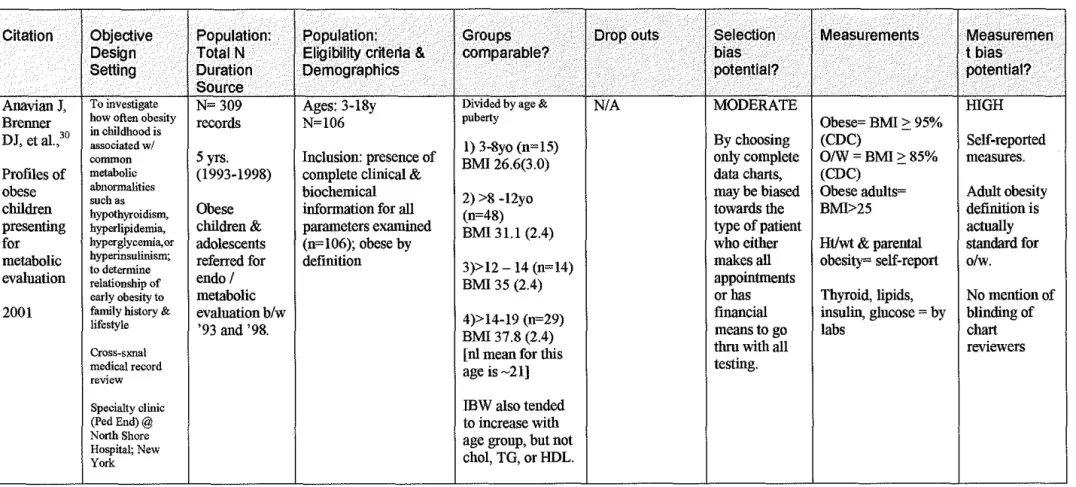
diabetes in young populations. The first, conducted by Anavian, Brenner, eta!.,
aimed to investigate how often overweight in childhood is associated with
common metabolic abnormalities, including hyperglycemia and
hyperinsulinism30. Authors reviewed the charts of 106 overweight individuals
aged 3 to 18 years who were referred for endocrine or metabolic evaluation at
North Shore Hospital (New York). Between 1993 and 1998, a total of 43
years (mean BMI 35; SD 2.4) and 29 individuals aged >14 to 19 years (mean
BMI 37.8; SD 2.4)30
This study noted a direct relationship between age and abnormal
insulin-to-glucose ratio (>1:4). For example, no one aged 3 to 8 had an abnormal ratio;
yet, 34% of those aged 14 to 19 did (P<0.01)30 While the older age group also had the highest BMI values, the authors did not draw a direct correlation between
overweight and an abnormal ratio.
Serious limitations of this study include a short, descriptive, and
incomplete results section; and use of crude BMI and ideal body weight (lBW)
rather than BMI percentiles-for-age (which were appropriately defined by the
authors).
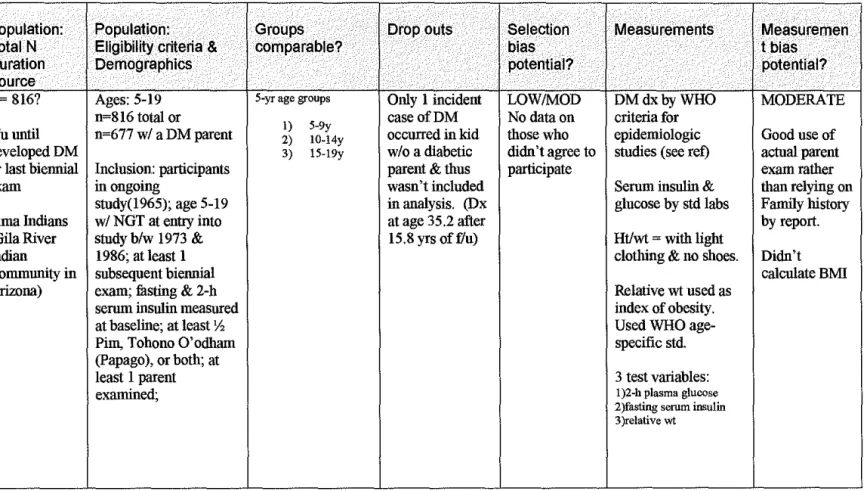
The second study, conducted by McCance, Pettitt, et al., sought, in part,
to answer the question "Does hyperinsulinaemia in childhood & adolescence predict diabetes?"27 Authors reported data from a prospective longitudinal study
amongst a cohort of 5 to 19 year-old Pima Indians (Gila River, Arizona) with at
least one diabetic parent. Of 1,120 subjects who entered the study between 1973
and 1986, 9% developed diabetes during a mean 8.4 yrs offollow-up27
Adjusted for age and sex, relative weight was more predictive of diabetes
mellitus than any other measure: relative weight IRR=2.59 (95%CI
1.66-4.04;P<0.001) vs. 2-hour glucose: IRR=2.41 (95%CI 1.26-4.59;P=0.008) vs.
fasting glucose: IRR=1.67 (95%CI 1.16-4.04;P=0.005)27
The main limitation of this study is a lack of generalizability to
relative weight as an index of "obesity" based on World Health Organization
standards rather than calculated BMI values.
Additional physical, behavioral, and environmental features:
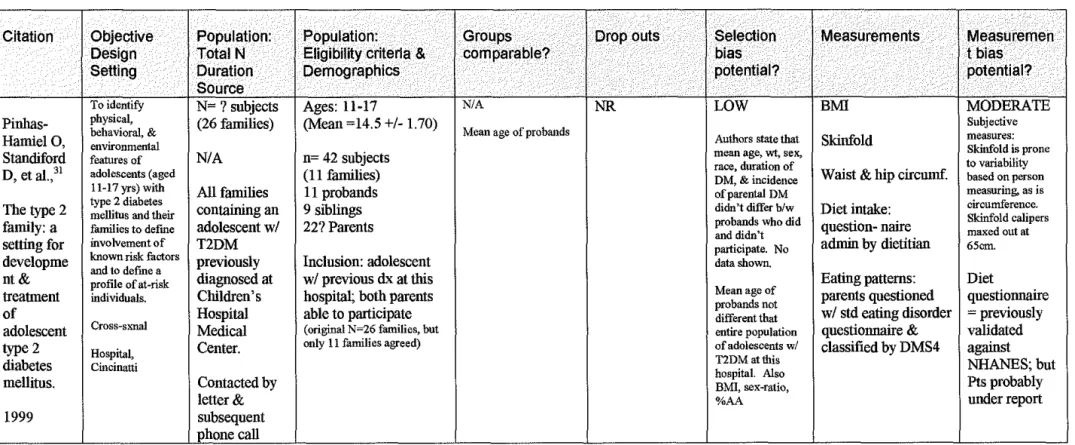
Pinhas-Hamiel, Standiford, et al., conducted a cross-sectional analysis of
42 patients who's type 2 DM was previously diagnosed at Children's Hospital
Medical Center (Cincinatti). 31 Subjects were age 11 to 17 years old, and both
parents were required to participate. The researchers' main objective was "to
identify physical, behavioral, & environmental features" these patients and their families to help "define involvement of known risk factors and to define a profile
of at-risk individuals."31
Outcome measurements included BMI, skinfold thickness, waist-to-hip
circumference, and a dietary intake questionnaire (administered by a dietitian).
Overall, participants were overweight (mean BMI of 37 +/- 11 kg/m2) and had
anthropometric measurements consistent with central obesity. However, the
authors' assessment is primarily qualitative. They conclude that adolescents with
type 2 DM, as well as their families, have marked central obesity, a sedentary
lifestyle, and poor dietary habits. 31
The small sample size of this study limits the application of results to
other adolescents with type 2 DM. Also, the classification of overweight is
questionable because only crude BMI values are reported (though the authors
Non-quantitative Data Synthesis:
Table 1 summarizes the descriptive elements of reviewed studies. Due to
widespread heterogeneity, a numerical estimate of effect could not be calculated.
Discussion Principal findings:
The body ofliterature addressing adolescent overweight and type 2 DM is
characterized by a paucity of studies, inconsistent validity, and general
methodological flaws. Also, many of studies that include adolescents as well as
other age groups do not contain subgroup analysis by age. In spite of these
limitations, the findings of this systematic review are generally consistent. That
is, the publications reviewed do suggest a relationship between adolescent
overweight and type 2 DM. This association is demonstrated, in part, by frequent
coexistence of the conditions and/or probable precursors.
The data indicate that a considerable proportion of young patients with
diagnosed type 2 DM are also overweight. For example, in one study, 92% of the
adolescents with type 2 DM had a BMI ~ 275 (A BMI of27 corresponds to the
90th percentile-for-age5, putting these patients in the at risk for overweight
category.) Another study which addressed both type 1 and type 2 diabetics found
that only those with type 2 DM were overweight.Z1 However, no study addressed
identification of"silent cases" in the adolescent population; if there are a
substantial number of silent cases, then considerable selection bias could
typical indication for screening; thus, overweight adolescents are more likely to
be screened and therefore diagnosed during a silent phase of the disease process.)
The data also suggest that overweight adolescents are prone to having
metabolic disturbances that may be related to type 2 DM. For example, Weiss
found that among subjects with impaired glucose tolerance (IGT), those who
eventually developed type 2 DM had significantly greater BMI z scores than those
who did not28 In the same study, all of the patients who developed type 2 DM had IGT at baseline, while none of those with normal glucose tolerance (NGT)
developed type 2 DM.28 Extrapolation of Weiss' findings indicate that 9.5% of
overweight children & adolescents with NGT develop IGT, and that 24.2% of patients with IGT develop type 2 DM.
However, a causal pathway must include a measure of temporality. The
current data do not directly state that overweight status comes before the
development of type 2 DM; nor do the data specifically draw a chronological line
from being overweight, to developing IGT or hyperinsulinism, to developing type
2DM.
Limitations of current systematic review:
To my knowledge, no published systematic review addresses the
association between adolescent overweight and type 2 DM in the U.S. Hence the
findings of this review cannot be compared to previous work of similar design.
However, internal assessment reveals several limitations.
First, I intentionally limited the data in this systematic review to U.S.
from other countries may help to define an applicable association. Numerous
studies, from the United Kingdom (UK), Germany, Japan, Australia, and others,
tackle the rising incidence of adolescent overweight and/or type 2 DM. Based on
the criteria used in this systematic review, none directly addressed the key
question (see 'Other Considerations' section below).
Also, I attempted to reduce retrieval bias by conducting multiple literature
searches through several media. With additional time and resources, inclusion of
other commonly cited databases (such as EMBASE or PsyciNFO) may prove
useful. Similarly, inclusion of studies not published in English may offer added
insight.
Finally, this systematic review could be expanded to address a number of
questions relevant to the key question. For example, does prevalence of
adolescent overweight and type 2 DM differ by ethnicity, age, or sex? How well
do impaired glucose tolerance and insulin resistance predict the development of
type 2 DM in adolescents? Exploration of these and other related queries will
help refine the implications of the current review.
Limitations of identified literature
The body ofliterature pertaining to the association between overweight
adolescents and adolescents with type 2 DM in the United States has important
deficiencies. First, and foremost, few studies actually directly address this
calculation of risk profiles or even ratios of association. The remaining studies
addressed a surrogate measure of type 2 DM, such as insulin resistance or
impaired glucose tolerance.
Focusing on presumed precursors of type 2 DM in adolescents presents a
second major limitation of the literature. To date, no studies have confirmed that
the precursors known to be risk factors for type 2 DM in adults are also predictors
of type 2 DM in adolescents. Therefore, even if a strong association is noted
between overweight adolescents and, for example, insulin resistance, one cannot
assume that there is also be a strong association between overweight adolescents
and type 2 DM.
Furthermore, the available data are generally comprised of studies with a
small sample size. Admittedly, both overweight and type 2 DM are relatively
novel conditions within the field of pediatrics; correspondingly the pool from
which to derive research populations is relatively small.
Other considerations: International Efforts
Surveillance of literature conducted outside the U.S. reveals that pediatric
overweight and type 2 DM are global concerns. Much like the case in the U.S.,
other countries lack exact data on prevalence. One European review states that a
"reportedly high" prevalence of type 2 DM in some Australian ethnic groups is
linked very closely to "obesity. "34 The same authors found incongruent estimates
of type 2 DM prevalence in German children under the age of 15.34 Another
consecutively admitted to an in-patient obesity unit.35 A Japanese study of22
patients with type 2 diabetes mellitus (age at diagnosis less than 18 years) found
the majority (n=17) to be obese at onset of disease36 And a study of Thai
children and adolescents found that the prevalence of type 2 DM increased from
5% during 1986-1995 to 17.9% during 1996-1999 with mean BMI of27.8
kg/m2 37 No studies provide a precise, population-based estimate of type 2 DM
prevalence or incidence amongst overweight adolescents.
Also, the international literature does not directly address an association
between overweight and type 2 DM. Instead, authors focus on intermediate
metabolic disturbances. One study, conducted by Wiegand et al., in a Caucasian
European cohort of children and adolescents with "obesity" sought to determine
the prevalence ofiGT and type 2 DM. 38 Out of 102 patients, 37 had IGT and 6
were diagnosed with type 2 DM38 Among adolescents with IGT, the prevalence
of type 2 DM in this study (5.9%) is very similar to that reported in the U.S. by
Weiss, et al., (6.8%)28 Interestingly, a study out ofJapan found insulin resistance
to be a factor in development of adolescent type 2 diabetes, regardless of weight
status ("obese" vs. "non-obese")36
Finally, similar to U.S. authors, researchers elsewhere have approached
the rising prevalence of type 2 DM by comparing it to type 1 DM. For example, a
study of pediatric subject in the UK found, "in contrast to type 1, type 2 patients presented later (12.8 v 9.3 years), were usually female, overweight, or obese (92%
These authors estimate the crude minimum UK prevalence of type 2 diabetes
under 16 years to be 0.21/100 00039
BMI as measure of overweight:
The American Academy of Pediatrics (AAP) recently published a
systematic review of evidence for screening and interventions for childhood
overweight. 12 They found that BMI is the most frequently used measure in
prevalence data and trends because it is considered to be valid, gathered
consistently in surveys, and uses a single source for comparison. Though the
authors do not explicitly state a recommendation, they endorse use of the CDC
gender-specific BMI growth chart. 12
Even as the most widely recommended measurement tool, BMI has
several limitations. Authors disagree on its sensitivity, specificity, and
effectiveness compared to other measures. 40' 41 Also, BMI percentile-for -age is a
norm-referenced standard. As the population continues to increase in size, the
normal standard will increase and perhaps represent a less healthy state than it
currently does. Finally, utilization ofBMI charts in the U.S is not yet universal.
For example, in a study wherein BMI charting heightened recognition of
overweight, pediatrician usage was infrequent and irregular - with 31% of
clinicians reporting no prior usage ofBMI. 42
Nonetheless, BMI may be a particularly relevant tool in the adolescent
population given its increased tracking with age. BMI tracking from childhood to
increases (to an r?:: 0.6) in children older than 8 years, those with an obese parent,
and younger children who are more overweight (above 95 or 98%ile)12
Implications for healthcare policy
Current policy related to overweight adolescents includes screening for
diabetes. As of2000, the American Diabetes Association (ADA) recommends
testing children for diabetes if aged ?:: 10 years with a BMI >85th percentile for age
and at least 2 other risk factors. 43' 44 These risk factors include positive family
history of type 2 DM, signs of insulin resistance (acanthosis nigricans,
dyslipidemia, hypertension, polycystic ovarian syndrome) or an ethnic
predisposition. 38' 44
The validity of this recommendation is unclear. Based on the results of this
systematic review, there is insufficient evidence to strongly support the ADA's
screening policy. Although it seems logical to screen overweight adolescents for
diabetes given that those with type 2 DM tend to be overweight, the concrete
evidence does not exist. Also, the ADA's use of the term "risk factors" may be
premature in the absence of studies confirming precursors of diabetes in the
pediatric subset. Finally, the effectiveness of screening remains to be seen. In a
European study, for example, the authors assert that "Using the screening
algorithm for type 2 diabetes as advocated by the American Diabetes Association,
68% of patients with impaired glucose tolerance and 66% of patients with type 2
diabetes would have been missed."38
The pediatric field is in need of truly evidence-based practice guidelines
policymakers must adapt the education training programs of health care providers
who care for children and adolescents. Before any of this can happen, there needs
to be adequate data from well though out research studies.
Implications for Future research:
Given a general lack of direct evidence, the focus on intermediate
outcomes, overall low quality, and questionable generalizability of current
literature, the implications for future research are many.
Establishing Prevalence of Type 2 DM:
• Plentiful data exist regarding prevalence and incidence of adolescent
overweight in the U.S. This is not the case for type 2 DM, where the true
burden of suffering has yet to be determined. A population-based,
cross-sectional analysis is needed in order to identify children with Type 2 DM
regardless of whether they have been diagnosed (i.e., in order to include
"silent cases").
• Also, researchers will need to account for biases that may affect diagnosis.
For example, in one study, significantly fewer children classified with
obesity-related I undetermined type diabetes were diagnosed at a tertiary
care center compared to type 2 DM (P=0.024) and type 1 DM (P=0.017).
21
The often asymptomatic nature of type 2 DM means that a number of
affected patients may never be referred to tertiary care. The potential for
hidden prevalence is high. Future research should be population-based
and address differences in diagnosis patterns based on tertiary versus
Defining Metabolic Precursors of type 2 DM:
• It is unclear "whether impaired glucose tolerance or insulin resistance is a
risk factor for T2DM in children as it is in adults."45 Given the scarcity of
data regarding type 2 DM in the pediatric population, assessment of
potential metabolic precursors is a logical starting point.
Establishing an Association between Overweight & type 2 DM:
• To actually quantify the degree to which overweight contributes to type 2
DM risk, future studies should be designed with the optimal degrees of
association in mind. These include cumulative incidence and relative risk
I rate ratio.
• A fundamental question is what is the most appropriate way to approach
the key question of this review. Should researchers start with a cohort of
overweight adolescents and then look for the development of type 2 DM?
Or should a cohort of adolescents with type 2 DM be examined for
overweight trends?
• I believe the best approach is to start with a population of healthy
adolescents. This cohort should be followed over time for the
development of type 2 DM and then assessed for potential risk factors
o To assess causality the ideal study must be of sufficient duration to
ascertain a temporal relationship. Since adolescence is the time
period of interest, I recommend emollment by age 5.
o Causality would be most supported if non-overweight children
develop overweight and later develop type 2 DM during
adolescence.
Implications for the health of U.S. adolescents
• The health of overweight adolescents lags behind that of their
normal-weight counterparts. "Among adolescents, a BMI higher than the 85th
percentile for age and sex has been associated with a significant health
risk, particularly if there is the additional feature of a family history of
type 2 diabetes31' 46
• A number of unanswered questions remain: Is there a genetic
predisposition to overweight and type 2 DM? How strong? To truly
establish causality, can a temporal relationship be deciphered? Should
only high risk patients be screened? Is there any mortality data?
Conclusion
Insufficient evidence is currently available to conclude reliably on a causal
association between overweight status and development of type 2 DM in
adolescence. However, the selected results identified by this review support such
an association. For example, the data indicate that a considerable proportion of
overweight adolescents are prone to having metabolic disturbances that may be
related to type 2 DM28 Further research will need to clarify the diagnoses of
type 2 DM, involve population-based sampling, and specifically target the
adolescent age group.
Acknowledgements
Many thanks to David Shumate, DPT for endless support and assistance; Greg
Randolph, MD, MPH for role as advisor and editor; Gerald Gartlehner, MD, MPH
for systematic review design and editing; Russell Harris, MD, MPH & Diane
Calleson, PhD for initial outline design and topic refinement; Patricia Thieda &
Laura Morgan for subject matter focus and database support; and Lynn Whitener
References
1. Cuttler L, Whittaker JL, Kodish E. The overweight adolescent: clinial and
ethical issues in intensive treatments for pediatric obesity. The Journal of
Pediatrics. April2005 2005;146:559.
2. Centers for Disease Control and Prevention. BMI - Body Mass Index:
BMI for Children and Teens. October 19, 2005;
http://www.cdc.gov/nccdphp/dnpa/bmi/bmi-for-age.htm. Accessed January 21, 2006.
3. Hedley AA, Ogden CL, Johnson CL, Carroll MD, Curtin LR, Flegal KM.
Prevalence of overweight and obesity among US children, adolescents,
and adults, 1999-2002. JAMA: the journal of the American Medical
Association. Jun 16 2004;291(23):2847.
4. Baker S, Barlow S, Cochran W, et al. Overweight children and
adolescents: a clinical report of the North American Society for Pediatric
Gastroenterology, Hepatology and Nutrition. Journal of pediatric
gastroenterology and nutrition. May 2005;40(5):533.
5. Pinhas-Hamiel
0,
Dolan LM, Daniels SR, Standiford D, Khoury PR,Zeitler P. Increased incidence of non-insulin-dependent diabetes mellitus
among adolescents. J Pediatr. May 1996;128(5 Pt 1):608-615.
6. Ramchandani N. Type 2 diabetes in children. A burgeoning health
problem among overweight young Americans. Am J Nurs. Mar
2004; 104(3):65-68.
7. Centers for Disease Control and P. Children and teens told by doctors that
they were overweight--United States, 1999-2002. MMWR. Morbidity and
mortality weekly report. Sep 2 2005;54(34):848.
8. Sinha R FG, Teague B, et al. Prevalence of impaired glucose tolerance
among children and adolescents with marked obesity. New England
Journal of Medicine. 2002;346:802-810.
9. Bacha F, Saad R, Gungor N, Janosky J, Arslanian SA Obesity, regional
fat distribution, and syndrome X in obese black versus white adolescents:
race differential in diabetogenic and atherogenic risk factors. J Clin
Endocrinol Metab. Jun 2003;88(6):2534-2540.
10. Whitaker RC, Wright JA, Pepe MS, Seidel KD, Dietz WH. Predicting
obesity in young adulthood from childhood and parental obesity. The New
England journal of medicine. Sep 25 1997;337(13):869.
11. Pinhas-Hamiel 0, Zeitler P. Barriers to the treatment of adolescent type 2
diabetes--a survey of provider perceptions. Pediatr Diabetes. Mar
2003;4(1):24-28.
12. Whitlock EP, Williams SB, Gold R, Smith PR, Shipman SA Screening
and interventions for childhood overweight: a summary of evidence for
13. Ritchie LD, Ganapathy S, Woodward-Lopez G, Gerstein DE, Fleming SE. Prevention of type 2 diabetes in youth: etiology, promising interventions
and recommendations. Pediatr Diabetes. Dec 2003 ;4( 4): 17 4-209.
14. Fagot-Campagna A Emergence of type 2 diabetes mellitus in children:
epidemiological evidence. J Pediatr Endocrinol Metab. 2000;13 Suppl
6:1395-1402.
15. Bobo N, Evert A, Gallivan J, eta!. An update on type 2 diabetes in youth
from the National Diabetes Education Program. Pediatrics. Jul
2004; 114(1 ):259-263.
16. Dabelea D, Hanson RL, Bennett PH, Roumain J, Knowler WC, Pettitt DJ.
Increasing prevalence of Type II diabetes in American Indian children.
Diabetologia. Aug 1998;41(8):904-910.
17. Fagot-Campagna A, Pettitt DJ, Engelgau MM, eta!. Type 2 diabetes
among North American children and adolescents: an epidemiologic review
and a public health perspective. J Pediatr. May 2000;136(5):664-672.
18. Feinglos MN, Bethel MA Treatment of type 2 diabetes mellitus. Med Clin
NorthAm. Jull998;82(4):757-790.
19. DeFronzo RA. Pharmacologic therapy for type 2 diabetes mellitus. Ann
IntemMed Jul4 2000;133(1):73-74.
20. Libman I, Arslanian SA Type II diabetes mellitus: no longer just adults.
Pediatr Ann. Sep 1999;28(9):589-593.
21. Lipton RB, DrumM, Burnet D, et a!. Obesity at the onset of diabetes in an
ethnically diverse population of children: what does it mean for
epidemiologists and clinicians? Pediatrics. May 2005;115(5):e553-560.
22. Greenhalgh T. Papers that summarise other papers (systematic reviews
and meta-analyses). Bmj. Sep 13 1997;315(7109):672-675.
23. Atkins D, Best D, Briss P A, eta!. Grading quality of evidence and
strength of recommendations. Bmj. Jun 19 2004;328(7454):1490.
24. Atkins D, Eccles M, Flottorp S, eta!. Systems for grading the quality of
evidence and the strength of recommendations 1: critical appraisal of
existing approaches The GRADE Working Group. BMC Health Serv Res.
Dec 22 2004;4(1):38.
25. Counsell C. Formulating questions and locating primary studies for
inclusion in systematic reviews. Ann IntemMed Sep I
1997;127(5):380-387.
26. Centre for Reviews and Dissemination. Undertaking Systematic Reviews
ofResearch on Effectiveness. CRD's Guidance for those Carrying Out or
Commissioning Reviews. [Report Number 4 (2nd
Edition):http:/ /www.york.ac. uk/inst/crd/report4.htm. Accessed December 12, 2005.
27. McCance DR, Pettitt DJ, Hanson RL, Jacobsson LT, Bennett PH, Knowler
WC. Glucose, insulin concentrations and obesity in childhood and
adolescence as predictors ofNIDDM. Diabetologia. Jun
28. Weiss R, Taksali SE, Tamborlane WV, Burgert TS, Savoye M, Caprio S.
Predictors of changes in glucose tolerance status in obese youth. Diabetes
Care. Apr 2005;28(4):902-909.
29. Tershakovec AM, Kuppler KM, Zemel BS, et al. Body composition and
metabolic factors in obese children and adolescents. Int JObes Relat
Metab Disord Jan 2003;27(1):19-24.
30. Anavian J, Brenner DJ, Fort P, Speiser PW. Profiles of obese children
presenting for metabolic evaluation. J Pediatr Endocrinol Metab. Sep-Oct
2001;14(8): 1145-1150.
31. Pinhas-Hamiel 0, Standiford D, Hamiel D, Dolan LM, Cohen R, Zeitler
PS. The type 2 family: a setting for development and treatment of
adolescent type 2 diabetes mellitus. Arch Pediatr Ado/esc Med Oct
1999;153(10): 1063-1067.
32. Hammer LD, Kraemer HC, Wilson DM, Ritter PL, Dornbusch SM.
Standardized percentile curves ofbody-mass index for children and
adolescents. Am J Dis Child. Mar 1991;145(3):259-263.
33. Must A, Dallal GE, Dietz WH. Reference data for obesity: 85th and 95th
percentiles ofbody mass index (wtlht2) and triceps skinfold thickness. Am
J Clin Nutr. Apr 1991;53(4):839-846.
34. Kiess W, Bortner A, Raile K, et al. Type 2 diabetes mellitus in children
and adolescents: a review from a European perspective. Harm Res.
2003;59 Suppl 1:77-84.
35. Wabitsch M, Hauner H, HertrampfM, et al. Type II diabetes mellitus and
impaired glucose regulation in Caucasian children and adolescents with
obesity living in Germany. Int JObes Relat Metab Disord. Feb
2004;28(2):307-313.
36. Ohki Y, Kishi M, Orimo H, Ohkawa T. Insulin resistance in Japanese
adolescents with type 2 diabetes mellitus. J Nippon Med Sch. Apr
2004;71(2):88-91.
37. Likitmaskul S, Kiattisathavee P, Chaichanwatanakul K, Punnakanta L,
Angsusingha K, Tuchinda C. Increasing prevalence of type 2 diabetes mellitus in Thai children and adolescents associated with increasing
prevalence of obesity. J Pediatr Endocrinol Me tab. Jan 2003; 16(1 ):71-77.
38. Wiegand S, Maikowski U, Blankenstein 0, Biebermann H, Tarnow P,
Gruters A Type 2 diabetes and impaired glucose tolerance in European
children and adolescents with obesity -- a problem that is no longer
restricted to minority groups. Eur J Endocrinol. Aug
2004;151(2):199-206.
39. Ehtisham S, Hattersley AT, Dunger DB, Barrett TG. First UK survey of
paediatric type 2 diabetes and MODY. Arch Dis Child. Jun
2004;89(6):526-529.
40. Mei Z, Grummer-Strawn LM, Pietrobelli A, Goulding A, Goran MI, Dietz
WH. Validity of body mass index compared with other body-composition screening indexes for the assessment of body fatness in children and
41. Dietz WH, Bellizzi MC. Introduction: the use ofbody mass index to assess obesity in children. Am J Clin Nutr. Jul1999;70(1 ): 123S-125S.
42. Perrin EM, Flower KB, Ammerman AS. Body mass index charts: useful
yet underused. The Journal of pediatrics. Apr 2004; 144( 4):455. 43. Drobac S, Brickman W, Smith T, Binns HJ. Evaluation of a type 2
diabetes screening protocol in an urban pediatric clinic. Pediatrics. Jul
2004;114(1): 141-148.
44. Type 2 diabetes in children and adolescents. American Diabetes
Association. Diabetes Care. Mar 2000;23(3):381-389.
45. Goodpaster BH, Wolf D. Skeletal muscle lipid accumulation in obesity, insulin resistance, and type 2 diabetes. Pediatr Diabetes. Dec
2004;5( 4):219-226.
46. Himes JH, Dietz WH. Guidelines for overweight in adolescent preventive
services: recommendations from an expert committee. The Expert Committee on Clinical Guidelines for Overweight in Adolescent Preventive Services. The American Journal of Clinical Nutrition. Feb
Table 1.
Summaryof
Evidence Quality ReviewAuthor Sample Ages Outcome Results Internal/External Overall
Size (years) Measures Validity
Pinhas~Hamiel 0, 1,027 0-19 BMI,DM -54/1027 had T2DM Good /Good Good
et a1.,5 -92% of these had BMI ~90th%
Lipton RB, 1,242 0-17 BMI -27.9% of diabetics 0/W Fair I Fair Fair
et al.21 -86.5% of non-type 1 diabetics 0/W
Weiss R, 117 4-18 BMI,OGTT -6.8% developed T2DM Fair I Fair-Good Fair
et al.28 & had significantly higher BMI
Bacha F, 50 mean 13.4 VAT,SAT, -insulin sensitivity not different Fair I Fair Fair
et at./' clamp b/w blacks & whites
Tershakovec AM, 36 6-18 BMI, HOMA-IR -Insulin & HOMA-IR levels Fair I Fair Fair
et al.,2!1 significantly associated w/ fat mass
Anavian J, 106 3-18 BMI, labs - Direct relationship b/w age Fair-Poor I Fair Fair
et al./0 & abnormal insulin:glucose ratio (>1:4).
McCance DR, 677 5-19 Relative wt., -9% developed T2DM Fair I Fair Fair
et al.27 DM -relative wt. most predictive
Pinhas-Hamiel 0, 42 11-17 BMI -common trend of central obesity Fair I Fair Fair
et al.,31 poor diet, sedentary lifestyle
Table 2a.
Evidence Table with Quality ReviewReference # 5
·. I
Citation Objective Population: Population: Groups Drop outs Selection
1 Measurements
Measurement
Design Total N Eligibility criteria & comparable? bias . bias potential?
Setting Duration Demographics I potential?
Source . . .
Pinhas- To determine N- 1027 Ages: 0-19y Classified by National N/A LOW-MOD Computer database MODERATE
Hamiel 0, whether a rise records Diabetes Data Group to ID clinical,
DolauLM, in the dxof Iuclusiou: all source (1979) as: Only 12DM demographic, and Are 1979
l)IDDM standards
et al.,5 "NIDDM'' has 13 yrs population records 2)NIDDM cases were missed anthropometric data outdated at time
b/c they were not
accompanied 3)Secondary diabetes
diagnosed at ofthis study?
Increased the rise in Source= 4)1GT CHMC. These 12 Used standard
incidence obesity in the consecutive cases compared to diagnostic criteria Reliance on
of non- pediatric patients with 1027 would be secondary data
unlikely to skew
insulin- population, as DxofDM the results
dependent it has among from 1982 to significantly.
diabetes adults. 1994 at this However, if
mellitus hospital source is defmed
among Retrospective as all DM, then w/ type 2
adolescents chart review asymptomatic
"silent cases"
1996 University- would be missed.
Those selected
affiliated ped may then be more
diabetes overweight b/c
referral they have this
center: reason to be
CHMC screened for DM.