Getting Connected: Developing a Theory-Based Readiness Assessment
for Telemedicine in Skilled Nursing Facilities
By
Tina E. Simpson, JD
May 4, 2017
A master’s paper submitted to the faculty of The University of North Carolina at Chapel Hill in partial fulfillment of the requirements for the degree of
Masters of Science in Public Health
in the Department of Health Policy and Management at Gillings School of Global Public Health
Approved by:
Table of Contents
Table of Tables and Table of Figure ... 2
Table of Tables ... 2
Table of Figures ... 2
Background ... 3
Statement of the Problem ... 3
CMS Initiative to Reduce Avoidable Hospitalizations among Nursing Facility Residents ... 3
Organizational Readiness: A Theory of Change ... 5
The Skilled Nursing Facility: A Significant Gap in Implementation Science Research ... 6
Specific Aims ... 7
Methods ... 8
Literature Review ... 8
Adaptation of Readiness Assessment Tool (Specific Aim 1) ... 10
Assess Construct and Criterion Validity of Assessment (Specific Aims 2 & 3) ... 13
Variation across Licensure and Experience (Specific Aim 1) ... 15
Results and Discussion ... 16
Evaluation of Organizational Readiness by Clinical Role and Experience (Specific Aim 1) ... 17
Evaluation of Criterion Validity by Comparison to Known-Group Evaluation... 19
Summary ... 22
Evaluation of Predictive Validity ... 23
Limitations ... 24
Conclusions and Opportunities for Further Research ... 25
Table of Tables and Table of Figure
Table of Tables
Table 1: Summary of Literature Review………9
Table 2: Facility Demographics and CMS Ranking………13
Table 3: Quality Performance Metrics by Facility...………14
Table 4: Comparison of Facility-Level Organizational Readiness………...17
Table 5: External Evaluator Overall Readiness Scoring by Facility………...19
Table 6: Telemedicine Utilization Report………...23
Table of Figures Figure 1: Logic Model for CMS Initiative to Reduce Avoidable Hospitalizations……….4
Figure 2: Summary of Primary Contextual Barriers………..10
Figure 3: Adaptation of Weiner’s Conceptual Model………11
Figure 4: Perception of Readiness Constructs across Facilities……….16
Figure 5: Readiness Perception according to Retention at Facility 1………19
Figure 6: Comparisons between Self-Evalutation and External Evaluator at Facility 1……...21
Figure 7: Comparisons between Self-Evalutation and External Evaluator at Facility 2……...21
Background
Statement of the Problem
Nearly a quarter of all Medicare beneficiaries treated in a Skilled Nursing Facility (SNF) experience a hospital transfer within three months of admission to the post-acute facility.1 These readmissions cost an estimated 14.3 billion dollars in 2011; that cost is expected to increase in response to the growing demand for shorter hospital stays and the SNF’s expanded role as an “extended wing of the hospital ICU.”2 Hospital transfers, while important for treating acute escalation of a condition, can represent a traumatic, disruptive and dangerous experience for elderly patients who are then subjected to all the risks inherent with a hospital stay. An estimated 45% of all transfers from SNFs are potentially avoidable.3
Readmission rates are highest among facilities with low staff-to-resident ratios.456 Low staffing is also associated with poorer quality of care.7 In the past ten years, in line with reduced Medicaid reimbursement rates, upon which most facilities rely, SNFs, as an industry, have dramatically reduced staffing level and average training across facilities.8 Poor quality of care can create crisis situations that then require hospitalization. Similarly, under-staffed facilities, who bear no disincentive for transferring patients, may elect to transfer patients who could otherwise be treated at the facility either to reduce workload or because they feel ill-equipped to handle the patient on site. 9
CMS Initiative to Reduce Avoidable Hospitalizations among Nursing Facility Residents
In response to this issue, in 2012 the Centers for Medicare and Medicaid Services’ Innovation Center announced the Initiative to Reduce Avoidable Hospitalizations among Nursing Facility Residents and awarded multi-year grants to 7 organizations across the United States that
practices aimed at improving quality of care and reducing costs.10 These interventions were broadly designated under the title INTERACT (Interventions to Reduce Acute Care Transfers), and where predicated around the placement and leadership of Advanced Practice Nurses (APRNs) within participating facilities. A copy of the Logic Model for the CMS Initiative (“Theory of Action”) is provided below.11
Figure 1.
powered by high resolution cameras, the carts were also equipped with a 12-lead EKG, otoscope and a Bluetooth stethescope.
Post-Implementation Evaluation: An Opportunity for Improvement
While subsequent evaluation of the program overall concluded that the intervention resulted in a significant reduction in total Medicare expenditures, the direct impact of
telemedicine consults in the last year was limited.13 This was primarily attributed to the fact that the technology remained underutilized by SNF staff. For example, between 2014 and 2016 the telemedicine carts were used in only 6% of consultations between SNF staff and RAVEN where a patient experienced a change in condition.13 The question then presented to the RAVEN team is, having demonstrated the effectiveness of the innovation in reducing hospital readmissions, how best to promote adoption of the change in processes. For this we must turn to the discipline of implementation science.
Organizational Readiness: A Theory of Change
While the potential for the telemedicine carts to reduce hospital readmission and improve patient care is widely recognized, RAVEN’s experience of its underutilization is not unique.14 Understanding the gap between the development of an innovation or evidence-based practice and its dissemination and integration into practice is a critically important area of inquiry which constitutes the core of implementation science. Within the clinical health care setting, it is estimated to take 17 years for an evidenced-based practice or innovation to integrate into the routine delivery of care, with only about half of such evidenced-based practices ever being adopted into common practice across all settings. 15
process-based model of change management provided managers with a staged-checklist to optimize implementation. Since that time, organizational readiness has received much attention as a practical objective in change management, but little theoretical evaluation and definition.17 Dr. Bryan Weiner addressed this deficit in 2009, proposing a theoretical framework for
organizational readiness, drawing heavily upon behavioral psychology and Dr. Lewin’s social psychology Theory of Change.
As defined by Dr. Bryan Weiner, Organizational Readiness is an organizational-level construct reflecting members’ “shared resolve to implement a change (change commitment) and shared belief in their collective capacity to do so (change efficacy).”18 Understood thus,
organizational readiness “reflects a shared psychological state” as opposed to an objective, strictly structural assessment of available materiel, or a value-system or culture imposed by leadership. Organizational readiness is not a static attribute or an organization, but rather a flexible, multi-facetted product of shared judgement.19 Per Dr. Weiner’s theory, perceptions of structural and procedural factors (i.e., available resources including time, finances, staffing and knowledge) are the determinants of readiness, as opposed to the structural or procedural factors themselves. It is the judgements individuals draw about these structural factors that directly impact change commitment or change efficacy.
The Skilled Nursing Facility: A Significant Gap in Implementation Science Research
presented is whether this framework for assessing organizational readiness is adaptable to environments with low group cohesion.
Skilled Nursing Facilities represent such an environment.20 While there is copious literature on organizational readiness in clinical environments, there is a relative dearth of available theory-based research examining SNFs specifically. Available research, however, suggests that SNFs are “different” from other clinical environments, having been described as “complex adaptive systems,” reflecting a more diffuse distribution of authority and impact.21 Research by Dr. Steven Handler and the Agency for Heathcare Research (AHRQ) reveal
consistently lower “culture of safety” ratings in SNFs compared to other clinical environments.22 SNFs are also plagued by endemic issues related to staff satisfaction and low retention rates.23 This suggests that environmental stressors (which may include management style and support) may render SNFs unique.
Specific Aims
Telemedicine’s capacity to reduce avoidable hospitalizations and improve patient care is well recognized, however to fully reap the benefits of this innovation, SNF clinical staff must be “fully engaged.”24 The objective of this paper is therefore a fundamentally practical one: how to identify which facilities are poised to successfully implement this change, which require
additional support and finally to identify the nature of the support needed at those facilities. This broad objective is broken down into three distinct specific and staged aims, as outlined below:
Specific Aim 2: Generate a “known-group” validity assessment of the measures using an external rater’s assessment of the site’s readiness.
Specific Aim 3: Compare self-reported readiness score to actual telehealth utilization data.
Methods
Literature Review
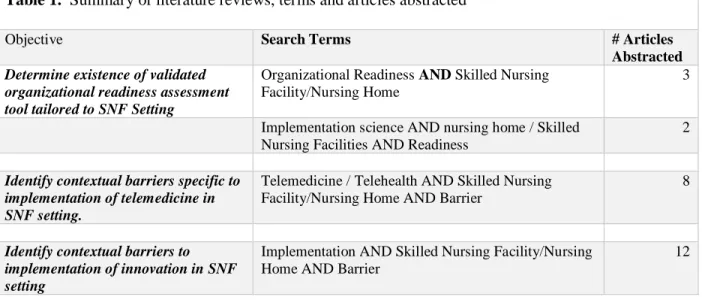
Literature reviews were conducted of peer-reviewed academic journals using PubMed, Google Scholar and Web of Science. These reviews focused, first, on identification of any existing readiness assessment surveys within the SNF setting. In the absence of an existing validated survey specific to the intervention and setting the review then extended to include broader categorization and evaluation of perceived barriers to the adoption of telemedicine in the SNF setting, and finally, identification and evaluation of implementation barriers within the SNF setting generally.
While there is a copious literature on organizational readiness in clinical environments, there is a dearth of available research examining SNFs specifically, as reflected in the literature review discussed below. This is an important distinction: SNFs are “different” from other clinical environments, having been described as “complex adaptive systems” reflecting a more diffuse distribution of authority and impact than typical hospital or outpatient clinical settings. Furthermore, SNFs are also plagued by endemic issues related to low staff satisfaction and retention rates. This suggests that environmental stressors which may render SNFs unique.
Table 1. Summary of literature reviews, terms and articles abstracted
Objective Search Terms # Articles
Abstracted
Determine existence of validated organizational readiness assessment tool tailored to SNF Setting
Organizational Readiness AND Skilled Nursing Facility/Nursing Home
3
Implementation science AND nursing home / Skilled Nursing Facilities AND Readiness
2
Identify contextual barriers specific to implementation of telemedicine in SNF setting.
Telemedicine / Telehealth AND Skilled Nursing Facility/Nursing Home AND Barrier
8
Identify contextual barriers to implementation of innovation in SNF setting
Implementation AND Skilled Nursing Facility/Nursing Home AND Barrier
12
The results of our literature review were supplemented by the subsequent publication of the Program Evaluation and Final Report conducted for by RTI International on behalf of the Center for Medicare and Medicaid Innovation (“CMS Final Evaluation Report”). RTI analysts utilized systemic qualitative data collection throughout and after the demonstration project to track participants’ perception of implementation success, barriers and contextual factors
affecting the same. This included formal site visit protocols, in-person and telephonic interviews with members and an annual survey of perceptions across all facilities.
Primary barriers identified by evaluators in relation to implementation relevant to telemedicine, included: (1) high rates of staff and facility leadership turnover, (2) lack of IT infrastructure (including basic or reliable internet connectivity, in some instances); and (3) lack of consistent support for implementation among subsets of employees.25 In the latter instance, evaluators specifically identified facility leadership (Nursing Facility Administrators), physicians and Certified Nurse Administrators (CNAs) as having relatively low “buy-in” or having
correspondingly poor culture of support from administrators. Lower support for the initiative among CNA’s was believed to be associated with lack of knowledge of the programs objectives and comfort with the technology. As for physicians, evaluators attributed pushback by
individual physicians as being associated with a fear of loss of professional autonomy over residents.26Figure 2 below summarizes what we hypothesize are the primary contextual barriers to implementation of telemedicine in SNFs based on our literature review and the results of the program evaluation.
Adaptation of Readiness Assessment Tool (Specific Aim 1)
Armed with this information, we next adapted Weiner’s conceptual model to integrate our hypothesized setting specific contextual factors. As illustrated in Figure 3 below, we hypothesize that the existence of these barriers at sites will diminish group perceptions of change commitment and change efficacy, resulting in depressed change related effort. In other words,
Figure 2. Summary of Primary Contextual Barriers
Technological Capacity
- (Structural) Poor internet connectivity and IT support,
- (Individual) low level of staff familiarity and comfort with technology
Lack of support from facility clinical leadership
- Process of medical decision making primarily controlled by facility Medical Director.
Telemedicine and delegation of control to embedded or remote APRN perceived as threat to authority and professional autonomy. This may be heightened by existing political tensions regarding changing scope of practice between physicians and APRNs.
Lack of Group Cohesion
- Poor staff satisfaction (this may be exacerbated by reduced staffing levels and
insufficient resources/support for tasks)
- Low retention rates among both staff and leadership
Lack of perceived prioritization by facility administrative leadership
- Perverse financial incentive for readmissions (Medicaid bed hold fee; possible
eligibility for higher Medicare rate for Medicaid patients after hospitalization)
where there is a lack of leadership support (both clinical and administrative) and/or a (2) lack of group cohesion, group members will not value telemedicine as highly as a necessary, beneficial change, resulting a reduced commitment to implementing the change and a resulting reduced change related effort.
Figure 3. Adaptation of Weiner’s Conceptual Framework
Selection of Constructs and ORIC Measure
We next selected the constructs to integrate into our final survey. For this we drew upon the psychometrically tested and validated Organizational Readiness for Implementing Change measures developed by Dr. Chris Shea.27 Dr. Shea’s contribution to the study of Organization Readiness as a construct for assessing implementation success here is to provide Dr. Shea’s ORIC measures (1) change commitment (the degree to which respondents perceive a change as necessary and are motivated or determined to effectuate implementation and (2) change efficacy
with implementation); and resource availability (respondents’ perception of availability of the resources necessary to effectuate implementation). Among these domains we selected three questions to measure change valence; four questions pertained to change commitment. Five questions were selected to measure change efficacy and three questions to measure task
knowledge and resource availability, respectively. We selected questions from among the bank of ORIC measures based on comparison of content adequacy assessment, selecting those that had the highest mean ratings, eliminating some higher scorers that we deemed repetitive of a
previous question. Tables 1-3 in Appendix B detail selected questions and their related scores. Integration of ORCA Leadership Facilitation Survey Questions
Assess Construct and Criterion Validity of Assessment (Specific Aims 2 & 3)
The Survey was then deployed at three mid-to-large sized Skilled Nursing Facilities in the Greater Pittsburgh area of Pennsylvania. Facilities were selected given their participation in the RAVEN program and their simultaneous implementation of an updated and more user-friendly telemedicine software program and equipment. As existing RAVEN/CMS
Demonstration participants, all facilities had prior experience with telemedicine consults. Facility Demographics
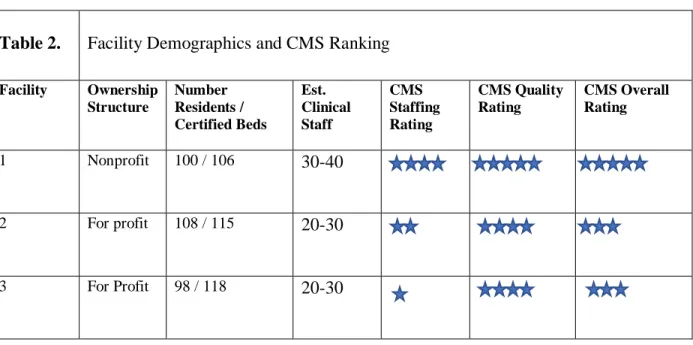
While sharing common attributes as to size, location, and proximity to a hospital, these facilities differ as to ownership structure, staffing ratios and federal quality ratings, as illustrated by Table 3 below. Facility 1 is distinct from Facility’s 2 and 3 in both its structure as a non-profit organization and as a designated high performing facility, earning a 5/5 overall rating and designation as being “much above average” according to CMS reporting metrics.29 Table 3 drills down on each facility’s performance on relevant quality metrics, including Registered Nurse hours to Resident per day, and percent of acute (ie: short stay) patients readmitted to hospital within 30 days.
Table 2. Facility Demographics and CMS Ranking
Facility Ownership Structure
Number Residents / Certified Beds
Est. Clinical Staff
CMS Staffing Rating
CMS Quality Rating
CMS Overall Rating
1 Nonprofit 100 / 106 30-40
2 For profit 108 / 115 20-30
NB: CMS utilizes a 5 star ranking system across three domains (Health Inspections, Quality Measures and Staffing Rating) which factor into an overall rating with 3 stars being deemed “average.”
Table 3. Quality Performance Metrics by Facility30
SNF RN
hours* State Average LPN Hours* State Average % acute readmitted State Average % acute ED State Average
1 .88 .93 1.08 .85 20.4% 20.3% 7.2% 10.0%
2 .68 .93 .58 .85 11.8% 20.3% 6.5% 10.0%
3 .72 .93 .77 .85 27.0% 20.3% 9.4% 10.0%
Survey Administration Procedures
The finalized survey was administered during a two-week period between March 15th – March 26th, 2018. During which time the telemedicine “carts” were delivered to each of the facilities and a CURAVI™ nurse and Implementation specialist conducted hands-on training of all clinical staff on the use of the equipment and protocols. This training was conducted in “huddles” of three to five nurses. At the end of the training nursing staff were asked to complete a web-based (Qualtrics, Provo Utah and Seattle Washington) version of the survey using
Android tablet devices.
Twenty-six observations were collected from Facility 1, 12 from Facility 2 and 14 from Facility 3. While we had fewer observations at the latter two facilities, we had a comparable penetration rate (an estimated 40-50%) at all facilities. Results were downloaded to an excel spreadsheet and the data cleaned to remove any respondents identified by reported licensure as not being likely to provide direct patient care in the event of an acute change of patient condition. Two observations for Facility 3 were excluded as respondents identified themselves as a
Licensed Dietician and a Nursing Home Administrator.
Concurrent Validity
Immediately after the completion of the two-week training, the CURAVI™ Clinical
Implementation Specialist completed an eleven-question survey assessing her perception of each facility’s readiness to implement telemedicine across each of the seven domains. She was then asked to score each facility on a scale of 1 – 5 for overall readiness and to identify the primary contextual barriers, if any, at each facility. A copy of the survey questions is provided in
Appendix C. The external evaluator’s scoring was then compared to the domain average at each facility.
Predictive Validity
Finally, we evaluated the assessments predictive validity by comparing each facility’s perceived readiness scoring to post-implementation utilization data. More specifically, on March 28th the telemedicine carts went “live” at each of the three facilities. Once operational,
CURAVI™ collected daily utilization reports from each facility, including the number of telephone consultations and telecart assessments conducted. Facilities also provide CURAVI™ with a list of all hospital transfers at the end of each month. As part of its standard operating practice, CURAVI™ reviews this data to determine if any transfers were made that could have been avoided by a telemedicine consult. A hospital admission is deemed a potential “missed opportunity” for telemedicine if the transfer was made during operational hours and for one of six qualifying conditions. We used this data for the period of March 26th through April 18th at each of the facilities to determine relative use of the technology and whether perceived readiness score is predictive of actual use.
Variation across Licensure and Experience (Specific Aim 1)
The CMS Evaluation and our literature review indicated that receptivity to change
final readiness assessment. We asked respondents to identify their (1) total years of clinical experiences in a skilled nursing facility, (2) years-experience at this specific facility (retention); (3) licensure status and (4) primary shift experience (nightshift/day shift). We then compared means across these groups to identify if there were significant areas of disparity to inform future training and investigation.
Results and Discussion
Evaluation of Construct Validity
All three facilities reported a high state of readiness across the seven domains. Collectively lower perception of readiness were consistently observed in Task Knowledge, Efficacy and Commitment.
There was a wide range in responses to each question at each facility, indicating a lack of agreement in regard to group perception of the constructs. Respondents were asked to score their level of agreement with statements using a 5-point scale. At each facility, a preponderance of the questions returned a range of 1-5, the widest possible disparity in perception among group
observed (fairly) close agreement between the mean and median for each construct; suggests that testing with a larger sample size may provide the necessary validation.
Table 4. Comparison of Facility-Level Organizational Readiness
Domain #
non-missing obs.
Means Median Range
Facility 1 26
Value 1.23 1 1-4
Knowledge 2.15 2 1-5
Resource Availability 2.04 2 1-5
Commitment 1.95 2 1-5
Efficacy 2.09 2 1-5
Clinical Leadership 1.47 1 1-4
Administrative Leadership 1.60 1 1-4
Facility 2 12
Value 1.56 1 1-4
Knowledge 2.78 3 1-5
Resource Availability 2.08 2 1-5
Commitment 2.50 3 1-5
Efficacy 2.02 2 1-5
Clinical Leadership 2.19 2 1-5
Administrative Leadership 2.33 2.5 1-5
Facility 3 14
Value 1.43 1 1-4
Knowledge 2.12 2 1-4
Resource Availability 2.21 2 1-5
Commitment 2.52 3 1-5
Efficacy 2.33 2 1-5
Clinical Leadership 2.07 2 1-5
Administrative Leadership 2.33 2 1-5
NB Respondents were asked to state their level of agreement with various statements expressing readiness in each domain according to a Lickert scale with 1
represent “agree”, 2 “somewhat agree, 3 “neither agree nor disagree, 4 “somewhat disagree” and 5 “disagree. Lower scores reflect higher states of perceived readiness.
Evaluation of Organizational Readiness by Clinical Role and Experience (Specific Aim 1)
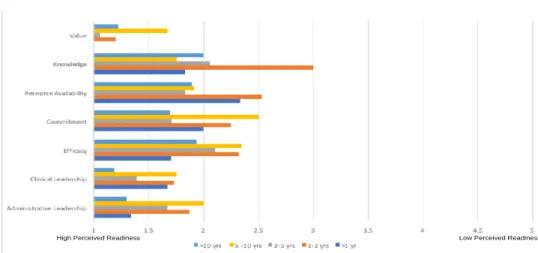
interested in observing whether retention rates at facilities correlated with higher readiness perceptions across staff.
Appendix D provides demographic information and comparative graphs for each measure at each facility. Our data suggests that facility level retention rates may be a good indicator for organizational readiness. While variation was observed at the licensure and experience level at each facility, no overall trend was observed that suggests that one licensure grouping or variation by licensure group and years’ experience appears to be specific to facility.
Correlation observed between a Facility’s High Rate of Retention and Readiness
Highest readiness scoring associated with Facility 1, which reported the highest average retention rate among respondents. Over a third of all respondent’s (35%) had been employed at the facility for over 10 years, and half had been with the facility for at least five years (compared to 33.3% at Facility 2 and 28.5% at Facility 3). Drilling down at variation at this facility by years’ retention, the data suggests that the greatest gap in readiness perception across experience levels is in the domain of Task Knowledge and Resource Availability. This suggests that future training or interventions should target this area and population segment for improvement.
Legend: Respondents were asked to state their level of agreement with various statements expressing readiness in each domain according to a Lickert scale with 1 represent “agree”, 2 “somewhat agree, 3 “neither agree nor disagree, 4 “somewhat disagree” and 5 “disagree. Lower scores reflect higher states of perceived readiness.
Figure 5. Readiness Perception According to Retention at Facility 1
No trends observed across facilities according to clinical roles (licensure) or years’ experience,
however demonstrable variation was observed at the facility-level.
No great variation in perception across licensure grouping at Facility 1, although LPNs rated a lower readiness across all domains. Greater variation was observed at Facility 2, with Certified Nursing Assistants similarly reporting the highest state of perceived readiness across all domains. While there was no such consistent trend observed at Facility 3, however it should be noted that the lowest readiness was reported by CNA’s in relation to administrative leadership and facilitation.
Results were similarly mixed across facilities on the measure of total years clinical experience. At Facility 1 the lowest performance was associated with respondents with less than 2 years total experience; however, at Facility 2, it was the reverse, with those with the highest level of experience (10+ years) who reported least readiness across all domains. There was close agreement across all experience levels at Facility 3.
Evaluation of Criterion Validity by Comparison to Known-Group Evaluation
While all facilities reported a high state of readiness for implementation this higher perception of readiness was not necessarily reflected when compared to an external expert evaluator, placed as a known-group comparator, as was the case in the Facilities 2 and 3. Table 5 outlines the external evaluator’s overall scoring at each facility and the primary barrier
identified in solicited feedback.
Table 5. External Evaluator Overall Readiness Scoring by Facility
Facility Score Primary Barriers Identified
1 2 Existing internal referral protocol reduces necessity
2 4 Disinterest in telemedicine; lack of administrative leadership
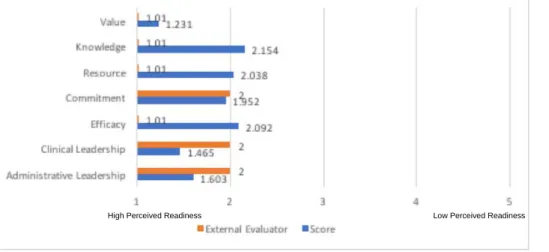
The higher performing facility (Facility 1) was in close agreement with the external evaluator’s scoring on all domains, as reflected in Figure 6 below. Interestingly, the external evaluator rated the facility demonstrably higher than the facility rated itself in all domains except that of Clinical and Administrative leadership. When asked to identify the principle barrier to implementation, the evaluator noted that the facility’s policy and infrastructure which places a Nurse Practitioner on call 24 hours a day may reduce objective and/or perceived necessity for this intervention.
At Facility 2 there was close agreement in regard to perceptions of Task Knowledge, Resource Availability and Efficacy, however there was a great discrepancy in regard to
Commitment, Value and Leadership, with the external evaluator “strongly disagreeing” that the facility was prepared to implement telemedicine. The Evaluator specifically noted staff
disengagement and lack of leadership among administrative staff as primary barriers to implementation. While facility staff respondents had the opportunity to identify barriers
Legend: Respondents were asked to state their level of agreement with various statements expressing readiness in each domain according to a Lickert scale with 1 represent “agree”, 2 “somewhat agree, 3 “neither agree nor disagree, 4 “somewhat disagree” and 5 “disagree. Lower scores reflect higher states of perceived readiness.
High Perceived Readiness Low Perceived Readiness
notidentified in the survey, no feedback was reported from respondents reflecting this concern.
Summary
While wide disparity was observed between self-assessment and the external evaluator at Facilities 2 and 3 in the domains of Value, Commitment and Leadership, comparison of scores generally supports the criterion validity of the tested assessment. The discrepancies observed highlight the challenges of self-evaluation and the potential pitfalls of relying exclusively on self-reported readiness as an accurate metric for any organization. As demonstrated by Dunning and Kruger’s seminal research individuals tend to inflate or overestimate performance, an effect that is magnified among lower-performing individuals.31 There are many possible reasons for this discrepancy in perception, it may be due to an unconscious error in judgement, as described by Dunning and Kruger, or it could be a conscious inflation in scoring by respondents who either felt unable or unwilling to provide accurate feedback due to perceived external factors. Such factors could include fear that results would not remain anonymous and could subject them to retribution, loyalty to their organization and team and a desire to represent the organization in the best possible light, or finally, out of a desire to please the survey administrator or reflect
foster increased enthusiasm for and confidence in performance associated with implementaing the intervention. As the survey was distributed by the trainer herself, respondents may have associated the survey as a reflection on the trainer’s performance and consciously inflated scoring out of a desire to “do a good turn.”
As noted above, there was a wide disparity in perception at Facilities 2 and 3 in the (more subjective) domains of Value, Commitment and Leadership. Conversely, disagreement between the self-evaluation and the external evaluator occurred in Change Efficacy oriented domains of Task Knowledge, Resource Availability and Efficacy.
Evaluation of Predictive Validity
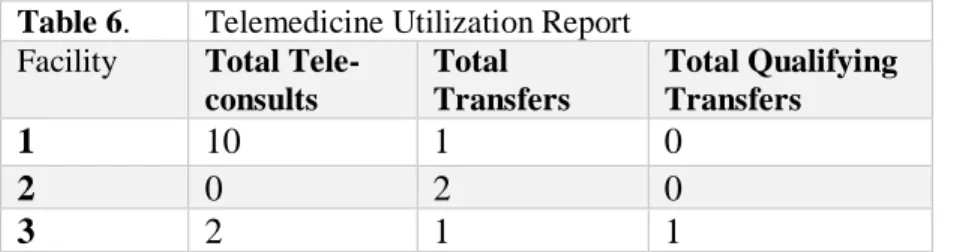
Preliminary utilization data appears to validate the relatively high readiness scores at the high performing facility (Facility 1) and Facility 3. Insufficient data was available to draw any conclusions regarding Facility 2. Table 6 below illustrates the total number of telemedicine consults (both telephonic and using the telecart) per site compared to the number of total hospital transfers and qualifying transfers during that period. A redacted and transcribed utilization report is available in Appendix E.
As reflected above, during this period, Facility 1 was highly engaged with the technology, having conducted 2 telephonic consults and 8 telecart assessements. While Facility 3 only used the telemedicine on 2 occasions, it experienced only one “missed opportunity.
Table 6. Telemedicine Utilization Report
Facility Total
Tele-consults
Total Transfers
Total Qualifying Transfers
1 10 1 0
2 0 2 0
While the time period evaluated was necessarily limited, and we may expect a higher use to be associated so shortly after training (momentum or enthusiasm effect), the correlation
demonstrated between high reported readiness scores and relatively high use in the two facilities provides preliminary support for the predictive ability of the readiness assessment.
Limitations
The biggest limitation of this pilot study is the small sample size at each facility. This hampered our analysis for each specific aim. For example, in evaluating the construct validity of of each domain, it was difficult to determine if outlier scores constituted isolated occurrences or were reflective of a significant disparity in perceptions. Similarly, while comparison of variation according to clinical role, total years experience and retention rates provided interesting insights into each facility, we were unable to extrapolate these results to a broader population. While this data, should only be treated as descriptive of these individual facilities, it may serve as an
important starting point for future, more rigorous studies.
Another important limitation is that this was a convenience sample limited to RAVEN-participating facilities who had prior experience in installing and using telemedicine. Results may differ at facilities without existing exposure to the innovation.
In the matter of predictive validity, limitations imposed by a truncated time horizon must be stressed. We were only able to collect utilization data over a 3 week horizon. As reflected by Facilities 2 and 3, due to the short horizon, there were few, if any, opportunities to utilize
telemedicine during this time window.
conclusions regarding the “stickiness” (to use a technical term) of the innovation, an integral component of any implementation.
Conclusions and Opportunities for Further Research
Telemedicine offers an important resource and possible operational ‘ lifeline’ to skilled nursing facilities, an industry in the midst of great change and subject to great pressures. Understanding common barriers and “organizational readiness” for implementing within this setting is
necessary in order to optimize the chance of successful adoption and integration.
Few theory-based studies exist explicitly evaluating organizational readiness in this setting. This study seeks to bridge that gap and provide a starting point for further
implementation-focused research of a clinical setting that plays an increasingly important role in both post-acute and long-term care delivery across our health system.
Acknowledgements
I would like to thank my first reader, Dr. Chris Shea, for his patience, guidance, and (always) excellent feedback. I am indebted to him for shepherding me through a difficult topic and the various logistical or administrative barriers involved in a cross-organizational
collaboration.
This project would not have been possible without the thoughtful guidance and tenacity of Dr. Steve Handler, the Chief Medical Officer at Curavi™ and Professor of Medicine at UPMC. Finally, a great debt is also owed to Ms. Julie George, RN, CURAVI™ Clinical Education Specialist, who volunteered her time to collect surveys at the the facilities.
1Mor, V., Intrator O., et al. The Revolving Door of Rehospitalization from Skilled Nursing Facilities.
Health Affairs. 2010; 29(1): 57-64.
2 Office of the Inspector General. Medicare Nursing Home Resident Hospitalizations Rates Merit
Additional Monitoring. November 2013. available athttps://oig.hhs.gov/oei/reports/oei-06-11-00040.pdf
3 RTI International. Evaluation of the Initiative to Reduce Avoidable Hospitalizations among Nursing
Facility Residents: Final Report. September 2017. available at
https://innovation.cms.gov/files/reports/irahnfr-finalevalrpt.pdf
4 Neuman M, Wirtalla C., Werner RM. Skilled nursing facility quality and hospital readmissions. JAMA.
2014; 312(15):1542-1551.
5 Kim H, Kovner C. et al. A panel data analysis of the relationships of nursing home staffing levels and
standards to regulatory deficiencies. J Gerentol B Psychol Sci Soc Sci. 2009; 64(2): 269-278.
6 Bostick JE, Rantz MJ, Flesner MK, Riggs CJ. Systematic review of studies of staffing and quality in
nursing homes. J Am Med Dir Assoc. 2006; 7(6):366–376.
7 Castle N, Engberg NG. The Influence of Staffing Characteristics on Quality of Care in Nursing Homes.
Health Services Research. 2007; 42(5):1822-1847.
8 Grabowski DC. The Journal of Gerontology: Series B. 2001; 56(2):S84-S93.
9 Mor, V., Intrator O., et al. The Revolving Door of Rehospitalization from Skilled Nursing Facilities.
Health Affairs. 2010; 29(1): 57-64.
10 CMS Innovation Center. Initiative to Reduce Avoidable Hospitalizations among Nursing Facility
Residents. https://innovation.cms.gov/initiatives/rahnfr/. Published February 23, 2018. Accessed April 10,
2018.
11RTI International. Evaluation of the Initiative to Reduce Avoidable Hospitalizations among Nursing
Facility Residents: Final Report. September 2017. available at
https://innovation.cms.gov/files/reports/irahnfr-finalevalrpt.pdf
12 UPMC Aging Institute. About the RAVEN Project.
http://www.upmc.com/Services/AgingInstitute/research-and-clinical-trials/Pages/raven.aspx. Accessed
April 29, 2018.
13 RTI International. Evaluation of the Initiative to Reduce Avoidable Hospitalizations among Nursing
Facility Residents: Final Report. September 2017. available at
https://innovation.cms.gov/files/reports/irahnfr-finalevalrpt.pdf
14 Grabowaski D, O’Malley AJ. Use of Telemedicine Can Reduce Hospitalizations of Nursing Homes
Residents and Generate Savings for Medicare. Health Affairs. 2014; 33(2): 244-250.
15 Bauer MS, Damschroder L et al. An introduction to implementation science for the non-specialist.
BMC Psychology. 2015; 3:32-44.
16 Kotter JP. Leading Change. Harvard Business Press. 1996.
17 Weiner BJ, Amick H, et al. Conceptualization and measurement of organizational readiness for change:
a review of the literature in health services research and other fields. Med Care Res Rev. 2008,
65(4):379–436.
18 Weiner BJ. A theory of organizational readiness for change. Implementation Science. 2009; 4: 67-71.
19 Shea CM, Jacobs SR et al. Organizational readiness for implementing change: a psychometric
assessment of a new measure. Implementation Science. 2014; 9:7-12.
20 Bonner AF, Castle NG, Perera S, Handler, SM. Patient Safety Culture: A Review of the Nursing Home
Literature and Recommendations for Practice. Ann Longterm Care. 2008; 16(3): 18-22.
21 Anderson RA, Issel LM et al. Nursing Homes as Complex Adaptive Systems: Relationship between
Management Practice and Resident Outcomes. Nurs Res. 2003; 52(1):12-21.
22 Handler SM, Castle NG, Studenski SA, et al. Patient safety culture assessment in the nursing home.
Qual Saf Health Care. 2006;15(6):400–404.
23 American Health Care Association. AHCA 2012 Staffing Report.
https://www.ahcancal.org/research_data/staffing/Documents/2012_Staffing_Report.pdf. Published 2014.
Accessed April 30, 2018.
24 Grabowaski D, O’Malley AJ. Use of Telemedicine Can Reduce Hospitalizations of Nursing Homes
Residents and Generate Savings for Medicare. Health Affairs. 2014; 33(2): 244-250.
25 RTI International. Evaluation of the Initiative to Reduce Avoidable Hospitalizations among Nursing
Facility Residents: Final Report. September 2017. available at
https://innovation.cms.gov/files/reports/irahnfr-finalevalrpt.pdf
26RTI International. Evaluation of the Initiative to Reduce Avoidable Hospitalizations among Nursing
Facility Residents: Final Report. September 2017.
27 Shea CM, Jacobs SR et al. Organizational readiness for implementing change: a psychometric
assessment of a new measure. Implementation Science. 2014; 9:7-12.
28 Helfrich CD, Blevins D et al. Predicting implementation from organizational readiness for change a
study protocol. Implmentation Science. 2011; 6:76-81.
29 Medicare.gov. “Nursing Home Compare.”
https://www.medicare.gov/nursinghomecompare/search.html. Published November 27, 2017. Accessed
April 7, 2018.
30 Medicare.gov. “Nursing Home Compare.”
https://www.medicare.gov/nursinghomecompare/search.html. Published November 27, 2017. Accessed
April 7, 2018.
Appendices
Appendix A: Literature Review Results by Search Terms
Organizational Readiness AND Skilled Nursing Facility (OR Nursing Home)
Zhang Y, Flum M, et al. Assessing Organizational Readiness for a Participatory Occupational Health/Health Promotion Intervention in Skilled Nursing Facilities. Health Promot Pract. 2015: 16(5):724-32.
Douglas, NF, Hinckley JJ. et al. Perceptions of Speech-Language Pathologists linked to evidence-based practice use in skilled nursing facilities. American Journal of Speech-Language Pathology. 2014; 23(4):612-624.
Siegel EO, Mueller C, et al. The pivotal role of the director of nursing in nursing homes. Nurs Adm Q. 2010 34(2):110-21.
Implementation Science AND Skilled Nursing Facilities /Nursing Home AND Readiness
Douglas, NF. Organizational context associated with time spent evaluating language and cognitive-communicative impairments in skilled nursing facilities: Survey results within an implementation science framework. J Commun Disord. 2016; 60:1-13.
Rapp, MP, Nelson F. et al. Practices and outcomes: pressure ulcer management in nursing facilities. Nurs Adm Q. 2010; 34:2.
Telemedicine AND Nursing Home/Skilled Nursing AND Barrier
Driessen, J., Castle NG, Handler SM. Perceived Benefits, Barriers and Drivers of Telemedicine from the Perspective of Skilling Nursing Facility Administrative Staff Stakeholders. J Appl Gerontol. 2018; 37:110-120.
Mileski, M, Topinka J, et al. An Investigation of quality improvement initiatives in decreasing the rate of avoidable 30-day skilled nursing facility-to-hospital readmissions: as systemic review. Clinical Interventions in Aging. 2017; 12:213-222.
Nazir, A., Dennis ME, et al. Implementation of a Heart Failure Quality Initiative in a Skilled Nursing Facility: Lessons Learned. Journal of Gerontological Nursing. 2015; 41(5):26-33.
Telehealth AND Nursing Home / Skilled Nursing Facilities
Driessen J, Chang W, Patel P, et al. Nursing Home Provider Perceptions of Telemedicine for Providing Specialty Consults. Telemed J E Health; 2018; [Epub ahead of print]
Hao JF, Cui HM, et al. Tele-ICU: the way forward in geriatric care? Aging Clin Exp Res. 2014; 26(6):575-82.
Dy P, Morin PC, Weinstock RS. Use of telemedicine to improve glycemic management in a skilled nursing facility: a pilot study. Telemed J E Health; 2013: 19(8):643-5.
Dobke MK, Bhavsar D, Gosman A, De Neve J, De Neve B. Pilot trial of telemedicine as a decision aid for patients with chronic wounds. Telemed J E Health. 2008:14(3):245-9.
Implementation AND Nursing Home/Skilled Nursing Facility AND Barrier
Engle RL, Tyler DA, Gormley KE, et al. Identifying barriers to culture change: a qualitative analysis of the obstacles to delivering resident-centered care. Psychol Serv. 2017 Aug;14(3):316-326.
Tyler DA, Lepore M, et al. Overcoming resistance to culture change: nursing home administrators’ use of education, training and communication. Gerontol Geriatr Educ. 2014;35(4):321-36.
Sales AE, Ersek M, et al. Implementing goals of care conversation with veterans in VA long-term care setting: a mixed methods protocol. Implement Sci. 2016 29;11(1):132.
Sarabia-Cobo CM, Sarabia-Cobo AB, et al. Barriers in implementing research among registered nurses working in the care of the elderly: a multicenter study in Spain. Appl Nurs Res. 2015 28(4):352-5.
Brooker DJ, Latham I, et al. FITS into practice: translating research into practice in reducing the use of anti-psychotic medication for people with dementia living in care homes. Aging Ment Health. 2016; 20: 709-18.
Sharkey S, Hudak S, et al. Exploratory study of nursing home factors associated with successful implementation of clinical decision support tools for pressure ulcer prevention. Adv Skin Wound Care. 2013; 26(2):83-92.
Hustey, FM, Palmer, RM. Implementing an internet-based communication network for use during skilled nursing facility to emergency department care transitions: challenges and opportunities for improvement. Journal of the American Medical Directors Association. 2012: 13(3): 249-253.
Driessen, J., Castle NG, Handler SM. Perceived Benefits, Barriers and Drivers of Telemedicine from the Perspective of Skilling Nursing Facility Administrative Staff Stakeholders. J Appl Gerontol. 2018; 37:110-120.
Mileski, M, Topinka J, et al. An Investigation of quality improvement initiatives in decreasing the rate of avoidable 30-day skilled nursing facility-to-hospital readmissions: as systemic review. Clinical Interventions in Aging. 2017; 12:213-222.
Nazir, A., Dennis ME, et al. Implementation of a Heart Failure Quality Initiative in a Skilled Nursing Facility: Lessons Learned. Journal of Gerontological Nursing. 2015; 41(5):26-33.
Douglas, NF, Hinckley JJ. et al. Perceptions of Speech-Language Pathologists linked to evidence-based practice use in skilled nursing facilities. American Journal of Speech-Language Pathology. 2014; 23(4):612-624.
Appendix D
Descriptive Demographic Statistics of Facility 1
Variable Obs. Proportions
Shift 26
Day Shift 34.6%
Night Shift 65.4%
Licensure 26
Certified Nurse Assistant 15.4%
LPN, BSN or ADN 42.3%
RN 19.2%
APRN 15.4%
Total Yrs. Clinical Experience 26
Least Experienced (<2 yrs) 11.5%
Experienced (2-10 yrs) 26.9%
Most Experienced (>10 yrs) 61.5%
Retention at Facility 26
<1 yr 7.7%
1-2 yrs 19.2%
2-5 yrs 23.1%
5-10 yrs 15.4%
>10 yrs 34.6%
Graphs D.1 Domain Performance by at Facility 1 by:
Retention Years Total Experience
Facility 2
Descriptive Demographic Statistics
Variable Obs. Proportions
Shift 12
Day Shift 75%
Night Shift 25%
Licensure 12
Certified Nurse Assistant 16.7%
LPN, BSN or ADN 58.3%
RN 25%
APRN or MD 0%
Total Yrs. Clinical Experience 12
Least Experienced (<2 yrs) 16%
Experienced (2-10 yrs) 17%
Most Experienced (>10 yrs) 67%
Retention at Facility 12
<1 yr 33%
1-2 yrs 17%
2-5 yrs 17%
5-10 yrs 0%
>10 yrs 33%
Graphs D.2Domain Performance at Facility 2 by: Total years’ experience Retention
Facility 3
Descriptive Demographic Statistics
Variable Obs. Proportions
Shift 14
Day Shift 64.3% Night Shift 35.7%
Licensure 14
Certified Nurse Assistant 21.4% LPN, BSN or ADN 50.0%
RN 21.4%
APRN or MD 7.1%
Total Yrs. Clinical Experience 14
Least Experienced (<2 yrs) 21.4% Experienced (2-10 yrs) 42.9% Most Experienced (>10 yrs) 35.7%
Retention at Facility 14
<1 yr 21.4%
1-2 yrs 21.4%
2-5 yrs 28.6%
5-10 yrs 21.4%
>10 yrs 7.1%
Graphs D.2Domain Performance by
Retention Total years’ experience
Appendix E: Redacted and Transcribed CURAVI™
Utilization Report (March 25, 2018 – April 18, 2018)
Facility Date Telephonic / Telecart
Consult 1 3/25/18 Telephonic
1 3/25/18 Telephonic
1 3/27/18 Telephonic
3 4/3/18 Telecart (EKG)
1 4/4/18 Telecart (EKG)
1 4/6/18 Telecart
1 4/6/18 Telecart (EKG)
1 4/6/18 Telecart (EKG)
1 4/11/18 Telecart (EKG)
1 4/11/18 Telephonic
1 4/15/18 Telecart (EKG)