29 | P a g e
EXPLORING SELF-COMPASSION, PERCEIVED
STRESS AND CAREER ASPIRATION AMONG
HIGHER SECONDARY STUDENTS
Dr. Rohini Thapar
1and Navneet Nancy
21
Department of Psychology, D.A.V. College, Chandigarh (India)
2
Department of Psychology, Panjab University, Chandigarh (India)
ABSTRACT
Students have always associated higher secondary examination with stress, fear and confusion, mainly due to two reasons-firstly, the approaching board exams, leading to the pressure to excel at academics in order to ensure admission in good colleges. Secondly, due to the inevitable decision of choosing a possible career path, that might determine their destiny. During such stressful times, the ability to look at oneself with kindness and concern is expected to play a huge role in ensuring one’s well-being. Gilbert (2005) suggests that self-compassion enhances well-being because it helps individuals to feel cared for, connected, and emotionally calm.Self-compassion involves being caring and compassionate towards oneself in the face of hardship or perceived inadequacy (KornWeld, 1993; Hanh, 1997; Salzberg, 1997; Bennett-Goleman, 2001; Brach, 2003). Therefore, it would be interesting to find out whether students scoring high on self-compassion are indeed able to cope better with stress and are high on career aspiration. This study also seeks to examine the differences on self-compassion, perceived stress and career aspiration among students studying in class 12. A sample of 120 students, 60 from sciences and 60 from humanities, (comprising of 30 males and 30 females from each faculty), was taken and the differences between the two groups were analysed using t-test. The differences were seen in light of gender and faculty- sciences and humanities, in the context of the present study. The results of the study have suggested that self-compassion indeed negatively correlates with perceived stress and positively correlates with educational aspirations. Results and implications have further been discussed in detail.
Keywords: Career aspiration, higher secondary students, perceived stress, self-compassion
1. INTRODUCTION
Compassion has always been perceived as a virtue and human beings have often directed this virtue towards
others, while ignoring the one person who needs it the most- their own self. Even though the concept of
self-compassion is not new but its presence in the field of positive psychology is only a decade old. Buddhism has
always been concerned with analyzing and understanding the nature of self; many of its ideas have proved
especially useful for researchers interested in studying and enhancing the self [1]. Self-compassion is one such
30 | P a g e
essential to feel compassion for oneself as it is for others. The definition of self-compassion, moreover, is notdistinguished from the more general definition of the word compassion. Just the way compassion involves
showing concern for others, treating others with tenderness, love and care; self-compassion involves being open
to and moved by one’s own suffering, experiencing feelings of care and kindness towards oneself, taking an
understanding, nonjudgmental attitude towards one’s inadequacies and failures, and recognizing that one’s own
experience is part of the common human experience [2].
Due to the concern that self-compassion entails for oneself, it might be easy to compare self-compassion with
selfishness, but it is important to understand that self-compassion does not mean putting oneself ahead of the
others; it instead refers to not being dissonant with one’s own self and being able to treat oneself with love and
understanding even in the face of failures. For this reason, a compassionate attitude towards oneself can be said
to entail the equilibrated mental perspective known as mindfulness [3,4,5,6,7]. Mindfulness is a nonjudgmental,
receptive mind state in which individuals observe their thoughts and feelings as they arise without trying to
change them or pushing them away, but without running away with them either [8,9,10]. In order for individuals
to fully experience self-compassion, they must adopt a mindful perspective: they must not avoid or repress their
painful feelings, as it is necessary to acknowledge one’s feelings in order to feel compassion for oneself, but one
must not become overidentified with one’s feelings either, as a certain amount of “mental space” [11] is
necessary to extend oneself kindness and recognize the broader human context of one’s experience.
Being a human is not always easy; it takes courage to thrive in the world that is always throwing challenges
across one’s way; but having self-compassion, along with other traits and attributes that are required to stay
afloat in the face of disappointments, can act as a source of motivation. Being self-compassionate becomes
especially important during adolescence as it entails some of the most tumultuous years of a human being’s life.
The road through adolescence is marked with upheavals and transitions. During this developmental stage,
individuals are undergoing rapid physiological growth [12,13,14] including changes in both structure and
function of the brain [15]. The period of adolescence does not just prove difficult for youngsters due to the
pressure that their parents exert on them, (especially in Indian context) but also due to the expectations that they
set for their own selves. Their capacity for critical thinking increases and their ability to formulate their own
beliefs and values develops exponentially [16]. Identity exploration, a process central to this stage of
development [17], may stimulate adolescents to self-reflect and to consider their relationships with others, their
niche within their peer group, and their role in society.
Late adolescents have to manoeuvre their way around a lot of challenges-ranging from their academic life to
their appearance to maintaining their social life. But, in their quest for achieving balanceand being able to do
everything at once, comes stress and at times, even disappointments,especially, when their goals are not met.
The challenges presented by this stage, coupled with the social pressures and expectations from school and
family, may influence the increasing rate of mental and emotional disorders found among adolescents [18].
However, if one stops judging oneself negatively and starts looking at oneself with kindness and as somebody
31 | P a g e
can be enhanced. Research indicates that self-compassion is strongly associated with psychological well-being[19]. Self-compassionate individuals should manifest better mental health outcomes than those who lack
self-compassion, such as a lower incidence of anxiety and depression, because their experiences of pain and failure
are not amplified and perpetuated through harsh self-condemnation [20], feelings of isolation [21], or
over-identification with thoughts and emotions [22].Since self-compassion involves the concern for self’s health and
well-being, it can act as a catalyst to help one make required changes in life.
Being self-compassionate might act as a shield against stress for adolescents when they appear for their board
examinations. The educational standards of school children in India are primarily evaluated based on written
examinations. Every year, the Indian government conducts two board exams, otherwise referred to as public
exams, at the end of the 10th (secondary education) and 12th (higher secondary education) grades [23]. These two have been considered to be the most revered examinations in an Indian students’ life, as the performance in
these decides the choice of appropriate faculty in 11th grade and ensures a golden ticket to the best institutions in India and abroad. Students have always associated higher secondary examination with stress, fear and
confusion, mainly due to two reasons-firstly, the pressure to excel at academics in order to ensure admission in
good colleges. Secondly, due to the inevitable decision of choosing a possible career path, that might determine
their destiny. These expectations sometimes lead students to undergo stress but being compassionate towards
oneself may act as a buffer against perceiving stressful situations as catastrophic. Hence, it was hypothesized
that self-compassion would negatively correlate with perceived stress.
Another promising avenue of research concerns the relationship between self-compassion and career
aspirations. It is crucial to understand that career aspirations and career goals are two separate but interrelated
concepts. Aspirations help define one’s career goals and refer to what one values and seeks from one’s career. It
would seem that variation in self-compassion levels should be reflected in the types of learning goals that
students adopt in the classroom, since emotions and cognitions about the self, play an important role in
achievement goal formation and pursuit [24,25]. Self-compassion should be related to higher levels of perceived
competence, which in turn has an impact on one’s career aspirations. This is not so much because
self-compassion itself enhances perceptions of competence, but because a lack of self-self-compassion tends to lower
perceptions of competence. Previous research has linked the tendency to react with negative self-conscious
emotions, such as shame, to low perceptions of self-efficacy [25], suggesting that highly self-compassionate
individuals, who take a balanced perspective on their shortcomings rather than amplifying them through harsh
self-judgment, feelings of isolation, or over-identification with their emotional reactions, should have relatively
more positive perceptions of their abilities than those with low levels of self-compassion. Keeping the
above-mentioned premises in mind, it was hypothesized that self-compassion would be positively associated with
career aspiration among adolescents.
Sciences in India happens to be the most celebrated faculty and it is often presumed that only the brightest of
minds have the caliber to opt for sciences. The humble faculty of humanities, on the other hand, has always
32 | P a g e
academically and the ones who lack ambition and aspirations. Going by this assumption, the present study alsohypothesized that students studying sciences at higher secondary level will be high on career aspiration and
self-compassion, as self-compassion has been found to be positively associated with perceptions of competence. It
is, therefore, assumed that students perceiving themselves to be competent would be more inclined towards
opting for sciences.
2. OBJECTIVES OF THE STUDY
To find out whether there exist any significant differences between late adolescents studying sciences
at the higher secondary level and the ones studying humanities on self-compassion, perceived stress
and career aspiration
To find out gender differences among late adolescents on self-compassion, perceived stress and career
aspiration
To assess whether there exists any significant correlation among the three variables under study-self-compassion, perceived stress and career aspiration
3. HYPOTHESES
It is expected that students studying sciences will be higher on self-compassion, perceived stress and
career aspiration as compared to students studying humanities
It is expected that male adolescents will be higher on self-compassion and career aspiration as
compared to females
It is expected that females will be more susceptible to perceiving stress as compared to males
Self-compassion will correlate positively with career aspiration whereas it will negatively correlate
with perceived stress
4.METHODOLOGY
4.1. SAMPLE
A total of 120 higher secondary students studying in various private and government schools of Chandigarh
participated in the study. The sample consisted of 60 students from sciences and 60 from humanities,
(comprising of 30 males and 30 females from each faculty), in the age range of 16 to 18 years. The method of
purposive sampling was employed for data collection, keeping in mind the context of the study. Only the ones
interested in participating the study were selected and the ones who did not report any history of physical or
psychological problems.
4.2. TOOLS
Self-Compassion Scale Short Form (SCS-SF): SCS-SF, given by Raes et al. (2011) [26]consists of 12
33 | P a g e
six components include self-kindness, self-judgment, common humanity, isolation, mindfulness andover-identification.
Perceived Stress Scale: PSS by Cohen et al. (1994)[27] is a measure of the degree to which situations
in one’s life are appraised as stressful. Items have been designed to tap how unpredictable,
uncontrollable, and overloaded respondents find their lives. The scale also includes a number of direct
queries about current levels of experienced stress.The PSS asks 10 questions about feelings and
thoughts during the last month.
Career Aspiration Scale: CAS-Revised, given by Gregor and O’Brien (2015) [28] consists of 24 items
that measure career aspiration on three dimensions that include leadership aspirations, achievement
aspirations and educational aspirations.
5. RESULTS
The purpose of the study was to find out the differences between higher secondary students studying sciences
and humanities on self-compassion, perceived stress and career aspiration, as well as to study gender differences
on these variables. In order to meet the objectives of the study, descriptive statistics were applied to calculate
mean and standard deviation for the total group; separately for students from sciences and humanities as well as
for males and females to find out gender differences. Then, t-ratio was calculated to find out whether any
significant differences existed between the students on the three variables. Furthermore, in order to figure out
the extent of the interface among all the variables, Pearson’s Product Moment method was applied to find out
the correlations on the total sample.
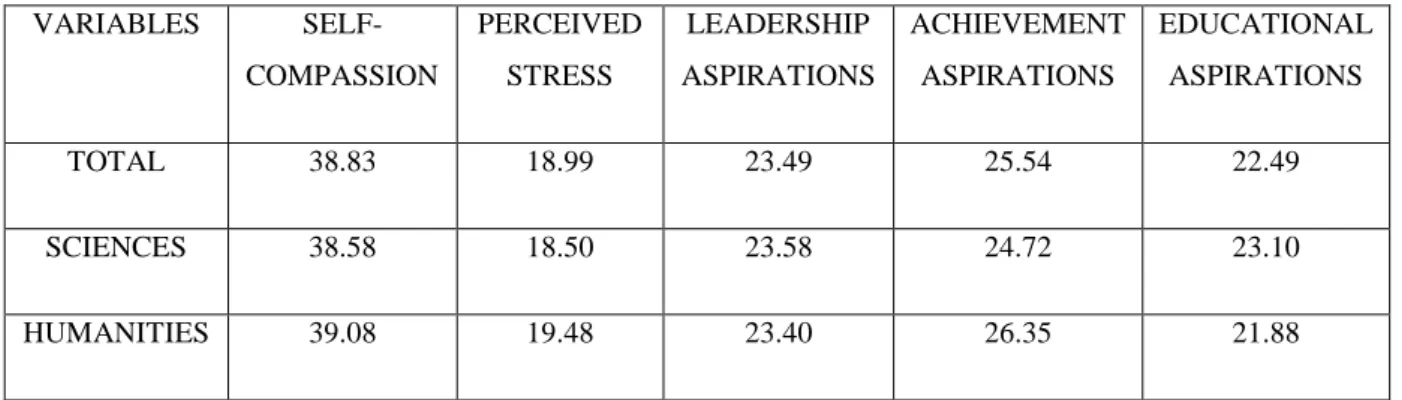
Table 1 provides the summary of group means for the entire sample;adolescents from sciences and
humanitiesrespectively on self-compassion, perceived stress and career aspiration.
TABLE 1: GROUP MEANS OF THE TOTAL SAMPLE; ADOLESCENTS FROM BOTH THE FACULTIES
ON SELF-COMPASSION, PERCEIVED STRESS AND CAREER ASPIRATION.
VARIABLES
SELF-COMPASSION
PERCEIVED
STRESS
LEADERSHIP
ASPIRATIONS
ACHIEVEMENT
ASPIRATIONS
EDUCATIONAL
ASPIRATIONS
TOTAL 38.83 18.99 23.49 25.54 22.49
SCIENCES 38.58 18.50 23.58 24.72 23.10
HUMANITIES 39.08 19.48 23.40 26.35 21.88
The application of descriptive statistics on our sample shows that students from both sciences as well as
humanities have scored moderately on self-compassion, perceived stress, leadership aspirations and educational
34 | P a g e
Table 2 provides the summary of group means for the entire sample; males and females, respectively onself-compassion, perceived stress and career aspiration.
TABLE 2: GROUP MEANS OF THE TOTAL SAMPLE; MALES AND FEMALES ON
SELF-COMPASSION, PERCEIVED STRESS AND CAREER ASPIRATION.
VARIABLES
SELF-COMPASSION
PERCEIVED
STRESS
LEADERSHIP
ASPIRATIONS
ACHIEVEMENT
ASPIRATIONS
EDUCATIONAL
ASPIRATIONS
TOTAL 38.84 18.99 23.49 25.54 22.49
MALES 39.22 16.83 24.23 26.10 22.38
FEMALES 38.45 21.15 22.75 24.97 22.60
The application of descriptive statistics on our sample shows that males and females both scored moderately on
self-compassion, perceived stress, leadership aspirations and educational aspirations but both the groups were
high on achievement aspirations.
Table 3 shows t-ratios of higher secondary students studying sciences and humanities on self-compassion,
perceived stress, leadership aspirations, achievement aspirations and educational aspirations.
TABLE 3: T-RATIOS OF SCIENCE AND HUMANITIES STUDENTS ON SELF-COMPASSION,
PERCEIVED STRESS AND CAREER ASPIRATION
VARIABLES t-RATIO p-VALUE
SELF COMPASSION 0.438 NOT SIGNIFICANT
PERCEIVED STRESS 0.825 NOT SIGNIFICANT
LEADERSHIP ASPIRATIONS 0.168 NOT SIGNIFICANT
ACHIEVEMENT ASPIRATIONS 1.795 NOT SIGNIFICANT
EDUCATIONAL ASPIRATIONS 1.322 NOT SIGNIFICANT
Based on the results, the choice of faculty does not seem to play any role in the amount of self-compassion that
students feel for themselves nor does it seem to influence their levels of perceived stress, leadership aspirations,
35 | P a g e
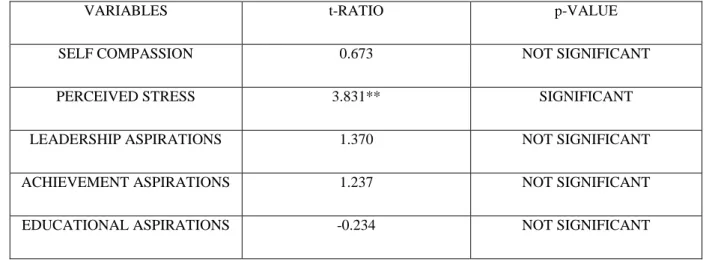
Table 4 shows the t-ratios gender differences on self-compassion, perceived stress, leadership aspirations,achievement aspirations and educational aspirations.
TABLE 4: T-RATIOS SHOWING GENDER DIFFERENCES ON SELF-COMPASSION, PERCEIVED
STRESS AND CAREER ASPIRATION.
VARIABLES t-RATIO p-VALUE
SELF COMPASSION 0.673 NOT SIGNIFICANT
PERCEIVED STRESS 3.831** SIGNIFICANT
LEADERSHIP ASPIRATIONS 1.370 NOT SIGNIFICANT
ACHIEVEMENT ASPIRATIONS 1.237 NOT SIGNIFICANT
EDUCATIONAL ASPIRATIONS -0.234 NOT SIGNIFICANT
The results point towards significant differencesbetween males and females on perceived stress, at both 0.05 and
0.01 levels, with females reporting higher levels of stress as compared to males. But, no significant differences
emerged on the other parameters.
Table 5 shows correlations among self-compassion, perceived stress and career aspiration for the entire group.
TABLE 5: PEARSON’S PRODUCT MOMENT CORRELATION FOR THE ENTIRE GROUP
VARIABLES
SELF-COMPASSIO
N
PERCEIVE
D STRESS
LEADERSHIP
ASPIRATION
S
ACHIEVEMEN
T
ASPIRATIONS
EDUCATIONA
L
ASPIRATIONS
SELF-COMPASSION
1 -0.498** .088 0.176 0.202*
PERCEIVED
STRESS
-0.498** 1 0.049 -0.110 -0.081
LEADERSHIP
ASPIRATIONS
0.088 0.049 1 0.633** 0.407**
ACHIEVEMEN
T
36 | P a g e
ASPIRATIONSEDUCATIONA
L
ASPIRATIONS
0.202* -0.081 0.407** 0.565** 1
**Correlation is significant at 0.01 level.
*Correlation is significant at 0.05 level.
Pearson’s Product Moment Correlation suggests that self-compassion is highly negatively correlated with
perceived stress and self-compassion significantly positively correlates with educational aspirations.
6. DISCUSSION OF RESULTS
The results of the present study show that students studying sciences and humanities were moderately
self-compassionate towards themselves, perceived stress moderately, had moderate leadership and educational
aspirations but high achievement aspirations. This directs towards the fact that achievement held a priority in the
lives of adolescents, irrespective of their gender and the career path that they had chosen.
Results, however,did not point towards any differences on self-compassion, perceived stress and career
aspiration between students opting for different faculties, however, differences have emerged in the context of
gender, suggesting that girls are significantly higher on perceived stress as compared to boys. Previous studies
on self-compassion in the context of gender differences have been rather inconclusive and inconsistent; with
only a few studies showing that females are lower on self-compassion as compared to boys [29,30] and there
have been studies that have found no gender differences on self-compassion[31,29,32,33]. Gender, therefore,
needs to be explored further in self-compassion research in general.
The results of the present study in the context of perceived stress are in line with the results of previously
conducted studies. This appears to be explained by the fact that women are often more self-critical and ruminate
on negative aspects of themselves more often than men [34,35].With regard to gender differences, increased
perceived stress related to interpersonal stressors has been found in adolescent girls [36,37,38,39,40]. These
stressors were associated with depression in girls but not in boys [39]. Moreover, girls applied more support
seeking [41,42,43,44]. In contrast, they scored higher on maladaptive emotional coping such as emotional
ventilation [45,41], as well as maladaptive cognitive strategies such as avoidance and resignation [42,43,37].
Compared with younger girls, adolescent girls were characterized by a heightened perceived stress and a
maladaptive coping pattern with decreased positive self-instructions and distraction in conjunction with
increased rumination and resignation [43].
Nolen-Hoeksema [46] argued that ruminative coping is the most important risk factor for the development of
37 | P a g e
the well-being of girls in later adolescence is of particular interest since findings support the conclusion thatolder adolescent girls are particularly vulnerable to depression; and positive well-being during adolescence has
been found to be a protective factor in association with depressive symptomatology [47].
Another important finding of the study is the significant negative correlation between self-compassion and
perceived stress. In a study conducted by Neff and McGehee (2010), self-compassion wasfound to be associated
inversely with anxiety and depression and positively with social connectedness [30]. Although self-compassion
has the potential for promoting positive well-being among adolescents [2], there is a clear paucity of research in
this area that needs to be addressed.
Self-compassion correlated significantly positively with educational aspirations. Even though there is no
evidence suggesting that self-compassion is associated with career aspirations but self-compassion is related
with higher levels of perceived competence. This is not so much because self-compassion itself enhances
perceptions of competence, but because a lack of self-compassion tends to lower perceptions of competence.
Moreover, educational psychologists often make a distinction between mastery-based and performance-based
academic achievement goals [48,49,50]. Students with a mastery orientation towards learning are motivated by
curiosity and the desire to develop skills, master tasks and understand new material. They tend to set their own
standards for achievement, make effort attributions for success and failure, and view the making of mistakes as a
part of the learning process. Therefore, it would not be incorrect to posit that educational aspirations are
reflected in goals of mastery and self-enhancement, which are associated with lesser fear of failure that is
experienced by self-compassionate individuals [29].
7. CONCLUSION
It can, therefore, be concluded from the results of the study that self-compassion is indeed a virtue, which can
act as a catalyst towards enhancing our overall well-being. Significant negative relationship between
self-compassion and perceived stress demonstrates that being self-compassionate towards oneself may be indicative of
the fact that being kind towards oneself in the face of stressful situations can help one to cope better with stress.
The most promising aspect of the self-compassion construct can be found in its potential as a remediation tool
for individuals who suffer from negative self-attitudes [2] and negative self-attitudes areoften the root cause of
excessive stress perception.
Also, an inference can be drawn from the present research that helping adolescents harbor self-compassion can
help them develop a positive perception of situations as well as the world around them. In order to facilitate the
process of non-judgmental understanding, parents can adopt positive parenting practices so that their children
can learn to forgive themselves and be kind towards themselves. This can further help them to grow into
self-compassionate adolescents. Interventions can also be designed to be applied at school levelto help children form
positive self-concepts. Since self-compassion enhances mastery based academic goals, it is worth exploring how
38 | P a g e
research endeavours can be directed towards understanding the impact that self-compassion has on aspirationsand also towards developing practical interventions to enhance this attribute.
REFERENCES
1. Gallagher S., & Shear J. (Eds). Models of the self. Thorverton, UK: Imprint Academic; 1999.
2. Neff K. Self-compassion: An alternative conceptualization of a healthy attitude toward oneself. Self
and Identity. 2003 Apr 1;2(2):85-101.
3. Hanh TN. The miracle of mindfulness. Boston: Beacon Press; 1976.
4. Goldstein J.& Kornfield J. (1987). Seeking the heart of wisdom: The path of insight meditation. Boston: Shambhala; 1987.
5. Langer EJ. Mindfulness. Reading, MA: Addison-Wesley; 1989.
6. Gunaratana VH. Mindfulness in plain English. Somerville, MA: Wisdom Publications; 1993.
7. Kabat-Zinn J. Wherever you go there you are. New York: Hyperion; 1994.
8. Martin JR. Mindfulness: A proposed common factor. Journal of Psychotherapy Integration. 1997
Dec;7(4):291.
9. Hayes SC., Strosahl KD, & Wilson K. G. Acceptance and commitment therapy: An experiential approach to behavior change. New York: Guilford; 1999.
10. Teasdale JD, Segal ZV, Williams JM, Ridgeway VA, Soulsby JM, Lau MA. Prevention of
relapse/recurrence in major depression by mindfulness-based cognitive therapy. J Consult and Cli
Psychol. 2000 Aug;68(4):615.
11. Scheff TJ. The distancing of emotion in psychotherapy. Psychotherapy: Theory, Research & Practice.
1981;18(1):46.
12. DiVall SA, Radovick S. Pubertal development and menarche. Annals of the New York Academy of
Sciences. 2008 Jun 1;1135(1):19-28.
13. Blakemore J, Berenbaum S, Liben L. Gender development. Psychology Press; Clifton, NJ; 2009.
14. Susman E, Dorn L. Puberty: Its role in development. In: Lerner RM, Steinberg L, editors. Handbook of adolescent psychology. 3rd ed. Wiley; New York, NY; 2009. pp. 116–151.
15. Giedd J. The teen brain: Insights from neuroimaging. Journal of Adolescent Health. 2008;42:321–323. 16. Marcia JE. Identity in adolescence. In: Adelson J, editor. Handbook of adolescent psychology. Wiley
and Sons; New York, NY: 1980. pp. 159–187.
17. Erikson E. Identity: Youth in crisis. Norton; New York, NY; 1968.
18. Kessler RC, Avenevoli S, RiesMerikangas K. Mood disorders in children and adolescents: An
epidemiologic perspective. Biological Psychiatry. 2001; 49:1002–1014.
19. Neff KD. Self-Compassion. In MR Leary & RH Hoyle (Eds.), Handbook of individual differences in social behavior. New York: Guilford Press; 2009. p. 561–573.
20. Blatt SJ, Quinlan DM, Chevron ES, McDonald C, Zuroff D. Dependency and self-criticism:
psychological dimensions of depression. Journal of Consulting and Clinical Psychology. 1982
39 | P a g e
21. Wood JV, Saltzberg JA, Neale JM, Stone AA, Rachmiel TB. Self-focused attention, coping responses,and distressed mood in everyday life. Journal of Personality and Social Psychology. 1990
Jun;58(6):1027.
22. Nolen-Hoeksema S. Responses to depression and their effects on the duration of depressive episodes.
Journal of Abnormal Psychology. 1991 Nov;100(4):569.
23. A. S. Rao, “Academic stress and adolescent distress: the experiences of 12th standard students in Chennai, India,” ProQuest Dissertations & Theses ProQuest 194002483, 2008.
24. Linnenbrink EA, Pintrich PR. Achievement goal theory and affect: An asymmetrical bidirectional
model. Educational Psychologist. 2002 Jun 1;37(2):69-78.
25. Turner JE, Husman J, Schallert DL. The importance of students' goals in their emotional experience of
academic failure: Investigating the precursors and consequences of shame. Educational Psychologist.
2002 Jun 1;37(2):79-89.
26. Raes F, Pommier E, Neff KD, Van Gucht D. Construction and factorial validation of a short form of
the self‐ compassion scale. Clinical Psychology& Psychotherapy. 2011 May 1;18(3):250-5.
27. Cohen S, Kamarck T, Mermelstein R. Perceived stress scale. Measuring stress: A guide for health and
social scientists. 1994.
28. Gregor MA, O’Brien KM. The changing face of psychology: Leadership aspirations of female doctoral
students. The Counseling Psychologist. 2015 Nov;43(8):1090-113.
29. Neff KD, Hsieh Y, Dejitterat K. Self-compassion, achievement goals, and coping with academic
failure. Self and Identity. 2005;4:263–287.
30. Neff KD, McGehee P. Self-compassion and psychological resilience among adolescents and young
adults. Self and Identity. 2010;9:225–240.
31. Iskender M. The relationship between self-compassion, self-efficacy, and control belief about learning
in Turkish university students. Social Behavior and Personality: An International
Journal. 2009;37:711–720.
32. Neff KD, Kirkpatrick KL, Rude SS. Self-compassion and adaptive psychological functioning. Journal
of Research in Personality. 2007;41:139–154.
33. Neff KD, Pommier E. The relationship between self-compassion and other-focused concern among
college undergraduates, community adults, and practicing meditators. Self and Identity. 2013;12:160–
176.
34. Leadbeater BJ, Kuperminc GP, Blatt SJ, Hertzog C. A multivariate model of gender differences in
adolescents' internalizing and externalizing problems. Developmental Psychology. 1999
Sep;35(5):1268.
35. Nolen-Hoeksema S, Larson J, Grayson C. Explaining the gender difference in depressive symptoms.
Journal of Personality and Social Psychology. 1999 Nov;77(5):1061.
36. Spirito A, Stark LJ, Grace N, et al. Common problems and coping strategies reported in childhood and
40 | P a g e
37. Griffith MA, Dubow EF, Ippolito MF. Developmental and crosssituational differences in adolescents’
coping strategies. Journal of Youth and Adolescence.2000;29:183–204.
38. Rudolph KD. Gender differences in emotional responses to interpersonal stress during adolescence.
Journal of Adolescent Health. 2002;30(suppl):3– 13.
39. Rudolph KD, Hammen C. Age and gender as determinants of stress exposure, generation, and reactions
in youngsters: a transactional perspective. Child Development.1999;70:660 –77.
40. Stark LJ, Spirito A, Williams CA, et al. Common problems and coping strategies: findings with normal
adolescents. Journal of Abnormal Child Psychology.1989;17:203–12.
41. Frydenberg E, Lewis R. Boys play sport and girls turn to others: Age, gender and ethnicity as
determinants of coping. Journal of Adolescence. 1993 Sep 1;16(3):253-66.
42. Donaldson D, Prinstein M, Danovsky M, Spirito A. Patterns of children=s coping with life stress:
implications for clinicians. American Journal of Orthopsychiatry.2000;70:351–9.
43. Hampel P, Petermann F. Age and gender effects on coping in children and adolescents. Journal of Youth and Adolescence.2005;34:73-83.
44. de Anda D, Baroni S, Boskin L, et al. Stress, stressors and coping strategies among high school
students. Child and Youth Services Review. 2000; 22:441– 63.
45. Connor-Smith JK, Compas BE, Wadsworth ME, et al. Responses to stress in adolescence:
measurement of coping and involuntary stress responses. Journal of Consulting and Clinical Psychology.2000;68:976 –92.
46. Nolen-Hoeksema S. Sex differences in unipolar depression: evidence and theory. Psychological Bulletin.1987;101:259 – 82.
47. Hoyt LT, Chase-Lansdale PL, McDade TW, Adam EK. Positive youth, healthy adults: does positive
well-being in adolescence predict better perceived health and fewer risky health behaviors in young
adulthood?Journal of Adolescent Health. 2012 Jan 31;50(1):66-73.
48. Ames C, Archer J. Achievement goals in the classroom: Students' learning strategies and motivation
processes. Journal of Educational Psychology. 1988 Sep;80(3):260.
49. Nicholls JG. Achievement motivation: Conceptions of ability, subjective experience, task choice, and
performance. Psychological Review. 1984 Jul;91(3):328.