Volume 2, Issue 10, October 2013
Page 11
Abstract
This paper presents an improved Direct Torque Control (DTC) of induction motor. DTC drive gives the high torque ripple. In DTC induction motor drive there are torque and flux ripples because none of the VSI states is able to generate the exact voltage value required to make zero both the torque electromagnetic error and the stator flux error. To overcome this problem a torque hysteresis band with variable amplitude is proposed based on fuzzy logic. The fuzzy logic controller is used to reducing the torque and flux ripples and it improve performance DTC especially at low speed.
Keywords: direct torque control, induction motor, fuzzy logic, torque ripple minimization, fuzzy logic controller.
1. INTRODUCTION
DTC drive over the last decade becomes one possible alternative to the well-known Vector Control of Induction Machines. Its main characteristic is the good performance, obtaining results as good as the classical vector control but with several advantages based on its simpler structure and control diagram. DTC (Direct Torque Control) is characterized, as deduced from the name, by directly controlled torque and flux and indirectly controlled stator current and voltage. The DTC has some advantages in comparison with the conventional vector-controlled drives, like:
-Direct torque control and direct stator flux control. -Indirect control of stator currents and voltages.
-Approximately sinusoidal stator fluxes and stator currents -High dynamic performance even at locked rotor.
-Absences of co-ordinates transform. -Absences of mechanical transducers.
-Current regulators, PWM pulse generation, PI control of flux and torque and co-ordinate transformation are not required.
-Very simple control scheme and low computation time. -Reduced parameters sensitivity.
-Very good dynamic properties.
Conventional DTC has also some disadvantages:
- Possible problems during starting and low speed operation. - High requirements upon flux and torque estimation. - Variable switching frequency.
These are disadvantages that we want to remove by using fuzzy logic. In the following, we will describe the application of fuzzy logic in DTC control.
2. DTC SCHEMATIC
Fig.1 Block diagram of DTC scheme
DTC scheme is given in Fig. 1, the and signals are delivered to two hysteresis comparators. The corresponding digitized output variables: change of magnetic flux , of mechanical torque and the stator flux position sector created a digital word, which selects the appropriate voltage vector from the switching table. The selection table generates pulses , to control the power switches in the inverter. Three-level torque and two level flux hysteresis controllers are used according to the outputs of the torque controller and the sector information of , , appropriate voltage vectors for both the inverters are selected from a switching table as it is shown in fig.2
Direct Torque Control of Induction Motors
Prof. Suraj R.Karpe 1, Prof. R.R.Suryawanshi2,Prof.S.A.Markad3
1
Assistant Professor, Electrical Engg, S.B.Patil College of Engineering, Indapur, Maharashtra, India,
2
Assistant Professor, Electrical Engg, S.B.Patil College of Engineering, Indapur, Maharashtra, India
3
Volume 2, Issue 10, October 2013
Page 12
Fig.2 Classical DTC switching tableFig.3 Eight possible voltage space vectors
Figure.3.5 shows the voltage vectors which are usually employed in DTC scheme when the stator flux vector is lying sector I is shown in fig 3.8. The selection of a voltage vector at each cycle period is made in order to maintain the torque and the stator flux within the limits of two hysteresis bands. This simple approach allows a quick torque response to be achieved, but the steady state performance is characterized by undesirable ripple in current, flux and torque. This behaviour is mainly due to the absence of information about torque and rotor speed values in the voltage selection algorithm.
3. VECTOR TRANSFORMATIONS
Concordia transformation for voltagesBy using this transformation, two voltages and are obtained. The measured voltage U0 is necessary and the switching table also .
…… ….1
………..….2 Concordia transformation for currents
This transformation is used to obtain currents and , after measures of , and of the stator.
………..………..3
……….………4
Flux and torque estimations
DTC command is based on estimation in flux and in torque. In order to realize these estimators, we used results of Concordia transformations.
Because stator voltage is define by:
……….5
We have ………… 6
That’s why, we have two equations:
……….7
………….………8 We can now estimate torque,
.………9
Flux Torque Sector Sφ
Δφ Δτ Sφ1 Sφ2 Sφ3 Sφ4 Sφ5 Sφ6
1 1 V2 V3 V4 V5 V6 V1
1 0 V7 V0 V7 V0 V7 V0
1 -1 V6 V1 V2 V3 V4 V5
-1 1 V3 V4 V5 V6 V1 V2
-1 0 V0 V7 V0 V7 V0 V7
Volume 2, Issue 10, October 2013
Page 13
4. DTC CONTROLLER
The way to impose the required stator flux is by means of choosing the most suitable Voltage Source Inverter state. If the ohmic drops are neglected for simplicity, then the stator voltage impresses directly the stator flux in accordance with the following equation:
……….10 Or
………11
Decoupled control of the stator flux modulus and torque is achieved by acting on the radial and tangential components respectively of the stator flux-linkage space vector in its locus. These two components are directly proportional ( =0) to the components of the same voltage space vector in the same directions. The hysteresis band has to be set large enough to limit the inverter switching frequency below a certain level that is usually determined by thermal restriction of power devices. Since the hysteresis bands are set to cope with the worst locus case, the system performance is inevitably degraded in a certain operating range, especially in a low speed region. In torque hysteresis controller, an elapsing time to move from lower to upper limit, and vice versa can be changed according to operating condition.
Fig: Stator flux vector FUZZY LOGIC CONTROLLER
Fig: Block diagram for fuzzy logic controller
The fuzzy logic controller includes four major blocks: knowledge base, fuzzification, inference mechanism, and defuzzification. The knowledge base is composed of a data base and a rule base. The data base consists of input and output membership functions. The rule base is made up of a set of linguistic rules relating the fuzzy input variables to the desired fuzzy control actions. Fuzzification converts crisp input signals, the error e and error rate Δe, into fuzzified signals. The inference mechanism uses the collection of linguistic rules to convert the input conditions into a fuzzified output. Finally, the defuzzification converts the fizzy outputs into crisp controlling signals, which in our system is the
frequency change ( Δf) for driving the induction motor.
Fig. Fuzzy Logic duty ratio estimator
Volume 2, Issue 10, October 2013
Page 14
than torque (both in percent) and the opposite case. In any case just one fuzzy system is used per iteration, and it depends on the working point.powergui Continuous n * 1440 ciliangeiding 1 .112 Universal Bridge
g A B C + -Tm 15 Three -Phase V-I Measurement Vabc Iabc A B C a b c Subsystem 3 n* n Te* Subsystem 2 fluxabflux Subsystem 1 ia fluxa ib fluxb Te Subsystem ia ua ib ub fluxa fluxb Scope 9 Scope 8 Scope 7 Scope 6 Scope 5 Scope 4 Scope 3 Scope 2 Scope 18 Scope 17 Scope 16 Scope 15 Scope 14 Scope 13 Scope 12 Scope 11 Scope 10 Scope 1 Scope S-Funct ion 2
kaiguan S-Function 1 pulse S-Function cilian Relay 1 Relay Machines Measurement Dem ux m is_abc phis_qd wm Te Gain 9 .55
Fuzzy Logic Controller DC
Asynchronous Machine SI Unit s Tm m A B C Abs | u| abc a b abc a b
Fig: Simulink diagram for DTC of induction motor
5. SIMULATION
Motor characteristicsThe rating of induction motor is 5Hp, 415V, 50Hz, 1430 rpm star connected induction motor. For all simulation, the motor characteristics will be utilized as below:
Stator Resistance (ohm) = 1.405 Rotor Resistance (ohm) = 1.395 Stator Self Inductance (H) = 0.005839 Rotor Self Inductance (H) = 0.005839 Mutual Inductance (H) = 0.2037 No. of poles = 4 Moment of Inertia (kg.m^2) = 0.03 Load torque (Nm) = 15 Sampling time, = 1 sec
4.4 SIMULATED RESULTS for DTC Model
Fig 4.13 : 2-phase current in DTC with FLC model
Volume 2, Issue 10, October 2013
Page 15
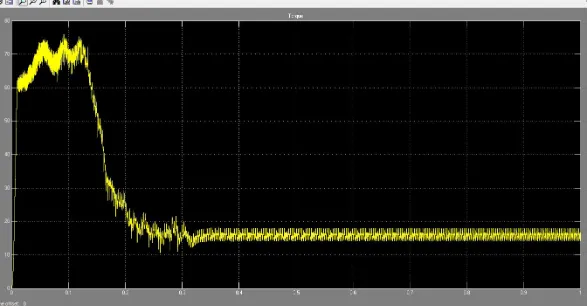
Fig 4.16 : Torque in DTC with FLC mode4.6 Study Case: a) For DTC model:
b) For DTC with Fuzzy Logic Controller:
The simulations of the DTC induction motor drive were carried out using the Matlab/Simulink simulation package. We get speed fuzzy DTC control of the induction machine fig show the Vab, Iab, Speed, Torque characteristics with Conventional DTC and Fuzzy DTC. From figure torque ripple is significantly reduced when fuzzy controller is in use. The fuzzy controller provides the desired amplitude according to the torque ripple level and operating condition, as it is shown in paper. It is seen that the steady state performance of the DTC-with fuzzy controller is much better than of the DTC-without fuzzy controller. For dynamic performance, the modified DTC is almost as good as the conventional DTC.
6.CONCLUSION
The present paper has presented a speed DTC drive with fuzzy controller. This controller determinates the desired amplitude of torque hysteresis band. It is shown that the proposed scheme results in improved stator flux and torque responses under steady state condition. The main advantage is the improvement of torque and flux ripple characteristics at low speed region; this provides an opportunity for motor operation under minimum switching loss and noise. This controller determinates the desired amplitude of torque hysteresis band. It is shown that the proposed scheme results in improved stator flux and torque responses under steady state condition The main advantage is the improvement of torque and flux ripple characteristics at low speed region, this provides an opportunity for motor operation under minimum switching loss and noise.
References
Volume 2, Issue 10, October 2013
Page 16
IEEE, 2006. proceedings online no. 20040681
[2] Kang, J.K. et al:"Torque ripple minimization strategy for direct torque control of induction motor", Conf. Rec.
IEEE-IAS Annul. Meeting 98, pp. 438-443 2005
[3] Sateen Tunyasrirut, Tianchai Sushi, and Stomping Smiled. :"Fuzzy logic controller for aspeed control of Induction motor using space vector pulse width Modulation". 2005 ISSN 1307-4318
[4] Ramon C. Orost, Guillermo O. Forte, Luis Canal."Scalar speed control of dq induction motor model using fuzzy logic controller", IEEE, 2007.