Sleep apnoea and metabolic dysfunction
Maria R. Bonsignore
1,2, Anne-Laure Borel
3,4,5, Elizabeth Machan
6and
Ron Grunstein
6Affiliations: 1Biomedical Dept of Internal and Specialistic Medicine (DiBiMIS), Section of Pneumology, University of Palermo, Palermo, and2Institute of Biomedicine and Molecular Immunology (IBIM), National Research Council (CNR), Palermo, Italy.3Endocrinology Dept, University Hospital, Grenoble,4INSERM U1042, Grenoble, and5University Grenoble Alpes, HP2, Grenoble, France.6Centre for Integrated Understanding and Research into Sleep (CIRUS), Woolcock Institute, University of Sydney and Royal Prince Alfred Hospital, Glebe, Australia.
Correspondence:M.R. Bonsignore, Biomedical Dept of Internal and Specialistic Medicine (DiBiMIS), Section of Pneumology, University of Palermo, Via Trabucco 180, Palermo 90146, Italy. E-mail: [email protected]
ABSTRACT Obstructive sleep apnoea (OSA) is a highly prevalent condition often associated with central obesity. In the past few years, several studies have analysed the potential independent contribution of OSA to the pathogenesis of metabolic abnormalities, including type 2 diabetes, the metabolic syndrome and non-alcoholic fatty liver disease. New perspectives in OSA patient care have been opened by the promotion of lifestyle interventions, such as diet and exercise programmes that could improve both OSA and the metabolic profile. The rich clinical literature on this subject, together with the growing amount of data on pathophysiological mechanisms provided by animal studies using the chronic intermittent hypoxia model, urged the organising Committee of the Sleep and Breathing meeting to organise a session on sleep apnoea and metabolic dysfunction, in collaboration with the European Association for the Study of Diabetes. This review summarises the state-of-the-art lectures presented in the session, more specifically the relationship between OSA and diabetes, the role of OSA in the metabolic consequences of obesity, and the effects of lifestyle interventions on nocturnal respiratory disturbances and the metabolic profile in OSA patients.
@ERSpublications
Treatment of obesity and metabolic diseases through diet and exercise should be part of OSA management besides CPAPhttp://ow.ly/mUd1R
Introduction
Obstructive sleep apnoea (OSA) is a highly prevalent condition often associated with central obesity. In the past few years, the implications of the association of OSA and obesity have raised considerable interest, and several studies have analysed the potential independent contribution of OSA to the pathogenesis of metabolic abnormalities, including type 2 diabetes, the metabolic syndrome and non-alcoholic fatty liver disease. New perspectives in OSA patient care have been opened by the promotion of lifestyle interventions, such as diet and exercise programmes that could improve both OSA and the metabolic profile. The clinical consequence of such approaches will be a better definition of therapeutic and preventive strategies in OSA patients.
The rich clinical literature on this subject, together with the growing amount of data on pathophysiological mechanisms provided by animal studies using the chronic intermittent hypoxia model, urged the organising Committee of the Sleep and Breathing meeting, held in Berlin in April 2013, and jointly organized by European Respiratory Society and the European Sleep Research Society, to organise a session on sleep apnoea and metabolic dysfunction, in collaboration with the European Association for the Study of Diabetes.
Received: May 16 2013
|
Accepted after revision: June 19 2013Conflict of interest: None declared.
Provenance: Submitted article, peer reviewed.
This review summarises the state-of-the-art lectures presented in the session, more specifically the relationship between OSA and diabetes, the role of OSA in the metabolic consequences of obesity, and the effects of lifestyle interventions on nocturnal respiratory disturbances and the metabolic profile in OSA patients.
OSA and type 2 diabetes: an independent relationship?
OSA and type 2 diabetes are two frequently associated conditions which share the same risk factors,i.e.male
sex, advancing age and obesity, particularly abdominal adiposity. The prevalence of type 2 diabetes in OSA patients ranges from 15% to 30% depending on the study population, the definition of OSA severity and the
methods used to diagnose type 2 diabetes [1]. In the Wisconsin Sleep Study, the prevalence of type 2
diabetes increased according to the severity of OSA, and the odds ratio (OR) of having physician-diagnosed type 2 diabetes was 2.30 (95% CI 1.28–4.11) when comparing those with an apnoea/hypopnoea index (AHI)
ofo15 events?h-1with those with an AHI of,5 events?h-1. The OR was 3.48 (95% CI 1.69–7.18) when
comparing those with an AHI of .30 events?h-1 to controls after adjustment for age, sex and waist
circumference [2].
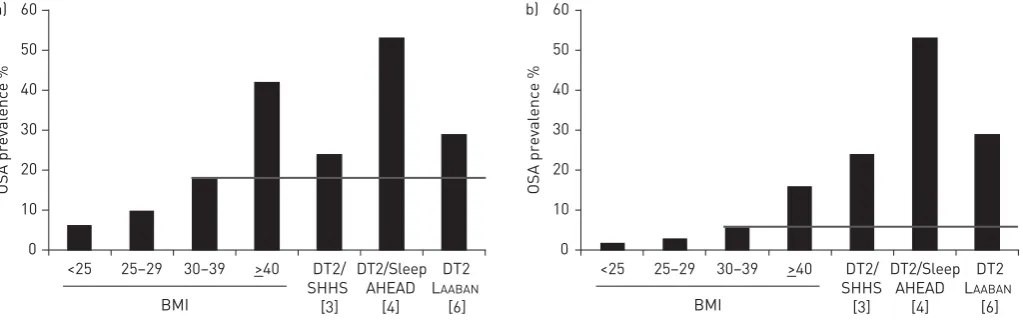
Similarly, the prevalence of OSA among patients with type 2 diabetes is high. In the Sleep Heart Health
Study [3], the prevalence of OSA (AHIo15 events?h-1) was 24.0% and 15.6% in patients with and without
type 2 diabetes, respectively. However, the difference in mean AHI between patients withversus without
type 2 diabetes was no longer significant after adjustment for age, sex, body mass index (BMI), ethnicity and
neck circumference. In the Sleep AHEAD study [4], the prevalence of OSA (AHIo15 events?h-1) was 53%
in overweight or obese patients with type 2 diabetes. Comparing such results to the estimated prevalence of
OSA in males and females of the same age range and BMI in the general population [5], the prevalence of
OSA among patients with type 2 diabetes [6–8] appears to exceed predictions of OSA in the general
population (fig. 1).
Considering the incidence of type 2 diabetes, the presence of OSA has been associated with an increased risk of
developing type 2 diabetes in some studies [8, 9] but not in others [2, 10] after adjustment for confounding
factors. Nevertheless, LINDBERGet al. [10] demonstrated that the deterioration of insulin sensitivity across an
11-year follow-up was associated with the severity of sleep breathing disorder at baseline.
In addition, several studies reported that sleep breathing disorders are associated with deterioration in
insulin sensitivity. For instance, PUNJABIand BEAMER[11] found a significant correlation between insulin
sensitivity measured by the frequently sampled intravenous glucose tolerance test and the severity of
nocturnal desaturations after adjustments for age, sex, ethnicity and per cent of body fat. PAMIDIet al. [12]
compared the insulin sensitivity (estimated from 75-g oral glucose tolerance test) of healthy young males with or without OSA matched for family and ethnic risks of developing type 2 diabetes. Males having OSA showed lower insulin sensitivity compared to males without OSA. It was recently found that insulin resistance in OSA patients was independently associated with the severity of nocturnal desaturations, but not with abdominal adiposity, in non-obese patients (unpublished data).
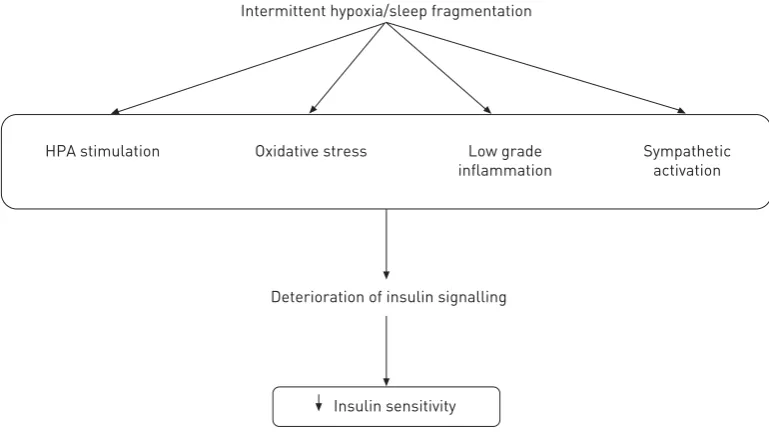
If insulin resistance is clearly associated with sleep breathing disorders, mechanistic explanations require
further research (fig. 2). Intermittent hypoxia and sleep fragmentation associated with OSA are known to
induce sympathetic activation, low-grade inflammation, activation of hypothamic-pituitary-adrenal axis
0
<25 25–29 30–39 >40 DT2/
SHHS [3]
DT2 LAABAN
[6] DT2/Sleep
AHEAD [4] 10
20 30 40 50 60
a) b)
OSA prevalence %
0 10 20 30 40 50 60
OSA prevalence %
BMI
<25 25–29 30–39 >40 DT2/
SHHS [3]
DT2 LAABAN
[6]
DT2/Sleep AHEAD
[4]
BMI
FIGURE 1Prevalence of obstructive sleep apnoea (OSA) (apnoea/hypopnoea indexo15 events?h-1) in a) males aged 50–69 years and b) females aged 50–69 years
and increased oxidative stress [13]. Such intermittent hypoxia-related intermediate mechanisms are known
to alter insulin signalling, as was directly demonstrated by some cultured cell and murine studies [14, 15].
Several studies, already published or ongoing, have addressed the question of the effects of continuous positive pressure (CPAP) treatment on glucose metabolism and glycaemic control in patients with type 2
diabetes. WESTet al. [16] conducted a 3-month CPAPversussham-CPAP randomised study in patients with
type 2 diabetes; this study did not show any benefit of CPAP treatment on HbA1c or insulin sensitivity. WEINSTOCKet al. [17] measured insulin sensitivity estimated from oral glucose tolerance test in patients with glucose intolerance before and after 2 months of CPAP treatment in a cross-over design with control treatment by sham-CPAP. CPAP treatment did not reverse glucose intolerance or improve insulin
sensitivity, except in patients with severe OSA (AHI.30 events?h-1). Finally SHARMAet al. [18] conducted a
cross-over study with 3 months of CPAP compared to 3 months of sham-CPAP treatment in patients with
OSA (AHI o15 events?h-1) and daily sleepiness; patients with type 2 diabetes, hypertension or
dyslipidaemia were excluded. In this study, 3 months of CPAP treatment reduced HbA1c levels, as well as body weight and visceral fat accumulation. Thus, in this positive study, it is unclear whether the metabolic improvements were linked to CPAP treatment or to the reduction in fat accumulation that was
associated with it. Furthermore, HOYOSet al. [19] have addressed the question of the potential benefit of
CPAP treatment on visceral and liver fat accumulation in a 3-month controlled study and did not find any reduction in visceral or liver fat accumulation, while CPAP treatment was associated with an increase in fat-free mass.
In conclusion, while some differing results remain, prevalence of type 2 diabetes in patients with OSA seems more frequent than in patients without OSA after controlling for confounding factors. However, OSA prevalence among patients with type 2 diabetes seems to exceed prevalence in the general population for the same age range and BMI. OSA might increase the risk of developing type 2 diabetes through deterioration in insulin sensitivity. Whether CPAP therapy is able to improve glycaemic control or insulin sensitivity or prevent incident cases of type 2 diabetes, is not clearly established yet. Results of ongoing studies as well as further studies will probably provide answer to these questions.
The role of OSA in the metabolic consequences of obesity
In recent years, the potential role of OSA in the pathogenesis of metabolic abnormalities has been extensively
investigated both in patients and animal models. As summarised in a recent review [20], visceral obesity and
OSA share some mechanisms, with a potential synergistic effects when the two conditions are combined.
Adipose tissue in obesity shows increased macrophage infiltration with predominance of cells with a
pro-inflammatory pattern of activation [21]. In addition, two groups of investigators recently reported that large
adipocytes were hypoxic in obese mice [22, 23]. An increased distance between adipocytes and capillaries and
insufficient capillary growth were proposed as possible mechanisms responsible for these findings [24].
Intermittent hypoxia/sleep fragmentation
Deterioration of insulin signalling
HPA stimulation Oxidative stress Low grade
inflammation
Sympathetic activation
Insulin sensitivity
FIGURE 2Intermediary mechanisms implicated in the deterioration of insulin sensitivity in obstructive sleep apnoea
Adipocyte hypoxia in obese animals was associated with activation of both inflammatory and hypoxia-inducible
factor (HIF)-1 dependent pathways and evidence of endoplasmic reticulum stress [22, 23]. Two studies
analysing subcutaneous adipose tissue from obese humans reported similar findings,i.e.lower tissue oxygen
tension (PO2) in adipose tissue of obese subjects associated with reduced circulating vascular endothelial growth
factor (VEGF) levels and number of capillaries in fat [25, 26].
These findings raised interest on the potential role of hypoxia in the pathogenesis of metabolic abnormalities
in OSA, but the effects of intermittent hypoxia in adipose tissue were unknown. REINKEet al.[27] measured
tissuePO2in different organs during intermittent hypoxia, and reported that visceral adipose tissue showed
much smallerPO2oscillations compared to liver or muscle. Interestingly, no major differences were noted
between lean and obese animals. BluntedPO2oscillations in visceral adipose tissue during acute intermittent
hypoxia or obstructive apnoeas were also reported by ALMENDROSet al.[28] in a lean rat model. In summary,
experimental results do not suggest a major effect of intermittent hypoxia or obstructive apnoeas on the level of visceral adipose tissue oxygenation.
More recently, two different studies in the obesity literature have questioned that adipose tissue is hypoxic
in obese humans. GOOSSENSet al.[29] showed that abdominal subcutaneous adipose tissuePO2is higher in
obese compared to lean subjects, while HODSON et al. [30] demonstrated that the metabolic rate of
subcutaneous adipose tissue is significantly lower in obese compared to lean humans. These findings may be accounted for by decreased adipose tissue metabolism in obesity: low oxygen requirement can be expected
to be associated with increased tissue PO2, low VEGF levels and decreased capillary growth [31]. The
differences between results obtained in rodents and humans could be explained by the rapid rate of onset of obesity in animal models compared to the slow development of human obesity; in addition, rodent models
develop a very high degree of obesity compared to humans [32]. The debate is still ongoing and additional
studiesin vitroandin vivowill be necessary, given the extreme complexity of the pathophysiology of human
obesity. However, new experiments should be carefully designed in order to mimic physiologicalPO2levels
in adipose tissue. Conversely, available data were mainly obtained by exposing adipose tissue cellsin vitroto
extremely high or low values ofPO2[32]. Other uncertain areas relate to the potentially different effects of
intermittent hypoxia on subcutaneous fat, visceral fat and brown adipose tissue (BAT). Available data have been mainly collected in subcutaneous fat in humans, and in visceral fat in rodent models. In morbidly
obese patients undergoing bariatric surgery, ARON-WISNEWSKY et al. [33] found no association between
intermittent hypoxia and macrophage accumulation or adipocyte size in omental or subcutaneous fat; tissue
PO2was not measured. As BAT is concerned, a trend towards decreased body weight and BAT in rats
exposed to isocapnic intermittent hypoxia for 3 weeks has been reported [34]. No study to date has
examined the role of chronic intermittent hypoxia on the transition from white to brown adipocytes, a topic of great interest in the current obesity literature.
OSA, visceral fat and the metabolic syndrome
The close relationship between visceral fat accumulation and OSA has been known for a long time. In 2000, VGONTZASet al.[35] reported that the main difference between obese patients with and without OSA was the amount of abdominal visceral fat deposition, which was higher in OSA patients than in obese controls while the amount of subcutaneous fat was similar in both groups. Moreover, the amount of visceral fat, but not BMI or the amount of subcutaneous fat, showed a high degree of correlation with measures of OSA
severity, such as the AHI or nocturnal intermittent hypoxemia [35].
Visceral fat accumulation is the main feature of the metabolic syndrome (MetS). Not surprisingly, MetS is
highly prevalent in OSA patients, with variable rates between 50% and.80% reported in studies worldwide
(fig. 3). MetS is diagnosed in clinical practice by the NCEP-ATP (National Cholesterol Education
Programme-Adult Treatment Panel) III criteria, which require the presence of three out of five criteria [36–45]. The
number of MetS criteria is defined as the metabolic index and can be used as an indicator of severity of metabolic abnormalities. Patients with severe OSA showed a significantly higher metabolic index compared to
patients with mild-to-moderate OSA [45], and this finding has been also confirmed in patients primarily
identified for the presence of MetS [46] or morbid obesity [47]. An independent role of OSA on metabolic
abnormalities is not strongly supported by randomised controlled trials rigorously testing the effect of CPAP on metabolism in OSA patients. A recent meta-analysis examining five controlled studies in non-diabetic OSA
patients reported a significant, but quite small, effect of CPAP on metabolism [48]. These results need further
confirmation by larger randomised studies.
Sex may exert a major role in the relationship between obesity and OSA. Sex differences in clinical presentation of OSA have been highlighted since the first studies on OSA, showing that OSA is less severe in
females than in males with a comparable degree of obesity [49, 50]. A recent case–control study examined
body weight [51]. The study confirmed the known relationship between computed tomography-assessed visceral fat and OSA, and an increased visceral-to-subcutaneous fat ratio in males with OSA. However, in females visceral fat or the visceral-to-subcutaneous fat ratio did not differ between overweight females with or without OSA, suggesting that OSA in the female sex might be related to total adiposity more than to
visceral adiposity [51].
Increased neck circumference is another marker of visceral adiposity frequently associated with OSA. Several studies have recently assessed its independent contribution to prediction of OSA severity, with variable results. What is missing in the current literature is the analysis of markers of obesity and metabolic abnormalities while taking sex into account. Such analysis could provide a better definition of the phenotype of OSA in obese subjects in relation to cardiovascular risk according to sex. It is possible that phenotypes with different risk profiles might occur in OSA patients, with obvious consequences regarding the need for individualised treatment. However, increased cardiovascular morbidity and mortality have
been found in longitudinal studies in females with severe OSA [52], suggesting that the impact of OSA is
similar in both sexes.
OSA and liver damage
The liver is an important target in patients with MetS, and liver steatosis is a major manifestation of insulin
resistance [20]. Some studies have suggested that OSA may worsen liver dysfunction in obese patients by
promoting the shift from simple steatosis to non-alcoholic steatohepatitis (NASH). Chronic intermittent hypoxia exposure would be the most important pathogenetic mechanism leading to NASH, as shown by
studies in animal models [53]. To date, at least two studies have assessed liver morphology in humans in
relation to OSA severity [33, 54]; both analysed liver biopsies obtained in morbidly obese patients
undergoing bariatric surgery and reported a strong association between severity of nocturnal intermittent hypoxia and liver abnormalities (steatosis and fibrosis).
Other studies have examined the association of non-alcoholic fatty liver disease and OSA with differing results, possibly explained by different features of the studied patients and methodology used to assess liver
abnormalities [20]. At present, little data are available on liver morphology and function in non-morbidly
obese OSA patients before and after CPAP treatment. It is possible that ‘‘usual’’ OSA patients may show different features compared to patients undergoing bariatric surgery. In addition, the latter patients are predominantly females and sex distribution is different from that commonly observed in clinical OSA series.
0 20 40 60
Prevalence of MetS in OSAS
80 100
AKAHOSHI [36], Japan
SHIINA [37], Japan
SASANABE [38], Japan
PELED [39], Israel
GRUBER [40], UK
COUGHLIN [42], UK
PARISH [43], USA
AGRAWAL [44], India
BONSIGNORE [20], Spain
LAM [41], Hong Kong
52%
43%
50%
63%
74%
87%
60%
79%
51% 58%
FIGURE 3 Prevalence rates of Metabolic Syndrome (MetS) in obstructive sleep apnoea syndrome (OSAS) patients
Lifestyle interventions: metabolic benefits of exercise and weight reduction in OSA
Lifestyle interventions generally encompass the key domains of diet and exercise and are driven by the vehicle of overall ‘‘behavioural change’’. While there is a clear benefit of weight loss amongst the generally obese population, less data is available regarding weight loss for the patient with OSA. This extends to a lack of information regarding the specific dietary and/or exercise prescription and the intensity of the weight loss
recommended for patients with OSA [55].
Obesity is the most important major modifiable risk factor associated with OSA [56]. A weight gain of 10%
is associated with a 32% increase in disease severity (AHI) while a 10% weight loss resulted in a disease
severity reduction of 26% [57]. OSA is an independent risk factor for the development of cardiovascular
disease, hypertension and type 2 diabetes [42, 58–63]. OSA, obesity and MetS are a common disease cluster
that often present to pulmonary and sleep clinicians as a mutually confounding health risk.
Visceral or central adipose tissue is thought to be the source of many of the metabolic abnormalities that contribute to the increased cardiovascular risk associated with obesity. Hence, the emphasis of lifestyle
modification should be on the reduction of central fat (i.e.waist circumference) for obese individuals. There
is clear evidence that 5–10% of weight loss in an obese patient translates into a marked reduction in blood pressure, lipid profile and improved insulin sensitivity, as well as improvement in other thrombotic factors
and inflammatory markers for an overall reduction in the risk of coronary heart disease [64]. Although
CPAP is considered the gold standard treatment for severe OSA, it variably ameliorates OSA related
symptoms and hypertension, and it is unclear whether it impacts on insulin sensitivity [65–67].
Expert panels recommend lifestyle modification interventions in OSA by promoting physical activity and
weight loss [68, 69]. Weight loss is an important treatment option, especially in the non-sleepy patient who
requires simultaneous OSA and metabolic risk management. Sleep-disordered breathing may impede the
improvement of cardiometabolic risk profile in response to a 1-year lifestyle modification programme [70].
Following intervention, males with OSA and visceral obesity demonstrated significantly smaller reductions in BMI, waist circumference, fat mass and triglycerides and significantly smaller increases in adiponectin
and high-density lipoprotein cholesterol compared to males with visceral obesity and no OSA [70].
However, more studies, including randomised trials, are required to determine whether this resistance to weight loss needs to be considered in the lifestyle prescription for the patient with OSA.
A recent systematic review and meta-analysis assessed randomised controlled trials in the area of lifestyle
interventions in OSA [55]. Conservative weight loss approaches included an assortment of cognitive
behavioural therapy and dietary prescription, sleep hygiene, home diets and self-managed exercise. Three
randomised trials have investigated the effect of dietary weight lossversusdietary weight loss plus CPAP
[71–73] and the meta-analysis observed a significant reduction in weight for those patients receiving diet
plus CPAP intervention compared with the control group (table 1). The lifestyle interventions varied and
did not consistently prescribe exercise or provide specific dietary recommendations or lifestyle counselling. The heterogeneity in the dietary recommendations and weight loss programmes makes it difficult to conclude that the information can be pooled and compared, and is therefore limited in generalisability.
Intensive lifestyle interventions have a variety of features including very low energy diets, supervised exercise programmes and tailored dietary prescriptions. Six randomised controlled trials have compared the effect of
intensive lifestyle changesversusroutine care in OSA [74–79]. The trials were mixed in duration, design and
protocols employed, and no consistency was observed in the diet, exercise or structuring of the programmes
employed (table 1). Overall, it is clear that intensive lifestyle interventions employing a caloric restriction and/or
physical activity are effective for reducing obesity and improve the severity of OSA. Lower intensity interventions combined with CPAP therapy also work, however to a lesser degree for the same outcome measures.
Despite weight loss being important for the overall health management of patients with OSA who are overweight or obese, there are little data regarding the most effective diet for OSA patients. Very low energy diets have been widely used according to a variety of protocols; however, there are only two diets that have
been tested against each other specifically in OSA patients, the Mediterranean dietversusthe prudent diet
[77]. The AHI during rapid eye movement sleep was reduced in the Mediterranean diet group compared to
the prudent diet. Waist circumference and waist-to-hip ratio were also reduced to a greater extent in the Mediterranean diet group when compared with the prudent diet group. This supports recent evidence from a randomised trial that the Mediterranean diet supplemented with extra-virgin olive oil reduces the
incidence of major cardiovascular events among persons at high cardiovascular risk [83]. Furthermore, a
recent systematic review and meta-analysis revealed that the Mediterranean diet had the most pronounced
effect on glycaemic control and greater weight loss in the management of type 2 diabetes [84]. There is a
Exercise is an essential component of lifestyle modification for the management of OSA, but studies specifically evaluating the efficacy of exercise training in OSA are limited by the relatively small sample sizes
and the frequent lack of control groups [80, 85–88]. The methodological differences complicate any form of
meaningful comparison in the exercise prescribed. The fact that obesity is so strongly linked to OSA suggests that exercise prescriptions should be designed on the basis of weight loss.
The American College of Sports Medicine (ACSM) currently recommends .250 minutes per week of
moderate intensity cardiorespiratory exercise for clinically significant weight loss in addition to two strength
training sessions [89]. The typical characteristics of the OSA patient, being sleepy and lacking energy, may
compromise an individual’s ability to sustainably comply with high volumes of exercise. Therefore, tailored exercise programmes fostering progressive overload and gradual conditioning of the individual may require consideration. Recent evidence suggests that exercise training may be associated with a reduction in OSA
severity [78, 87, 88, 90] and, not surprisingly, improved exercise capacity [84, 85, 87, 91]. Exercise alone
may also improve OSA severity without significant weight loss [77, 88, 90]. More specifically, KLINEet al.
[91] tested the effects of aerobic exercise for 4 days per week in a supervised environment at moderate
intensity (equating to 150 minutes per week) combined with resistance training. The exercise dose did not
reach the volume recommended by the ACSM for clinically significant weight loss [89]. The exercise dose
prescribed is often based on recommendations for diabetics, despite the volume not being adequate for
weight loss without dietary intervention. Nevertheless, KLINEet al. [91] found significant improvement in
depressive symptoms, fatigue and vigour aspects of quality of life. A significant 25% reduction in AHI (p,0.01) and oxygen desaturation index (p50.03) was observed for the exercise group, while the decrease
in body weight did not reach significance [91].
While CPAP usually ameliorates OSA symptoms of sleepiness and improves quality of life [71], it must be
used in adjunct with intensive lifestyle interventions incorporating the use of very low energy diets to achieve aggressive weight reduction, followed by more sustainable eating plans and frequent exercise. A minimum of 150 minutes per week of aerobic exercise should be recommended in addition to at least two
sessions of strength training to promote lean muscle gain [89]. In this way, weight re-gain can be prevented.
There is a clear gap in the knowledge regarding the most effective diet to recommend to patients with OSA and furthermore, what volume of exercise will most benefit OSA and weight loss.
One of the problems impacting on delivery of the best healthcare to OSA patients is fragmentation of services and treatments. Mechanical therapies are implemented by sleep or dental specialists, while lifestyle modification is usually managed by other teams. The way forward is to integrate both clinical training and management, to ensure interdisciplinary skills in the full range of OSA therapeutics in one setting. It will be important to underpin this disruption of therapeutic silos by more randomised controlled trials built from the current knowledge base, to further unveil the role of lifestyle modification and exercise in the
management of OSA [92, 93]. While there is a clear benefit in employing intensive lifestyle interventions
with or without CPAP therapy for the management of the obese OSA patient, further exploration into the most effective lifestyle prescription (encompassed by a specific diet and exercise programme) is warranted.
The relative effectiveness of weight lossversusCPAP or mandibular advancement devices from a metabolic
perspective is yet to be confirmed, as does a comparison of weight loss in malesversus females and in
comorbid type 2 diabetes. Furthermore, the feasibility and sustainability of delivering these programmes in a clinical environment must be explored. Chronic care models managing obesity, such a lifestyle
modification targeting ‘‘waist loss’’ [64], demand further validation as does a parallel change in health
promotion and the social constructs around managing obesity and OSA. It is essential for OSA and obesity chronic care to be combined, whereby there is an up skilling of both the sleep medicine and obese/metabolic medical workforce. This also necessitates the investigation of adherence issues common with CPAP use and long-term weight loss therapeutic commitment and sustainability.
Conclusions
TABLE 1 Lifestyle intervention studies in obstructive sleep apnoea (OSA) patients Intervention Comparison / control Durat ion months Subjects n Baseline OSA Outcomes Additional metabolic benefits reported Diagnosti c proc edure Severity Weight loss interven tion Weight loss con trol p-val ue Diet + CPAP B ALLESTER [ 71 ] Conservative treatment + CPAP Conserva tive treatment on ly 3 105 P a rt ia ll y a tt e n d e d ni gh t-ti me re spi rat ory re cord in g Severe (AHI 56 ¡ 20) -1.1 k g -3.1 k g , 0.001 Nil Conservative treatment: s leep hygi ene and weight loss progr amme, home diet prescribed by dietician M ONASTERIO [ 73 ] Conservative measures + CPAP Conserva tive measure s on ly 6 125 PSG Moderate (AHI 20 ¡ 6) + 0.1 k g 6 months -2 .7 k g 6 m o n th s , 0.001 Nonsigni ficant improvement in blood pressure in both control and CPAP group C o nse rva ti ve m e asu res: w ei gh t lo s s pr ogr a mm e follo win g a h om e d ie t, av oid a n ce of sed a ti ve s a n d alco hol con su mpt ion, a vo id a n ceo f s u p in ep o s it io n d u ri n g s le e p a n d a d e q ua te ho ur s o f s le e p K AJASTE [ 72 ] Weight reduction s trategy + CPAP (individuali sed CBT + dietary counselli ng) Weight reduction s trategy + CPAP (CB T + dietary counselling) 24 31 males PSG Moderate (AHI 20 ¡ 6) -1 9. 1 k g 6 mon th s -1 9. 2 k g 6 mo nt hs . 0.05 Nil Intensive Lifesty le Intervention (ILI) F OSTER [ 74 ] ILI: g roup weight loss programme based on low calor ie diet and physic a l activity pr escription o f 175 min ? week -1 of modera te, developed specifi cally for obese T2DM patients Th ree g rou p di abe tes su pp ort e du ca tion sessions focu sed o n d ie t, phy s ic al act iv ity an d s ocial s up por t 12 264 Unattended PSG Moderate (AHI 23.2 ¡ 16.5, ODI 19.4 ¡ 4.9) 10.8 k g p ost -1-y e ar in ter ven ti on 0.6 k g post-1 -year intervention , 000.1 S ig n if ic a n t im p ro ve m e n t in waist a nd n e ck circu m fe rence a n d HB A1c (p , 0 .00 1) T UOMILEHTO [ 75 ] L ifestyle interve n tion: individu al tailored counselli ng and weight reduction programme with emphasis p laced on diet, exercise and modificati o n o f lifestyle, focusing on eating behaviou r One dietary and exercise counselli ng session 12 71 Embletta Mild (AHI 9.65 ¡ 12) 10.7 k g p ost -1-y e ar in ter ven ti on 2.4 k g post-1 -year intervention , 0.001 Significa n tly improved wai st circumference (p , 0.001) Lifestyle
Intervention KEMPPAINEN
[ 76 ] L ifestyle interve n tion: individu al tailored counselli ng and weight reduction progr amme with emphasis o n d iet, exerc ise and lifest yle modificatio n (focusing on eating behaviou r) One dietary and exercise counselli ng session 3 5 2 Embletta Mild (AHI 10.1 ¡ 6.3) BMI 5.4 k g ? m -2 3 months BMI 0.49 k g ? m -2 3 month s , 0.05 Nil P APANDREOU [ 77 ] ILI: individualis ed weight reduct ion pro g ramme based on a low calorie Mediterra nean diet and physical activity prescription o f a t least 30 min ? day -1 , develo ped specifi cally for obese OSA patients w h o underw ent CPAP treatment Ind ividualised weight red uction p rogr amme based on a low calorie prudent diet and physical activity prescriptio n o f a t least 30 min ? day -1, developed specifically for obese OSA patient s who underwent CPAP treatment 6 2 1 PSG Severe (AHI 46.2 ¡ 32.7) Weight -8.9 k g Wa is t circ u mf eren ce -8 .7 cm Body fat -4.3% Weight -7.2 kg Wa is t circum fe rence 5.7 cm Body fat -2.6%
0.162 0.013 0.032
References
1 Pamidi S, Tasali E. Obstructive sleep apnea and type 2 diabetes: is there a link?Front Neurol2012; 3: 126. 2 Reichmuth KJ, Austin D, Skatrud JB,et al.Association of sleep apnea and type II diabetes: a population-based
study.Am J Respir Crit Care Med2005; 172: 1590–1595.
3 Resnick HE, Redline S, Shahar E,et al.Diabetes and sleep disturbances: findings from the Sleep Heart Health Study. Diabetes Care2003; 26: 702–709.
4 St-Onge MP, Zammit G, Reboussin DM,et al.Associations of sleep disturbance and duration with metabolic risk factors in obese persons with type 2 diabetes: data from the sleep AHEAD study.Nat Sci Sleep2012; 4: 143–150. 5 Young T, Peppard PE, Taheri S. Excess weight and sleep-disordered breathing.J Appl Physiol2005; 99: 1592–1599. 6 Laaban JP, Daenen S, Leger D,et al.Prevalence and predictive factors of sleep apnoea syndrome in type 2 diabetic
patients.Diabetes Metab2009; 35: 372–377.
7 Foster GD, Sanders MH, Millman R,et al.Obstructive sleep apnea among obese patients with type 2 diabetes. Diabetes Care2009; 32: 1017–1019.
8 Botros N, Concato J, Mohsenin V,et al.Obstructive sleep apnea as a risk factor for type 2 diabetes.Am J Med2009; 122: 1122–1127.
9 Marshall NS, Wong KK, Phillips CL,et al.Is sleep apnea an independent risk factor for prevalent and incident diabetes in the Busselton Health Study?J Clin Sleep Med2009; 5: 15–20.
10 Lindberg E, Theorell-Haglow J, Svensson M,et al.Sleep apnea and glucose metabolism: a long-term follow-up in a community-based sample.Chest2012; 142: 935–942.
11 Punjabi NM, Beamer BA. Alterations in glucose disposal in sleep-disordered breathing.Am J Respir Crit Care Med 2009; 179: 235–240.
12 Pamidi S, Wroblewski K, Broussard J, et al. Obstructive sleep apnea in young lean men: Impact on insulin sensitivity and secretion.Diabetes Care2012; 35: 2384–2389.
13 Levy P, Pepin JL, Arnaud C,et al.Intermittent hypoxia and sleep-disordered breathing: current concepts and perspectives.Eur Respir J2008; 32: 1082–1095.
14 Regazzetti C, Peraldi P, Gremeaux T,et al.Hypoxia decreases insulin signaling pathways in adipocytes.Diabetes 2009; 58: 95–103.
15 Yokoe T, Alonso LC, Romano LC, et al.Intermittent hypoxia reverses the diurnal glucose rhythm and causes pancreatic beta-cell replication in mice.J Physiol2008; 586: 899–911.
16 West SD, Nicoll DJ, Wallace TM,et al.Effect of CPAP on insulin resistance and HbA1c in men with obstructive sleep apnoea and type 2 diabetes.Thorax2007; 62: 969–974.
17 Weinstock TG, Wang X, Rueschman M, et al. A controlled trial of CPAP therapy on metabolic control in individuals with impaired glucose tolerance and sleep apnea.Sleep2012; 35: 617–625B.
18 Sharma SK, Agrawal S, Damodaran D,et al.CPAP for the metabolic syndrome in patients with obstructive sleep apnea.N Engl J Med2011; 365: 2277–2286.
19 Hoyos CM, Killick R, Yee BJ, et al. Cardiometabolic changes after continuous positive airway pressure for obstructive sleep apnoea: a randomised sham-controlled study.Thorax2012; 67: 1081–1089.
20 Bonsignore MR, McNicholas WT, Montserrat JM,et al.Adipose tissue in obesity and obstructive sleep apnoea.Eur Respir J2012; 39: 746–767.
21 Patel PS, Buras ED, Balasubramanyam A. The role of the immune system in obesity and insulin resistance.J Obes 2013; 2013: 616193.
22 Ye J, Gao Z, Yin J,et al.Hypoxia is a potential risk factor for chronic inflammation and adiponectin reduction in adipose tissue of ob/ob and dietary obese mice.Am J Physiol Endocrinol Metab2007; 293: E1118–E1128. 23 Hosogai N, Fukuhara A, Oshima K,et al.Adipose tissue hypoxia in obesity and its impact on adipocytokine
dysregulation.Diabetes2007; 56: 901–911.
24 Trayhurn P. Hypoxia and adipose tissue function and dysfunction in obesity.Physiol Rev2013; 93: 1–21. 25 Pasarica M, Sereda OR, Redman LM,et al. Reduced adipose tissue oxygenation in human obesity: evidence
for rarefaction, macrophage chemotaxis, and inflammation without an angiogenic response.Diabetes2009; 58: 718–725.
26 Pasarica M, Rood J, Ravussin E,et al.Reduced oxygenation in human obese adipose tissue is associated with impaired insulin suppression of lipolysis.J Clin Endocrinol Metab2010; 95: 4052–4055.
27 Reinke C, Bevans-Fonti S, Drager LF,et al.Effects of different acute hypoxic regimens on tissue oxygen profiles and metabolic outcomes.J Appl Physiol2011; 111: 881–890.
28 Almendros I, Farre´ R, Planas AM,et al.Tissue oxygenation in brain, muscle, and fat in a rat model of sleep apnea: differential effect of obstructive apneas and intermittent hypoxia.Sleep2011; 34: 1127–1133.
29 Goossens GH, Bizzarri A, Venteclef N,et al.Increased adipose tissue oxygen tension in obese compared with lean men is accompanied by insulin resistance, impaired adipose tissue capillarization, and inflammation.Circulation 2011; 124: 67–76.
30 Hodson L, Humphreys SM, Karpe F,et al.Metabolic signatures of human adipose tissue hypoxia in obesity. Diabetes2013; 62: 1417–1425.
31 Corvera S, Czech MP. Tensions rise and blood flows over dysfunctional fat.Circulation2011; 124: 13–16. 32 Goossens GH, Blaak EE. Adipose tissue oxygen tension: implications for chronic metabolic and inflammatory
diseases.Curr Opin Clin Nutr Metab Care2012; 15: 539–546.
33 Aron-Wisnewsky J, Minville C, Tordjman J,et al.Chronic intermittent hypoxia is a major trigger for non-alcoholic fatty liver disease in morbid obese.J Hepatol2012; 56: 225–233.
34 Martinez D, Fiori CZ, Baronio D,et al.Brown adipose tissue: is it affected by intermittent hypoxia?Lipids Health Dis2010; 9: 121.
35 Vgontzas AN, Papanicolaou DA, Bixler EO,et al.Sleep apnea and daytime sleepiness and fatigue: relation to visceral obesity, insulin resistance, and hypercytokinemia.J Clin Endocrinol Metab2000; 85: 1151–1158. 36 Akahoshi T, Uematsu A, Akashiba T,et al.Obstructive sleep apnoea is associated with risk factors comprising the
metabolic syndrome.Respirology2010; 15: 1122–1126.
38 Sasanabe R, Banno K, Otake K,et al. Metabolic syndrome in Japanese patients with obstructive sleep apnea syndrome.Hypertens Res2006; 29: 315–322.
39 Peled N, Kassirer M, Shitrit D,et al.The association of OSA with insulin resistance, inflammation and metabolic syndrome.Respir Med2007; 101: 1696–1701.
40 Gruber A, Horwood F, Sithole J,et al.Obstructive sleep apnoea is independently associated with the metabolic syndrome but not insulin resistance state.Cardiovasc Diabetol2006; 5: 22.
41 Lam JCM, Lam B, Lan CL,et al.Obstructive sleep apnea and the metabolic syndrome in community-based Chinese adults in Hong Kong.Respir Med2006; 100: 980–987.
42 Coughlin SR, Mawdsley L, Mugarza JA,et al. Obstructive sleep apnoea is independently associated with an increased prevalence of metabolic syndrome.Eur Heart J2004; 25: 735–741.
43 Parish JM, Adam T, Facchiano L. Relationship of metabolic syndrome and obstructive sleep apnea.J Clin Sleep Med 2007; 3: 467–472.
44 Agrawal S, Sharma SK, Sreenivas V,et al.Prevalence of metabolic syndrome in a north Indian hospital-based population with obstructive sleep apnoea.Indian J Med Res2011; 134: 639–644.
45 Bonsignore MR, Barcelo´ A, Esquinas C, et al.Metabolic syndrome, insulin resistance and excessive daytime sleepiness in non-diabetic patients with obstructive sleep apnea.Eur Respir J2012; 39: 1136–1143.
46 Drager LF, Lopes HF, Maki-Nunes C,et al.The impact of obstructive sleep apnea on metabolic and inflammatory markers in consecutive patients with metabolic syndrome.PLoS One2010; 5: e12065.
47 Gasa M, Salord N, Fortuna AM,et al.Impact of obstructive sleep apnea on metabolic dysfunction in severe obesity. Eur Respir J2011; 39: 1136–1143.
48 Iftikhar IH, Khan MF, Das A,et al.Meta-analysis: continuous positive airway pressure improves insulin resistance in patients with sleep apnea without diabetes.Ann Am Thorac Soc2013; 10: 115–120.
49 Kapsimalis F, Kryger MH. Gender and obstructive sleep apnea syndrome, part 1: clinical features.Sleep2002; 25: 412–419.
50 Kapsimalis F, Kryger MH. Gender and obstructive sleep apnea syndrome, part 2: mechanisms.Sleep2002; 25: 499–506.
51 Kritikou I, Basta M, Tappouni R,et al.Sleep apnoea and visceral adiposity in middle-aged male and female subjects.Eur Respir J2013; 41: 601–609.
52 Campos-Rodriguez F, Martinez-Garcia MA, de la Cruz-Moron I,et al.Cardiovascular mortality in women with obstructive sleep apnea with or without continuous positive airway pressure treatment: a cohort study.Ann Intern Med2012; 156: 115–122.
53 Mirrakhimov AE, Polotsky VY. Obstructive sleep apnea and non-alcoholic fatty liver disease: is the liver another target?Front Neurol2012; 3: 149.
54 Polotsky VY, Patil SP, Savransky V,et al.Obstructive sleep apnea, insulin resistance, and steatohepatitis in severe obesity.Am J Respir Crit Care Med2009; 179: 228–234.
55 Thomasouli MA, Brady EM, Davies MJ,et al. The impact of diet and lifestyle management strategies for obstructive sleep apnoea in adults: a systematic review and meta-analysis of randomised controlled trials.Sleep Breath2013 [Epub ahead of print DOI: 10.1007/s11325-013-0806-7].
56 Punjabi NM, Newman AB, Young TB,et al.Sleep-disordered breathing and cardiovascular disease: an outcome-based definition of hypopneas.Am J Respir Crit Care Med2008; 177: 1150–1155.
57 Peppard PE, Young T, Palta M, et al. Longitudinal study of moderate weight change and sleep-disordered breathing.JAMA2000; 284: 3015–3021.
58 West SD, Nicoll DJ, Stradling JR. Prevalence of obstructive sleep apnoea in men with type 2 diabetes.Thorax2006; 61: 945–950.
59 Peppard PE, Young T, Palta M,et al.Prospective study of the association between sleep-disordered breathing and hypertension.N Engl J Med2000; 342: 1378–1384.
60 Shahar E, Whitney CW, Redline S,et al.Sleep-disordered breathing and cardiovascular disease: cross-sectional results of the Sleep Heart Health Study.Am J Respir Crit Care Med2001; 163: 19–25.
61 Shamsuzzaman AS, Gersh BJ, Somers VK. Obstructive sleep apnea: implications for cardiac and vascular disease. JAMA2003; 290: 1906–1914.
62 Wolk R, Somers VK. Obesity-related cardiovascular disease: implications of obstructive sleep apnea.Diabetes Obes Metab2006; 8: 250–260.
63 Meslier N, Gagnadoux F, Giraud P,et al.Impaired glucose-insulin metabolism in males with obstructive sleep apnoea syndrome.Eur Respir J2003; 22: 156–160.
64 Despres JP, Lemieux I, Prud’homme D. Treatment of obesity: need to focus on high risk abdominally obese patients.BMJ2001; 322: 716–720.
65 Becker HF, Jerrentrup A, Ploch T,et al.Effect of nasal continuous positive airway pressure treatment on blood pressure in patients with obstructive sleep apnea.Circulation2003; 107: 68–73.
66 Montserrat JM, Ferrer M, Hernandez L,et al.Effectiveness of CPAP treatment in daytime function in sleep apnea syndrome: a randomized controlled study with an optimized placebo.Am J Respir Crit Care Med2001; 164: 608–613. 67 Douglas NJ, Engleman HM. Effects of CPAP on vigilance and related functions in patients with the sleep apnea/
hypopnea syndrome.Sleep2000; 23: Suppl. 4, S147–S149.
68 Epstein LJ, Kristo D, Strollo PJ Jr,et al.Clinical guideline for the evaluation, management and long-term care of obstructive sleep apnea in adults.J Clin Sleep Med2009; 5: 263–276.
69 Shaw JE, Punjabi NM, Wilding JP, et al.Sleep-disordered breathing and type 2 diabetes: a report from the International Diabetes Federation Taskforce on Epidemiology and Prevention.Diabetes Res Clin Pract2008; 81: 2–12. 70 Borel AL, Leblanc X, Almeras N,et al.Sleep apnoea attenuates the effects of a lifestyle intervention programme in
men with visceral obesity.Thorax2012; 67: 735–741.
71 Ballester E, Badia JR, Hernandez L,et al.Evidence of the effectiveness of continuous positive airway pressure in the treatment of sleep apnea/hypopnea syndrome.Am J Respir Crit Care Med1999; 159: 495–501.
72 Kajaste S, Brander PE, Telakivi T,et al. A cognitive-behavioral weight reduction program in the treatment of obstructive sleep apnea syndrome with or without initial nasal CPAP: a randomized study.Sleep Med2004; 5: 125–131. 73 Monasterio C, Vidal S, Duran J,et al.Effectiveness of continuous positive airway pressure in mild sleep
74 Foster GD, Borradaile KE, Sanders MH,et al.A randomized study on the effect of weight loss on obstructive sleep apnea among obese patients with type 2 diabetes: The Sleep AHEAD Study.Arch Intern Med2009; 169: 1619–1626. 75 Tuomilehto HPI, Seppa JM, Partinen MM,et al.Lifestyle intervention with weight reduction first-line treatment in
mild obstructive sleep apnea.Am J Respir Crit Care Med2009; 179: 320–327.
76 Kemppainen T, Ruoppi P, Seppa J,et al.Effect of weight reduction on rhinometric measurements in overweight patients with obstructive sleep apnea.Am J Rhinol2008; 22: 410–415.
77 Papandreou C, Schiza SE, Bouloukaki I,et al. Effect of Mediterranean dietversusprudent diet combined with physical activity on OSAS: a randomised trial.Eur Respir J2012; 39: 1398–1404.
78 Kline CE, Crowley EP, Ewing GB,et al.The effect of exercise training on obstructive sleep apnea and sleep quality: a randomized controlled trial.Sleep2011; 34: 1631–1640.
79 Ackel-D’Elia C, Silva A, Silva R, et al.Effects of exercise training associated with continuous positive airway pressure treatment in patients with obstructive sleep apnea syndrome.Sleep Breath2012; 16: 723–735.
80 Sengul YS, Ozalevli S, Oztura I,et al.The effect of exercise on obstructive sleep apnea: a randomized and controlled trial.Sleep Breath2011; 15: 49–56.
81 Stradling J, Roberts D, Wilson A,et al.Controlled trial of hypnotherapy for weight loss in patients with obstructive sleep apnoea.Int J Obes Relat Metab Disord1988; 22: 278–281.
82 Johansson K, Neovius M, Lagerros YT,et al.Effect of a very low energy diet on moderate and severe obstructive sleep apnoea in obese men: a randomised controlled trial.BMJ2009; 339: b4609.
83 Estruch R, Ros E, Salas-Salvado J,et al.Primary prevention of cardiovascular disease with a Mediterranean diet. N Engl J Med2013; 368: 1279–1290.
84 Ajala O, English P, Pinkney J. Systematic review and meta-analysis of different dietary approaches to the management of type 2 diabetes.Am J Clin Nutr2013; 97: 505–516.
85 Ueno LM, Drager LF, Rodrigues AC,et al.Effects of exercise training in patients with chronic heart failure and sleep apnea.Sleep2009; 32: 637–647.
86 Barnes M, Goldsworthy UR, Cary BA,et al.A diet and exercise program to improve clinical outcomes in patients with obstructive sleep apnea–a feasibility study.J Clin Sleep Med2009; 5: 409–415.
87 Norman JF, Von Essen SG, Fuchs RH,et al.Exercise training effect on obstructive sleep apnea syndrome.Sleep Res Online2000; 3: 121–129.
88 Giebelhaus V, Strohl KP, Lormes W,et al.Physical exercise as an adjunct therapy in sleep apnea – an open trial. Sleep Breath2000; 4: 173–176.
89 Donnelly JE, Blair SN, Jakicic JM,et al.American College of Sports Medicine Position Stand. Appropriate physical activity intervention strategies for weight loss and prevention of weight regain for adults.Med Sci Sports Exerc2009; 41: 459–471.
90 Netzer N, Lormes W, Giebelhaus V,et al.Physical training of patients with sleep apnea.Pneumologie1997; 51: Suppl. 3, 779–782.
91 Kline CE, Crowley EP, Ewing GB,et al. Blunted heart rate recovery is improved following exercise training in overweight adults with obstructive sleep apnea. Int J Cardiol 2012 [Epub ahead of print DOI: 10.1016/ j.ijcard.2012.04.108].
92 Shneerson J, Wright J. Lifestyle modification for obstructive sleep apnoea. Cochrane Database Syst Rev 2001; CD002875.