R E S E A R C H
Open Access
The effectiveness of sit-stand workstations for
changing office workers
’
sitting time: results from
the Stand@Work randomized controlled trial pilot
Josephine Y Chau
1, Michelle Daley
2, Scott Dunn
2, Anu Srinivasan
2, Anna Do
3, Adrian E Bauman
1and Hidde P van der Ploeg
1,4*Abstract
Background:Prolonged sitting time is detrimental for health. Individuals with desk-based occupations tend to sit a great deal and sit-stand workstations have been identified as a potential strategy to reduce sitting time. Hence, the objective of the current study was to examine the effects of using sit-stand workstations on office workers’sitting time at work and over the whole day.
Methods:We conducted a randomized controlled trial pilot with crossover design and waiting list control in Sydney, Australia from September 2011 to July 2012 (n = 42; 86% female; mean age 38 ± 11 years). Participants used a sit-stand workstation for four weeks in the intervention condition. In the time-matched control condition, participants received nothing and crossed over to the intervention condition after four weeks. The primary outcomes, sitting, standing and walking time at work, were assessed before and after using the workstations with ActivPALs and self-report questionnaires. Secondary outcomes, domain-specific sitting over the whole day, were assessed by self-report. Linear mixed models estimated changes in outcomes adjusting for measurement time, study grouping and covariates.
Results:Intervention participants significantly reduced objectively assessed time spent sitting at work by 73 min/workday (95% CI:−106,-39) and increased standing time at work by 65 min/workday (95% CI: 47, 83); these changes were
significant relative to controls (p = 0.004 and p < 0.001, respectively). Total sitting time significantly declined in intervention participants (−80 min/workday; 95% CI:−155,−4).
Conclusions:This study shows that introducing sit-stand workstations in the office can reduce desk-based workers’sitting time at work in the short term. Larger scale studies on more representative samples are needed to determine the public health impact of sit-stand workstations.
Trial registration:ACTRN12612000072819
Keywords:Sedentary behavior, Sit-stand workstation, Workplace, Randomized controlled trial
Introduction
High amounts of time spent in sedentary behaviour have been linked with increased risk for a range of health out-comes including type 2 diabetes, cardiovascular disease, and mortality [1-8]. The prevalence of adults working in
jobs that require mostly sitting is high [9], and occupa-tions have become more sedentary and less physically active over the past few decades [10]. Working adults spend an estimated one third to three quarters of their work time sitting [11-14]. Thus, reducing sitting time may have good potential for chronic disease prevention in working populations, with the workplace as an appro-priate intervention setting. However, workplace inter-ventions have mainly addressed sedentary behaviour as a secondary outcome to promoting physical activity and there is a need for more trials that specifically target sed-entary behaviour [15].
* Correspondence:[email protected] 1
Prevention Research Collaboration, Sydney School of Public Health, University of Sydney, 92-94 Parramatta Road, Camperdown, NSW 2050, Australia
4Department of Public and Occupational Health, EMGO Institute for Health and Care Research, VU University Medical Center, Van der Boechorststraat 7, 1081BT Amsterdam, The Netherlands
Full list of author information is available at the end of the article
Modifying the occupational environment through the introduction of sit-stand workstations is one potential method for reducing prolonged sitting during the work-day among office workers. Sit-stand workstations allow the user to alternate between sitting and standing pos-tures at their desk, giving them the opportunity to re-duce their sitting time at work. Evidence about sit-stand workstations from the occupational health and ergo-nomics literature has concentrated on musculoskeletal health and work performance [16-21]. More recently, public health focused research has examined sit-stand desks as tools for reducing sitting time with the aim of preventing chronic illness [22]. Five recent intervention studies [23-27], and one natural experiment [28] have examined the impact of using sit-stand workstations on desk-based workers’ sitting time in office settings with promising results. Two recent systematic reviews on ac-tivity permissive workstations revealed promising results for sit-stand workstations but called for higher quality studies [29,30]. Few trials to date have been conducted using a randomised controlled design [27], and few stud-ies have examined the effects of sit-stand workstations on sitting time outside of work.
This paper describes the results of a pilot randomised controlled trial, the Stand@Work study. The aim of this study was to investigate the effect of using sit-stand workstations on office workers’sitting time at work and over the whole day.
Methods
The study was approved by the University of Sydney Human Research Ethics Committee (No. 08-2011/14067) and all participants gave written informed consent. The study is registered with the Australian New Zealand Clin-ical Trials Registry (No. ACTRN 12612000072819).
Participants
Participants were staff from a non-government health agency in New South Wales, Australia, aged over 18 years, employed at least three days per week, and who had suffi-cient English language proficiency to undertake study tasks. The project was advertised to staff as part of their workplace wellness program via internal mail, staff meet-ings and information fliers in the office. Staff members who were interested in participating, contacted the re-search team and received additional project information and an expression of interest form. They could then join the study ballot by returning the expression of interest form.
Design
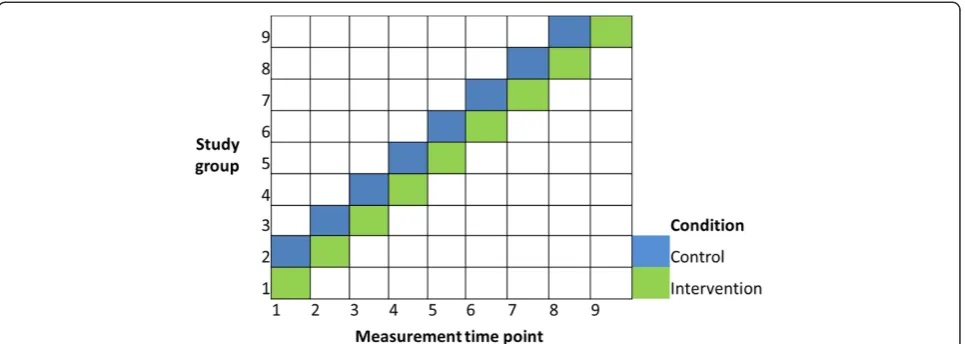
This pilot study had a randomised controlled trial design with crossover and rolling recruitment and a waitlist control condition (Figure 1). Eligible staff members who
returned an expression of interest form were randomly drawn from a ballot by a researcher in the presence of potential participants and other researchers, and were included in the study after providing written informed consent. The first four participants drawn from the bal-lot were allocated to the intervention group to use a sit-stand workstation for four weeks (Figure 1, study group 1), the next four participants drawn from the ballot served as the control group (Figure 1, study group 2). The remaining participants were assigned to the waitlist control condition and were placed on the waiting list in seven groups (four to five people per group). After the initial four weeks, the previous control group (study group 2) received the intervention with the next group from the ballot draw serving as their controls (study group 3). This was repeated until all nine groups had re-ceived the intervention. This study design was used to maximise the evaluation sample size taking into account the five available sit-stand workstations. Allocation con-cealment was not possible due to the open plan nature of the study office environment. Data collection ran from September 2011 to July 2012.
Intervention
The intervention involved giving participants a sit-stand workstation (Ergotron Workfit S) to use for four weeks for all workdays (3 to 5 workdays per week depending on full-time or part-time employment status). The sit-stand workstation allowed office workers to vary their posture throughout the workday between sitting and standing. Prior to receiving the sit-stand workstation, participants received brief training on how to use the sit-stand work-station, including how to adjust workstation height and manufacturer specified ergonomic set ups while sitting or standing. Participants also completed an ergonomic self-assessment prior to use and were advised to increase their standing time gradually to prevent injury and fatigue.
Outcome assessment
Assessments, consisting of objective monitoring and self-report questionnaires, took place at three time points scheduled four weeks apart. Assessment 1 was six weeks pre-intervention, assessment 2 at two weeks pre-intervention and assessment 3 in the third week of the intervention (Figure 1). Changes between assess-ments 1 and 2 were treated as the control condition, changes between assessments 2 and 3 as the interven-tion condiinterven-tion. The excepinterven-tion was the first interveninterven-tion group, which only participated in assessments 2 and 3, because they could not serve as a time synchronized control condition.
time and kept a monitoring log book to note the times they wore the ActivPAL each day, the days they worked, and the times they started and finished work on each of those days. We used the ActivPAL to objectively measure time spent sitting, standing and stepping at work. The ActivPAL is a small activity monitor that is worn on the front mid thigh [31,32]. The ActivPAL identifies episodes of sitting/lying, standing or stepping based on the inclin-ation of the thigh. It has demonstrated reliability and val-idity for measuring postures and activities of daily living (sitting, standing, stepping) [31]: good to excellent interde-vice reliability (intraclass correlation coefficients ranged from 0.79 to 0.99); good device-observer agreement for sitting, standing and stepping (mean percentage dif-ference between ActivPAL and observer of 0.19%, −1.4% and−2.0%, respectively, on Bland-Altman plots). ActivPAL has also been shown to be responsive to change [33]. ActivPAL data were first processed using proprietary soft-ware (ActivPAL v6.1.2.17, PAL Technologies Ltd., Glasgow, UK) which classified the data into sitting, standing and stepping categories. We further analysed the data using custom software (HSC analysis software v2.19, Philippa Dall and Malcolm Granat, Glasgow Caledonian University) which allowed us to isolate participants’ work time data based on their work start and finish times reported in their monitoring log.
Additionally, participants completed questionnaires at each assessment. We used the Occupational Sitting and Physical Activity Questionnaire (OSPAQ) [34] to meas-ure time spent sitting, standing, walking, and doing more physically demanding tasks at work. It has demon-strated excellent test-retest reliability for assessing sit-ting, standing, walking and doing physically demanding tasks at work (ICC = 0.54-0.89) [34]. Validity correlations for occupational sitting, standing and walking measures were 0.52, 0.49 and 0.27, respectively, against Actigraph accelerometers [34].
Sitting time over the whole day was measured with the Workforce Sitting Questionnaire (WSQ) [35], which measures total and domain-specific sitting based on work and non-workdays in working adults. The WSQ asked participants to report their time spent sitting (1) while travelling to and from places; (2) while at work; (3) while watching TV; (4) while using a computer at home; and (5) while doing other leisure activities on a workday and a non-workday in the last 7 days. It has acceptable test-retest reliability (ICC = 0.76) and validity against Actigraph accelerometers (r = 0.40) for assessing total sitting time based on work and non-workdays [35]. The WSQ is also a reliable (ICC = 0.63) and valid (r = 0.45) measure of domain-specific sitting at work on a workday [35].
Participants also provided information about their sex, age, height, weight, employment status (full time or part time, number of days worked, and hours worked per week), type of office arrangement (own office or open plan) and highest level of education. Additionally, Body Mass Index (BMI) was calculated as kg.m−2.
Statistical analyses
Statistical analyses were carried out with SAS/STAT soft-ware, Version 9.3 of the SAS system for Windows with statistical significance set at p < 0.05 (two-tailed). We used linear mixed models to estimate changes in self-reported and objectively assessed time spent sitting, standing and walking/stepping before and after the use of a sit-stand workstation. We used the SAS procedure, PROC MIXED, to estimate the effect of the intervention, allowing adjustments for measurement time, potential confounders, clustering of participants within groups, and repeated measures on the same participant. The model included the fixed effects of assessment time (as-sessment 1, as(as-sessment 2, as(as-sessment 3), as well as the average group measurement time, a blocking variable
used to account for the effect of time. Estimates were adjusted for the following potential confounding vari-ables: age, BMI (continuous), office type (open plan or own office), highest level of education completed (high school; trade, technical certificate or diploma; univer-sity; or other), and full time or part time work. Partici-pant, nested within group number (order in which group received intervention), was included as a random component to adjust for within-subject correlation. For the control condition, we defined change in outcome as the difference in the adjusted estimates of outcome measures at assessment 1 and assessment 2 (assessment 2 minus 1); for the intervention condition, this change was defined as the difference in the adjusted estimates of outcome measures at assessment 2 and assessment 3 (assessment 3 minus 2). ActivPAL data were considered valid when the participant wore the device for at least 75% of their time at work. Analyses of ActivPAL out-comes involved participants with valid data, and who worked full time with at least 2 days of wear time at work or worked part time with at least 1 day of wear time at work.
Results
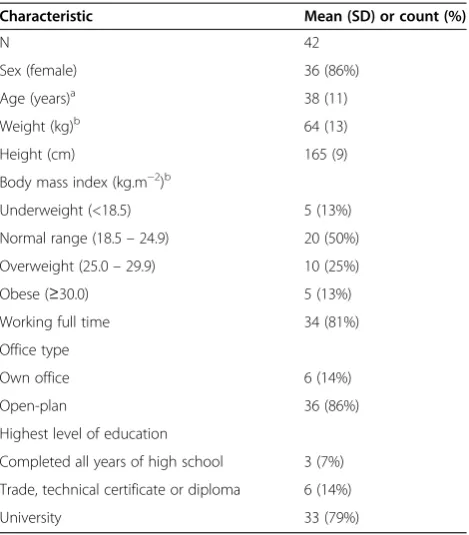
After emailing 71 staff members, 42 participants joined this study (response rate = 59%) (Table 1). At baseline, participants had a mean age of 38 years and mostly were female, employed full time, working in an open-plan of-fice, university educated, and of normal BMI. Participants’ work hours were similar across the three assessment pe-riods: mean (SD) hours worked per workday at assess-ments 1, 2 and 3 were 8.5 (2.2), 8.1 (2.6) and 8.3 (2.0), respectively.
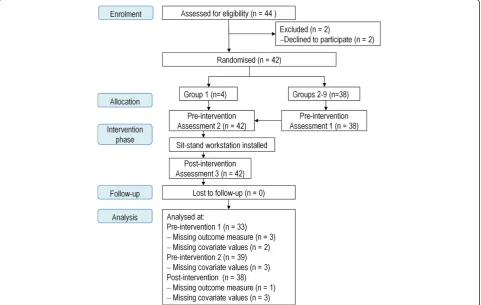
Figure 2 presents the flow of participants through the study. Three participants, who were missing age or BMI values, were not included in the analyses. Imputing values for these missing covariate values did not influ-ence the effect of the intervention on the adjusted esti-mates for the outcomes, nor did it change the effects age or BMI had on the outcome.
Changes in time spent sitting at work
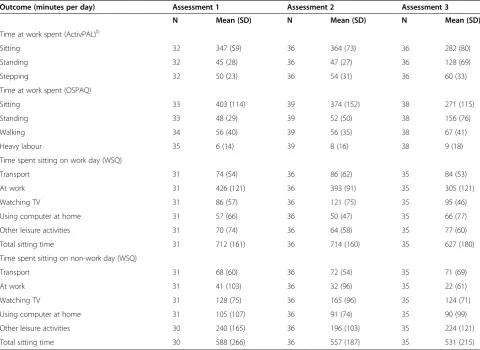
Table 2 presents the mean estimates for objectively assessed and self-reported time spent sitting, standing and stepping at work for the three study assessments. The first group to receive the intervention (n = 4) did not act as controls and, therefore, fewer participants were analysed at assessment 1.
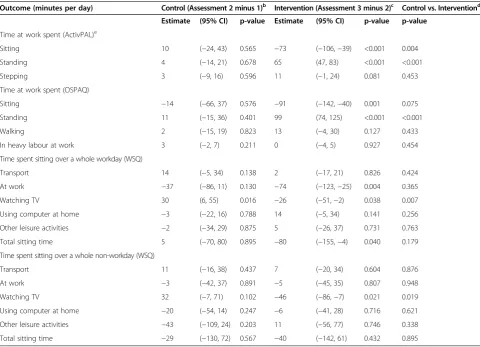
Table 3 shows the estimates of change in outcomes for the control and intervention conditions after adjusting for study group, measurement time and a range of covariates. The analyses for the control condition tested for differ-ences between assessments 1 and 2 (assessment 2 minus 1) and the intervention analyses tested for differences
between assessments 2 and 3 (assessment 3 minus 2). In the intervention condition, we observed statistically sig-nificant changes in participants’ objectively assessed and self-reported sitting and standing during work. Both ob-jectively measured and self-reported sitting time at work decreased while standing time increased. In the control condition, we did not find statistical differences in partici-pants sitting or standing during work by objective or self-reported measures. There were no changes in time spent stepping at work in both intervention and control condi-tions. The differences in change in objective time spent sitting and standing at work between the intervention and control conditions were significant (p = 0.004 and p < 0.001, respectively), while the intervention vs. control comparison was only significant for self-reported standing time at work (p < 0.001) and not for sitting time at work (p = 0.075).
Initial analyses with only adjustment for study group and measurement time (Additional file 1: Table S1) pro-duced the same pattern of results, except objectively measured stepping time at work increased significantly in the intervention condition (estimate, 13 min/day (95% CI: 1, 25), p = 0.035) but not in the control condition (estimate, 3 min/day (95%CI:−9,15), p = 0.645); however, the comparison between intervention and control was not significant (p = 0.316).
Table 1 Baseline characteristics for all Stand@Work participants
Characteristic Mean (SD) or count (%)
N 42
Sex (female) 36 (86%)
Age (years)a 38 (11)
Weight (kg)b 64 (13)
Height (cm) 165 (9)
Body mass index (kg.m−2)b
Underweight (<18.5) 5 (13%)
Normal range (18.5–24.9) 20 (50%)
Overweight (25.0–29.9) 10 (25%)
Obese (≥30.0) 5 (13%)
Working full time 34 (81%)
Office type
Own office 6 (14%)
Open-plan 36 (86%)
Highest level of education
Completed all years of high school 3 (7%)
Trade, technical certificate or diploma 6 (14%)
University 33 (79%)
a
Data missing for n = 1.
b
Data missing for n = 2.
Changes in time spent sitting over the whole day
For self-reported sitting time on a work day, we found significant reductions in total sitting time in the inter-vention condition but not in the control condition, al-though the difference between the two conditions was not significant (p = 0.179) (Table 3). There were also signifi-cant changes in self-reported time spent watching TV on a work day in both groups: we observed an increase in workday TV-viewing in the control condition and a reduc-tion in workday TV-viewing in the intervenreduc-tion condireduc-tion (between condition comparison, p = 0.007). Time spent watching TV on a non-workday was also significantly different between the intervention and control condi-tions (p = 0.019) with a decrease observed in the inter-vention condition and no change found in the control condition. There were no changes in self-reported sit-ting time in other domains on workdays or non-workdays. Preliminary analyses only adjusting for study group and measurement time yielded the same pattern of results (Additional file 1: Table S1).
Discussion
The Stand@Work pilot study adds to the current litera-ture around reducing sitting time at work and promoting
workplace wellness with evidence generated using a ran-domized controlled design in a resource-limited context. This study has shown that modifying the existing work-place environment by installing a sit-stand workstation is effective for reducing desk-based workers’sitting time at work, which also resulted in a similar reduction in total sitting time over the whole day in the short term. The re-ductions in sitting time were mainly accounted for by in-creases in time spent standing.
In Stand@Work, sitting time at work decreased in the intervention condition compared to the control condition (73 min/day and 74–91 min/day when measured object-ively and by self-report, respectobject-ively). These results are consistent with those from previous sit-stand workstation intervention studies which found that sitting time at work significantly decreased in the sit-stand workstation inter-vention versus a comparison condition: on average, reduc-tions in work time sitting of 66 min/day by self-report [26], and ranged from 33 min/day to 143 min/day by ob-jective measurement [23,25,27]. Our results are similar to those reported in the Neuhaus et al. RCT [27], which found that sitting time (measured by ActivPAL) reduced by 33 and 89 min/8-hr workday in a sit-stand workstation only condition and a multicomponent condition involving
organisation and individual level strategies, respectively, relative to the comparison group at three months follow-up. The mean change in objectively measured time spent sitting at work was about one hour less in this study com-pared to those reported in earlier sit-stand desk compari-son studies [23,25]. This may be explained by differences in intervention design and study sample: the intervention by Healy and colleagues had additional intervention com-ponents complementing the introduction of a sit-stand workstation [25], while the Alkhajah et al. study partici-pants consisted of sedentary behaviour researchers as intervention group participants which might have been a more motivated group [23].
Total sitting time over a workday declined in Stand@-Work participants during the intervention according to self-report. These results are partially consistent with those from one intervention study indicating that object-ively assessed sitting time decreased by over an hour on a whole day after using sit-stand workstations for one
week and three months [23]. Other sit-stand workstation trials did not examine their effects on sitting time over the whole day [24-26].
Based on self-reported time spent sitting in specific do-mains, the reduction in whole day sitting time in Stand@-Work appeared to be partly a result of a decrease in TV-viewing in the intervention compared to the con-trol condition. This reduction in TV-viewing is not easy to explain. It is unlikely that this was caused by variations in weather or television programming, as the intervention and control assessments took place simultaneously and measurement time was accounted for in the analyses. One might expect workers to compensate for less sitting at work with more sitting in other non-work domains [36], although compensation for occupational sitting with less sitting in leisure time has not been found in previous stud-ies [9,12,14]. Less time watching TV would be a welcome side effect of the intervention, as the average adult spends 85-90% of their leisure time sedentary [37,38], Table 2 Outcome measures at assessments 1, 2 and 3 for Stand@Worka
Outcome (minutes per day) Assessment 1 Assessment 2 Assessment 3
N Mean (SD) N Mean (SD) N Mean (SD)
Time at work spent (ActivPAL)b
Sitting 32 347 (59) 36 364 (73) 36 282 (80)
Standing 32 45 (28) 36 47 (27) 36 128 (69)
Stepping 32 50 (23) 36 54 (31) 36 60 (33)
Time at work spent (OSPAQ)
Sitting 33 403 (114) 39 374 (152) 38 271 (115)
Standing 33 48 (29) 39 52 (50) 38 156 (76)
Walking 34 56 (40) 39 56 (35) 38 67 (41)
Heavy labour 35 6 (14) 39 8 (16) 38 9 (18)
Time spent sitting on work day (WSQ)
Transport 31 74 (54) 36 86 (62) 35 84 (53)
At work 31 426 (121) 36 393 (91) 35 305 (121)
Watching TV 31 86 (57) 36 121 (75) 35 95 (46)
Using computer at home 31 57 (66) 36 50 (47) 35 66 (77)
Other leisure activities 31 70 (74) 36 64 (58) 35 77 (60)
Total sitting time 31 712 (161) 36 714 (160) 35 627 (180)
Time spent sitting on non-work day (WSQ)
Transport 31 68 (60) 36 72 (54) 35 71 (69)
At work 31 41 (103) 36 32 (96) 35 22 (61)
Watching TV 31 128 (75) 36 165 (96) 35 124 (71)
Using computer at home 31 105 (107) 36 91 (74) 35 90 (99)
Other leisure activities 30 240 (165) 36 196 (103) 35 224 (121)
Total sitting time 30 588 (266) 36 557 (187) 35 531 (215)
a
Excludes participants with missing covariate values (BMI and age).
b
ActivPAL analyses involved participants with at least 75% wear time at work, and who worked fulltime with at least 2 days of wear time at work or worked part time with at least 1 day of wear time at work.
leaving large potential for public health improvements. Before much value is placed on this finding, future studies should replicate this result.
Reducing desk-based workers’sitting time and increas-ing their activity time at work are likely to have cumulative physiological benefits over the course of a day [39,40]. In Stand@Work, participants reported sitting almost 12 hours over a whole workday (close to 6 h/day at work) pre-intervention, and reduced their sitting time, total and at work, by well over an hour in the interven-tion condiinterven-tion. Epidemiological evidence suggests that every hour of daily sitting time is associated with a 2% increase in all-cause mortality, and that the non-linear risk association increases to 5% for adults sitting >7 h/ day [2]. Additionally, even small changes in walking or stepping could be clinically meaningful. For example, Stand@Work participants increased their stepping time by 11 min/day in the intervention condition, although
this was not statistically significant. Laboratory evidence shows that breaking up prolonged periods of sitting (5–9 hours) with short walking breaks of light or moderate-intensity (84 sec–2 min) improved blood glucose and in-sulin levels in adults [41,42].
While the exact amount of sitting and light activity that is significant to health remains to be determined [1], it is important that researchers develop, test and refine strategies to reduce sitting time at work, such as sit-stand workstations and other occupational sitting reduc-tion approaches, including computer prompted standing and activity breaks [43,44]. Different approaches may have different effects on workers in a variety of desk-based work settings, additionally issues around the acceptability of sitting and standing to work as well as perceptions of choice (e.g., forced standing vs. optional standing) should be investigated. The sustainability and suitabil-ity of different approaches with respect to workplace Table 3 Adjusted estimates of change in outcomes for control and intervention conditions for Stand@Worka
Outcome (minutes per day) Control (Assessment 2 minus 1)b Intervention (Assessment 3 minus 2)c Control vs. Interventiond Estimate (95% CI) p-value Estimate (95% CI) p-value p-value
Time at work spent (ActivPAL)e
Sitting 10 (−24, 43) 0.565 −73 (−106,−39) <0.001 0.004
Standing 4 (−14, 21) 0.678 65 (47, 83) <0.001 <0.001
Stepping 3 (−9, 16) 0.596 11 (−1, 24) 0.081 0.453
Time at work spent (OSPAQ)
Sitting −14 (−66, 37) 0.576 −91 (−142,−40) 0.001 0.075
Standing 11 (−15, 36) 0.401 99 (74, 125) <0.001 <0.001
Walking 2 (−15, 19) 0.823 13 (−4, 30) 0.127 0.433
In heavy labour at work 3 (−2, 7) 0.211 0 (−4, 5) 0.927 0.454
Time spent sitting over a whole workday (WSQ)
Transport 14 (−5, 34) 0.138 2 (−17, 21) 0.826 0.424
At work −37 (−86, 11) 0.130 −74 (−123,−25) 0.004 0.365
Watching TV 30 (6, 55) 0.016 −26 (−51,−2) 0.038 0.007
Using computer at home −3 (−22, 16) 0.788 14 (−5, 34) 0.141 0.256
Other leisure activities −2 (−34, 29) 0.875 5 (−26, 37) 0.731 0.763
Total sitting time 5 (−70, 80) 0.895 −80 (−155,−4) 0.040 0.179
Time spent sitting over a whole non-workday (WSQ)
Transport 11 (−16, 38) 0.437 7 (−20, 34) 0.604 0.876
At work −3 (−42, 37) 0.891 −5 (−45, 35) 0.807 0.948
Watching TV 32 (−7, 71) 0.102 −46 (−86,−7) 0.021 0.019
Using computer at home −20 (−54, 14) 0.247 −6 (−41, 28) 0.716 0.621
Other leisure activities −43 (−109, 24) 0.203 11 (−56, 77) 0.746 0.338
Total sitting time −29 (−130, 72) 0.567 −40 (−142, 61) 0.432 0.895
a
Estimates adjusted for measurement time, study group, sex, age, BMI, office type, education level, and full time or part time work.
b
The control analyses tested the difference between assessments 1 and 2 (assessment 2 minus assessment 1).
c
The intervention analyses tested the difference between assessments 2 and 3 (assessment 3 minus assessment 2).
d
An F test was used to compare estimates between control and intervention conditions for each outcome.
e
design, employer costs and organizational support also remain to be established.
An encouraging finding of this study was that the par-ticipants substantially reduced their sitting time during work by simply providing them with a sit-stand worksta-tion and no addiworksta-tional support to actually use it. It seems that adding additional intervention components that include behavioural change techniques (e.g. self monitoring, goal setting, prompting, rewarding, etc.) might yield additional benefits. The studies by Neuhaus et al. [27] and Healy et al. [25] showed larger reductions in sitting time after supplementing the sit-stand worksta-tions with organisational and individual-level interven-tion components.
Strengths and limitations
The strengths of this study include having a randomized controlled cross over design, using objective measure-ment of sitting and standing, and having strong staff and management support for evaluation. The novel study de-sign made use of limited resources to inform organisa-tional decision making related to workplace wellness practices. Limitations include short term follow-up and a lack of blinding to study allocation, which was not possible due to the open plan office setup. Additional follow up would have strengthened results, but this was not possible as participants could only trial the sit-stand workstations for four weeks and we did not have the op-portunity to re-assess their behaviours at 12 months. Furthermore, Stand@Work involved a convenience sam-ple of participants working in a health-related field who were mostly female and had tertiary education levels, similar to previous sit-stand desk intervention studies [23,25-27]. Future exploration is needed to see whether these results would be found in other office/desk-based worker groups, such as those with non-tertiary educa-tion levels, in conjunceduca-tion with formative work to deter-mine the feasibility and acceptability of the sit-stand workstation as a strategy for other non-health related workplaces. For example, it has been reported that up-take of sit-stand workstation use varied depending on whether the devices were electronically or manually op-erated [28], while the‘hot’desk strategy only had partial uptake [24], even though people who used the sit-stand
‘hot’desk only used it in the standing position.
Given the increasing awareness about the potential health risks from extended occupational sitting, and the substantial focus on workplace wellness, these study find-ings can potentially inform employer decisions about en-vironmental approaches to reducing their employees’ sitting time at work. While the evidence on sitting, health and occupational outcomes is not yet sufficient to develop a business case for wide scale investment in sit-stand workstations; specifically, there is a need for ongoing
intervention evidence, conducted in a variety of office set-tings, to inform current policy and practice. Up front cost is a likely barrier for many workplaces to roll out this type of intervention on a larger scale, so demonstrating lon-ger term effectiveness is important. Evaluating other lower-cost behavioural strategies aimed at reducing ex-tended sitting at work is also warranted, to determine whether similar reductions in sitting time can be achieved. Investigating the effects of changing sitting behaviour on work-related outcomes, such as productivity, is required as well. From a policy perspective, the message to reduce occupational sitting time is additional to the existing evi-dence that supports ongoing investment in workplace physical activity promotion.
Conclusion
The Stand@Work study found that unprompted introduc-tion of sit-stand workstaintroduc-tions in the workplace can sub-stantially reduce sitting time in the short term. As the qualitative focus group results of the Stand@Work study have previously also shown the feasibility of sit-stand workstation usage [45], these workstations might have public and occupational health potential for an in-creasingly sedentary workforce. Future studies should focus on the longer term effectiveness of integrated sedentary be-haviour interventions based around sit-stand workstations.
Additional file
Additional file 1: Table S1.Partially adjusted estimates of change in outcomes for control and intervention conditions for [email protected]
Competing interests
The authors declare that they have no competing interests.
Authors’contributions
JYC conceived the study, participated in its design and coordination, assisted in analysing the data, and drafted the manuscript. MD, SD, and AS conceived the study, and participated in its design, coordination and data collection. AD analysed the data. AEB conceived the study, and participated in its design and coordination. HPvdP conceived the study, participated in its design and coordination, and assisted in drafting the manuscript. All authors read, revised, and approved the final manuscript.
Acknowledgements
We thank Dr Kris Rogers for advice on statistical analyses and processing Activpal data; Mrs Janelle McNicholas and Mrs Melissa Gwizd for contribution to data collection and study management; Ms Catherine Kiernan for data entry and focus group transcription; and the study participants and managers for their support of this research.
This research was supported by funding from Heart Foundation New South Wales, and Australian National Health and Medical Research Council Program Grant (#569940).
Author details 1
Prevention Research Collaboration, Sydney School of Public Health, University of Sydney, 92-94 Parramatta Road, Camperdown, NSW 2050, Australia.2Heart Foundation New South Wales, 3/80 William St, Sydney, NSW 2011, Australia.3Centre for Epidemiology and Evidence, New South Wales Ministry of Health, Locked Mail Bag 961, North Sydney, NSW 2059, Australia. 4Department of Public and Occupational Health, EMGO Institute for Health
and Care Research, VU University Medical Center, Van der Boechorststraat 7, 1081BT Amsterdam, The Netherlands.
Received: 24 February 2014 Accepted: 1 October 2014
References
1. Bauman AE, Chau JY, Ding D, Bennie J:Too much sitting and cardio-metabolic risk: an update of epidemiological evidence.Curr Cardiovasc Risk2013, doi:10.1007/s12170-013-0316-y.
2. Chau JY, Grunseit A, Chey T, Stamatakis E, Matthews C, Brown W, Bauman A, van der Ploeg HP:Daily sitting time and all-cause mortality: A meta-analysis.PLoS One2013,8(11):e80000.
3. Ford ES, Caspersen CJ:Sedentary behaviour and cardiovascular disease: a review of prospective studies.Int J Epidemiol2012,41:1338–1353. 4. Proper KI, Singh AS, van Mechelen W, Chinapaw MJM:Sedentary behaviors
and health outcomes among adults: A systematic review of prospective studies.Am J Prev Med2011,40:174–182.
5. Thorp AA, Owen N, Neuhaus M, Dunstan DW:Sedentary behaviors and subsequent health outcomes in adults: A systematic review of longitudinal studies, 1996–2011.Am J Prev Med2011,41:207–215. 6. van der Ploeg HP, Chey T, Korda RJ, Banks E, Bauman AE:Sitting time and
All-cause mortality risk in 222,497 Australian adults.Arch Intern Med2012, 172(6):494–500.
7. van Uffelen JGZ, Wong J, Chau JY, van der Ploeg HP, Riphagen I, Gilson N, Burton NW, Healy GN, Thorp AA, Clark BK, Gardiner PA, Dunstan D, Bauman A, Owen N, Brown WJ:Occupational sitting and health risks: A systematic review.Am J Prev Med2010,39:379–388.
8. Wilmot EG, Edwardson CL, Achana FA, Davies MJ, Gorely T, Gray LJ, Khunti K, Yates T, Biddle SJ:Sedentary time in adults and the association with diabetes, cardiovascular disease and death: systematic review and meta-analysis.Diabetologia2012,55:2895–2905.
9. Chau JY, van der Ploeg HP, Merom D, Chey T, Bauman AE:Cross-sectional associations between occupational and leisure-time sitting, physical activity and obesity in working adults.Prev Med2012,54:195–200. 10. Church TS, Thomas DM, Tudor-Locke C, Katzmarzyk PT, Earnest CP, Rodarte
RQ, Martin CK, Blair SN, Bouchard C:Trends over 5 decades in U.S. occupation-related physical activity and their associations with obesity.
PLoS One2011,6:e19657.
11. Brown WJ, Miller YD, Miller R:Sitting time and work patterns as indicators of overweight and obesity in Australian adults.Int J Obes Relat Metab Disord2003,27:1340–1346.
12. Jans MP, Proper KI, Hildebrandt VH:Sedentary behavior in Dutch workers: differences between occupations and business sectors.Am J Prev Med
2007,33:450–454.
13. Thorp AA, Healy GN, Winkler E, Clark BK, Gardiner PA, Owen N, Dunstan DW: Prolonged sedentary time and physical activity in workplace and non-work contexts: a cross-sectional study of office, customer service and call centre employees.Int J Behav Nutr Phys Act2012,9:128.
14. Tigbe WW, Lean MEJ, Granat MH:A physically active occupation does not result in compensatory inactivity during out-of-work hours.Prev Med
2011,53:48–52.
15. Chau JY, van der Ploeg HP, van Uffelen JG, Wong J, Riphagen I, Healy GN, Gilson ND, Dunstan DW, Bauman AE, Owen N, Brown WJ:Are workplace interventions to reduce sitting effective? A systematic review.Prev Med
2010,51:352–356.
16. Ebara T, Kubo T, Inoue T, Murasaki G-I, Takeyama H, Sato T, Suzumura H, Niwa S, Takanishi T, Tachi N:Effects of adjustable sit-stand VDT workstations on workers' musculoskeletal discomfort, alertness and performance.Ind Health2008,46:497–505.
17. Husemann B, Von Mach CY, Borsotto D, Zepf KI, Scharnbacher J: Comparisons of musculoskeletal complaints and data entry between a sitting and a sit-stand workstation paradigm.Hum Factors2009, 51:310–320.
18. Laestadius JG, Ye J, Cai X, Ross S, Dimberg L, Klekner M:The proactive approach-is it worthwhile? A prospective controlled ergonomic intervention study in office workers.J Occup Environ Med2009, 51:1116–1124.
19. Mathiassen SE:Diversity and variation in biomechanical exposure: what is it, and why would we like to know?Appl Ergon2006,37:419–427.
20. Roelofs A, Straker L:The experience of musculoskeletal discomfort amongst bank tellers who just sit, just stand or sit and stand at work.
Ergonomics2002,SA14:11–29.
21. Wilks S, Mortimer M, Nylén P:The introduction of sit–stand worktables; aspects of attitudes, compliance and satisfaction.Appl Ergon2006, 37:359–365.
22. Owen N, Sugiyama T, Eakin EE, Gardiner PA, Tremblay MS, Sallis JF:Adults' sedentary behavior: determinants and interventions.Am J Prev Med2011, 41:189–196.
23. Alkhajah TA, Reeves MM, Eakin EG, Winkler EA, Owen N, Healy GN:Sit–Stand workstations: a pilot intervention to reduce office sitting time.
Am J Prev Med2012,43:298–303.
24. Gilson ND, Suppini A, Ryde GC, Brown HE, Brown WJ:Does the use of standing 'hot' desks change sedentary work time in an open plan office?
Prev Med2012,54:65–67.
25. Healy GN, Eakin EG, LaMontagne AD, Owen N, Winkler EA, Wiesner G, Gunning L, Neuhaus M, Lawler S, Fjeldsoe BS:Reducing sitting time in office workers: Short-term efficacy of a multicomponent intervention.
Prev Med2013,57(1):43–48.
26. Pronk NP, Katz AS, Lowry M, Payfer JR:Reducing occupational sitting time and improving worker health: the take-a-stand project, 2011.
Prev Chronic Dis2012,9:110323.
27. Neuhaus M, Healy GN, Dunstan DW, Owen N, Eakin EG:Workplace sitting and height-adjustable workstations - a randomized controlled trial.Am J Prev Med2014,46:30–40.
28. Grunseit AC, Chau JY, van der Ploeg HP, Bauman A:"Thinking on your feet": A qualitative evaluation of sit-stand desks in an Australian workplace.
BMC Public Health2013,13:365.
29. Neuhaus M, Eakin EG, Straker L, Owen N, Dunstan DW, Reid N, Healy GN: Reducing occupational sedentary time: a systematic review and meta-analysis of evidence on activity-permissive workstations.Obes Rev2014, 15:822–838.
30. Torbeyns T, Bailey S, Bos I, Meeusen R:Active workstations to fight sedentary behaviour.Sports Med2014,44:1261–1273.
31. Grant PM, Ryan CG, Tigbe WW, Granat MH:The validation of a novel activity monitor in the measurement of posture and motion during everyday activities.Br J Sports Med2006,40:992–997.
32. Ryan CG, Grant PM, Tigbe WW, Granat MH:The validity and reliability of a novel activity monitor as a measure of walking.Br J Sports Med2006, 40:779–784.
33. Swartz AM, Rote AE, Cho YI, Welch WA, Strath SJ:Responsiveness of motion sensors to detect change in sedentary and physical activity behaviour.Br J Sports Med2014,48:1043–1047.
34. Chau JY, van der Ploeg HP, Dunn S, Kurko J, Bauman AE:Validity of the Occupational Sitting and Physical Activity Questionnaire (OSPAQ).
Med Sci Sports Exerc2012,44:118–125.
35. Chau JY, van der Ploeg HP, Dunn S, Kurko J, Bauman AE:A tool for measuring workers' sitting time by domain: the Workforce Sitting Questionnaire.Br J Sports Med2011,45:1216–1222.
36. Gomersall SR, Rowlands AV, English C, Maher C, Olds TS:The ActivityStat Hypothesis. The concept, the evidence and the methodologies.
Sports Med2013,43:135–149.
37. Chau JY, Merom D, Grunseit A, Rissel C, Bauman AE, van der Ploeg HP: Temporal trends in non-occupational sedentary behaviours from Australian Time Use Surveys 1992, 1997 and 2006.Int J Behav Nutr Phys Act2012,9:76.
38. van der Ploeg HP, Venugopal K, Chau JY, van Poppel MNM, Breedveld K, Merom D, Bauman AE:Population changes in non-occupational sedentary behaviors in the Netherlands between 1975 and 2005.Am J Prev Med
2013,44:382–387.
39. Tikkanen O, Haakana P, Pesola AJ, Häkkinen K, Rantalainen T, Havu M, Pullinen T, Finni T:Muscle activity and inactivity periods during normal daily life.PLoS One2013,8:e52228.
40. Straker L, Mathiassen SE:Increased physical work loads in modern work - a necessity for better health and performance?Ergonomics2009,52:1215–1225. 41. Peddie MC, Bone JL, Rehrer NJ, Skeaff CM, Gray AR, Perry TL:Breaking
prolonged sitting reduces postprandial glycemia in healthy, normal-weight adults: a randomized crossover trial.Am J Clin Nutr2013, 98:358–366.
sitting reduces postprandial glucose and insulin responses.Diabetes Care
2012,35:976–983.
43. Cooley D, Pedersen S:A pilot study of increasing nonpurposeful movement breaks at work as a means of reducing prolonged sitting.
J Environ Public Health2013, doi:10.1155/2013/128376.
44. Evans RE, Fawole HO, Sheriff SA, Dall PM, Grant PM, Ryan CG: Point-of-choice prompts to reduce sitting time at work: a randomized trial.Am J Prev Med2012,43:293–297.
45. Chau JY, Daley M, Srinivasan A, Dunn S, Bauman AE, van der Ploeg HP: Desk-based workers’perspectives on using sit-stand workstations: a qualitative analysis of the Stand@Work study.BMC Public Health2014, 14:752.
doi:10.1186/s12966-014-0127-7
Cite this article as:Chauet al.:The effectiveness of sit-stand workstations for changing office workers’sitting time: results from the Stand@Work randomized controlled trial pilot.International Journal of Behavioral Nutrition and Physical Activity201411:127.
Submit your next manuscript to BioMed Central and take full advantage of:
• Convenient online submission
• Thorough peer review
• No space constraints or color figure charges
• Immediate publication on acceptance
• Inclusion in PubMed, CAS, Scopus and Google Scholar
• Research which is freely available for redistribution
Submit your manuscript at www.biomedcentral.com/submit