Reviewable v1 Grant Proposal
SYNTHESYS+ Abridged Grant Proposal
Vincent Stuart Smith, Kristina Gorman , Wouter Addink , Christos Arvanitidis, Ana Casino, Katherine Dixey, Gabriele Dröge, Quentin Groom , Elspeth Margaret Haston, Donald Hobern , Sandra Knapp, Dimitrios Koureas , Laurence Livermore, Ole Seberg
‡ The Natural History Museum, London, United Kingdom § Naturalis Biodiversity Center, Leiden, Netherlands
| Distributed System of Scientific Collections - DiSSCo, Leiden, Netherlands ¶ Species 2000 Secretariat, Leiden, Netherlands
# Hellenic Centre for Marine Research, Heraklion, Greece ¤ Consortium of European Taxonomic Facilities, Brussels, Belgium
« Freie Universität Berlin, Botanic Garden and Botanical Museum, Berlin, Germany » Meise Botanic Garden, Meise, Belgium
˄Royal Botanic Garden Edinburgh, Edinburgh, United Kingdom ˅Global Biodiversity Information Facility, Copenhagen, Denmark ¦ International Barcode of Life, Canberra, Australia
ˀNatural History Museum of Denmark, Copenhagen, Denmark
Corresponding author: Vincent Stuart Smith ([email protected]) Received: 09 Sep 2019 | Published: 09 Sep 2019
Citation: Smith VS, Gorman K, Addink W, Arvanitidis C, Casino A, Dixey K, Dröge G, Groom Q, Haston EM, Hobern D, Knapp S, Koureas D, Livermore L, Seberg O (2019) SYNTHESYS+ Abridged Grant Proposal. Research Ideas and Outcomes 5: e46404. https://doi.org/10.3897/rio.5.e46404
Abstract
European natural history collections are a critical infrastructure for meeting the most important challenge humans face over the next 30 years – creating a sustainable future for ourselves and the natural systems on which we depend – and for answering fundamental scientific questions about ecological, evolutionary, and geological processes. Since 2004 SYNTHESYS has been an essential instrument supporting this community, underpinning new ways to access and exploit collections, harmonising policy and providing significant new insights for thousands of researchers, while fostering the development of new approaches to face urgent societal challenges. SYNTHESYS+ is a fourth iteration of this programme, and represents a step change in the evolution of this community. For the first time SYNTHESYS+ brings together the European branches of the global natural science organisations (GBIF https://www.gbif.org/, TDWG https://www.tdwg.org/, GGBN http:// www.ggbn.org/ggbn_portal/ and CETAF https://cetaf.org/) with an unprecedented number
‡ ‡ §,|,¶ # ¤
‡ « » ˄ ˅,¦
‡ §,| ‡ ˀ
of collections, to integrate, innovate and internationalise our efforts within the global scientific collections community. Major new developments addressed by SYNTHESYS+ include the delivery of a new virtual access programme, providing digitisation on demand services to a significantly expanded user community; the construction of a European Loans and Visits System (ELViS) providing, for the first time, a unified gateway to accessing digital, physical and molecular collections; and a new data processing platform (the Specimen Data Refinery), applying cutting edge artificial intelligence to dramatically speed up the digital mobilisation of natural history collections. The activities of SYNTHESYS+ form a critical dependency for DiSSCo - the Distributed System of Scientific Collections (https://dissco.eu/), which is the European Research Infrastructure for natural science collections, under the ESFRI umbrella. DiSSCo will undertake the maintenance and sustainability of SYNTHESYS+ products at the end of the programme.
Keywords
natural history collections, research infrastructure, global natural science, digitisation, collaboration, data standards, DiSSCo
Context
The world’s natural science collections are an extraordinary data vault – a vast mine of unseen and under-exploited information on the natural world, of critical relevance to addressing many of the big challenges facing science and society. For the past 15 years a consortium of natural science museums, botanic gardens, universities and businesses, led by the Natural History Museum, London, have coordinated a major project called
SYNTHESYS (Synthesis of Systematic Resources) to improve and expand access to natural science collections across Europe. SYNTHESYS, alongside related communities such as CETAF, TDWG and GBIF has been central to cross European efforts to structure activities, building a network of researchers and projects to unlock data associated with the hundreds of millions of specimens in European collections. Supporting more than 4,000 research projects, generating 4,500 publications, and aligning the policies, processes and ambitions of the European natural sciences collections community, SYNTHESYS has to date, had a transformative impact not only on the work of these institutions but also the wider research community, impacting topics as diverse as climate change and conservation to human health and agriculture.
the mass digitisation workflows necessary to support this effort. SYNTHESYS+ is also underpinning developments central to DiSSCo - the Distributed System of Scientific Collections, which is a successor programme involving more than 115 natural Science collections across Europe.
This paper is an abridged version of the original proposal. It contains the overarching scientific case for SYNTHESYS+, alongside a description of our major activities. Differences between this paper and the full “Description of Work” include redactions of financial and personal information alongside our risk analysis; inclusion of additional citations that could not be included in the original proposal due to space limitations; minor edits to improve readability; and the inclusion of higher resolution versions of the figures. The abridged proposal is published here to frame the publication of future outputs from SYNTHESYS+, and to serve as a potential model for other global efforts to help coordinate and strengthen related activities. Across the globe, a series of major programmes are underway to unlocking the estimated 1.5 Billion specimens contained in natural science collections across the world. We hope SYNTHESYS+ will inspire the next generation of cross-continental activities, strengthening coordination as we work toward a common global infrastructure to support access and research on the natural science collections of the world.
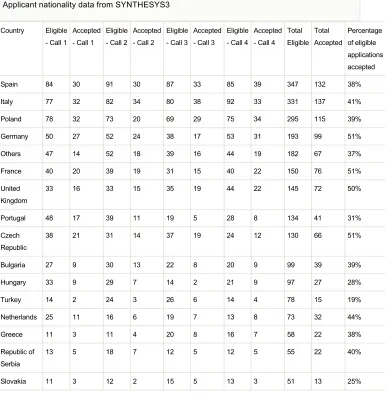
List of beneficiaries
1. Natural History Museum (NHM), established in CROMWELL ROAD, LONDON SW7 5BD, United Kingdom
2. Naturhistorisches Museum Wien (NHMW), established in BURGRING 7, WIEN 1010, Austria
3. Institut royal des Sciences naturelles de Belgique (RBINS), established in RUE VAUTIER 29, BRUXELLES 1000, Belgium
4. Musée royal de l'Afrique centrale (RMCA), established in LEUVENSESTEENWEG 13, TERVUREN 3080, Belgium
5. Agentschap Plantentuin Meise (BGM), established in NIEUWELAAN 38, MEISE 1860, Belgium
6. Consortium of European Taxonomic Facilities (CETAF), established in RUE VAUTIER 29, BRUXELLES 1000, Belgium
7. Národní muzeum-National Museum NM (NMP), established in VACLAVSKE NAM 68, PRAHA 11579, Czech Republic
8. Freie Universität Berlin (BGBM), established in KAISERSWERTHER STRASSE 16-18, BERLIN 14195, Germany
9. Museum für Naturkunde - Leibniz-Institut für Evolutions- und Biodiversitätsforschung an der Humboldt-Universität zu Berlin (MFN), established in INVALIDENSTRASSE 43, BERLIN 10115, Germany
10. Senckenberg Gesellschaft für Naturforschung (SGN), established in SENCKENBERGANLAGE 25, FRANKFURT 60325, Germany
11. Staatliches Museum für Naturkunde Stuttgart (SMNS), established in ROSENSTEIN 1, STUTTGART 70191, Germany
12. Zoologisches Forschungsmuseum Alexander Koenig (ZFMK), established in ADENAUERALLEE 160, BONN 53113, Germany
13. Københavns Universitet (UCPH), established in NORREGADE 10, KOBENHAVN 1165, Denmark
14. Global Biodiversity Information Facility (GBIF), established in Universitetsparken 15, Copenhagen 2100, Denmark
15. Agencia Estatal Consejo Superior de Investigaciones Científicas (CSIC), established in CALLE SERRANO 117, MADRID 28006, Spain
16. Helsingin yliopisto (LUOMUS), established in FABIANINKATU 33, HELSINGIN YLIOPISTO 00014, Finland
17. Muséum national d'Histoire naturelle (MNHN), established in RUE CUVIER 57, PARIS 75005, France
18. A.2.I.A. ANALYSE D IMAGE ET INTELLIGENCE ARTIFICIELLE - ARTIFICIAL INTELLIGENCE AND IMAGE ANALYSIS SA (A2iA), established in RUE DE LA BIENFAISANCE 37-39, PARIS 75008, France
19. Hellenic Centre for Marine Research (HCMR), established in LEOFOROS ATHENS SOUNIO 46 7KM, ATTIKIA ANAVISSOS 19013, Greece
20. ΕΘΝΙΚΟΔΙΚΤΥΟΕΡΕΥΝΑΣ ΤΕΧΝΟΛΟΓΙΑΣΑΕ / Ethniko Diktyo Erevnas Technologias A.E. (GRNET), established in LEOFOROS KIFISIAS 7, ATHINA 11523, Greece
21. Magyar Természettudományi Múzeum (HNHM), established in BAROSS UTCA 13, BUDAPEST 1088, Hungary
22. The Hebrew University of Jerusalem - םילשוריבתירבעההטיסרבינואה (HUJI), established in GIVAT RAM CAMPUS, JERUSALEM 91904, Israel
23. Stichting Naturalis Biodiversity Center (Naturalis), established in DARWINWEG 2, LEIDEN 2333CR, Netherlands
24. Picturae BV (Picturae), established in DE DROOGMAKERIJ 12, HEILOO 1851 LX, Netherlands
25. Stichting International Working Group on Taxonomic Databases (TDWG Europe), established in ZANDHEUVEL 52B, OOSTERHOUT 4901 HW, Netherlands
26. Naturhistoriska riksmuseet(NRM), established in Frescativägen 40, STOCKHOLM SE 114 18, Sweden
27. Göteborgs universitet (UGOT-GGBC), established in VASAPARKEN, GOETEBORG 405 30, Sweden
28. Royal Botanic Garden Edinburgh (RBGE), established in INVERLEITH ROW 20A, EDINBURGH EH3 5LR, United Kingdom
29. Royal Botanic Gardens, Kew (RBGK), established in ROYAL BOTANIC GARDENS KEW, RICHMOND TW93AB, United Kingdom
30. DIGIRATI LIMITED (Digirati), established in THE HUB, 70 PACIFIC QUAY, GLASGOW G51 1EA, United Kingdom
31. The University of Manchester (UNIMAN), established in OXFORD ROAD, MANCHESTER M13 9PL, United Kingdom
32. Smithsonian Institution (SmithsonianGGBN), established in JEFFERSON DRIVE 1000, WASHINGTON DC 20560, United States, as ‘beneficiary not receiving EU funding’
† The project coordinator, *this project partner formally withdrew from the project in February 2019, ‡ beneficiary not receiving EU funding. Data also available in Table 3.
*
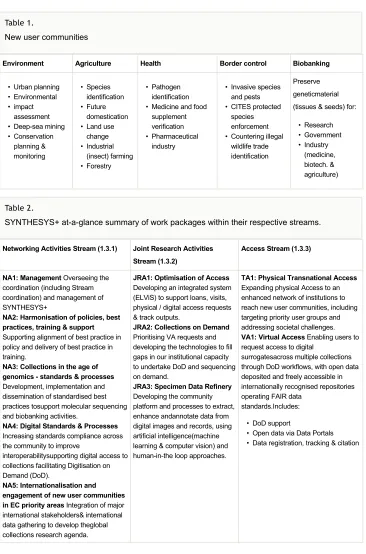
Environment Agriculture Health Border control Biobanking
• Urban planning • Environmental • impact
assessment • Deep-sea mining • Conservation planning & monitoring • Species identification • Future domestication • Land use
change • Industrial (insect) farming • Forestry • Pathogen identification • Medicine and food
supplement verification • Pharmaceutical
industry
• Invasive species and pests • CITES protected
species enforcement • Countering illegal
wildlife trade identification
Preserve geneticmaterial (tissues & seeds) for:
• Research • Government • Industry (medicine, biotech. & agriculture)
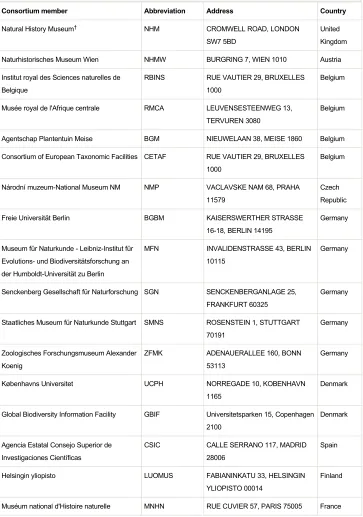
Networking Activities Stream (1.3.1) Joint Research Activities Stream (1.3.2)
Access Stream (1.3.3)
NA1: Management Overseeing the coordination (including Stream coordination) and management of SYNTHESYS+
NA2: Harmonisation of policies, best practices, training & support
Supporting alignment of best practice in policy and delivery of best practice in training.
NA3: Collections in the age of genomics - standards & processes
Development, implementation and dissemination of standardised best practices tosupport molecular sequencing and biobanking activities.
NA4: Digital Standards & Processes
Increasing standards compliance across the community to improve
interoperabilitysupporting digital access to collections facilitating Digitisation on Demand (DoD).
NA5: Internationalisation and engagement of new user communities in EC priority areas Integration of major international stakeholders& international data gathering to develop theglobal collections research agenda.
JRA1: Optimisation of Access
Developing an integrated system (ELViS) to support loans, visits, physical / digital access requests & track outputs.
JRA2: Collections on Demand
Prioritising VA requests and developing the technologies to fill gaps in our institutional capacity to undertake DoD and sequencing on demand.
JRA3: Specimen Data Refinery
Developing the community platform and processes to extract, enhance andannotate data from digital images and records, using artificial intelligence(machine learning & computer vision) and human-in-the loop approaches.
TA1: Physical Transnational Access
Expanding physical Access to an enhanced network of institutions to reach new user communities, including targeting priority user groups and addressing societal challenges.
VA1: Virtual Access Enabling users to request access to digital
surrogatesacross multiple collections through DoD workflows, with open data deposited and freely accessible in internationally recognised repositories operating FAIR data
standards.Includes: • DoD support
• Open data via Data Portals • Data registration, tracking & citation
Table 1.
New user communities
Table 2.
Consortium member Abbreviation Address Country
Natural History Museum NHM CROMWELL ROAD, LONDON
SW7 5BD
United Kingdom Naturhistorisches Museum Wien NHMW BURGRING 7, WIEN 1010 Austria Institut royal des Sciences naturelles de
Belgique
RBINS RUE VAUTIER 29, BRUXELLES 1000
Belgium
Musée royal de l'Afrique centrale RMCA LEUVENSESTEENWEG 13, TERVUREN 3080
Belgium
Agentschap Plantentuin Meise BGM NIEUWELAAN 38, MEISE 1860 Belgium Consortium of European Taxonomic Facilities CETAF RUE VAUTIER 29, BRUXELLES
1000
Belgium
Národní muzeum-National Museum NM NMP VACLAVSKE NAM 68, PRAHA 11579
Czech Republic Freie Universität Berlin BGBM KAISERSWERTHER STRASSE
16-18, BERLIN 14195
Germany
Museum für Naturkunde - Leibniz-Institut für Evolutions- und Biodiversitätsforschung an der Humboldt-Universität zu Berlin
MFN INVALIDENSTRASSE 43, BERLIN 10115
Germany
Senckenberg Gesellschaft für Naturforschung SGN SENCKENBERGANLAGE 25, FRANKFURT 60325
Germany
Staatliches Museum für Naturkunde Stuttgart SMNS ROSENSTEIN 1, STUTTGART 70191
Germany
Zoologisches Forschungsmuseum Alexander Koenig
ZFMK ADENAUERALLEE 160, BONN 53113
Germany
Københavns Universitet UCPH NORREGADE 10, KOBENHAVN 1165
Denmark
Global Biodiversity Information Facility GBIF Universitetsparken 15, Copenhagen 2100
Denmark
Agencia Estatal Consejo Superior de Investigaciones Científicas
CSIC CALLE SERRANO 117, MADRID 28006
Spain
Helsingin yliopisto LUOMUS FABIANINKATU 33, HELSINGIN YLIOPISTO 00014
Finland
Muséum national d'Histoire naturelle MNHN RUE CUVIER 57, PARIS 75005 France †
Table 3.
Consortium member Abbreviation Address Country
A.2.I.A. ANALYSE D IMAGE ET INTELLIGENCE ARTIFICIELLE -ARTIFICIAL INTELLIGENCE AND IMAGE ANALYSIS SA
A2iA RUE DE LA BIENFAISANCE 37-39, PARIS 75008
France
Hellenic Centre for Marine Research HCMR LEOFOROS ATHENS SOUNIO 46 7KM, ATTIKIA ANAVISSOS 19013
Greece
ΕΘΝΙΚΟΔΙΚΤΥΟΕΡΕΥΝΑΣΤΕΧΝΟΛΟΓΙΑΣ ΑΕ / Ethniko Diktyo Erevnas Technologias A.E.
GRNET LEOFOROS KIFISIAS 7, ATHINA 11523
Greece
Magyar Természettudományi Múzeum HNHM BAROSS UTCA 13, BUDAPEST 1088
Hungary
The Hebrew University of Jerusalem
-םילשוריבתירבעההטיסרבינואה
HUJI GIVAT RAM CAMPUS, JERUSALEM 91904
Israel
Stichting Naturalis Biodiversity Center Naturalis DARWINWEG 2, LEIDEN 2333CR Netherlands
Picturae BV Picturae DE DROOGMAKERIJ 12, HEILOO
1851 LX
Netherlands
Stichting International Working Group on Taxonomic Databases
TDWG Europe ZANDHEUVEL 52B, OOSTERHOUT 4901 HW
Netherlands
Naturhistoriska riksmuseet NRM Frescativägen 40, STOCKHOLM SE 114 18
Sweden
Göteborgs universitet UGOT-GGBC VASAPARKEN, GOETEBORG 405 30
Sweden
Royal Botanic Garden Edinburgh RBGE INVERLEITH ROW 20A, EDINBURGH EH3 5LR
United Kingdom Royal Botanic Gardens, Kew RBGK ROYAL BOTANIC GARDENS
KEW, RICHMOND TW9 3AB
United Kingdom DIGIRATI LIMITED Digirati THE HUB, 70 PACIFIC QUAY,
GLASGOW G51 1EA
United Kingdom The University of Manchester UNIMAN OXFORD ROAD, MANCHESTER
M13 9PL
United Kingdom Smithsonian Institution SmithsonianGGBN JEFFERSON DRIVE 1000,
WASHINGTON DC 20560
United States *
1. Excellence
1.1 Objectives
Summary
The world’s natural history (NH) collections contain at least 2 billion specimens, of which an estimated 55% reside in Europe (Ariño 2010). The European collections are a major research resource representing 80% of the World’s bio- and geo-diversity. Collected over 500 years of human exploration and still constantly expanding, these are a vast and underused repository of information about the natural world. They provide a unique data source and research tool to address the most important challenge that humans face over the next 30 years - creating a sustainable future for ourselves and the natural systems on which we depend and for answering fundamental scientific questions about key ecological, evolutionary, and geological processes and how they interact to shape our changing planet (Suarez and Tsutsui 2004).
SYNTHESYS+ aims to unify operations and access for European natural science collections. The longevity and distributed nature of biodiversity collections has inevitably led to divergence in the procedures and standards, even though overall goals of these organisations are well aligned. SYNTHESYS+ is designed to address this problem. The workplan will transform the community into an integrated, data-driven, pan-European research infrastructure (RI), organising the information about the natural environment contained in these collections, and make it universally accessible and useful to researchers tackling scientific and societal challenges and to the wider community.
The overall objectives of SYNTHESYS+ are to:
1. transform the fragmented access model to a central facility and support new
forms of virtual access within an integrated, data-driven, pan-European research infrastructure;
2. coordinate formal and professional training activities to enhance data skills
for scientists;
3. run a robust research programme, enabling scientists to benefit from new
digital and genomic RIs to deliver data-driven scientific innovation;
4. develop common policies, harmonising digital and molecular processes in
alignment to national and international standards;
5. work towards the establishment of a shared international vision of bringing
together all global natural science collections as an integrated RI.
development of new approaches to face urgent societal challenges. SYNTHESYS+ acts as a fourth iteration of this programme as it evolves into a sustainable and independent RI through the DiSSCo (Distributed System of Scientific Collections) ESFRI initiative. As the volume and diversity of information derived from natural science collections exponentially increase, so does the need for infrastructures that provide access to large volumes of linked and precise data from these collections. SYNTHESYS+ brings an unprecedented number of collections institutions together with the European branches of the global natural science organisations to address this challenge.
Background
Data derived from European natural science collections underpin countless discoveries and innovations, including tens of thousands of scholarly publications and official reports annually (used to support legislative and regulatory processes relating to health, food, security, sustainability and environmental change); inventions and products critical to our bio-economy; databases, maps and descriptions of scientific observations; instructional material for students, as well as educational material for the public.
In the last decades, research practice has changed dramatically. Remote sensing, rapid identification and molecular approaches allow us to efficiently monitor the changing world and to better understand the causes of those changes (Kelling et al. 2009; Shokralla et al. 2012). As the volume and diversity of information derived from natural science collections is exponentially increasing, so is the need for adequate infrastructures that go further than providing simple access to different data classes. A holistic approach is now required (Fig. 1) to effectively underpin the entire research lifecycle and provide open access to mass, linked and precise data (Hardisty et al. 2013).
New technologies are providing opportunities to combine the data held in NH collections with other sources on species, genomes, phenotypes, geography, and the environment in ways that drive novel, integrative research. Prime examples of this are (1) the huge compilation of data on the distribution of living species that is held by the Global Biodiversity Informatics Facility (GBIF), (2) the genetic sequence information that is collated by GenBank and iBOL and (3) the data on morphology held by MorphoBank and TraitBank. NH specimens are the primary link between disparate biological and geological data. Mobilising these data through digitisation and genomic approaches, coupled with linking these datasets across domains, provides an incredibly powerful research tool for understanding the past, present and future of the natural world.
SYNTHESYS+ will address these shortfalls, unlocking information in NH collections and linking it to other datasets to support innovative scientific research and to address major socio- economic challenges.
Specific Objectives
To accomplish the project aim of unifying collections operations and access, SYNTHESYS + will:
[1] Invest in the development of balanced multi-modal access to collections to reach
new and expanded user communities, through delivery of an integrated programme of
transnational (TA) and virtual (VA) access, incorporating users from new geographic areas as well as previously unrepresented research domains.(measured by delivery of 7,017 days of TA prioritising new communities, as well as successful delivery of VA calls and tracking of outputs from both)
[2] Improve researchers’ capacity to use collection information to tackle complex
scientific challenges, achieved by delivering a unified digital gateway to European collections, massively expanding the proportion of digital collections across Europe, and developing roadmaps for implementation of priority infrastructure components across Europe.(measured by delivery of the European Loans and Visits System (ELViS), new digital content and an infrastructure roadmap white paper)
[3] Support the interplay of social and cultural aspects of collection data by developing a pan European process for multi-stakeholder prioritisation of digitisation
Figure 1.
activities and supporting the development of new categories of collections user.(measured by delivery of a new multi-stakeholder forum and tracking of new research uses of collections)
[4] Bring scientific collections into the information age by investing in a linked open data approach across our institutional data portals and implementation of common standards for molecular, digital and image collections.(measured by adoption of these standards and processes across the consortium)
[5] Develop and implement targeted joint research agendas supporting application of
cutting edge artificial intelligence technologies to aid the mass mobilisation of collections data, new molecular processes to improve the speed and efficiency of generating molecular data from collections, and the development of high throughput 3D digitisation processes.(measured by the number of specimens processed by these three new platforms and technologies)
[6] Identify collection data at European level and improve curation efficiency, through developing collection data dashboards showing the contents of institutional collections and harmonising best practice in the provision of molecular and digital services.(measured by delivery of the dashboards and efficiencies generated by adopting common molecular and digital standards across the consortium)
[7] Build and support new paths to industrial innovation by incorporating a high proportion of SME's in the most technically innovative project components (ELViS and the Specimen Data Refinery) and engaging industry as users of biodiversity data infrastructure through the new multi-stakeholder forum.(measured by the strength of SME partnerships and SME exploitation of collections data)
[8] Enhance digital skills and competencies, tooling-up researchers to navigate the
big data domain by delivering focused training activities.(measured by the development
and participation in the training programmes within and beyond the consortium and through the adoption of project platforms and services)
[9] Increase the engagement of society by providing alternative ways of benefiting
from the national investments in collections and internationalising this effort, to be
delivered via foresight studies, building on the 2018 Global Biodiversity Information Outlook, engaging European and international experts, including data infrastructure such as EUDAT, EGI and the European Open Science Cloud.(measured by the breadth and level of participation in the foresight studies and the delivery of white papers covering the interoperability and partnership potential for working with other infrastructures)
By achieving these objectives, SYNTHESYS+, alongside related initiatives (ICEDIG;
icedig.eu) will lay the groundwork for operational activities of the new integrated organisation DiSSCo (Distributed System of Scientific Collections, see letter of support) that is the European NH communities ESFRI initiative. DiSSCo will take on the
management and continued development of activities at the end of SYNTHESYS+,
physical, digital and molecular access to 1.5 billion collection objects, and to consolidate the activities and governance of the participating organisations. When successful, the natural science community will be a fully enabled player in digital society, providing fundamental scientific data on the natural world, which will be freely and openly available for all.
Europe: a global leader
Natural science collections, which exist in all the world’s countries, are some of the oldest RIs. Within Europe they include large institutions such as the Natural History Museum London and the Muséum national d'Histoire naturelle, both established in the 18th century, as well as many natural science museums, universities, botanical gardens and research centres, with their associated biological collections and research expertise. These institutions have always been open for all scientists and form the foundation of bio-and geo-diversity science that studies life on Earth, past and present. Initially they addressed fundamental questions in systematics, biogeography and conservation. While this remains a core mission, in recent decades European collections have taken on even greater significance (David and Taquet 2017). Many of them have turned their attention to tackling the most important challenge that humans face over the next 30 years – the
Anthropocene Challenge –mapping a sustainable future for ourselves and the natural
system on which we depend. This is a key moment for humanity; the global human population is predicted to peak in 2050, a fact that makes the next 30 years unique in the 200,000 year history of our species and the 10,000 year history of our civilisations. In this context, NH collections are a key resource that can bring together human decisions for the short- to medium-term with an understanding of the mechanisms that determine the long-term impacts of environmental change.
In support of this mission, European collections have a long history of working with associated e-infrastructures for accessing biodiversity data. For example, global organisations such as GBIF, as well as other related initiatives such as the Catalogue of Life, the Biodiversity Heritage Library, the Encyclopedia of Life, the International
Barcode of Life and the Biodiversity Information Standards organisation TDWG all
The low proportion of European museum specimens that are digitally accessible is a critical gap for achieving this vision of integration and accessibility. Museums and botanic gardens have keen interest in digitising their collections (Ang et al. 2013, Balke et al. 2013). The sheer magnitude of the task of digitising collections, however, is daunting. For example, with traditional methods, working one specimen at a time, one person can image and completely digitise the data associated with 50 specimens in a working day, with a basic cost of about 5€ per specimen (Koureas 2017) . It would thus take 100,000 person years to digitise one billion specimens,with a cost of 5€ billion. Organising such a task is beyond the capacity of individual institutions. What is needed is the transformation of a dispersed and fragmented access model to an integrated, data-driven RI that will bring the natural science collections into the information age, unifying access to the European collections and facilitating innovations that streamline digitisation of physical collections. This new RI project, the Distributed System of Scientific Collections (DiSSCo;
dissco.eu), was accepted for inclusion in the 2018 ESFRI roadmap.
The user base
There is a wide range of traditional and new user groups for natural science collections. Conventionally, this community includes all researchers engaged in discovering, describing and interpreting life on Earth, both past and present, as well as researchers studying the geological diversity of the planet. According to recent survey data from the DiSSCo initiative (Casino et al. 2018), circa 16,000 researchers travel every year to physically access European natural scientific collections, and 800k objects are packed and shipped internationally (at an annual public cost of more than €70M). The majority of these specimens form part of life and earth science collections. For example, European collections hold circa 80% of the 2 million species presently described and are at the forefront of efforts to describe what is estimated to be approximately 6 million new species that await discovery. NH institutes also include extensive palaeontological and mineralogical collections, including concentrations of rock and ore samples, making them a valuable resource for the field of economic geology; exceptional meteorite collections used to study the origins of our solar system and how meteorite impacts could affect our future; ocean bottom deposits, critical for studies of the ocean and ocean floor, including research looking at global change, climatic warming and marine pollution; as well as extensive gem collections.
These extraordinary collections are physically distributed across institutions, but when taken together they present an unparalleled source of scientific evidence about the natural environment. They can be conceptually viewed along two fundamental time scales:
1. Deep Time: the dynamic history of change in the geology and life of our planet,
2. The Anthropocene: the recent changes in biodiversity and ecosystem function resulting from the impact of modern humans on land use and resource exploitation, including species extinction, shifts in the distribution and abundance of species, climate change, and the emergence of new pests and diseases.
Collections are used to research a wide range of major scientific and socio-economic areas including:
• Biodiversity discovery and conservation
• The genomic basis for the diversity of life
• Reconstructing the Tree of Life for all living and extinct species
• Understanding the co-evolution of Earth-life systems
• Modelling environmental, biotic and climatic change over the history of life
• Control of neglected and emerging tropical diseases and invasive species
• Ensuring sustainable agriculture and supply of raw materials
• Development of new diagnostic tools for biomedicine
The unprecedented taxonomic, geographic, stratigraphic and historical coverage gathered together within these collections, coupled with their increasing digital accessibility, is opening them up to entirely new user communities. These users are increasingly drawn to the time series represented within these collections, to make predictions about the sustainable exploitation of bio- and geo-diversity that inform practical and policy decisions (Table 1),
Through innovative dissemination activities, SYNTHESYS+ will work closely with stakeholder organisations to promote the breadth of research uses for collections, highlighting their scientific and societal value.
1.2 Relation to the work programme
SYNTHESYS+ addresses the needs of the NH collections community in the environmental and earth sciencesdomain, as identified in topic INFRAIA-01-2018-2019: Integrating Activities for Advanced Communities. Ourworkplan will integrate and improve access to an expanded network of European and eligible third party NHcollections, and to their related instrumentation facilities, by:
• expanding the user-base for NH collections data, by targeting access for new
user groups such as those working in food and agriculture, medicine and health;
• developing innovative research services to meet the needs of a broader scientific community of users, targeting those addressing societal challenge
topics in areas such as climate and food security;
• improving collections accessibility to a wider range of scientists, by
expanding our TA programme and providing a new VA service;
activities with the work-plans of leading global initiatives within the NH collections community.
SYNTHESYS+ builds on the work of prior SYNTHESYS projects that began to address the fragmentation of European collections. Through SYNTHESYS+ and its development under the preparatory phase of DiSSCo we will develop a unified and sustainable service that provides a one stop shop for European collections, collections data and the associated expertise.
An advanced community of key RIs
SYNTHESYS+ builds on strong foundations. The natural science collections in Europe have been working together for 20 years, initially through CETAF, and on a global scale as leading partners in a series of international initiatives, including Scientific Collections International (SciColl) with the mission to increase the use and impact of scientific collections for interdisciplinary research and societal benefits. The collective experience of partner institutions as sustained RIs spans several centuries. They directly employ more than 1,000 scientists, annually receive circa 16,000 scientific visitors (30-40% international), and have more than 100,000 scientific specimens on loan each year. As museums and botanical gardens, these institutes attract more than 10 million public visitors, inaddition to 25 million web visitors annually.
SYNTHESYS+ partners are home to cutting edge instrumentation, employing methodologies such as computer tomography, scanning electron microscopy, ultramicrotomy, X-ray fluorescence and X-ray diffraction, 3D imaging and mass spectrometry. Most include molecular biology laboratories and some include genomic service centres, often associated with partner locations that are operated by research consortia that facilitate interdisciplinary research and joint programming.
The natural science collections community has been described by the European
Commission as a “super-advanced community”, successfully implementing a series of
I3 projects including three SYNTHESYS projects (2004-2018), to expand and enhance user access, as well undertaking a series of joint research activities. These projects have significantly enhanced the capacity of the consortium to interoperate, thus streamlining and enhancing user access. The larger community has also successfully initiated several EC FP supported projects focusing on scientific collections, including BioCASE, EDIT, EU BON, OpenUp!, PESI, ViBRANT and pro-iBiosphere.
Widening Transnational Access (TA)
4,164 projects and approximately 4,000 research outputs to date (Fig. 2, Table 4). Recent examples funded from SYNTHESYS3 include projects to understand the distribution and transmission of West Nile Virus from mosquito collections (AT-TAF-3844); indicators of plastic and metal pollution by studying the dental and skeletal pathology of marine mammal collections (DK-TAF-5825); archaeological studies on the use of flax products for textile and oil production in ancient societies (DE-TAF-3837); studies on 16th century Spanish and Portuguese botanical illustrations to identify cultural links between the two countries (ES-TAF-3724); detection of contaminant seeds in Sardinian irrigated crops to decrease the impact of alien plant species (GB-TAF-4276); and the detection and timing of Iron oxide-copper-gold type mineralization in the SW East European craton to assess mining and mineral potential (SE-TAF-7040).
Country Eligible - Call 1
Accepted - Call 1
Eligible - Call 2
Accepted - Call 2
Eligible - Call 3
Accepted - Call 3
Eligible - Call 4
Accepted - Call 4
Total Eligible
Total Accepted
Percentage of eligible applications accepted
Spain 84 30 91 30 87 33 85 39 347 132 38%
Italy 77 32 82 34 80 38 92 33 331 137 41%
Poland 78 32 73 20 69 29 75 34 295 115 39%
Germany 50 27 52 24 38 17 53 31 193 99 51%
Others 47 14 52 18 39 16 44 19 182 67 37%
France 40 20 39 19 31 15 40 22 150 76 51%
United Kingdom
33 16 33 15 35 19 44 22 145 72 50%
Portugal 48 17 39 11 19 5 28 8 134 41 31%
Czech Republic
38 21 31 14 37 19 24 12 130 66 51%
Bulgaria 27 9 30 13 22 8 20 9 99 39 39%
Hungary 33 9 29 7 14 2 21 9 97 27 28%
Turkey 14 2 24 3 26 6 14 4 78 15 19%
Netherlands 25 11 16 6 19 7 13 8 73 32 44%
Greece 11 3 11 4 20 8 16 7 58 22 38%
Republic of Serbia
13 5 18 7 12 5 12 5 55 22 40%
Slovakia 11 3 12 2 15 5 13 3 51 13 25%
Table 4.
Country Eligible - Call 1
Accepted - Call 1
Eligible - Call 2
Accepted - Call 2
Eligible - Call 3
Accepted - Call 3
Eligible - Call 4
Accepted - Call 4
Total Eligible
Total Accepted
Percentage of eligible applications accepted
Romania 14 1 15 4 7 2 14 4 50 11 22%
Croatia 12 5 11 4 10 2 10 6 43 17 40%
Belgium 8 4 17 7 6 2 10 8 41 21 51%
Austria 7 3 9 5 16 3 7 1 39 12 31%
Denmark 5 3 6 2 10 2 11 3 32 10 31%
Israel 7 2 8 3 7 2 8 7 30 14 47%
Norway 2 0 4 2 5 2 10 5 21 9 43%
Switzerland 4 1 7 2 5 2 3 2 19 7 37%
Sweden 4 0 4 1 4 3 7 1 19 5 26%
Lithuania 2 1 5 2 3 1 5 2 15 6 40%
Finland 4 1 4 1 2 1 1 0 11 3 27%
Ireland 1 1 1 0 4 1 4 1 10 3 30%
Macedonia 3 3 3 1 3 2 1 1 10 7 70%
Latvia 0 0 3 0 4 2 2 0 9 2 22%
Estonia 1 0 4 2 3 3 0 0 8 5 63%
Albania 2 1 1 0 1 0 1 0 5 1 20%
Iceland 3 1 0 0 1 0 1 0 5 1 20%
Slovenia 2 1 2 1 0 0 1 1 5 3 60%
Cyprus 0 0 1 0 1 0 2 0 4 0 0%
Bosnia and Herzegovina
0 0 2 2 1 0 0 0 3 2 67%
Liechtenstein 1 0 1 1 0 0 0 0 2 1 50%
Faroe Islands
1 0 0 0 0 0 0 0 1 0 0%
International Organisation
0 0 0 0 0 0 1 0 1 0 0%
Luxembourg 0 0 0 0 0 0 1 1 1 1 100%
Montenegro 0 0 0 0 0 0 1 0 1 0 0%
In SYNTHESYS+ we are expanding the network of partner institutions by targeting those with new collections that provide unique geographic, taxonomic and stratigraphic representation. This expanded coverage provides a single point of entry to the largest and most comprehensive network of collections in the world. As part of this effort, and new for SYNTHESYS+, we will have a special focus on new user communities, widening access to the collection through targeted interventions to strengthen and broaden our user base. Approaches will include:
• Up-weighting the evaluation score of access request proposals from new user communities, to balance opportunities for these groups against those from experienced, well established domains;
• Up-weighting access applications focusing on societal challenge topics, such as environmental & climate change, biodiversity planning / monitoring, food security & agriculture, forestry, and health;
Figure 2.
• New advertising and dissemination activities at key conferences, promoting SYNTHESYS+ as a single point of entry to European collections;
• Targeted promotion for new research communities, especially those in societal challenge areas, illustrating the new paradigms of research (biodiversity modelling, citizen science, measuring hyper diversity, automated species recognition) made possible by new technologies exploiting NH collections;
• Live public data / dashboarding of SYNTHESYS+ research projects and activities, illustrating the tremendous diversity with which NH collections are being exploited by diverse user communities, and providing monitoring to ensure use is balanced across stakeholder groups.
Through the SYNTHESYS+ public dashboard, the senior management team will monitor, and where necessary manage, access requests to ensure the network promotes equal opportunities across the Access programme, as discussed in our gender and diversity action plan (see Management work package description). Likewise, the management team will maintain the evidence and documentation necessary to demonstrate the impact of this plan.
New Virtual Access (VA), supporting Digitisation on Demand
For the first time, building on preparatory research in SYNTHESYS3, SYNTHESYS+ will offer an integrated Digitisation on Demand (DoD) service, creating an entirely new service class that provides virtual collections, freely available to a global user community. An independent committee will be used to prioritise requests for virtual collections access through the associated Joint Research Activity (task 7.1). This VA programme will then fulfil prioritised requests, undertaking the necessary digitisation, data curation and provisioning to make the data accessible through open public portals. This activity will make use of an existing network of public portals (principally GBIF and institutional data portals) to provide unfettered access to collections data and associated media. These portals already have a very extensive user base and are independently maintained through core activities of the partner network. For example, NHM London alone has 9.1 million records available, which have been downloaded more than 10.1 billion times since April 2015, delivering more than 60 tracked publications. The primary constraint on the exploitation of these portals is the data they contain, as this usually represents a small fraction (4.5-18% for the eight largest collections) of a given institution’s physical holdings. VA within SYNTHESYS+ will address this critical gap, helping institutions to increase their proportion of digital collections in response to evidence of a strong demand by current, emerging and new user communities, and to ensure free access to all users.
Provision of VA will exploit the existing digitisation capital equipment within participating institutions, with EU financial support only being used to cover the technological and scientific support activities needed by researchers to effectively use this service.
Harmonisation, standardisation and internationalisation of operating activities
Working towards ultimate operation under the umbrella of the DiSSCo ESFRI initiative, SYNTHESYS+ networking activities are primarily geared toward increasing levels of harmonisation and standardisation in data and services. This will increase the efficiency of partner institutions, which in many cases continue with artisanal methods of operation due to local communities of practice, or to differences in national and regional policy. Increasing standardisation also facilitates better integration of SYNTHESYS+ products and allows us to work toward standard operating procedures across our institutions, which can be integrated with training packages to spread best practice.
SYNTHESYS+ partners already have a very strong culture of cooperation, including associated infrastructures, scientific user communities and industry stakeholders. The SYNTHESYS+ networking activities have been designed to strengthen these relationships and build upon them as a precursor to operation under DiSSCo.
Within SYNTHESYS+, this will be led by the major European and international organisations (CETAF, GGBN, TDWG and GBIF) covering their respective areas of interest (European collections, genomic biobanking, digital standards and biodiversity data sharing). These organisations are highly experienced and internationally recognised as world leaders within their respective domains. Embedding SYNTHESYS+ activities into the strategies of these organisations increases the sustainability of the overall programme of work as well as supporting greater community integration towards the ultimate goals of DiSSCo. These organisations also provide linkage to communities outside Europe, providing new opportunities for dissemination and promotion of SYNTHESYS+ goals and vision.
community needs to attract a pool of students to develop their computer science skills against our use cases.
Knowledge transfer activities, especially related to internationalisation of SYNTHESYS+ and the development of help desk/training packages, are scheduled
as part of the Distributed European School of Taxonomy. This will deliver training on
the latest molecular and digital standards and protocols developed through SYNTHESYS+, especially those aimed at improving interoperability of data within the molecular (NA3) and digital (NA4) work packages. Networking activities include registration of digitisation, data processing and biobanking services in European service catalogues, including the European Open Science Cloud (EOSC). In addition to aiding service discovery, this work will provide the means to benchmark SYNTHESYS+ activities against similar international services. Foresight studies, building on the 2018 Global Biodiversity Information Outlook (GBIO), will be conducted to enhance and expand the GBIO roadmap in sectors relevant to the NH collections community, strengthening the deployment of SYNTHESYS+ services and developing a clear plan to sustain and extend this work on project completion. An additional goal from networking activities is to embed SYNTHESYS+ activities within the DiSSCo programme, ensuring a smooth transition to DiSSCo operation.
Innovating and improving services
SYNTHESYS+ Joint Research Activities will specifically target gaps in current service provision. This includes the development and refinement of high throughput processes, such as pipelines for 3D models of NH specimens, and protocol infrastructures to support molecular sequencing-on-demand. While high quality services in these areas have been operational across many SYNTHESYS+ partner institutions for over a decade, they do not operate at a scale or with the degree of integration necessary to generate the benefits envisaged by DiSSCo. By developing standard operating procedures across institutions, we will be able to dramatically increase the rate of sample processing, while retaining high quality results, and benefit from economies of scale generated
through common practices. In development of these services, SYNTHESYS partners will
work closely with complementary research and design studies (e.g. ICEDIG), as well as other projects in the cultural and ICT sectors undertaking related activities.
A key limiting factor in organising and using information from global NH specimens is making that information computable. More than 95% of available information currently resides on labels attached to specimens or in physical registers. Institutional digitisation pipelines have tended to focus more on the specimens themselves than on efficiently capturing computable data about them. SYNTHESYS+ will address this gap using technologies developed to harvest, organise, analyse and enhance information from other sources (such as books, photographs and maps), offering the prospect of
greatly accelerated data capture. Technologies of particular interest include computer
vision, optical character recognition, handwriting recognition and language translation. Prototyped through SYNTHESYS3 activities, application of these technologies will now be developed into a cloud-based platform (the Specimen Data Refinery), that will bring together workflows for processing specimen images (particularly label images) by semantically tagging image components and then submitting them to appropriate additional processes for data extraction. Working with commercial partners in the field of handwriting and optical character recognition, we anticipate piloting the Specimen Data Refinery with several hundred thousand specimen and label images, in anticipation that this will become the pivotal technology to achieve rates of
digitisation expected through DiSSCo.
Relationship with related ESFRIs and ICT / e-infrastructures
The European landscape of RIs is changing rapidly. Continuous investments at national and European level, in conjunction with a common vision to deliver more impactful and efficient tools supporting research and innovation, are gradually transforming a fragmented landscape into a more coherent space where scientists can access services as part of the European Open Science Cloud (EOSC). For environmental RIs to provide high quality services, it is imperative to semantically link primary collections data (e.g. taxonomic and trait datasets) with ecological, geological and climate datasets. Mobilising and publishing primary information is therefore a crucial step in supporting the operation of many other environmental RIs, not just NH collections.
The Environmental cluster of RIs (ENVRI) has also identified the importance and position of primary biodiversity information in supporting the operations of other Environmental RIs (Fig. 3).
networking work programme in close collaboration with key international infrastructures and networks, ensuring optimum alignment. For example, the internationalisation activities (NA5) will be led by GBIF. This will ensure that European level activities are synchronised with global initiatives.
Partnership with industry
Interest in and use cases for SYNTHESYS+ from industry / private sector stakeholders are manifold, currently representing approximately 10% (circa 50,000 users) of the user base for European collections (Koureas, 2018). Partnerships include service providers; industrial device/technology producers; and sectors including health, mining and others. Potential practices range from the use of genetic resources and feasibility of linking genes and phenotypes, to the development of technologies and materials, the use of images and videos for marketing, and the link between natural history and sustainable tourism. Applied research with industry is leading to innovation in areas such as agriculture, forest management and environmental assessment, directly contributing to tackling societal challenges.
The development and installation of ELViS, the key software supporting SYNTHESYS+ users, is being provided by an industrial supplier (Picturae). In addition, specialist SME partners will be providing digitisation technologies, genomics skills, ICT support and software development. Industrial partners in SYNTHESYS+ will represent the domains of
Figure 3.
artificial intelligence and machine learning, as well as optical character recognition and natural handwriting recognition. Working in close partnership with these companies ensures that the very specific needs of SYNTHESYS+ can be fulfilled by SMEs, who specialise in niche market innovation and the provision of tailored solutions. Industrial partner activities during the project will support knowledge transfer and other dissemination activities (e.g. collaboration at trade fairs and participation in advisory bodies) to build lasting relationships. For example, we will include industrial stakeholders on the board of the external committee overseeing prioritisation of DoD requests, to ensure that the needs and interests of industry can be met. This deeper incorporation of industrial partners within the SYNTHESYS+ programme is a first for SYNTHESYS, and a critical transition towards ever-greater industrial cooperation within DiSSCo.
Measuring progress and independent assessment
SYNTHESYS+ will use a combination of quantitative and qualitative measures of success, spanning the way in which partners operate, how data is used, research innovations, and public impact, including:
• Transformation of collection holding partners with respect to data sharing (e.g. number of participating institutions sharing data, volume of uploaded data and metadata, data sharing across institutions);
• Demonstrated utility of tools and services that link data and catalyse scientific research (e.g. number of publications, software downloads, deployment across and beyond the consortium, API calls);
• Rate of digitisation of NH information (i.e. number of specimens digitised, rates and costs of digitisation per specimen), through the Specimen Data Refinery;
• Total data available through the ELViS platform (e.g. number of specimens with core metadata, number of specimens with genomic and / or 3D datasets);
• Research and public exploitation of data via the ELViS platform (e.g. data downloads and citations, links from other data repositories) including the number of research outputs tracked by ELViS (e.g. research papers, collaborations and grant applications);
• Novel public-driven use of data from the platform, including human-in-the-loop activities associated with the Specimen Data Refinery, as well as citizen science applications;
• Crowdsourcing transcription activities, and community-driven social media campaigns;
• Research breakthroughs (e.g. major papers in leading multidisciplinary journals, impacts on policy);
• Successful handover of platform to DiSSCo, together with a robust business model to ensure long-term support and development.
commercially available business intelligence software that is widely used by several SYNTHESYS+ partners.
The vast scale of our collections and the high levels of demand from our diverse user community mean we need to develop mechanisms to triage and prioritise requests to support Collections on Demand services, such as sequencing, digitisation and transcription. To facilitate this, SYNTHESYS will bring together panels of experts, including representatives from industry, who will agree and implement a set of criteria for prioritising VA and TA requests. Panels in each domain will assess the quality and feasibility of the proposed research outcomes. For VA, the institutional benefits of mobilising the data will also be considered. After the first year, the ELViS platform will take on the role of maintaining documentation to support and justify access requests. This will include records of the names, nationalities and home institutions of applicants within the research teams, as well as the nature and quantity of access provided to them by their host institution. In the interim, the online system used in SYNTHESYS2 and 3 will fulfil this role for the first Access call.
Progress beyond current achievements
In summary, SYNTHESYS+ represents a major enhancement over prior iterations of SYNTHESYS, that will be a step-change in providing a critical pathway toward preparing the collections community for the DiSSCo RI. The innovative new VA programme and associated digitisation prioritisation activities will be a world first, providing the means by which any user can request digital access across multiple
European institutions. This will create new paradigms of research opportunity that are
expected to have a transformative effect on our institutions and users. The expanded TA programme, promoting involvement of new user communities, will widen access as never before, providing physical access opportunities when VA is not scientifically useful or technically feasible.
1.3 Concept and methodology
(a) Concept
A recent survey of European collection-holding institutes (Koureas, 2018) revealed that two-thirds of all collections (89 institutes), received a total of 16,500 visiting researchers annually and loaned more than 760,000 specimens each year. These activities cost circa €11.5 million annually, alongside infrastructure and software investments of approximately €1.75m per year. Costs for digitisation (€11m), information management software (€12m) and digital curation (€5m) give a total annual expenditure of about €52m for these 89 institutes. Despite these investments, the current fragmented model for managing collections in Europe limits researchers in discovering and accessing specimens, limits economies of scale and scope for research in collections and is a major obstacle for providing balanced multi-modal access to collections in Europe. For example, the €12m in annual software expenditure is caused by the wide variety in collection management systems deployed at these institutions. Given this, a pan-European RI uniting natural science collections is urgently needed to overcome the current limitations on the use of collection data and related expertise for societal benefit.
SYNTHESYS has made enormous progress toward this goal over the past 14 years, in terms of defragmenting activities, integrating access and using joint research activities to innovate, filling critical gaps in our infrastructure. But even among SYNTHESYS partners, institutional governance ultimately rests with participating institutions, and constraints on the practical size of the consortium mean that SYNTHESYS+ only covers a fraction (21) of the estimated 140 collection-holding institutions across Europe. The DiSSCo pan-European research ESFRI initiative offers the prospect of bridging this gap - centralising institutional governance and providing greater coordination, allowing all collections to be viewed as a single common enterprise rather than the assets of a series of cooperating institutions. With this in mind, SYNTHESYS+ has been developed as a critical precursor to preparing the major partner institutions for the transition to DiSSCo.
An introduction to DiSSCo and its relationship to SYNTHESYS+
The DiSSCo project was accepted onto the 2018 ESFRI roadmap and builds on a mature community of institutions, including all SYNTHESYS collection-holding partners. It is a collaboration of 115 national facilities in 21 countries (Fig. 4), the largest ever formal agreement between natural science collection facilities. This strategic collaboration is underpinned by the sound governance and decision-making structures founded within SYNTHESYS. Tasks within SYNTHESYS+ are aimed at increasing cooperation and standardisation of practice to support the centralised governance model envisaged for DiSSCo.
society. Through digitisation, aggregation and the linking of European collections, it will be possible to draw critical new insights, enabling scientists to address some of the world's greatest challenges on a scale above and beyond what has been possible through SYNTHESYS. Critically, DiSSCo brings a transfer of authority from facilities to a central hub for all key operations, a clear decision-making mandate, and binding institutional commitments as part of a new independent legal framework. While SYNTHESYS has been working toward these goals, it has taken the proposal of a more inclusive infrastructure and changes in institutional governance to make DiSSCo possible. Having developed this agreement through 2015-16, the DISSCo proposal was formally announced on the ESFRI roadmap in September 2018.
DiSSCo is uniquely placed among other distributed networks or infrastructures, filling a significant gap in data quantity and quality in the landscape of European RIs (Fig. 5). For example, LifeWatch is an ESFRI infrastructure that has a MoU with the DiSSCo initiative. DiSSCo and LifeWatch are complementary, as LifeWatch covers both modern observations that are born digital and DiSSCo historical data that still needs to be processed. Both feed into the global e-infrastructure of GBIF and provide services to GBIF users.
The DiSSCo preparatory and construction phases are planned between 2018 and 2025. In the initial phase of the programme DiSSCo will deploy systems and processes which have already achieved a high Technology Readiness Level (TRL; European Commission 2017), such as high throughput herbarium sheet digitisation which is very mature (TRL 7-8). However, for many areas (e.g. insect digitisation, VA and DNAoD), TRLs are much lower. In these cases SYNTHESYS+ will support the additional innovation, pilots and testing
Figure 4.
programme necessary to raise the technology readiness for wider deployment across the consortium. Thus, SYNTHESYS+ is a critical part of the innovation and testing programme for DiSSCo, providing an expanded and well tested evidence-base for DiSSCo’s development and operation.
(b) Methodology
The SYNTHESYS+ programme of work comprises a series of interlinked activities, which build on the work of SYNTHESYS1-3 and fill critical gaps in the development of the DiSSCo RI. Activities have been carefully designed to form a coherent and coordinated set of components to deliver the SYNTHESYS+ objectives. To help navigate this complexity, activities have been structured into three streams, representing the three RI activities: NA, JRA and Access. Each will have a stream leader whose role is to oversee the work and interlink activities with the work of other streams. This is summarised in Table 2 and then explained in more detail throughout Section 1.3b.
1.3.1. Networking Stream
NA2 - Harmonisation of policies, best practices, training and support
NA2 comprises networking actions addressing the policies, best practices and standards that our scientific community needs to be aware of, adopt, and implement at institutional level. This will constitute a thorough, harmonised knowledge base on which further collaborative developments can be built and will be complemented by integrating the four collections assessment methodologies which are currently deployed by NH
Figure 5.
collections worldwide. This will provide the first, integrated overview of global collections and will be developed in close association with JRA1 for integration with the ELViS platform for European collections. Dashboard data will ensure that potential access users have a clearer picture of the complete collections holdings within each SYNTHESYS+ institution, rather than just the small proportion currently digitised.
Training will provide the best tools, procedures and systems to enhance daily practice, integrated into an internationally shared framework. This will be delivered through a series of expert workshops and sessions, bringing together the experiences of key parties to identify priorities and key topics. NA2 will use the Teamwork software platform (part of the DiSSCo infrastructure currently used to manage projects) in support of consortium communication and dissemination activities.
NA3 - Molecular standards and processes
The Global Genome Biodiversity Network (GGBN) aims to foster collaboration among genetic repositories (biobanks) in order to comply with standards, best practices, interoperability and exchange of material in accordance with national and international legislation and conventions. The majority of GGBN members are NH collections, and include 15 partners in the SYNTHESYS+ consortium. Other members include culture collections, zoos and other repositories. Developing a network of trusted collections, establishing standards, and identifying best practices by reaching out to other communities are key aspects of GGBN’s mission. This is especially critical in the light of new international legislation such as the recent Nagoya Protocol on Access and Benefit Sharing (ABS). The work planned for NA3 therefore benefits both SYNTHESYS+ and the wider GGBN.
level of international adoption and sustainability for the best practice standards and protocols developed though NA3.
NA4 - Digital standards and processes
Convergence on standards and processes is essential if digital records are to bridge across physical collections to achieve their full scientific potential. These standards facilitate seamless interoperability between collections and allow much more rapid and repeatable access to data. NA4 will bring SYNTHESYS+ organisations together under
the guidance of TDWG. We will build on existing standards for collection management,
but also draw on other fields that use collections data, for example invasion biology, conservation ecology and climate research. Some potential standards exist as frameworks in distinct domains and now need development to make them more generally applicable, while other standards need developing de novo, because they are novel applications of data.
An example of novelty is in the semantic linking of collections through the stable identifier framework (NA4.2) (Güntsch et al. 2017; Groom et al. 2017). Current implementations are similar to one another, because institutions look to each other for leadership on formats and controlled vocabularies. As more institutions deploy these identifiers across their institutional data portals, the community has indicated a need for more structure and coordination than is possible through an informal network (Guralnick et al. 2015). This includes minimal core standards to ensure compliance, monitoring to alert institutions when standards are compromised, and options to expand beyond core metadata elements. Development of this enhanced framework in SYNTHESYS+ will be through international meetings and development of pilot projects with testing using real data from diverse stakeholders. Processes and standards will be generated through an iterative process of discussion, testing and refinement until a proven workable consensus is reached that fulfils the goals of each task.
Other standards and processes are already more mature. The adoption of these will require a more educative approach with partners coming together to learn from each other and experimenting with the system using their own data and infrastructure. This will be underpinned by training activities in NA2, especially in areas such as VA support and for 3D digitisation (JRA2).
NA5 - Internationalisation and New User Communities in EC Priority Areas
SYNTHESYS+ needs to operate as an effective component in a much wider landscape of global investments. There are significant opportunities to increase efficiency and sustainability via collaborations with major international communities and infrastructures. NA5 will deliver this connectivity by building on the Global Biodiversity Informatics Outlook (GBIO) report (Hobern et al. 2012) and recommendations of the 2018 GBIC2 workshop (Hobern et al. 2019). These landscape reviews identify a series of major component areas requiring coordinated planning and activity, and spanning aspects