R E S E A R C H
Open Access
Screening of lactic acid bacteria for their potential
as microbial cell factories for bioconversion of
lignocellulosic feedstocks
Anna Monika Boguta
3, Françoise Bringel
2, Jan Martinussen
3and Peter Ruhdal Jensen
1*Abstract
Background:The use of fossil carbon sources for fuels and petrochemicals has serious impacts on our environment and is unable to meet the demand in the future. A promising and sustainable alternative is to substitute fossil carbon sources with microbial cell factories converting lignocellulosic biomass into desirable value added products. However, such bioprocesses require availability of suitable and efficient microbial biocatalysts, capable of utilizing C5 sugars and tolerant to inhibitory compounds generated during pretreatment of biomass. In this study, the performance of a collection of lactic acid bacteria was evaluated regarding their properties with respect to the conversion of lignocellulosic feedstocks. The strains were examined for their ability to utilize xylose and arabinose as well as their resistance towards common inhibitors from pretreated lignocellulosic biomass (furan derivatives, phenolic compounds, weak acids).
Results:Among 296 tested Lactobacillus and Pediococcus strains, 3L. pentosus, 1P. acidilacticiand 1P. pentosaceus
isolates were found to be both capable of utilizing xylose and arabinose and highly resistant to the key inhibitors from chemically pretreated lignocellulosic biomass. When tested in broth with commonly found combinations of inhibitors, the selected strains showed merely 4%, 1% and 37% drop in growth rates for sugarcane bagasse, wheat straw and soft wood representatives, respectively, as compared toEscherichia coliMG1655 showing decreased growth rates by 36%, 21% and 90%, respectively, under the same conditions.
Conclusion:The study showed that some strains of Lactobacilli and Pediococci have the potential to be used as production platforms for value-added products from pretreated lignocellulosic biomass. Selected Lactobacilli and Pediococci strains were able to tolerate the key inhibitors in higher concentrations compared toE.coli; in addition, as these isolates were also capable of fermenting xylose and arabinose, they constitute good candidates for efficient lignocellulosic feedstock bioconversions.
Keywords:Lactic acid bacteria, Fermentation inhibitors, Furfural, HMF, Lignocellulosic biomass, C5 sugars
Background
The 21st century brought us to the point where increas-ing needs for food and energy can no longer be satisfied by the diminishing natural resources. Both the limiting oil and coal supplies and the environmental issues including greenhouse gas emissions into the atmosphere make it crucial to explore microbial bioconversion from renewable feedstocks. One source of renewable raw
material with a high potential is lignocellulosic biomass. This substrate is highly abundant worldwide and there-fore much cheaper than the first generation biomass used at present. Additionally, the lignocellulose, in con-trast to the first generation feedstocks, poses no compe-tition to the food or animal feed supplies. However, this environmentally friendly solution has not been yet im-plemented commercially on a large scale with one of the obstacles being the lack of an efficient organism to allow an economically feasible conversion process.
Lignocellulose consists of three main component frac-tions: cellulose, hemicellulose and lignin. The ferment-able sugars, which include both hexoses and pentoses, * Correspondence:[email protected]
1Division of Industrial Food Research, National Food Institute, Systems Biotechnology & Biorefining, Technical University of Denmark, Building 221, Kongens Lyngby DK-2800, Denmark
Full list of author information is available at the end of the article
© 2014 Boguta et al.; licensee BioMed Central Ltd. This is an Open Access article distributed under the terms of the Creative Commons Attribution License (http://creativecommons.org/licenses/by/4.0), which permits unrestricted use, distribution, and reproduction in any medium, provided the original work is properly credited. The Creative Commons Public Domain Dedication waiver (http://creativecommons.org/publicdomain/zero/1.0/) applies to the data made available in this article, unless otherwise stated.
are protected from microbial or chemical attack inside the lignin fraction. Thus lignocellulose needs to be pre-treated before the microorganisms can ferment the sugars from the cellulose and hemicellulose inside [1]. Unfortunately, the different pretreatment methods will not only release fermentable sugars, but also substances with inhibitory effects towards microorganisms in the subsequent fermentation step. These toxic substances can be categorized into three major groups: furan deriv-atives, phenolic compounds and weak organic acids. Furan aldehydes, furfural and HMF, are of sugar origin and are produced from pentoses and hexoses, respect-ively, while phenolic compounds are generated during degradation of lignin [2,3]. Acetic acid, formed in high concentrations (up to 12 g/L) [4], comes from deacetyla-tion of hemicellulose, while other organic acids (formic and levulinic acids) are released when sugars are further degraded [3]. The concentrations of inhibitors and their composition highly depend on the chosen method of pretreatment, the process conditions and the type of substrate used.
Lactic acid bacteria are characterized by their ability to grow anaerobically with high growth rates at low pH values caused by the presence of organic acids. Within the lactic acid bacteria, Lactobacillus is a highly diversi-fied genus with over 150 different species displaying a large panel of catabolic activities. Lactobacilli have been isolated from varied environments, from human gastro-intestinal tract to soil and decaying plant material. These features suggest that Lactobacilli could be interesting candidates for becoming efficient utilizers of the second-generation lignocellulosic feedstocks, perhaps even su-perior to the strains traditionally used (e.g. Escherichia coli or Saccharomyces cerevisiae). Some of the Lactoba-cillus strains have already been reported to be suitable for conversion of biomass to value added products [5-7] but no systematic studies have been performed on this group of organisms.
In this study, we screened several hundred species of the Lactobacillusgenus along with a closely relatedPediococcus genus with regard to several important properties for be-coming potential workhorses for microbial bioconversion of lignocellulosic biomass into value-added products. We eval-uated a collection of strains with respect to their ability to utilize xylose and arabinose, their resistance towards com-mon inhibitors from pretreated lignocellulosic biomass, and their performance at high concentrations of acidic products potentially formed during the fermentation process.
Results and discussion
A commonly adopted approach when selecting a produc-tion host is a product-oriented strategy, which investigates the organism’s ability to produce a specific product and further uses genetic engineering to make the organism
utilize the required substrate. Another approach could be a substrate-oriented strategy focusing on the capacity of an organism to utilize a certain feedstock in order to select best fitted strain and then add the required metabolic steps by genetic engineering. To provide an initial screen-ing, 296 strains were tested, including 155 type strains of different lactic acid bacteria species and a collection of 141 isolates ofL. plantarum,L. paraplantarum,L. pentosus, L. brevis, L. buchneri and L. paracasei. This covered all available species of Lactobacilli and Pediococci. Of those, 23 strains were obligate anaerobes or displayed poor growth on MRS medium, and were discarded as being less in-teresting as potential future workhorses. Additionally, strains of the model organismLactococcus lactisMG1363 and Escherichia coli MG1655 were included in the tests for comparison.
Growth media test
Strains were tested for their ability to grow on three media: MRS, GSA and DLA. MRS is a complex rich un-defined medium supporting the growth of Lactobacilli. GSA and DLA are defined media for growth of Lacto-cocci andLactobacillus plantarum,respectively. The re-sults of the growth tests on MRS, DLA and GSA media are presented in (Additional file 1: Table S2). All but 23 strains grew on MRS plates and these strains were excluded from further tests. Out of the 125 testedL. plantarum iso-lates, 115 (92%) strains showed good or moderate growth on DLA plates. Out of the remaining 171 tested strains, including the various type strains, only a small fraction showed good (26 strains) or moderate (8 strains) growth on DLA, including a close relative L. pentosus (all tested isolates) and 2 isolates of L. buchneri. The other defined medium, GSA, supported good or moderate growth of 159 strains, including different L. plantarum (111) and L. pentosus(7) isolates, 38 other Lactobacilli species, 2 Ped-iococci strains and a strain of L. lactis, for which the medium was originally developed. Due to the inability of many of the strains to grow on DLA medium, only GSA and MRS media were used for the subsequent screening.
Test of sensitivity towards key inhibitors from lignocellulose
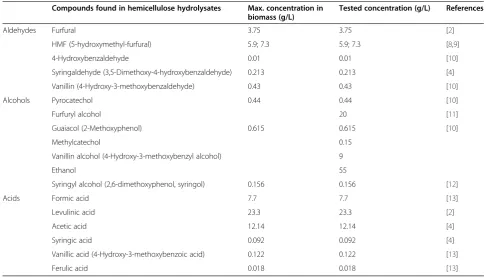
The inhibitory compounds used for the screening tests were selected based on a literature study and their con-centrations were chosen to be the highest reported to be present in pretreated lignocellulosic biomass (Table 1). The susceptibility of a collection of lactic acid bacteria strains to a number of common inhibitors from pretreated lignocellulosic biomass was evaluated. Out of 274 strains, which showed good or moderate growth on MRS, 256 and 141 were able to grow on high concentrations of fur-fural (3.5 g/L) and HMF (5.9 g/L), respectively, which are the two key inhibitors found in lignocellulosic biomass.
Bogutaet al. Microbial Cell Factories2014,13:97 Page 2 of 16
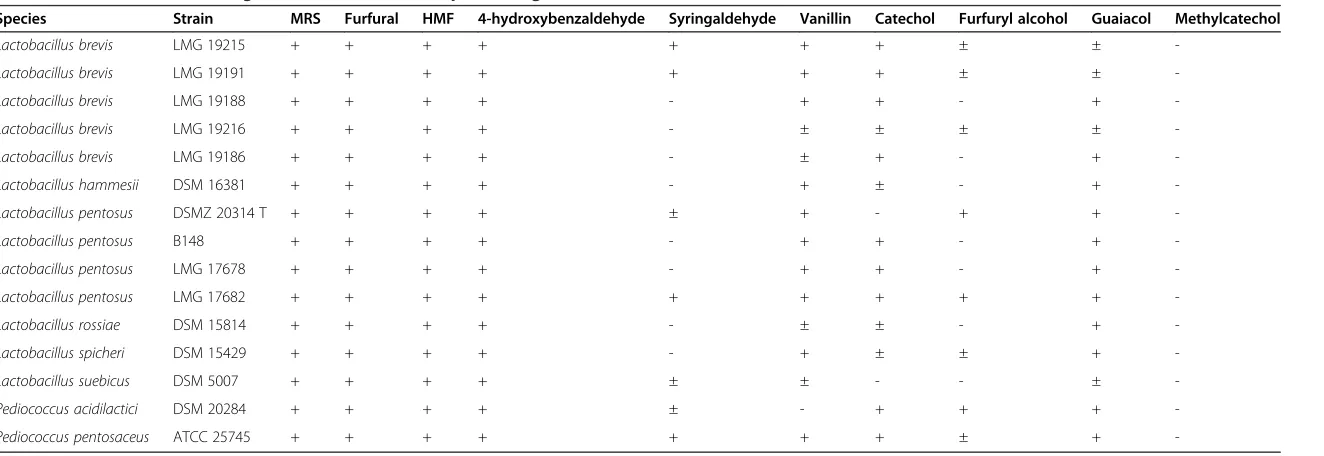
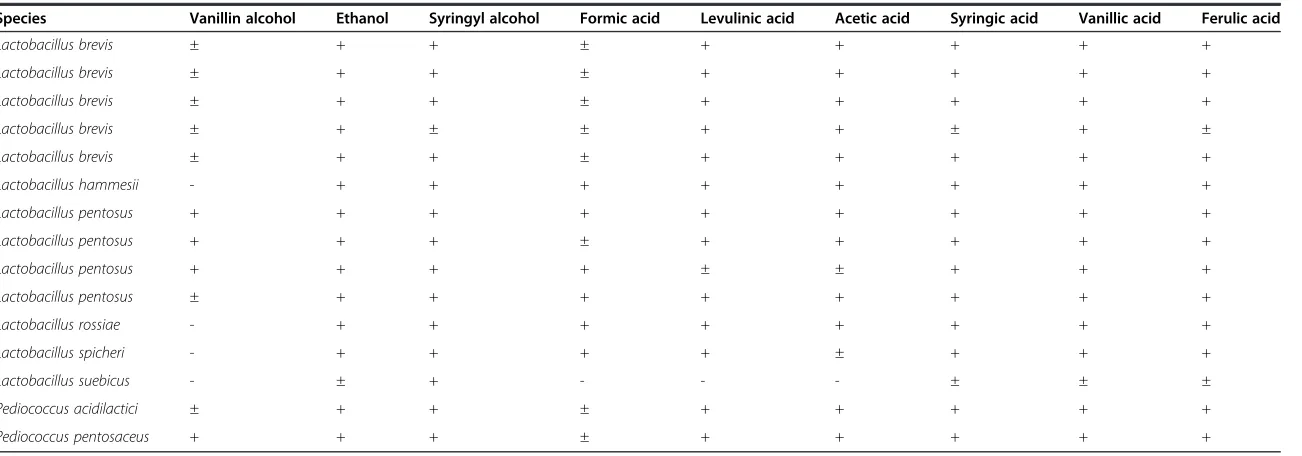
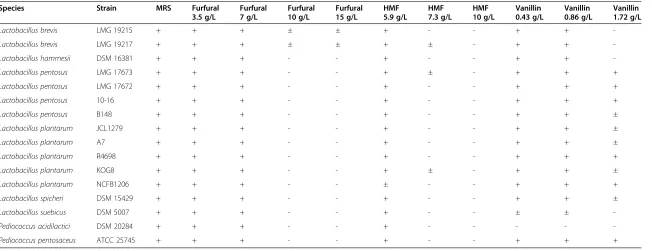
The results of inhibitor screening on MRS plates for the best performing strains are presented in Table 2; the re-sults obtained for all tested species can be found in (Additional file 1: Table S3). A subset of sixteen strains with the best tolerance for the inhibitors were subjected to an additional test where the concentration of furfural was raised to 7 g/L, 10 g/L and 15 g/L (Table 3). All tested strains could grow well on plates containing 7 g/L furfural; the higher concentrations were not tolerated by most of the strains, and only 2 strains showed a moderate growth on 10 g/L and 15 g/L furfural. Similarly, HMF concentration was raised from 5.9 g/L to 7.3 g/L and 10 g/L. None of the strains were able to grow well on 7.3 g/L HMF, a concentration reported to be present in dilute sulfuric acid hydrolyzed spruce [8], but a few strains showed moderate growth on that concentration of HMF. HMF concentration of 10 g/L completely inhibited strains’ growth.
When tested with a panel of other inhibitors, the best performing strains showed high resistance towards fur-furyl alcohol, vanillin and vanillin alcohol. When testing higher concentrations of vanillin (0.86 g/L, 1.72 g/L and 3.44 g/L), it was found that 11 out of 16 tested strains could grow at a concentration of 1.72 g/L which is a 4 times higher concentration than the maximum concen-tration reported to be found in pretreated lignocellulosic biomass. Doubling the concentration of vanillin alcohol from 9 g/L to 18 g/L revealed that all tested strains that
were able to grow well on 9 g/L, also exhibited good or moderate growth on 18 g/L.
In the case of furfuryl alcohol, no literature data has been reported regarding the concentrations found in the lignocellulosic biomass and therefore a minimal inhibi-tory concentration of Escherichia coli strain LY01 [11] was used for the screening (20 g/L). 40.5% of the screened lactic acid bacteria strain collection was found to be resistant to that concentration of furfuryl alcohol. Out of 16 best performing strains, only 3 showed no growth. In addition, most of the strains that were able to grow at a concentration of 20 g/L, showed also a moder-ate growth at a higher concentration of 25 g/L.
When tested for the tolerance to ethanol, a potential value-added product that could be made out of lignocel-lulosic biomass, 88% of the tested strains were tolerant to 55 g/L ethanol, including all isolates ofL. plantarum, L. pentosus, andL. brevis. After raising the concentration of ethanol on plates to 70 g/L and 85 g/L, all sixteen tested strains produced colonies of similar sizes when compared to the colonies they produced on MRS con-trol plates.
Many of the strains, especially L. plantarum and L. pentosusisolates could easily grow at high concentrations of acetate, levulinate and formate (79%, 82.5% and 74% of all strains, respectively). When grown on plates containing syringic, vanillic and ferulic acids, most strains (>90%) were hardly affected; however, the tested concentrations Table 1 Inhibitors and their concentrations used in this study
Compounds found in hemicellulose hydrolysates Max. concentration in biomass (g/L)
Tested concentration (g/L) References
Aldehydes Furfural 3.75 3.75 [2]
HMF (5-hydroxymethyl-furfural) 5.9; 7.3 5.9; 7.3 [8,9]
4-Hydroxybenzaldehyde 0.01 0.01 [10]
Syringaldehyde (3,5-Dimethoxy-4-hydroxybenzaldehyde) 0.213 0.213 [4]
Vanillin (4-Hydroxy-3-methoxybenzaldehyde) 0.43 0.43 [10]
Alcohols Pyrocatechol 0.44 0.44 [10]
Furfuryl alcohol 20 [11]
Guaiacol (2-Methoxyphenol) 0.615 0.615 [10]
Methylcatechol 0.15
Vanillin alcohol (4-Hydroxy-3-methoxybenzyl alcohol) 9
Ethanol 55
Syringyl alcohol (2,6-dimethoxyphenol, syringol) 0.156 0.156 [12]
Acids Formic acid 7.7 7.7 [13]
Levulinic acid 23.3 23.3 [2]
Acetic acid 12.14 12.14 [4]
Syringic acid 0.092 0.092 [4]
Vanillic acid (4-Hydroxy-3-methoxybenzoic acid) 0.122 0.122 [13]
Ferulic acid 0.018 0.018 [13]
Bogutaet al. Microbial Cell Factories2014,13:97 Page 3 of 16
Table 2 Results of the screening on MRS for the 15 best-performing strains
Species Strain MRS Furfural HMF 4-hydroxybenzaldehyde Syringaldehyde Vanillin Catechol Furfuryl alcohol Guaiacol Methylcatechol
Lactobacillus brevis LMG 19215 + + + + + + + ± ±
-Lactobacillus brevis LMG 19191 + + + + + + + ± ±
-Lactobacillus brevis LMG 19188 + + + + - + + - +
-Lactobacillus brevis LMG 19216 + + + + - ± ± ± ±
-Lactobacillus brevis LMG 19186 + + + + - ± + - +
-Lactobacillus hammesii DSM 16381 + + + + - + ± - +
-Lactobacillus pentosus DSMZ 20314 T + + + + ± + - + +
-Lactobacillus pentosus B148 + + + + - + + - +
-Lactobacillus pentosus LMG 17678 + + + + - + + - +
-Lactobacillus pentosus LMG 17682 + + + + + + + + +
-Lactobacillus rossiae DSM 15814 + + + + - ± ± - +
-Lactobacillus spicheri DSM 15429 + + + + - + ± ± +
-Lactobacillus suebicus DSM 5007 + + + + ± ± - - ±
-Pediococcus acidilactici DSM 20284 + + + + ± - + + +
-Pediococcus pentosaceus ATCC 25745 + + + + + + + ± +
-Boguta
et
al.
Microbial
Cell
Factories
2014,
13
:97
Page
4
o
f
1
6
http://ww
w.microbialce
llfactories.c
om/content
Table 2 Results of the screening on MRS for the 15 best-performing strains(Continued)
Species Vanillin alcohol Ethanol Syringyl alcohol Formic acid Levulinic acid Acetic acid Syringic acid Vanillic acid Ferulic acid
Lactobacillus brevis ± + + ± + + + + +
Lactobacillus brevis ± + + ± + + + + +
Lactobacillus brevis ± + + ± + + + + +
Lactobacillus brevis ± + ± ± + + ± + ±
Lactobacillus brevis ± + + ± + + + + +
Lactobacillus hammesii - + + + + + + + +
Lactobacillus pentosus + + + + + + + + +
Lactobacillus pentosus + + + ± + + + + +
Lactobacillus pentosus + + + + ± ± + + +
Lactobacillus pentosus ± + + + + + + + +
Lactobacillus rossiae - + + + + + + + +
Lactobacillus spicheri - + + + + ± + + +
Lactobacillus suebicus - ± + - - - ± ± ±
Pediococcus acidilactici ± + + ± + + + + +
Pediococcus pentosaceus + + + ± + + + + +
+, good growth; ±, moderate growth;−, no or poor growth; nd, not determined.
Boguta
et
al.
Microbial
Cell
Factories
2014,
13
:97
Page
5
o
f
1
6
http://ww
w.microbialce
llfactories.c
om/content
Table 3 Results of the screening of 16 best-performing strains for growth on higher concentrations of selected inhibitors
Species Strain MRS Furfural 3.5 g/L
Furfural 7 g/L
Furfural 10 g/L
Furfural 15 g/L
HMF 5.9 g/L
HMF 7.3 g/L
HMF 10 g/L
Vanillin 0.43 g/L
Vanillin 0.86 g/L
Vanillin 1.72 g/L
Lactobacillus brevis LMG 19215 + + + ± ± + - - + +
-Lactobacillus brevis LMG 19217 + + + ± ± + ± - + +
-Lactobacillus hammesii DSM 16381 + + + - - + - - + +
-Lactobacillus pentosus LMG 17673 + + + - - + ± - + + +
Lactobacillus pentosus LMG 17672 + + + - - + - - + + +
Lactobacillus pentosus 10-16 + + + - - + - - + + +
Lactobacillus pentosus B148 + + + - - + - - + + ±
Lactobacillus plantarum JCL1279 + + + - - + - - + + ±
Lactobacillus plantarum A7 + + + - - + - - + + ±
Lactobacillus plantarum R4698 + + + - - + - - + + +
Lactobacillus plantarum KOG8 + + + - - + ± - + + ±
Lactobacillus plantarum NCFB1206 + + + - - ± - - + + +
Lactobacillus spicheri DSM 15429 + + + - - + - - + + ±
Lactobacillus suebicus DSM 5007 + + + - - + - - ± ±
-Pediococcus acidilactici DSM 20284 + + + - - + - - - -
-Pediococcus pentosaceus ATCC 25745 + + + - - + - - + + +
Boguta
et
al.
Microbial
Cell
Factories
2014,
13
:97
Page
6
o
f
1
6
http://ww
w.microbialce
llfactories.c
om/content
Table 3 Results of the screening of 16 best-performing strains for growth on higher concentrations of selected inhibitors(Continued)
Species Vanillin 3.44 g/L
Furfuryl alcohol 20 g/L
Furfuryl alcohol 25 g/L
Vanillin alcohol 4.5 g/L
Vanillin alcohol 9 g/L
Vanillin alcohol 13.5 g/L
Vanillin alcohol 18 g/L
Ethanol 55 g/L
Ethanol 70 g/L
Ethanol 85 g/L
Lactobacillus brevis - ± - + ± ± ± + + +
Lactobacillus brevis - ± - + ± ± ± + + +
Lactobacillus hammesii - - - + - - - + ± ±
Lactobacillus pentosus ± + ± + + + + + + +
Lactobacillus pentosus ± + + + + + + + + +
Lactobacillus pentosus - + ± + + + + + + +
Lactobacillus pentosus - ± ± + + + ± + + +
Lactobacillus plantarum - - - + + + ± + + +
Lactobacillus plantarum - + ± + + ± ± + + +
Lactobacillus plantarum - + ± + + + ± + + +
Lactobacillus plantarum - + ± + + + ± + + +
Lactobacillus plantarum - + ± + + + + + + +
Lactobacillus spicheri - ± ± + ± ± ± + + +
Lactobacillus suebicus - - - + - - - ± ± ±
Pediococcus acidilactici - + ± + + + ± + + +
Pediococcus pentosaceus - + ± + + + ± + + +
+, good growth; ±, moderate growth;−, no or poor growth; nd, not determined.
Boguta
et
al.
Microbial
Cell
Factories
2014,
13
:97
Page
7
o
f
1
6
http://ww
w.microbialce
llfactories.c
om/content
were very low, similarly to the ones found in the pre-treated lignocellulosic biomass [4,13].
Methylcatechol was the compound found to impair growth of the majority of microorganisms the most compared to the other tested compounds and already at concentration as low as 0.15 g/L. No literature data was available on methylcatechol concentrations in lignocellu-lose, and therefore the minimal inhibitory concentration ofE. coliLY01 [11] was tested (1.5 g/L). However, since none of the tested strains showed any growth on that concentration, it was decreased to 0.15 g/L. Neverthe-less, none of the strains could grow well even on the 10 times decreased concentration and only 18% of the strains showed moderate growth. This finding can result from methylcatechol’s mode of action as it causes parti-tion or loss of integrity of biological membranes [14]. Thus, the outer membrane of Gram negative organisms makes them much less vulnerable for the action of methylcatechol. However, despite the lack of data on its concentrations in lignocellulose, methylcatechol is one of the products that can be generated during degrad-ation of lignin [15] and is therefore relevant to consider.
A known mechanism for detoxification used by cells is a modification of the inhibitors into less toxic deriva-tives, e.g. reduction of aldehydes to alcohols or oxidation to acids [16,17]. Accordingly, furfural would be reduced to furfuryl alcohol or oxidized to feroic acid; vanillin would be converted into vanillin alcohol or vanillic acid, and syringaldehyde - either to syringyl alcohol or syrin-gic acid. Indeed, the negative impact of tested derivatives on the growth of the strains was slightly lower and in general the organisms tolerated higher concentrations of these compounds.
The screening was repeated on GSA plates for 159 strains, which showed good or moderate growth on this defined medium. On GSA plates containing furfural, 42.8% of the strains could grow well but none of the strains could tolerate HMF well at the tested concentra-tion of 5.9 g/L; 32% of the strains showed only moderate growth. The vast majority of the strains grew well with vanillin, whereas only 30.2% could well tolerate the pres-ence of vanillin alcohol. The strains were generally sensi-tive to furfuryl alcohol, as only 17% of the strains showed good growth when it was present in the medium. The most toxic compounds were found to be methylcatechol and pyrocatechol, which completely inhibited the growth of 88% and 75.5% of the strains, respectively. All results are presented in (Additional file 1: Table S4).
The strains exhibiting the best performance on GSA were L. lactis MG1363 and various L. plantarum isolates (FOEB9106, NCFB1193, LMG 17678, KOG10, NICMB8826, KOG21, KOG2, DK32, Lactolabo). These results indicate that on GSA mediumL. lactisperforms equally well as the other lactic acid bacteria with regard to inhibitor tolerance.
However, GSA medium was originally developed specif-ically forL. lactis,and it does not support the growth of Lactobacilli to a similar extent. On MRS medium there were several strains found which showed an even better resistance profile thanL. lactis. Moreover, the best per-forming strains of Lactobacilli and Pediococci have two significant advantages overL. lactis: they can utilize the C5 sugars and they can grow at higher temperatures (37°C-42°C vs 30°C forL. lactis).
Stirred flask fermentation experiments
The 10 best performing strains identified during the ini-tial screening on solid media were chosen to quantify the effects of the inhibitors on growth rates in MRS broth. Controls were performed by cultivating the strains in the same conditions but with no inhibitors added. The growth rates with and without inhibitors were compared for each strain, andL. pentosusLMG 17672, LMG 17673 and 10–16 were found to be the most resistant strains (Table 4). All of them performed well in presence of 3.5 g/L furfural or 5.9 g/L HMF, showing decreased growth rates by up to 32%. They all tolerated the presence of 20 g/L furfuryl alcohol which caused a 24 to 46% de-crease in their growth rates. Last but not least, they per-formed remarkably well when grown in the presence of 0.43 g/L vanillin showing a similar or better growth com-pared to growth in MRS with no inhibitors. However, one of these strains, LMG 17673, was found to be susceptible to acetate and showed no growth during fermentation in the presence of 30 g/L acetate.
Two strains,L. spicheriDSM 15429 andL. brevisLMG 19215, demonstrated very good performance in the pres-ence of furfural and HMF. Two other strains (L. suebicus DSM 5007 and L. hammesii DSM 16381) showed very slow growth when compared to other tested strains (about 6 times lower when compared to the growth rate of the fastest-growing strain P. pentosaceus ATCC 25745), and were therefore not considered for further investigation as they are probably less promising as potential workhorses.
The concentrations of furfural and HMF used in this study which do not severely inhibit the growth of the tested strains are very high when compared to inhibitory concentrations for E. coliorS. cerevisiae strains reported in the literature. Furfural was shown to cause a 50% inhib-ition of growth ofE. colistrains already at concentrations of 1 –2.4 g/L [18,19];S. cerevisiaestrains were inhibited at 1 g/L furfural; with HMF, the growth was shown to be inhibited by 2 g/L for E. coli and 1 g/L for S. cerevisiae [18]. Moreover, Zaldivar et al. (1999) showed that furfural and HMF completely inhibited the growth of E. coli strains at a concentration of 3.5 g/L and 4.0 g/L, respect-ively; S. cerevisiae was completely inhibited by 5.09 g/L furfural [20]. The best performing strains selected in this study were able to grow in presence of 3.5 g/L furfural
Bogutaet al. Microbial Cell Factories2014,13:97 Page 8 of 16
with 26-54% inhibition of growth, whereas the growth with 5.9 g/L HMF was inhibited by 24-58%.
When looking at the ethanol tolerance of the strains, the growth ofE. coliwas inhibited completely by a con-centration of 55 g/L [19], while the same concon-centration caused only 29% to 64% decrease in growth rates of strains selected in this study. Yet, ethanol is only one of the potential value-added products that could be made out of lignocellulose and the selected strains may be fur-ther tested for their tolerance to ofur-ther products as well; however this is beyond the scope of this study.
Moreover, the tested inhibitor concentrations are the highest measured and reported in the pretreated ligno-cellulosic biomass, usually coming from soft or hard wood which is a specific type of biomass that needs lon-ger pretreatment time and harsher conditions, therefore containing higher quantities of inhibitors. The average amounts of inhibitors present in different types of bio-mass are frequently much lower [21].
Pentose utilization test
Since the lignocellulose contains significant amounts of C5 sugars xylose and arabinose, all of the strains from the collection were also screened on plates for their abilities to utilize xylose and arabinose. Since MRS medium sup-ports significant growth of the strains even with no sugar added, a modified MRS medium (10% MRS) was used, containing 90% lowered quantities of casein peptone, yeast extract and meat extract, and having all other ingredients in the original amount. 37 strains could utilize both xylose and arabinose very well (producing colonies of the same size as on glucose) and 9 strains could utilize both of them well or moderately (producing smaller colonies when
compared to glucose plate) (Additional file 1: Table S5). Some strains were able to utilize only one of the tested pentoses: 10 strains were found to utilize xylose well or moderately; 40 and 34 strains could utilize arabinose well or moderately, respectively (Additional file 1: Table S5).
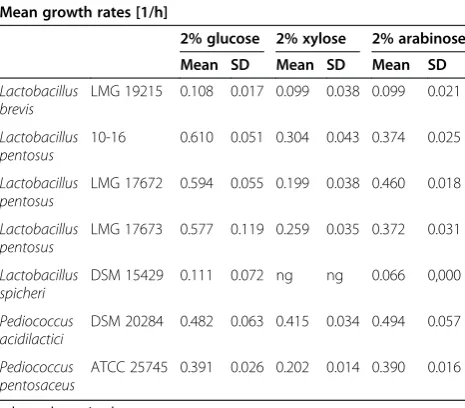
The strains that showed good growth on plates with xylose and arabinose were further tested in 10% MRS broth with xylose or arabinose, and their growth rates on C5 sugars were compared to their growth rates on glucose (Table 5). The best performing strains were P. acidilactici DSM 20284 and P. pentosaceus ATCC
Table 5 Growth of the best performing strains in 10% MRS medium with glucose, xylose or arabinose
Mean growth rates [1/h]
2% glucose 2% xylose 2% arabinose
Mean SD Mean SD Mean SD
Lactobacillus brevis
LMG 19215 0.108 0.017 0.099 0.038 0.099 0.021
Lactobacillus pentosus
10-16 0.610 0.051 0.304 0.043 0.374 0.025
Lactobacillus pentosus
LMG 17672 0.594 0.055 0.199 0.038 0.460 0.018
Lactobacillus pentosus
LMG 17673 0.577 0.119 0.259 0.035 0.372 0.031
Lactobacillus spicheri
DSM 15429 0.111 0.072 ng ng 0.066 0,000
Pediococcus acidilactici
DSM 20284 0.482 0.063 0.415 0.034 0.494 0.057
Pediococcus pentosaceus
ATCC 25745 0.391 0.026 0.202 0.014 0.390 0.016
nd, not determined. ng, no growth.
Table 4 Growth of the best performing strains in MRS medium with inhibitors
Mean growth rates [1/h]
MRS Furfural
(3.5 g/L)
HMF (5.9 g/L)
Ethanol (55 g/L)
Acetic acid (30 g/L)
Furfuryl alcohol (20 g/L)
Vanillin (0.43 g/L)
Mean SD Mean SD Mean SD Mean SD Mean SD Mean SD Mean SD
Lactobacillus brevis LMG 19215 0.528 0.093 0.402 0.008 0.290 0.030 0.356 0.031 0.522 0.034 nd nd nd nd
Lactobacillus hammesii DSM 16381 0.167 0.020 nd nd nd nd nd nd nd nd nd nd nd nd
Lactobacillus pentosus 10-16 0.794 0.047 0.538 0.036 0.554 0.027 0.550 0.066 0.484 0.015 0.511 0.073 0.765 0.038 Lactobacillus pentosus LMG 17672 0.712 0.062 0.530 0.024 0.540 0.000 0.504 0.061 0.642 0.083 0.383 0.108 0.729 0.013
Lactobacillus pentosus LMG 17673 0.826 0.022 0.558 0.042 0.636 0.067 0.586 0.018 ng ng 0.627 0.013 0.825 0.021
Lactobacillus plantarum JCL1279 0.675 0.004 0.399 0.013 0.332 0.009 0.316 0.048 0.561 0.030 nd nd nd nd
Lactobacillus spicheri DSM 15429 0.531 0.036 0.420 0.034 0.338 0.087 0.376 0.018 0.408 0.027 nd nd nd nd
Lactobacillus suebicus DSM 5007 0.147 0.038 nd nd nd nd nd nd nd nd nd nd nd nd
Lactobacillus vaccinostercus* DSM 20634 0.690 0.017 0.435 0.021 0.258 0.085 0.444 0.017 0.711 0.030 0.351 0.013 0.660 0.034
Pediococcus acidilactici DSM 20284 0.886 0.061 0.405 0.025 0.372 0.026 0.315 0.038 0.450 0.090 nd nd nd nd
Pediococcus pentosaceus ATCC 25745 0.995 0.042 0.684 0.076 0.606 0.079 0.566 0.091 0.404 0.034 0.552 0.085 0.960 0.008 nd, not determined.
ng, no growth.
*grown in MRS medium with glucose replaced with xylose.
Bogutaet al. Microbial Cell Factories2014,13:97 Page 9 of 16
25745 with 14% and 48% lower growth rates on xylose compared to glucose. On arabinose, bothP. acidilactici DSM 20284 and P. pentosaceus ATCC 25745 showed similar growth rates when compared to glucose. Some of the other tested strains showed up to 66% and 41% lower growth rates on xylose and arabinose, respectively.
Performance in combination of inhibitors
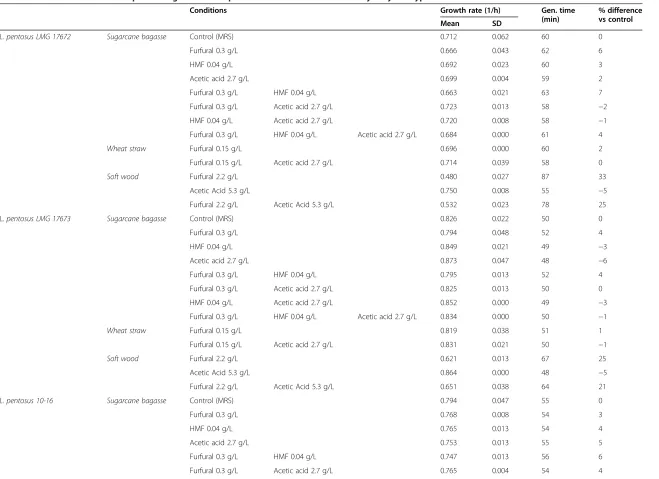
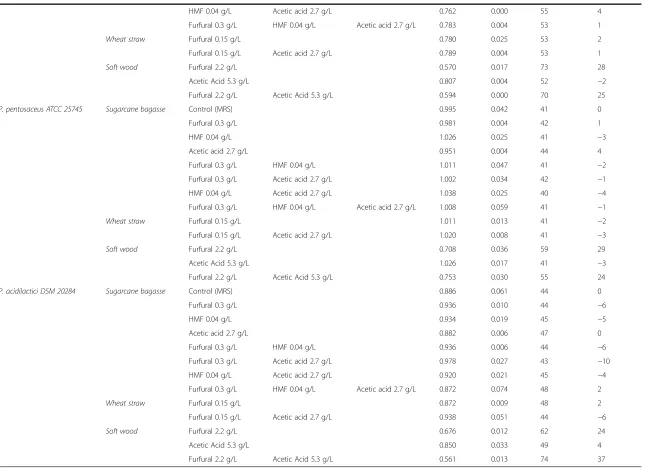
As mentioned above, the concentrations of inhibitors in the pretreated lignocellulose depend both on the initial plant material (e.g. sugarcane bagasse, wheat straw, rice straw) and the method of pretreatment (the temperature, chemi-cals and their concentrations, time of pretreatment). The method can be chosen so that it is optimal for a given plant substrate; however, it is always a matter of a compromise between the inhibitors and the amount of released sugars available for the microorganisms. Usually, a mixture of dif-ferent inhibitors is formed during pretreatment, and since some of them were previously shown to have additive or synergistic effects [19,22,23], we chose to investigate strain performance on a mixture of different inhibitors. MRS medium with combination of inhibitors was used as repre-sentatives of three different types of lignocellulosic biomass and was used to test for any additive or synergistic effects between different inhibitors and to simulate the strains’ performance on real-life feedstocks. Five of the best per-forming strains were selected for the test:L. pentosusLMG 17672,L. pentosusLMG 17673,L. pentosus10–16,P. pen-tosaceusATCC 25745, andP. acidilacticiDSM 20284. The effects of inhibitors on the growth rates were investigated both separately for each inhibitor and in combinations to reveal any additive or synergistic effects.
No apparent differences were found between the individ-ual strains with regard to their resistance to the inhibitors (Table 6). The combined treatment with furfural, HMF and acetate representing sugarcane bagasse (0.3 g/L, 0.04 g/L and 2.7 g/L, respectively) and furfural and acetate repre-senting wheat straw (0.15 g/L and 2.7 g/L, respectively) were found not to affect the growth rates of the tested strains significantly. The combined effect of furfural and acetate found in soft wood affected the growth rates of mi-croorganisms by up to 37%. The most severe effects were due to the presence of furfural, since acetate, with one ex-ception, did not influence the growth of the strains when added as a single inhibitor. Neither 2.7 g/L nor 5.3 g/L acet-ate exerted negative effects in 4 of the tested strains; the growth rates were even slightly enhanced in the presence of acetate. Thus, no synergistic effects were found between furfural and acetate for these strains at the tested concen-trations. ForP. acidilactici, however, 5.3 g/L acetate caused a 4% growth inhibition and showed a synergistic effect when the strain was grown with both acetate and furfural.
To evaluate if the strains perform equally well when they grow on xylose instead of glucose, the tests with
combination of inhibitors were repeated for four of the best strains but in 10% MRS containing glucose or xy-lose (Table 7). In all but one cases, the growth rates on xylose were decreased 2–3 times when compared to glu-cose, as shown before; onlyP. acidilacticishowed similar growth rates on both glucose and xylose. However, when the strains were grown on xylose, the inhibition effect caused by the presence of inhibitors was lessened when compared to when the strains were grown on glucose; only a strain of P. pentosaceus showed higher drops in growth rates on xylose than on glucose when grown with the combination of inhibitors.
The performance of the best strains of Lactobacilli and Pediococci was compared with the performance of E. coliMG1655 which was tested in LB with either glu-cose or xylose and with combinations of inhibitors repre-senting sugarcane bagasse, wheat straw and soft wood (Additional file 1: Table S6). The growth rates were high both on glucose and xylose, however, the strain showed much worse performance in the presence of inhibitors than Lactobacilli and Pediococci. E. coli was inhibited by all tested combinations of inhibitors; in particular it was severely inhibited by furfural and acetate from soft wood (87-90% drop in growth rates on xylose and glu-cose, respectively); same conditions caused up to 37% lower growth rates in the selected strains of Lactobacilli and Pediococci. The presence of inhibitors found in sugarcane bagasse and wheat straw caused an inhibition ofE. coligrowth by 36% and 21%, respectively, whereas the same conditions caused up to 4% inhibition of growth of L. pentosus LMG 17672, and had no impact on the growth of the other four tested strains.
Conclusions
Lactic Acid Bacteria were systematically screened for tol-erance towards inhibitors from pretreated lignocellulosic biomass. The results show that some of the identified iso-lates ofL. pentosus,P. pentosaceus andP. acidilacticiare not only highly resistant to the different inhibitors, also at higher concentrations than are usually present in the bio-mass, but they can also utilize xylose and arabinose. These findings stress that some LAB has the potential to become platforms for second generation bioconversion processes. The investigation of the transformability of selected strains is currently underway to ease metabolic and gen-etic engineering strategies to further improve their per-formance as production organisms.
Materials and methods Strains and media
All strains used in this study including their origin are listed in (Additional file 1: Table S1). Some of the strains were purchased from the German Collection of Microorganisms and Cell Cultures (DSMZ, Braunschweig, Germany) or
Bogutaet al. Microbial Cell Factories2014,13:97 Page 10 of 16
Table 6 Performance of the best-performing strains in representatives of three feedstock hydrolysate types
Conditions Growth rate (1/h) Gen. time (min)
% difference vs control Mean SD
L. pentosus LMG 17672 Sugarcane bagasse Control (MRS) 0.712 0.062 60 0
Furfural 0.3 g/L 0.666 0.043 62 6
HMF 0.04 g/L 0.692 0.023 60 3
Acetic acid 2.7 g/L 0.699 0.004 59 2
Furfural 0.3 g/L HMF 0.04 g/L 0.663 0.021 63 7
Furfural 0.3 g/L Acetic acid 2.7 g/L 0.723 0.013 58 −2
HMF 0.04 g/L Acetic acid 2.7 g/L 0.720 0.008 58 −1
Furfural 0.3 g/L HMF 0.04 g/L Acetic acid 2.7 g/L 0.684 0.000 61 4
Wheat straw Furfural 0.15 g/L 0.696 0.000 60 2
Furfural 0.15 g/L Acetic acid 2.7 g/L 0.714 0.039 58 0
Soft wood Furfural 2.2 g/L 0.480 0.027 87 33
Acetic Acid 5.3 g/L 0.750 0.008 55 −5
Furfural 2.2 g/L Acetic Acid 5.3 g/L 0.532 0.023 78 25
L. pentosus LMG 17673 Sugarcane bagasse Control (MRS) 0.826 0.022 50 0
Furfural 0.3 g/L 0.794 0.048 52 4
HMF 0.04 g/L 0.849 0.021 49 −3
Acetic acid 2.7 g/L 0.873 0.047 48 −6
Furfural 0.3 g/L HMF 0.04 g/L 0.795 0.013 52 4
Furfural 0.3 g/L Acetic acid 2.7 g/L 0.825 0.013 50 0
HMF 0.04 g/L Acetic acid 2.7 g/L 0.852 0.000 49 −3
Furfural 0.3 g/L HMF 0.04 g/L Acetic acid 2.7 g/L 0.834 0.000 50 −1
Wheat straw Furfural 0.15 g/L 0.819 0.038 51 1
Furfural 0.15 g/L Acetic acid 2.7 g/L 0.831 0.021 50 −1
Soft wood Furfural 2.2 g/L 0.621 0.013 67 25
Acetic Acid 5.3 g/L 0.864 0.000 48 −5
Furfural 2.2 g/L Acetic Acid 5.3 g/L 0.651 0.038 64 21
L. pentosus 10-16 Sugarcane bagasse Control (MRS) 0.794 0.047 55 0
Furfural 0.3 g/L 0.768 0.008 54 3
HMF 0.04 g/L 0.765 0.013 54 4
Acetic acid 2.7 g/L 0.753 0.013 55 5
Furfural 0.3 g/L HMF 0.04 g/L 0.747 0.013 56 6
Furfural 0.3 g/L Acetic acid 2.7 g/L 0.765 0.004 54 4
Boguta
et
al.
Microbial
Cell
Factories
2014,
13
:97
Page
11
of
16
http://ww
w.microbialce
llfactories.c
om/content
Table 6 Performance of the best-performing strains in representatives of three feedstock hydrolysate types(Continued)
HMF 0.04 g/L Acetic acid 2.7 g/L 0.762 0.000 55 4
Furfural 0.3 g/L HMF 0.04 g/L Acetic acid 2.7 g/L 0.783 0.004 53 1
Wheat straw Furfural 0.15 g/L 0.780 0.025 53 2
Furfural 0.15 g/L Acetic acid 2.7 g/L 0.789 0.004 53 1
Soft wood Furfural 2.2 g/L 0.570 0.017 73 28
Acetic Acid 5.3 g/L 0.807 0.004 52 −2
Furfural 2.2 g/L Acetic Acid 5.3 g/L 0.594 0.000 70 25
P. pentosaceus ATCC 25745 Sugarcane bagasse Control (MRS) 0.995 0.042 41 0
Furfural 0.3 g/L 0.981 0.004 42 1
HMF 0.04 g/L 1.026 0.025 41 −3
Acetic acid 2.7 g/L 0.951 0.004 44 4
Furfural 0.3 g/L HMF 0.04 g/L 1.011 0.047 41 −2
Furfural 0.3 g/L Acetic acid 2.7 g/L 1.002 0.034 42 −1
HMF 0.04 g/L Acetic acid 2.7 g/L 1.038 0.025 40 −4
Furfural 0.3 g/L HMF 0.04 g/L Acetic acid 2.7 g/L 1.008 0.059 41 −1
Wheat straw Furfural 0.15 g/L 1.011 0.013 41 −2
Furfural 0.15 g/L Acetic acid 2.7 g/L 1.020 0.008 41 −3
Soft wood Furfural 2.2 g/L 0.708 0.036 59 29
Acetic Acid 5.3 g/L 1.026 0.017 41 −3
Furfural 2.2 g/L Acetic Acid 5.3 g/L 0.753 0.030 55 24
P. acidilactici DSM 20284 Sugarcane bagasse Control (MRS) 0.886 0.061 44 0
Furfural 0.3 g/L 0.936 0.010 44 −6
HMF 0.04 g/L 0.934 0.019 45 −5
Acetic acid 2.7 g/L 0.882 0.006 47 0
Furfural 0.3 g/L HMF 0.04 g/L 0.936 0.006 44 −6
Furfural 0.3 g/L Acetic acid 2.7 g/L 0.978 0.027 43 −10
HMF 0.04 g/L Acetic acid 2.7 g/L 0.920 0.021 45 −4
Furfural 0.3 g/L HMF 0.04 g/L Acetic acid 2.7 g/L 0.872 0.074 48 2
Wheat straw Furfural 0.15 g/L 0.872 0.009 48 2
Furfural 0.15 g/L Acetic acid 2.7 g/L 0.938 0.051 44 −6
Soft wood Furfural 2.2 g/L 0.676 0.012 62 24
Acetic Acid 5.3 g/L 0.850 0.033 49 4
Furfural 2.2 g/L Acetic Acid 5.3 g/L 0.561 0.013 74 37
Boguta
et
al.
Microbial
Cell
Factories
2014,
13
:97
Page
12
of
16
http://ww
w.microbialce
llfactories.c
om/content
Table 7 Performance of the best strains in 10% MRS with glucose or xylose and combinations of inhibitors representing three feedstock hydrolysate types
Conditions Growth rate (1/h) Gen. time (min) % difference vs control Mean SD
L. pentosus LMG 17672 10% MRS with glucose Control (10% MRS) 0.594 0.055 70 0
Sugarcane bagasse (Furfural 0,3 g/L; HMF 0,04 g/L; Acetic acid 2,7 g/L) 0.552 0.017 75 7.1
Wheat straw (Furfural 0.15 g/L; Acetic acid 2.7 g/L) 0.627 0.021 66 −5.6
Soft wood (Furfural 2.2 g/L; Acetic Acid 5.3 g/L) 0.357 0.013 116 39.9
10% MRS with xylose Control (10% MRS) 0.199 0.038 209 0
Sugarcane bagasse (Furfural 0.3 g/L; HMF 0.04 g/L; Acetic acid 2.7 g/L) 0.213 0.013 195 −6.9
Wheat straw (Furfural 0.15 g/L; Acetic acid 2.7 g/L) 0.195 0.004 213 2.1
Soft wood (Furfural 2.2 g/L; Acetic Acid 5.3 g/L) 0.180 0.000 231 9.6
L. pentosus LMG 17673 10% MRS with glucose Control (10% MRS) 0.577 0.119 72 0
Sugarcane bagasse (Furfural 0.3 g/L; HMF 0.04 g/L; Acetic acid 2.7 g/L) 0.612 0.025 68 −6.0
Wheat straw (Furfural 0.15 g/L; Acetic acid 2.7 g/L) 0.624 0.017 67 −8.1
Soft wood (Furfural 2.2 g/L; Acetic Acid 5.3 g/L) 0.435 0.013 96 24.6
10% MRS with xylose Control (10% MRS) 0.259 0.035 160 0
Sugarcane bagasse (Furfural 0.3 g/L; HMF 0.04 g/L; Acetic acid 2.7 g/L) 0.315 0.030 132 −21.5
Wheat straw (Furfural 0.15 g/L; Acetic acid 2.7 g/L) 0.243 0.064 171 6.3
Soft wood (Furfural 2.2 g/L; Acetic Acid 5.3 g/L) 0.249 0.021 167 3.9
P. acidilactici DSM 20284 10% MRS with glucose Control (10% MRS) 0.482 0.063 86 0
Sugarcane bagasse (Furfural 0.3 g/L; HMF 0.04 g/L; Acetic acid 2.7 g/L) 0.387 0.013 107 19.8
Wheat straw (Furfural 0.15 g/L; Acetic acid 2.7 g/L) 0.414 0.000 100 14.2
Soft wood (Furfural 2.2 g/L; Acetic Acid 5.3 g/L) 0.324 0.034 128 32.8
10% MRS with xylose Control (10% MRS) 0.415 0.034 100 0
Sugarcane bagasse (Furfural 0.3 g/L; HMF 0.04 g/L; Acetic acid 2.7 g/L) 0.378 0.000 110 9.0
Wheat straw (Furfural 0.15 g/L; Acetic acid 2.7 g/L) 0.390 0.017 107 6.1
Soft wood (Furfural 2.2 g/L; Acetic Acid 5.3 g/L) 0.300 0.034 139 27.7
P. pentosaceus ATCC 25745 10% MRS with glucose Control (10% MRS) 0.391 0.026 106 0
Sugarcane bagasse (Furfural 0.3 g/L; HMF 0.04 g/L; Acetic acid 2.7 g/L) 0.405 0.013 103 −3.5
Wheat straw (Furfural 0.15 g/L; Acetic acid 2.7 g/L) 0.414 0.017 100 −5.8
Soft wood (Furfural 2.2 g/L; Acetic Acid 5.3 g/L) 0.267 0.030 156 31.7
10% MRS with xylose Control (10% MRS) 0.202 0.014 206 0
Sugarcane bagasse (Furfural 0.3 g/L; HMF 0.04 g/L; Acetic acid 2.7 g/L) 0.135 0.013 308 33.0
Wheat straw (Furfural 0.15 g/L; Acetic acid 2.7 g/L) 0.171 0.004 243 15.2
Soft wood (Furfural 2.2 g/L; Acetic Acid 5.3 g/L) 0.129 0.004 322 36.0
Boguta
et
al.
Microbial
Cell
Factories
2014,
13
:97
Page
13
of
16
http://ww
w.microbialce
llfactories.c
om/content
kindly obtained Jørgen Leisner, Copenhagen University (Copenhagen, Denmark). All strains except forLactococcus lactis and Escherichia coli that were propagated in M17 (Oxoid) supplied with glucose to 1% at 30°C and Lysogeny Broth (LB) at 37°C, respectively, were grown on MRS agar plates (Oxoid) containing, per liter: 10 g casein peptone (tryptic digest), 10 g meat extract, 5 g yeast extract, 20 g glucose, 1 g Tween 80, 2 g K2HPO4, 5 g sodium acetate,
2 g diammonium citrate, 0.2 g MgSO4· 7H2O and 0.05 g
MnSO4· H2O at optimal temperature (25°C, 28°C, 30°C,
37°C or 40°C) for 24-48 h. For storage cultures in sta-tionary phase were harvested by centrifugation, resus-pended in fresh medium supplied with 25% glycerol and frozen at−80°C.
For the screening purpose two media formulations were used: complex MRS medium and defined SA medium with 2% glucose (GSA) [24] supplemented with 25 mg/L uracil and 50 mg/L hypoxanthine. In case of media containing organic acids, the pH was adjusted to 6.5 ± 0.1 with 2 M NaOH or 10 M KOH. The strains were also tested for growth on defined DLA medium. The medium was prepared as described by Bringel et al. (1997) [25]; the following solutions were used: 100 ml of autoclaved solution 1 (50 g glucose, 50 g sodium acetate, 0.05 g oleic acid, 5 g Tween 40, 2.5 g ascorbic acid, 0.04 g MnSO4· H2O, 1 g MgSO4· 7H2O, and H2O to
500 ml), 200 ml of filter-sterilized salt solution (8.75 g Na2HPO4· 2H2O, 15 g KCl, and H2O to 1 liter), 200 ml
of a filter-sterilized solution of L-amino acids (0.2 g Pro; 0.25 g Lys and Thr; 1.25 g Asn; 1 g Gly, Trp, Ser, Ala, Phe, Leu, and Tyr; 2.5 g His, Iso, Met, and Val; 5 g Glu; 10 g Asp; and H2O to 1 liter), 10 ml of filter-sterilized
riboflavin solution (0.01 g dissolved in 100 ml of 0.02 M acetic acid and stored in the dark), 250 ml of filter-sterilized purine solution (0.2 g hypoxanthine, 0.3 g deoxyguanosine and guanine HCl, 0.5 g adenine, and H2O to 1.5 liters), 0.1 ml of filter-sterilized solution 3
(0.05 g biotin in 50 ml of 50% ethanol, 0.025 g vitamin B12, 0.08 g pyridoxamine · 2HCl, and H2O to 500 ml),
10 ml of filter-sterilized solution 4 (0.025 g pyridoxal HCl in 100 ml of 20% ethanol, 0.02 g p-aminobenzoic acid, 0.085 g of nicotinic acid, 0.016 g of folic acid in 100 ml of 20% ethanol, 0.05 g of calcium pantothenate, 0.05 g spermine HCl, and H2O to 500 ml), 50 ml of
filter-sterilized solution 5 (2 g L-cysteine, 1.5 g L-glu-tamine, and H2O to 250 ml), 1 ml of filter-sterilized
0.1% thiamine HCl solution, and 100 ml of autoclaved 0.1% L-cystine solution. The solution was adjusted to pH 6.5 with KOH or HCl and brought to 1 L with H2O.
The ability of the strains to utilize xylose and arabin-ose was tested in 10% MRS medium containing per liter: 1 g casein peptone (tryptic digest) 0.8 g meat extract, 0.4 g yeast extract, 1 mL Tween 80, 2 g K2HPO4, 5 g
so-dium acetate, 2 g diammonium citrate, 0.2 g MgSO4·
7H2O and 0.05 g MnSO4· H2O, and 20 g of carbon
source (glucose, xylose, or arabinose). The pH of the medium was adjusted to 6.5 ± 0.1 with 2 M NaOH or 10 M KOH. For preparation of plates, 10 g/L Bacto agar was added.
Reagents
The following chemicals were purchased from Sigma Aldrich: HMF (5-hydroxymethylfurfural), 4-hydroxybenzaldehyde, syringaldehyde, vanillin, pyrocatechol, methylcatechol, guai-acol, furfuryl alcohol, vanillin alcohol, syringyl alcohol, levulinic acid, syringic acid, vanillic acid and ferulic acid. All other chemicals were obtained from Kemetyl (etha-nol), Bie&Berntsen A-S (acetic acid), or Merck (furfural, formic acid).
Preliminary inhibitor screening
The resistance of strains towards the inhibitors from lig-nocellulosic biomass was investigated on MRS agar plates with a single inhibitor added at a specified con-centration. The colonies were transferred onto plates from a dilution series made in a 96-well microtiter plates (TPP). The growth of strains was examined after 48 hour incubation at optimal temperature (25°C, 28°C, 30°C, 37°C or 40°C) by comparing the colony sizes on plates con-taining an inhibitor and control MRS plates. For several best performing strains a similar screening was repeated with higher concentrations of selected inhibitors: fur-fural (7.5 g/L, 10 g/L, 15 g/L), HMF (10 g/L, 15 g/L), vanillin (0.86 g/L, 1.72 g/L, 3.44 g/L), vanillin alcohol (4.5 g/L, 13.5 g/L, 18 g/L), furfuryl alcohol (5 g/L, 10 g/L, 20 g/L, 25 g/L) and ethanol (70 g/L, 85 g/L).
Screening in broth
The experiments were performed by inoculating 100 mL flasks containing 50 mL MRS broth and an inhibitor with an overnight culture to a starting OD600 of 0.04.
The cells were cultivated under aerobic conditions at 30°C with 220 rpm magnetic stirring (2mag MIXdrive 15). To monitor the growth, 1 mL samples were taken every 30 min and the optical density at 600 nm was investigated by Genesys 10 spectrophotometer (Thermo Spectronic). At least 2 replicates were made for each strain and media type. For determination of specific growth rates, more than 5 experimental data points in the exponential growth phase were used.
Pentose utilization tests
The strains were streaked on 10% MRS agar plates con-taining glucose, xylose, arabinose, or no carbon source added and incubated at 30°C for 48 hours. The growth of the strains was evaluated as good growth (+), when the colonies produced on xylose and arabinose plates were of similar size as the ones on glucose plate; moderate (±)
Bogutaet al. Microbial Cell Factories2014,13:97 Page 14 of 16
when they were smaller, and no growth (−) when there were no colonies or they were small and comparable to the control plate with no sugar added.
Combination effect of inhibitors
The strains’performance in the presence of combination of inhibitors was evaluated by inoculating 100 mL flasks containing 50 mL medium and the inhibitors with over-night cultures to a starting OD600of 0.04 and incubating
at 30°C with 220 rpm magnetic stirring. The OD600
mea-surements were performed at 30 min intervals by Genesys 10 spectrophotometer (Thermo Spectronic). The medium was MRS containing 20 g/L glucose or 10% MRS containing 20 g/L glucose or xylose. The ana-lyzed combinations of inhibitors were representative of sugarcane bagasse (0.3 g/L furfural, 0.04 g/L HMF, and 2.7 g/L acetate) [26], wheat straw (0.15 g/L furfural and 2.7 g/L acetate) [27] and soft wood (2.2 g/L furfural and 5.3 g/L acetate) [28]. For comparison, E. coli MG1655 was tested; 250 mL Erlenmeyer flasks with 50 mL LB with 20 g/L glucose or xylose and combination of inhibi-tors were inoculated with overnight cultures to an OD450
of 0.04 and incubated at 37°C with 180 rpm shaking. The OD450measurements were done at 20 min intervals.
Additional file
Additional file 1: Table S1.Bacterial strains used in this study. Table S2.Growth of the tested strains on MRS, DLA and GSA media. Table S3.Results of the screening on MRS plates.Table S4.Results of the screening on GSA plates.Table S5.Results of the pentose utilization tests on 10% MRS plates with glucose, xylose or arabinose as sole carbon sources.Table S6.Performance ofE.coliMG1655 in LB with glucose or xylose and combinations of inhibitors representing three feedstock hydolysate types.
Competing interests
The authors declare that they have no competing interests.
Authors’contributions
AMB carried out experiments and drafted the manuscript. FB supplied with 127L. plantarumisolates. JM and PRJ participated in the design of the study, supervised the experiments and helped to draft the manuscript. All authors read and approved the final manuscript.
Acknowledgements
We wish to thank Jørgen Leisner from the Copenhagen University for kind provision of several Lactobacilli isolates (DSM 20314 T, LMG 17672, LMG 17673, LMG 17678, LMG 17682, B148, LMG 19186, LMG 19188, LMG 19191, LMG 19217, LMG 19215, Ketchup-1, 10–16, LMG 19719, LMG 19216, Ketchup-3). We would also like to thank Helle Holm Jensen for the help with pentose utilization tests.
Author details
1Division of Industrial Food Research, National Food Institute, Systems Biotechnology & Biorefining, Technical University of Denmark, Building 221, Kongens Lyngby DK-2800, Denmark.2Département Génétique Moléculaire, Université de Strasbourg, UMR7156 CNRS, Génomique, Microbiologie, 28 Rue Goethe, Strasbourg 67083, France.3Department of Systems Biology, Intracellular Signaling and Regulation Group, Technical University of Denmark, Building 221, Kongens Lyngby DK-2800, Denmark.
Received: 4 June 2014 Accepted: 24 June 2014 Published: 5 July 2014
References
1. Himmel ME, Ding SY, Johnson DK, Adney WS, Nimlos MR, Brady JW, Foust TD: Biomass recalcitrance: engineering plants and enzymes for biofuels production.Science2007,315:804–807.
2. Larsson S, Palmqvist E, Hahn-Hägerdal B, Tengborg C, Stenberg K, Zacchi G, Nilvebrant NO:The generation of fermentation inhibitors during dilute acid hydrolysis of softwood.Enzyme Microb Technol1999,24:151–159. 3. Almeida JRM, Modig T, Petersson A, Hähn-Hägerdal B, Lidén G,
Gorwa-Grauslund MF:Increased tolerance and conversion of inhibitors in lignocellulosic hydrolysates byS. cerevisiae.
J Chem Technol Biotechnol2007,82:340–349.
4. Tran AV, Chambers RP:Ethanol fermentation of red oak acid prehydrolysate by the yeastPichia stipitisCBS 5776.Enzyme Microb Technol1986,8:439–444.
5. Aarnikunnas J, von Weymarn N, Ronnholm K, Leisola M, Palva A:Metabolic engineering ofLactobacillus fermentumfor production of mannitol and pure L-lactic acid or pyruvate.Biotechnol Bioeng2003,82:653–663. 6. Berezina OV, Zakharova NV, Brandt A, Yarotsky SV, Schwarz WH, Zverlov VV:
Reconstructing the clostridial n-butanol metabolic pathway in Lactobacillus brevis.Appl Microbiol Biotechnol2010,87:635–646. 7. John RP, Nampoothiri KM, Pandey A:Fermentative production of lactic
acid from biomass: an overview on process developments and future perspectives.Appl Microbiol Biotechnol2007,74:524–534.
8. Taherzadeh MJ, Niklasson C, Lidén G:Conversion of dilute-acid hydrolyzates of spruce and birch to ethanol by fed-batch fermentation.Biores Technol 1999,69:59–66.
9. Klinke HB, Thomsen AB, Ahring BK:Inhibition of ethanol-producing yeast and bacteria by degradation products produced during pre-treatment of biomass.Appl Microbiol Biotechnol2004,66:10–26.
10. Jönsson LJ, Palmqvist E, Nilvebrant NO, Hahn-Hägerdal B:Detoxification of wood hydrolysates with laccase and peroxidase from the white-rot fungusTrametes versicolor.Appl Microbiol Biotechnol1998,49:691–697. 11. Zaldivar J, Martinez A, Ingram LO:Effect of alcohol compounds found in
hemicellulose hydrolysate on the growth and fermentation of ethanologenicEscherichia coli.Biotechnol Bioeng2000,68:524–530. 12. Fenske JJ, Griffin DA, Penner MH:Comparison of aromatic monomers in
lignocellulosic biomass prehydrolysates.J Ind Microbiol Biotechnol1998, 20:364–368.
13. Klinke HB, Ahring BK, Schmidt AS, Thomsen AB:Characterization of degradation products from alkaline wet oxidation of wheat straw.
Bioresoure Technol2002,82:15–26.
14. Palmqvist E, Hahn-Hägerdal B:Fermentation of lignocellulosic hydrolysates: II - inhibitors and mechanisms of inhibition.Biores Technol2000,74:25–33. 15. Schweigert N, Zehnder AJB, Eggen RIL:Chemical properties of catechols and their molecular modes of toxic action in cells, from microorganisms to mammals.Environ Microbiol2001,3(2):81–91.
16. Boopathy R, Bokang H, Daniels L:Biotransformation of furfural and 5-hydroxymethyl furfural by enteric bacteria.J Ind Microbiol1993, 11:147–150.
17. Mills TY, Sandoval NR, Gill RT:Cellulosic hydrolysate toxicity and tolerance mechanisms inEscherichia coli.Biotechnol Biofuels2009,2:26.
18. Rumbold K, van Buijsen HJJ, Overkamp KM, van Groenestijn JW, Punt PJ, van der Werf MJ:Microbial production host selection for converting second-generation feedstocks into bioproducts.Microb Cell Fact2009, 8:64.
19. Zaldivar J, Martinez A, Ingram LO:Effect of selected aldehydes on the growth and fermentation of ethanologenicEscherichia coli.Biotechnol Bioeng1999,65:24–33.
20. Palmqvist E, Almeida JS, Hahn-Hägerdal B:Influence of furfural on anaerobic glycolytic kinetics ofSaccharomyces cerevisiaein batch culture.Biotechnol Bioeng1999,62:447–454.
21. Chandel AK, Silva S, Om VS:Detoxification of lignocellulose hydrolysates: biochemical and metabolic engineering toward white biotechnology.
Bioenerg Res2013,6:388–401.
22. Zaldivar J, Ingram LO:Effect of organic acids on the growth and fermentation of ethanologenicEscherichia coliLY01.Biotechnol Bioeng 1999,66:203–210.
Bogutaet al. Microbial Cell Factories2014,13:97 Page 15 of 16
23. Palmqvist E, Grage H, Meinander NQ, Hahn-Hägerdal B:Main and interaction effects of acetic acid, furfural, and p-hydroxybenzoic acid on growth and ethanol productivity of yeasts.Biotechnol Bioeng1999, 63:46–55.
24. Jensen PR, Hammer K:Minimal requirements for exponential growth of Lactococcus lactis.Appl Environ Microbiol1993,59:4363–4366.
25. Bringel F, Frey L, Boivin S, Hubert JC:Arginine biosynthesis and regulation inLactobacillus plantarum: the carA gene and the argCJBDF cluster are divergently transcribed.J Bacteriol1997,79:2697–2706.
26. Canilha L, Carvalho W, Felipe M, Silva JB, Giulietti M:Ethanol production from sugarcane bagasse hydrolysate usingPichia stipitis.Appl Biochem Biotechnol2010,161:84–92.
27. Nigam JN:Ethanol production from wheat straw hemicellulose hydrolysate byPichia stipitis.J Biotechnol2001,87:17–27.
28. Qian M, Tian S, Li X, Zhang J, Pan Y, Yang X:Ethanol production from dilute-acid softwood hydrolysate by co-culture.Appl Biochem Biotechnol 2006,134:273–284.
doi:10.1186/s12934-014-0097-0
Cite this article as:Bogutaet al.:Screening of lactic acid bacteria for their potential as microbial cell factories for bioconversion of lignocellulosic feedstocks.Microbial Cell Factories201413:97.
Submit your next manuscript to BioMed Central and take full advantage of:
• Convenient online submission
• Thorough peer review
• No space constraints or color figure charges
• Immediate publication on acceptance
• Inclusion in PubMed, CAS, Scopus and Google Scholar
• Research which is freely available for redistribution
Submit your manuscript at www.biomedcentral.com/submit
Bogutaet al. Microbial Cell Factories2014,13:97 Page 16 of 16