BioMedCentral
Page 1 of 14 (page number not for citation purposes)
BMC Nephrology
Open Access
Database
A human glomerular SAGE transcriptome database
Jenny Nyström
†2, Wolfgang Fierlbeck
†3, Anna Granqvist
2, Stephen C Kulak
1and Barbara J Ballermann*
1Address: 1Department of Medicine, University of Alberta, Edmonton, Alberta, Canada, 2Department of Nephrology, Göteborg University, Gothenburg, Sweden and 3Department of Nephrology, University of Frankfurt/Main, Frankfurt, Germany
Email: Jenny Nyström - [email protected]; Wolfgang Fierlbeck - [email protected]; Anna Granqvist - [email protected]; Stephen C Kulak - [email protected]; Barbara J Ballermann* - [email protected]
* Corresponding author †Equal contributors
Abstract
Background: To facilitate in the identification of gene products important in regulating renal
glomerular structure and function, we have produced an annotated transcriptome database for normal human glomeruli using the SAGE approach.
Description: The database contains 22,907 unique SAGE tag sequences, with a total tag count of
48,905. For each SAGE tag, the ratio of its frequency in glomeruli relative to that in 115 non-glomerular tissues or cells, a measure of transcript enrichment in glomeruli, was calculated. A total of 133 SAGE tags representing well-characterized transcripts were enriched 10-fold or more in glomeruli compared to other tissues. Comparison of data from this study with a previous human glomerular Sau3A-anchored SAGE library reveals that 47 of the highly enriched transcripts are common to both libraries. Among these are the SAGE tags representing many podocyte-predominant transcripts like WT-1, podocin and synaptopodin. Enrichment of podocyte transcript tags SAGE library indicates that other SAGE tags observed at much higher frequencies in this glomerular compared to non-glomerular SAGE libraries are likely to be glomerulus-predominant. A higher level of mRNA expression for 19 transcripts represented by glomerulus-enriched SAGE tags was verified by RT-PCR comparing glomeruli to lung, liver and spleen.
Conclusion: The database can be retrieved from, or interrogated online at http://cgap.nci.nih.gov/
SAGE. The annotated database is also provided as an additional file with gene identification for 9,022, and matches to the human genome or transcript homologs in other species for 1,433 tags. It should be a useful tool for in silico mining of glomerular gene expression.
Background
Renal glomeruli are highly specialized capillary tufts that produce a nearly protein-free ultrafiltrate of plasma at a rate of about 30 plasma volumes daily. Several hereditary, immune-mediated and metabolic disorders cause glomer-ular injury, proteinuria, and can lead to renal failure. The three intrinsic glomerular cell types, podocytes, mesangial cells, and glomerular endothelial cells (EC) are highly
spe-cialized. Podocytes extend an elaborate array of actin-rich foot processes around the exterior of the glomerular cap-illary loops, forming a scaffold with nephrin-based filtra-tion slit diaphragms spanning the space between adjacent foot processes [1]. Mesangial cells are pericyte-like cells that, unlike most other pericytes, form an interstitium within the intracapillary space [2]. Glomerular EC are packed with transcellular fenestrae ringed by actin [3,4].
Published: 5 June 2009
BMC Nephrology 2009, 10:13 doi:10.1186/1471-2369-10-13
Received: 3 December 2008 Accepted: 5 June 2009
This article is available from: http://www.biomedcentral.com/1471-2369/10/13
© 2009 Nyström et al; licensee BioMed Central Ltd.
BMC Nephrology 2009, 10:13 http://www.biomedcentral.com/1471-2369/10/13
Page 2 of 14 (page number not for citation purposes)
The fenestrae serve the high glomerular capillary wall hydraulic conductivity [5], while a glycocalyx covering the glomerular EC and podocytes together with the podocyte filtration slit diaphragm impede the movement of plasma proteins [6-8] across the glomerular capillary wall.
Transcriptome and proteomic approaches are helping to define genes highly expressed and/or enriched in glomer-uli [9-12]. For instance, Sau3A-anchored SAGE databases have been built with RNA extracted from microdissected nephron segments, and enrichment of several glomerular transcripts relative to other nephron segments has been reported [9]. Furthermore, many proteins uniquely expressed by, or enriched in podocytes have been identi-fied over the past decade and their specific functions are increasingly well defined [13]. Finally, by analysis of ESTs enriched in glomeruli, ehd3 was shown to be the first transcript expressed exclusively by glomerular EC [12].
The current study sought to extend previous transcrip-tome-based work by building a human glomerular Long-SAGE database that can be interrogated directly online. SAGE is based on the principal that a small (here 17 bp) tag sequence immediately 3' of an "anchoring" restriction site is a unique identifier of each transcript [14]. The fre-quency of specific SAGE tags relative to the total pool of tags reflects their abundance in the source mRNA. In silico comparison of SAGE libraries from diverse tissues can then be used to discover differential expression of scripts [15]. The level of expression of any specific tran-script can also be probed in silico by interrogating SAGE libraries with the transcript's unique SAGE tag sequence.
We report here the gene expression profile of transcripts for human glomeruli and compare them to pooled SAGE libraries for non-glomerular tissues and cells. Many of the most highly enriched glomerular transcripts reported here were previously found in a Sau3A-anchored glomerular library [9]. Nonetheless, the current SAGE database con-tains additional glomerulus-enriched transcript tags, and since it is NlaIII-anchored it now allows direct compari-son with many non-renal SAGE libraries. The data should serve as a useful resource for investigators studying glomerular gene expression.
Construction and content
Cells and TissuesHuman kidney tissue was obtained from the uninvolved portion of tumor nephrectomy specimens (Human Sub-jects Protocols: #6196 University of Alberta and #155/97 University of Frankfurt). Patient 1 was a 45 year old Cau-casian female, patient 2 a 72 yo CauCau-casian male. Renal tis-sue was collected only from patients in whom the serum creatinine was within normal limits, and in whom diabe-tes mellitus, hypertension, and proteinuria were absent. Specific parameters were not collected for individual
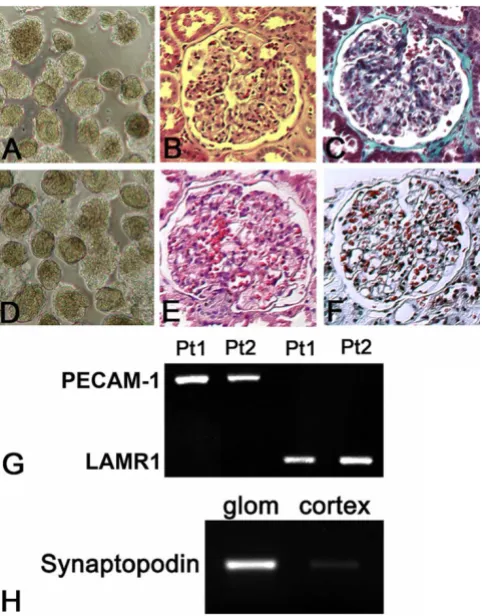
patients. The relative purity of isolated glomeruli and the normal histological appearance of kidney cortex used in this study are shown in Figure 1. That the cDNA template used for SAGE contained mRNA representing glomerular capillary endothelium is shown by RT-PCR amplification of PECAM-1 (836 bp) and the non-integrin laminin receptor LAMR1 (256 bp). Greater synaptopodin tran-script abundance in glomerular, compared to whole kid-ney cortex mRNA from the same specimen also shows appropriate enrichment of the source mRNA in glomeru-lar podocyte transcripts (Figure 1). Amplification of the long PECAM-1 sequence furthermore shows that the source mRNA was intact. Sufficient mRNA for construc-tion of the SAGE library was only obtained from patient 2. The integrity of this source material was also verified by Agilent 2100 microfluidics analysis (data not shown).
Human Glomerular SAGE Library Construction
For SAGE, human glomeruli were isolated by sieving in ice-cold phosphate buffered saline (PBS) from the kidney of a 72-year old male using minor modifications of the proto-col for rat glomeruli [16,17]. Glomeruli were immediately placed into RNA-Protect (Qiagen, Valencia, CA) followed by isolation of 4.7 μg total RNA with the RNeasy kit (Qia-gen). A SAGE library was then custom-constructed by Gen-zyme Corporation (Framingham, MA) using the "long" SAGE protocol, producing 17 bp SAGE tags with the CATG (NlaIII) anchoring restriction site [18]. A total of 2304 clones containing concatenated ditags were sequenced, resulting in 48,926 tags. Of these, 1,361 were derived from duplicate ditags. Tags from duplicate ditags were not removed [19]. Twenty-one tags were removed as they con-tained ambiguous (N) nucleotides leaving 48,905 tags and 22,907 unique long SAGE tags for analysis.
BMC Nephrology 2009, 10:13 http://www.biomedcentral.com/1471-2369/10/13
Page 3 of 14 (page number not for citation purposes)
For each SAGE tag, identification was based on the "Hs_long.best_gene.gz" database found at ftp:// ftp1.nci.nih.gov/pub/SAGE/HUMAN/. The SAGE Genie algorithm for identifying the best gene match for SAGE tags was reported by Boon et al. [21]. For some tags, the Blast n algorithm at http://blast.ncbi.nlm.nih.gov/ Blast.cgi, was used to match tag sequences that could not be assigned by the "Hs_long.best_gene.gz" database. For these, the SAGE tag had to be in the +/+ orientation with the corresponding mRNA or EST, and fully match the 17 bp sequence immediately 3' of the NlaIII site nearest the Poly(A)+ tail or a stretch of > 8 A's as previously reported [22]. Positive identification based on this latter search strategy is indicated in additional file 1 by asterisks.
RT-PCR Analysis
For quantitative RT-PCR, glomeruli were microdissected from distinct pre-transplant kidney biopsy specimens obtained from three separate donors aged 57, 59 and 63
at the University of Göteborg (Human Subjects Protocol #653-05). Immediately after biopsy, one half of one biopsy core was placed into 0.5 ml of ice-cold PBS con-taining 100 U RNAse inhibitor (RNAsin) (Applied Biosys-tems, Foster City, CA, USA). Four to fifteen glomeruli were isolated using a stereomicroscope (Zeiss, Jena, Germany) followed by extraction of total RNA. cDNA was generated from glomerular RNA with SuperScript™ III RT (Invitro-gen, Carlsbad, CA, USA). Human kidney, spleen, lung and liver mRNA was purchased from Invitrogen/Ambion (Carlsbad, CA). Reactions without RT for each primer set served as controls. PCR cycling was performed with 100 ng template (94°C – 3 min; 35 cycles: 94°C – 30 sec; 55°C – 30 sec; 68°C – 30 sec plus 1 min for each kilobase pair (kbp) of PCR product to be amplified; 72°C – 7 min). Quantification of gene expression was performed accord-ing to the delta Ct method (DeltaCt2/DeltaCt1), as described by others [23], and by this laboratory [22].
Human Glomerular SAGE Database Content
The complete human glomerular SAGE library was depos-ited in the Gene Expression Omnibus http:// www.ncbi.nlm.nih.gov/geo/ repository (record GSE8114, Accession # GSM199994) and in the SAGE Genie collec-tion http://cgap.nci.nih.gov/SAGE as "LSAGE_Kidney_ Glomeruli_Normal_B_bjballer1". It consists of 22,907, unique 17 bp tag sequences and the absolute tag count for each sequence. The total tag count in the library is 48,905. The library is also appended in spreadsheet format with tag identification (additional file 1).
Utility
Retrieval of Highly Enriched Glomerular Transcripts
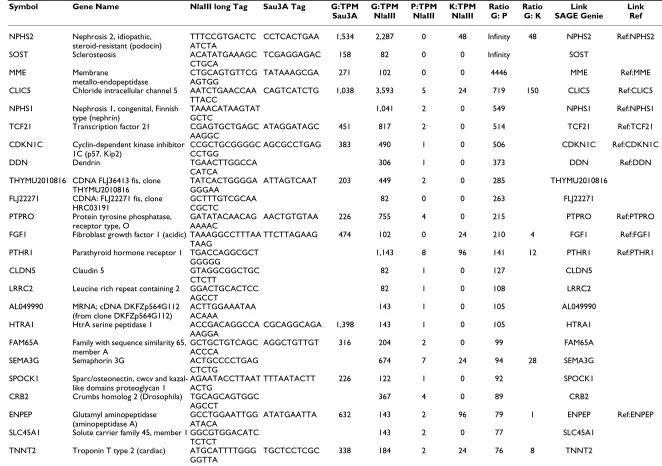
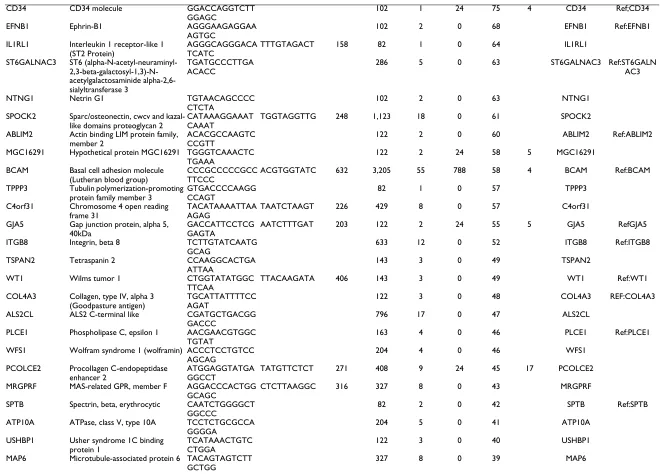
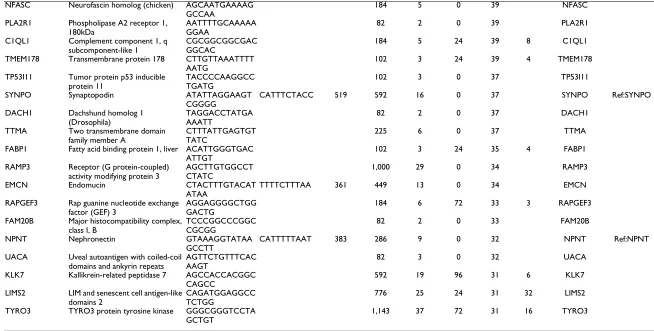
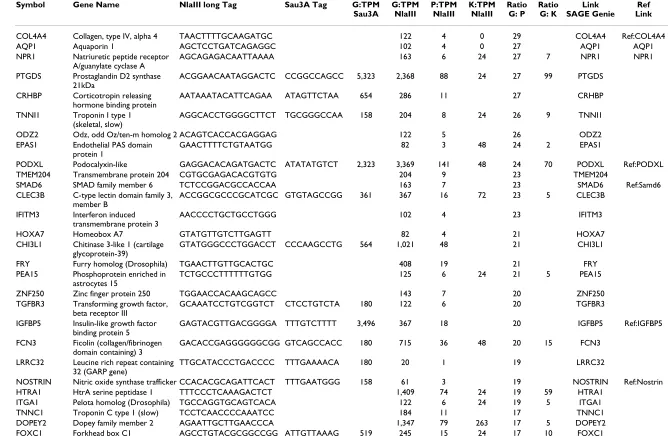
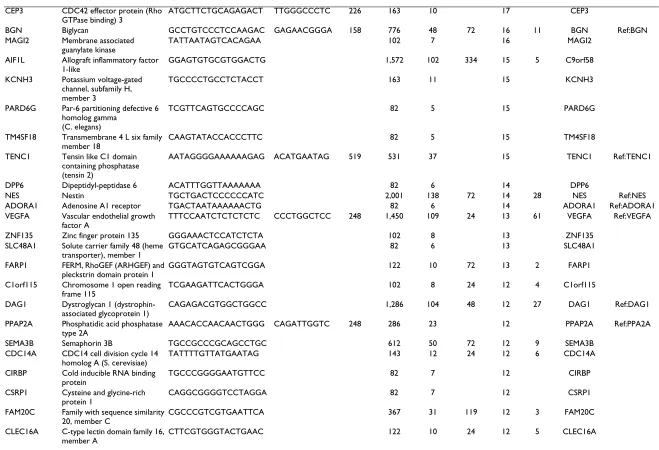
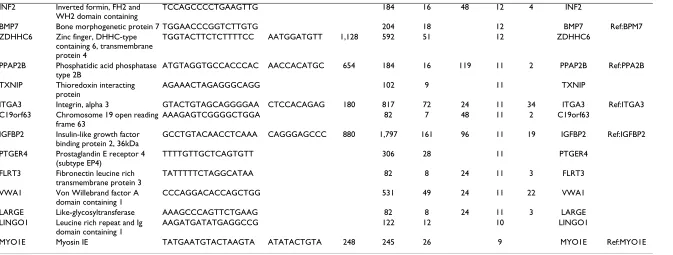
The transcripts most highly enriched in human glomeruli identified by this study are shown in Tables 1 and 2 and Additional files 3 and 4. Of the 22,907 tags, 291 were observed with an absolute count of 4 (81 TPM) or greater and enriched more than 10-fold relative to pooled non-kid-ney SAGE libraries. For 84 of these no reliable match to a known cDNA sequence was found, and a match to incom-pletely defined ESTs was observed for 8 others. The tags rep-resenting Aldolase B, uromodulin, glutamyl aminopeptidase, glutathione peroxidase, and SLC25A45 were excluded from this set because they were not enriched relative to whole kidney. They likely represent transcripts expressed at very high levels in contaminating tubules. Sev-eral highly expressed transcripts produced more than one unique tag, which is common and usually reflects priming from internal poly A(+) runs or alternatively spliced tran-scripts. After removal of such redundant tags, 133 well-characterized tags highly enriched in glomeruli were estab-lished (Tables 1 and 2 and Additional files 3 &4).
A previously published Sau3A-anchored SAGE library [9] prepared from microdissected human glomeruli con-tained 184 SAGE tags that were enriched in glomeruli
rel-Human Kidney Source Material
Figure 1
Human Kidney Source Material. Isolated glomeruli (A,
BMC Nephrology 2009, 10:13 http://www.biomedcentral.com/1471-2369/10/13
Page 4 of 14 (page number not for citation purposes)
ative to other micro-dissected nephron segments. These represented 156 well-characterized transcripts. As expected, the corresponding NlaIII SAGE tag for 143 of these was also observed in the current glomerular SAGE library (Tables 1 and 2 and Additional files 3 and 4 and additional file 2). For 47 transcripts represented in both libraries a 10-fold or greater enrichment of the NlaIII tag relative to non-glomerular cells and tissues was observed and is shown in Tables 1 and 2 and Additional files 3 and 4. The NlaIII tag corresponding to the remaining 96 tran-scripts identified in the Sau3A library was enriched rela-tive to whole kidney, in keeping with the previous report [9], but less than 10 fold relative to non-renal tissues (additional file 2).
Many of the highly expressed and highly enriched tran-scripts observed in this library are encoded by genes already known to be unique or highly enriched in glomer-ular podocytes, for instance Podocin (NPHS2), Nephrin (NPHS1), transcription factor 21 (Pod1, FLJ35700), Pro-tein Tyrosine Phosphatase Glepp 1 (PTPRO), Synaptopo-din (SYNPO), indicating that this SAGE database appropriately represents glomerular transcripts and that it identifies transcripts enriched in glomeruli. Some of the SAGE tags enriched in glomeruli represent known endothelial cell-predominant genes, for instance Endo-mucin (EMCN), claudin 5 (CLDN5), NOSTRIN and CD34, consistent with abundant EC in glomeruli.
To independently demonstrate the utility of this database in defining enrichment of transcripts in glomeruli, RT-PCR comparing the level of expression of 19 transcripts enriched in the glomerular SAGE library with that in lung, spleen and liver was performed. Lung, liver and spleen were not represented in the pooled SAGE libraries used here. For each, glomeruli microdissected from the kidneys of three distinct donors were used. The source mRNA used for RT-PCR was distinct from that used for generation of the SAGE library. Transcripts were chosen to represent a spectrum of glomerular enrichment, and some well-known podocyte-predominant transcripts (TCF21, VEGFA) were included as internal controls. Overall, the degree of glomerular transcript enrichment observed by RT-PCR compared to lung, liver and spleen was similar to that observed by SAGE, though there was variation between lung, spleen and liver (Table 3). The wide range of expression observed in the three non-glomerular tis-sues was expected, as the pooled SAGE-based comparison does not take into account tissue-to-tissue variation in gene expression.
Finally, it is of note that 117 transcript tags observed 2 or more times and enriched > 500 fold in this glomerular library remain unidentified or poorly characterized (addi-tional file 1). At least some of these will likely prove to be currently unknown glomerulus-predominant transcripts.
In Silico Interrogation of the Glomerular SAGE Database
The current database can be retrieved directly or interro-gated in silico. It may be used to determine whether any specific gene is highly expressed in glomeruli, and to define transcripts that are highly enriched relative to other tissues for which SAGE libraries are available.
To assess whether a specific transcript is expressed in glomeruli, the SAGE tags uniquely identifying the tran-script can be found at http://cgap.nci.nih.gov/SAGE/ using the "SAGE Anatomic Viewer" [21]. The "Digital Northern" tool is then used to evaluate the level of expres-sion in the SAGE libraries of the collection, which includes the current library. The collection can also be interrogated using specific NlaIII SAGE tags of cDNA sequences for which a gene symbol may not yet have been assigned. The tag can be retrieved from any cDNA sequence by identifying the 17-nt sequence immediately 3' of the last NlaIII site (CATG) prior to the poly(A+) tail. Its frequency in the glomerular database is an indicator of the level of expression in human glomeruli. The 95% con-fidence interval for observing any tag with a true count of 4 is ± 3.96. Hence, any transcript producing a tag fre-quency of 4 per 48,905 (81.8 TPM) or greater has a 95% probability of being represented in this library. Failure to find the SAGE tag representing any specific transcript in this library indicates that its expression level is lower than the limit of detection, or that the transcript does not con-tain an NlaIII restriction site from which a SAGE tag could be generated.
The "LSAGE_Kidney_Glomeruli_Normal_B_bjballer1" database can also be compared directly to a single, or sets of other SAGE databases in the SAGE Genie collection using the "SAGE Digital Gene Expression Displayer (DGED)" tool at http://cgap.nci.nih.gov/SAGE/. This type of analysis will return data similar to those in additional file 1, though comparison can also be restricted to specific libraries rather than the pool of libraries evaluated here.
Finally, this SAGE library with matching transcript identi-fication, glomerulus to pool ratio and glomerulus to kid-ney ratio is supplied as additional file 1, where the order is based on tag abundance. This data set contains only 18,152 SAGE tags, as any tag found only once and not in any other library was removed. The table can be retrieved without restriction and, if desired, sorted based on the degree of tag enrichment.
Discussion
synap-BMC Nephrology
200
9,
10
:1
3
http://ww
w.b
iomed
central.com/1
471
-2
369
/1
0/1
3
Pa
ge 5 of
1
4
(page number not for citation purposes)
Table 1: Transcripts represented by SAGE tags enriched 30 fold or more in glomeruli
Symbol Gene Name NlaIII long Tag Sau3A Tag G:TPM
Sau3A
G:TPM NlaIII
P:TPM NlaIII
K:TPM NlaIII
Ratio G: P
Ratio G: K
Link SAGE Genie
Link Ref
NPHS2 Nephrosis 2, idiopathic, steroid-resistant (podocin)
TTTCCGTGACTC ATCTA
CCTCACTGAA 1,534 2,287 0 48 Infinity 48 NPHS2 Ref:NPHS2
SOST Sclerosteosis ACATATGAAAGC CTGCA
TCGAGGAGAC 158 82 0 0 Infinity SOST
MME Membrane
metallo-endopeptidase
CTGCAGTGTTCG AGTGG
TATAAAGCGA 271 102 0 0 4446 MME Ref:MME
CLIC5 Chloride intracellular channel 5 AATCTGAACCAA TTACC
CAGTCATCTG 1,038 3,593 5 24 719 150 CLIC5 Ref:CLIC5
NPHS1 Nephrosis 1, congenital, Finnish type (nephrin)
TAAACATAAGTAT GCTC
1,041 2 0 549 NPHS1 Ref:NPHS1
TCF21 Transcription factor 21 CGAGTGCTGAGC AAGGC
ATAGGATAGC 451 817 2 0 514 TCF21 Ref:TCF21
CDKN1C Cyclin-dependent kinase inhibitor 1C (p57, Kip2)
CCGCTGCGGGGC CCTGG
AGCGCCTGAG 383 490 1 0 506 CDKN1C Ref:CDKN1C
DDN Dendrin TGAACTTGGCCA
CATCA
306 1 0 373 DDN Ref:DDN
THYMU2010816 CDNA FLJ36413 fis, clone THYMU2010816
TATCACTGGGGA GGGAA
ATTAGTCAAT 203 449 2 0 285 THYMU2010816
FLJ22271 CDNA: FLJ22271 fis, clone HRC03191
GCTTTGTCGCAA CGCTC
82 0 0 263 FLJ22271
PTPRO Protein tyrosine phosphatase, receptor type, O
GATATACAACAG AAAAC
AACTGTGTAA 226 755 4 0 215 PTPRO Ref:PTPRO
FGF1 Fibroblast growth factor 1 (acidic) TAAAGGCCTTTAA TAAG
TTCTTAGAAG 474 102 0 24 210 4 FGF1 Ref:FGF1
PTHR1 Parathyroid hormone receptor 1 TGACCAGGCGCT GGGGG
1,143 8 96 141 12 PTHR1 Ref:PTHR1
CLDN5 Claudin 5 GTAGGCGGCTGC CTCTT
82 1 0 127 CLDN5
LRRC2 Leucine rich repeat containing 2 GGACTGCACTCC AGCCT
82 1 0 108 LRRC2
AL049990 MRNA; cDNA DKFZp564G112 (from clone DKFZp564G112)
ACTTGGAAATAA ACAAA
143 1 0 105 AL049990
HTRA1 HtrA serine peptidase 1 ACCGACAGGCCA AAGGA
CGCAGGCAGA 1,398 143 1 0 105 HTRA1
FAM65A Family with sequence similarity 65, member A
GCTGCTGTCAGC ACCCA
AGGCTGTTGT 316 204 2 0 99 FAM65A
SEMA3G Semaphorin 3G ACTGCCCCTGAG CTCTG
674 7 24 94 28 SEMA3G
SPOCK1 Sparc/osteonectin, cwcv and kazal-like domains proteoglycan 1
AGAATACCTTAAT ACTG
TTTAATACTT 226 122 1 0 92 SPOCK1
CRB2 Crumbs homolog 2 (Drosophila) TGCAGCAGTGGC AGCCT
367 4 0 89 CRB2
ENPEP Glutamyl aminopeptidase (aminopeptidase A)
GCCTGGAATTGG ATACA
ATATGAATTA 632 143 2 96 79 1 ENPEP Ref:ENPEP
SLC45A1 Solute carrier family 45, member 1 GGCGTGGACATC TCTCT
143 2 0 77 SLC45A1
TNNT2 Troponin T type 2 (cardiac) ATGCATTTTGGG GGTTA
BMC Nephrology
200
9,
10
:1
3
http://ww
w.b
iomed
central.com/1
471
-2
369
/1
0/1
3
Pa
ge 6 of
1
4
(page number not for citation purposes)
CD34 CD34 molecule GGACCAGGTCTT GGAGC
102 1 24 75 4 CD34 Ref;CD34
EFNB1 Ephrin-B1 AGGGAAGAGGAA AGTGC
102 2 0 68 EFNB1 Ref:EFNB1
IL1RL1 Interleukin 1 receptor-like 1 (ST2 Protein)
AGGGCAGGGACA TCATC
TTTGTAGACT 158 82 1 0 64 IL1RL1
ST6GALNAC3 ST6 (alpha-N-acetyl-neuraminyl-
2,3-beta-galactosyl-1,3)-N-TGATGCCCTTGA ACACC
286 5 0 63 ST6GALNAC3 Ref:ST6GALN AC3 acetylgalactosaminide
alpha-2,6-sialyltransferase 3
NTNG1 Netrin G1 TGTAACAGCCCC CTCTA
102 2 0 63 NTNG1
SPOCK2 Sparc/osteonectin, cwcv and kazal-like domains proteoglycan 2
CATAAAGGAAAT CAAAT
TGGTAGGTTG 248 1,123 18 0 61 SPOCK2
ABLIM2 Actin binding LIM protein family, member 2
ACACGCCAAGTC CCGTT
122 2 0 60 ABLIM2 Ref:ABLIM2
MGC16291 Hypothetical protein MGC16291 TGGGTCAAACTC TGAAA
122 2 24 58 5 MGC16291
BCAM Basal cell adhesion molecule (Lutheran blood group)
CCCGCCCCCGCC TTCCC
ACGTGGTATC 632 3,205 55 788 58 4 BCAM Ref:BCAM
TPPP3 Tubulin polymerization-promoting protein family member 3
GTGACCCCAAGG CCAGT
82 1 0 57 TPPP3
C4orf31 Chromosome 4 open reading frame 31
TACATAAAATTAA AGAG
TAATCTAAGT 226 429 8 0 57 C4orf31
GJA5 Gap junction protein, alpha 5, 40kDa
GACCATTCCTCG GAGTA
AATCTTTGAT 203 122 2 24 55 5 GJA5 RefGJA5
ITGB8 Integrin, beta 8 TCTTGTATCAATG GCAG
633 12 0 52 ITGB8 Ref:ITGB8
TSPAN2 Tetraspanin 2 CCAAGGCACTGA ATTAA
143 3 0 49 TSPAN2
WT1 Wilms tumor 1 CTGGTATATGGC TTCAA
TTACAAGATA 406 143 3 0 49 WT1 Ref:WT1
COL4A3 Collagen, type IV, alpha 3 (Goodpasture antigen)
TGCATTATTTTCC AGAT
122 3 0 48 COL4A3 REF:COL4A3
ALS2CL ALS2 C-terminal like CGATGCTGACGG GACCC
796 17 0 47 ALS2CL
PLCE1 Phospholipase C, epsilon 1 AACGAACGTGGC TGTAT
163 4 0 46 PLCE1 Ref:PLCE1
WFS1 Wolfram syndrome 1 (wolframin) ACCCTCCTGTCC AGCAG
204 4 0 46 WFS1
PCOLCE2 Procollagen C-endopeptidase enhancer 2
ATGGAGGTATGA GGCCT
TATGTTCTCT 271 408 9 24 45 17 PCOLCE2
MRGPRF MAS-related GPR, member F AGGACCCACTGG GCAGC
CTCTTAAGGC 316 327 8 0 43 MRGPRF
SPTB Spectrin, beta, erythrocytic CAATCTGGGGCT GGCCC
82 2 0 42 SPTB Ref:SPTB
ATP10A ATPase, class V, type 10A TCCTCTGCGCCA GGGGA
204 5 0 41 ATP10A
USHBP1 Usher syndrome 1C binding protein 1
TCATAAACTGTC CTGGA
122 3 0 40 USHBP1
MAP6 Microtubule-associated protein 6 TACAGTAGTCTT GCTGG
327 8 0 39 MAP6
BMC Nephrology
200
9,
10
:1
3
http://ww
w.b
iomed
central.com/1
471
-2
369
/1
0/1
3
Pa
ge 7 of
1
4
(page number not for citation purposes)
NFASC Neurofascin homolog (chicken) AGCAATGAAAAG GCCAA
184 5 0 39 NFASC
PLA2R1 Phospholipase A2 receptor 1, 180kDa
AATTTTGCAAAAA GGAA
82 2 0 39 PLA2R1
C1QL1 Complement component 1, q subcomponent-like 1
CGCGGCGGCGAC GGCAC
184 5 24 39 8 C1QL1
TMEM178 Transmembrane protein 178 CTTGTTAAATTTT AATG
102 3 24 39 4 TMEM178
TP53I11 Tumor protein p53 inducible protein 11
TACCCCAAGGCC TGATG
102 3 0 37 TP53I11
SYNPO Synaptopodin ATATTAGGAAGT CGGGG
CATTTCTACC 519 592 16 0 37 SYNPO Ref:SYNPO
DACH1 Dachshund homolog 1 (Drosophila)
TAGGACCTATGA AAATT
82 2 0 37 DACH1
TTMA Two transmembrane domain family member A
CTTTATTGAGTGT TATC
225 6 0 37 TTMA
FABP1 Fatty acid binding protein 1, liver ACATTGGGTGAC ATTGT
102 3 24 35 4 FABP1
RAMP3 Receptor (G protein-coupled) activity modifying protein 3
AGCTTGTGGCCT CTATC
1,000 29 0 34 RAMP3
EMCN Endomucin CTACTTTGTACAT ATAA
TTTTCTTTAA 361 449 13 0 34 EMCN
RAPGEF3 Rap guanine nucleotide exchange factor (GEF) 3
AGGAGGGGCTGG GACTG
184 6 72 33 3 RAPGEF3
FAM20B Major histocompatibility complex, class I, B
TCCCGGCCCGGC CGCGG
82 2 0 33 FAM20B
NPNT Nephronectin GTAAAGGTATAA GCCTT
CATTTTTAAT 383 286 9 0 32 NPNT Ref:NPNT
UACA Uveal autoantigen with coiled-coil domains and ankyrin repeats
AGTTCTGTTTCAC AAGT
82 3 0 32 UACA
KLK7 Kallikrein-related peptidase 7 AGCCACCACGGC CAGCC
592 19 96 31 6 KLK7
LIMS2 LIM and senescent cell antigen-like domains 2
CAGATGGAGGCC TCTGG
776 25 24 31 32 LIMS2
TYRO3 TYRO3 protein tyrosine kinase GGGCGGGTCCTA GCTGT
1,143 37 72 31 16 TYRO3
Transcripts represented by SAGE tags enriched 30 fold or more in glomeruli compared to pooled SAGE libraries from diverse tissues and cells. The gene symbol and gene name are shown for each tag sequence. Where available, the corresponding short Sau3A SAGE tag (Ref 9) is shown. SAGE tag frequencies are shown as Tags per Million (TPM). Sau3A TPM is derived from Ref 9. Enrichment in glomeruli relative to pooled libraries (G:P) and relative to whole kidney (G:K) is shown for each tag. This table with embedded links to SAGE Genie and links to references showing expression and/or function in glomeruli is provided as additional file 3
BMC Nephrology
200
9,
10
:1
3
http://ww
w.b
iomed
central.com/1
471
-2
369
/1
0/1
3
Pa
ge 8 of
1
4
(page number not for citation purposes)
Table 2: Transcripts represented by SAGE tags enriched 10 – 30 fold in glomeruli
Symbol Gene Name NlaIII long Tag Sau3A Tag G:TPM
Sau3A
G:TPM NlaIII
P:TPM NlaIII
K:TPM NlaIII
Ratio G: P
Ratio G: K
Link SAGE Genie
Ref Link
COL4A4 Collagen, type IV, alpha 4 TAACTTTTGCAAGATGC 122 4 0 29 COL4A4 Ref:COL4A4
AQP1 Aquaporin 1 AGCTCCTGATCAGAGGC 102 4 0 27 AQP1 AQP1
NPR1 Natriuretic peptide receptor A/guanylate cyclase A
AGCAGAGACAATTAAAA 163 6 24 27 7 NPR1 NPR1
PTGDS Prostaglandin D2 synthase 21kDa
ACGGAACAATAGGACTC CCGGCCAGCC 5,323 2,368 88 24 27 99 PTGDS
CRHBP Corticotropin releasing hormone binding protein
AATAAATACATTCAGAA ATAGTTCTAA 654 286 11 27 CRHBP
TNNI1 Troponin I type 1 (skeletal, slow)
AGGCACCTGGGGCTTCT TGCGGGCCAA 158 204 8 24 26 9 TNNI1
ODZ2 Odz, odd Oz/ten-m homolog 2 ACAGTCACCACGAGGAG 122 5 26 ODZ2
EPAS1 Endothelial PAS domain protein 1
GAACTTTTCTGTAATGG 82 3 48 24 2 EPAS1
PODXL Podocalyxin-like GAGGACACAGATGACTC ATATATGTCT 2,323 3,369 141 48 24 70 PODXL Ref:PODXL TMEM204 Transmembrane protein 204 CGTGCGAGACACGTGTG 204 9 23 TMEM204
SMAD6 SMAD family member 6 TCTCCGGACGCCACCAA 163 7 23 SMAD6 Ref:Samd6
CLEC3B C-type lectin domain family 3, member B
ACCGGCGCCCGCATCGC GTGTAGCCGG 361 367 16 72 23 5 CLEC3B
IFITM3 Interferon induced transmembrane protein 3
AACCCCTGCTGCCTGGG 102 4 23 IFITM3
HOXA7 Homeobox A7 GTATGTTGTCTTGAGTT 82 4 21 HOXA7
CHI3L1 Chitinase 3-like 1 (cartilage glycoprotein-39)
GTATGGGCCCTGGACCT CCCAAGCCTG 564 1,021 48 21 CHI3L1
FRY Furry homolog (Drosophila) TGAACTTGTTGCACTGC 408 19 21 FRY
PEA15 Phosphoprotein enriched in astrocytes 15
TCTGCCCTTTTTTGTGG 125 6 24 21 5 PEA15
ZNF250 Zinc finger protein 250 TGGAACCACAAGCAGCC 143 7 20 ZNF250
TGFBR3 Transforming growth factor, beta receptor III
GCAAATCCTGTCGGTCT CTCCTGTCTA 180 122 6 20 TGFBR3
IGFBP5 Insulin-like growth factor binding protein 5
GAGTACGTTGACGGGGA TTTGTCTTTT 3,496 367 18 20 IGFBP5 Ref:IGFBP5
FCN3 Ficolin (collagen/fibrinogen domain containing) 3
GACACCGAGGGGGGCGG GTCAGCCACC 180 715 36 48 20 15 FCN3
LRRC32 Leucine rich repeat containing 32 (GARP gene)
TTGCATACCCTGACCCC TTTGAAAACA 180 20 1 19 LRRC32
NOSTRIN Nitric oxide synthase trafficker CCACACGCAGATTCACT TTTGAATGGG 158 61 3 19 NOSTRIN Ref:Nostrin HTRA1 HtrA serine peptidase 1 TTTCCCTCAAAGACTCT 1,409 74 24 19 59 HTRA1
ITGA1 Pelota homolog (Drosophila) TGCCAGGTGCAGTCACA 122 6 24 19 5 ITGA1
TNNC1 Troponin C type 1 (slow) TCCTCAACCCCAAATCC 184 11 17 TNNC1
BMC Nephrology
200
9,
10
:1
3
http://ww
w.b
iomed
central.com/1
471
-2
369
/1
0/1
3
Pa
ge 9 of
1
4
(page number not for citation purposes)
CEP3 CDC42 effector protein (Rho GTPase binding) 3
ATGCTTCTGCAGAGACT TTGGGCCCTC 226 163 10 17 CEP3
BGN Biglycan GCCTGTCCCTCCAAGAC GAGAACGGGA 158 776 48 72 16 11 BGN Ref:BGN MAGI2 Membrane associated
guanylate kinase
TATTAATAGTCACAGAA 102 7 16 MAGI2
AIF1L Allograft inflammatory factor 1-like
GGAGTGTGCGTGGACTG 1,572 102 334 15 5 C9orf58
KCNH3 Potassium voltage-gated channel, subfamily H, member 3
TGCCCCTGCCTCTACCT 163 11 15 KCNH3
PARD6G Par-6 partitioning defective 6 homolog gamma
(C. elegans)
TCGTTCAGTGCCCCAGC 82 5 15 PARD6G
TM4SF18 Transmembrane 4 L six family member 18
CAAGTATACCACCCTTC 82 5 15 TM4SF18
TENC1 Tensin like C1 domain containing phosphatase (tensin 2)
AATAGGGGAAAAAAGAG ACATGAATAG 519 531 37 15 TENC1 Ref:TENC1
DPP6 Dipeptidyl-peptidase 6 ACATTTGGTTAAAAAAA 82 6 14 DPP6
NES Nestin TGCTGACTCCCCCCATC 2,001 138 72 14 28 NES Ref:NES
ADORA1 Adenosine A1 receptor TGACTAATAAAAAACTG 82 6 14 ADORA1 Ref:ADORA1 VEGFA Vascular endothelial growth
factor A
TTTCCAATCTCTCTCTC CCCTGGCTCC 248 1,450 109 24 13 61 VEGFA Ref:VEGFA
ZNF135 Zinc finger protein 135 GGGAAACTCCATCTCTA 102 8 13 ZNF135
SLC48A1 Solute carrier family 48 (heme transporter), member 1
GTGCATCAGAGCGGGAA 82 6 13 SLC48A1
FARP1 FERM, RhoGEF (ARHGEF) and pleckstrin domain protein 1
GGGTAGTGTCAGTCGGA 122 10 72 13 2 FARP1
C1orf115 Chromosome 1 open reading frame 115
TCGAAGATTCACTGGGA 102 8 24 12 4 C1orf115
DAG1 Dystroglycan 1 (dystrophin-associated glycoprotein 1)
CAGAGACGTGGCTGGCC 1,286 104 48 12 27 DAG1 Ref:DAG1
PPAP2A Phosphatidic acid phosphatase type 2A
AAACACCAACAACTGGG CAGATTGGTC 248 286 23 12 PPAP2A Ref:PPA2A
SEMA3B Semaphorin 3B TGCCGCCCGCAGCCTGC 612 50 72 12 9 SEMA3B
CDC14A CDC14 cell division cycle 14 homolog A (S. cerevisiae)
TATTTTGTTATGAATAG 143 12 24 12 6 CDC14A
CIRBP Cold inducible RNA binding protein
TGCCCGGGGAATGTTCC 82 7 12 CIRBP
CSRP1 Cysteine and glycine-rich protein 1
CAGGCGGGGTCCTAGGA 82 7 12 CSRP1
FAM20C Family with sequence similarity 20, member C
CGCCCGTCGTGAATTCA 367 31 119 12 3 FAM20C
CLEC16A C-type lectin domain family 16, member A
CTTCGTGGGTACTGAAC 122 10 24 12 5 CLEC16A
BMC Nephrology
200
9,
10
:1
3
http://ww
w.b
iomed
central.com/1
471
-2
369
/1
0/1
3
Pag
e 10 of
1
4
(page number not for citation purposes)
INF2 Inverted formin, FH2 and WH2 domain containing
TCCAGCCCCTGAAGTTG 184 16 48 12 4 INF2
BMP7 Bone morphogenetic protein 7 TGGAACCCGGTCTTGTG 204 18 12 BMP7 Ref:BPM7 ZDHHC6 Zinc finger, DHHC-type
containing 6, transmembrane protein 4
TGGTACTTCTCTTTTCC AATGGATGTT 1,128 592 51 12 ZDHHC6
PPAP2B Phosphatidic acid phosphatase type 2B
ATGTAGGTGCCACCCAC AACCACATGC 654 184 16 119 11 2 PPAP2B Ref:PPA2B
TXNIP Thioredoxin interacting protein
AGAAACTAGAGGGCAGG 102 9 11 TXNIP
ITGA3 Integrin, alpha 3 GTACTGTAGCAGGGGAA CTCCACAGAG 180 817 72 24 11 34 ITGA3 Ref:ITGA3 C19orf63 Chromosome 19 open reading
frame 63
AAAGAGTCGGGGCTGGA 82 7 48 11 2 C19orf63
IGFBP2 Insulin-like growth factor binding protein 2, 36kDa
GCCTGTACAACCTCAAA CAGGGAGCCC 880 1,797 161 96 11 19 IGFBP2 Ref:IGFBP2
PTGER4 Prostaglandin E receptor 4 (subtype EP4)
TTTTGTTGCTCAGTGTT 306 28 11 PTGER4
FLRT3 Fibronectin leucine rich transmembrane protein 3
TATTTTTCTAGGCATAA 82 8 24 11 3 FLRT3
VWA1 Von Willebrand factor A domain containing 1
CCCAGGACACCAGCTGG 531 49 24 11 22 VWA1
LARGE Like-glycosyltransferase AAAGCCCAGTTCTGAAG 82 8 24 11 3 LARGE LINGO1 Leucine rich repeat and Ig
domain containing 1
AAGATGATATGAGGCCG 122 12 10 LINGO1
MYO1E Myosin IE TATGAATGTACTAAGTA ATATACTGTA 248 245 26 9 MYO1E Ref:MYO1E
Transcripts represented by SAGE tags enriched 10 – 30 fold in glomeruli compared to pooled SAGE libraries. The gene symbol and gene name are shown for each unique NlaIII-anchored long SAGE tag sequence. Where available, the corresponding short Sau3A SAGE tag (Ref 9) is shown. SAGE tag frequencies are shown as Tags per Million (TPM). Sau3A TPM is derived from Ref 9. Enrichment in glomeruli relative to pooled libraries (G:P) and relative to whole kidney (G:K) is shown for each tag. This table with embedded links to SAGE Genie and links to references showing expression and/or function in glomeruli is provided as additional file 4
BMC Nephrology 2009, 10:13 http://www.biomedcentral.com/1471-2369/10/13
Page 11 of 14 (page number not for citation purposes)
topodin [26], podocalyxin [27], transcription factor 21 [28], the protein tyrosine phosphatase receptor type O GLEPP1 [29], the cyclin dependent kinase inhibitor C1 [30] and nestin [31]. It is therefore likely that other tran-scripts whose SAGE tags are much more highly repre-sented in this library compared to SAGE libraries from other tissues and cells are also expressed predominantly in glomeruli.
A SAGE library that used Sau3A as the anchoring restric-tion enzyme was previously produced from human glomerular mRNA [9]. It identified 155 highly expressed transcripts in glomeruli that were enriched in glomeruli when compared to microdissected non-glomerular neph-ron segments. Since the previously published glomerular
SAGE library is based on the Sau3A anchoring restriction site, it does not allow in silico comparison of tag frequen-cies with the much greater collection of NlaIII-based SAGE libraries. All except 12 transcripts reported to be enriched in glomeruli by Chabardes-Garonne [9] were observed in the current glomerular SAGE library. The cor-responding NlaIII tag for a subset of these (47 tags) was enriched > 10 fold when compared to non-renal tissues and cells (Tables 1 and 2 and Additional files 3 &4), pro-viding independent evidence that these represent glomer-ulus-predominant transcripts.
The current study also identified 86 transcript tags that were enriched more than 10 fold in glomeruli, but which were not represented in the previous Sau3A anchored
Table 3: Ratio of mRNA abundance in glomeruli compared to lung, spleen and liver.
SAGE RT-PCR
Symbol Name LongTag G: TPM P: TPM Ratio G: P G: Lu G: Sp G: Li
SOST Sclerosteosis ACATATGAAAGCCT
GCA
82 0.00 Infinity 130 ± 48 13007 ± 4827 7969 ± 2957
TCF21 Transcription factor 21 CGAGTGCTGAGCA AGGC
817 1.59 514 49 ± 16 27 ± 9 384 ± 123
FGF1 Fibroblast growth factor 1 (acidic)
TAAAGGCCTTTAAT AAG
102 0.49 210 490 ± 70 166 ± 23 2565 ± 367
SPOCK2 sparc/osteonectin, cwcv and kazal-like domains
TGTGGAGTGTACTT GTT
245 1.44 170 45 ± 13 39 ± 12 258 ± 75
PTHR1 Parathyroid hormone receptor 1
TGACCAGGCGCTG GGGG
1143 8 141 196 ± 55 51 ± 14 30 ± 8
EFNB1 Ephrin-B1 AGGGAAGAGGAAA
GTGC
102 1.50 68 20 ± 4 17 ± 3 30 ± 6
CDKN1C Cyclin-dependent kinase inhibitor 1C (p57, Kip2)
TAGCAGCAACCGG CGGC
1021 46 22 51 ± 17 45 ± 15 198 ± 66
IGFBP5 Insulin-like growth factor binding protein 5
GAGTACGTTGACG GGGA
367 18 20 10 ± 4 22 ± 9 43 ± 17
CLDN5 Claudin 5 GACCGCGGCTTCC
GCCG
715 38 19 5 ± 1 27 ± 7 24 ± 6
FAM65A Family with sequence similarity 65, member A
GGTTCCTGGTGCC CCTT
755 43 17 18 ± 5 11 ± 3 51 ± 15
FOXC1 Forkhead box C1 AGCCTGTACGCGG
CCGG
245 15 17 25 ± 6 302 ± 74 452 ± 110
C9orf58 Chromosome 9 open reading frame 58
GGAGTGTGCGTGG ACTG
1572 102 15 36 ± 3 2 ± 0 171 ± 16
NES Nestin TGCTGACTCCCCC
CATC
2001 138 14 22 ± 6 23 ± 6 339 ± 84
VEGFA Vascular endothelial growth factor A
TTTCCAATCTCTCT CTC
1450 109 13 16 ± 4 53 ± 12 22 ± 5
ZDHHC6 Zinc finger, DHHC-type containing 6
TGGTACTTCTCTTT TCC
592 51 12 Infinity 60 ± 18 Infinity
MYO1E Myosin IE TATGAATGTACTAA
GTA
245 26 9 11 ± 3 21 ± 6 13 ± 3
MYL9 Myosin, light chain 9, regulatory
GGAGTGTGCTCAG GAGT
3287 454 7 4 ± 1 15 ± 4 45 ± 11
ITM2B Integral membrane protein 2B
TCACCTTAGGTAGT AGG
3328 508 7 4 ± 1 4 ± 1 5 ± 1
MYO1D Myosin ID ATTGTAGACAATGA
GGG
327 82 4 3 ± 0 7 ± 1 7 ± 1
BMC Nephrology 2009, 10:13 http://www.biomedcentral.com/1471-2369/10/13
Page 12 of 14 (page number not for citation purposes)
library (Tables 1 and 2 and Additional files 3 &4). Failure to find a Sau3A SAGE tag for known glomerulus-restricted genes like nephrin, or an NlaIII SAGE tag for endoglin and VCAM1, suggests either that the tag frequency was too low to be detected or that the required restriction site was absent from the transcript. The current study also shows that that several transcripts more highly expressed in glomeruli compared to other nephron segments [9] are not restricted to glomeruli when compared to non-renal tissues or cells (additional file 2). This is not surprising since some transcripts that are not shared between neph-ron epithelium and glomerular capillary tuft nevertheless may be highly expressed in other tissues.
Several transcripts not previously shown to have a specific function in glomeruli were highly expressed and enriched in glomeruli when compared to non-glomerular tissues. Among these, the tag for the chloride intracellular channel 5 (CLIC5) is very abundant in the glomerular transcript pool, and its frequency in glomeruli was more than 800 fold greater than in other tissues. The transcript "DKFZp564B076" whose SAGE tag was previously shown to be enriched in microdissected glomeruli [9] and later in cultured glomerular EC in this laboratory [22] is identical to the 3' end of CLIC5. CLIC5 is an ezrin-binding protein involved in maintaining actin-based microvilli in the pla-centa and actin-based stereocilia in the inner ear [32]. Its role in glomerular cell function is as yet undefined. The transcript for the basal cell adhesion molecule (BCAM) is also very abundant in glomeruli and enriched approxi-mately 58 fold. BCAM is a glycoprotein that functions as a receptor for alpha5 laminin. BCAM immunoreactivity is observed in both, glomerular podocytes and glomerular EC, and mice deficient in BCAM have significant struc-tural abnormalities of glomeruli [33]. Glomerular expres-sion of the parathyroid hormone receptor 1 (PTHR1) was not expected. PTHR1 is very abundant in renal proximal tubule cells and could therefore represent proximal tubule contamination. However, since the PTHR1 SAGE tag was less abundant in renal cortex than in glomeruli (Table 1 and Additional file 3), its enrichment in this library can-not be due to proximal tubule contamination. Indeed, mesangial cells express PTHR1 [34]. More work is required to define the function of PTHR1 in mesangial cells. In this regard, it is of great interest that Sclerostin, an inhibitor of bone matrix formation whose expression is regulated by PTH, is also expressed at much higher levels in glomeruli than in most non-renal tissues and cells (Table 1 and Additional file 3) or in other nephron seg-ments [9]. While we have no comparison with a bone SAGE library where sclerostin is likely expressed at high levels, the finding nonetheless suggests that it could be involved in regulating extracellular matrix depositon in glomeruli. Nephronectin, a ligand for integrin alpha8beta1 is known to be essential for renal
develop-ment, and is expressed in renal epithelium. Enrichment of the nephronectin SAGE tag in the glomerular library rela-tive to kidney cortex is in keeping with the observation by Brandenberger et al [35], who observed very strong neph-ronectin immunoreactivity in differentiating glomeruli. The secreted glycoprotein testican 2 SPARC (SPOCK2) belongs to in the osteonectin/SPARC family [36] is also highly expressed and enriched in glomeruli. Members of this family of proteins regulate cell-cell and cell-matrix interactions, and SPOCK2 is induced after glomerular injury [37]. The other protein in this family is connective tissue growth factor (CTGF). The SAGE tag for CTGF was observed at a high frequency in glomeruli (additional file 1) but it was not highly enriched relative to other tissues. Nonetheless, both SPOCK2 and CTGF likely play a critical role in regulating glomerular remodeling. In 2006 Lakhe-Reddy and coworkers [38] described the localization of beta 8 integrin to glomerular mesangial cells and observed that its expression may suppress mesangial cell dedifferen-tiation via Rac1 activation. The SAGE tag for integrin beta 8 was highly expressed and enriched in this glomerular library.
While several semaphorins are expressed in renal glomer-uli, so far a role for semaphorin 3G, whose SAGE tag is abundant and enriched in this database, has not been described. Still, semphorin 3G, which has repulsive func-tion via neuropilin 2 binding in the CSN neuronal guid-ance, is also highly expressed in kidney [39], begging the question whether it serves an important function is in glomeruli. Based on this study many other transcripts are highly enriched in glomeruli. It is hoped that other inves-tigators will use this database as a tool to further define the transcriptome of glomerular cells in health and dis-ease.
We did not observe the NlaIII SAGE tag for EHD3, a tran-script previously shown to be unique for glomerular endothelial cells [12], in this library. A SAGE tag for EHD3 also is not observed in the previously published Sau3A-anchored library [9]. Failure to observe this tag does not detract from the previous observations but only suggests that the EHD3 transcript abundance was too low to gen-erate a SAGE tag in the two glomerular SAGE libraries.
Finally, not all tags observed in this SAGE library have as yet been matched to a specific gene. For some of these uni-dentified SAGE tags, matching sequences within the human genome are observed, but whether they represent specific transcripts is currently not known.
Conclusion
BMC Nephrology 2009, 10:13 http://www.biomedcentral.com/1471-2369/10/13
Page 13 of 14 (page number not for citation purposes)
transcripts are highly expressed and/or enriched in glomeruli and it can be used a resource to further study transcripts that appear to be glomerulus-enriched but whose function in glomeruli has not been investigated so far.
Availability and requirements
The SAGE database (GEO Accession #GSM199994) described here is available for download from http:// www.ncbi.nlm.nih.gov/geo/. It can also be downloaded from, or interrogated in silico at http://cgap.nci.nih.gov/ SAGE/ without restriction. The annotated database con-taining Tag sequences, glomerular frequencies, gene iden-tification, as well as frequency ratios to pooled and kidney libraries is available as additional file 1.
Abbreviations
SAGE: Serial Analysis of Gene Expression; TPM: Tags per million; RT-PCR: Reverse Transcriptase Polymerase Chain Reaction; WT-1: Wilms Tumor 1; EC: Endothelial Cell(s); EST: Expressed Sequence Tag; cDNA: Complementary DNA; bp: base pair.
Authors' contributions
WF, JN and BJB developed the conceptual design of the study. Contributions by WF and JN were equivalent. WF isolated human glomeruli and prepared RNA from glomeruli for construction of the SAGE library, and per-formed work shown in Figure 1. AG microdissected human glomeruli for PCR analysis. JN performed RT-PCR on microdissected human glomeruli. SK performed immunofluorescence analysis. BJB performed the bioin-formatics work and wrote the manuscript. All authors read and approved the final manuscript.
Additional material
Acknowledgements
The work was supported by Establishment Grant CEG63108 from the Canadian Institutes of Health Research (CIHR) and by CIHR operating grant MOP641814. B.J. Ballermann holds the Tier 1 Canada Research Chair in Endothelial Cell Biology. J. Sorensson-Nystrom's work was supported by Grant #14764 from the Swedish Research Council. W. Fierlbeck was sup-ported by a fellowship grant from the Deutsche Forschungsgemeinschaft (Fi 829/1-1)
References
1. Patari-Sampo A, Ihalmo P, Holthofer H: Molecular basis of the glomerular filtration: nephrin and the emerging protein
complex at the podocyte slit diaphragm. Ann Med 2006,
38(7):483-492.
2. Herrera GA: Plasticity of mesangial cells: a basis for
under-standing pathological alterations. Ultrastruct Pathol 2006,
30(6):471-479.
3. Ballermann BJ: Glomerular endothelial cell differentiation. Kid-ney Int 2005, 67(5):1668-1671.
Additional file 1
Annotated NlaIII-anchored human glomerular long SAGE library. Additional file 1 contains all (18,152) NlaIII-anchored long SAGE tags observed in the current glomerular library and at least twice in this + cur-rently reported long SAGE libraries. The SAGE tags are sorted by fre-quency (a measure of expression of the corresponding transcript). Genes matched to each tag, chromosomal localization, absolute SAGE tag count in the glomerular library, frequency (TPM) in the glomerular and the pooled libraries and the ratio of glomerular: pooled frequencies are shown. Absolute counts and TPM for the corresponding short NlaIII-based SAGE tag in whole kidney and the ratio of SAGE tag TPM in glomeruli: kidney are shown. The dataset can be downloaded without restriction.
Click here for file
[http://www.biomedcentral.com/content/supplementary/1471-2369-10-13-S1.xls]
Additional file 2
SAGE tags observed NlaIII and Sau3A glomerular libraries but enriched less than 10 fold. This dataset represents all Sau3A tags reported by Chabardes-Garonne (9) to be enriched in glomeruli when compared to microdissected nephron segments that were also observed in the current NlaIII anchored library, but for which the corresponding NlaIII tags were enriched less than 10 fold when compared to pooled non-renal tissues and cells.
Click here for file
[http://www.biomedcentral.com/content/supplementary/1471-2369-10-13-S2.xls]
Additional file 3
Transcripts identfied for SAGE tags enriched 30 fold or more in Glomeruli compared to pooled SAGE libraries from diverse tissues and cells. The gene symbol and gene name are shown for each tag sequence. Where available, the corresponding short Sau3A SAGE tag (Ref 9) is shown. SAGE tag frequencies are shown as Tags per Million (TPM). Sau3A TPM is derived from Ref 9. Enrichment in glomeruli relative to pooled libraries (G:P) and relative to whole kidney (G:K) is shown for each tag.
Click here for file
[http://www.biomedcentral.com/content/supplementary/1471-2369-10-13-S3.xls]
Additional file 4
Transcripts name for SAGE tags enriched 10 - 25 fold in Glomeruli compared to pooled SAGE libraries. The gene symbol and gene name are shown for each unique NlaIII-anchored long SAGE tag sequence. Where available, the corresponding short Sau3A SAGE tag (Ref 9) is shown. SAGE tag frequencies are shown as Tags per Million (TPM). Sau3A TPM is derived from Ref 9. Enrichment in glomeruli relative to pooled libraries (G:P) and relative to whole kidney (G:K) is shown for each. tag.
Click here for file
BMC Nephrology 2009, 10:13 http://www.biomedcentral.com/1471-2369/10/13
Page 14 of 14 (page number not for citation purposes) 4. Nagai T, Yokomori H, Yoshimura K, Fujimaki K, Nomura M, Hibi T,
Oda M: Actin filaments around endothelial fenestrae in rat
hepatic sinusoidal endothelial cells. Med Electron Microsc 2004,
37(4):252-255.
5. Deen WM, Lazzara MJ, Myers BD: Structural determinants of
glomerular permeability. Am J Physiol Renal Physiol 2001,
281(4):F579-596.
6. Tryggvason K, Wartiovaara J: How does the kidney filter plasma?
Physiology (Bethesda) 2005, 20:96-101.
7. Ballermann BJ: Contribution of the endothelium to the glomerular permselectivity barrier in health and disease.
Nephron Physiol 2007, 106(2):19-25.
8. Jeansson M, Haraldsson B: Morphological and functional evi-dence for an important role of the endothelial cell glycocalyx
in the glomerular barrier. Am J Physiol Renal Physiol 2006,
290(1):F111-116.
9. Chabardes-Garonne D, Mejean A, Aude JC, Cheval L, Di Stefano A, Gaillard MC, Imbert-Teboul M, Wittner M, Balian C, Anthouard V, et al.: A panoramic view of gene expression in the human
kid-ney. Proc Natl Acad Sci USA 2003, 100(23):13710-13715.
10. He L, Sun Y, Patrakka J, Mostad P, Norlin J, Xiao Z, Andrae J, Tryg-gvason K, Samuelsson T, Betsholtz C, et al.: Glomerulus-specific mRNA transcripts and proteins identified through kidney
expressed sequence tag database analysis. Kidney Int 2007,
71(9):889-900.
11. Betsholtz C, He L, Takemoto M, Norlin J, Sun Y, Patrakka J, Tryggva-son K: The glomerular transcriptome and proteome. Nephron Exp Nephrol 2007, 106(2):e32-36.
12. Patrakka J, Xiao Z, Nukui M, Takemoto M, He L, Oddsson A, Perisic L, Kaukinen A, Szigyarto CA, Uhlen M, et al.: Expression and sub-cellular distribution of novel glomerulus-associated proteins
dendrin, ehd3, sh2d4a, plekhh2, and 2310066E14Rik. J Am Soc
Nephrol 2007, 18(3):689-697.
13. Tryggvason K, Patrakka J, Wartiovaara J: Hereditary proteinuria
syndromes and mechanisms of proteinuria. N Engl J Med 2006,
354(13):1387-1401.
14. Velculescu VE, Zhang L, Vogelstein B, Kinzler KW: Serial analysis
of gene expression. Science 1995, 270(5235):484-487.
15. el-Meanawy MA, Barathan S, Hayden PS, Iyengar SK, Schelling JR, Sedor JR: Serial analysis of gene expression. Methods Mol Med
2003, 86:257-274.
16. Misra RP: Isolation of glomeruli from mammalian kidneys by
graded sieving. Am J Clin Pathol 1972, 58(2):135-139.
17. Ballermann BJ, Skorecki KL, Brenner BM: Reduced glomerular angiotensin II receptor density in early untreated diabetes
mellitus in the rat. Am J Physiol 1984, 247(1 Pt 2):F110-116.
18. Akmaev VR, Wang CJ: Correction of sequence-based artifacts
in serial analysis of gene expression. Bioinformatics 2004,
20(8):1254-1263.
19. Emmersen J, Heidenblut AM, Hogh AL, Hahn SA, Welinder KG, Nielsen KL: Discarding duplicate ditags in LongSAGE analysis
may introduce significant error. BMC Bioinformatics 2007, 8:92.
20. Man MZ, Wang X, Wang Y: POWER_SAGE: comparing
statis-tical tests for SAGE experiments. Bioinformatics 2000,
16(11):953-959.
21. Boon K, Osorio EC, Greenhut SF, Schaefer CF, Shoemaker J, Polyak K, Morin PJ, Buetow KH, Strausberg RL, De Souza SJ, et al.: An
anat-omy of normal and malignant gene expression. Proc Natl Acad
Sci USA 2002, 99(17):11287-11292.
22. Sengoelge G, Luo W, Fine D, Perschl AM, Fierlbeck W, Haririan A, Sorensson J, Rehman TU, Hauser P, Trevick JS, et al.: A SAGE-based comparison between glomerular and aortic endothelial cells.
Am J Physiol Renal Physiol 2005, 288(6):F1290-1300.
23. Jeyaseelan K, Ma D, Armugam A: Real-time detection of gene promoter activity: quantitation of toxin gene transcription.
Nucleic Acids Res 2001, 29(12):E58-58.
24. Kestilä M, Lenkkeri U, Männikkö M, Lamerdin J, McCready P, Putaala H, Ruotsalainen V, Morita T, Nissinen M, Herva R, et al.: Positionally cloned gene for a novel glomerular protein – nephrin – is
mutated in congenital nephrotic syndrome. Mol Cell 1998,
1(4):575-582.
25. Boute N, Gribouval O, Roselli S, Benessy F, Lee H, Fuchshuber A, Dahan K, Gubler MC, Niaudet P, Antignac C: NPHS2, encoding the glomerular protein podocin, is mutated in autosomal
recessive steroid-resistant nephrotic syndrome. Nat Genet
2000, 24(4):349-354.
26. Mundel P, Heid HW, Mundel TM, Kruger M, Reiser J, Kriz W: Syn-aptopodin: an actin-associated protein in telencephalic
den-drites and renal podocytes. J Cell Biol 1997, 139(1):193-204.
27. Kerjaschki D, Sharkey DJ, Farquhar MG: Identification and char-acterization of podocalyxin – the major sialoprotein of the
renal glomerular epithelial cell. J Cell Biol 1984,
98(4):1591-1596.
28. Quaggin SE, Schwartz L, Cui S, Igarashi P, Deimling J, Post M, Rossant J: The basic-helix-loop-helix protein pod1 is critically
impor-tant for kidney and lung organogenesis. Development 1999,
126(24):5771-5783.
29. Thomas PE, Wharram BL, Goyal M, Wiggins JE, Holzman LB, Wiggins RC: GLEPP1, a renal glomerular epithelial cell (podocyte) membrane protein-tyrosine phosphatase. Identification,
molecular cloning, and characterization in rabbit. J Biol Chem
1994, 269(31):19953-19962.
30. Hiromura K, Haseley LA, Zhang P, Monkawa T, Durvasula R, Peter-mann AT, Alpers CE, Mundel P, Shankland SJ: Podocyte expression of the CDK-inhibitor p57 during development and disease.
Kidney Int 2001, 60(6):2235-2246.
31. Chen J, Boyle S, Zhao M, Su W, Takahashi K, Davis L, Decaestecker M, Takahashi T, Breyer MD, Hao CM: Differential expression of the intermediate filament protein nestin during renal
devel-opment and its localization in adult podocytes. J Am Soc
Neph-rol 2006, 17(5):1283-1291.
32. Gagnon LH, Longo-Guess CM, Berryman M, Shin JB, Saylor KW, Yu H, Gillespie PG, Johnson KR: The chloride intracellular channel protein CLIC5 is expressed at high levels in hair cell
stereo-cilia and is essential for normal inner ear function. J Neurosci
2006, 26(40):10188-10198.
33. Rahuel C, Filipe A, Ritie L, El Nemer W, Patey-Mariaud N, Eladari D, Cartron JP, Simon-Assmann P, Le Van Kim C, Colin Y: Genetic inac-tivation of the laminin alpha5 chain receptor Lu/BCAM leads
to kidney and intestinal abnormalities in the mouse. Am J
Physiol Renal Physiol 2008, 294(2):F393-406.
34. Lorenzo O, Ruiz-Ortega M, Esbrit P, Ruperez M, Ortega A, Santos S, Blanco J, Ortega L, Egido J: Angiotensin II increases parathyroid hormone-related protein (PTHrP) and the type 1 PTH/
PTHrP receptor in the kidney. J Am Soc Nephrol 2002,
13(6):1595-1607.
35. Brandenberger R, Schmidt A, Linton J, Wang D, Backus C, Denda S, Muller U, Reichardt LF: Identification and characterization of a novel extracellular matrix protein nephronectin that is
asso-ciated with integrin alpha8beta1 in the embryonic kidney. J
Cell Biol 2001, 154(2):447-458.
36. Clark CJ, Sage EH: A prototypic matricellular protein in the tumor microenvironment – where there's SPARC, there's
fire. J Cell Biochem 2008, 104(3):721-732.
37. Francki A, Sage EH: SPARC and the kidney glomerulus: matri-cellular proteins exhibit diverse functions under normal and
pathological conditions. Trends Cardiovasc Med 2001,
11(1):32-37.
38. Lakhe-Reddy S, Khan S, Konieczkowski M, Jarad G, Wu KL, Reichardt LF, Takai Y, Bruggeman LA, Wang B, Sedor JR, et al.: Beta8 integrin binds Rho GDP dissociation inhibitor-1 and activates Rac1 to
inhibit mesangial cell myofibroblast differentiation. J Biol
Chem 2006, 281(28):19688-19699.
39. Taniguchi M, Masuda T, Fukaya M, Kataoka H, Mishina M, Yaginuma H, Watanabe M, Shimizu T: Identification and characterization
of a novel member of murine semaphorin family. Genes Cells
2005, 10(8):785-792.
Pre-publication history
The pre-publication history for this paper can be accessed here: