T E C H N I C A L N O T E S
Open Access
Expanding the recombinant protein quality in
Lactococcus lactis
Olivia Cano-Garrido
1,2,3, Fabian L Rueda
1,2,3, Laura Sànchez-García
1,2,3, Luis Ruiz-Ávila
4, Ramon Bosser
4,
Antonio Villaverde
1,2,3and Elena García-Fruitós
1,2,3*Abstract
Background:Escherichia colihas been a main host for the production of recombinant proteins of biomedical interest, but conformational stress responses impose severe bottlenecks that impair the production of soluble, proteolytically stable versions of many protein species. In this context, emerging Generally Recognized As Safe (GRAS) bacterial hosts provide alternatives as cell factories for recombinant protein production, in which limitations associated to the use of Gram-negative microorganisms might result minimized. Among them, Lactic Acid Bacteria and speciallyLactococcus lactisare Gram-positive GRAS organisms in which recombinant protein solubility is generically higher and downstream facilitated, when compared toE. coli. However, deep analyses of recombinant protein quality in this system are still required to completely evaluate its performance and potential for improvement.
Results:We have explored here the conformational quality (through specific fluorescence emission) and solubility of an aggregation-prone GFP variant (VP1GFP) produced inL. lactis. In this context, our results show that parameters such as production time, culture conditions and growth temperature have a dramatic impact not only on protein yield, but also on protein solubility and conformational quality, that are particularly favored under fermentative metabolism.
Conclusions:Metabolic regime and cultivation temperature greatly influence solubility and conformational quality of an aggregation-prone protein inL. lactis. Specifically, the present study proves that anaerobic growth is the optimal condition for recombinant protein production purposes. Besides, growth temperature plays an important role regulating both protein solubility and conformational quality. Additionally, our results also prove the great versatility for the manipulation of this bacterial system regarding the improvement of functionality, yield and quality of recombinant proteins in this species. These findings not only confirmL. lactisas an excellent producer of recombinant proteins but also reveal room for significant improvement by the exploitation of external protein quality modulators.
Keywords:Lactococcus lactis, Solubility, Recombinant protein quality, Conformational quality, GRAS
Introduction
Obtaining proteins of biotechnological and biomedical interest from their natural sources is hampered by severe economic constraints. The emergence of recombinant DNA technologies allowed developing different gene ex-pression systems (cell factories) adapted to produce functional versions of the desired proteins, becoming
recombinant protein production a routine practice in the BioPharma industry [1-3]. Among these expression systems, the bacterium Escherichia coli has been the principal working horse, because of its well-known gen-etics and physiology, cost-effective culture and easy scal-ing up. However, bescal-ingE. colia Gram-negative bacterium, cell wall lipopolysaccharides (LPSs) are generic contami-nants of the final product and promote not only pyrogen-icity but also activation of acute inflammatory responses. The presence of bacterial endotoxins is then one of the major concerns by regulatory agencies [4], and the need of adding steps for endotoxin removal turns otherwise sim-ple processes into practices with high associated costs. Be-sides, protocols for endotoxin removal can also impair or * Correspondence:[email protected]
1Institut de Biotecnologia i de Biomedicina, Universitat Autònoma de Barcelona, Bellaterra 08193, Cerdanyola del Vallès, Spain
2Departament de Genètica i de Microbiologia, Universitat Autònoma de Barcelona, Bellaterra 08193, Cerdanyola del Vallès, Spain
Full list of author information is available at the end of the article
destroy protein function [5]. Since protein production processes have to meet not only good cost-effectiveness ratios but also high product quality [6-8], the use of cell factories other than E. coli is becoming an increasingly recognized need [3]. In this context, other bacterial groups are emerging as intriguing alternatives that offer advan-tages over the use ofE. coliregarding protein quality, ab-sence of endotoxins, disulfide bridge formation and solubility [9,10]. Lactic Acid Bacteria (LAB) are classified as Generally Recognized As Safe (GRAS) organisms and represent appealing possibilities for the production of safer therapeutic proteins [11,12]. Specifically,Lactococcus lactis, which has been used for long in food industry, has emerged as a cost-effective protein cell factory [12]. In this regard, a wide range of genetic tools adapted to LAB make nowadays possible to successfully produce an increasing number of fully LPS-free recombinant proteins [5,11,13-16]. More specifically, it is worth men-tioning that three versatile gene expression systems, named NICE (nisin-controlled expression system) [17], P170 [18,19] and zinc systems [20], have been developed for use inL. lactis. Interestingly,L. lactisis also currently used as a life vector for drug, DNA and other molecules delivery to mucosal surfaces [15,21-23], proving their huge potential for its use in human medicine [11]. In addition, GRAS organisms are being considered for the produc-tion of diverse bacterial products, not only soluble pro-teins but also biopolymers, polymeric nanoparticles and self-assembling protein-based nanoparticles, among others [24]. For instance, polyhydroxibutirate (PHB) inclu-sions produced inL. lactisare purer than those obtained inE. coli [5] and have lower production costs due to the reduction of the number of downstream processing steps [5]. In this context, producing endotoxin-free biopoly-meric beads is critical for use in medical applications [25,26].
Despite reports on protein production in L. lactis abound [27], further analyses of protein quality and solu-bility in this system are required to deeply understand the host performance regarding protein quality control and to fully exploit and ever expand, its well-known properties as a factory for soluble, highly functional pro-teins. Besides, considering that, although L. lactis is a facultative anaerobe with a fermentative metabolism, this microorganism is also able to undergo respiratory growth when hemin is added to aerated cultures [28], both growth conditions have also been explored in this study.
Results
To explore recombinant quality in L. lactis we have studied the influence of production time and growth conditions of a wild type strain in the production of an aggregation-prone fluorescent protein (rVP1GFP) that
has been previously used as a convenient solubility model in E. coli [29]. The specific emission of GFP has been successfully used as a marker of conformational quality of GFP-containing misfolding-prone proteins as there is a positive linear dependence between conform-ational quality and the presence of native-like conforma-tions [30,31].
Growth conditions
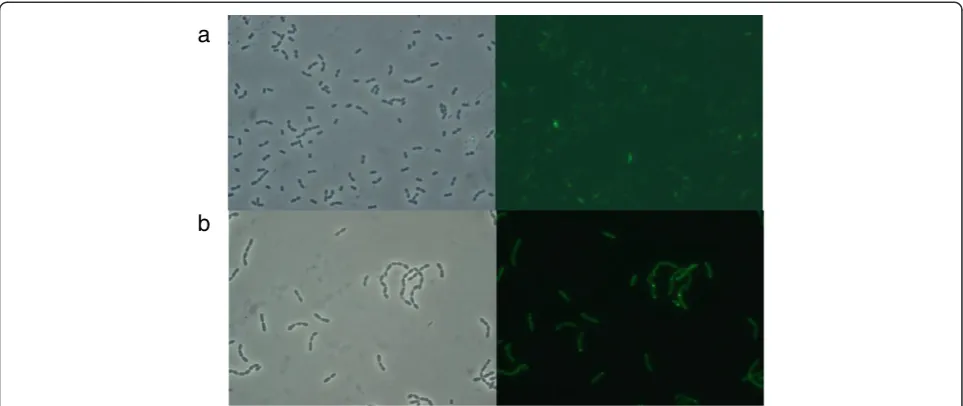
Under anaerobic fermentation but not under hemin-stimulated respiration, protein solubility was compro-mised rendering fluorescent protein deposits (Figure 1). This pattern was coincident with that of the formation of PHB inclusions that occurs only under anaerobiosis [26]. In fact, cells were not fluorescent under aerobic conditions (Figure 1), in agreement with previously studies indicating that hemin-induced cell respiration does not support the production of functional proteins [32,33]. Therefore, fermentative growth was established as stand-ard conditions for subsequent experiments.
Production time
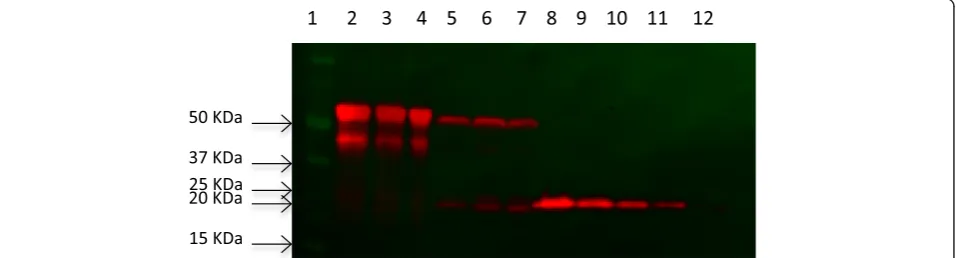
The fluorescence emission (Figure 2) and the ratio of soluble versus insoluble protein (Figure 3) fractions were determined by fluorimetry and western blot (Figure 4), respectively. The fluorescence emission does not present significant differences at different production times. However, in general terms, it is possible to conclude that GFP activity increases at longer production times, being this effect more marked in the soluble fraction (Figure 2). Besides, it is worh mentioning that at 3 h post-induction, protein solubility reached 67%, a yield much higher than that reached inE. colifor the same protein under compar-able conditions (10-18%, [34]). In this context, the poten-tial of the system for the soluble protein production was confirmed with a difficult-to-express human catalase, which under these conditions majorly occurred at the sol-uble cell fraction (75%) (data not shown). On the other hand, the conformational quality, namely the ratio be-tween protein activity and protein yield, of soluble rVP1GFP (estimated through its specific fluorescence) (Figure 5) evolved contrarily to the resulting protein amount in cells (Figure 2). This means that those con-ditions that favour protein solubility are those giving non-optimal results regarding conformational quality. Interestingly, such a divergence between protein yield and quality has been previously described in recombin-antE. coli[29,35], but the present finding confirms this fact as a generic event.
Growth temperature
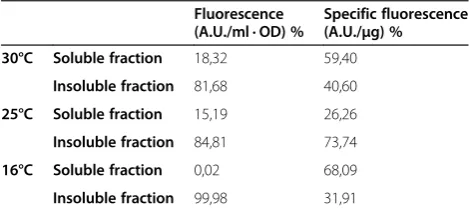
Finally, we determined how the production at subopti-mal temperatures might influence solubility and con-formational quality, through fluorescence determination
(Table 1). The fluorescence of the soluble and insoluble protein produced at 25°C was similar to that obtained at 30°C. However, the specific fluorescence at 30°C was notably higher than that observed at 25°C, showing in this last condition a 6-fold increase and 1.6-fold increase for the soluble and insoluble fraction respectively. At 16°C we observed a decrease in the fluorescence of both soluble and insoluble protein fractions. On the other hand, while the specific activity of the insoluble protein at 16°C was practically the same than that obtained at 30°C, the specific fluorescence of the soluble fraction at 16°C improved. Thus, decreasing the production temperature did not result in any improvement of fluorescence emission of insoluble protein, which was highly fluores-cent at 30°C. In this direction, we also observed residual
enzymatic activity in the insoluble fraction of catalase-producing cells (6.5μmol/min/μg) (data not shown).
Discussion
Under the need to obtain LPS-free bacterial-derived products for biomedical applications, the use of Gram-positive microorganisms as a recombinant cell factory has progressively gained relevance [12]. In this context, an increasing number of approaches using LAB and other Gram-positive microorganisms [9], have proven the huge potential of these cell factories in recombinant protein production [12,36-38]. Although L. lactis has been widely explored as a cell platform for the produc-tion of both homologous and heterologous recombinant proteins [39-41], as far as we know, the solubility and
Figure 2Fluorescence at 1, 3 and 5 h post-induction of soluble rVP1GFP (white bars) and insoluble rVP1GFP (grey bars) produced inL. lactisNZ9000 at 30°C.
a
b
fine conformational quality of both soluble and insoluble recombinant protein has been never studied in detail in this microorganism.
In the present study, we provide data in line with pre-vious studies that describe that fermentative growth is the optimal condition to successfully produce recombin-ant proteins in L. lactis (Figure 1) [32,33]. Thus, al-though hemin-stimulated respiration has been described as an alternative growth condition inducing an increase in biomass and reducing media acidification [42], our re-sults clearly show that under this condition protein pro-duction is highly compromised in both soluble and insoluble protein fractions. These data are in agreement with previous results published. Specifically, the authors describe the reduction of recombinant protein produc-tion under aerobic condiproduc-tions in the presence of hemin, when compared to that obtained under similar condi-tions without aeration [32,33].
Growth temperature also plays a key role regulating pro-tein solubility and conformational quality. In this regard,
protein activity is negatively affected at low temperatures, but the conformational quality of soluble protein reaches higher values at suboptimal temperatures, especially at 16°C. On the contrary, specific activity of insoluble protein is poorly influenced by the temperature.
Conclusions
Recombinant protein quality in Lactococcus lactis is largely influenced by the metabolic regime, growth con-ditions and temperature. By controlling these parame-ters, the conformational quality of both soluble and insoluble protein fractions is widely modulated, what of-fers a desirable high versatility of this system for the pro-duction of endotoxin-free conventional soluble protein and protein aggregates of biomedical interest. Beyond the well-recognized ability of this system as a producer of soluble proteins, the wide range of conformational quality of the model protein prompts the further exploit-ation of external effectors as efficient solubility modula-tors for optimal yields.
Figure 3Yield of soluble (white bars) and IB rVP1GFP (grey bars) produced inL. lactisNZ9000 at 30°C.
Figure 4Western blot of soluble and insoluble rVP1GFP fractions produced inL. lactisNZ9000.1: Marker, 2: insoluble rVP1GFP (replica 1), 3: insoluble rVP1GFP (replica 2), 4: insoluble rVP1GFP (replica 3), 5: soluble rVP1GFP (replica 1), 6: soluble rVP1GFP (replica 2), 7: soluble rVP1GFP (replica 3), 8-12: standard curve (750, 500, 250, 125 and 75 ng of R9-GFP). The band around 50 Kda corresponds to VP1GFP , while the band observed around 20 KDa corresponds to GFP.
Materials and methods
Bacterial strain, plasmids and growth conditions
The Lactococcus lactis strains used in this study was NZ9000 (pepN::nisRnisK) (NIZO). A model recombinant protein rVP1GFP (a fusion between the VP1 capsid pro-tein from the food-and-mouth disease virus and the Green Fluorescent Protein) and human catalase (hcata-lase) were produced by expressing the encoding gene from the CmR pNZ8148 plasmid (NIZO) under nisA promoter control.
Plasmid construction
The rVP1GFP and hcatalase sequences were codon opti-mized (Geneart). In the sequence design we added a NcoI restriction site at 5’followed by nucleotides CA to restore the reading frame and an PstI restriction site at 3’ for rVP1GFP and XbaI for hcatalase. rVP1GFP gene was digested byNcoI andPstI, and ligated into the NcoI-PstI fragment of the expression plasmid pNZ8148. hca-talase gene was digested by NcoI and XbaI, and ligated into the NcoI-XbaI fragment of the expression plasmid pNZ8148. Ligation products were transformed by elec-troporation into L. lactis competent cells and positive colonies were isolated by antibiotic selection.
Preparation ofL. lactiscompetent cells
A protocol to prepare competentL. lactiswas developed based on previous data [43].L. lactiswas growth O/N at 30°C in 50 ml M17 broth media enriched with 0.5% glu-cose, 2% glycine, 0.5 M sucrose (G-SGM17B) and appro-priated antibiotics. Then, 400 ml of G-SGM17B medium were inoculated with an aliquot of the overnight culture to reach an OD550 nm= 0.05 and they were grown at 30°C
during around 3h until the OD550 nm reached 0.2-0.3.
Then, cells were harvested by centrifugation at 10,000 g for 20 min at 4°C and the pellet was resuspended in 400 ml of 0.5 M sucrose plus 10% glycerol. Samples were har-vested again at 10,000 g for 10 min at 4°C, and the pellet was washed in 200 ml of 0.5 M sucrose plus 10% glycerol and 50 mM EDTA and formed again at 10,000 g for 10 min and 4°C. Cells were resuspended in 100 ml of 0.5 M sucrose plus 10% glycerol, and pelleted by last time at 10,000 g for 10 min at 4°C. Finally, the sediment was suspended in 4 ml of 0.5 M sucrose plus 10% glycerol, aliquoted and stored at -80°C until used in transformation experiments.
Transformation
Electroporation was performed using Gene Pulser from Bio-rad fitted with 2500V, 200 Ω and 25 μF in a pre-cooled 2 cm electroporation cuvette. Following, samples were supplemented with 900 μl restorative medium (M17 broth with 0.5% Glucose, 20 mM Mg2Cl2 and 2
mM Ca2Cl2) and incubated for 2h at 30°C. The
electro-poration mix was centrifuged for 10 min at 10,000 g at 4°C and the pellet was resuspended in 100-200 μl of M17 media and plated.
Recombinant protein production
A pre-inoculum was prepared from a fresh colony of the recombinant cells the pre-inoculum was used to inocu-late 250 ml shake flasks. The cells were cultured as Figure 5Specific fluorescence of soluble (white bars) and insoluble (grey bars) rVP1GFP produced inL. lactisNZ9000 at 30°C.
Table 1 Effect of growth temperature on protein solubility and conformational quality
Fluorescence (A.U./ml · OD) %
Specific fluorescence (A.U./μg) %
30°C Soluble fraction 18,32 59,40
Insoluble fraction 81,68 40,60
25°C Soluble fraction 15,19 26,26
Insoluble fraction 84,81 73,74
16°C Soluble fraction 0,02 68,09
described in [44]. Specifically, chloramphenicol (5 μg/ml) was used for plasmid maintenance and an agitation of 250 rpm was used for those cultures grown under hemin-stimulated respiration.
Expression of the target gene was induced when the optical density reached a value of 0.5 with nisin, as de-scribed in [17,44]. Growth temperatures in the produc-tion phase were 30, 25 or 16°C. Samples were taken at 1, 3 and 5 h in cultures at 30°C and at 5 h post-induction in cultures grown at 25°C and 16°C.
All the experiments have been run in triplicate (replica 1, replica 2 and replica 3).
Protein fractioning
Samples of 10 ml were taken in triplicate from bacteria cultures. Cells were pelleted by centrifugation at 10,000 g at 4°C for 10 min and the sediment was resuspended in 1 ml phosphate buffered saline (PBS) supplemented with (Complete EDTA-free, Roche) to prevent proteoly-sis. Then, ice-jacketed samples were disrupted by sonic-ation (3 cycles of 5 min at 40% amplitude under 0.5 s cycles). Total cell extracts were centrifuged at 15,000 g and 4°C for 15 min. Finally, soluble and insoluble frac-tions were aliquotated until further analysis.
Protein determination
Soluble and insoluble protein fractions were analysed by denaturing SDS-PAGE (10% acrylamide). Samples were resuspended with denaturing buffer (Laemli 4x: Tris base 1.28 g, glycerol 8 ml, SDS 1.6 g,β-mercaptoethanol 4 ml, urea 9.6 g in 100 ml) [45]. Soluble and insoluble protein fractions were boiled for 5 and 45 min respectively. At that time, samples were loaded onto the gel. SDS-PAGE protein bands were electroblotted onto nitrocellulose membranes and identified using a commercial poly-clonal serum against GFP (GFP (FL): SC-833, Santa Cruz Biotechnology). The secondary antibody was an anti‐rabbit (Goat Anti-Rabbit IgG (H + L)-HRP Conju-gate #172-1019, Bio Rad). The amounts of recombinant protein were estimated by comparison with known amounts (usually ranging from 75 to 750 ng) of R9-GFP [46] or commercial hcatalase (Sigma Ref. C9322). Densitometric analyses of the bands were performed with the Quantity One software.
Fluorimetry
Fluorescence emission (510 nm) was determined by fluorimetry using a Cary Eclipse Fluorescence Spectro-photometer (Variant), by using an excitation wavelength of 450 nm, to measure protein fluorescence at soluble and insoluble protein.
Catalase activity assay
Catalase activity was determined by the Catalase Assay kit (Abcam Ref. ab83464). In the assay H2O2was added
to the catalase samples in order to measure the uncon-verted H2O2which reacts with OxiRed™. Reaction final
product was measured at Ex/Em = 535/587 nm by Victor 3 Multilabel Plates Reader. Catalase activity is reversely proportional to the signal.
Microscopy
Samples of 1 ml were taken from bacteria cell culture by triplicate and harvested by centrifugation at 10,000 g and 4°C for 10 min. Cells were fixed with 0.1% formalde-hyde in PBS and kept at 4°C until microscopy observa-tion. Fixed cells were deposited on a glass slide fixed with a slide cover and observed with a Leica DRMB Microscopy. Microphotographies were taken by phase contrast and epifluorescense.
Competing interests
The authors declare that they have no competing interests.
Authors’contributions
EGF and AV designed this study and drafted the manuscript. OCG performed most of the experiments and prepared the final data and figures. FR carried out protein production and quantification at 25°C and LSG performed part of protein fractioning and determination experiments. LRA and RB have been involved in the experimental design. All authors read and approved the final version of the manuscript.
Acknowledgments
The authors acknowledge the financial support granted to EGF and AV from INIA, MINECO, Spain (RTA2012-00028-C02-02), from Agència de Gestió d’Ajuts Universitaris i de Recerca (2014SGR-132) and from the Centro de Investigación Biomédica en Red (CIBER) de Bioingeniería, Biomateriales y Nanomedicina financed by the Instituto de Salud Carlos III with assistance from the European Regional Development Fund. OCG received a PhD fellowship from MECD and F.R. was supported by a predoctoral fellowship (Beca de Formación Doctoral “Francisco José de Caldas”, Concovatoria 512-2010 de Colciencias). AV has been distinguished with an ICREA ACADEMIA Award. We are also indebted to the Protein Production Platform (CIBER-BBN) for helpful technical assistance and for protein production and purification services (http://www.ciber-bbn.es/ es/programas/89-plataforma-de-produccion-de-proteinas-ppp).
Author details
1Institut de Biotecnologia i de Biomedicina, Universitat Autònoma de Barcelona, Bellaterra 08193, Cerdanyola del Vallès, Spain.2Departament de Genètica i de Microbiologia, Universitat Autònoma de Barcelona, Bellaterra 08193, Cerdanyola del Vallès, Spain.3CIBER de Bioingeniería, Biomateriales y Nanomedicina (CIBER-BBN), Bellaterra 08193 Cerdanyola del Vallès, Spain. 4Spherium Biomed S.L., Avda. Joan XXIII, 10, 08950, Esplugues de Llobregat Barcelona, Spain.
Received: 21 October 2014 Accepted: 15 November 2014
References
1. Ferrer-Miralles N, Domingo-Espin J, Corchero JL, Vazquez E, Villaverde A: Microbial factories for recombinant pharmaceuticals.Microb Cell Fact
2009,8:17.
2. Demain AL, Vaishnav P:Production of recombinant proteins by microbes and higher organisms.Biotechnol Adv2009,27:297–306.
3. Corchero JL, Gasser B, Resina D, Smith W, Parrilli E, Vazquez F, Abasolo I, Giuliani M, Jäntti J, Ferrer P, Saloheimo M, Mattanovich D, Schwartz S Jr, Tutino ML, Villaverde A:Unconventional microbial systems for the
efficient production of high-quality protein therapeutics.Biotechnol Adv
2013,31:140–153.
4. Williams SF, Martin DP, Horowitz DM, Peoples OP:PHA applications: addressing the price performance issue: I. Tissue engineering.Int J Biol Macromol1999,25:111–121.
5. Parlane NA, Grage K, Lee JW, Buddle BM, Denis M, Rehm BH:Production of a particulate hepatitis C vaccine candidate by an engineered
Lactococcus lactis strain.Appl Environ Microbiol2011,77:8516–8522. 6. de Marco A, Sevastsyanovich YR, Cole JA:Minimal information for protein
functional evaluation (MIPFE) workshop.N Biotechnol2009,25:170. 7. de Marco A:Minimal information: an urgent need to assess the
functional reliability of recombinant proteins used in biological experiments.Microb Cell Fact2008,7:20.
8. de Marco A:Recombinant polypeptide production in E. coli: towards a rational approach to improve the yields of functional proteins.Microb Cell Fact2013,12:101.
9. Ferrer-Miralles N, Villaverde A:Bacterial cell factories for recombinant protein production; expanding the catalogue.Microb Cell Fact2013, 12:113.
10. Chen R:Bacterial expression systems for recombinant protein production: E. coli and beyond.Biotechnol Adv2012,30:1102–1107. 11. Yuvaraj S, Peppelenbosch MP, Bos NA:Transgenic probiotica as drug
delivery systems: the golden bullet?Expert Opin Drug Deliv2007,4:1–3. 12. Garcia-Fruitos E:Lactic Acid Bacteria: a promising alternative for
recombinant protein production.Microb Cell Fact2012,11:157.
13. Hazebrouck S, Oozeer R, Adel-Patient K, Langella P, Rabot S, Wal JM, Corthier G:Constitutive delivery of bovine beta-lactoglobulin to the digestive tracts of gnotobiotic mice by engineered Lactobacillus casei.Appl Environ Microbiol2006,72:7460–7467.
14. Vandenbroucke K, Hans W, Van HJ, Neirynck S, Demetter P, Remaut E, Rottiers P, Steidler L:Active delivery of trefoil factors by genetically modified Lactococcus lactis prevents and heals acute colitis in mice.
Gastroenterology2004,127:502–513.
15. Pontes DS, de Azevedo MS, Chatel JM, Langella P, Azevedo V, Miyoshi A: Lactococcus lactis as a live vector: heterologous protein production and DNA delivery systems.Protein Expr Purif2011,79:165–175.
16. de Ruyter PG, Kuipers OP, de Vos WM:Controlled gene expression systems for Lactococcus lactis with the food-grade inducer nisin.Appl Environ Microbiol1996,62:3662–3667.
17. Mierau I, Kleerebezem M:10 years of the nisin-controlled gene expression system (NICE) in Lactococcus lactis.Appl Microbiol Biotechnol2005, 68:705–717.
18. Jorgensen CM, Madsen SM, Vrang A, Hansen OC, Johnsen MG:
Recombinant expression of Laceyella sacchari thermitase in Lactococcus lactis.Protein Expr Purif2013,92:148–155.
19. Jorgensen CM, Vrang A, Madsen SM:Recombinant protein expression in Lactococcus lactis using the P170 expression system.FEMS Microbiol Lett
2014,351:170–178.
20. Llull D, Poquet I:New expression system tightly controlled by zinc availability in Lactococcus lactis.Appl Environ Microbiol2004,70:5398–5406. 21. Stentz R, Bongaerts RJ, Gunning AP, Gasson M, Shearman C:Controlled
release of protein from viable Lactococcus lactis cells.Appl Environ Microbiol2010,76:3026–3031.
22. Steidler L, Neirynck S, Huyghebaert N, Snoeck V, Vermeire A, Goddeeris B, Cox E, Remon JP, Remaut E:Biological containment of genetically modified Lactococcus lactis for intestinal delivery of human interleukin 10.Nat Biotechnol2003,21:785–789.
23. Braat H, Rottiers P, Hommes DW, Huyghebaert N, Remaut E, Remon JP, van Deventer SJ, Neirynck S, Peppelenbosch MP, Steidler L:A phase I trial with transgenic bacteria expressing interleukin-10 in Crohn’s disease.Clin Gastroenterol Hepatol2006,4:754–759.
24. Rodriguez-Carmona E, Villaverde A:Nanostructured bacterial materials for innovative medicines.Trends Microbiol2010,18:423–430.
25. Portilla-Arias JA, Camargo B, Garcia-Alvarez M, de Ilarduya AM, Munoz-Guerra S:Nanoparticles made of microbial poly(gamma-glutamate)s for encapsulation and delivery of drugs and proteins.J Biomater Sci Polym Ed
2009,20:1065–1079.
26. Parlane NA, Wedlock DN, Buddle BM, Rehm BHA:Bacterial Polyester Inclusions Engineered To Display Vaccine Candidate Antigens for Use as a Novel Class of Safe and Efficient Vaccine Delivery Agents.Appl Environ Microbiol2009,75:7739–7744.
27. Peterbauer C, Maischberger T, Haltrich D:Food-grade gene expression in lactic acid bacteria.Biotechnol J2011,6:1147–1161.
28. Duwat P, Sourice S, Cesselin B, Lamberet G, Vido K, Gaudu P, Le Loir Y, Violet F, Loubière P, Gruss A:Respiration capacity of the fermenting bacterium Lactococcus lactis and its positive effects on growth and survival.J Bacteriol2001,183:4509–4516.
29. Garcia-Fruitos E, Martinez-Alonso M, Gonzalez-Montalban N, Valli M, Mattanovich D, Villaverde A:Divergent genetic control of protein solubility and conformational quality in Escherichia coli.J Mol Biol2007, 374:195–205.
30. de Groot NS, Ventura S:Effect of temperature on protein quality in bacterial inclusion bodies.FEBS Lett2006,580:6471–6476.
31. Vera A, Gonzalez-Montalban N, Aris A, Villaverde A:The conformational quality of insoluble recombinant proteins is enhanced at low growth temperatures.Biotechnol Bioeng2007,96:1101–1106.
32. Berlec A, Tompa G, Slapar N, Fonovic UP, Rogelj I, Strukelj B:Optimization of fermentation conditions for the expression of sweet-tasting protein brazzein in Lactococcus lactis.Lett Appl Microbiol2008,46:227–231. 33. Oddone GM, Lan CQ, Rawsthorne H, Mills DA, Block DE:Optimization of
fed-batch production of the model recombinant protein GFP in Lactococcus lactis.Biotechnol Bioeng2007,96:1127–1138.
34. Garcia-Fruitos E, Gonzalez-Montalban N, Morell M, Vera A, Ferraz RM, Aris A, Ventura S, Villaverde A:Aggregation as bacterial inclusion bodies does not imply inactivation of enzymes and fluorescent proteins.Microb Cell Fact2005,4:27.
35. Martinez-Alonso M, Garcia-Fruitos E, Villaverde A:Yield, solubility and conformational quality of soluble proteins are not simultaneously favored in recombinantEscherichia coli.Biotechnol Bioeng2008, 101:1353–1358.
36. van Dijl JM, Hecker M:Bacillus subtilis: from soil bacterium to super-secreting cell factory.Microb Cell Fact2013,12:3.
37. Khokhlova EV, Efimov BA, Kafarskaia LI, Shkoporov AN:Heterologous expression of secreted biologically active human interleukin-10 in Bifidobacterium breve.Arch Microbiol2010,192:769–774. 38. Karlskas IL, Maudal K, Axelsson L, Rud I, Eijsink VG, Mathiesen G:
Heterologous protein secretion in lactobacilli with modified pSIP vectors.
PLoS One2014,9:e91125.
39. Noreen N, Hooi WY, Baradaran A, Rosfarizan M, Sieo CC, Rosli MI, Yusoff K, Raha AR:Lactococcus lactis M4, a potential host for the expression of heterologous proteins.Microb Cell Fact2011,10:28.
40. Kunji ER, Slotboom DJ, Poolman B:Lactococcus lactis as host for overproduction of functional membrane proteins.Biochim Biophys Acta
2003,1610:97–108.
41. Rigoulay C, Poquet I, Madsen SM, Gruss A:Expression of the
Staphylococcus aureus surface proteins HtrA1 and HtrA2 in Lactococcus lactis.FEMS Microbiol Lett2004,237:279–288.
42. Gaudu P, Vido K, Cesselin B, Kulakauskas S, Tremblay J, Rezaiki L, Lamberret G, Sourice S, Duwat P, Gruss A:Respiration capacity and consequences in Lactococcus lactis.Antonie Van Leeuwenhoek2002,82:263–269. 43. Gerber SD, Solioz M:Efficient transformation of Lactococcus lactis IL1403
and generation of knock-out mutants by homologous recombination.
J Basic Microbiol2007,47:281–286.
44. Ng DT, Sarkar CA:Nisin-inducible secretion of a biologically active single-chain insulin analog by Lactococcus lactis NZ9000.Biotechnol Bioeng
2011,108:1987–1996.
45. Laemmli UK:Cleavage of structural proteins during the assembly of the head of bacteriophage T4.Nature1970,227:680–685.