Sustainable Supply Chain Network Design: A Review on
Quantitative Models Using Content Analysis
Ezzatollah Asgharizadeh
a,*, S. Ali Torabi
b,
Ali Mohaghar
a, Mohammad Ali
Zare-Shourijeh
aa Department of Industrial Management, Faculty of Management, University of Tehran, Tehran, Iran.
b School of Industrial Engineering, College of Engineering, University of Tehran, Tehran, Iran.
Received: 22 January 2019 /Accepted: 28 March 2019
Abstract
The purpose of this paper is to develop a systematic literature review on the subject of
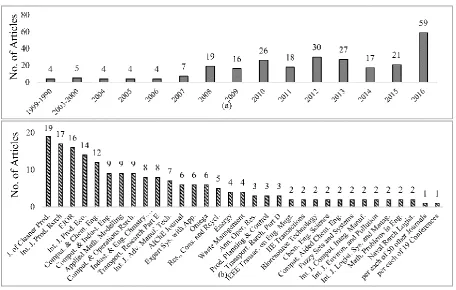
sustainable supply chain network design during 1990-2016, through a review of 261 papers. In
this study, qualitative technique for conducting a systematic literature review was used. To
systematize and make the literature review more accurate, content analysis method was
used that include data collection, coding, analysis and interpretation of data. Several t ables
and figures were developed to provide a better interpretation of the literature. The results
show that: 1. Researches has been growing dramatically in this field, especially since 2008; 2.
Most research has been conducted in five countries; 3. The most of quantitative models of
SCND have published respectively in five top journals; 4. Generally, the researchers were more
interested in: single-objective, linear programming, single-period, multi-product,
capacity-limited facilities, multi-mode, reverse and environmental models, than other types of models
and considerations; 5. In phase of modeling and solving, the authors have used more of
mathematical programming (specifically MILP) and commercial solvers. The general
contribution of this paper is in its addressing the topic of Sustainable Supply chain Network
Design. Supply chain network design (SCND) is one of the strategic problems at the
intersection of disciplines such as management, strategy, logistics, and operational research.
Moreover, this work specifically contributes to understanding sustainability and identifies
research gaps and characteristics of the scientific papers on this topic.
Keywords
: Supply Chain Network Design, Quantitative Models, Sustainability, Systematic
Literature Review, Content Analysis.
Introduction
Supply chain has several issues that can be classified in three levels (Simchi-Levi et al., 2000):
1. Operational level, such as scheduling that refers to the daily decisions, 2. Tactical level that
includes decisions is usually being updated seasonally or annually such as purchasing and
production decisions and 3. Strategic level that deals with decisions have long-lasting effects
on the firm and supply chain. Decisions like number, location and product/material flow
through the logistics network are of this type. The supply chain network design (SCND) is one
of the issues at strategic level that creates a network of supply chain entities, and includes a set
of decisions about location and role of supply chain entities, products allocations, capacity
planning at the strategic level and the establishment of transportation and informational links
between these entities (Chandra and Grabis, 2007). The structure of SCND will have a
significant impact on the performance and future cost of the chain (Farahani et al., 2014). May
be able to say the most important decision of SCND is locating of facilities in different supply
chain tiers. Traditionally, the base of all SCND decisions is economic optimization and paying
attention to higher profits or lower cost. Recently, according to the sustainability and resiliency
considerations, making decision and the way of looking at SCND problem has changed. These
considerations, however, takes decisions out of economically optimal condition but it will result
in long-term competitive advantage and enhance the ability of supply chain continuity which is
more important in the new paradigms of supply chain design. The remaining sections of this
article are as follow: in the next section, theoretical principles and previous reviews will be
examined. In third section, methodology of the research is described. The selected articles based
on the research methodology will be analyzed and the result of these reviews is reported in
section four and finally the section five is dedicated to conclusion and in introducing some paths
for future researches.
Theoretical Principles and Previous Literature Reviews
uncertainties such as customer uncertain demand, uncertain supply and uncertain costs.
Disruption risks refer to major disruptions and shocks that come from nature or human disasters
such as earthquakes, hurricanes and terrorist attacks (Tang, 2006). Based on the literature, the
success of supply chains in disruptions management can be measured through resiliency of
supply chain. Tukamuhabwa et al. (2015) presented a comprehensive definition for resilience:
The adaptive capability of a supply chain to prepare for and/or respond to disruptions, to
make a timely and cost effective recovery, and therefore progress to a post-disruption state of
operations – ideally, a better state than prior to the disruption.
and fast-growing research topics. As mentioned before, many articles that has published recent
years, reviewed only one topic such as sustainable supply chain or reverse supply chain or
closed-loop supply chain. According to the original definition of sustainable development and
the impacts of sustainable, green, reverse and closed-loop approaches on supply chain models
(Amin and Zhang, 2012a, 2012b; Das and Chowdhury, 2012 and Özkır and Başlıgil, 2013), we
can place all of these approaches under this key term:
sustainable supply chain
. To the best of
our knowledge, there is lack of a comprehensive and broad review on quantitative researches
in the field of sustainable SCND. Therefore, in this article we tried to do a comprehensive
review that has not seen in the previous reviews yet to illustrate more research gaps through
answering these research questions: Which dimensions of sustainability have been considered
more in quantitative SCND modeling? In reviewed articles, what characteristics did
quantitative models address (objectives, transportations modes, periods, products, capacity
limitations)? Which modeling and optimization approaches have used more? What solution
approaches and methods are more prevalent? How much is the contribution of forward, reverse,
closed-loop SCND in the literatures? How much is the contribution of certain and uncertain
models? Which supply chain resiliency strategies are more considerable in quantitative
researches of sustainable SCND? And according to the findings, which directions do we can
suggest for the future researches? It is worth mentioning that main contributions of this paper
are as follow:
1. We considered a suitable set of articles related to green supply chain, sustainable supply
chain, environmentally conscious supply chain, reverse supply chain and closed-loop supply
chain and so on under the topic of sustainable supply chain network design.
2. The timeframe considered in this literature review (i.e. 1990-2016) is a unique or perhaps
unparalleled in this field of research.
3. To the best of our knowledge, the number of articles reviewed in this review is not seen
in any other review article (i.e. 261 articles).
4. Comparing with other reviews, this paper addressed more structural dimensions and
analytic categories at the same time. This provides more cross-analyses.
5. We made an attempt to use and aggregate the strengths of the past review articles here.
6. We also examined whether resiliency considerations are addressed in the field of
quantitative models of SCND alongside sustainability considerations or not.
Research Method
• Material collection
(collecting articles and documents and defining analysis unit);
• Descriptive analysis
(assessing formal characteristics of the material);
• Category selection
(selection of structural dimensions and related analytic categories which
will be applied to the collected material);
• Material evaluation
(analyzing the material according to the structural dimensions and
analytic categories).
Material collection
The most common method of obtaining publications and articles for studying literature is
keyword-based searching on electronic databases and library services (Seuring and Gold,
2012). In order to review the literature, we consider online scientific articles published between
1990 and 2016. An article is selected when its content is related to quantitative modeling and
sustainable SCND and also wrote in English and published within the mentioned time period.
Therefore, different dual words combinations and multi-words combinations of keywords and
phrases were used to find suitable material, which come as follow: "network design", "design",
"designing", "configuration", "strategic", "supply chain", "logistics", "optimization",
"quantitative", "mathematical", "simulation", "modeling", "programming", "sustainable",
"sustainability", "green", "recycling", "environment", "environmental", "reverse",
"closed-loop", "carbon-footprint", "social" and "societal". Finally, the articles were searched, gathered
and selected through all following procedures and resources:
a.
Searching in scientific databases
: By using of above key words and focusing on the title,
abstract and key words of indexed articles, the best scientific databases were searched such as:
Science Direct
,
Taylor and Francis
,
Springer
,
Emerald
,
Wiley
,
IEEE Xplore
and
JSTORE
;
b.
Searching in Google Scholar
: To ensure accuracy and access to more documents
especially conference articles and other databases, we also searched Google Scholar;
c.
Exploiting previous review article
s: To prevent of ignoring most relevant articles and
getting indirect help from other researchers, we referred to 20 surveys published in SCND area
and related fields previously.
In addition, it should be noted that in many cases we also access to some other new articles
by source tracking through the references of the existing articles.
Descriptive Analysis
Figure 1. Distribution of collected articles a) over time; b) by journals
Between all authors,
Kannan Govindan
(South Denmark University, Denmark),
Seyed Ali
Torabi
(University of Tehran, Iran) and
Gonzalo Guillén-Gosálbez
(URV University, Spain)
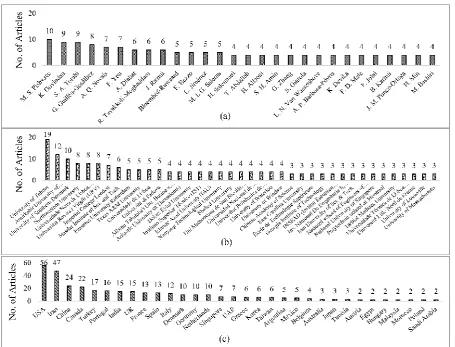
are the most frequent researchers in our sample (See Fig. 2.a). Also between the reviewed
articles, the authors correspond to theses five universities respectively, have the most
frequencies: University of Tehran, Amir Kabir University of Technology, South Denmark
University, URV University and New University of Lisbon. These five countries: USA, Iran,
China, Canada and Turkey respectively have the most contribution of publishing articles and
totally they owned 64% of all written articles. It should be noted that 9 authors out of 28 top
authors are from Iranian’s Universities and specially half of them are from Tehran University
which shows the relatively low distribution authors of this field on the other Iranian’s
universities. In contras of t although USA rank first in the list of repetitive countries, relatively
low presence of USA’s universities in the upper half of the list of 40 repetitive universities
illustrated more dispersion of researchers between USA’s universities (See Fig. 2.b and 2.c).
Category Selection (Structural Dimensions)
selected articles, attention has been paid to supply chain resiliency against strategic risks and
disruption. The dimension of modeling approaches includes mixed integer linear programming,
mixed integer non-linear programming, linear programming, non-linear programming, fuzzy
approaches, simulating approaches and finally sub-dimensions of solution methods involve
commercial solver software, approximate algorithms, heuristic and meta-heuristic, exact
algorithms, analytical and multi-criterion approaches, simulation approaches and so on.
Figure 2. a) Researchers, b) Universities and c) Countries which have the most articles in the set of study
Material Evaluation
In this phase, each of selected articles were assessed and analyzed according to structural
dimensions and analytical categories. In phase of categories selection also with combination of
two approaches of deductive and inductive a suitable classification was obtained. To ensure
research enrichment and verification of characteristics which assigned to the articles, the results
was compared with other review articles. Also to minimize errors and analyzing different
aspects we used Microsoft Excel 2013. Finally the results were shown in the Graphs. The
reviewed references and structural characteristics for each article can be found at the appendix.
In the next section the results will be discussed.
Findings and Discussion
selected articles will be discussed based on structural dimensions. The result of this survey can
clarify the existing gaps and future research directions.
Model Characteristics
Single-objective models obtain only an optimal solution while multi-objective ones consider
different and conflicting objectives, so yield a set of Pareto solutions. In multi-objective models
of SCND, the objectives are usually either environmental or
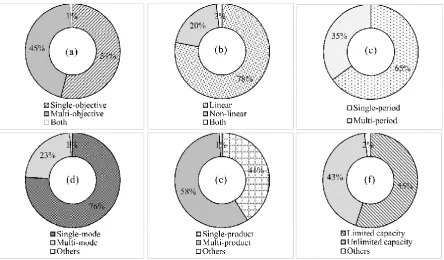
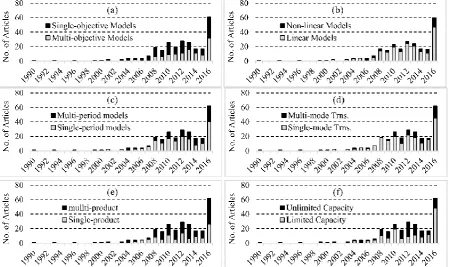
economic-environmental-social (Ghaderi et al., 2016). Fig. 3.a and 4.a respectively illustrate the
percentage and trend of single-objective models and multi-objective ones in the set of reviewed
articles. According to this, almost 54% and 45% of reviewed models respectively are
single-objective and single-objective ones and approximately in 1% of all articles single and
multi-objective models have been employed at the same time. Also it was distinguished that near 78%
and 20% of all articles which have mathematical models, employed linear and nonlinear models
(See Fig. 3.b). This shows a higher number of linear models during over the past two decades,
however, both trends are ascending (Fig. 4.b). Due to the complexity and non-linear nature of
real world issues, it can be expected the growth of non-linear models by moving researchers
from charity theoretical articles to practical articles in the future. The mentioned trend also
shows it by the end of 2016. Breaking the time horizon in to a few time periods will lead to
improve decision-making process (Ghaderi et al., 2016). Notwithstanding to the growth of
multi-period models, 65% of reviewed models are single-period (See Fig. 3.c). Fig. 4.c shows
the trends of using single-period models and multi-period in different years within the selected
sample. Complexity of modeling and difficulty of solving multi-period models could be cause
of fewer tendencies of researchers to these models. The supply chains use one transportation
mode or combination of transportation modes to move materials and productions between chain
members.
Figure 3. The portion of selected articles in each of sextet characteristics
have one and 23% of models have multiple transportation modes and the remaining 1% whether
unknown or transportation considerations have not been seen in the models (See Fig. 3.d and
Fig. 4.d).
In addition, the majority of reviewed models have considered more than one product
(about 58%). the growth rate of considering multiple products (especially from 2008 to 2016)
has been higher than single product (See Fig. 3.e and Fig. 4.e). Regardless of whether the
capacity of facilities belongs to set of decision variables or not, SCND models can be divided
to capacity-constrained models and without capacity limitations. The review of selected articles
showed more researchers’ tendency of employing models with capacity limitations (See Fig.
3.f and Fig. 4.f).
Figure 4. Frequencies of selected articles in each of sextet characteristics of model in desired horizon
Supply Chain Network Flow
Generally, supply chain has two types:
forward
and
reverse
(backward) supply chain. A supply
chain in its traditional form (forward supply chain), is a combination of processes to meet
customer demands and includes carriers, warehouses, retailers and customers (Chopra and
Meindl, 2007). According to definition of American Reverse Logistics Executive Council,
"The
process of planning, implementing, and controlling the efficient, cost effective flow of raw
materials, in-process inventory, finished goods and related information from the point of
consumption to the point of origin for the purpose of recapturing value or proper disposal "
. If
forward and reverse supply chains consider at the same time, the obtained network is named
Figure 5. Portion of forward, reverse and closed-loop supply chains in the reviewed articles and
their frequencies in desiredhorizon
Sustainability
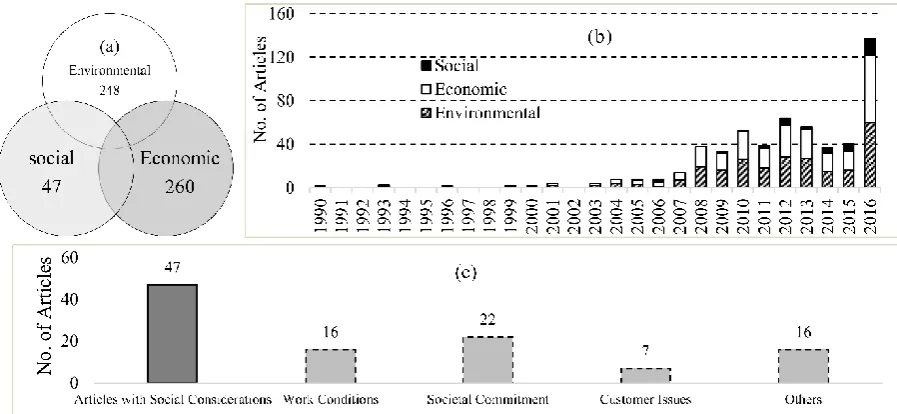
Environmental and social considerations in the time of facilities locating, logistics and
transportation planning, are important. Optimal use of available resources and used products
and wastes management are more important in reverse SCND. In the field of SCND, every
effort is being made to help the environment and society, is considered a positive action toward
sustainability.
Figure 6. a) The portion of different dimensions of sustainability b) the frequency of each dimension in desired horizon; c) The frequency different social sub-dimensions in the reviewed articles
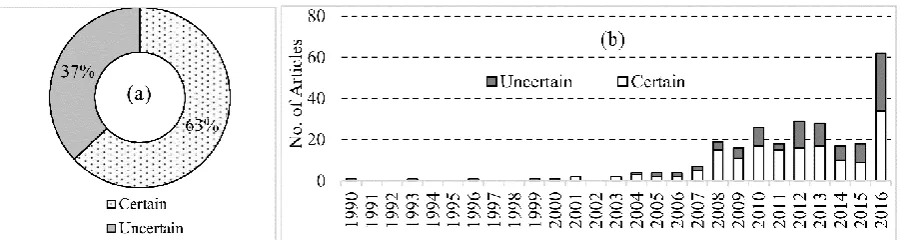
Figure 7. Contribution of certain and uncertain models in the reviewed articles and their frequencies over time
Uncertainty Consideration
There are several approaches to deal with uncertainty which include stochastic programming
approaches, possibilistic programming, fuzzy logic, interval programming, chaos theory or
combination of aforementioned approaches (Ghaderi et al., 2016; Govindan et al., 2015b). The
distribution of selected articles and their frequency trends can be seen in Fig. 8. The real world
problems are usually associated with uncertainty, so programming challenges in these situations
can be one of the reasons why researchers are less likely to be involved with such problems.
Resilience
Although resilience is not a subset of sustainability issues and it is discussed under the topics
of risk and uncertainty in supply chains, in this article we evaluated it separately because of its
importance. Like sustainability, resilience issues are also including the topics that encourage
moving from economic optimality paradigm to business continuity paradigm. The aim of
different resilience strategies is reducing the effects of operational and disruption risks which
constantly are threatened the supply chain structure and its continuity. Before this, different
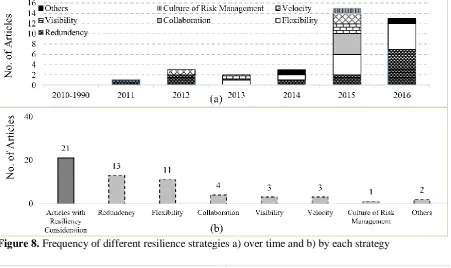
type of resilience strategies has been presented in section 2. In the set of selected articles which
are related to the field of quantitative models of sustainable SCND, only 21 articles have taken
into consideration resiliency strategies. Among all type of strategies, redundancy and flexibility
have been employed more. The historical trend shows that attention to the resiliency in SCND
are growing and specifically has grown dramatically in 2014 (See Fig. 8.a and Fig. 8.b).
Modeling approaches
Figure 8. Frequency of different resilience strategies a) over time and b) by each strategy
Figure 9. a) The portion of different employed modeling approaches; b) The portion of different solution methods employed in the reviewed articles
Solutions
sizes of SCND problems are NP-Hard and cannot be solved by exact solutions and commercial
solvers, it can be concluded that the number of large size problems between the articles are not
so much. Commercial solvers and exact algorithms have been used in solving majority of the
articles. In addition, near 54% of multi-objective articles finally have been solved by one of
commercial solvers and 26% by heuristic algorithms and 14% by exact algorithms.
Conclusions and Implications for Further Research
1.
It is necessary to transit from small academic problems to large real problems.
Strengthening the link between practitioners and scholars can help understanding current
questions and problems of industries.
2.
Due to the inability of common algorithms in solving many real-world problems, there
is a need to develop new algorithms such as decomposition-based, approximation, heuristic or
hybrid ones.
3.
Most of sustainability studies are poor in addressing social issues. The results of the
research emphatically insist on increasing social considerations in supply chain network design
for future researches. Also developing new methodologies to quantify social dimensions is still
a challenging issue. Determining the depth and breadth of social impacts of supply chains is
another issue that needs to be discussed more.
4.
The integration of social consideration in SCND should not be regarded as an outward
beauty for sustainability articles. In order to make it more serious and effective, employing the
new research methodologies of
soft OR
is suggested, such as
critical systems heuristic
,
especially in the process of defining and extracting different impacts of supply chain on society
and stakeholders.
References
Abdallah, T., Diabat, A., & Rigter, J. (2013). Investigating the option of installing small scale PVs on facility rooftops in a green supply chain. International Journal of Production Economics, 146(2), 465-477.
Abdallah, T., Diabat, A., & Simchi-Levi, D. (2012a). Sustainable supply chain design: a closed-loop formulation and sensitivity analysis. Production Planning & Control, 23(2-3), 120-133.
Abdallah, T., Farhat, A., Diabat, A., & Kennedy, S. (2012b). Green supply chains with carbon trading and environmental sourcing: Formulation and life cycle assessment. Applied Mathematical Modelling, 36(9), 4271-4285.
Adenso-Díaz, B., Lozano, S., & Moreno, P. (2016). How the environmental impact affects the design of logistics networks based on cost minimization. Transportation Research Part D: Transport and Environment, 48, 214-224.
Ahmadi, M., Seifi, A., & Tootooni, B. (2015). A humanitarian logistics model for disaster relief operation considering network failure and standard relief time: A case study on San Francisco district. Transportation Research Part E: Logistics and Transportation Review, 75, 145-163.
Akgul, O., Shah, N., & Papageorgiou, L. G. (2012). An optimisation framework for a hybrid first/second generation bioethanol supply chain. Computers & Chemical Engineering, 42, 101-114.
Alçada-Almeida, L., Coutinho-Rodrigues, J., & Current, J. (2009). A multiobjective modeling approach to locating incinerators. Socio-Economic Planning Sciences, 43(2), 111-120.
Allaoui, H., Guo, Y., Choudhary, A., & Bloemhof, J. (2018). Sustainable agro-food supply chain design using two-stage hybrid multi-objective decision-making approach. Computers & Operations Research, 89, 369-384.
Altmann, M., & Bogaschewsky, R. (2014). An environmentally conscious robust closed-loop supply chain design. Journal of Business Economics, 84(5), 613-637.
Alumur, S. A., Nickel, S., Saldanha-da-Gama, F., & Verter, V. (2012). Multi-period reverse logistics network design. European Journal of Operational Research, 220(1), 67-78.
Ameknassi, L., Aït-Kadi, D., & Rezg, N. (2016). Integration of logistics outsourcing decisions in a green supply chain design: a stochastic multi-objective multi-period multi-product programming model. International Journal of Production Economics, 182, 165-184.
Amin, S. H., & Zhang, G. (2012a). An integrated model for closed-loop supply chain configuration and supplier selection: Multi-objective approach. Expert Systems with Applications, 39(8), 6782-6791. Amin, S. H., & Zhang, G. (2012b). A proposed mathematical model for closed-loop network
Amin, S. H., & Zhang, G. (2013a). A multi-objective facility location model for closed-loop supply chain network under uncertain demand and return. Applied Mathematical Modelling, 37(6), 4165-4176.
Amin, S. H., & Zhang, G. (2013b). A three-stage model for closed-loop supply chain configuration under uncertainty. International Journal of Production Research, 51(5), 1405-1425.
Ansari, Z. N., & Kant, R. (2017). A state-of-art literature review reflecting 15 years of focus on sustainable supply chain management. Journal of cleaner production, 142, 2524-2543.
Aras, N., & Aksen, D. (2008). Locating collection centers for distance-and incentive-dependent returns. International Journal of Production Economics, 111(2), 316-333.
Azadeh, A., Zarrin, M., & Salehi, N. (2016). Supplier selection in closed loop supply chain by an integrated simulation-Taguchi-DEA approach. Journal of Enterprise Information Management, 29(3), 302-326.
Azevedo, S. G., Govindan, K., Carvalho, H., & Cruz-Machado, V. (2013). Ecosilient Index to assess the greenness and resilience of the upstream automotive supply chain. Journal of Cleaner Production, 56, 131-146.
Bagherinejad, J., & Hassanpour, A. (2016, January). Bi-objective robust closed-loop supply chain network design with considering various recovery options. In Industrial Engineering (ICIE), 2016 12th International Conference on (pp. 19-26). IEEE.
Bai, Y., Ouyang, Y., & Pang, J. S. (2016). Enhanced models and improved solution for competitive biofuel supply chain design under land use constraints. European Journal of Operational Research, 249(1), 281-297.
Balaman, Ş. Y. (2016). Investment planning and strategic management of sustainable systems for clean power generation: An ε-constraint based multi objective modelling approach. Journal of Cleaner Production, 137, 1179-1190.
Balaman, Ş. Y., & Selim, H. (2015). A decision model for cost effective design of biomass based green energy supply chains. Bioresource technology, 191, 97-109.
Balaman, Ş. Y., & Selim, H. (2016). Sustainable design of renewable energy supply chains integrated with district heating systems: A fuzzy optimization approach. Journal of cleaner production, 133, 863-885.
Baud-Lavigne, B., Agard, B., & Penz, B. (2014). Environmental constraints in joint product and supply chain design optimization. Computers & Industrial Engineering, 76, 16-22.
Beamon, B. M., & Fernandes, C. (2004). Supply-chain network configuration for product recovery. Production Planning & Control, 15(3), 270-281.
Beheshtifar, S., & Alimoahmmadi, A. (2015). A multiobjective optimization approach for location‐ allocation of clinics. International Transactions in Operational Research, 22(2), 313-328.
Berger, C., Savard, G., & Wizere, A. (1999). EUGENE: an optimisation model for integrated regional solid waste management planning. International Journal of Environment and Pollution, 12(2-3), 280-307.
Bernardi, A., Giarola, S., & Bezzo, F. (2013). Spatially explicit multiobjective optimization for the strategic design of first and second generation biorefineries including carbon and water footprints. Industrial & Engineering Chemistry Research, 52(22), 7170-7180.
Beullens, P. (2004). Reverse logistics in effective recovery of products from waste materials. Reviews in Environmental Science and Bio/Technology, 3(4), 283-306.
Bloemhof-Ruwaard, J. M., Van Wassenhove, L. N., Gabel, H. L., & Weaver, P. M. (1996). An environmental life cycle optimization model for the European pulp and paper industry. Omega, 24(6), 615-629.
Bojarski, A. D., Laínez, J. M., Espuña, A., & Puigjaner, L. (2009). Incorporating environmental impacts and regulations in a holistic supply chains modeling: An LCA approach. Computers & Chemical Engineering, 33(10), 1747-1759.
Bouzembrak, Y., Allaoui, H., Goncalves, G., & Bouchriha, H. (2011, May). A multi-objective green supply chain network design. In 2011 4th International conference on logistics (LOGISTIQUA). Hammamet (Vol. 31, pp. 357-361).
Bouzembrak, Y., Allaoui, H., Goncalves, G., Masson, E., Bouchriha, H., & Baklouti, M. (2010, May). Sustainable multimodal supply chain design for recycling waterways sediments. In 8th International Conference of Modeling and Simulation-MOSIM10, May (pp. 10-12).
Brandenburg, M., Govindan, K., Sarkis, J., & Seuring, S. (2014). Quantitative models for sustainable supply chain management: Developments and directions. European Journal of Operational Research, 233(2), 299-312.
Cabral, I., Grilo, A., & Cruz-Machado, V. (2012). A decision-making model for lean, agile, resilient and green supply chain management. International Journal of Production Research, 50(17), 4830-4845. Cagno, E., Magalini, F., & Trucco, P. (2008). Modelling and planning of Product Recovery Network:
the case study of end-of-life refrigerators in Italy. International Journal of Environmental Technology and Management, 8(4), 385-404.
Cambero, C., & Sowlati, T. (2016). Incorporating social benefits in multi-objective optimization of forest-based bioenergy and biofuel supply chains. Applied Energy, 178, 721-735.
Cardoso, S. R., Barbosa-Póvoa, A. P., & Relvas, S. (2016). Integrating financial risk measures into the design and planning of closed-loop supply chains. Computers & Chemical Engineering, 85, 105-123. Caruso, C., Colorni, A., & Paruccini, M. (1993). The regional urban solid waste management system:
A modelling approach. European Journal of Operational Research, 70(1), 16-30.
Chaabane, A., Ramudhin, A., & Paquet, M. (2011). Designing supply chains with sustainability considerations. Production Planning & Control, 22(8), 727-741.
Chaabane, A., Ramudhin, A., & Paquet, M. (2012). Design of sustainable supply chains under the emission trading scheme. International Journal of Production Economics, 135(1), 37-49.
Chanchaichujit, J., Saavedra-Rosas, J., Quaddus, M., & West, M. (2016). The use of an optimisation model to design a green supply chain: A case study of the Thai rubber industry. The International Journal of Logistics Management, 27(2), 595-618.
Chandiran, P., & Surya Prakasa Rao, K. (2008). Design of reverse and forward supply chain network: a case study. International Journal of Logistics Systems and Management, 4(5), 574-595.
Chandra, C., & Grabis, J. (2007). Supply chain configuration: concepts, solutions, and applications. Springer Science & Business Media.
Charles, A., Lauras, M., Van Wassenhove, L. N., & Dupont, L. (2016). Designing an efficient humanitarian supply network. Journal of Operations Management, 47, 58-70.
Chen, M. J., Hsu, Y. F., & Wu, Y. C. (2014). Modified penalty function method for optimal social welfare of electric power supply chain with transmission constraints. International Journal of Electrical Power & Energy Systems, 57, 90-96.
Chibeles-Martins, N., Pinto-Varela, T., Barbosa-Póvoa, A. P., & Novais, A. Q. (2016). A multi-objective meta-heuristic approach for the design and planning of green supply chains-MBSA. Expert Systems with Applications, 47, 71-84.
Chopra, S. and Meindl, P. (2007). Supply Chain Management: Strategy, Planning, and Operation,
Prentice‐ Hall, Upper Saddle River, NJ.
Chouinard, M., D’Amours, S., & Aït-Kadi, D. (2008). A stochastic programming approach for designing supply loops. International Journal of Production Economics, 113(2), 657-677.
Christopher, M., & Peck, H. (2004). Building the resilient supply chain. The international journal of logistics management, 15(2), 1-14.
Corsano, G., Vecchietti, A. R., & Montagna, J. M. (2011). Optimal design for sustainable bioethanol supply chain considering detailed plant performance model. Computers & Chemical Engineering, 35(8), 1384-1398.
Coskun, S., Ozgur, L., Polat, O., & Gungor, A. (2016). A model proposal for green supply chain network design based on consumer segmentation. Journal of Cleaner Production, 110, 149-157.
Costi, P., Minciardi, R., Robba, M., Rovatti, M., & Sacile, R. (2004). An environmentally sustainable decision model for urban solid waste management. Waste management, 24(3), 277-295.
Cruz, J. M., Nagurney, A., & Wakolbinger, T. (2006). Financial engineering of the integration of global supply chain networks and social networks with risk management. Naval Research Logistics (NRL), 53(7), 674-696.
Cruz-Rivera, R., & Ertel, J. (2009). Reverse logistics network design for the collection of end-of-life vehicles in Mexico. European Journal of Operational Research, 196(3), 930-939.
Journal of Production Research, 50(5), 1438-1456.
Das, K., & Chowdhury, A. H. (2012). Designing a reverse logistics network for optimal collection, recovery and quality-based product-mix planning. International Journal of Production Economics, 135(1), 209-221.
Datta, S. (2012). Multi-criteria multi-facility location in Niwai block, Rajasthan. IIMB Management Review, 24(1), 16-27.
Dehghanian, F., & Mansour, S. (2009). Designing sustainable recovery network of end-of-life products using genetic algorithm. Resources, Conservation and Recycling, 53(10), 559-570.
Demirel, E., Demirel, N., & Gökçen, H. (2016). A mixed integer linear programming model to optimize reverse logistics activities of end-of-life vehicles in Turkey. Journal of Cleaner Production, 112, 2101-2113.
Demirel, N. Ö., & Gökçen, H. (2008). A mixed integer programming model for remanufacturing in reverse logistics environment. The International Journal of Advanced Manufacturing Technology, 39(11-12), 1197-1206.
Deqqaq, H., & Abouabdellah, A. (2016, October). A bi-objective optimization for a green distribution network with transportation modes selection. In Intelligent Systems: Theories and Applications (SITA), 2016 11th International Conference on (pp. 1-6). IEEE.
Devika, K., Jafarian, A., & Nourbakhsh, V. (2014). Designing a sustainable closed-loop supply chain network based on triple bottom line approach: A comparison of metaheuristics hybridization techniques. European Journal of Operational Research, 235(3), 594-615.
Diabat, A., & Simchi-Levi, D. (2010). A carbon-capped supply chain network problem. Institute of Electrical and Electronics Engineers.
Diabat, A., Abdallah, T., Al-Refaie, A., Svetinovic, D., & Govindan, K. (2013). Strategic closed-loop facility location problem with carbon market trading. IEEE Transactions on engineering Management, 60(2), 398-408.
Du, F., & Evans, G. W. (2008). A bi-objective reverse logistics network analysis for post-sale service. Computers & Operations Research, 35(8), 2617-2634.
Du, L., Wu, J., & Hu, F. (2009, August). Logistics network design and optimization of closed-loop supply chain based on mixed integer nonlinear programming model. In Computing, Communication, Control, and Management, 2009. CCCM 2009. ISECS International Colloquium on (Vol. 1, pp. 414-417). IEEE.
Duque, J., Barbosa-Póvoa, A. P. F., & Novais, A. Q. (2010). Design and planning of sustainable industrial networks: Application to a recovery network of residual products. Industrial & Engineering Chemistry Research, 49(9), 4230-4248.
Dutta, P., Das, D., Schultmann, F., & Fröhling, M. (2016). Design and planning of a closed-loop supply chain with three way recovery and buy-back offer. Journal of Cleaner Production, 135, 604-619. Easwaran, G., & Üster, H. (2010). A closed-loop supply chain network design problem with integrated
forward and reverse channel decisions. Iie transactions, 42(11), 779-792.
Elhedhli, S., & Merrick, R. (2012). Green supply chain network design to reduce carbon emissions. Transportation Research Part D: Transport and Environment, 17(5), 370-379.
Elia, J. A., Baliban, R. C., Xiao, X., & Floudas, C. A. (2011). Optimal energy supply network determination and life cycle analysis for hybrid coal, biomass, and natural gas to liquid (CBGTL) plants using carbon-based hydrogen production. Computers & Chemical Engineering, 35(8), 1399-1430.
Elkington, J. (1998). Partnerships from cannibals with forks: The triple bottom line of 21st‐ century business. Environmental Quality Management, 8(1), 37-51.
El-Sayed, M., Afia, N., & El-Kharbotly, A. (2010). A stochastic model for forward–reverse logistics network design under risk. Computers & Industrial Engineering, 58(3), 423-431.
Erkut, E., Karagiannidis, A., Perkoulidis, G., & Tjandra, S. A. (2008). A multicriteria facility location model for municipal solid waste management in North Greece. European Journal of Operational Research, 187(3), 1402-1421.
Eskandarpour, M., Dejax, P., Miemczyk, J., & Péton, O. (2015). Sustainable supply chain network design: An optimization-oriented review. Omega, 54, 11-32.
Production Economics, 145(1), 117-131.
Faccio, M., Persona, A., Sgarbossa, F., & Zanin, G. (2011). Multi-stage supply network design in case of reverse flows: a closed-loop approach. International Journal of Operational Research, 12(2), 157-191.
Fahimnia, B., & Jabbarzadeh, A. (2016). Marrying supply chain sustainability and resilience: A match made in heaven. Transportation Research Part E: Logistics and Transportation Review, 91, 306-324. Fahimnia, B., Tang, C. S., Davarzani, H., & Sarkis, J. (2015). Quantitative models for managing supply
chain risks: A review. European Journal of Operational Research, 247(1), 1-15.
Farahani, R. Z., Rezapour, S., Drezner, T., & Fallah, S. (2014). Competitive supply chain network design: An overview of classifications, models, solution techniques and applications. Omega, 45, 92-118.
Fernandes, A. S., Gomes-Salema, M. I., & Barbosa-Povoa, A. P. (2010). The retrofit of a closed-loop distribution network: the case of lead batteries. In Computer Aided Chemical Engineering (Vol. 28, pp. 1213-1218). Elsevier.
Fink, A. (2005). Conducting research literature reviews: From the internet to paper. Sage.
Fleischmann, M., Beullens, P., BLOEMHOF‐ RUWAARD, J. M., & Van Wassenhove, L. N. (2001).
The impact of product recovery on logistics network design. Production and operations management, 10(2), 156-173.
Fleischmann, M., Krikke, H. R., Dekker, R., & Flapper, S. D. P. (2000). A characterisation of logistics networks for product recovery. Omega, 28(6), 653-666.
Fonseca, M. C., García-Sánchez, Á., Ortega-Mier, M., & Saldanha-da-Gama, F. (2010). A stochastic bi-objective location model for strategic reverse logistics. Top, 18(1), 158-184.
Francas, D., & Minner, S. (2009). Manufacturing network configuration in supply chains with product recovery. Omega, 37(4), 757-769.
Galante, G., Aiello, G., Enea, M., & Panascia, E. (2010). A multi-objective approach to solid waste management. Waste Management, 30(8-9), 1720-1728.
Gao, N., & Ryan, S. M. (2014). Robust design of a closed-loop supply chain network for uncertain carbon regulations and random product flows. EURO Journal on Transportation and Logistics, 3(1), 5-34.
Garcia, D. J., & You, F. (2015). Multiobjective optimization of product and process networks: General modeling framework, efficient global optimization algorithm, and case studies on bioconversion. AIChE Journal, 61(2), 530-554.
Georgiadis, P. (2013). An integrated System Dynamics model for strategic capacity planning in closed-loop recycling networks: A dynamic analysis for the paper industry. Simulation Modelling Practice and Theory, 32, 116-137.
Ghaderi, H., Pishvaee, M. S., & Moini, A. (2016). Biomass supply chain network design: an optimization-oriented review and analysis. Industrial crops and products, 94, 972-1000.
Ghadge, A., Yang, Q., Caldwell, N., König, C., & Tiwari, M. K. (2016). Facility location for a closed-loop distribution network: a hybrid approach. International Journal of Retail & Distribution Management, 44(9), 884-902.
Giarola, S., Shah, N., & Bezzo, F. (2012a). A comprehensive approach to the design of ethanol supply chains including carbon trading effects. Bioresource technology, 107, 175-185.
Giarola, S., Zamboni, A., & Bezzo, F. (2011). Spatially explicit multi-objective optimisation for design and planning of hybrid first and second generation biorefineries. Computers & Chemical Engineering, 35(9), 1782-1797.
Giarola, S., Zamboni, A., & Bezzo, F. (2012b). Environmentally conscious capacity planning and technology selection for bioethanol supply chains. Renewable Energy, 43, 61-72.
Gong, J., & You, F. (2014). Global optimization for sustainable design and synthesis of algae processing network for CO2 mitigation and biofuel production using life cycle optimization. AIChE Journal, 60(9), 3195-3210.
of perishable food. International Journal of Production Economics, 152, 9-28.
Govindan, K., Paam, P., & Abtahi, A. R. (2016). A fuzzy multi-objective optimization model for sustainable reverse logistics network design. Ecological Indicators, 67, 753-768.
Govindan, K., Soleimani, H., & Kannan, D. (2015b). Reverse logistics and closed-loop supply chain: A comprehensive review to explore the future. European Journal of Operational Research, 240(3), 603-626.
Guillén-Gosálbez, G., & Grossmann, I. (2010). A global optimization strategy for the environmentally conscious design of chemical supply chains under uncertainty in the damage assessment model. Computers & Chemical Engineering, 34(1), 42-58.
Guillén‐ Gosálbez, G., & Grossmann, I. E. (2009). Optimal design and planning of sustainable chemical
supply chains under uncertainty. AIChE Journal, 55(1), 99-121.
Guillén‐ Gosálbez, G., Mele, F. D., & Grossmann, I. E. (2010). A bi‐ criterion optimization approach
for the design and planning of hydrogen supply chains for vehicle use. AIChE Journal, 56(3), 650-667.
Hale, T., & Moberg, C. R. (2005). Improving supply chain disaster preparedness: A decision process for secure site location. International Journal of Physical Distribution & Logistics Management, 35(3), 195-207.
Hammond, D., & Beullens, P. (2007). Closed-loop supply chain network equilibrium under legislation. European journal of operational research, 183(2), 895-908.
Harraz, N. A., & Galal, N. M. (2011). Design of sustainable end-of-life vehicle recovery network in Egypt. Ain Shams Engineering Journal, 2(3-4), 211-219.
Hasani, A., Zegordi, S. H., & Nikbakhsh, E. (2012). Robust closed-loop supply chain network design for perishable goods in agile manufacturing under uncertainty. International Journal of Production Research, 50(16), 4649-4669.
Hasani, A., Zegordi, S. H., & Nikbakhsh, E. (2015). Robust closed-loop global supply chain network design under uncertainty: the case of the medical device industry. International Journal of Production Research, 53(5), 1596-1624.
Hatefi, S. M., Jolai, F., Torabi, S. A., & Tavakkoli-Moghaddam, R. (2015a). A credibility-constrained programming for reliable forward–reverse logistics network design under uncertainty and facility disruptions. International Journal of Computer Integrated Manufacturing, 28(6), 664-678.
Hatefi, S. M., Jolai, F., Torabi, S. A., & Tavakkoli-Moghaddam, R. (2015b). Reliable design of an integrated forward-revere logistics network under uncertainty and facility disruptions: a fuzzy possibilistic programing model. KSCE Journal of Civil Engineering, 19(4), 1117-1128.
Hombach, L. E., Cambero, C., Sowlati, T., & Walther, G. (2016). Optimal design of supply chains for second generation biofuels incorporating European biofuel regulations. Journal of cleaner production, 133, 565-575.
Hosseini, S., & Barker, K. (2016). A Bayesian network model for resilience-based supplier selection. International Journal of Production Economics, 180, 68-87.
Hugo, A., & Pistikopoulos, E. N. (2005). Environmentally conscious long-range planning and design of supply chain networks. Journal of Cleaner Production, 13(15), 1471-1491.
Hugo, A., Rutter, P., Pistikopoulos, S., Amorelli, A., & Zoia, G. (2005). Hydrogen infrastructure strategic planning using multi-objective optimization. International Journal of Hydrogen Energy, 30(15), 1523-1534.
Jabbarzadeh, A., Fahimnia, B., & Seuring, S. (2014). Dynamic supply chain network design for the supply of blood in disasters: a robust model with real world application. Transportation Research Part E: Logistics and Transportation Review, 70, 225-244.
Jamshidi, R., Ghomi, S. F., & Karimi, B. (2012). Multi-objective green supply chain optimization with a new hybrid memetic algorithm using the Taguchi method. Scientia Iranica, 19(6), 1876-1886. Jayaraman, V., Patterson, R. A., & Rolland, E. (2003). The design of reverse distribution networks:
models and solution procedures. European journal of operational research, 150(1), 128-149.
Jeihoonian, M., Zanjani, M. K., & Gendreau, M. (2016). Accelerating Benders decomposition for closed-loop supply chain network design: Case of used durable products with different quality levels. European Journal of Operational Research, 251(3), 830-845.
52(14), 4156-4173.
Jindal, A., & Sangwan, K. S. (2017). Multi-objective fuzzy mathematical modelling of closed-loop supply chain considering economical and environmental factors. Annals of Operations Research, 257(1-2), 95-120.
Kamalahmadi, M., & Parast, M. M. (2016). A review of the literature on the principles of enterprise and supply chain resilience: Major findings and directions for future research. International Journal of Production Economics, 171, 116-133.
Kannan, D., Diabat, A., Alrefaei, M., Govindan, K., & Yong, G. (2012). A carbon footprint based reverse logistics network design model. Resources, conservation and recycling, 67, 75-79.
Kannan, G., Sasikumar, P., & Devika, K. (2010). A genetic algorithm approach for solving a closed loop supply chain model: A case of battery recycling. Applied Mathematical Modelling, 34(3), 655-670.
Kanzian, C., Kühmaier, M., Zazgornik, J., & Stampfer, K. (2013). Design of forest energy supply networks using multi-objective optimization. Biomass and Bioenergy, 58, 294-302.
Kara, S. S., & Onut, S. (2010). A two-stage stochastic and robust programming approach to strategic planning of a reverse supply network: The case of paper recycling. Expert Systems with Applications, 37(9), 6129-6137.
Kaur, H., & Singh, S. P. (2016). Sustainable procurement and logistics for disaster resilient supply chain. Annals of Operations Research, 1-46.
Kaya, O., & Urek, B. (2016). A mixed integer nonlinear programming model and heuristic solutions for location, inventory and pricing decisions in a closed loop supply chain. Computers & Operations Research, 65, 93-103.
Keyvanshokooh, E., Ryan, S. M., & Kabir, E. (2016). Hybrid robust and stochastic optimization for closed-loop supply chain network design using accelerated Benders decomposition. European Journal of Operational Research, 249(1), 76-92.
Khatami, M., Mahootchi, M., & Farahani, R. Z. (2015). Benders’ decomposition for concurrent redesign of forward and closed-loop supply chain network with demand and return uncertainties. Transportation Research Part E: Logistics and Transportation Review, 79, 1-21.
Kisomi, M. S., Solimanpur, M., & Doniavi, A. (2016). An integrated supply chain configuration model and procurement management under uncertainty: a set-based robust optimization methodology. Applied Mathematical Modelling, 40(17-18), 7928-7947.
Klibi, W., Martel, A., & Guitouni, A. (2010). The design of robust value-creating supply chain networks: a critical review. European Journal of Operational Research, 203(2), 283-293.
Kostin, A., Guillén-Gosálbez, G., Mele, F. D., & Jiménez, L. (2012). Identifying key life cycle assessment metrics in the multiobjective design of bioethanol supply chains using a rigorous mixed-integer linear programming approach. Industrial & Engineering Chemistry Research, 51(14), 5282-5291.
Krikke, H. (2011). Impact of closed-loop network configurations on carbon footprints: A case study in copiers. Resources, conservation and recycling, 55(12), 1196-1205.
Krikke, H., Bloemhof-Ruwaard, J., & Van Wassenhove, L. N. (2003). Concurrent product and closed-loop supply chain design with an application to refrigerators. International journal of production research, 41(16), 3689-3719.
Kusumastuti, R. D., Piplani, R., & Lim, G. H. (2008). Redesigning closed-loop service network at a computer manufacturer: A case study. International Journal of Production Economics, 111(2), 244-260.
Lam, H. L., Ng, W. P., Ng, R. T., Ng, E. H., Aziz, M. K. A., & Ng, D. K. (2013). Green strategy for sustainable waste-to-energy supply chain. Energy, 57, 4-16.
Lam, H. L., Varbanov, P. S., & Klemeš, J. J. (2010). Optimisation of regional energy supply chains utilising renewables: P-graph approach. Computers & Chemical Engineering, 34(5), 782-792. Lee, C. K. M., & Chan, T. M. (2009). Development of RFID-based reverse logistics system. Expert
Systems with Applications, 36(5), 9299-9307.
Lee, D. H., & Dong, M. (2008). A heuristic approach to logistics network design for end-of-lease computer products recovery. Transportation Research Part E: Logistics and Transportation Review, 44(3), 455-474.
International Journal of Production Economics, 128(1), 159-166.
Lee, J. E., Gen, M., & Rhee, K. G. (2009). Network model and optimization of reverse logistics by hybrid genetic algorithm. Computers & Industrial Engineering, 56(3), 951-964.
Li, S., Wang, N., Jia, T., He, Z., & Liang, H. (2016). Multiobjective Optimization for Multiperiod Reverse Logistics Network Design. IEEE Transactions on engineering Management, 63(2), 223-236. Lieckens, K., & Vandaele, N. (2007). Reverse logistics network design with stochastic lead times.
Computers & Operations Research, 34(2), 395-416.
Lieckens, K., & Vandaele, N. (2012). Multi-level reverse logistics network design under uncertainty. International Journal of Production Research, 50(1), 23-40.
Liotta, G., Kaihara, T., & Stecca, G. (2016). Optimization and simulation of collaborative networks for sustainable production and transportation. IEEE Transactions on Industrial Informatics, 12(1), 417-424.
Lira-Barragán, L. F., Ponce-Ortega, J. M., Nápoles-Rivera, F., Serna-González, M., & El-Halwagi, M. M. (2012). Incorporating property-based water networks and surrounding watersheds in site selection of industrial facilities. Industrial & Engineering Chemistry Research, 52(1), 91-107.
Lira-Barragán, L. F., Ponce-Ortega, J. M., Serna-González, M., & El-Halwagi, M. M. (2010). An MINLP model for the optimal location of a new industrial plant with simultaneous consideration of economic and environmental criteria. Industrial & Engineering Chemistry Research, 50(2), 953-964. Listeş, O., & Dekker, R. (2005). A stochastic approach to a case study for product recovery network
design. European Journal of Operational Research, 160(1), 268-287.
Liu, M., & Zhang, L. (2016, July). A nonlinear mixed-integer programming model for forward/reverse distribution network design. In Control Conference (CCC), 2016 35th Chinese (pp. 2673-2677). IEEE.
Liu, P., Whitaker, A., Pistikopoulos, E. N., & Li, Z. (2011). A mixed-integer programming approach to strategic planning of chemical centres: A case study in the UK. Computers & Chemical Engineering, 35(8), 1359-1373.
Lu, Z., & Bostel, N. (2007). A facility location model for logistics systems including reverse flows: The case of remanufacturing activities. Computers & Operations Research, 34(2), 299-323.
Malczewski, J., & Ogryczak, W. (1990). An interactive approach to the central facility location problem: locating pediatric hospitals in Warsaw. Geographical analysis, 22(3), 244-258.
Mallidis, I., Dekker, R., & Vlachos, D. (2012). The impact of greening on supply chain design and cost: a case for a developing region. Journal of Transport Geography, 22, 118-128.
Mansour, S., & Zarei, M. (2008). A multi-period reverse logistics optimisation model for end-of-life vehicles recovery based on EU Directive. International Journal of Computer Integrated Manufacturing, 21(7), 764-777.
Mari, S. I., Lee, Y. H., & Memon, M. S. (2014). Sustainable and resilient supply chain network design under disruption risks. Sustainability, 6(10), 6666-6686.
Marufuzzaman, M., Ekşioğlu, S. D., & Hernandez, R. (2014). Environmentally friendly supply chain planning and design for biodiesel production via wastewater sludge. Transportation Science, 48(4), 555-574.
Mayring, P. (2002). Qualitative Sozialforschung. Weinheim: Beltz.
Mele, F. D., Guillén-Gosálbez, G., & Jiménez, L. (2009). Optimal planning of supply chains for bioethanol and sugar production with economic and environmental concerns. In Computer aided chemical engineering (Vol. 26, pp. 997-1002). Elsevier.
Mele, F. D., Kostin, A. M., Guillén-Gosálbez, G., & Jiménez, L. (2011). Multiobjective model for more sustainable fuel supply chains. A case study of the sugar cane industry in Argentina. Industrial & Engineering Chemistry Research, 50(9), 4939-4958.
Melo, M. T., Nickel, S., & Saldanha-Da-Gama, F. (2009). Facility location and supply chain management–A review. European journal of operational research, 196(2), 401-412.
Meneghetti, A., & Monti, L. (2015). Greening the food supply chain: an optimisation model for sustainable design of refrigerated automated warehouses. International Journal of Production Research, 53(21), 6567-6587.
Min, H., & Ko, H. J. (2008). The dynamic design of a reverse logistics network from the perspective of third-party logistics service providers. International Journal of Production Economics, 113(1), 176-192.
Min, H., Ko, C. S., & Ko, H. J. (2006a). The spatial and temporal consolidation of returned products in a closed-loop supply chain network. Computers & Industrial Engineering, 51(2), 309-320.
Min, H., Ko, H. J., & Ko, C. S. (2006b). A genetic algorithm approach to developing the multi-echelon reverse logistics network for product returns. Omega, 34(1), 56-69.
Minciardi, R., Paolucci, M., Robba, M., & Sacile, R. (2008). Multi-objective optimization of solid waste flows: Environmentally sustainable strategies for municipalities. Waste Management, 28(11), 2202-2212.
Miret, C., Chazara, P., Montastruc, L., Negny, S., & Domenech, S. (2016). Design of bioethanol green supply chain: Comparison between first and second generation biomass concerning economic, environmental and social criteria. Computers & Chemical Engineering, 85, 16-35.
Mohammadi, M., Torabi, S. A., & Tavakkoli-Moghaddam, R. (2014). Sustainable hub location under mixed uncertainty. Transportation Research Part E: Logistics and Transportation Review, 62, 89-115.
Mohseni, S., & Pishvaee, M. S. (2016). A robust programming approach towards design and optimization of microalgae-based biofuel supply chain. Computers & Industrial Engineering, 100, 58-71.
Mota, B., Gomes, M. I., Carvalho, A., & Barbosa-Povoa, A. P. (2015). Towards supply chain sustainability: economic, environmental and social design and planning. Journal of Cleaner Production, 105, 14-27.
Muñoz, E., Capón-García, E., Laínez, J. M., Espuña, A., & Puigjaner, L. (2013). Considering environmental assessment in an ontological framework for enterprise sustainability. Journal of cleaner production, 47, 149-164.
Nagurney, A., & Masoumi, A. H. (2012). Supply chain network design of a sustainable blood banking system. In Sustainable supply chains (pp. 49-72). Springer, New York, NY.
Nagurney, A., Masoumi, A. H., & Yu, M. (2012). Supply chain network operations management of a blood banking system with cost and risk minimization. Computational Management Science, 9(2), 205-231.
Neto, J. Q. F., Bloemhof-Ruwaard, J. M., van Nunen, J. A., & van Heck, E. (2008). Designing and evaluating sustainable logistics networks. International Journal of Production Economics, 111(2), 195-208.
Neumüller, C., Lasch, R., & Kellner, F. (2016). Integrating sustainability into strategic supplier portfolio selection. Management Decision, 54(1), 194-221.
Nouira, I., Hammami, R., Frein, Y., & Temponi, C. (2016). Design of forward supply chains: Impact of a carbon emissions-sensitive demand. International Journal of Production Economics, 173, 80-98. Ouhader, H., & Elkyal, M. (2016, May). A two-echelon location-routing model for designing a pooled
distribution supply chain. In Logistics Operations Management (GOL), 2016 3rd International Conference on (pp. 1-9). IEEE.
Özceylan, E., & Paksoy, T. (2013a). A mixed integer programming model for a closed-loop supply-chain network. International Journal of Production Research, 51(3), 718-734.
Özceylan, E., & Paksoy, T. (2013b). Fuzzy multi-objective linear programming approach for optimising a closed-loop supply chain network. International Journal of Production Research, 51(8), 2443-2461. Özceylan, E., Demirel, N., Çetinkaya, C., & Demirel, E. (2017). A closed-loop supply chain network
design for automotive industry in Turkey. Computers & Industrial Engineering, 113, 727-745. Özkır, V., & Başlıgil, H. (2013). Multi-objective optimization of closed-loop supply chains in uncertain
environment. Journal of Cleaner Production, 41, 114-125.
Papapostolou, C., Kondili, E., & Kaldellis, J. K. (2011). Development and implementation of an optimisation model for biofuels supply chain. Energy, 36(10), 6019-6026.
Papapostolou, C., Kondili, E., Kaldellis, I. K., & Früh, W. G. (2015). Energy Supply Chain modeling for the optimisation of a large scale energy planning problem. In Computer Aided Chemical Engineering (Vol. 37, pp. 2297-2302). Elsevier.
Pati, R., Jans, R., & Tyagi, R. K. (2013). Green logistics network design: A critical review. In 24th Annual POMS conference, Denver, USA (Vol. 25).
Peng, Z. Y., & Zhong, D. Y. (2007, June). Optimization model for closed-loop logistics network design in manufacturing and remanufacturing system. In Service Systems and Service Management, 2007 International Conference on (pp. 1-4). IEEE.
Pérez-Fortes, M., Laínez-Aguirre, J. M., Arranz-Piera, P., Velo, E., & Puigjaner, L. (2012). Design of regional and sustainable bio-based networks for electricity generation using a multi-objective MILP approach. Energy, 44(1), 79-95.
Pettit, T. J., Croxton, K. L., & Fiksel, J. (2013). Ensuring supply chain resilience: development and implementation of an assessment tool. Journal of business logistics, 34(1), 46-76.
Pinto-Varela, T., Barbosa-Póvoa, A. P. F., & Novais, A. Q. (2011). Bi-objective optimization approach to the design and planning of supply chains: economic versus environmental performances. Computers & Chemical Engineering, 35(8), 1454-1468.
Piplani, R., & Saraswat, A. (2012). Robust optimisation approach to the design of service networks for reverse logistics. International Journal of Production Research, 50(5), 1424-1437.
Pishvaee, M. S., & Razmi, J. (2012). Environmental supply chain network design using multi-objective fuzzy mathematical programming. Applied Mathematical Modelling, 36(8), 3433-3446.
Pishvaee, M. S., & Torabi, S. A. (2010). A possibilistic programming approach for closed-loop supply chain network design under uncertainty. Fuzzy sets and systems, 161(20), 2668-2683.
Pishvaee, M. S., Farahani, R. Z., & Dullaert, W. (2010a). A memetic algorithm for bi-objective integrated forward/reverse logistics network design. Computers & operations research, 37(6), 1100-1112.
Pishvaee, M. S., Jolai, F., & Razmi, J. (2009). A stochastic optimization model for integrated forward/reverse logistics network design. Journal of Manufacturing Systems, 28(4), 107-114. Pishvaee, M. S., Kianfar, K., & Karimi, B. (2010b). Reverse logistics network design using simulated
annealing. The International Journal of Advanced Manufacturing Technology, 47(1-4), 269-281. Pishvaee, M. S., Rabbani, M., & Torabi, S. A. (2011). A robust optimization approach to closed-loop
supply chain network design under uncertainty. Applied Mathematical Modelling, 35(2), 637-649. Pishvaee, M. S., Razmi, J., & Torabi, S. A. (2012a). Robust possibilistic programming for socially
responsible supply chain network design: A new approach. Fuzzy sets and systems, 206, 1-20. Pishvaee, M. S., Torabi, S. A., & Razmi, J. (2012b). Credibility-based fuzzy mathematical programming
model for green logistics design under uncertainty. Computers & Industrial Engineering, 62(2), 624-632.
Pochampally, K. K., & Gupta, S. M. (2008). A multiphase fuzzy logic approach to strategic planning of a reverse supply chain network. IEEE Transactions on Electronics Packaging Manufacturing, 31(1), 72-82.
Pourmohammadi, H., Rahimi, M., & Dessouky, M. (2008, January). Sustainable reverse logistics for distribution of industrial waste/byproducts: A joint optimization of operation and environmental costs. In Supply Chain Forum: An International Journal (Vol. 9, No. 1, pp. 2-17). Taylor & Francis. Pozo, C., Ruiz-Femenia, R., Caballero, J., Guillén-Gosálbez, G., & Jiménez, L. (2012). On the use of Principal Component Analysis for reducing the number of environmental objectives in multi-objective optimization: application to the design of chemical supply chains. Chemical Engineering Science, 69(1), 146-158.
Qi, Z., & Hongcheng, W. (2008, December). Research on construction mode of recycling network of reverse logistics of automobile enterprises. In Information Management, Innovation Management and Industrial Engineering, 2008. ICIII'08. International Conference on (Vol. 3, pp. 36-40). IEEE. Qin, Z., & Ji, X. (2010). Logistics network design for product recovery in fuzzy environment. European
Journal of Operational Research, 202(2), 479-490.
Rajesh, R., & Ravi, V. (2015). Supplier selection in resilient supply chains: a grey relational analysis approach. Journal of Cleaner Production, 86, 343-359.
Ramezani, M., Bashiri, M., & Tavakkoli-Moghaddam, R. (2013a). A new multi-objective stochastic model for a forward/reverse logistic network design with responsiveness and quality level. Applied Mathematical Modelling, 37(1-2), 328-344.
Manufacturing Technology, 66(5-8), 825-843.
Ramezani, M., Kimiagari, A. M., & Karimi, B. (2014). Closed-loop supply chain network design: A financial approach. Applied Mathematical Modelling, 38(15-16), 4099-4119.
Ramudhin, A., Chaabane, A., & Paquet, M. (2010). Carbon market sensitive sustainable supply chain network design. International Journal of Management Science and Engineering Management, 5(1), 30-38.
Realff, M. J., Ammons, J. C., & Newton, D. (2000). Strategic design of reverse production systems. Computers & Chemical Engineering, 24(2-7), 991-996.
Realff, M. J., Ammons, J. C., & Newton, D. J. (2004). Robust reverse production system design for carpet recycling. Iie Transactions, 36(8), 767-776.
Ruimin, M. A., Lifei, Y. A. O., Maozhu, J. I. N., Peiyu, R. E. N., & Zhihan, L. V. (2016). Robust environmental closed-loop supply chain design under uncertainty. Chaos, Solitons & Fractals, 89, 195-202.
Ruiz-Femenia, R., Guillén-Gosálbez, G., Jiménez, L., & Caballero, J. A. (2013). Multi-objective optimization of environmentally conscious chemical supply chains under demand uncertainty. Chemical Engineering Science, 95, 1-11.
Sadrnia, A., Ismail, N., Zulkifli, N., Ariffin, M. K. A., Nezamabadi-pour, H., & Mirabi, H. (2013). A multiobjective optimization model in automotive supply chain networks. Mathematical Problems in Engineering, 2013.
Saffar, M. H. S. G., & Razmi, J. (2015). A new multi objective optimization model for designing a green supply chain network under uncertainty. International Journal of Industrial Engineering Computations, 6(1), 15-32.
Saffar, M., & Razmi, J. (2014). A new bi-objective mixed integer linear programming for designing a supply chain considering CO2 emission. Uncertain Supply Chain Management, 2(4), 275-292. Saif, A., & Elhedhli, S. (2016). Cold supply chain design with environmental considerations: A
simulation-optimization approach. European Journal of Operational Research, 251(1), 274-287. Salema, M. I. G., Barbosa-Povoa, A. P., & Novais, A. Q. (2007). An optimization model for the design
of a capacitated multi-product reverse logistics network with uncertainty. European Journal of Operational Research, 179(3), 1063-1077.
Salema, M. I. G., Barbosa-Povoa, A. P., & Novais, A. Q. (2010). Simultaneous design and planning of supply chains with reverse flows: A generic modelling framework. European journal of operational research, 203(2), 336-349.
Salema, M. I. G., Póvoa, A. P. B., & Novais, A. Q. (2009). A strategic and tactical model for closed-loop supply chains. OR spectrum, 31(3), 573-599.
Salema, M. I., Povoa, A. P. B., & Novais, A. Q. (2006). A warehouse-based design model for reverse logistics. Journal of the Operational Research Society, 57(6), 615-629.
Santibañez-Aguilar, J. E., González-Campos, J. B., Ponce-Ortega, J. M., Serna-González, M., & El-Halwagi, M. M. (2014). Optimal planning and site selection for distributed multiproduct biorefineries involving economic, environmental and social objectives. Journal of cleaner production, 65, 270-294.
Santibañez-Aguilar, J. E., Morales-Rodriguez, R., González-Campos, J. B., & Ponce-Ortega, J. M. (2016). Stochastic design of biorefinery supply chains considering economic and environmental objectives. Journal of cleaner production, 136, 224-245.
Sasikumar, P., Kannan, G., & Haq, A. N. (2010). A multi-echelon reverse logistics network design for product recovery—a case of truck tire remanufacturing. The International Journal of Advanced Manufacturing Technology, 49(9-12), 1223-1234.
Saunders, M., Lewis, P., & Thornhill, A. (2012). Research methods for business students (6th ed.). Pearson education.
Schweiger, K., & Sahamie, R. (2013). A hybrid Tabu Search approach for the design of a paper recycling network. Transportation Research Part E: Logistics and Transportation Review, 50, 98-119.
Seuring, S., & Gold, S. (2012). Conducting content-analysis based literature reviews in supply chain management. Supply Chain Management: An International Journal, 17(5), 544-555.