ScholarWorks@UNO
ScholarWorks@UNO
University of New Orleans Theses and
Dissertations Dissertations and Theses
8-9-2006
Stakeholders' Perceptions of the Value of Elementary School
Stakeholders' Perceptions of the Value of Elementary School
Counselor Roles
Counselor Roles
Gerra Wellman Perkins University of New Orleans
Follow this and additional works at: https://scholarworks.uno.edu/td
Recommended Citation Recommended Citation
Perkins, Gerra Wellman, "Stakeholders' Perceptions of the Value of Elementary School Counselor Roles" (2006). University of New Orleans Theses and Dissertations. 420.
https://scholarworks.uno.edu/td/420
This Dissertation is protected by copyright and/or related rights. It has been brought to you by ScholarWorks@UNO with permission from the rights-holder(s). You are free to use this Dissertation in any way that is permitted by the copyright and related rights legislation that applies to your use. For other uses you need to obtain permission from the rights-holder(s) directly, unless additional rights are indicated by a Creative Commons license in the record and/ or on the work itself.
STAKEHOLDERS’ PERCEPTIONS OF THE
VALUE OF ELEMENTARY SCHOOL COUNSELOR ROLES
A Dissertation
Submitted to the Graduate Faculty of the University of New Orleans in partial fulfillment of the requirements for the degree of
Doctor of Philosophy in
Counselor Education
by
Gerra Wellman Perkins
B.A., Southeastern Louisiana University, 2000 M.Ed., Southeastern Louisiana University, 2002
DEDICATION
I dedicate this dissertation to my grandmothers, Dorothy McGaha Self and in memory of
Retta Norwood Wellman. Your wisdom and example have shaped my life and helped me define
ACKNOWLEDGEMENTS
I have been fortunate to have the consistent guidance and encouragement of my
committee members, my family, friends, and colleagues. With gratitude I acknowledge those
who have supported me in my doctoral journey.
Thank you, Dr. Barbara Herlihy, for your guidance throughout the dissertation process.
Thank you for all of the great opportunities that you provided for me and for encouraging me to
make this research my own. You have made this dissertation a rewarding process for me.
To Dr. Jeff Oescher, thank you for challenging me, for helping me set high expectations
for my work, and for the opportunities you provided for me. You have given me the confidence
in my research skills to enter the arena of higher education. I thank you for insisting that I reflect
on the process and for sharing your wealth of knowledge and experiences.
To Dr. Zarus Watson, thank you for always encouraging me to think beyond the obvious
and immediate.
To Dr. Mary Ballard, thank you for being a mentor throughout my development, first as a
counselor and now as a counselor educator.
Very special thanks to my husband, Kendal Perkins, who has been my anchor throughout
this process. Your willing sacrifice, unwavering support, and love have simplified a complicated
process. Thank you for valuing my dreams.
To some special friends who have gone through this process with me: my parents, Drs.
Wendell and Nelda Wellman, and Kristy Brumfield. Your empathy, humor, and your own
learning. Kristy, I cannot imagine this journey without the laughter and tears we have shared.
Thank you for your steadfast support.
To my brother, Gerard Wellman, your embodiment of courage and patience inspire me to
persevere and accomplish my goals.
To Eton Vicknair, thank you for your friendship, unfailing optimism and support in all
things, both large and small. You bring sunshine to any day!
To my grandparents, Rev. Oliver and Dorothy Self, and my in-laws, Kenneth and Lucy
Perkins, thank you for the many prayers offered on my behalf.
To my colleagues at Walker Elementary and Allison, Angela, Debbie, Eton, Nita, and
Susan, thank you for your constant support, encouragement, and pranks. When I have questioned
my sanity, you have been there to question it with me!
And finally, thank you to my colleagues in the doctoral program who have supported my
TABLE OF CONTENTS
LIST OF TABLES ... ix
ABSTRACT...x
CHAPTER ONE: INTRODUCTION ...1
The Transformation of School Counseling...1
Statement of the Problem...4
Conceptual Framework ...4
Purpose of the Study ...6
Significance of the Study ...6
Research Questions...7
Assumptions...7
Limitations and Delimitations...7
Definition of Terms...8
Elementary Schools ...8
Innovation ...8
Role ...9
Role Ambiguity...9
Role Conflict...9
Role Incongruence ...9
Role Stress ...9
School Counselor ...9
Stakeholders...10
Value ...10
Organization of Remaining Chapters...10
CHAPTER TWO: LITERATURE REVIEW...12
Introduction...12
Educational Reform and Legislation ...12
School Counselor Role Definition ...15
History...15
Role Stress ...16
Consequences of Role Stress ...17
Professional Organizations ...18
American School Counselor Association (ASCA) ...18
American Counseling Association (ACA)...19
Association for Counselor Education and Supervision (ACES)...19
National Career Development Association (NCDA)...19
Transformation of School Counselor Practice...20
American School Counselor Association ...20
Coalition to Improve Student Academic Achievement ...25
Transformation of School Counselor Preparation ...25
Education Trust’s Transforming School Counseling Initiative ...26
CACREP Standards ...27
Association for Counselor Education and Supervision (ACES)... 30
ASCA/ACES Task Force...30
ASCA/ACES Research Summit ...31
ACES National Conference ...32
Research Relevant to Stakeholders’ Perceptions...32
Counselor Educators and Counselors ...32
Principals……...37
Teachers…….. ...40
Comparative Studies of Stakeholder Groups ...40
Conclusions…………...41
CHAPTER THREE: METHODOLOGY ...43
Introduction...43
Purpose...43
Research Questions...43
Participants...45
Population ...45
Sampling ...46
External Validity...47
Instrumentation ...47
School Counselor Role Survey ...47
Content Validity...48
Reliability...49
Administration ...50
Scoring and Interpretation...52
Pilot Study...52
Procedures...52
Research Design...52
Variables ...53
Data Collection Procedures...53
Advantages/Disadvantages of Online Surveys ...54
Data Analysis ...56
Statistical Conclusion Validity ...56
Alpha...56
CHAPTER FOUR: RESULTS ...57
Description of the Sample...57
Stakeholder Position ...58
Sex...59
Demographic Data for Elementary School Teachers...61
Demographic Data for Counselor Educators ...61
Summary of the Demographic Data ...62
Inferential Analyses ...62
Analysis of Question 1...63
Summary of Results for Question 1...69
Analysis of Question 2...69
Summary of Results for Question 2...78
CHAPTER FIVE: DISCUSSION...80
Summary of the Purpose and Procedures ...80
Conceptual Framework ...81
School Counseling History ...81
Discussion of the Findings...83
TSCI Domains ...83
Teaming and Collaboration...83
Leadership...84
Assessment and Use of Data...85
Counseling and Coordination ...86
Advocacy ...87
Content Areas...88
Personal/Social...88
Academic ...89
Career...89
Implications...90
Limitations ...92
Recommendations for School Counselors, Counselor Educators and Leaders ...92
Counselor Educators ...93
School Counselors and Professional Leaders ...94
Recommendations for Future Research ...96
Conclusion ...96
REFERENCES...99
APPENDICES ...104
Appendix A: Internal Review Board Approval ...104
Appendix B: School Counselor Role Survey Instrument ...105
Appendix C: Email 1 – Sent to Request Participation...109
Appendix D: Email 2 – Thank You and Follow-up...110
Table 3.1 Domains and Content Area Questions ...48
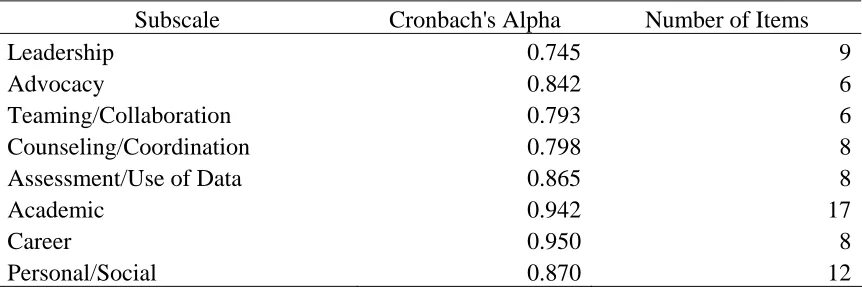
Table 3.2 Reliability Statistics for Subscales ...50
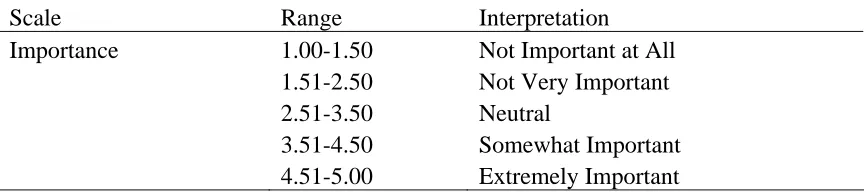
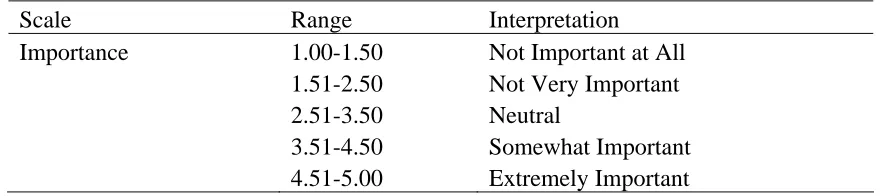
Table 3.3 Score Range Interpretation for the School Counselor Role Survey...51
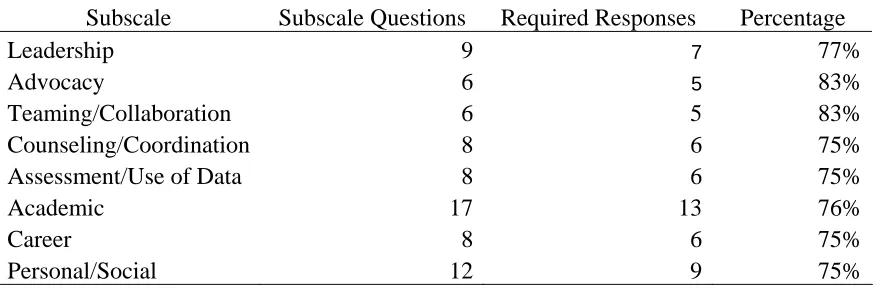
Table 3.4 Number and Percentage of Required Responses For Each Subscale...52
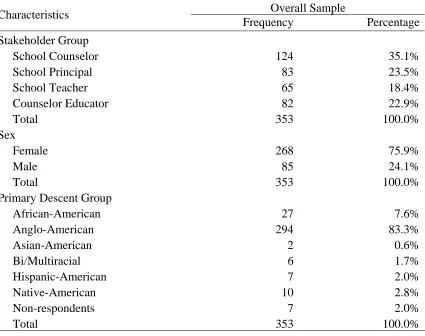
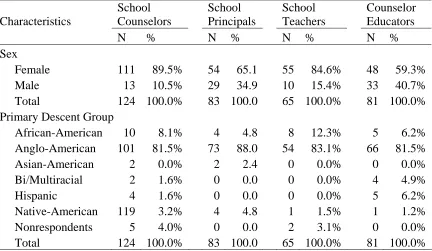
Table 4.1 Overview of Sample ...58
Table 4.2 Characteristics of Stakeholder Groups...60
Table 4.3 Score Range Interpretation for the School Counselor Role Survey...63
Table 4.4 Mean and Standard Deviation for the TSCI Domains and ASCA Content Areas ...65
Table 4.5 ANOVA Results for Leadership Roles...70
Table 4.6 ANOVA Results for Advocacy Roles...71
Table 4.7 ANOVA Results for Teaming and Collaboration Roles...72
Table 4.8 ANOVA Results for Counseling and Coordination Roles...73
Table 4.9 ANOVA Results for Assessment and Use of Data Roles ...74
Table 4.10 ANOVA Results for Academic Roles ...75
Table 4.11 ANOVA Results for Career Roles ...76
Table 4.12 ANOVA Results for Personal/Social Roles ...77
ABSTRACT
The purpose of the study was to examine the value and comparative value that
stakeholders placed on elementary school counselors’ roles. Participants in this study were
elementary school counselors, elementary school principals, elementary school teachers, and
counselor educators (N=353). All participants completed the School Counselor Role Survey that
was designed to assess stakeholders’ perceptions of the importance of the school counselor roles
advocated by the Education Trust and ASCA. The instrument combined the domains of TSCI
and the content areas of the National Standards.
ANOVAs were computed to compare the overall and each subscale mean for each of the
stakeholder groups. Significant differences were found between stakeholder groups on four of
the five TSCI domains: Advocacy, Teaming and Collaboration, Counseling and Coordination,
and Assessment and Use of Data. Significant differences were also found on two of the three
content areas: Career and Personal/Social. Significant differences for the domains and content
areas were found most often between counselor educators and principals and between counselor
educators and teachers.
All groups believed the TSCI domains to be Somewhat Important. The results for the
content areas indicated that the academic role should be included in school counselor training,
but not at the expense of the personal/social role. The results of this study indicate that all
stakeholder groups view elementary school counselors as mental health professionals first and
foremost. This has implications for school counselors, counselor educators, and professional
CHAPTER ONE
INTRODUCTION
An overview for this study is presented in nine sections in this chapter. The first section
provides an introduction to the current status of school counseling and describes how several
initiatives have influenced school counselors’ roles and functions. The statement of the problem
and the conceptual framework are discussed in the second and third sections, respectively. The
fourth section describes the purpose of the study and the fifth section presents the significance of
the study. The research questions are introduced in section six. The final three sections present
the assumptions, limitations and delimitations, and definitions of terms.
The Transformation of School Counseling
Accountability and school reform efforts govern today’s educational system. The primary
goal of the No Child Left Behind Act (2001) is to close the achievement gap between minority
and disadvantaged youth and their peers. Academic achievement is now the priority of schools
across the nation, shifting the educational focus from “input” to “outcome.” All school
personnel, including school counselors, are considered to be responsible for student achievement.
As a result of school reform efforts, the 21st century has become the age of accountability
for school counselors (Hughes & James, 2001; Myrick, 2003; Whiston & Sexton, 1998).
According to Myrick, school counselors are now being held more accountable than at any
previous time in history. Dahir and Stone (2003) claimed that school counselors must share
counseling. Counselor roles are undergoing transformations so counselors that are viewed as
“key players” (Dahir & Stone) and “leaders and change agents” (Bemak, 2000).
The mission of schools targets effective teaching and learning, and alignment with this
aim has become mandatory for school counseling to survive (Martin, 2002). Martin asserted that
improving student achievement is the most important item on the list of what school counselors
will have to know and be able to do. Academic/student achievement focus also was the primary
recommendation made by House and Hayes (2002) for the “new vision” of school counselors.
House and Hayes stated, “In fact, if school counselors do not relate their work and programs to
the mission of schools and document success, they are at risk of extinction” (p. 7).
Recently, the school counseling profession has attempted a transformation from a mental
health to an academic achievement focus (Bemak, 2000; Dahir & Stone, 2003, Martin, 2002). It
appears that leaders in the profession believed there was a “discrepancy between educational
values and outcomes affecting themselves…” (Fullan, 1982, p. 13) and sought to transform the
profession in order to align themselves more closely with the prevailing educational values. For
example, Paisley and Borders (1995) accused educational administrators, legislators, and school
reformers of failing to include school counselors in their decision making. Similarly, Herr (1984)
concluded that school counselors have been neglected in the reform movement. Dahir (2001)
noted that none of the “widely distributed reports or more recent proposals for school reform
suggested by various organizations mentioned school counseling as integral to improving student
success in school…and school counseling programs were ignored as a means to improve student
achievement and help students prepare for the future” (p. 2). However, House and Hayes,
advocates of the “new vision,” acknowledged that there is limited research to suggest that
researchers have concurred that there is a lack of data to validate the idea that school counselors
are impacting students’ academic success (Borders & Drury, 1992; Whiston & Sexton, 1998).
In response to these oversights and omissions of school counselors from the reform
agenda, a number of major initiatives (e.g., National Standards and Transforming School
Counseling Initiative) were developed in an attempt to move the profession from an ancillary to
a leadership position in school reform efforts. The American School Counselor Association’s
(ASCA) National Standards targeted practicing school counselors, aiming to change the way
they delivered their school counseling programming. The Education Trust’s Transforming
School Counseling Initiative (TSCI) sought to change the way school counselors were trained.
Sharing the Vision: The National Standards for School Counseling Programs (Campbell
& Dahir, 1997) was “designed to connect school counseling to the current school reform agenda”
(Dahir, 2001, p. 324). The Standards propose that counseling programs offer a proactive focus in
three content areas: (1) academic development, (2) career development, and (3) personal/social
development. The Standards delineate the attitudes, knowledge, and skills that students should
acquire. Also, the Standards provide competencies which gauge student achievement in the
content areas.
While the National Standards sought to transform school counseling practice, the
Transforming School Counseling Initiative (TSCI) from the Education Trust sought to transform
school counselor preparation. To assist all students in achieving academic success, school
counselors are advised to address five domains: (1) Leadership, (2) Advocacy, (3) Teaming and
Collaboration, (4) Counseling and Coordination, and (5) Assessment and Use of Data (The
Education Trust, 2005; Sears, 1999). TSCI requires that school counselors adopt the New Vision
individual student’s concerns to whole school and system concerns; from record keepers to users
of data to effect change; and from guardians of the status quo to agents for change, especially for
educational equity for all students (House & Martin, 1998).
Statement of the Problem
The American School Counselor Association’s National Standards for School Counseling
Programs and The Education Trust’s Transforming School Counseling Initiative emphasized the
belief that every student should benefit from the school counseling program. Furthermore, school
counselors are expected to adopt an academic focus on whole school and system issues rather
than a mental health, personal/social focus with individuals and small groups. Martin (2002)
endorsed the need to “move school counseling from an ancillary service-oriented profession to
one that becomes a critical player in accomplishing the mission of schools, academic success and
high achievement for all students” (p. 6).
On the other hand, Guerra (1998) observed opposition from some school counselors and
counselor educators to the shift from a mental health focus to an academic achievement focus. In
order to better understand the proponents and opponents of the transformed school counselor, it
becomes critical to focus on which counselor roles stakeholders value.
Conceptual Framework
Fullan (1982) offered “three broad ways in which pressure for educational policy change
may arise: (1) through natural disasters, (2) through external forces such as imported technology
and values, and immigration, and (3) through internal contradictions, such as when indigenous
changes in technology lead to new social patterns and needs, or when one or more groups in a
others in whom they have an interest” (p. 13 ). The researcher seeks to examine school
counseling in terms of the final element of Fullan’s theory of educational change.
According to Guerra (1998), the recent transformation of school counselors’ roles and
functions from a mental health to an academic achievement orientation has not been welcomed
or adopted by all school counselors and counselor educators. Therefore, through the lens of
Fullan’s theory of educational change, the researcher seeks to identify stakeholders’ perceptions
of the “new vision” school counselor to better understand the barriers to this innovation.
Fullan (2001) proposed that educational change requires a shift in practice. In this process
of change, goals, skills, philosophy or beliefs, and values can be threatened. “Change must
always be viewed in relation to the particular values, goals, and outcomes it serves” (Fullan,
1982, p. 9). Therefore, for an innovation (i.e. the “new vision” of school counseling) to be
adopted, it must be consistent with an individual’s values. Similarly, Rogers (1995) posited that
one of the attributes of adoption of an innovation is the individual’s perception of its fit with
his/her existing needs, values, and past experiences. Fullan (1982) asserted that changes in what
“people do and think determine the outcome of change” (p. 35). In other words, for change to
occur, individual’s beliefs and behaviors must change. However, a person’s beliefs and
behaviors are determined by their values.
Fullan (2001) described eight factors that influence decisions to adopt or reject changes
in programs, policies, and directions, depending on their absence or presence. They are: (1)
existence and quality of innovations, (2) access to information, (3) advocacy from central
administrators, (4) teacher pressure/support, (5) consultants and change agents, (6) community
pressure/support/apathy/opposition, (7) availability of federal or other funds and new central
for adoption. Three of these eight factors address the study’s identified stakeholders, and their
support, or lack thereof, is crucial in determining whether change will occur. These factors and
stakeholder positions are: (1) advocacy from central administrators (i.e., principals), (2) teacher
pressure/support, and (3) consultants and change agents (i.e., counselors and counselor
educators).
Purpose of the Study
According to Fullan (2001), stakeholders’ support is central in determining the rejection
or adoption of innovations. It is important to note that adoption or acceptance of an innovation
partly depends on its consistency with individuals’ values, and values are central in guiding
individuals’ actions and attitudes toward ideas and situations. Therefore, the purpose of the
study was to examine the value and comparative value that stakeholders placed on elementary
school counselors’ roles.
Significance of the Study
Although the National Standards from the American School Counselor Association and
the domains from the Education Trust’s Transforming School Counseling Initiative (TSCI)
promote the transformation of school counseling, mandates from leadership alone will not
transform school counselors’ roles or counselor education programs (Perusse & Goodnough,
2001; Perusse, Goodnough, Donegan, & Jones, 2004). Therefore, the significance of the study
lies in its exploration of the perceptions of the major stakeholders. It was hoped that this study
will provide useful data to leaders within the counseling and school counseling professions,
counselor educators, principals and school boards, and school counselors themselves. For
example, insights gained in the study could validate current practices or suggest new ways
Additionally, the study could help identify some areas of stakeholders’ support for or opposition
to the implementation of the “new vision” of school counseling.
Research Questions
In this study, stakeholders’ (i.e., school counselors, counselor educators, principals, and
teachers) perceptions regarding the value of school counselor roles were examined. Quantitative
research methodologies were used to answer the following questions: (1) What value do
stakeholders place on elementary school counselors’ roles? and (2) Do the perceptions of
stakeholder groups differ on the values they place on elementary school counselor roles?
Assumptions
According to Gay and Airasian (2000) an assumption “is any important ‘fact’ presumed
to be true but not actually verified” (p. 108). The following assumptions were made for this
study:
1. Participants will respond to the survey instrument honestly and objectively.
2. Participants who represent the population for school counselors, counselor educators,
principals, and teachers will be “computer literate.”
3. The subject will be of interest to the population.
4. The accuracy of results will be related to the number of respondents.
Limitations and Delimitations
Gay and Airasian (2000) posited that a limitation “is some aspect of the study that the
researcher knows may negatively affect the study but over which he or she has no control” (p.
108). For this study, each respondent’s personal opinions, beliefs, attitudes, and experiences at
that particular moment in time represented a potential limitation. The study sought to examine
most stable affective characteristics (Krathwohl, Bloom, & Masia, 1999), it is possible for an
individual to alter his/her beliefs. In addition, responses were assumed to represent the
respondent’s values, but the data was self-reported. Any limitations associated with this type of
response are potential limitations of the study.
Delimitations for the study were:
1. This study was delimited to four elementary stakeholder groups (elementary school
counselors, counselor educators, elementary school principals, and elementary school
teachers).
2. This study was delimited to the counselor roles included in the survey instrument.
3. Members of the sample which represented elementary school counselors, counselor
educators, elementary school principals, and elementary school teachers included
only participants with access to the internet and working e-mail addresses.
Definitions of Terms
Elementary Schools
Elementary schools were defined as any combination of pre-kindergarten through sixth
grade.
Innovation
According to Rogers (1995), an innovation is “an idea, practice, or object that is
perceived as new by an individual or other unit of adoption…if the idea seems new to the
individual, it is an innovation” (p. 11). Therefore, for the purposes of this study the idea of
school counselors’ role shift from a mental health to an academic achievement focus will be
Role
For the purposes of this study, a role was defined as the set of expectations placed on
school counselors by themselves, by those within the school system (school boards, principals,
and teachers), and by those outside the system (federal and state legislators, organization leaders,
and counselor educators) (Culbreth, Scarborough, Banks-Johnson, & Solomon, 2005).
Role Ambiguity
Role ambiguity was defined as a lack of clearly defined responsibilities or performance
expectations (Coll & Freeman, 1997; Culbreth et al., 2005).
Role Conflict
Role conflict was defined as a situation in which the school counselor has conflicting
demands from two or more role senders (administrators, other counselors, teachers, counselor
educators) or different expectations about his/her job (Culbreth et al., 2005).
Role Incongruence
Role incongruence was defined as a situation in which: (1) the school counselor has
conflicting expectations from two or more groups, or (2) the school counselor has too many role
duties and a lack of needed support (Culbreth et al., 2005).
Role Stress
Role stress is comprised of the three related constructs of role ambiguity, role conflict,
and role incongruence (Culbreth et al., 2005).
School Counselor
For the purposes of this study, a school counselor was defined as an individual who has
obtained a master’s degree or higher from a counselor education program and has the required
Stakeholders
For the purposes of this study, stakeholders were defined as school counselors, counselor
educators, principals, and teachers. Numerous studies indicated that these groups have an
influence on the school counseling program (Beesley, 2004; Clark & Amatea, 2004; Dahir, 2000;
Ginter & Scalise, 1990; Muro & Kottman, 1995, Myrick, 2003; Neukrug et al., 1993; Ponec &
Brock, 2000; Ribak-Rosenthal, 1994; Vaught, 1995). This definition also is consistent with
Fullan’s (2001) factors which impact the acceptance or rejection of innovations: (1) advocacy
from central administrators (principals), (2) teacher pressure/support, and (3) consultants and
change agents (school counselors and counselor educators). More specifically, these stakeholders
were defined as those who are currently employed in or have an interest (e.g., training concerns)
in counselor roles in public elementary schools and who hold the position of school counselor,
counselor educator, school principal, or school teacher.
Value
A value was defined as an idea or belief which is preferable and determines and directs
interests, attitudes, satisfaction, and behavior. This is consistent with Krathwohl’s (Krathwohl,
Bloom, & Masia, 1999) three-tiered value taxonomy: (1) acceptance of a value (i.e., beliefs and
attitudes), (2) preference for a value (i.e., preference for interests or values over others), and (3)
commitment (i.e., motivation to act out the behavior).
Organization of Remaining Chapters
This chapter has provided an introduction of the research problem and presented a
framework for this research. The second chapter reviews existing literature on the impact of
educational reform and legislation on school counselor role definition, the influence of
research relevant to stakeholders’ perceptions. The third chapter presents the research
methodology that was used for this study. The fourth chapter provides a description of the
participants and the statistical results of the data analyses for each of the research questions. The
fifth chapter offers an interpretation of the findings and their synthesis with the conceptual
framework and prior research, implications for school counselors, counselor educators, and
CHAPTER TWO
REVIEW OF THE LITERATURE
The purpose of this chapter is to examine the research and literature related to the role
and function of school counselors. The chapter is organized into five sections which build a
framework for an examination of the ever-changing roles of school counselors and the
subsequent shifts in school counselor practice and training programs. The first section provides
an overview of the historical roots of school counseling and describes how educational reform
has shaped school counselors’ roles and functions. The main forces behind the transformation of
school counseling practice are discussed in section two. The transformation of school counseling
preparation and the major influences on this paradigm shift are discussed in section three. The
fourth section offers research relevant to stakeholders’ perceptions, and the last section provides
conclusions drawn from the review of the literature.
Educational Reform and Legislation
Historically, changes in the profession of school counseling have paralleled trends in
educational reform and legislation. To understand the development of school counseling in the
United States, it is necessary to view it as part of a larger educational system that is constantly
being affected by other factors. The shifts in school counselors’ roles and functions reflect the
profession’s efforts to respond to social, economic, and political trends. Therefore, the following
historical information is presented in a chronological manner while integrating a systems
Although guidance programs date back to the late 1800s, many view the National
Defense Education Act (NDEA) of 1958 as the beginning of modern school counseling
programs. For the purpose of this study, the examination of the historical roots of counseling will
begin with this act.
The launch of Sputnik by the Union of Soviet Socialist Republics (USSR) created a
national furor, and the United States Congress responded by passing the National Defense
Education Act (NDEA) in 1958. The NDEA provided funds for school counseling services in all
high schools and for developing school counselor preparation programs (Lambie & Williamson,
2004). As defined by this legislation, the role of school counselors was to identify and foster the
development of high school students who showed promise in the subjects of math and science.
Six years later, this search for students with high aptitudes in math and science was expanded to
the elementary level. The 1964 amendments to the NDEA allotted funds for elementary school
counseling programs. One year later, the Elementary and Secondary Education Act of 1965
provided funds for guidance and counseling at both levels (Lambie & Willamson). During these
years, school counselors were considered key personnel in nurturing the growth of future
generations of innovators. In the latter part of the decade there was a slight change in the mission
of school counseling programs. With the Vocational Education Act Amendments of 1968, the
focus of career guidance was extended to students with disabilities, students with disadvantages,
and to elementary school students (Herr, 2003).
The 1970s ushered in an era of declining school enrollment and budgetary cuts that had
an impact on the role and functions of school counselors (Lambie & Williamson, 2004). Several
important milestones within the arena of educational reform occurred during this decade. First, in
“having ushered in a new era of accountability” (Hansen, 1993, p. 13). During that same year,
nationwide testing began for the first National Assessment of Educational Progress (NAEP). In
the early 1970s, Lessigner advocated for the use of engineering principles to measure educational
process (Hansen). Also during this time, the effective schools research movement provided
characteristics of effective schools and effective teacher practices. School counselors, in their
struggle to survive in the face of a changing educational environment, began to perform
administrative, noncounseling roles to increase their visibility. Later, in 1975, the Educational
Act for All Handicapped Children (PL 94-142) brought school counselors in contact with special
education services. This legislation made school counselors responsible for appropriate
placement services, consultation with parents and teachers of children with special needs,
collaboration in the Individualized Education Plan (IEP) process, and record-keeping (Humes,
1978).
In the early 1980s, the crisis situation of public education came to the forefront of public
awareness, generating dialogue about the need for school reform. According to
Schwallie-Giddis, ter Maat, and Pak (2003), A Nation at Risk “became the most quoted and read national
publication, not only by educators, but by business and community people from the private and
public sector as well” (p. 170). In 1989 President Bush organized the Governor’s Education
Summit which “led to a new wave of education reform driven by accountability and undergirded
by a set of general educational goals for the nation” (Hansen, 1993, p. 15). In the late 1980s the
language changed from “reform” to “restructuring,” introducing such concepts as site-based
management, collaborative decision making, teacher empowerment, and increased community
involvement (Hansen). Throughout the 1980s, school counselors were affected by these changes,
Several important initiatives and publications advocating for educational reform occurred
in the 1990s. The Goals 2000: Educate America Act of 1994 provided six national education
goals. In 1990 the National Center on Education and the Economy published America’s Choice:
High Skills or Low Wages, iterating the need for workers to obtain high skills in order to compete
with low wage workers in other countries. The next year, 1991, the reports of the Secretary’s
Commission on Necessary Skills (SCANS), produced What Work Requires of School and
Learning a Living. These reports drew attention to future workers’ needs for interpersonal skills
and personal qualities to bridge the gap between school learning and practical application (Perry,
1992). These reports highlighted the need for career guidance, especially school to work
transitioning, and the School to Work Opportunities Act of 1994 came about as a result (Lambie
& Williamson, 2004).
The 21st century ushered in the No Child Left Behind Act (2001) with its main goal of
closing the achievement gap between minority and disadvantaged youth and their peers. The
focus has shifted from “input” to “outcome,” rendering all school personnel responsible for
student achievement.
School Counselor Role Definition
History
The changing role of the school counselor has reflected legislative and societal trends.
The literature indicates that a lack of role definition has haunted the school counseling
profession. Drury (1984) offered this censure of the profession:
Similarly, Morse and Russell (1988) concluded that elementary school counselors were not
defining their roles: rather, they were accepting those roles that had been thrust on them by other
school personnel. This criticism of the school counseling profession has existed for decades,
seemingly since its inception.
In the 1960s, Berlin (1963) and Lortie (1965) suggested that role confusion was prevalent
in the school counseling profession. Throughout the past decades many authors have decried the
profession’s inconsistency and lack of definition, reporting rampant role confusion and role
conflict. Recently, Beesley (2004) concluded that role ambiguity continues to plague a
profession already deficient in professional identity.
Role Stress
Lamdie and Williamson (2004) contended that the expansion of school counseling
services throughout the profession’s history has resulted in role ambiguity. They noted that,
while responsibilities were constantly being added, none were being taken away. Gerler (1992)
concluded that the number of functions and duties school counselors have been asked to shoulder
is partially responsible for their role ambiguity. Specific to elementary counseling, Coll and
Freeman (1997) suggested that funding shortages, a more challenging population, and the
pressures of accountability could result in role conflict for counselors. Similarly, Kameen,
Robinson, and Rotter (1985) reported a discrepancy between the ideal and actual role and
functions of elementary counselors. Coll and Freeman observed more role conflict for
elementary counselors when compared to middle and high school counselors, suggesting that the
variety of roles and functions elementary counselors fulfill, along with the “newness” of their
positions, contributed to role confusion. However, a more recent study which extended the work
incongruence than high school counselors (Culbreth, Scarborough, Banks-Johnson, & Solomon,
2005). Culbreth et. al suggested that recent reform efforts on the national level to transform the
practice and training of school counselors at all levels may be at the heart of their difference in
findings. However, these authors noted that role conflict, incongruence, and ambiguity are still
very evident within the profession.
Consequences of Role Stress
The consequences of role confusion and conflict for school counselors are far-reaching
and encompass many levels of the profession. Role conflict and confusion can result in high
absenteeism (Van Sell, Brief, & Schuler, 1981), low job effectiveness (Miles & Perrault, 1976),
and low productivity (Van Sell et al.). Furthermore, counselors themselves can suffer both
personally and professionally (Coll & Freeman, 1997). Role conflict has been linked with
job-related tension and fatigue (Beehr, Walsh, & Taber, 1976), job dissatisfaction (Beehr et al.,
1976), feeling overwhelmed (Lamdie & Williamson, 2004), feelings of helplessness (Wells &
Ritter, 1979), and feelings of powerlessness (Kottkamp & Mansfield, 1985).
Another result of role stress for school counselors is the broader issue of lack of
professional identity. According to Johnson (2000), “there is little that tangibly can prepare
newly credentialed schoolcounselors for what lies ahead in terms of the professionalidentity
struggle they are likely to face in the schools…” (Electronic version, second paragraph). Brott
and Myers (1999) suggested that dissonance between theory and practice has contributed to the
lack of identity. Other authors have contended that overwhelming expectations in terms of
responsibilities, roles, and functions contribute to school counselors’ weakened professional
identity (Anderson & Reiter, 1995; Gysbers, 1990; Johnson, 1993). Yet Johnson (2000)
they have not resisted others’ role definitions and have acceded to the demands being placed on
them.
Professional Organizations
Although educational reform and legislation have shaped the school counseling
profession, several professional organizations also have influenced the profession. Among these
are the American Counseling Association (ACA), the Association for Counselor Education and
Supervision (ACES), the National Career Development Association (NCDA), and, perhaps the
most influential, the American School Counseling Association (ASCA).
ASCA
In 1952 the American School Counseling Association (ASCA) was formed, bringing a
measure of identity to a profession that was weakened by an alliance among educators, social
workers, and psychologists. This alliance has continued to plague school counselors today,
because it was the source of duties such as testing and scheduling. The development of ASCA
provided resources such as professional development strategies, research, and the promotion of
professional identity. In 1953, one year after its formation, ASCA began to publish its
professional journal, The School Counselor, which further contributed to the professional
identity of the profession (Lambie & Williamson, 2004). ASCA has charted the course of the
profession and has influenced the “direction and shape of school counseling as it is known
today” (Paisley & Borders, 1995, Electronic Version, p. 2) through publications such as role
statements, national standards, ethical standards, and position statements (Campbell & Dahir,
ACA
In 1953 ASCA became the fifth division of the American Personnel and Guidance
Association (APGA), which is now the American Counseling Association (ACA). The APGA
was formed when four founding divisions merged (i.e., National Vocational Guidance
Association, American College Personnel Association, Student Personnel Association for
Teacher Education, and National Association of Guidance and Counselor Trainers). ASCA
remained a division of the ACA until 1995, when the members voted for independence from
ACA. At that time ACA began to restructure in order to accommodate ASCA’s change in
division status. Despite ASCA’s pullout, ACA has continued to remain a force within school
counseling by supporting “think tanks” and sponsoring conferences related to the profession
(e.g., 20/20 Conference and special interest networks).
ACES
The Association for Counselor Education and Supervision (ACES) also has collaborated
with ASCA throughout its history. ACES has continued to express interest in the training of
school counselors, the development of programs, and the need for supervision. Recently, ACES
has partnered with other professional organizations in sponsoring and developing interest
networks (e.g., ACES School Counseling Interest Networks at national and regional levels),
roundtable discussions (e.g., Southern Association for Counselor Education and Supervision
Roundtable on School Counseling Preparation Programs), and program sessions (Paisley &
Borders, 1995).
NCDA
Lastly, the National Career Development Association (NCDA) has promoted the
school-to-work transitions. Also, the NCDA has continued to recognize the vital role that school
counselors play in supporting career education and program development (NCDA, 2005).
Transformation of School Counselor Practice
ASCA
As advocated by ASCA, the role and function of school counselors have attempted to
follow the recent shift into accountability practices, making the improvement of student
achievement the mission of school counseling programs (House & Hayes, 2002; Martin, 2002).
School counselors are now being asked to share accountability for student achievement and to
become leaders and change agents (Bemak, 2000) within schools.
It appears that school counseling leaders believed there was a “discrepancy between
educational values and outcomes affecting themselves…” (Fullan, 1982, p. 13) and sought to
transform the profession in order to align themselves more closely with the perceived
educational values. Paisley and Borders (1995) stated that educational administrators, legislators,
and school reformers have failed to include school counselors in their decision making.
Similarly, Dahir (2001) indicated that school counseling programming has not been recognized
in educational reform proposals “as a means to improve student achievement and help students
prepare for the future” (p. 2). Herr (1984) suggested that school counselors have been overlooked
in the school reform movement. For example, school counseling was omitted from the
educational reform agenda of the 1980s and was not recommended as a possible solution to the
obstacles in schools (Dahir). Similarly, school counselors were not mentioned in the Goals 2000
(Perry, 1992).
As a result of these oversights, the counseling profession adopted several initiatives in an
Electronic Version, First Paragraph) to a key player in school reform efforts. In response to the
omission of school counselors from the 80s reform agenda, school counseling leaders “called for
a revitalization and transformation of school counseling programs” (Dahir, 2001, p. 2). An
American Association of Counseling and Development publication entitled School Counseling:
A Profession at Risk (1987) “presented a series of recommendations considered imperative for
the survival of the profession” (Dahir, p. 2).
In 1991, the American School Counseling Association adopted the following definition
of school counselors:
School counselors are specifically credentialed professionals who work in school setting with students, parents, educators, and others within the community. They design and manage comprehensive developmental guidance programs to help students acquire skills in the social, personal, education, and career areas necessary for living in a multicultural society. School counselors accomplish this by employing such interventions as guiding and counseling students individually or in small groups, by providing information through group guidance, by contributing to the development of effective learning environments, through student advocacy, and through consulting with others. (p. 1)
In 1993, the American Counseling Association (ACA) brought counseling leaders
together to better define the role of the school counselor. Later, the ASCA Governing Board
adopted this revised definition:
Counseling is a process of helping people by assisting them in making decisions and changing behavior. School counselors work with all students, school staff, families, and members of the community as an integral part of the education program. School
counseling programs promote school success through a focus on academic achievement, prevention and intervention activities, advocacy, and social-emotional and career
development. (ASCA, 1997)
National Standards. In 1994, as a result of the omission of school counseling from Goals
2000, ASCA promoted an effort to develop national standards (Dahir, 2001). In order to
for each child, the focus for these national standards was on establishing what students needed to
know and be able to do by the time they graduated from high school.
Sharing the Vision: The National Standards for School Counseling Programs (Campbell
& Dahir, 1997) served as a foundation for school counselors to individualize their counseling
programs to meet the specific needs of their schools and school districts. Dahir (2001) stated,
“the publication was designed to connect school counseling to the current school reform agenda”
(p. 324). The National Standards emphasized a proactive orientation centered around three
content areas: (1) academic development, (2) career development, and (3) personal/social
development. The nine standards, three in each content area, describe the attitudes, knowledge,
and skills that students should gain through an array of educational experiences and provide
competencies to measure student achievement in the content areas.
Two years later, ASCA leadership determined that school counseling programs still were
not being efficiently and effectively managed and sought, once again, to assist school counselors.
As a result of hours of consideration by about 15 school counselors and counselor educators, the
new framework for a national model reflected a comprehensive approach to program foundation
and service delivery, management, and accountability. A key change in the model was the
manner in which school counselors spend their time: “the majority of the school counselor’s time
[is to] be spent in direct service to all students to maximize student academic success” (Campbell
& Dahir, p. 170).
Recognized ASCA Model Program (RAMP). The ASCA National Model has integrated
the National Standards as well as the Transforming School Counseling Initiative’s domains. The
four elements of the National Model include Foundation, Delivery System, Management
“While the National Standards are part of the foundation of the model, ASCA collaborated with
The Education Trust in order to include concepts from TSCI within the four themes of
leadership, advocacy, collaboration, and systemic change” (p. 152). Also included in the model
is the recommendation that schools counselors are users of data.
A draft of the new model was introduced at ASCA’s national convention in June 2002,
and the final version of the model, the Recognized ASCA Model Program (RAMP), was adopted
in late 2003. Since that time, schools that meet the program standards have been able to apply for
the RAMP designation for their school counseling program. Although comprehensive school
counseling program models have been developed by at least 24 states (Sink & MacDonald,
1998), and over 400 schools or districts in the United States have program models based on the
National Standards (Dahir, 2001), only 13 school counseling programs gained the RAMP
designation in the 2003-2004 and 2004-2005 school years (ASCA, 2006).
Education Trust’s MetLife National School Counselor Training Initiative (NSCTI)
In February 2002, The Education Trust instituted the National School Counselor Training
Initiative (NSCTI). This initiative, funded by MetLife Foundation, provided professional
development for school counselors who were already in the field to help them serve as advocates
of school-wide success for all students. The primary focus of these workshops was to “make the
practice of school counseling essential to the mission of schools and education reform by
equipping school counselors with the skills and knowledge necessary to help all groups of
students meet high academic standards” (Education Trust, 2005, Online). It is the belief of the
Education Trust that school counselors are key personnel in eliminating social injustice and
helping students gain access to a rigorous, quality education. The intended result of the National
students of color will attain the academic preparation needed for entrance into and success in
post-secondary education.
The Education Trust advocates for school counselors, who are in key positions to assess
the school for systemic barriers that hinder academic success, to become a part of the
accountability system. According to the Trust, “Issues of equity, access and lack of supporting
conditions for success come to rest at the counselor's desk in the form of data, files and reports of
whole school and individual student progress or failure” (Education Trust, 2005, Online). School
counselors are expected to affect student achievement by: (1) influencing attitudes and beliefs
regarding all groups of students’ abilities to achieve high standards, (2) improving access and
success in rigorous academic courses for underrepresented students, (3) providing attention to
equity, access, instructional programs and support services, (4) managing resources designed to
improve learning success for students experiencing difficulty with rigorous academic programs,
(5) developing high aspirations in students rather than just attending to aspirations as they
emerge, and (6) influencing systemic change so that practices and procedures support student
achievement for all groups of students.
A workshop series provided by this initiative was intended to aid professional school
counselors in connecting their mission to school reform, and thereby becoming an “integral part
in creating an equitable education system” (Education Trust, 2005, Online). The professional
development workshop series focuses on five issues: (1) Working as leaders to promote access
and equity for all groups of students, (2) Using data to change policy and practice, (3) Advocacy
for systemic change, (4) Taking action to help all groups of students meet high standards, and (5)
The Coalition to Improve Student Achievement through School Counseling (CISASC)
In addition to promoting the TSCI and NSCTI, The Education Trust has also joined with
ASCA, the College Board, and the National Association for College Admissions Counseling to
form the Coalition to Improve Student Achievement through School Counseling (CISASC). The
purpose of the CISASC was to form a united national force for advancing the academic agenda
for all students through the work of school counselors. The CISASC views school counselors as
responsible for ensuring, promoting and supporting all students, especially the most vulnerable,
for college readiness. At this time the Coalition aims to promote and support the following three
areas: (1) research that focuses on the value of school counselors encouraging college readiness,
(2) professional development for the transformation of school counselors into leaders and
catalysts for change within schools, and (3) policy changes and legislative efforts to secure
support for professional development and increased recognition of the contribution that school
counselors make to students’ school success (The Education Trust, 2005)
Transformation of School Counselor Preparation
Changes in school counselors’ roles and functions reflect the profession’s efforts to
respond to social, economic, and political trends, and these changes have prompted shifts in
graduate training programs. According to Bemak (2000), school counselors are prime examples
of how changes in education over the years have “affected the very core of the principles and
values on which school-related professionals are trained and practice” (p. 323). Several
organizations have greatly influenced the education and training of school counselors, including
the Education Trust, the Council for Accreditation of Counseling and Related Educational
Education Trust’s Transforming School Counseling Initiative (TSCI)
In 1997, The Education Trust, underwritten by the DeWitt-Wallace Reader’s Digest
Fund, presented the Transforming School Counseling Initiative (TSCI) and defined the New
Vision School Counselor. The focus of this initiative was on changing how counselor education
programs prepared school counselors, by identifying the knowledge and skills that professional
school counselors needed to help all students achieve academic success (Education Trust, 2005).
Perusse et al. (2004) explained that this work underwent additional development with the
implementation of the MetLife National School Counselor Training Initiative (NSCTI).
Although the main focus of the New Vision School Counselor continues to be on academic
achievement, the definition also includes assisting students in their social, emotional, and
personal development. Additionally, school counselors are to play a crucial part in advocating
for educational equity, removing the barriers to academic success, and closing the achievement
gap for poor and minority youth. To achieve these goals, school counselors are required to
address five domains: Leadership, Advocacy, Teaming and Collaboration, Counseling and
Coordination, and Assessment and Use of Data (The Education Trust; Sears, 1999). The
Education Trust’s TSCI requires that school counselors embrace the New Vision. This entails a
shift from functioning as mental health providers toward an academic/student achievement
focus; from individual students’ concerns to whole school and system concerns; from record
keepers to users of data to effect change; and from guardians of the status quo to agents for
change, especially for educational equity for all students (House & Martin, 1998).
Six universities and their K-12 school district partners were chosen to redesign their
school counselor education programs. The goal was to transform their preparation programs in
success. The universities redesigned their programs by using the following eight essential
elements as a guide: (1) Criteria for selection and recruitment of candidates for counselor
preparation programs, (2) Curricular content, structure and sequence of courses, (3) Methods of
instruction, field experiences and practices, (4) Induction process into the profession, (5)
Working relationships with community, (6) Partners in professional development for counselor
educators, (7) University/School district partnerships, and (8) University/State department of
education partnerships.
CACREP Standards
In addition to the Education Trust’s Transforming School Counseling Initiative, the
Council for Accreditation of Counseling and Related Educational Programs (CACREP) also has
had an effect on school counselor training programs. Established in 1981 as a result of the work
of CACES, ACES, and ASCA (CACREP, 2005), the mission of CACREP centered around
developing preparation standards, supporting quality program development, and accrediting
professional preparation programs to “promote the professional competence of counseling and
related practitioners” (CACREP).
In 2001, CACREP developed standards, including standards for school counseling
graduate programs, to promote the development of students’ professional identity and mastery of
specific knowledge and skills. The introduction to the Standards acknowledges the evolution of
counseling to meet societal needs, but states, “It is imperative that programs explicitly prepare
students to be counselors first and counseling specialists second” (Online Introduction).
The 2001 Standards require curricular experiences and demonstrated knowledge in eight
common core areas for all students in the counseling program, regardless of their specific track.
Human Growth and Development, (4) Career Development, (5) Helping Relationships, (6)
Group Work, (7) Assessment, and (8) Research and Program Evaluation. Beyond these core
areas, students in CACREP-accredited school counseling programs are required to have
curricular experience and demonstrated knowledge and skills in the following four school
counseling areas: (1) Foundations of School Counseling, (2) Contextual Dimensions of School
Counseling, (3) Knowledge and Skill Requirements for School Counselors, and (4) Clinical
Instruction.
Within the area of school counseling foundations, students study content pertaining to the
profession of school counseling (school counseling history, philosophy, and recent
developments; school counselors’ roles, functions, and professional identity; school counseling
legislation; policy; and ethical and legal considerations) as well as to the larger educational
system in which school counselors work (such as roles of professional and support personnel,
school setting, learning environments, and curriculum). In addition to learning about educational
and school counseling issues, concerns that effect students and families are also explored (e.g.,
diversity and equity, barriers that impede academic and career success and personal/social
development). School counseling students are instructed in the application of technology to
better assist the populations they will serve by connecting them with resources that will aid in
decision making.
The goal of curricula within the second area of contextual dimensions of school
counseling is to provide students with the means to effectively coordinate counseling program
components. Learning within this area is directed towards advocacy; collaboration; referral; and
program planning, development, implementation, and evaluation. Students are also instructed in
integration of the counseling program into school curriculum to promote academic success,
career awareness, and personal/social development.
Within the curricular experience of knowledge and skill requirements for school
counselors, there are three subcategories: (1) Program Development, Implementation, and
Evaluation, (2) Counseling and Guidance, and (3) Consultation. As its name implies, the first
subcategory, program development, implementation, and evaluation, presents students with
strategies in order to develop, implement, and evaluate comprehensive school counseling
programs through means such as technology, action plans, alternative funding, and identification
of student needs and competencies.
Learning within the subcategory of counseling and guidance deals with individual, group,
and classroom guidance approaches which promote school success through academic, career,
and personal/social development. Students also learn about systems theories, issues that may
impede student functioning, identification of students using or being exposed to substance abuse,
and the importance of building partnerships to enhance student success.
Last, learning within the third subcategory of consultation centers around the importance
of building networks within the school and the community. Specific strategies and methods to
work with school personnel, empower families, and conduct programs that enhance student
success are offered, as well as the theoretical underpinnings of the process of change.
The fourth and final area required by CACREP for curricular experience and
demonstration of knowledge and skills is clinical instruction. Under supervision, students must
participate in a 600 clock hour internship in a school counseling setting and a minimum of 240 of
ACES
The Association for Counselor Education and Supervision (ACES) has been the driving
force in graduate preparation for all counselors. The self-stated purpose of ACES “is to advance
counselor education and supervision in order to improve guidance, counseling and student
development services in all settings of society” (ACES, 2005, Online Purpose) through quality
education and supervision of counselors in all work settings. The vision statement of ACES
recognizes the following four areas of commitment: (1) advancement of pedagogy related to the
education and training of counselors, supervisors, and counselor educators, (2) affirmation and
delivery of education and supervision related to counseling in a culturally diverse society, (3)
promotion of a unified professional identity for counselors, supervisors, and counselor educators,
and (4) provision and dissemination of premier research and scholarship (ACES).
The commitment of ACES to quality education and supervision of all counselors is
longstanding. In 1973 ACES developed standards for a master’s degree in counseling and put
forth guidelines for doctoral training in counseling. Five years later, in 1978, the ACES
Commission on Standards Implementation proposed that the organization begin counselor
education program accreditation. This task eventually would fall to CACREP, three years later.
The ACES standards have had far-reaching implications. They have been used as the basis for
graduate program accreditation by CACREP, as well as by the National Board of Certified
Counselor's (NBCC) National Counselor Examination (NCE) to delineate content areas.
ASCA/ACES Task Force. As part of its commitment to counselor training and
supervision, ACES has collaborated with ASCA specifically concerning school counselors and
graduate-level school counseling programs. In 1997 ASCA and ACES formed a Task
Counseling Programs (Dahir & Goldberg, 2000). This Task Force studied how to integrate the
National Standards into graduate training and how to provide ongoing professional development
for school counselors.
The joint ASCA/ACES Task Force recognized four core objectives related to school
counselor development (Dahir & Goldberg, 2000). The objectives, which ranged from graduate
training to professional development, are: (1) to determine which skills are needed by school
counseling students to work in the schools of the future, (2) to ensure that school counselor
education students are prepared to develop comprehensive school counseling programs that align
with the National Standards, (3) to assist counselor educators in transforming the existing school
counseling curriculum into a more comprehensive curriculum, and (4) to promote professional
development for school counselors in the field.
ASCA-ACES Research Summit. In June of 2003 the two associations hosted the
ASCA-ACES Research Summit in St. Louis, Missouri, billed as A Delphi Study of Critical School
Counseling Research Questions (Carey & Dimmit, 2003). Delphi research has been recognized
as being “especially appropriate for identifying approaches to complex problems in areas with
multiple constituencies” (Carey & Dimmit).
Participants at the Summit contributed in three phases: (1) identification of the purposes
of school counseling research, (2) identification of specific research questions for each purpose,
and (3) prioritization of research questions and identification of criteria for determining
importance. The Summit “determined the need for the establishment of a National Panel for
Evidence-Based School Counseling in order to conduct continuous reviews of the evidence base
counseling practice with the No Child Left Behind Standards for Evidence-Based Practice”
(Carey et al., 2005).
ACES National Conference. ACES, in addition to collaboration with ASCA, has worked
with the Education Trust. At the national conference in October 2005, ACES hosted a program
concerning the Trust’s Transforming School Counseling Initiative. Participants in this four-hour
session learned about the ten elements being used to create change and were given the chance to
examine their own school counselor training programs through a program audit (ACES, 2005).
Research Relevant to Stakeholders’ Perceptions of School Counselor Roles
Studies have examined the perceptions and expectations of school counselors (Elmore &
Ekstrom, 2003; Hentsch, 1996; Miles-Hasting, 1997; Perusse & Goodnough, 2005; Perusse,
Goodnough, Donegan, & Jones, 2004), counselor educators (Elmore & Ekstrom; Hentsch, 1996;
Perusse & Goodnough, 2001), school principals (Fitch et al., 2001; Hentsch, 1996;
Miles-Hasting, 1997; Perusse et al.), and school teachers (Clark & Amatea, 2004) concerning the role
of school counselors. These studies, as well as others, have identified these stakeholders as
individuals who impact and influence the role of school counselors. However, there is a
surprising dearth of literature which examines stakeholders’ perceptions of the current
transformation of counselor roles emphasized by ASCA and the Education Trust. Most of the
studies which relate to the National Standards and the Transforming School Counseling Initiative
(TSCI) are the work of Perusse and Goodnough, and their studies have directly influenced the
present study.
Counselor Educators and Counselors
Generally, school counselors and counselor educators have not been actively involved in