Biogas Technology, Applications, Perspectives and Implications
Sh. Shokri1*1
1: Department of Agricultural Economic, Rodehen Branch, Islamic Azad University, Rodehen, Iran
Received: September, 12, 2011 Accepted: December, 12, 2011
ABSTRACT
The major purpose of this study was to examine the advantages and implications of biogas technology in the agriculture sector. Biogas is one of many biomass energy sources, which include anything that was once alive and that can generate energy (except for fossil fuels, which are not renewable). To talk of biogas is to talk of agriculture, since biogas generation starts with agricultural waste produce, such as cow dung, husk, straw etc. and ends with agricultural produce, use of slurry on crops. Slurry is one of the most environmentally sound organic fertilizers in use today. The information collected in this study by reviewing literatures. Renewable energy sources have a large potential to contribute to the sustainable development of specific territories by providing them with a wide variety of socioeconomic benefits, including personal/household impacts, health impacts, social, economic and environmental impacts. Biogas as an adaptive and cost-effective energy system, integrate livestock into the farming system.
Keywords: Biotechnology; Biogas; Agriculture sector; Agriculture waste.
INTRODUCTION
Human energy systems interact with global ecological systems in complex ways. The Earth’s soils, vegetation and oceans act as large ‘carbon sinks’. Emissions of CO2 are the primary source of increased concentrations and other long-lived greenhouse gases like methane and nitrous dioxide generated from agricultural activities and industry, mix with CO2 in the atmosphere (UNDP, 2007).
Based on FAO reports, livestock products are responsible for 18 percent of greenhouse gas emissions (Bradher, 2006). For example cattle dung that is left to degrade produces significant amounts of methane and carbon dioxide (SURUDE, 2003). Furthermore traditional approach for clinical waste, agricultural waste, industrial waste, and municipal waste are depleting our natural resources (Haggar, 2007).
On the other hand More than two billion people worldwide have currently no access to grid electricity or other efficient energy supply. This includes nearly one third of world population and the majority of them live in rural areas. The productivity and health of these people are diminished by reliance on traditional fuels and technologies, with women and children suffering most (Bassam & Maegaard, 2004).
Stabilizing greenhouse emissions to limit climate change is a worthwhile insurance strategy for the world as a whole, including the richest countries, and it is an essential part of our overall fight against poverty and for the Millennium Development Goals (UNDP, 2007).
Ban Ki-moon the Secretary-General of the United Nations said that: “Adaptation is a global necessity. Many countries especially the most vulnerable developing nations need assistance in improving their capacity to adapt. There also needs to be a major push to generate new technologies for combating climate change, to make existing renewable technologies economically viable, and to promote a rapid diffusion of technology.” (UNDP, 2007).
Renewable energy has the potential to bring power, not only in the literal sense, to communities by transforming their prospects (Basasm & Maegaard, 2004).
Biogas is one of many biomass energy sources, which include anything that was once alive and that can generate energy (except for fossil fuels, which are not renewable). Biogas technology, which converts biological waste into energy, is considered by many experts to be an excellent tool for improving life, livelihoods, and health in the developing world (Brown, 2006). Indeed biogas produces from anaerobic digestion.
Anaerobic Digestion (AD) is the conversion of organic non-woody material in the absence of oxygen into stable and commercially useful compounds. In the other world, anaerobic digestion is a mature energy technology for converting biomass to biogas, which is a renewable primary energy source (Jingura & Matenguifa, 2009). The outputs from the digestion process are;
Biogas – a mixture of 60% methane, 40% carbon dioxide and traces of other ‘contaminant’ gases. This biogas is then combusted to generate heat, power or road fuel.
Digestate – an inert and sterile wet product with valuable plant nutrients and organic humus. This product can be separated into ‘liquor’ and fiber for application to land or secondary processing (NNFCC, 2008).
A biogas plant using livestock waste in which a methane fermentation process is applied is a useful facility for generating energy (Suzuki et al., 2009).
To talk of biogas is to talk of agriculture, since biogas generation starts with agricultural waste produce, such as cow dung, husk, straw etc. and ends with agricultural produce, - use of slurry on crops. Slurry is one of the most environmentally sound organic fertilizers in use today. It does not pollute the atmosphere during its application and does not pose health hazards to the user and animals around (Osei-Safo, 1998).
MATERIALS AND METHODS
Biogas utilization, advantage and implications
The main strategy is to integrate livestock into the farming system and promote the production of biogas for energy. Establish and produce biogas from anaerobic digestion of waste, followed by purposes include:
Reduced environmental pollution from livestock farms and other agriculture production mills, contributing to savings of fossil fuels and forests;
Increase farm income from eco-farming and CDM sales;
Provide employment opportunities to rural people, especially the youth, and prevent/reverse the process of rural to urban migration;
Increasing the private sector participation in the propagation of capacity additions in renewable energy power;
To create cost-effective energy systems for using biogas for cooking, heat production as a better substitute for fuel wood;
Generation of electricity for villages far from the National Grid;
Improve the health of rural people, especially women and children, through reduced smoke level, improved sanitation and provision for medicine and vaccines;
Protect natural forests to minimize adverse environmental and ecological impacts; Increase indigenous technology manufacturing capability;
Positive environmental measures, and prevention of massive loss of soil fertility;
Production of ecological agriculture products, including vegetables, fruits, grass for animal feeding, trees, etc via application of slurry as a byproduct and an excellent, treated organic fertilizer. The biologically stabilized byproducts of anaerobic digestion can be used in a number of ways, depending on local needs and resources. Successful byproduct applications include use as a crop fertilizer, bedding, and as aquaculture supplements;
Poverty alleviation (MDG 1);
Gender equity and empowerment (MDG 3); (ADB, 2007) and (Osei-Safo, 1998) and (SURUDE, 2003), (FAO, 1996).
Technology exists for the effective collection of methane generated from anaerobic fermentation of animal effluent and its use as a biomass energy source. Fossil fuel consumption can be reduced and there can be increased use of locally available energy sources. In addition, promoting environmentally-conscious agriculture which does not rely on the chemical fertilizer can be realized by effective use of animal manure and compost products (Takahashi et al., 2002).
It is usually mentioned that renewable energy sources (RES) have a large potential to contribute to the sustainable development of specific territories by providing them with a wide variety of socioeconomic benefits, including diversification and security of energy supply, enhanced regional and rural development opportunities, creation of a domestic industry and employment opportunities, as well as environmental benefits including the reduction of global and local pollutants (Rio & Burguillo, 2009), (Rio & Burguillo, 2008). Moreover Issues of human capacity building, access to credit, as well as the active involvement of the commercial sector are basic to progress in these areas (Lovejoy, 1994).
Anaerobic Digestion offers multiple benefits to the following five groups of people;
Farmers and entrepreneurs–by offering favorable returns as well as legislative and agronomic benefits.
Food processing industry–by offering an environmentally sensitive waste disposal option and negating increasing landfill fees.
Local community–by providing a local heat and power supply, creating employment
opportunities and reducing farm odor levels.
Environment–by reducing volumes of waste going to landfill and GHG emissions as well as providing an organic fertilizer.
Leermakers (1993) has considered potential impacts of biogas on rural life consist of: Personal/household impacts
Social impacts Health impacts Economic impacts Environmental impacts
Biogas technology can be a cost-effective, environment and neighborhood friendly addition to existing manure management strategies. Biogas digesters can turn organic wastes from our farms, factories and cities into a valuable source of renewable energy. In addition, the potential of this technology to reduce odors and other environmental concerns of animal feedlots has resulted in much recent interest from researchers and scientists all over the globe.
By managing the anaerobic digestion of manure, biogas technologies significantly reduce Biochemical Oxygen Demand (BOD), and pathogen levels; remove most noxious odors; and convert most of the organic nitrogen to plant available inorganic nitrogen (Chapter 1), (Singh et al., 2009).
The principal reasons a farmer or producer would consider installing a biogas system are:
On-Site Farm Energy. By recovering biogas and producing on-farm energy, livestock producers can reduce monthly energy purchases from electric and gas suppliers.
Reduced Odors. Biogas systems reduce offensive odors from overloaded or improperly managed manure storage facilities. These odors impair air quality and may be a nuisance to nearby communities. Biogas systems reduce these offensive odors because the volatile organic acids, the odor causing compounds, are consumed by biogas producing bacteria.
High Quality Fertilizer. In the process of anaerobic digestion, the organic nitrogen in the manure is largely converted to ammonium. Ammonium is the primary constituent of commercial fertilizer, which is readily available and utilized by plants.
Reduced Surface and Groundwater Contamination. Digester effluent is a more uniform and predictable product than untreated manure. The higher ammonium content allows better crop utilization and the physical properties allow easier land application. Properly applied, digester effluent reduces the likelihood of surface or groundwater pollution.
Pathogen Reduction. Heated digesters reduce pathogen populations dramatically in a few days. Lagoon digesters isolate pathogens and allow pathogen kill and die-off prior to entering storage for land application (Chapter 1).
Although the process of AD is relatively simple there are several system options which will be determined by feedstock type, output requirements, space and infrastructure.
Table2: Energy yield from 1M3 biogas Energy Value
1m3 biogas 23 MJ
Electricity only 1.7 kWh Heat only 2.5 kWh
CHP of biogas 1.7 kWh and 2 kWh
Source: (NNFCC, 2008)
The main factors that influence the selection of a particular design or model of a biogas plant are as follows:
Economic: An ideal plant should be as low-cost as possible (in terms of the production cost per unit volume of biogas0 both to the user as well as to the society. At present, with subsidy, the cost of a plant to the society is higher than to an individual user.
Durability: Construction of a biogas plant requires certain degree of specialized skill which may not be easily available. A plant of short life could also be cost effective but such a plant may not reconstruct once its useful life ends. Especially in situation where people are yet to be motivated for the adoption of this technology and the necessary skill and materials are not readily available, it is necessary to construct plants that are more durable although this may require a higher initial investment.
Suitable for the Type of Inputs: The design should be compatible with the type of inputs that would be used. If plant materials such as rice straw, maize straw or similar agricultural wastes are to be used then the batch feeding design or discontinuous system should be used instead of a design for continuous or semi continuous feeding.
Frequency of Using inputs and Outputs: Selection of a particular design and size of its various components also depend on how frequently the user can feed the system and utilize the gas (FAO, Session one).
Barriers and challenge with biogas implementation and institutions for extension There are some barriers toward establishment and diffusion of biogas systems:
Financial: Micro-finance systems must be developed to ensure the spread of this technology.
Technical: A strategy to reducing technical barriers is development of the tubular plastic biogas digester adapted to related conditions of specific area, for example identifying several ways in which the digester can be further improved, such as integrating rain water harvesting with biogas systems. One other technical barrier is the availability of technicians who can install and repair biogas systems.
Informational: to overcome with this barrier, universities must be involved in conducting
research, and establishing record keeping methods for farmers to collect information to be analyzed. Moreover government s agricultural extension service can play an important role to promote the introduction of biogas and livestock into farming systems (SURUDE, 2003).
Biogas could be a cost-effective and environmentally friendly alternative to the current fuel mix. However, its widespread use is hampered by a number of barriers, including behavioral adjustments (inadequate manure handling), technological risks (performance of digesters in cold climates), lack of familiarity and lack of capacity for service and maintenance (GEF, 2000).
Because of these barriers development of agricultural and rural biogas technical support service system must be aware from and attempt to:
- Development of agricultural and rural biogas technical support service system: a reference technical system for medium/large biogas plants will be developed, including methods to ensure planning with accurate input data, a careful feasibility study, engineering design, construction and installation, operation and maintenance, service, and further improvement of the plant.
- A guideline for the implementation of the CDM project will be developed, including the institutional arrangement, financial plan, technical support and monitoring system and promotion and marketing of carbon revenues (ADB, 2007).
The principal aim of the extension activities is to motivate a family to install a biogas plant. Institutions for extension of biogas technology based on FAO projects include following:
- Establishment of Biogas Companies and Biogas Related NGOs - Formation of Biogas Steering Committee
- Proposed Alternate Energy Promotion Centre
As well as there are some factors effecting on biogas extension: - Government Commitment
- Subsidy
- Institutional Arrangements - Energy Pricing
- Education and Access to Technology (FAO, 1996).
In an area, where there is no biogas plant at all, a demonstration plant can be constructed. Once this plant begins to function, intensive motivation drives should be taken up in the villages surrounding the demonstration plant. Audio visual aids and visits to farmers, who have been using biogas plants for more than 5 years, could also be arranged.
After this, as far as possible, construction of biogas plants should be done in clusters. This is to facilitate the follow- up and maintenance of the plants, after construction.
Only thoroughly trained masons should undertake construction of plants and masons under training should be supervised till they are familiar with the construction technique.
The plant should be made as per the dung available and not as per the number of people in the family.
An average adult cow or bull, which comes to the shed only for the night, will only give around 4 to 5 kgs of dung. Hence, for a 1 c.u.m. plant, at least 4 animals would be required.
Once a plant is constructed, it should be charged or commissioned are early as possible, because a delay might cause the farmer to lose interest or his priorities might change in the mean while, in which case, there will be no end of trouble in commissioning the plant. After the plant starts functioning, for at least the next three years, the family with the
biogas plant should be kept in touch and in due course, especially the women of the family should be trained in regular maintenance of the plant.
If at any time, a plant becomes defective or defunct due to technical problems, it should immediately be attended to repaired and if necessary replaced.
For every cluster of 300 plants there should at least be a well trained maintenance technician. The person should visit each family at least quarterly to ensure that the plant is working properly and smoothen out any problems that may arise.
Eventually it is recommended that If every family, which has at least four heads of cattle could build a ‘bio-manure gas plant’, what an amount of dung that is at present burned and wasted could be save for the fields! This would directly cut down on the intake of chemical fertilizers, add more humus to the soil and hence get better returns from the land, without depleting and destroying it (Madiath, 2005).
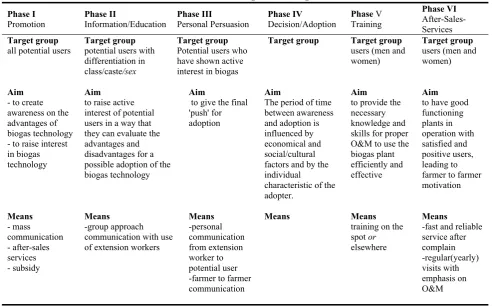
Table 3: Extension of biogas: A working model
Phase I
Promotion Phase IIInformation/Education Phase IIIPersonal Persuasion Phase IVDecision/Adoption Phase Training V
Phase VI
After-Sales-Services
Target group
all potential users
Target group
potential users with differentiation in class/caste/sex
Target group
Potential users who have shown active interest in biogas
Target group Target group
users (men and women)
Target group
users (men and women)
Aim
- to create awareness on the advantages of biogas technology - to raise interest in biogas technology
Aim
to raise active interest of potential users in a way that they can evaluate the advantages and disadvantages for a possible adoption of the biogas technology
Aim
to give the final 'push' for adoption
Aim
The period of time between awareness and adoption is influenced by economical and social/cultural factors and by the individual
characteristic of the adopter.
Aim
to provide the necessary knowledge and skills for proper O&M to use the biogas plant efficiently and effective
Aim
to have good functioning plants in operation with satisfied and positive users, leading to farmer to farmer motivation Means - mass communication - after-sales services - subsidy Means -group approach communication with use of extension workers
Means -personal communication from extension worker to potential user -farmer to farmer communication
Means Means
training on the spot or
elsewhere
Means
-fast and reliable service after complain -regular(yearly) visits with emphasis on O&M
Source: (FAO, 1996; Leermakers, 1993).
CONCLUSION
Renewable energy sources have a large potential to contribute to the sustainable development of specific territories by providing them with a wide variety of socioeconomic benefits, including personal/household impacts, health impacts, social, economic and environmental impacts. Biogas as an adaptive and cost-effective energy system, integrate livestock into the farming system. Indeed establish the biogas plants, necessitates involvement divers beneficiaries especially local communities. Moreover promotion and institution capacity of it requires active action from public and private organizations, as well as central and local governments and all of the beneficiaries. Attempt to remove barriers and provide incentives (informational, financial and technical), are critical components in reaching and realizing it s capacity. In the final part of this paper, the working model for extension of biogas was provided that expect to be useful.
REFERENCES
1. Asian Development Bank (ADB).(2007). Rural renewable energy development and ecological agriculture [formerly Comprehensive Rural development (Biogas)]. ADB projects, PPTA: PRC39194-01. Retrieved from: www.adb.org/Documents/Profiles/PPTA/
39194012.ASP.
2. Bassam, N., Maegaard, P. (2004). Integrated renewable energy for rural communities. Hardbound, 342 pages, Imprint: Elsevier.
3. Bradher, P. (2006). Farming has greenhouse gas effect. Gannett News Service. Ozarks Business. Retrieved from: www.News-leader.com.
5. FAO. (1996). Biogas technology: A training manual for extension. Support for Development of national Biogas Programme (FAO/TCP/NEP/4451-T). Nepal. Retrieved from: www.fao.org/docrep/00 8/ae897e/ae 897e00.htm.
6. Global Environment Facility (GEF). (2000). Georgia: Agricultural research, extension and training (ARET) Project. (PE-P065715; GE-64091). Retrieved from: gefweb.org/ Documents/... /Ge orgia_Agric ulture.pdf.
7. Haggar, S. E. (2007). Sustainable industrial design and waste management. Hardbound, 424 pages, Imprint: ACADEMIC Press.
8. Jingura, R. M., Matengaifa, R. (2009). Optimization of biogas production by anaerobic digestion for sustainable energy development in Zimbabwe. Renewable and Sustainable Energy Reviews., 13 (5), 1116-1120.
9. Leemakers, M. (1993). Extension of biogas in Nepal executive summary. Retrieved from: http://www.bs pnepal.org.
10. Lovejoy, D. (1994). Some current trends in renewable energy for developing countries.
Renewable Energy., 5 (1-4), 215-224.
11. Madiath, J. (2005). Strategy in Extension and Social Acceptability of Biogas. Retrieved from: www.gramvikas.org/ PDF/ published/Extension of Biogas.pdf.
12. NNFCC. (2008). Anaerobic Digestion. Retrieved from: www.nnfccc.uk.
13. Osei-Safo, C. (1998). Biogas Utilization and its Agricultural Implications in Ghana. Retrieved from:www.fao.org/wairdocs/lead/x6195e/x6195e00.htm.
14. Rio, P. D., Burguillo, M. (2009). An empirical analysis of the impact of renewable energy deployment on local sustainability. Renewable and Sustainable Energy Reviews., 13 (6-7), 1314-1325.
15. Rio, P. D., Burguillo, M. (2008). Assessing the impact of renewable energy deployment on local sustainability: Towards a theoretical framework. Renewable and Sustainable Energy Reviews., 12 (5), 1325-1344.
16. Singh, S. P., Prena, P.(2009). Review of recent advances in anaerobic packed-bed biogas reactors. Renewable and Sustainable Energy Reviews., 13 (6-7),1569-1575.
17. SURUDE. (2003). Biogas technology in agricultural regions, Tanzania. Retrieved from:
sgp.undp.org/do wnload/SGP_Tanzania2.pdf.
18. Suzuki, Y., Kubota, A., Furukawa, T., Sugamoto, K., Asano, Y., Takahashi, H., Sekito, T., Dote, Y., Sugimoto, Y. (2009). Residual of 17β-estradiol in digestion liquid generated from a biogas plant using livestock waste. Journal of Hazardous Materials., 165 (1-3), 677-682. 19. Takahashi, J., Young, B. A., Soliva, C. R., Kreuzer, M. (2002). Greenhouse gases and animal
agriculture. Hardbound, 372 pages, Imprint: ELSEVIER.
20. UNDP. (2007). Human development report 2007/2008. Fighting climate change: Human solidarity in a divided world. Retrieved from: Http://hrd.undp.org.