R E V I E W
Open Access
Allelopathy as a potential strategy to improve
microalgae cultivation
Leonardo Brantes Bacellar Mendes
1and Alane Beatriz Vermelho
2,3*Abstract
One of the main obstacles for continuous productivity in microalgae cultivation is the presence of biological contaminants capable of eliminating large numbers of cells in a matter of days or even hours. However, a number of strategies are being used to combat and prevent contamination in microalgae cultivation. These strategies include the use of extreme conditions in the culture media such as high salinity and high pH to create an unfavorable environment for the competitive organisms or predators of the microalgae. Numerous studies have explored the potential of naturally occurring bioactive secondary metabolites, which are natural products from plants and microorganisms, as a source of such compounds. Some of these compounds are herbicides, and marine and freshwater microalgae are a source of these compounds. Microalgae produce a remarkable diversity of
biologically active metabolites. Results based on the allelopathic potential of algae have only been described for laboratory-scale production and not for algae cultivation on a pilot scale. The adoption of allelopathy on microalgal strains is an unexplored field and may be a novel solution to improve algae production. Here we present
information showing the diversity of allelochemicals from microalgae and the use of an allelopathic approach to control microalgae cultivation on a pilot scale based on R&D activities being carried out in Brazil for biodiesel production.
Keywords:Microalgae, Allelopathy, Biodiesel, Contamination, Allelochemicals, Cultivation
Introduction
Currently, sustainability is a cornerstone in the ma-nagement of natural resources. The availability of these resources, the environmental impacts, and the socio-economic relationship resulting from their use in indus-trial processes need to be considered. The scarcity of fossil fuels has promoted a search for renewable and al-ternative low-cost energy sources [1]. Microalgae are or-ganisms that have rapid growth rates and the ability to accumulate and synthesize 20 to 50% of their dry weight in neutral lipids, which are stored in the cytoplasm in the form of lipid bodies (lipid droplets) or lipid inclu-sions [2]. These features justify the use of microalgae for biodiesel production through the transesterification of lipids in a non-toxic and biodegradable process that may be chemical or enzymatic [3]. The use of microalgae
might contribute to reduce the carbon dioxide emissions from fossil fuels, thus reducing the impact of global warming. Microalgae exhibit increased photosynthetic efficiency and higher growth rates than higher-order plants: they are capable of completing a growth cycle within a few days [4]. Oils from different origins have been used for producing biodiesel. Nevertheless, the cul-tivation of plants for oil extraction faces competition from the food and animal feed industries for the use and occupation of land [5]. The use of microalgae for bio-diesel production has long been recognized and its po-tential has been reported in many recent studies and besides this, microalgae have multiple industrial applica-tions [4,6-8]. However, current microalgal mass culture technologies have failed to produce bulk volumes of mi-croalgal biomass at low costs due to contamination by biological pollutants [9]. The presence of contaminants is a major obstacle in biofuel production on an industrial level, especially in open-air ponds. The use of biocides and antimicrobial substances, with a selective spectrum for algae, protozoa, fungi, viruses, grazers and bacterial * Correspondence:[email protected]
2
Department of General Microbiology, Institute of Microbiology Paulo de Góes, Federal University of Rio de Janeiro, Rio de Janeiro, Brazil 3
BIOTECHNOLOGY CENTER–BIOINOVAR: Bioenergy, Biocatalysis and Bioproducts Unit, Federal University of Rio de Janeiro, Rio de Janeiro, Brazil Full list of author information is available at the end of the article
contaminants, is required to maintain continuous pro-duction and ensure quality control of these cultures. Al-lelopathy is a new approach and a promising strategy to achieve the goal of producing bulk volumes of micro-algae. In this review we present information on the bi-otic and abibi-otic factors required for the cultivation of microalgae and discuss the current potential methods of contamination control, with an emphasis on the possible use of allelopathy and allelochemicals [10,11].
Cultivation of microalgae
Microalgae constitute unicellular or multicellular organ-isms belonging to a group of prokaryotic or eukaryotic photosynthetic microorganisms that include cyanobac-teria, blue-green alga (gram-negative bacteria), and green microalgae and diatoms [12]. Prokaryotic microalgae (cyanobacteria) lack membrane-bound organelles (plas-tids, mitochondria, nuclei, Golgi bodies, and flagella) whereas in eukaryotic microalgae, which include many different types of common algae, these organelles con-trol cellular functions. It is estimated that there are more than 50,000 species of microalgae worldwide, among which about 30,000 have been studied [5]. Algae can ei-ther be autotrophic or heterotrophic. While autotrophic algae need inorganic compounds such as CO2, salts, and light as energy sources for growth, heterotrophic algae, which are non-photosynthetic, require external sources of organic compounds and nutrients for their energy supply. A third type of algae is mixotrophic as they have the ability to acquire exogenous organic nutrients or perform photosynthesis, depending on the environmen-tal conditions [1].
The basic needs for the cultivation of microalgae are light, CO2, minerals, and water, but different factors may be involved in their growth depending on the species or strain. Microalgae may be cultivated in open systems or photobioreactors. Aside from carbon, in the form of car-bon dioxide, microalgae require nitrogen, which is asso-ciated with their primary metabolism. Fast-growing species of microalgae prefer using ammonia instead of nitrate. Partial depletion of nitrogen is associated to lower growth rates and greater lipid production in mi-croalgae. Lipids are synthesized as a reserve for situa-tions of nutritional stress. Phosphorus is the third most important nutrient for algae and should be added to the medium in the form of phosphates. In addition to these components, trace metals such as Mg, Ca, Mn, Zn, Cu, and Mb, and vitamins are added to the culture medium for higher productivity [4,5,13]. Higher temperatures ac-celerate microalgae metabolism while lower tempera-tures lead to inhibition. The optimum temperature for many species of microalgae is in the 15–26°C range. Most microalgae prefer a neutral pH, but Spirulina platensis, among other species, prefers a pH of 9.0 while
others such as Chlorococcum littorale grow best at pH 4.0. Due to their fast growth rate, algae very quickly at-tain high densities. Thus, for light to reach these dense growths, stirring apparatuses to agitate the algae and cause water circulation are necessary [14].
Open and closed cultivation systems
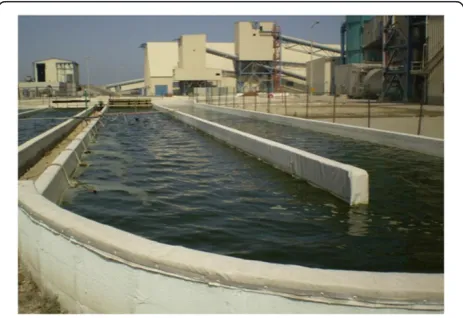
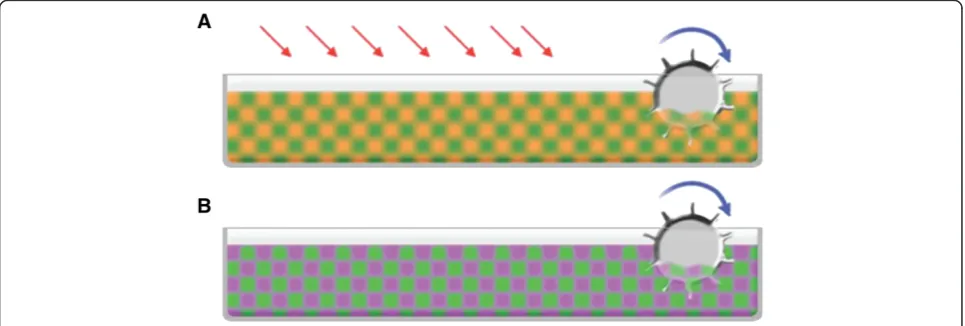
A major bottleneck for the cultivation of microalgae for biofuel production is to achieve industrial-level produc-tion. This is necessary to make the process economically feasible and to ensure an uninterrupted supply for con-sumer markets [1]. Currently, most of the worldwide commercial production of microalgae is carried out in open ponds [15] (Figure 1).
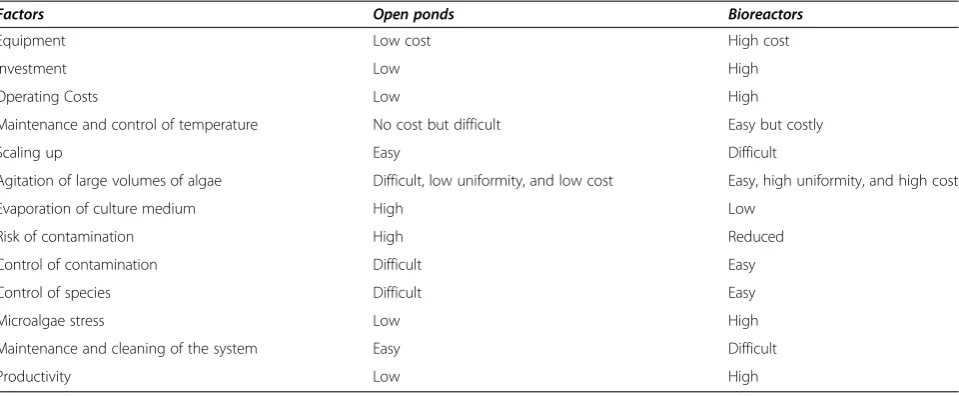
Open systems, also known as “open ponds”, have been much improved and have significant advantages over closed systems [1]. Additionally, the open systems are economically advantageous, but have problems of contamination from protozoa, viruses, other species of algae, fungi, and airborne micro-organisms, besides not allowing the control of the water temperature and light. The closed systems, called photobioreactors, which after numerous advances in materials engineering and applied biotechnology of the latest generation, are currently employed to produce fine chemicals (e.g., Astaxanthin), with a high added value (reaching up to U$ 6,000.00/kg) for commercialization. The main ad-vantage of the photobioreactors is that the physical and nutritional parameters can be controlled [6,16]. Table 1 shows the advantages and disadvantages of each system.
Biological contamination
To be successful, engineering techniques applied to the construction and development of photobioreactors need to rely on the knowledge we have concerning the
behavior and microbiology of that particular strain of microalgae, including its genetic makeup and metabolic pathways. However, the cultivation of microalgae in open systems is only possible with the use of strategies that prevent biological contamination, predators/grazers, and parasites of various origins. We still know very little about the physiology and behavior of microalgae, and this field of biotechnology is still in its early stages. Add-itionally, the potential of culture contamination is a con-stant threat. Fungi, protozoa, and bacteria can cause contamination or other species of microalgae can enter the system and compete with the main microalgae [17]. Contamination can come from the air, dust par-ticles, leaves, and other materials brought by the wind, as well as insects. These last are a major source of contamination.
Contaminants may not directly affect the production of algae but they may affect the pH, which may lead to cultivation limitations. Some examples of biological con-taminants were recently reported by JR Benemann at an international meeting held in Denver/USA (Algae Bio-mass Summit, 2012). He suggested that these contami-nants were key issues to be studied and that better solutions to control them should be investigated. Con-taminants found in open ponds include amoebae, cili-ates, flagellcili-ates, rhizopods (protozoa), and other algae such asOocystis sp. andDunaliella viridis, Artemia and Parartemia (zooplankton), as well as viruses. Viruses are present in aquatic environments and can be found in as-sociation with both eukaryotic algae and cyanobacteria. Viral infection can reduce an algal population within a few days [9]. Insects of the order Diptera (flies and mos-quitoes) and aquatic insects of the order Hemiptera (beetles) may also be present. Protozoa are predators rather than contaminants and some of them such as
Paramecium bursaria contain symbiotic cells of Chlor-ella sp. [18,19]. Cultivation in open ponds is susceptible to grazing by zooplankton, which can reduce algal con-centrations and production to low levels within just a few days [9,20]. Among these zooplankton, ciliate [21], rotifer [22] cladoceran, and copepod [23] are the most common predatory species in microalgae cultivation [9]. The two types of feeding mechanism used by zoo-plankton have been observed in copepods: a passive (microalgae flowed into the copepod) and an active mechanism (copepod maxillae movement to bring in the microalgae). The copepods are able to alternate between the two mechanisms [24]. Grazing activities of zooplank-ton are also impacted by other factors, such as tempe-rature and illumination [9]. Some species of bacteria, called phytoplankton-lytic bacteria, are able to inhibit the growth of microalgae and some of these species can cause mass destruction of the microalgae under cultiva-tion. The attack depends on cell-to-cell contact or is me-diated by extracellular compounds. Examples of such bacteria are Alteromonas sp., Flavobacterium sp., Cyto-phaga sp., Myxobacter sp., Bacillus sp., Pseudomonas sp., Saprospira sp. (SS98-5), and Pseudoalteromonas sp. 25 [9,25].
Strategies for contamination control
Environmental pressure, chemical compounds, separa-tion of contaminants, herbicides/pesticides and other chemical compounds are some of the strategies currently used to combat biological contamination and they are undergoing intense research and development world-wide (Figure 2). The establishment of a strong environ-mental pressure is a method widely used to control contaminants. Some microalgae are able to endure ex-treme conditions of cultivation and this may act as a Table 1 Comparison of cost and efficiency of open ponds and bioreactors for microalgae cultivation
Factors Open ponds Bioreactors
Equipment Low cost High cost
Investment Low High
Operating Costs Low High
Maintenance and control of temperature No cost but difficult Easy but costly
Scaling up Easy Difficult
Agitation of large volumes of algae Difficult, low uniformity, and low cost Easy, high uniformity, and high cost
Evaporation of culture medium High Low
Risk of contamination High Reduced
Control of contamination Difficult Easy
Control of species Difficult Easy
Microalgae stress Low High
Maintenance and cleaning of the system Easy Difficult
competitive advantage in relation to contaminants in the liquid medium. An example is Dunaliella salina, which can grow in high concentrations of salinity, greater than 4% per mass [26]. The application of a specific stressor, such as a radical increase in the salinity of the mi-croalgae medium, can damage the regulatory system of the predators without any loss of microalgae cells [14,20]. Reduction of the pH to 3.0 in a microalgae cul-ture has been shown to kill flagellates [27]. Another method to combat biological contamination is to add chemical compounds that induce the biological contam-inant to separate from the algal cells and it can then be concentrated in a special compartment of the photo-bioreactor from which it can be discarded.
Pesticides such as Trichlorphon, Decamethrin, Tralo-cythrin, and Buprofezin have also been used to an-nihilate zooplankton in microalgae suspensions [9]. Chemical compounds such as quinine sulfate and am-monia bicarbonate have been used to eliminate protozoa predators [28,29]. In some open-pond cultivation pro-cesses, an organic carbon substrate, such as acetate, is added continuously in small quantities in order to sup-port higher biomass concentrations while it prevents excessive bacteria growth [30]. Microorganism conta-minants can also be mechanically separated by size. Microalgae cells, which are normally smaller, are able to pass through a filter element that retains larger preda-tors (e.g., rotifer contamination). Due to the relatively small size of microalgal cells, filtration can also be con-sidered as an effective method to remove larger bio-logical organisms, such as rotifers and copepods. Silk mesh screens have been used for this purpose, but roti-fer eggs and the developing young individuals could not be removed completely [31].
Allelopathy
Allelopathy is a biological phenomenon by which an or-ganism produces one or more biomolecules that affect the growth, survival, and/or reproduction of other or-ganisms. These biomolecules, which are mostly secon-dary metabolites, are known as allelochemicals and are produced by certain plants, algae, bacteria, coral, and fungi. These compounds can have beneficial (positive al-lelopathy) or detrimental (negative alal-lelopathy) effects on the target organism. Allelopathic interactions are an important factor in determining species distribution and abundance within plant and plankton communities. Biomolecules with allelopathic functions have other eco-logical roles, such as chemical defense, nutrient chela-tion, and in plants, regulation of soil biota [32-34]. These molecules could be used as natural herbicides and in recent decades allelopathy has been the target of much research in order to apply this biological phe-nomenon to promote pest control in crops for sustain-able agriculture [35-39]. Allelochemicals produced by plants are a potential source for alternative agrochemi-cals and have become a new strategy. Several examples have been described such as an inhibition of 100% in the growth of the weedGallium spuriumwith plant extracts [40] and the inhibitory effect of essential oils in algae, molds, and yeasts [32,33]. Sorghum produces sorgoleone a lipidic benzoquinone, which is currently used as a herbicide in agriculture [41].
Allelopathy studies have been carried out with mi-croalgae, mostly focusing on negative allelopathy. For example, the dinoflagellateP. aciculiferumnegatively im-pacts Synura petersenii (Chrysophyceae), Peridinium inconspicuum (Dinophyceae), Cyclotella sp. (Bacillario-phyceae), Cryptomonas sp., and Rhodomonas lacustris (Cryptophyceae) through lysis. The allelopathic activity ofP. aciculiferummay result from the impact of a single chemical or a cocktail of allelochemical molecules [42]. Microalgae allelopathy may negatively impact the per-formance of predators, leading to their death or inactiva-tion. The strategy has been widely shown in toxic algae during blooming [10], and is an interesting approach for predator control. The most promising studies are those in which microalgae feed on the predators through already proven complex mechanisms such as phago-trophym. It is possible that some toxins are involved in prey capture. For instance, it has been observed that some phytoplankton such as Dinoflagellates paralyze the prey before ingestion [34,43,44].
Biotic and abiotic factors
Allelopathy can be stimulated or minimized by a number of biotic and abiotic factors. Among the more important abiotic factors that enhance and stimulate al-lelopathy are deficiency of nutrients such as nitrogen Figure 2Strategies to control contaminants in microalgae
and phosphorous compounds in the culture medium, low light intensities, low temperatures, and a culture medium with a high pH (around 9.0). Abiotic factors acting as repressors of allelopathy include high light in-tensities, high temperatures, excessive nutrients in the culture medium (nitrogen and phosphorus), and culture medium with low pH values (pH around 6.0). The chemical structure of the toxic protein compounds and the mechanisms by which changes in abiotic factors stimulate or inhibit allelopathy have not yet been fully elucidated [45]. The most important biotic factors are the cellular concentrations of the microalgae producing toxic proteins, and the target cells. For example high concentrations of the microalgae Heterocapsa circula-risquama and ciliates can bring about the death of the ciliates in an effect similar to“quorum sensing”[42,45,46]. Peridinium gatunense and the cyanobacteria Microcystis sp. have been shown to inhibit each other through al-lelopathy [47].
Phagotrophy and osmotrophy
Allelopathy can be further accompanied by processes of phagotrophy (ingestion of prey) and osmotrophy (in-gestion of organic molecules) by microalgae without de-activation of the photosynthetic system. Some types of predatory species of microalgae present in zooplankton may serve as a source of nutrients in the cultivation of microalgae strains carrying a genetic potential for alle-lopathy. Some studies have shown even higher rates of growth in microalgae when they use osmotrophy and phagotrophy mechanisms, suggesting an intense energy use which seems to be related to the heterotrophic me-tabolism that some microalgae carry out. Among the many dinoflagellates that are able to carry out phago-trophy are Ceratium furca [48], Dinophysis acuminate [49], Gonyaulax polygramma [50], and Alexandrium tamarense[51].
Major allelochemicals in microalgae
Allelochemicals involved in the interactions between aquatic microalgae have received more attention in recent years. Allelopathy is an important factor for ex-plaining community structure, dynamics of the popula-tions, chemical defense of microalgae against potential microbes and micro-grazers in aquatic habitats, over and above the competition with other organisms for physical space, light and nutrients. The chemical defense against potential predators and grazers includes the larvae of aquatic invertebrates. These bioactive metabolites from microalgae provide a competitive advantage via inter-specific and particularly negative (i.e., inhibitory) effects on growth, survival, and reproduction of the antagonist species. Besides this, they are a source of new antimicro-bial agents, herbicides and biopesticides [52,53].
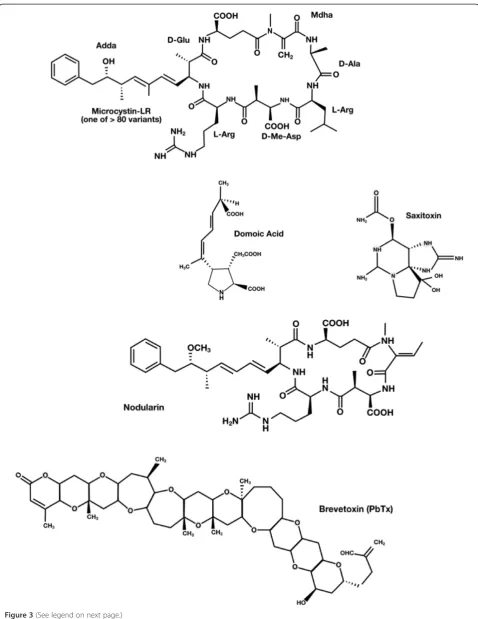
Microalgae produce a remarkable diversity of biologic-ally active metabolites. Some allelochemicals from mar-ine and freshwater microalgae are herbicidal compounds [52]. Secondary metabolites of the microalgae include every chemical class of natural product, ranging from fatty acids to alkaloids, as well as many peptides and amino acids [53,54]. The production of toxins by phyto-plankton is also well known. Dinoflagellates can produce the toxin brevetoxin, a cyclic polyether compound, and Ciguatoxin, a carbon polycyclic compound that activates the Na+ channel. Studies have shown that Karenia bre-vis, which produces brevetoxin, can affect the fertility of a copepod predator [46,55,56]. However, it is not yet clear whether this effect is a direct cause of the exposure to the microalgae toxin or the result of the poor nutri-tional value of K. brevis [57]. Saxitoxin is a neurotoxic alkaloid that blocks the Na+ channel [58]. Domoic acid, which is a structural analog of kainic acid and proline, is produced by diatoms, and causes neuronal depolarization [59]. In some cases, heterotrophic bacteria can degrade toxins produced by phytoplankton [60] Another example is the cyanobacterium algae that produce the anatoxin-a (bicyclic secondary amine) and the microcystin-LR (cyclic heptapeptide) toxins that paralyze the motile green alga Chlamydomonas, leading to fast sedimentation of Chlamydomonas [45,61] (Figure 3). The metabolites be-longing to the indole class of alkaloids have anti-algal activity, and consequently are associated with allelo-pathic interactions. The most cited allelochemicals from cyanobacteria are the hapalindoles and their re-lated alkaloids [62,63].
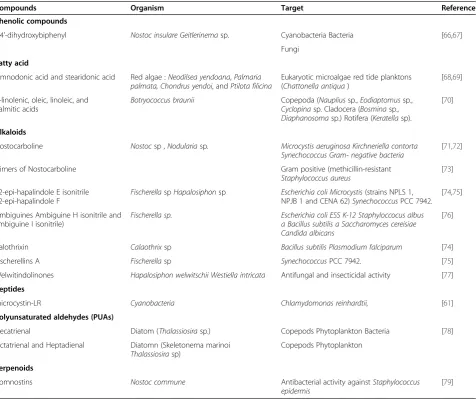
Few studies have demonstrated the effects of micro-algae allelopathic compounds against viruses. However, inhibitory activities of methanol extracts from the mi-croalgae Ankistrodesmus convolutus, Synechococcus elo-ngatus, and Spirulina platensis against Epstein-Barr virus (EBV) have been reported. The extracts reduced the cell-free EBV DNA, indicating that the lytic cycle or the release of the viruses could be inhibited [64]. Poly-saccharides have been poorly investigated as allelopathic agents, both in aqueous and terrestrial ecosystems [36] but polysaccharides from Navicula directa, Gyrodinium impudicum, Ellipsoidon sp., Cryptomonads, Cochlo-dinium polykrikoideand a Pheophorbide like compound fromDunaliella primolectahave antiviral activities [65]. This section describes the major microalgae allelo-chemicals and Table 2 summarizes the major types with their major targets.
Aldehydes
epoxy alcohols but the PUA decadienal is the most stud-ied PUA. The molecule has an effect on the grazer defense of diatoms against copepods [78]. The PUAs 2E,4E-decadienal, 2E,4E-octadienal and 2E,4E-hepta-dienal, have a toxic allelopathic effect on chlorophyte Tetraselmis suecica, the diatom Skeletonema marinoi and on the dinoflagellate Amphidinium carterae[80]. In diatoms, aldehyde (2E,4E/Z)-decadienal induced a pro-cess of cellular signaling. Decadienal can trigger intra-cellular calcium transients and generate nitric oxide (NO) by a calcium-dependent NO synthase-like activity, resulting in cell death [81]. Besides this, antibacterial ac-tivity of these compounds has been described by [82].
Glycolipids and fatty acids
Allelopathic compounds have been described for the green algaeBotryococcus braunii, favoring its dominance in its natural environment. The compounds are a mixture of free fatty acids including α-linolenic, oleic, linoleic, and palmitic acids. The fatty acids become toxic to phytoplankton only when they are liberated by B. braunii to extracellular medium. In habitats with a pH between 8.0 and 9.0 fatty acids exist in a free form,
namely RCOO-, a form known to be more toxic to
aquatic organisms than uncharged forms inhibiting elec-tron transport in chloroplasts [70,83]. Phytoplankton and zooplankton including Diatoms, Dinoflagellates, (See figure on previous page.)
Figure 3Structures of toxins from marine and freshwater microalgae.Based on Berry, 2011 [53]. Microcystin-LR is a cyclic heptapeptide produced by Cyanobacteria; Domoic acid is a structural analog of kainic acid and proline produced by Dinoflagellates; Saxitoxin is a neurotoxic alkaloid produced by dinoflagellates, Nodularin cyclic peptide is produced by the cyanobacteriumNodulariasp., and brevetoxin is represented by a cyclic polyether compound.
Table 2 Allelochemicals and target
Compounds Organism Target Reference
Phenolic compounds
4,4’-dihydroxybiphenyl Nostoc insulare Geitlerinemasp. Cyanobacteria Bacteria [66,67]
Fungi
Fatty acid
Timnodonic acid and stearidonic acid Red algae :Neodilsea yendoana,Palmaria palmata, Chondrus yendoi, andPtilota filicina
Eukaryotic microalgae red tide planktons (Chattonella antiqua)
[68,69]
α-linolenic, oleic, linoleic, and palmitic acids
Botryococcus braunii Copepoda (Naupliussp.,Eodiaptomussp.,
Cyclopinasp. Cladocera (Bosminasp., Diaphanosomasp.) Rotifera (Keratellasp).
[70]
Alkaloids
Nostocarboline Nostocsp ,Nodulariasp. Microcystis aeruginosa Kirchneriella contorta Synechococcus Gram- negative bacteria
[71,72]
Dimers of Nostocarboline Gram positive (methicillin-resistant
Staphylococcus aureus
[73]
12-epi-hapalindole E isonitrile 12-epi-hapalindole F
FischerellaspHapalosiphonsp Escherichia coli Microcystis(strains NPLS 1, NPJB 1 and CENA 62)SynechococcusPCC 7942.
[74,75]
Ambiguines Ambiguine H isonitrile and ambiguine I isonitrile)
Fischerella sp. Escherichia coli ESS K-12 Staphyloccocus albus
a Bacillus subtilis a Saccharomyces cereisiae Candida albicans
[76]
Calothrixin Calaothrixsp Bacillus subtilis Plasmodium falciparum [74]
Fischerellins A Fischerellasp SynechococcusPCC 7942. [75]
Welwitindolinones Hapalosiphon welwitschii Westiella intricata Antifungal and insecticidal activity [77]
Peptides
microcystin-LR Cyanobacteria Chlamydomonas reinhardtii, [61]
Polyunsaturated aldehydes (PUAs)
Decatrienal Diatom (Thalassiosirasp.) Copepods Phytoplankton Bacteria [78]
Octatrienal and Heptadienal Diatomn (Skeletonema marinoi Thalassiosirasp)
Copepods Phytoplankton
Terpenoids
Comnostins Nostoc commune Antibacterial activity againstStaphylococcus
epidermis
Chrysophyceae, red and brown algae produce fatty acids. Other effects such as membrane disruption and for-mation of oxidation product, antimicrobial activity, se-condary messengers for biochemical pathways, and phospholipase action have been reported [84,85].
Sulfated galactosyl (i.e. sulfoquinovosyl) a glycolipid from the thylakoid membranes of prokaryotic and eukar-yotic photoautotrophs has inhibitory activity to eukareukar-yotic DNA polymerase and is an anti-cancer agent [86].
Phenolic compounds
Phenolic compounds have substantial allelopathic appli-cations in agriculture and forestry as herbicides, insecti-cides, and fungicides [87], Some aquatic plants are algaecidal such as as Schoenoplectus lacustris [88] and Myriophyllum spicatum producing respectively, benzoic and protocatechuic acid and Gallic, ellagic and pyrogallic acids. The effects of these phenolic compounds have been studied to control the algal bloom. It is interesting to note that the allelopathic compounds show spectra of action specific to determined groups of organisms allowing the modulation of their effects and action [89].
Alkaloids
A number of metabolites belonging to the indole class of alkaloids have been found to possess anti-algae activity, associated with allelopathy. Indeed, the most frequently cited allelochemicals from cyanobacteria are the hapa-lindoles and related alkaloids: 12-epi-hapalindole and isonitrile, including ambiguines, welwitindolinones and fischerindoles that have been isolated from both marine and freshwater representatives of the family Stigo-nemataceae, and particularly the genera Hapalosiphon sp. andFischerellasp. [53].
Oligopeptides and cyclic peptides
Microcystins produced by the cyanobacteria are cyclic hepta-hepatopeptides belonging to the group of cya-notoxins. Extracellular products made by the cyanobac-terium Anabaena flos-aquae contained both anatoxin and microcystin, and significantly reduced the growth of Chlamydomonas reinhardtii, a green alga. Besides this, high concentrations of C. reinhardtii extracellular prod-ucts completely inhibited microcystin accumulation. These results demonstrate that cyanobacterial toxin production may be regulated by a complex mechanism involving growth phase dependence and environmental conditions [61] (Another compound is Portoamide which is a cyclic peptide produced byChlorella vulgaris. Thus metabolites differentially inhibited some cyanobac-teria, including Cylindrospermopsis raciborskii. Other cyanobacteria such as Microcystissp, Aphanizomenonsp and Anabaena sp. and microalgae (e.g. the diatom, Cy-clotella menenghiniana) tested were not inhibited [90].
Lactones
Cyanobacterin is a chlorinated γ–lactone, from Scyto-nema, a genus of photosynthetic cyanobacteria, which specifically inhibited a range of microalgae, including cyanobacteria and green algae, at micromolar concentra-tions [91]. The action mechanisms is the inhibition of photosystem II [92].
Inhibitory effects of allelochemicals
Enzyme inhibition
Enzymes are essential for all organisms catalyzing multiple functions. Microalgae including cyanobacteria produce glycosidase and peptidase inhibitors [93]. Re-searchers in Taiwan described that 20% of the cyano-bacteria isolates from biofilms possess a glucosidase inhibitory activity, an allelopathic activity and grazer to-xicity [94]. The inhibitors are hydrolyzable polyphenols which complex with proteins, inhibiting the enzymes [95]. An extracellular, low molecular weight α -amylase inhibitor was isolated fromAnabaena.Tannins are stored in vacuoles of filamentous chlorophyte, and can inhibit ac-tivities of peroxidase (POD), catalase and cellulose [93,96]. Phenolic allelochemicals such as chlorogenic acid, caffeic acid and catechol can inhibit activities of phosphorylase; cinnamic acid and its derivatives can inhibit the hydrolysis activities of ATPase [97].
RNA synthesis, DNA replication and protein synthesis
The alkaloids 12-epi-hapalindole E isonitrile and Calo-thrixin A are algicidal metabolites isolated respectively from the cyanobacterial Fischerella sp and Calaothrix sp. (Table 1). Both of them have been demonstrated to inhibit the RNA synthesis, and consequently protein synthesis, in intact cells of Bacillus subtilis.These com-pounds inhibited Escherichia coli RNA polymerases directly. The indolophenanthridine calothrixin A from cyanobacterium Calothrix species inhibited DNA repli-cation [74].
Photosynthesis
2,5-dimethyldodecanoic acid which inhibited growth at a concentration of 200 ng/mL [99]. In lemma minor Mi-crocystin inhibited growth, photosynthesis and oxidative stress [100].
Toxin-assisted micropredation
This phenomenon was observed in blooms of
Prym-nesium parvum, a flagellated alga. These microalgae have caused massive killings of fish around the world due to the release of allelochemicals. The study demon-strated the effects of Prymnesium on grazing zooplank-ton. Toxins are released during cell-to cell-contact in a mechanism called“toxin-assisted micropredation”[101].
Allelochemicals for the industrial cultivation of microalgae
Microalgae have many applications in biotechnology, biofuels, pharmaceuticals, the food industry and aqua-culture [9]. Microalgae, or their derived-products, are also used in cosmetics and biofertilizers, in protein-rich animal feeds and chemical feedstocks [102]. The limiting factor for biodiesel production in open ponds with microalgae is contamination. New cultivation technolo-gies have to be focused for industrial purposes using microalgae. The need for a biological method that is en-vironmentally friendly for contamination management is increasing due to the problems associated with the constant and intensive use of chemical herbicides [39]. Besides this, natural herbicides exhibit a wider range of target sites than synthetic inhibitors. Studies with alle-lochemicals and their applications show the potential of natural products to be used to minimize contamination in microalgae cultures. It is a promising route for future applications. Further investigations need to be made in order to develop this important topic relative to the use
of allelochemical compounds. At the present moment the cyanobacteria allelochemicals and algal toxins have been studied due to economic questions caused by the toxic algae bloom (HAB). In this context, allelopathy mediated by allelochemicals is an area with a wide range of biotechnological applications [35,53]. Another inter-esting use of bioactive compounds from microalgae is in biofouling. Biofouling is one of the more serious prob-lems currently in maritime domains and affects the biofuels sector directly. Several substances with antifoul-ing activity have been isolated from microalgae (mainly from cyanobacteria) such as fatty acids, lipopeptides, amides, alkaloids, terpenoids, lactones, pyrroles and ste-roids [103]. An example is the Cyanobacterin isolated from Scytonema hofmanni, which has been found to deter populations of the fouling benthic diatom Nitz-schia pusilla [103]. The Ent-labdane diterpenes that are low polar compounds, could possibly play an ecological role such as antifouling compounds [36].
Allelopathy: a potential novel strategy for contamination control
Millions of liters of cultivation are lost due to biological contamination. In most cases, predators belonging to zooplankton grow rapidly, causing irreparable damage to the cultivation [10]. Problems concerning the incidence of fungi were reported in closed photobioreactors for the culture Haematococcus fluvialis. The solution was the addition of specific carbohydrates to the culture medium to compete with the preferred binding site of the fungus, a glycolipid found on the cell wall of the microalgae [104]. In the case of open ponds, significant losses of algae cultivation have been observed in a period of days or even hours. The researchers engaged in the combat and control of this type of situation must have
specific training in algae culturing and be exceptionally well prepared. In a presentation at the "Algae Biomass Summit" in 2011, Hu highlighted that biological contam-ination may have a devastating effect on the population dynamics of microalgae, destroying tons of culture in mere days.” In only six days the culture might be com-pletely deteriorated by rotifers, ciliates, and vorticella” (Hu, 2011, personal communication). Using microalgae strains with a high capacity to combat predators and parasites is an extremely interesting possibility for scal-ing up processes carried out in open ponds, because the potential for failure or“crashing” of the crop production would be reduced. This possibility alone would fully jus-tify the investments needed to better elucidate the mechanisms of allelopathy. An understanding of the bio-chemical communication processes involved in the mi-crobial ecology of open ponds might allow us to find
mechanisms to control contamination in algae cultiva-tion [9,20].
One of the classical approaches currently used and recommended by several authors to combat and prevent losses in algae cultivation includes adding specific che-mical compounds (e.g., sodium hypochlorite) to the me-dium in order to combat predators (such as Protozoa). The use of biocide substances increases the cost in large-scale cultivation [15] (Figure 4). However, this ap-proach entails additional financial costs and is labor-intensive. A controlled approach that triggers allelopathy can be designed. Such a system would not give much op-portunity for predation of the microalgae since the microalgae of interest would themselves eliminate the competitors and predators by feeding on them through phagotrophy in conditions of lack of nutrients in the cul-ture medium (less nitrogen and phosphate compounds).
This strategy would result in an improved productivity and possibly financial savings due to the need to add fewer nutrients to the medium. In this case, deactivation of po-tential toxins in the culture medium through photo-oxida-tion or other processes before launching the culture medium into a disposal reservoir would be essential for biosafety and environmental protection. This in-novative allelopathic approach could also draw on transgenic techniques to have genes inserted in microalgae strains of interest, making cultivation possible in the face of self-defense against competitors and predators. The al-lelopathic strategy has not yet been fully explored. Ad-ditionally, it requires rigorous control based on the laws and regulations of each country in order not to become a threat to the environment.
In Brazil, a potential strategy to help control biological contamination in algae cultivation would be the release of allelopathic compounds extracted from microalgae biomass (e.g., filtered extract of cyanobacteria) that occur naturally as harmful blooms impacting water qua-lity in some regions of the country (Panosso, 2012, per-sonal communication). However, for this strategy to be implemented, a very strict control process would be ne-cessary due to the toxicity of these compounds.
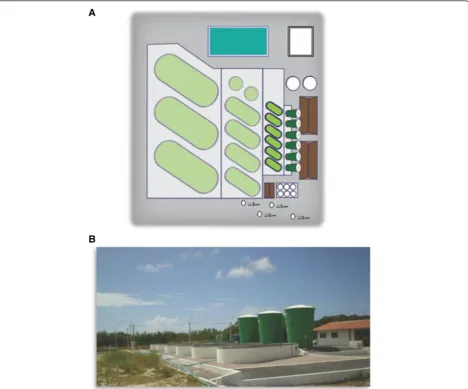
CENPES-PETROBRAS (Petrobras Research Center, Brazil), in partnership with the Federal University of Rio Grande do Norte (UFRN) in Natal, Brazil, has been growing microalgae successfully on a pilot scale for bio-diesel production since 2009 (Figure 5A,B). Currently, the capacity to operate open ponds that have a total area of 100 m2, producing 6,000 liters of algae culture has been achieved. The complete plant was launched in 2012 with the goal to produce sufficient microalgae bio-mass for biodiesel production, using native strains. Research into contamination control using different approaches has been the subject of R&D at CENPES-PETROBRAS and includes studies of the allelopathic processes in microalgae cultivation. This project is es-sential for the scientific and technological development of the Northeast region. Quadrant winds and high lumi-nosity throughout the year have allowed a successful production of microalgae biomass, ensuring high pro-ductivity in open ponds all year round. The biomass col-lected at this plant is stored at low temperatures before undergoing the extraction process and conversion into biodiesel.
Conclusions
The control of biological contamination is currently identified as one of the greatest obstacles to achieving positive results in the cultivation of microalgae in both open and closed systems. To scale up the cultivation of microalgae more data are needed on the mechanisms that stimulate or inhibit the production processes of
allelopathic compounds by microalgae in cultivation sys-tems, at lab, pilot, and commercial production scales. The development of this line of research could lead to innovative methods of cultivation in which low quan-tities of nutrients are needed and a strict control of predators is achieved in a more economical manner.
Apart from the data produced through research pro-jects conducted in the lab, the scientific literature on the specific topic of allelopathy for microalgae cultivation is scarce. Thus, greater R&D investments in this field of biotechnology are needed.
Screening for, and selection, isolation, and mainten-ance of new microalgae species that are adequate for use with allelopathy strategies is of great importance for fu-ture studies to provide a better understanding of the causes and mechanisms involving predator and prey in microalgae cultivation systems, whether for the produc-tion of biofuels or other chemical compounds of inter-est. This is an Emerging Field but with a great potential for microalgae cultivation for biodiesel and other indus-trial applications.
Abbreviations
EBV:Epstein-Barr virus; PUAs: Polyunsaturated aldehydes; NO: Nitric oxide; POD: Peroxidase; HAB: Toxic algae bloom; PbTx: Brevidtoxin.
Competing interests
The authors declare that they have no competing interests.
Authors’contribution
This review was written by LBBM and ABV. Both authors read and approved the final manuscript.
Acknowledgements
This work was financially supported by CENPES-PETROBRAS (Petrobras Research Center). The authors wish to acknowledge the Brazilian National Council for Scientific and Technological Development (MCT-CNPq), Carlos Chagas Filho Foundation for Research Support in the State of Rio de Janeiro (FAPERJ), Coordination for the Improvement of Higher Education Personnel (CAPES), and the Brazilian Society of Microbiology (SBM). This manuscript was reviewed by a professional science editor and by a native English-speaking copy editor to improve readability.
Author details
1Leopoldo Américo Miguez de Mello Research and Development Center,
CENPES, PETROBRAS, Rio de Janeiro, Brazil.2Department of General Microbiology, Institute of Microbiology Paulo de Góes, Federal University of Rio de Janeiro, Rio de Janeiro, Brazil.3BIOTECHNOLOGY CENTER– BIOINOVAR: Bioenergy, Biocatalysis and Bioproducts Unit, Federal University of Rio de Janeiro, Rio de Janeiro, Brazil.
Received: 27 March 2013 Accepted: 16 October 2013 Published: 21 October 2013
References
1. Brennan L, Owende P:Biofuels from microalgae—A review of
technologies for production, processing, and extractions of biofuels and co-products.Renew Sustain Energy Rev2010,14(2):557–577.
4. Liu J, Huang J, Chen F:Microalgae as feedstocks for biodiesel production. InBiodiesel - Feedstocks and Processing Technologies.Edited by Stoytcheva M. Croatia: InTech; 2011:58–78.
5. Mata TM, Martins AA, Caetano NS:Microalgae for biodiesel production and other applications: a review.Renew Sust Energ Rev2010,14:217–232. 6. Lam MK, Lee KY:Microalgae biofuels: A critical review of issues, problems
and the way forward.Biotechnol Adv2012,30(3):673–690. 7. Dassey AJ, Theegala CS:Harvesting economics and strategies using
centrifugation for cost effective separation of microalgae cells for biodiesel applications.Bioresour Technol2012,128:241–245.
8. Halim R, Danquah MK, Webley PA:Extraction of oil from microalgae for biodiesel production: A review.Biotechnol Ad2012,30(3):709–732. 9. Wang H, Zhang W, Chen L, Wang J, Liu T:The contamination and control
of biological pollutants in mass cultivation of microalgae.Bioresour Technol2013,128:745–750.
10. Tillmann U:Interactions between Planktonic Microalgae and Protozoan Grazers.J Eukaryot Microbiol2004,51(2):156–168.
11. Granéli E, Turner JT:Ecology of harmful algae.InEcological Studies.189th edition. Edited by Caldwell MM, Heldmaier G, Jackson RB, Lange OL, Levia DF, Mooney HA, Schulze E-D, Sommer U. Germany: Springer Berlin Heidelberg; 2006:1–413.
12. Graham JE, Wilcox LW, Graham LE:Algae.San Francisco, CA: Benjamin Cummings (Pearson); 2008:1–790.
13. Lardon L, Hélias A, Sialve B, Steyer JP, Bernard O:Life-cycle assessment of biodiesel production from microalgae.Environ Sci Technol2009, 43:6475–6481.
14. Hu Q, Zarmi Y, Richmond A:Effects of light intensity, light path and culture density on output rate ofSpirulina platensis(Cyanobacteria). Eur J Phycol1998,33:165–171.
15. Klein-Marcuschamer D, Chisti Y, Benemann JR, Lewis D:A matter of detail: assessing the true potential of microalgal biofuels.Biotechnol Bioeng 2013,110(9):2317–2322.
16. MaBorowitzka L:Micro-algal biotechnology.InMicro-Algal Biotechnology. Edited by Pauw N, Persoone G. Cambridge: Cambridge University Press; 1988:197–221.
17. Patil V, Tran KQ, Giselrød HR:Towards sustainable production of biofuels from microalgae.Int J Mo Sci2008,9:1188–1195.
18. Van Etten J, Dunigan DD:Chloroviruses not your everyday plant virus. Trends Plant Sci2012,17(1):1–8.
19. Day JG, Thomas NJ, Achilles-Day U, Leakey RJ:Early detection of protozoan grazers in algal biofuel cultures.Bioresour Technol2012,114:715–719. 20. Borowitzka MA:Commercial production of microalgae: ponds, tanks,
tubes and fermenters.J Biotechnol1999,70:313–321.
21. Rosetta CH, McManus GB:Feeding by ciliates on two harmful algal bloom species,Prymnesium parvumandProrocentrum minimum.Harmful Algae 2003,2(2):109–126.
22. Lurling M, Beekman W:Influence of food-type on the population growth rate of the rotiferBrachionus calyciflorusin short chronic assays. Acta Zool Sinica2006,52(1):70–78.
23. Frederiksen M, Edwards M, Richardson AJ, Halliday NC, Wanless S:From plankton to top predators: bottom-up control of a marine food web across four trophic levels.J Animal Ecol2006,75(6):1259–1268.
24. Vanderploeg HA, Paffenhofer G:Models of algal capture by the freshwater copepodDiaptomus sicilisand their relation to food-size selection. Limnol Oceanogr1985,30:871–885.
25. Shi SY, Liu YD, Shen YW, Li GB, Li DH:Lysis ofAphanizomenon folsaquae(Cyanobacteria) by a bacteriaBacillus cereus.Biol Control 2006,39:345–351.
26. Shariati M, Hadi MR:Microalgal biotechnology and bioenergy in
Dunaliella.InProgress in Molecular and Environmental Bioengineering–From Analysis and Modeling to Technology Applications.Edited by Carpi A. Croatia: InTech; 2011:483–505.
27. Liu ZG, Lu GL:The sterilizing studies of flagellate and ciliate in marine unicellular algae liquid.Zhanjiang Aquacult. Coll1990,2:36–41. 28. Moreno-Garrido I, Canäavate JP:Assessing chemical compounds
forcontrolling predator ciliates in outdoor mass cultures of the green algaeDunaliella salina.Aquacult Eng2001,24:107–114.
29. Méndez C, Uribe E:Control ofBranchionussp. andAmoebasp. in cultures of Arthrospira sp.Latin Am J Aquat Res2012,40(3):553–561.
30. Lee YK:Microalgal mass culture systems and methods: Their limitation and potential.J Appl Phycol2001,13:307–315.
31. Borowitzka MA:Culturing microalgae in outdoor ponds.InAlgal Culturing Techniques.Edited by Andersen RA. New York: Academic Press; 2005:205–217.
32. Yang X, Deng S, De Philippis R, Chen L, Hu C, Zhang W:Chemical composition of volatile oil fromArtemisia ordosicaand its allelopathic effects on desert soil microalgae,Palmellococcus miniatus.Plant Physiol Biochem2012,51:153–158.
33. Inderjit, Wardle DA, Karban R, Callaway RM:The ecosystem and evolutionary contexts of allelopathy.Trends Ecol Evol2011, 26(12):655–662.
34. Stoecker D, Tillmann U, Granéli E:Phagotrophy in Harmful Algae.In Ecological Studies, Ecology of Harmful Algae.189th edition. Edited by Granéli E, Turner JT. Heidelberg: Springer Berlin; 2006:177–187.
35. Macias FA, Marin D, Oliveros-Bastidas A, Varela RM, Simonet AM, Carrera C, Molinillo JM:Allelopathy as a new strategy for sustainable ecosystems development.Biol Sci Space2003,17(1):18–23.
36. Macías FA, Molinillo JM, Varela RM, Galindo JC:Allelopathy-a natural alternative for weed control.Pest Manag Sci2007,63(4):327–348. 37. Farooq M, Bran K, Cheema ZA, Wahid A, Siddique KH:The role
ofallelopathy in agricultural pest management.Pest Manag Sci2011, 67(5):493–506.
38. Albuquerque MB, Santos RC, Ima LM, Filho PAM, Nogueira RJMC, Camara CAG, Ramos AR:Allelopathy, an alternative tool to improve cropping systems. A review.Agron Sustain Dev2011,31:379–395.
39. Sodaeizadeh H, Hosseini Z:Allelopathy and environmentally friendly method for weed control.InInternational Conference on Applied Life Sciences (ICALS) 10–12 September 2012.Turkey: In tech; 2012.
40. Uddin MR, Park KW, Pyon JY, Park S:Combined herbicidal effect of two natural products (sorgoleone and hairy root extract oftartary buckwheat) on crops and weeds.Aust J Crop Sci2013,7(2):227–233. 41. Santos ILVL, Silva CRC, Santos SL, Maia MMD:Sorgoleone: benzoquinona
lipídica de sorgo com Efeitos alelopáticos na agricultura como herbicida. Arq Inst Biol2012,79(1):135–144.
42. Rengefors K, Legrand C:Broad allelopathic activity inPeridinium aciculiferum.Eur J Phycol2007,42(4):341–349.
43. Hansen PJ, Calado AJ:Phagotrophic mechanisms and prey selection in free-living dinoflagellates.J Eukaryot Microbiol1999,46:382–389. 44. Roberts EC, Legrand C, Steinke M, Wootton EC:Mechanisms underlying
chemical interactions between predatory planktonic protists and their prey.J Plankton Res2011,33(6):833–842.
45. Granéli E, Edvardsen B, Roelke DL, Hagström JA:The ecophysiology and bloom dynamics ofPrimnesiumspp.Harmful Algae2012,14:260–270. 46. Turner JT, Tester PA, Hansen PJ:Interactions between toxic marine
phytoplankton and metazoan and protistan grazers.InPhysiological Ecology of Harmful Algal Blooms.Edited by Anderson D, Cembella AD, Hallegraeff M. Germany: Springer Heidelberg; 1998:3–7.
47. Vardi A, Schatz D, Beeri K, Motro U, Sukenik A, Levine A, Kaplan A: Dinoflagellate-cyanobacterium communication may determine the composition of phytoplankton assemblage in a mesotrophic lake. Curr Biol2002,12:1767–1772.
48. Smalley GW, Coats DW, Stoecker DK:Feeding in the mixotrophic dinoflagellateCeratium furcais influenced by intracellular nutrient concentrations.Mar Ecol Prog Ser2003,262:137–151.
49. Jacobson DM, Anderson DM:Widespread phagocytosis of ciliates and other protists by marine mixotrophic and heterotrophic thecate dinoflagellates.J Phycol1996,32:279–285.
50. Jeong HJ, Yoo YD, Seong KA, Kim JH, Park JY, Kim S, Lee SH, Ha JH, Yih WH:Feeding by the mixotrophic red-tide dinoflagellate
Gonyaulax polygramma: mechanisms, prey species, effects of prey concentration, and grazing impact.Aquat Microb Ecol2005, 38:249–257.
51. Jeong HJ, Yoo YD, Park JY, Song JY, Kim ST, Lee SH, Kim KY, Yih WH: Feeding by the phototrophic red-tide dinoflagellates: 5 species newly revealed and 6 species previously known to be mixotrophic.Aquat Microb Ecol2005,40:133–150.
52. Macías FA, Galindo JLG, Garcia-Diaz MD, Galindo JCG:Allelopathic agents from aquatic ecosystems: potential biopesticides models.Phytochem Rev 2007,7:155–178.
54. Jones AC, Gu L, Sorrels CM, Sherman DH, Gerwick WH:New tricks from ancient algae: natural products biosynthesis in marine cyanobacteria. Curr Opin Chem Biol2009,13:216–223.
55. Collumb CJ, Buskey EJ:Effects of the toxic red tide dinoflagellate (Karenia brevis)on survival, fecal pellet production and fecundity of the copepod
Acartia tonsa.In Edited by Steidinger KA, Landsberg JH, Tomas CR, Vargo GA. Petersburg: Florida Fish and Wildlife Commission; 2004. Harmful Algae 2002.
56. Paul VJ, Arthur KE, Ritson-Williams R, Ross C, Sharp K:Marine biological laboratory chemical defenses: from compounds to communities.Biol Bul 2007,213:226–251.
57. Breie CF, Buskey EJ:Effects of the red tide dinoflagellate, Karenia brevis, on grazing and fecundity in the copepodAcartiatonsa.J Plankton Res 2007,29:115–126.
58. Wiese M, D'Agostino PM, Mihali TK, Moffitt MC, Neilan BA:Neurotoxic alkaloids: saxitoxin and its analogs.Mar Drugs2010,8(7):2185–2211. 59. Turner JT, Tester PA:Toxic marine phytoplankton, zooplankton grazers,
and pelagic food webs.Limnol Oceanogr1997,42:1203–1214. 60. Hulot FD, Huisman J:Allelopathic interactions between phytoplankton
species: the roles of heterotrophic bacteria and mixing intensity.Limnol Oceanogr2004,49(4):1424–1434.
61. Kearns KD, Hunter MD:Toxin-producing Anabaena flos-aquae induces settling ofChlamydomonas reinhardtii, a competing motile alga.Microb Ecol2001,42:80–86.
62. Gantar M, Berry JP, Thomas S, Wang M, Perez R, Rein KS, King G: Allelopathic activity among cyanobacteria and microalgae isolated from Florida freshwater habitats.FEMS Microbiol Ecol2008,64:55–64. 63. Leão PN, Vasconcelos MT, Vasconcelos VM:Allelopathy in freshwater
cyanobacteria.Crit Rev Microbiol2009,35:271–282.
64. Kok YY, Chu WL, Phang SM, Mohamed SM, Naidu R, Lai PJ, Ling SN, Mak JW, Lim PKC, Balraj P, Khoo ASB:Inhibitory activities of microalgal extracts against Epstein-Barr virus DNA release from lymphoblastoid cells. Zhejiang Univ Sci B2011,12(5):335–345.
65. Amaro HMA, Guedes C, Malcata FX:Antimicrobial activities of microalgae: an invited review.InScience against Microbial Pathogens: Communicating Current Research and Technological Advances,3. Edited by Méndez-Vilas A. Spain: FORMATEX Microbiology Series; 2011:1272–1284.
66. Volk RB, Furkert F:Antialgal, antibacterial and antifungal activity of two metabolites produced and excreted by cyanobacteria during growth. Microbiol Res2006,161:180–186.
67. Caicedo NH, Kumirska J, Neumann J, Stolte S, Thöming J:Detection of bioactive exometabolites produced by the filamentous marine CyanobacteriumGeitlerinemasp.J Mar Biotechnol2012,14:436–445. 68. Suzuki Y, Takabayashi T, Kawaguchi T, Matsunaga K:Isolation of an
allelopathic substance from the crustose coralline algae,Lithophyllum
spp., and its effect on the brown alga,Laminaria religiosaMiyabe (Phaeophyta.J Exp Mar Biol Ecol1998,225:69–77.
69. Kakisawa H, Asari F, Kusumi T, Toma T, Sakurai T, Ohusa T, Hara Y, Chihara M:An allelopathic fatty acid from the brown algaCladoshiphon okamuranus.Phytochemistry1988,27:731–735.
70. Chiang I-Z, Huang W-Y, Wu J-T:Allelochemicals ofBotryococcus braunii
(Chlorophyceae).J Phycol2004,40:474–480.
71. Volk RB:Screening of microalgal culture media for the presence of algicidal compounds and isolation and identification of two bioactive metabolites, excreted by the cyanobacteriaNostoc insulare
andNodularia harveyana, respectively.J Appl Phycol2005,17:339–347. 72. Blom JF, Blom JF, Brütsch T, Barbaras D, Bethuel Y, Locher HH,
Hubschwerlen C, Gademann K:Potent algicides based on the cyanobacterial alkaloid nostocarboline.Org Lett2006,8(4):737–740. 73. Locher HH, Ritz D, Pfaff P, Gaertner M, Knezevic A, Sabato D, Schroeder S,
Barbaras D, Gademann K:Dimers of nostocarboline with potent antibacterial activity.Chemotherapy2010,56(4):318–324.
74. Doan TN, Rickards RW, Rothschild JM, Smith GD:Inhibition of bacterial RNA polymerase by the cyanobacterialmetabolites 12-epi-hapalindole E isonitrile and calothrixin A.FEMS Microbiol Lett2001,196:135–139. 75. Etchegaray A, Rabello E, Dieckmann R, Moon DH, Fiore MF H, von
Dohre H, Tsai SM, Neilan BA:Algicide production by the filamentous cyanobacteriumFischerellasp. CENA 19.J Appl Phycol2004, 16:237–243.
76. Raveh A, Carmeli S:Antimicrobial Ambiguines from theCyanobacterium Fischerellasp. Collected in Israel.J Nat Prod2007,70:196–201.
77. Menéndez JC:Chemistry of the Welwitindolinones.Top Heterocycl Chem 2007,11:63–101.
78. Ianora A, Bentley MG, Caldwell GS, Casotti R, Cembella AD, Engström-Öst J, Halsband C, Sonnenschein E, Legrand C, Llewellyn CA, Paldavičienë A, Pilkaityte R, Pohnert G, Razinkovas A, Romano G, Tillmann U, Vaiciute D:The relevance of marine chemical ecology to plankton and ecosystem function: an emerging field.Mar Drugs2011,9:1625–1648. 79. Jaki B, Orjala J, Heilmann J, Linden A, Vogler B, Sticher O:Novel
extracellular diterpenoids with biological activity from the cyanobacteriumNostoc commune.J Nat Prod2000,63:339–343. 80. Ribalet F, Berges JA, Ianora A, Casotti R:Growth inhibition of cultured
marine phytoplankton by algal-derived polyunsaturated aldehydes. Aquat Toxicol2007,85:219–227.
81. Vardi A, Formiggini F, Casotti R, de Martino A, Ribalet F, Miralro A, Bowler C: A stress surveillance system based on calcium and nitric oxide in marine diatoms.PLoS Biol2006,4:411–419.
82. Balestra C, Alonso-Sáez L, Gasol JM, Casotti R:Group-specific effects on coastal bacterioplankton of polyunsaturated aldehydes produced by diatoms.Aquat Microb Ecol2011,63:123–131.
83. Vedediktov PS, Krivoshejeva AA:The mechanism of fatty-acid inhibition of electron transport in chloroplasts.Planta1983,159:411–414.
84. Ikawa M:Algal polyunsaturated fatty acids and effects on plankton ecology and other organisms. UNH Center for Freshwater.Biol Res2004, 6:17–44.
85. Cantillo-Ciau Z, Moo-Puc R, Quijano L, Freile-Pelegrin Y:The tropica brown algaLobophora variegata: a source of antiprotozoal compounds. Mar Drugs2010,16:1291–1304.
86. Mizushina Y, Kasai N, Iijima H, Sugawara F, Yoshida H, Sakaguchi K: Sulfoquinovosylacylglycerol, a eukaryotic DNA polymerase inhibito and anti-cancer agent.Curr Med Chem Anticancer Agents2005,5:613–625. 87. Santana CM, Ferrera ZS, Padrón MET, Rodríguez JJS:Methodologies for the
extraction of phenolic compounds from environmental samples: New Approaches.Molecules2009,14:298–320.
88. D’Abrosca B, DellaGreca M, Fiorentino A, Isidori M, Monaco P, Pacifico S: Chemical constituents of the aquatic plantSchoenoplectus lacustris: evaluation of phytotoxic effects on the green algaSelenastrum capricornutum.J Chem Ecol2006,2:81–96.
89. Nakai S, Inoue Y, Hosomi M, Murakami A:Myriophyllum spicatum-released allelopathic polyphenols inhibiting growth of blue-green algae Microcystis aeruginosa.Water Res2000,34:3026–3032.
90. Leão PN, Pereira AR, Liu WT, Ng J, Pevzner PA, Dorrestein PC, König GM, Vasconcelos VM, Gerwick WH:Synergistic allelochemicals from a freshwater cyanobacterium.Proc Natl Acad Sci2010,107(25):11183–11188. 91. Mason CP, Edwards KR, Carlson RE, Pgnatello J, Gleason RK, Wood JM:
Isolation of chlorine-containing antibiotic from the freshwater CyanobacteriumScytonema hofmanni.Science1982,213(4531):400–402. 92. Berry JP, Gantar M, Perez MH, Berry G, Noriega FG:Cyanobacterial toxins as
allelochemicals with potential applications asalgaecides, herbicides and insecticides.Mar Drugs2008,15:117–146.
93. Gross EM:Allelopathy of aquatic autotrophs.Crit Rev Plant Sci2003, 22:313–339.
94. Jüttner F, Wu JT:Evidence of allelochemical activity in subtropical cyanobacterial biofilms of Taiwan.Archiv für Hydrobiologie2000, 147:505–517.
95. Haslarn E:Plant Polyphenols. vegetable tannins Revisited.Cambridge: Cambridge University Press; 1989.
96. Winder JS, Canneli RJP, Walker JM, Delbarre S, Francisco C, Farmer PB: Glycosidase inhibitors from algae.Biochem. Soc1989,1989(17):1030–1031. 97. Ilori OJ, Ilori OO:Allelochemicals:types, activities and usage in Pest
control.J Sci Sci Ed, Ondo2012,3(1):106–110.
98. Hagmann L, Jiittner F, Fischerellin A:a Novel Photosystem-ll-inhibiting Allelochemical of the CyanobacteriumFischerella muscicolawith antifungal and herbicidal activity.Tetrahedron Lett1996,37(36):6539–6542. 99. Entzeroth M, Mead DJ, Patterson GML, Moore RE:A herbicidal fatty acid
produced byLyngbya aestuarii.Phytochemistry1985,24:2875–2876. 100. Mitrovic SM, Pflugmacher S, James KJ, Furey A:Anatoxin-aelicits an
increase in peroxidase and glutathione-S-transferase activity in aquatic plants.Aquat Toxicol2004,10:185–192.
102. Raposo MF, de Morais RM, Bernardo de Morais AM:Bioactivity and applications of sulphated polysaccharidesfrom marine microalgae. Mar Drugs2013,11(1):233–252.
103. Bhadury P, Wright PC:Exploitation of marine algae: biogenic compounds for potential antifouling application.Planta2004,219:561–578. 104. Hoffman Y, Aflalo C, Zarka A, Gutman J, James TY, Boussiba S:Isolation and
characterization of a novel chytrid species (phylum Blastocladiomycota), parasitic on the green algaHaematococcus.Mycol Res2008,112(1):70–81.
doi:10.1186/1754-6834-6-152
Cite this article as:Bacellar Mendes and Vermelho:Allelopathy as a potential strategy to improve microalgae cultivation.Biotechnology for Biofuels20136:152.
Submit your next manuscript to BioMed Central and take full advantage of:
• Convenient online submission
• Thorough peer review
• No space constraints or color figure charges
• Immediate publication on acceptance
• Inclusion in PubMed, CAS, Scopus and Google Scholar
• Research which is freely available for redistribution