Issues
ISSN: 2146-4138
available at http: www.econjournals.com
International Journal of Economics and Financial Issues, 2016, 6(S3) 6-11.
Special Issue for “Asia International Conference (AIC 205), 5-6 December 2015, Universiti Teknologi Malaysia, Kuala Lumpur, Malaysia”
The Feasibility of Carbon Capturing, Storage and Utilization
Projects in Developing Countries: A Case of Malaysia
Mohammed Yussoff Ibrahim
1, Zulkipli Ghazali
2, Haseeb Ur Rahman
3*
1Department of Management & Humanities, Universiti Teknologi PETRONAS, Bandar Seri Iskandar, Tronoh 31750, Perak, Malaysia, 2Department of Management & Humanities, Universiti Teknologi PETRONAS, Bandar Seri Iskandar, Tronoh 31750, Perak, Malaysia, 3Department of Management & Humanities, Universiti Teknologi PETRONAS, Bandar Seri Iskandar, Tronoh 31750, Perak, Malaysia. *Email: [email protected]
ABSTRACT
The rapid change in climate and the high cost of controlling it are the issues caught much attention around the world especially during the last two decades. The carbon capture, storage and utilization (CCSU) is widely believed the mechanism to control both these issues to a great extent. However, the adoption, expansion, or development of CCSU isn’t yet common to counter these issues. The pace of CCSU adoption and development is greatly impaired by its high cost and non-availability of funds in both developed and developing countries of the world. The scenario in developing countries is worse as these countries have no mandatory obligation for carbon emissions like developed countries. Subsequently, most of the developing countries except few are not willing to carry out CCSU operations voluntarily. This paper, therefore, sheds light on various costs associated to CCSU operations and the potential sources of financing them in developing countries especially Malaysia. The paper concludes that public awareness is fundamental in persuading governments and other entities to finance CCSU operations and ensuring the feasibility, economic viability and success of these projects. The paper recommends that governments, environmental agencies, international financial institutions, and developed countries should support CCSU projects in developing countries by providing funds and capacity building measures. The paper contributes to the limited literature and policy making of CCSU funding especially in developing countries like Malaysia where the mechanism (CCSU) is yet in embryonic stage.
Keywords: Carbon Capture, Storage and Utilization, Public Awareness, Developing Countries, Malaysia
JEL Classifications: L13, Q32
1. INTRODUCTION
Carbon capture, storage and utilization (CCSU) has the ability to capture up to 90% of carbon dioxide emissions from a power plant or industrial point and store it in underground geologic formations. The CCSU is expected to reduce greenhouse emission by 14% which will minimize global warming up to 2°C by 2050 (International Energy Agency [IEA] Energy Technology Essentials, 2006; TUC and Carbon Capturing Association, 2014). The cost of protecting climate will also increase by 70% in absence of CCSU operations. This highlights the importance of CCSU operations in countering the cost incurred for controlling climate change. However, these targets are difficult to be achieved after looking into the current statistics of CCSU projects and its
growth around the world. At present, around the world, there are only 12 functional commercial CCSU power plants (out of which 8 are in the USA) and 50 others are in the developmental phases (Global CCS Institute [GCCSI], 2015; TUC and Carbon Capturing Association, 2014).
The status of CCSU is further weaken in developing countries as only few of these countries are committed to reduce greenhouse gas (GHG) emissions by carrying out CCSU. Malaysia is one of these countries committed to participate in carbon emission voluntarily. However, these countries face shortage of funds to bear high capital cost of CCSU (GCCSI, 2013; Lindsay, 2012). This paper, on the basis of past literature, concluded that lack of public awareness hampered initiatives to attract investment in CCSU projects from developed countries, global financial institutions, environmental agencies and private sector. The success of CCSU projects in the US and Canada is mainly due to the government support and established carbon market particularly the enhanced oil recovery (EOR) market which generates funds for CCSU projects in these countries (Environmental Protection Agency [EPA], 2014; GCCSI, 2013).
2. LITERATURE REVIEW
CCSU is a series of different related activities like, capturing, transporting, storing and usage of carbon. It requires the installation of carbon capturing equipments which increases the capital cost of a new as well as already established plant. However, the cost of erecting CCSU equipments in new plant is lower than that of retrofitting in an already existing plant (Finkenrath, 2012). The retrofitting in existing plant may face the problems like insufficient land or space, compatibility of technologies and the difference in useful lives of the already erected and new equipments. It is expected that the useful life of the plants with retrofitted CCSU equipments will be shorter than those with built in facility. Furthermore, retrofitting CCSU may affect the efficiency of plant by reducing its output which refrain investors from investment in these plants. These are the constraints which affect the pace of adoption, expansion and development of CCSU operations (Finkenrath, 2012; NETL, 2010).
The high capital cost of CCSU equipments and limited active market for selling captured carbon are the other reasons affecting the adoption and development of CCSU operations. At present, captured carbon is only commercially traded for EOR from matured oil fields. The rest of its potential uses like, algae production and carbon trading are yet in experimental stages. The cost of CCSU technology is expected to decline as it gets mature. However, it is not sufficiently mature to be commercialized; hence the investment in CCSU projects is also considered risky (Finkenrath, 2012; Ibrahim et al., 2015).
The cost of CCSU projects vary from each other due to the nature and quality of capturing technology, quantity, percentage of CO2 captured, and type of fossil fuel used. In addition, the distance between capturing point and geological storage and the nature and type of the storage vary cost of different CCSU projects (ICO2N, 2015). Following is the explanation of different costs associated to each of the three activities (capturing, transporting and storing) of CCSU.
2.1. CO2 Capturing Cost
Carbon capturing accounted for more than 80% of the total costs associated to CCSU (ICO2N, 2015). The cost is comparatively low
in the industries where CO2 is already separated as an operational part of the plant. The cost also differs due to capturing techniques which can be broadly classified into the following three categories (ICO2N, 2015; TUC and Carbon Capturing Association, 2014).
2.1.1. Pre-combustion carbon capturing
In pre-combustion carbon capturing, fuel is gasified rather than combusting to produce a synthesis gas, or syngas which contains carbon monoxide (CO) and hydrogen (H2). Then, the CO is converted to CO2 and a physical solvent separates the CO2 from H2. For power generation, pre-combustion carbon capture can be combined with an integrated gasification combined cycle power plant that burns H2 in a combustion turbine which uses the exhausted heat to power a steam turbine.
2.1.2. Post-combustion carbon capturing
In post-combustion carbon capturing, chemical solvents separate CO2 out of the flue gas from fossil fuel combustion. This technique is mostly used in those power plants which retrofit carbon capture technology. The technique is also widely used to capture CO2 for food and beverages industry.
2.1.3. Oxy fuel carbon capturing
In oxy fuel carbon capture, fossil fuel is combusted in pure oxygen instead of air in order to produce rich CO2 which facilitates carbon capturing. The post-combustion carbon capturing technique is widely used due to its compatibility and applicability in the already existing plants. However, it is the most costly technique as compared to other techniques (CCES, 2014; GCCSI, 2015).
Irrespective of the technique used, carbon capturing raises cost of the firm. It increases capital cost by buying and installing high cost carbon capturing equipments and operating cost by consuming extra electricity. In 2010, the U.S. Department of Energy (DOE) and the National Energy Technology Laboratory reported that installing CCSU technologies increases the cost of electricity by 80% in a new pulverized coal plant and 35% in a new advanced gasification-based plant (NETL, 2010).
The cost of capturing carbon also varies considerably from industry to industry. For example, capturing carbon is easy in the industries where CO2 is produced in high purity and high concentration steams as a byproduct like natural gas processing, hydrogen production, and synthetic fuel production. In contrast, it is comparatively more difficult to capture carbon from flue gas emissions which requires change or re-engineering of some established and consistent production techniques (UNIDO, 2010). The industries which produce carbon via flue gas include cement, iron, steel manufacturing and refining (EIA, 2011; UNIDO, 2010).
2.2. CO2 Transportation Costs
on shore and off shore transportation of CO2. Therefore, an established network of pipeline comprised of million kilometers is currently being employed for shipping various gases including CO2 around the world. The US alone accounted for a network of 800,000 km pipelines which transports hazardous liquids and natural gases. Moreover, around 50 pipelines having length of 6500 km are specifically used for transporting approximately 68 million tons of captured carbon in the USA annually. However, despite the current extensive infrastructure, development and further expansion of the network is still desired. It is roughly estimated that 100 times larger pipeline network than the existing is required for achieving CO2 emissions targets by 2050 (Dooley et al., 2009; GCCSI, 2015; IEA, 2015; Qureshi et al., 2015, Qureshi et al., 2016).
Besides pipelines, truck and rail transportations are other possible modes of transporting captured carbon. However, these modes are not efficient enough to move or ship large quantities of captured carbon. Ship transportation is also used as a possible alternative. It is common for moving small quantities up to 1000 tons of captured CO2 (food quality) from capturing point to coastal distribution terminals across Europe. Larger scale i.e., from 10,000 to 40,000 cubic meters captured CO2 is shipped in the form of liquefied petroleum gas. These shipment practices are common around the world for the past 70 years (GCCSI, 2015).
2.3. CO2 Storage Cost
The primary option for storing captured CO2 is injecting it into geological formations located deep beneath earth. The United States has geological formations which can store its captured CO2 for centuries as projected on the basis of country’s emissions in 2011 (NETL, 2012). The United Nations Intergovernmental Panel on Climate Change endorsed these projections by reporting their estimations that US has a potential capacity to store two trillion tons or more captured carbon (Metz et al., 2005).
Storage location affects choice as well as cost of transportation. For example, some of these locations are easily accessible while others are difficult to approach. The selection and characterization of a storage site is one of the most expensive decisions particularly in the early stages of a CCSU project. Storage is also one of the most closely scrutinized aspects of CCSU projects by the public (NETL, 2012).
The accurate estimation regarding transportation and storage costs of captured carbon is only possible if capturing point, storage site, distance, mode of transportation and type of storage sites are known. However, EPA estimated a cost of $15 per metric ton of captured carbon on account of transportation and storage charges in the long run (Dooley et al., 2009).
As far as safety of the storage is concerned, many pilot projects, research studies and industrial experiences had proven that injecting millions of tons of CO2 annually into deep saline formations are safe and effective. This has also been endorsed by intergovernmental and industry partnerships, research programs, and stakeholder networks (GCCSI, 2015).
3. CURRENT STATUS OF CCSU PROJECTS
AROUND THE WORLD
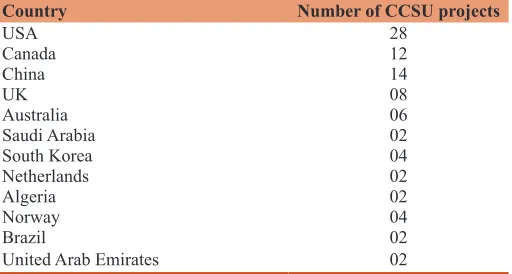
Table 1 shows current status of CCSU projects already completed and in progress in different countries of the world.
The statistics show small number of CCSU projects which indicate the potential barrier and high cost of CCSU projects as discussed earlier. The high cost is also evidenced by the existence of most of these projects in developed countries like the USA, Canada and Australia. Among the developing countries only china accounts for 14 projects. Table 1 also exhibits the low statistics of CCSU projects in Europe. The NER300 programme was established for providing financial support to CCSU projects across Europe in 2010. The programme is jointly managed by the European Commission, the European Investment Bank and all the member states of EU. However, the programme failed to finance even a single project of CCSU due to lack of funds in Europe till 2011-12 (GCCSI, 2012). GCCSI reported that out of 22 suspended or cancelled projects of CCSU, Europe accounted for 13 projects during 2010-11 (EU, 2008; GCCSI, 2012; REPN, 2007). Moreover, most of the high emitting countries like Japan, India and Russia have no CCSU project. Only Australia and China of the high emitting countries are committed to carry out CCSU operations (REPN, 2007).
The main causes of these failures were high cost of the CCSU installations and non-availability of funds from government and private sector (EU, 2008; Europa, 2014; GCCSI, 2012; REPN, 2007). In addition, non-availability of established market and low prices along with public resistance against establishing onshore CCSU storages in Germany, Netherlands, Denmark and Poland were the other reasons of the failures and setbacks of these projects (GCCSI, 2012; REPN, 2007). In contrast, the US and Canada achieved considerable success in CCSU projects by overcoming these issues to some extent. Government investment and reasonable demand for stored carbon especially for enhancing oil recovery in these countries are the key elements of the CCSU success (REPN, 2007). The President Obama’s Interagency Task Force, EPA and the DOE are those government departments work for the development of CCSU projects in the USA. These
Table 1: Current status of CCSU projects around the world
Country Number of CCSU projects
USA 28
Canada 12
China 14
UK 08
Australia 06
Saudi Arabia 02
South Korea 04
Netherlands 02
Algeria 02
Norway 04
Brazil 02
United Arab Emirates 02
Source: Global CCS Institute1. CCSU: Carbon capture, storage and utilization
departments have the highest government investments in CCSU projects around the world. The DOE alone peruses multiple CCSU projects of worth $4 billion federal and $7 billion private funds (EPA, 2014).
The World Coal Institute warned in November, 2009 that current status of CCSU will not meet the reduction targets of global GHG emissions. The institute stressed upon educating individuals and societies for achieving these targets. It advised public to bear initial costs of CCSU for a longer period of time before reaping its benefits. It also advised public to persuade their governments for providing urgent funds for the development of carbon market and CCSU operations around the world (WCI, 2013). Despite the leading country in CCSU activities, the President Obama’s Interagency Task Force (USA) report also strongly recommended further engagement of the government by allocating more funds and revisiting carbon market price for the success of CCSU in the country in 2010 (EPA, 2014; Federal Task Force, 2010).
The report recommended government assistance, investment of more funds and reducing corporate liability of the firms engaged in CCSU operations to sustain CCSU technologies (Federal Task Force, 2010). The US statistics and recommendations of the task force clearly indicate the importance of government involvement and allocation of funds for the success of CCSU projects. The demand for further investments in CCSU projects in the USA that leads the CCSU market all over the world explains the importance of providing funds to these projects in developing countries like Malaysia where the practice is yet new.
4. CURRENT STATUS OF CCSU PROJECTS
IN DEVELOPING COUNTRIES
Clean Energy Ministerial (CEM) is a forum that works for the development of CCSU in developing countries. The forum in its meeting held in Abu Dhabi in April, 2011 discussed the identification and appropriateness of different advance funding sources to support large scale CCSU projects in developing countries. The recommendations of the meeting have been submitted to GCCSI for further perusal. The Global Clinton Climate Initiative (CCI) consulted the issue of funds provision for the development of CCSU operations in developing countries with CCI, IEA and governments of the United Kingdom (UK) and Australia. For solution, all of these stakeholders agreed to establish working relationship with World Bank, Asian Development Bank (ADB) and World Resources Institute (GCCSI, 2013).
In the following meeting of CEM in London in 2012, the forum also raised a fund worth US$100 million for the development of CCSU in developing countries. The fund was contributed by the UK and Norwegian Governments in response to a call for $150-200 million made by CEM, London. The CEM endeavors resulted in the establishment of following forums (GCCSI, 2013); 1. ADB’s CCS Trust Fund
2. Carbon Sequestration Leadership Forum’s Capacity Building Fund
3. GCCSI’s Capacity Development Program 4. World Bank’s CCS Capacity Building Trust Fund.
5. CCSU STATUS IN MALAYSIA
Malaysia, a fast growing emerging economy, emitted 144 million tons of GHG (3.7 tons per head) in 1994. The power sector of the country accounted for 89.6% of the total CO2 emissions during 2010. It is expected that emissions of the country will increase by 8 times with the growth of economy till 2020. Malaysia located in one of those regions which are expected to get the worst impacts of climate change in the form of warming, drought and excessive rains in future. If current warming trend continues, it will affect agricultural products like palm oil, cocoa and rice which will compromise food security of the country. In addition, the climate change may also affect rubber, oil, gas, and fishing industries which will damage exports and ultimately economy of the country (ZERO, 2012).
Subsequently, Malaysia is committed to reduce carbon emissions by initiating CCSU operations in the country. Moreover, being a signatory of Kyoto Protocol and member of non-annexure I, it is obliged to control carbon emissions. Accordingly, the country introduced National Policy on Climate Change in 2010. The Ministry of Energy, Green Technology and Water Malaysia (KETTHA) in collaboration with the CCI, the GCCSI and a group of Malaysian government and industry stakeholders with relevant knowledge and expertise carried out a study on CCS in Malaysia in 2011. The study recommended that:
1. CCSU has the potential to reduce emissions in power, oil, gas, and other industrial sectors of the country.
2. The cost of electricity produced by fossil fuel plants with CCSU is equal to other low-emission power generating sources such as solar and wind.
3. CCSU will help Malaysia to achieve its commitment to bring the level of emission to that of 2005 by 2020 (40% reduction in 2020) (GCCSI, 2011).
Moreover, KETTHA expressed commitment to carry out more similar studies to analyze various aspects of CCSU implementation in Malaysia. The ministry also showed interest to establish a multi-stakeholder committee to consider implementation of CCSU in Malaysia (GCCSI, 2011). However, no practical step has been taken yet to make CCSU economically viable in the country. The country is also facing lack of funds to support CCSU projects. Therefore, the UN Clean Development Mechanism and PETRONAS, a leading oil and gas company of the country financially sponsored some of the CCSU initiatives in Malaysia (GCCSI, 2011; ZERO, 2012).
6. RECOMMENDATIONS
projects as these are new and lack stakeholders’ acquaintance (Kenyon and Read, 2014). Thus, as a first step, the public, business community, investors and other stakeholders must be fully aware of the future challenges and negative impacts of the rapid climate change. These will not only increase the acceptability of CCSU projects in the public but will also attract private investment in these projects. Second, investors are primarily interested in the protection of their investments. Therefore, developing countries can attract investments in CCSU projects by strengthening their regulatory structure for protecting investors. Third, many international forums like international environmental agencies, financial institutions, banks, donor agencies and developed countries provides financial support and loans for CCSU projects in developing countries. Therefore, developing countries should formalize their endeavors for ensuring successful approach to these forums. Fourth, carbon trading (cap and trade) and carbon market should be strengthened in those developed countries included in the Annexure I of the Kyoto Protocol. This will create an opportunity for developing countries like Malaysia to reap the benefits of carbon trading with developed countries. Fifth, the governments of developing countries can also raise funds to support CCSU in their countries by introducing:
• Levy on electricity consumers • Levy on automobile sector • Carbon tax
• Levy on fossil fuel plants
• Tax or penalties on the plants without CCSU set ups
• Comparatively easy access to loans for the plants carrying out CCSU.
7. CONCLUSION
To sum up, saving climate largely depends upon the success of CCSU. However, the economic feasibility and success of CCSU requires funds for its high initial cost or capital investment. CCSU involves capturing, transporting, and storing of carbon which have their specific high costs. Initially, it is difficult to acquire funds for high cost CCSU projects as these are yet to be economically viable and fully commercialized. It is estimated that 30-40 years will be required for the commercialization of CCSU. Thus, developed countries, gigantic corporations, environmental agencies and international financial institutions like World Bank, International Monetary Fund and ADB have to accept this challenge by financing CCSU projects particularly in developing countries. The investments and initiatives of these authorities will enhance the confidence of developing countries, private investors and industries to invest in the newly emerged market of CCSU. The developing countries can also play a significant role in making the CCSU projects viable by raising and allocating funds on their own. They can consider benefits and subsidies to the plants carrying out CCSU activities. They can also impose taxes and penalties on the plants avoiding CCSU activities.
8. ACKNOWLEDGMENT
This study is funded by MyRA grant of the Ministry of Education, Malaysia through Universiti Teknologi PETRONAS, Malaysia.
REFERENCES
CCES. (2014), Centre for Climate and Energy Solutions. Available from: http://www.c2es.org/technology/factsheet/CCS. [Last accessed on 2014 Aug 01].
Dooley, J., Davidson, C., Dahowski, R. (2009), Comparing Existing pipeline networks with the potential scale of future U.S. CO2 pipeline networks. Energy Procedia, 1(1), 1595-1602.
EIA. (2011), Assumptions to the Annual Energy Outlook 2011. Available from: http://www.ftp.eia.doe.gov/forecasting/0554(2011).pdf. EPA. (2014), Environmental Planning Agency USA. Available from:
http://www.epa.gov/climatechange/ghgemissions/. [Last accessed on 2014 Dec 25].
EU. (2008), European Commission Directive on the Promotion of Energy from Renewable Sources – Citizens Summary, 2008. Available fom: http://www.ec.europa.eu/energy/climate_actions/doc/2008_res_ citizens_summary_en.pdf.
Europa, B. (2014), Funding Decision for White Rose Project Would be a Strong Signal for CCS.
Federal Task Force. (2010), Federal Task Force Sends Recommendations to President on Fostering Clean Coal Technology/Interagency Report Marks an Important Step Forward on Administration Priority Release. Date: 08/12/2010. Available from: http://www.yosemite. epa.gov/opa/admpress.nsf/0/535ab3126.
Finkenrath, M. (2012), Carbon dioxide capture from power generation – Status of cost and performance. Chemical Engineering and Technology, 35(3), 482-488.
GCCSI. (2011), Carbon Capture and Storage in Malaysia. Available from: http://www.globalccsinstitute.com/institute/media-centre/ media-releases/carbon-capture-and-storage-malaysia.
GCCSI. (2012), The Global Status of CCS. Global CCS Institute. Available from: https://www.globalccsinstitute.com/publications/ global-status-ccs-2012. [Last accessed on 2015 Oct 15].
GCCSI. (2013), Making the Case for Funding Carbon Capture and Storage in Developing Countries. Global CCS Institute. Available from: https://www.globalccsinstitute.com/publications/making-case-funding-carbon-capture-and-storage-developing-countries. [Last accessed on 2014 Oct 14].
GCCSI. (2015), How CCS Works - Capture. Available from: http://www. globalccsinstitute.com/content/how-ccs-works-capture.
Ibrahim, M.Y., Ghazali, Z., Rahman, H.U. (2015), The best scenario of carbon capturing storage and utilization (CCSU) in Malaysia. Advances in Environmental Biology, 9(7), 28-35.
ICO2N. (2015), Carbon Capture and Storage Total Cost. Available from: http://www.ico2n.com/what-is-carbon-capture/carbon-capture-storage-economics/ccs-total-costs.
IEA. (2015), International Energy Agency. Available from: http://www. iea.org/. [Last accessed on 2015 Jan 05].
IEA Energy Technology Essentials. (2006). Available from: http://www. iea.org.
Kenyon, D., Read, A. (2014), Successful Public Engagement Lessons Learned From Carbon Capture and Storage Projects. Available from: http://www.pembina.org/pub/ccs-stakeholder-engagement. Lindsay, M. (2012), Five Elements to a Successful CCS Project. Available
from: http://www.power-eng.com/blogs/up-in-the-air/2012/10/ Five_Elements_to_a_S.html.
Metz, B., Davidson, O., de Coninck, H., Loos, M., Meyer, L. (2005), IPCC Special Report on Carbon Dioxide Capture and Storage. New York, NY, USA: Intergovernmental Panel on Climate Change, United Nations Environment Programme.
Energy%20Analysis/OE/BitBase_FinRep_Rev2a-3_20130919_1. pdf.
NETL. (2012), U.S. National Technology Energy Laboratory - The North America Carbon Storage Atlas 2012. Available from: http://www. netl.doe.gov/File%20Library/Research/Coal/carbon-storage/atlasiv/ Atlas-IV-2012.pdf.
Qureshi, M.I., Rasli, A.M., Zaman, K. (2016), Energy crisis, greenhouse gas emissions and sectoral growth reforms: Repairing the fabricated mosaic. Journal of Cleaner Production, 112, 3657-3666.
Qureshi, M.I., Rasli, A.M., Jusoh, A., Kowang, T.O. (2015), Sustainability: A new manufacturing paradigm. Journal Teknologi, 77(22), 47-53. REPN. (2007), REN21: Renewables 2007 Global Status Report.
TUC and Carbon Capturing Association. (2014), The economic benefi ts of carbon capture and storage in the UK. Available from: https:// www.tuc.org.uk/sites/default/files/carboncapturebenefits.pdf. UNIDO. (2010), United Nations Industrial Development Organisation:
Energy for Sustainable Future, the Secretary-General Advisory Group on Energy and Climate Change. Available from: http://www. sustainabledevelopment.un.org/index.php?page=view&type=400& nr=20&menu=35.
WCI. (2013), Securing the Future Financing Carbon Capture and Storage in a Post-2012 World. London, UK: WCI.