Journal of Applied Linguistics and Language Research Volume 4, Issue 1, 2017, pp. 91-108
Available online at www.jallr.com ISSN: 2376-760X
* Correspondence: Zahra Akbari, Email: akbari mng.mui.ac.ir © 2016 Journal of Applied Linguistics and Language Research
Developing a Taxonomy of Vocabulary Learning Strategies
for an ESP Context
Zahra Akbari *
Isfahan University of Medical Sciences, Isfahan, Iran
Abstract
The purpose behind challenging taxonomies of VLSs is to gain more insights about vocabulary learning process and point out to effective ways for teaching and learning vocabulary. At issue was the extent to which students spontaneously developed or adopted effective vocabulary comprehension and learning practices as a result of their language learning experience. Schmitt’s taxonomy (1997) was used as a starting point and attempts have been made to develop a taxonomy of VLSs for ESP contexts. To do so, a qualitative study was designed and carried out in which 137 participants were selected randomly from among medical and paramedical students who had enrolled in ESP I in Isfahan University of Medical Sciences. Data on VLSs in an ESP context were elicited by observation, interview and questionnaire. The VLSs were divided into two major groups: strategies for the discovery of a new word’s meaning and strategies for consolidating a word once it has been encountered. Comprehension strategies included determination strategies and transactional strategies. Learning strategies were subdivided into two categories: the knowledge-oriented strategies and skill-/use-oriented strategies.
Keywords: Vocabulary learning strategies, Schmitt's taxonomy, English for specific purposes, Specialized and non-specialized vocabulary, EFL learners
INTRODUCTION
learning strategies (VLSs) do exist, they tend to be incomplete in terms of strategies or factors arguably important for vocabulary learning. Despite the interesting patterns seen in the quantitative studies (Gu & Johnson 1996, Schmitt 1997, Kojic-Sabo & Lightbown 1999; Zohoorian & Baghban, 2012), they do not show how a particular type of strategy is used in the development of vocabulary. Thus, in this study, to have a clearer picture of the process of vocabulary acquisition, a qualitative approach was adopted. In addition, extensive attention has been devoted to incidental learning through reading while intentional learning of vocabulary especially in ESP contexts has not received its fair share of research effort. The issues pertinent to the vocabulary learning strategies employed by students and how vocabulary can be taught need to be addressed in order to enable L2 learners to command over the target language (Fatima & Pathan, 2016).
The study conducted by Khatib et al., (2011) aimed at examining preferred vocabulary learning strategies employed by upper-intermediate EFL learners in Iran. Vocabulary Learning Strategies Inventory questionnaire was administered among 480 students. The data was analysed in SPSS using multiple regression analysis tests. The findings revealed that self-motivation for memorising words of the target language, word organization, and authentic language use emerged as the most influential vocabulary learning strategies practiced by the EFL learners. Another study conducted by Amirian and Heshmatifar (2013) aimed at investigating what strategies are more or less common for learning vocabulary among EFL university students at Hakim Sabzevari University in Iran. A questionnaire adapted from the taxonomy of vocabulary learning strategies (VLS) developed by Schmitt (1997) was administered to 74 EFL students (18 males and 56 females).Moreover, semi-structured interviews were also carried out with ten students who completed the written questionnaire to obtain more information about their beliefs and attitudes dealing with vocabulary learning strategies. The results revealed the following order of strategy use by the students from the most frequent to the least frequent one: determination (DET), cognitive (COG), memory (MEM), metacognitive (MET), and social strategies (SOC). In particular, findings indicated that guessing from context and dictionary use strategies were the most popular strategies, while asking the teacher or peers for meaning were rarely used.
In the area of VLS taxonomy, the most comprehensive effort has been that of Schmitt’s (1997). Schmitt provides a classification scheme for a wide range of VLSs revising and expanding on Oxford’s (1990) classification scheme in several important respects: (a) it is especially geared to vocabulary learning and, (b) compared to Oxford’s typology of general language learning strategies, the potential overlap of multiple classification of strategies is minimized. Schmitt distinguishes the strategies which learners use to determine the meanings of the new words when they first encounter them from the ones they use to consolidate meanings when they encounter the words again. The former includes determination and social strategies and the latter includes social, memory, cognitive and metacognitive strategies. Social strategies are included in the two categories because they can be used for both purposes.
The definition Schmitt (1997) used for a VLS was an adaptation from Rubin (1987) and was “the process by which information is obtained, stored, retrieved and used…”use” will mainly be defined as vocabulary practice rather than interactional communication” (p.203). While in an ESP context, words (mainly specialized vocabulary) are expected to be used both productively (i.e., interactional communication of ESP students with their content teachers, doctors and peers in clinical settings and academic settings) and receptively (i.e., ESP students’ comprehension and/or translation of references and information sources from the Internet). Unlike Schmitt’s study, the participants of this study are relatively homogeneous group of learners, as far as their age, language proficiency and their field of study are concerned, with a commonly defined purpose to learn English through reading academic subject-specific texts in ESP courses. Thus, the learner himself, the learning task at hand, and the learning environment may affect the kind of strategies they use (Gu, 2003).
In addition, appealing to the innate characteristics of the new words whether specialized or non-specialized can facilitate the students' vocabulary learning while studying their ESP texts (Perry & MacDonald 2001). Specialized words are made up of words that occurred frequently in a specialized text or subject area but did not occur or were of very low frequency in other fields (Nation, 2001; Oh et al., 2000; Nation & Chung 2004). Whereas non-specialized vocabulary are terms that may have one or several meanings in an everyday setting but have a specific and sometimes different meaning or connotation in a scientific context (Childs & O’ Farrell, 2003; Strevens et al., 2000). Taking into account the specific features of ESP contexts in the domain of VLSs and in the light of Schmitt’s taxonomy (1997), the following questions are raised:
1. What relationships and/or groupings are there among the strategies used for comprehension and learning specialized and non-specialized vocabulary?
2. What factors affect the ESP students’ choice of VLSs?
METHODOLOGY
Participants
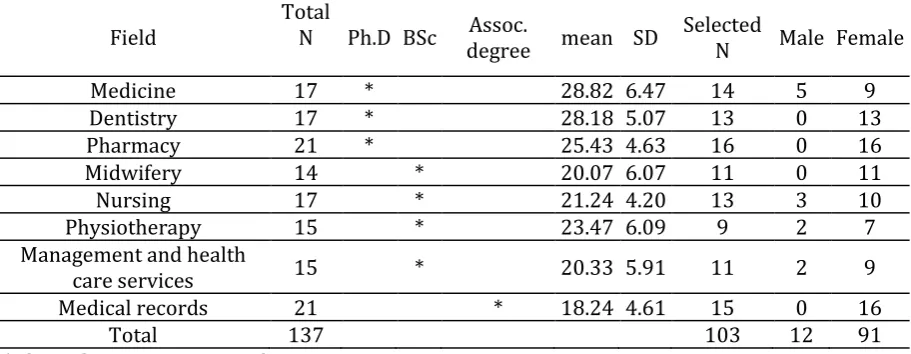
management and medical records) who had enrolled in the course ESP I in Isfahan University of Medical Sciences. A standardized language proficiency test (Intermediate TOEFL Test Practices by Folse 1994) was given to them. This test was selected because of its standard format, the current level of language proficiency of the participants derived from a survey of their prior educational experience, ease of administration and scoring, and its availability. It was also selected after consulting with several experts in language testing and critically examined by some experts in applied linguistics to check for its validity. Although it was a standard test, it was piloted in conditions similar to our main study to ensure its reliability for the context of our study, its calculated test- retest reliability was turned out to be 0.75. Three areas of language proficiency were tested: grammar (20 items), vocabulary (20 items), and reading comprehension (10 items). Those who scored beyond one standard deviation above or below the mean were excluded since they may have certain unique characteristics which may lead to findings and interpretations that divert the orientation of the study. Then, 103 learners with mean ± 1SD were identified. 14% of the participants were male and 86% were female (see the table). The participants’ mean age was 20 ± 1.12.
Table 1. The distribution of the participants by sex, degree, field of study, and language proficiency
Field
Total N
Ph.D BSc Assoc.
degree mean SD
Selected
N Male Female
Medicine 17 * 28.82 6.47 14 5 9
Dentistry 17 * 28.18 5.07 13 0 13
Pharmacy 21 * 25.43 4.63 16 0 16
Midwifery 14 * 20.07 6.07 11 0 11
Nursing 17 * 21.24 4.20 13 3 10
Physiotherapy 15 * 23.47 6.09 9 2 7
Management and health
care services 15 * 20.33 5.91 11 2 9
Medical records 21 * 18.24 4.61 15 0 16
Total 137 103 12 91
* =have Ph.D, BSs or Associate degrees
Since the study was a qualitative one and random sampling was not practically possible, from among the existing ESP I classes for each of the above-mentioned fields, one was selected randomly to form the participants of the study in a kind of stratified way. A normality test was performed using Eviews software which ensured the normality of the population in each field (i.e., Jarque_Bera statistics for all fields was less than 5.99 with confidence interval 95% and degrees of freedom equal to two). Since we examine the status quo (i.e., the existing ESP classes) in this study, it is clear that we do not have any other choice than accepting limitations such as lack of gender distribution or equal number of participants in each group.
English test on high school English. Those who scored above 40% on their English test have to pass a three- credit GPE course. The GPE course is the pre-requisite for ESP courses. The ESP books are relevant to the students’ fields and the emphases are on developing the reading skill and contextualization of vocabulary exercises. It is necessary to mention that ESP books have been approved and published by SAMT which is a center for studying and compiling university books in humanities.
Procedure
In order to elicit data on VLSs, despite Schmitt’s study (1997) in which only questionnaires were used, a triangulation of methods was used: a) observing the students in person in the classroom and outside the classroom while studying their academic texts, b) interviewing the students individually about their vocabulary comprehension and vocabulary learning activities while studying their academic texts, and c) using a questionnaire based on theoretical considerations of some previous attempts to study VLSs, including that of Schmitt's, to identify VLSs types.
At issue was the extent to which students spontaneously developed or adopted effective vocabulary comprehension and learning practices as a result of their language learning experience. This study focused observations on detecting the procedures students used in situations where they attempt some deliberate comprehension and acquisition of specialized and non-specialized vocabulary in an ESP context. Observational notes that pertained to vocabulary strategies in ESP classrooms in the eight fields were taken by the researcher in the course of two semesters.
To guarantee the quality of procedures, all data collection sessions were personally conducted by the researcher and two steps were taken to account for inter rater reliability in coding the data derived from observations and interviews. The first step dealt with the segmentation of data and the creating of coding categories. Because segmentation of data and the creation of the coding categories are judgmental decisions (Gass & Mackey 2000, p.102), the researcher felt data needed to be rated by more than one person to provide for higher levels of validity in the study. The second step involved a third rater and dealt with using the coding scheme and verifying the coding categories. With regard to the questionnaire, it was constructed for the collection of data on what the participants actually do while comprehending and learning the vocabulary items in their ESP texts. It contained 62 items and its final version which was used in the main study was constructed by the researcher based on theoretical considerations of some previous attempts to study VLSs (e.g., Schmitt 1997, Kudo 1999, Winke 2002, Segler 2002) and the piloted students’ responses to questions in Schmitt’s VLSs questionnaire and their answers in interviews. The final version of the questionnaire was used in a pilot group. As for reliability, the result turned out to be satisfying (Cronbach alpha= 0.82 questionnaire for specialized vocabulary and alpha=0.84 questionnaire for non-specialized vocabulary). To check for the validity of the questionnaire, it was read critically by some experts in applied linguistics to clarify its possible problems. Factor analysis with varimax rotation was also run. Factor analysis was attempted specifying the number of factors as two with the hope of showing that the 62 strategies fit into the two main tentative factors as originally hypothesized (i.e., discovery and consolidation strategies). The KMO was 0.607 which was satisfactory.
RESULTS
To answer question two of the study, three main VLSs were elicited from observations and interviews and the rationale for using these strategies were explained according to some underlying factors. It is necessary to mention that the factors affecting the kind of strategies used by the participants might not have been revealed solely by using questionnaires yet they were detected mainly through observations and interviews.
Person-related strategies
Motivation
behind their learning, they try to make their learning more meaningful rather than mechanical for instance by relying on the context in which the word occurs and their knowledge of the content.
Attitudes/Beliefs
Students (60%) reported that using English words in Persian speech unconsciously would bring about some kind of prestige for them and consequently they would be encouraged to use more English words (specialized in academic settings and non-specialized in ordinary conversations depending on their interlocutors’ knowledge of English language). In contrast, there were students (35%) who did not like to switch to English while they were speaking Persian and some (40%) who believed that learning English was very difficult especially due to their low language proficiency and/or their prior unpleasant learning experiences during their course of education. They, therefore, reported that learning English in general and learning English vocabulary in particular is a time-consuming activity; and the only way to learn it is to memorize it; at least to fulfill their immediate needs.
Learning Style
It was observed that students (65%) who were more dependent on their auditory skills were normally good at memorization and employed it for learning both specialized and non-specialized vocabulary. They preferred to use bilingual lists and repeat the words as many times as required to memorize them. In other words, they preferred to employ more cognitive processing activities. While students (35%) who were dependent on their visual skills in learning the new words preferred to visualize the meaning of the new words, to imagine themselves in the situations in which they were supposed to use the new word or the situation in which they learned the word for the first time, to write the new word several times or to visualize its spelling letter by letter.
Awareness of Useful Strategies
shodan” in Persian, she said that “har basiji bayad hamishe dar dastres bashe va baraye in
manzoor bayad mobile dashteh bashe”. (every Basiji must be at hand when he is
required and therefore must have a mobile phone to be called up when it is necessary). In contrast, there were students (35%) who resisted bringing about any changes in their previously internalized/ highly established strategies (i.e., memorization) in order to learn the new words.
Using English synonyms
Students (35%) also reported that in cases especially when they had already learned the synonym of the new word, they used it since it was of great help in facilitating the learning of the new word. For example, when the students encountered the word “emesis” and the teacher gave them the word “vomiting” as its synonym, they said that they could learn the former easily in relation to the latter which was firmly established in their memory.
Using the word in a phrase
There were also some cases which students (25%) reported that they learned the meaning of the new word by using the words following it. In other words, they learned the new word in its collocational phrase. For instance, one of the students said that she learned the meaning of “rupture” easily as it occurred in this phrase “rupture of amniotic sac”.
Knowledge of content
It was observed that the knowledge of the topic or especially the content of the passage also helped students (85%) to guess the meaning of the new word reflectively and this, to a great extent, facilitated their learning when their guesses were confirmed by the dictionary. For instance, one of the students said that when she encountered the word “congenital” in the passage, since there was the word “anomaly” after it, she told herself that, according to her background knowledge, “anomalies” were either “ektesabi” or
“madar zadi” (congenital). Regarding the meaning of the whole paragraph, she guessed
that “congenital” must have been “madar zadi” (congenital) and after referring to the dictionary she was assured that her guess was true.
Making bilingual lists
Using the word as the need arises
It was observed that ESP students (75%) were also more inclined to use skill-oriented strategies since there were many cases in which it was necessary to understand their academic fellows’ speech infested with English specialized vocabulary and to use the English specialized vocabulary themselves in order to be understood by their counterparts and to convey their intended message in the most effective and shortest possible way.
Task-related Strategies
It must be taken into account that different types of task materials, task purposes and tasks at various difficulty levels demand different learner strategies.
Materials
An equally important consideration emerging from this research was the role of ESP texts in the development of students’ VLSs. It was observed that some of these materials (55%) contained long, difficult and sometimes not closely subject-related passages with excessive number of vocabulary items. While ESP students reported that they are eager to read short subject-related comprehensible passages adapted from their references to obtain up-to-date information about their field of study and at the same time become familiar with and learn the most frequently used vocabulary items in their field of study. In this way after repeated exposure to these vocabulary items, they can easily learn their usage and use in real contexts. In this case, depending on the force of their intrinsic drive, their instrumental motivation, or the congruity between the content of their ESP course and that of their specialized courses, ESP students either resorted to pure memorization to pass the ESP course or memorization and some kind of mental analysis (i.e., elaborative strategies) to make a somewhat meaningful connection, whether formal, vocal or conceptual, between the pronunciation and/or form of the new English word and its Persian meaning to retain the word in their memory for a longer time.
Field variables
Students in the fields of medicine, dentistry and pharmacy were at MD level. They study the physiology and the anatomy of the body thoroughly in the first four semesters after entering the university. They are frequently required to deal with English texts as their references. Their references and body atlases are full of pictures and medical terminology and as an MD student, in order to follow their academic studies efficiently and effectively in each semester; they know that developing their English proficiency progressively is an essential requirement. They also know that as a doctor in future they would be expected to have access to up-to-date information about their field of study and also in order to become a specialist in one of the branches of medicine, a high level of English language proficiency including a large vocabulary would be required.
word analysis. Therefore, visualizing the concept of the word, analogy between English and Persian forms and word analysis are among the elaborative strategies used by medical, dentistry and pharmacy students. Students in nursing, midwifery, physiotherapy and management were at BSc level. As with students of medicine, dentistry and pharmacy, students of midwifery, nursing and physiotherapy are required to use the English specialized terms rather than their Persian equivalents when they talk to their content teachers or when they present reports to their classmates in academic settings. However, since the latter group, except physiotherapy students, took part in training courses in clinical settings after the third semester, they are required to use the medical terminology there when they talk to their classmates, professors or doctors. Thus, it can be inferred that using English terms in different contexts as the need arises is one of the facilitating skill-oriented strategies in vocabulary learning which is utilized by these ESP students.
It was also observed that repeated exposure to and frequent use of specialized vocabulary in specialized courses and clinical training sessions provide favorable conditions for automatic, somewhat effortless, learning of such vocabulary in their real contexts to the extent that they became part of their routine Persian repertoire. For instance, consider the following cases:
Nursing student: “Bar asar bi harekati bimar dochare bed sor (bed sore) shodeh ast.” (Immobility caused the patient to have bed sore)
Nurse: “Pishgiri az anemi (anemia) dar zanane bar dar az ahammiyate zyadi barkhor dar
ast.” (To prevent anemia is a matter of utmost importance for pregnant women)
Nursing student: “Ba’d az jarrahi bimar dochare chest pein (chest pain) shodeh ast.” (After the surgery, the patient has experienced chest pain).
Although management students have training courses in clinical settings but they are not concerned with medical terminology. They have already learned some standards in their specialized courses and then they examine to what extent these standards are taken into account in each ward of the hospital or clinics. Therefore, they mainly used repetition and memorization strategies which they believed to be more helpful for their short term purposes (i.e., passing the ESP exam). They believed that most of their references were translated into Persian and since they had Persian equivalents for specialized words, it was not necessary to learn the English terms for long term purposes. Medical records students were at post diploma level. They have the course medical terminology together with their ESP. They read the patients’ medical records in their training courses and they are required to give codes to the name of the diseases, the organ or part of the body in which the illness occurred and the cause of the disease. Therefore, it is necessary to know their English terms to give codes to them properly. But their content teachers use few English terms in their speech and the students are not necessarily required to use them in the classroom either.
In sum, students in different fields of study (95%) believed that learning English is important but if they are not well-motivated enough to improve their English proficiency for instance because they do not have to do so any way (the right conditions are not provided for them by their content teachers, language teachers, curriculum designers, and/or material providers), their English language proficiency is not so good, or they do not have enough time to spend on learning English, they usually (in 85% of cases) resort to the easiest and shortest way to learn English words, i.e., memorization.
The nature of the word to be learned
They (85%) mentioned that they made use of the following properties to learn a new word: the word’s pronunciation, its orthography, the degree of correspondence between how the word is written and how it is pronounced, its phonological relationship with its equivalent in their native language (analogy), morphology, and part of speech. They, also, resorted to the innate features of specialized vocabulary to learn them. For instance, specialized words were reported to be more tangible and concrete (i.e. they are either the name of a process, technique or an instrument which they can easily visualize), more amenable to word analysis, more conspicuous and fewer than non-specialized ones in a passage. In addition, specialized words often have one consistent meaning in different contexts, are closely related to the subject matter of the passage and are elaborated in different ways such as description, exemplification and illustration.
In addition, students who had already acquired the concepts of English specialized vocabulary in their specialized courses exploited such knowledge in learning the new specialized words to a great extent. What further facilitated their learning is that in some fields like medicine, midwifery and nursing, depending on the nature of field, a lot of analogies (75%) are used in Persian and English. (e.g., “angajman” for “engagement”,
“diabet” for “diabetes”, “anemi” for “aenemia”). Furthermore, due to the linguistic
provide the same language synonyms for them let alone with providing their translation in another language. Therefore, ESP students preferred to learn their concepts together with their pronunciation in Persian pronunciation system without necessarily translating them into their own language.
Context-related Strategies
Educational background
The participants in different fields of study reported that in the university they followed mainly (85%) the same VLSs as those they used during their English studies at junior high school and high school. Since junior high school they both implicitly and explicitly experienced that there is one way to learn a word together with its meaning: to memorize a list of words together with their Persian equivalents in order to understand the meaning of a passage or translate it into Persian. For instance, they had a list of new words at the end of each lesson and a bilingual list at the end of their books in which the new words of each lesson were classified and they were provided with few opportunities to use what they had learned outside the classroom. They were also required by their teachers to provide bilingual notebooks. Therefore, they got accustomed to such a strategy to the extent that it is difficult for them to replace or supplement it with other productive strategies. Neither their books nor their English teachers provide hits and/or exercises about how to develop effective vocabulary comprehension. Also, vocabulary exercises just test their knowledge of vocabulary superficially rather than teaching VLSs.
Cultural background
There were also few students (25%) who were grown in educated and socially and economically high class families. They were motivated, encouraged and supported by their families to attend foreign language classes (they had a rather high tuition for each semester for low and average economic class) to develop their English language proficiency by listening to tapes/CD’s, watching films, reading interesting short passages and conversations with colorful pictures to become familiar with the authentic use of language in real situations (in a shop, in an airport, etc.). In fact, they would mainly develop their speaking skill and this would develop a sense of self-achievement and self-satisfaction in them. Furthermore, this, in turn, would facilitate their learning and remove significantly (65%) their fear of learning English as a difficult language since they would have enough opportunities to use/practice what they learn whether in the same class or upper levels with their classmates. Another advantage of such classes is that from the first term, they begin to learn how to use a monolingual dictionary.
Linguistic background
proficiency. As ESP students reported, they had forgotten many of the words and grammatical rules they had already learned/ memorized.
Curriculum requirements
In ESP, students in each field of study are required to read a book whose content is supposed to be related to their field of study. In this way, they get familiar with their specialized vocabulary. There are no grammatical points explained in ESP books. Students who take ESP course after they have learned/experienced the basic concepts (e.g., devices, processes, etc.) in their field of study, learn the specialized English terms much more easily than those who have not. In addition, the congruity between the ESP content and what these students would pass in their specialized courses can facilitate the learning of specialized vocabulary to a great extent since students practically experience what they learn in their ESP course is useful for them.
With regard to the relationship between ESP content and the students’ training courses, the more students are required to use the specialized vocabulary they had already learned in their ESP course in their training sessions, the more motivated they become to learn them and use them as the need arises. On the other hand, the simultaneous presentation of ESP and training courses can help ESP students to experience the practical use (application) of the specialized vocabulary items in authentic (real) contexts such as clinics, hospitals or drugstores. Prior presentation of training courses to ESP courses also raised the ESP students’ consciousness about the importance and necessity of learning specialized vocabulary in satisfying their academic needs.
Classroom environment
Students in this study usually did not spend much time to guess the meaning of the new words from the available clues due to their small vocabulary size. According to them, guessing is a time consuming activity. So, they often proceeded to look up almost all of the new words. However, through finding the meaning of the word mainly in a bilingual dictionary, part of learning was achieved since both dictionary use and dealing with the new word in the context and challenging the passage through understanding its new words promoted students’ vocabulary learning. They only wrote the English synonym if their teacher gave them the synonyms in the classroom. Writing L1 translation cost very little in terms of time and note taking effort and also satisfied their immediate purpose of learning. This kind of cost benefit analysis was at the heart of participants’ decision as to what kind of VLS to choose, when to use a given strategy and what kind of words to learn or skip.
Although the ESP teacher spoke English in the classroom and expected the students to find the English meaning of the new words in monolingual dictionaries, most of the students (85%) had already referred to bilingual dictionaries and in the classroom, they searched their English mental lexicon to find an English equivalent for the Persian meanings of the original English word. For instance, they first translated "chain" as "halghe" and accordingly they used "circle" as the synonym for "chain". The ESP teacher usually asked the meanings of the new non-specialized vocabulary since he supposed that students knew the meaning (concept) of specialized vocabulary better than him. Because students did not usually have access to a specialized dictionary, they preferred to use the following ways to find the meaning of specialized words: a general bilingual dictionary, copying the Persian synonyms from the ESP books of the students who had already passed the course or from the guide to the ESP books available in the market, and asking the synonyms from their classmates or their English teacher.
As far as the role of the students’ content teachers are concerned, if these teachers used many English words in their speech as they presented the lessons, students through repeated exposures to these words gradually learned them somewhat effortlessly. On the other hand, in most cases, it implied that students should also use these words in their speech when they want to discuss an academic topic with their content teachers or their classmates. This, in its turn, also facilitated students’ vocabulary learning since they experienced the practical usefulness of what they learned. The only disadvantage of this case is that content teachers have their own Persian pronunciation of the specialized words while lecturing an academic topic in Persian and when the students encounter these words in English classes with English pronunciation, they need consciousness-raising to relate the corresponding words together and facilitate their learning.
DISCUSSION AND CONCLUSION
Taxonomy of VLSs for an ESP context
To answer question one, the findings of the questionnaire revealed that the major strategies for learning specialized and non-specialized vocabulary did not differ in general among ESP students in different fields of study, that is, the most frequent comprehension strategy was using bilingual dictionaries and the most commonly used learning strategy was oral and/written repetition. However, the resulting taxonomy will reflect important issues and dimensions not having received explicit attention in the building of taxonomies of VLSs so far.
First, the VLSs are divided into two major groups: strategies for the discovery of a new word’s meaning (comprehension strategies) and strategies for consolidating a word once it has been encountered (learning/acquisition strategies). Comprehension strategies included determination strategies and transactional strategies. Determination strategies are divided into three main substrategies: guessing meaning from the context, word analysis and looking up the word in the dictionary. With regard to transactional strategies, since asking the meaning from the teacher or classmates was not the way by which words were learned in social interactions, this strategy was called transactional strategy.
Learning strategies are subdivided into two categories: the knowledge-oriented strategies and skill-/use-oriented strategies. The former involves using each or a combination of linguistic features of a word such as its part of speech, pronunciation, spelling, and morphology, collocation, rhetorical organization (i.e., definition and exemplification) to learn the meaning of a word. The more features involves in vocabulary learning process, the more the depth of processing is. The latter, in turn, includes learning the word automatically by its frequent use and through frequent exposures to it in related contexts as the need arises. While knowledge-oriented strategies consisted of memory strategies, cognitive strategies and metacognitive strategies, skill-oriented strategies are made up of interactional strategies and affective strategies.
IMPLICATIONS OF THE STUDY
One of the main concerns for those of us working in an ESP context is how to help our students deal with authentic academic texts which by its nature requires a fairly advanced level of language proficiency. By “advanced level of proficiency”, it is meant, in fact, a good vocabulary size.
There are several approaches one can adopt in order to develop students’ vocabulary. It seems clear that students in ESP contexts need some explicit teaching of specific vocabulary items together with some kind of strategy training for improving and managing their learning plus extensive reading of their original references in order to gain the required exposure to vocabulary items and build up word knowledge. It needs the collaboration of both language teachers and content teachers as content teachers can make, encourage or motivate students to read their references, ask them to present the derived information in the classroom and assign some grade to it in their final exam. In order to allow ESP students to achieve their second aim, i.e., using the specialized and non-specialized vocabulary items productively in written and/or spoken forms in simulated occupational settings (training courses) and ultimately in their future occupational settings (clinical in this study), their content teachers should frequently use the specialized and non-specialized vocabulary items while presenting issues in students’ field of study and ask students to use them in their theoretical and training courses and assign some grade or penalty for their use or not using them respectively in their final course grade. In this way, students feel responsible to learn these words as well as use them.
However, language teachers need to increase their students' awareness of various vocabulary learning strategies in different academic contexts in order to facilitate their vocabulary learning process. Students should be taught how to develop both breadth and depth of their vocabulary knowledge so that they, as autonomous learners, would be able to use their vocabulary knowledge both receptively and productively as the need arises. In other words, teachers and learners should aim for integration of knowledge-oriented and skill-oriented strategies.
REFERENCES
Amirian, S. M. R. & Heshmatifar, Z. (2013). A Survey on Vocabulary Learning Strategies: A Case of Iranian EFL University Students. Journal of Language Teaching and
Research, vol. 4(3), 636-641.
Bonsa, G. B. & Wolde-Mariam, G. S. (2014). Vocabulary Learning Strategies used by EFL Students: the Case Of 11th Grade High and Low Achievers at Jorgo Nole Preparatory School. Ethiopian Journal of Education and Sciences, vol. 2 (9), 17-33. Childs, P. E. & O’Farrell, F. J. (2003). Learning science through English: an investigation
of the vocabulary skills of native and non-native English speakers in international schools. Chemistry Education: Research and Practice, 4(3), 233-247.
Cohen, A. (1998). Strategies in learning and using a second language. London: Longman. Dóczi, B. (2011). Comparing the vocabulary learning strategies of high school and
university students: A pilot study. WoPaLP, 5, 138-158.
Fatima, I. & Pathan, Z. H. (2016). Investigating Learning Strategies for Vocabulary Development: A Comparative Study of Two Universities of Quetta, Pakistan.
Advances in Language and Literary Studies, Vol. 7 (2), 7-12.
Folse, K. S. (1994). Intermediate TOEFL test practices. University of Michigan Press. Gass, S. M. & Mackey, A. (2000). Stimulated recall methodology in second language
research. Mahwah, NJ: Lawrence Erlbaum Associates.
Griffiths, C. & Parr, J. M. (2001). Language Learning Strategies: Theory and Perception.
ELT Journal, 55(3), 247-254.
Gu, P. Y. (2003). Vocabulary learning in a second language: person, task, context and strategies. TESL-EJ, 7(2), 1-28.
Gu, Y. & Johnson, R. K. (1996). Vocabulary learning strategies and language learning outcomes. Language Learning, 46, 643-679.
Kafipour, R. (2010). Vocabulary Learning Strategies, Vocabulary Knowledge and Reading
Comprehension of EFL Undergraduate Students in Iran. Unpublished doctoral
dissertation. University Putra Malaysia, Malaysia.
Khatib, M., Hassanzadeh, M., & Rezaei, S. (2011). Vocabulary learning strategies of Iranian upper-intermediate EFL learners. International Education Studies, 4(2), p144.
Kojic-Sabo, I. & Lightbown, P. M. (1999). Students’ approaches to vocabulary learning and their relationship to success. The Modern Language Journal, 83, 176-192. Kudo, Y. (1999). L2 vocabulary learning strategies. Honolulu: University of Hawai’i,
second language teaching and curriculum center.
Mackey, A. & Gass, S. M. (2005). Second Language Research: Methodology and Design. Lawrence Erlbaum Associates: London.
Nation, I.S.P. (2001). Learning vocabulary in another language. Cambridge University Press. Cambridge.
Nosidlak, K. M. (2013). Vocabulary Learning Strategies of the Advanced Students.
Journal of Language Teaching and Research, 4 (4), 655-661.
Oh, J. H., Lee, J., Lee, K. S., & Choi, K. S. (2001). Japanese term extraction using dictionary hierarchy and machine translation system. Terminology, 6(2), 287-311.
Oxford, R. L. (1990). Language learning strategies: what every language teacher should
know. Newbury House Publishers.
Perry, D. & MacDonald, P. (2001). Word knowledge and vocabulary instruction. Paper presented in the International conference on engineering education, 6-10 August, Olso, Norway.
Rubin, J. (1987). Learner strategies: theoretical assumptions, research history and typology. In learner strategies in language learning. New York: Prentice hall.
Seddigh, F. & Shokrpur, N. (2012). Vocabulary Learning Strategies of Medical Students at Shiraz University of Medical Sciences. English Language Teaching, 5(2), 160-173.
Schmitt, N. (1997). Vocabulary learning strategies. In N Schmitt and M McCarthy (Eds).
Vocabulary, description, acquisition and pedagogy. Cambridge: Cambridge
University Press.
Segler, T. M., Pain, H., & Sorace, A. (2002). Second language vocabulary acquisition and learning strategies in ICALL environments. Computer Assisted Language Learning,
15(4), 409-422.
Stevens, R. A., Butler, F. A., & Castellon-Wellington, M. (2001). Academic language and
content assessment: Measuring the progress of English language learners (ELLs).
Center for the Study of Evaluation, National Center for Research on Evaluation, Standards, and Student Testing, Graduate School of Education & Information Studies, University of California, Los Angeles.
Takač, V. P. (2008). Vocabulary learning strategies and second language acquisition. Clevedon, UK: Multilingual Matters.
Winke, P. (2002). Strategies for vocabulary acquisition in a Chinese as a foreign language
classroom. Paper from linguistics 681. Georgetown University. Washington DC.
Zohoorian, Z. & Baghban, V. (2012). The Relationship between Iranian English Language Learners’ Learning Styles and Strategies. Journal of Language Teaching and