NAZARATUL ASHIFA BINTI ABDULLAH SALIM
A thesis submitted in fulfillment of the requirements for the award of the degree of
Master of Science (Chemistry)
Faculty of Science Universiti Teknologi Malaysia
To my beloved husband and parent whose endless love and support helped me get through all the obstacles.
Little Sufi and Faris;
ACKNOWLEDGEMENTS
All commendations to Almighty Allah, who imparted me resoluteness and fortitude for accomplishment of this work successfully.
I would like to express my deep gratitude to my supervisor, Prof Alias Mohd Yusof for all his thought, guidance, encouragement and invaluable help given to me during my graduate research.
I am also very thankful to my supervisory committee members in Nuclear Malaysia Agency, Dr. Abdul Khalik Hj. Wood, Dr. Mohd Suhaimi Hamzah, Puan Shamsiah Abdul Rahman and Md Suhaimi Elias for providing me with support and feedback throughout my studies.
I also appreciate the help from Puan Mek Zum, En Hanan Basri, En. Ariffin Talib, Puan Pirmala Devi, Mr. Lim Ching Choah, Puan Jamaliah Mat Yatim, Puan Eeewiat, Cik Ezwiza Sanuri, Puan Zaleha Hashim and En. Burhanuddin Ahmad in chemicals purchasing, samples collection and preparation, chemical analysis, counting processes and discussion of my ideas in the research process.
The financial support for this project from the Universiti Teknologi Malaysia in-cooperation with Malaysian Nuclear Agency under Reactor Interest Group Fund and Master scholarship from Malaysian Nuclear Agency are greatly acknowledged.
ABSTRACT
ABSTRAK
Arsenik (As) telah diketahui umum akan ketoksikannya sementara kromium (Cr) dan selenium (Se) pada amaun yang berpatutan merupakan unsur keperluan kepada manusia dan menjadi toksik pada amaun yang berlebihan. Aktiviti pencemaran seperti perindustrian, pertanian, perbandaran telah mendorong kepada pencemaran unsur toksik ke dalam akuatik yang akhirnya terkumpul dalam sistem enapan. Proses sekitaran seperti proses diagenetik menyebabkan unsur toksik bergerak dari bahan dasar ke dalam permukaan enapan dan akhirnya ke dalam turus air. Proses ini dikenalpasti sebagai faktor pencemaran As di dalam air telaga di beberapa negara seperti Bangladesh, Taiwan, Amerika dan Kanada. Beberapa sampel enapan sekitaran air tawar dari beberapa sungai dan tasik yang dikenalpasti di kawasan Johor Bharu telah dianalisis untuk menentukan kepekatan As, Cr dan Se menggunakan teknik analisis pengaktifan neutron. Bahan rujukan piawai antaranya,
TABLE OF CONTENTS
CHAPTER TITLE PAGE
1
THESIS STATUS DECLARATION SUPERVISOR’S DECLARATION TITLE PAGE DECLARATION DEDICATION ACKNOWLEDGEMENT ABSTRACT ABSTRAK
TABLE OF CONTENTS LIST OF TABLES
LIST OF FIGURES LIST OF APPENDICES
LIST OF SYMBOLS AND ABBREVIATIONS
INTRODUCTION
1.0 Research Background 1.1 Problem Statement 1.2 Research Objectives 1.3 Scope of Research
1.4 Man, Environment and Toxic Elements 1.5 Arsenic
1.5.1 Geochemistry of Arsenic 1.5.2 The Toxicology of Arsenic
2
3
1.6 Selenium
1.6.1 Geochemistry of Selenium 1.6.2 The Toxicology of Selenium 1.7 Chromium
1.7.1 Geochemistry of Chromium 1.7.2 The toxicology of Chromium
LITERATURE REVIEW
2.0 Sediment and Its Role in Freshwater Ecosystem 2.0.1 Sediment Contamination
2.0.2 Sediment Quality Issue and Assessment
2.1 Analytical Technique for Elemental Analysis 2.1.1 Neutron Activation Analysis
2.1.2 Principles of Instrumental Neutron Activation Analysis
2.1.3 Nuclear Reactor 2.2 Elemental Speciation
2.3 Speciation Technique for Sediment Analysis 2.3.1 Extraction Technique
2.3.2 Usage of Microwave in Sample Digestion Prior to Extraction 2.3.3 Preconcentration and Separation
Technique
2.3.4 Detection Technique 2.4 NAA in Speciation Study
MATERIALS AND METHODOLOGY 3.0 Introduction
3.2 Sediment Characteristic 3.3 Sampling Methodology 3.4 Chemicals and Reagents 3.5 Labware
3.6 Laboratory Apparatus
3.7 Sample Processing Equipment 3.8 Sample Preparation
3.9 Standard Solutions
3.9.1 Standard Solutions for As, Cr, Se and Fe
3.9.2 Standard Solution for Arsenic (III) and Arsenic (V)
3.9.3 Standard Solution for Selenium (IV) and Selenium (VI)
3.10 Certified Reference Material (CRM)
3.11 Preparation of Sediment Sample For Total As, Cr, Se and Fe
3.12 Arsenic Species
3.12.1 Microwave extraction
3.12.2 Preconcentration and Separation 3.12.2.1 Effect of pH 3.12.2.2 Repeatability 3.13 Selenium Species
3.13.1 Microwave extraction
3.13.2 Preconcentration and Separation 3.13.2.1 Effect of pH 3.13.2.2 Repeatability
3.14 Analysis Using Neutron Activation Analysis Technique
3.14.1 Limit of Detection
4 RESULTS AND DISCUSSION 4.0 Introduction
4.1 Water Quality of The Water Bodies 4.2 Data Quality
4.3 Total Concentration of Elements
4.4 Concentration of Arsenic, Chromium and Selenium in Rivers
4.5 Concentration of Arsenic, Chromium and Selenium in Lakes
4.6 Comparison in Elements Concentration to the Guideline Recommendation for Freshwater Sediments
4.7 Association of Arsenic, Chromium and Selenium to Iron Concentration
4.8 Evaluating Contaminant Impact 4.8.1 Enrichment Factor (EF) 4.8.2 Geoaccumulation Index (Igeo) 4.9 Speciation of Arsenic and Selenium in Sediment
4.9.1 Optimization of Arsenic Speciation Study
4.9.1.1 Microwave Extraction
4.9.1.2 Effect of pH and Repeatability 4.9.2 Optimization of Selenium Speciation
Study
4.9.2.1 Microwave Extraction
4.9.2.2 Effect of pH and Repeatability 4.10 Concentration of Arsenic and Selenium Species
in River and Lake
5 CONCLUSIONS AND SUGGESTIONS 5.0 Conclusions
5.1 Suggestions
136 136 139
REFERENCES Appendices A - I
LIST OF TABLES
TABLE NO. TITLE PAGE
1.1
1.2
2.1
2.2
2.3
3.1
3.2
3.3
3.4
3.5
Naturally occurring inorganic and organic arsenic species
Inorganic arsenic species in the environment
Major contaminants in sediments
Summary of analytical arsenic and selenium speciation in environmental samples
Speciation study using NAA method determination
Date of sampling carried out in the rivers and lakes
The coordinates and description of the river sampling site
Sampling coordinates at the lakes
Standard solutions of original concentration supplied by Merck
The specification of the CANBERRA HPGe detector
11
13
31
53
60
63
66
67
73
4.1
4.2
4.3
4.4
4.5
4.6
4.7
4.8
4.9
4.10
Overall average of the water physico-chemical parameters in the rivers and lakes
Analytical results for As, Cr, Se and Fe in CRMs.
LOD for As, Cr, Se and Fe
Result of average concentration of arsenic, chromium and selenium in sediment of each sampling sites at river
Result of previous studies from several literatures for As and Cr in river sediment
Result of average concentration of arsenic, chromium and selenium in sediment of each sampling sites at lake
Result of previous studies from several literatures for As, Cr and Se in lake sediment
Several guidelines value for arsenic, chromium and selenium
Selenium guideline value derived from the Guidelines for Interpretation of the Biological Effects of Selected Constituents in Biota, Water and Sediment
Enrichment factors (EF) and Index of
Geoaccumulation (Igeo) in sediment of rivers and lakes
89
94
94
96
98
102
105
108
109
4.11
4.12
4.13
4.14
4.15
The Igeo scale
Results of arsenic species under various microwave condition and H3PO4concentration (expressed as µg g-1dry mass)
Results of selenium species under various microwave condition and HCl concentration (expressed as µg g-1 dry mass)
Arsenic speciation analysis in river and lake sediment
Selenium speciation analysis in river and lake sediment
121
125
128
132
LIST OF FIGURES
FIGURE NO. TITLE PAGE
1.1
1.2
1.3
1.4
1.5
2.1
2.2
2.3
Structures of naturally occurring inorganic and organic arsenic species
The Eh-pH diagram of arsenic in water at 25C and one atmosphere
Simplified transformation pathway of inorganic arsenic in the environment
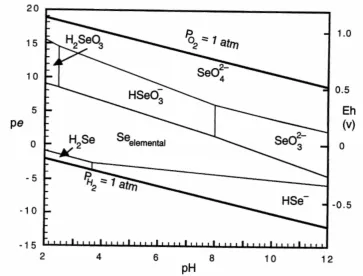
The Eh-pH diagram of selenium in water at 25C and one atmosphere
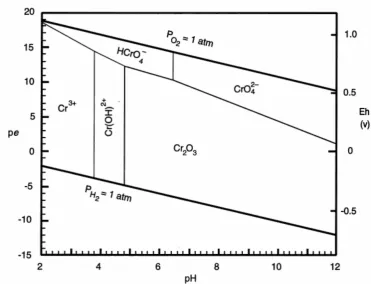
The Eh-pH diagram of chromium in water at 25C and one atmosphere
Principal sources, fates and effect of sediment contamination in aquatic ecosystem
Schematic diagram illustrating the sequence of events for a typical (n, ) reaction
Schematic set-up of gamma ray spectrometer for use in INAA
12
14
15
21
26
31
37
2.4 3.1 3.2 3.3 3.4 4.1 4.2 4.3 4.4 4.5 4.6
Processes for speciation study in different samples
Sampling locations for river
Sampling locations for lake at University Teknologi Malaysia
Flow chart of the preconcentration and separation of As (III) and As (V) in APDTC – MIBK system
Flow chart separation-extraction procedure of Se (IV) and Se (IV) by co-precipitation of Na-DBDTC with phenolphthalein
Water Quality Status for River Basin of Peninsular Malaysia in 2006 with highlight of Sungai Skudai, Sungai Tebrau and Sungai Buluh (Kaw. Pasir Gudang)
Average concentration of arsenic in sediment of river sampling sites
Average concentration of chromium in sediment of river sampling sites
Average concentration of selenium in sediment of river sampling sites
Average concentration of arsenic in sediment of lake sampling sites
Average concentration of chromium in sediment of lake sampling sites
4.7
4.8
4.9
4.10
4.11
4.12
4.13
Average concentration of selenium in sediment of lake sampling sites
Concentrations of As, Cr and Se plotted against concentrations of Fe in river sediments
Concentrations of As, Cr and Se plotted against concentrations of Fe in lake sediments
Ratios of concentration of As, Cr and Se to concentrations of Fe in river sediments
Ratios of concentration of As, Cr and Se to concentrations of Fe in lake sediments
Extraction recovery of As (III, V) by APDTC-MIBK at different pH
Extraction recovery of Se (IV, VI) by co-precipitation technique at different pH
104
112
113
115
116
126
LIST OF APPENDICES
APPENDIX TITLE PAGE
A
B
C
D
E
F
G
The range of the water physico-chemical parameters
National Water Quality Standard for Malaysia (NWQS)
Certified Reference Material
Results of As, Cr, Se and Fe concentration in sediments
Details on the international guideline for freshwater sediment
Statistic evaluation of As, Cr and Se correlation to Fe in sediments
a) The stability study of As species
b) The extraction efficiency of As (III) and As (V) to pH function
c) The repeatability of the extraction by APDTC-MIBK
157
158
160
167
169
174
175
175
H
I
a) The stability study of Se species
b) The extraction efficiency of 1 g mL-1 Se (IV) and Se (VI) to pH function
c) The repeatability of the co-precipitation technique by DBDTC-Pp
a) Results of As and Se inorganic species in river and lake sediments.
b) ANOVA : Analysis of arsenic species in river and lake
c) ANOVA : Analysis of selenium species in river and lake
177
177
178
179
181
LIST OF SYMBOLS AND ABBREVIATIONS
%
C
g g-1
g mL-1
g L-1 mg kg-1 mg L-1 g kg-1 ng m-3 pg m-3
m mm min km kPa M W APDTC AAS AFS BOD COD CRM DIBK DO DOE -percent degree Celcius microgram per gram microgram per mililiter microgram per liter milligram per kilogram milligram per liter gram per koligram
nanogram per meter cubic pikogram per meter cubic micrometer millimeter minute kilometer kilopascal mol watt ammonium pyrolidinedithiocarbamate atomic absorption spectrometry
atomic fluorescence spectrometry biological oxygen demand
chemical oxygen demand certified reference material diethyl isobutyl ketone dissolved oxygen
EPA ETAAS GFAAS HPLC HCl HClO4 HF HNO3 H2O2 H3PO4 H2S H2SO4 IAEA ICPMS MIBK NAA Na-DBDTC NOAA NWQS RSD UV WHO
-Environmental Protection Agency
electro thermal atomic absorption spectrometry graphite furnace atomic absorption spectrometry high performance liquid chromatography
hydrochloric acid perchloric acid fluoric acid nitric acid
hydrogen peroxide ortho phosphoric acid hydrogen sulfate sulfuric acid
International Atomic Energy Agency
inductively coupled plasma mass spectrometer methyl isobutyl ketone
neutron activation analysis sodium diethyldithiocarbamate
National Oceanic and Atmospheric Administration National Water Quality Standard
relative standard deviation ultra violet
INTRODUCTION
1.0 Research Background
Development in industrial and agricultural sectors as well as rapid increase of population and mining activities have adversely affected the quality of aquatic system. Industrial, domestic and municipal wastes that contain toxic contaminants including hazardous chemicals and pesticide residues may enter the aquatic
environment and affect the natural system. Toxic contaminants such as heavy metals that are introduced into the aquatic system may also associate themselves with sediment components and can contribute to toxicity up to some extent.
The Department of Environment (DOE) had, in 2006, monitored about 146 river basins in Malaysia. Out of those 146 river basins, 69 river basins had been reported and categorized as polluted based on water quality parameter assessment of biochemical oxygen demand and ammoniacal-nitrogen (NH3-N). The untreated and partially treated sewage and discharges from agro-based and manufacturing industries were the principal contributors to the major pollution in river system. Meanwhile, 42 rivers were recorded to be heavily polluted by earthwork and land clearing activities.
processes. Some chemicals are not biodegradable but may be biotransformed through food chain that reaches human beings where they ultimately result in chronic and acute ailments and illnesses.
Förstner and Wittmann (1983) grouped the existence of metals in water into two groups; inorganic and organic. Some of them might be soluble and others in particulate form. The metals in soluble state are present as ions, complex ions, chelate ions or molecule forms. The particulate metal form may occur as colloidal, precipitate or adsorbed to other constituents in the aquatic environment.
In natural waters, both inorganic and organic metals may undergo oxidation-reduction, precipitation-dissolution, adsorption-desorption or biochemical
methylation reactions. All of these reactions control deposition, accumulation and mobilization of metals in the aquatic environment. These reactions do not only take place in the aqueous phase but also interact at the solid phase such as sediment, soil and geologic materials. Several metals can go through transformation and
translocation by soil microbes and higher plants via their uptake mechanism.
Sediment analysis is particularly useful in detecting pollution sources and in the selection of critical sites for routine water sampling for contaminants that, on discharge to surface water, do not remain solubilized but are rapidly adsorbed by particulate matter (Simpson et al., 2005). Local sources of pollution can be determined and evaluated with the lateral distribution analysis. Vertical sediment profiles are also useful, since they often uniquely preserve the historical sequence of pollution intensities and at the same time enable a reasonable estimation of
background levels and the variation input of a pollutant over an extended period of time.
Since three decades ago, research aspect into sediment has become apparent from the fact that the sediments with their contaminants are in a constant
interrelation with the liquid phases and organisms which means that the sediments themselves represent another environmental contaminant. Several problem areas with regard to the presence of contaminated sediment in the environment including the potential availability of the contaminants in the sediments for aquatic life, the behaviour of contaminants in soil and sediment with respect to potential pollution of groundwater and uptake of contaminants by plants from polluted sediments on agricultural land have been highlighted, studied and discussed extensively by scholars (Kubota, 1983; Thornton, 1983).
One of the well-known aquatic environmental studies ever conducted was conducted at The Great Lakes situated in United State and also in Canada region. The Great Lakes contain 20 % of the world's surface fresh water which cover more than 244,000 square kilometers of water (http://epa.gov/greatlakes/index.html). Contaminants are washed into the lakes via rivers and streams, or through pipes and discharge outlets. The lakes are also exposed to contaminants via atmospheric depositions. Contaminated sediments, primarily in harbors and industrialized
segments of rivers and estuaries, contain pollutants that have been entering the lakes for decades. The sediment assessment study for metals, acid volatile sulfides,
methylmercury, tributyltin, pesticides, polychlorinated biphenyls (PCBs),
(Schumacher, 1994).Studies conducted on sediment from this area have
demonstrated that contaminated sediments are of great concern to humans and wild life that live in the Great Lake Basin. EPA’s Great Lakes National Program Office has reported that polluted sediments are the largest major sources of contaminants in Great Lakes rivers and harbors which could eventually enter the food chain (EPA, 2004).
The introduction of elemental contaminants into the aquatic system has various sources. The source of contaminants could be originated from two origins; direct and indirect sources. The direct sources could be coming from natural processes like weathering and volcanic activity that contributes to the redistribution of metals from bedrock into the surface environment. Through the water system run-off and leaching process, the metals in solution form are introduced into lakes, rivers, groundwater and sea. The elements enrichment can be attributed to human activities such as industrial processing of ores and metals, agricultural, industrial and domestic wastes. The serious effects of mine, industrial and domestic effluents on water quality in river and lakes, as well as on the organism, have been known and studied for many years.
The indirect sources of contaminants could be originated from geochemical processes occuring in a particular system. The diagenesis process is a natural aquatic environmental process that contributes to the enrichment of toxic chemical in the sediment. This process may induce the vertical migration of multi oxidation state of element such as As from bottom of anoxic sediment to surface that can act as input of the toxic chemical to the water column. The diagenesis process may have developed in sediments of anoxic condition of the aquatic system occurring as a result of exhausted oxygen due to excessive utilization for degradation of
biodegradable material such as municipal wastes. The diagenesis process usually occurs in marine, river, lake and ground water ecosystem which are highly
1.1 Problem Statement
In early civilizations, human culture and development were closely related to freshwater utilization in many aspects of life. Rivers and lakes were utilized for agriculture, transportation, daily usage and food resources. After the Industrial Revolution in early 19thcentury, rapid development in urbanization and
industrialization took place including at some strategic areas close to the river or lake. Without proper planning, enforcement in environmental controlling,
environmental education and awareness, man has allowed contaminants to enter the river and lake ecosystem. In Malaysia, most rivers and lakes are still providing raw water for daily consumption. But on the other hand, the contaminants entering the freshwater system are not deniable.
Health issue concerning freshwater especially for drinking purpose has always been a top priority in the nation. Rapid development in industrial and
agricultural sectors as well as rapid increase of population has affected the quality of aquatic system adversely. Toxic contaminants such as arsenic, chromium and
selenium introduced into aquatic system may also associate with sediments components as well and contribute to some extent of toxicity.
In the contaminated sediment, the chemistry of some contaminants may have changed due to environmental, biological and physical processes. Some
1.2 Research Objectives
Sediment contamination issue is highly important in environmental concern. The sediment represents the largest reservoir for toxic contaminants within the aquatic system such as marine, river, lake and pond. The freshwater bodies such as river, lake and pond have great potential to be contaminated with toxic contaminant as they are situated inland closely to human settlement. Contamination of freshwater from anthropogenic activities or natural weathering may give hazardous impact toward drinking water consumption. The study and investigation of contaminants conducted at those stressful freshwater areas especially in sediments provides significant information regarding the possible sources of contaminant, mobility, and transportation behavioral, potential environmental and health risk particularly for some contaminants that have bioaccumulation capability.
The research objectives can be outlined as follows:
a) To determine and quantify the total concentration of arsenic,
selenium,chromium and iron in river and lake sediments using neutron activation analysis (NAA) technique.
b) To compare the quality of sediments particularly of arsenic, selenium and chromium concentration with several international Sediment Quality Guidelines.
c) To develop a suitable analytical method for inorganic speciation of As (III), As (V), Se (IV), and Se (VI) in sediment samples using neutron activation analysis (NAA) as a principal detection technique.
1.3 Scope of Research
The main scope of research include sediment sampling at identified rivers and lake and collection of water parameter data such as pH, temperature and DO, analysis of sediment for the total concentration of arsenic, selenium, chromium and iron using nuclear analytical technique namely NAA and correlation study between the analysis results of arsenic, selenium and chromium to iron content.
The data of total arsenic, selenium and chromium concentration obtained were compared to several International Sediment Quality Guidelines. An effort to apply Enrichment Factor and Geoaccumulation Index for the purpose of evaluating and estimating the contamination impact in sediment has been taken and completed.
In addition, a speciation preparation method using microwave and preconcentration technique of inorganic arsenic and selenium species has been developed and arsenic, selenium, their respective species as well as chromium occurrence in two different environmental systems; river and lake, using statistical technique has been undertaken.
1.4 Man, Environment and Toxic Elements
The introduction of elemental contaminants into the aquatic system has various sources where the main point sources originate from anthropological activities and geochemical processes. Anthropogenic activities in industrial,
sewage materials and leaching of garbage (Förstner and Whitman, 1983; MacDonald
et al., 2003). Several elements may also originate from the natural weathering process of underlying mineralized rock or associated overburden.
In water bodies, elemental contaminants are associated with the sediment underneath whereby sediments are often the ultimate repositories of contaminants leased to the environment. Toxic elements such as arsenic, cadmium, chromium, copper, mercury, selenium and other species tend to accumulate at the bottom of the sediment. The presence and addition of certain metals to sediments at such a level that would have harmful effects on organisms can be considered to constitute metal pollution. The compositions, quantities and the modes of these elemental inputs vary widely from one sediment to another and thus influence the contaminants behavior in affected sediments.
Aquatic organisms such as fishes, clams and mussels are among the species closely associated with sediment. Under polluted water conditions, these organisms can take up and accumulate metals present in the polluted sediment. Toxic elements are then able to enter aquatic biota through the food chain and this provides a great concern in human health perspective. Therefore, uptake of the contaminants by aquatic organisms has become a subject of interest by several researchers in which several organisms have been used as bio-indicators for assessing water pollution (Yusof et al., 2004; Zanaton, 1994).
1.5 Arsenic
WHO, in the Environmental Health Criteria 224 for Arsenic and Arsenic Compunds (2001), reported that the mean As concentrations in air from remote and rural areas range from 0.02 to 4 ng m-3. The mean total As concentrations in urban areas range from 3 to about 200 ng m-3 and much higher concentrations (> 1000 ng m-3) have been measured in the vicinity of industrial sources. Arsenic is widely distributed in surface freshwaters, and concentrations in rivers and lakes are
generally below 10 µg L-1, although the individual samples may range up to 5 mg L-1 near anthropogenic sources. Arsenic levels in groundwater average about 1–2 µg L-1 except in areas with volcanic rock and sulfide mineral deposits where As levels can be up to 3 mg L-1. Concentrations of As in open ocean seawater are typically around 1–2 µg L-1.
In sediments, the As concentration may range from 3 µg g-1to 4000 µg g-1 with the higher levels occurring in areas of contamination or pollution (Mandal and Susuki, 2002). Background concentrations in soil range from 1 to 40 µg g-1, with mean values often around 5 µg g-1(Burguera and Burguera, 1997; Chu, 1994). Arsenic concentration is considerably higher in sediment or soil than in earth crust, because of its accumulation during weathering and tranlocation in colloid fractions.
Elemental As is a member of Group 15 of the periodic table that includes nitrogen, phosphorus, antimony and bismuth. It has an atomic number of 33 and an atomic mass of 74.91. Arsenic can exist in four valency states: –3, 0, +3 and +5. Arsines and methylarsines are characteristic of As in the -3 oxidation state. Elemental As, As0is formed by the reduction of arsenic oxide. Arsenic trioxide (As+3) is a product of smelting operations and is the material used in synthesizing most arsenicals. It is oxidized catalytically or by bacteria to arsenic pentoxide (As+5) or orthoarsenic acid (H3AsO4) (Eisler, 2000). Arsenic and its compounds occur in crystalline, powder, amorphous or vitreous forms.
Arsenic accumulation in soils and sediments may be due to the use of
Historically, the use of arsenic-containing pesticides has left large tracts of agricultural land contaminated. Furthermore, soil treated with pesticides shows higher As concentration when compared to soil treated with herbicides, which are usually applied at lower rates (Prohaska and Stingeder, 2005).
In the industry, elemental As is used as an additive in special alloys. Arsine is used in microelectronics and semiconductor industry. Some arsenic trioxide is used in the glass and ceramics industry as a decolorizing agent. Coal combustion and fuel burning contribute to As emission in the atmosphere. The degree of industrialization is also reflected in the amount of As in sewage sludge.
The presence of As ions in the environment particularly in drinking water is regulated by environmental and public health agencies or authorities. In Malaysia, according to Ministry of Health, the maximum permitted level of As in drinking water is 0.05 mg L-1(Food Act 1983 (Act 281) and Regulations 2, 2000). Whereas, the provisional guideline value established for As according to Guidelines for Drinking-water Quality by WHO is 0.01 mg L-1(WHO, 2004).
1.5.1 Geochemistry of Arsenic
Table 1.1:Naturally occurring inorganic and organic arsenic species. (WHO, 2001) (see Fig. 1.1 for structures 1–22)
Name Structure
Arsenate Arsenite
Methylarsonic acid, MMA Dimethylarsinic acid, DMA Trimethylarsine oxide Tetramethylarsonium ion Arsenobetaine, AB Arsenocholine, AC
Dimethylarsinoylribosides Trialkylarsonioribosides Dimethylarsinoylribitol sulfate
1 2 3` 4 5 6 7 8 9 – 19 20 - 21 22
Arsenic (III) and (V) are the most often determined species in environmental water, soil and sediment, while organic As species are common constituents of biological tissue and fluids. Organic As, MMA and DMA can also be found in dissolved forms in the water column. Under oxidizing and aerated conditions, the predominant form of As in water and soil is As (V). Under reducing (acid and mildly alkaline) and waterlogged conditions, As (III) can become the predominant As
Table 1.2:Inorganic arsenic species in the environment. (WHO, 2001)
Name Synonyms Formula
Inorganic As, trivalent
As(III) oxide
arsenenous acid As(III) chloride
As(III) sulfide
Inorganic As, pentavalent
As(V) oxide arsenic acid arsenenic acid arsenates,
salts of ortho-arsenic acid
As trioxide, arsenous oxide, white As arsenious acid
As trichloride, arsenous trichloride
As trisulfide orpiment, auripigment
As pentoxide
ortho-arsenic acid
meta-arsenic acid
As2O3(or As4O6)
HAsO2 AsCl3
As2S3
As2O5 H3AsO4 HAsO3
H2AsO4–, HAsO42–, AsO43–
Arsenic is released into the atmosphere primarily as As2O3and mainly adsorbed by particulate matters. These particles are dispersed by the wind and are returned to the earth by wet or dry deposition. Arsines released from microbial sources in soils or sediments undergo oxidation in the air, reconverting the As to non-volatile forms, which then settle back to the soil.
Figure 1.3:Simplified transformation pathway of inorganic arsenic in the environment (Prohaska and Stingeder, 2005).
1.5.2 The Toxicology of Arsenic
Arsenic is a common environmental agent whose toxic properties have been known for centuries. Since ancient time, arsenicals have been used as agents of suicide and murder. Arsenic as a toxic, poisonous and killing agent was closely associated to the death of France’s famous ruler, Napolean Bonaparte.
Humans are exposed to many different forms of inorganic and organic As species in food, water and other environmental media. Each As form has different physicochemical properties and bioavailability. Zielhuis (1985) had classified at least three groups of As-compounds: i) inorganic water soluble compounds; ii) inorganic non- or low-solubility compounds and iii) organic As used to distinguish the
metabolic models and health risks of arsenic-compounds in order to establish the quality standard or recommended limits of As.
sorption sorption
precipitation
reduction (also microbial
reduction) oxidation
Arsenate H3AsO4
Arsenite H3AsO3
+ Fe Adsorption and
precipitation
FeAsO4
+ S
2-AsS2
-As2S3
The chemical forms and oxidation states of As are important with regards to their toxicity which is directly related to their mobility in water and body fluids. The toxicity of As compounds decreases in the following order; arsines > inorganic arsenites (As (III)) > arsenoxides > inorganic arsenates (As (V)) > organic
pentavalent compounds > arsonium compounds > elemental As (Mandal and Susuki, 2002; Prohaska and Stingeder, 2005).
It appears that the stable, soluble inorganic arsenites and arsenates are readily absorbed by digestion tract, abdominal cavity and muscle tissue. Excretion of
arsenate is faster than that for arsenite, mostly in urine (Förstner and Wittmann, 1983). Arsenate has a low order of toxicity than arsenite and does not inhibit any enzyme system due to its lack of affinity to hydroxo and thiol groups, but adenosine triphosphate (ATP) synthesis is inhabited by a AsO43-by uncoupling oxidative phosphorylation and replacing the stable phosphoryl group. In contrast, arsenite inhibits thiol-dependent enzymes, binds to tissue protein as keratin disulfides in nails, hair and skin and retained in the body for a prolonged period.
McArthur et al.(2004) had carried out an extensive study on natural organic matter in sedimentary basin and its relation to As in anoxic groundwater. Water and sediment samples were collected from several wells in southern West Bengal. This investigation was aimed to explain the mechanism of As release to ground water by reductive dissolution of FeOOH. Human excreta in latrines penetrates the upper confining layer which has hydraulic continuity with the aquifer, may locally promote additional reduction of FeOOH and add to the As problem. Generally, the complete reduction of FeOOH contributes to high concentration of As (200-1180 g L-1
).
Several epidemiological studies have shown that acute and chronic exposure to As can cause a variety of adverse health effects to humans such as dermal
changes, respiratory, pulmonary, cardiovascular, gastrointestinal, hematological, hepatic, renal, neurological, developmental, reproductive, immunologic, genotoxic, mutagenetic, and carcinogenic effects (Brown and Ross, 2002; Buchet, 2005; Leonard, 1985). Increased risks of lung and bladder cancer and arsenic-associated skin lesions have been reported to be associated with ingestion of drinking water at concentrations of As equal to and less than 50 µg L-1(WHO, 2001).
1.6 Selenium
Selenium is an essential trace element to life. However at very low
concentrations it can cause anomalies in organisms and at high concentrations it is toxic (Haygarth, 1994; Merian, 1985). Selenium exists at low abundance in the earth’s crust with concentration of 0.05g g-1(Haygarth, 1994). It is often associated with sulfur-containing minerals and usually accompanies sulfur in volcanic effluents which make the soils in the neighborhood of volcanoes tend to have enriched amounts of Se (Malisa, 2001; WHO, 2003b).
Selenium has vast potential use in the industries. Selenium exhibits both photovoltaic action, where light is converted directly into electricity, and
photoconductive action, where the electrical resistance decreases with increased illumination. These properties make Se useful in the production of photocells and exposure meters for photographic use, as well as solar cells. Selenium is also able to convert alternating current electricity to direct current, and is extensively used in rectifiers. Below its melting point, Se is a p-type semiconductor and is finding many uses in electronic and solid-state applications such as in xerography for reproducing and copying documents (Lide, 2007).
Selenium is widely used in glass and ceramic industry for decolorizing and glazing. In heavy industry, it is used to improve the porosity of stainless steel casting and to improve the machinability of copper and copper alloy (Green and Turley, 1961). Selenium is also used as pigments in plastic and paint due to its resistant to heat, light and weathering. Selenium is an antioxidant, which makes it useful for inclusion in inks, mineral and vegetables oil, and lubricants (Haygarth, 1994). Early agricultural uses of Se compounds as pesticides were very limited and short-lived. The recent use of Se compounds as feed additives for the prevention of Se deficiency diseases in farm animals represents a source for environmental contamination
The concentration of Se in igneous rocks is relatively low, usually much less than 1 µg g-1, and similar levels probably occur in metamorphic rocks. Sedimentary rocks, such as sandstone, limestone, phosphorite, and shales may contain from less than 1 and up to 100 µg g-1of Se (WHO, 1987). The Se content in a soil may indicate, to some extent, the parent material from which the soil has been formed. Thus, in arid and semi-arid areas, soils with high Se content have been derived from sedimentary rocks, usually shales and chalks.
The range of soil Se content is typically from 0.1 µg g-1to 2 µg g-1. But at seleniferous area, an average of Se concentration may be found to be between 45 µg g-1and 80 µg g-1(Quinn, 1985). In Great Lakes, USA, Se concentrations from bottom sediments range from 0.35 µg g-1to 0.75 µg g-1. While, oceanic study for sediment samples reported that the Se concentrations range from 0.34 µg g-1to 4.8 µg g-1(Eisler, 2000). The concentrations of Se which are equal to or greater than 4.0 µg g-1in sediments are a great environmental concern because of the potential for bioaccumulation in fish and wildlife (Derveer and Canton, 1997). Under natural conditions, the concentration of Se in water usually ranges from a few tenths to 2 or 3 µg L-1(WHO, 1987). Surface waters seem much less likely to contain excessive levels of Se than ground waters. Selenium concentrations with levels exceeding 50 µg L-1have been documented in groundwater, especially in areas with
seleniferous soils, in sewage wastes, in irrigation drain water and in water of flyash settling ponds (Eisler, 2000).
1.6.1 Geochemistry of Selenium
The concentration of Se in soil depends on the parent material, topography, climate, age of soil and man activities (Frankenberger and Karlson, 1994). Inorganic Se species enter natural waters, groundwaters, soil and sediment from many sources. The two most common sources of Se in the environment include the weathering of rock and soils and organic compounds from decayed plant tissue and agricultural products (Koll, 1993). Selenium also enters the geochemical cycle through human activities which include agricultural drain water, sewage sludge, fly ash from coal-fired power plants, oil refineries and mining (Hamilton, 2004).
The fate of Se in natural environments is affected by many physical, chemical and biological factors, which are closely associated with changes in its oxidation state. The concentration and speciation availability of Se are associated with the pH, redox potential, solubility, complexing ability of soluble and solid ligands, and microbial interaction (Belzileet al., 2000). Figure1.3 shows the availability of Se species under varying Eh and pH. Changes in the valence state of Se from -2 (hydrogen selenide) through Se0(elemental selenium), +4 (selenite) and +6
(selanate) are associated with its geological distribution, redistribution and use. Most of the Se species found in soil and water are the inorganic selenite (SeO32-) and selenate (SeO42-) forms. Soluble selenates which occur in alkaline soil, are slowly reduced to selenites and are then readily taken up by plants and converted into organoselenium compounds, including selenomethionine, selenocycsteine, dimethyl selenide and dimethyl diselenide.
At equilibrium, the typical form of Se in soil is elemental selenium. Referring to Figure 1.4 below, the biologically available Se is only present in relatively large amount in acidic areas or neutral soils and declines as the soils become more
Selenite (Se(IV)) would form mineral salts which are generally less soluble than selenate (Se (VI)) salts. Under acidic reducing conditions in soil, which may be waterlogged and rich in organic matter, elemental selenium and selinides are the dominant species. Elemental selenium, selinides and selenium sulfides are less biologically available for uptake. At high redox potential and in well-oxygenated alkaline soil, highly soluble selenate is the dominant species, and at neutral pH, selenite occurs in approximately equal concentrations to selenate. Selenate is stable in oxidized environments and is the form in which Se is most readily taken up by plants, which can cause great environmental concern.
1.6.2 The Toxicology of Selenium
The toxicity of Se depends on the biologically active oxidized forms of SeO32-or SeO42-(Uden, 2005). In oxidizing conditions or alkaline soil, Se may be sufficiently oxidized to maintain the availability of biological active forms that are readily absorbed by plants. In acidic or neutral soil, it tends to remain relatively insoluble and the amount of biologically active forms of Se available that can be absorbed by plants constantly decreases.
Selenium dioxide is the primary problem involved with most industrial exposure to the element as the oxide is easily formed when Se is heated. The dioxide itself forms selenious acid when it mixes water or sweat and becomes an irritant. Selenium compound released during fossil fuel combustion may pose an inhalation hazard to people. Most probable forms of Se released during combustion are selenious acid and elemental selenium. Acute poisoning through inhalation may occur in industry which produces Se dust and fumes, selenium dioxide and hydrogen selenide as the by products.
The considerable biological importance of Se was first recognized in the 1930s when it was discovered that certain well-defined and economically important farm animal diseases were actually the result of chronic Se poisoning. These animal diseases were restricted to agricultural areas in which large amounts of Se in the soil were available for uptake by the plants, which were then consumed by the animals. The farm animals showed severe signs of distress such as laboured breathing, abnormal movement and posture, prostration, and diarrhea. Death often followed within a few hours after the animals fell sick (WHO, 1987).
The capability of Se to accumulate in living tissue is a great concern as it can cause adverse health effect. The Se capability to accumulate in living tissue is due to its propensity to bioaccumulate within the base of food webs: from water and
leucopenia, and damaged the nails of long-term workers employed in the industry. There have been a number of reported cases of acute and subacute Se poisoning in humans as a result of accidental ingestion of selenic acid and vitamin tablets that contained high levels of Se. An ingestion of Se at high level is reported to cause gastrointestinal disturbances (vomiting, diarrhea), hair and nail changes, and neurologic manifestations. Examination of exposed individuals showed increased levels of Se in the blood and urine (WHO, 1987).
1.7 Chromium
Chromium has been identified both as an essential element and as a chemical carcinogen agent (Hoet, 2005). It is a transition element located in group 6 of the periodic table. It has an atomic number of 24 and an atomic mass of 51.996.
Chromium demonstrates oxidation numbers of 2+, 3+, 4+, 5+, and 6+. Of these, the compounds of the trivalent chromium, Cr (III) are the most stable, the most
abundant, less toxic and are mainly bound to organic matter in soil and aquatic environment. In acid media, hexavalent chromium, Cr (VI) compounds are strong oxidizing agent where Cr (VI) is readily reduced to Cr (III) at low pH.
Chromium and its compounds are widely used in the industrial,
Trivalent and hexavalent chromium compounds are widely used in
manufacturing and industrial due to its chemical and physical properties. The colours of trivalent and hexavalent chromium compounds coupled with appropriate solubility characteristics make them the preferred pigments and colourants in the manufacture of paints, printing inks, floor coverings and vinyl sheeting. The inertness of the trivalent oxide makes Cr compounds useful as corrosion inhibitors and as agents for oxidizing and plating metals. The tendency of trivalent chromium to form complexes with basic oxygen and/or nitrogen atoms in protein makes it possible for the tanning of leathers to be completed in hours rather than in days. The leathers produced become more resistant to wear and heat. The oxidizing properties of hexavalent chromium compounds have found applications in the synthesis of organic dyestuffs. Chromium and its compounds have become ubiquitous in modern society.
Chromium is found in all phases of environment, including air, water, rock and soil. Almost all of the sources of Cr in the earth’s crust are in the trivalent state. The concentration of Cr in rocks varies from an average of 5 µg g-1 in granitic rocks, to an average of 1800 µg g-1in ultrabasic and serpentine rocks (WHO, 1988).
As a guideline, the WHO (2004) recommended a maximum level of 50 g L-1 Cr in drinking water. In Malaysia, the quality criteria for drinking water is set under the Food Act 1983 (Act 281) and Regulations 2 (2000) and the maximum permitted value for total Cr is 50 g L-1
. Due to the fact that the health effects are determined largely by the oxidation state, WHO (2003a) proposed a different guideline values for chromium (III) and chromium (VI). However, the available toxicological data mainly in the study of carcinogenicity of Cr (VI) is yet not enough to support the derivation of a new value.
1.7.1 Geochemistry of Chromium
Chromium compounds are highly varied and widely distributed in the occupational, domestic and natural environments. Environmental Cr concentrations reflect the element’s distribution in air, water, soil, plants and animals from both anthropogenic and natural sources. Chromium compounds are released from minerals containing Cr during the physical, chemical and biological weathering processes by which rocks are abraded or dissolved. Once released, the Cr compounds can be transported as wind or waterborne particulates. Volcanism is an alternative to weathering for the release of Cr compounds.
The combustion of large quantities of coal and oil is also the major anthropogenic source of environmental Cr. Emissions from Cr chemical
The distribution of compounds containing Cr (III) and Cr (VI) depends on the redox potential, pH, the presence of oxidizing or reducing compounds, the kinetics of the redox reactions and formation of Cr (III) complexes or insoluble Cr (III) salts (WHO, 2003a). In soils, Cr (III) predominates. In the environment, Cr (VI) occurs mostly as CrO42-or HCrO4-and Cr (III) as Cr(OH)2+. Figure 1.5 shows dissolved Cr species under varying pH and Eh.
Most of the Cr in air will eventually settle and end up in waters or soils.
Chromium in soils strongly attaches to soil particles and as a result it will not move towards groundwater. In water, Cr will be absorbed by sediments and become immobilized. Only a small part of the Cr that ends up in water will eventually dissolve.Chromium (VI) can easily be reduced to Cr (III) by organic matter. It is a moderately strong oxidizing agent and will react with organic matter or other reducing agents to form Cr (III). Therefore, in surface water rich in organic content, Cr (VI) will exhibit a much shorter lifetime (EPA, 1998). In water, Cr (III) is a
positive ion that forms hydroxides and complexes and is adsorbed at relatively high pH values. In surface waters, the ratio of Cr (III) to Cr (VI) varies widely, and relatively high concentrations of the latter can be found locally. In general Cr (VI) salts are more soluble than those of Cr (III), making Cr (VI) relatively mobile (WHO, 2003a).
1.7.2 The Toxicology of Chromium
The importance of Cr is underscored by knowledge that it is an ubiquitous, naturally occurring element usually found in rocks, minerals and geological emissions. Chromium in excess amounts can be quite toxic, depending upon the chemical species of Cr and the route of exposure (Crounseet al., 1983). Exposure to Cr can occur from the large amounts of Cr released into the environment from the industries, mining and processing of chromites ores. Moreover, Cr may make its way into the human body from dietary intake and drinking water.
Chromium is not known to accumulate in the bodies of fish, but high concentrations of Cr, due to the disposal of metal products in surface waters, can damage the gills of fish that swim near the point of disposal. In animals, Cr can cause respiratory problems, a lower ability to fight disease, birth defects, infertility and tumor formation (WHO, 1988).
smoke tobacco also have a higher chance of exposure to Cr. When present as a compound in leather products, it can cause allergic reactions, such as skin rash. Inhalation of Cr (VI) can cause nose irritations and nosebleeds.