Abstract
SMITH, SHIRLEY MCCRAW. A Cross-Age Study of Students’ Conceptual Understanding of Interdependency in Seed Dispersal, Pollination, and Food Chains Using a Constructivist Theoretical Framework. (Under the direction of Dr. Glenda S. Carter)
The purpose of this research was to investigate students’ understanding of interdependency across grade levels. Interdependency concepts selected for this study included food chains, pollination, and seed dispersal. Children’s everyday concepts and scientific concepts across grade levels represented the focus of conceptual understanding. The researcher interviewed a total of 24 students across grade levels, six students each from grades 3, 7, and 10, and 6 college students. Data were collected by means of interviews and card sorts. A constructivist theoretical framework formed the groundwork for presenting the focus of this study and for interpreting the results of the interview data. Results were
analyzed on the basis of identifying student responses to interview questions as either everyday concepts or as scientific concepts, along with transition through the zone of proximal development (ZPD) by mediation, as developed by Vygotsky
scientific understanding. The seed dispersal concept proved more complex than pollination and food chains.
The findings of this study have implications for classroom teachers. By
A CROSS-AGE STUDY OF STUDENTS’ CONCEPTUAL UNDERSTANDING OF
INTERDEPENDENCY IN SEED DISPERSAL, POLLINATION, AND FOOD
CHAINS USING A CONSTRUCTIVIST THEORETICAL FRAMEWORK
by
SHIRLEY MCCRAW SMITH
A dissertation submitted to the Graduate Faculty of North Carolina State University
in partial fulfillment of the requirements for the Degree of
Doctor of Philosophy
SCIENCE EDUCATION
Raleigh 2003
APPROVED BY
_____________________________ ____________________________ Dr. John C. Park Dr. James E. Mickle
_____________________________ ____________________________ Dr. Leigh Ann Haefner Dr. Glenda S. Carter
DEDICATION
This dissertation is dedicated
to those who teach and to those who seek to understand what is taught by observing, thinking, doing, and assessing in order to know and to appreciate
scholarly endeavors and to become an independent learner.
BIOGRAPHY
Shirley McCraw Smith was born in scenic southwestern rural Virginia in Carroll County only a few miles from the Blue Ridge Parkway. The second daughter of Ruth Frances Dawson McCraw and Troy Lee McCraw, Shirl followed her parents’ interest in plants. Her father walked his Sugarloaf mountain land every day, while her mother spent long hours as a homemaker and gardener. Shirl hikes the mountain land at every
opportunity, looking for wild flowers and photographing the changing landscape. Her parents are now deceased, but she continues the interest in nature and walks on the old wagon trails and roads that preceded paved construction.
Shirl obtained her undergraduate degree from Appalachian State University with a Bachelor of Science degree in biology. She earned her Master of Arts in Teaching degree from Duke University, with an emphasis on education and biology. Her interest in Duke now centers on Duke basketball and the athletic department, which her family and friends enjoy as well. She took numerous classes at UNC-CH studying instructional design,
leadership, and botany. Obtaining a doctor of philosophy degree in science education with a minor in botany has been a lifelong goal. She found North Carolina State University to be a student-oriented university during her doctoral studies.
Acknowledgements
First of all, I thank my parents for providing me with the best childhood possible. My
parents met on a bridge as they walked to church, and attending church was my mother’s
favorite activity. Attending church on Sunday makes the week complete and is a good start
on a new week. My father liked church, but he much preferred to be walking and looking for
nature’s surprises. My parents, my two older brothers, and my sister spent as much time as
possible with our extended family, neighbors, and friends. My family placed true value on
nature and living on a small farm. Visiting relatives and talking about gardening and the farm
animals brought interest and humor. Gardening was a necessity, and we had all kinds of fruit
trees from which to share the bounty of this good earth.
I thank North Carolina State University for focusing on being student
oriented. Faculty in the Department of Mathematics Science and Technology Education and
in the Department of Biology helped me extensively in my entire program. Having
completed my dissertation proposal except the research protocol, I was simply not sure how
to prepare the questions. Dr. John C. Park offered invaluable assistance in helping me write
the protocol for interviewing. Dr. James E. Mickle verified the accuracy of the biology
information, and recommended a final data summary graph. Dr. Leigh Ann Haefner
graciously agreed to serve on my committee on brief notice. Thanks especially to Dr. Glenda
S. Carter for agreeing to chair my dissertation committee. She turned around corrections
tremendously fast and efficiently and worked late evenings and weekends. I progressed,
finally, with her encouragement and support and most importantly, her pleasantness and
In reviewing my dissertation work, I must refer to one science educator whose work
provided much of the framework for my research theory, Rosalind Driver, a professor whose
professional career was spent mostly in England, but briefly in the United States. A tribute to
Dr. Rosalind Driver by her colleagues (1997) focused on three attributes: vision, energy, and
joy. Dr. Driver was said to have exercised vision in the pursuit of excellence worldwide, to
see individually and corporately where science education research was heading. She saw the
big picture, then tackled the details. Second, Dr. Driver exhibited energy with a capital E.
Ros demonstrated proactive energy, a sense of urgency, the force and will power to act
relentlessly toward her vision. She didn’t procrastinate, for meetings took place, proposals
were written, research was completed, and papers and books were published. Personal
determination and courage helped her to tackle every obstacle in pursuit of her goals. She
found great joy in those around her, and was generous with her time, fun, caring, supportive,
and encouraging. She found diamonds among rocks, orchids among weeds, and shared the
value, the joy, with all of us, especially through the fruits of her labor.
My dissertation also contains much theoretical framework based on Lev S. Vygotsky,
a Russian whose work was done in the early 1900s, often during serious illness. Vygotsky
concluded that children learn by integrating their everyday concepts with scientific concepts
through their zone of proximal development, which is the difference between what a child
can do alone and what can be accomplished through parents and teachers, or a competent
peer. Vygotsky explained in detail how children learn concepts, and the mental tools
involved, along with the importance of word meaning and language. Vygotsky, too, had a
both Driver and Vygotsky, I now have a clearer view of students’ understanding of
phenomena of the natural world as learning evolves.
Just as in any endeavor, numerous people help in various ways. Completing the
protocol questions demanded finding photographs. I had capable assistance with both
photography and Internet location of the photographs used with the protocol, as well as help
with the computer generation of much of the dissertation, especially charts and graphs.
Computer and printer technical support was often needed and much appreciated. I thank my
family, my friends, and all the people who have been truly patient with me. I now perceive
TABLE OF CONTENTS
LIST OF TABLES………xi
LIST OF FIGURES………...……….xiii
CHAPTER 1-INTRODUCTION………...1
Background………....1
Purpose………...3
Research Questions………....4
Significance of the Study………...4
Rationale………....5
CHAPTER 2-REVIEW OF RELATED LITERATURE………..7
Review of Empirical Studies……….7
Plant Concepts……….10
Cross-Age Studies………25
Theoretical Framework………27
Children’s Ideas in Science………..40
Everyday and Scientific Concepts………...46
Piaget and Vygotsky………62
CHAPTER 3-METHODOLOGY………77
Research Questions………..77
Participants………...77
Methodological Framework……….78
Data Sources………80
Data Analysis………...83
CHAPTER 4-RESULTS………..90
Seed Dispersal………..90
Pollination………..104
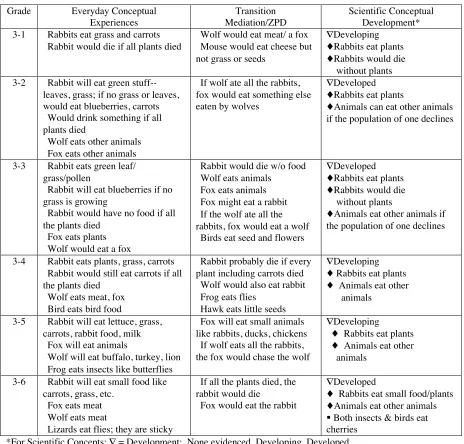
Food Chain Card Sorts………...113
Food Chains………...116
CHAPTER 5-DISCUSSION AND SIGNIFICANCE OF THE STUDY………..136
Conceptual Understanding……….136
Seed Dispersal and Pollination………..140
Food Chains………...141
Pyramid of Concepts………..142
Development of Everyday and Scientific Concepts………..148
Limitations of the Study………152
Future Research……….152
REFERENCES CITED………..153
APPENDICES………...154
Appendix A. Participant Consent Form………...…..155
Appendix B. Interview Protocol………....168
Appendix C. Card Sort Activity……….172
Appendix D. Charts………...187
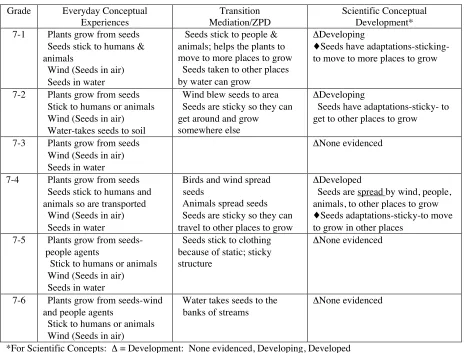
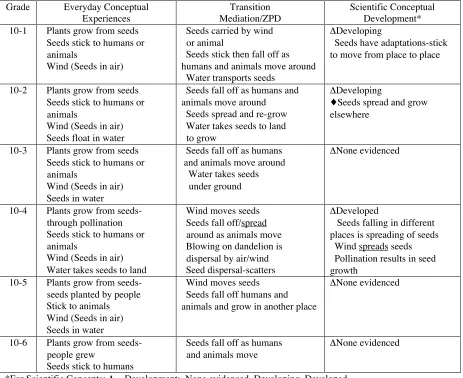
Figure 4-1 Summary of Seed Dispersal Conceptual Development………...187
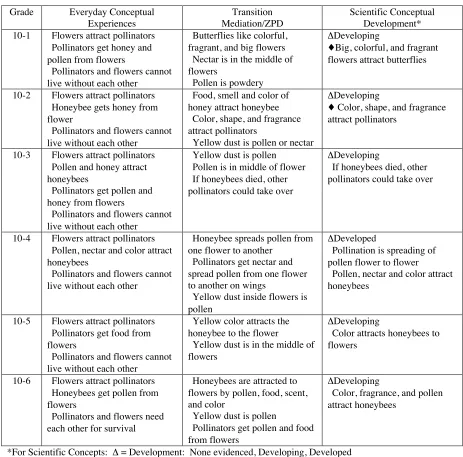
Figure 4-2 Summary of Pollination Conceptual Development………..188
Appendix E. Data Tables………..190
LIST OF TABLES
Table 1. Everyday and Scientific Concepts on Seed Dispersal………...…91
Table 2. Summary of Grade 3 Responses on the Methods of Seed Dispersal……….92
Table 3. Summary of Grade 7 Responses to the Methods of Seed Dispersal………..97
Table 4. Summary of Grade 10 Responses on the Methods of Seed Dispersal………...99
Table 5. Summary of College Student Responses on the Methods of Seed Dispersal……..101
Table 6. Summary of Students’ Conceptual Understanding of Seed Dispersal Across Grade Levels………103
Table 7. Table of Potential of Everyday and Scientific Concepts on Pollination…………..104
Table 8. Summary of Grade 3 Student Responses on Pollination……….105
Table 9. Summary of Grade 7 Student Responses on Pollination……….107
Table 10. Summary of Grade 10 Student Responses on Pollination……….109
Table 11. Summary of College Student Responses on Methods of Seed Dispersal………..111
Table 12. Summary of Pollination Conceptual Development………...112
Table 13. Everyday and Scientific Concepts for Food Chains………..113
Table 14. Food Chain Card Sorts for Grade 3………...………114
Table 15. Food Chain Card Sorts for Grade 7………...………114
Table 16. Food Chain Card Sorts for Grade 10………...………..115
Table 17. Food Chain Card Sorts for College Students…………...………..115
Table 18. Summary of Food Chain Card Sorts………..116
Table 19. Grade 3 Responses to Food Chain Protocol………..118
Table 20. Summary of Food Chain Responses by Grade 7………...121
Table 22. College Students Responses to Food Chains……….125
Table 23. Food Chain Summary………126
Table 24. Everyday Concepts, Mediated Concepts, and Scientific Concepts
On Seed Dispersal……….……….127
Table 25. Table of Everyday and Scientific Concepts on Pollination
Including Mediation………...128
Table 26. Food Chain Interview Responses………..128
Table 27. Comparison Table Across Grade Levels: Seed Dispersal, Pollination,
LIST OF FIGURES
Figure 1. Vygotsky’s Continuum of the Zone of Proximal Development……….137
Figure 2. Vygotsky’s Pyramid of Concepts………...143
Figure 3. Vygotsky’s Pyramid of Concepts Applied to Seed Dispersal………146
Figure 4. Developmental Pathways of Children’s Everyday and Scientific Concepts……..148
Figure 5. Vygotsky’s Developmental Pathways of Children’s Everyday and Scientific
Chapter 1
Introduction
A change in the vision of scientific knowing and understanding evolved in the past years as a result of numerous reform standard publications. In 1989 in the United Kingdom, the National Curriculum Council commissioned a research group to document students’ development of conceptual understandings across the 5-16 age range. Documentation of some research into physical science concepts had been done previously. To reform
curriculum planning in all of science to achieve a balanced research perspective, researchers focused on documenting biological science conceptual progression as well (Driver, et. al., 1995). In America, the National Science Education Standards published by the National Research Council (1996) focused on generating across age standards in all the sciences. Along with standards, researchers focused on a change in how children learn more effectively, not through lecture, but through constructing their own way of thinking by a method known as constructivism.
Background
The historical background of constructivism progressed from the time of Vico to Piaget and Vygotsky, with numerous other researchers along the way. Little attention focused on really listening to students’ answers or constructs until educators started analyzing
responses to questions. Previously, what mattered was whether students were right or wrong in their responses. Gradually, educators started taking a close look at children’s responses and analyzing their thinking. The introduction of concept maps presented a means of
A fundamental issue of studies involving students’ conceptual progression in specific content areas relates to the specific data collected and to the data analysis (Leach, et. al., 1995). Progression in students’ thinking changes across grade levels. Younger children tend to offer descriptions of natural phenomena rather than explanations. Although younger children tend to use what Vygotsky called everyday concepts, the tendency is to interweave the everyday concepts with scientific concepts with progression in development. For example, younger students would say an apple rots because it becomes brown and soft. Depending on the level of conceptual progression, an older student would use a causal explanation. For example, true, the structure of the apple changed during the rotting process, but why.
Both experience and social factors influence students’ thinking about phenomena in the natural world. Students differ in their observations of the natural world. As a result, conceptual understanding varies. As young people develop, changing views occur as everyday and scientific concepts merge. Students build on their knowledge base from one year to the next. As a result, researchers involved with writing standards in concepts to be achieved across grade levels include increasingly complex topics to add to the knowledge base. This research focuses on the biological knowledge base, specifically topics relating to plants, for children’s conceptual progression.
Conceptual understanding of ecological interdependency of life is an important topic included in reform standards (American Association for the Advancement of Science
K-12 and college science curriculum requirements. Interdependency is an interaction or interrelationship between or among plants and animals and the environment, a relationship that is necessary for survival. Interactions can be beneficial, harmful, or neutral to the organisms involved. Some types of interdependency include flowers and their pollinators, food chains, and seed dispersal, all of which were emphasized in this research study. The interdependencies were researched on the basis of students’ everyday and scientific concepts.
Food chains and food webs, pollination, and seed dispersal are to be taught at specific grade levels (AAAS, 1993). Interdependencies of plants and animals, populations,
ecosystems, food chains/food webs, and biological adaptations are all represented in the content standards in biological sciences for K-12 (NRC, 1996). Interactions or
interrelationships between or among organisms, such as predation, symbiosis, mutualism, and parasitism, include the components of niche, habitat, population, community, ecosystem, biome, the patterns of energy flow (food chains/food webs) through an ecosystem,
adaptations, and evolution (National Science Teachers Association, 1993). Energy flows through ecosystems in one direction, from photosynthetic organisms to herbivores, carnivores, and decomposers. In the process of energy flow, organisms cooperate and compete in ecosystems, forming interdependencies (National Science Teachers Association, 1995).
Theoretical frameworks involved in the research were based on Jean Piaget, a Swiss constructivist, and Lev Vygotksy, a Russian researcher studying children’s conceptual development. Cross-age data served to relate the development of students’ conceptual understanding to the zone of proximal development (ZPD). The ZPD is an indication of the teacher’s role in learning, as well as the impact of group learning, and a possible source of impact on curriculum design. The research was designed to collect and analyze data to find possible explanations to the following research questions for students’ conceptual
understanding.
Specifically, the research focused on finding answers to the following questions involving students’ understanding of the concept of interdependency:
1. What everyday and scientific concepts do students have pertaining to biological interdependency of pollination, food chains, and seed dispersal?
2. What patterns of student knowledge of interdependency in pollination, food chains, and seed dispersal are evident across grade levels?
3. How can results from the interviews be used to construct an understanding of a student’s zone of proximal development (ZPD) with respect to the
interdependency concepts of pollination, food chains, and seed dispersal? Significance of the Study
conceptions of the interdependency of flowers and their pollinators, food chains, and seed dispersal is as follows:
1. The cross-age study design allowed comparison of the depth of
understanding of the concept of pollination interdependency among grade levels 3, 7, 10, and college students.
2. The study gave insight into whether the students involved link pollination interdependency to food chains.
3. The research indicated whether students across grade levels relate pollination interdependency ultimately to seed dispersal.
4. The study analyzed the relationships among pollination, seed dispersal, and food chains.
Rationale
Research examining students’ understanding of food chains and food webs shows distinct differences in children’s knowledge of the concept of interdependency. On the other hand, a review of the literature pertaining to students’ understanding of pollination and seed dispersal revealed that most reports were only descriptions of activities, thus indicating gaps in the research on children’s understanding of these concepts. In the current cross-age study, students’ everyday and scientific knowledge of food chains/webs, pollination, and seed dispersal will be explored. Cross-age studies are designed to trace the conceptual progression of children across age ranges. Previous research has not focused on differences between students’ everyday and scientific knowledge of the three concepts reviewed here.
nutrition. Conceptual understanding in the biological sciences, especially in reference to plants, represents a neglected area of study. More people tend to identify with animals than to observe plants. Throughout the history of science, classic experiments focused largely on physical science phenomena until now.
What is the importance of plant-animal interdependencies to survival? What are the interrelationships among pollination, food chains, and seed dispersal? What is the
significance of pollination to plants? Pollination is interdependency between flowers and their pollinators whereby plants may be dependent on animals for transferring pollen, and the animals may benefit as well by acquiring food. Ultimately, the survival of some plant
species may be dependent on certain pollinators. In fact, the interdependency of pollination may impact human survival and is therefore a critical area of students’ understanding across grade levels. An analysis of students’ conceptual progression from everyday concepts on a contextual basis, to scientific concepts on a non-contextual front offers insight into students’ ways of thinking. How new knowledge builds on students’ existing structure lends further insight into how children construct conceptual understanding. This study used a
Chapter 2
A Review of the Literature
Part one of the literature review presents ideas on students' conceptual understanding and progression. The theories of Vygotsky and Piaget are presented in detail, along with related research articles. The second part of the literature review is based on the three plant or plant/animal interdependency concepts: food chains, pollination, and seed dispersal. Part three of the review of the literature delineates children's conceptual trajectories as researched through cross-age studies.
A review of K-12 science textbooks and college biology textbooks has included increasing information devoted to interdependency and specifically to pollination in the past few years. As the reform standards continue to delineate the areas of ecology important to each grade level, the information may be incorporated into the curriculum. Examining the influence of everyday school experiences on students' scientific understanding of
interdependency is an important area in science education research (Driver, et. al., 1996; Gallegos, et. al., 1994; Griffiths & Grant, 1985; Leach, et. al., 1991, 1995, 1996a, 1996b). The current research study focused on the impact of everyday concepts learned culturally and socially on scientific concepts that are acquired through formal learning.
concepts. Everyday concepts represent the understanding of a concept that a child first brings to the classroom. Through formal learning mediated by educators, tutors, or peers, everyday concepts become scientific concepts.
According to Vygotsky, conceptual change is a continuous process in which the student collaborates with teachers, parents, and competent peers to transform everyday concepts into scientifically accepted concepts (Howe, 1996). Vygotsky linked everyday and scientific concepts through the zone of proximal development. The zone of proximal
development (ZPD) is the difference between a child’s actual level of development and the level of development possible through an adult or competent peer. Leontiev (1985) explained the relationship between scientific and everyday concepts as follows:
The degree to which the child masters everyday concepts shows his actual level of development, and the degree to which he has acquired scientific concepts shows the zone of proximal development. (Leontiev, 1985, p. 47-48)
Vygotsky's zone of proximal development is the difference between the child's actual
development alone and his or her potential development with guided assistance. Vygotsky’s idea of the zone of proximal development serves to connect a general psychological view of child development with a pedagogical view of instruction. His underlying assumption of the concept is that development and instruction are socially originated, so to understand the two processes, one needs to analyze social relationships. By social relationships, Vygotsky meant interaction with family, friends, educators, and competent peers. Every person has a unique social relationship dependent on the environmental setting. According to Vygotsky, a child is limited in the capacity to copy actions that exceed his or her own capacities.
social setting guided by adults. The difference between the level of accomplishment with adult guidance and the level of achievement independently is the zone of proximal
development (Hedegaard, 1996, p. 172).
Shif, a student researcher working with Vygotsky, conducted a study based on factors distinguishing scientific concepts from everyday concepts in reference to the zone of
proximal development. Everyday concepts evolve spontaneously according to the child’s reflections on daily experiences occurring during social interactions. The experiential nature of everyday concepts leads toward classification as being unsystematic and contextual “complexes, ” rather than actual concepts. In contrast, scientific concepts are true concepts that originate during formal instruction and are hierarchical, logical, and decontextualized structures. Vygotsky researched the interrelationship between everyday and scientific concepts and concluded that scientific concepts develop more quickly than everyday concepts. Scientific concepts aid structurally in the practical development of everyday concepts. To Vygotksy, the zone of proximal development (ZPD) correlated with the interaction between scientific and everyday concepts and the socialization of meaning between a child and an adult or more capable peer, which leads to formal learning (Kozulin, 1990). Carey (1985) viewed the relationship between everyday concepts versus scientific concepts as a problem of development of the child from novice to expert. In a detailed monograph, Carey linked her conclusion to Piagetian stage theory and philosophical theory change rather than attributing the idea to Vygotsky (Kozulin, 1990).
contrast, the weakness of everyday concepts is a lack of systematic organization and the child's inability to manipulate them voluntarily. Vygotsky focused on the manipulation of language in the development of scientific concepts and as an important characteristic of formal schooling. Researchers have linked Vygotsky’s everyday and scientific concepts to children’s ideas and to students’ understanding of concepts.
Plant Concepts
Children's biological ideas on ecology, inheritance, and evolution result from their construction of knowledge of the living world from firsthand experience, conversations with parents and teachers, reading, and watching media events (Wood-Robinson, 1995). How students progress in their explanation of pollination, food chains, food webs, seed dispersal, and adaptations compose the major part of the current study. A survey of the literature on children's understanding of interdependencies indicates increasing research pertaining specifically to plant concepts (Driver, et. al., 1996; Gallegos, et. al., 1994; Griffiths & Grant, 1985; Leach, et. al., 1991, 1995, 1996a, 1996b). The general consensus has been that limited research studies have involved children's concepts of botanical topics.
Children's understandings of food chains and food webs were the focus of three extensive and related studies on ecology (Leach et. al., 1995, 1996a, & 1996b). All three studies examined the conceptual progression of students’ understanding in ecology across the 5-16 age range. The first study focused on theoretical background, design, and methodology (Leach, et. al., 1995). Children's progression in thinking about natural processes was
across a range of natural phenomena. For example, as children develop in age, their explanations progress from descriptive to causal (Leach, et. al., 1995). Both Piaget’s stage theory and Vygotsky’s pyramid of concept development tend to support conceptual
progression in children’s construction of knowledge.
The second study of the three-part series involved children's ideas on the cycling of matter in ecosystems, specifically energy flow from producers to consumers (Leach, et. al., 1996a). Part three of the studies focused specifically on cross-age understanding of the interdependency of organisms (1996b). The main features of interdependency considered were composition of balanced communities, population size in communities, relationships between organisms composing food webs, and types of models students use to explain interdependency of organisms (Leach, et. al., 1996b).
Wood-Robinson (1991) reviewed literature pertaining to children's understanding of a number of plant concepts, including classification, plant structure, osmosis or water
relations in plants, and plant nutrition or photosynthesis. In a subsequent research study on children's understanding of evolution, specifically adaptation and the inheritance of
characteristics, Wood-Robinson (1994), emphasized the importance for teachers to ascertain prior beliefs of students before planning their teaching. Seed dispersal by wind as a dynamic ecological process, was the focus of another study pertaining to plant topics (Thomson & Neal, 1989). Students saw only the results of such processes; observing the occurrence of the actual ecological event of seed dispersal would make learning more exciting.
and psychology. Their study indicated that children possess a domain-specific foundation or framework depending on interconnected reasoning and causal beliefs. Naive biology pertains to beliefs about certain causal mechanisms. The view of cognitive development cited by Wellman and Gelman as being domain-specific presents important questions for research (Flavell, 1992).
Research studies pertaining to children's understanding of concepts may have implications for planning and sequencing science curricula (Driver, Leach, Scott, & Wood-Robinson, 1994). If conceptual understanding is a curricular goal for science teachers, then planning instructional courses using research-based knowledge of children's conceptual development may prove beneficial. According to Driver, et. al, (1994), a central argument of their research was that
If courses are to relate appropriately to learners, curriculum decisions may also need to take account of what is known about the processes of knowledge acquisition in science. Furthermore, it is suggested that cross-age research data on students'
domain-specific reasoning in science, undertaken over the last two decades, provides an important base on which decisions about such developmentally organized curricula can be made. (p. 89)
Plant biology is a neglected topic of study and research at all levels in our schools and universities. The National Research Council (1992) stated that the central focus of the nation’s teaching and research funding should be the biology of plant life. Children's
Engel Clough and Wood-Robinson (1985) indicated that much of the research into children's conceptual understanding has involved physics. A reason cited for the neglect of biological topics was the popularity of investigations using Piagetian frameworks, which involve physical science concepts. Shayer (1974) contended that biological concepts are non-hierarchical and less distinct than physical science concepts. Being less discrete, biological concepts tend to interweave with related concepts and are more difficult to analyze.
At least one research study pertained to the connection between understanding physical and biological concepts. Driver and Erickson (1983) framed the over-all structure of their study on the review of research pertaining to students’ conceptual frameworks on the basis of the premises researchers use to justify their programs. Three empirical premises, a value premise, and a conclusion justify their study:
Empirical Premise 1: Many students have constructed frameworks from their physical and linguistic experiences, which they can use to interpret natural phenomena studied formally in school.
Empirical Premise 2: Students often become confused as their conceptual frameworks lead to different predictions and explanations from those learned in school.
Empirical Premise 3: Instructional planning based on teaching strategies, which consider student conceptual frameworks will lead toward the development of frameworks that parallel school science concepts.
Conclusion: Researchers should engage in research which:
a. Reveals conceptual frameworks students bring to the classroom, b. Investigates how students interact with instruction, and
c. Use the resulting knowledge to develop instructional programs. A review of the literature indicates that progress is being made in research on students' understanding of conceptual frameworks in botany, the study of plant life. The over-all goal of conceptual research, then, should be to investigate students’ thinking, not as a container to be filled with facts, but as a structure which functions to correlate students' everyday concepts with scientific concepts in order to understand their ecological
interdependence with the environment. Thorough understanding of concepts should include recognizing those concepts when used in a different context.
Leach et. al. (1995) explained the theoretical background, design, and methodology of their research into children's ideas on ecology. Progression in children's understanding is associated with changes in their ontology, that is, changes in their basic assumption about the nature of the world. Epistemological changes occur also and can be detected while
Another issue for consideration of children's conceptual progression concerns the factors that impact the development of children's thinking. Leach, et. al. (1995) proposed that social factors, especially language and everyday experiences, influence children's ways of thinking and talking about the nature of certain scientific phenomena. Solomon (1987) referred to the everyday ways of knowing as 'life world knowledge,' actually the knowledge that both children and adults alike tend to take for granted. Everyday knowledge often represents viewpoints that have become a part of our common culture, and may or may not coincide with the scientific way of knowing. An example of an everyday way of knowing is the idea that plants bend toward sunlight because they need light. The scientific view is that the plant bends toward the light because the plant growth hormone auxin causes the cells to grow faster on the side away from the light, therefore causing the plant to bend toward the light. Thus, once a student’s everyday conceptual framework is clarified by scientific conceptual understanding, the student then has a true idea of the meaning of the concept involved.
Suffice it to say that when children are introduced, in school or elsewhere, to the science view of the concepts and phenomena which are of interest in this study, they start with an established personal history of listening, talking, experiencing and thinking about the matters under consideration. In this respect, progression in learning might be conceptualized as a dynamic and ongoing process involving additions, developments and changes to existing modes of thinking. Progression might be prompted by schooling or through more informal situations. In some instances children will integrate the science concepts learned in school with existing knowledge structures. In other cases, science knowledge will build on existing structures but will tend to be held separately from everyday ways of knowing and will be drawn as particular contexts demand. (pp.722-723)
Interdependency
The concept of interdependency pertains to interrelationships between plants and animals. Examples of interdependency include food chains and food webs, pollination, and seed dispersal. Living organisms are interdependent ultimately due to food supply (Ford & Smith, 1994). Whereas food chains and food webs have been extensively researched, virtually no research exists on students' understanding of pollination and seed dispersal. The purpose of the current literature review is to relate research involving students' understanding of food chains and food webs, pollination, and seed dispersal.
models of food chains and food webs is fairly comprehensive. For example, Alexander (1982) reported that the principles of ecosystems are most effectively taught through the analysis of food web relationships. A survey of secondary science teachers in the United States indicated that food chains and food webs were among the concepts important for students to know (Finley, Stewart & Yarroch, 1982). Although most teachers in the survey considered the two concepts easily comprehended by students, an analysis of the literature on food chains and food webs indicates that research data fails to substantiate the teachers’ views. A number of research studies concluded that students have some level of difficulty understanding the concepts of food chains and food webs: (Adeniyi, 1985; Barman & Mayer, 1994; Gallegos, et. al., 1994; Griffiths & Grant, 1985; Johnstone & Mahmoud, 1980; Leach, et. al. 1995, 1996a 1996b; Webb & Bolt, 1990). Further discussion of these studies reveals the varying levels of understanding.
ecosystems. The models were designed to show a summary of ideas students should acquire by age 16. An analysis of the nature of children's explanations indicated disagreement with scientifically accepted concepts. By age 16 only a small number of students provided explanations of the cycling of matter consistent with the areas of photosynthesis, respiration, and decay. Leach et. al. confirmed their earlier conclusion (1991) that the reason for the limited understanding by students could be due to teaching the processes in isolation rather than as related concepts.
Leach et. al. (1996b) reported children's ideas about the interdependency of
organisms in ecosystems. Examples of interdependency included composition of a balanced community, relative population size in communities, relationships between organisms
composing food webs, and forms of interdependence, that is, how students view organisms as interdependent. An analysis of the results showed a range of children's ideas across ages. Results of the study indicated that many students, especially between the ages of 5 and 11, form a singular point of view, that is, a relationship between one predator and one prey organism, as in a food chain, rather that between populations, as in a food web. The authors reviewed a number of forms of interdependence in explaining students' conceptions on interdependence using teleological and anthropomorphic points of view. Students aged nine and above offer a range of explanations about relationships between organisms. By age 16 a small number of students provided explanations relating to competition between organisms.
impact a second population on a different food chain within the food web. Research data reported on 200 tenth grade biology students indicated that almost the entire sample (95.5%) made common mistakes in identification of population shifts in one population impacting other populations along food chains within a food web. In questions pertaining to predator-prey effects on population changes, students showed varying levels of understanding.
Webb and Bolt (1990) reported that the predator-prey relationship characteristic of food chains is the principal component in students' understanding of food chain construction. The study included 108 secondary students and fifty-four first year university zoology students. Among the secondary students, fifty percent were 15 years old and fifty percent were 17 years old. Almost the entire sample of students at all levels had difficulty predicting outcomes when a change in one population of a food chain occurred within a food web. The authors concluded that ecological concepts must be developed at an earlier age or alternative frameworks may persist at the university level.
In their study of food chain construction by 9 and 10 year-old children in Mexico, Gallegos et. al. (1994) focused on children's preconceptions (prior everyday knowledge) and their understanding of predator-prey relationships. The research sample consisted of 506 children in grades 4 through 6. Conclusions were based on a single application of a three-task instrument. The instrument was administered following a classroom lecture/discussion in a fourth grade classroom. Teachers considered the concept of food chains to be a known topic among fifth and sixth grade children and wanted to check to verify the level of
ferocious carnivore selected to consume the weaker herbivore. Results indicated that students had not developed an understanding of the concept of producer as the basic link in food chains and food webs. The authors recommended that food chains be taught, not by isolation of predator-prey relationships, but from the context of ecological flow of solar energy transformed by the producer into chemical compounds and subsequently cycled through different trophic levels of consumers.
Another study pertaining to food chains and food webs focused on why the
populations of organisms within the food chain or food web vary. Adeniyi (1985) identified ecological misconceptions held by secondary science students (N=232)
aged 13-15. Many of the students argued that herbivores were more numerous than carnivores within a community because people tend to keep and breed herbivores, such as cows and sheep, or that herbivores tend to produce larger numbers of offspring. In addition, many students viewed large populations on the basis of satisfying the food requirements of predators. For example, one student thought there would be a large number of insects because most of the consumers within a food web would rely on them for food.
Johnstone and Mahmoud (1980) devised a technique to isolate topics perceived difficult by high school and university students, teachers, examiners, and lecturers. All sources generally agreed on the topics causing the most difficulty, including energy requirements. The conclusion was that for topics perceived difficult by students and teachers, curriculum planners and researchers probably should focus on students' views of difficulty rather than relying on their own perceptions.
biology textbooks. The interview instrument included a card sort, a diagram, and interview questions. The card sort consisted of three cards with the names of a producer, an herbivore, and a carnivore. The student was asked to arrange the cards to show a food chain. Two hypothetical questions pertaining to a diagram of a food web were used to probe students' understanding of a food web. Interviews were audiotape recorded. Analysis of the research data indicated that most students gave basic, unsophisticated descriptions of the concepts of food chains and food webs. In addition, most of the students could identify several food chains in the food web diagram, but they did not understand the feeding relationships in a food chain and food web as a method of energy transfer among organisms. Furthermore, the majority of the students could not adequately explain the consequences of a doubling of the herbivore population or a major reduction in the carnivore population on other populations within the food web. An analysis of textbooks used in the classrooms indicated that at least half excluded sufficient information for students' understanding of energy transfer among organisms. The authors concluded the necessity of identifying ways to access the knowledge children already have and that basic concepts should not be overlooked simply because teachers think of them as being obvious to students.
Brumby (1982) focused on four problems to determine students' perceptions of the concept of life. Both a written assessment and an interview protocol were used. The "Web Problem" consisted of a diagram of a cobweb (spider web) and stated:
Approximately fifty percent of the fifty-two university-age students in the study interpreted the two quotes in terms of food chains. Only nine students mentioned photosynthesis, or conversion of solar energy, for the critical importance of green plants in a food chain. Most students indicated that plants exist for the benefit of higher organisms, especially man. Apparently, after studying secondary biology, the students had not yet integrated their concepts of photosynthesis, food chains, and nutrition to project an understanding of ecological energy flow in the biosphere. Brumby concluded that students memorize the characteristics of living things in a school setting and do not reason or apply their scientific knowledge through the context of the real world.
base to develop a curriculum to promote children's cognitive growth toward understanding more complex forest animal relationships.
Pollination is the least researched of the three selected concepts pertaining to interdependency. No research into students' understanding of pollination is available, but a number of activities and summaries can be found. In an article on pollination and flower structure, Macdonald (1990) stated that textbook authors are responsible for much incorrect information as a result of focusing on the structure of a typical flower. A typical flower may not represent the various adaptations for different pollinators. Scharmann (1991) included a concept map of angiosperm reproduction in his article pertaining to using the learning cycle to teach angiosperm reproduction. He did not include the term pollinates on the concept map, but instead indicated that pollen "lands on" the stigma. Pollination precedes
fertilization and the two processes, often confused, are basic to understanding angiosperm reproduction.
Foote (1990) presented a comprehensive survey of flowers and their pollinators. Each type of pollination, including both floral and pollinator structures was discussed. A suggested activity based on observation during a field trip to a botanical garden or meadow explained how to record observations. Finally, field trip activities were described, including generating hypotheses as to the type of pollinator depending on the type of floral structure.
Clay-Poole and Slesnick (1983) discussed the biology of pollen and its many types in their article on pollen. They explained the adaptive value of cross-pollination strategies, as reflected in pollen structure. Included as well is an explanation of classroom studies involving the collection, photography, and identification of pollen. Detailed instructions explain how to germinate pollen.
According to Aston (1987), plant-pollinator interactions provide numerous
possibilities for valuable contributions for studies at all levels, thus “a rich area for study” (Aston, p. 257). Several experimental activities are included. For example, in observations of plants while being visited by pollinators, why do pollinators reject certain flowers? Are there similarities in rejected flowers? How do bees recognize inferior flowers? All of these questions can be answered basically upon observation and microscopic examination of the rejected flowers.
Thomson and Neal (1989) developed an interesting and well-observed activity on wind dispersal of tree seeds and fruits. The main focus is on diaspores, the general term for dispersal units of trees, such as fruits, seeds or other structures. Each type of diaspore is categorized according to its characteristic aerodynamic behavior, such as rolling, tumbling, or floating. Two exercises are included. One focuses on the determination of the rate of fall of the diaspore in still air, and the second involves the measurement of displacement
distances from the point of release. Inquiry-oriented questions center on design
considerations in adaptation of seed dispersal methods, as well as on adaptive design of seeds, such as a particular germination location.
Bebbington & Bebbington (1993) developed a field activity on seed dispersal. The activity was designed to generate answers as to why plants produce seeds, what happens if all the seeds stay in the same place, and how the seeds are dispersed. Nichols (1986) designed an activity pertaining to gene flow and the measurement of dispersal distances in natural plant populations. Since plants are non-motile, then they are dependent on passive transport of pollen and seeds for survival.
Cross-Age Studies
A survey of cross-age studies pertaining to students' understanding of science concepts, including ecological interdependency of food chains and the cycling of matter, indicates that such studies have implications for curriculum planning (Driver, et. al., 1994). That is, cross-age studies provide research data to support what should be considered in the science curriculum. Cross-age studies provide a means for researching students'
period. Such studies indicate children's understanding within a particular concept or domain, and report variations and similarities at different age levels. On the other hand, a
longitudinal study is conducted over several years using the same student population. A review of some cross-age studies provides useful information for curriculum planning. As discussed previously, Leach, et. al. (1995, 1996a, & 1996 b) reported a series of three extensive cross-age studies of children’s ecological ideas.
Driver, et. al. (1994) conducted a comprehensive review of cross-age studies for the purpose of curriculum planning. The authors indicated that in cases in which conceptual understanding is a curriculum goal, then how understanding of concepts evolves might be beneficial to instructional courses. A cross-age study as a method aids research into students’ conceptual learning.
Engel Clough and Wood-Robinson (1985) conducted an interview study of 84 students aged 12 to 16 years to document their understanding of biological adaptation. The study represents a shift in emphasis on research into children's understanding of scientific concepts from Piagetian stage theory to a focus on the nature of ideas and beliefs children have on scientific phenomena based on everyday experiences. The authors concluded that little progress was made on children's understanding of evolutionary adaptation from 12 to 14 years, but by age 16, students showed noticeable improvement, although a number of
Theoretical Framework
Many science education researchers see a connection between learning theory and educational practice (Rowell, 1984). Numerous learning theories abound, and various researchers cite their preferences. Murray (1979) stated that relating psychological theory to educational practice is a means of compatibility, not logic. Differing viewpoints on theories arise because psychological theories lack precision in how they are stated (Murray, 1979). Murray believed that a theory provides a heuristic role and serves to predict possible educational outcomes.
Rowell (1984) asked two questions as to whether overlaps occur between theories: 1. How specific are theories as they relate to educational strategies?
2. Can the same theory pertain to more than one strategy and be consistent?
Rowell looked to Toulmin's map, called theory analogy (Toulmin, 1972) for answers to his question. Toulmin argued that basic learning theories differ from those applied to education in much the same way as maps differ from itineraries. He explained that a good map is route-neutral. An itinerary, on the other hand, specifically pertains to particular routes. Furthermore, some educational theories are more similar to itineraries, whereas others are more like maps (Rowell, 1984).
you do not know them at all.” A theoretical framework is a basis for teaching and learning, or simply knowing.
For the purposes of this study, the theoretical framework of constructivism was used, focusing on the learning theories of both Piaget and Vygotsky. Piaget's idea of
constructivism involves conceptual development over time. His developmental theory focuses on the expectation that younger children tend to make egocentric observations, followed by more abstract observations as they develop. On the other hand, according to Vygotsky, the blending of children's everyday school experiences and theoretical concepts ultimately develops their understanding. Thus, interventions that occur during children's development vary by their experiences. For example, some students may have had some experience with gardens, whereas other students will have had very little, if any, experience with gardens. Depending on their development, everyday experiences, and social
interventions, children tend to construct their own concepts over time. Constructivism
The theoretical framework for this research is based on constructs of knowledge, that is, how children construct knowledge from the world around them. Knowledge and
a concept synthesized (constructed) by systematically arranging previous mental models, following instruction, into scientifically accepted conceptual models (Glynn & Duit, 1995). Constructs are personal tools, which are part of an organized system and which vary
according to the range of convenience and contrast linked to a person’s identity (Fetherston, 1997). The general conclusion is that the theory of constructivism as applied to science teaching and learning may be under theorized (Fetherston, 1997).
The term constructivism is used loosely without clear definition and without being specifically linked to an epistemological base. In addition, no clear accounts link
constructivism as Piagetian in origin, radical in origin, as in von Glasersfeld (1989), or simply construction of objective reality. Vygotskian constructivism may provide an alternative to other construct theories (Fetherston, 1997). Cognitive psychologists define constructive, constructivist, or constructivism as learning in which students construct their own sense making or conceptual models by drawing from previous experiences and new information. Piaget (1970), Vygotsky (1962, 1978, &1987), and von Glasersfeld (1989) are among numerous epistemologists who have done research in developing construct-type theories using a social dimension to explain how students learn.
Constructivists are, first of all, interested in students' acquisition, understanding, and application of broad-based conceptual knowledge, such as photosynthesis, Newtonian
mechanics, or atomic theory. In making sense of the world around them, students internalize relevant conceptual information and draw from everyday and scientific knowledge to
relevant (private, personal) knowledge is the most important ingredient in the process of meaningful learning” (Pines &West, 1986, p. 584).
Fetherston (1997) has proposed a personal construct psychology (PCP) based on Kelly (1955) following a construct approach similar to Driver and Bell (1985), and consisting of seven categories:
1. The direction of learning is determined by the learner’s existing constructs. 2. Learning involves the elaboration of a construct system.
3. Learning, questioning, and exploring occur continuously and actively. 4. Events can be interpreted in a large number of equally valid and equally possible ways.
5. Learning involves change in a person’s construct system.
6. Construing is a refining process leading to abstraction and generalization.
7. Learning in science involves construing the construction processes of scientists, teachers, and students (sociality corollary).
(Fetherston, 1997, pp. 805-807).
Fetherston’s purpose in the PCP approach is to bridge the distinction between personal knowledge and formal scientific knowledge, which could be stated as the bridge between everyday knowledge as opposed to scientific knowledge.
of social constructivist teaching indicated that a clearer understanding of group interactions would assist in developing social construction of knowledge into a more powerful learning approach (Hand, et. al., 1997). Lumpe and Staver (1995) concluded that cognitive group roles enhance the development of concepts during peer interaction.
Some recent research studies have focused on children's understanding of content-specific science domains (Johnson & Gott, 1996; Pfundt & Duit, 1994). The rationale for such research was that children's ideas play an important role in the teaching-learning
process. "What a child is 'already thinking,' it has been argued, has a crucial bearing on how she or he might interact with teaching, and, therefore, has a determining role in any
subsequent learning” (Johnson & Gott, 1996, p. 561). Such thinking reflects the widespread influence of constructivists.
Glynn and Duit (1995) described a construct theory. According to their constructive theory (constructive is their term of choice as opposed to constructivism, which they indicate cannot be a theory of learning):
The construction of valid conceptual models is the hallmark of students' science achievement. When students construct conceptual models, they are making sense of their experiences--they are constructing meaning. Scientifically literate students are those who can construct and apply valid conceptual models of the world around them. (p. 4)
Duit, 1995; Norman, 1983). Conceptual models can be thought of as tools adapted for the understanding of physical or biological systems. Mental models represent the ideas students "have in their heads” (Norman, 1983, p.7) as a result of individual experiences and what guides the use of ideas gained from association. “Mental models are central to human thought processes” (Roth, 1995, p. 65). When asked to solve a problem or complete some task, students construct a mental model. For example, students construct their idea of a rectangle, a pollinator, a specific food chain, or a seed dispersed by the wind. Teaching serves to establish a direct relationship between students' personal mental models and scientifically valid conceptual models, that is, to unify the two models into a coherent conceptual understanding.
Students' mental models are usually learned in a variety of contexts, such as in their homes and in various community settings. Conceptual models, on the other hand, are usually learned in school, thus forming situational contexts, which depend on the situation in which learned (Glynn & Duit, 1995). Mental models are not forgotten because they continue to be reinforced according to the situation. Mental models and conceptual models may coexist within the students' long-term memories and be activated according to the situation at hand. Realistically, then, the goal of science instruction is to "activate the appropriate model in the appropriate context “(Glynn & Duit, 1995, p.20).
In their constructive view of learning science, Glynn and Duit (1995, p. 5) listed five conditions for learning science meaningfully:
4. Construct new knowledge in the form of conceptual models.
5. Apply, evaluate, and revise new knowledge in authentic environments.
Before formal schooling, students have already experienced phenomena of the natural world. For example, students have mental models of heat versus temperature, pollination versus fertilization, food chain versus food web, and methods by which seeds are scattered and why. Children have constructed mental models of the world around them, which explain the occurrence of night and day, the seasons, and how green plants make food. Science teaching involves the use of science process skills, which refine scientific knowledge by helping students in a variety of scientific tasks. Teaching in an authentic learning environment serves to engage students in real-world applications to apply, evaluate, and revise knowledge (Glynn & Duit, 1995). Thus, mental models become conceptual models communicated through language and speech in the process of social interaction with others, most notably teachers and classmates.
classrooms which allow students to work in the way scientists work. Such classrooms would allow students to:
1. Learn in contexts constituted in part by ill-defined problems.
2. Experience uncertainties, ambiguities, and the social nature of scientific work and knowledge.
3. Engage in learning (curriculum), which is predicated on, and driven by their current knowledge state.
4. Experience themselves as part of communities of inquiry, in which knowledge, practices, resources, and discourse are shared.
5. Participate in classroom communities, in which they can draw on the expertise of more knowledgeable others, whether those others are peers or advisors.
Science in the workplace is comprehensive. Scientists must find sources of funding, and they often have to modify equipment to use for purposes not intended. Authentic classrooms would provide students with similar problems.
Contemporary perspectives on science education postulate that knowledge cannot be transmitted, but must be constructed through the learner's own mental capacity (Driver, et. al., 1994). By presenting an account of Galileo's intellectual explanation of free-fall motion as a challenge to interpret and explain scientific phenomena, Driver, et. al. (1994, p. 6) concluded that "once such knowledge has been constructed and agreed upon within the scientific community, it becomes a part of the . . . way of seeing things within that community." The cultural and social institutions of science serve to construct and
initiated into scientific ways of knowing and making meaning from these ideas on the individual level (Driver, et. al., 1994). Thus, the goal of science education is to mediate scientific knowledge to enable students to make sense of the natural world.
History of Construct Ideas
According to Hawkins (1994), constructivism as a general philosophy of learning has a long history. The first known construct-type theory, constructivism, was proposed nearly three centuries ago in 1710 by the Italian philosopher Giambattista Vico (von Glasersfeld, 1989). One of Vico's most basic ideas was that learners know nothing except cognitive structures synthesized using their own mental functions. To know is to construct. Vico further emphasized that to know, one must be able to explain in a way that others can understand. If the history of construct theory began with Vico, and has been taken up by others, such as Herbart along the way (DeBoer, 1991), then Piaget is largely accredited with lending credibility to construct theory through his voluminous writings on constructivism. Although some major theorists including Piaget were constructivist, the beginning of the constructivist movement in science education began with the article by Driver and Easley (1978) according to Johnson & Gott (1996). Much recent research pertaining to construct theory is interwoven with Piaget and the social aspects of constructivism as based on the learning theory of Vygotsky.
Through his research, much done in collaboration with Barbel Inhelder, and through his prolific writing, Jean Piaget proposed a theory of cognitive development consistent with constructivism. As Miller (1993) contended, Piaget's cognitive theory of genetic
developmental psychology, in essence a genetic epistemologist. Epistemology is the
philosophy of knowledge. The term genetic implies "development." Piaget reasoned that by assessing the developmental changes that occur during the process of knowing and
organizing knowledge, he could discover answers to questions pertaining to epistemology. He was intrigued by the philosophical concepts of thought, including space, quantity, time, and causality, so he developed empirical hypotheses to test these concepts (Miller, 1993).
Piaget claimed that knowledge is a process of mental activity, which reconstructs the external world (Jacobs, 1984). The learner actively constructs knowledge by acting either physically or mentally on an object. Cognitive development occurs as one's knowledge of the world undergoes changes. Organisms adapt physically to their environment according to their biological structure, and mentally according to their psychological level. Just as the embryo differentiates physically over time, Piaget reasoned that organisms also develop cognitively through adaptation over time (Miller, 1993; Piaget, 1970). He asserted that the basic principles of cognitive development parallel those of biological development (Piaget, 1952). He used the biological concepts of adaptation, organization, structure, equilibration, assimilation and accommodation as analogies of intellectual function. He defined
intelligence, in a general context, as adaptation to the environment.
its environment according to the stage of development. Intelligence, in this context, now becomes the ability to make adaptive choices (Phillips, 1981, p. 11).
Piaget's developmental theory is now considered "constructivist." Only later in life did he consider himself a constructivist, although the viewpoint that the cognizing subject constructs knowledge was central to his theory. In essence, his writings reflect his central concern with the process that humans use to construct their knowledge of the world (Driver, et. al., 1994). Piaget (1970) stated four factors which influence the process of intellectual development (Jacobs, 1984):
1. Maturation--adaptation to the physical and social world 2. Physical experience--acting on objects within a social context 3. Social transmission--experience with people and schemes invented by people within a cultural context
4. Equilibration--the intrinsic process which effects a balance or momentary equilibrium among the factors of maturation, physical experience, and social transmission; in reality, a balance between what is known and what the learner is trying to comprehend.
Equilibration is central to Piaget's theory of constructivism (Jacobs, 1984).
Piaget stated three components of intelligence: content, functions, or functional variants, and structures, or variants (Piaget, 1963; Wadsworth, 1971, p. 21).
invariants) are invariant across both stages and content. Functions refer to the two characteristics of intelligent activity, organization and adaptation, which are stable and continual throughout the cognitive development process. Organization, according to Piaget, is “the accord of thought with itself” or the tendency toward integrating various parts of our experience into wholes and wholes into more comprehensive wholes. By adaptation, Piaget meant “the accord of thought with things, “ actually the tendency toward adjustment to our physical and intellectual world in increasingly flexible ways. Adaptation actually takes two forms: assimilation and accommodation. Assimilation is the tendency to change what we have encountered to fit our existing knowledge structures, to relate new knowledge to previously existing cognitive structures, and to act according to previous experience.
Accommodation is the tendency to act, think, and feel as the situation demands, a change in structure, or to act in new ways depending on the immediate situation. Structures, or
variants vary across both stages and contents and refer to organized aspects of intelligence, to the schemata or inferred organizational properties, which explain why specific behaviors occur. (Structures change with age or development, so a change in structures leads to development.) Individual structures are schemes or schemata. A scheme is whatever is generalizable or repeatable; schemes are instruments for assimilation. Reflexes are the earliest structures. Structures of knowledge are integrated into consistent patterns of thinking and acting, called stages.
Piaget (1963) broadly summarized four periods (usually conveniently referred to as stages) of cognitive development (Wadsworth, 1971):
3. Concrete operational (7 - 11 years) 4. Formal operational (11 - 15+ years)
Piaget’s equilibration represents the dynamics of knowledge growth (Rowell, 1989). Piaget (1970) wrote:
The fundamental hypothesis of genetic epistemology is that there is a parallelism between the progress made in the logical and rational organization of knowledge and the corresponding formative psychological processes. (p. 13)
Piaget sought the unification of all knowledge growth at all levels-- individual, social, and historical (Rowell, 1989).
The viewpoint that knowledge is constructed is central to the learning theory of Jean Piaget, although he referred to himself as a constructivist only later in life (Piaget, 1970). Piaget's central emphasis involved the epistemology by which learners construct their knowledge of the world (Driver, et. al., 1994). Piaget thought students' capability to learn evolved with their developmental stage, whether sensori-motor, pre-operational, concrete operational, or formal operational. His conservation task serves to identify the formal learner. In classrooms in which Piagetian constructivism is followed, individuals become actively engaged through social interaction within groups to interpret and understand scientific phenomena (Driver, et. al., 1994).
most constructivist theorists, including Vygotsky, have researched Piaget extensively and discarded some ideas which conflicted with their assumptions about knowledge, then interwove certain elements to construct their own learning theory through a process of interaction with scientific concepts held valid by the more credible world of sophisticated learning theory. With the difficulty science educators have of constructing the definitive construct theory, which ultimately explains how children construct their own knowledge, then reason exists for the challenge science educators face in understanding how children learn. A good theory of learning should accompany good instruction.
Children’s Ideas in Science
Cognitive psychology has become an ever-expanding field of research into children's developmental conceptual understanding (Flavell, 1992). For much of the nineteen eighties, Piaget's conservation tasks represented the definitive example used to establish a child's level of understanding. According to Piaget, the child's developmental level determined the conceptual capability to conserve. In contrast, Vygotsky incorporated children's everyday and scientific concepts in analyzing conceptual understanding. Cognitive psychologists agree on at least two points:
1. Children undergo extensive and varied cognitive growth [during their development] between birth and adulthood.
2. Children are very active, constructive thinkers and learners (Flavel 1992, p. 998).