POLYGRAPHIC COUNTERPRODUCTIVE
BEHAVIOR INDEX PROFILING SYSTEM
Hashim Bin Hj Yusoff a , Ahmad Zaki Abu Bakarb , and Rose Alinda Alias c
Faculty of Computer Science and Information System Universiti Teknologi Malaysia, 81310 UTM Skudai, Johor
Tel : 019-7256655, Fax : 07-5532210, E-mail: [email protected] [email protected], [email protected]
ABSTRACT
Various tools have been employed to help detect counterproductive behaviors including the use of polygraph techniques. The purpose of this paper is to study, design and develop a proof-of-concept polygraphic counterproductive behavior index profiling system for human resource selection besides building and developing polygraphic repository of counterproductive behavior index profile. 10 major areas will be covered namely alcohol use, computer abuse, credibility, customer service, fundamental data, illegal drug use, sexual harassment, theft propensity, work attitude, and work history. Scale scores of 1 to 10 will be developed which will be further divided into 3 major areas of concerns, namely little or no concerns (Angel), normal concerns (Human) and serious concerns (Devil). Lower scorers are of little or of no concerns. Medium scorers are of normal concerns while higher scores are of serious concerns. Information system research design framework will be utilized for the purpose.
Keywords
Counterproductive Behavior, Repositories, Information System Design Research Framework, Polygraphic Counterproductive Behavior Index Profiling.
1.0 INTRODUCTION
Employee behaviors can be classified into those that benefit the organization and those that hurt it. Most of our psychological research has focused on the former, concentrating on how we can enhance performance. However, from the organizational point of view, there exists a negative side to behavior, in that often employees commit acts that can be detrimental. Of course, in some cases what is detrimental to the organization can benefit the individual. In recent years attention has been directed toward understanding this other type of behavior.
Counterproductive work behavior is behavior that is intended to have a detrimental effect on organizations and their members. It can include overt acts such as aggression and theft or more passive acts, such as purposely failing to follow instruction or doing work incorrectly. Counter productive work behavior has been conceptualized in a number of ways, including organizational aggression (Neuman & Baron, 1998; Fox & Spector, 1999), antisocial behavior (Giacalone & Greenberg, 1997), delinquency (Hogan & Hogan, 1989), deviance (Hollinger,
1986; Robinson & Bennett, 1995), retaliation (Skarlicki & Folger, 1997), revenge (Bies, Tripp, & Kramer, 1997), and mobbing/bullying (Knorz & Zapf, 1996).
The common theme is that these behaviors are harmful to the organization by directly affecting its functioning or property, or by hurting employees in away that will reduce their effectiveness. A number of researchers (Fox & Spector, 1999; Robinson & Bennett, 1995) have found evidence that perceptions of counter productive work behaviors and/or relations of counterproductive work behaviors to individual and organizational variables allow us to distinguish two categories of behaviors: those targeting the organization and those targeting other persons in the organization.
Work Behavior” and Landen’s “Emotion Management: Dabbling in Mystery – White Witchcraft or Black Art?” directly confront the issue of the effect management’s treatment has on employees’ productive or counterproductive behavior.
Fox and Spector studied the motives behind employees’ counterproductive work behavior, which sabotages the company, and organizational citizenship behavior, which helps advance the company. As expected, counterproductive behavior is usually motivated by an employee’s negative feelings towards the company, which could include managers. Citizenship behavior is linked to empathy and manager’s treatment of employees. Counterproductive work behavior is definitely unproductive, and organizational citizenship behavior is definitely productive. This article should be very helpful. (Fox & Spector, 2002).
The far-reaching financial and legal ramifications of various forms of counterproductive behavior have led to the development of pre-employment screening tools that provide employers with a cost-effective and valid means of identifying job applicants with tendencies toward dishonesty and other forms of counterproductive behavior.
Warwick (1992) developed pre-employment screening tools that provide employers with a cost-effective and valid means of identifying job applicants with tendencies toward dishonesty and other forms of counterproductive behavior. The objective is to assist employers in reducing the hidden costs that must be absorbed when employees prove untrustworthy and unreliable. Ten scales have been researched and validated to assess work-related attitudes found to be critical to productive on-the-job behavior. They are: 1. honesty, 2. non-violence, 3. drug avoidance, 4. tenure, 5. employee-public relations, 6. emotional stability, 7. safety, 8. work values, 9. validity, and 10. applicant employability index. Temple, Warwick (1992)
Counterproductive Behavior Index (CBI) developed by Richard I. Lanyon, Leonard D. Goodstein (2004) is a 120-item, true-false questionnaire developed to assess five aspects of counterproductive workplace behavior: Dependability Concerns, Aggression, Substance Abuse, Honesty Concerns, and Computer Abuse, plus an overall measure of Total Concerns. It also yields a Good Impression score. Richard I. Lanyon, Leonard D. Goodstein ( 2004)
2.0 POLYGRAPH
The term "polygraph" literally means "many writings." The name refers to the manner in which selected physiological activities are simultaneously recorded. Polygraph examiners may use conventional instruments, sometimes referred to as analog instruments, or computerized polygraph instruments.
It is important to understand what a polygraph examination entails. A polygraph instrument will collect physiological data from at least three systems in the human body. Convoluted rubber tubes that are placed over the examinee's chest and abdominal area will record respiratory activity. Two small metal plates, attached to the fingers, will record sweat gland activity, and a blood pressure cuff, or similar device will record cardiovascular activity.
A typical polygraph examination will include a period referred to as a pre-test, a chart collection phase and a test data analysis phase. In the pre-test, the polygraph examiner will complete required paperwork and talk with the examinee about the test. During this period, the examiner will discuss the questions to be asked and familiarize the examinee with the testing procedure. During the chart collection phase, the examiner will administer and collect a number of polygraph charts.
Following this, the examiner will analyze the charts and render an opinion as to the truthfulness of the person taking the test. The examiner, when appropriate, will offer the examinee an opportunity to explain physiological responses in relation to one or more questions asked during the test. It is important to note that a polygraph does not include the analysis of physiology associated with the voice. Instruments that claim to record voice stress are not polygraphs and have not been shown to have scientific support. (APA, 2000)
3.0 Research Design Methodology
Hevner, et al., 2004; Purao, 2002; Gregg, et al., 2001;.
With reference to the above figure, a typical design research effort proceeds as follows.
a. Awareness of Problem:
1. Predictions of counterproductive behavior can be conducted manually by certified polygraph examiner expert relying mainly based on observation of the charts and physical observation of the subject.
2. Automatic predictions of counterproductive behavior can also be produced by computerized polygraph system controlled by certified polygraph examiner expert. 3. Currently, no research has been conducted
to compile repository of polygraphic counterproductive behavior and to produce counterproductive index profiling to enable human resource personnel to conduct personnel selection.
An awareness of combining the field of technology in the discipline of computerized polygraph, social science and information system is proposed. The combination of these 3 fields will provide a system for the ease of human resource activity. It may also provide the opportunity for application of new findings to the researcher’s field. The output of this phase is a Proposal, formal or informal, for a new research effort.
b. Suggestion: The Suggestion phase follows immediately behind the proposal and is intimately connected with it as the dotted line around Proposal and Tentative Design (the output of the Suggestion phase) indicates. Suggestion is an essentially creative step wherein new functionality is envisioned based on a novel configuration of either existing or new and existing elements. So far, there is no research done on compiling repository of polygraphic counterproductive behavior and to produce counterproductive index profiling to enable human resource personnel to conduct personnel selection. So a system development is suggested and proposed.
c. Development: The Tentative Design is implemented in this phase. The data sets from polygraph pre employment testing will used. Johns Hopkins University (JHU)/Applied Physics Laboratory (APL) Polyscore scoring algorithm will be used to score and rank the 10 major attributes namely alcohol use, computer abuse, credibility, customer service, fundamental data, illegal drug use, sexual harassment, theft propensity, work attitude, and work history for each examinee. Scale scores of 1 to 10 will be
developed which will be further divided into 3 major areas of concerns, namely little or no concerns (angel), concerns (human) and serious concerns (devil). Lower scorers are of little or of no concerns. Medium scorers are of concerns while higher scores are of serious concerns. A polygraphic counterproductive behavior index profiling system is proposed and developed.
d. Evaluation: Once constructed, the artifact is evaluated according to criteria that are always implicit and frequently made explicit in the Proposal (Awareness of Problem phase). Deviations from expectations, both quantitative and qualitative are carefully noted and must be tentatively explained.
e. Conclusion: This phase is the finale of the specific research effort. A polygraphic counterproductive behavior index profiling system is produced to enable human resource personnel to conduct personnel selection besides compiling the polygraphic counterproductive behavior index profile into a repository. The system may well serve as the subject of further research.
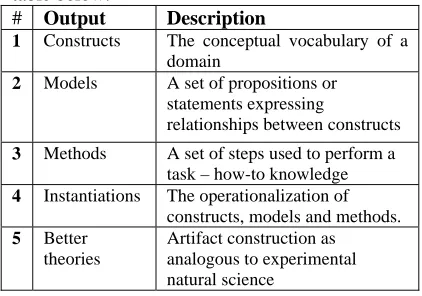
The outputs of Design Research are as in the table below:
# Output Description
1 Constructs The conceptual vocabulary of a
domain
2 Models A set of propositions or
statements expressing
relationships between constructs
3 Methods A set of steps used to perform a
task – how-to knowledge
4 Instantiations The operationalization of constructs, models and methods.
5 Better
theories
Artifact construction as analogous to experimental natural science
The Outputs of Design Research
4.0 GENERAL PRINCIPLES OF POLYGRAPH TEST QUESTION CONSTRUCTION FOR PRE EMPLOYMENT
1. Do not use legal words or terminology in -phrasing the relevant questions.
2. Do not use words or questions which
will evoke emotions by the use of that word in the relevant questions.
3. Do not use compounded questions or make issue assumptions in any relevant question. 4. Do not use "state of mind" or mental or
emotional type of questions where they can be avoided.
5. Questions should be short, to the point, clear and easily understood by the examinee. 6. Questions should be worded on a level that
the Examinee clearly understands. 7. Questions should not be asked about conditions that might be changed.
8. Make sure that the relevant question cover both direct, secondary involvement, and evidence connecting issues.
9. When forming the relevant questions, always make sure the case information and facts are absolutely accurate. 10. Make sure the issue has enough meaning
to the subject so that he or she will fear the consequences of deception.
11. Make sure the relevant issues are clearly stated and set fourth in the questions.
4.1 AREAS COVERED IN POLYGRAPH PRE EMPLOYMENT TEST AND TEST QUESTION CONSTRUCTIONS 1. Alcohol Use Scale Score
Will drinking interfere with his work or attendance?
Eg. Have you ever been drunk while working? Have you ever been drunk while driving?
2. Computer Abuse Score
Is he using the computer that are unrelated to work activities?
Eg. Have you ever serve a pronographic site in the internet?
Have you ever purposely send email with virus program?
3. Credibility Scale Score
Is he trying to beat the test by deliberately lying?
Eg. Have you ever lied to cover up someone? Have you ever open a personal file without
authorization?
4. Customer Service Scale Score
Will he encourage your customer to return or drive them away?
Eg. Have you ever misled a potential customer? Have you ever turn away any potential
customer?
5. Fundamental Data Scale Score
Is he hiding recent criminal behavior, debts problems or absenteeism?
Eg. Have you ever been arrested by any enforcement authority?
Have you disclosed all your activities in this interview?
6. Illegal Drug Use Scale Score
Does he currently use illegal drugs? Eg. Have you ever smoke grass (marihuana)? Have you ever taken drugs without doctor's
prescription?
7. Sexual Harassment Scale Score
Is he causing problems to opposite sex through remarks, jokes or offensive behaviors?
Eg. Have you ever fondle someone’s private parts?
Have you ever send any sexual message through email?
8. Theft Propensity Scale Score
Will he steal from the company? Eg. Have you ever taken anything of value
from your employer? Have you ever shoplifted?
9. Work Attitudes Scale Score
Will he get along with his supervisors and co-workers?
Eg. Have you ever been late to work?
Have you ever left your post unattended?
10. Work History Scale Score
Is he being truthful about past jobs and reasons for leaving?
Eg. Have you ever been fired from a job? Have you ever been asked to leave your job?
4.2 Example of Employment Questions:
1. Have you been truthful about all of the places you have worked?
2. Have you had any other jobs which you have not listed on your application for employment?
3. Did you receive any salary (pay) from any other place of employment which is not listed on your application?
4. Are you trying to conceal any information about any place you have worked? 5. Have you worked any place else which is
not listed on this application?
6. Have you failed to list on your application even one other place where you worked?
4.3 Reason For Leaving Place of Employment:
1. Have you ever been fired (terminated) from any place you worked?
2. Did you ever quit any job without giving proper notice?
name) on good terms?
5. Are you being totally truthful about why you left your last job?
6. Did you leave any (your last) job for the reasons you have stated? 7. Have you ever been told not to come
back at any place you worked?
4.4 Scoring And Ranking of Polygraph Data Sets
All questions are discussed with the subject thoroughly before the test commences and will be answered “Yes" or “No".
The data sets from polygraph pre employment testing will used Johns Hopkins University (JHU)/Applied Physics Laboratory (APL) Polyscore scoring algorithm to scored and ranked using scales of 1 to 10 to the answers of the polygraph questions.
5.0 POLYGRAPHIC COUNTER PRODUCTIVE BEHAVIOR INDEX PROFILE SCORES
1. Alcohol Use Scale Score
Low scorers have no problems with Alcohol Use. High scorers report substantial use of alcohol and may be disruptive.
2. Computer Abuse Score
Low scorers have no problems with Computer Abuse at workplace. High scorers report substantial computer abuse and may disrupt working environment.
3. Credibility Scale Score
Low scorers have no problem with Customer Service at workplace. High scorers have the potential for dishonest behavior in the workplace.
4. Customer Service Scale Score
Low scorers have no problem with Credibility at workplace. High scorers have the potential for dishonest behavior in the workplace.
5. Fundamental Data Scale Score
Low scorers have no problem with Fundamental Data and workplace dishonesty. High scorers have the potential for dishonest behavior in the workplace.
6. Illegal Drug Use Scale Score
Low scorers have no problems with Illegal Drug Use. High scorers report substantial use of illegal drugs and may be disruptive.
7. Sexual Harassment Scale Score
Low scorers have no problems with Sexual Harassment involvement activities. High scorers report substantial involvement with sexual harassment activities.
8. Theft Propensity Scale Score
Low scorers have no problem with Theft activity. Low scorers are honest, dependable and reliable. High scorers can be dishonest,
undependable and high involvement in theft activity.
9. Work Attitudes Scale Score
Low scorers have no problem with Work Attitudes and workplace dishonesty. High scorers have the potential for dishonest behavior in the workplace.
10. Work History Scale Score
Low scorers have no problem with Work History and workplace dishonesty. High scorers have the potential for dishonest behavior in the workplace.
6.0 POLYGRAPHIC COUNTER PRODUCTIVE BEHAVIOR INDEX PROFILING SYSTEM
The system built is a web-based system using php as the programming language and mysql as the database. The system has the capability to automatically tabulate the scoring of each attribute and tabulating it as either little or no concern (Angel), normal concern (Human) or serious concern (Devil). Besides that it has the capability of producing radar chart according to the scores of the attributes.
The system records data and serve as a repository of polygraphic counterproductive behavior index profile.
6.0 CONCLUSION
Further analysis need to be studied whether the polygraphic counterproductive behavior index profiling system built meets all evaluation criteria of the design research information system framework. The system need further to be evaluated by polygraph practitioners.
REFERENCES
Bies, R. J., Tripp, T. M.,&Kramer, R.M. (1997). At the breaking point: Cognitive and social dynamics of revenge in organizations. In R. A. Giacalone & J. Greenberg (Eds.), Antisocial behavior in organizations (pp. 18–36). Thousand Oaks, CA: Sage.
Carroll, J., and Kellogg, W. (1989). Artifact as Theory Nexus: Hermeneutics Meets Theory-Based Design. In Proceedings of CHI '89, ACM Press
Fox, S., & Spector, P. E. (1999). A model of work frustration-aggression. Journal of OrganizationalBehavior, 20, 915–931. Giacalone, R. A., & Greenberg, J. (1997).
Antisocial behavior in organizations. Thousand Oaks, CA: Sage.
Gregg, D., Kulkarni, U. and Vinze, A. (2001). "Understanding the Philosophical
Underpinnings of Software Engineering Research in Information Systems."
Information Systems Frontiers 3(2): 169-183. Hevner, A., March, S., Park, J. and Ram, S.
(2004). "Design Science in Information Systems Research." MIS Quarterly 28(1): 75-105.
Hogan, J., & Hogan, R. (1989). How to measure employee reliability. Journal of Applied Psychology, 74, 273–279.
Hollinger, R. C. (1986). Acts against the workplace: Social bonding and employee deviance. Deviant Behavior, 7, 53–75. Knorz, C., & Zapf, D. (1996). Mobbing—Eine
extreme Form sozialer Stressoren am Arbeitsplatz,[Mobbing—An extreme form of social stressors in the workplace]. Zeitschrift fuer Arbeits- und Organisationspsychologie, 40, 12–21.
Lakatos, I. (1978) The Methodology of Scientific Research Programmes (John Worral and Gregory Currie, Eds.), Cambridge, Cambridge University Press.
March, S. and Smith, G. (1995). "Design and Natural Science Research on Information
Technology." Decision Support Systems 15 (1995): 251 - 266.
Newell, A. (1990). Unified Theories of Cognition. Cambridge, Mass. USA, Harvard University Press.
Neuman, J. H., & Baron, R. A. (1998). Workplace violence and workplace aggression: Evidence concerning specific forms, potential causes, and preferred targets.
Journal of Managements, 24, 391–419. Nunamaker, J., Chen, M. and Purdin, T. (1991).
“System Development in Information Systems Research.” Journal of Management
Information Systems, 7:3, pp. 89 – 106. Purao, S. (2002). “Design Research in the
Technology of Information Systems: Truth or Dare.” GSU Department of CIS Working Paper. Atlanta
Richard I. Lanyon, Leonard D. Goodstein (2004) Validity and Reliability of a Pre-Employment Screening Test: The Counterproductive Behavior Index (CBI) Journal of Business and Psychology New York: Summer 2004. Vol. 18, Iss. 4, p. 533-553
Robinson, S. L., & Bennett, R. J. (1995). A typology of deviant workplace behaviors: A multidimensional scaling study. Academy of Management Journal, 38, 555–572.
Simon, H. (1996). The Sciences of the Artificial, Third Edition. Cambridge, MA, MIT Press. Skarlicki, D. P.,&Folger, R. (1997). Retaliation
in the workplace: The roles of distributive, procedural, and interactional justice. Journal of Applied Psychology, 82, 434–443. Spector, P.E.., & Fox, S.. (In Press). An
emotion-centered model of voluntary work behavior: Some parallels between
counterproductive behavior (CWB) and organizational citizenship behavior (OCB). Human Resource Management Review. Temple, Warwick. (1994) Human resource