GOYAL, AMIT. Computer Simulation Studies of Self-Assembly of Dipolar and Quadrupolar Colloid Particles. (Under the direction of Carol K. Hall and Orlin D. Velev).
Colloidal particles with directional interactions that self-assemble into pre-defined structures have the potential to serve as the foundation for a new generation of micro- and nano-structures of remarkable complexity and precision. Dipolar colloid particles tend to align end-to-end and self-assemble into variety of micro- and nano-structures ranging from co-crystals of novel symmetry, to open networks (gels) of cross-linked chains of particles. Quadrupolar colloid particles also tend to self-assemble in a wide variety of structural motifs including sheets, tubes and shells depending upon external conditions. We use molecular dynamics computer simulation to explore the self-assembly, structure, crystallization and/or gelation of systems of colloid particles with permanent dipole moments or quadrupole moments immersed in a high-dielectric solvent. Particle-particle interactions are modeled with discontinuous potentials in order to take advantage of discontinuous molecular dynamics (DMD), a fast simulation technique that is very computationally efficient.
We first calculate the phase diagram in the temperature-packing fraction plane of a monodisperse system of dipolar colloid particles using DMD. Several types of phases are found in our simulations: ordered phases including face centered cubic (FCC), hexagonal close packed (HCP) and body centered tetragonal (BCT) at high packing fractions, and fluid, string-fluid and gel phases at low packing fractions. The very low volume fraction gel phases and the well ordered crystal phases are promising for advanced materials applications.
upon size ratio and dipole moment ratio. An interesting aspect of these phase diagrams is the appearance of co-crystals containing large and small dipolar colloid particles. Even more interesting is the appearance of two unique bicontinuous gel structures - the first gel consists of two independent but interpenetrating networks of cross-linked chains formed by particles with high dipole moment and chains formed by particles with low dipole moment. The second type of gel consists of a network of cross-linked chains formed by particles with high dipole moment; particles with low dipole moment form a sheath around the chains. Such bicontinuous gels may have unusual rheological and transport properties such as multiple yield stresses and multiple percolation temperatures and could form the basis of a new class of soft-solid materials with unique properties and multiple applications.
by Amit Goyal
A dissertation submitted to the Graduate Faculty of North Carolina State University
in partial fulfillment of the requirements for the Degree of
Doctor of Philosophy
Chemical Engineering
Raleigh, North Carolina
2009
APPROVED BY:
_______________________________ ______________________________ Carol K. Hall Orlin D. Velev
Chair of Advisory Committee Co-chair of Advisory Committee
_______________________________ ______________________________ Keith E. Gubbins Donald W. Brenner
Dedication
Biography
Acknowledgements
It is my pleasure to acknowledge all the people who have contributed their wisdom, support and encouragement towards the completion of this dissertation.
I would like to thank my advisors Professor Carol Hall and Professor Orlin Velev for their insight, vision, passion and enthusiasm that started and propelled this project to its current state. I am grateful to them for being my mentors both in career directions and personal matters. Professor Hall is devoted to advising her graduate students and I am grateful to be one of them. Professor Velev’s enthusiasm, insights and persistence made this research possible.
I would like to thank the Chemical Science Division of the U. S. Department of Energy for the financial support that made this research possible.
I would like to thank the Hall research group, past and present, for providing a dynamic and enjoyable work environment. I would like to thank my fellow system administrators Andrew Schultz, Alex Marchut, Arthi Jayaraman, Aysa Akad, Victoria Wagoner, Johnny Maury-Evertsz and Ravish Malik, for all the hard work, time and energy they put into keeping the computer network up and running. I feel especially indebted to Steve Smith and Andrew Schultz for developing the simulation method and efficiency techniques that I have used extensively in my research.
I would like to thank Professor Keith Gubbins and Donald Brenner for serving on my committee and for their advice on my research. I would also like to thank the faculty and staff of NCSU’s Chemical and Biomolecular Engineering Department for everything they’ve done for me over the past five and half years.
Table of Contents
List of Tables ... viii
List of Figures ... ix
Chapter 1. Introduction...1
1.1. Motivation ...1
1.2. Overview ...3
1.3. References ...7
Chapter 2. Phase diagram for stimuli-responsive materials containing dipolar colloid particles ...8
2.1. Introduction ...8
2.2. Methods and Simulations ...11
2.3. Results and Discussion ...14
2.3.1. Phase Diagram for System of Dipolar Particles ...14
2.3.2. Effect of Location of Dipole Moment ...17
2.4. Summary ...18
2.5. Acknowledgement ...20
2.6. References ...21
2.7. Figures ...28
Chapter 3. Computer Simulation of Aggregation in Binary System of Dipolar Colloid Particles ...39
3.1. Introduction ...39
3.3. Results and Discussion ...51
3.3.1. Phase Behavior at (σa /σb = 1.0, μa/μb = 1.0) ...51
3.3.2. Phase Behavior at (σa /σb = 0.85, μa/μb = 1.0) ...52
3.3.3. Phase Behavior at (σa /σb = 0.414, μa/μb = 1.0) ...53
3.3.4. Phase Behavior at (σa /σb = 1.0, μa/μb = 0.50) ...54
3.4. Conclusion ...55
3.5. References ...59
3.6. Figures ...68
Chapter 4. Responsive Bicontinuous Gels Formed by Self-Assembly of Dipolar Colloid Particles ...82
4.1. Introduction ...82
4.2. Results and Discussion ...86
4.3. Summary ...89
4.4. Model and Simulation Mathods ...90
4.5. References ...92
4.6. Figures ...97
Chapter 5. Computer Simulation Studies of Aggregation in Quadrupolar Colloid Particles ...103
5.1. Introduction ...103
5.2. Model and Simulation Methods ...107
5.3. Results and Discussion ...112
5.4. Conclusion ...116
5.5. References ...118
5.6. Figures ...127
List of Tables
List of Figures
Chapter 1 Introduction...1
Chapter 2 Phase diagram for stimuli-responsive materials containing dipolar colloid particles ...8
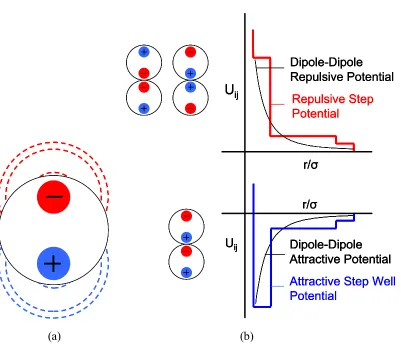
Figure 2.1. Representation of dipolar particle. (a) Each sphere represents a dipolar particle with two oppositely charged small spheres embedded in it. (b) Spheres of like charge repel each other. Spheres of unlike charge attract each other ...30
Figure 2.2. Dipolar interaction energy, ij = 13(→i⋅ →j)− 35(→i⋅r→ij)(→j⋅r→ij)
r r
U between
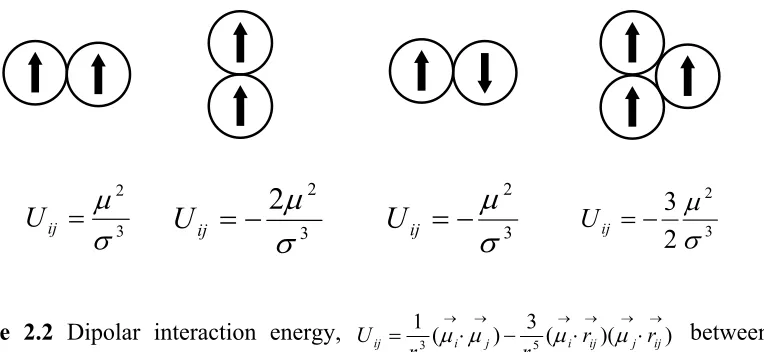
particles i and j for different configurations. The particles have dipole moment µ and diameter σ ...31
μ μ μ
μ
*
/T
*
Figure 2.3. Phase diagram for dipolar colloid particles in the packing fraction (η) – inverse temperature (1 ) plane ...32
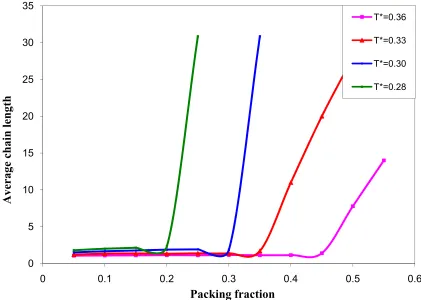
Figure 2.4. Average chain length distribution at T =0.28, 0.30, 0.33 and 0.36 at different ηvalues ...33
Figure 2.5. Biggest cluster size versus packing fraction, η, at T*=0.19, 0.21, 0.23, 0.25 and 0.27 ...34
Figure 2.6. Snapshot showing transition from fluid to gel-like open network at η
° ° ° °
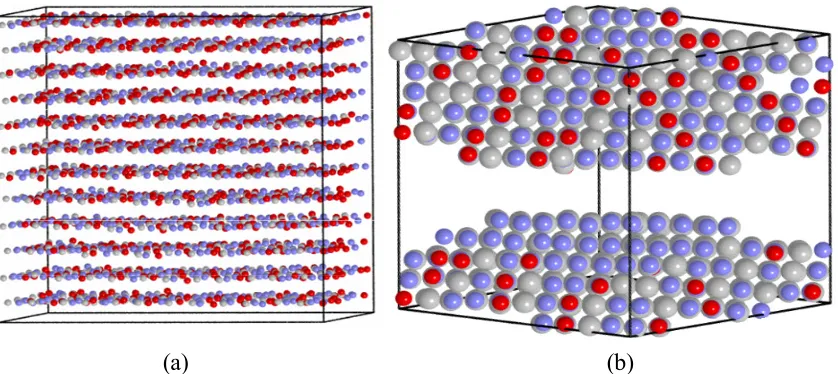
Figure 2.7. (a) Dipolar colloid particles packed hexagonally in each sheet with different sheets arranged in A-B-A-B-.. type hexagonal close packing. (b) Dipolar colloid particles arranged in body centered tetragonal structure...36
Figure 2.8. Schematic representation of a colloidal particle with displaced dipole moment. The angle of displacement, Ψ dictates the size of the self-assembled ring structure ...37
Figure 2.9. Ring-structures formed by self-assembly of displaced dipolar colloid particles at angle of displacement, Ψ equal to (a)90 , (b) 120 , (c) 165 and (d) 175 ...38
Chapter 3 Computer Simulation of Aggregation in Binary System of Dipolar Colloid Particles ...39
Figure 3.1. Representation of dipolar particle and interaction potential. (a) Each sphere represents a dipolar particle with two oppositely charged small spheres embedded in it. (b) Spheres of like charge repel each other through a three step square-shoulder potential. Spheres of unlike charge attract each other through a three step square-well potential ...71
Figure 3.2. Dipolar interaction energy, ij = 13 (→i⋅ →j)− 35(→i⋅r→ij)(→j⋅r→ij)
r r
U between
particles i and j for different configurations. The particles have dipole
moment
μ μ μ
μ
i
μ , μjand diameter σi, σj. σij is defined as 2 i j σ σ+
...72
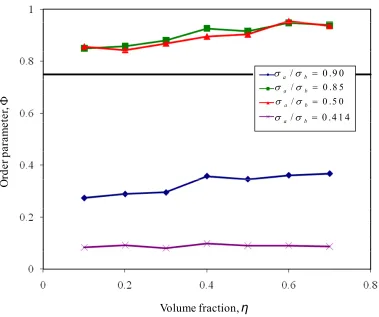
Figure 3.3. Dimensionless order parameter Φ as a function of the volume fraction,
/ 1 .0
a b
threshold dividing homogeneous mixture (below) from state of two phase (above) ...73
Figure 3.4. Snapshots of binary mixtures of dipolar colloid particles showing (a) monodisperse system for σ σ = and μa /μb = 1 .0
/
a b
at T* = 1.0 and η = 0.50, (b) demixing of large and small particles into two BCT phases for σ σ = 0 .8 5and μa /μb =1 .0 at T* = 0.15 and η = 0.50, (c) a homogeneous mixture of large and small particles for
/
a b 0 .4 1 4
σ σ = and μa / μb = 1 .0at T* = 0.15 and η = 0.50, (d) demixing of particles with large and small dipole moment into two BCT phases and large voids for σ a /σb = 1 .0and μa /μb = 0 .5 at T* = 0.15 and η = 0.40. Red and blue spheres represent the two different species of binary mixture ...74
Figure 3.5. Phase diagram for a monodisperse system of dipolar colloid particles at
/ 1 .0 , / 1 .0
a σ b = μa μb = in the volume fraction (
σ η) – inverse
temperature (1/T*) plane ...75
Figure 3.6. Phase diagram for an equimolar binary system of dipolar colloid particles at σ a /σ b = 0 .8 5 , μa /μb = 1 .0 in the volume fraction (η
) – inverse temperature (1/T*) plane ...76
0
Figure 3.8. Arrangement of large and small dipolar colloidal particles in a homogeneous mixture (Φ = ) for σ σa/ b =0.414. (a) 2-D representation, (b) 3-D face centered cubic lattice of large particles with the small particles filling the holes between them ...78
Figure 3.9. Phase diagram for an equimolar binary system of dipolar colloid particles at σ a /σ b = 0 . 4 1 4 , μa / μb = 1 .0 in the volume fraction
(η) – inverse temperature (1/T*) plane ...79
Figure 3.10. Phase diagram for an equimolar binary system of dipolar colloid particles at σ a /σ b = 1 .0 , μa / μb = 0 .5 0 in the volume fraction (
η) – inverse temperature (1/T*) plane ...80
Figure 3.11. Snapshots of binary mixture of dipolar colloid particles showing percolated network of cross-linked chains (gel) at (a)
/ 0 .8 5 , / 1 .0
a b a b
σ σ = μ μ =
/ 1 .0 , / 0 .5 0
a b a b
. The chains contain both a and b particles in random sequence (b)σ σ = μ μ = . Two interpenetrating monodisperse networks are formed, one containing the a particles, the other containing the b particles ...81
Chapter 4 Responsive Bicontinuous Gels Formed by Self-Assembly of Dipolar Colloid Particles ...82
/ 0 .8 5, / 1 .0
a b a b
Figure 4.2. Phase diagrams for equimolar binary system of dipolar colloid particles in the volume fraction – inverse temperature plane at (a)
σ = μ μ = (b) a / b 1 .0, a / b 0 .5 0
σ σ σ = μ μ =
0°
...100
Figure 4.3. Snapshots of binary mixture of dipolar colloid particles showing percolated network of cross-linked chains (gel): (a) red and blue particles of slightly different size but same dipole moment arranged randomly in chains when system is quenched fast; (b) red and blue particles of slightly different size but same dipole moment arranged in blocks in chains when system is quenched slowly; (c) red and blue particles of same size but different dipole moment arranged in interpenetrating network; (d) blue particles (less dipolar) arranged in gel and red particles (highly dipolar) arranged in body-centered-tetragonal crystal structure ...101
Figure 4.4. Snapshots of the structures formed by binary mixture of dipolar colloid particles at three different temperatures: (a) T>TФ,high ; (b) TФ,low<T<TФ,high ; (c) T<TФ,low. The additional van der Waals component caused the particles to form a gel of complex core-sheet morphology ...102
Chapter 5 Computer Simulation Studies of Aggregation in Quadrupolar Colloid Particles ...103
180°
* / (4 5 1/ 2)
o
πε εσ
respectively. (d) Square quadrupole corresponding to the limit θ= ...129 90°
Q =Q
Figure 5.2. Typical arrangement of quadrupolar colloid particles in self-assembled 2-D sheet structure. (a) linear-quadrupole, (b) square-quadrupole ...130
Figure 5.3. (a) Representation of square-quadrupolar particle. (a) Each particle is modeled having four charged (two positive and two negative) small spheres embedded in it. (b) Spheres of like charge repel each other. Spheres of unlike charge attract each other ...131
Figure 5.4. Quadrupolar interaction energy between particles i and j in different configurations. The particles have reduced quadrupole moment,
where Q is quadrupole strength and σ is diameter ...132
Figure 5.5. A sheet-like structure self-assembled by square-quadrupolar colloid particles at η= 0.1 and T* = 0.05. (a) Top view of a representative two-dimensional sheet formed at low temperature. (b) A profile view. (c) Enlarged view showing the charge orientation within the quadrupoles arranged in a sheet ...133
Figure 5.6. Formation of sheets by self-assembly of square-quadrupolar colloid particles. (a) Top view (b) Side view ...134
Figure 5.8. Snapshots of two tubular structure of different diameters and lengths formed by self-assembly of colloid particles with displaced quadrupole moment ...136
Figure 5.9. (a) Snapshots of the system of colloid particles with displaced quadrupole moment at various times during a simulation at volume fraction, η = 0.1 that results in the formation of a tube. The system is quenched at very slow rate of cooling from temperature, T* = 2.0 at time, t* = 0 to T* = 0.05 at t* = 198.6 ...137
Chapter 6 Conclusion and Future Directions ...138
Chapter
1
Introduction
1.1 Motivation
The search for new functional materials with precise and reconfigurable nano- and meso-scale reproducible structures is a major theme of current science [1]. Self-assembly provides a route for “bottom up” fabrication of such structures [2]. Anisotropically interacting particles particularly dipolar and quadrupolar particle are of particular interest in this regard because they can be expected to form complex structures with novel properties [3]. The type of structure observed is ultimately governed by the energetic interactions between the particles. The question arises as what structures are favored by what interactions, and whether interactions can be chosen or manipulated in order to produce a particular target structure. The scientific community’s desire to provide definitive answers to these questions is growing stronger as new methods for exerting control over the shape and nature of the interactions between molecular and colloidal building blocks are developed. The motivation for seeking deeper understanding in these areas is, of course, the desire to design novel materials and supramolecular structures with unusual and useful properties.
nanostructures. As pointed out by many authors, inspiration for this idea comes from the vast array of self-assembled structures that we observe in living matters including pseudo one-dimensional filaments, two-dimensional membranes, tube-like channels and pores, and shell-like capsules. The most likely candidates for self-assembled nanostructures are those based on non-spherical particles or anisotropically interacting particles [4]. Kinetic considerations are crucial for successful self-assembly, the most important requirements for target structures are that they are energetically stable and kinetically accessible. The logical starting point is therefore to design building blocks with attractive and/or repulsive sites in geometries which are compatible with target structures. Three dimensional structures, such as crystals, percolated gels, sheets, as well as discrete objects, such as tubes, could be produced this way.
Anisotropic interacting particles can be fabricated by inducing a non-uniform or asymmetric charge distribution in particles that remain neutral overall [5]. Such particles are ideal building blocks for the assembly of long-ranged ordered structures with increasing complexity and novel properties [6]. For example, dipolar colloidal particles, which have one positive and one negative charge, tend to form chains in which dipoles align head to toe. Quadrupolar colloidal particles, which have two positive and two negative charges, tend to assemble into two-dimensional sheets or tubular structures, depending on the orientation and location of the charges [7].
1.2 Overview
In this section, we summarize the remaining chapters of this thesis. All chapters contain their own literature review and bibliography.
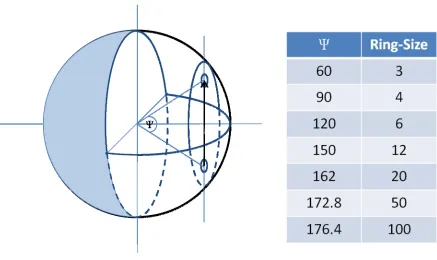
Chapter 2 describes our results for the monodisperse system of dipolar colloid particles. We use discontinuous molecular dynamics computer simulation to calculate the phase diagram in the temperature-packing fraction plane for systems of colloid particles with permanent dipole moments immersed in a high-dielectric solvent. In the limit of zero dipole moment, hard-sphere phase behavior is recovered. At high dipole moments, several different types of phases are found including face centered close packed (FCC), hexagonal close packed (HCP) and body centered tetragonal (BCT) crystal phases at high packing fractions, and fluid, string-fluid and gel phases at low packing fractions. The effects of temperature, concentration and dipole moment strength on the assembly process are explored in order to obtain the full phase behavior. We also explore the effect of location of the dipole moment in a particle by displacing the two charges from the center of the particle. A simple dipole-dipole potential is introduced to model the particles with displaced dipole moment; these systems self-organize into “colloidal molecules”. In our simulations we find dimers, trimers and tetramers at large angles of displacement and five- to fifty-particle rings at small angles of displacement. Simulations of the self-assembly of these model particles are performed using discontinuous molecular dynamics (DMD), a very rapid alternative to traditional molecular dynamics (MD), in which the forces on the particles are calculated only when discontinuities in the potential are encountered.
varying the sizes of the two species as well as their dipole moments. These systems exhibit six distinct phases: isotropic fluid, string-fluid, gel, FCC, HCP, BCT, and ten coexisting phases: Fluida + String-fluidb, Fluida + Gelb, String-fluida + Gelb, Gela + BCTb, FCCa + FCCb, FCCa + HCPb, FCCa + FCCb+ Fluid, HCPa + HCPb, BCTa + BCTb, BCTa + BCTb + large voids depending upon size ratio and dipole moment ratio. Two novel aspects of our results are the appearance of a bicontinuous gel consisting of two interpenetrating networks −one formed by chains of particles with high dipole moment and the other formed by chains of particles with low dipole moment, and co-crystals of large and small dipolar colloid particles. The bicontinuous gel and co-crystal phases found in our simulations are promising for advanced materials applications. Our results suggest that judicious choice of particle diameters could lead to the formation of very large co-crystals without defects and grain boundaries. Thus, the use of a binary system of dipolar particles instead of a monodisperse system may be the route to the formation of high quality colloidal arrays for photonic and optoelectronic applications.
Chapter 4 describes the formation of two unique bicontinuous gel structures found in our simulations. The first gel consists of two independent, but interpenetrating, networks of cross-linked chains, one formed by particles with high dipole moment and the other formed by particles with low dipole moment. The second type of gel consists of a network of cross-linked chains formed by particles with high dipole moment, while particles with low dipole moment form a sheath around the chains. Such bicontinuous gels may have unusual rheological and transport properties such as multiple yield stresses and multiple percolation temperatures and could form the basis of a new class of soft-solid materials with unique properties and multiple applications.
that gives rise to the self-organization of sheet-like and tubular structures. Particle-particle interactions are modeled with a discontinuous potential. We find that the discrete rotational symmetry of the square-quadrupolar particles give rise to extended two-dimensional undulating sheet-like structures that preserve the local symmetry within the organized structure. We then introduce a new type of anisotropic colloid particle having a displaced quadrupole moment with a unique symmetry that leads to the formation of tubular structures. The precise diameter and length of the tubes can be controlled by tuning the interactions and temperature. The self-assembly of sheet-like and tubular structures by the quadrupolar colloid particles provides a clear example of how the local symmetries of the particle potential encode information about the self-assembled structure. The formation of tubes in our simulations involves a process in which the appearance of curved sheets precedes the appearance of multiple small tubular fragments which then stick together to form a single tube. Our simulations predict the necessary angle of displacement, temperature, volume fraction and number of particles in the system for making tubes of precise diameter and length with colloidal particles.
Chapters 2-5 have been adapted from the following publications:
Chapter 2 A. Goyal, C. K. Hall, O.D. Velev, “Phase diagram for stimulus-responsive materials containing dipolar colloidal particles”, Phys. Rev. E 77, 031401 (2008), A. Goyal, C. K. Hall, O.D. Velev, “Colloidal molecule formed by self-assembly of colloid particles with displaced dipole moment” (in preparation).
Chapter 3 A. Goyal, C. K. Hall, O.D. Velev, “Computer simulation of aggregation in binary system of dipolar colloid particles” (in preparation).
1.3 References
[1] Xia, Y.N., Gates, B., Yin, Y.D., and Lu, Y., Monodispersed colloidal spheres: Old materials with new applications. Advanced Materials, 2000. 12(10): p. 693-713.
[2] Glotzer, S.C., Solomon, M.J., and Kotov, N.A., Self-assembly: From nanoscale to microscale colloids. Aiche Journal, 2004. 50(12): p. 2978-2985.
[3] Perro, A., Reculusa, S., Ravaine, S., Bourgeat-Lami, E.B., and Duguet, E., Design and synthesis of Janus micro- and nanoparticles. Journal of Materials Chemistry, 2005. 15(35-36): p. 3745-3760.
[4] Yang, S.M., Kim, S.H., Lim, J.M., and Yi, G.R., Synthesis and assembly of structured colloidal particles. Journal of Materials Chemistry, 2008. 18(19): p. 2177-2190.
[5] Lattuada, M. and Hatton, T.A., Preparation and controlled self-assembly of janus magnetic nanoparticles. Journal of the American Chemical Society, 2007. 129(42): p. 12878-12889.
[6] Ho, C.C., Chen, W.S., Shie, T.Y., Lin, J.N., and Kuo, C., Novel fabrication of Janus particles from the surfaces of electrospun polymer fibers. Langmuir, 2008. 24(11): p. 5663-5666.
Chapter
2
Phase Diagram for Stimuli-Responsive Materials
Containing Dipolar Colloid Particles
2.1 Introduction
Colloidal particles with directional interactions that self-assemble into pre-defined microstructures have the potential to serve as the foundation for a new generation of micro- and nano-structures of remarkable complexity and precision [1-8]. Suspensions of dipolar colloidal particles have attracted attention recently due to their tunable materials properties and their potential applications as storage media and display devices [9, 10]. Dipolar colloids are ideal building blocks for the assembly of long-range ordered lattices such as colloidal crystals and gels and are being explored for many intriguing applications [11-15]. For example, two-dimensional crystals of dipolar colloids could be used as arrays of microlenses in image processing and photolithography [15]. Other technological applications for these advanced materials include smart ion-sensitive gels (solid at high salt concentration, liquid at low salt concentration), water-based electrorheological fluids and colloidal liquid crystals with improved properties for applications in displays, LC thermometers and optical imaging.
surface charge and composition has been made in the last few years. For example, Cayre et al. have developed a novel technique for preparing dipolar colloid particles by microcontact printing of films of ionic surfactants onto monolayers of colloid particles [16]. Other techniques for the preparation of anisotropic particles have been based on evaporation of gold on colloid monolayers [17], and on deposition of polymers on colloids using the Langmuir-Blodgett technique [18]. Velegol and coworkers have developed a particle lithography technique for fabricating colloidal doublets or microspheres with localized nanoscale charge distribution on the surface [19-21]. Granick and coworkers used an oil-water emulsion technique to synthesize two kinds of Janus colloidal particles – dipolar particles and particles that are charged on one side and hydrophobic on the other [22]. The experimental challenges of producing large quantities of monodisperse asymmetrically-charged colloid particles and the multitude of possible structures that these particles can form make experimental study of all possible variations infeasible. Here we use computer simulation to explore the rich phase behavior (including formation, structure, crystallization and/or gelation) of materials containing dipolar colloid particles so as to guide the discovery of advanced materials in the laboratory.
the value of the dipole moment: hexagonal, centered orthorhombic and body-centered tetragonal. Molecular dynamics simulations by Blaak et al. showed that dispersions of dumbbell-shaped, dipolar colloid particles undergo a gelation transition [29].
Safran et al. used percolation theory to study the topological properties of systems with thermoreversible crosslinks including gels, microemulsions, dipolar liquids and colloids [30]. This work focused on the percolation transition, the point at which a network spanning the entire volume is formed. They found that a system of self-assembling branched chains passed through a percolation threshold at which a network spanning the entire volume was formed when the system packing fraction increased or the temperature decreased.
hs ss sw 1 1 0 hs if r
solvent. Simulations of the self-assembly of these model particles are performed using discontinuous molecular dynamics (DMD) [31, 32], a very rapid alternative to traditional molecular dynamics (MD), in which the forces on the particles are calculated only when discontinuities in the potential are encountered.
2.2 Methods and Simulations
Each particle is modeled as a hard sphere with two oppositely charged small spheres embedded in it as shown in Figure 2.1(a). The interactions between the like charge spheres are modeled using a three-step square shoulder repulsive potential and the interactions between the unlike charge spheres are modeled using a three-step square well attractive potential as shown in Figure 2.1(b). The dashed lines in Figure 2.1(a) represent the widths of the square shoulder and the square well.
The hard-sphere (U ), three-step square shoulder (U ) and three-step square
well (U ) potentials are as follows
1
( ) if r
U r σ
σ
∞ <
⎧
= ⎨ >
⎩
1 1 1 3 1
2 3 1
0 if r (1 )
2 1
1 1 2
2 2 1 1 2 2
3 2 1 2
(1 )
( ) (1 ) (1 )
(1 ) (1 )
ss
if r
if r
U r if r
if r σ ε σ λ σ ε λ σ λ σ ε λ σ λ σ ∞ < ⎧
⎪ < < +
⎪⎪
=⎨ + < < +
⎪ + < < +
⎪
λ σ
⎪ > +
1 1 1 3 1
2 3 1
0 if r (1 )
2 1
1 1 2
2 2 1 1 2 2
3 2 1 2
(1 )
( ) (1 ) (1 )
(1 ) (1 )
sw
if r
if r
U r if r
if r σ ε σ λ σ ε λ σ λ σ ε λ σ λ σ ∞ < ⎧
⎪− < <
⎪⎪
= −⎨ + < < +
⎪− + < < +
⎪
λ σ
+
⎪ > +
⎩
where r1 is the distance between colloidal particles, r2 is the distance between embedded charged small spheres, σ is the colloidal particle diameter, σ1=0.3σ is the diameter of the small charged sphere, 0.6σ is the separation between charged small spheres on the same colloidal particle. The ε1, ε2and ε3 are the interaction energies between charged spheres and the λ1, λ2 and λ3 are the widths of the square shoulder and square well. We chose a reference interaction strength of ε* = μ2/σ3 and will refer to the reduced parameters for the interaction strengths as ε1*=ε ε1/ *, ε2*=ε ε2/ * and
3* 3/ *
ε =ε ε . The system packing fraction is defined as , where V is the box volume and N is the number of colloid particles in the system. The reduced temperature is defined as T k
3/ 6
N
η π σ= V
*= BT/ *ε , where kB is the Boltzmann constant and is
the temperature.
T
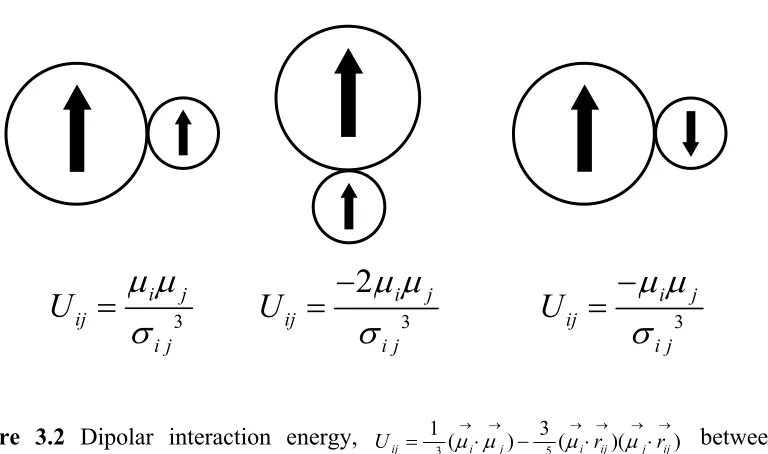
The dipole-dipole discontinuous potential is chosen to match standard expressions
for the interaction energies, ij = 13(→i⋅ →j)− 35(→i⋅r→ij)(→j⋅r→ij)
r r
U μ μ μ μ between dipolar
particles i and j when they are in the configurations shown in Figure 2.2. The values of the square shoulder and the square well width parameters are λ1 = 0.500, λ2 = 1.887, λ3 = 2.333 and the values of the interaction energy parameters are ε1* = 2.000,
2*
ε = 1.500, ε3* = 0.333.
particles collide when they arrive at a discontinuity in the potential, that is, the hard-sphere diameter or the square-well width. Between collisions, particles move with linear trajectories, making DMD simulations much faster than traditional molecular dynamics simulations with continuous potentials which require a small integration time step. The postcollision velocities of particles in DMD are found by solving the collision dynamics equations analytically. To simulate chains of spheres effectively, Rapaport introduced bonds between spheres by limiting the distance between adjacent beads to be between σ and σ(1+δ), where δ is the bond extension parameter [33]. Later, Bellemans modified this model so that the distance between adjacent spheres must lie between σ(1-δ/2) and σ(1+δ/2) which makes the average bond length equal to σ [34]. We used the Bellemans model in our simulations to ensure that the dipole always passes through the centre of the colloid particle. The value of δ in our simulations is 0.04.
Since we are interested in simulating at constant temperature, we use discontinuous canonical molecular dynamics (DCMD) [35-39], an adaptation of the standard microcanonical ensemble DMD technique. The DCMD technique is based on Anderson’s stochastic collision method [35] and involves stochastic interactions of the system particles with imaginary constant-temperature heat bath particles. We assume that the system is immersed in a constant-temperature heat bath containing imaginary “ghost” particles. The ghost particles stabilize the system temperature by colliding with the system particles, resulting in the reassignment of particles velocities according to a Maxwell-Boltzmann distribution about the required temperature. Details of the DCMD method have been described by Gulati et al. [36] and by Zhou et al. [37-39].
* different directions and then changes the box lengths to values that minimize the free energy of the system while maintaining constant density. The reduced pressure (P ) in our simulations is calculated using the virial theorem.
3
3 3
*
ij
3
j coll
m
r v
P
N
P
σ
σ
σ
B B
k T
V
Vk Tt
Δ
=
=
−
∑
G
G
where m is the mass of each particle rij is the distance between colliding particles
and j , Δvj=−Δvi is the velocity change for particle j ,
∑
i coll
t
refers to a sum
over all collisions, and is the elapsed simulation time.
2.3 Results and Discussion
2.3.1 Phase Diagram for System of Dipolar Particles
To locate the transition between a fluid and a string-fluid, the average chain length distribution at different packing fractions, η for different reduced temperatures T*is calculated. This is plotted in Figure 2.4.The transition is defined to occur at the reduced temperature and packing fraction at which the average chain length, <n> increases, dramatically. The average chain length drastically increases from 3 particles to approximately 30 particles at different packing fractions depending on the temperature, indicating that a sharp transition occurs between a fluid and a string-fluid at that packing fraction.
To locate the percolation transition between a string-fluid and a gel, the cluster size distribution at different packing fractions, η for different reduced temperatures, T* is calculated [30]. The number of particles in a cluster is calculated as follows [43, 44]. If the distance between particle A and particle is smaller than the square-well width, we define particles
B
A and to be in the same cluster, say . If we also find particles and in the same cluster, we then consider particles
B Mi
B C A,
and to be in the same cluster, . Doing this for all particles in the system, we
obtain a list of the particles in each cluster and hence the number of particles in each cluster, the cluster size. A plot of the largest cluster size versus
B C Mi
i M
η is presented in Figure 2.5. The string-fluid to gel transition is defined to occur at the reduced temperature and packing fraction at which the largest cluster size increases abruptly. The size of the largest cluster shows a rapid jump from 5 particles to approximately 840 particles at different packing fractions depending on the temperature, indicating a sharp percolation transition from a system with a large number of small clusters to a system with one big percolating cluster (a gel).
A series of snapshots of the system as temperature decreases through the string-fluid gel transition at η = 0.10 is illustrated in Figure 2.6. The system is a string-fluid at T* = 0.21 and is a network of cross-linked chains at T* = 0.19; hence the percolation transition occurs between of T* = 0.21 and T* = 0.19. As temperature
4 Q6 W4 6
Crystal Q6 Q4 W6 W4
decreases from T* = 0.19 to T* = 0.15, pore size increases due to coarsening of the gel into thicker strands.
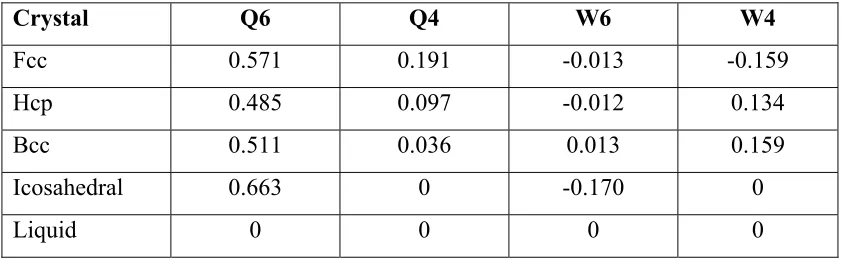
The hexagonal close packed (HCP), body centered tetragonal (BCT) and face centered close packed (FCC) crystal phases for the dipolar colloid particle systems are located by calculating the three-dimensional bond orientational order parameters and W. The 3-d bond orientational parameters are sensitive to the degree of crystallinity in the system. To calculate these parameters, we use a method proposed by Steinhardt and coworkers [45, 46] in which the type of packing in a crystal is identified by matching the values of the four parameters Q , , andW to the standard values for common crystals presented in Table 2.1. Figure 2.7 shows snapshots from our simulation of the arrangement of dipolar colloid particles in HCP and BCT structures. The results indicate that the judicious choice of conditions could lead to the formation of very large crystals without defects and grain boundaries. Thus, the use of dipolar particles instead of microspheres may be the route to the formation of high quality colloidal arrays for photonic and optoelectronic applications.
Q
Table 2.1: Values of the 3D bond orientational order parameters for some common 3D crystals
Fcc 0.571 0.191 -0.013 -0.159
Hcp 0.485 0.097 -0.012 0.134
Bcc 0.511 0.036 0.013 0.159
Icosahedral 0.663 0 -0.170 0
Liquid 0 0 0 0
intermediate temperatures and nearly all particle volume fractions. The gel phase
h nd soft- sp stems wi ced
dipole moments studied by Hynninen et al. [23, 24]. The high propensity of the dipolar particles for gelation even at very low volume fractions can be attributed to
of dipo ns by the p cles. A furt ortant aspect of the gelation process is the coarsening of the gel into thicker strands separated by large pores at low temperatures. This implies that the porosity, permeability and mechanical stability of dipolar self-assembled particulate materials can be controlled
y tuning the interactions and temperature. Characterizing the degree of porosity and des
; the particles have a tendency to roll up into rings. We
lacement. The diameter of rings depends on the angle of displacement Ψ; as Ψ decreases the diameter of the ring also
found here has not been seen for the ard- a here sy th indu
the formation lar chai arti her imp
b
igning a means to control materials properties will be the subject of a future work.
2.3.2 Effect of Location of Dipole Moment
In this section, the effect of the location of the dipole moment within a colloid particle on system self-assembly is explored by displacing the two charges from the center of particle. Such a system has not been realized experimentally, but could be within experimental reach in a few years given the rapid progress in the precise fabrication of “Janus” particles. The two charged small spheres are displaced by an angle Ψ as shown in Figure 2.8. The angle of displacement, Ψ is equal to 180° for the case of perfect dipolar particles that we have discussed so far. When Ψ is less than
180°
ring
observe various size s in our simulations depending upon the angle of disp
s is the appearance of a percolated gel phase at intermediate temperatures and nearly all particle volume fractions. The advantage of
otential model presented here is that it allows for rapid evaluation of the possibilities for using dipolar colloidal particles in advanced materials app
the density and
2.4 Summary
In summary, we mapped out the phase behavior of colloid particles with permanent dipoles immersed in a high dielectric solvent in the temperature - packing fraction plane using molecular dynamics simulation. The discontinuous potential model used here describes Janus particles fairly accurately. Our results are in qualitative agreement with the results published by Sear [41], Camps et al. [42] and Hynninen et al. [23, 24]. The most important aspect of our phase diagram that is also relevant for true dipolar system
the discontinuous p
lications based on phase behavior. It can easily be extended to more complex systems including binary mixtures of dipolar particles or quadrupolar particles. The disadvantages are that it does not consider multi body effects (meaning each dipole can only interact with one other dipole at a time) and is relatively short ranged compared to the 1/r3 potential in a true dipolar system. It mimics the actual dipolar interaction better at high densities than at low densities, hence our results are more accurate for dipolar systems at high densities than at low densities.
tem
alt or surfactant solution. A variety of other environmentally-sensitive smart materials could be fabricated from suc
perature at which the type of structure present changed. A consequence of this approach is that the locations of the boundaries on either side of the FCC+fluid region may be less accurate than the other boundaries and the seemingly second-order phase transitions that we have drawn for the BCT with large voids to BCT may be first-order transitions. The question raised in 1993 by Caillol, “are the dipoles able to induce a liquid-gas transition in the dipolar hard sphere fluid?,” [47] cannot be addressed in our simulations because we do not accurately account for the long range of the interaction. It is well known that increasing the range of a potential can cause a gas-liquid transition with a critical point that is metastable with respect to a solid-fluid transition to become stable, resulting in gas, liquid and solid phases [48]. We have seen no evidence for a gas-liquid transition with a critical point within our fluid domain at moderate temperature. Evidence to date presented in the literature indicates that such a transition does not exist for dipolar hard spheres [49, 50] although it has been seen for the Stockmayer fluid (Lennard Jones plus dipolar potential) [51, 52]. Based on these observations we believe that even if we were better able to account for the long range of the dipole- dipole potential, we would not find a gas-liquid transition with a critical point at low density.
Our results help establish, for example, optimal conditions for making sensitive responsive gels using dipolar colloid particles. The particles that we simulate could be used in rapidly-settling gels of low particle volume fractions or in dipolar crystals, which are more robust than crystals formed by uniform spheres. The high sensitivity of dipolar interactions to the ionic concentration in dispersing media means that gels and crystals thus created would be highly responsive to changes in salt, pH, or concentration of ionic adsorbing species. This could allow the systems to be gelled and un-gelled by adding a small volume of acidic, basic, s
2.5 Acknowledgements
.6 References
] Cayre, O., Paunov, V.N., and Velev, O.D., Fabrication of asymmetrically coated colloid particles by microcontact printing techniques. Journal of Materials Chemistry, 2003. 13(10): p. 2445-2450.
] Martinez, C.J., Liu, J.W., Rhodes, S.K., Luijten, E., Weeks, E.R., and Lewis, J.A., Interparticle interactions and direct imaging of colloidal phases assembled from microsphere-nanoparticle mixtures. Langmuir, 2005. 21(22):
[3] Noble, P.F., Cayre, O.J., Alargova, R.G., Velev, O.D., and Paunov, V.N.,
[4] Hu, W.B. and Frenkel, D., Polymer crystallization driven by anisotropic
[5] Solomon, M.J., and Kotov, N.A., Self-assembly: From nanoscale to microscale colloids. Aiche Journal, 2004. 50(12): p. 2978-2985.
[6]
iety, 2005. 229: p. U724-U725.
[7]
versity in binary nanoparticle superlattices. Nature, 2006. 439(7072): p. 55-59.
2
[1
[2
p. 9978-9989.
Fabrication of "hairy" colloidosomes with shells of polymeric microrods. Journal of the American Chemical Society, 2004. 126(26): p. 8092-8093.
interactions. Interphases and Mesophases in Polymer Crystallization Iii, 2005. 191: p. 1-35.
Glotzer, S.C.,
Douglas, J.F. and Van Workum, K., Symmetry, equivalence and molecular self-organization. Abstracts of Papers of the American Chemical Soc
nanoparticle crystals with a diamond-like lattice. Science, 2006. 312(5772):
[9] n, M.J., Anisotropy of building blocks and their assembly into complex structures. Nature Materials, 2007. 6(8): p. 557-562.
[10]
a model of supermolecular self-organization. Physical Review E, 2005. 71(3): p. 031502.
[11]
ic colloidal crystals of oppositely charged particles. Nature, 2005. 437(7056): p.
[13] tt, B.S., Gilbert, R.G., and Zukoski, C.F.,
Synthesis of anisotropic nanoparticles by seeded emulsion polymerization.
[14] K.P., Christova, C.G., Dullens, R.P.A., and van Blaaderen, A., Layer-by-layer growth of binary colloidal crystals. Science, 2002. 296(5565): [8] Kalsin, A.M., Fialkowski, M., Paszewski, M., Smoukov, S.K., Bishop,
K.J.M., and Grzybowski, B.A., Electrostatic self-assembly of binary
p. 420-424.
Glotzer, S.C. and Solomo
Van Workum, K. and Douglas, J.F., Equilibrium polymerization in the Stockmayer fluid as
Xia, Y.N., Gates, B., Yin, Y.D., and Lu, Y., Monodispersed colloidal spheres: Old materials with new applications. Advanced Materials, 2000. 12(10): p. 693-713.
[12] Leunissen, M.E., Christova, C.G., Hynninen, A.P., Royall, C.P., Campbell, A.I., Imhof, A., Dijkstra, M., van Roij, R., and van Blaaderen, A., Ion
235-240.
Mock, E.B., De Bruyn, H., Hawke
Langmuir, 2006. 22(9): p. 4037-4043.
Velikov,
[15]
aterials Science & Engineering R-Reports, 1996. 17(2): p. 57-103.
00. 16(21): p. 7882-7886.
. 4630-4635.
[19]
ublets by a salting out-quenching-fusing technique. Langmuir, 2006. 22(22): p. 9135-9141.
[20]
ssembly of colloids by particle lithography. Langmuir, 2005. 21(11): p. 4813-4815.
[21]
lloids: Size control, stability, and multilayers. Langmuir, 2007. 23(17): p. 9069-9075.
[22]
antity. Langmuir, 2006. 22(23): p. 9495-9499. Parthasarathy, M. and Klingenberg, D.J., Electrorheology: Mechanisms and models. M
[16] Cayre, O., Paunov, V.N., and Velev, O.D., Fabrication of dipolar colloid particles by microcontact printing. Chemical Communications, 2003(18): p. 2296-2297.
[17] Nakahama, K., Kawaguchi, H., and Fujimoto, K., A novel preparation of nonsymmetrical microspheres using the Langmuir-Blodgett technique. Langmuir, 20
[18] Fujimoto, K., Nakahama, K., Shidara, M., and Kawaguchi, H., Preparation of unsymmetrical microspheres at the interfaces. Langmuir, 1999. 15(13): p
Yake, A.M., Panella, R.A., Snyder, C.E., and Velegol, D., Fabrication of colloidal do
Snyder, C.E., Yake, A.M., Feick, J.D., and Velegol, D., Nanoseale functionalization and site-specific a
Yake, A.M., Snyder, C.E., and Velegol, D., Site-specific functionalization on individual co
[25] Groh, B. and Dietrich, S., Crystal structures and freezing of dipolar fluids.
[26] Groh, B. and Dietrich, S., Density-functional theory for the freezing of
[27] roperties of orientationally
ordered dipolar fluids. Physical Review E, 1996. 53(3): p. 2509-2530.
[28] onal Order in Dipolar
Fluids. Physical Review Letters, 1994. 72(15): p. 2422-2425.
[29] elation and dynamical
arrest of dipolar colloids. Epl, 2007. 78(2): p. 26002.
[30] re of
self-assembled networks. Physical Review E, 2002. 66(5): p. 051107.
[31] ystem.
Journal of Chemical Physics, 1957. 27(5): p. 1208-1209.
[32] ics .1. General
Method. Journal of Chemical Physics, 1959. 31(2): p. 459-466.
[23] Hynninen, A.P. and Dijkstra, M., Phase diagram of dipolar hard and soft spheres: Manipulation of colloidal crystal structures by an external field. Physical Review Letters, 2005. 94(13): p. 138303.
[24] Hynninen, A.P. and Dijkstra, M., Phase behavior of dipolar hard and soft spheres. Physical Review E, 2005. 72(5): p. 051402.
Physical Review E, 2001. 6302(2): p. art. no.-021203.
Stockmayer fluids. Physical Review E, 1996. 54(2): p. 1687-1697.
Groh, B. and Dietrich, S., Structural and thermal p
Groh, B. and Dietrich, S., Long-Ranged Orientati
Blaak, R., Miller, M.A., and Hansen, J.P., Reversible g
Zilman, A.G. and Safran, S.A., Thermodynamics and structu
Alder, B.J. and Wainwright, T.E., Phase Transition for a Hard Sphere S
3.
(3): p. 781-782.
[35] stant Pressure
and-or Temperature. Journal of Chemical Physics, 1980. 72(4): p. 2384-2393.
[36] g square-well
diatomics: Equations of state and canonical molecular dynamics simulation.
[37] Zhou, Y.Q., Hall, C.K., and Karplus, M., First-order disorder-to-order
[38] Zhou, Y.Q., Hall, C.K., and Stell, G., Thermodynamic Perturbation-Theory
ctions. Journal of Chemical Physics, 1997. 107(24): p. 10691-10708.
[40]
of systems containing periodic structures. Journal of Chemical Physics, 2004. 120(4): p. 2049-2055.
[33] Rapaport, D.C., Molecular-Dynamics Study of a Polymer-Chain in Solution. Journal of Chemical Physics, 1979. 71(8): p. 3299-330
[34] Bellemans, A., Orban, J., and Vanbelle, D., Molecular-Dynamics of Rigid and Non-Rigid Necklaces of Hard Disks. Molecular Physics, 1980. 39
Andersen, H.C., Molecular-Dynamics Simulations at Con
Gulati, H.S. and Hall, C.K., Fluids and fluid mixtures containin
Journal of Chemical Physics, 1997. 107(10): p. 3930-3946.
transition in an isolated homopolymer model. Physical Review Letters, 1996. 77(13): p. 2822-2825.
for Fused Hard-Sphere and Hard-Disk Chain Fluids. Journal of Chemical Physics, 1995. 103(7): p. 2688-2695.
[39] Zhou, Y.Q., Karplus, M., Wichert, J.M., and Hall, C.K., Equilibrium thermodynamics of homopolymers and clusters: Molecular dynamics and Monte Carlo simulations of systems with square-well intera
[42] Camp, P.J., Shelley, J.C., and Patey, G.N., Isotropic fluid phases of dipolar
[43]
dynamics Simulations. Langmuir, 2005. 21(16): p. 7579-7587.
[44]
cular dynamics simulations. Langmuir, 2004. 20(20): p. 8559-8568.
[45] onchetti, M., Bond-Orientational Order
in Liquids and Glasses. Physical Review B, 1983. 28(2): p. 784-805.
[46] edral Bond
Orientational Order in Supercooled Liquids. Physical Review Letters, 1981.
[47] Transition of Dipolar Hard-Spheres.
Journal of Chemical Physics, 1993. 98(12): p. 9835-9849.
[48]
7. 277(5334): p. 1975-1978.
E, 1999. 60(3): p. 3183-3198.
[41] Sear, R.P., Low-density fluid phase of dipolar hard spheres. Physical Review Letters, 1996. 76(13): p. 2310-2313.
hard spheres. Physical Review Letters, 2000. 84(1): p. 115-118.
Li, Z.M. and Hall, C.K., Parametric studies of interaction strengths in polymer/CO2 systems: Discontinuous molecular
Li, Z.M. and Hall, C.K., Phase behavior in model homopolymer/CO2 and surfactant/CO2 systems: Discontinuous mole
Steinhardt, P.J., Nelson, D.R., and R
Steinhardt, P.J., Nelson, D.R., and Ronchetti, M., Icosah
47(18): p. 1297-1300.
Caillol, J.M., Search of the Gas-Liquid
tenWolde, P.R. and Frenkel, D., Enhancement of protein crystal nucleation by critical density fluctuations. Science, 199
[51] Klapp, S. and Forstmann, F., Stability of ferroelectric fluid and solid phases in
[52] Klapp, S. and Forstmann, F., Phase transitions in dipolar fluids: An integral
[50] Klapp, S. and Forstmann, F., Crystallization of dipolar hard spheres: Density functional results. Journal of Chemical Physics, 1998. 109(3): p. 1062-1069.
the Stockmayer model. Europhysics Letters, 1997. 38(9): p. 663-668.
.7 Figures
Figure 2.1. Representation of dipolar particle. (a) Each sphere represents a dipolar
particle with two oppositely charged small spheres embedded in it. (b)
Spheres of like charge repel each other. Spheres of unlike charge attract
each other
igure 2.2. Dipolar interaction energy,
2
...30
F ij = 13(→i⋅ →j)− 35(→i⋅r→ij)(→j⋅r→ij)
r r
U μ μ μ μ between
particles i and j for different configurations. The particles have dipole
moment µ and diameter σ ...31
Figure 2.3. Phase diagram for dipolar colloid particles in the packing fraction (η) –
verse temperature (1/T*) plane ...32
Figure 2.4. Average chain length distribution at in
*
T =0.28, 0.30, 0.33 and 0.36 at different ηvalues ...33
Figure 2.5. Biggest cluster size versus packing fraction, η, at T*=0.19, 0.21, 0.23, 0.25 and 0.27 ...34
Snapshot showing transition from fluid to gel-like open network at
Figure 2.6. η
=0.1 as temperature decreases. (a) T*= 0.21, (b) T*= 0.19, (c) T*= 0.17 and (d) T*= 0.15 ...35 Figure 2.7. (a) Dipolar colloid particles packed hexagonally in each sheet with
different sheets arranged in A-B-A-B-.. type hexagonal close packing.
(b) Dipolar colloid particles arranged in body centered tetragonal
re
5
Figure 2.8. Schematic representation of a colloidal particle with displaced dipole
moment. The angle of displacement, Ψ dictates the size of the
self-assembled ring structu ...37
Figure 2.9. Ring-structures formed by self-assembly of displaced dipolar colloid
particles at angle of displacement, Ψ equal to (a)90°, (b) 120°, (c) 165°
and (d) 17 ° ...38
igure 2.1 Representation of dipolar particle. (a) Each sphere represents a dipolar article with two oppositely charged small spheres embedded in it. (b) Spheres of like
unlike charge attract each other. F p
charge repel each other. Spheres of
Repulsive Step Dipole-Dipole
Rep ive Po tial
Potential
Attractive Step Well Potential uls ten Dipole-Dipole Attractive Potential r/σ r/σ Uij Uij Repulsive Step Dipole-Dipole
Rep ive Po tial
Potential
Attractive Step Well Potential uls ten Dipole-Dipole Attractive Potential r/σ r/σ Uij Uij (a) (b) Repulsive Step Dipole-Dipole
Rep ive Po tial
Potential
Attractive Step Well Potential uls ten Dipole-Dipole Attractive Potential r/σ r/σ Uij Uij Repulsive Step Dipole-Dipole
Rep ive Po tial
Potential
Figure 2.2 Dipolar interaction energy, ) )( ( 3 ) ( 1 5 3 → → → → → → ⋅ ⋅ − ⋅
= i j i ij j ij
ij r r r r
U μ μ μ μ between
articles i and j for different configurations. The particles have dipole moment µ and diameter σ.
p 3 2
σ
μ
=
ijU
3 22
σ
μ
−
=
ijU
3 2σ
μ
−
=
U
ij3
322
σ
μ
Figure 2.3 Phase diagram for dipolar colloid particles in the packing fraction (η) – inverse temperature (1/T*) plane.
1.0 ork ros s-link ed Netw
of c
FCC
HCP
BCT
Fluid
St
rin
g-F
lu
id
BCT with large
voids
ch ain
s “G els” 0.1 0.2 0.3 0.5 0.6 0.7 0.4 0 9.0 7.5 6.5 5.5 4.5 3.5 0.5 FCC+ Fluid *
1
T
η
1.0 or ros s-link ed Netw k o f cFCC
HCP
BCT
Fluid
St
rin
g-F
lu
id
BCT with large
voids
ch ain
0 5 10 15 20 25 30 35
Average chain
length
Figure 2.4 Average chain length distribution at *
0 0.1 0.2 0.3 0.4 0.5 0.6
Packing fraction
T*=0.36
T*=0.33
T*=0.30
T*=0.28
T =0.28, 0.30, 0.33 and 0.36 at different ηvalues.
Figure 2.5 Biggest cluster size versus packing fraction,
0 100 200 300 400 500 600 700 800 900 1000
0 0.1 0.2 0.3 0.4 0 0.7
Biggest cluster
siz
e
Packing fraction
.5 0.6
T*=0.27
T*=0.25
T*=0.23
T*=0.21
T*=0.19
η, at T*=0.19, 0.21, 0.23, 0.25 and 0.27.
(c) Gel with medium pores (d) Gel with large pores
igure 2.6 Snapshot showing transition from fluid to gel-like open network at
uid (b) Gel with small pores (a) String-Fl
F η=0.1
et with ifferent sheets arranged in A-B-A-B-.. type hexagonal close packing. (b) Dipolar colloid particles arranged in body centered tetragonal structure.
(a) (b)
Figure 2.7 (a) Dipolar colloid particles packed hexagonally in each she d
(c) (d)
e 2.9 Ring-structures formed by self-asse lar colloid articles at angle of displacement, Ψ equal to (a) 90°, (b) 120°, (c) 165° and (d)
75°.
(a) (b)
Figur mbly of displaced dipo
p
1
Chapter
3
Computer Simulation of Aggregation in Binary System of
Dipolar Colloid Particles
3.1 Introduction
The assembly of dipolar colloid particles into ordered arrays is currently of interest due to the potential for bottom-up creation of materials with new physical properties [1-10]. Examples of promising applications include molecular-to-nanometer-scale devices, biological sensors, combinatorial arrays, and electronic and photonic appliances [11, 12]. Dipolar colloids are ideal building blocks for the assembly of long-range ordered lattices such as colloidal crystals or co-crystals of novel symmetry, and open networks (gels) comprised of cross-linked chains of particles. Materials containing dipolar colloidal particles are being explored for many intriguing applications [13-18] including smart ion-sensitive gels, water-based electrorheological fluids and colloidal liquid crystals for application in displays, LC thermometers and optical imaging.
monolayers of colloid particles [19]. In this method a monolayer of monodisperse polystyrene latex microparticles is prepared by evaporating a latex particle suspension onto a glass substrate. In a separate process, a film of water-insoluble surfactant with charge opposite to that of the particles is deposited on the surface of a flat sheet of elastomer (polydimethylsiloxane, PDMS). Contacting the surfactant film with the monolayer of polystyrene latex particles results in a layer of dipolar colloid particles which are then redispersed in aqueous solution. Cayre et al. have developed an alternate method for producing particles of asymmetric or dipolar charge distribution [20]. In this method a colloid monolayer of small negatively charged latex particles is prepared and stamped against a monolayer of larger positively charged latex particles, resulting in colloid particles with anisotropic charge distribution. These are then dispersed in an aqueous solution. Other techniques for preparing anisotropic particles have been based on evaporation of gold on colloid monolayers [21], and on deposition of polymers on colloids using the Langmuir-Blodgett technique [22]. Velegol and coworkers have developed a particle lithography technique for fabricating colloidal molecules and microspheres with localized nanoscale charge distribution on the surface [23]. Granick and coworkers used an oil-water emulsion technique to synthesize two kinds of Janus colloidal particles− dipolar particles and particles that are charged on one side and hydrophobic on the other [24, 25].
crystallization and/or gelation of a binary system of dipolar colloid particles immersed in a high-dielectric solvent.
A number of theoretical and simulation-based papers have contributed to our understanding of the structural properties of binary mixtures [33-53]. The binary hard-sphere mixture is the most studied model of a binary mixture. These mixtures have been predicted to separate into two solid phases when the size ratio of the two species, σa / σb is in the range of 0.5 to 0.85 [33-36]. Barrat et al. investigated the freezing of binary hard-sphere mixtures using density functional theory [37]. They found that as σa / σb is lowered from 1 to 0.85, the miscibility of one type of spheres in the solid of another type of spheres shrinks to zero. Phase diagrams for binary mixture of Lennard-Jones spheres have been calculated by Lamm et al. using Monte Carlo simulations and the Gibbs-Duhem integration technique [38]. They predicted that binary mixture of Lennard-Jones spheres separate into vapor-liquid, vapor-solid, liquid-liquid and liquid-solid coexisting phases when the diameter ratio, σa / σb is equal to 0.85. Binary mixtures of dipolar and neutral hard spheres have also been investigated [39, 40]. Gibbs ensemble Monte Carlo simulations on a binary mixture of dipolar and neutral hard spheres have shown demixing into neutral rich and dipolar rich hard sphere fluid phases, in agreement with predictions of integral equation theory [40]. The demixing of mixtures of dipolar and neutral hard spheres occurs because of the tendency of the dipolar hard spheres to cluster together due to the strong dipole-dipole interaction. The phase behavior of binary mixtures of Stockmayer fluids (dipolar spheres with an isotropic Lennard-Jones interaction) has been determined by Szalai et al. using modified mean-field (MMF) density functional theory [41]. They investigated the vapor
− −
lattice model [42]. They determined the coexistence curves for an equimolar binary mixture of Stockmayer fluids over a wide range of dipole strengths, temperatures and densities. Range et al. have investigated the phase behavior of binary mixtures of dipolar hard spheres using the reference hypernetted chain (RHNC) integral equations and density functional theory in the MMF approximation [43, 44]. They found the conditions under which a binary mixture of dipolar hard spheres with different dipole moments, but the same diameters, exhibit a demixing phase transitions in the fluid phase regime. Their results extended previously reported observations on demixing in mixtures of dipolar and neutral hard spheres to the case of dipolar hard sphere mixtures. We are not aware of any simulation-based studies showing complete phase diagrams for binary mixture of dipolar hard spheres, although some works in this area have been reported [45-48].