Does collaborative care improve participative social function in adults with depression? The application of the WHO ICF framework and meta-analysis of outcomes
Running title: Collaborative care and participative social function
Joanna L Hudson1,2, PhD, Peter Bower2, PhD, Janine Archer3, PhD Peter Coventry4, PhD*
1 Health Psychology Section, Psychology Department, Institute of Psychiatry, Psychology, and Neuroscience, King’s College London, UK
2 NIHR School for Primary Care Research and Manchester Academic Health Science Centre University of Manchester, UK
3 School of Nursing, Midwifery & Social Work, University of Manchester, Manchester M13 9PL, UK
4 NIHR Collaboration for Leadership in Applied Health Research and Care (CLAHRC) – Greater Manchester and Manchester Academic Health Science Centre, University of
Manchester, UK.
*Corresponding author
Peter A Coventry, PhD,* Collaboration for Leadership in Applied Health Research and Care, Manchester Academic Health Science Centre, University of Manchester, Manchester M13 9PL, UK
t: +44 (0) 161 306 7653
f: +44 (0) 161 275 7600
1
2
3
4
5
6
7
8
9
10
11
12
13
14
15
16
17
18
19
20
21
22
Abstract Background
Collaborative care has proven efficacy in improving symptoms of depression, yet patients value improvements in their participative social function also. We used the World Health Organisation’s International classification of functioning, disability, and health (WHO ICF) to robustly identify measures of social function and explored
whether collaborative care interventions improve participative social functioning using meta-analysis.
Methods
We performed a secondary data analysis on studies identified from our previous Cochrane review of collaborative care interventions for depression and search update (December 2013). The WHO ICF framework was applied to identify studies that
included self-report measures of participative social function. Outcomes were extracted at short-term (6 months) and medium-term (≥7 months) and analysed using random-effects meta-analysis. The relationship between improvements in depression outcomes and improvements in participative social function was also explored using bivarable meta-regression.
Results
Eighteen trials were identified that measured participative social function and met our remaining inclusion criteria. Collaborative care was associated with small
improvements in participative social function in the short (Standardised Mean Difference, SMD=0.23, 95% confidence interval 0.12 to 0.34) and medium term (SMD= 0.19, 95% confidence interval 0.09 to 0.29). Improvements in depressive symptoms were associated with moderate improvements in participative social function (ß=-0.55, 95% confidence interval -0.82 to -0.28) but cross-sectionally only.
Limitations
The small number of studies (N=18) prevented more complex analyses to explore moderators of participative social function outcomes.
Conclusions
24
25
26
27
28
29
30
31
32
33
34
35
36
37
38
39
40
41
42
43
44
45
46
47
48
49
50
51
52
Collaborative care improves participative social function but the mechanisms through which this occurs are unknown. Future depression interventions need to consider a person’s degree of participative social function equally alongside their depressive symptoms.
Keywords: Collaborative care, Depression, Participative Social Function, Systematic review
54
55
56
57
58
Introduction
Depression and functioning
Depression is the second most common cause of disability globally (Ferrari, et al., 2013), and is associated with substantial losses in economic productivity (Simon, 2003). These impacts have led to calls for health service re-organisation to better manage depression. The chronic care model is a health service delivery framework outlined by Wagner et al. (1996), designed to facilitate improvements in the quality and effectiveness of care provided to people with long-term conditions. In the context of depression, the chronic care model is typically referred to as collaborative care, which includes the provision of a multi-professional approach to depression
management, structured treatment plans, regular scheduled patient follow-ups, and continual supervision of health care workers (Gunn, et al., 2006). A Cochrane review of 79 randomised controlled trials (RCTs) of collaborative care interventions for the management of depression and anxiety found that collaborative care substantially improves depressive symptoms both in the short (SMD -0.34, 95% CI -0.41 to -0.27; 6 months) and long term (SMD -0.35, 95% CI -0.46 to -0.24; up to 24 months) (Archer, et al., 2012). Over and above improvements in mood, people with depression
prioritise returning to normal interactions with their usual environment and regaining the ability to participate in social roles such as work and recreational activities (Bosc, 2000), which has been defined as ‘participative social function’ (Abrantes, et al., 2011; Zimmerman, et al., 2006). While there is robust evidence that collaborative care models improve depressive symptoms, it is less clear if these benefits translate to improvements in participative social function also. To explore the effectiveness of depression treatment interventions on participative social function, we need a robust method for identifying participative social function and differentiating it from other aspects of functioning.
A framework for conceptualising and identifying measures of participative social function
Part one of the World Health Organisation’s (WHO) international classification of functioning, disability, and health (ICF) (World Health Organisation, 2001) provides a
60
61
62
63
64
65
66
67
68
69
70
71
72
73
74
75
76
77
78
79
80
81
82
83
84
85
86
87
88
89
90
useful framework for conceptualising functioning. The ICF defines functioning using two broad components:
i) Body- including both functions (e.g. physiological systems) and structures (e.g. anatomy)
ii) Activities and Participation-whereby “activities” represent the
implementation of a task or action by a person whilst “participation” represents engagement in a life situation
Accordingly, functioning is considered an overarching term for “body functions, activities and participation” (p3, World Health Organisation, 2001) and has a neutral non-problematic stance (i.e. focuses on what a person can do).
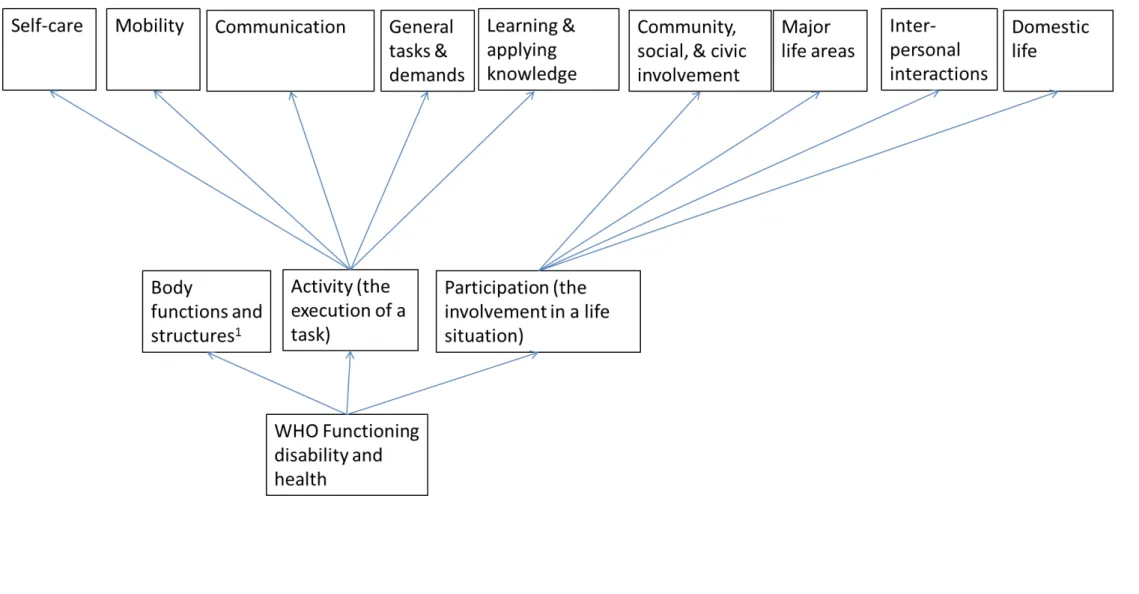
Each of the two components of functioning is further divided into a number of sub-domains (see Figure 1). Nine sub-sub-domains are defined in relation to the “Activities and Participation” component. Users of the ICF are encouraged to operationalise these nine sub-domains flexibly to accommodate their theoretical and professional
disciplines. Previous depression studies have acknowledged the value of exploring the multi-dimensional nature of functioning because of its potential to identify tailored treatment targets, in addition to the monitoring of personalised health outcomes (Greer, et al., 2010; Trivedi, et al., 2010; Ware, 2003; Wells, et al., 1989). Thus we opted to distinguish between the concepts of ‘activities’ and ‘participation’.
Our approach promotes a standardised method of conceptualising measures of
participative social function. We defined the participation component as representing participative social function. We mapped ICF subdomains exclusively onto the
participation component if its content described normative tasks that i) require social interaction with others and/or ii) are implemented in line with expected social norms. Our definition of participative social function was substantially informed by the
theoretical and empirical work of the Medical Outcomes Study (Stewart, 1992). All sub-domains that did not conform with this definition were mapped to the “activities” component. We consider subdomains mapped to the activities component as
representing aspects of physical (Stewart, 1992) or cognitive function (Greer, et al., 2010).
92
93
94
95
96
97
98
99
100
101
102
103
104
105
106
107
108
109
110
111
112
113
114
115
116
117
118
119
120
121
122
123
124
125
Accordingly, the following four domains were mapped onto ‘participation’:
i) community, social and civic involvement (e.g. participating in events outside the family)
ii) major life areas (e.g. taking part in education, work and economic actions) iii) inter-personal relationships (e.g. co-operating with others in a socially
acceptable way)
iv) domestic life (e.g. acquiring and maintaining an appropriate household) (See Figure 1).
Likewise, the following five domains were mapped to the ‘activities’ component:
i) self-care (e.g. caring for physical body parts) ii) mobility (ability to move body and objects)
iii) communication (comprehension of verbal and written information)
iv) general tasks and demands (e.g. initiating and organising single or multiple tasks)
v) learning and applying knowledge (e.g. cognitive tasks: problem solving, decision making) (See Figure 1).
In this paper, we performed a secondary data analysis on studies identified from our previous Cochrane review of the effectiveness of collaborative care interventions on depression and anxiety outcomes (Archer, et al., 2012). We identified measures of participative social function using the framework described above, , and and sought to answer the following three questions:
i) How do functional outcomes in collaborative care studies map to the activities and participation components of the ICF framework?
ii) What is the impact of collaborative care on participative social function?
iii) Does the magnitude of effectiveness on participative social function outcomes vary as a function of the size of effect observed for depression outcomes?
127
128
129
130
131
132
133
134
135
136
137
138
139
140
141
142
143
144
145
146
147
148
149
150
151
152
153
154
155
156
157 158
159
160
Methods
We report a secondary data analysis of functioning outcomes from RCTs of
collaborative care interventions that were identified as part of our previous Cochrane Review of collaborative care for depression and anxiety problems (Archer, et al., 2012) and subsequent search update (Coventry, et al., 2014). We adhere to the Preferred Reporting Items for Systematic Reviews (PRISMA; See eTable 1 in the supplementary online material) (Moher, et al., 2009).
Information sources
We searched the Cochrane Collaboration Depression, Anxiety and a Neurosis Group (CC-DAN) trial registers (references and studies) on the 9th February 2012 as part of our original Cochrane review. The CC-DAN database includes studies recorded in MEDLINE, EMBASE, PsycINFO, CENTRAL, World Health Organisation’s trials portal (ICTRP), Clinicaltrials.gov, and CINAHL. See Archer et al (Archer, et al., 2012) for search strategy. We updated our search in December 2013 using the CENTRAL database only (Coventry, et al., 2014).
Inclusion/exclusion criteria We included trials if they:
1. Had a RCT or cluster RCT design, which evaluated collaborative care interventions delivered in primary care or community settings.
2. Recruited adults (≥ 18 years) with a primary diagnosis of depression or mixed anxiety and depression.
3. Tested collaborative care by comparing it with usual or enhanced usual care. Collaborative care was conceptualised according to 4 components outlined by Gunn et al (Gunn, et al., 2006) (See Table 1).
4. Measured change in depressive status using either self-report outcome measures or diagnostic clinical interviews, defined as either a continuous or binary outcome (i.e. remission or a reduction in depressive symptoms by ≥ 50%).
162
163
164
165
166
167
168
169
170
171
172
173
174
175
176
177
178
179
180
181
182
183
184 185
186
187
188
189
190
191
And the additional criteria below were applied specifically for this secondary data analysis:
5. Measured change in participative social function using a valid self-report measure (full or specific subscales) expressed as a continuous or binary outcome. Please see analysis section below for details on how
participative social function outcomes were identified.
Study selection
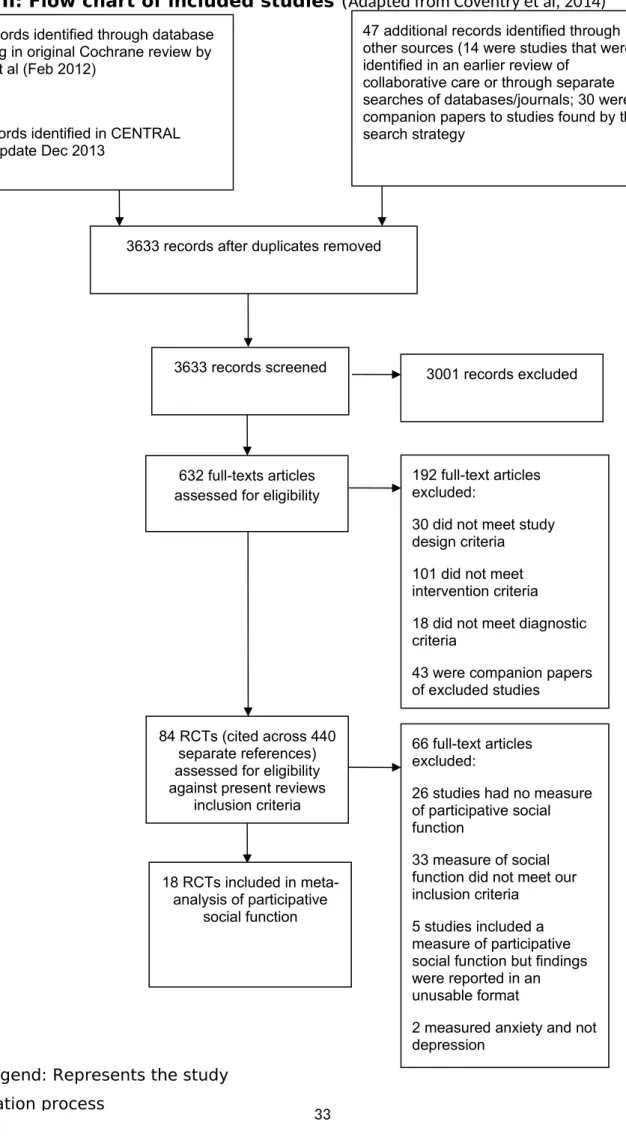
Studies were identified for inclusion from the 84 RCTs included in the Cochrane review of collaborative care for depression and anxiety (Archer, et al., 2012) and the search update (Coventry, et al., 2014). Two authors screened studies against our inclusion criteria (JH and PC). Discrepancies were resolved by a third author (PB or JA).
Data extraction
The following study characteristics were double extracted: socio-demographic characteristics, clinical characteristics, collaborative care intervention content, and usual care intervention content. The outcome measures: i) participative social function and ii) depression were extracted at two time points: zero to six months (short term) and seven months or more (medium term).
Assessment of risk of bias in individual studies
The Cochrane risk of bias tool was used to evaluate bias for each individual study (Higgins and Green, 2008). We rated all criteria stipulated in the Cochrane tool as either low, unclear, or high risk of bias. In addition we evaluated the implementation integrity of intervention (e.g. degree of adherence to protocol) and other sources of bias identified.
Analysis
How do functional outcomes in collaborative care studies map to the ICF framework? First, we identified studies that included secondary outcome measures related to functioning (e.g. quality of life, and wellbeing). Disease specific measures of quality of life were excluded. Second, we performed a content analysis on identified measures. Each questionnaire item or subscale (dependent on measure length) was mapped onto:
193
194
195
196
197
198
199
200
201
202
203
204
205
206
207
208
209
210
211
212
213
214
215
216
217
218
219
220
221
222
i) one of the nine subdomains from the activities or participation component outlined in the ICF framework (See Figure 1).
ii) the body functions and structures component (e.g. items/subscales about energy, sleep, pain).
We included a measure in the meta-analysis of the effects of collaborative care on participative social function if ≥80% of the questionnaire items/subscales mapped onto any one of the four subdomains included in our conceptualisation of the participation component of the ICF. Two authors completed the content mapping exercise (JH and PC).
What is the impact of collaborative care on participative social function (defined as self-report measures which map onto one or more of the four participation sub-domains of the ICF outlined in Figure 1)?
We used STATA’s (Version 12 for Windows) meta-eff (Kontopantelis and Reeves, 2009) command to convert depression and participative social function outcome measures into standardised mean differences and standard errors. We performed a DerSimonian-Laird (DerSimonian and Laird, 1986) random effects meta-analysis with 95% confidence intervals using STATA’s metan (Harris, et al., 2008) command.
Participative social function scales were recoded where necessary so high scores indicate better participative social function. For cluster RCTs we used the “effective sample size” procedure (Higgins, et al., 2008) using an intraclass correlation
coefficient (ICC) of 0.02 (Adams, et al., 2004).
Sensitivity analyses
We performed sensitivity analyses using ICC adjustments of 0.00 and 0.05 (Donner and Klar, 2002). We estimated the degree of statistical heterogeneity using the I² index. High I² scores indicate the presence of substantial statistical heterogeneity (Higgins, et al., 2008). We explored the impact of risk of bias, specifically allocation concealment, on meta-analysed findings. We compared studies with low risk of bias to those with high risk of bias for allocation concealment. This index quality criterion was selected because Pildal et al (2007) showed that effect size estimates were inflated in studies with an inappropriate allocation concealment method.
Risk of bias across studies
224
225
226
227
228
229
230
231
232
233
234
235
236
237
238
239
240
241
242
243
244
245
246
247
248
249
250
251
252
253
254
255
We explored the potential for “small study bias” statistically using Eggers statistical test (Egger, et al., 2008) and visually using funnel plots at six months follow-up only. A non-statistically significant Eggers test indicates the absence of “small study bias”. Likewise a symmetrical funnel plot shows that studies with a smaller sample size are just as likely to be published as those with a larger sample size (Higgins, et al., 2008).
Does the magnitude of effectiveness on participative social function outcomes vary as function as the size of effect observed for depression outcomes?
We tested whether the degree of improvement in participative social function was proportional to the degree of improvements observed in depressive symptoms. We used the meta-reg (Harbord and Higgins, 2008) STATA command to generate a regression coefficient with 95% confidence intervals. We performed this analysis with cross-sectional data (i.e. six month outcome data) and over time (i.e. do
improvements in depressive symptoms at six months explain variance in improvements in participative social function at ≥7 months).
Results
How do functional outcomes in collaborative care studies map to the ICF framework? Of the 84 collaborative care RCTs identified by our original Cochrane review and search update, 58 unique studies had one or more secondary outcome measure related to the ICF framework (See supplementary material eResults 1 for a reference list of all 84 identified studies). A total of 25 studies included a measure of
participative social function because their content (whole scale scores or specific subscales within a measure) mapped exclusively onto the participation component of the ICF framework. These included the following six measures:
1. Short Form 36: SF-36 (role-emotional and social functioning subscales) (Ware and Kosinski, 2001; Ware, 2004; Ware Jr and Sherbourne, 1992)
2. Medical Outcomes Study 20: MOS-20 (role-emotional and social functioning subscales) (Stewart, et al., 1988)
3. Short Form 12: SF-12 (role-emotional and social functioning subscale) (Ware, et al., 2007; Ware Jr, et al., 1996)
4. Sheehan disability scale (Sheehan, et al., 1996)
5. Work and social adjustment scale (Mundt, et al., 2002)
257
258
259
260
261
262
263
264
265
266
267
268
269
270
271
272
273
274
275
276
277
278
279
280
281
282
283
284
285
286
287
6. World Health Organisations Disability Assessment Schedule: WHO DAS II (life activities, participation in society, and getting along subscales) (Üstün, et al., 2010).
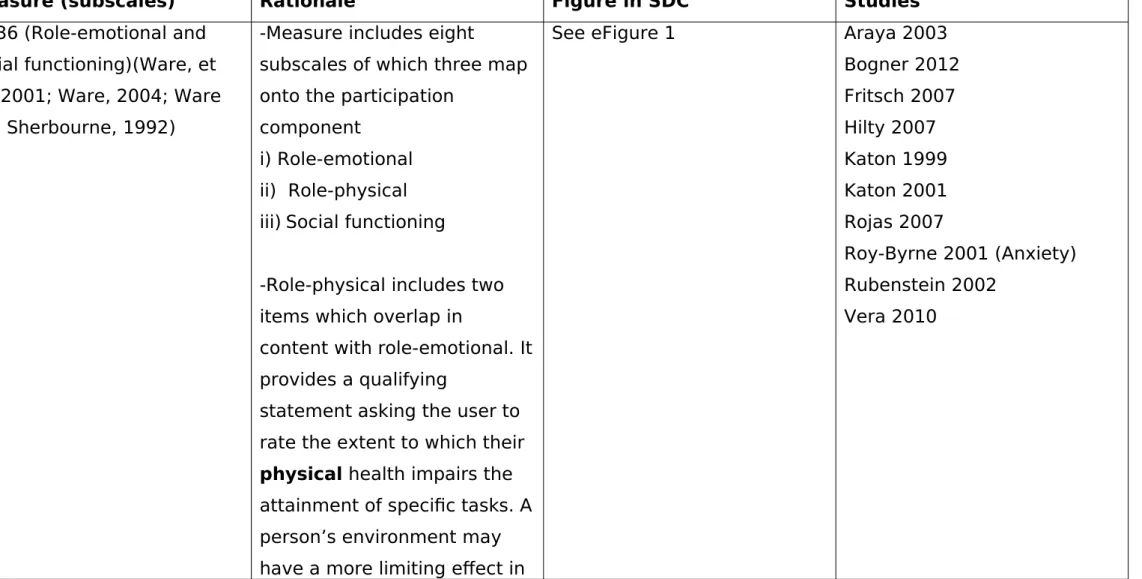
Please see Table II and supplementary material; eFigures 1-6 for the findings of our content mapping exercise. A further 30 studies used the SF-36, SF-12, and WHO DAS II, but reported outcomes according to either: i) whole scale scores of global
functioning, ii) mental and physical function total scores, or iii) the pain subscale (SF-36). Thus the impact of collaborative care interventions on participative social
function could not be isolated. See Table III and supplementary material; eFigures 1, 3, and 6.
Eight other measures were identified across 14 studies, whose items or subscales mapped onto the ICF framework; but less than 80% of their content mapped onto the participation component. Seven of the eight measures had content that mapped “across” two or more of ICF components and thus provide an overall measure of function. The eighth measure, The Stanford Health Assessment questionnaire (Bruce and Fries, 2005) had content whereby 88% of its content mapped onto the activities component of the ICF framework and can be considered a measure physical function. See Table 3, supplementary material eFigures 7 to 14.
Two studies included either the scale of disability and prognosis in long-term mental illness or the EQ-5D (EuroQol, 1990) visual analogues scale. These questionnaires were non-specific and could not be mapped to the ICF framework because they asked participants to rate their overall health. A further five studies used long-term condition specific measures of quality of life which did not meet our inclusion criteria. A total of 26 out of the 84 RCTs identified had no measure of disability. See Table III.
What is the impact of collaborative care on participative social function?
Characteristics of included studies
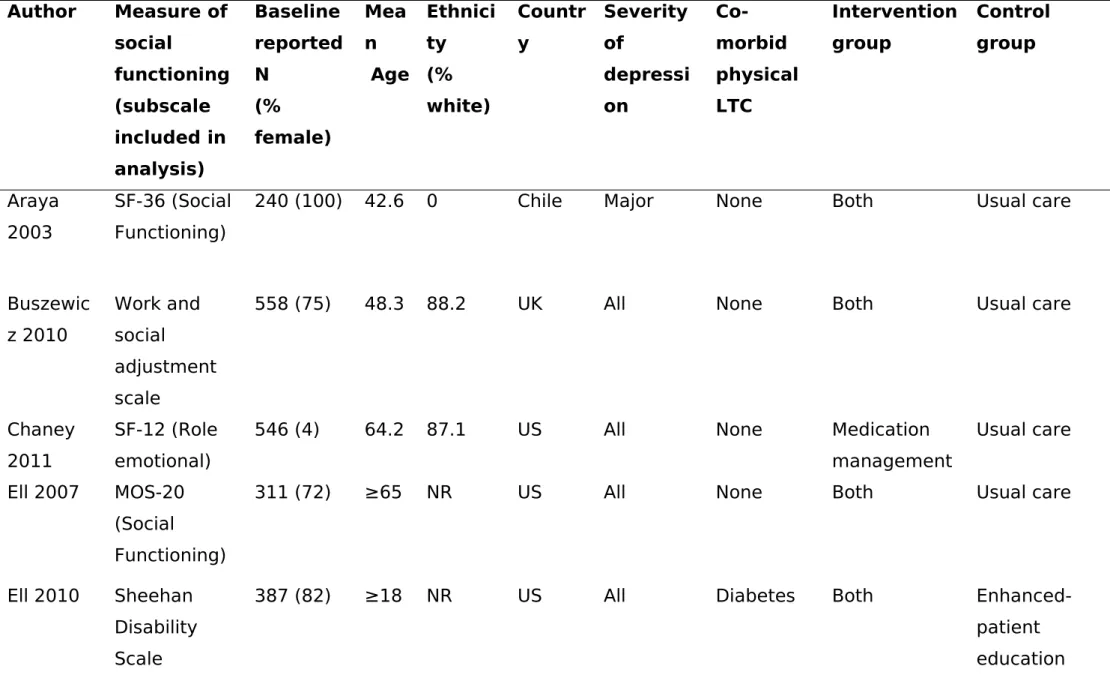
After screening the 58 unique collaborative care trials identified as having one or more measure that mapped onto the ICF framework, eighteen studies met our
remaining inclusion criteria. Please see Figure II for flowchart of included studies. The characteristics of the eighteen included studies are described in Table IV.
Meta-analysis of the effect of collaborative care on participative social function
289
290
291
292
293
294
295
296
297
298
299
300
301
302
303
304
305
306
307
308
309
310
311
312
313
314
315
316
317
318
319
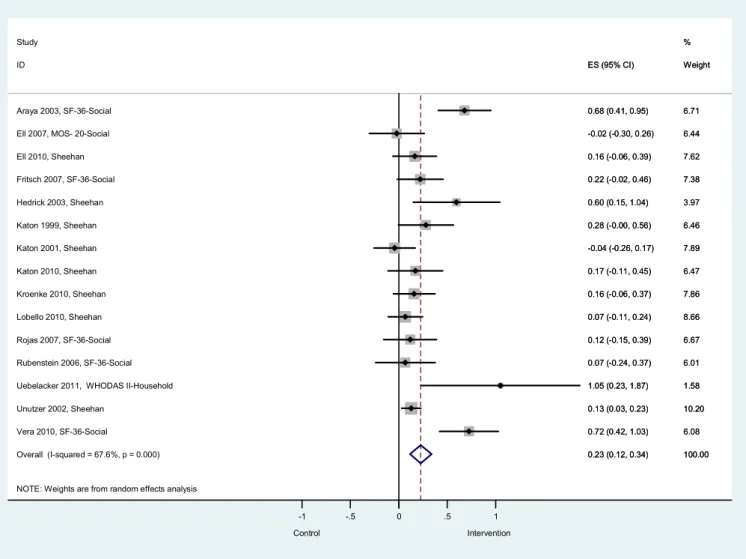
At short term follow-up (up to six months), across 15 RCTs (N= 4754) collaborative care was associated with a small but statistically significant improvement in
participative social function (standardised mean difference, SMD=0.23, 95%
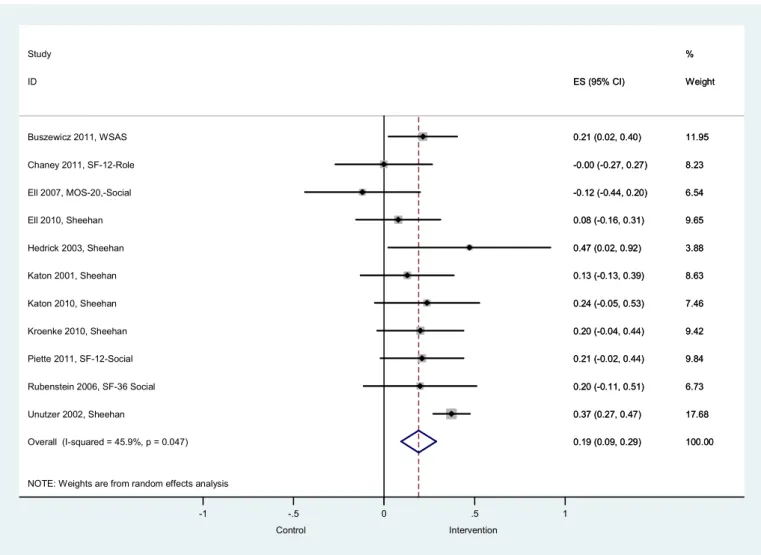
confidence interval 0.12 to 0.34, I²=67.6%, p=0.000; See Figure III).The effects of collaborative care on participative social function decreased minimally at longer term follow-up (7 months or more) across 11 RCTs (N=3797; SMD= 0.19, 95% confidence interval 0.09 to 0.29, I²=45.9%, p=0.047. Please see Figure IV.
Sensitivity analyses: ICC adjustment
Meta-analysis findings changed minimally (±0.02) when sensitivity analyses of ICC 0.00 and 0.05 were used.
Sensitivity analyses: Impact of risk of bias for allocation concealment
Seven studies were rated as low risk of bias for allocation concealment at six months follow-up. When the meta-analysis was restricted to these studies there was a small increase in the effect of collaborative care on participative social function (SMD=0.30, 95% confidence interval 0.12 to 0.47, I²=76.8%, p=0.000). Equally when limiting the longer-term follow-up analysis to only those studies rated as low risk of bias for
allocation concealment (n=5), the effect size marginally increased compared with the total pooled analyses (SMD= 0.25, 95% confidence interval 0.14 to 0.36, I²=42.1%, p=0.14).
Risk of bias across studies
Egger’s statistical test was performed on the six months analyses and was statistically non-significant indicating an absence of statistical asymmetry (p=0.81). Visual
inspection of the funnel plot confirmed this finding as it had a relatively symmetrical distribution suggesting the absence of small study bias.
Does the magnitude of effectiveness on participative social function outcomes vary as function as the size of effect observed for depression outcomes?
At short-term follow-up, improvements in depressive symptoms were associated with improvements in participative social function (ß=-0.55, 95% confidence interval -0.82 to -0.28, p=0.000. Improvements in depressive symptoms at six months did not
explain any statistically significant variance in improvement in participative social
321
322
323
324
325
326
327
328
329
330
331
332
333
334
335
336
337
338
339
340
341
342
343
344
345
346
347
348
349
350
function outcomes at seven months or more follow-up (ß=-0.40 95% Confidence Interval -0.83 to 0.03, p=0.067).
Discussion
Summary of Findings
The ICF framework provides an appropriate theoretical model for discriminating between measures of participative social function, physical function, cognitive function, and global measures of functioning. Collaborative care interventions for depressive symptom management were able to demonstrate improvements in participative social function relative to usual care, at short term (6 months) and medium term follow-up (7 months or more). The effects of collaborative care on participative social function outcomes were small but demonstrated that
improvements can occur across the participation domains outlined in the ICF including: work, domestic life, leisure time, and communicative relationships. Our cross-sectional meta-regression analyses at six months indicated that improvements in depressive symptoms were associated with corresponding improvements in
participative social function. This finding is consistent with others who have reported a contemporaneous relationship between change in depressive symptoms and
associated changes in participative social function (Ormel, et al., 1993; Verboom, et al., 2012). However when we explored the explanatory effects of depressive
symptoms at six months on participative social function at seven months or more (i.e longitudinally) this relationship became statistically non-significant.
Strengths and Limitations:
Our review is based on a large and comprehensive dataset of collaborative care interventions for the management of depression identified from a previous Cochrane review (Archer, et al., 2012) and search update (Coventry, et al., 2014). Our study identification and data extraction procedures adhered to Cochrane’s robust
methodological procedures and involved more than one researcher at each stage, thus allowing greater confidence in the validity and reliability of our review findings. The degree of reliability at our study identification stage was further enhanced through the application of the ICF theoretical model which provided a coherent framework for identifying measures of participative social function. We consider the moderate levels of heterogeneity observed in our review a strength given that
between study variability can often go undetected (Kontopantelis, et al., 2013). Thus
352
353
354
355
356
357
358
359
360
361
362
363
364
365
366
367
368
369
370
371
372
373
374
375
376
377
378
379
380
381
382
383
we appropriately applied a random effects model to account for this variability
(Kontopantelis, et al., 2013). Nonetheless, there were likely a number of moderating variables that accounted for between study variance including: socio-economic factors, physical co-morbidity, type of treatments received for depression, and
baseline levels of social function influencing the degree of change observed. Because the number of studies included in our review was relatively small it was statistically inappropriate to perform subgroup analyses to explore the role of these moderators. In addition, the reporting of these characteristics across studies was inconsistent. Similarly our medium term analyses were performed on an even smaller number of studies (n=11). The absence of a relationship between depressive symptoms and participative social function over time may be an artefact of an absence of statistical power to detect this relationship and not absence of effect.
Implications for research, policy and practice
We found that almost one third of the trials included in our original Cochrane review and search update did not measure functioning outcomes, and of those that did the majority could not be mapped onto our current understanding about the core
components related to participative social function. Patients prioritise a return to participative social function over improvement in symptoms and it is therefore imperative that trials measure this important outcome. However, to do this well, we need a clear framework that elaborates on what participative social function is. We showed that the ICF framework (World Health Organisation, 2001) provides a clear conceptualisation of global functioning. Equally, the ICF framework can be used to discriminate between measures which assess specific aspects of functioning (e.g. physical, cognitive or participative social function) or conversely whether scales
represent a global measure of function (e.g. its item or subscale content maps across two or more of the ICF components). To promote a better understanding of how
functioning changes in response to treatment we need to be consistent in our approach to measuring functional outcomes. The ICF framework can be used by researchers at the study design stage to inform decisions about measurement in trials, and also by systematic reviewers to inform decisions about inclusion of studies that measure functional outcomes.
Collaborative care interventions can improve participative social function outcomes both in the short and medium term. However the size of effect is small and lower than the moderate effect size (Hedges g = 0.40) reported in a meta-analytic review of
385
386
387
388
389
390
391
392
393
394
395
396
397
398
399
400
401
402
403
404
405
406
407
408
409
410
411
412
413
414
415
416
417
standalone psychotherapeutic interventions for depression on participative social function outcomes (Renner, et al., 2014). It is possible that psychotherapy
interventions have greater potential for targeting variables that have direct effects on participative social function. For example, behavioural activation ensures that a
person maintains both pleasant and reinforcing events (e.g. leisure time) alongside necessary and routine tasks and demands (e.g. domestic life/work). Indeed, we have shown previously that when collaborative care interventions include psychological treatments (either alone or in combination with pharmacotherapy) greater
improvements are observed in patients depressive symptoms compared with pharmacotherapy alone (Coventry, et al., 2014). In contrast, seven of the eighteen studies included in our meta-analysis used medication management only. This might suggest that the mode of action and/or the pace at which antidepressants affect participative social function is sufficiently different to psychotherapy. But equally, collaborative care frameworks may bring about change in participative social function by improving the confidence of individuals to use and navigate health services
(Coventry, et al., 2015), for example, through re-engaging with depression care earlier to prevent relapse.
At six months, we demonstrated cross-sectionally that improvements in depressive symptoms were associated with corresponding improvements in participative social function outcomes. However this effect was not maintained over time (7 months or more). Our cross-sectional findings are consistent with others who have shown that the degree of impairment in participative social function corresponds directly with a person’s severity of depressive symptoms (Judd, et al., 2000; Ormel, et al., 1993; Verboom, et al., 2012). However, whether improvements in participative social function outcomes are a cause or consequence of improvements in depressive
symptoms remains unclear because studies examining this association have typically used cross-sectional designs. Indeed, our longitudinal meta-regression analyses
showed no effect of improvements in depressive symptoms on participative social function over time. But this is likely a consequence of a lack of statistical power in our analyses and/or the time frames of included studies being too brief or long to detect change. Indeed, it is highly likely that the relationship between depression and participative social function is bi-directional (Ormel, et al., 1993; Wiersma and Becker, 2010).
419
420
421
422
423
424
425
426
427
428
429
430
431
432
433
434
435
436
437
438
439
440
441
442
443
444
445
446
447
448
449
450
Others have shown that despite depressive symptoms remitting, impairments in
participative social function persist (Ormel, et al., 2004; Rhebergen, et al., 2010).
Modifiable factors in addition to depression severity contribute to participative social
function outcomes (Rhebergen, et al., 2010; Verboom, et al., 2011; Verboom, et al.,
2012). Indeed, part II of the ICF Framework formally recognises the important
moderating role of contextual factors on a person’s ability to function. It lists potential
environmental factors that can interact with a person’s execution of a task. These are
grouped into physical, social, and attitudinal factors. Thus when appraising a person’s
functional ability it is important to contemporaneously define the environmental
context in which the appraisal occurred. Specifically in relation to the “Activities and
Participation” component the ICF endorse the use of two qualifiers:
i) Performance-scoring a person’s execution of a task (0 to 4) in their
current environment
ii) Capacity-scoring a person’s execution of a task (0 to 4) in a standardised
environment, whereby environmental moderators are controlled and
adjusted for.
These two qualifiers help to identify specific environmental contexts for interventions
that will improve a person’s functional performance (e.g. flexible working hours by
employers). However, self-report measures typically used in trials are not able to
capture the complex yet subtle differences between capacity and performance.
Indeed, we consider the self-report measures of participative social function included
in our review as capturing a person’s degree of performance (i.e. their degree of
functioning in their current lived environment).
To better understand these issues and to inform the design of interventions that can
benefit both depression and participative social function it is likely that we need to go
beyond just trials and meta-analyses. Approaches that employ qualitative process
452
453
454
455
456
457
458
459
460
461
462
463
464
465
466
467
468
469
470
471
472
473
474
475
476
evaluations of interventions, individual patient data meta-analysis, and longitudinal
cohort studies can contribute to better intervention design, improved understanding
about hypothesised mechanisms of effect and their environmental moderators, and
help to refine existing theoretical models about the onset and maintenance of
depression and its broader psychosocial outcomes (Moore, et al., 2015).
Conclusion
Collaborative care improves depression and can also improve participative social function, but the effects are small (and appear to diminish after 6 months), and the mechanism is unclear. It is plausible that specific types of (psychotherapeutic) depression treatments are more likely to bring about change because they directly target explanatory variables of participative social function. Future depression treatment interventions need to give equal attention to the explanatory and contextual variables that facilitate improvements in participative social function alongside improvements in depression.
478
479
480
481
482
483
484
485
486
487
488
489
490
Table 1: Four components of collaborative care according to Gunn et al (2006)
Four components that constitutes collaborative care
1) At least two health professionals involved in patient care of which one MUST include a primary care provider (e.g. general practitioner, family physician). 2) A defined treatment plan, with a structured approach to patient management in
accordance with evidence based guidelines. This could include
pharmacotherapy, psychological therapy or both, usually delivered by health professionals other than the primary care provider (case managers).
3) Planned patient follow-ups. One or more scheduled patient follow-ups delivered either face to face or via the telephone/internet.
4) Enhanced communication between health professionals (e.g. team meetings, shared electronic note systems, case manager supervision with a specialist)
492
493
Table II: Self-report measures of disability identified where ≥80% of the scale/subscale content maps onto the participation construct of the ICF
Measure (subscales) Rationale Figure in SDC Studies
SF-36 (Role-emotional and social functioning)(Ware, et al., 2001; Ware, 2004; Ware and Sherbourne, 1992)
-Measure includes eight
subscales of which three map onto the participation
component
i) Role-emotional ii) Role-physical iii) Social functioning
-Role-physical includes two items which overlap in
content with role-emotional. It provides a qualifying
statement asking the user to rate the extent to which their physical health impairs the attainment of specific tasks. A person’s environment may have a more limiting effect in
See eFigure 1 Araya 2003
Bogner 2012 Fritsch 2007 Hilty 2007 Katon 1999 Katon 2001 Rojas 2007
Roy-Byrne 2001 (Anxiety) Rubenstein 2002
Vera 2010
495
496
this instance (e.g. absence of assistive devices). Therefore only role-emotional is used MOS-20 (Role-emotional and
social functioning) (Stewart, et al., 1988)
-Six subscales across 20 items of which two map onto the participation component: i) Role functioning
ii) Social functioning
See eFigure 2 Ell 2007
Katzelnick 2000
SF-12 (Role-emotional and social functioning) (Ware, et al., 2007; Ware Jr, et al., 1996)
-Measure includes eight subscales/items of which three map onto the participation component i) Role-emotional
ii) Role-physical iv) Social functioning
-Role-physical includes one item which overlaps in
content with role-emotional. It provides a qualifying
statement asking the user to rate the extent to which their physical health impairs the
See eFigure 3 Chaney 2011
Piette 2011
attainment of specific tasks. A person’s environment may have a more limiting effect in this instance (e.g. absence of assistive devices). Therefore only role-emotional is used.
Sheehan Disability Scale A 3 item measure whose
content maps onto the participation domain.
See eFigure 4 Ell 2010
Hedrick 2003 Katon 1999 Katon 2001 Katon 2010 Kroenke 2010 Lobello 2010
Roy-Byrne 2010 (Anxiety) Unutzer 2002
Work and social adjustment scale (Mundt, et al., 2002)
All five items map onto the participation domain
See eFigure 5 Buszewicz 2010
Menchetti 2013 WHO DAS II (35 item
measure) (Üstün, et al., 2010)
Provides an overall measure of disability across six
subscales. Three subscales map onto the participation component and can be used when reported individually.
See eFigure 6 Uebelecker 2011(Social, Work
Table III: Self-report measures of disability identified where <80% of the scale/subscale content mapped onto the participation construct of the ICF
Measure (subscales) Rationale Figure in SDC Studies
SF-36: Mental health scale (MHS) and/or physical health scale (PHS) (Ware, et al., 2001; Ware, 2004; Ware, et al., 1992)
Presented data for MHS
and/or PHS scale of the SF-36. No subscale specific level data reported. <80% of the MHS and PHS subscales mapped onto participation component.
eFigure 1 Adler 2004
Bartels 2004 Cole 2006
Gensichen 2009 Gjerdingen 2009 Hedrick 2003 Richards 2008 Richards 2013 Rollman 2009 SF-36 (Pain subscale only)
(Ware, et al., 2001; Ware, 2004; Ware, et al., 1992)
Only the pain subscale from the SF-36 reported. This maps onto the body functions and structures component of the ICF
eFigure 1 Dietrich 2004
SF-36: Single item measure of general health (Ware, et al., 2001; Ware, 2004; Ware, et al., 1992)
A single item measure which asks users to rate their overall health. This cannot be
mapped to any domains of
eFigure 1 Gjerdingen 2009
498
499
the ICF SF-12: Mental health scale
(MHS) and/ or physical health scale (PHS) (Ware, et al., 2007; Ware Jr, et al., 1996)
Presented data for MHS
and/or PHS scale of the SF-12 and not subscale specific level data. <80% of the MHS and/or PHS subscales mapped onto participation construct.
eFigure 3 Asarnow 2005
Clarke 2005 Ell 2008 Ell 2010
Davidson 2013 Fortney 2007 Huffman 2011 Hunkeler 2011 Kroenke 2010 Landis 2007 Pynne 2011 Rollman 2005 Ross 2008
Roy-Byrne 2005 Roy-Byrne 2010 Unutzer 2010 SF-12 Whole scale (Ware, et
al., 2007; Ware Jr, et al., 1996)
Reported data on the whole SF-12 subscale of which only 3/8 subscales mapped onto the participation component
eFigure 3 Datto 2003
WHO DAS II (35 item
measure) (Üstün, et al., 2010)
Reported data on the total score of the WHO DAS II
based on six subscales of which only three mapped onto the participation component. WHO DAS II (12 item
measure) (Üstün, et al., 2010)
Provides an overall measure of disability once items are summed. Only 5/12 items mapped onto the participation component.
eFigure 7 Patel 2010
The Stanford Health
Assessment Questionnaire: Short HAQ (Bruce, et al., 2005)
-Eight subscales across 20 items.
-Only 1/8 subscales mapped onto the participation
component
eFigure 8 Chew-Graham 2007
McMahon 2007
Older Americans Resources and Services Questionnaire (OARS) (Fillenbaum, 1988)
-Measure includes 15 items (one qualifying question related to continence) which make up two subscales: i) Instrumental activities in daily living and ii) Activities in daily living.
-4 items from the instrumental activities subscale mapped onto the
eFigure 9 (Items in italics are from the instrumental
subscale of the OARS)
Cole 2006
participation construct however a further 3 items also mapped onto activities component of the ICF.
A scale of disability and
prognosis in long-term mental illness (Morgan and Cheadle, 1974)
Described in paper as a single item measure, with a 5 point Likert scale response whereby participants rate their
disability as ranging from absent to severe
No figure provided Finley 2003
Social Adaptation social
evaluation scale (SASS) (Bosc, et al., 1997)
A 21 item scale of which only three items mapped onto the participation component.
eFigure 10 McMahon 2007
WHO 5 Wellbeing index (World Health Organisation, 1998)
A five item measure of which only one item mapped onto the participation components
eFigure 11 Lobello 2010
Roy-Byrne 2005
The Duke Activity State Index (Hlatky, et al., 1989)
Provides an overall measure of disability across 12 items of which only four items
(potentially five as one item was coded as unclear)
mapped onto the participation
component
EQ-5D (EuroQol, 1990) Five item measure plus
overall health rating visual analogue scale. Only one of the five items mapped onto the participation component
eFigure 13 Gensichen 2009
Smit 2006
EQ-5D Visual analogue scale (EuroQol, 1990)
NA Buszewicz 2010
Index of wellbeing (Kaplan, et al., 1976)
Four subscales of which only one mapped onto the
participation construct
eFigure 14 Fortney 2007
Pynne 2011
Disease specific quality of life measures
Did not meet our inclusion criteria. No mapping exercise performed
NA Ciechanowski 2004 (Cancer)
Ciechanowski 2010 (Epilepsy) Dwight-Johnson 2005 (Cancer) Ell 2008 (Cancer)
Strong 2008 (Cancer) No self-report measure of
disability identified in the study
NA NA Blanchard 1995
Bruce 2004 Capoccia 2004
Dwight-Johnson 2010 Dwight-Johnson 2011 Morgan 2013
Table IV. Characteristics of included studies Author Measure of
social
functioning (subscale included in analysis)
Baseline reported N
(% female)
Mea n Age
Ethnici ty (% white)
Countr y
Severity of
depressi on
Co-morbid physical LTC
Intervention group
Control group
Araya 2003
SF-36 (Social Functioning)
240 (100) 42.6 0 Chile Major None Both Usual care
Buszewic z 2010
Work and social
adjustment scale
558 (75) 48.3 88.2 UK All None Both Usual care
Chaney 2011
SF-12 (Role emotional)
546 (4) 64.2 87.1 US All None Medication
management
Usual care
Ell 2007 MOS-20
(Social Functioning)
311 (72) ≥65 NR US All None Both Usual care
Ell 2010 Sheehan
Disability Scale
387 (82) ≥18 NR US All Diabetes Both
Enhanced-patient education
Author Measure of social
functioning (subscale included in analysis)
Baseline reported N
(% female)
Mea n Age
Ethnici ty (% white)
Countr y
Severity of
depressi on
Co-morbid physical LTC
Intervention group
Control group
materials Fritsch
2007
SF-36 (Social Functioning)
345 (100) 37.4 0 Chile Major None Medication
management
Usual care
Hedrick 2003
Sheehan Disability Scale
354 (5) 57.2 79.7 US All None Both
Enhanced-consultation liaison
Katon 1999
Sheehan Disability scale
228 (75) 47 80.3 US All None Medication
management
Usual care
Katon 2001
Sheehan Disability Scale
386 (74) 46 90.2 US Subthresh
old
None Both Usual care
Katon 2010
Sheehan Disability Scale
214 (52) 56.8 78.5 US All Diabetes
and/or coronary heart
Author Measure of social
functioning (subscale included in analysis)
Baseline reported N
(% female)
Mea n Age
Ethnici ty (% white)
Countr y
Severity of
depressi on
Co-morbid physical LTC
Intervention group
Control group
disease Kroenke
2010
Sheehan Disability Scale
405 (68) 58.8 79.5 US All Cancer Medication
management
Usual care
Lobello 2010
Sheehan Disability Scale
520 (73) 44.5 87.3 US Major None Medication
management
Usual care
Piette 2011
SF-36 (Social Functioning)
291 (52) 56 84 US All Diabetes Psychological
therapy
Enhanced-patient education materials Rojas
2007
SF-36 (Social Functioning)
230 (100) 26.6 0 Chile Major None Both Usual care
Rubenstei n 2002
SF-36 (Social Functioning)
567 (59) 48.2 76 US Major None Medication
management
Author Measure of social
functioning (subscale included in analysis)
Baseline reported N
(% female)
Mea n Age
Ethnici ty (% white)
Countr y
Severity of
depressi on
Co-morbid physical LTC
Intervention group
Control group
Uebelack er 2011
WHODAS II (Household)
38 (95) 39.1 0 US All None Both Usual care
Unutzer 2002
Sheehan Disability Scale
1801 (65) 71.2 77 US All None Both Usual care
Vera 2010
SF-36 (Social functioning)
179 (76) 55 NR Puerto
Rico
All Multiple
chronic conditions
Medication management
Usual care
Key: Both includes medication management and/or psychological therapy
Figure 1. Conceptualisation of social functioning using the ICF as a theoretical framework
1Subdomains associated with body functions and structures are not shown in the Figure.
Figure legend: Directional arrows leading from activities and participation components indicate their associated subdomains from the ICF
503
504
505
506
507
Figure II: Flow chart of included studies (Adapted from Coventry et al, 2014)
Figure legend: Represents the study 3620 records identified through database searching in original Cochrane review by Archer et al (Feb 2012)
163 Records identified in CENTRAL search update Dec 2013
47 additional records identified through other sources (14 were studies that were identified in an earlier review of
collaborative care or through separate searches of databases/journals; 30 were companion papers to studies found by the search strategy
66 full-text articles excluded:
26 studies had no measure of participative social function
33 measure of social function did not meet our inclusion criteria
5 studies included a measure of participative social function but findings were reported in an unusable format
2 measured anxiety and not depression
3001 records excluded
192 full-text articles excluded:
30 did not meet study design criteria
101 did not meet intervention criteria
18 did not meet diagnostic criteria
43 were companion papers of excluded studies
18 RCTs included in meta-analysis of participative
social function 84 RCTs (cited across 440
separate references) assessed for eligibility against present reviews
inclusion criteria 632 full-texts articles assessed for eligibility 3633 records screened
3633 records after duplicates removed
509
510
Figure III: Forest plot of the effects of collaborative care on participative social functioning outcomes at short term follow-up (up to six months)
NOTE: Weights are from random effects analysis Overall (I-squared = 67.6%, p = 0.000) Araya 2003, SF-36-Social
Katon 2010, Sheehan Katon 2001, Sheehan
Uebelacker 2011, WHODAS II-Household Rubenstein 2006, SF-36-Social
Vera 2010, SF-36-Social Fritsch 2007, SF-36-Social Study
ID
Ell 2010, Sheehan
Kroenke 2010, Sheehan Hedrick 2003, Sheehan
Rojas 2007, SF-36-Social Lobello 2010, Sheehan Ell 2007, MOS- 20-Social
Katon 1999, Sheehan
Unutzer 2002, Sheehan
0.23 (0.12, 0.34) 0.68 (0.41, 0.95)
0.17 (-0.11, 0.45) -0.04 (-0.26, 0.17)
1.05 (0.23, 1.87) 0.07 (-0.24, 0.37)
0.72 (0.42, 1.03) 0.22 (-0.02, 0.46) ES (95% CI)
0.16 (-0.06, 0.39)
0.16 (-0.06, 0.37) 0.60 (0.15, 1.04)
0.12 (-0.15, 0.39) 0.07 (-0.11, 0.24) -0.02 (-0.30, 0.26)
0.28 (-0.00, 0.56)
0.13 (0.03, 0.23)
100.00 6.71 6.47 7.89 1.58 6.01 6.08 7.38 % Weight 7.62 7.86 3.97 6.67 8.66 6.44 6.46 10.20
0.23 (0.12, 0.34) 0.68 (0.41, 0.95)
0.17 (-0.11, 0.45) -0.04 (-0.26, 0.17)
1.05 (0.23, 1.87) 0.07 (-0.24, 0.37)
0.72 (0.42, 1.03) 0.22 (-0.02, 0.46) ES (95% CI)
0.16 (-0.06, 0.39)
0.16 (-0.06, 0.37) 0.60 (0.15, 1.04)
0.12 (-0.15, 0.39) 0.07 (-0.11, 0.24) -0.02 (-0.30, 0.26)
0.28 (-0.00, 0.56)
0.13 (0.03, 0.23)
100.00 6.71 6.47 7.89 1.58 6.01 6.08 7.38 % Weight 7.62 7.86 3.97 6.67 8.66 6.44 6.46 10.20
Control Intervention 0
-1 -.5 .5 1
Figure legend: Meta-analysis of randomised controlled trials and pooled effects. Random effects model used. 95% CI = 95% confidence intervals
Figure IV: Forest plot of the effects of collaborative care on participative social functioning outcomes at longer term follow-up (seven months or more)
NOTE: Weights are from random effects analysis Overall (I-squared = 45.9%, p = 0.047) Study
Kroenke 2010, Sheehan Buszewicz 2011, WSAS
Ell 2007, MOS-20,-Social
Katon 2010, Sheehan
Unutzer 2002, Sheehan Rubenstein 2006, SF-36 Social Piette 2011, SF-12-Social Hedrick 2003, Sheehan ID
Katon 2001, Sheehan Chaney 2011, SF-12-Role
Ell 2010, Sheehan
0.19 (0.09, 0.29) 0.20 (-0.04, 0.44) 0.21 (0.02, 0.40)
-0.12 (-0.44, 0.20)
0.24 (-0.05, 0.53)
0.37 (0.27, 0.47) 0.20 (-0.11, 0.51) 0.21 (-0.02, 0.44) 0.47 (0.02, 0.92) ES (95% CI)
0.13 (-0.13, 0.39) -0.00 (-0.27, 0.27)
0.08 (-0.16, 0.31)
100.00 % 9.42 11.95 6.54 7.46 17.68 6.73 9.84 3.88 Weight 8.63 8.23 9.65
0.19 (0.09, 0.29) 0.20 (-0.04, 0.44) 0.21 (0.02, 0.40)
-0.12 (-0.44, 0.20)
0.24 (-0.05, 0.53)
0.37 (0.27, 0.47) 0.20 (-0.11, 0.51) 0.21 (-0.02, 0.44) 0.47 (0.02, 0.92) ES (95% CI)
0.13 (-0.13, 0.39) -0.00 (-0.27, 0.27)
0.08 (-0.16, 0.31)
100.00 % 9.42 11.95 6.54 7.46 17.68 6.73 9.84 3.88 Weight 8.63 8.23 9.65
Control Intervention
0
-1 -.5 .5 1
Figure legend: Meta-analysis of randomised controlled trials and pooled effects. Random effects model used. 95% CI = 95% confidence intervals
References
Abrantes, A. M., Battle, C. L., Strong, D. R., Dubreuil, M. E., Gordon, A., & Brown, R. A. (2011). Exercise preferences of patients in substance abuse treatment. Mental health and physical activity, 4(2), 79-87.
Adams, G., Gulliford, M. C., Ukoumunne, O. C., Eldridge, S., Chinn, S., & Campbell, M. J. (2004). Patterns of intra-cluster correlation from primary care research to inform study design and analysis. J Clin Epidemiol., 57, 785-793.
Archer, J., Bower, P., Gilbody, S., Lovell, K., Richards, D., Gask, L., et al. (2012). Collaborative care for depression and
anxiety problems. Cochrane Database Syst Rev, 10, CD006525.
Bosc, M., Dubini, A., & Polin, V. (1997). Development and validation of a social functioning scale, the Social
Adaptation Self-evaluation Scale. European Neuropsychopharmacology, 7(1), S57-S70.
Bosc, M. (2000). Assessment of social functioning in depression. Comprehensive Psychiatry, 41(1), 63-69.
Bruce, B., & Fries, J. (2005). The health assessment questionnaire (HAQ). Clinical and experimental rheumatology, 23(5), S14.
Coventry, P., Lovell, K., Dickens, C., Bower, P., Chew-Graham, C., McElvenny, D., et al. (2015). Integrated primary care for patients with mental and physical multimorbidity: cluster randomised controlled trial of collaborative
care for patients with depression comorbid with diabetes or cardiovascular disease. bmj, 350, h638.
Coventry, P. A., Hudson, J. L., Kontopantelis, E., Archer, J., Richards, D. A., Gilbody, S., et al. (2014). Characteristics of Effective Collaborative Care for Treatment of Depression: A Systematic Review and Meta-Regression of 74 Randomised Controlled Trials. PloS one, 9(9), e108114.
DerSimonian, R., & Laird, N. (1986). Meta-analysis in clinical trials. Controlled clinical trials, 7(3), 177-188. Donner, A., & Klar, N. (2002). Issues in the meta analysis of cluster randomized trials. ‐ Stat Med, 21, 2971-2980. Egger, M., Smith, G. D., & Altman, D., (2008). Systematic reviews in health care: meta-analysis in context. London:
BMJ books.
EuroQol, G. (1990). EuroQol--a new facility for the measurement of health-related quality of life. Health policy (Amsterdam, Netherlands), 16(3), 199.
Ferrari, A. J., Charlson, F. J., Norman, R. E., Patten, S. B., Freedman, G., Murray, C. J., et al. (2013). Burden of depressive disorders by country, sex, age, and year: findings from the global burden of disease study 2010. PLoS medicine, 10(11), e1001547.
Fillenbaum, C., (1988). Multidimensional functional assessment of older adults: the Duke Older Americans Resources
and Services procedures. Mahwah (NJ): Lawrence Erlbaum Associates Inc.
Greer, T. L., Kurian, B. T., & Trivedi, M. H. (2010). Defining and measuring functional. CNS drugs, 24(4), 267-284. Gunn, J., Diggens, J., Hegarty, K., & Blashki, G. (2006). A systematic review of complex system interventions designed
to increase recovery from depression in primary care. BMC Health Services Research, 6(1), 88.
Harbord, R. M., & Higgins, J. P. (2008). Meta-regression in Stata. The Stata Journal, 8(4), 493-519.
Harris, R., Bradburn, M., Deeks, J., Harbord, R., Altman, D., & Sterne, J. (2008). Metan: fixed-and random-effects meta-analysis. Stata journal, 8(1), 3.
Higgins, J. P. T., & Green, S., (2008). Cochrane handbook for systematic reviews of interventions. Chichester, West Sussex: John Wiley & Sons Ltd.
Hlatky, M. A., Boineau, R. E., Higginbotham, M. B., Lee, K. L., Mark, D. B., Califf, R. M., et al. (1989). A brief
self-administered questionnaire to determine functional capacity (the Duke Activity Status Index). The American
journal of cardiology, 64(10), 651-654.
Judd, L. L., Akiskal, H. S., Zeller, P. J., Paulus, M., Leon, A. C., Maser, J. D., et al. (2000). Psychosocial disability during the long-term course of unipolar major depressive disorder. Archives of General Psychiatry, 57(4), 375. Kaplan, R. M., Bush, J. W., & Berry, C. C. (1976). Health status: types of validity and the index of well-being. Health
services research, 11(4), 478.
Kontopantelis, E., & Reeves, D. (2009). METAEFF: Stata module to perform effect sizes calculations for meta-analysis. Statistical Software Components.
Kontopantelis, E., Springate, D. A., & Reeves, D. (2013). A re-analysis of the Cochrane Library data: the dangers of
unobserved heterogeneity in meta-analyses. PLoS One, 8(7), e69930.
Moher, D., Liberati, A., Tetzlaff, J., & Altman, D. G. (2009). Preferred reporting items for systematic reviews and
meta-analyses: the PRISMA statement. PLoS medicine, 6(7), e1000097.
Moore, G., Audrey, S., Barker, M., Bond, L., Bonell, C., Hardeman, W., et al. (2015). Process evaluation of complex interventions: Medical Research Council guidance. British Medical Journal.
Morgan, R., & Cheadle, J. (1974). A scale of disability and prognosis in long-term mental illness. The British Journal of Psychiatry, 125(588), 475-478.
Mundt, J. C., Marks, I. M., Shear, M. K., & Greist, J. M. (2002). The Work and Social Adjustment Scale: a simple measure of impairment in functioning. The British Journal of Psychiatry, 180(5), 461-464.
Ormel, J., Von Korff, M., Van den Brink, W., Katon, W., Brilman, E., & Oldehinkel, T. (1993). Depression, anxiety, and social disability show synchrony of change in primary care patients. American Journal of Public Health, 83(3), 385-390.
Ormel, J., Oldehinkel, A. J., Nolen, W. A., & Vollebergh, W. (2004). Psychosocial disability before, during, and after a major depressiveepisode: a 3-wave population-based study of state, scar, and trait effects. Archives of General Psychiatry, 61(4), 387-392.
Pildal, J., Hrobjartsson, A., Jørgensen, K., Hilden, J., Altman, D., & Gøtzsche, P. (2007). Impact of allocation
concealment on conclusions drawn from meta-analyses of randomized trials. International Journal of
Epidemiology, 36(4), 847-857.
Renner, F., Cuijpers, P., & Huibers, M. (2014). The effect of psychotherapy for depression on improvements in social functioning: a meta-analysis. Psychological medicine, 1-14.
Rhebergen, D., Beekman, A. T., de Graaf, R., Nolen, W. A., Spijker, J., Hoogendijk, W. J., et al. (2010). Trajectories of recovery of social and physical functioning in major depression, dysthymic disorder and double depression: A 3-year follow-up. Journal of Affective Disorders, 124(1), 148-156.
Sheehan, D., Harnett-Sheehan, K., & Raj, B. (1996). The measurement of disability. International Clinical Psychopharmacology, 11, 89-95.
Simon, G. E. (2003). Social and economic burden of mood disorders. Biological psychiatry, 54(3), 208-215.
Stewart, A. L., Hays, R. D., & Ware, J. E. (1988). The MOS short-form general health survey: reliability and validity in a patient population. Medical care, 724-735.
Stewart, A. L., (1992). Measuring functioning and well-being: the medical outcomes study approach: Duke University
Press.
Trivedi, M. H., Wisniewski, S. R., Nierenberg, A. A., Gaynes, B. N., Warden, D., Morris, M. D. W., et al. (2010). Health-related quality of life in depression: a STAR* D report. Annals of Clinical Psychiatry, 22(1), 43-55.
Üstün, T. B., Chatterji, S., Kostanjsek, N., Rehm, J., Kennedy, C., Epping-Jordan, J., et al. (2010). Developing the World Health Organization disability assessment schedule 2.0. Bulletin of the World Health Organization, 88(11), 815-823.
Verboom, C., Sentse, M., Sijtsema, J., Nolen, W., Ormel, J., & Penninx, B. (2011). Explaining heterogeneity in disability with major depressive disorder: effects of personal and environmental characteristics. Journal of affective disorders, 132(1), 71-81.
Verboom, C., Ormel, J., Nolen, W., Penninx, B., & Sijtsema, J. (2012). Moderators of the synchrony of change
between decreasing depression severity and disability. Acta psychiatrica scandinavica, 126(3), 175-185.
Wagner, E. H., Austin, B. T., & Von Korff, M. (1996). Organizing care for patients with chronic illness. The Milbank Quarterly, 511-544.
Ware, J., Kosinski, M., Turner-Bowker, D. M., & Gandek, B. (2007). User’s manual for the SF-12v2 Health Survey. Lincoln, RI: QualityMetric Incorporated.
Ware, J. E., & Kosinski, M., (2001). SF-36 physical & mental health summary scales: a manual for users of version 1: Quality Metric.
Ware, J. E. (2003). Conceptualization and measurement of health-related quality of life: comments on an evolving field. Archives of physical medicine and rehabilitation, 84, S43-S51.
Ware, J. E. (2004). SF-36 health survey update. The use of psychological testing for treatment planning and outcomes
assessment, 3, 693-718.
Ware, J. E., Jr., & Sherbourne, C. D. (1992). The MOS 36-Item Short-Form Health Survey (SF-36): I. Conceptual
Framework and Item Selection. Medical Care, 30(6), 473-483.
Ware Jr, J. E., & Sherbourne, C. D. (1992). The MOS 36-item short-form health survey (SF-36): I. Conceptual
framework and item selection. Medical care, 473-483.
Ware Jr, J. E., Kosinski, M., & Keller, S. D. (1996). A 12-Item Short-Form Health Survey: construction of scales and preliminary tests of reliability and validity. Medical care, 34(3), 220-233.
Wells, K. B., Stewart, A., Hays, R. D., Burnam, M. A., Rogers, W., Daniels, M., et al. (1989). The functioning and
well-being of depressed patients: results from the Medical Outcomes Study. Jama, 262(7), 914-919.
World Health Organisation, (1998). Wellbeing Measures in Primary Heatlh Care/the Depcare Project. Copenhagen, Denmark: WHO Regional Office for Europe.
World Health Organisation, (2001). International Classification of Functioning, Disability and Health (ICF). Geneva: World Health Organisation
Zimmerman, M., McGlinchey, J. B., Posternak, M. A., Friedman, M., Attiullah, N., & Boerescu, D. (2006). How should
remission from depression be defined? The depressed patient’s perspective. american Journal of Psychiatry,
163(1), 148-150. 633
634 635 636 637 638 639
Table legends:
Table I: Provides a definition of each of the four components that collectively make up collaborative care interventions
Table II: Summarises the rationale for measures of participative social function identified
Table III: Summarises the rationale for excluding these measures as scales of participative social function
Table IV: A brief description of the socio-demographic, clinical characteristics and intervention content for meta-analysed studies
641
642 643
644 645
646 647
648 649