Volume 2009, Article ID 184617,19pages doi:10.1155/2009/184617
Research Article
Recognition of Faces in Unconstrained Environments:
A Comparative Study
Javier Ruiz-del-Solar, Rodrigo Verschae, and Mauricio Correa
Department of Electrical Engineering, Universidad de Chile, Avenida Tupper 2007, 837-0451 Santiago, Chile
Correspondence should be addressed to Javier Ruiz-del-Solar,[email protected]
Received 10 October 2008; Revised 31 January 2009; Accepted 13 March 2009
Recommended by Kevin Bowyer
The aim of this work is to carry out a comparative study of face recognition methods that are suitable to work in unconstrained environments. The analyzed methods are selected by considering their performance in former comparative studies, in addition to be real-time, to require just one image per person, and to be fully online. In the study two local-matching methods, histograms of LBP features and Gabor Jet descriptors, one holistic method, generalized PCA, and two image-matching methods, SIFT-based and ERCF-SIFT-based, are analyzed. The methods are compared using the FERET, LFW, UCHFaceHRI, and FRGC databases, which allows evaluating them in real-world conditions that include variations in scale, pose, lighting, focus, resolution, facial expression, accessories, makeup, occlusions, background and photographic quality. Main conclusions of this study are: there is a large dependence of the methods on the amount of face and background information that is included in the face’s images, and the performance of all methods decreases largely with outdoor-illumination. The analyzed methods are robust to inaccurate alignment, face occlusions, and variations in expressions, to a large degree. LBP-based methods are an excellent election if we need real-time operation as well as high recognition rates.
Copyright © 2009 Javier Ruiz-del-Solar et al. This is an open access article distributed under the Creative Commons Attribution License, which permits unrestricted use, distribution, and reproduction in any medium, provided the original work is properly cited.
1. Introduction
Many different face-recognition approaches have been
devel-oped in the last few years [1–4], ranging from classical
Eigenspace-based methods (see, e.g., eigenfaces [5]), to
sophisticated systems based on thermal’s information,
high-resolution images, or 3D models (see, e.g., [4,6,7]).
How-ever, the recognition of faces in unconstrained environments
has not been completely solved [8]. In addition, some
time-demanding applications, such as searching faces in nonanno-tated or partially annononanno-tated databases (i.e., news databases, the Internet, etc.) and HRI (Human-Robot Interaction), impose extra requirements of real-time operation, just one
image per person and fully on-line operation (no off-line
enrollment), which are difficult to achieve.
In this general context, the aim of this article is to carry out a comparative study of face-recognition methods by considering these requirements. The main motivation is the lack of direct and detailed comparisons of this kind of methods under the same conditions. The results of
this comparative study are a guide for developers of face-recognition systems. As aforementioned, we concentrate ourselves on methods that fulfill the following requirements: (i) full on-line operation: no off-line enrollment stages. All processes must run on-line. The system has to be able to
build the face database incrementally from scratch; (ii)
real-time operation: the recognition process should be fast enough to allow real-time interaction in case of HRI or to search large databases in reasonable time (a few seconds or a couple of minutes depending on the application and the size of the
database); (iii)one single image per person problem: one
two-dimensional face image of an individual should be enough for his/her later identification. Databases containing just one face image per person should be considered. The main reasons are savings in storage and computational costs and the impossibility of obtaining more than one face image from a given individual in certain situations. In addition, we want to consider standard 2D images, and not high-resolution, 3D or thermal images that are not always available and that
environments: no restrictions over environmental condi-tions such as scale, pose, lighting, focus, resolution, facial expression, accessories, makeup, occlusions, background, and photographic quality are required.
Thus, in this study two local-matching, one holis-tic, and two novel image-matching methods are selected by considering their fulfillment of the aforementioned requirements and their performance in former comparative
studies of face-recognition methods [2, 9–12]. The two
local-matching methods, namely, histograms of LBP (Local
Binary Patterns) features [13] and Gabor-Jet features with
Borda count classifiers [10] are selected considering their
performance in the studies reported in [2,10]. Among the
holistic methods, a member of the eigenspace-based family of face-recognition methods is included, generalized PCA (Principal Component Analysis) with Euclidian distance and modified LBP features to achieve illumination invariance
[11] (the restriction of one single image per person does
not allow to include easily other members of the family). In addition, two novel face-recognition methods based on advanced image-matching methods are also considered: SIFT (Scale-Invariant Feature Transform) descriptors with local
and global matching methods [12] and ERCF (Extremely
Randomized Clustering Forest) of SIFT Descriptors used
together with linear classifiers [14]. This last method,
although not being real-time, is included for comparison purposes, because of the excellent results it has obtained in
the LFW database [15].
The comparative study is carried out using the FERET
[10], LFW (Labeled Faces in the Wild) [8], UCHFaceHRI
[12], and FRGC (Face Recognition Grand Challenge)
databases [16,17]. We choose to use the very well-known
FERET database, because it is one of the most employed face databases, and therefore it allows comparing results to other studies. In addition, we think that robustness when using a large database is also important and FERET contains more than 1,000 individuals. We include the LFW database because it is specially designed to study the problem of unconstrained face recognition. It corresponds to a set of more than 13,000 images of faces collected from the web, images which exhibit natural variability in pose, lighting, focus, resolution, facial expression, age, gender, race, accessories, make-up, occlusions, background, and photographic quality. The only constraint on these faces is that they were detected using
the Viola-Jones face detector [18]; therefore, they correspond
to frontal and quasifrontal faces. We also include in this study the new UCHFaceHRI, which is especially designed to compare face analysis methods for HRI. This database contains 30 individuals and includes images with natural variations in illumination (indoor and outdoor), scale, pose, and expressions. Finally, we consider experiments using the FRGC dataset, whose data corpus consists of 50,000 recordings, divided into training and validation partitions. We used FRGC’s experiments 1 and 4, designed to measure progress on recognition from controlled and uncontrolled frontal face images. Thus, the comparative study includes 4 stages. (1) In the first stage all methods (except ERCF) are compared using the FERET database. Aspects such as variable illumination, alignment’s accuracy, occlusions,
and dependence on the database’s size are measured, and the results are analyzed in terms of recognition rate and computational costs. (2) Some selected methods are further analyzed using the more challenging conditions defined by LFW. In addition to all the variability expressed in the LFW images, we analyze the dependence of the methods on the alignment’s accuracy as well as on the amount of background and face’s information considered in the analysis of the images. (3) The best variants of each of these methods (including selected distance’s metrics and cropping-size for each case) are further analyzed using the natural requirements defined in the UCHFaceHRI database. (4) Finally, the best performing methods in all tests are analyzed and compared to state-of-the-art methods using the FRGC database. This study corresponds to an extended version of
the one presented in [19].
This paper is structured as follows. The methods under
analysis are described in Section 2. In Sections 3–6 the
comparative analysis of these methods is presented. Finally, inSection 7results are discussed, and conclusions are given.
2. Methods under Comparison
As mentioned above, the algorithms’ selection criteria are their fulfillment of the defined requirements, and their per-formance in former comparative studies of face-recognition
methods [2,9–12]. In the comparison we decided to
con-sider local-matching, holistic, and advanced image-matching methods.
Local-matching methods behave well when just one
image per person is available [2], and some of them have
presented very good results in standard databases such as
FERET [10]. Thus, taking into account the results of [10],
and our requirements of high-speed operation, we selected two methods to be analyzed. The first one is based on the use of histograms of LBP features, and the second one is based on the use of Gabor filters and Borda count classifiers.
When analyzing which holistic methods to include, the first idea was to consider methods based on
eigenspace-decompositions (see a basic categorization in [9]). However,
these methods normally fail when just one image per
person is available, mainly because they have difficulties to
build the required representation models. This difficulty can
be overcome if a generalized face representation is built. Such representation can be built using a generalized PCA model. Thus, we incorporated to the study a face-recognition method based on a generalized PCA model.
We also decided to consider in this study advanced image-matching methods, which are not very popular in the face-recognition community, but which have been successfully applied in other computer vision contexts. Thus, taking into account that local interest points and descriptors
(see, e.g., SIFT [20]) have been already used to solve
success-fully some other biometric problems (see, e.g., fingerprint
verification [21] and off-line signature verification [22]),
and as a first stage of complex face-recognition systems
[6], we decided to test the suitability of a SIFT-based
10000 1000
100 10
1
Position 1e+ 09
1.05e+ 09 1.1e+ 09 1.15e+ 09 1.2e+ 09 1.25e+ 09 1.3e+ 09
Va
lu
e
Eigenvalues
Eigenvalues
(a)
2500 2000
1500 1000
500 0
Position 0
0.1 0.2 0.3 0.4 0.5 0.6 0.7 0.8 0.9 1
RMSE
RMSE
RMSE
(b)
Figure1: (a) Spectrum of the eigenvalues in the employed generalized PCA representation. Training set of size 2,152. (b) RMSE of the employed representation.
the recently proposed ERCF [14], a tree-based classification
method designed to verify if a pair of images corresponds to the same object or not. The reason to include this last method in the comparison is the excellent results that have been
obtained in recognizing faces in the LFW database [15]. The
use of SIFT features for face authentication was investigated
in [23] for the first time; however, no comparisons with other
methods were presented.
The aforementioned selected methods are described in the next sections.
2.1. Generalized PCA. We implemented a face-recognition method that uses generalized PCA as projection algorithm, the Euclidian distance as similarity measure, and modified
LBP features [24]. We used a generalized PCA approach,
which consists on building a PCA representation in which the model does not depend on the individuals to be included in the final database, that is, on their face’s images, because the PCA projection model is built using face’s images that
belong to a different set of persons. This allows applying this
method in the case when just one single image per person is available. Our PCA model was built using 2,152 face images
obtained from different face databases and the Internet. For
compatibility with the results presented in [9], the model was
built using face images scaled and cropped to 100×185 pixels
and was aligned using eye’s information. Using a similar
approach to the one described in [16], we analyzed the
valid-ity of this generalized PCA representation by verifying that the main part of the eigenspectrum, that is, the spectrum of the ordered eigenvalues, is approximately linear between the 10th and 1,500th components, using a logarithmic scale for
the components (seeFigure 1(a)). The RMSE [9] was used as
a criterion to select the appropriate number of components to be used. To achieve a RMSE between 0.9 and 0.5, the number of employed PCA components has to be in the
range of 200 to 1,050 (seeFigure 1(b)). Taking into account
these results as well as the tradeoff between number of
components and speed, we choose to implement two flavors
of our system, one with 200 components and one with 500. Modified LBP features were used because according to the
study presented in [11], this feature-space transformation
(together with SQI) is one of the most suitable algorithms to achieve illumination compensation and normalization in eigenspace-based face-recognition systems.
2.2. LBP Histograms. Face recognition using histograms of
LBP features was originally proposed in [13] and used by
many groups since then. In the original approach, three
different levels of locality are defined: pixel level, regional
level, and holistic level. The first two levels of locality are realized by dividing the face image into small regions from which LBP features are extracted and histograms are used for efficient texture information representation. The holistic level of locality, that is, the global description of the face, is obtained by concatenating the regional LBP extracted features. The recognition is performed using a nearest neighbor classifier in the computed feature space using one of the three following similarity measures: histogram intersection, log-likelihood statistic, and Chi square. We implemented this recognition system, without considering preprocessing (cropping using an elliptical mask and
his-togram equalization are used in [13]), and by choosing the
following parameters: (i) images divided in 10 (2×5), 40
(4×10), or 80 (4×20) regions, instead of using the original
divisions which range from 16 (4×4) to 256 (16×16), and
(ii) the mean square error as similarity measure, instead of the log-likelihood statistic. We also carried out preliminary experiments for replacing the LBP features by modified LBP features, but better results were always obtained by using the
original LBP features. Thus, considering the 3 different image
divisions and the 3 different similarity measures, we get 9
flavors of this face-recognition method.
2.3. Gabor Jets Descriptors. Local-matching approaches for
several local feature representations, classification methods, and combinations of classifier alternatives. Taking into account the results of their study, the authors implemented a system that integrates the best possible choice at each step. That system uses Gabor jets descriptors as local features, which are uniformly distributed over the images, one wave-length apart. In each grid position of the test and gallery image and at each scale (multiscale analysis), the Gabor jets are compared using normalized inner products, and these results are combined using the Borda count method. In the Gabor feature representation, only Gabor magnitudes are used, and 5 scales and 8 orientations of the Gabor filters are adopted. We implemented this system using all parameters
described in [10] (filter frequencies and orientations, grid
positions, face image size).
2.4. SIFT Descriptors. Wide-baseline matching approaches based on local interest points and descriptors have become increasingly popular and have experienced an impressive development in recent years. Typically, local interest points are extracted independently from both a test and a reference image and then characterized by invariant descriptors, and finally the descriptors are matched until a given transfor-mation between the two images is obtained. Lowe’s system
[20] using SIFT descriptors and a probabilistic hypothesis
rejection-stage is a popular choice for implementing object-recognition systems, given its object-recognition capabilities, and near real-time operation. However, Lowe’s system’s main drawback is the large number of false positive detections. This drawback can be overcome by the use of several hypothesis rejection stages as, for example, in the L&R system
[21]. This system has already been used in the construction
of robust fingerprint verification systems [21] and for off-line
signature verification [22]. Here, we use the L&R system to
build a face-recognition system, with three different flavors.
In the first one,Full, all verification stages defined in [21] are
used, while in the second one,Simple, just the probabilistic
hypothesis rejection stages are employed. In the third one, Matches, the number of matching key points without using any rejection stages is considered.
2.5. ERCF: Extremely Randomized Clustering Forest. In [14] a robust method to learn a similarity measure is proposed, which allows to discriminate whether a pair of object’s images corresponds to the same object or not (the objects could be faces). The method is especially designed to be used in object recognition problems and makes use of ERCF and SIFT descriptors. The learning is done for specific object classes, such as frontal faces or specific views of cars. The method basically consists of three stages. In the first stage, pairs of similar patches, measured in terms of a normalized cross-correlation, are selected. In the second stage, each pair of patches is coded (quantized) by means of an ERCF of SIFT descriptors. ERCF is a sparse represen-tation of the image that is built using classification trees. Each classification tree is generated using SIFT descriptors and used for vector quantization. In the third stage, the quantized pairs of patches are used to build a feature
vector, which is finally used to evaluate the similarity of the image pair using a linear classifier. In this study we use the author’s implementation of the method, available on http://lear.inrialpes.fr/people/nowak/similarity/index.html.
2.6. Notation: Methods and Variants. We use the following notation to refer to the methods and their variations: A, B, and C. (i) A describes the name of the face-recognition algorithm: H is Histogram of LBP features, PCA is gener-alized PCA with modified LBP features, GJD is Gabor Jets Descriptors, SD is L&R system with SIFT descriptors, and ERCF is Extremely Randomized Clustering Forest; (ii) B denotes the similarity measure: HI is Histogram Intersection, MSE is Mean square error, XS is Chi square, BC is Borda Count, and EU is Euclidian Distance, except for the case of SD and ERCF, which do not use any explicit distance’s measure; (iii) C describes additional parameters: number of divisions in the case of the LBP-based method, number of principal components in the case of PCA, size of the
reference-set for the GJD case (see explanation inSection 4),
and flavor (Full,Simple,orMatches) in the case of SD.
3. Comparative Study Using the
FERET Database
Face images are scaled and cropped to 100 ×185 pixels
and 203 ×251 (for compatibility with former studies [9,
10]), except for the case of the PCA method in which, for
simplicity, just one image size (100×185) was employed (the
generalized PCA model depends on the image cropping). In all cases, faces are aligned by centering the eyes in the same relative positions, at a fixed distance between the eyes,
which was 62 pixels for the 100 ×185 size images and
68 pixels for the 203×251 size images. The amount of
face information and background contained in the cropped
images can be measured using the normalized width (nw)
and height (nh), defined as the image width/height divided
by the distance between eyes. This means that the nw/nh
of the analyzed images are 1.6/3.0 for images of 100×185
pixels and 3.0/3.7 for images of 201×253 pixels. To compare
the methods we used the FERET evaluation procedure [25],
which established a common data set and a common testing protocol for evaluating semiautomated and automated
face-recognition algorithms. We used the following sets: (i)faset
(1,196 images), used as gallery set (contains frontal faces of
1,196 people); (ii)fbset (1,195 images), used as test set 1 (in
fbsubjects were asked for a different facial expression than in
fa); (iii)fcset (194 images,) used as test set 2 (infcpictures
were taken under different lighting conditions). In all cases the information about the eyes’ position provided by FERET was used for the face alignment.
In addition, we carried out extra experiments by adding
noise to the position of the eyes in thefb set, and also by
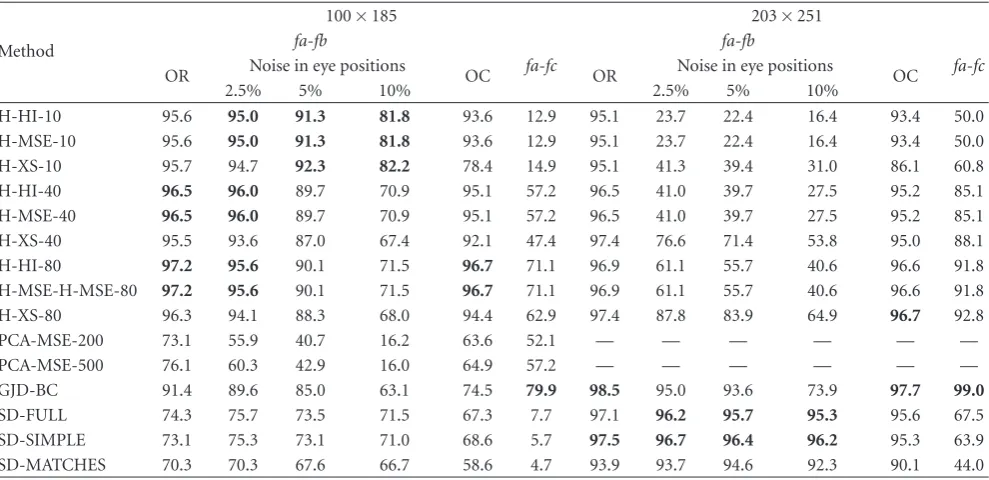
Table1: FERET fa-fb and fa-fc tests. Top-1 recognition rate. Noise in eye positions and face occlusion is tested in the fa-fb test. OR: Original. OC: Original plus Occlusion. The best results for each condition are presented in bold. Methods that have differenc
Method
100×185 203×251
fa-fb fa-fb
OR Noise in eye positions OC fa-fc OR Noise in eye positions OC fa-fc
2.5% 5% 10% 2.5% 5% 10%
H-HI-10 95.6 95.0 91.3 81.8 93.6 12.9 95.1 23.7 22.4 16.4 93.4 50.0
H-MSE-10 95.6 95.0 91.3 81.8 93.6 12.9 95.1 23.7 22.4 16.4 93.4 50.0
H-XS-10 95.7 94.7 92.3 82.2 78.4 14.9 95.1 41.3 39.4 31.0 86.1 60.8
H-HI-40 96.5 96.0 89.7 70.9 95.1 57.2 96.5 41.0 39.7 27.5 95.2 85.1
H-MSE-40 96.5 96.0 89.7 70.9 95.1 57.2 96.5 41.0 39.7 27.5 95.2 85.1
H-XS-40 95.5 93.6 87.0 67.4 92.1 47.4 97.4 76.6 71.4 53.8 95.0 88.1
H-HI-80 97.2 95.6 90.1 71.5 96.7 71.1 96.9 61.1 55.7 40.6 96.6 91.8
H-MSE-H-MSE-80 97.2 95.6 90.1 71.5 96.7 71.1 96.9 61.1 55.7 40.6 96.6 91.8
H-XS-80 96.3 94.1 88.3 68.0 94.4 62.9 97.4 87.8 83.9 64.9 96.7 92.8
PCA-MSE-200 73.1 55.9 40.7 16.2 63.6 52.1 — — — — — —
PCA-MSE-500 76.1 60.3 42.9 16.0 64.9 57.2 — — — — — —
GJD-BC 91.4 89.6 85.0 63.1 74.5 79.9 98.5 95.0 93.6 73.9 97.7 99.0
SD-FULL 74.3 75.7 73.5 71.5 67.3 7.7 97.1 96.2 95.7 95.3 95.6 67.5
SD-SIMPLE 73.1 75.3 73.1 71.0 68.6 5.7 97.5 96.7 96.4 96.2 95.3 63.9
SD-MATCHES 70.3 70.3 67.6 66.7 58.6 4.7 93.9 93.7 94.6 92.3 90.1 44.0
long time. However, the method is considered in the LFW and UCHFaceHRI experiments.
Original fa-fb Test. Table 1 shows top-1 RR (Recognition Rate) achieved by the different methods under comparison
in the originalfa-fbtest, which corresponds to a test with few
variations in the acquisition process (uniform illumination, no occlusions). We use the information of the annotated eyes, without adding any noise. From the experiments the following can be observed.
(i) The results obtained with our own implementation of the methods are consistent with those of other
studies. The best H-X-X flavors achieved in the 203×
251 face images a similar performance (97.4% versus 97%) than the one reported in the original work
[13]. GJD-BC achieved a slightly lower performance
(98.5% versus 99.5%) than in the original work
[10]. When comparing these results to the ones
obtained by other authors using more complex
systems based on hybrid Gabor-LBP [26],
Gabor-Fisher [27], or Fisher-Gabor-LBP [28]—98%, 99%
and 99.6%, respectively, we observe that those results are similar or slightly better than ours; however, our systems are much simpler. There are no reports of the use of the generalized PCA or SIFT methods in these datasets.
(ii) The best results (∼98.5%) are obtained by GJD-BC,
followed by the SD and H-X-80 variants, all using
203×251 images. Nevertheless, other H-X-X variants
also get very good results. Interestingly, some H-X-X
variants get∼97% even using 100×185 size images.
The results obtained by the PCA methods are the lowest.
(iii) The performance of the GJD-X-X and SD-X methods depends largely on the normalized size of the cropped images, probably because the methods use informa-tion about face shape and contour, which does not
appear in the 100×185 images.
Eye Detection Accuracy. Most of the face-recognition meth-ods are very sensitive to face alignment, which depends directly on the accuracy of the eye detection process; eye position is usually the primary, and sometimes the only, source of information for face alignment. For ana-lyzing the sensitivity of the different methods on the eye position’s accuracy, we added white noise to the position
of the annotated eyes in the fb images (see example in
Figure 2(a)). The noise was added independently to the x
and y eye positions. Table 1 shows the top-1 RR achieved
by the different methods. Our main conclusions are the
following.
(i) SD-X methods are almost invariant to the position of
the eyes in the case of using 203×251 face images.
With 10% error in the position of the eyes, the
top-1 RR decreases in just ∼2%. The invariance is due
to the fact that this method aligns test and gallery images by itself.
(ii) In all other cases the performance of the methods decreases largely with the error in the eye position, probably because they are based on the matching between holistic or feature-based representations of the images. However, if the eye position error is bounded to 5%, the results obtained by some
H-X-X variants using 100×185 face images (∼90%) are
Partial Face Occlusions. To analyze the behavior of the different methods in response to partial occlusions on the
face area,fbface images were divided into 10 different areas
(2 columns and 5 rows). One of these areas was randomly selected and its pixels set to 0 (black). See example in Figure 2(b). Thus, in this test each face image of fb has
one tenth of its area occluded. Table 1shows the top-1RR
achieved by the different methods. The main conclusions are
as follows.
(i) GJD-BC and H-XS-80 achieve the highest top-1 RR
in the 203×251 case, 97.7% and 96.7%, respectively.
(ii) Some H-X-X variants are very robust to face occlu-sions (e.g., H-HI-10, H-MSE-10, H-X-80)
indepen-dently of using face images of 100×185 or 203×251
pixels.
(iii) SD-X variants are also robust to occlusions in the
203×251 case.
(iv) PCA is not robust to occlusions; its performance decreases in about 10% compared to the nonoc-cluded case.
Variable Illumination. Variable illumination is one of the factors with strong influence in the performance of face-recognition methods. Although there are some specialized face databases for testing algorithm invariance against vari-able illumination (e.g., PIE, YaleB), we choose to use the
fa-fc test set, because (i) it considers a large number of
individuals (394 versus 10 in Yale B and 68 in PIE), and (ii)
the illumination conditions are more natural in thefcimages.
Table 1shows thetop-1RR achieved by the different methods in this test. The main conclusions are as follows.
(i) The results obtained with our own implementation of the methods are consistent with those of other
studies. The best H-X-X flavors achieve in the 203×
251 case a higher performance (92.8% versus 79%)
than the one reported in the original work [13],
probably due to the different image’s partitions that we use in our implementation. The best GJD-BC flavors achieve a slightly lower performance (99% versus 99.5%) than the original implementation
[10]. When comparing these results to the ones
obtained by other authors using more complex
systems based on hybrid Gabor-LBP [26],
Gabor-Fisher [27], or Fisher-Gabor-LBP [28]—98%, 97%
and 99%, respectively—we observe that those results are similar to ours; however, our systems are much simpler. There are no reports of the use of the generalized PCA or SIFT methods in the same database.
(ii) Best performance is achieved by GJD-BC (99%), and
second best by H-XS-80 (∼93%). In both cases using
images cropped to 203×251 pixels.
(iii) In all cases much better results were obtained using
larger face images (203×251).
(iv) PCA-X-X and SD-X methods show a low perfor-mance in this dataset.
(v) H-X-X methods with a large number of partitions show better performance than variants with a small
number of partitions (∼93% versus∼50% in the case
of using 203×251 images and∼71% versus∼13% in
the case of 100×185 images).
Computational Performance. As aforementioned one of the requirements imposed to the methods under comparison is real-time operation. In addition, the memory required by
the different methods is very important in some applications
where memory could be an expensive resource. Table 2
shows the computational and memory costs of the different
methods under comparison, when images of 100×185 are
considered. For the case of measuring the computational costs, we considered the feature-extraction time (FET) and the matching time (MT). In the case of measuring memory costs, we considered the database memory (DM), which is the required amount of memory to have the whole database (features) in memory, and the model memory (MM), which is the required amount of memory to have the method model, if any, in memory (PCA matrices for the PCA case and filter bank for the Gabor method). We show the results for databases of 1, 10, 100, and 1,000 individuals (face images). If we consider that in many applications the database size is in the range 10–100 persons, the fastest methods are the H-X-X ones. The second fastest methods are the GJD-BC ones. To achieve real-time operation with a database of 100 or fewer elements, all methods are suitable, except PCA-based methods. In databases of 10–100 individuals, H-X-X and GJD-X-X require less than 8 MBytes of memory (they do not need to keep a model in memory). In the case of H-X-X methods, the required memory increases linearly with the number of partitions.
Summary. As a result of all these experiments we decided to further test these methods in more demanding conditions using the LWF and UCHFaceHRI databases. In this stage we discarded the PCA method, because in all tests it turns to be the weakest one, getting always the lowest scores.
4. Comparative Study Using the LFW Database
The LFW database [8] consists of 13,233 images faces of
5,749 different persons, obtained from news images by means
of a face detector (Viola-Jones detector [18]). There are no
eyes/fiducial point annotations; the faces were just aligned using the output of the face detector. The faces aligned
using the funneling algorithm [29] are also available. The
images of the LFW database have a very large degree of variability in the face’s expression, age, race, background,
and illumination conditions (seeFigure 3). Also, unlike other
(a) (b)
Figure2: Face image of 203×251 pixels. (a) Image with eye position (red dot) and square showing a 10% error in the eye position. (b) Image with partial occlusion.
Table2: Computational and memory costs. FET: Feature Extraction Time. MT: Matching Time. PT: Processing Time. DM: Database Memory. MM: Model Memory. TM: Total Memory. Time measures are in milliseconds; memory measures are in Kbytes. DB sizes of 1, 10, 100, and 1,000 faces are considered. An image size of 100×185 pixels is considered.
Method FET MT PT (FET + MT) DM MM TM (DM + MM)
1 10 100 1000 1 10 100 1000
H-X-10 15 0.11 15 16 26 120 11 0 11 110 1100 11000
H-X-40 15 0.29 15 18 44 305 41 0 41 410 4100 41000
H-X-80 15 0.42 15 19 57 435 80 0 80 800 8000 80000
PCA-MSE-200 170 0.02 170 170 172 190 0,8 137800 137801 137808 137878 138585
PCA-MSE-500 360 0.02 360 360 362 380 2 137800 137802 137820 137996 139757
GJD-BC 50 0.25 50 53 75 300 33 1240 1273 1572 4559 34427
SD-X 4.7 1.03 6 15 108 1036 428 0 428 4284 42845 428451
most difficult one, and it is the one considered here. Under this setting the only information that the algorithm can use is the image pair; no information of the identity of the faces in the images can be used, that is, the algorithm is restricted to work only using the image pair at hand. The systems are trained (if required) and evaluated using a 10-fold validation procedure, where the folds are symmetric in the sense that the number of matching pairs and nonmatching pairs is the same. See [8] for details.
In the first experiments (Sections 4.1 and 4.2) images
were cropped to 100×185 pixels (see Figures4(a)and4(b)).
Given that the mean distance between eyes is 42 pixels, the
normalized width and height arenw=2.4 andnh=4.4. We
analyze and compare two cases, unaligned and aligned. In the unaligned case, face images have a coarse alignment, which is the one produced by the face detector that was used to obtain the images. In the aligned case, the funnelling algorithm is used to obtain a more accurate alignment. Afterwards, in Section 4.3, all methods are analyzed, considering different region sizes, where the face’s images are cropped considering larger and smaller bounding boxes. These experiments
ana-lyze the effect of using different amounts of background and
face’s information in the recognition process (seeFigure 4).
Given that the LFW database only requires comparing pairs of faces, and that an important part of the GJD method
is the ranking done using Borda count, we had to adapt it to this condition. To accomplish this, we first define a reference set of faces, which is built by randomly selecting face images (e.g., 50) of the same characteristics than the ones under comparison. Then, we take one of the two face images under comparison, and we compare it against the images of the reference set plus the second image under comparison. The relative ranking, computed using Borda count, obtained by the second face image is considered as a measure of the similarity between the pair of images. To obtain a symmetric similarity measure, we repeated the same procedure by switching the roles of the two images, and then averaging the two obtained rankings. The average value was taken as the final similarity measure of the pair of images. We considered three different sizes for the reference set: 10, 50, and 100 faces. To show the importance of using Borda count method, results using the Euclidean distance between the GJD descriptors are also given for comparative purposes.
SD-Full does not work properly in this database, and consequently its results are omitted. In addition, when using the LBP-based methods, HI and MSE always obtained the same recognition results, and therefore the HI case is also omitted. The results corresponding to ERCF consider
Figure3: Examples of faces from the LFW, randomly selected from people with name starting with A.
2.4 / 4.4
(a)
2.4 / 4.4
(b)
1.9 / 3.6
(c)
2.9 / 5.4
(d)
3 / 3
(e)
6 / 6
(f)
Figure4: Examples of faces with different cropping (LFW database). (a) 100×185, unaligned; (b) 100×185, aligned; (c) 81×150, aligned; (d) 122×225, aligned; (e) 125×125, aligned; (f) 250×250, aligned. The last row shows the normalized image’s width and height (nw/nh). The images are shown maintaining their relative sizes.
presented in [15]. We use the original results although in our
own experiments we got very similar results.
4.1. Experiments Using Unaligned Faces. Table 3(second and third columns) shows the results for all methods under comparison in the unaligned LFW database. It should be remembered that in the unaligned LFW, all images have a coarse alignment. In all cases (except for ERCF), regions
of 100 × 185 pixels containing the centered face in the
250×250 image were cropped (nw = 2.4 andnh = 4.4).
1 0.9 0.8 0.7 0.6 0.5 0.4 0.3 0.2 0.1 0
False positive rate 0
0.1 0.2 0.3 0.4 0.5 0.6 0.7 0.8 0.9 1 Tr u e p o si ti ve ra te
ROC curves for HI-XS-40 using funneling
100×100 108×200 122×225 125×125 135×250 150×150 175×175 200×200 225×225
250×250 41×75 54×100 68×125 75×75 81×150 95×175
(a)
1 0.9 0.8 0.7 0.6 0.5 0.4 0.3 0.2 0.1 0
False positive rate 0
0.1 0.2 0.3 0.4 0.5 0.6 0.7 0.8 0.9 1 Tr u e p o si ti ve ra te
ROC curves for HI-XS-40
100×100 108×200 122×225 125×125 135×250 150×150 175×175 200×200 225×225
250×250 41×75 54×100 68×125 75×75 81×150 95×175
(b)
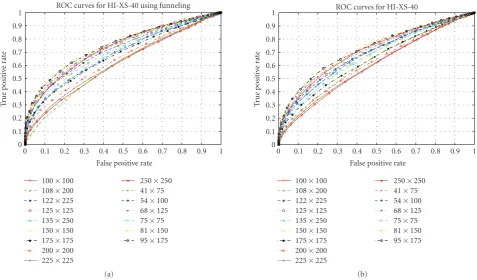
Figure5: Effect of the image’s region size on the performance of the H-XS-40. (a) Faces aligned using funneling; (b) unaligned faces.
best results are obtained with H-X-80, that is, when using the largest number of divisions. The difference between using the Chi-Square and the Mean Square Error is not significant, although the Chi-Square measure gives slightly better results in all cases. For the method based on the GJD, best results are obtained when using the proposed Borda count methodology (it increases the performance in circa 2% over the Euclidean distance); 100 reference images gives slightly better results than 10 or 50. Both methods based on SD got the lowest performance (about 60%–62%). The
performance of ERCF is quite good, being∼4% larger than
the second best method (GJD-BC-100).
4.2. Experiments Using Aligned Faces. The faces were aligned
using the funneling algorithm [29]. Funneling is an
unsuper-vised algorithm for object alignment based on the concept of congealing. Congealing basically consists of searching a sequence of transformations (in this case affine transforms and translations) that are applied to a set of images in order to minimize an entropy measure on the set of images. After having built the congealing model, the transformations can be applied to an unseen image (funneling it) to obtain an aligned image. The main advantage of this method is that it can work in complex objects and that it does not require any labeling during training.
Table 3 (last two columns) shows the results for all methods under comparison using aligned faces. As in the case of unaligned faces (except for ERCF); the face region was
cropped considering a region of 100×185 pixels centered in
the 250×250 image (nw = 2.4 andnh= 4.4). Compared
to the case of unaligned faces, all methods, but GJD-X-X and SD-Simple, improve or maintain their performance. The H-X-X methods obtain the largest improvement, 2% to 3%, depending on the variant being considered. Again, in the case of LBP based methods, best results are obtained with H-X-80, that is, when using the largest number of divisions, and the Chi-Square distance’s measure, with a performance similar to GJD. For the variants based on the GJD, best results are obtained when Borda Count is used (it increases the performance in circa 3% over the Euclidean distance), and 100 reference images gives slightly better results than 10 or 50. However, in this case, the results were slightly worse than the ones obtained for the case of unaligned faces. Again, best results are obtained by ERCF, but this time being about 5% over the second best method.
4.3. Experiments Using Different Windows Sizes. In this section we analyze the effect of using different region sizes in the performance of the analyzed methods. Note that increasing the size of the regions corresponds to adding or removing different amounts of background to the region being analyzed, given that we are not decreasing the scale of the faces. The experiments were performed considering
squared image regions, ranging from 50×50 to 250×250,
with a step of 25 pixels, and considering regions of ratio
1 : 1.85 (as in the previous section), ranging from 41×75
to 135×250, with a step of 25 pixels. Results are presented
in Figures 5–8 in form of ROC curves. By observing the
1 0.9 0.8 0.7 0.6 0.5 0.4 0.3 0.2 0.1 0
False positive rate 0
0.1 0.2 0.3 0.4 0.5 0.6 0.7 0.8 0.9 1 Tr u e p o si ti ve ra te
ROC curves for GJD-BC-50 using funneling
100×100 108×200 122×225 125×125 135×250 150×150 175×175 200×200 225×225
250×250 41×75 54×100 68×125 75×75 81×150 95×175
(a)
1 0.9 0.8 0.7 0.6 0.5 0.4 0.3 0.2 0.1 0
False positive rate 0
0.1 0.2 0.3 0.4 0.5 0.6 0.7 0.8 0.9 1 Tr u e p o si ti ve ra te
ROC curves for GJD-BC-50
100×100 108×200 122×225 125×125 135×250 150×150 175×175 200×200 225×225
250×250 41×75 54×100 68×125 75×75 81×150 95×175
(b)
Figure6: Effect of the image’s region size on the performance of the GJD-BC-50 method. (a) Faces aligned using funneling; (b) unaligned faces.
1 0.9 0.8 0.7 0.6 0.5 0.4 0.3 0.2 0.1 0
False positive rate 0
0.1 0.2 0.3 0.4 0.5 0.6 0.7 0.8 0.9 1 Tr u e p o si ti ve ra te
ROC curves for SD-MATCHES using funneling
100×100 125×125 150×150 175×175
200×200 225×225 250×250 75×75
(a)
1 0.9 0.8 0.7 0.6 0.5 0.4 0.3 0.2 0.1 0
False positive rate 0
0.1 0.2 0.3 0.4 0.5 0.6 0.7 0.8 0.9 1 Tr u e p o si ti ve ra te
ROC curves for SD-MATCHES
100×100 108×200 122×225 125×125 135×250 150×150 175×175 200×200 225×225
250×250 41×75 54×100 68×125 75×75 81×150 95×175
(b)
1 0.9 0.8 0.7 0.6 0.5 0.4 0.3 0.2 0.1 0
False positive rate 0
0.1 0.2 0.3 0.4 0.5 0.6 0.7 0.8 0.9 1 Tr u e p o si ti ve ra te
ROC curves for HI-x-x using funneling
H-MSE-10, 81×150 H-XS-10, 81×150 H-MSE-40, 81×150
H-XS-40, 81×150 H-MSE-80, 81×150 H-XS-80, 81×150 (a)
1 0.9 0.8 0.7 0.6 0.5 0.4 0.3 0.2 0.1 0
False positive rate 0
0.1 0.2 0.3 0.4 0.5 0.6 0.7 0.8 0.9 1 Tr u e p o si ti ve ra te
ROC curves for GJD-BC using funneling
GJD-BC-10, 122×225 GJD-BC-50, 122×225 GJD-BC-100, 122×225
(b)
1 0.9 0.8 0.7 0.6 0.5 0.4 0.3 0.2 0.1 0
False positive rate 0
0.1 0.2 0.3 0.4 0.5 0.6 0.7 0.8 0.9 1 Tr u e p o si ti ve ra te
ROC curves for SD-MATCHES using funneling
SD-MATCHES, 100×100 SD-MATCHES, 125×125 SD-MATCHES, 150×150
(c)
Figure 8: Comparison of the best working flavors of each method when funneling is used: (a) H-X-X, (b) GJD-BC, (c) SD-MATCHES.
1 0.9 0.8 0.7 0.6 0.5 0.4 0.3 0.2 0.1 0
False positive rate 0
0.1 0.2 0.3 0.4 0.5 0.6 0.7 0.8 0.9 1 Tr u e p o si ti ve ra te
ROC curves for selected methods
H-XI-40, Image region 81×150, aligned faces GJD-BD-100, Image region 100×185, unaligned faces SD-MATCHES, Image region 100×185, aligned faces ERCT, unaligned faces
ERCT, aligned faces
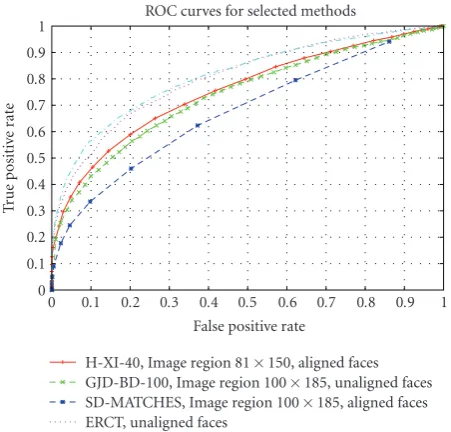
Figure9: ROC curves of the best working variant of each method. Experiments were performed on faces aligned using funneling.
background information being analyzed on the performance
of all algorithms. InFigure 4, the different amounts of face
and background information that each image’s size includes can be observed. The second thing is that in all cases (independently of the distance’s measure and the method’s parameters), small region sizes present the worst results, followed by the largest region sizes. Best results are obtained using medium-size regions.
Figure 5 shows the results for HI-XS-40. Best results
are obtained for aligned images of size 81×150 (see also
Figure 8(a)), which contains some background, but not very
much (seeFigure 4(c)). In the case of unaligned images, best
results are obtained for images of size 95×175. Similar results
were obtained when using 10 and 80 image divisions. For a fixed number of divisions, the Chi-Square measure works better than the mean square error (results not shown for space reasons).
Figure 6 shows the results for GJD-BC-50. Best results
are obtained for aligned images of size 122 × 225 (see
Figure 4(d)). In the case of unaligned images, best results are
obtained for images of size 95×175. The most important
thing that must be noticed here (see also Figure 8(b)) is
that when the optimal image size is used and aligned faces are considered, using 10, 50, or 100 reference images; very similar results are given (in terms of MCA 0.6838, 0.6838, and 0.6847, resp.). This also holds when unaligned faces are used, but the difference is slightly larger (in terms of MCA 0.6752, 0.6780, and 0.6808, resp.). The experiments with reference sets of 10 and 100 images are not shown for space reasons.
Figures 7and8(c) show the results for SD-MATCHES.
Best results are obtained again for aligned images; in this case
a size of 125×125 gives better results (seeFigure 4(e)). In
Table3: Correct classification rates (LFW database, restricted setting). Experiments were performed on cropped regions of size 100×185 (nw=2.4 andnh=4.4), except for ERCF that considers the full image. MCA:Mean classification accuracy.SME:Standard error of the mean. In bold are the best results of each method.
Without alignment With alignment (funneling)
Method MCA SME MCA SME
H-MSE-10 0.6375 0.0049 0.6585 0.0046
H-XS-10 0.6500 0.0043 0.6668 0.0044
H-MSE-40 0.6217 0.0055 0.6527 0.0057
H-XS-40 0.6383 0.0064 0.6650 0.0059
H-MSE-80 0.6527 0.0047 0.6725 0.0032
H-XS-80 0.6532 0.0053 0.6785 0.0055
GJD-EU 0.6410 0.0084 0.6375 0.0071
GJD-BC-10 0.6777 0.0080 0.6753 0.0082
GJD-BC-50 0.6770 0.0075 0.6742 0.0061
GJD-BC-100 0.6798 0.0065 0.6762 0.0069
SD-MATCHES 0.6015 0.0049 0.6215 0.0036
SD-SIMPLE 0.6295 0.0071 0.6288 0.0051
ERCF (from [15]) 0.7245 0.0040 0.7333 0.0060
Table4: Correct classification rates of the best methods (LFW database, restricted setting). MCA: Mean Classification Accuracy.SME: Standard Error of the Mean.
Method Region Size MCA SME
SD-MATCHES, aligned faces 125×125 0.6410 0.0062
H-XS-40, aligned faces 81×150 0.6945 0.0048
GJD-BC-100, aligned faces 122×225 0.6847 0.0065
ERCF aligned faces (from [15]) 250×250 0.7333 0.0060
Table5: Processing Time. Time measures are in milliseconds. We carried out the experiments on a computer running Linux with an Intel Core 2 Duo E6750 2.66 GHz (2 GB RAM). FET/MT: Feature Extraction/Matching Time.
Method H H H GJD GJD GJD GJD SD ERCF
Parameters X-10 X-40 X-80 BC-1 BC-10 BC-50 BC-100 X From [14]
FET (ms) 2.45 2.45 2.45 62 62 62 62 4.7 —
MT (ms) 0.033 0.118 0.230 0.37 2.63 5.59 15.55 64.7 2000
Image size 81×150 122×225 125×125 100×185
8
1
11 10 12
9
7
6
4
5
2 3 x
y
(a)
18
16
19
17 15
13 14
20
12 θ
ρ
(b)
images of size 100×100. In all cases, best results are obtained with the SD-Matches variant. Very low performance results are obtained by the SD-Simple variant.
Finally,Figure 9shows the ROC curves of the best variant
of each method.
4.4. Discussion. If one analyzes the performance obtained by the different methods, ERCF obtains clearly the best
results (see Table 4). Best LBP-based method (H-XS-40) is
almost 3.9% below ERCF, and about 1% over GJD’s best method (GJD-BC-100). However, if one now analyzes the processing speed of the methods, the best variant of LBP-based methods (H-XS-40) is at least 400 times faster than
ERCF (seeTable 5), and 30 times faster than the best Gabor
method (GJD-BC-100). The high processing time of ERCF and GJD can be too restrictive for some applications, in particular in the ones that require real-time operation (e.g., HRI) as well in applications where very large amounts of data are being analyzed (e.g., search in a very large multimedia database). The Borda count ranking of each of the features is the slowest operation of GJD, while the slowest part of ERCF corresponds to the computation of the normalized cross-correlation in the selection of pairs of regions to be quantized using ERCF. However, it should be noted that in a face identification scenario, as the one reported for the FERET case, it is not required that GJD use a reference set.
In this case (GJD-BC-1 inTable 5), the method needs about
63 milliseconds to analyze a face image.
It is also interesting to analyze which kind of information uses each method by looking at the optimal regions they use.
The regions are shown inFigure 4as well as the normalized
width and height of the face images (last row). SD methods, specifically SD-Matches that has an optimal region size of
125×125 (seeFigure 4(e)), show better performance when
there is the fewest possible background in the image, but without removing any part of the face. The methods need as much as possible face information to obtain a correct matching. However, the background disturbs the matching process (a face keypoint could be matched to a background keypoint). In the case of LBP-based methods, specifically for
H-XS-40 that has an optimal region size of 81×150 (see
Figure 4(c)), it seems that some background but not much helps. Probably, this additional information about the face’s contour helps the recognition process. Finally, in the case of the GJD methods, specifically GJD-BC-100 that has an
optimal region size of 122×225 (seeFigure 4(d)), the image
contains much more background. The reason is twofolds: (i) the Gabor-filters encode information about the contour of the face, and (ii) large regions allow the use of large filters, which encoded large-scale information.
It is important to compare the optimal region sizes of the methods in the LWF, with the sizes used in the FERET experiments. However, it should be noted that the images in both databases have different resolutions. Therefore, instead
of comparing region sizes, normalized image’s width (nw)
and height (nh) need to be used. In our FERET experiments,
the nw/nh values are 1.6/3.0 for the 100 ×185 case, and
3.0/3.7 for the 203×251 case. The nw and nh values of
the optimal region sizes, in the LWF case, are shown in
Figure 4. By comparing these normalized values we observe that there is a concordance. (i) SD and GJD methods behave much better when normalized sizes of 3.0/3.7 are used in FERET, and in LFW behave better with values of 3.0/3.0 for the case of the SD method, and 2.9/5.4 for the case of the GJD method. (ii) In the case of the H-XS-40 method, similar results are obtained in FERET with 1.6/3.0 or 3.0/3.7, which is concordant with the selected values of 2.4/4.4 in LWF. Naturally, the normalized values in both databases are not the same, because in the FERET case we decided to use just two, fixed image’s sizes, while in the LWF we allow the methods to choose the best values.
Finally, it is interesting to analyze how much the methods’ performance depends on the alignment’s accuracy.
By observingTable 3, it can be seen that the methods with
the largest dependence on the alignment’s accuracy are the H-X-X. These results are consistent with the one obtained in the FERET database. On the opposite site, SD methods are very robust to alignment errors, which is also consistent with the results obtained in the FERET case. As it can be noticed, GJD performs worse when alignment is used. We think this is related with the way in which the used alignment method (funneling) works. Funneling aligns the whole face (shape), and not the eyes. As observed in the results obtained for FERET, GJD seems to be very sensible to good eyes’ alignment.
5. Comparative Study Using Real HRI Database
The UCHFaceHRI database was built with the goal of allowing the study of face analysis methods in tasks such as detection, recognition, and relative pose determination of humans using face information, for HRI (Human-Robot Interaction) applications. The database contains images
from 30 individuals, which were taken in 20 different
relative camera-individual poses (see acquisition points in Figure 10), in outdoor and in indoor settings, at a resolution
of 1024×768 pixels. Five different face expressions were
considered for the case of the frontal face (P12 acquisition point): neutral expression, surprised, angry, sad, and happy. Thus, the database contains 48 images for each individual.
Each of these 48 face images is specified as Fjkl, where j
indicates that the image was taken at the acquisition point Pj
andkindicates which expression is associated to this image
(neutral: k = a, surprised: k = b, angry: k = c, sad:
k=d, happy:k=e). This index is valid only in the case of
images taken in the acquisition point P12. Finally,lindicates
if the image was taken in an indoor (l = i) or an outdoor
(l=o) environment.Figure 11shows the 24 indoor images
corresponding to a given individual. The database can be
downloaded in [30].
In all experiments the F12ai face images composed the gallery set. We define 14 specific and global test sets, to analyze the methods’ invariance to the scale, orientation, and expression of the faces, considering indoor and outdoor illumination conditions as follows.
(ii) Expression test sets. E-I: Expression-Indoor (images
F12bi-F12ei), E-O: Expression-Indoor (images
F12bo-F12eo).
(iii) Rotation test sets. R-I: Rotation-Indoor (images F13i, F14i, F19i, F20i), R-I/15: Rotation-Indoor in 15 degrees (images F13i, F20i), R-I/30: Rotation-Indoor in 30 degrees (images F14i, F19i), R-O: Rotation-Outdoor (images F13o, F14o, F19o, F20o), R-O/15: Rotation-Outdoor in 15 degrees (images F13o, F20o), R-O/30: Rotation-Outdoor in 30 degrees (images F14o, F19o).
(iv) Global test sets. Scale: S=S-I + S-O, Expression: E=
E-I + E-O, Rotation: R=R-I + R-O, Global Indoor:
G-I=S-I + E-I + R-I, Global Outdoor: G-O=S-O +
E-O + R-O, and Global: G=D + E + R=G-I + G-O.
In the experiments we considered the best working variants (distance’s measure and region’s size) of each method (H, GJD-BC, SD, and ERCF), according to the results obtained in LFW. To have the same conditions than in the LWF experiments, the faces were aligned using the annotated eyes, and the cropping was done without using funnelling, but using the estimated bounding box that would have been obtained if funnelling was used. This estimation was obtained by measuring the eyes positions of a subset of 20 LWF-funnelled images. As in the case of LWF, the distance between eyes was 42 pixels.
For the evaluation of ERCF, we trained a system
using the implementation of the author (available on
http://lear.inrialpes.fr/people/nowak/similarity/index.html) of ERCF and the same parameters used to obtain the
results presented in [15], which were obtained by a direct
communication with the authors of the LFW database. For ERCF we are presenting results for four cases, each one
corresponding to a different value of C when training the
SVM classifier. The results presented in the previous section
for ERCF correspond toC=1. Here we used as training set,
the complete test set of LFW (6000 pairs of images).
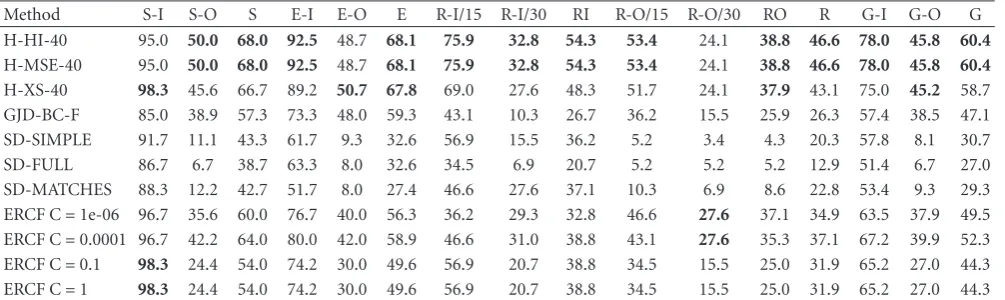
Table 6 shows the top-1 recognition rates obtained in these tests. Main conclusions are as follows.
(i) Comments on indoor/outdoor tests are as follows.
(a) For all methods, much better results are obtained for indoor faces than for outdoor faces. This is a clear indication that the analyzed methods are not robust to outdoor illumina-tion. Some improvement may be achieved if preprocessing stages are added.
(b) H-X-X methods obtain the highest recognition rate with outdoor faces, followed by GJD and ERCF.
(c) SD performance is strongly affected by outdoor
illumination.
(ii) Comments about Scale tests are as follows.
(a) The best performing method is H-X-X, fol-lowed by GJD, ERCF, and SD, in that order.
However, if we consider only indoor images (S-I set), the best performing methods are H-XS-40 and ERCF, followed by the SD-variants. GJD got the lowest top-1 RR.
(b) In the case of outdoor images all methods have a very low performance, with the best ones (H-HI-40 and H-MSE-40) achieving only a 50% top-1 RR.
(iii) Comments about Expression tests:
(a) HI-X-X shows the best performance followed by ERCF. In the third place comes GJD followed by SD. The same holds if we consider only indoor images (E-I).
(b) In the case of outdoor images, all methods have a very low performance, with the best one (H-XS-40) achieving only a 50.7% top-1 RR.
(iv) Comments about rotation tests are as follows.
(a) Which methods is the best depends on the amount of rotation in the images and on the illuminations conditions. In case of low rotations (15 degrees) with indoor or outdoor illumination, HI-X-X got the highest top-1 RR. In case of higher rotations (30 degrees) and indoor illumination, the same happens. However, in case of 30 degrees rotation and outdoor illumination, ERCF got the top-1 RR. (b) In indoor conditions, SD is more robust to
rotations than GJD. Moreover, SD-Matches and SD-Simple present the second best results in some indoor image cases. However, in outdoor conditions their performance is quite low. (c) In general terms, the performance of some
methods in indoor images with 15 degrees
rotation is acceptable (∼76%). However, no
method gives acceptable results for outdoor images with low rotation (15 degrees), or for rotations in 30 degrees.
(v) Comments about global results are as follows.
Table6: UCHFaceHRI tests. Top-1 recognition rate. Experiments are performed with detected eyes. In bold are the best results for each condition. Methods that have differences of 1% or less are considered as having the same performance. See main text for a description about the different experiments.
Method S-I S-O S E-I E-O E R-I/15 R-I/30 RI R-O/15 R-O/30 RO R G-I G-O G
H-HI-40 95.0 50.0 68.0 92.5 48.7 68.1 75.9 32.8 54.3 53.4 24.1 38.8 46.6 78.0 45.8 60.4 H-MSE-40 95.0 50.0 68.0 92.5 48.7 68.1 75.9 32.8 54.3 53.4 24.1 38.8 46.6 78.0 45.8 60.4 H-XS-40 98.3 45.6 66.7 89.2 50.7 67.8 69.0 27.6 48.3 51.7 24.1 37.9 43.1 75.0 45.2 58.7 GJD-BC-F 85.0 38.9 57.3 73.3 48.0 59.3 43.1 10.3 26.7 36.2 15.5 25.9 26.3 57.4 38.5 47.1 SD-SIMPLE 91.7 11.1 43.3 61.7 9.3 32.6 56.9 15.5 36.2 5.2 3.4 4.3 20.3 57.8 8.1 30.7
SD-FULL 86.7 6.7 38.7 63.3 8.0 32.6 34.5 6.9 20.7 5.2 5.2 5.2 12.9 51.4 6.7 27.0
SD-MATCHES 88.3 12.2 42.7 51.7 8.0 27.4 46.6 27.6 37.1 10.3 6.9 8.6 22.8 53.4 9.3 29.3 ERCF C=1e-06 96.7 35.6 60.0 76.7 40.0 56.3 36.2 29.3 32.8 46.6 27.6 37.1 34.9 63.5 37.9 49.5 ERCF C=0.0001 96.7 42.2 64.0 80.0 42.0 58.9 46.6 31.0 38.8 43.1 27.6 35.3 37.1 67.2 39.9 52.3 ERCF C=0.1 98.3 24.4 54.0 74.2 30.0 49.6 56.9 20.7 38.8 34.5 15.5 25.0 31.9 65.2 27.0 44.3 ERCF C=1 98.3 24.4 54.0 74.2 30.0 49.6 56.9 20.7 38.8 34.5 15.5 25.0 31.9 65.2 27.0 44.3
6. Comparative Study Using FRGC
From the reported experiments it can be observed that the methods that perform better in our experiments are the LBP-based (H-X-X) and Gabor-LBP-based (GJD) ones. These methods
are further analyzed using the FRGC ver2.0 database [17].
This database consists of 50,000 face images divided into training and validation partitions. In our experiments the training partition was not used, because one of our main requirements is that methods under comparison should be fully on-line. The validation partition consists of data from 4,003 subject sessions. A subject session consists of controlled and uncontrolled images. The controlled images were taken in a studio setting, and they are full frontal facial images taken under two lighting conditions and with two facial expressions (smiling and neutral), while the uncontrolled
images were taken in varying illumination conditions [17].
Each set of uncontrolled images contains two expressions, smiling and neutral. In our analysis we will focus on two
FRGC tests:Experiment 1, which corresponds to a control
experiment where the gallery and the probe sets consist of
controlled still images, and Experiment 4, which measures
recognition performance from uncontrolled images (the probe set consist of single uncontrolled still images; the gallery is composed by controlled still images).
Figure 12shows the ROC curve obtained in experiment 1 by the best methods under comparison. It should be stressed that in our test we have used all possible image pair comparisons that can be carried out in experiment
1 (16, 028 × 16, 028), and not the image pairs defined
by the ROC I–ROC III FRGC subexperiments that some papers report. As it can be observed the obtained results are concordant with the ones of similar reported approaches ,
for instance in [31,32]. But, if we compare these methods
with recent kernel-based approaches, as the ones proposed
by Liu [33] (Gabor-Multiclass-KFDA) or Zhao et al. (LBP
KFDA) [31], we observe that kernel approaches obtain much
higher results than LBP- or Gabor-based approaches, about 10% higher verification rate for a given FAR. However, it
should be remembered that the kernel approaches need to be trained in the database, and they are much slower
than the methods under comparison. From Figure 12 it
is also interesting to note the dependency of the LBP-based methods’ performance on the number of partitions. Methods using a larger number of partitions get better results than methods using a smaller number of partitions. This phenomenon although being logic was not clearly observed in the other databases. Probably with very large database the number of partitions is an important parameter to be considered.
We also analyzed the methods under comparison using the FRGC, experiment 4. By analyzing the results, similar conclusions were obtained: (i) the results are concordant with the ones of similar approaches reported in the literature
(see, e.g., [26]), (ii) kernel approaches get much better
results, and (iii) the performance of the LBP-based methods depends on the number of partitions.
7. Discussion and Conclusions
In this article, a comparative study among face-recognition methods in unconstrained environments was presented. The analyzed methods were selected by considering their suit-ability for the defined requirements—real-time operation, just one image per person, fully on-line (no training), robust behavior in unconstrained environments, and their performance in former studies. The comparative study was carried out using three databases: FERET, LFW, and UCHFaceHRI. The well-known FERET database was used as a baseline for comparison, and experiments were carried out in different subsets that include variations in illumination, nonaccurate eye’s annotations, and occlusions. The LFW database implicitly includes aspects such as scale, pose, light-ing, focus, resolution, facial expression, accessories, makeup, occlusions, background, and photographic quality, while the UCHFaceHRI explicitly includes aspects such as scale (distance to the camera), expressions (neutral, surprised,
(F1i) (F2i) (F3i) (F4i) (F5i) (F6i) (a)
(F7i) (F8i) (F9i) (F10i) (F11i) (F12ai)
(b)
(F12bi) (F12ci) (F12di) (F12ei) (F13) (F14)
(c)
(F15) (F16) (F17) (F18) (F19) (F20)
(d)
Figure11: UCHFaceHRI database. Examples of 24 indoor images corresponding to an individual. The face-image Fjkicorresponds to an image taken acquisition pointj(seeFigure 10).istands for indoor. In the case of the F12ki images, thekindex means: (a) Neutral expression, (b) Surprised, (c) Angry, (d) Sad, and (e) Happy.
out-of-plane rotation), and illumination (indoor/outdoor). The methods under comparison are generalized-PCA, LBP histograms, Gabor Jets descriptors, SIFT descriptors, and ERCF. We will comment about the main results of this study, and we will draw some conclusions of this work.
Comments on the Size of the Face Region. What was very surprising to us is the large dependence of the methods to the amount of face and background information that is included in the face’s images. This effect was clearly seen in our FERET and LFW experiments. For instance, in the FERET case, SD increases its recognition rate in more than 20% depending on the size of the face images. In the LWF case where experimental conditions are much harder, LBP-based
methods and SD increase their recognition rates in ∼4%,
depending on the size of the face images. We also observe that the different methods have different requirements. LBP-based methods concentrate themselves mostly in the face area, but it seems that additional information about the face’s chin, which is only observed if some background is included in the images, helps the recognition process. On the other hand, GJD methods need much more background. The
reason is twofolds: (i) the Gabor filters encode information about the contour of the face, and (ii) large regions allow the use of large filters, which encoded large-scale information. SD methods show better performance when there is the fewest possible background in the image, but without removing any part of the face. The methods needs as much as possible face information to obtain a correct matching, but the background disturbs this process (a face keypoint could be matched to a background keypoint).
Comments on the Illumination Conditions. Most of the methods behave very well in natural, indoor illumination conditions, the exception being SD. This can be clearly seen
in the FERET experiments (fa-fc). However, this situation
changes drastically with outdoor illumination conditions. The performance of all methods decreases largely with outdoor illumination. Clearly, face recognition in outdoor conditions is still a nonsolved problem.