NAFIU AMINU
1,2*, MAHMUD SANI GWARZO
31Department of Pharmaceutics and Pharmaceutical Microbiology, Faculty of Pharmaceutical Sciences, Usmanu Danfodiyo University Sokoto, Nigeria. 2Department of Pharmaceutical Technology, School of Pharmaceutical Sciences, Universiti Sains Malaysia, Penang, Malaysia. 3Department of Pharmaceutics and Pharmaceutical Microbiology, Faculty of Pharmaceutical Sciences, Bayero University Kano,
Nigeria. Email: [email protected]
Received: 09 March 2017, Revised and Accepted: 13 April 2017
ABSTRACT
Counterfeit drugs (CDs) continue to cause serious public health problems in many countries around the globe, particularly in the African countries which are their major consumers. Soft penalties for the drug counterfeiters; recent increase in internet commerce; ignorance and lack of effective partnership between drug companies, drug regulatory agencies, law enforcement bodies, customs, among others, have contributed to the rise in counterfeiting menace. However, governments at various levels in some of the affected countries do not accede to the menace of CDs, as they are implementing many strategies through the recent innovations and advancement in technology to curtail it. Nevertheless, there is still needs for taking more rigorous steps in order to achieve complete eradication of the crime. This review article presented the impact of CDs in the Africa’s quality health-care delivery, with particular attention to the causes, magnitude, and consequences. The review also identifies areas where concerted drug policies and actions are required to eradicate the drug counterfeiting crimes and also provides suggestions to drug’s policymakers and relevant stakeholders that may be useful in making decisions that can safeguard the public from the danger of CDs.
Keywords: Counterfeit drugs, Counterfeit pharmaceuticals, Fake drugs, Drugs trafficking, Counterfeiting in Africa, Drug regulatory affairs.
INTRODUCTION
CDs also called as fake drugs, counterfeit medicines or counterfeit pharmaceuticals are causing untold suffering to the populace especially in some African countries where it takes an alarming proportion from the total drugs in circulation. The harmful effect of CDs stretches from the people to businesses. It has been reported that up to around 1 million innocent people can lose their lives around the globe every year, as a result of CDs related cases [1,2], and therefore it is one of the major global public health risk [3]. The global CDs trade is a multi-billion dollars industry which is steadily flourishing in Africa. In 2008, the United States Government estimated the global market value of the counterfeit industry to reach USD 500 billion with an increment rate of 1,700% during the past decade [4]. The World Health Organization (WHO), estimated global sales of counterfeit medications to top USD 75 billion in 2010 alone, which is a 90% rise from 5 years before and could be more than 10% of all medicines sold worldwide [5]. In the third world countries, i.e., many African countries and part of Asia, the percentage in circulation is much higher and could be more than 30% [6-9].
The risks for those involve in the dirty business in terms of either legal penalties or monetary loss are insignificant, and they generate huge profits through trafficking of counterfeit products regardless of possibilities for inflicting morbidity and mortality to mankind. The penalties labeled for pharmaceutical counterfeiters in most African countries did not match the magnitude of their crime. Therefore, the profits driven by drug counterfeiting businesses in Africa are high enough to keep the business booming, on the other hand, the penalties labeled for it are too low to stop the crime from thriving, consequently yielding synergy for its rising prevalence. In addition, regulatory agencies for drug’s quality, manufacture, importation, and sales in some of these countries are very weak [10]. CDs continue to pose significant hazards to the public health, waste consumer’s and governments income and reduce incentives that might otherwise be used to engage in research and development in the affected countries [11].
WHO has provided a working definition of CDs (Box 1), and it can be preparations without active ingredients, with an inadequate amount of active ingredients, with correct ingredients but do not have the legal permit, with the wrong ingredients, with a harmful constituent, or preparations that have already expired but relabeled and sold. Furthermore, it can also be drug products with active ingredients different from what is stated on the package, or with fake packaging [13-15]. As indicated in Fig. 1, these categories of CDs are in market circulation at different percentage levels [16].
The measures being taken to curb the CDs problems in most African countries are not significant enough to stop it, as it continues to spread like wildfire, hence the urgent need for concerted international efforts to stop it. This review article identified various factors that led to the recent rising prevalence of CDs in Africa, and it provides updates to the drug policymakers and relevant stakeholders on this issues. It also highlights various measures which different countries are putting in place as well as the areas that need to be given more attention to achieve success in the war against CDs crimes.
FACTORS THAT FACILITATE THE PREPONDERANCE OF COUNTERFEIT DRUGS IN AFRICA
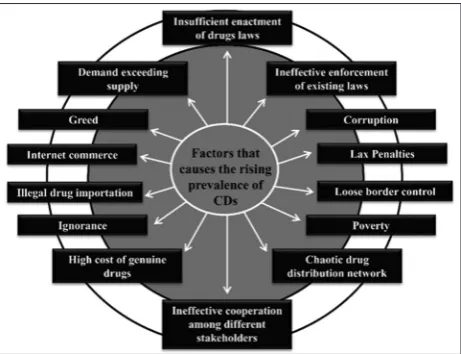
The factors that led to the prevalence of drugs counterfeiting in Africa are depicted in Fig. 2.
With the expansion of internet trading in the recent days, online drug retail markets are now generating sales in millions of USD [17]. Internet supply chains such as internet pharmacies which are becoming popular in recent time seem to be one of the major sources of CDs, and it poses an eminent danger to the public especially in more affluent countries where a lot of people patronizes it [18]. Unfortunately, consumers are mostly unaware of the risks involved in buying lower-priced drugs on the internet or purchasing prescription drugs online without a prescription, which might end of being a counterfeit product [11,19]. © 2017 The Authors. Published by Innovare Academic Sciences Pvt Ltd. This is an open access article under the CC BY license (http://creativecommons. org/licenses/by/4. 0/) DOI: http://dx.doi.org/10.22159/ajpcr.2017.v10i7.18384
Review Article
Lack of adequate training to the staff of drug’s licensing and regulatory authorities, corruption, insufficient manpower, and resources are among the major barriers that limit African nations from achieving full success in fighting CDs crimes [10,20]. The drug markets in the affected nations are flooded with fake and substandard drugs, most of which originated from overseas, with India and China being considered as the major sources [6,21-23]. It has been reported that India probably accounts for 12-25% of global supplies of CDs, substandard or contaminated medicines [24]. Most of the CDs victims are poor and illiterate people who are unaware of the health dangers associated with these drugs and patronizes it because of its cheaper price as compare to the legitimate authentic ones [6,25].
MAGNITUDE OF THE AFFLICTION
There are limited data on the morbidity and mortality arising from the use of counterfeit and substandard pharmaceutical products in Africa, due to the lack of resources and/or skills to detect it and the absence or weak drug regulatory systems [10]. Therefore, the effects of consuming CDs mostly go unnoticed except in such cases where there is occurrence of serious injuries or deaths that involve many people [16,26]. However, there are some published reports in literature which revealed some
cases. US giant pharmaceutical firms, Pfizer conducted CDs sanitization operations for its products around the globe in 2004 which has led to the seizure of counterfeited Pfizer products quantified to be more than 62 million doses, thereby blocked the passage of these fake medications to reach the innocent consumers [27]. An author has analyzed the impact of counterfeit antimalarial drugs in Sub-Saharan Africa and reported that in each of these countries, about 400,000 children are being attacked by malaria disease annually without effective treatment because the children received counterfeited or substandard antimalarial drugs [28]. Renschler et al. conducted a study on the burden and impact of poor-quality, i.e., falsified and substandard antimalarials drugs in 39 Sub-Saharan African countries [29]. They found that around 122,350 children under-five deaths were directly linked to the consumption of poor-quality antimalarials in these countries in the year 2013 alone. Similarly, it has been estimated that about 200,000-450,000 deaths out of one million malaria-related deaths in Africa are associated with the use of counterfeit antimalarial drugs [6].
Nigeria which is the most populous country in Africa has suffered heavily from the menace of drugs counterfeiting and trafficking, which has occurred mostly during the era between 1985 and 2000 that heralded the regime of faking and quackery, to an extent that CDs, unlicensed drug vendors, quack doctors and illegal chemist shops became very rampant in the country [26]. In 2008, the WHO conducted a study to check the quality of antimalarial medicines in circulation in 14 African countries and the result revealed that 64 percent of the antimalarial drugs that are in circulation in Nigeria (as of that time) were either fake or substandard [23].
With around 30,000 illegal pharmacy websites that intruded the internet [22], South Africa is struggling with the expansion of online marketing of CDs and other illegal products via these malicious internet pharmacies. The country seems to become a robust environment for the trading of counterfeit pharmaceuticals online in the recent time. This rise in prevalence might be as a result of inadequate or failure of the relevant authorities to conduct the routine check and properly regulate the unregistered and illegal medicines networks in the country [30].
Mwamba et al., 2016, carried out a research to find out marketed illegal and legal drugs (albendazole and metronidazole) in the city of Lubumbashi in the Democratic Republic of the Congo, a central African country. The researchers found that 32% of the drugs samples collected do not have legal permit to be marketed and 26% of the samples were substandard/counterfeited drugs with active ingredients lower than the label claimed. Alarmingly, 78% of their sample size did not fulfill US pharmacopeial requirements for albendazole and metronidazole tablets and suspensions product, and these malicious products are being marketed illegally, which pose a potential risk in the treatment of infectious diseases in that locality [31].
GENERAL CONSEQUENCES
The individual consequences of consuming CDs vary from worsening of consumer’s health condition or therapeutic failure to the occurrence of serious adverse effects or even death. In addition to these health hazards, there is also economic detriment which include waste of funds by consumers due to purchase of these drugs, loss of revenues by the drug companies, loss of taxes by the governments, additional financial burden on the governments, and drug firms which are incur as a result of fighting the counterfeiters [32].
Someone with advanced technical knowledge but unfortunately with a devious mind will misuse his skills by producing tablets or liquid preparations with merely just a chalk, flour, sugar solution or even harmful substances and deliberately push these malicious products into the public markets for his/her personal gains only. The culprits can perfectly imitate packaging and labeling of genuine products in such a way that when viewed with naked eyes it is almost impossible to recognize it as a counterfeit product. They usually make it to resemble real patented and branded drug products which had been manufactured Box 1: World Health Organization’s definition of counterfeit
drugs
WHO defined CDs as a medicine, which is deliberately and fraudulently mislabeled with respect to identity and/or source. Counterfeiting can apply to both branded and generic products [12]
Fig. 1: A pie chart showing different types of counterfeit drugs and their estimated percentages in the market circulation for
most African countries
by a legitimate licensed pharmaceutical company, but it will contain nothing than malicious constituents, and sometimes may even contain toxic substances.
ECONOMIC CONSEQUENCES
The legitimate pharmaceutical manufacturers are experiencing high negative impact of drugs counterfeiting as they are losing about 40% of their market to the counterfeiters and their brand names are being tarnished [25,28]. The 2009 United Nations report on CDs revealed the sales of 45 million doses of counterfeit antimalarial medicines in Africa [33]. This result to a significant lost in revenues by the legitimate manufacturers of these products which were estimated to be around $438 million [33]. CDs sold in Kenya represent up to 30% of total drugs sold in the country, equaling approximately $130 million per year [7]. In Angola, the head of the National Department of Intellectual Copyright Crime of the Economic Police revealed that about 70% of medicines in circulation are forgeries [7].
Loss of tax revenues which occurs as a result of CDs is another serious affliction bothering African countries. Counterfeit products, including CDs, have led to the lost of tax revenues across all the African continent which amount to hundreds of millions of dollars. The east African states which include Kenya, Burundi, Tanzania, Uganda, and Rwanda reports the loss of more than $500 million in unpaid taxes due to the counterfeit products circulation. Tanzania in particular reported losing between $370 and 617 million annually as a result of tax evasion related to counterfeit products [33].
HEALTH RISKS
Counterfeit medicines are associated with many health risks such as worsening of their user’s ill condition, precipitating adverse events and causing new ailment, hence they are a danger to their consumer’s health. CDs are often found to contain harmful, toxic or poisonous substances such as paint, antifreeze, brick dust, floor wax [22], heavy metals, boric acid, rat poisons, diethylene glycol, and polychlorinated biphenyl among others [20,34]. For example, in 2008, there were multiple cases of severe injuries and deaths as a result of administering adulterated counterfeited heparin to the patients in some countries around the world [27]. To cite some examples in Africa, in 1990, 109 Nigerian children died as a result of administering them adulterated paracetamol syrup by their parents [35]. The incidence happened because of the manufacturer’s negligence by replacing genuine solvent with the counterfeit solvent that contained a deadly level of diethylene glycol, which is a known human toxicant and is commonly used in industries for non-edible items [35]. Similarly, in November 2008, 34 children in Nigeria lost their lives and about 50 were hospitalized with severe kidney damage after their mothers unknowingly administered a CD to them. The counterfeiter imitated original popular babies teething mixture brand called “My Pikin” which was intended for soothing infant’s teething pains. But unfortunately, the counterfeit mixture contained a deadly level of diethylene glycol [36].
Adjei and Ohene published another touching story of Ghanaian old lady who developed a serious skin reaction, which was later determined to be cancerous, as a result of consuming counterfeited antiepileptic drug. An investigation revealed that the drug she consumed was the underlined cause of her cancer because it contained carcinogenic substance [20].
DRUG RESISTANCE
Counterfeit pharmaceuticals can lead to the treatment failure by causing it consumers to develop resistance to the active ingredient, thereby making an ultimate disease cure even more difficult to achieve. Counterfeit antibiotics with low content of active ingredients are at the risk of causing the microbial resistance of that drug to it consumers. This is a major concern because the resistant infection can kill, can spread to others, and can impose huge costs on individuals, community,
and government in general [37]. Drug resistance occurring as a result of counterfeiting is undermining the global effort to tackle life-threatening diseases in Africa such as tuberculosis, HIV-AIDS, and Malaria.
WAY FORWARD
Positive actions taken so far
Governments at various levels, industries, and regulatory authorities in the affected countries do not accede to the menace of CDs as they are now fighting back by implementing new strategies such as identifying rogue shipments and conducting coordinated actions to interrupt its supply chains in order to prevent it from reaching the public [22].
In the U.S.A., a member of house of representative, Steve Israel proposed a new law to the house that would increase the penalties for the sale or trade of counterfeit pharmaceuticals in the U.S.A., and the law was unanimously adopted by the House. The act, CD Enforcement Act 2014, raises the penalty from a maximum of 10 years to life in prison, and it also provides an avenue for the recall of any drug product that constitutes public health risk [1]. In a similar move by Nigerian authorities, the immediate past director general of National Agency for Food and Drug Administration and Control (NAFDAC), has advocated for the passage of new bill which seeks life jail term, confiscation of assets and compensation of victims on conviction, in a crimes where CD is found to be the proximate cause of injury [13].
Drug counterfeiting is a grievous crime comparable to murder hence the use of lenient punishment is inadequate. China, which is a country considered to be one of the major sources of counterfeit pharmaceuticals, and also a global manufacturer of generic drugs, has joined the war against CDs crimes. According to the Chinese media, Xinhua News Agency, China is installing “recognition and tracking technology” on its drug products, and anti-counterfeit labels are now being sealed on each drug package. In addition, the pharmaceutical companies in China are also strengthening their cooperation with African governments and drug distributors to trace the CDs that are being imported in the African countries [9].
Nigeria has taken the lead in the war against CDs in Africa, as it intensified efforts to alleviate drugs criminalities, especially during the past one and half decade. The former director general of NAFDAC, Professor Dora Akunyili, who is a pharmacist by profession, had spent 8 years (2001-2008) trying to cripple the counterfeit networks in Nigeria, and she successfully disrupted it [18]. During that period, she blacklisted over 30 manufacturers, dismissed several corrupt officials, and led many operations against chaotic and illegal drug markets [18]. These efforts resulted in the significant reduction on CDs trade and circulation in Nigeria between 2001 and 2006 [39,40]. Other important steps which NAFDAC has taken include, increasing the partnership among relevant agencies such as Nigerian Customs Service, Nigerian Immigration Service, Standards Organization of Nigeria, and National Drug Law Enforcement Agency. This administration of NAFDAC is using latest technologies in fighting the crimes, and some other African countries including Sierra Leonean, Ghana, Cameroon, and Uganda are learning lessons and intelligence from Nigeria on how to effectively combat the fight in their countries [23].
Pharmaceutical industries and national drug regulatory authorities in some African states are exploring various new cutting edge technologies, which include mobile authentication service (MAS), handheld spectrometer (TruScan), radio frequency identification (RFID), and complex packaging features that are harder to copy. Nigeria was the first African nation to integrate mobile telephony - based consumer verification into its safety regulations [18], followed by other countries such as Ghana and Kenya. The system is now being replicated in some Asian countries too [23]. The brilliance of MAS is that it allows consumers to protect themselves, by determining the authenticity of the product via short message service. This low-tech innovation is helping restore the public’s trust in the health sector. RFID is a portable wireless device that collects data of tagged materials through radio signals. It enables identification of the tagged material with high accuracy [21].
Another recently adopted technology is TruScan, a handheld spectrometer being used at airports and border posts to analyze the chemical composition of drugs, helping to quickly spot and reveal whether the product is genuine or fake in a matter of seconds. Nigeria and other African nations have already engaged in using TruScan for detection of the quality of medicines. In a similar development, some African countries have also started using Black Eye device for drugs authentication. Black Eye is another technology developed in Israel and works like TruScan [23].
ACTIONS REQUIRED
Stiffer penalties would help sharpen the attitudes of CDs dealers. There is an urgent need for the affected countries to implement more rigorous legislative measures to treat counterfeiting as a serious crime, and also to take decisive measures to minimize corruption. An effective regulatory framework would guarantee sufficient supply of legal pharmaceutical products as well as provide oversight and timely actions to combat counterfeiting. There is also need for the authorities in Africa to do more by enhancing collaboration between international bodies, drug companies, pharmaceutical trade groups, law enforcement agencies and customs officials worldwide, and also to improve partnership with legitimate private supply chain, to effectively reduce the prevalence of CDs in their countries.
Furthermore, improving education level and enlightenment campaign is another important action required, because most of the CDs consumers are illiterate and not aware of its possible harmful effects, therefore, patronizes the drugs because it is many times cheaper than the genuine product and it is easily accessible [41,42]. Therefore, health-care professionals can contribute significantly in this direction, by educating patients about the dangers of buying or consuming cheaper CDs and also enlighten them on how to recognize these drugs, so that they avoid them. A recent study showed that pharmacists can help in increasing
health literacy among the public as well as bring awareness about the risk associated with CDs [43].
There is also need for the government to explore ways in order to reduce prices of the genuine pharmaceutical products. This could be achieved by reducing taxes for the importers and manufacturers, or through implementing subsidies on drugs so that the common people can get it at affordable prices. Until genuine drugs become accessible at cheaper prices, people in the affected countries will continue to patronize CDs due to poverty. In addition, it is paramount to ensure availability of the genuine drugs in circulation, as the shortage of supply encourages the counterfeiters, and also forces the public to seek for alternatives which could be CDs. The porous nature of African nation’s borders is another contributing factor that further compounded the problem. Therefore, authorities need to take strong measures to seal off their country’s borders against illicit products, as most of the CDs are being smuggled into the countries from overseas. Drug counterfeiting crimes are not just a problem worrying African states alone, but a global phenomenon that threatens global quality health-care delivery. Hence, there is a need for more international collaboration toward designing and implementing effective strategies for fighting this inhumane crime.
CONCLUSIONS
CDs are taking silent devastating toll of human beings every year and causing serious affliction, especially to the African nations. Drugs criminal organizations understand the high margins associated with counterfeit products, but among other reasons, lack of stringent laws and enforcement of the laws, corruption and minimal possibility of being prosecuted, serve as incentives for them to continue causing significant public health risks, by exposing millions of people to the danger of CDs. Some positive steps have been taken to fight drugs counterfeiting by some African governments, their drugs regulatory bodies and companies, as well as international organizations such as WHO and Interpol through the recent advances in technology and globalization. However, to ensure the eradication of drugs counterfeiting, the policymakers and relevant stakeholders have to consider taking more actions (Box 2).
In addition, health care providers such as pharmacists and clinicians are in better position to assist in the war against counterfeit medicines by enlightening the consumers with the skills needed to identify CDs so that they can be able to reject and report it to the appropriate authorities.
ACKNOWLEDGMENT
Mr. Nafiu Aminu would like to gratefully acknowledge the support provided Universiti Sains Malaysia through USM fellowship.
REFERENCES
1. Peasgood S, Capital S. How Technology Can Protect Consumers and Pharma Companies from Fake Drugs. Cantech Lett 2015. Available from:
http://www.cantechletter.com/2015/04/how-technology-can-Box 2: Fundamental approaches for combating counterfeit pharmaceuticals in Africa
• Improve the education level and enlighten the public about the
dangers of CDs
• Fight corruption
• Enhance intelligent sharing and collaboration between international
drug’s regulatory bodies and the local ones
• Enforce stiffer penalties on the drug counterfeiters
• Ensure regular flow of genuine drug products with affordable prices • Continue to improve and adopt on‑the‑spot drugs authentication
technologies
protect-consumers-and-pharma-companies-from-fake-drugs/. [Last accessed on 2016 Oct 29].
2. Scutti S. Global Problem of Counterfeit Drugs Affects Even Legitimate Sources, Such as Hospitals and Pharmacies. Med Dly 2015. Available from: http://www.medicaldaily.com/global-problem-counterfeit-drugs-affects-even-legitimate-sources-such-hospitals-and-329914. [Last accessed on 2016 Jan 11].
3. Mackey TK, Liang BA, York P, Kubic T. Counterfeit drug penetration into global legitimate medicine supply chains: A global assessment. Am J Trop Med Hyg 2015;92 6 Suppl:59-67.
4. Chaudhry P, Zimmerman A. The global growth of counterfeit trade. Protecting Your Intellectual Property Rights, Management for Professionals. New York: Springer Science+Business Media; 2013. p. 7-31.
5. World Health Organization. Growing threat from counterfeit medicines. Bull World Health Organ 2010;88:241-320.
6. Mhando L, Jande MB, Liwa A, Mwita S, Marwa KJ. Public awareness and identification of counterfeit drugs in Tanzania: A view on antimalarial drugs. Adv Public Heal 2016;2016:1-8.
7. International Medical Products Anti-Counterfeiting Taskforce (IMPACT). Counterfeit Medicines: An Update on Estimates; 2006. Available from: http://www.who.int/medicines/services/counterfeit/ impact/TheNewEstimatesCounterfeit.pdf. [Last accessed on 2016 Dec 11].
8. Akunyili D. Lessons from Nigeria: The fight against counterfeit drugs in Africa. Diabetes Soc 2006;51:41-3.
9. Sambira J. Counterfeit Drugs Raise Africa’s Temperature. Africa Renew Online; 2013. Available from: http://www.un.org/africarenewal/ magazine/may-2013/counterfeit-drugs-raise-africa’s-temperature. [Last accessed on 2016 Nov 04].
10. World Health Organization. Report of the Situation of Counterfeit Medicines Based on Data Collection Tool. WHO 2010:1-27. Available from: http://www.who.int/medicines/services/expertcommittees/ pharmprep/WHO-ACM-3IMPACTSurveyDataCollectionToolReport. pdf. [Lasy accessed on 2016 Nov 08].
11. Blackstone EA, Fuhr JP Jr, Pociask S. The health and economic effects of counterfeit drugs. Am Health Drug Benefits 2014;7(4):216-24. 12. World Health Organization. Counterfeit Drugs. WHO; 1992. Available
from: http://www.apps.who.int/iris/bitstream/10665/58358/1/WHO_ DMP_CFD_92.pdf. [Last accessed on 2017 Jan 10].
13. Akinyandenu O. Counterfeit drugs in Nigeria: A threat to public health. Afr J Pharm Pharmacol 2013;7:2571-6.
14. Bassat Q, Tanner M, Guerin PJ, Stricker K, Hamed K. Combating poor - quality anti - malarial medicines: A call to action. Malar J 2016;15:1-12. 15. Songara RK, Chauhan P. Counterfeit medicines: A regulatory perspective
to global threat. Webmed Central Pharm Sci 2011;2:WMC002431. 16. Onwuka CJ. The Situation of Medicines Counterfeiting in Africa.
University of London; 2010. p. 1-65. Available from: http://www.whpa. org/background_medicines_counterfeiting_in_africa_chioma_jo_ onwuka11-2010.pdf. [Last accessed on 2016 Nov 07].
17. Dolliver DS. Evaluating drug trafficking on the Tor Network: Silk Road 2, the sequel. Int J Drug Policy 2015;26(11):1113-23.
18. Kovacs S, Hawes SE, Maley SN, Mosites E, Wong L, Stergachis A. Technologies for detecting falsified and substandard drugs in low and middle-income countries. PLoS One 2014;9(3):e90601.
19. Masurkar P. A need of better pharmacovigilance system in India. Asian J Pharm Clin Res 2017;10:22-4.
20. Adjei HK, Ohene P. Counterfeit drugs: The relentless war in Africa. Pharm Pharmacol Int J 2015;2:16.
21. Mali DK, Mitkare SS, Moon RS. Anti-counterfeit packaging in pharma industry: Review. Int J Pharm Pharm Sci 2011;3:4-6.
22. Buckland D. The Global Scourge of Counterfeit Medicines; 2016. Available from: http://www.pmlive.com/pharma_news/the_global_ scourge_of_counterfeit_medicines_1145731. [Last accessed on 2017 Mar 06].
23. Ogundipe S. Nigeria Leads in Fight Against Fake Drugs – NAFDAC DG. Vanguard Media Ltd.; 2011. Available from: http://www.vanguardngr.
com/2011/07/nigeria-leads-in-fight-against-fake-drugs-nafdac-dg/. [Last accessed on 2016 Oct 12].
24. Atal S, Atal S, Deshmankar B, Nawaz SA. Cost analysis of commonly used drugs under price control in India: Assessing the effect of drug price control order on brand price variation. Int J Pharm Pharm Sci 2016;8:315-21.
25. Cockburn R, Newton PN, Agyarko EK, Akunyili D, White NJ. The global threat of counterfeit drugs: Why industry and governments must communicate the dangers. PLoS Med 2005;2(4):e100.
26. Erhun WO, Babalola OO, Erhun MO. Drug regulation and control in Nigeria: The challenge of counterfeit drugs. J Health Popul Dev Ctries 2001;4:23-34.
27. Corey CW. Counterfeit Drugs Pose Dangers in 90 Countries Worldwide. U S Dep State 2010. Available from: http://www.iipdigital.usembassy. gov/st/english/article/2010/10/20101014084206selrahc0.9264643. html#axzz3pTqPSZ8t. [Last accessed on 2016 Nov 01].
28. Seiter A. Health and economic consequences of counterfeit drugs. Clin Pharmacol Ther 2009;85(6):576-8.
29. Renschler JP, Walters KM, Newton PN, Laxminarayan R. Estimated under-five deaths associated with poor-quality antimalarials in sub-Saharan Africa. Am J Trop Med Hyg 2015;92 6 Suppl:119-26. 30. Child K. Fake Drugs Flood SA. Times Live; 2015. Available from:
http://www.timeslive.co.za/thetimes/2015/08/11/Fake-drugs-flood-SA. [Last accessed on 2016 Oct 15].
31. Mwamba P, Duez P, Kalonji JB. Preliminary survey of counterfeiting of albendazole and metronidazole marketed in lubumbashi. Int J Pharm Pharm Sci 2016;8:282-7.
32. Meeking L. Counterfeit economy: The impacts of counterfeit goods on African society: Africa-wide - featured analysis. Afr Confl Mon Monit 2013;2013:8-12.
33. Wilson JM, Fenoff R. The health and economic effects of counterfeit pharmaceuticals in Africa. Michigan State Univ 2011:1-2. Available from: http://www.a-capp.msu.edu/sites/default/files/files/ africabackgrounderfinal.pdf. [Last accessed on 2016 Jan 23].
34. Health24. Counterfeit Medicine Threatens Africa. Health24; 2014. Available from: http://www.health24.com/Medical/Meds-and-you/ News/Counterfeit-medicine-threatens-Africa-20140619. [Last accessed on 2016 Nov 08].
35. Alubo SO. Death for sale: A study of drug poisoning and deaths in Nigeria. Soc Sci Med 1994;38(1):97-103.
36. Bonati M. Once again, children are the main victims of fake drugs. Arch Dis Child 2009;94(6):468.
37. World Health Organization. Health Topics: Antimicrobial Resistance. WHO; 2017. Available from: http://www.who.int/topics/antimicrobial_ resistance/en/. [Last accessed on 2017 Mar 05].
38. Faucon B, Murphy C, Whalen J. Africa’s Malaria Battle: Fake Drug Pipeline Undercuts Progress. Wall Str J 2013. Available from: http:// www.wsj.com/articles/SB100014241278873244740045784449428417 28204. [Last accessed 2016 Dec 27].
39. Counterfeit Anti Infective Drugs. An Awareness Campaign about the Growing Problem of “Fake” Drugs. C-AID; 2017. Available from: https://www.caidaware.wordpress.com/regulations/. [Last accessed on 2017 Feb 05].
40. World Health Organization. International Medical Products Anti-Counterfeiting Taskforce — IMPACT. Highlights; 2011. Available from: http://www.who.int/impact/en/. [Last accessed on 2016 Nov 05]. 41. Passmore PR, Kailis SG. In pursuit of rational drug use and effective
drug management: Clinical and public health pharmacy viewpoint. Asia Pac J Public Health 1994;7:236-41.
42. Kamuhabwa AR, Ignace AM. Dispensing practice of prescribed medicines in the private pharmacies in urban areas of Tanzania. Indian J Pharm Sci 2015;77:542-9.