Ce
A
Simu
ntre for E
A thesis
requ
ulatio
Fires
Environm
Colle
submitte
uirement
on of t
s Usin
HM Iq
mental Sa
ege of En
Victo
ed to Vict
s of the d
M
the S
ng W
qbal Ma
afety and
ngineerin
oria Unive
toria Univ
degree of
March 201
Suppr
Water
hmud
d Risk En
g and Sci
ersity
versity in
f Doctor o
16
ressio
Mists
gineering
ience
n fulfilme
of Philoso
on of
s
g (CESAR
ent of the
ophy
f
RE)
This thesis is dedicated
To
Abstract
As warships can carry weapons on board, the unlikely occurrence of fire is one of the
most feared events on board. Until recently, halon 1301 (bromo-tri-fluoro methane,
CF3Br) has been the primary fire-fighting agent for protecting the machinery spaces
of ships. Halon 1301 is not only harmful to humans, but it also depletes the ozone
layer. Water-mist fire suppression systems (WMFSS) have been considered as a
potential candidate for the replacement of halon-based fire suppression systems by
fire protection industries. WMFSS is already being used in commercial buildings,
passenger and naval ships, etc. However, it is essential to examine the efficacy of
water-mist droplets in suppressing fires. The efficacy of a water-mist system can be
investigated in two ways: (i) experimental investigation; and (ii) numerical analysis.
This study is a combination of an experimental study (water mist spray without fire)
and two types of numerical studies using (a) semi-empirical equations based model
developed in this study; and (b) a state of the art computational fluids dynamics
(CFD) based fire model.
Prior to determine the efficacy of water mists in suppressing fire using a CFD-based
fire model, the model needs to be validated for the type of simulation events. In this
study, fire dynamic simulator (FDS), has been chosen which is being developed for
compartment fires and it is widely used among fire research groups. The uniqueness
of this model is its pyrolysis model, which allows fire growth and suppression
modelling. The capability of FDS has been examined in three areas: namely,
predicting (i) behaviour of evaporation of water droplets at high temperatures
induced by fire; (ii) distribution of flux densities of water-mist nozzle sprays; (iii)
burning rates of polymethyl methacrylate (PMMA) fires with and without water-mist
A semi-empirical model has been developed with the primary aim of developing a
detailed understanding of the science of droplet evaporation using equations of the
conservation of mass, momentum and energy. The variable thermo-physical
properties of water and air, and the change of the Reynolds number of droplets due to
the change of their diameters and velocities, have been considered. The effect of the
high evaporation rate on the mass and heat transfer coefficients has also been
included. A particular feature of this model is that it accounts for the effects of
thermal radiation on the rate of evaporation of droplets. Results from the model
indicate that the predicted terminal velocity is within 4% of the experimental data
and the saturation temperature is within 5% of the adiabatic saturation temperature.
A key finding of this work is that droplets with a smaller diameter suspend in the air
for a longer time and have a higher rate of evaporation compared to larger droplets.
In contrast, droplets with a larger diameter have a higher capability of penetrating the
smoke layer. The secondary aim is to validate FDS in terms of single droplet
evaporation against this semi-empirical model. It has been found that predictions of
FDS show good agreement with results of the semi-empirical model.
The effectiveness of a spray in suppressing a fire is greatly influenced by its
distribution pattern on a horizontal surface. Hence, it is essential that any CFD based
model can predict the distribution of the flux densities of a spray. Full-scale
experiments have been conducted on water sprays emanating from a single and
multi-orifice nozzle, and the distributions of flux densities have been measured.
Numerical simulations have been performed using FDS. The predicted results show
good agreement with the experimental data.
The ultimate value of FDS is its ability to predict the growth and extinguishment of
fires. In this work the success of FDS in predicting the rate of burning of PMMA
FDS are compared with published experimental data. It has been found that FDS
prediction of burning rate is within 23% of the experimental data.
Having gained confidence in the ability of FDS in accurately predicting the
evaporation of droplets, distribution of sprays, and burning and suppression of fires,
more realistic scenarios have been examined by conducting a comparative parametric
study. The effect of different factors, such as obstructions, location of fires, number
of nozzles and size of droplets, has been investigated. The results indicate that the
spray is the most effective for unobstructed fires and the least effective for
horizontally obstructed fires provided that both of them are located directly
underneath the nozzle. The spray produced by a single nozzle shows a marginally
better performance in suppressing fires when it is unobstructed and directly
underneath the nozzle.
In the analysis, it appears that the cooling of hot gases and burning surfaces play a
major role in suppressing unobstructed fires. Whereas the blocking of air entrainment
and attenuation of radiation feedback to the fuel surface play a major role in
suppressing horizontally obstructed fires while the fire is directly underneath the
nozzle. In case of size of droplets, due to higher momentum and greater volume,
larger droplets have better capacity to penetrate the fire plume and reach the depth of
the fire before their evaporation, respectively. These result in exhibiting better
Declaration
‘I, HM Iqbal Mahmud, declare that the PhD thesis entitled “Simulation of the
suppression of fires using water mists” is no more than 100,000 words in length
including quotes and exclusive of tables, figures, appendices, bibliography,
references and footnotes. This thesis contains no material that has been submitted
previously, in whole or in part, for the award of any other academic degree or
diploma. Except where otherwise indicated, this thesis is my own work.’
Acknowledgements
It has been a long journey on the way to completing my PhD During the past few
years I have enjoyed the guidance, support and company of the many people who
have contributed to my research.
Firstly, I would like to express my gratitude to Almighty Allah to give me the
opportunity to climb the crest of academic education.
Then, I would like to thank my supervisors, Associate Professor Khalid Moinuddin
and Professor Graham Thorpe, for their offer to embark on this fantastic voyage
several years ago. Their inspiration, guidance, support, constructive comments,
suggestions, clues, and of course patience, have helped me complete this voyage. I
greatly appreciate their consistent and continuous support in solving the research
problems that I have encountered during my PhD. Words cannot describe how
grateful I am to them for their inestimable support.
I would also like to express my gratitude to Ian Burch, Zenka Mathys, Brigitta
Suendermann and Grant Gamble from Defence Science and Technology
Organisation (DSTO), who have helped me find the clues to solve the technical
problems in the experimental and numerical work. I also appreciate their advice and
continuous support throughout the duration of the work and their technical help in
the experimental set-up for the water-mist spray test. I also acknowledge the
technical and financial assistance provided by DSTO, Australia.
I wish to acknowledge the technical support in my experiments provided by
postgraduate students, Sk Md Kamal Uddin, Md Mahfuz Sarwar and Mohammad
I would also like to express my gratitude to the members of the FDS Google
discussion group and the FDS support group who have helped me enormously in my
numerical study. Especially I would like to give thanks to Kevin McGrattan (NIST,
USA), Topi Sikanen (VTT, Finland), Jason Floyd (Hughes Associates, USA), Simo
Hostikka (VTT, Finland), Randall McDermott (NIST, USA), Elizabeth Blanchard
(CSTB, France) and others for their valuable information in preparing my FDS input
scripts and explaining the FDS results in terms of the relevant physics.
I also gratefully acknowledge the financial assistance through the Victoria University
funded scholarship schemes (VUIPRS) and Victoria University Fee waiver
scholarship.
I would also like to express my gratitude to my parents, brothers, friends and other
family members who have missed me over the last few years. I want to thank all of
them for their understanding and the support that they gave me while I was
dedicating my time to this project.
Finally, I would like to give special thanks to my wife and daughter for their earnest
cooperation and understanding, as well as their love and affection.
HM Iqbal Mahmud
Table of Contents
Abstract
... i
Declaration ... iv
Acknowledgements ... v
Table of Contents ... vii
List of Figures ... xii
List of Tables ... xix
Nomenclature ... xxi
Chapter 1 Background study and scope ... 1
1.1 Background to the project ... 1
1.2 Mechanisms of suppression of fires by water mist sprays ... 3
1.3 Numerical modelling of the suppression of fires ... 9
1.4 Aims of the research ... 19
1.5 Methodology ... 19
Chapter 2 CFD model description ... 21
2.1 Introduction ... 21
2.2 Features and program version of FDS ... 21
2.3 Governing equations ... 22
2.3.1 Modelling of mass, species and enthalpy transport ... 22
2.3.4 Modelling of combustion ... 27
2.3.5 Modelling of water-mist ... 28
2.4 Geometry and numerical grid ... 30
Chapter 3 Development of a semi-empirical model for the evaporation of
water droplets ... 32
3.1 Introduction ... 32
3.2 Mathematical formulation ... 35
3.2.1 Mass transfer model ... 36
3.2.2 Heat transfer model ... 37
3.2.3 Momentum model ... 39
3.2.4 Calculation of rate constants ... 41
3.2.5 Correction to the rate constants for high mass transfer rate ... 43
3.2.6 Thermophysical properties of air and water ... 45
3.3 Computational procedure ... 46
3.4 Model verification and validation ... 49
3.4.1 Comparison with experimental data ... 49
3.4.2 Comparison with theoretical adiabatic saturation temperature ... 50
3.5 Use of the model as a validation tool ... 50
3.5.1 Comparison with FDS ... 51
3.5.2 Comparison with the study by Li and Chow [2008] ... 54
3.5.3 Comparison with the study by Barrow and Pope [2007] ... 55
3.6 Parametric study ... 58
3.7 Scattering, absorption and extinction characteristics of water mist in a radiated medium ... 67
3.8 Conclusions ... 67
Chapter 4 Spray distribution – a benchmark experiment and validation of
FDS ... 72
4.2 Experiment details ... 73
4.2.1 Nozzle specification ... 73
4.2.2 Experimental set-up and procedure ... 74
4.3 Numerical model ... 79
4.3.1 Domain set-up ... 79
4.3.2 Modelling of sprays ... 81
4.3.3 Input variables for determining the median diameter of droplets ... 82
4.3.4 Input variables for determining the distribution of flux densities .... 82
4.4 Results and discussion ... 84
4.4.1 Median diameter of droplets ... 84
4.4.2 Distribution of flux densities of sprays ... 85
4.5 Conclusions ... 94
Chapter 5 Validation of FDS for the burning of PMMA and the
suppression of fires by water mists ... 95
5.1 Introduction ... 95
5.2 The experiments of Magee and Reitz [1974] ... 96
5.3 Numerical simulation ... 98
5.3.1 Computational domain ... 98
5.3.2 Operating and boundary conditions ... 100
5.3.3 Sensitivity analysis ... 100
5.3.4 External radiation flux ... 104
5.3.5 Flammability parameters and chemical kinetics ... 105
5.4 Results and discussion ... 107
5.5 Conclusions ... 117
Chapter 6 Parametric study using FDS to assess the efficacy of water
mist sprays ... 119
6.2 Numerical simulation ... 122
6.2.1 Computational domain ... 122
6.2.2 Type and location of fuel load ... 123
6.2.3 Location of the nozzles ... 124
6.2.4 Types of obstructions ... 125
6.2.5 Orientation of nozzle, obstruction and fire load in the simulation . 126 6.2.6 Specification of the spray ... 132
6.2.7 Material properties of pinewood, ignition of the wood crib, and activation of the water-mist nozzle ... 132
6.3 Results and discussion ... 134
6.3.1 Effect of obstructions ... 135
6.3.2 Effect of location of fires ... 142
6.3.3 Effect of number of nozzles ... 149
6.3.4 Effect of size of droplets ... 155
6.4 Conclusions ... 159
Chapter 7 Summary and conclusions ... 163
7.1 Development of a semi-empirical model for evaporation of water droplets ... 164
7.1.1 Model development and validation ... 164
7.1.2 Evaluation of the characteristics of the different sizes of droplets . 165 7.2 Spray distribution – a benchmark experiment and validation of FDS ... 165
7.3 Validation of FDS for the burning of PMMA and the suppression of fires by water-mist spray ... 166
7.3.1 Simulation of PMMA fire without the presence of a water-mist system ... 166
7.3.2 Simulation of PMMA fire with the presence of a water-mist system ... 167
7.4 Parametric study using FDS to assess the efficacy of water-mist sprays ... 167
7.5.1 Expanding the droplet evaporation model ... 169
7.5.2 Experimental measurement of the median size of droplets ... 169
7.5.3 Further investigation on factors that affect the efficacy of water-mist sprays in suppressing fires ... 169
References ... 170
Appendix A Calculation of the theoretical adiabatic saturation
temperature ... 182
Appendix B Scattering, absorption and extinction of radiation by water
mists ... 185
B.1 Introduction ... 185
B.2 Theory of scattering ... 186
B.3 Characteristics of water mist in scattering ... 190
B.4 Conclusions ... 195
List of Figures
Figure 1.1: Illustration of consumption of oxygen by a fire and displacement of
oxygen by water vapour. ... 7
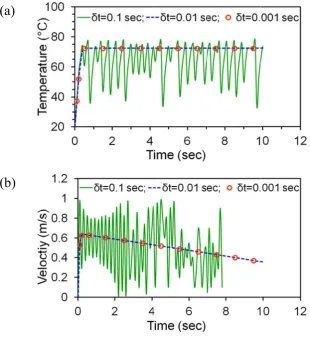
Figure 3.1: Time step dependency test (a) temperature (T); and (b) velocity (v). ... 48
Figure 3.2: Terminal velocity of droplets. ... 49
Figure 3.3: Saturation temperature of droplets. ... 50
Figure 3.4: Computational domain set-up of the FDS model. ... 52
Figure 3.5: Terminal velocity of the droplets. ... 53
Figure 3.6: Saturation temperature of the droplets. ... 53
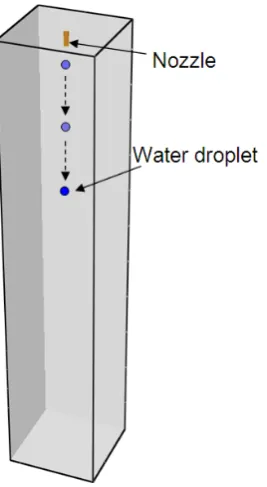
Figure 3.7: The history of the diameter of a droplet in the air. ... 54
Figure 3.8: Time of evaporation of the droplets. ... 55
Figure 3.9: The history of the Nusselt number of droplets diameter 200 μm. ... 56
Figure 3.10: The drag force on the droplets with diameter 200 μm. ... 57
Figure 3.11: Distance travelled by the droplets. ... 57
Figure 3.12: Temperature profile of droplets (a) close view (0–2 seconds); (b) detailed view (0–8 seconds). ... 59
Figure 3.13: Diameter and position history of droplets with different initial drop size (a) 100 µm; (b) 200 µm; (c) 300 µm; (d) 400 µm; (e) 500 µm; (f) 750 µm; and (g) 1000µm. ... 62
Figure 3.14: Per cents of mass loss of droplets with different initial drop size. ... 63
Figure 3.15: Heat absorbed by droplets of different droplet sizes. ... 64
Figure 4.1: Schematic of the single-orifice nozzle (after Tanner and Knasiak [2003]). ... 73
Figure 4.2: Schematic view of the multi-orifice nozzle (a) side elevation; (b) plan view (after Tanner and Knasiak [2003]). ... 74
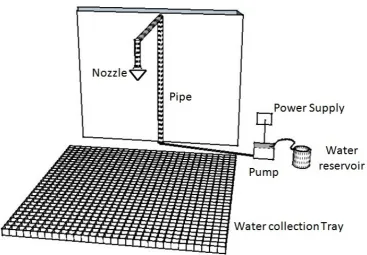
Figure 4.3: Schematic view of the experimental set-up. ... 75
Figure 4.4: Location of nozzle (a) Case A; (b) Case B. ... 76
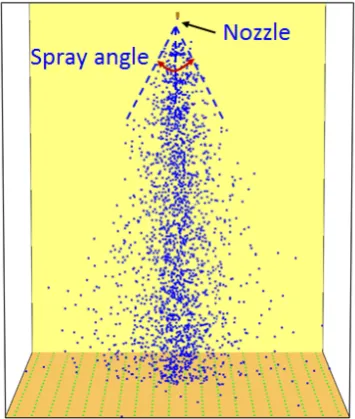
Figure 4.5: Schematic view of the measurements of the angle of sprays (a) spray produced by the single-orifice nozzle; (b) spray produced by the multi-orifice nozzle. ... 76
Figure 4.6: Computational domain for simulating the spray produced by the single-orifice nozzle. ... 80
Figure 4.7: The grid system on the floor in the computational domain. ... 80
Figure 4.8: Computational domain set-up used to simulate the spray produced by the multi-orifice nozzle. ... 81
Figure 4.9: Comparison of the numerical results on the distribution of flux densities for different size of droplets with the experimental measurement in the first case. .. 84
Figure 4.10: Comparison of the numerical results on the distribution of flux densities for the hypothetical size of droplets with the experimental measurement in the
second case. ... 85
Figure 4.11: Distribution of flux densities (L/m2/min) of the spray produced by the single-orifice nozzle (a) experimental; (b) numerical. ... 86
Figure 4.12: The distribution of the flux density of sprays for the single-orifice nozzle along the centreline axes as indicated in Figure 5.12: o Experimental values along the major axis; .□ Experimental values along the minor axis; ∆ Numerical values along the radii of X direction; · · x Numerical values along the radii of the Y direction. ... 88
Figure 4.14: The distribution of flux densities of spray for the multi-orifice nozzle along the major and minor axes of ellipses for case A o Experimental values along the major axis;.□ Experimental values along the minor axis; ∆ Numerical values along the radii of X direction; ·· x Numerical values along the radii of Y direction. 90 Figure 4.15: Distribution of flux densities (L/m2/min) of spray for multi-orifice nozzle for Case B (a) experimental; (b) numerical. ... 92
Figure 4.16: The distribution of the flux density of spray for the multi-orifice nozzle along the orifice axis for case B o Experimental values along the major axis; □
Experimental values along the minor axis; ∆ Numerical values along the radii of X direction; ·· x Numerical values along the radii of Y direction. ... 93 Figure 5.1: Experimental set-up for the burning of vertical specimens after the
studies by Magee and Reitz [1974]. ... 97
Figure 5.2: Three-dimensional view of the computational domain for the simulation of fires produced by the horizontally placed PMMA slabs. ... 99
Figure 5.3: Three-dimensional view of the computational domain for the simulation of fires produced by the vertically placed PMMA slabs. ... 100
Figure 5.4: Grid convergence test for PMMA fire [Abu-Bakar and Moinuddin 2015]. ... 102
Figure 5.5: The effect of insulation on the rear surface of the PMMA slab. ... 103
Figure 5.6: The effect of the use of the absorption coefficient of PMMA in the
simulation. ... 104
Figure 5.7: Three-dimensional view of the burning of the vertically oriented PMMA slab. ... 108
Figure 5.8: Burning rates of the vertically oriented PMMA slabs for the different flux of radiation (kW/m2) before and after activation of the spray. ... 109
Figure 5.10: Comparison between the experimental and numerical steady state burning rates for the vertically oriented PMMA slab before activation of the spray. ... 112
Figure 5.11: Comparison between the experimental and numerical steady state burning rates for the horizontally oriented PMMA slab before activation of the spray. ... 112
Figure 5.12: Comparison between the experimental and numerical values of difference in steady state burning rates before and after activation of spray for
horizontally oriented PMMA slab. ... 112
Figure 5.13: Burning rates of the horizontally oriented PMMA slabs at different levels of radiation fluxes (kW/m2). ... 113
Figure 5.14: Burning of fire produced by the horizontally oriented PMMA slab for the radiation flux of 15.89 kW/m2. ... 114
Figure 5.15: Comparison between the experimental and numerical steady state
burning rates of the horizontally oriented PMMA slab. ... 115
Figure 5.16: Convective and radiative heat transfer from the flame to the PMMA slab (a) vertical specimen; (b) horizontal specimen. ... 117
Figure 6.1: ISO room (a) plan view; (b) elevation [Moinuddin et al. 2011]. ... 122
Figure 6.2: Location of timber crib in the ISO room (a) adjacent to the open door (Case a); (b) centre of the room (Case b); (c) distant from the open door (Case c). 124
Figure 6.3: Plan view of the locations of the nozzles in the ISO room (a) a single nozzle (Case A); (b) a double nozzle (Case B). ... 124
Figure 6.4: Side elevation of the location of the nozzles in the ISO room (a) a single nozzle (Case A); (b) a double nozzle (Case B). ... 125
Figure 6.5: Condition of obstructions (a) no obstruction (Case 1); (b) horizontal obstruction (Case 2); (c) vertical obstruction (Case 3). ... 125
Figure 6.6: Location of the estimation of gas temperature and concentration of
Figure 6.7: Comparison of the effect of the condition of the obstruction on the suppression of fires (HRR) by water spray (a) single nozzle –adjacent to the open door; (b) single nozzle – centre of the room; (c) single nozzle – distant from open door; (d) double nozzle – adjacent to the open door; (e) double nozzle – centre of the room; and (f) double nozzle – distant from the open door. ... 136
Figure 6.8: Comparison of the effect of obstructions on the reduction of temperatures of the burning surface and hot gases by water spray; the fire is related to Figure 6.7 (b) which is located at the centre of the room and the spray is from a single nozzle (a) temperature; (b) concentration of oxygen; (c) radiation; (d) % reduction of
temperature; (e) % reduction of concentration of oxygen; and (f) % reduction of radiation. ... 140
Figure 6.9: Comparison of the effect of obstructions on the reduction of temperature of the burning surface and hot gases by water spray; the fire is related to Figure 6.7 (c) which is located at a distance from open door and the spray is from a single nozzle (a) temperature; (b) concentration of oxygen; (c) radiation, (d) % reduction of temperature; (e) % reduction of concentration of oxygen; and (f) % reduction of radiation. ... 141
Figure 6.10: Comparison of the effect of location of fires on suppression of fires (HRR) by water spray (a) single nozzle – adjacent to the open door,; (b) single nozzle – centre of the room; (c) single nozzle – distant from the open door; (d) double nozzle – adjacent to the open door; (e) double nozzle – centre of the room; and (f) double nozzle – distant from the open door. ... 144
Figure 6.11: Comparison of the effect of the location of fire on the reduction of temperature of the burning surface and hot gases by water spray; the fire is related to Figure 6.10 (a) which is unobstructed and the spray is from a single nozzle (a) temperature; (b) concentration of oxygen; (c) radiation; (d) % reduction of temperature; (e) % reduction of concentration of oxygen; and (f) % reduction of radiation. ... 147
(a) temperature; (b) concentration of oxygen; (c) radiation; (d) % reduction of temperature; (e) % reduction of concentration of oxygen; and (f) % reduction of radiation. ... 148
Figure 6.13: Comparison of reduction of HRR by the spray produced by the single and double nozzles. ... 150
Figure 6.14: Comparison of the effect of the number of nozzles on the reduction of temperature of the burning surface and hot gases by water spray; the fire is related to Figure 6.13 (b) which is unobstructed and located at the centre of the room (a) temperature; (b) concentration of oxygen; (c) radiation; (d) % reduction of temperature; (e) % reduction of concentration of oxygen; and (f) % reduction of radiation. ... 153
Figure 6.15: Comparison of the effect of the number of nozzles on the reduction of temperature of the burning surface and hot gases by water spray; the fire is related to Figure 6.13 (g) which is vertically obstructed and located adjacent to the open door (a) temperature; (b) concentration of oxygen; (c) radiation; (d) % reduction of temperature; (e) % reduction of concentration of oxygen; and (f) % reduction of radiation. ... 154
Figure 6.16: The effect of the size of droplets on HRR of fires (a) no obstruction; and (b) horizontal obstruction. ... 157
Figure 6.17: Comparison of the effect of the size of the droplets on the reduction of temperatures of the burning surface and hot gases by the spray at the time of suppression of fire; the fire is related to Figure 6.16 (a), which is unobstructed and located centre of the room (a) temperature; (b) oxygen concentration; (c) radiation; (d) % reduction of temperature; (e) % reduction of concentration of oxygen; and (f) % reduction of radiation. ... 158
Figure A.1: A schematic diagram of the adiabatic saturation process (after Çengel and Turner [2005]). ... 183
Figure B.2: The scattering of incident radiation of wavelength, , by a water droplet. ... 187
Figure B.3: Complex refractive index of water. ... 190
Figure B.4: Efficiency factors for water-mist droplets (a) extinction efficiency factor, ; (b) absorption efficiency factor, ; and (c) scattering efficiency factor, . ... 191
Figure B.5: Monochromatic radiation intensity for a spectrum of wavelength at 1500K. ... 192
Figure B.6: Transmissivity of water droplets for different sizes at a wavelength of 3
μm. ... 193
Figure B.7: The minimum concentration of water loading for different size of
droplets. ... 194
Figure B.8: A spectrum of radiation passing through a medium filled with droplets. ... 194
List of Tables
Table 1.1: Surface area to volume ratio of the different size of water droplets ... 4
Table 3.1: The dependence of the calculated saturation temperature (T) and terminal velocity (v) of the droplet on the time step ... 48
Table 3.2: The input parameters in the FDS model ... 52
Table 4.1: Input parameters for the simulation of determining the median diameter of droplets of a spray ... 82
Table 4.2: Spray parameters for the simulation of determining the distribution of flux densities of sprays ... 83
Table 5.1: Arrhenius parameters ... 105
Table 5.2: Materials properties for the FDS input file ... 106
Table 5.3: The experimental and numerical values of the steady state burning rates for the vertically oriented PMMA slab ... 111
Table 5.4: The experimental and numerical values of steady state burning rates for the horizontally oriented PMMA slab ... 115
Table 6.1: Combination of the location of the fire, condition of obstruction and number of nozzles for different cases in the ISO room ... 126
Table 6.2: Graphical presentation of the combination of the location of the fire, type of obstruction and number of nozzles for different cases ... 128
Table 6.3: Location of nozzle, obstruction and fuel load for Case 1(A) ... 129
Table 6.4: Location of nozzle, obstruction and fuel load for Case 1(B) ... 129
Table 6.5: Location of nozzle, obstruction and fuel load for Case 2(A) ... 130
Table 6.6: Location of nozzle, obstruction and fuel load for Case 2(B) ... 130
Table 6.7: Location of nozzle, obstruction and fuel load for Case 3(A) ... 131
Table 6.9: Specification of the spray ... 132
Table 6.10: Material properties for the FDS input file ... 133
Table 6.11: Combination of parameters for the comparison of HRR with respect to the type of obstruction and time of suppression of fires with respect to 65% of HRR ... 137
Table 6.12: Combination of parameters for the comparison of HRR with respect to the location of fires ... 145
Table 6.13: Combination of parameters for the comparison of HRR with respect to location of fires ... 151
Table 6.14: The surface area to volume ratio for different sizes of droplets ... 155
Nomenclature
A surface area in Chapter 3, m2
A pre-exponential factor in Chapter 6, 1/sec
Bi biot number
drag coefficient
cpa specific heat capacity of air, J/kg
cpw specific heat capacity of water, J/kg
D diameter, m
E activation Energy, kJ/mol
F force, kg.m/s2
G gravitational acceleration, m/s2
H total pressure, Pa
HoR heat of reaction, kJ/kg HoC heat of combustion, kJ/kg
c
h convective heat transfer coefficient, W/m2
m
h mass transfer coefficient, m/s k thermal conductivity, W/(m·K)
K K-factor for water mist nozzle spray, L/(min.psi1/2) L latent heat of vaporisation of water, J/kg
M molecular weight, kg/mol
m mass in Chapter 3, kg
m refractive index in Appendix B
mass flow rate of water particle from droplet surface, kg/s
water mass flux from spray, kg/m2
P vapour pressure, Pa
̅ background pressure, Pa
Pr Prandtl number
Q discharge rate of water, L/min
R universal gas constant, 8314 J/(kg.mol.K)
dimensionless flux ratio
rate of reaction, 1/s
Re Reynolds number
RH relative humidity, %
S mass stoichiometric coefficient for air
Sc Schmidt number
Sh Sherwood number
T temperature,
t time, sec
V volume, m3
v air droplet relative velocity, m/s
x mole fraction
x = (x; y; z) position vector, m
U velocity vector for instantaneous velocity component u, v and w in x, y and z directions, respectively, m/s
filtered velocity vector, m/s
Y vapour mass fraction
yi fraction of ith gaseous products yield
dY/dT pyrolysis rate
Greek symbols
dimensionless correction factor
generalised form of variables
µ viscosity, Pa.s
ρ density, kg/m3
к absorption coefficient, 1/m
dimensionless rate factor
W mass diffusivity coefficient
σ Stefan-Boltzmann constant in Chapter 3, W/m2/K4
, empirical constants for curve fitting of spray distribution
ε emissivity factor
viscous stress tensor
filtered turbulence
∆ filter width
, , characteristic length or cell size, m
Subscripts
A gas/liquid A
a air
atm atmosphere
AB binary system of A and B
B gas/liquid B
b buoyancy
bw boundary wall
d drag
e evaporation
f flame
g gravitation
ijk gas phase cell indices
m mass transfer
p water particle/droplet
s droplet surface
sat saturation turb turbulence
w water
refers to the far field value
Superscripts
Chapter 1
Background study and scope
Chapter 1
Background study and scope
1.1 Background to the project
Fire is one of the most feared events on board ship. The danger is particularly acute
on warships that might carry weapons. Until recently, halon 1301 (bromo-tri-fluoro
methane, CF3Br) has been the primary fire-fighting agent for protecting the
machinery spaces of ships [Darwin and Williams 2000]. It has been used as a fire
extinguishing agent because of its efficacy in the suppression of fires; however, such
chemicals are not only harmful to humans, but they also deplete the ozone layer. As a
result, their manufacture and use has been banned under the Montreal Protocol
[Burch 2006].
The environmental and health issues of current extinguishing agents have resulted in
a move to explore alternatives that are non-hazardous and non-harmful to the
environment. Water is one such alternative as it does not have a deleterious effect on
the ozone layer, the release of water vapour does not contribute to global warming,
water vapour is non-toxic (it is not a cardiac sensitiser) and it does not produce toxic
products as a result of thermal breakdown.
Water in the form of a mist has been shown to be an effective extinguishing agent.
The National Fire Protection Association (NFPA) has defined water mist as a water
spray in which 99% of the water is in droplets whose diameter is less than
Chapter 1: Background study and scope
been developed and regarded as a promising substitute, since it can extinguish fires
quickly with little water and, at the same time, without damaging the environment
[Liu 2003].
The effectiveness of water-mist systems can be investigated in two ways: (i)
experimental investigation; and (ii) numerical analysis. These two techniques have
their own advantages and shortcomings. In the case of full-scale experiments, the
focus is on the production of a real fire scenario and the investigation of the growth
and suppression of fires, which is very cost-intensive, as they require large
experimental set-ups, expensive data collection systems and a large space for
performing the experiments. These types of fire tests are destructive; as a result more
than one test is not possible with a single experimental set-up. Moreover,
repeatability of a specific test might not be possible due to the unstable nature of fires
and uncertainties in the experiment [Chen et al. 2010].
On the other hand, a computational-based model can be a tool to investigate the
suppression of fires using water mists. Nowadays, as computer-processing power
becomes more available at lower costs, computational fluid dynamics (CFD) based
models are increasingly being used in all aspects of fire safety engineering. An
important feature of numerical simulation is that it can be used to explore
complicated fire scenarios multiple times, with minor changes in the scenario, as
required. However it is important to examine the accuracy of a particular numerical
model before using it for the design and analysis of fire suppression systems. The
results of a numerical model need to be verified by using analytical solutions and/or
1.2 Mechanisms of suppression of fires by water mist sprays
The suppression of fires by water mists is basically a physical mechanism and no
significant chemical or gaseous reaction is involved [Kim 2002], unless chemical
agents are added to enhance the efficiency of suppression. However, the mechanisms
of suppression are complex and continue to be the subject of research. Some
fundamental research on the mechanisms of the suppression of fires by water mist
sprays was conducted in the 1950s and 1960s [Liu and Kim 2000]. The studies by
Braidech et al. [1955] and Rasbash et al. [1960] identified two primary mechanisms
in suppressing fires: the cooling of flame and hot gases by the extraction of heat, and
the displacement of oxygen from the flame area.
Research in the middle of the 1990s, however, identified some additional
mechanisms that also contribute to the suppression of fires by water-mist sprays.
Investigations by Wighus [1995] and Mawhinney et al. [1994] suggest that the
attenuation of thermal radiation by water mists also plays a significant role in
reducing radiation feedback to the fuel surface and prevents fires from spreading to
unignited fuel sources. The experimental study by Dembele et al. [2001] and the
numerical study by Hostikka and McGrattan [2006] have also supported this
observation.Some other mechanisms that participate in the suppression of fires, such
as kinetic effects of water droplets on the flame and wetting of the fuel surface, are
reported in a review by Liu and Kim [2000]. Therefore, the extinguishing
mechanisms of the suppression of fire through water-mist sprays can be classified as
follows:
(i) the extraction of heat from flames and burning surfaces
(ii) the displacement of oxygen
Chapter 1: Background study and scope
i) Extraction of heat from flames and burning surfaces
Flame and hot gas cooling refers to the extraction of heat from the flame and
surrounding hot gases by water droplets. As water has a high heat capacity and latent
heat of vaporisation, it is highly effective in absorbing heat from the flame and hot
gases produced by a fire. Furthermore, due to the atomisation of droplets in a
water-mist spray, the size of the droplets is very fine. This increases the surface area to
volume ratio of water droplets, and as a result, it enhances the rate of evaporation of
the droplets by extracting heat from the flame, hot gases, smoke layer and hot
boundaries. The finer the droplets the greater the surface area to volume ratio of
water. In Table 1.1 a comparison is presented on the surface area to volume ratio for
the different size of droplets.
Table 1.1: Surface area to volume ratio of the different size of water droplets
Droplet size (μm)
Surface area of each droplet
(mm2)
Volume of one droplet
(mm3)
Surface area to volume ratio
(mm-1)
Total surface area for 1 m3 of water
spray (m2)
1000 3.142 0.5237 6 6000
500 0.7855 0.0655 12 12000
250 0.19638 0.00818 24 24000
100 0.03142 0.000524 60 60000
As the finer droplets have a higher capacity for extracting heat from a flame due to
higher surface to area ratio, they reduce the temperature of the flame and hot gases. If
the flame temperature is reduced below the critical value necessary to sustain
combustion, known as the limiting adiabatic flame temperature, the flame will be
extinguished. For most hydrocarbons and organic vapours, this critical temperature
gases, thus reducing the pyrolysis rate of the fuel that drives the fire to the
extinguishing limit.
Yu-chuan et al. [2004-2005] studied the effect of the size of the water droplets of a
spray on the suppression of a liquid pool fire. To evaluate the optimal size of water
droplets in extinguishing the liquid pool fire, they studied three liquids: methanol,
diesel and heptane. According to their study, droplets less than 700 μm in diameter
provided better extinguishment of fires produced by one litre of liquid under a
constant water flow rate, whereas the water droplet size of greater than 1000 μm
did not show satisfactory results in extinguishing fires. They also found that the fire
extinguishing time did not exhibit a significant variation when the water droplet sizes
ranged from 700 μm to 300 μm. Chow [1989] showed theoretically that there was
insignificant evaporation of droplets with diameters greater than 500 μm. Bill and
Ural [1999] suggest that water mists can be used in fire suppression as total flooding
agents with much better success in comparison with gaseous flooding systems since
mists are much less affected by fire shielding or location as well as ventilation.
Experiments have been reported that establish a correlation between the size of a fire
and the quantity of water required from a spray to cool the fire enough for
suppression. Wighus [1995], in a study of the extinguishment of unconfined propane
fires by water mist, proposed a relationship to establish this connection. In his study,
it was found that if about one-third of the heat produced by the fire in a ventilated
space was removed by the water spray, the fire might be extinguished.
Kanury [1994] identified the factors that affect the rate of evaporation of water
droplets; they are: (i) adiabatic gas or air temperature; (ii) surface area of the
droplets; (iii) the heat transfer coefficient between the water droplet and the hot air;
and (iv) the relative velocity of the droplets in the surrounding air. Fuss et al. [2002]
Chapter 1: Background study and scope
mixtures and compared it with the suppression effect of gaseous thermal agents N2
and CF4 and the chemical agent CF3Br. The diameter of water mists used in the study
was less than 1 µm. The results indicated that water mists were about 3.5 times more
efficient by mass than the inert agents N2 and CF4, and twice as efficient as water
vapour at reducing the methane/air burning velocity.
ii) Displacement of oxygen
Due to high air temperatures, hot surfaces and very fine size of droplets, some of the
water mists evaporate. As a result, the volume occupied by the water increases to
approximately 1500 times its initial volume and results in the dilution of the oxygen
concentration around the flame by displacing the air [Burch 2006]. A study
conducted by Rosander and Giselsson [1984] showed that the concentration of
oxygen in a room with a volume of 100 m3 could decrease to approximately 10%
when 5.5 litres of water are completely converted into steam. The reduction of the
oxygen concentration in a compartment by water mist is a function of the fire size,
the length of the pre-burn period, the compartment volume and the ventilation
conditions in the compartment. As the fire size or the length of the pre-burn period of
the fire increases, the average temperature in the compartment increases.
Furthermore the volumetric expansion of water droplets can disrupt the entrainment
of air into the flame. If the collective effect of the depletion of oxygen due to
consumption by fire and dilution of oxygen by water vapour can reduce the oxygen
concentration below the critical value, the limiting oxygen concentration (LOC)
necessary to sustain combustion will result in the fire being extinguished [Back Iii et
al. 2000]. The LOC for most hydrocarbon fires is around 12–14% [Beyler 2002].For
solid fuels the critical oxygen concentration required for combustion is even lower.
the effectiveness of the suppression of fires by water sprays. They found that the
combined effect of the depletion of oxygen by water vapour, and together with the
cooling of flame and hot gases by the evaporation of water droplets, resulted in the
extinguishment of fires provided that the droplets were supplied either in the flame
zone or in the layer of smoke and hot gases. This reduction of oxygen concentration
may be the dominant mechanism of extinguishment when the direct cooling of the
flame is not possible due to the obstruction of the fire from a spray. The depletion
and dilution of oxygen in the fire environment are illustrated in Figure 1.1.
Figure 1.1: Illustration of consumption of oxygen by a fire and displacement of oxygen by water vapour.
(iii) Attenuation of thermal radiation
Fine mists suspend in air and envelop the fire, resulting in the isolation of the fire
from the surroundings. As a result, it forms a thermal barrier and prevents radiation
feedback to the fire source, as well as to the unburned fuel source. Also, water
vapour in the air, resulting from the evaporation of droplets, absorbs radiant heat
from the fire. An experimental study showed that the radiation heat flux to the walls
in a test compartment was reduced by more than 70% by the activation of the
water-mist system [Mawhinney 1995]. The attenuation of thermal radiation by fine mist is
O
2Vapour
Displacement of O2 by vapour
Evaporation Consumption of
O2 by fire
O
2Chapter 1: Background study and scope
also evident from a numerical study by Hostikka and McGrattan [2006] and the
predicted results are further supported by the experimental data of Dembele et al.
[2001]. The study by Hostikka and McGrattan [2006] found that sprays from three
nozzles with a flow rate of 0.33 L/min from each, attenuated the thermal radiation by
about 65%. Ravigururajan and Beltran [1989] also theoretically estimated the
attenuation of thermal radiation by a very fine water mist with a range of incident
wavelength of 0.6 to 25 μm. They found that finer droplets could significantly
attenuate the thermal radiation at a lower concentration of water loading compared to
that of the larger droplets. Their study indicated that to achieve a level of attenuation
at a target temperature of 650 K, the droplets with a diameter of 100 μm required 10
times larger concentration of water loading compared to that for the droplets with 10
μm, and it was 36 times higher for the droplets of 1000 μm. Wavelength is also an
important factor in attenuating the radiation by water mist. In the same study, the
authors found that the maximum attenuation factor was achieved when the droplet
radii are on the order of the incident wavelengths. The attenuation of thermal
radiation is illustrated in Figure 1.2.
O2
Prevents entrance of
fresh air to the fire
Prevents radiation
feedback from the
surrounding walls
Absorption of
radiated heat by the
water‐mist droplets
The relationship between the evaporation of water droplets and the absorption of
radiation by small droplets in the range of 50–100 μm was studied by Lage and
Rangel [1993]. They identified that the absorption of radiation played a potentially
important role in the evaporation of droplets. Another advantage of isolating fires is
that it prevents fresh air (oxygen) being entrained by the fire plume which results in
the depletion of oxygen in the vicinity of the flames.
1.3 Numerical modelling of the suppression of fires
Thus far we have considered the mechanisms by which water mists suppress fires. It
is clear that water-mist systems are highly efficacious at suppressing fires but there
remains a pressing need to develop design tools that can simulate those mechanisms.
Numerous experimental studies are available in the literature on the suppression of
fires using water-mist sprays. The experimental data generated by those studies are
used to identify the capability of different CFD based tools in simulating the
behaviour of the suppression of fires.
Prasad et al. [2002] conducted a numerical study on the suppression of fires using
water mists in large enclosures. They computed the effect of the diameter of droplets,
injection velocity of droplets, location of the nozzle and orientation of the nozzle in
suppressing fires. Results indicate that for the orientation of the top injection of water
mists, the time of suppression decreased with the increase of the density and velocity
of the droplets and increased with the increase of the diameter of the droplets.
Results also show that for similar values of injection parameters, the time for
suppression was smallest for the orientation of top injection. However water-mist
injection through the side walls, the front and rear walls, and through the floor were
found to be less efficient than the orientation of top injection. In this study the
authors did not compare their results with any experimental data for the purpose of
Chapter 1: Background study and scope
Kim and Ryou [2003] conducted experiments on the suppression of fires using
water-mist sprays and compared the results with those predicted by FDS (ver. 3.0).
Extinction times, temperature fields and oxygen concentrations were measured in an
enclosed compartment. The temperature predictions made by the model showed good
agreement with the measured data within 10 for both methanol and hexane fires
without the application of water-mist sprays. However the numerical model failed to
predict the extinguishment of fires. Hart [2005] carried out a numerical study on the
suppression of fires in a tunnel using water-mist spray. For numerical simulation the
author used FLUENT, a commercial CFD package, and for validation of the model
he used the experimental data from the study by Kim and Ryou [2003] on pool fires.
Hart [2005] found that the experimental data showed a significant difference of
ceiling temperatures in the enclosure with the prediction of the model.
The suppression of obstructed fires is not similar to that of unobstructed fires. The
mechanisms that play a major role in the extinguishment of an obstructed fire by
water mists are the dilution of oxygen by water vapour, the cooling of hot gases by
water droplets and the attenuation of thermal radiation feedback to the fire sources.
Li and Chow [2006] developed a zone model to study the suppression of obstructed
fires by a total flooding water mist system in a chamber with different ventilation
conditions. The model was verified by comparing it with two sets of experimental
data reported in the literature. The extinguishment of fires was predicted based on the
limiting oxygen volume fraction and was used to analyse the critical size of the fires,
the influence of ventilation, size of the droplet, pre-burn time, etc. It was found that
the initial vertical velocity had little effect on the extinguishment by water mists with
small droplets. For larger droplets, a lower initial velocity would be better in
extinguishing the fire provided that the discharged water mists acted on the fire
inversely proportional to the pre-burn time. This was because the longer pre-burn
period led to a high room air temperature and both oxygen depletion due to the fire,
and oxygen displacement due to the formation of more water vapour caused by high
temperatures, would increase. However this finding of their study contradicted the
study by Jenft et al. [2014] where it was observed that extinction was achieved in a
shorter time for the smaller pre-burned period of the fire.
The effectiveness of water mists in suppressing fires is enhanced if the droplets are
able to penetrate the base of the fires. Hence it is essential to quantify the transport of
the low momentum water mists into the firebases. Adiga et al. [2007] investigated
the effect of air entrainment due to water-mist injection and the interactions between
the fire source and the water mists. To perform this they conducted both numerical
and experimental studies on the effect of ultra-fine water mists for the
extinguishment of fire in a methane and heptane pool fire. In the numerical
simulation, FLUENT was used to simulate the transport and entrainment of mist into
the firebase and its interaction with the fire, and finally, the time of extinguishment.
The results showed that at the base of the compartment, the fire directed the air in the
direction of the base. If mists were positioned at these locations, with a suitable flow
condition, they were entrained into the firebase; otherwise the droplets fell out or
were swept across the firesides downstream. If the mist was transported near the
firebase, with a matching flow condition, the entrainment was efficient and the
extinction was quicker; otherwise the extinction was delayed. In the case of the
extinguishment of the fire, it was found that the model failed to predict the time of
extinguishment as compared to their experimental data. Kim and Ryou [2003] also
mentioned the effect of mist entrainment into the firebase. They described the
burning rate as highly affected by the water mists in a real situation because of
additional factors such as air entrainment due to water-mist injection and strong
Chapter 1: Background study and scope
theoretical and experimental study for better simulation with the variation of burning
rates.
Many fires involve the combustion of solids. Cong et al. [2008] investigated the
extinguishment of a burning horizontal sheet of polymethyl methacrylate (PMMA)
using water mists. For the numerical study, FDS (ver. 3.0) was adopted to simulate
the interaction between water mists and the burning of PMMA. In the study,
numerical data of the heat release rate (HRR), production rate of smoke, carbon
dioxide and carbon monoxide emitted from the fire in the process of the suppression
by water mists was compared with the experimental measurements. The results
showed that the predicted HRR was about 35% higher than the measured value
during the steady state combustion, but when the water mist was activated, the
predicted HRR reduced much more quickly compared to that of the measured value.
Alexander and Li [2009] performed a comparative study on some available CFD
codes for modelling the suppression of fires using water mist. They considered
several CFD software packages, mainly FDS and CFX, to determine whether they
were appropriate for modelling water-mist fire suppression. A number of test cases
were used to examine the functionality of these software packages. Comparison of an
FDS simulation was performed using the Vaari [2002] test scenario. Alexander and
Li [2009] found that the fire in the FDS simulation was suppressed inside the room
but not at the opening or outside the opening of a room, which reveals that the fire
was suppressed locally, not globally. CFX 11 was used to determine whether a
water-mist fire suppression scenario could be simulated using this code. However, as
addressed by the authors, the simulation was not successful as no discernible water
mist could be detected in the flow domain.
using FDS (ver. 4.0) with a heat release rate of 6 MW. In their study it was found
that in the temperature field of the fire without suppression, the numerical results
were in qualitatively good agreement with the experimental data, but not when water
mist was employed. They performed a fire test without water mist to validate the
predictions of FDS. In the numerical simulation the grid size was 100 mm after a
grid sensitivity analysis and HRR of the fire was prescribed in the simulation. It was
found that the numerical model predicted temperature successfully without the
suppression of fire. However it is established that if the HRR is prescribed as the
experimental measurements, FDS can accurately predict temperatures and radiation
flux time histories at various points [Moinuddin and Li 2010].
Trelles and Mawhinney [2010] carried out a study in which they performed tests on a
water-mist system against large fires in tunnels and integrated the test data with CFD
simulations. FDS (ver. 4.0) was used to simulate a series of full-scale fire tests of
water-mist systems conducted in 2006 in a highway test tunnel. From a comparison
of experimental data with numerical results, it was found that agreement was deemed
to be good enough in an unsuppressed fire and in the fire growth regime of
suppressed fire, but not in the suppression regime.
Byström et al. [2012] conducted an experiment of a full-scale compartment fire
produced by a wood crib under low ambient temperature (–10°C). They explored the
growth of the fire and the distribution of temperature in the experiment and
compared the results with the predictions of FDS (ver. 5.0). An important
consideration in their study was not specifying the heat release rate (HRR) curve in
the numerical simulation, rather allowing the model to calculate the HRR based on
the fuel mass, properties, arrangement, compartment dimensions and ambient
temperature. A grid size of 100 mm was used for the computational domain far from
the fire source and a grid size of 50 mm was used for the domain near the fire source.
Chapter 1: Background study and scope
measured and calculated HRR curves agreed well and the calculated temperatures of
hot smoke at different positions also agreed well with the measured values before the
application of water spray. However they did not present any of the FDS results after
activation of the water spray.
Experimental evidence and numerical analysis showed that the variation of size and
location of fires and the diameter of droplets affect the performance of the
suppression by water-mist sprays. Liang et al. [2013] conducted a study on the effect
of those factors in suppressing fires. They used ultra-fine mists (UFM) of diameter
equal to or less than 10 μm in their experiments, and varied the locations of fires in a
closed space. The results indicate that larger fires were easier to suppress in a
compartment space and the fire located closer to the spray was extinguished more
quickly. They also modelled the experiment using FLUENT. They used two types of
model in FLUENT for simulating the UFM: one was the discrete phase model
(DPM) and the other was the density gas model (DGM). The numerical results
showed that DGM was more suitable for predicting UFM transportation and flow
behaviour compared to the DPM model.
Zhao et al. [2010] also carried out a study using FLUENT to explore the effect of
those factors, including the angle of the spray and pressure of water flow, in
suppressing fires in the engine room of a ship. The numerical results indicated that
large-scale fires were more easily suppressed by water-mist spray compared to
small-scale fires and the droplets with diameters in a range of 200 μm to 400 μm showed
better performance in suppressing fires. The smaller cone angle of a spray displayed
a high flame cooling effect and the increase of spray pressure also enhanced the
flame cooling effect. However the authors did not present any validation of the
The effect of time on the application of water-mist spray on the suppression of fires
was studied experimentally by Jenft et al. [2014]. The authors also performed a
numerical study to address the capability of FDS in simulating the experimental
observations. In the experiment, two different cases were considered where
water-mist spray was applied at two different times: early application on a developing fire
(and still cool environment) and late application on a developed fire (and high
temperature environment). The experimental results showed that the flame was
suppressed at an earlier time in the latter case. In the case of FDS, validation of the
model was obtained before the application of water-mist spray with the condition
that the HRR was prescribed in the simulation. However the model failed to follow
the experimental observations on the suppression of fires.
From this literature review it is clear that the current CFD based models are good at
predicting the temperature field of a fire, production of gases and movement of
smoke, etc., with a prescribed design fire. However, as mentioned earlier, if the HRR
is prescribed in any CFD model, it can predict those parameters at various points
correctly. Moreover the model was good at predicting those parameters without the
application of water-mist sprays, but not in the case of the suppression of fires with
the application of water-mist sprays. Actually, the performance of a spray in
suppressing fires is influenced by the distribution pattern of a spray, size distribution
of droplets, size of the fire, location of the fire and droplet-fire interaction, etc. One
of the important features is that the model should be capable of predicting the
behaviour of the evaporation of water-mist droplets in high temperatures induced by
room fires. Many studies [Back et al. 2000; Novozhilov 2001; Wighus and Brandt
2001; Vaari 2002] have been conducted over the past few decades on the interaction
of sprinklers with hot air or smoke layers. These studies basically focused on the
Chapter 1: Background study and scope
layer, without considering or paying much attention to the evaporation of droplets, as
the evaporation for large droplets was insignificant in those cases.
Radford [1996] developed a zone model for studying the characteristics of sprinklers
discharging comparatively bigger water droplets where only the direct convective
cooling effect of water droplets was considered. Therefore the work by these authors
is applicable for large water droplets where convective cooling is predominating, but
not valid for sprays with fine droplets, as fine water droplets would evaporate while
travelling through a layer of hot air. Moreover the droplets of water mist have a
higher surface area/volume ratio that results in the rapid evaporation of droplets by
extracting heat from the flame and hot gases. However a few works can be found in
the literature on the behaviour of water droplets in the hot air layer, considering the
simultaneous changes of heat and the mass of droplets with the change of the
momentum of moving water droplets. Moreover there is a significant amount of
radiation emitted from a fire that also affects the rate of evaporation of droplets.
Therefore it is essential to identify the capability of any CFD based model in
predicting the evaporation of water mist sprayed from a nozzle in a fire-induced hot
environment.
Performance of a spray depends on its distribution pattern produced on a horizontal
plane. Hence predicting the distribution of a spray injected from a nozzle is
important for a CFD based model. Various experimental and numerical studies
[Putorti et al. 1995; Chow and Yin 1999; McGrattan 2001; Widmann 2001; Ren et
al. 2011] have been conducted on the characterisation of spray patterns; however,
most are related to sprays from conventional sprinklers. Spray kinematics and the
dispersion of water-mist sprays are governed by the initial size of the droplets and
the velocity characteristics of the spray [Ren et al. 2011]. The initial size of the water
from the nozzle. As a result, the spray dynamics of water mists, such as momentum,
drag force, buoyancy force, etc., produced by a nozzle are unlike that of a
conventional sprinkler. A benchmark experiment would be useful to quantify the
distribution of a water mist spray on a horizontal surface produced by a nozzle and to
validate any CFD based model in predicting the distribution of the spray. This is
because no experimental study has been found in the archived literature on the
distribution of a spray produced by a water mist nozzle.
Another important feature of any CFD based model in simulating the burning of a
solid or liquid fuel is that the model is capable of predicting the pyrolysis of the
material [Abu-Bakar and Moinuddin 2015]. The burning of any material is instigated
by the release of volatiles from the material due to the decomposition of it caused by
high temperatures. Pyrolysis has the main role in controlling the rate of mass loss and
the history of temperatures at surface and in-depth [Lee 2006]. Moreover the
suppression of a fire by water droplets is also affected by the reduction of pyrolysis
of the material. When the droplets of a spray reach a fire, they wet the burning
surface and cool it by extracting heat from the hot surface. As the result the pyrolysis
of the material is reduced and the fire is extinguished. Therefore a CFD based model
should be capable of predicting the rate of pyrolysis to simulate both the growth and
suppression of a fire by water spray.
Pope and Bailey [2006] measured gas temperatures in an experiment of a
post-flashover compartment fire and compared the results with the prediction by FDS
(ver. 4.0) using a prescribed HRR in the simulation. They found that FDS was able to
predict the temperatures accurately. Recently, Byström et al. [2012] and Yang et al.
[2010] conducted a similar study, as mentioned earlier, using FDS (ver. 5.0) and
found that FDS was able to predict the gas temperature accurately with a prescribed
HRR. However, in their study, FDS failed to predict the time of suppression of the
Chapter 1: Background study and scope
of a CFD model cannot be assessed until it can predict the growth and spread of a
fire without prescribing a design fire. As mentioned above, pyrolysis of the material
governs the prediction of the growth, spread and suppression of a fire and the model
should be capable of predicting the burning rates of a material resulting from its
pyrolysis.
Therefore three fields are identified from the above literature review for investigating
the capability of a state-of-the-art CFD model before using it for simulating the
growth of a fire and its suppression by water-mist spray. These three fields that the
model should be capable of simulating are (i) the behaviour of the evaporation of
water droplets at high temperature; (ii) the distribution of spray on a horizontal
surface; and (iii) the growth of fire in terms of its burning rate and suppression by
water-mist sprays in which they are governed by the pyrolysis of fuel.
In this study a state-of-the-art CFD based model, FDS (ver. 6.0), is used as this offers
several advantages over other CFD based tools. One is that FDS can simulate the
pyrolysis of fuels that are considered very important in modelling the growth of fires
and their suppression by water mist. Another main advantage is that it has been
developed and tested for modelling compartment fires, which is the result of the
work of an international team and researchers. Moreover, in recent years, it has been
used for a large number of studies and applications for the interaction of water sprays
with fire plumes and smoke layers [Kim and Ryou 2003; Yang et al. 2010; Zhang
and Chow 2013]. It has also been used to evaluate the performance of sprinklers or
water-mist nozzles and the extinction times of fire [Kim and Ryou 2003; Yang et al.
2010; Jenft et al. 2014], reconstruction of arson fires [Pope and Bailey 2006; Shen et
al. 2008] and for the modelling of firefighting [Kim and Ryou 2003; Byström et al.
2012]. Moreover, another version of FDS, wildland fire dynamic simulator (WFDS)
After validating and verifying the FDS model in those fields, this study can be
further extended by conducting a qualitative parametric exploration using it on the
effect of different factors in suppressing fires by water-mist sprays. The factors may
include the location of the fire, obstruction on the fire, number of nozzles and size of
the droplets.
1.4 Aims of the research
The literature review presented above has identified several areas worthy of further
research. We have selected four main areas for detailed study. They are:
1. To develop a detailed understanding of the science of the evaporation of water
droplets by constructing a semi-empirical model, and validating and verifying it
against experimental and analytical data. The proposed model is compared with a
state-of-the-art CFD based model (FDS).
2. To design and conduct a benchmark experiment to measure the distribution of flux
densities produced by spray nozzles. The results can be used to validate any CFD
based model in simulating the distribution of a spray.
3. To investigate the capability of FDS in predicting the growth of fires and their
suppression by water mists.
4. To conduct a parametric study using FDS in predicting the effect of factors, such
as the location of fires, obstructions, the number of nozzles and the size of droplets
on the suppression of fire using water-mist spray.
1.5 Methodology
To achieve the first aim of this project, a semi-empirical model of water droplet


![Figure 4.1: Schematic of the single-orifice nozzle (after Tanner and Knasiak [2003]).](https://thumb-us.123doks.com/thumbv2/123dok_us/7910021.1313394/103.595.222.387.623.737/figure-schematic-single-orifice-nozzle-tanner-knasiak.webp)