Legal Framework as a Determinant of Implementation
of Occupational Health and Safety Programmes in the
Manufacturing Sector in Kenya.
Priscilla Wanjiku Ndegwa
Ph. D. Candidate, School of Human Resource Development Jomo Kenyatta University of Agriculture & Technology- Nairobi, Kenya
Dr. Wario Guyo
School of Human Resource Development
Jomo Kenyatta University of Agriculture & Technology- Nairobi, Kenya
Dr. George Orwa
School of Mathematical Sciences
Jomo Kenyatta University of Agriculture & Technology- Nairobi, Kenya
Dr. Robert Ng’ang’a
Kenya School of Government - Nairobi, Kenya
Elishba Muthoni Murigi
Kenyatta University- Nairobi, Kenya
Doi:10.5296/ijhrs.v4i4.6500 URL: http://dx.doi.org/10.5296/ijhrs.v4i4.6500
Abstract
OSH and OSHA implement ability. The study adopted descriptive cross-sectional survey design but however intended to gather both qualitative and quantitative data. A self administered questionnaire was used to collect data from 257 OSH officers drawn randomly from 735 manufacturing industries registered by Kenya manufacturers association. 252 questionnaires were received back and analyzed with the help of SSPS window version 21. Both correlation and regression analysis were conducted and the results showed that there was a positive significant relationship between legal framework and implementation of OSH programmes.
Keywords: Legal Framework, Occupational Health and Safety Government Support
1. Introduction
The enactment of the Factories Act Cap 514 in 1951 saw the emergence of occupational health and safety programmes in Kenya. The crafting of this legislation was prompted by the enactment of the Workers’ Compensation Act Cap 236 in 1948. However, it was not until 1974 that the then Minister for Labour requested the International Labour Organization during the 62nd International Lab our Conference for assistance to strengthen factory inspection and in the establishment of specialized inspections units. This was the first time that coherent occupational health services (OHS) were offered in Kenya (Nyakang’o, 2005).
OHS has dramatically developed a lot of interest in Kenya following the enactment of the Occupational Health and Safety Act (OSHA) No. 15 which came into force on 26th October 2007, and saw many workplaces which had hitherto operated without institutional and individual capacity for health and safety management having to develop the requisite mechanisms in order to improve the safety of the working environment and escape liabilities. The enactment of OSH Act sets out specific standards on government’s policies regarding practices in all work places and determines the extent of punishments meted out against offenders. The Act applies to all work places where any person is at work whether permanently or temporarily. The purpose of the Act is therefore to secure the safety, health and welfare of persons at work, protect persons other than persons at work against risks to safety and health arising out of or in connection with the activities of persons at work.
assemblers 28% while other occupations share 31% of workplace accidents. This shows that these occupations are injury prone while matters of safety are treated casually by both the employer and employees.
2.1 General Objective of the Study
To investigate the influence of legal framework on implementation of occupational health and safety programmes in the manufacturing sector in Kenya.
2.2 Specific Objectives of the Study.
1. To establish how national OSH policy affects implementation of occupational health and safety programmes in manufacturing sector in Kenya.
2. To find out how occupational health and safety Act affect implementation of occupational health and safety programmes in manufacturing sector in Kenya.
3. To investigate how familiarity with health and safety Act affect implementation of occupational health and safety programmes in manufacturing sector in Kenya.
4. To find out how OSH inspections and audits by the government affect implementation of occupational health and safety programmes in manufacturing sector in Kenya. 5. To investigate how implement ability OSH Act affects implementation of
occupational health and safety programmes in manufacturing sector in Kenya
6. To explore how Government support in the implementation of OSH Act affects implementation of occupational health and safety programmes in manufacturing sector in Kenya
7. To find out how implement preparedness of OSH affects implementation of occupational health and safety programmes in manufacturing sector in Kenya
3.1 Literature review
ILO (2006) requires each ratifying member country to formulate, implement and periodically review a coherent national policy to prevent accidents and injury to the workers' health by minimizing workplace hazards. Similarly, it requires governments to take some actions at the national level and others at enterprise level. At the national level, states have to take necessary measures to provide guidance to workers and employer and maintain an adequate and appropriate system of inspection to make sure that different labor regulations, especially those related to workplace safety, are complied with. Hence the most effective interventions for improving occupational safety and health appear to be implementation of top-down governmental regulations.
systems in developing countries are not fully equipped with required manpower and not allowed to perform their task objectively and independently (McGarity & Shapiro ,1996). For example Federation of Kenyan Employers, annual report (2008) indicates that in the year 2007/2008 occupational safety and health officers visited, inspected and examined only 2,694 work places.
According to Cliff (2012); Viscusi (1986); Gray and Scholz (1993) OHS regulation could be characterized as being uniformly prescriptive, with an emphasis on detailed and highly technical specifications and standards, and with compliance to rules enforced by government-funded independent inspectorates with broad inspection powers. Cliff sees such rigid approaches as having a number of weaknesses such as abstract and challenging rules, reduction in organizational innovativeness as the compliance approach focused on minimum standards rather than excellence and little involvement of other stakeholders such as workers and unions. Mendeloff (1988) further opinion that administrative regulation does not increase workplace safety because the cause of most accidents is a complex interaction of labor, equipment and workplace environment. In light of this mismatch, Barcow (1980) predicts that OSHA may be incapable of preventing more than 25 percent of all workplace accidents. Moreover, Rea (1981) hypothesizes that moral hazard may reduce the level of safety because workers will attempt to substitute wages for safer jobs.
Bartel and Thomas (1985) ask why the government has failed to reform, or even eliminate, OSHA in light of its apparent inefficacy. Mendeloff (1988), warned against the tendency to rely too much on government regulations and not enough on voluntary efforts and individual responsibility. The first step taken to improve this situation according to Robens committee on Safety and Health at Work-London is to reduce the burden of legislation which should not preoccupy itself too much with circumstantial details but rather aim to shape attitudes and create the infrastructure for a better organization of occupational safety and health by industries own efforts.
Mendeloff (1988) attempts to explain OSHA’s limited impact on OSH. He identifies OSHA’s mandate as the cause because it requires the strict regulation of H&S rules. Mendeloff argues that strict regulation of OSHA causes less protection of workers because employers vigorously resist overregulation. As a result, OSHA spends inordinate time and resources defending strict standard (Bartel & Thomas, 1985). Mendeloff proposes that OSHA could successfully promulgate more standards if it balanced costs and benefits. OSHA would be more successful because industry would be less likely to challenge more lenient regulations in court and if such regulations were challenged, OSHA would be more likely to prevail (Miller, 1984). In this manner, workers ultimately would receive more protection from a more lenient approach because the sum total of protection for workers would be greater (Shapiro & McGarity, 1991, 1993).
is need for collaboration between the employers and the government to come to a favorable compromise. The argument is that the compulsory annual safety and health audits, risk assessments and the requirement for a health and safety statement by all employers will drive out the small investors who will not be able to comply for lack of capacity as the Act requires.
3.2 Theoretical Frame Work
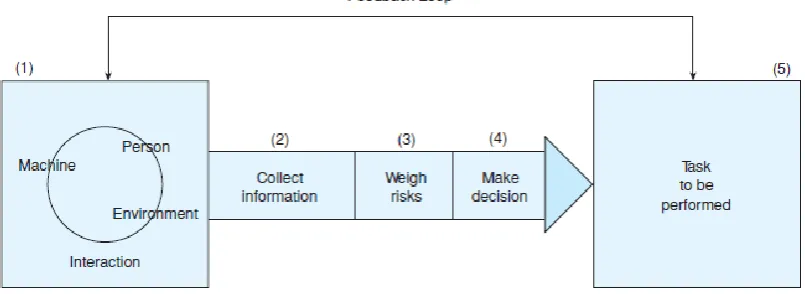
The study was underpinned in the system theory of accident causation. A system is a group of regularly interacting and interrelated components that together form a unified whole. This definition is the basis for the systems theory of accident causation. This theory views a situation in which an accident may occur as a system comprised of the following components: person (host), machine (agency), and environment (Ladd, 1987; Perrow, 1994). The likelihood of an accident occurring is determined by how these components interact; each of the components has a bearing on the probability that an accident will occur. Changes in the patterns of interaction can increase or reduce the probability of an accident. Legal framework is one of the systems in the environment that contributes to improvement in occupational health and safety. For example if safety procedures such as measurement, inspection, correction and investigation are ignored or given insufficient attention unsafe work environment will result. The systems model is illustrated in Figure 1
Source: Rasmussen (1997)
Figure 1: Systems Theory Model
3.3 Conceptual Framework
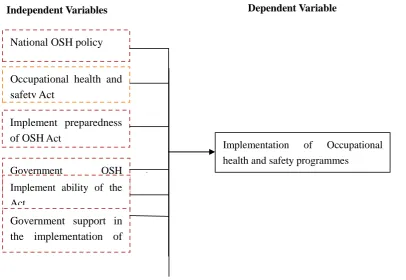
Figure 2 Conceptual Framework
4.1 Research Methodology
The current research used descriptive research design to describe the characteristics of the variables and at the same time investigate the cause effect relationship between variables (Saunders, Lewis and Thornhill, 2007). This research design offered the researcher the opportunity to establish the relationship between independent variables and dependent variable. According to Mugenda and Mugenda (2003) this design is economical and allows collection of quantitative data from a sizeable population.
4.2 The population
A population refers to all items or people under consideration in any field of inquiry (Orotho, 2004). According to Kenya Association of manufacturers (2013) there were 735 registered industries in Kenya. Since it was difficult to study the total population due to its large size, limitation of time and resources, the study population consisted of 257 industries selected through random sampling procedure as explained below in the sample size determination. The unit of observation was the occupational health and safety officers in the sampled industries.
4.3 Sample Size Determination
Sekaran (2003) defines a sample as subgroup or subject of the population. The assumption in studying samples is that the characteristics of the sample will adequately reflect the characteristics of the population in question and the researcher should be able to draw conclusions that would be generalized to the population of interest (Gary, 2009; Mugenda, 2008); Sekaran, 2003). It is therefore possible to obtain sufficiently accurate results by
Occupational health and safety Act
Government OSH
inspections and audits
Implementation of Occupational
health and safety programmes
National OSH policy
Implement ability of the Act
Dependent Variable Independent Variables
Government support in the implementation of OSH
OSH Act
Implement preparedness of OSH Act
studying only part of the total population (Kothari, 2004).
Yamane (1967) formula for calculating sample size and sample size determination tables by Saunders, Lewis and Thornhill (2007) were used for the determination of the sample size. Yamane formula yielded a sample of 259 as follows:
n= N/1+N (e) 2
Where n = sample size, N = population size e = error term N = 735, ε = .05 hence,
n = 735/1 + 735(.05)2 = 259
At 95% confidence level, 254 respondents were selected from the table. An average sample of 257 was then taken from the two methods that is (254 +259) /2=257.
4.4 Data Collection Method
Data was collected by use of a self administered structure questionnaire. The questionnaire was developed based on review of studies related to occupational health and safety. The questionnaire contained open ended, closed ended questions and likertscales. Open ended questions allowed the respondent to answer the questions in any way they chose while closed ended questions asked the respondents to make choices among a set of alternatives given by the researcher (Senkaran, 2003; Kothari, 1990). The likerts were used to measure the employees’ opinions, perception, feelings and attitudes (Kothari, 1990; Mugenda & Mugenda 2003; Pigors and Myers (1981)).
5.1 Background of the Respondents
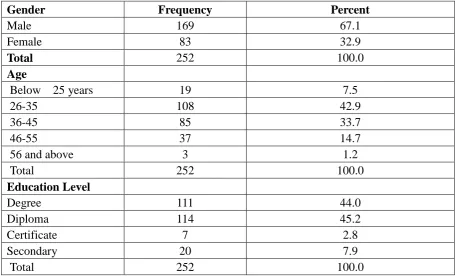
Table 1 Characteristics of the Respondents
Gender Frequency Percent
Male 169 67.1
Female 83 32.9
Total 252 100.0
Age
Below 25 years 19 7.5
26-35 108 42.9
36-45 85 33.7
46-55 37 14.7
56 and above 3 1.2
Total 252 100.0
Education Level
Degree 111 44.0
Diploma 114 45.2
Certificate 7 2.8
Secondary 20 7.9
Total 252 100.0
5.2 Descriptive Analysis
The study sought to find out whether legal framework determined implementation of OSH programmes. This section provides an explanation of the descriptive statistics on the study variables.
5.2.1 Descriptive Analysis for Independent Variables
Opinions were sought on the influences of legal framework on implementation of OSH programmes. Legal framework refers to specific standards on government’s laws and policies regarding OSH practices in all work places. The effect of seven legislative factors on implementation of OSH programmes was measured. These factors were; OSH national policy, OSH Act (OSHA), familiarity with OSHA, government inspections and audits, ease of implementation of OSHA, government support and Implement preparedness of OSH. The results showed that 72.3%, 65.5%, 68.6% and 69.1% of the respondents felt that OSH Act, OSH policy, familiarity with OSHA, government OSH inspections and audits respectively determined implementation of OSH programmes to a large and very large extent. However 59.1% of the respondents indicated that government support affect implementation of OSH programmes to a large and very large extent with the rest saying either it did not at all or it did to a small and moderate extent. On the contrary only minority 28.2% thought the Act was largely implementable with 4% stating it was not at all implementable and no one felt it’s implementable even to a small extent. In fact majority 67.9% of the respondents felt it was implementable only to a moderate extent. Finally majority 67.9% felt that implement preparedness of OSH was only to a moderate extent.
Government laws and regulations have a strong influence on the extent to which firms implement OSH programmes. Sometimes employers are not willing to provide comprehensive OSH programmes and an external force is necessary to exert pressure on them. In countries where government is firm in following up implementation, OSH has been found to be successful. Some of the respondents in this study felt that the government was not doing enough and thus the reason for laxity in the implementation of OSH programmes. The role of the government in ensuring embracement of OSH in industries has been emphasized by many scholars. For example Nyakang’o (2005) contend that employers have a responsibility under the occupational safety and health Act to furnish a work place free from recognized hazards; also in an empirical study by Chen and Zorigt (2013) on influential factors on the implementation of OHSM in the mining industry the Act was identified to be the most influential factor.
OSH act is another important influence to implementation of the Act but unfortunately sometimes workers and even management are not familiar with it. This collaborates with a baseline survey conducted in 2005 from 65 participants on management perspectives of occupational health and safety structures and practices in Kenya which indicated that most workplace managers and workers were not familiar with the Kenyan work safety legislation which was affecting OSH practices.
Government support in facilitating implementation of the OSH programmes collaborated with empirical study by Chen and Zorigt (2013) who found that lack of adequate investment support from the government affect implementation of OSH programmes. The respondents opinion that the Act was not largely implementable could be explained through Mendeloff (1988) who indicates OSHA impact on OSH implementation is limited due to its strict regulation of H&S rules which causes less protection of workers because employers vigorously resist overregulation. Details of respondents’ responses can be viewed from Table 2
Table: 2 Descriptive Statistics on Legal Framework
Legislative Areas Not
At All Small Extent Modera te Extent Large Exten t Very Large Extent Extent to which national OSH policy
affects implementation of occupational health and safety programmes
11.1 %
9.5% 13.9% 35.7% 29.8%
Extent to which occupational health and safety Act affects implementation of OSH programmes
5.2% 13.1% 9.5% 31.0% 41.3%
Extent to which Workers familiarity with OSHA affects implementation of OSH programmes
7.5% 8.7% 15.1% 32.5% 36.1%
Extent to which OSH inspections and audits by the government affect implementation of OSH programmes
3.6% 9.5% 17.9% 30.6% 38.5%
Extent to which implement ability of OSH Act affects implementation of OSH programmes
1.6% 10.3% 26.6% 33.3% 28.2%
Extent to which Government support in the implementation of OSH act affect implementation of OSH programmes
3.2% 12.7% 25.0% 25.0% 34.1%
Extent to which Implement preparedness of OSH affects implementation of OSH programmes
5.2.2 Correlation and Regression on Legal frame work and Implementation of OSH Programmes
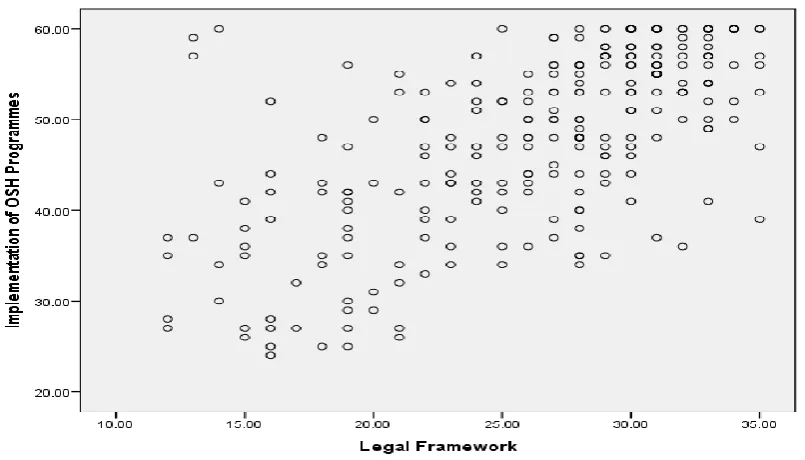
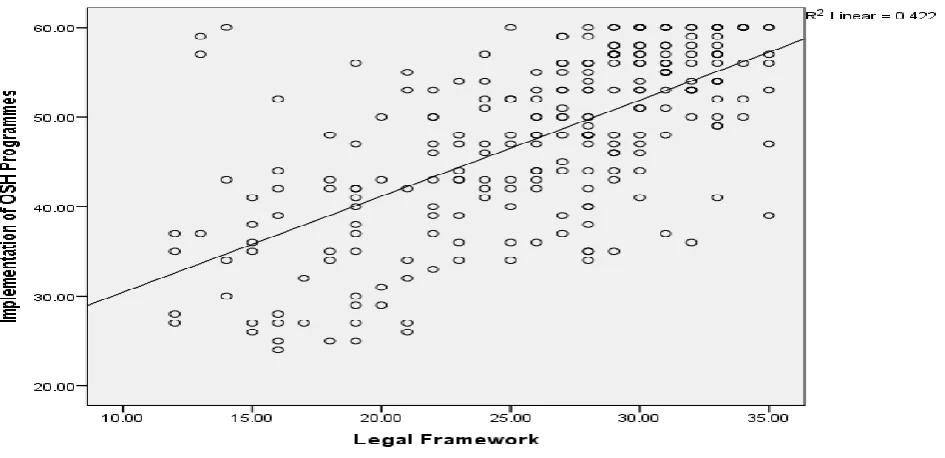
By looking at the scatter plot on Figure 3 one could easily suggest that there is some positive correlation between implementation of OSH programmes with legal framework. Further analysis also showed that legal framework affects implementation of OSH programmes.
Figure 3: Scatter plot for Implementation of OSH programmes /Legal frame work
Pearson correlation Table 3 also reveals that there was a positive correlation between implementation of OSH programmes with legal framework at r=0.649. This implied that increased government rules and regulations for example by conducting regular inspections and audits led to improved implementation of OSH programmes. The model was also considered to be statistically significant because p value=0.000 is also less than 0.01.
Table 3: Correlation between Implementation of OSH Programmes / Legal Frame work
Implementation of OSH
Legal framework
Implementation of OSH
Pearson Correlation 1 .649**
Sig. (2-tailed) .000
N 252 251
Legal framework
Pearson Correlation .649** 1
Sig. (2-tailed) .000
N 252 252
**. Correlation is significant at the 0.01 level (2-tailed).
showed that there was a positive correlation between implementation of OSH programmes and legal framework, which means that better legal frame work led to increase in implementation of OSH programmes.
Figure 4: Line of best fit between Implementation of OSH programmes / Legal framework
Regression Model for Legal Framework
Regression analysis between implementation of OSH programmes and legal frame work depicted a relationship in which R2= 0.422 which implies that 42.2% of implementation of OSH programmes was explained by legal framework as can be seen in the model summary Table 4
Table 4 :Model Summary For Legal Framework Mode
l
R R Square Adjusted R Square Std. Error of the
Estimate
1 .649a .422 .419 7.37764
a. Predictors: (Constant), Legal framework
Table 5: ANOVATest for Legal Framework and Implementation of OSH Programmes
Model Sum of Squares df Mean Square F Sig.
1
Regression 9922.464 1 9922.464 182.299 .000b
Residual 13607.393 250 54.430
Total 23529.857 251
a. Dependent Variable: Implementation of OSH programmes b. Predictors: (Constant), Legal framework
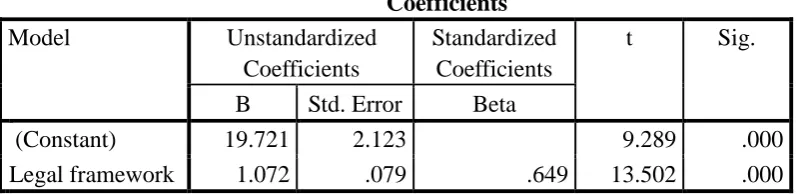
Lastly, the Beta coefficient Table 5 also revealed that p-values were 0.000 which is less than 0.05 with t-values being 9.289 and 13.502 respectively. This implied that the model was
statistically significant and it was defined by Y 19.7211.072X3 e indicating that for
every unit of legal framework there was an increase of implementation of OSH programmes by 1.072.
Table 6: Test of Beta Coefficient on Implementation of OSH Programmes and Legal Framework
Coefficientsa
Model Unstandardized
Coefficients
Standardized Coefficients
t Sig.
B Std. Error Beta
(Constant) 19.721 2.123 9.289 .000
Legal framework 1.072 .079 .649 13.502 .000
a. Dependent Variable: Implementation of OSH programmes
6. Discussion
From the findings above legal framework was found to have a positive effect on implementation of OSH programmes. This is in line with what Heinrich et al. (1980) pointed that legislation is one process by which government affects safety. Specifically Bernardin, John and Russell (1993); Wayne (1995) emphasize that OSH authorities should conduct work place inspections through DOHSS officers who have knowledge and experience in the OSH field and are trained in recognition of safety and health hazards.
References
Barcow, L. S. (1980). Bargaining for Job Safety and Health, Cambridge, MA, MIT Press,158
Bernardin, J., John, H., Russel, J. (1993). Human Resource Management: An experiential approach. Singapore: McGraw-Hill book co
Bartel, A. P. and Thomas, L. G. (1985). ‘Direct and Indirect Effects of Regulation: A New look at OSHA’s Impact’. 28 Journal of Law and Economics, 1-25.
Cliff D. (2012). The Management of Occupational Health and Safety in the Australian Mining industry ;The University of Western Australia Federation of Kenyan employers, (2008). Annual report.
Gary, T.(2009).How to do your research Project. London: SAGE Publications.
GOK (2007) Occupation Health and Safety Act, 2007. Nairobi :Government Printer, Gray, W.B., Scholz, J.T. (1993). Does regulatory enforcement work? A panel analysis
of OSHA enforcement. Law Soc Rev. 27(1):177–213.
Heinrich, H.W., Petersen, D. and Roos, N. (1980). Industrial Accident Prevention:ASafety management Approach. New York :McGraw Hill
International lab our organization, (2006). Promotional Framework for Occupational Safety and Health Convention, 2006 (No. 187) convention 155
Kenya Association of Manufacturers Directory (2013). Over 50 years of Manufacturing excellence.
Kothari, C. R. (1990). Research methodology: methods and techniques. New Delhi :New Age International.
Kothari, C.R. (2004). Research methodology: methods and techniques. New Delhi, New age international.
Ladd, J., (1987). Bhopal: An essay on moral responsibility and civic virtue, Department of philosophy, Brown University, Rhode Island, January Maina, B. (1996). Kenya Association of Manufacturers < http://www.kam.co.ke McGarity, Thomas O. T. O. and Shapiro, S. A., (1993), Workers at Risk: The Failed
Promise of the occupational Safety and Health Administration, Wesport, Conn., Praeger, 362p.
McGarity, T. O. and Shapiro, S. A., (1996), ‘OSHA’s Critics and Regulatory Reform’, 31 wake Forest Law Review, 587-646
Mendeloff, John M. (1988), The Dilemma of Toxic Substance Regulation: How
Overregulation causes Underregulation at OSHA, Cambridge, MA, MIT Press, 321 p. Mugenda, O.M. & Mugenda, A. G. (2003). Research methods: quantative and
Qualitative approaches. Nairobi: African centre for technology studies.
Mugenda, A.G (2008). Social science research theory and principles. Nairobi: Applied research and training Services.
Nyakang’o, J. B. (2005). Status of occupational health and safety in Kenya: Workshop
on the IUPAC–UNESCO-UNIDO Safety Training Program, part of the IUPAC Congress in Beijing
Perrow, C., (1984). Normal Accidents: Living with High-Risk Technology. New York: Basic Books, Inc.,
Pigors, P. and Myers, C. (1981). Personnel Administration: A point of view and a Method (9th ed.). Tokyo : McGraw – Hill.
Rea, S. A., Jr (1981), ‘Workmen’s Compensation and Occupational Safety Under Imperfect information’, 71 American Economic Review, 80-93.
Robens,(1970-73),a report of the Committee on Safety and Health at Work-London Saunders, M., Lewis, P. and Thorn hill, A. (2007), Research Methods for Business
Students (4th ed.) Harlow: Prentice Hall Financial Times.
Sekaran, (2003). Research methods for business. A skill building approach. NewYork: John Westly & sons.
Shapiro, Sidney A. and McGarity, Thomas O. ( 1991), ‘Not So Paradoxical: The Rationale For technology-Based Regulation’, Duke Law Journal, 729-752. Viscusi, W.K. (1986). The impact of occupational safety and health regulations,
1973–1983.