DOI: http://dx.doi.org/10.26483/ijarcs.v8i9.5211
Volume 8, No. 9, November-December 2017
International Journal of Advanced Research in Computer Science
RESEARCH PAPER
Available Online at www.ijarcs.info
ISSN No. 0976-5697
EVALUATION OF IMAGE DEHAZING BY PSO BASED DARK CHANNEL PRIOR
Poonam
M.Tech. Dept. Electronics and Communication Engineering Amritsar College of Engineering & Technology
Amritsar, India
Dr. V K Banga
Principal, Amritsar College of Engineering & Technology Amritsar, India
Gurjit singh
H.O.D. Dept.Electronics & Communication Engineering Amritsar College of Engineering & Technology
Amritsar, India
Abstract: The following paper signifies that image defogging make use of many outdoor operating systems. Digital images captured in outdoor environment are easily polluted by haze, which will de-grade the conveyed information. Haze detection as well as elimination is actually a challenging job for enhancing the quality of digital images. In general, these pictures are clicked at a long distance from the visual sensor to given scene. The algorithm used here will modify the dark channel prior using existing techniques which have neglected the use of optimized selection of restoration level, so particle swarm optimization will be utilized to monitor and locate the best optimized value for restoration. Adaptive brightness preserving histogram equalization will also be used to remove the uneven illuminate problem of the Haze removal. Thus the proposed technique has the ability to remove the limitations of existing techniques.
Keywords: Haze, Dehazing, Pso, BPDHE, Dark Channel Prior.,
1.INTRODUCTION
A. Digital Image Processing
Picture will be calculated by two-dimensional function f(x, y) here x and y are spatial (plane) coordinates. Now the amplitude of any pair of coordinates is known as intensity as well as gray level of image. Where f(x, y) are finite and discrete quantities, and the image formed will known as digital image [1]. Digitized picture is collection of finite no. of elements and every element will have particular location known as picture elements, image or pixels. Pixel values usually represent gray levels, colors, heights. The primary purpose of image processing should be to understand, identify, and interpret the information from the image pattern. In some instance pictures may be corrupted through moisture content like dust, smoke, snow, haze, and fog. Also during the distance between the object and camera increases, quality of the picture automatically reduces.
B. Haze and Dehaze
Haze is big obstacle in visibility applications, so much needed to remove effectively, because dust, smoke and dry particles disturb the clarity of sky. This leads degradation of outsides pictures as well as weakening of equally colour and contrast images. The poor climate conditions also decreases the clarity of pictures. These atmospheric conditions are used to blur the captured scene. The air is added some misted particles [2].So haze occurs in the pictures because of absorption and scattering. These scattered events mainly classified into two types such as attenuation and air light. Dehazing is highly essential in computer vision applications as well as in computational photography. It is consider as very efficient method because pictures without haze make
possibility of improvement in the interpretation of computer vision work. Dehazing process can be characterized by two types-
Multiple Image Dehazing Single Image Dehazing
Polarization based process used the specification of scattered light to restore the scene depth details taken with separated degrees of polarization [3]. Same as the several pictures are clicked under different climate conditions used as reference images. Some processes with different research pictures have restrictions within online dehazing applications. This can cause the researchers to operate on dehazing with single input picture. Single picture based rely on particular features of dehaze pictures consist higher contrast. By increasing the local contrast of input hazy picture which will improve the visibility but produce some blocking artifacts.
Fig1. (a) An image without haze (b) with haze
C. Particle Swarm Optimization
followed by one of the member of group which will have closest position with food source may be known as potential solution [5]. The flocks accomplish their best situation by communicating other members who has already far better position. Animal having better situation will inform to flocks and the others will proceed at the same time. This happened frequently until better food source or situation obtained. The PSO algorithm followed by similar process for finding optimal value with swarm of particles, where particle represent a potential solution [6].
The PSO Algorithm
1) In just PSO technique, any swarm of individuals (called particles) travel through the search space. Every particle signifies a candidate solution to particular optimization problem [7].
2) The positioning of a particle visited by itself is best position called pbest.
3) The very best position within neighborhood is actually termed as the global best particle, so resulting algorithm known as gbest PSO.
Every particle will maintain its best solution, personal best, pbest and the best value of each particle, global best, and gbest. Each particle will modify its travelling speed or velocity dynamically related to flying experiences of itself and its fellow worker as well as modifies its position outline by current position and velocity also by distance between its current position and pbest and gbest [8].
D. Dark Channel Prior
Dark Channel Prior is relying on “dark pixels,” having reduced intensity in single color channel, apart from sky region [9]. This procedure employed for dehazing developed by 4 ways such as atmospheric light estimation, transmission map estimation, transmission map refinement, and image reconstruction. Here dark channel is calculated by follows.
Jdark(x)=min{min{Jc(y}},
yאΩ(x) cא{r,g,
Exactly where Jc is surely intensity regarding colour channel c א {r, g, b} of RGB image and Ω(x) is a local patch centered at pixel x. Which means this equation describe lowest amount value along with three color channels and all pixels in Ω(x) is chosen as dark channel J dark(x)
Atmospheric light estimation
Maximum conventional Dark Channel prior based dehazing evaluates pixel value with maximum dark channel details which is required directly shown below:
This process can wrongly chosen the pixel when scene consist of sharp things. However, pixels with high percentage of dark channel details are choose as haze-opaque pixels having increased intensity required to evaluate A [10]. In equation, p in evaluation of A is set to 0.1 to clearly remove vibrant objects. Then the local entropy can be calculated by equation given below-
Exactly where px (i) signifies the probability of pixel value within local patch centered at x, and N provide optimum pixel value. The local entropy value is definitely less along smooth modification generally corresponds to haze-opaque regions. Hence, pixels with smallest entropy value is required to evaluate A.
Transmission map estimation
It is calculated by Dark Channel Prior [11]. If DCP is not exploited, should be written as-
Here the pixel value of the dark channel, Jdark(x), is zero as well as (J/A) dark(x). If (J/A) dark(x) will not close to zero, the transmission map evaluated will be under-estimated because the positive offset is definitely neglected. In Dark Channel based dehazing results the pictures may be unnatural because of haze removed thoroughly [12]. So, A constant ω (0 < ω < 1) will used to maintain small amount of haze.
Transmission map refinement
In suitable evaluation for the transmission map results couple of trouble like wrong textures and blocking artifacts. The block-min process minimizes the apparent resolution or quality of the dark channel, hence blurry transmission maps. Therefore, there are several technique created for improvement in transmission map [13]. There are many dehazing techniques used for transmission map smoothening like Gaussian and bilateral filters as well as soft matting and cross-bilateral filter adjust hazy images as a guidance signal [14].
Image reconstruction
E. Brightness Preserving Dynamic Histogram
This method would be the improved edition of the Histogram Equalization. Likewise, a smoothing filtering is given to histogram before the partitioning method to be taken [17]. It uses the local maxima instead of minima as separating point. After the Histogram equalization is applied to each sub-histogram, brightness normalization will improve mean brightness which will be equal to original mean brightness [18]. A compact ratio contributes so much contrast enhancement. For big ratio, the final intensity details may exceed increased intensity value of output strong range [19]. The increased pixels will be quantized for maximize intensity of gray levels [20].
Fig.2 flowchart for Dynamic Histogram Equalization
2.RELATEDWORK
Bi, Guoling, et al.( 201-7)[1] Proposed dehazing that plays
a dominant role in many image processing applications. Bad field of vision due to atmospheric phenomena brings failing within image processing applications. Haze leads to failure of much computer vision. This approach provide a quick idea about several dehazing procedures and in addition gives information about advanced colour attenuation prior dependent dehazing methods.. Chen, C, et al. (2017) [2]
explained that Outside view and pictures reduce the quality under poor weather conditions, and produce Hazy images. The scientific study is done on various proposed techniques to improve the visibility of hazy image, which mainly worked on saturation and brightness. Because of haze the colors, edges and texture of picture get disturbed, so there are some technique which restore edge losses and color impacts. This paper used polarization and RETINEX based approach which makes dehazing simpler. Shruti P, et
al.(2017) [3]. It gives the histogram equalization methods
which could be used for contrast improvement purpose. It
works on reduction in no. of gray levels. Contrast improving by mean of histogram equalization methods. That evaluate numerous HE process utilize in preserving picture brightness. The main aim is to use image segmentation.
Park, et al. (2016) [4] has deal with Image dehazing is one
of the most important research area in image processing and pattern analysis. The actual scattering happened boost the whiteness in pictures as well as cut down the contrast. Haze elimination algorithms will be essential in several vision applications. Yang, et al. (2015) [5] discussed the dehazing process. So, there is need to overcome the error of inverse problem caused by physical degradation model so that DCP come into consideration. The DCP can be calculated by characteristic of simple outside taken images with intensity value of single colored channel along a local window close to zero. The complex solution for ill-posed inverse problem few steps of dehazing used. B. H. Chen, et al. (2015) [6]
explain the visualize and quality of an image is highly required in the fields of surveillance and avionics. Because of turbid medium in atmosphere the pictures get vague and required processing for haze free pictures. Dark Channel Prior works very well for dehazing because with his method there is big scope for improvements. L. Bai, et al. (2014) [7]
described that the Image improvement enhanced by increasing the information details. Here PSO having hue preserving color picture improvement process is carried out. The algorithm will be tested on different colour pictures and results will also be compared with other famous picture enhancement method.
3. GAPS IN LITERATURE
Haze elimination algorithms get more essential for number of vision applications. It has been cleared that every active research or study has mistreated many subjects. There are numerous researches gaps which concluded utilizing the literature survey are as follow:-
A. The actual offered methods ignored an evolutionary process i.e. Ant colony optimization, particle swarm optimization algorithm or fuzzy logic kind of techniques to enhance the quality of the dehazing algorithms.
B. The restoration level t0 has taken statically i.e. 0.1 in most of existing techniques.
C. The particle swarm optimization suffers from poor convergence speed.
4. METHODOLOGY
A. Proposed algorithm
Step 1: Input Image: - First of all image will be taken as an input.
Step 2: Evaluate the estimate depth map. .Step 3: calculate the Airlight map (Atx). Step 4: Define edges using some filters.
Step 5: Using particle swarm optimization evaluate the restoration value
Step 6: Apply dynamic histogram brightness preserving.
B. Proposed Methodology
Fig.3 flowchart for Dynamic Histogram Equalization
5. RESULTS AND DISCUSSIONS
A. Contrast- Contrast is difference in luminance or colour
which makes things distinguishable. It is capable to represent picture. Human visual perception is much more sensitive to contrast rather than luminance. The maximum contrast of picture can be contrast ratio or dynamic rangeMaintaining the Integrity of the Specifications.
Where image spatial domain consist of N pixels
IMAGE EXISTING (CONTRAST)
PROPOSED (CONTRAST)
1 0.2790 0.3374
2 0.2789 0.3799
3 0.2855 0.3577
4 0.2789 0.3482
5 0.2855 0.3591
6 0.2814 0.2921
7 0.2890 0.3391
8 0.2843 0.3038
9 0.2732 0.3497
10 0.2963 0.3392
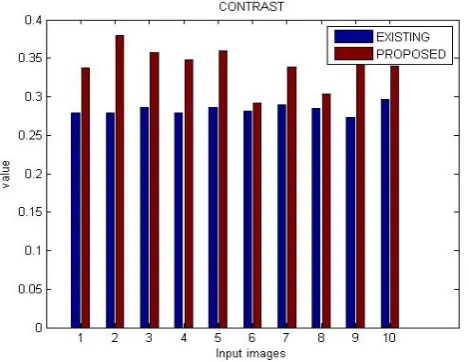
[image:4.595.327.562.199.380.2]InTable1. It is observed that the purposed technique has shown significant improvement in the existing technique.
Fig 4- Shows the comparison of contrast between existing and purposed method where x axis shows input image and y axis shows the value. In our case the purposed contrast values are comparatively greater than the existing approach.
B. Entropy- Entropy has a quantity which is much needed to illustrate the pictures including number information specific coded from compression algorithm. Low entropy pictures which usually contains maximum dark sky including minimum contrast and massive amount of pixels.
The picture is actually complete flat having an entropy value equal to zero as well as compressed to a relatively small size. Whereas, high entropy pictures like heavily cratered space on moon have great contrast and cannot be minimized.
Whereas p ( i ) is probability with pixel having brightness i . High entropy value provides large amount information details contained in picture
IMAG
E (ENTROPY) EXISTING PROPOSED(ENTROPY)
1 1.5853 1.6646
2 1.5851 1.6428
3 1.5782 1.6260
4 1.5851 1.6372
5 1.5778 1.6336
6 1.5866 1.6840
7 1.5689 1.6593
8 1.5678 1.6411
9 1.5793 1.6246
EVALUATE DARK CHANNEL (DEPTH MAP)
EVALUATE AIR LIGHT MAP INPUT IMAGE
REFINE DARK CHANNEL
EVALUATE THE RESTORATION USING PARTICLE SWARM OPTIMIZATION
RESTORATION USING RESTORATION MODEL
APPLYING DYNAMIC HISTOGRAM PRESERVATION
10 1.5767 1.7060
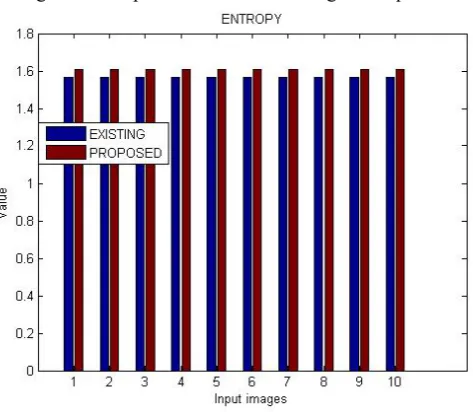
[image:5.595.53.290.100.306.2]InTable2. It is observed that the purposed technique has shown significant improvement in the existing technique.
Fig 5- Shows the comparison of entropy between existing and purposed method where x axis shows input image and y axis shows the value. In our case the purposed entropy values are comparatively greater than the existing approach.
6. CONCLUSION
Here, we worked on existing Image dehazing from the perspective of several dehazing method. The proposed new technology, Haze removal using Particle Swarm Optimization and brightness preserving dynamic histogram equalization will be utilized to monitor and locate the best optimized restoration value for dark channel prior gives the better results. This paper provides comparison between existing and proposed haze removal techniques on the basis of parameters like contrast and entropy. So, the proposed technique of haze removal gives better results as compared to the existing technique. In near future, the PSO suffer from initial no. of random particles problems. Therefore do not provide efficient results in every iteration. To handle this issue in near future we will propose an integrated PSO technique which will integrate PSO at differential evolution. Therefore it will improve the dehazing result in future.
7. REFERENCE
[1] Bi, Guoling, et al. "Image Dehazing Based on Accurate Estimation of Transmission in the Atmospheric Scattering Model." IEEE Photonics Journal 9.4 (2017): 1-18.
[2] Chen, C., Li, J., Deng, S., Li, F. and Ling, Q., 2017, May. An adaptive image dehazing algorithm based on dark channel prior. In Control And Decision Conference (CCDC), 2017 29th Chinese (pp. 7472-7477). IEEE.
[3] Shruti P. Patel, Manish Nakrani,”A Review on Methods of Image Dehazing” International Journal of Computer Applications (0975 – 8887) 2017.
[4] Park, Jinwon, Kyumok Kim, Sungmin Lee, Chee Sun Won, and Seung-Won Jung. "Text-aware image dehazing using stroke width transform." In Image Processing (ICIP), 2016 IEEE InternationalConference on, pp. 2231-2235. IEEE, 2016.
[5] Yang, Minmin, Zhengguo Li, and Jianchang Liu. "Super-pixel based single image haze removal." In Control and Decision Conference (CCDC), 2016 Chinese, pp. 1965-1969. IEEE, 2016.
[6] B. H. Chen and S. C. Huang, "Edge Collapse-Based Dehazing Algorithm for Visibility Restoration in Real Scenes," in Journal of DisplayTechnology, vol. 12, no. 9, pp. 964-970, Sept. 2016.Volume 133 – No.12, January 2016
[7] L. Bai, Y. Wu and J. Xie, "Real Time Haze Removal On Multi Core DSP," in ELSEVIER, 2015.
[8] Sonam, Rajiv Dahiya, “review of contrast enhancement techniques based on histogram equalization”, International Journal of Advance Research in Education Technology (IJARET), Vol.2, Iss. 2, April-June 2015.
[9] Q. Zhu, J. Mai, and L. Shao, A Fast Single Image Haze Removal Algorithm Using Color Attenuation Prior, IEEE Trans. Image Processing, vol. 24, no. 11, pp. 3522-3533, Nov. 2015.
[10] C Chengtao, Z Qiuyu, L Yanhua, Improved dark channel prior dehazing approach using adaptive factor, in Proceedings of IEEE International Conferenceon Mechatronics and Automation (ICMA, Beijing, 2015), pp. 1703.
[11] Computational Visual Cognition Laboratory. http://cvcl.mit.edu/database.htm. Accessed 20 January 2015 [12] F Fang, F Li, T Zeng, Single image dehazing and denoising: a
fast variational approach. SIAM Journal on Imaging Sciences. 7(2), 969–996 (2014).
[13] MS Sandeep, Remote sensing image dehazing using guided filter. IJRSCSE.2014
[14] Shih-Chia Huang, Member, Ieee, Jian-Hui Ye, And Bo-Hao Chen, An Advanced Single Image Visibility Restoration Algorithm For Real-World
[15] Chhaya Gautam, and Neeraj Tiwari “A comparative study of histogram equalization techniques and adaptive gamma correction for color image contrast enhancement”, International Journal of Computer Applications, ISSN (0975-8887, Vol. 103, No. 15, October 2014.
[16] Y.-H. Shiau , P.-Y. Chen , H.-Y. Yang , C.-H. Chen , S.-S. Wang,”Weighted haze removal method with halo prevention”, Elsevier, 2013.
[17] Xiangdong Zhang,Peiyi Shen,Lingli Luo, Liang Zhang, Juan Song; Enhancement And Noise Reduction Of Very Low Light Level Images; Ieee.
[18] Xiangdong Zhang,Peiyi Shen,Lingli Luo, Liang Zhang, Juan Song; Enhancement And Noise Reduction Of Very Low Light Level Images; Ieee.
[18] Xu Haoran, "Fast image dehazing using improved dark channel prior", Information Science and Technology (ICIST), 2012 International Conference on.IEEE, 2012
[19] IFSTTAR.http://www.sciweavers.org/read/frida-foggy-road-image-databaseevaluation- database-for-visibility-restoration-algorithms-184350. Accessed 6 November 2012