International Journal of Research in Advent Technology, Vol.2, No.11, November 2014
E-ISSN: 2321-9637
121
A Survey on Pattern Recognition Using Spiking Neural
Networks with Temporal Encoding and Learning
A.Dhilipan,
P.G Scholar, Department of Computer Science, Anna University Regional Centre, Coimbatore, [email protected].J. Preethi
, Assistant Professor, Department of Computer Science, Anna University Regional Centre Coimbatore, [email protected].M.Sreeshakthy
, P.G Scholar, Department of Computer Science, Anna University Regional Centre, Coimbatore, [email protected]
V.Sangeetha
, P.G Scholar, Department of Computer Science, Anna University Regional Centre, Coimbatore, [email protected]Abstract – This paper, recognize of the patterns using spiking neural networks with temporal encoding and
learning. Neural networks place the important role in cognitive and decision making process. Processing the different type of inputs lead to find the discriminate the pattern. Leaky Integrate Fire Neurons are used to recognize the patterns. During the recognition supervised learning method is used to make the decision. Temporal encoding and learning of spiking neural network is used to classify effectively. Different spiking neural networks learning algorithm are used to recognize the patterns and also analyze the performance of the particular algorithm which was used in the pattern recognition.
Keywords- Pattern recognition; Spiking Neural Networks; Cognitive and decision Making; Temporal Encoding; Supervised Learning.
1. INTRODUCTION
Pattern recognition is the process of classifying the particular data which was based on the prior knowledge or statistical information extracted from the pattern. Usually the pattern has to be classified using the collection of data. Several methods are used to implement the pattern recognition such as maximum entropy classifier, Naïve Bayes classifier, decision trees, support vector machine and perceptrons. These methods are less biological inspired so that Spiking Neural Network is used to recognize the pattern because it’s having well biological evidence. Biologically inspired models provide the better computational power during the pattern recognition. Pattern recognition follows some steps to identify the particular pattern. Before processing the pattern, first identify how the information’s are stored in the pattern. Two basic schemes are used to process the pattern; there is rate coding and temporal coding. Rate coding model is the rate of firing communication state that intensity of stimuli increase the rate of actions. In rate coding each and every neurons have to be fired, but it has to be choosen based on the probability. It may be character by using the firing neurons rather than the spiking neurons. Learning process of rate coding is the adaptive weight modification. And the other method is temporal encoding. Temporal pattern in train spike carry the information fast rather than the rate coding. Example of temporal coding is the latency coding which is ability of caring information within the spiking time. There are number of methods to classify the particular pattern but they are less performance, but spiking neural network having the best spiking time which is having high performance and accuracy for
classifying the patterns. There are several spiking models such as, integrate-and-fire (IF) model, the Hodgkin-Huxley-type model and the Izhikevich model. IF model has the higher performance and simple when compare with another model. There are several algorithms are used to process the patterns like, Back propagation, bio spike timing dependent plasticity (STDP), spatiotemporal learning rule. In this paper patterns are identify using spiking neural networks and also analyze the performance and accuracy of the particular algorithm. Section 2 describes the Related work which is based on the pattern recognition , Section 3 deals with what are the steps are used to recognize the patterns Section 4 deals with the performance of pattern recognition algorithm and final section 5 describes the result and conclusion of this paper.
2. RELATED WORKS
International Journal of Research in Advent Technology, Vol.2, No.11, November 2014
E-ISSN: 2321-9637
122 integrate fire neurons. Each neurons are arranged in the
hierarchical manner and information are processed each layer which are arranged in frame by frame. Each frame has to be changed its structure by using Hebbian-based training. The patterns are analyzed using Vidtimt data set and recognize the facial information. [3] In this paper spatiotemporal learning rule is used to analyze the particular information process by using Spiking neural network. During the training process neurons have to fired and learn by using the Hebbian-based training rule. This method applied to several inputs and analyzes the performance of the information in the memory system. [4] Paper deals that, classify the patterns using the spiking neural networks. The network has to fired using the integrate fire neurons and the neurons are classify using the supervised learning process. The system has to be processed by using following steps, encoding, learning and readout. This process has to be applied digital images like MINST and alphabetical letters and analyze the performance of the pattern recognition. It also apply the long term modification like spike time dependent plasticity. [5] This paper deals with that, analyze the spatial related data has to be processed using spiking neural networks different encoding and learning process are used to analyze the performance and accuracy of the classification. [6] This paper deals that encoding the data and process those data’s using the back propagation algorithm, the temporal coding is used to process fast information as well same as the rate coding method. XOR problem related data’s are processed using the spiking networks with back propagation algorithm and analyze the performance using bench mark of data.
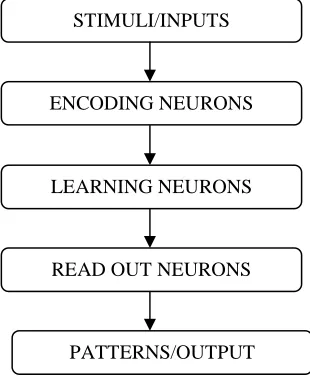
[image:2.595.310.544.141.280.2]OVERALL STRUCTURE
Fig 1: Over all structure of the pattern recognition
3. SPIKING NEURAL NETWORKS
[image:2.595.91.246.515.704.2]Spiking neural networks (SNN) used to analyze the patterns, the basic SNN architecture is explain following structure.
Fig 2: Architecture of Spiking Neural Networks
3.1 PATTERN RECOGNITION STEPS IN SPIKING NEURAL NETWORKS
SNN is used to recognize the memory which has several parts, Encoding part, learning part and Readout part. Each stimuli (input) has several component, those components are connect to the encoding part and the spiking information has to be trained using the learning process. During the learning the weight has to be updated and read out process has been used to extract the particular patterns.
3.1.1 ENCODING PART
Encoding is the process of generating the spiking patterns from the input stimuli. Temporal encoding is used to generate the spiking patterns rather than rate code. Latency code is example for the temporal coding which is encoding the information in the time responsive of encoded window. When encoding the information each neuron has to be fired. Encoding process each component has to be selected and convert the input points into the latency information. The binary information has to be converting into the temporal pattern of discrete spiking patterns.
Fig 3: Input Encoding for pattern recognition
3.1.2 LEARNING PART
Learning neurons place the important role for classifies the particular patterns. Learning network consists layer of tempotrons. Each encoding neurons are connected to the learning neurons. The structures STIMULI/INPUTS
ENCODING NEURONS
LEARNING NEURONS
READ OUT NEURONS
[image:2.595.310.524.609.663.2]International Journal of Research in Advent Technology, Vol.2, No.11, November 2014
E-ISSN: 2321-9637
123 of learning neurons are equal to the number of
encoding neurons. The tempotrons has to be classified the task which load has to be less than the critical value. The neurons generate the action spikes when the internal neurons cross the firing threshold values.
3.1.3 READOUT PART
The main goal of the readout process is to extract the particular pattern from the input stimuli of the learning neurons. In this the patterns are represented using the binary values because the classification of patterns only the 1 or 0 which means, it either classify using fired neurons (1) or un fired neurons (0). The total ܰ learning neurons of the output
can be representing a maximum number of 2ܰ classes
of patterns
[image:3.595.350.520.152.305.2]. Fig 4: Readout process for pattern recognition
3.2 TEMPORAL LEARNING RULES
Temporal learning rule goal is deal encoded information with spiking time. The spiking time is based on the Spiking time dependent plasticity (STDP). STDP plasticity depends on intervals between pre and post synaptic spikes. The basic mechanism of the STDP is Long term Potential and Long term Depression. The neuron model used here is Leaky integrate model neuron which was driven by synaptic current generation. The potential of the neurons of the synaptic is weight sum of the post synaptic, which was defined by [1]
V(t)= +Vres (1)
Here Wi and ti represents the synaptic efficiency and fire time of ith afferent. V res represent the rest potential
where k represents the normalized PSP kernel. A neuron is fired when V (t) crossing the input threshold value, after the potentially smoothly decrease to the V
res. In the classification process each neurons has to be
classifies either fired or not fired (P+ or P-). The fail of tempotron update process in each neuron, which is the same instructor time (T). From learning process it has the supervised learning method and the learning process has to be gained by the neural activities.
3.2.1 LEARNING FROM THE NEURAL
ACTIVITES
Several activities has to be increased the memory pattern, the synaptic weight has to be taken each and every binary values or from the continues distribution. In Hopfield neurons the memory patterns are expressed by the activities of neurons which may
be active (1) or inactive neurons (2). The temporal has to separate from the spatiotemporal pattern due to the learning rules. The pattern has to be classified by using binary and ternary patterns. This is shown in following fig 5 and 6.
Fig 5 : Binay pattern classification
Fig 6 : Ternary pattern classification
4. PERFORMANCE ANALYSIS
[image:3.595.343.524.338.490.2]International Journal of Research in Advent Technology, Vol.2, No.11, November
2014
E-ISSN: 2321-9637
124
NO PAPER INPUT METHOD ACCURACY REF
1
Brain Inspired Spiking Neural
Network With Temporal Encoding
And Learning
Iris Data STDP 99.63% [1]
2
Pattern Recognition In Spiking Neural Network With Temporal Encoding
And Learning
MINST images and digital
images
STDP 99.1% [2]
3
The Spatio temporal Learning
Rule And Its Efficiency
In Separating Spatiotemporal
Patterns
Spatio temporal Data
Hebbian Rule for learning
85% [3]
4
Fast And Adaptive Network
Of Neurons In Multi View Visual Pattern Recognition
Vidtimt Data
Structural Adaption and Frame by frame
operation
95.7% [4]
5
Error Back Propagation Temporally Encoded Neurons Of Spiking Neural
Network
XOR problem and Benchmark
Data’s
Spike prop and Error propagation
97.1% [5]
6. RESULT AND CONCLUSION
From the above analyze Spiking Neural Network has to be identify the patterns from different type of inputs like iris data, cancer data, digital images, and alphabetic letters. For processing those data’s each and every input has to be encoded and trained using different training rules and recognize the patterns. Spiking Neural Network is based on firing the neurons. So that the Spiking networks will provide the best result for recognize the patterns.
REFERNENCE
[1] Qiang Yu a, HuajinTang b,c,n, KayChenTan a, HaoyongYu , “A brain-inspired spiking neural network model with temporal encoding and learning” vol 138, pp 3-13, springer.
[2] Qiang Yu a, HuajinTang, “Pattern Recognition Computation in A Spiking Neural Network with Temporal Encoding and Learning” pp 10-15, IEEE.
[3] Minoru Tsukada, Xiaochuan Pan, “The spatiotemporal learning rule and its efficiency in separating spatiotemporal patterns” pp 139-146, springer.
[4] Simei Gomes Wysoski , Lubica Benuskova, Nikola Kasabov, “Fast and adaptive network of spiking neurons for multi-view visual pattern recognition”,pp 2563-2575, Springer.
[5] Sander M. Bohtea, Joost N. Kok , Han La Poutr, “Error-backpropagation in temporally encoded networks of spiking neurons” 17-37,Elesiver. [6] R.C. Froemke,Y.Dan,Spike-timing-dependent
International Journal of Research in Advent Technology, Vol.2, No.11, November
2014
E-ISSN: 2321-9637
125 [7] S.Ghosh-Dastidar,H.Adeli,Improved spiking
neural networks for eeg classification and epilepsy and seizure detection,Integr.Comput.-AidedEng. 14(3)(2007)187–212.
[8] S. Song,K.D.Miller,L.F.Abbott,Competitive Hebbian learning through spike- timing-dependent synaptic plasticity,Nat.Neurosci.3(2000)919–926.
[9]J.J.Wade,L.J.McDaid,J.A.Santos,H.M.Sayers,SWA T:aspiking neural network training algorithm for classification
problems,IEEETrans.NeuralNetw.21(11) (2010)1817–1830.
[10] S. Mitra, S. Fusi, and G. Indiveri, “Real-Time Classification of Complex Patterns Using Spike-Based Learning in Neuromorphic VLSI,” vol. 3, no. 1, pp. 32–42, Dec. 2008
[11] R. G¨utig and H. Sompolinsky, “The tempotron: a neuron that learns spike timing-based decisions,” Nature Neuroscience, vol. 9, no. 3, pp. 420–428,Feb. 2006.
[12] S. M. Bohte, E. M. Bohte, H. L. Poutr, and J. N. Kok, “Unsupervised clustering with spiking neurons by sparse temporal coding and multi-layer RBF networks,” IEEE Trans. Neural Netw, vol. 13, pp. 426–435, 2002.
[13] P. X. Tsukada M., “The spatiotemporal learning rule and its efficiency in separating spatiotemporal patterns,” Biol. Cybern., vol. 92, pp. 139–146,February 2005.
[14] R. Kempter, W. Gerstner, and J. L. van Hemmen, “Spike-Based Compared to Rate-Based Hebbian Learning,” in Advances in Neural Information
Processing Systems 11. MIT-Press, 1999, pp.
125–131.