Different Sense Granularities for Different Applications
Martha Palmer, Olga Babko-Malaya, Hoa Trang Dang
University of Pennsylvania
{mpalmer/malayao/htd}@linc.cis.upenn.edu
Abstract
This paper describes an hierarchical approach to WordNet sense distinctions that provides different types of automatic Word Sense Dis-ambiguation (WSD) systems, which perform at varying levels of accuracy. For tasks where fine-grained sense distinctions may not be es-sential, an accurate coarse-grained WSD sys-tem may be sufficient. The paper discusses the criteria behind the three different levels of sense granularity, as well as the machine learn-ing approach used by the WSD system.
1 Introduction
The difficulty of finding consistent criteria for making sense distinctions has been thoroughly attested to in the literature (Kilgarriff, ‘97, Hanks, ’00). Difficulties have been found with truth-theoretical criteria, linguistic crite-ria and definitional critecrite-ria (Sparck-Jones, ‘86, Geer-aerts, ‘93). In spite of the proliferation of dictionaries, there is no methodology by which two lexicographers working independently are guaranteed to derive the same set of distinctions for a given word, with objects and events vying for which is the most difficult to character-ize (Cruse, ‘86, Apresjan, ‘74, Pustejovsky, ’91, ‘95).
On the other hand, accurate Word Sense Disambiguation (WSD) could significantly improve the precision of In-formation Retrieval by ensuring that the senses of verbs in the retrieved documents match the sense of the verb in the query. For example, the two queries What do you call a successful movie? and Whom do you call for a successful movie? submitted to AskJeeves both retrieve the same set of documents, even though they are asking quite different questions, referencing very different senses of call. The documents retrieved are also not very relevant, again because they do not distinguish which matches contain relevant senses and which do not.
Tips on Being a Successful Movie Vampire ... I shall call the police.
Successful Casting Call & Shoot for ``Clash of Em-pires'' ... thank everyone for their participation in the making of yesterday's movie.
Demme's casting is also highly entertaining, although I wouldn't go so far as to call it successful. This movie's resemblance to its predecessor is pretty vague...
VHS Movies: Successful Cold Call Selling: Over 100 New Ideas, Scripts, and Examples from the Nation's Foremost Sales Trainer.
The two senses of call in the two queries can be easily distinguished by their differing predicate-argument structures. They are also separate senses in WordNet, but WordNet has an additional 26 senses for call, and the current best performance of an automatic Word Sense Disambiguation system this type of polysemous verb is only 60.2% (Dang and Palmer, 2002). Is it possible that sense distinctions that are less fine-grained than Word-Net’s distinctions could be made more reliably, and could still benefit this type of NLP application?
The idea of underspecification as a solution to WSD has been proposed in Buitelaar 2000 (among others), who pointed out that for some applications, such as document categorization, information retrieval, and information extraction it may be sufficient to know if a given word belongs to a certain class of WordNet senses or under-specified sense. On the other hand, there is evidence that machine translation of languages as diverse as Chinese and English will require all of the fine-grained sense distinctions that WordNet is capable of providing, and even more (Ng, et al 2003, Palmer, et. al., to appear).
an-notation task is simplified, since there are fewer choices at each level and clearer distinctions between them. The automated systems can combine training data from closely related senses to overcome the sparse data prob-lem, and both humans and systems can back off to a more coarse-grained choice when fine-grained choices prove too difficult.
The approach to verb senses presented in this paper as-sumes three different levels of sense distinctions: Prop-Bank Framesets, WordNet groupings, and WordNet senses. In a project for the semantic annotation of predi-cate-argument structure, PropBank, we have made coarse-grained sense distinctions for the 700 most polysemous verbs in the Penn TreeBank (Kingsbury and Palmer, ’02). These distinctions are based primarily on different subcategorization frames that require different argument label annotations. In a separate project, as dis-cussed in Palmer et al 2004, we have grouped SENSEVAL-2 verb senses (which came from WordNet 1.7). These manual groupings were shown to reconcile a substantial portion of the manual and automatic tagging disagreements, showing that many of these disagree-ments are fairly subtle (Palmer, et.al., ’04).
The tree levels of sense distinctions form a continuum of granularity. Our criterion for the Framesets, being pri-marily syntactic, is also the most clear cut. These distinc-tions are based primarily on usages of a verb that have different numbers of predicate-arguments, however they also separate verb senses on semantic grounds, if these senses are not closely related. Sense groupings provide an intermediate level of hierarchy, where groups are distinguished by more fine-grained criteria. Both Frameset and grouping distinctions can be made consis-tently by humans and systems (over 90% accuracy for Framesets and 82% for groupings) and are surprisingly compatible; 95% of our groups map directly onto a sin-gle PropBank sense.
2 Background
2.1 Propbank
PropBank [Kingsbury & Palmer, 2002] is an annotation of the Wall Street Journal portion of the Penn Treebank II [Marcus, 1994] with dependency structures (or `predi-cate-argument' structures), using sense tags for highly polysemous words and semantic role labels for each de-pendency. An important goal is to provide consistent semantic role labels across different syntactic realiza-tions of the same verb, as in the window in [ARG0 John]
broke [ARG1 the window] and [ARG1 The window] broke. PropBank can provide frequency counts for (statistical) analysis or generation components in a machine
transla-tion system, but provides only a shallow semantic analy-sis in that the annotation is close to the syntactic structure and each verb is its own predicate.
In addition to the annotated corpus, PropBank provides a lexicon that lists, for each broad meaning of each anno-tated verb, its Frameset, i.e., the possible arguments in the predicate and their labels and all possible syntactic realizations. The notion of ``meaning'' used is fairly coarse-grained, and it is typically motivated from differ-ing syntactic behavior. The Frameset also includes a ``descriptor'' field for each role which is intended for use during annotation and as documentation, but which does not have any theoretical standing. The collection of Frameset entries for a verb is referred to as the verb's
frame. As an example of a PropBank entry, we give the frame for the verb leave below. Currently, there are frames for over 3,000 verbs, with a total of just over 4,300 Framesets described. Of these 3,000 verb frames, only a small percentage 21.8 % (700) have more than one Frameset, with less than 100 verbs with 4 or more. The process of sense-tagging the PropBank corpus with the Frameset tags has just been completed.
The criteria used for the Framesets are primarily syntac-tic and clear cut. The guiding principle is that two verb meanings are distinguished as different framesets if they have distinct subcategorization frames. For example, the verb ‘leave’ has 2 framesets with the following frames, illustrated by the examples in (1) and (2):
Frameset 1: move away from Arg0:entity leaving
Arg1:place left
Frameset 2: give Arg0:giver / leaver Arg1:thing given
Arg2:benefactive / given-to
(1) John left the room.
(2) Mary left her daughter-in-law her pearls in her will
2.2 WordNet Sense Groupings
In a separate project, as part of Senseval tagging exer-cises, we have developed a lexicon with another level of coarse-grained distinctions, as described below.
whether it was possible to have a publicly available, broad-coverage lexical resource for English and other languages, with the requisite clear, consistent sense dis-tinctions.
Subsequently, the Senseval-2 (Edmonds and Cotton, 2001) exercise was run, which included WSD tasks for 10 languages. A concerted effort was made to use exist-ing WordNets as sense inventories because of their widespread popularity and availability. Each language had a choice between the lexical sample task and the all-words task. The most polysemous all-words in the English Lexical Sample task are the 29 verbs, with an average polysemy of 16.28 senses using the pre-release version of WordNet 1.7. Double blind annotation by two lin-guistically trained annotators was performed on corpus instances, with a third linguist adjudicating between in-ter-annotator differences to create the “Gold Standard.” The average inter-annotator agreement rate was only 71%, which is comparable to the 73% agreement for all words in SemCor, with a much lower average polysemy. However, a comparison of system performance on words of similar polysemy in Senseval-1 and Senseval-2 showed very little difference in accuracy (Palmer et al., submitted). In spite of the lower inter-annotator agree-ment figures for Senseval-2, the double blind annotation and adjudication provided a reliable enough filter to en-sure consistently tagged data with WordNet senses. Even so, the high polysemy of the WordNet 1.7 entries on average poses a challenge for automatic word sense disambiguation. In addition, WordNet only gives a flat listing of alternative senses, unlike most standard dic-tionaries which are more structured and often provide hierarchical entries. To address this lack, the verbs were grouped by two or more people, with differences being reconciled, and the sense groups were used for coarse-grained scoring of the systems.
The criteria used for groupings included syntactic and semantic ones. Syntactic structure performed two dis-tinct functions in our groupings. Recognizable alterna-tions with similar corresponding predicate-argument structures were often a factor in choosing to group senses together, as in the Levin classes and PropBank, whereas distinct subcategorization frames were also of-ten a factor in putting senses in separate groups. Fur-thermore, senses were grouped together if they were more specialized versions of a general sense. The se-mantic criteria for grouping senses separately included differences in semantic classes of arguments (abstract versus concrete, animal versus human, animacy versus inanimacy, different instrument types...), differences in the number and type of arguments (often reflected in the subcategorization frame as discussed above), differences in entailments (whether an argument refers to a created entity or a resultant state), differences in the type of
event (abstract, concrete, mental, emotional...), whether there is a specialized subject domain, etc.
Senseval-2 verb inter-annotator disagreements were re-duced by more than a third when evaluated against the groups, from 29% to 18%, and by over half in a separate study, from 28% to 12%. A similar number of random groups provided almost no benefit to the inter-annotator agreement figures (74% instead of 71%), confirming the greater coherence of the manual groupings.
3 Mapping of Sense Groups to Framesets
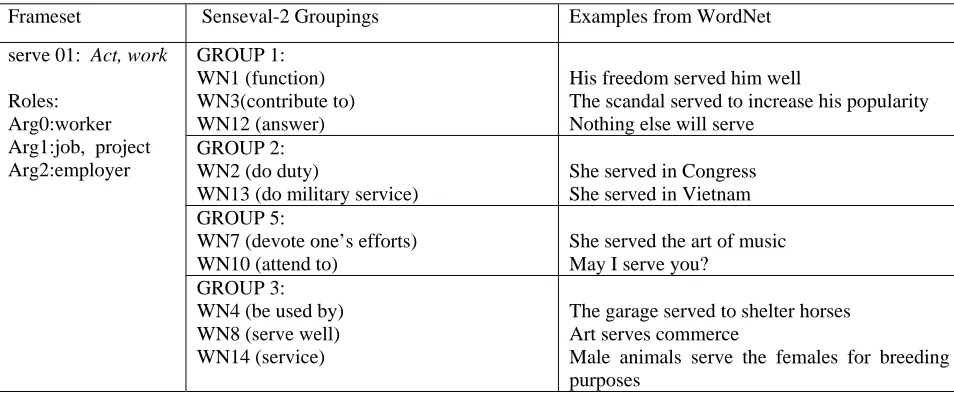
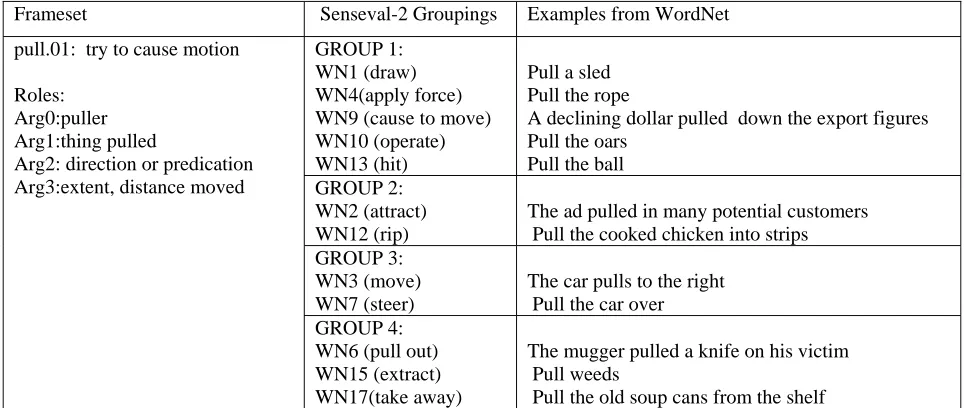
Groupings of senses for Senseval-2, as discussed above, use both syntactic and semantic criteria. Propbank, on the other hand, uses mostly syntactic cues to divide verb senses into framesets. As a result, framesets are more general than sense-groups and usually incorporate sev-eral sense groups. We have been investigating whether or not the groups developed for SENSEVAL-2 can provide an intermediate level of hierarchy in between the Prop-Bank Framesets and the WN 1.7 senses, and our initial results are promising. Based on our existing WN 1.7 tags and frameset tags of the Senseval2 verbs in the Penn TreeBank, 95% of the verb instances map directly from sense groups to framesets, with each frameset typically corresponding to two or more sense groups, as illustrated by the tables 1-4 for the verbs ‘serve’, ‘leave’, ‘pull’, and ‘see’1 below.
As the tables 1-4 illustrate, the criteria used to split the Framesets into groups are as follows:
1) Syntactic Frames. Most verb senses which allow syn-tactic alternations (such as transitive/inchoative, unspeci-fied object deletion, etc) are analyzed as one sense group. However, in some cases, as illustrated by the verb
leave, intransitive and transitive uses are distinguished as different sense groups:
Group 1: DEPART (Ship leaves at midnight) Group 2: LEAVE BEHIND (She left a mess.)
The DEPART sense of the verb can be used transitively if
the object specifies the place of departure. The LEAVE BEHIND sense is more general and allows syntactic varia-tion as well as different semantic types of NPs. In Prop-Bank, these groups are unified as one frameset (Frameset 1 MOVE AWAY FROM).
1
Frameset Senseval-2 Groupings Examples from WordNet
GROUP 1: WN1 (function) WN3(contribute to) WN12 (answer)
His freedom served him well
The scandal served to increase his popularity Nothing else will serve
GROUP 2: WN2 (do duty)
WN13 (do military service)
She served in Congress She served in Vietnam GROUP 5:
WN7 (devote one’s efforts) WN10 (attend to)
She served the art of music May I serve you?
serve 01: Act, work
Roles: Arg0:worker Arg1:job, project Arg2:employer
GROUP 3: WN4 (be used by)
WN8 (serve well) WN14 (service)
The garage served to shelter horses Art serves commerce
[image:4.612.68.545.83.280.2]Male animals serve the females for breeding purposes
Table 1. Frameset serve 01.
Frameset Senseval-2 Groupings Examples from WordNet
GROUP 2:
WN2 (leave behind) WN12 (be survived by) WN14 (forget)
She left a mess
He left six children I left my keys
GROUP 1: WN1 (go away)
WN5 (exit, go out) WN8 (depart)
The ship leaves at midnight Leave the room
The teenager left home
GROUP 3:
WN3 (to act) WN7 (result in)
The inflation left them penniless Her blood left a stain on the napkin SINGLETON
WN4 (leave behind) Leave it as is leave 02: Move away
from
Roles:
Arg0:entity leaving Arg1:thing left Arg2 :attribute /
sec-ondary predication
SINGLETON
WN6 (allow for, provide) Leave lots of time for the trip
Table 2. Frameset leave 02.
2. Optional Arguments. In PropBank verbs of manner of motion and verbs of directed motion are usually grouped into one frameset. For example, one of the framesets of the verb pull (TRY) TO CAUSE MOTION
unifies the following two group senses: Group 1: MOVE ALONG (pull a sled)
Group 2: MOVE INTO A CERTAIN DIRECTION (The van pulled up)
Although the frame for the frameset 1 of the verb pull
has a ‘direction’ argument, this argument does not have to be present (or implied), and verbs with this frame can also be understood as verbs of manner of motion in PropBank.
[image:4.612.70.546.323.527.2]sen-Frameset Senseval-2 Groupings Examples from WordNet
GROUP 1: WN1 (draw) WN4(apply force) WN9 (cause to move) WN10 (operate) WN13 (hit)
Pull a sled Pull the rope
A declining dollar pulled down the export figures Pull the oars
Pull the ball GROUP 2:
WN2 (attract) WN12 (rip)
The ad pulled in many potential customers Pull the cooked chicken into strips GROUP 3:
WN3 (move) WN7 (steer)
The car pulls to the right Pull the car over pull.01: try to cause motion
Roles: Arg0:puller Arg1:thing pulled
Arg2: direction or predication Arg3:extent, distance moved
GROUP 4: WN6 (pull out) WN15 (extract) WN17(take away)
The mugger pulled a knife on his victim Pull weeds
[image:5.612.65.547.83.287.2]Pull the old soup cans from the shelf
Table 3. Frameset pull 01.
Frameset Senseval-2 Groupings Examples from WordNet
GROUP 1:
WN1 (perceive by sight) WN7 (watch)
WN19 (observe as if with an eye) WN20 (examine)
Can you the bird? See a movie
The camera saw the burglary I must see your passport GROUP 3:
WN3 (witness) WN6 (learn)
I want to see the results
I see that you have been promoted GROUP 4:
WN5 (consider) WN24 (interpret)
I don’t see the situation quite as negatively What message do you see in this letter? GROUP 5:
WN8 (determine) WN10 (check) WN14 (attend)
See whether it works
See that the curtains are closed Could you see about lunch? see.01: view
Roles: Arg0:viewer Arg1:thing viewed Arg2:secondary attribute
GROUP 6:
WN11 (see a professional) WN15 (receive as a guest)
You should see a lawyer The doctor will see you now
Table 4. Frameset see 01.
tential complements are contained in the same frame-set. These could also be distinguished by the type of event, a physical perception vs. an abstract or mental perception, but these would also not distinguished by PropBank.
Group 1: PERCEIVE BY SIGHT (Can you see the bird?) Group 5: DETERMINE, CHECK (See whether it works)
4) Semantic classes of arguments. Differences in se-mantic classes of arguments, such as ANIMACY versus
INANIMACY, are also not considered for distinguishing framesets. The verb serve, for example, has the follow-ing group senses, the second of which requires an
ANIMATE agent, which are unified as one frameset in PropBank:
Group 1: FUNCTION (His freedom served him well) Group 2: WORK (He served in Congress)
[image:5.612.69.543.332.562.2]se-mantic. These distinctions, although more fine-grained than Framesets, are still more easily distinguished than WordNet senses.
Mismatches between Framesets and groupings usually occur for the following two reasons. First, some senses can be missing in the PropBank, if they do not occur in the corpus. Second, given that PropBank is an annota-tion of the Wall Street Journal, it often distinguishes obscure financial senses of the verb as separate senses.
4 Experiments with Automatic WSD
We have also been investigating the suitability of these distinctions for training automatic Word Sense Disambiguation systems. The system that we used to tag verbs with their frameset is the same maximum entropy system as that of Dang and Palmer (2002), including both topical and local features. Topical features looked for the presence of keywords occurring
anywhere in the sentence and any surrounding sentences provided as context (usually one or two sentences). The set of keywords is specific to each lemma to be disambiguated, and is determined automatically from training data so as to minimize the entropy of the probability of the senses conditioned on the keyword.
The local features for a verb w in a particular sentence tend to look only within the smallest clause containing
w. They include collocational features requiring no linguistic prepro essing beyond part-of-speech tagging (1), syntactic features that capture relations between the verb and its complements (2-4), and se-mantic features that incorporate information about noun classes for objects (5-6):
1) the word w, the part of speech of w, and words at positions -2, -1, +1, +2, relative to w
2) whether or not the sentence is passive
3) whether there is a subject, direct object, indi-rect object, or clausal complement (a comple-ment whose node label is S in the parse tree)
4) the words (if any) in the positions of subject, direct object, indirect object, particle, preposi-tional complement (and its object)
5) a Named Entity tag (PERSON,
ORGANIZATION, LOCATION) for proper nouns appearing in (4).
6) all possible WordNet synsets and hypernyms for the nouns appearing in (4).
The system performed well on the English verbs in Senseval-2, achieving an accuracy of 60.2% when tag-ging verbs with their fine-grained WordNet senses, and 70.2% when tagging with the more coarse-grained sense groups.
Verb Framesets Instances Accuracy
call 11 522 0.835
carry 4 195 0.933
develop 2 240 0.938
draw 3 94 0.926
dress 3 15 0.800
drive 2 99 0.808
keep 5 136 0.919
leave 3 147 0.762
live 4 125 0.888
play 5 98 0.806
pull 6 88 0.784
see 2 187 0.995
serve 2 150 0.967
strike 10 59 0.610
train 2 17 0.941
treat 2 51 0.863
turn 14 141 0.638
use 2 820 0.988
wash 2 8 0.875
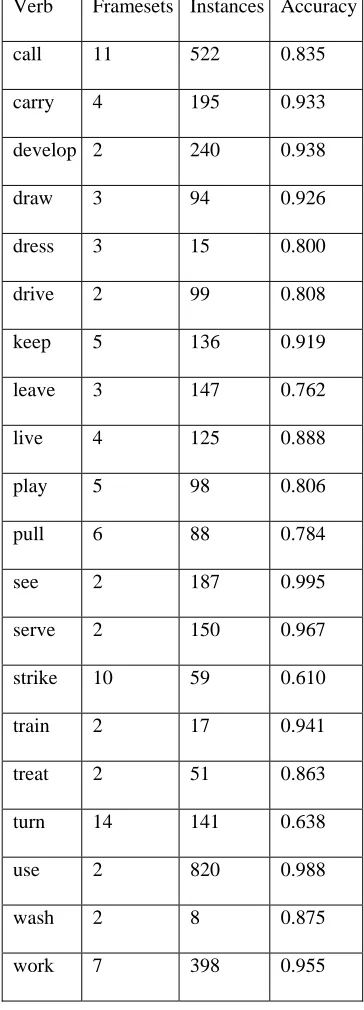
[image:6.612.313.495.156.661.2]work 7 398 0.955
For frameset tagging, we collected a total of 3590 in-stances of 20 verbs in the PropBank corpus that had been annotated with their framesets. The verbs all had more than one possible frameset and were a subset of the ones used for the English lexical sample task of Senseval-2. Local features for frameset taging were extracted using the gold-standard part-of-speech tags and bracketing of the Penn Treebank. Table 5 shows the number of framesets, the number of instances, and the system accuracy for each verb using 10-fold cross-validation. The overall accuracy of our automatic frameset tagging was 90.0%, compared to a baseline accuracy of 73.5% if verbs are tagged with their most frequent frameset. While the data is only a subset of that used in Senseval-2, it is clear that framesets can be much more reliably tagged than fine-grained WordNet senses and even sense groups.
Conclusion
This paper described an hierarchical approach to WordNet sense distinctions that provided different types of automatic Word Sense Disambiguation (WSD) systems, which perform at varying levels of accuracy. We have described three different levels of sense granularity, with PropBank Framesets being the most syntactic, the most coarse-grained, and most easily reproduced. A set of manual groupings devised for Senseval2 provides a middle level of granularity that mediates between Framesets and WordNet. For tasks where fine-grained sense distinctions may not be essen-tial such as an AskJeeves information retrieval task, an accurate coarse-grained WSD system such as our Frameset tagger may be sufficient. There is evidence, however, that machine translation of languages as di-verse as Chinese and English might require all of the fine-grained sense distinctions of WordNet, and even more (Ng, et al 2003, Palmer, et. al., to appear).
References
Apresjan, J. D. .(1974) Regular polysemy, Linguistics, 142:5—32.
Atkins, S. (1993) Tools for computer-aided corpus lexicography: The Hector Project. Actu Linguis-tica Hunguricu, 41:5-72.
Buitelaar, P.P (2000). Reducing Lexical Semantic Complexity with Systematic Polysemous Classes and Underspecification. In Poceedings of the ANLP Workshop on Syntactic and Semantic Com-plexity in NLP Systems. Seattle, WA.
Cruse, D. A., (1986), Lexical Semantics, Cambridge University Press, Cambridge, UK, 1986.
Dang, H. T. and Palmer, M., (2002). Combining Con-textual Features for Word Sense Disambiguation. In Proceedings of the Workshop on Word Sense Disambiguation: Recent Successes and Future Di-rections, Philadelphia, Pa.
Edmonds, P. and Cotton, S. (2001). SENSEVAL-2: Overview. In Proceedings of SENSEVAL-2: Sec-ond International Workshop on Evaluating Word Sense Disambiguation Systems, ACL-SIGLEX, Toulouse, France.
Hanks, P., (2000), Do word meanings exist? Com-puters and the Humanities, Special Issue on SENSEVAL, 34(1-2).
Geeraerts, D., (1993), Vagueness's puzzles, polysemy's vagaries, Cognitive Linguistics, 4.
Kilgarriff, A., (1997), I don't believe in word senses,
Computers and the Humanities, 31(2).
Kilgarriff, A. and Palmer, M., (2000), Introduction to the special issue on Senseval, Computers and the Humanities, 34(1-2):1-13.
Kingsbury, P., and Palmer, M, (2002), From TreeBank to PropBank, Third International Conference on Language Resources and Evaluation, LREC-02, Las Palmas, Canary Islands, Spain, May 28- June 3.
Marcus, M, (1994), The Penn TreeBank: A revised corpus design for extracting predicate argument structure, In Proceedings of the ARPA Human Language Technology Workshop, Princeton, NJ.
Ng, H. T., & Wang, B., & Chan, Y. S. (2003).
Exploiting Parallel Texts for Word Sense Disam-biguation: An Empirical Study. In the Proceed-ings of the 41st Annual Meeting of the Association for Computational Linguistics (ACL-03). Sapporo, Japan, July.
Palmer, M., Dang, H. T., and Fellbaum, C., (to appear, 2004), Making fine-grained and coarse-grained sense distinctions, both manually and automati-cally, under revision for Natural Language Engi-neering.
Pustejovsky, J. (1991) The Generative Lexicon, in