Scholar Commons
Theses and Dissertations
2015
"This Is a Little Beauty": Preserving the Legacy of
the Columbia Cottage
Kayla Boyer Halberg
University of South Carolina - Columbia
Follow this and additional works at:https://scholarcommons.sc.edu/etd
Part of thePublic History Commons
This Open Access Thesis is brought to you by Scholar Commons. It has been accepted for inclusion in Theses and Dissertations by an authorized administrator of Scholar Commons. For more information, please [email protected].
Recommended Citation
Halberg, K. B.(2015)."This Is a Little Beauty": Preserving the Legacy of the Columbia Cottage.(Master's thesis). Retrieved from
P
RESERVING THEL
EGACY OF THEC
OLUMBIAC
OTTAGEby
Kayla Boyer Halberg
Bachelor of Arts
The College of William and Mary, 2013
Submitted in Partial Fulfillment of the Requirements
For the Degree of Master of Arts in
Public History
College of Arts and Sciences
University of South Carolina
2015
Accepted by:
Robert R. Weyeneth, Director of Thesis
Lydia M. Brandt, Reader
For his support, comic relief, and encouraging partnership, I dedicate this work to
Several individuals have been influential in the completion of this project. First, I
must acknowledge Dr. Robert R. Weyeneth for his advice, support and direction for this
thesis and my graduate education. I am also indebted to Dr. Lydia M. Brandt. She has
guided my interest in architectural history, offered constructive criticism, and encouraged
me throughout graduate school. Staci Richey not only introduced me to the term
“Columbia Cottage,” but has also been a supportive assistantship supervisor, an excellent
teacher, and an encouraging mentor. I would also like to thank John Sherrer for sharing
his expertise and knowledge of Columbia’s built environment; the Richland County
Conservation Commission for awarding the grant that made my assistantship, which
sparked this project, possible; Debbie Bloom for her assistance navigating the Local
History Room at the Richland County Public Library; and Brenda Burk and the Clemson
Special Collections staff for helpful preparation of the Harold N. Cooledge Collection.
I would also like to thank my classmates for their support, interest in my work,
kindred spirits, and letting me rant about cottages, bricks, and architecture in general. My
graduate school experience would not have been what it was without them. I must also
thank my parents, Gail and Donnie Boyer, for their constant encouragement that I “will
get it done,” support for my love of old buildings (even though they were once skeptical),
and for always giving me a place to stay in Charleston when I needed it (even if it was for
an entire summer). I also want to acknowledge my furry family members. Audrey, my
husband, Ethan Randall Halberg. Thank you for supporting my career and education and
moving to the “real” South for me. Thank you for listening to me talk about buildings and
seminar readings, being my audience for practice presentations, and listening to me read
this thesis aloud. Thank you for accompanying me on surveys and driving while I took
photos. Thank you for your genuine enthusiasm, for making me laugh, and for loving me
no matter what. Our first two years of marriage have in no way been conventional, but I
In 1965 the built environment of the city of Columbia, South Carolina, was in a
state of flux. An active urban renewal campaign existed in the city for nearly a decade
prompting a reactionary historic preservation movement. Upon a collaborative
recommendation from the Historic and Cultural Buildings Commission and the Historic
Columbia Foundation, City Council hired architectural historian Dr. Harold N. Cooledge
to conduct an architectural and feasibility survey. In his report, Cooledge identified the
Columbia Cottage, a vernacular form widespread throughout the historic neighborhoods
of South Carolina’s capital city. His use of the term “Columbia Cottage” to label the
many iterations of the form was an expression of what Cooledge understood as
Columbia’s architectural character. Cooledge’s detailed description of the “Columbia
Cottage Family” contributed to the popularity of the term, the preservation of the form,
and the formation of an architectural identity for Columbia. In defining this local
vernacular form, Cooledge gave Columbia preservationists a platform for conserving the
city’s architectural heritage. Ultimately, however, decisions about preservation were
influenced by location, adaptability, designation, historical association, and aesthetic
appeal. This thesis will discuss how these motivations were instrumental in the adaptive
use, relocation, or preservation of the Columbia Cottage. It will also argue that
preservation through documentation and new construction have contributed to the
DEDICATION ... iii
ACKNOWLEDGEMENTS ... iv
ABSTRACT ... vi
LIST OF FIGURES ... viii
CHAPTER I:INTRODUCTION ... 1
CHAPTER II:THE ORIGINS OF THE COOLEDGE SURVEY OF 1965 ... 6
CHAPTER III:DEFINING THE COLUMBIA COTTAGE FAMILY ... 15
CHAPTER IV:“WORTHY OF PRESERVATION:”PRESERVING THE COLUMBIA COTTAGE THEN AND NOW ... 26
CHAPTER V:THE FUTURE OF THE COLUMBIA COTTAGE ... 45
BIBLIOGRAPHY ... 52
APPENDIX A–INVENTORY OF COLUMBIA COTTAGES EXTANT IN 1965 ... 56
APPENDIX B—INVENTORY OF COLUMBIA COTTAGES EXTANT IN 2015 ... 60
APPENDIX C—MAP OF COLUMBIA COTTAGES EXTANT IN 1965 ... 62
Figure 1.1: 1623 Richland Street is a typical Columbia Cottage constructed in ca. 1872 by an African-American tailor. His family owned the property for 120 years until it was donated to the Committee for the Restoration and Beautification of Randolph Cemetery. Photo by author. ... 5
!
Figure 3.1: First floor plan of 1623 Richland Street shows the typical central passage, double-pile plan of the Columbia Cottage. Drawing by author. ... 21
!
Figure 3.2: 1830 Henderson Street, a typical CCI, or the “Classic” Columbia Cottage. Photo by Mabel Payne, 1969. Image courtesy of the City of Columbia Planning
Department File, Columbia, SC. ... 21
!
Figure 3.3: 715 Park Street, a typical CCI-2. The CCI-2 was also sometimes identified as a “quarters” type in Cooledge’s survey files for their small size and scale. Photo by Mabel Payne, 1960. Image courtesy of the City of Columbia Planning Department File, Columbia, SC. ... 22
!
Figure 3.4: 2009 Park Street, a typical CCI-3, which was smaller than the CCI and often had a triangular dormer. Image courtesy of the City of Columbia Planning Department File, Columbia, SC. ... 22
!
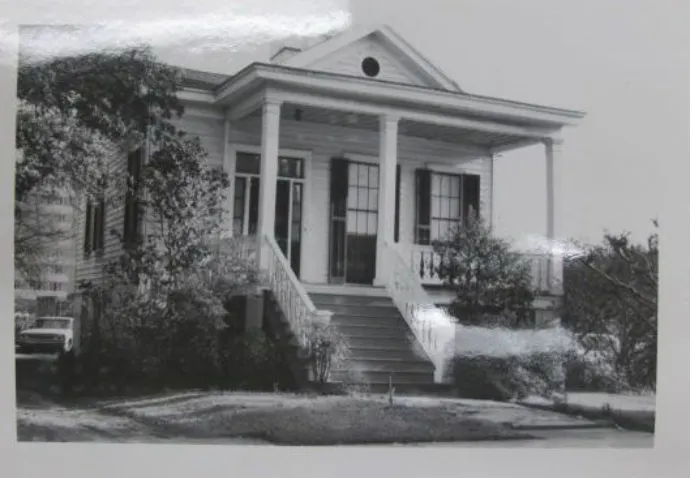
Figure 3.5: 1419 Blanding Street, a typical CCII, which is larger and more ornate than the CCI, and has large dormer windows. Photo by Mabel Payne, 1969. Image courtesy of the City of Columbia Planning Department File, Columbia, SC. ... 23
!
Figure 3.6: 1314 Laurel Street is a typical CII-2, which has proportions and details similar to the CCII, but has two tall casement window and two sash windows on its façade rather than four sash windows. Image courtesy of the City of Columbia Planning Department File, Columbia, SC. ... 23
!
Figure 3.7: 1524 Pickens Street, a typical CCII-3, which is distinguished by its two full-height casement windows that flank the central door. Image courtesy of the City of
Columbia Planning Department File, Columbia, SC. ... 24
!
Columbia, SC. ... 39
!
Figure 4.2: Relocation of 1921 Park Street. Photo by Mabel Payne, 1965. Image courtesy of the City of Columbia Planning Department File, Columbia, SC. ... 39
!
Figure 4.3: The 1700 Block of Pulaski Street has three extant Columbia Cottages. To either side of these buildings is a vacant lot on which a Columbia Cottage once stood. Photo by author. ... 40
!
Figure 4.4: The house at 1704 Catawba Street is a late nineteenth-century building inspired by the historic Columbia Cottage form, and is quite similar to 1518 Richland Street after its rehabilitation. Photo by author. ... 40
!
Figure 4.5: The house at 1709 Catawba Street is a late nineteenth-century building inspired by the historic Columbia Cottage form. The porch railing resembles the
Chippendale railing extant at 1507 Richland Street. Photo by author. ... 41
!
Figure 4.6: The house at 1720 Catawba Street is a late nineteenth-century building
inspired by the historic Columbia Cottage form. Photo by author. ... 41
!
Figure 4.7: The house at 100 Beaver Lake Drive was constructed in a modern suburban development and is reminiscent of the Columbia Cottage at 1431 Pendleton Street. Photo by author. ... 42
!
C
HAPTERI
I
NTRODUCTIONOn a cool spring day in 2014, I pulled in at 1623 Richland Street in Columbia,
South Carolina, dressed for my interview with the Committee for the Restoration and
Beautification of Randolph Cemetery (CRBRC). The property at 1623 Richland Street,
however, is not a cemetery. Rather, it is a small vernacular domestic building. The
CRBRC was looking hire a project director to oversee the rehabilitation of this house
they called the Thompson Cottage. Personally excited for the opportunity to work with a
non-profit, get hands-on preservation experience, and study vernacular architecture, I
accepted the position offered to me several weeks later. Little did I know that this
“lovely” cottage would initiate a curiosity that developed into a much larger project.1
The Thompson Cottage, named for the home’s original owner, an
African-American tailor and active member of the black community in Columbia, is a
one-and-a-half story wood frame building originally over a raised brick pier foundation that has
been enclosed. The façade is three-bays-wide and has a full-length, hipped-roof porch
supported by four square columns. To either side of the central door is a sash window
that lights the interior, which is a double-pile, central passage plan. The two chimneys
divide the interior rooms flanking the central passage (Figure 1.1). This house at 1623
Richland Street, constructed ca. 1872, is a typical “Columbia Cottage.”
!!!!!!!!!!!!!!!!!!!!!!!!!!!!!!!!!!!!!!!!!!!!!!!!!!!!!!!!
Upon starting my position in the fall of 2014, the term “Columbia Cottage” came
up time and again. I began to notice other Columbia Cottages around the city and
wondered if any scholarship existed on the form. My curiosity informed my initial
questions, including: What is the period of construction? Where are they located in the
city? What is the type and is there a standard? Who built them? Is the type unique to
Columbia? How many have been lost and preserved? Where did the term come from? I
took these questions to Staci Richey, a member of the board for CRBRC who also works
for the City Planning and Development Services. Richey then introduced me to the
Planning Department library, as well as a survey conducted in 1965 by an architectural
historian from Clemson University, Dr. Harold N. Cooledge. I immediately realized that
Cooledge was responsible for popularizing the term “Columbia Cottage,” promoting its
use, and advocating preservation of the type.
Starting with Cooledge’s survey and feasibility study of 1965 and the planning
department’s street files I began to generate an inventory of the Columbia Cottages that
Cooledge identified, as well as those that did not appear in the survey. The initial goal of
the project was to collect a list of cottages in order to study their architectural features
and write a thesis that examined a local vernacular form, its association as a “cottage,” its
pervasiveness in Columbia, and the regional popularity of the form. As I ploughed
through the city planning files and secondary sources, I began to answer several of my
initial questions. It became evident that the Columbia Cottage was a vernacular form
constructed from the mid-nineteenth century through the first quarter of the twentieth
century. Research also suggested that these buildings were not unique to Columbia, but
files, historic photographs, and Cooledge’s report, I began to see the project developing
in a different direction. Rather than an intensive study of an architectural form, its
regional distinctiveness, or the theoretical associations with the term “cottage,” this thesis
became a thorough analysis of Cooledge’s survey, its origins, discoveries, definitions,
and its impacts from 1965 to 2015.
Conversations with Columbia preservationists today reveal that although each of
them knew what a “Columbia Cottage” is and can identify several off the top of their
heads, there was not a consensus about what buildings can be defined using the term.
Some are even unsure that the term is appropriate at all. Reviewing Cooledge’s survey
revealed that the ambiguity of the form lies in the details of his report completed in
January of 1966. Rather than a single identifiable vernacular form, the term “Columbia
Cottage,” as defined by Cooledge, applied to nine different residential forms.
Cooledge identified more Columbia Cottages than any other architectural type or
style in 1965. Cooledge used the term “Columbia Cottage” to label the many iterations of
the form as an expression of what he understood as Columbia’s architectural identity.
Outlining the “Columbia Cottage Family” contributed to the popularity of the term, the
preservation of the form, and the formation of an architectural identity for Columbia that
had been lost since the city’s burning one hundred years prior to the survey. In defining
this local vernacular form, Cooledge gave Columbia's preservationists reason and focus
for conserving the city’s architectural heritage. Ultimately, however, location,
adaptability, designation, historical association, and aesthetic appeal influenced
preservation decisions. This thesis will discuss how these motivations were instrumental
that preservation through documentation and new construction have contributed to the
C
HAPTERII
T
HEO
RIGINS OF THEC
OOLEDGES
URVEY OF1965
After five years of service for the Columbia Urban Rehabilitation Commission
(URC), its housing inspector and photographer, Joseph Winter had seen the demolition of
over one thousand buildings in the city of Columbia between 1956 and 1961. In the name
of urban renewal, Columbia’s “Fight Blight” campaign resulted in the elimination of
urban “slums,” effectively ridding the city of its most culturally and architecturally
diverse neighborhoods.2 By 1965 the Historic Columbia Foundation had presented
Columbia’s Historical and Cultural Buildings Commission with a list of threatened and
demolished historic structures. While the list included only those buildings with known
demolition dates within designated historic areas, the chairman of the foundation’s
Preservation Planning Committee, Mabel B. Payne, made clear that a number of “fine old
homes… and many cottages in and out of the historic area are in constant danger,” since
“they stand squarely in the path of progress.”3 In response to the rapid destruction of
Columbia’s historic buildings and the imminent threat on others, Historic Columbia
Foundation recommended a survey and feasibility study that
!!!!!!!!!!!!!!!!!!!!!!!!!!!!!!!!!!!!!!!!!!!!!!!!!!!!!!!!
2 Katherine H. Richardson, “Columbia, South Carolina: An Historical Overview,” in John M. Bryan & Associates, City-Wide Architectural Survey and Historic Preservation Plan, Columbia, South Carolina, 1993, 61-62; The finding aid for The Joseph E. Winter (1920-1992) Collection, University of South Carolina Digital Collections, http://library.sc.edu/digital/collections/jwp/jwpabout.html (accessed March 16, 2015).
documented the city’s remaining architectural landscape.4 The survey, conducted in
1965 by architectural historian Harold Cooledge, became the first systematic effort at
historic preservation planning in Columbia. It is also the survey that defined, promoted,
and preserved the “typical Columbia Cottage.”
Urban Renewal: Progress and Preservation
In 1949 the Federal Housing Act ushered in a period of urban renewal that permanently
changed American cities. Prompted by a need for decent housing and a desire to clear
urban slums, the bill established a national objective that provided federal assistance for
redevelopment of “blighted” areas and the construction of low-rent public housing.
Through the creation of the Urban Renewal Authority, the federal law allowed for
redevelopment of areas that were predominately inhabited by minorities.5 The practice,
which was often known as “Negro Removal,” has been criticized for eliminating more
housing that it actually produced. Low-income families were pushed into small,
overcrowded living conditions. While the goal of the law was to provide better living
conditions to low-income families and to beautify American cities, the 1949 Federal
Housing Act resulted in the erasure of architectural and cultural diversity in many
neighborhoods.6
The Federal Housing Act of 1954 reduced the restrictions on residential
redevelopment to include non-residential prospects. Private developers were given the
!!!!!!!!!!!!!!!!!!!!!!!!!!!!!!!!!!!!!!!!!!!!!!!!!!!!!!!!
4 The Historic Columbia Foundation Preservation Planning Committee to The Historic Columbia
Foundation Board of Trustees, Presented to the Historic and Cultural Buildings Commission, 18 February 1965, City of Columbia Planning Department Files, Columbia, SC.
5 David R. Goldfield, “Housing Act of 1949,” Encyclopedia of American Urban History, (Thousand Oaks, CA: Sage Publications, Inc., 2007), 356-357.
opportunity to work with city officials to rehabilitate blighted neighborhoods with
non-residential purposes.7 Although much of the country saw the clearing of land to make
way for private redevelopment, the South Carolina Supreme Court ruled that urban
renewal projects could only use federal funds for public developments.8 Demolition,
however, did not cease. The adoption of a housing code and the establishment of the
Urban Rehabilitation Commission in 1954 resulted in the demolition of 1,090 buildings
in Columbia. Although the Rehabilitation Commission gave homeowners the opportunity
to rehabilitate their properties, few had the financial resources to do so, giving the City
the authority to demolish their homes.9 Throughout the 1950s and 1960s the
Rehabilitation Commission led the city’s largest urban renewal and “Flight Blight”
campaign. The URC held parades, hung billboards next to town hall, and made films to
encourage the beautification of the community.10 Unfortunately, beautification of
Columbia came at a price.
Beneath urban renewal motivations and the “Flight Blight” campaign in Columbia
were the long-standing notions of cleanliness that emerged during the Progressive Era, as
well as traditional concepts of quality design. Such sentiments were not only evident in
the physical clearing of slums and enforcement of standard housing codes, but also in the
!!!!!!!!!!!!!!!!!!!!!!!!!!!!!!!!!!!!!!!!!!!!!!!!!!!!!!!!
7 Goldfield, “Housing Act of 1954,” Encyclopedia of American Urban History, 358-359.
8 Krista Marie Hampton, The Progress of Preservation: Municipal Preservation Programs in Columbia, South Carolina, 1956-1999, (MA Thesis, University of South Carolina, 1999), 5-6.
9 Hampton, The Progress of Preservation, 8. For more on the effects of Columbia’s minimum housing codes and the enforcement by the URC see Staci Richey, Variations on a Theme: Planning for the Elimination of Black Neighborhoods in Downtown Columbia, South Carolina, 1905-1970, (MA Thesis, University of South Carolina, 2004). For information on Urban Renewal in Ward One see: Ashley Nichole Bouknight, “Casualty of Progress”: The Ward One Community and Urban Renewal, Columbia, South Carolina 1964-1974, (MA Thesis, University of South Carolina, 2010). See also: Robert Fishman, The American Planning Tradition: Culture and Policy, (Washington, DC: The Woodrow Wilson Center Press, 2000).
language of urban renewal. Certain areas were noted as “simply not conducive to a good
residential environment,” and an emphasis was placed on the civic duty to clean up (and
clear out) such neighborhoods.11 Even early preservationists sought to “eliminate present
slums,” while at the same time designating cultural and historic landmarks, historic
districts, and preservation ordinances.12 Phelps H. Bultman, an architect and active
preservationist, claimed that the “vernacular’ buildings in the state capital exhibit in
general a real lack of design quality.”13 Buildings with “design quality” in Columbia were
typically high-style buildings associated with white elites. In the mid-nineteenth century,
preservationists were fighting a battle to save buildings like the DeBruhl-Marshall House,
the Robert Mills House (previously known as the Ainsley Hall House), and the
Hampton-Preston Mansion from destruction and urban growth.14 The energy spent to preserve
those buildings that were considered to be of significant “value, quality, and worthy of
preservation” was energy lost to the vernacular architecture of the city.15 Beautification
of Columbia, therefore, resulted in the destruction of entire neighborhoods—
neighborhoods with a previously intact collection of nineteenth century vernacular
architecture, including the type known locally as the Columbia Cottage.
!!!!!!!!!!!!!!!!!!!!!!!!!!!!!!!!!!!!!!!!!!!!!!!!!!!!!!!!
11 Staci Richey, Variations on a Theme, 21; See also: Suellen Hoy, Chasing Dirt: The American Pursuit of Cleanliness, (New York: Oxford University Press, 1995); Julie K. Rose, “The City Beautiful,” City Beautiful: The 1901 Plan for Washington, DC, http://xroads.virginia.edu/~cap/citybeautiful/dchome.html (accessed February 2, 2015); Marta Leslie Thacker, “Working for the City Beautiful: Civic Improvement in Three South Carolina Communities,” (MA Thesis, University of South Carolina, 1999); Peter Hall, Cities of Tomorrow: An Intellectual History of Urban Planning and Design in the Twentieth-Century,
(Cambridge, MA: Blackwell Publishers, 1996).
12 Mabel B. Payne, Historical and Cultural Buildings Plan, Historic Columbia Foundation Preservation Planning Committee to City of Columbia Historical and Cultural Buildings Commission, February 18, 1965, City of Columbia Planning Department Files, Columbia, SC.
13 Phelps Bultman, quoted in Russell Maxey, South Carolina’s Historic Columbia: Yesterday and Today in Photographs, (Columbia, SC: R. L. Bryan Company, 1980), 312.
14 National Register of Historic Places, The DeBruhl-Marshall House, Revised, Columbia, Richland County, South Carolina National Register #S10817740023, currently in review, 2015.
While urban renewal resulted in the erasure of architecturally significant
buildings, in Columbia, as in other cities across the country, the movement initiated
preservation concerns among city officials, historical societies, and interested citizens. In
light of the heightened awareness of the rapid loss of the city’s architectural fabric, the
Planning Commission and the Rehabilitation Commission established the Historic and
Cultural Buildings Commission on February 20, 1963.16 While the Buildings
Commission sought to identify a list of significant buildings in Columbia from its
inception, it was not until 1965 that the commission was able to procure an official list,
reviewed and surveyed by an architectural historian. In a report of the Historic Columbia
Foundation Preservation Planning Committee, Mabel Payne, who also worked for the
Buildings Commission, asserted that there remained an “unusually fortunate number of
small but quaint ‘Columbia’ and ‘Builders’ cottages” in the historic residential areas of
the city, but that those structures were in “grave danger” as they “stand squarely in the
path of progress.”17 The Planning Committee’s list indicated that fifty-five buildings were
demolished between 1957 and 1965, twenty of which were categorized as cottages.18
Their study, presented to the Buildings Commission, called for a preservation planning
and feasibility study that would further identify historic structures in the city so that the
commission might be better prepared to make future preservation decisions. Upon these
recommendations, Phelps Bultman contacted Dr. Harold N. Cooledge, an architectural
!!!!!!!!!!!!!!!!!!!!!!!!!!!!!!!!!!!!!!!!!!!!!!!!!!!!!!!!
16 Hampton, “The Progress of Preservation,” 11.
17 Historic Columbia Foundation Preservation Planning Committee, Outstanding Historic Structures Threatened as of 1965, City of Columbia Planning Department Files, Columbia, SC.
historian and professor at Clemson University, to conduct an architectural survey of the
city of Columbia.19
Examining Columbia’s Architectural Landscape
When the Buildings Commission hired Cooledge in the spring of 1965 the city was in the
midst of its eighth annual urban renewal, “Fight Blight,” campaign.20 By the time
Cooledge arrived to conduct the survey in December of that year, the HCBC and the HCF
Preservation Planning Committee had drafted a list of buildings for evaluation—the
Historical and Cultural Buildings Plan. On March 2, 1965, the Buildings Commission
requested funds from city council to research properties considered historically valuable,
for the contracting of an architectural historian to evaluate the Historical and Cultural
Buildings Plan, and for the creation of a master plan for Columbia’s historic
neighborhoods. While the survey encompassed the “old city gridiron,” extending ten
blocks from the State House in each direction, these requests ultimately guided the survey
Cooledge conducted.21
The goal of the survey was to define architectural types and styles, and rank each
building based on its historic and/or architectural value. Cooledge, likely with the
assistance of Mabel Payne, marked buildings as “worthy of preservation, restoration or
repair,” remarked on their physical condition, categorized their national, state, or local
!!!!!!!!!!!!!!!!!!!!!!!!!!!!!!!!!!!!!!!!!!!!!!!!!!!!!!!!
19 Buildings Commission Minutes, March 2, 1965; Phelps H. Bultman to Harold Cooledge, 3 March 1965, City of Columbia Planning Department Files, Columbia, SC.
20The State, 1958-1965, Columbia, SC
“value,” and ranked their “quality” from “very high,” “high,” “notable,” to “mention.”22
Beyond checking these boxes, Cooledge wrote the “notable features, historical
significance, and description,” although ranging in detail from extensive description of
the appearance and alterations to a simple phrase—“valueless.” These professional
judgments undoubtedly proved influential in preservation, relocation, and demolition
decisions by the Buildings Commission and the Rehabilitation Commission.
After evaluating the significance of each building, Cooledge developed a ranking
system that classified preservation priorities for the city of Columbia. Cooledge ranked
buildings according to “two fundamental principles.” First, he considered it critical that
historic buildings should not be preserved based on their age alone. Therefore, he used
the following criteria to evaluate the significance of “old buildings”:
1. Unique or distinctive characteristics in architectural design 2. Rarity of type within the cultural area surveyed
3. Belonging to a “family” or “genera” of buildings of which it is exemplary 4. The work of an architect either locally or nationally important
5. A superior example of a style or type of building which is becoming, or is in danger of become, extinct nationally.23
In addition to this criterion for evaluating architectural significance, the second principle
that guided Cooledge’s ranking scheme asserted that “truly historic buildings,” those
associated with important historical events and men were “of great obvious intrinsic
value.”24 Cooledge’s principles reflected a period in the national preservation movement
that focused on important associations, “big people” and “cute buildings,” which became
the framework for the federal National Register of Historic Places, established in the
!!!!!!!!!!!!!!!!!!!!!!!!!!!!!!!!!!!!!!!!!!!!!!!!!!!!!!!!
22 Buildings Commission, Survey of Historical Buildings Form, Columbia, SC, City of Columbia Planning Department Files, Columbia, SC. Mabel Payne’s handwriting is recognizable on many of the forms, therefore, it is likely that she accompanied Cooledge during the survey.
National Historic Preservation Act (NHPA) of 1966.25 Cooledge’s report, contemporary
to the NHPA and its motivating work, With Heritage So Rich, published in 1966, reveals
national trends in preservation theory and practice, whereby some buildings were
considered “more historic” than others, and therefore, better candidates for
preservation.26
Based on his principles, Cooledge ranked each building according how important
it was to preserve it and divided the survey forms into Group I, Group II, Group III and
Group IV for submission to the HCBC. Group I buildings were those to conserve and
restore at all costs, which if lost “would leave an un-rewritable blank page in [Columbia’s
material, visual] history.”27 Typically, Group I structures included large antebellum
residences of wealthy, white elites, as well as significant public, religious, and industrial
buildings. Group II buildings were well suited for adaptive use, and included smaller
residences and several Columbia Cottages. Cooledge noted that Group III buildings had
the potential for preservation, but where not first priority for their lack of structural or
architectural integrity. Finally, Group IV included buildings that were only to be
preserved through private enterprise.28 Following Cooledge’s report, the city adapted the
group classification system, using much of the same language and individual building
rankings to create the HCBC’s City of Columbia Historical and Cultural Buildings and
!!!!!!!!!!!!!!!!!!!!!!!!!!!!!!!!!!!!!!!!!!!!!!!!!!!!!!!!
25 Thomas F. King, Cultural Resource Laws and Practice, 4th Ed., (Lanham, MD: AltaMira Press, 2013), 87. John M. Fowler, “The Federal Preservation Program,” in A Richer Heritage: Historic Preservation in the Twenty-first Century, edited by Richard E. Stipe, (Chapel Hill: University of North Carolina Press, 2003), 35-44.
26 John M. Fowler, “The Federal Preservation Program,” 35-44.
Sites List, first adopted in January, 1967, and became the basis for the city’s current
Landmarks List.29
While urban renewal initiatives resulted in the destruction of thousands of
buildings in Columbia, Cooledge contended that Columbia “still possess[ed] a
meaningful sample of her visual, material history.”30 While he defined other notable
building styles and types extant throughout the city, the building type that he found most
interesting and gave the most attention to in his report was the Columbia Cottage. His
extensive discussion of the form is representative of its imprint on the city that Cooledge
surveyed.
!!!!!!!!!!!!!!!!!!!!!!!!!!!!!!!!!!!!!!!!!!!!!!!!!!!!!!!!
29 Buildings Commission, Historical and Cultural Buildings and Sites List, January 3, 1967, City of Columbia Planning Department Files, Columbia, SC; City of Columbia, SC Historic Landmarks List, https://www.columbiasc.gov/depts/planning-preservation/docs/extprod002548.pdf (accessed February 25, 2015).
C
HAPTERIII
D
EFINING THEC
OLUMBIAC
OTTAGEF
AMILYThe Columbia Cottage was a vernacular form constructed between the
mid-nineteenth century and the early twentieth century. By 1872 the form was widespread
throughout Columbia.31 Over eighty years later, in 1956, the city’s historic residential
neighborhoods, namely Arsenal Hill Historic Area (HA-1) and the Robert Mills Historic
Area (HA-2), remained largely comprised of Columbia Cottages. In the same year, the
form was also popular in sections of Ward One, the area west of the University of South
Carolina that was comprised of predominately African-American residents, and was
dispersed along other city blocks.32 The pervasiveness of the form was so strong in the
mid-twentieth century that it nearly matched the prevalence of the single house in
Charleston and the shotgun in New Orleans. Before 1965 little attention had been paid to
the form. Interest, however, was growing among the preservation community. While
Mabel Payne, and the Historic Columbia Foundation Preservation Planning Committee
cited several types of “cottages” in their report to the HCBC in early 1965, it was not
until Cooledge’s survey report, completed in January 1966, that the form was defined.33
Following publication of Cooledge’s findings, the Columbia Cottage was classified and
the use of the term proliferated.
!!!!!!!!!!!!!!!!!!!!!!!!!!!!!!!!!!!!!!!!!!!!!!!!!!!!!!!!
31 C. Drie, Birds Eye View of the City of Columbia, South Carolina, 1872, Library of Congress Geography and Map Division, Washington, DC, http://www.loc.gov/item/75696568/ (accessed February 11, 2015). 32 Sanborn Fire Insurance Company, Insurance Maps of Columbia, South Carolina, Republished 1956; Bouknight, “Causality of Progress.”
The Columbia Cottage that Cooledge defined in the report completed in 1966
came in a variety of forms including the “Classic,” the “Baroque,” and the “Gable-End.”
In his report, Cooledge provided a detailed description of each of the three major
variations in what he terms the “Columbia Cottage Family.” For each category, Cooledge
assigned an abbreviation—CCI, CCII, and CCIII, respectively—and indicated within
which category each cottage belonged on the survey form space reserved for building
style. Cooledge also divided each of these three categories into sub-categories, paying
close attention to detail and making clear distinctions among a “family” of buildings
otherwise easily clumped together.34
Although Cooledge’s categorization scheme highlighted the variation among
Columbia Cottages, the fundamental characteristics of the form were consistent. The
wood frame and sided body of the house was one to one-and-a-half-stories, three to five
bays wide and one to two bays deep, with a gable roof. Raised on brick piers or a
masonry foundation, the full-height or partial basement resembled that of a typical
“English” basement popular among larger residences of the eighteenth and nineteenth
centuries. All examples had a porch with a shed, hipped, or pedimented-gable roof,
varying from one-bay to full-façade in length and supported by four columns. With the
exception of the CCIII or “Gable End” form, typically each Columbia Cottage was
symmetrical, with two to four windows flanking either side of a central door, and had a
double-pile, central passage plan with two interior chimneys (Figure 3.1).
The Classic Columbia Cottage (CCI-1) was a side-gabled one to
one-and-a-half-story wood frame building over a full or three-quarter raised brick basement, and is three
to five bays wide. The basement may or may not have been covered with roughcast or
!!!!!!!!!!!!!!!!!!!!!!!!!!!!!!!!!!!!!!!!!!!!!!!!!!!!!!!!
stucco, and some had two to three sash windows on each elevation at the basement level.
The front and rear elevations had four symmetrically disposed two- to three-sash
windows on the main level. The central door was topped by a rectangular transom
window and flanked by rectangular sidelights. There was a central gable porch that
covers one full bay and was supported by four, usually square, columns. On the
gable-ends there were two to four sash windows symmetrically spaced. The gable may have
had a raking cornice, box cornice, or false transverse cornice creating the illusion of a
pediment, and all moldings were simple in profile. The central passage, double pile plan
had two interior chimneys dividing the interior rooms to either side of the central
passage. The chimneys may have been exposed brick, stucco, or roughcast. Cooledge
noted that the “Classic” cottage is distributed throughout the city, yet most examples
were much smaller in scale than the “base-type,” and he therefore created sub-categories
to distinguish the “classics” from one another (Figure 3.2).35
The Classic Columbia Cottage included two sub-groups: CCI-2 and CCI-3. The
CCI-2 had only two windows on the front and rear elevations. It was lower to the ground
than the CCI-1, but still on a basement raised one-and-a-half to three feet off of the
ground. The porch was narrower and may have had a gable, shed, or hipped roof. The
overall proportion of the building was much smaller, and may have had only two rooms
flanking a central passage, rather than four. Finally, the CCI-2 had one to two chimneys,
variously placed. Cooledge used the term “quarters house” on various survey forms to
indicate the exceptionally small size of the building, comparing them to slave housing
(Figure 3.3). The CCI-3, also variable in size though usually smaller than the CCI-1, had
four sash windows closely spaced along the front and rear elevations. They were
!!!!!!!!!!!!!!!!!!!!!!!!!!!!!!!!!!!!!!!!!!!!!!!!!!!!!!!!
generally raised one-and-a-half to two feet on brick piers, many of which have been
in-filled with brick or concrete block. There was a narrow porch that extended the width of
the building with a low-pitch hipped or shed roof, supported by four columns (Figure
3.4). While each building varied, typically there were two interior chimneys dividing two
rooms to either side of a central passage, much like the CCI-1.36
The “Baroque” cottage, or CCII, was larger in scale and more detailed in
ornament than the “Classic” cottage. Though much like the CCI, the CCII had large
gable, hipped, or shed dormers. The door and window details were also more elaborate
(Figure 3.5). Like the CCI, the “Baroque” form also had two sub-categories. The CCII-2,
like the base-form, had four windows; however, the two closest to the door were
full-height casement windows, and act as “French doors,” usually sheltered with full-full-height
shutters (Figure 3.6). The CCII-3 was smaller in scale, and had only two windows, both
full-height casement windows. The CCII-3 also had a porch that covered the entire length
of the façade, while the other two sub-categories had porches that covered only the
central door and two flanking windows (Figure 3.7). In most examples, the “Baroque”
cottage was built in a raised foundation of brick piers or a raised basement.37
The third category of the Columbia Cottage “family” was the “Gable End” form
(CCIII). As Cooledge predicted in his report, this form has rarely been associated with
the Columbia Cottage type since his definition. Most would consider the “Gable End”
form a different vernacular family, known as the Gable-Front, the simplest of which is
often referred to as the shotgun house popular throughout the southeast and Gulf Coast
!!!!!!!!!!!!!!!!!!!!!!!!!!!!!!!!!!!!!!!!!!!!!!!!!!!!!!!!
regions.38 For Cooledge, however, the “Gable End” form constituted a widely distributed
cottage form in the city of Columbia, and was therefore, a member of the Columbia
Cottage “family.”39
The CCIII was a one to and-a-half story wood frame building raised on
one-and-a-half to three feet brick pier foundation, and situated with the gable-end facing the
street. Typically, the façade was asymmetrical with the door on one end of the elevation
and two full-height casement windows or French doors to one side of the door. Above the
door was a transom light. Cooledge inferred that the typical plan includes a side passage
with the rooms aligned on the opposite side. The front porch was supported by four
columns and had either a shed roof or low-pitched hipped roof. Cooledge found that
chimney placement was varied from interior to exterior, and that the cornice finish also
varied (Figure 3.8). The sub-categories of the CCIII were those that are two-stories in
height. The CCIII-2 had the same door and window arrangement on the second floor, and
had a double porch on which the second floor door opened. The CCIII-3 had a mixture of
window types and may or may not have had a full-height porch.40 While Cooledge found
it important to include the “Gable End” form in his discussion of the Columbia Cottage
Family, his contemporaries and subsequent architectural historians and preservationists
have categorized the “Gable End,” CCIII as a shotgun house.41
!!!!!!!!!!!!!!!!!!!!!!!!!!!!!!!!!!!!!!!!!!!!!!!!!!!!!!!!
38 Virginia Savage McAlester, A Field Guide to American Houses: The Definitive Guide to Identifying and Understanding America’s Domestic Architecture, (New York: Alfred A. Knopf, 2013), 136-138.
39 Cooledge, The Classification, Preservation, and Restoration of Historic Structures. 40 Cooledge, The Classification, Preservation, and Restoration of Historic Structures.
In addition to differences in form among the categories of the Columbia Cottage
Family, stylistic details also varied among Columbia Cottages. While most were
characteristic of the mid-nineteenth century Neo-Classical or Greek Revival style, others,
either by later construction date or alteration, demonstrated mid-to-late-nineteenth
century Gothic Revival and Victorian vernacular details. Typical features of the
Neo-Classical or Greek Revival cottage included a pedimented-gable porch, transom and
sidelights surrounding the central door, gable dormers, and classical (including square)
columns. Columbia Cottages with Gothic Revival and Victorian vernacular details
included features such as turned balusters for the porch railing, decorative vergeboards
and spindlework, and decorative brackets under the eaves and at the top of the porch
columns.42 While these variations in size, scale, and architectural details contributed to
the sub-division of the term, the Columbia Cottage form remained consistent and
recognizable as a distinct vernacular tradition that was once widespread in the South
Carolina capital city.
Cooledge’s survey was undoubtedly influential in the definition of the term
“Columbia Cottage.” Although he did not invent the term, the publication of his report
sparked a proliferation of the phrase “a typical Columbia Cottage” among
preservationists and the community at large. The local newspaper, The State, featured an
article on Cooledge’s report highlighting the “category of special interest to
Columbians…the ‘Columbia Cottage.”43 The term was also used to classify city
landmark buildings, to advocate preservation and/or relocation of buildings, as a style
noteworthy for representing the city on two historic district nominations to the National
!!!!!!!!!!!!!!!!!!!!!!!!!!!!!!!!!!!!!!!!!!!!!!!!!!!!!!!!
Register of Historic Places, brochures produced by Historic Columbia, and many
newspaper articles highlighting Columbia’s historic architecture since the mid-1960s.
Outlining the Columbia Cottage Family contributed to the popularity of the term, the
Figure 3.1: First floor plan of 1623 Richland Street shows the typical central passage, double-pile plan of the Columbia Cottage. Drawing by author.
Figure 3.3: 715 Park Street, a typical CCI-2. The CCI-2 was also sometimes identified as a “quarters” type in Cooledge’s survey files for their small size and scale. Photo by Mabel Payne, 1960. Image courtesy of the City of Columbia Planning Department File, Columbia, SC.
Figure 3.5: 1419 Blanding Street, a typical CCII, which is larger and more ornate than the CCI, and has large dormer windows. Photo by Mabel Payne, 1969. Image courtesy of the City of Columbia Planning Department File, Columbia, SC.
Figure 3.7: 1524 Pickens Street, a typical CCII-3, which is distinguished by its two full-height casement windows that flank the central door. Image courtesy of the City of Columbia Planning Department File, Columbia, SC.
C
HAPTERIV
“W
ORTHY OFP
RESERVATION:”
P
RESERVING THEC
OLUMBIAC
OTTAGET
HEN ANDN
OWFollowing the publication of Cooledge’s survey and report, the proliferation of the
term “Columbia Cottage” among preservationists, journalists, and historians sparked
interest among the community in this somewhat ambiguous architectural form. Cooledge
surveyed more Columbia Cottages than any other architectural type or style in 1965. His
use of the term “Columbia Cottage” to label the many iterations of the form was an
expression of what Cooledge understood as Columbia’s architectural identity. Defining a
local architectural form gave the city “roots” it thought it lost with the burning of
Columbia in 1865. For preservationists Cooledge’s definition provided a reason to
conserve buildings that contributed to the historic—and cultural and aesthetic—character
of the city.
Since the mid-twentieth century, however, Columbia had been actively involved
in the redevelopment of residential neighborhoods. Slum clearance and urban renewal
had inspired preservation activity in the city, which initially named two historic
districts—HA-1 and HA-2. These neighborhoods received the majority of the original
city landmark designations, and also received the majority of Cooledge’s attention in the
1965 survey. These two neighborhoods also contained the largest proportion of the city’s
Columbia Cottages. Mabel Payne indicated in the Historic Cultural Buildings Plan
presented to the HCBC that there were an “unusually fortunate” number of cottages in the
1956, the Arsenal Hill Historic Area, bounded by Elmwood Avenue, and Assembly,
Taylor, and Huger Streets, had over one hundred Columbia Cottages, while the Robert
Mills Historic Area, bounded by Elmwood Avenue and Calhoun, Barnwell, Taylor, and
Sumter Streets contained approximately fifty cottages.44 Early designation as historic
areas and listing in the National Register of Historic Places in 1971 solidified the
precedence for preservation in these sections of the city. Additionally, Historic Columbia
Foundation had made significant strides in these neighborhoods beginning in the 1960s.
In both HA-1 and HA-2, Columbia Cottages have been preserved sporadically with the
exception of a few sections, which have a higher concentration of extant cottages.
Ultimately, decisions about preservation were often influenced by location, adaptability,
designation and/or landmark status, historical association with important events or
historical figures, and aesthetic appeal. Preservation of the Columbia Cottage has come to
fruition through five avenues: adaptive use, relocation, preservation through continued
residential use, preservation through documentation, and new construction inspired by
historic forms.
Adaptive Use
The largest concentration of surviving Columbia Cottages exists on the 1500-1700 blocks
of Richland Street. In 1956, the 1500 block of Richland Street contained seven cottages.
!!!!!!!!!!!!!!!!!!!!!!!!!!!!!!!!!!!!!!!!!!!!!!!!!!!!!!!!
Today, the block remains relatively intact, with five of those Columbia Cottages extant.45
The houses on this block demonstrate several of the key characteristics that encouraged
their preservation. First, their location was influential in their preservation, and in many
cases restoration, for their adaptability. As the commercial center expanded beyond the
Main Street corridor, professionals began to convert residential buildings in the Robert
Mills Area into offices for doctors, lawyers, and architects. One of the most well-known,
and most readily identified Columbia Cottages, 1518 Richland, or the Maxcy Gregg
House, named for the famous Civil War General who resided in the house in the
nineteenth century, is located on this block.46 The building at 1507 Richland, like 1518,
received much attention in the local newspapers regarding its restoration in the early
1970s. “Loaded with charm that no new building can copy,” 1507 Richland was
considered a “heritage house” that gave Columbia “character and personality and
continuity” that set it apart from other historic cities.47 The preservation of 1507 Richland
evoked the aesthetic appeal of retaining historic buildings, but also acknowledged the
importance of architectural identity that the Columbia Cottage gave the city. The
restoration of both houses was not only secured by their historical associations and
“charm,” but also because of the growing popularity of adaptive use of historic houses in
the Robert Mills Historic Area. The cottage at 1507 Richland was also featured in the
series “Carolina Landmark,” a bi-weekly column that appeared in The State from 1977 to
!!!!!!!!!!!!!!!!!!!!!!!!!!!!!!!!!!!!!!!!!!!!!!!!!!!!!!!!
45 Sanborn Fire Insurance Company, Columbia, SC, 1956. 1522 Richland Street is not recognizable by current definitions of a Columbia Cottage among city preservationists; however, the house is categorized as CCIII.
46 “Maxcy Gregg House Saved From Bulldozer,” The State, 6 March, 1978. Although the house has been heavily altered with the addition of three large dormers and the expansion of the porch from single-bay to full-width, both the original and altered forms are characteristic of the Greek Revival style Columbia Cottage.
1979, which highlighted historic buildings throughout the state following their
rehabilitation and successful reuse as commercial spaces.48
Located one block west of the historically intact 1500 block of Richland Street is
the Mann-Simons House at 1403 Richland. The property, which was owned by an
African-American family for over a century, originally contained several buildings. In the
early 1970s the Columbia Housing Authority (CHA) threatened to demolish the building
through eminent domain, prompting the Historic Columbia Foundation to take steps to
advocate its preservation. Although the CHA offered the house for relocation in
December 1972, ultimately the Historic Columbia Foundation purchased and preserved
the house on its original location at the northeast corner of Marion and Richland Streets.49
In 1978, the Foundation opened the Mann-Simons Cottage as a house museum telling the
story of its original owners, an adaptive use of the building that preserved for the public
the African-American history of the city, and provided the city’s first Columbia Cottage
museum.50
Relocation
Although original location in the designated historic districts offered a measure of
protection, several buildings in each district were relocated to avoid demolition. Those
houses on the west side of the Robert Mills Historic Area closer to the burgeoning Main
Street district, for example, impinged upon development campaigns. Commercial
development forced the relocation of buildings like 1316 Blanding Street to “safer” lots
!!!!!!!!!!!!!!!!!!!!!!!!!!!!!!!!!!!!!!!!!!!!!!!!!!!!!!!!
48 “Carolina Landmark,” The State, 25 June 1978.
49 “Columbia Cottage’ Available,” The State, 29 December 1972.
in the core of the district. The house at 1316 Blanding Street, although a CCIII and a
form that was not usually considered a “typical Columbia Cottage,” was adored by many.
Cooledge himself wrote in his notes that 1316 Blanding was “a little beauty.” The house
was also included among Nell S. Graydon’s collection of Columbia Cottage images in
her popular book on Columbia.51 The “little beauty” at 1316 Blanding, like the houses on
the 1500 Block of Richland Street, was featured as a “Carolina Landmark” in The State in
August 1978.52 When threatened by the South Carolina Baptist Hospital, the community
rallied around the cottage that was once owned by the influential dentist and dental
supplier, Dr. J. Edwin Boozer of David L. Boozer & Sons. While neighbors fought to
preserve the cottage for the aesthetic value it added to the neighborhood, ultimately, the
hospital had the cottage relocated to Pickens Street.53 Relocation, however it might distort
the integrity of the house and its original neighborhood, was a preferred choice over the
alternative of demolition. Hundreds of other Columbia Cottages and thousands of other
buildings, whether dilapidated, or simply “standing squarely in the path of progress,”
were demolished.54 Following the devastation of urban renewal, Columbia residents and
preservationists had seen the effects of demolition, and sought a well-meaning
alternative, which resulted in the relocation of several Columbia Cottages.
While 1316 Blanding was moved from one section of the Robert Mills area to
another, other Columbia Cottages, including 1419 Blanding and 1921 Park, were moved
to suburbs like Shandon, Forest Acres, and Northeast Columbia to make way for new
!!!!!!!!!!!!!!!!!!!!!!!!!!!!!!!!!!!!!!!!!!!!!!!!!!!!!!!!
51 Nell S. Graydon, Tales of Columbia, (Columbia, SC: R. L. Bryan Company, 1964), 207. 52 Robert P. Stockton, “Carolina Landmark,” The State, 13 August 1978.
53 Robert P. Stockton, “Carolina Landmark,” The State, 13 August 1978; Charles Lee Egleston, “Blanding Street Home Should Be Preserved,” The State, 4 February 1984.
construction or municipal parking. In the fall of 1965, the Columbia Cottage at 1921 Park
Street was meticulously taken part, transported across the city, and reconstructed at its
current site, 1720 Windover Street (Figure 4.1 and 4.2).55 The South Carolina Baptist
Convention sought to purchase the land at 1921 Park, but because the house was listed as
“historically and architecturally important” by the City of Columbia, the board offered it
free of charge to someone who would move and restore it.56 This proposition was
supported and vetted by the HCBC, and new owners were chosen from over one hundred
interested individuals based on commitment to ongoing stewardship of the house.57
Relocation of historic houses, and especially Columbia Cottages, was (and continues to
be) a popular avenue for preservation. Ultimately, however, the relocation of these
structures between 1950 and 1990 altered the character of Columbia’s downtown
residential neighborhoods, which have all but become commercial centers.
Preservation through Residential Use
Although several Columbia Cottages have been preserved through rehabilitation and
adaptive use on their original sites, few have been preserved as residences as the
character of the in-town residential neighborhoods changed. By 1980 downtown residents
were lamenting the fact that their neighbors were becoming uncomfortable and they were
actively trying to “keep downtown a livable place.”58 The property at 1830 Henderson
Street, Cooledge’s best example of the classic version of the CCI, remains one of very
few Columbia Cottages that retains its original function on its original site, a fate quite
!!!!!!!!!!!!!!!!!!!!!!!!!!!!!!!!!!!!!!!!!!!!!!!!!!!!!!!!
55 1921 Park Street, Street Files, City of Columbia Planning Department Files, Columbia, SC. 56 “Baptist Board Offers Old House for Removal,” The State, 3 September 1965.
inconsistent with most historic buildings in Columbia. In the 1700 block of Pulaski and
Wayne Streets, the Columbia Cottage has also survived as a residential form in an area
where much of the original housing stock was cleared for new construction or
commercial development. Though few Columbia Cottages retain their original function,
this section will discuss those that have survived relocation and demolition through
continued residential use.
The house at 1830 Henderson Street, considered a “style-type” that Cooledge
formed the Columbia Cottage Family around, sits at the southeast corner of Henderson
and Richland Streets.59 Known as the “Friday Cottage” it has been consistently owned
and functioned as a single-family residence for most of its existence. In 2008, the current
owners, and residents, of the house received the Historic Columbia Foundation
Preservation Award for Preservation/Restoration.60 Continuous ownership and
maintenance has in many cases resulted in stewardship of historic properties and insured
their ongoing preservation. Similarly, 1623 Richland Street, just a few houses away from
the Friday Cottage, was preserved by the same family for over 120 years. Only recently
has the property begun to undergo rehabilitation for commercial use.61 Other examples of
Columbia Cottages that remain residential in use have typically been relocated to
suburban areas. The ongoing preservation of its intended domestic function is unique,
however, incredibly pertinent to the history of preserving this architectural form.
!!!!!!!!!!!!!!!!!!!!!!!!!!!!!!!!!!!!!!!!!!!!!!!!!!!!!!!!
59 Cooledge, 1830 Henderson, Survey of Historical Buildings Form, Historical and Cultural Buildings Commission (HCBC), Columbia, SC, City of Columbia Planning Department Files, Columbia, SC 60 Historic Columbia, “Preservation Award Winners, 2008-1976,”
http://www.historiccolumbia.org/preservation/preservation-awards/preservation-award-winners-2008-1976 (Accessed February 23, 2015); “History,” The Friday Cottage, Circa 1840,
http://fridaycottage.com/?page_id=2 (Accessed February 23, 2015).
61 Kayla Boyer Halberg, Thompson Cottage: Rehabilitating a Nineteenth-Century Home, Blog for the Committee for the Restoration and Beautification of Randolph Cemetery,
Three Columbia Cottages, 1724, 1720, and 1716 Pulaski Street, have been
preserved as single- or multi-family residences (Figure 4.3).62 The block itself is
relatively intact surviving the fate of surrounding blocks, which have been demolished to
accommodate modern residential building. Each of these houses is constructed on a hill
and uses the raised basement feature to level the core of the house, typical of many
smaller Columbia Cottages in the Arsenal Hill area. The house at 1724 Pulaski is a
well-maintained CCI-2 with a full-width, shed-roof porch supported by four square columns.
The building at 1720 Pulaski has been converted to a duplex and has a much altered
porch system. However, the overall features of the house are characteristic of the CCI-2.
The cottage at 1716 Pulaski, also a CCI-2, has an enclosed porch with a shed roof
supported by four square columns over brick piers. The porch roof also has exposed
rafters, which point to an early twentieth-century alteration. Flanking this short row of
intact cottages are two vacant lots, one that still maintains its brick retaining wall. These
vacant lots, which are sprinkled throughout the Arsenal Hill area, are ghosts of long-gone
buildings and homes, reminders of the destruction caused by urban renewal. Their
vacancy also preserves the legacy of these houses—which in this case were likely
Columbia Cottages— that have been lost.63 It is clear here that something is missing. This
is not always the case when new construction takes over. While these vacant lots, 1730
and 1714 Pulaski, can represent failed preservation, they can also serve as historical
markers of city development, displacement, and the absence of a defined architectural
landscape.
!!!!!!!!!!!!!!!!!!!!!!!!!!!!!!!!!!!!!!!!!!!!!!!!!!!!!!!!
62 The houses at 1716, 1720, and 1724 Pulaski Street were not defined as “Columbia Cottages” in Cooledge’s Survey in 1965. However, the buildings take the form of the Columbia Cottage and appear on the 1956 Sanborn Insurance Map.
Preservation through Documentation
Three decades prior to Cooledge’s survey, the federal government established the
Historic American Buildings Survey (HABS) to document a “complete resume of the
builders’ arts.”64 The program established a nation-wide standard for documentation
based on traditional methodology that included measured drawings, large-format, black
and white photographs, and historical reports. HABS officials circulated their
philosophical justifications, criteria for selection, drawing techniques, and a format for
report writing, promoting standardized documentation.65 Unfortunately, this level of
documentation was not completed in 1965, nor was it required for the demolition of
historic buildings in Columbia. However, Cooledge, Payne, the HCBC and Historic
Columbia Foundation wrote descriptions, took photographs, made sketch drawings, and
completed research, all of which is stored in a public repository.
Of the hundreds of Columbia Cottages, surveyed and not surveyed in 1965,
approximately forty extant buildings now communicate the once predominant form as an
architectural type in Columbia. Cooledge was impressed by the frequency with which the
form existed, especially given the peculiar features like the raised basement.
Demonstrating, or even imagining, the architectural landscape that Cooledge encountered
in 1965 is a difficult task today. Therefore, Cooledge’s survey, in addition to Mabel
Payne’s research and photographers’ collections of mid-century images serve as
“preservation through documentation.”
In his photograph book on the history of Columbia, Russell Maxey claimed that,
“The past is not really gone forever…A priceless legacy in pictures has since been left in
!!!!!!!!!!!!!!!!!!!!!!!!!!!!!!!!!!!!!!!!!!!!!!!!!!!!!!!!
64 Catherine C. Lavoie, “Architectural Plans and Visions: The Early HABS Program and Its Documentation of Vernacular Architecture,” Perspectives in Vernacular Architecture, Vol. 13 No. 2, 2007, 16.
books, magazines, and newspapers to those who would interpret the past…Details of
everyday life, too commonplace to be recorded in writing, can often be revealed only in
pictures.”66 Maxey, whether he was intending to or not, recognized the significance of
preservation through documentation. By photographing Columbia, he was instrumental in
capturing a “snapshot in time” that would give future historians a glimpse into the past.
Largely a compilation of building and aerial photographs, his collection is valuable for
understanding the landscape of Columbia, especially as it began to change in the
mid-twentieth century. Similarly, the earlier work of writer Nell S. Graydon also sought to
preserve the built environment of Columbia through her photographs. While her book is
not typically considered a scholarly work, nonetheless, her photos preserve the buildings
she chooses to include.67 Her choice, in fact, speaks to a previous generation’s aesthetic
ideals and historical values that influenced physical preservation. Joseph Winter’s
photographs from the mid-1950s through the 1960s are equally telling of the motivations
behind urban renewal. Winter sought to record dilapidated buildings with the intention of
rehabilitating or demolishing them. Due to housing standards set by the Urban
Rehabilitation Commission, many of the buildings he photographed no longer stand.
Winter’s photographs, therefore, serve as the last record of these buildings.68
For the Columbia Cottage, Cooledge’s survey served not only as a catalyst for
physical preservation of the form, but it also preserved hundreds of cottages through
documentation. Each survey form acts as a record of existence: recording style,
construction date, architectural details, and state of repair. Together the forms provide a
!!!!!!!!!!!!!!!!!!!!!!!!!!!!!!!!!!!!!!!!!!!!!!!!!!!!!!!!
66 Maxey, South Carolina’s Historic Columbia, 363. 67 Graydon, Tales of Columbia.
picture of Columbia, a city Cooledge portrayed as characterized by its “quaint” cottages.
Studying the forms gives one an historical understanding of the built landscape of the
city. Payne, who accompanied Cooledge on his survey, also did her share of work to
preserve through documentation the architectural heritage of Columbia. Active in the
historic preservation movement in Columbia both for Historic Columbia Foundation and
the City, Payne took hundreds of photographs, meticulously noting dates and details
about relocation and ownership. She conducted deed research, wrote histories on houses
threatened by demolition, and advocated their preservation. She also drew sketch plans of
buildings she was able to enter. Her notes have aided city planning, historic preservation,
and research on the Columbia Cottage. Payne’s documentation has provided insight into
the interior plans of the Columbia Cottage, the number of cottages throughout the city
(especially those not categorized in the 1965 survey), and the motivations for
preservation.69 While Payne and Cooledge can be criticized from today’s perspective for
their inability to recognize the “value” and potential of so many small, vernacular
buildings, as historian Thomas Sugrue aptly stated, we must “listen to our historical
subjects and package them in their own terms.”70 Unfortunately, buildings were
demolished, many because of a lack of recognition on the part of those who considered
themselves preservationists. Fortunately, however, they documented Columbia as they
found it. They likely did not see it as such, but that documentation was, in and of itself,
preservation.
!!!!!!!!!!!!!!!!!!!!!!!!!!!!!!!!!!!!!!!!!!!!!!!!!!!!!!!!
69 City of Columbia Planning Department Files, Columbia, SC.