TOMS, MARCIA L. A Qualitative Inquiry Into the Self-Regulated Learning of First-Semester College Students. (Under the direction of Dr. Lance D. Fusarelli).
The purpose of this study was to discover and describe the self-regulated learning (SRL) of a group of first-semester college students. Using Zimmerman’s model of self-regulated learning, this study considered two major research questions: (a) how and why do first-semester college students decide to self-regulate? and (b) how do first-semester college students alter their self-regulation over the course of their first semester in college? These two main questions were supported by data gathered on the following subquestions: (c) what self-regulatory strategies do first-semester college students use? and (d) how do students know if these strategies are successful?
This study used qualitative methods to discover and describe the SRL or a group of 8 first-semester college students. The context for the study a program for undecided students at a large, research extensive institution. The primary data collection technique was multiple, semi-structured interviews and was supplemented by document analyses. Each of the 8 participates was interviewed four times at strategic points between August 2012 and December 2012: before classes started, one-month into the semester, after fall break, and before final exams. In addition, participants consented to sharing their fall GPA and spring enrollment status.
The study yielded a rich, thick description of students’ SRL during their
The participants in this study with the strongest academic performance shared a few traits: (a) extensive use of SRL, (b) awareness of their SRL, (c) accurate metacognition, and (d) creating their own learning resources instead of relying on instructors’.
by Marcia L. Toms
A dissertation submitted to the Graduate Faculty of North Carolina State University
in partial fulfillment of the requirements for the degree of
Doctor of Philosophy
Educational Research and Policy Analysis
Raleigh, North Carolina 2013
APPROVED BY:
_______________________________ ______________________________
Dr. Paul F. Bitting Dr. Timothy R. Luckadoo
________________________________ ________________________________ Dr. Lance D. Fusarelli Dr. Carrie L. Zelna
DEDICATION
BIOGRAPHY
ACKNOWLEDGMENTS
Thank you to the many people without whom this study would not have been possible:
• My chair and committee for providing useful, constructive feedback,
• My Undergraduate Tutorial Center colleagues for understanding when I was out of the office,
• The Division of Undergraduate Academic Programs (now part of the Division of Academic and Student Affairs) at North Carolina State University for providing a grant that assisted with this research study,
• The members of the Doctoral Support Group for logistic and moral support along the way,
• My friends and family for their encouragement,
TABLE OF CONTENTS
LIST OF TABLES ... xi!
LIST OF FIGURES ... xii!
CHAPTER 1: INTRODUCTION ... 1!
Purpose of the Study ... 2!
Definition of Terms ... 3!
Significance of the Study ... 5!
Research Questions ... 6!
Overview of the Methodological Approach ... 7!
Organization of the Dissertation ... 7!
CHAPTER 2: REVIEW OF RELATED LITERATURE ... 8!
History of Self-Regulated Learning ... 8!
Components of SRL ... 10!
Forethought ... 11!
Goal Setting and Goal Orientation ... 11!
Strategic Planning ... 13!
Self-Efficacy ... 13!
Other Beliefs ... 14!
Performance/Volitional Control ... 15!
Attention Focusing ... 15!
Self-Monitoring ... 15!
Metacognition ... 16!
Self-reflection ... 17!
Development of SRL ... 17!
Methods for Researching SRL ... 18!
Group Differences of SRL ... 23!
Motivation ... 24!
Chapter Summary ... 25!
CHAPTER 3: METHODOLOGY ... 26!
Research Design ... 26!
Rationale for a Qualitative Approach ... 26!
Choice of Qualitative Approach ... 27!
Research Questions ... 28!
Participants ... 28!
Site Selection ... 28!
Sampling Criteria ... 29!
Data Collection ... 31!
Interviews ... 31!
Document Analysis ... 33!
Grades and Enrollment Status ... 34!
Rigor ... 35!
Subjectivity Statement ... 36!
Ethical Issues ... 38!
Limitations of the Study ... 40!
Chapter Summary ... 41!
CHAPTER 4: RESULTS ... 42!
Participants ... 42!
Anita ... 44!
Bruce ... 45!
Clayton ... 47!
Erik ... 49!
Kary ... 51!
Lauren ... 53!
Sara ... 55!
Thomas ... 57!
Self-regulatory Strategies Used ... 59!
Forethought Phase ... 59!
Performance ... 69!
Self-Reflection ... 73!
Additional Factors ... 76!
Missing Class ... 78!
Lack of Self-Regulated Learning ... 79!
How and Why to Participants Used SRL ... 82!
Foreseeable impact ... 83!
Other Regulation ... 85!
Change of SRL Over Time ... 86!
Erik ... 86!
Thomas ... 86!
Bruce ... 86!
Anita ... 87!
Kary ... 88!
Lauren ... 89!
Clayton ... 90!
Sara ... 92!
SRL and Academic Achievement ... 92!
Chapter Summary ... 96!
CHAPTER 5: DISCUSSION AND IMPLICATIONS ... 98!
Summary of the Study ... 98!
Discussion ... 100!
Instructors ... 101!
Locus of Control ... 105!
Awareness of SRL ... 105!
Affective Changes ... 106!
Group Differences ... 106!
Implications ... 107!
Implications for Professors ... 107!
Implications for Advisors ... 108!
Implications for Administrators ... 109!
Implications for Further Research ... 110!
Conclusion ... 111!
REFERENCES ... 113!
APPENDICES ... 129!
Appendix A : Email Invitation to Students ... 130!
Appendix B : Informed Consent Form ... 131!
Appendix C : Interview Protocols ... 133!
Interview 1 ... 133!
Interview 2 ... 136!
Interview 3 ... 137!
Interview 4 ... 138!
LIST OF TABLES
Table 1: Participant Demographic Information ... 43!
Table 2: Demographics for Study Participants, UP Students, and BU Undergraduates ... 43!
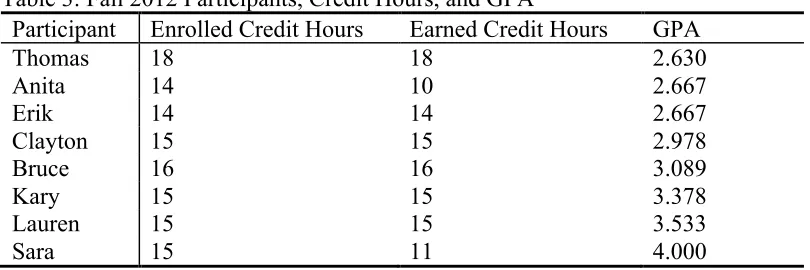
Table 3: Fall 2012 Participants, Credit Hours, and GPA ... 93!
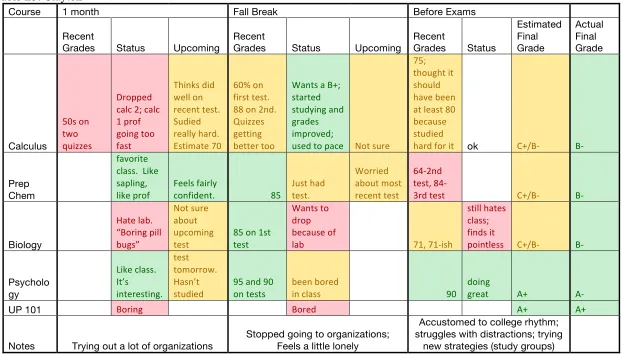
Table E1: Anita ... 140!
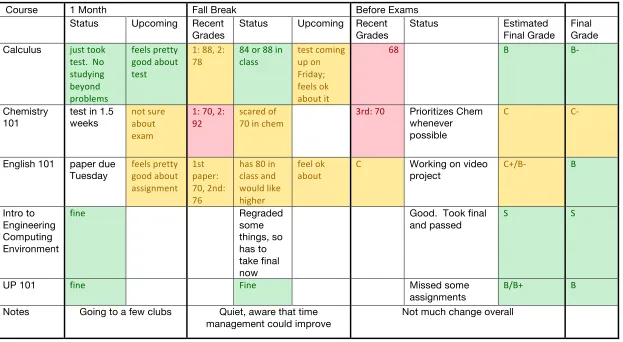
Table E2: Bruce ... 141!
Table E3: Clayton ... 142!
Table E4: Erik ... 143!
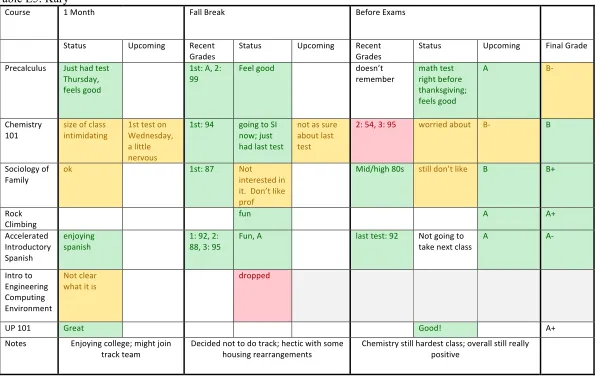
Table E5: Kary ... 144!
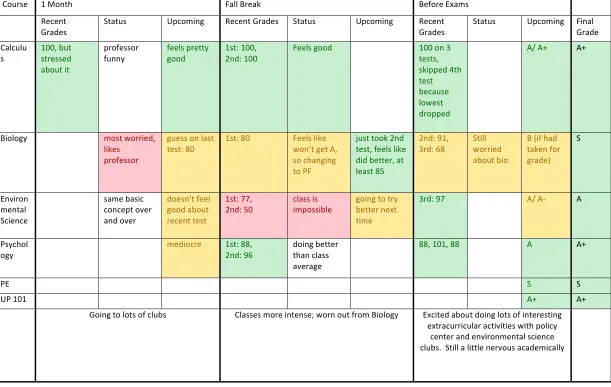
Table E6: Lauren ... 145!
Table E7: Sara ... 146!
LIST OF FIGURES
CHAPTER 1: INTRODUCTION
Chickering (1969; Chickering & Reisser, 1993) proposes that there are seven vectors of development through which individuals may progress during their tenure in higher
education. The seven vectors—developing competence, managing emotions, moving through autonomy toward interdependence, developing mature interpersonal relationships, establishing identity, developing purpose, and developing integrity—demonstrate that college development is about much more than knowledge growth. Indeed, as Tinto (1993) has established, success in college depends on more than just academic ability.
Work in the late 1980s, such as Gardner and Upcraft’s (1989) The Freshman Year Experience: Helping Students Survive and Succeed in College, helped articulate that the first year of college is a crucial time for an individual’s success and satisfaction with the higher education experience. Since that time, a flood of research about first year students and programs designed to assist them has begun. In their updated book, Upcraft, Gardner, and Barefoot (2005) note that while there have been many improvements to the first year experience, “efforts to help first year students succeed are too often focused on retention rather than learning” (p. 6). While acknowledging the importance of other aspects, their definition of success begins with learning: “successful first year students must not only get off to a good start academically and learn how to learn, but they must begin to appreciate what it means to become an educated person” (p. 8).
Zimmerman (2001), “students are self-regulated to the degree that they are metacognitively, motivationally, and behaviorally active participants in their own learning process” (p. 5). In other words, SRL involves students evaluating their own knowledge, assessing what they need to learn, choosing strategies to improve their knowledge, and, finally, using those strategies. Research has demonstrated that college students who demonstrate self-regulatory skills tend to have higher course grades and GPAs than those who do not (Heikkilä & Lonka, 2006; Ley & Young, 1998; Perry, Hladkyj, Pekrun, Clifton, & Chipperfield, 2005;
Vanderstoep, Pintrich, & Fagerlin, 1996).
Despite its importance, most research on SRL is conducted through self-report questionnaires like the Motivated Strategies for Learning Questionnaire (MSLQ) (Pintrich, Smith, Garcia, & McKeachie, 1991). Such self-report questionnaires provide efficient ways to gather information on students’ attitudes and behaviors, but their depth is limited. More in-depth studies of SRL are often focused on specific aspects of SRL and are conducted in a laboratory environment; for instance, Zimmerman and Kitsantas (1997) studied
goal-orientation by having high school women throw darts. While useful information is coming out of these studies, very little research is being conducted in natural contexts.
Purpose of the Study
The purpose of this study was to discover and describe the self-regulated learning of a group of first-semester college students. This study determined what self-regulatory
Definition of Terms
While the survey of relevant literature will provide more detailed information on each of the following terms, they are defined here to facilitate communication between the
researcher and reader.
• Self-regulated learning (SRL): the contextually-based cognitive, emotional, and behavioral processes that students use to mediate their learning (Pintrich, 2000;
Zimmerman, 2001). This study is framed by Zimmerman’s (2000) three-stage model of SRL—forethought, performance/volitional control, and self-reflection. Key subprocesses include:
o Forethought Phase: “metacognitive processes and self-motivational feelings/beliefs [that] precede efforts to learn and prepare a student to self-regulate it” (Zimmerman, 2011, pp. 55–56). Included in this phase are:
! Goal setting: what a student hopes to accomplish during a learning session (Zimmerman, 2000).
! Goal orientation: “general reason an individual does a task” (Pintrich, 2000, p. 473).
! Strategic Planning: selecting tools and strategies to enable self-regulation (Pintrich, 2000; Zimmerman, 2000).
! Self-efficacy: “one’s perceived capabilities to learn or perform behaviors at designated levels” (Schunk & Pajares, 2005, p. 85).
consequences of behavior” (Schunk & Pajares, 2005, p. 89).
o Performance/Volitional Control: processes and beliefs that occur during learning (Zimmerman, 2000). This includes:
! Attention focusing: anything that helps a student focus. Strategies often include adjusting the environment, such as turning off the radio or moving to a quieter place in the library (Zimmerman, 2000).
! Self-instruction and imagery: processes used to help encode information such as describing to oneself how to solve a problem or forming a mental picture to help memorize information (Zimmerman, 2000).
! Self-monitoring: “refers to students’ efforts to observe themselves as they evaluate information about specific personal processes of actions that affect their learning and achievement in school. From this information, students can assess their progress and make necessary changes to ensure goal attainment” (Zimmerman & Paulsen, 1995, p. 14).
! Metacognition: “knowledge or awareness of self as knower” (Fox & Riconscente, 2008, p. 374)
o Self-Reflection: behaviors and feelings/beliefs that occur after learning such as how successful the session was (evaluation) and the cause for that success or failure (attribution) (Zimmerman, 2000).
• Undecided Program (UP):a program at Big University (BU). The program is designed for undecided incoming students. The program consists of:
o One-on-one academic and career advising,
o A two-semester orientation course focusing on transition to the university, academics, self-discovery, and career and major exploration, and
o A living-and-learning community that incorporates both academic and social programming.
Significance of the Study
cognitive processes through such studies, but it is often hard to see how such research applies outside the laboratory setting, when students are faced with competing demands on their time.
This study was designed to contribute to the field by: 1) conducting a qualitative study in the naturalistic context of students’ first semester in college and 2) observing the changes in SRL over time. This research focused on students at a natural, critical point—the first semester of college. Students guided the thoughts and behaviors discussed, instead of prompting by way of a structured questionnaire. The study also used qualitative techniques to probe the reasons behind the students’ thoughts and behaviors. By conducting the study over a period of time, something rarely done in SRL research, this research contributes to understanding how SRL develops.
By more thoroughly understanding the self-regulation of first year college students, this research contributes in multiple ways. First, it provides the basis for studying the development of SRL with other students. Exploratory qualitative research is often used as a precursor for larger qualitative or quantitative studies (Creswell & Clark, 2010). Next, the research may assist higher education institutions better serve their students by helping professors and advisors understand their students better.
Research Questions Two major questions guided this study:
1. How and why do first-semester college students decide to self-regulate?
their first semester in college?
These two main questions were supported by data gathered on the following subquestions:
• What self-regulatory strategies do first-semester college students use? • How do students know if these strategies are successful?
Overview of the Methodological Approach
In order to understand students’ self-regulation over their first semester in college, a qualitative design was used. A multiple-case design was implemented, with eight
participants in their first semester of college. The primary data collection technique was multiple, semi-structured interviews and was supplemented by document analysis. Data was analyzed inductively using first and second cycle coding (Saldaña, 2009).
Organization of the Dissertation
This dissertation is an account of eight first-semester students’ experiences using self-regulated learning. In Chapter 2, the relevant literature including the history or self-self-regulated learning, its components, and methods for researching SRL is reviewed. Chapter 3 includes data collection and analysis procedures, as well as a discussion of the study’s limitations and ethical considerations. Chapter 4 presents descriptions of each of the eight study
CHAPTER 2: REVIEW OF RELATED LITERATURE
This chapter reviews the literature that serves as the theoretical base for the research study. The major components include: (a) the history of self-regulated learning (SRL), (b) the components of SRL, (c) teaching and development of SRL, (d) methods for researching SRL, and (e) known group differences in SRL. Motivation, a related but distinct concept, is also examined.
History of Self-Regulated Learning
Self-regulated learning (SRL) is the academic subset of a relatively new area in psychological research: self-regulation. The first wave of research, which appeared in the 1980s and 1990s (Boekaerts, Pintrich, & Zeidner, 2000), is based on principles developed by James, Piaget, and Vygotsky (Fox & Riconscente, 2008).
As SRL is still a relatively new field, theorists and practitioners have not come to consensus on the definition. Even as late as 2008, Educational Psychology Review devoted an entire issue to defining and creating boundaries between metacognition, self-regulation, and self-regulated learning (Alexander, 2008).
Most psychologists agree that Bandura’s (1986) Social Foundations of Thought and Action is the seminal work on SRL. Bandura argues that key tenets of social cognitive theory are the self-regulatory and self-reflective capabilities of individuals. However, social
processing, social cognitive, volitional, and Vygotskian theorists. Each psychological perspective defines SRL differently, but much work has been done trying to identify the key elements of SRL with which all theorists and researchers can agree (Boekaerts et al., 2000; Pintrich, 2000; Zimmerman, 2000).
Zimmerman (1998) argues that “most self-regulation theorists view learning as a multidimensional process involving personal (cognitive and emotional), behavioral, and contextual components” (p. 2). Pintrich (2000) notes four common assumptions in SRL models: (1) the “active, constructive assumption” that learners are not just passive recipients of knowledge, but they are active participants, (2) the “potential for control assumption” that learners can (though they may not always) monitor and control their learning, (3) the “goal, criterion, or standard assumption” that there is some standard or benchmark that learners use to judge their learning to see if the control they are using is working, and (4) the “mediator assumption” that self-regulatory processes mediate between the individual and the learning (p. 453). In other words:
It is not just individual’s cultural, demographic, or personality characteristics that influence achievement and learning directly, or just the contextual characteristics of the classroom environment that shape achievement, but the individual’s
participants in their own learning process” (p. 5). This definition appears to be widely adopted, (e.g. Ainley & Patrick, 2006; Greene & Azevedo, 2007).
While there are many perspectives of SRL, this research is based on the social cognitive perspective, which stresses “reciprocal interactions” between behavior,
environmental variables, and personal variables (Bandura, 1986; Schunk, 2001). Unlike other psychological viewpoints which focus on the individual, social cognitive psychologists view the environment as both an actor and an agent for human functioning (Bandura, 1986).
Components of SRL
Each of the various models of self-regulated learning reflects its psychological
perspective. For instance, the four stages of Winne and Hadwin’s (Winne, 2001) information processing model — 1) defining the task, 2) setting goals and planning how to reach them, 3) enacting tactics, and 4) adapting metacognition — are focused on the cognitive processes used during learning. The social cognitive psychologist Paul Pintrich (2004) offers a similar four-phase model: 1) planning, goal setting, and activating prior knowledge; 2) monitoring metacognition and motivation; 3) control through selection and use of strategies for thinking, learning, and motivating; and 4) cognitive and affective reaction. Pintrich’s model notes that each phase has motivational, affective, behavioral and contextual processes, in addition to the cognitive process of Winne and Hadwin’s model.
during, and after learning. Even Pintrich noted that at times it is hard to distinguish between the monitoring and control phases of his model (Pintrich, 2004).
Following are descriptions of the three phases and the subprocesses that compose them.
Forethought Goal Setting and Goal Orientation
During the forethought phase, self-regulated learners set goals for their learning session. According to Zimmerman (1998), skillful self-regulators have specific goals that are organized hierarchically. The organization allows the learner to see how a specific subgoal (i.e., memorizing vocabulary) leads to long-term goals (such as passing a foreign language course and graduating from college). In contrast, naïve self-regulators may not have goals, or may only have non-specific goals.
SRL researchers not only care about the specificity of the goals, but the student’s “goal orientation.” The orientation is the “general reason an individual does a task” (Pintrich, 2000, p. 473). Researchers tend to break down the orientation into either
performance or mastery orientation, and within each orientation the individual may have a focus of approaching or avoiding. A person with a performance-approach focus will focus on “being superior, besting others, being the smartest, [or] best at task in comparison to others”; an individual with a performance-avoidance focus will focus on “avoiding
mastery-approach focus will focus on mastering the task, learning, or understanding, while a person with mastery-avoidance will focus on avoiding misunderstanding, not learning, or not mastering the task. In general, students who have a mastery orientation are more likely to self-regulate (Pintrich, 2000; Zimmerman, 1998) and often, ironically, perform better than those who hold a performance orientation (Bartels & Magun-Jackson, 2009; Hoyert & O’Dell, 2009).
In a classic experiment, Zimmerman and Kitsantas (1997) gave high school girls dart-throwing instruction. Some of the students were given an outcome (or performance) goal, “Get the best score possible,” while others were given a process (or mastery) goal, “Focus on properly executing the final 2 steps in every throw.” Still others were given a “shifting” goal where they were given a process goal at the beginning of the session, then an outcome goal in the last third. The results showed that students who were given any goal performed better than students who were in the control group and given no goal. Students who were given the shifting goal, however, produced the best skill. Zimmerman and Kitsantas suggest that focusing on outcome goals too soon disrupts the learning process.
Dweck (1986) argues that goal orientation stems from a learner’s theory of
feel helpless because the difficult situation shows that they may have reached the peak of their intelligence.
Students who hold incremental theories, however, see intelligence as a “malleable” quality that can grow through challenge, in the same way that one can strengthen a muscle (Dweck, 1986, p. 1041). These students tend to adopt a mastery goal orientation, which Dweck calls a learning goal. When faced with difficulties these students are more likely to persist, seeing the difficulty as a challenge to help them foster learning. Greene et al. (2010) found that using SRL strategies helped undergraduate education students mitigate the
negative effects of holding the entity theory. Strategic Planning
Zimmerman’s model of SRL includes strategic planning during the forethought phase. This includes picking which tools and strategies the student will use during the learning session; tools range from flashcards and textbooks to peers and instructors (Zimmerman, 2000). Pintrich (2000) also includes time and effort planning, and planning self-observations.
Not much research looks at the planning process. One study showed that students overestimated their planning by 29%; however, neither the accuracy of that assessment nor the planning itself was correlated to performance (Zimmerman, 2008).
Self-Efficacy
Self-efficacy is “one’s perceived capabilities to learn or perform behaviors at
within the forethought phase, Schunk and Ertmer (2000) note that it operates on all phases of SRL and is, indeed, required for effective self-regulation. It is so crucial in the social
cognitive model of SRL because, according to Bandura (1997), “people’s level of
motivation, affective states, and actions are based more on what they believe than on what is objectively true” (p. 2).
Schunk and Pajares (2005) note the significant effects of self-efficacy: individuals choose to do tasks and activities in which they feel competent; individuals will put forth more effort when they feel that can be efficacious; and an individual’s thoughts and emotional reactions are influenced by self-efficacy. They also note, however, that “no amount of self-efficacy will produce a competent performance when requisite skills are lacking. Similarly, high self-efficacy will not influence behavior when people do not value the outcomes or take pride in their accomplishment” (Schunk & Pajares, 2005, p. 87).
Research shows a strong relationship exists between self-efficacy and performance. Stajkovic and Luthans’s (1998) meta-analysis found the average weighted correlation between self-efficacy and work-related performance was (G)r = .38. Cassidy and Eachus (2000) found a student’s perceived proficiency was correlated with academic performance. In Klassen’s (2010) study on adolescents, self-efficacy contributed as much to the prediction of an English grade as did reading ability.
Other Beliefs
self-regulatory processes. Outcome expectations are an individual’s “judgments of the likely consequences of behavior” (Schunk & Pajares, 2005, p. 89). Students who believe it is unlikely they will earn A’s no matter how much effort they put forth are less likely to attempt the task. Likewise, individuals associate a value with every task. Students may believe they can earn A’s on a homework assignment, but if they do not value that grade, they are not likely to pursue it (Schunk & Pajares, 2005; Wolters & Rosenthal, 2000).
Performance/Volitional Control Attention Focusing
For Zimmerman (2000), attention focusing is anything that helps a student focus. Strategies often include adjusting the environment, such as turning off the radio or moving to a quieter place in the library. There is little research on attention focusing specifically in the literature.
Self-instruction and Imagery
Another aspect of SRL that has received little attention in the literature is self-instruction and imagery use. Both are processes used to help encode information such as describing to oneself how to solve a problem or forming a mental picture to help memorize information (Zimmerman, 2000).
Self-Monitoring
necessary changes to ensure goal attainment” (Zimmerman & Paulsen, 1995, p. 14). Pintrich (2000) identifies multiple types of self-monitoring: metacognitive awareness, motivation awareness, behavioral awareness, and context awareness. Self-monitoring is associated with better academic performance from middle schoolers to graduate level students (Greene & Azevedo, 2009; Lan, 1998; Zimmerman & Kitsantas, 1997).
Peverly, Brobst, Graham, and Shaw’s (2003) study had college students study for a test; some were told to take notes, while others were not. Both groups were asked to predict their performance on a test. The study revealed that college students were not good at predicting how well prepared they were for the examination. While the notes group
performed better, they were not able to predict their performance any better. Peverly et al., therefore, suggest that students are not good at self-monitoring.
Metacognition
While Pintrich (2000) includes metacognition as a part of self-monitoring, its problematic nature needs more attention. Metacognition is “very simply viewed as
knowledge or awareness of self as knower” (Fox & Riconscente, 2008, p. 374). As such, it is a crucial aspect of SRL—a student cannot regulate her learning if she is not aware of what she knows, and what she does not know. However, in tracing the development of
should be considered as “subtypes of the general, abstract, phenomenon of self-regulated action” (p. 477).
Self-reflection
During the self-reflection phase, learners judge their performance. When evaluating their learning, students may use various standards for benchmarks: mastery, previous performance, or social comparison (Zimmerman, 2000). Whatever the results of the evaluation, students attribute their success or failure to various causes. In general, more adaptive attributions are those that are internal, such as the amount of time studied or strategies used, while non-adaptive attributions are those that are external, such as the teacher’s opinion of the student (DiBenedetto & Zimmerman, 2010; Schunk, 2001). Social psychology uses the short hand, locus of control (LOC), to describe these attributions (Weiner, 2005). Attributions are important because “people who believe they can perform better persist longer and work harder” (Schunk, 2001, p. 133).
Development of SRL
Zimmerman (2000) identifies four stages when developing SRL; observation: “vicarious induction of a skill from a proficient model”; emulation: “imitative performance of the general pattern or style of a model’s skill with social assistance”; self-control
performance effort, and self-reflection are mentally and physically demanding activities, and a person may decide to forego their use if he or she feels tired, disinterested, or
uncommitted” (p. 31). Zimmerman and Paulsen (1995) also note that formal self-regulation is not needed or used if the “task it easy, unimportant, or routine” (p. 17).
There are many different types of SRL interventions at the college level designed to help develop SRL (Hofer, Yu, & Pintrich, 1998). The interventions range from specific strategy instruction during a specific course (such as a memorization trick for the
trigonometric functions) to stand-alone “learning how to learn” courses. But the key features of successful interventions are the same: explicitly teaching self-regulatory strategies,
offering opportunities for students to practice those strategies, giving feedback on the use, encouraging monitoring, offering social support, and slowly withdrawing the support
(Blumenfeld et al., 1991; Randi & Corno, 2000; Zimmerman, 1998). Ragosta’s (2010) meta-analysis found that interventions based on social-cognitive theory produced the largest effect sizes. There were small-to-medium effect sizes for the studies as a whole, but there were no statistically significant differences between the interventions based on who facilitated the interventions (teacher or researcher) or how long the intervention was.
Methods for Researching SRL
questionnaires like the Motivated Strategies for Learning Questionnaire (MSLQ) (Pintrich et al., 1991) and Learning and Study Strategies Inventory (LASSI) (Weinstein, Schulte, & Palmer, 1987). Dinsmore, Alexander, and Loughlin’s (2008) extensive literature review of metacognition, self-regulation, and self-regulated learning notes that the 59% of SRL
research relies on self-report questionnaires. As definitions and research questions regarding SRL change, new questionnaires are being developed (Boekaerts, 2002; Crombach,
Boekaerts, & Voeten, 2003; Gilles, 1994; Magno, 2010). This is to be expected as Pintrich (2004), one of the developers of the MSLQ says, “The MSLQ only measures a small portion of the potential self-regulatory strategies suggested by the model” (p. 400).
The other most commonly used measurement of SRL as an aptitude is via structured interviews like the Self-Regulated Learning Interview Schedule (SRLIS) (Zimmerman & Martinez-Pons, 1986). The SRLIS gives students hypothetical situations like “most teachers give tests at the end of marking periods, and these tests greatly determine report card grades. Do you have any particular method for preparing for this type of test in English or history?” (Zimmerman & Martinez-Pons, 1986, p. 617). Responses are then coded for theme.
Zimmerman and Martinez-Pons (1988) also developed the Rating Student Self-Regulated Learning Outcomes (RSSRL), which helped validate the SRLIS. The RSSRL asks
instructors to rate the self-regulation that they observed in their students. Similar open-ended interviewing also led to the development of the MSLQ (De Groot, 2002).
because “researchers should not presume aptitudes measured or self-reported prior to an intervention are constant throughout the intervention” (p. 269). Think-aloud protocols and trace methodologies are the most common forms measuring SRL as an event.
In think-aloud protocols, the student is asked to articulate what she is thinking as she studies. Think-aloud protocols have been used to study SRL in tenth-grade readers
(McMillan, 2010), college algebra students (Cifarelli, Goodson-Espy, & Chae, 2010), and undergraduate students in a hypermedia learning environment (Greene et al., 2010). Greene and Azevedo (2009) advocate using think-aloud protocols because “what may be an effective SRL process for one student may be less effective for another, complicating empirical
analyses seeking a relation between these specific processes and learning outcomes” (p. 18). DiBenedetto and Zimmerman (2010) combined Likert-scale self-report and think-aloud protocols in their “microanalytic investigation” where they asked high school students to answer Likert-scale questions while studying. They also had open-ended questions such as, “I noticed while you are reading that you are (highlighting, rereading, underlining, etc.); could you explain to me what you are doing and why?” (p. 7). Winne (2010), however, still considers think-aloud protocols as measuring SRL as an aptitude because “think aloud data do not instantiate an event ‘in action.’ Think aloud data are learners’ interpretations of events” (p. 271).
students to make notes, highlight information, and even ask peer questions. Each trace is an event that suggests information about the student’s cognition.
Winne is an advocate for better measures of SRL, arguing strongly against self-report data. Winne, Jamieson-Noel, and Muis (2002) note that with self-report questionnaires, like the MSLQ, the context is large (a course or learning in general as opposed to a specific task) so it is difficult to see how responses change as the context changes. Likewise, self-report is limited by the responder’s memory. Winne, Jamieson-Noel, and Muis also question
qualitative research because the interpretation is dependent on the researcher. They would ask qualitative researchers “in what way or to what degree is the example representative of the population?” (p. 132). Nevertheless, even some studies by Winne and Jamieson-Noel use the MSLQ when trace methodologies are not feasible (Lodewyk, Winne, & Jamieson-Noel, 2009).
Other commenters on SRL research call for studying SRL as a process, not just a single point in time as both self-report questionnaires and trace logs do (Dinsmore et al., 2008; Jarvela, Salonen, & Lepola, 2002; Schmitz, 2006). Ning and Downing’s (2010) study is one of the few longitudinal studies assessing students with the LASSI questionnaire 3 weeks before starting their first semester at university and 15 months later. The data show reciprocal effects between motivation and SRL.
Dinsmore et al. (2008) praise the work of Winne and his colleagues for capturing the “subtle moves” of learners, but also argue:
(Pintrich, 2004). Nevertheless, Heikkilä and Lonka (2006) found strong correlations between SAL and SRL questionnaire items, and both were correlated with academic performance.
Group Differences of SRL
While there is little longitudinal data on SRL, many studies consider how SRL differs between groups, though this research is still in the early stages. Researchers do not agree if gender and SRL are correlated. Wolters and Pintrich (1998) found that middle school males and females reported similar levels of self-regulatory use, but in Virtanen and Nevgi’s (2010) study, females had statistically significantly higher reports of help-seeking strategies, task utility, and performance anxiety. Disciplinary differences are also unclear. In one study, student motivation varied across subject area (Wolters & Pintrich, 1998), while in another it did not (Virtanen & Nevgi, 2010). In addition, traditional and non-traditional aged students have not demonstrated statistically significant differences in metacognitive monitoring (Stine-Morrow, Shake, Miles, & Noh, 2006) or overall use of SRL strategies (Justice & Dornan, 2001).
Motivation
While aspects of SRL are clearly related to motivation (such as task value and
attention-focusing), motivation is a much more complex phenomenon. Wolters (2003) notes that, by definition, a student cannot be self-regulated without being aware of it, but the student may be motivated. And since “some effort and thus some initial level of motivation are necessary to engage in any regulatory strategy” (Wolters, 2003, p. 192), it is necessary to understand of motivation when studying SRL.
According to Wolters (2003) there are many ways students may regulate their motivation:
• self-consequating (given external rewards or consequences),
• goal-orientated self-talk (such as focusing on bigger goals to motivate oneself to focus on a smaller task),
• interest enhancement (make the task more enjoyable, interesting or challenging), • environmental structuring (decrease the likelihood of distraction by changing
environment), and
• self-handicapping via procrastinating. This is a maladapative strategy that allows the student to blame their failure on it.
When faced with failure, motivation becomes even more important. Boekaerts and Niemivirta (2000) found that students engaged in the following behaviors:
• “danger control,” which is working harder, but not in a mindful way. This very rarely increases chances of success, and
• self-handicapping.
Unfortunately, motivation is very difficult to measure. In many studies of motivation and other academic interventions, such as SRL, the intervention itself is voluntary. When a student who completes the intervention is successful, it is unclear if that is due to the intervention or the student’s willingness and motivation. Such is the case in Hoyert and O’Dell’s (2006) study of goal-orientation and Mack’s (2007) study of motivation and Supplemental Instruction usage.
Chapter Summary
CHAPTER 3: METHODOLOGY
This chapter describes the methods used to learn about first-semester college students’ use and development of self-regulated learning. The chapter begins with the rationale for the qualitative design and the case study method in particular. Then, it details the procedures used to conduct the research and analysis. Finally, it discusses the limitations and ethical considerations of the study.
Research Design Rationale for a Qualitative Approach
While researchers like Winne (2010) attempt to measure self-regulated learning (SRL) using new methods, the majority of SRL research relies on self-report questionnaires (Dinsmore et al., 2008). These self-report questionnaires like the Motivated Strategies for Learning Questionnaire (MSLQ) (Pintrich et al., 1991) and Learning and Study Strategies Inventory (LASSI) (Weinstein et al., 1987) offer the opportunity to survey large numbers of students, but fail to “probe the thoughts, explanations, and justifications of those who are engaged in academic tasks for which monitoring or regulation would be anticipated” (Dinsmore et al., 2008, p. 406).
“tone, tint, texture, and nuance” that quantitative research cannot provide (p. 637). Glesne and Peshkin (1992) argue that “qualitative researchers avoid simplifying social phenomena and instead explore the range of behavior and expand their understanding of the resulting interactions” (p. 7). Qualitative research is also useful for creating descriptions of people and processes (Peshkin, 1993). By using qualitative methods, this study attempts to add “tone, tint, texture, and nuance” to the understanding of college students’ experience of self-regulated learning during their first semester.
Choice of Qualitative Approach
The case study paradigm frames this research. A case study is an “empirical inquiry that investigates a contemporary phenomenon within its real-life context especially when the boundaries between the phenomenon and its context are not clearly defined” (Yin, 2008, Chapter 1). The case study was appropriate for this study because it focused on a small number of individuals in a specific, bounded experience, for a specific, bounded period of time.
There are two key types of case studies, as defined by Stake (1994): an instrumental case study in which “a particular case is examined to provide insight into an issue or
develop a more in-depth understanding of the phenomena than a single case can provide” (Chmiliar, 2010, p. 583).
Research Questions Two major questions guided this study:
1. How and why do first-semester college students decide to self-regulate?
2. How do first-year college students alter their self-regulation over the course of their first semester in college?
These questions contribute to the field by providing insight into the understanding of SRL. Question 1 focused on the decision processes students use when studying, instead of merely the product. Question 2 required gathering data over a pivotal time in participants’ college experience instead of at a single point in time.
These two main questions were supported by data gathered on the following subquestions:
• What self-regulatory strategies do first-semester college students use? • How do students know if these strategies are successful?
Data gathered on these two subquestions at multiple points throughout students’ first semester of college helped form a picture of the decision processes first-year college students use.
Participants Site Selection
southeast, which for the purpose of this study will be called Big University (BU). The campus of over 30,000 students is comprised mostly of traditional-aged, full-time, in-state undergraduates. This campus is predominantly white, with slightly more males than females.
The Undecided Program (UP) was established as an intensive program for undecided students. It has grown into a nationally-recognized first year advising model. The program includes a two-semester orientation course taught by the student’s academic advisor and a vibrant living-learning community.
This site was chosen because it offers the most important criterion for case selection according to Stake—the “opportunity to learn” (Stake, 1994, p. 243, emphasis original). Most colleges at BU have some form of orientation course, but they are all specific to the academic major. The students in UP, however, are undecided on their college major, so the within case sampling can provide more variation than other orientation courses.
Sampling Criteria
Invitations were sent to ten students to participate in the study via an email shortly before the beginning of the fall semester (see Appendix A). This invitation included
information about the purpose of the study, the time required to participate in the study, and methods to ensure their confidentiality; it also included an electronic copy of the consent form (Appendix B). Based on the response received from the initial batch of invitations, more individuals were invited, striving for demographic variation, until a minimum of ten individuals agreed to participate. A total of 192 e-mails to potential participants were sent between August 2 and August 13 of 2012. Twenty-three invitees responded in some form to my initial email. Twelve students consented to participate and attended the first interview.
Since this was a longitudinal study, some attrition was expected. By starting the study with 12 participants, about 9 participants should have remained in the study until December, assuming a 75% retention rate (Boys et al., 2003). Nine participants would have provided approximately 36 hours of interviews with a maximum of 48 hours if all students persisted. While there is always more to be learned, these bounds were reasonable
considering the time in which this study was conducted.
participants who did not complete the study were removed in this way. Data Collection
The majority of the data came from interviews, supplemented with document analysis.
Interviews
Each of the participants was interviewed a total of four times between August 2012 and December 2012: before classes began, one month into the semester, after fall break, and before exams. These are critical times during a student’s first semester in college: before classes start, students may be unsure of their college experience; students often receive their first major grades back about four weeks into the semester; after fall break, students are no longer able to withdraw from fall classes; and before exams start, students have experienced the majority of their first semester. The initial interviews lasted 50 – 80 minutes, depending on the length of participants’ responses. The second through fourth interviews lasted 25 – 50 minutes.
(Fontanta & Frey, 1994; Miles & Huberman, 1994). The protocols were piloted in July 2012 with college-aged students to determine the effectiveness of the questions and to practice interviewing skills.
The first interview was conducted during the days after residence hall move-in and before classes started. This was the most extensive protocol and gathered information about the student’s SRL in high school and expectations for college academics. Questions asking about SRL strategies were modeled after Zimmerman and Martinez-Pons’s (1986) Self-Regulated Learning Interview Schedule; the questions provided a context (i.e. high school English classes) and were open-ended questions about the strategies the student used. Unlike self-report survey questionnaires such as the Motivated Strategies for Learning Questionnaire (MSLQ), SRL strategies were not made explicit in the questions. This decision was made so that the research would not bias the answers participants gave.
The second interviews took place during weeks four and five of the semester. This was a pivotal time in a student’s experience because it is when students were often getting their first major grades back. The objective of this interview was to understand their initial reactions to coursework and college grading, and to see how well they thought they were studying in college.
had or had not changed over the semester.
The final interview occurred during the last week of classes. This protocol was also similar to two and three, but also looked forward to the upcoming semester.
Before each round of interviews, the researcher reviewed prompts for handling difficult interview sessions from Schwalbe and Wolkomir (2003) and Adler and Adler (2003). For the second, third, and fourth interviews, each participant’s previous interviews were reviewed and notes of additional questions for that participant were made.
The interviews were conducted in person in a library study room. This location was private and quiet. The interviews were audio recorded and transcribed to facilitate analysis. Additionally, extensive notes were made after each interview to capture information not able to be audio recorded and to serve as a backup should the recording fail.
Document Analysis
If the participant kept a calendar and agreed to have photographs made, photographs were made of the weeks prior to and after the interview. Two students kept physical
calendars; however, these students did not always bring their calendar to the interviews. Therefore, the documents were limited in number: one set of calendar snapshots for one participant, and two sets of calendar snapshots for another participant.
Grades and Enrollment Status
With participants’ prior consent, the students’ Fall 2012 grades and Spring 2013 enrollment status were compiled. These were common measures of students’ academic success and helped shed light on the students’ success at SRL.
Data Analysis
As the interviews were completed, the interviews were transcribed by the researcher. The transcripts were then imported into the qualitative research software HyperRESEARCH (ResearchWare, 2012) to facilitate coding.
Saldana’s (2009) process of First and Second Cycle coding guided the data analysis process. First Cycle coding, or descriptive coding, summarizes the topic of a piece of qualitative data and avoids interpretation. Bogdan and Biklen’s (2006) broad coding categories—setting/context, definition of the situation, perspective, way of thinking about people and objects, process, activity, event, strategy, relationship and social structure, narrative, and method—were used as lenses to consider the data during initial coding. The transcripts were also coded using Zimmerman and Martinez-Pons’s (1988) 15 codes
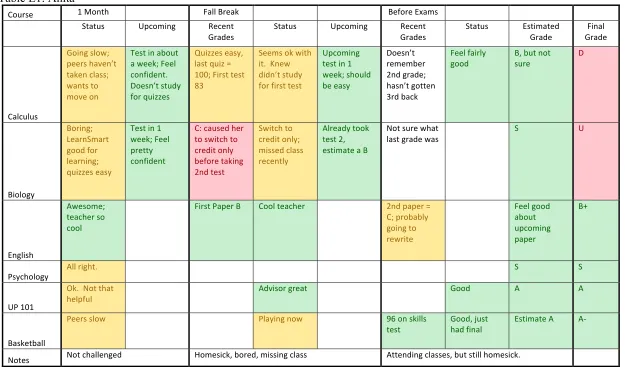
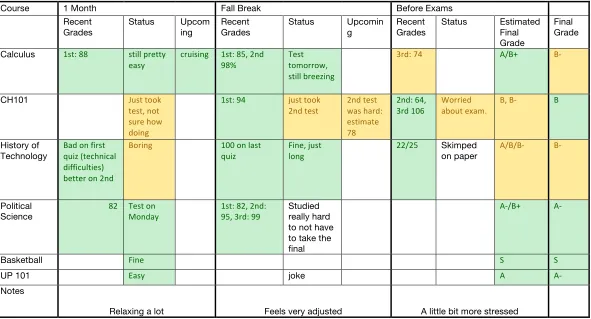
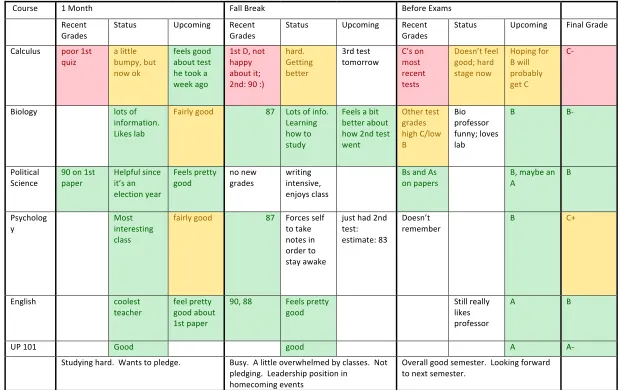
developed for the Self-Regulated Learning Interview Schedule (see Appendix D). As a final step before the data reduction phase, the researcher used strategies such as developing propositions, creating matrices, and modeling decision trees as recommended by Miles and Huberman (1994) to facilitate Second Cycle coding. Longitudinal charts provided a quick overview of the participant’s semester (see Appendix E).
conceptual and/or theoretical organization from [the] array of First Cycle codes” (Saldaña, 2009, p. 149). Pattern coding was used to develop meta-codes, which helped identify salient themes of the research questions. This inductive process allowed patterns and themes to emerge on their own, rather than forcing a preconceived framework on the data.
Rigor
Quantitative researchers look for validity, reliability, and generalizability; as this is a work of qualitative research, discussing the rigor of this study is more appropriate. As Freeman, deMarrais, Preissle, Roulston, and St. Peirre (2007) note, “representing the multiple layers of human experience is fraught with challenge, alternative and limitation. But everything is not, as some argue, ‘just a matter of opinion’” (p. 30). In order to ensure rigor, this study employed the following techniques: triangulation, audit trail, and
responsiveness.
According to Stake (1994), “triangulation has been generally considered a process of using multiple perceptions to clarify meaning, verifying the repeatability of an observation or interpretation. But, acknowledging that no observations or interpretations are perfectly repeatable, triangulation serves also to clarify meaning by identifying different ways the phenomenon is being seen” (p. 241). In this study, not only were there multiple interviews with the subjects, but data was gathered through documents and school records.
writing. The journal captured reflections on the questions and decisions encountered. This practice was continued throughout the data collection, analysis, and expression phases of this study.
Finally, the researcher took Morse, Barret, Maya, Olson, and Spiers’s (2002) warning to heart: “the lack of responsiveness of the investigator at all stages of the research process is the greatest hidden threat to validity and one that is poorly detected using post hoc criteria of ‘trustworthiness’” (p. 11). The researcher practiced reflexivity, the “project of examining how the research and intersubjective elements impact on and transform research” (Finlay & Gough, 2003, p. 4). In addition to documenting decisions along the way, the researcher also reflected on how the study was going. For instance, following Schwalbe and Wolkomir’s (2003) twenty percent suggestion, the first and second rounds of interviews were evaluated before proceeding with the remaining interviews. The types of responses the prompts
gleaned were considered and adjusted as necessary. For instance, during the second round of interviews, questions about the participants’ most recent study session provided relevant information that the participant had not recently mentioned. Therefore, that series of questions was added to the third and fourth interviews.
Subjectivity Statement
The researcher is a white, middle class woman who values education. Learning and intelligence are key facets of her identity. Through high school she performed well, but never considered herself of outstanding intelligence. She self-selected to attend a
religious backgrounds who held similar values for education.
The researcher entered college with over 30 credit hours completed and found herself among people who did not always prioritize educational over social experiences. She
graduated from college as valedictorian and went on to earn a master’s degree in English literature and work on a doctorate in educational research. She has been a teacher of middle school and college students, and currently works in a tutorial center. She often speaks with students, both those who receive tutoring and those who tutor, about their educational
choices and priorities. She believes that all students admitted to the university are capable of the intellectual work, and hopes this research helps her and others understand how first-semester college students conceive of their academic identity and make choices about their education.
While multiple studies have correlated SRL with academic achievement (Abar & Loken, 2010; Boekaerts & Niemivirta, 2000; DiBenedetto & Zimmerman, 2010; Zimmerman & Paulsen, 1995), as Vassallo (2011) notes, the help seeking, negotiation, and environmental shaping strategies valued by SRL are concomitant with white, middle class values. Indeed, according to Vassallo teaching SRL “can resemble teaching complicity and obedience in schools” (p. 30).
students navigate the institution, which is unlikely to change, is a worthwhile pursuit. Her work in a tutorial center is often to help make explicit the moves that facilitate success at the institution.
By selecting traditionally-aged, first-year college students at a predominantly white institution the researcher has limited voices present in this research. She worked to have participants who represented perspectives other than her own and attempted to frame interview questions in ways that do not impose her values onto the respondent. As Shope (2006) argues, “Our reflections spring forth from the richness of our experiences, theirs and ours, to be examined, embraced, and transformed into praxis. Our praxis also needs to be critically examined, carefully considered, and corrected until we encounter that which awaits the next hermeneutic turn” (p. 176).
In writing my analyses, the researcher considered carefully how her values and experiences shaped her interpretations of the respondents’ stories. She looked for ways that she could help offer “an alternative to the ‘commonsense’ or dominant discourse” (Fine, Weis, Weseen, & Wong, 2000, p. 127). She hopes this research will help expand the notion of SRL, to move it out of the large scale, Likert-style surveys and into the contextually relevant, time-sensitive perspectives of unique individuals.
Ethical Issues
practice’ or the everyday ethical issues that arise in the doing of research” (p. 263). Both components were practiced in this study.
First, as a part of procedural ethics, this research was reviewed by North Carolina State University’s Institutional Review Board for the Protection of Human Subjects in
Research to ensure that the study design would cause no foreseeable harm to the participants. Second, each participant received an informed consent form (See Appendix B) to ensure that they were participating voluntarily and understood the nature of the study (Bogdan & Biklen, 2006).
All participants’ data were transcribed and reported using pseudonyms to protect the participants’ confidentiality. Any revealing details were altered as necessary. While the researcher can never fully reciprocate the importance and usefulness of these participants’ time (Glesne & Peshkin, 1992), the participants were given gift cards to the university bookstore as small tokens of appreciation.
Finally, while the interview questions were not designed to elicit such information, the researcher recognized that she could be privy to information that is against university policy, illegal, or harmful, such as underage drinking, cheating, or depression. The
researcher used what therapists and counselors use if faced with such a situation: maintaining confidentiality as long as she did not feel that the student would cause immediate harm to himself or herself or to another individual (Kaplin & Lee, 2007). During one interview, a student said he was “in trouble.” Before he elaborated, the researcher told him the
Limitations of the Study
There are multiple limitations to this study. First, while the study strove to have diversity of genders, ethnicities, and hometowns, the sample was small and all the students choose to attend a large, research extensive, primarily white institution in the southeastern United States. To mitigate this limitation, the data is presented “in sufficient detail so that the reader can make good comparisons” to his or her own institution (Stake, 1994, p. 241).
Another limitation of this study is that by asking questions of the participants about their study habits on a regular basis the research may change the behaviors in question, causing a researcher effect (Bogdan & Biklen, 2006; Miles & Huberman, 1994). Triangulating the data will help mitigate this limitation.
As Winne, Jamieson-Noel, and Muis (2002) note, self-report data is dependent on the respondent’s memory. By conducting research throughout the semester and focusing on the current weeks at hand, the researcher hoped to reduce the amount of memory needed. Also, whenever possible, she used the participant’s own records (syllabi, calendars, and to-do lists) to elicit the participant’s memory.
While this study occurred over a semester, it was still limited by the amount of time devoted to it. Academic acclimation occurs over many semesters. Saldaña (2003)
recommends a minimum length of time for an educational longitudinal study (p. 4); while it would be useful to continue this research over multiple semesters, my own limitations did not allow it.
preconceived notions. She practiced the methods described in the rigor section outlined above to help curtail bias.
Chapter Summary
This chapter described the methods to be uses to answer the research questions: 1) How and why do semester college students decide to self-regulate? and 2) How do first-year college students alter their self-regulation over the course of their first semester in college? Qualitative methods are useful for best capturing the nuances of the students’ perspectives. The primary data collection technique was multiple, semi-structured interviews, and was supplemented by observations and document analysis. Data was
CHAPTER 4: RESULTS
This chapter begins with an overview of the eight participants, followed by individual descriptions of each participant. It then details how participants used each element of self-regulated learning and related techniques. Finally, the chapter considers why participants used (or did not use) SRL, how participants changed their use of SRL over time, and how SRL affected academic achievement.
Participants
All of the participants are traditional-age college students enrolling in Big University (BU) the first fall semester after graduating high school; all are enrolled in the Undecided Program (UP). Each participant was offered the option of selecting a pseudonym; for those who did not select a pseudonym, one was assigned. In some cases, details were altered in order to ensure participant confidentiality.
The sample includes four females and four males. Four participants are persons of color, and four are white. Only one of the participants is an out-of-state student (see Table 1). These demographics differ from those of all UP students and other BU undergraduates in that there is a higher percentage of females and minorities in the study sample (see Table 2).
Table 1: Participant Demographic Information
Participanta Gender Race/Ethnicity Hometown
Anita Female African American In-state
Bruce Male White American In-state
Clayton Male White American In-state
Erik Male White American Northeast
Kary Female White American In-state
Lauren Female Latina American In-state
Sara Female Asian American In-state
Thomas Male African American In-state
aAll participant names are pseudonyms
Table 2: Demographics for Study Participants, UP Students, and BU Undergraduates Characteristic Study Participants All UP Students All BU Undergraduates Gender
Male 50.0% 59.6% 56.4%
Female 50.0% 40.4% 43.6%
Residency
In-state resident 87.5% 88.3% 88.2%
Non-resident 12.5% 11.7% 11.8%
Race and Ethnicitya
White 50.0% 68.4% 74.7%
Black or African American 25.0% 15.7% 7.7%
Hispanics of any race 12.5% 5.2% 4.2%
Asian 12.5% 4.2% 5.1%
American Indian, Alaska Native 0.8% 0.5%
International 0.3% 2.5%
Two or more races 3.7% 2.5%
Race and ethnicity unknown 1.6% 2.9%
Anita
Anita grew up in a small, rural area in-state. She was very active in sports in high school and loved her science courses. She enjoyed the three honors science classes she took—Earth Science, Biology, and Chemistry—except for dissecting. Anita excelled in mathematics early; in the 8th grade she left her middle school to take geometry at the local high school. She completed AP Calculus her junior year and AP Statistics her senior year. She did not find her calculus teacher effective because each day was mostly focused on reviewing the homework assigned the night before that the students couldn’t complete, and “that left only 30 minutes for her to actually teach. But then she would run out of time and just give us more homework.” She enjoyed her AP Statistics course, which was a distance education (DE) course.
Anita took a full complement of social studies courses, include Honors Sociology, Honors Psychology, and African American History; each of these were DE courses. While she did not enjoy having to copy down copious notes in Honors U.S. History, she actively enjoyed the debates in African American History. Anita found most of her four Honors English classes pleasant, and liked reading in general. She did not, however, enjoy the amount of writing she had to do for 12th grade English.
Anita chose to come to BU as her first choice because it was in-state, and therefore, somewhat close to home. It also offered her plenty of good scholarships. For the fall 2012 semester, Anita enrolled in English 101, which she did not look forward to because she does not like writing. She also enrolled in Calculus 1; Biology 1; UP 101, an 1 credit-hour introduction to the university course required for UP students; a one-credit-hour psychology orientation course that Anita is taking because she is considering psychology as a major; and basketball. Other than dreading English, however, Anita did not have many expectations for the upcoming semester. Her priorities are to pass with at least a B “because I want to
graduate with at least some honors.” Bruce
Since moving in-state from Florida four years ago, Bruce attended a nearby suburban high school, which operated on a block schedule. The block schedule allowed him to
complete five math classes of four years, culminating in AP Calculus AB/BC. According to Bruce,
It was pretty difficult. Calculus 1 was pretty easy, I got As and Bs in that. Then Calculus 2 was kind of difficult because you have to have an understanding of Calc 1 and then build off of that, so it got difficult for me.
Bruce enjoyed his social studies courses, but opted out of taking history senior year. His final course, AP U.S. History was enjoyable. Even with lots of timed writings in
preparation for the AP U.S. History test, “It wasn’t too difficult. My teacher was really good; I liked him a lot. He was really funny. We’d mostly go over stuff in class, and then we wouldn’t have any homework at all.” Bruce felt confident enough in that class, took the AP exam, and brought in three hours of credit.
The other AP course Bruce took was AP English Language and Composition his junior year. He did not enjoy that class, especially the open-ended, analytical writing required. He opted, therefore, to take Honors English his senior year. Bruce found that much more enjoyable and relaxed.
Bruce said that throughout high school, “My parents were on me all the time. They kept telling me I could always do better than I did.” When asked if he thought they were correct, he said,
Yes. Freshman year, I didn’t try at all. Same with sophomore year; I got straight B’s. Through junior year and senior year, I was trying to bring up my GPA, because I started out with a 3.1 and I brought it up to about a 4.
Overall, Bruce felt well prepared at the beginning of the fall semester. He enrolled in Calculus 1; Chemistry 101; History of Technology; a political science course, Introduction to the American Government; and basketball. He did not have many expectations for the courses, only that “I heard Chemistry was really difficult and that it’s the most failed course at BU, but I’m not sure if that’s true or not. But I expect it to be pretty hard. I don’t know. Chemistry comes naturally.”
He wanted to study more in college than he did in high school, but when asked about priorities he said, “I would say I’m going to try to focus on academics, but my social life may change that.” In the four days he lived in a residence hall before his first interview, Bruce had already made a lot of new friends and had so much fun the night before that he slept through the first interview’s originally scheduled time.
Clayton
Clayton grew up in a small, rural area in-state. He was very open that he had some significant shifts in his high school career. He moved in middle school, and it took him a while to make friends. In 9th and 10th grade Clayton dated a girl who:
took me away from my friends for like 2 years. And then 11th grade was when I started making friends again. And then 12th was when I had my friends, so I could focus on myself, and I started caring. I didn’t care anymore about anything else and I just wanted to learn.
Because I was just a douche in that class. I would just sleep the whole class and he’d wake me up and I’d go back to sleep. And he was a really nice guy, he cared. I would push through and go to school every day so I wouldn’t have to take the final exam. I would just learn it for now, do good on the test, and then forget it. But this time he said, ‘You’re going to take the final exam,’ so I had to start really studying, and he helped me. He stayed after school and helped me study and stuff. So I had to really push and start studying instead of seeing it as something in the way.
The shift that Clayton described carried through to his 12th grade AP Calculus class. In that class “I actually started to like math, and try to remember the stuff for remembering the stuff.” Clayton took many honors science classes, included Physical Science, Earth Science, Biology, Chemistry, and Marine Biology. He liked most of the classes, except for Chemistry which “wasn’t any fun, you didn’t really learn anything. You just kind of went, did your work, and got out.”
Clayton didn’t enjoy any of the three honors history courses he took. In 9th, 10th and 11th grade, Clayton took Honors English, but:
in 11th grade, that’s when everyone else moved up to AP, and I just kind of didn’t feel like taking AP because I didn’t really like it back then. So I took honors... In our school, all the dumb kids did honors, and all the really dumb kids did generic, and all the kids that cared did AP. I was in there with the kids that were dumb, so it was aggravating.