University of Windsor University of Windsor
Scholarship at UWindsor
Scholarship at UWindsor
Electronic Theses and Dissertations Theses, Dissertations, and Major Papers
10-5-2017
The Development of a Scale to Detect Feigned Attention-Deficit/
The Development of a Scale to Detect Feigned Attention-Deficit/
Hyperactivity Disorder (ADHD) in Adults
Hyperactivity Disorder (ADHD) in Adults
Sanya Sagar University of Windsor
Follow this and additional works at: https://scholar.uwindsor.ca/etd
Recommended Citation Recommended Citation
Sagar, Sanya, "The Development of a Scale to Detect Feigned Attention-Deficit/Hyperactivity Disorder (ADHD) in Adults" (2017). Electronic Theses and Dissertations. 7294.
https://scholar.uwindsor.ca/etd/7294
The Development of a Scale to Detect Feigned Attention-Deficit/Hyperactivity Disorder
(ADHD) in Adults
By
Sanya Sagar, MASc.
A Thesis
Submitted to the Faculty of Graduate Studies through the Department of Psychology in Partial Fulfillment of the Requirements for
the Degree of Master of Arts at the University of Windsor
Windsor, Ontario, Canada
2017
The Development of a Scale to Detect Feigned Attention-Deficit/Hyperactivity Disorder
(ADHD) in Adults
by
Sanya Sagar
APPROVED BY:
______________________________________________ R. Arnold
Department of Sociology, Anthropology, and Criminology
______________________________________________ C. Miller
Department of Psychology
______________________________________________ L. Erdodi, Advisor
Department of Psychology
DECLARATION OF CO-AUTHORSHIP / PREVIOUS PUBLICATION
I. Co-Authorship
I hereby declare that this thesis incorporates material that is result of joint
research, as follows:
Part of Chapter 2 was co-authored with Dr. Carlin Miller and Dr. Laszlo Erdodi.
The key ideas, primary contributions, experimental designs, data analysis, interpretation,
and writing were performed by the author, and the contribution of co-authors was
primarily through the provision of guidance and supervision. Both Dr. Miller and Dr.
Erdodi provided feedback on the refinement of ideas and editing of the manuscript.
I am aware of the University of Windsor Senate Policy on Authorship and I
certify that I have properly acknowledged the contribution of other researchers to my
thesis, and have obtained written permission from each of the co-authors to include the
above material in my thesis.
I certify that, with the above qualification, this thesis, and the research to which it
refers, is the product of my own work.
II. Previous Publication
This thesis includes one original paper that has been previously
Thesis
Chapter
Publication title/full citation Publication
status
Chapter
2
Sagar, S., Miller, C. J., & Erdodi, L. A. (2017). Detecting
feigned attention-deficit/hyperactivity disorder (ADHD):
Current methods and future directions. Psychological Injury
and Law,
doi:http://dx.doi.org.ezproxy.lib.ryerson.ca/10.1007/s12207-017-9286-6
Published
I certify that I have obtained a written permission from the copyright owner(s) to
include the above published material in my thesis (see Appendix A). I certify that the
above material describes work completed during my registration as a graduate student at
the University of Windsor.
III. General
I declare that, to the best of my knowledge, my thesis does not infringe upon
anyone’s copyright nor violate any proprietary rights and that any ideas, techniques,
quotations, or any other material from the work of other people included in my thesis,
published or otherwise, are fully acknowledged in accordance with the standard
referencing practices. Furthermore, to the extent that I have included copyrighted
material that surpasses the bounds of fair dealing within the meaning of the Canada
Copyright Act, I certify that I have obtained a written permission from the copyright
I declare that this is a true copy of my thesis, including any final revisions, as
approved by my thesis committee and the Graduate Studies office, and that this thesis has
ABSTRACT
Attention-deficit/hyperactivity disorder (ADHD) is a neurodevelopmental
condition characterized by a pattern of attentional deficits, hyperactivity, and/or
impulsivity that tends to persist into adulthood for a subset of the individuals affected. In
an attempt to address the high base rate of feigned ADHD in university settings
(estimates ranging from 25 to 50% of those assessed), the objective of the present study
was to develop and validate the Hyperactivity/Inattention Trait Scale (HITS), specifically
designed to differentiate between feigned and genuine adult ADHD. The HITS was
administered online to a sample of undergraduate students, along with several
performance validity tests, aimed at detecting non-credible performance. An exploratory
factor analysis was conducted in order to examine the underlying structure of the HITS.
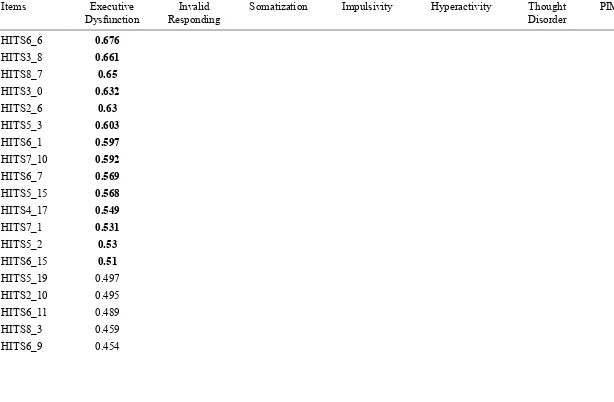
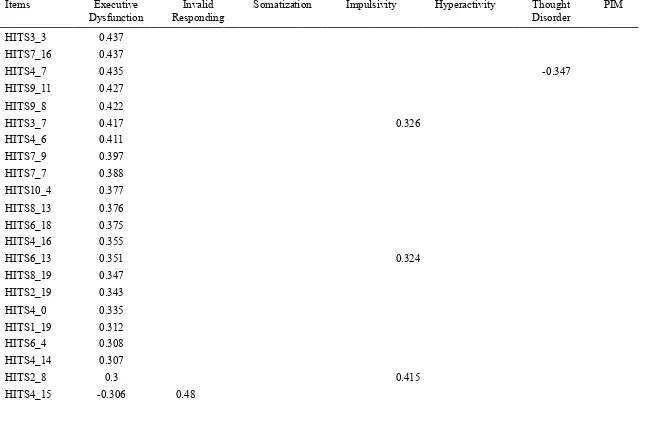
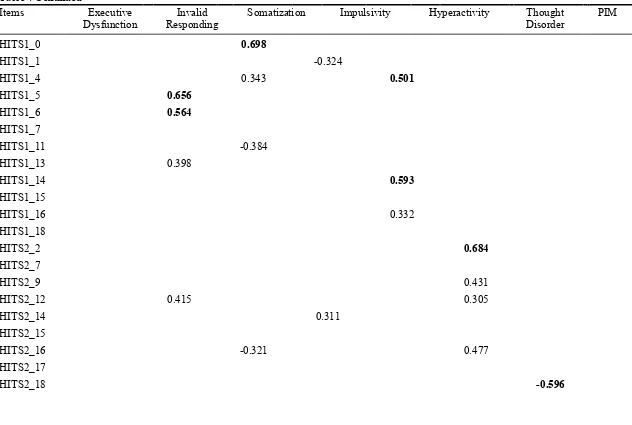
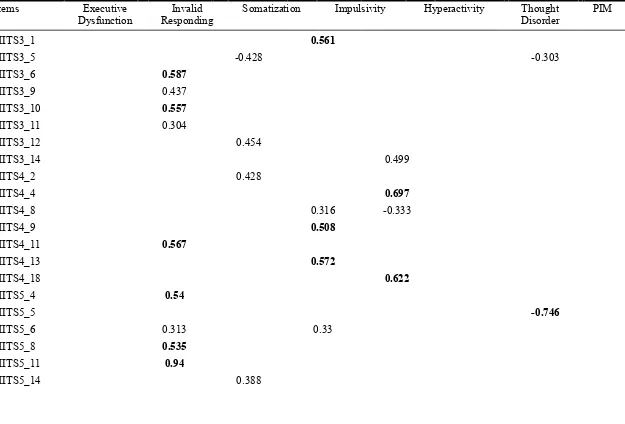
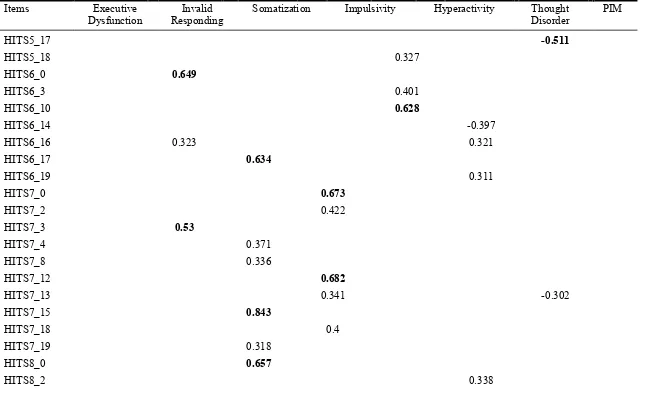
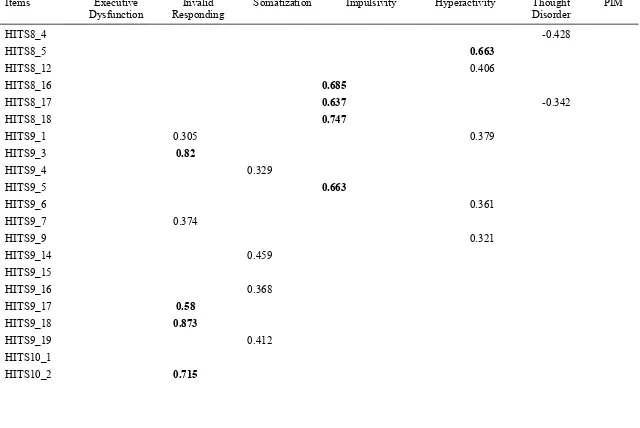
A seven-factor structure was retained, containing the following factors: executive
dysfunction, invalid responding, somatization, impulsivity, hyperactivity, thought
disorder, and positive impression management. The HITS demonstrated good
classification accuracy in the detection of executive dysfunction (.80 sensitivity, .80
specificity). Importantly, the HITS contains two subscales that approximate the “Larrabee
limit” (.50 sensitivity at .90 specificity) in terms of identifying non-credible responding.
The combination of the detection of executive dysfunction and non-credible performance
allows for the distinction of genuine from feigned symptoms of ADHD in a single
ACKNOWLEDGEMENTS
Thank you to all of the participants that completed this study. Without you, this
project and line of research would not exist. I hope to use your data to better understand
ADHD, and inform the scientific and clinical community of the same. Thank you for
your contribution.
I was very lucky to receive mentorship and guidance from several individuals
over the past two years, without whom this project could not have been completed. Dr.
Erdodi, thank you for the vast support you provided for this ambitious project. I am
grateful that I was given the opportunity to dream big, and follow through under your
supervision.
Dr. Miller, although you are not officially my advisor, you have provided me with
so much guidance and support, both in terms of this project and with my education as a
whole. I am beyond grateful. Your mentorship has meant a lot to me, and I hope it
continues for as long as possible.
The data analysis involved in this project was supported by Dr. Arnold, Dr.
Jackson, Paige Lamborn, and Nicole Dignard. I could not be more grateful for your help
in this regard, and for the concurrent emotional support you provided. Thank you for
never allowing my frantic emails and messages to go unanswered.
Although this project was run primarily out of the University of Windsor, I was
generously provided with the opportunity to collect data at Ryerson University, under the
supervision of my long-time mentor, Dr. Ornstein. Dr. Ornstein, I can’t thank you enough
much for running my study out of Dr. Ornstein’s lab, and doing it so well. Your support
and your friendship mean so much to me.
To my sweet friend Jessica Hurtubise: thank you for reading this document at a
time when I could no longer understand the words I had written. I am grateful for your
help, your support, and your friendship.
Getting the chance to complete my education in clinical neuropsychology has
been a dream come true for me, and I would not be able to do this without my parents.
Although I am far too old to be accepting so much help from them, I am so thankful that
they continue to offer and provide.
Finally, I am beyond grateful to the close friends that I have been lucky enough to
make throughout my life, and particularly to those who have listened to me laugh, cry,
and laugh until I cry during my time in Windsor. Thank you for making this place my
home.
TABLE OF CONTENTS
DECLARATION OF CO-AUTHORSHIP / PREVIOUS PUBLICATION iii
ABSTRACT vi
ACKNOWLEDGEMENTS vii
List of Tables ix
Chapter I 1
Introduction 1
Chapter II 2
Review of Literature 2
ADHD Characteristics 2
Malingering and Symptom Exaggeration 10
Symptom Validity in ADHD Assessment 18
The Present Study 25
CHAPTER III 28
Methods 28
Procedure 30
Statistical Analyses 37
CHAPTER IV 40
Results 40
Data Cleaning 40
Assumptions Testing 41
Main Analyses 43
CHAPTER V 53
Discussion 53
Factor Structure of the HITS 53
Group Differences 58
Limitations 60
Future Directions 63
Conclusions 64
REFERENCES 65
APPENDIX A 100
APPENDIX B 102
VITA AUCTORIS 109
LIST OF TABLES
Table 1: Demographic Information ... 28
Table 2: Test Order – Versions A and B ... 31
Table 3: Manipulation Check Questionnaire Results ... 44
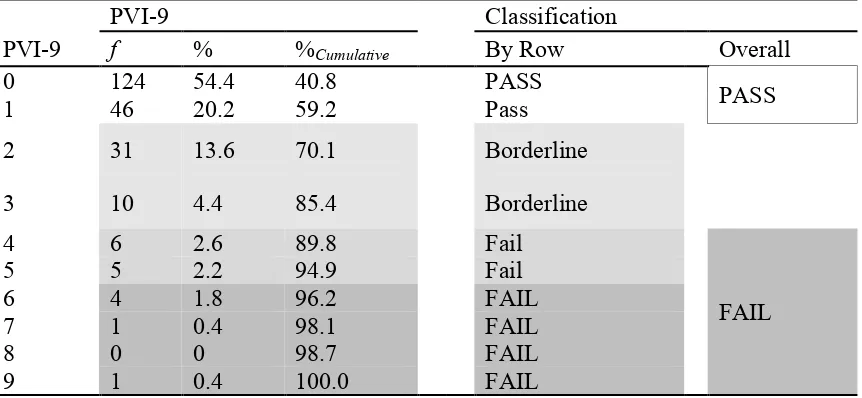
Table 5: Frequency, Percentage and Cumulative Percentage and Classification Ranges
for PVI-9 ... 48
(Appendix B:) Table 4: Seven-Factor Structure of the HITS ... 102
Chapter I
Introduction
Attention-deficit/hyperactivity disorder (ADHD) is a neurodevelopmental
condition characterized by a pattern of attentional deficits, hyperactivity, and/or
impulsivity that tends to persist into adulthood for a subset of the individuals affected.
For university students, symptoms of ADHD may contribute to poor academic outcomes,
as well as psychosocial difficulties (Weyandt & DuPaul, 2008), including anxiety,
depression, emotional instability, disruptions in peer relations and substance abuse (Blase
et al., 2009). Thus, the benefits that accompany the diagnosis of ADHD, including access
to stimulant medication and academic accommodations, may improve academic
outcomes and psychosocial functioning. However, the high estimated base rate of feigned
ADHD in university settings (estimates ranging from 25-50% of those assessed; Marshall
et al., 2010; Suhr, Hammers, Dobbins-Buckland, Zimak, & Hughes, 2008; Sullivan, May,
& Galbally, 2007) may result in the misappropriation of educational and health care
resources. Despite these implications, there are currently no self-report measures that can
accurately identify feigned ADHD.
In an attempt to address this issue, the objective of the present study was to
develop and validate the Hyperactivity/Inattention Trait Scale (HITS), specifically
designed to differentiate between feigned and genuine adult ADHD. The goal of the
following review is to outline prior literature in the areas of ADHD, malingering, and the
assessment of both.
Chapter II
Review of Literature
ADHD Characteristics
The fifth edition of the Diagnostic and Statistical Manual of Mental Disorders
(DSM-5) defines attention-deficit/hyperactivity disorder (ADHD) as a
neurodevelopmental disorder characterized by a pattern of attentional deficits,
hyperactivity, and/or impulsivity that persists for at least six months and significantly
interferes with functioning. As in the previous edition, individuals may be specified as
having one of three subtypes of ADHD. In order to meet diagnostic criteria for
predominantly inattentive subtype (ADHD-I), children must exhibit six or more
symptoms (five or more symptoms for adults) of inattention, such as distractibility and
difficulty focusing, and must not meet criteria for any other subtype. For the
predominantly hyperactive subtype (ADHD-H), children must exhibit six or more
symptoms (five or more symptoms for adults) of hyperactivity, such as fidgeting and
interrupting, and must not meet criteria for any other subtype. Diagnosis of the combined
subtype (C) requires that individuals meet criteria for both I and
ADHD-H for the prior six months. In order to be diagnosed with any subtype of ADADHD-HD, the
DSM-5 indicates that several symptoms must have been present prior to age 12 (age 7 in
previous editions), and that the symptoms must be present in two or more settings (e.g., at
home and at school). Finally, the symptoms must significantly interfere with the
individual’s social, academic, and/or occupational functioning, and cannot be better
According to the DSM-5, prevalence of ADHD is estimated to be 5% in children
and 2.5% in adults (APA, 2013). Although ADHD is more prevalent in children,
researchers have shown that approximately 42% of children show syndromatic
persistence (i.e., meeting full diagnostic criteria) of ADHD into adulthood (Kessler et al.,
2005). Similarly, a more recent longitudinal study found that 10 years after diagnosis
(mean age = 22 years), 22% of all male participants (N = 110) were considered to be
fully remitted (i.e., experiencing fewer than half of the required symptoms for diagnosis).
However, 78% of them showed some evidence of persistence, whether that was
syndromatic, symptomatic (i.e., meeting subthreshold criteria, with more than half, but
not all, of the symptoms required for diagnosis), or functional (i.e., not meeting
subthreshold criteria, but functionally impaired with a Global Assessment of Functioning
[GAF] score of ≤60) (Biederman, Petty, Evans, Small, & Faraone, 2010). In university
students specifically, Weyandt and DuPaul (2006) conducted a review of 23 studies and
reported prevalence estimates ranging from 2% to 8% in university students in the United
States. This variability in prevalence rates may be related to under-reporting due to
stigma, or over-reporting due to external incentives.
Executive Dysfunction. Executive functioning (EF) is an umbrella term referring to goal-directed behaviour, including processes such as planning, organizing, set-shifting,
working memory, inhibition, and selective attention (Best & Miller, 2010). There are
several prominent theories related to the role of EF in ADHD. Barkley’s (1997) theory of
ADHD describes that individuals with ADHD have a core deficit in inhibition, which
then causes difficulties with other executive functions, including self-regulation, motor
ADHD model also proposes that individuals with ADHD may have an “underreactive
behavioral inhibitory system” (Quay, 1997, p. 7).
Neuroanatomical substrates involved in ADHD vary across previous studies.
Overall, meta-analyses have found that several brain regions are implicated, including the
basal ganglia (Nakao, Radua, Rubia, & Mataix-Cols, 2009; Valera, Faraone, Murray, &
Seidman, 2007) and, in adults, the prefrontal cortex (Ernst et al., 2003), the dorsal part of
anterior cingulate cortex (Ernst et al., 2003), and the cerebellum (Ashtari et al., 2005). As
expected, aside from the basal ganglia, these brain regions have been found to be related
to executive functioning.
Research with adults has found that although symptoms of ADHD are similar
between children and adults, executive deficits are particularly salient in adults with
ADHD (Wasserstein, 2005). Psychometrically, they manifest as poor performance on
measures of cognitive flexibility, response inhibition, and selective and divided attention
(Tucha et al., 2008). While executive dysfunction is present in about 50% of children
with ADHD (i.e., aside from hyperactivity), recent work has shown that these deficits are
more likely to persist into adulthood than hyperactivity, even remaining present in
subjects with remittent ADHD (Kamradt, Ullsperger & Nikolas, 2014; van Lieshout,
Luman, Buitelaar, Rommelse, & Oosterlaan, 2013).
Although research findings have been inconsistent, there is some evidence for the
executive deficits in at least a proportion of adults with ADHD (Biederman et al., 2004;
Nigg, Willcutt, Doyle, & Sonuga-Barke, 2005). In fact, past research has indicated that
those with both ADHD and EF impairment may, in fact, represent a separate subtype of
established that a subset of children with ADHD show persistent difficulties into
adulthood (van Lieshout et al., 2013). These difficulties appear to be more related to
executive dysfunction (including inattentiveness) than to the hyperactivity dimension
more common in childhood (van Lieshout et al., 2013), and also tends to be related to
impairments in occupational functioning (Barkley & Fischer, 2011).
In a longitudinal study by Miller, Ho, and Hinshaw (2012), 140 females with
ADHD and 88 matched controls were assessed at a mean age of 9.6 years. Ten years
later, 93% of the ADHD group and 98% of the control group were assessed at a mean age
of 19.6 years. Both the ADHD-I and the ADHD-C groups showed significantly poorer
performance (small-to-medium effects for both comparisons) than the control group on
measures of response inhibition and working memory, as well as on all trials of the Rey
Complex Figure Test (RCFT). Interestingly, although 25% of the individuals with ADHD
in childhood no longer met criteria for diagnosis in adulthood, both the remitted group
and the group that continued to meet criteria for ADHD performed worse than the control
group (small-to-medium effect). Additionally, the remitted group and the group that
continued to meet criteria for ADHD in adulthood did not differ from each other. These
findings support the idea that EF impairment appears to persist even when the
hyperactivity dimension of ADHD remits.
Sluggish Cognitive Tempo (SCT). SCT is a construct that was originally seen as a component of ADHD-I. However, recent research suggests that SCT is an entirely
separate cluster of symptoms, perhaps representing a distinct psychiatric disorder (Becker
et al., 2015). Core symptoms of SCT include (but are not limited to) daydreaming, feeling
feeling lethargic, feeling sluggish, intermittent changes in alertness, loss of cognitive set,
low initiative and persistence, and lack of motivation (Becker et al., 2015).
SCT also appears to be uniquely associated with lower self-esteem and difficulties
with emotional self-regulation after controlling for ADHD in children with and without
ADHD (Watabe, Owens, Evans, & Brandt, 2014). A recent meta-analysis of 23 factor
analytic studies suggests that SCT may represent a cluster of symptoms distinct from
ADHD and its current subtypes (Becker et al., 2015). In fact, several studies have failed
to find an association between SCT and the hyperactivity-impulsive symptoms of ADHD
after controlling for inattention, while inattention remains associated with the
hyperactivity-impulsive symptom of ADHD after controlling for SCT (Becker et al.,
2015). This may indicate a specific distinction between ADHD-I and SCT.
Only one study to date has examined SCT and neuropsychological functioning,
and found no significant associations (Jarrett, Rapport, Rondon, & Becker, 2014). After
controlling for symptoms of inattention, two studies found that SCT was associated with
limitations in sustained attention and processing speed (Wåhlstedt & Bohlin, 2010;
Willcutt et al., 2014). Authors suggest that relationships between SCT and response
inhibition, working memory, and reaction time might be due to comorbid ADHD-I
(Wåhlstedt & Bohlin, 2010; Willcutt et al., 2014). This suggests that there is a need for
better delineation of symptoms and characterization of SCT before its unique
contribution to ADHD symptoms can be meaningfully assessed. Furthermore, if ADHD
and SCT are independent constructs that require different interventions, differentiating
Typical Assessment of ADHD. Based on the diagnostic criteria outlined by the DSM-5, clinicians must evaluate the number, frequency, and pervasiveness of symptoms,
the level of functional impairment, and must also rule out other conditions that may be
causing similar symptoms. For both children and adults, the collection of collateral report
is recommended (Surman, 2013), both to target ‘blind spots’ in the individual’s
self-report, and to ascertain the presence of symptoms in various settings. Although
neuropsychological testing can be viewed as an objective way to assess cognitive
processes such as attention, as well as rule out other conditions with similar patterns of
deficits, cognitive testing is not required in the diagnosis of ADHD by DSM-5 criteria
(Pritchard, Nigro, Jacobson, & Mahone, 2011; Surman, 2013).
Typical evaluation procedures for ADHD, usually conducted by psychologists,
involve the use of clinical interview and behavioural rating scales completed by the
individual and collateral informants. Depending on age and circumstances, they may be
parents, teachers, siblings, spouses, or coworkers (Miller, Rinsky, & Hinshaw, 2013).
However, the most recent estimates suggest that more than 50% of children with ADHD
are diagnosed and treated by primary care physicians (Leslie, Stallone, Weckerly,
McDaniel, & Monn, 2006).
Physicians are unlikely to use the above outlined evaluation procedures due to
limited time, resources, and training in this area (Pritchard et al., 2011). Although the
American Academy of Pediatrics (AAP) provides guidelines to assist physicians in the
assessment of ADHD, only 61% of those physicians who are familiar with the guidelines
Clark, 2004). Thus, a substantial proportion of patients are diagnosed with ADHD
through suboptimal assessment methods.
Diagnosis in Adults. Although the DSM-5 allows ADHD to be diagnosed in adulthood, several issues make it difficult to assess adult ADHD. Diagnosis requires that
several symptoms be present before age 12, which is difficult to verify retrospectively for
several reasons. Adults may have difficulty recalling their childhood symptoms of
ADHD, and may not be able to accurately remember or judge the severity of functional
impairment experienced in childhood (Miller, Newcorn, & Halperin, 2010). In fact, prior
research has indicated that retrospective report of childhood symptoms of ADHD were
not specific to the disorder (Suhr, Zimak, Buelow, & Fox, 2009).
Instead, Dvorsky, Langberg, Molitor, and Bourchtein (2016) reported that parent
ratings of childhood symptoms of ADHD in young adults were the strongest predictors of
current diagnostic status, confirming the importance of parent ratings in ADHD
diagnosis. However, most adults are not accompanied to assessments by parents or older
siblings who may be able to more objectively evaluate the client’s childhood symptoms
(Quinn, 2003). Similarly, adults may be unable to provide objective evidence of early
impairment (e.g., school report cards, results of standardized achievement tests).
Because clinicians may have difficulty using a multi-modal approach to
diagnosing ADHD in adults, including collateral report and objective evidence of
childhood symptoms, it is important to note the significant potential for inaccuracies in
adults’ self-report of past and present ADHD symptoms. Furthermore, adults with ADHD
may experience different symptoms and/or different manifestations of symptoms from
criteria listed in the DSM-5. While some researchers have proposed other symptoms in
addition to those listed in the DSM-IV that may distinguish ADHD in adulthood from
ADHD in childhood, results have been mixed.
Fedele, Hartung, Canu, and Wilkowski (2010) examined Barkley, Murphy, and
Fischer’s (2007) 87-item pool of symptoms of adult ADHD. They reported that two
factors (cognitive inflexibility and disinhibition) had diagnostic utility above and beyond
DSM-IV items. They also found that eight out of nine of Barkley et al.’s (2007) typical
adult ADHD symptoms did not predict impairment above and beyond DSM-IV items.
To the author’s knowledge, no research on further delineation of ADHD
symptoms in adults has been published subsequent to the advent of the DSM-5. A recent
field trial consisting of 18- and 19-year-old young adults (Matte et al., 2015) found that
inattentive symptoms were the strongest predictors of impairment in adults. In addition,
the best cut-offs for adults were ≥5 symptoms of inattention (0.73 sensitivity and 0.49
specificity) and ≥4 symptoms of hyperactivity/impulsivity (0.54 sensitivity and 0.61
specificity). A structured interview for DSM-5 ADHD symptoms served as the criterion.
However, further research is required to better characterize the types of symptoms
commonly exhibited by adults with ADHD, particularly with regard to executive
dysfunction.
Differential Diagnosis. The presentation of ADHD in adults is characterized by fewer externalizing symptoms (Karam et al., 2009) and a higher degree of psychiatric
comorbidity. It is relatively common for adults with ADHD to also present with anxiety
70% of adults with ADHD reported a significant lifetime occurrence of depression or
anxiety (Halmøy, Fasmer, Gillberg, & Haavik, 2009).
Therefore, diagnosing adult ADHD is further complicated by symptom overlap
with other psychological disorders (McGough & Barkley, 2004). For example, one of the
diagnostic criteria of a manic episode is “More talkative than usual or pressure to keep
talking” (APA, 2013, p. 124). This criterion is markedly similar to the ADHD criteria
“Often talks excessively” and “Is often ‘on the go,’ acting as if ‘driven by a motor’”
(APA, 2013, p. 60). Similarly, the diagnostic criteria for generalized anxiety disorder
include, “Restlessness or feeling keyed up or on edge” (APA, 2013, p. 222), which is also
reminiscent of the hyperactivity associated with ADHD. These factors, along with the
rate of comorbidity in adults with ADHD, complicate assessment and treatment planning.
Thus, an exploration of an improved diagnostic algorithm is warranted.
Malingering and Symptom Exaggeration
The DSM-5 defines malingering as the “intentional production of false or grossly
exaggerated physical or psychological symptoms, motivated by external incentives such
as avoiding military duty, avoiding work, obtaining financial compensation, evading
criminal prosecution, or obtaining drugs” (APA, 2013, p. 726). In an oft-cited response to
commentary, Larrabee, Millis, and Meyers (2009) argue that the base rate for
malingering in settings with external incentives is approximately 40-50%. While this
figure is consistent with prior research that estimated base rates of malingering of
38.5-40% in individuals with mild traumatic brain injury (mTBI) seeking disability benefits
(Mittenberg, Patton, Canyock, & Condit, 2002; Larrabee, 2003), and 45-60% in Social
studies estimates the base rates of malingering in forensic disability cases to be much
lower (~15±15%; Young, 2015).
This lower range of base rates has been supported by subsequent examinations of
malingering in individuals with mild, moderate, and severe TBI (Ruff, Klopfer, & Blank,
2016), as well as inpatients with mTBI or PTSD within the Veterans Health
Administration (Young, Roper, & Arentsen, 2016). A previous examination of possible
malingering in Canadian post-secondary students seeking evaluations for ADHD or
learning disorders found a base rate of 14.6% (Harrison & Edwards, 2010), in line with
Young’s (2015) estimate. Estimates of the prevalence of malingered ADHD in university
settings vary, with studies reporting base rates ranging from 25% to 50% (Marshall et al.,
2010; Suhr, Hammers, Dobbins-Buckland, Zimak, & Hughs, 2008; Sullivan, May, &
Galbally, 2007). Nevertheless, it is difficult to ascertain exact base rates of malingering,
partially because individuals who are intentionally feigning (i.e., malingering) tend not to
confess to feigning (see ‘The Evaluation of Malingering’; Williamson et al., 2014). To
the author’s knowledge, base rates of malingered ADHD in other settings are not
available in the literature.
Incentives for Malingering. According to the DSM-5, symptom exaggeration or
feigning must occur in the presence of external incentives to be defined as malingering
(APA, 2013). This criterion is most likely to be met in university students who
experience salient incentives to obtain a psychiatric diagnosis that qualifies them for
status as a student with disability. Having a documented disability on a college or
university campus is associated with a range of benefits, such as academic
separate or private testing environments, lighter workloads, and flexible deadlines for
assignments), and even financial aid (Harrison, 2006). As such, the ability to successfully
feign ADHD has numerous tangible rewards in a higher education setting.
Perhaps most problematically, an ADHD diagnosis can also be used to acquire
stimulant medication to be used either recreationally, or for its cognitive
performance-enhancing properties (Bordoff, 2017; Harrison, 2006). At therapeutic doses, stimulant
medication promotes greater concentration, learning, and memory in individuals with and
without ADHD (Smith & Farah, 2011). A recent meta-analysis found that stimulant
medication significantly enhanced short-term episodic memory (small effect), delayed
episodic memory (medium effect), inhibitory control (small effect), and working memory
(small effect) in healthy populations (Ilieva, Hook, & Farah, 2015).
The ability of these medications to improve functioning even in neurocognitively
healthy individuals makes psychostimulants a good candidate for illicit use. Advokat,
Guidry, and Martino (2008) reported that 43% of students without a diagnosis of ADHD
acknowledged using stimulant medication. Of those diagnosed with ADHD and who had
received prescriptions for stimulant medication, 84% reported being asked to share their
medication with peers at no cost, while 54% reported being asked to sell their medication.
Of this group, 19% reported being asked to teach others how to feign ADHD (Advokat et
al., 2008).
Societal values reflect an apparent double standard regarding the principle of
equal opportunity in athletic and academic competitions. A recent comparison of
perceptions of performance-enhancing medication in athletic versus academic domains
acceptable than students who misuse prescription stimulant medication. The authors
suggest that this may reflect the high base rate of prescription stimulant misuse among
university students, which, in turn, may normalize the practice (Dodge, Williams,
Marzell, & Turrisi, 2012).
In a random sample of 9,161 undergraduate students, the most prevalent motives
for using prescription stimulant medication were to help with concentration (58%),
increase alertness (43%), and provide a ‘high’ (43%; Teter, McCabe, Cranford, Boyd, &
Guthrie, 2005). The recreational effects of some ADHD medications is deemed to be
similar to that provided by cocaine (Sharp & Rosén, 2007). A high percentage (65.2%) of
students report misusing stimulant medication for ‘partying’, with 40% reporting
intranasal use as their preferred method of intake (White, Becker-Blease, &
Grace-Bishop, 2006).
Although it is possible to purchase stimulant medication illicitly, it is considered
easier and less expensive to obtain a prescription (White et al., 2006). In addition,
possession of psychostimulants without a prescription (i.e., an official diagnosis of
ADHD) constitutes an infraction with serious legal repercussions in most jurisdictions.
Taken together, these factors create a strong incentive to successfully feign ADHD, and
significant potential consequences for those who do.
The Evaluation of Non-Credible Performance. Intent to feign is a necessary component of malingering, and is considered more crucial than the presence of external
incentives, which has been found to be limited in terms of predictive power (Hurtubise,
Scavone, Sagar, & Erdodi, 2017). Nevertheless, non-credible performance (i.e., with or
seeking disability benefits or other compensation, perhaps due to the relatively high base
rate of suspected malingering in this population. Estimates range from 15% (Young,
2015) to as high as 60% (Chafetz, 2008). Malingering has been long recognized as
relatively common and serious threat to the validity of neuropsychological assessment.
The Policy and Planning Committee of the National Academy of
Neuropsychology issued a position paper, establishing the assessment of performance
validity as a crucial component of a neuropsychological evaluation (Bush et al., 2005).
Larrabee (2012) introduced the terms performance validity, to distinguish the credibility
of cognitive test performance, in contrast to symptom validity, referring to the credibility
of symptom report. Performance validity tests (PVTs) are either stand-alone measures,
traditionally considered the gold standard for evaluation of non-credible performance
(Green, 2013), or embedded validity indicators (EVIs).
EVIs represent a novel approach to validity assessment as they utilize information
already collected for clinical purposes. Originally, they were designed to complement
stand-alone PVTs, as they were considered less sensitive to non-credible performance
(Miele, Gunner, Lynch & McCaffrey, 2012). However, more recent investigations found
EVIs to have sensitivity comparable (Boone, 2103; Erdodi et al., 2014) or even superior
to stand-alone PVTs (An, Kaploun, Erdodi & Abeare, 2017). Over time, given the
cumulative evidence base supporting their clinical utility in combination with numerous
practical advantages, EVIs have gained significant popularity and professional
acceptance (Boone, 2013; Erdodi, Lichtenstein, Rai & Flaro, 2016; Lichtenstein, Erdodi
Typically, stand-alone PVTs are based on the forced choice recognition paradigm.
They are designed to appear more difficult than they really are by containing a higher
number of items or multiple trials. Traditionally, scores below chance level (as defined
by the binomial probability distribution) on forced choice recognition tests are considered
indicative of definite malingering (Binder, Larrabee, & Millis, 2014; Slick, Sherman &
Iverson, 1999). The majority of individuals with genuine cognitive impairment, such as
severe brain injury and dementia, pass PVTs (Walter, Morris, Swier-Vosnos, & Pliskin,
2014).
The confidence in classifying a response set as invalid increases with the number
of failed PVTs/SVTs. In fact, Larrabee (2008) reported that ≥3 PVT failures identified
100% of patients in a sample of compensation-seeking examinees classified as having
“definite malingered” (p. 670) neurocognitive dysfunction based on the Slick et al. (1999)
criteria. Despite the consensus on the importance of using multiple PVTs in an
assessment (Boone, 2009; Bush et al., 2005; Chafetz, Williams et al., 2015; Heilbronner,
Sweet et al., 2009; Lynch, 2004; Shutte, Axelrod & Montoya, 2015), this practice has
recently been criticised for inflating false positive rates (Berthelson, Mulchan, Odland,
Miller & Mittenberg, 2013; Silk-Eglit, Stenclik, Miele, Lynch & McCaffrey, 2015).
Although these claims have since been refuted (Davis & Millis, 2014; Larrabee, 2014;
Lichtenstein, Erdodi, Rai, Mazur-Mosiewicz & Flaro, 2016) and empirically-based
models were proposed to control false positive rates in multivariate models of
performance validity assessment (Odland, Lammy, Martin, Grote & Mittenberg, 2015),
this controversy is far from being resolved (Bilder, Sugar & Hellemann, 2014; Bush et
Theoretical concerns aside, the cost of administering multiple stand-alone PVTs
can be prohibitive in the current climate of cost-conscious health care systems (Erdodi,
Abeare, et al., 2017). As such, EVIs can serve as a viable alternative, as they address
several practical issues around the extensive use of stand-alone PVTs. First, they provide
information about both performance validity and cognitive ability without requiring the
purchase of extra tests or additional assessment. Second, there is some evidence that
EVIs are more robust to coaching, particularly because they are less identifiable as PVTs
than stand-alone measures (Schutte, Axelrod, & Montoya, 2015). Third, they can provide
continuous monitoring of potential malingering throughout the assessment (Boone, 2009;
Chafetz et al., 2015) without extending the test battery. This is especially important when
assessing individuals who are medically or emotionally fragile (Lichtenstein et al., 2017).
Finally, they help assessors avoid the appearance of alpha bias (Erdodi & Lichtenstein,
2017) as evidenced by test selection (Boone, 2013).
Symptom validity scales, usually embedded within self-report questionnaires, are
designed to assess the fabrication or exaggeration of clinical symptoms,
inconsistent/random responding, endorsing of highly unusual symptoms that have a very
low base rates even in clinical populations, as well as defensive response styles (i.e.,
‘faking good’). In general, research on such embedded indices has been mixed. While
some scales within questionnaires have been shown to accurately detect symptom
exaggeration in general clinical populations (Sellbom & Bagby, 2010), the singular use of
these scales to detect response bias (i.e., without other validity measures) has generally
been controversial in the literature (Piedmont, McCrae, Riemann, & Angleitner, 2000).
Multiphasic Personality Inventory (Second Edition; MMPI-2), a popular self-report of
personality and psychopathology, has been found to be particularly weak with regard to
its psychometric integrity (Gass, Williams, Cumella, Butcher, & Kally, 2010).
The evidence regarding the relationship between SVTs and PVTs is mixed.
Symptom validity scales embedded within self-report measures have variable
concordance rates with PVTs, and there is some evidence of their differential predictive
validity (Copeland et al., 2016). Previous research found that the validity scales
embedded within the MMPI-2 did not correlate with performance on either the Test of
Memory Malingering (TOMM) or the Rey 15-Item Test, two commonly-used PVTs
(McCaffrey, O'Bryant, Ashendorf, & Fisher, 2003). Similarly, one study found that the
three response bias scales of the Personality Assessment Inventory (PAI) did not predict
performance on the Word Memory Test (WMT) in college students seeking assessments
for ADHD and learning disorders (Sullivan et al., 2010).
However, scales developed independent of the original self-report measures have
demonstrated better classification accuracy. The Response Bias Scale (RBS; Gervais,
Ben-Porath, Wygant, & Green, 2007) was developed separately for the MMPI-2 by
selecting 28 items that accurately discriminated between individuals who passed and
those who failed at least one of three PVTs. The RBS has demonstrated superiority to the
MMPI-2’s original validity scales in predicting failure on the TOMM (Whitney, Davis,
Shepard, & Herman, 2008). Similarly, the PAI’s somatization subscale has been shown to
have adequate sensitivity (.93) and specificity (.76) in predicting passing or failing the
TOMM at a cut-off of T > 87 (Whiteside et al., 2010). Previously, the PAI’s negative
TOMM performance. However, the results of classification accuracy analyses were not
reported (Whiteside, Dunbar-Mayer, & Waters, 2009).
Symptom Validity in ADHD Assessment
As noted previously, the diagnostic criteria for ADHD do not require the use of
cognitive measures. In practice, there is no widely-used standard diagnostic method for
diagnosing adult ADHD (Kingston, Ahmed, Gray, Bradford, & Seto, 2013; Sollman,
Ranseen, & Berry, 2010). Prior research has shown that despite the deviation from the
criteria outlined in the DSM-5, many clinicians only employ tallied self-reported
symptoms from clinical interview and/or on a paper-and-pencil symptom inventory when
diagnosing ADHD (Joy, Julius, Akter, & Baron, 2010; Nelson, Whipple, Lindstrom, &
Foels, 2014).
Although the accuracy of self-report data has been a long-standing concern in
psychological assessment (Manor et al., 2012; Wilson & Dunn, 2004) in general,
establishing the veracity of patient report during a diagnostic interview or while
reviewing the scores on self-reported symptoms on paper-and-pencil questionnaires is not
an official practice standard for ADHD evaluations. In fact, one study has found that the
Conners’ Adult Attention Deficit/Hyperactivity Rating Scale (CAARS), an ADHD
symptom checklist, had unacceptably high false positive rates (15-22%, depending on the
cut-off used; Harrison, Nay, & Armstrong, 2016), indicating that this particular scale
over-classifies individuals as ADHD patients. In general, the literature suggests that it is
difficult to discriminate between those with and without ADHD using self-report
This seems to be a critical omission in the existing diagnostic system, as research
has shown that people are often unable to accurately describe their own behaviour, or
judge how they might be perceived by others (Wilson & Dunn, 2004). Adults with
ADHD symptoms specifically have been found to underreport symptoms of inattention,
hyperactivity, and impulsivity, and under-estimate the frequency of their symptoms
(Manor et al., 2012 Miller, Newcorn, & Halperin, 2010). Concerns about the reliability
and validity of self-reported symptoms attributable to inherent limitations in individuals’
ability to introspect, are compounded by an increased awareness of symptom
exaggeration or outright feigning within the context of ADHD assessment in young
adults.
Despite well-recognized external incentives to successfully feign ADHD, there is
a paucity of literature psychometric methods designed to detect malingered ADHD
(Tucha, Fuermaier, Koerts, Groen, & Thome, 2015). The classification accuracy of a few
prominent and robust self-report measures, including the PAI and the MMPI-2, have been
investigated. However, most self-report measures either lack sensitivity for
experimentally induced feigned ADHD in general, or currently lack clear cut-off scores
that separate genuine from feigned ADHD (see Tucha et al., 2015, for a review). A recent
study (Musso, Hill, Barker, Pella, & Gouvier, 2016) examined the PAI validity indices in
the detection of experimentally induced feigned ADHD, and found that cut-offs of ≥77
on the NIM scale, ≥3 on the malingering (MAL) index, and ≥1 on the Rogers
Discriminant Function (RDF) yielded excellent specificities (.93, .98, and .97,
An infrequency index (CII) developed for the Conners’ Adult Attention
Deficit/Hyperactivity Rating Scale (CAARS) had perfect specificity, but low sensitivity
(.30) at a cut-off of 20 in detecting feigned ADHD when experimentally induced, and
also predicts failure on the Word Memory Test (WMT; Suhr, Buelow, & Riddle, 2011).
However, subsequent research on the CII has been mixed. While one study reported that
a cut-off of ≥21 on the CII had adequate sensitivity (.52) and excellent specificity (.97) to
non-credible self-report (Cook, Bolinger, & Suhr, 2016), another study has found that the
CII was unable to discriminate between genuine and simulated feigned ADHD
(Fuermaier et al., 2016).
Importantly, the study by Fuermaier and colleagues (2016) did not include any
PVTs to be used as criterion measures, instead only using clinical interview to assess
participants for ADHD. Thus, the results from this study should be interpreted with
caution, as the validity of the symptom report is unknown. Nevertheless, these mixed
findings do support the need to delineate the extent to which self-report inventories can
serve to detect non-credible performance. To date, previous research has largely shown
that self-report symptom inventories are generally not sensitive to the detection of
feigned ADHD (see review by Tucha et al., 2015).
The commonly accepted explanation for the failure of existing psychometric tools
to detect non-credible presentation is that those feigning ADHD do not necessarily
over-report or exaggerate symptoms (Sollman et al., 2010), which is a common presentation of
malingering. Instead, some believe that individuals who are attempting to feign ADHD
will endorse an “appropriate level” of attention deficit/hyperactivity symptoms. In other
Since gross exaggeration of symptoms is one of the classic psychometric markers
of non-credible report (Graham, 2000), most cases of feigned ADHD are undetected. To
make matters worse, as the diagnostic criteria for ADHD are transparent, it is relatively
easy to keep the content of symptom endorsement within the believable clinical range.
Given that endorsing unusual symptoms is another common strategy of malingering
detection, this is yet another manifestation of non-credible presentation that successfully
evades detection.
The CII consists of pre-existing items from the CAARS. As such, higher scores
on the CII may represent symptom exaggeration (Suhr et al., 2011). However, these items
were originally constructed to measure ADHD symptoms. Therefore, they are not
specific to assessing response bias (Suhr et al., 2011), which inherently limits its
classification accuracy.
Harrison and Armstrong’s (2016) attempt at constructing an exaggeration index to
detect feigned ADHD was promising, yielding .94 specificity and .34 sensitivity at a
cut-off of >2. They addressed the limitation of the CII by adding 18 additional items, 17 of
which were taken from the Dissociative Experiences Scale (DES; Bernstein & Putnam,
1986), and one that relates to a belief that one’s marks should be better than they are
(Harrison & Armstrong, 2016).
However, their index was not immune to the endemic limitation of repurposing
test items that are ill-suited for the new psychometric challenge. Although they included
additional items from the DES, neither the items included from the CAARS (relating
specifically to genuine adult ADHD), nor those from the DES (relating specifically to
the items constructed specifically for the new index had high false positive rates in
addition to low sensitivity (actual values were not reported). Thus, classification accuracy
for feigned ADHD may improve when items are developed specifically to address
common presentations of feigned ADHD.
Performance-based measures used specifically to assess inattention and other
associated cognitive deficits (processing speed, working memory, executive functions)
have shown to vary in their utility to detect feigned ADHD thus far, although research in
this area is limited. When comparing controls, participants with ADHD, and ADHD
simulators on a battery of cognitive measures, simulators scored similarly to those with
ADHD. Therefore, the Processing Speed Index (PSI), the Digit Span subtest, and the
Letter-Number Sequencing subtest of the Wechsler Adult Intelligence Scale – Third
Edition (WAIS-III; Booksh, Pella, Singh, & Gouvier, 2010) were unable to differentiate
simulators from those with ADHD. However, simulators performed significantly worse
on the Trail-Making Test, Part A (TMT-A) and on the Conners’ Continuous Performance
Test – Second Edition (CPT-II), particularly on its index of response time variability.
Interestingly, both the CPT-II (Erdodi, Pelletier & Roth, 2016; Erdodi et al., 2016;
Erdodi, Roth, Kirsch, Lajiness-O'Neill, & Medoff, 2014; Lange, Iverson et al., 2013;
Marshall, Schroeder et al., 2010; Ord, Boettcher, Greve & Bianchini, 2010) and the TMT
(Ashendorf, Clark & Sugarman, 2017; Busse & Whiteside, 2012; Iverson, Lange, Green
& Franzen, 2002; Ruffolo, Guilmette & Willis, 2000; Shura, Miskey, Rowland,
Yoash-Gantz & Denning, 2016) have been validated as PVTs. On both measures, unusually poor
performance on select scales was associated with invalid performance. This may explain
despite its original purpose (i.e., provide a performance-based measures of inattention),
the TMT-A may be more sensitive to non-credible responding than to ADHD (Booksh et
al., 2010). A possible interpretation of these findings is that PVTs developed in different
clinical populations might be useful in detecting feigned ADHD.
However, the empirical evidence the detection of feigned ADHD remains
equivocal, and expert conclusions are mixed. Overall, Booksh et al. (2010) were unable
to identify consistent performance differences on cognitive measures between simulators
and those diagnosed with ADHD. In their review, Musso and Gouvier (2014) similarly
found that coached simulators were able to believably feign ADHD, and score in the
same range of performance as did actual ADHD patients on many neuropsychological
measures. Therefore, they concluded that cognitive measures were generally unable to
detect feigned ADHD with reasonable accuracy. However, they noted that although
results vary across studies, CPTs and the Stroop task appear to be the most promising out
of all neuropsychological measures in detecting feigned ADHD.
Based on extant literature, PVTs are currently the most promising psychometric
tools for the detection of feigned ADHD, above and beyond the sensitivity of CPTs and
the Stroop task (Musso & Gouvier, 2012; Tucha et al., 2015). Sollman and colleagues
(2010) compared the utility of several measures, including self-report measures, cognitive
measures, and SVTs and PVTs, in the detection of feigned ADHD. They reported that the
TOMM, the Digit Memory Test (DMT), the Letter Memory Test, Card Version (LMT),
and Green’s Nonverbal–Medical Symptom Validity Test (NV-MSVT) were all
ADHD. The TOMM Trial 1 ≤45, in particular, was found to be highly sensitive (.87) to
feigned ADHD (Sollman et al., 2010).
Sollman and colleagues (2010) also tested a multivariate model of performance
validity assessment. They dichotomized seven validity indices as pass/fail along their
respective cut-off scores: TOMM Trials 1 + 2 (<90), TOMM Retention Trial (≤45), DMT
(<90), LMT (<93), NV-MSVT Criterion A (≤90), and NV-MSVT Criterion B (<88). The
three TOMM trials were counted as independent PVTs. The researchers found that failure
of two PVTs resulted in a modest decline in overall sensitivity (.50), but led to a marked
increased in specificity (.93), suggesting that failure of two or more PVTs was highly
predictive of feigning. Essentially, this study demonstrated that the well-established
forensic rule of thumb (≥2 PVT failures = invalid response set) can also be applied to
feigned ADHD.
Jasinski and colleagues (2011) replicated the multivariate model of performance
validity assessment by examining the TOMM, the LMT, the DMT, the NV-MSVT, and
the b Test. All measures were found to be adequately sensitive (.33 to .48) and highly
specific (.90 to 1.00) to experimentally induced feigned ADHD individually. As with
Sollman and colleagues’ (2010) study, Jasinski and colleagues (2011) found that failure
of two or more PVTs resulted in adequate sensitivity (.48) and perfect specificity in the
detection of experimentally induced feigned ADHD.
Due to concerns that feigned ADHD has a higher base rate in university students
and other educated adults, Musso and Gouvier (2012) concluded that there is a need for
standalone SVTs specifically designed for detecting feigned ADHD that have better
new standalone SVTs designed for feigned ADHD should be able to detect more
sophisticated forms of malingering, rather than the simple over-reporting of symptoms.
Indeed, Harrison, Edwards, & Parker (2007) found that those feigning ADHD were more
likely to skip items and respond inconsistently rather than over-report symptoms,
suggesting that validity scales used to assess inconsistent responding may be more
sensitive to detecting feigned ADHD than validity scales used to assess over-reporting or
exaggerating. To the author’s knowledge, there are currently no PVTs or SVTs
specifically targeted to identifying feigned ADHD.
The Present Study
The purpose of the present study was to develop and validate a new self-report
measure that performed several functions. First, the new instrument would allow for the
formulation of a clinical diagnosis of adult ADHD based on DSM-5 criteria. The DSM-5
includes updated examples to reflect typical symptom presentation by adults, including
references to difficulty related to “duties in the workplace” and “running errands” (APA,
2013, p. 59). Importantly, the diagnostic criteria also clarify ADHD symptoms in adults.
For example, being distracted by extraneous stimuli also includes being distracted by
unrelated thoughts for older adolescents and adults. At present, no other self-report
measures pertaining to the DSM-5 updated criteria exist specifically for adults. The
proposed self-report measure includes items that closely follow DSM-5 criteria.
Secondly, the developed self-report measure includes items related to emergent
symptoms of (or related to) adult ADHD proposed in the literature thus far, including
proposed that executive dysfunction is the most salient feature of ADHD in adults, there
is a dearth of research examining the proportion of the adult ADHD population that also
has symptoms of executive dysfunction. This study aimed to empirically examine that
hypothesis. Similarly, SCT has been proposed to either be a component of ADHD or a
separate disorder altogether. The inclusion of a subscale pertaining to SCT in the
proposed instrument will help to clarify the relationship between SCT-type symptoms
and core ADHD symptoms.
The third and most important function the present study was to develop a
self-report measure cross-validated against developed and established PVTs, with the aim of
developing an SVT specifically designed to detect feigned ADHD. By cross-validating
the developed measure with established PVTs, it may be more sensitive to feigned
ADHD than other SVTs. An experimental malingering paradigm was employed in order
to create a known group of those feigning on the developed self-report measure.
Due to the exploratory nature of this project, no hypotheses were proposed.
However, the following questions served to guide the research:
1. Will symptoms of executive dysfunction emerge as the most salient factor
(i.e., with the highest factor loadings) in adults with symptoms of ADHD?
2. Will SCT emerge as a distinct factor?
3. Will non-credible responding emerge as a distinct factor?
4. Will participants who are asked to feign ADHD exhibit a higher base rate of
In summary, the objective of this study is to develop and validate a self-report
measure that can accurately discriminate between genuine and feigned ADHD, as well as
CHAPTER III
Methods Participants
Participants were recruited from the University of Windsor’s and Ryerson
University’s Psychology Participant Pools, and received bonus marks in exchange for
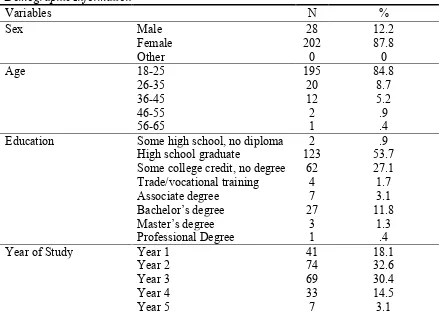
their participation. A total of 164 participants (88% female; mean age: 23) completed the
study as part of the control group. A total of 66 additional participants (86% female;
mean age: 22) were assigned to the experimental malingering group. Exclusion criteria
include a self-reported diagnostic history of traumatic brain injury with loss of
consciousness, unipolar or bipolar depressive disorders, schizophrenia, and psychotic
episodes.
Table 1
Demographic Information
Variables N %
Sex Male 28 12.2
Female 202 87.8
Other 0 0
Age 18-25 195 84.8
26-35 20 8.7
36-45 12 5.2
46-55 2 .9
56-65 1 .4
Education Some high school, no diploma 2 .9
High school graduate 123 53.7
Some college credit, no degree 62 27.1
Trade/vocational training 4 1.7
Associate degree 7 3.1
Bachelor’s degree 27 11.8
Master’s degree 3 1.3
Professional Degree 1 .4
Year of Study Year 1 41 18.1
Year 2 74 32.6
Year 3 69 30.4
Year 4 33 14.5
Year 6+ 3 1.3
Marital Status Single, never married 206 89.6
Married or domestic partnership
15 6.5
Widowed 1 .4
Divorced 6 2.6
Separated 2 .9
Ethnicity White 37 16.1
Hispanic or Latino 86 37.4
Black or African American 4 1.7
Native American 14 6.1
Asian/Pacific Islander 13 5.7
Middle Eastern 43 18.7
Other 33 14.3
Previous diagnoses None 147 63.9
ADHD 10 4.3
GAD 14 6.1
PD 1 .4
Other AD 15 6.5
Depression 11 4.8
Bipolar Disorder (I or II) 1 .4
RD 1 .4
ADHD + other diagnosis 7 3
Multiple diagnoses (without ADHD)
24 10.4
Current Academic Accommodations
No 208 91.2
Yes 18 7.9
Trauma History None 121 52.6
Physical 8 3.5
Emotional 25 10.9
Sexual 5 2.2
Multiple 14 6.1
Prefer not to say 55 23.9
Procedure
Undergraduate psychology students were given the opportunity to participate in
the proposed study via the participant pools at the University of Windsor and at Ryerson
University. If students met the inclusion/exclusion criteria, they could view an
advertisement for the study. It was anticipated that the study would take 1.5 hours in its
entirety, and participants received 1.5 bonus points in exchange for their participation.
Upon signing up for the study, participants were randomly assigned to either the
Control group or the Experimental Malingering (EXPMAL) group, and randomly assigned
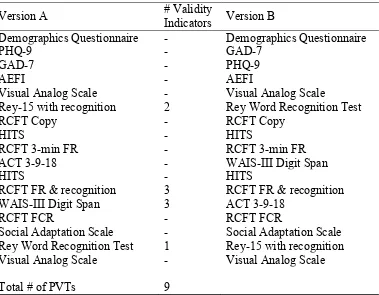
to one of two pre-determined test orders (see Table 2). Because the EXPMAL group was a
pilot group, assignment to that group was terminated after 75 individuals had been
assigned. Recruitment continued, but subsequent participants were assigned only to the
Control group.
After being assigned to a group, participants were immediately taken to an online
consent form. On this form, participants checked a box to indicate their consent to
participate in the study, and typed their names in lieu of a signature. After giving consent,
those in the control group were provided with instructions asking them to complete the
measures to the best of their abilities. Participants assigned to EXPMAL group were
provided with instructions on how to feign ADHD, including information on how to
perform on cognitive testing in order to produce a set of scores resembling impairment
related to ADHD.
The participants then completed several measures online, on their own computers.
information letter. However, the full nature of study was not disclosed, as the participants
must remain blind to the conditions of the study.
Participants in the EXPMAL group were asked to complete a short debriefing
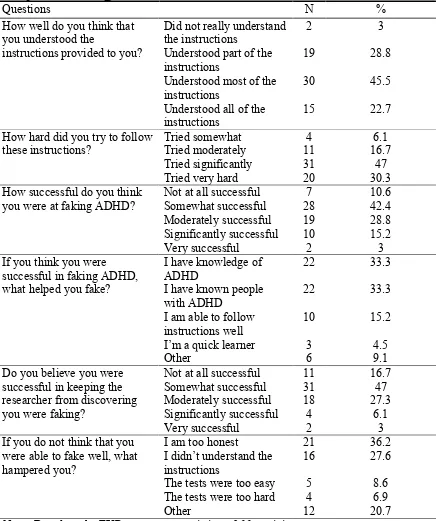
survey about their experience after completing all measures. A manipulation check was
included in this survey, which asked what strategies they used in their attempts to feign
ADHD. All participants were allowed to delete their data and withdraw from the study
without penalty at any point during the study. The data were submitted if the participant
did not choose to withdraw from the study. All participants had up to two weeks to
withdraw their participation by contacting the author.
Table 2
Test Order – Versions A and B
Version A # Validity Indicators Version B
Demographics Questionnaire - Demographics Questionnaire
PHQ-9 - GAD-7
GAD-7 - PHQ-9
AEFI - AEFI
Visual Analog Scale - Visual Analog Scale
Rey-15 with recognition 2 Rey Word Recognition Test
RCFT Copy - RCFT Copy
HITS - HITS
RCFT 3-min FR - RCFT 3-min FR
ACT 3-9-18 - WAIS-III Digit Span
HITS - HITS
RCFT FR & recognition 3 RCFT FR & recognition
WAIS-III Digit Span 3 ACT 3-9-18
RCFT FCR - RCFT FCR
Social Adaptation Scale - Social Adaptation Scale
Rey Word Recognition Test 1 Rey-15 with recognition
Visual Analog Scale - Visual Analog Scale
Measures
With the exception of the experimental self-report measure, all other tasks are
online adaptations of pre-existing and well-established cognitive measures, selected
specifically for this project.
The Hyperactivity/Inattention Trait Scale (HITS). The HITS is a new self-report measure developed for the purposes of this study. The major goals of this measure
were to diagnose ADHD in adulthood, and more importantly, discriminate between
genuine and feigned ADHD. Because scale construction should start with an
over-inclusive preliminary pool of items (Clark & Watson, 1995), approximately 250 items
under several subscales were constructed. After several rounds of revision, 65 items were
dropped, and the 185-item HITS was used in this study.
Several items follow the diagnostic criteria for ADHD listed in the DSM-5 (APA,
2013), while several other items were constructed to tap other facets related to adult
ADHD, such as cognitive inflexibility and disinhibition (Fedele et al., 2010). Because
certain symptoms of anxiety and bipolar spectrum disorders (BSD) overlap with
symptoms of ADHD (APA, 2013), items related to these disorders were constructed in
order to promote accuracy of diagnosis.
Validity subscales include items related to positive impression management
(PIM), negative impression management (NIM), inconsistent responding, and
infrequently reported symptoms. Based on Harrison and Armstrong’s (2016) inclusion of
items related to dissociative disorders in creating a validity scale to detect ADHD
PRIME-MD Patient Health Questionnaire (Spitzer, Williams, Kroenke, Hornyak, & McMurray, 2000). This scale is a self-report instrument used in primary care settings to screen for various psychological conditions, including mood and anxiety
disorders. Two subscales relating to depression (Patient Health Questionnaire-9 [PHQ-9])
and anxiety (Generalized Anxiety Disorder-7 [GAD-7]) were used in the current study.
Social Adaptation Scale.This experimental scale, consisting of 13 true-or-false statements, provides an estimate of the extent to which social desirability affects
self-report. By design, this scale contains items related to PIM.
Amsterdam Executive Function Inventory-Modified (AEFI; Baars, Bijvank, Tonnaer, & Jolles, 2015). The original AEFI was originally validated in a sample of adolescents. The items included in the modified AEFI were altered to better suit
university students. This scale is a short, 10-item measure of EF, rated along a 3-point
Likert scale. The AEFI-M retains higher levels of reliability than the original scale for its
three subscales: attention (three items; α = .78), planning/initiative (three items; α = .65),
and self-control/self-monitoring (four items; α = .69).
Rey 15-Item Memory Test (Rey-15; Lezak, 1995) and Recognition Task (Boone, Salazar, Lu, Warner-Chacon, & Razani, 2002).This task is one of the most commonly used PVTs, used to detect feigned memory impairment. In this task, the
participant is shown a simple 3x5 matrix of sequential information (e.g., A-B-C) for ten
seconds. In the online adaptation, after ten seconds, the participant was asked to recall
and type the information into a text box from memory. The recognition task for the
Rey-15 contains Rey-15 target items from the original matrix and Rey-15 foils. In the online adaptation,
and was then be able to click on the items that the participant recognized as part of the
original matrix. Although not part of the original instrument, recent work has found that a
combined score [recall correct + (recognition correct – false positives)] of <21 yielded
70% sensitivity and 92.8% specificity in the detection of non-credible performance
(Morse, Douglas-Newman, Mandel, & Swirsky-Sacchetti, 2013), which is a significant
improvement in the typically low sensitivity of the Rey-15 (Reznek, 2005).
Rey Word Recognition Test (RWRT; Lezak, 1995).The RWRT is a standalone PVT used to detect feigned memory impairment. In this task, 15 words are read aloud to
the participant at a rate of one word per second. Following this, the participant is
immediately provided with a sheet containing the same 15 target words, as well as 15
foils, and is told to circle only the words that were read out loud. In the online adaptation,
the participant listened to an audio recording of the words, and was then able to click on
the words that the participant recognized as part of the original reading. Previous work
has found that a cut-off total score of ≤6 yields .71 sensitivity and .92 specificity in
detecting feigned memory impairment in the overall sample (Nitch, Boone, Wen, Arnold,
& Alfano, 2006). Although Nitch and colleagues (2006) found gender differences in their
sample, requiring different cut-off scores for males and females, more recent research
confirmed that a cut-off total score of ≤6 was best for both genders, yielding .87 and .90
specificities for males and females, respectively (Bell-Sprinkel et al., 2013).
Digit Span.The Digit Span subtest of the WAIS-III, an auditory attention and working memory task, has been found to be a promising indicator of test taking effort.
The participant is asked to listen to random series of numbers of varying length, and
This classic paradigm was adapted for online use in a task designed specifically
for this study. The participant was asked to listen to an audio recording of series of
numbers increasing in length, and then type the numbers into a text box that will appear
after the audio recording is complete. The recommended cut-off for the Reliable Digit
Span (RDS; the sum of the longest series of numbers with both trials correct, for both
forward and backward repetitions) is ≤7, and has been shown to vary in sensitivity
(.49-.86) and specificity (.57-.96) in the literature (Babikian, Boone, Lu, & Arnold, 2006).
Furthermore, it remains cited as one of the best-validated embedded validity tests
(Heinly, Greve, Bianchini, Love, & Brennan, 2005).
Rey Complex Figure Task (RCFT) – Recognition Trial (Meyers & Meyers, 1995) and Experimental Forced Choice Trial.The RCFT is a commonly used neuropsychological measure used to assess several functions, including
visuoconstructional ability, planning, and organization. The recognition trial has also
been validated as a PVT. In addition, the memory error pattern (MEP) proposed by
Meyers & Meyers (1995) in their update to Osterrieth’s (1945) original figure task
provides information about performance validity.
In this task, the participant is shown a complex figure, and is asked to copy it as
accurately as possible. The participant then draws the figure from memory after a
three-minute delay, and again after a 30-three-minute delay. Then, in the recognition trial, the
participant is asked to select aspects of the figure from 12 target shapes (i.e., fragments of
the original stimulus) and 12 foils.
Eight of the 12 foils are considered ‘Atypical Recognition Errors’, and while they