ABSTRACT
DAMSCHEN, ELLEN INGMAN. Plant community response to landscape connectivity and patch shape. (Under the direction of Nick Haddad and Jim Gilliam.)
Land transformation is the single most important factor promoting the global loss of terrestrial biological diversity. Remaining habitat fragments contain more edges, less interior habitat, and are more isolated from other habitat fragments, all of which decrease rates of colonization following local extinctions, reduce reproductive rates and gene flow between populations, and ultimately lead to species extinctions. The best approach to prevent species loss, therefore, is to preserve greater areas of habitat. In many cases, however, habitat has already been fragmented and strategies are needed to configure and manage the remaining land. Land managers often create reserve networks that incorporate the use of landscape corridors, linear strips of habitat connecting isolated patches, to reduce species loss by increasing colonizations and decreasing extinctions. Most empirical tests of corridors have been limited to individuals and populations, leaving corridor effects on diversity largely unknown, especially at large spatial scales. Additionally, only a handful of studies have examined corridor effects on plants, which may be especially sensitive to the abiotic changes resulting from alterations in patch shape due to dispersal limitation.
Using one of the best-replicated, large-scale habitat fragmentation experiments, I tested explicitly for corridor effects on plant community diversity and composition by examining the established plant community and the soil seedbank. My experimental design
landscape and filtering them into connected patches (“drift-fence effects”). Additionally, I tested for the importance of within-patch edge effects because corridors increase the amount of edge relative to core habitat in a given patch. I provide evidence that corridors increase plant diversity through a combination of connectivity, drift-fence, and edge effects that can be largely predicted from plant dispersal modes. Biotically dispersed plant species (e.g., by birds and mammals) were most affected by connectivity effects, while passively-dispersed species (e.g., by wind or gravity) were most affected by drift-fence effects. Resource
managers should consider these differential responses relative to their conservation goals for particular species or communities.
edge while others performed worst. Incident photosynthetically active radiation, soil
moisture, and competitive interactions with other study species are likely responsible for the observed tradeoffs in performance. Resource managers should consider thinning the
PLANT COMMUNITY RESPONSE TO LANDSCAPE CONNECTIVY AND PATCH SHAPE
by
ELLEN INGMAN DAMSCHEN
A dissertation submitted to the Graduate Faculty of North Carolina State University
in partial fulfillment of the requirements of the Degree of Doctor of Philosophy
ZOOLOGY
Raleigh 2005
APPROVED BY:
__________________________ _________________________ Dr. George R. Hess Dr. Thomas R. Wentworth
DEDICATION
BIOGRAPHY
I grew-up outside of the Twin Cities in Hopkins, Minnesota. I am the oldest daughter of Janie and Dan Damschen and have one younger brother, Aren. For as long as I can
remember, my family has gone to lakes in northern Minnesota and to the north shore of Lake Superior to camp, hike, fish, and find solitude. My parents also took Aren and me on long roadtrips each summer, allowing us to see much of the United States. These experiences fostered an appreciation of natural systems and instilled curiosity for how they function. It was not until after college graduation, however, that I decided to pursue a career in ecology. A passion for music led me to pursue a Bachelor of Arts degree at Luther College in Decorah, Iowa where I double majored in flute performance and communication. Two years after graduating, however, I decided to change my vocation and returned to
undergraduate studies at the University of Minnesota-Twin Cities. I also obtained an ecological research internship at Cedar Creek Natural History Area in East Bethel,
Minnesota. Working at Cedar Creek was one of the most formative experiences in my life because I was able to interact with prominent ecologists, gain field experience, and it is where I met my Ph.D. advisor, Dr. Nick Haddad.
I moved to Raleigh, North Carolina in the fall of 2000 to become Dr. Haddad’s first Ph.D. student at North Carolina State University. I have had the pleasure to interact with an
ACKNOWLEDGEMENTS
Over the past five years, I have had the privilege of meeting and interacting with many people who have facilitated the completion of my dissertation and given me great happiness along the way. Thank you to all of you.
My interest in ecology as a career did not begin in earnest until two years after I graduated from college. I took an introductory biology course at Luther College in 1999, where I met Dr. Tom Cottrell, who gave me inspiration and confidence to pursue ecology in the first place. I also received a great deal of support and encouragement from Jyoti Grewal, who helped me successfully obtain an internship at Cedar Creek Natural History Area. My experience at Cedar Creek was one of the most formative experiences in my life and has had a major impact on my research interests and it is where I met my current Ph.D. advisor, Dr. Nick Haddad. Thanks to Jenny Goth and Wendy Bengston, Nick Haddad, and Cini Brown for your leadership and to the many Cedar Creek interns for inspiring me to become an ecologist.
and cold storage facilities; and to Ron Mosely and Bob Morgan for the use of the large trucks when we needed them. Tremendous thanks to the fire crew for maintaining our sites,
especially to Paul Linse, Chris Hobson, Jarvis Brown, Jason Demas, Mark Frizell, Iola Hallock, Tim Kolnik, Bobby Phillips, Travis McCollough, Kaye Mills, Jason Rose, and Diana Johnston, for their dedication to the corridor project. The SRWC crew, including Dave Coyle (a.k.a., “Solver of All Problems”), Mark Coleman, Christy Prenger, and Tucker Slack always made life enjoyable and provided a wealth of mental and physical resources. While at North Carolina State, I had the great fortune of becoming friends with a
wonderful group of graduate students. Salinda Daley, my six-foot tall kindred spirit, could not have been a better roommate and friend. Thank you for the support you gave to me over my entire dissertation experience. Kristen Rosenfeld, the other half of my brain, has made my graduate school experience so much more meaningful and has provided sanity during the times I needed it most. Kristen, thank you for your support, laughter, trust, and confidence. You will make it difficult for future collaborators to meet my expectations and I could not ask for a better friend. Thank you to both you and David for all your hospitality and
logistical support over the last two years. Thank you to Jessica and Matt Thompson, Mandy and Dave Hewitt, Larissa Bailey, Kate Semsar, Dave Davenport, Becky Bartel, Sunny Snider, and Alesia Read for exciting and fun times over the last five years. Thanks to the Haddad Lab past and present: Becky Bartel, Jory Brinkerhoff, Brian Hudgens, Daniel Kuefler, Allison Leidner, and Aimee Weldon. Special thanks to Becky Bartel and Kristen Rosenfeld for research support and camaraderie during my last two years.
information for land management and reserve design. Nick, I could not have had a better dissertation advisor. You have supported me intellectually and financially, helped be to become a better ecologist and teacher, provided guidance and sound advice, and most importantly, you have given me confidence to be an ecologist. I have learned from you to never “discount my future” too much, that I will “always have more good opportunities than I have the time for”, and to always remain optimistic. Thank you for everything.
I could not have grown-up with a better family and I am so very grateful for the
tremendous encouragement and support I have gotten. To my brother, Aren, thank you for your continuous support of what I do. My aunt and uncle, Lorie and Tom Stemig, your constancy and belief in who I am has given me confidence and allowed me to achieve more than I thought was possible. To my cousin (i.e., “sister”), Holley Gullickson, and to Shawn, Joshua, and Tyler, I am so glad to have you as a part of my life. You remind me what is truly important. I am especially thankful for the lessons my grandparents have taught me: my Grandma Ingman taught me that nature was exciting and interesting; my Grandpa Ingman taught me that good story telling and a dry sense of humor can make life a lot more
interesting; my Grandpa Damschen taught me that a positive attitude and endearing spirit can give you the power to change the world; and my Grandma Damschen gave me ultimate freedom by always believing I was innately perfect. To my parents, Janie and Dan
And finally, to John; you have been with me for the whole experience and I don’t know how I would have completed this enormous task without you by my side. Much has changed since the early days of changing tires, rebar races, and thermarest furniture, but your
TABLE OF CONTENTS
Page
LIST OF FIGURES x
LIST OF TABLES xi
CHAPTER 1: HOW CORRIDORS INCREASE PLANT DIVERSITY 1
Abstract 1
Introduction 2
Habitat fragmentation, corridors, and biodiversity 2
Corridor effects and plants 4
Predictions 8
Secondary hypotheses 9
Methods 9
Study site 9
Presence/absence surveys 11
Permanent plot surveys 12
Supplemental edge study 13
Plant species identification 13
Soil moisture 15
Data analysis 16
Total species richness 16
Species richness by dispersal mode 17
Within- and between-patch effects on species richness, evenness,
and similarity 18
Supplemental edge study 19
Occurances of rare and common species by patch type 20
Results 20
Total species richness 20
Species richness by dispersal mode 21
Within- and between-patch effects on species richness, evenness,
and similarity 22
Supplemental edge study 23
Occurances of rare and common species by patch type 23
Discussion 24
Separating drift-fence and edge effects 25
Applicability of island biogeography 26
Generality of observed patterns 27
Conservation implications and recommendations for future work 28
Acknowledgements 29
CHAPTER 2: HABITAT FRAGMENTATION AFFECTS A SEEDBANK 59
Abstract 59
Introduction 60
Fragmentation impacts and seedbanks 60
Methods 62
Study site 62
Seedbank sampling 63
Seedling monitoring 65
Standing vegetation survey 67
Data analysis 67
Results 69
Discussion 70
Fragmentation and the seedbank 71
Relationship between the seedbank and the established plant community 73
Conservation implications 73
Acknowledgements 74
Literature cited 76
CHAPTER 3: EDGE EFFECS ON LONGLEAF PINE SAVANNAH HERBS…………..87
Abstract 87
Introduction 88
Fragmentation and edge effects in open habitats 88
Herbaceous plants in longleaf pine forests 89
Study goals 89
Methods 90
Study site 90
Species and planting methods 91
Plot sampling 93
Environmnetal variables 93
Data analysis 94
Results 95
Discussion 97
Ascribed mechanisms 97
Relationship to historical diversity patterns and conservation 99
Future work 100
Acknowledgements 101
Literature cited 102
APPENDICES
Appendix A: Vascular plant taxa found in established plant community surveys
from 2001-2003 125
LIST OF TABLES
Page
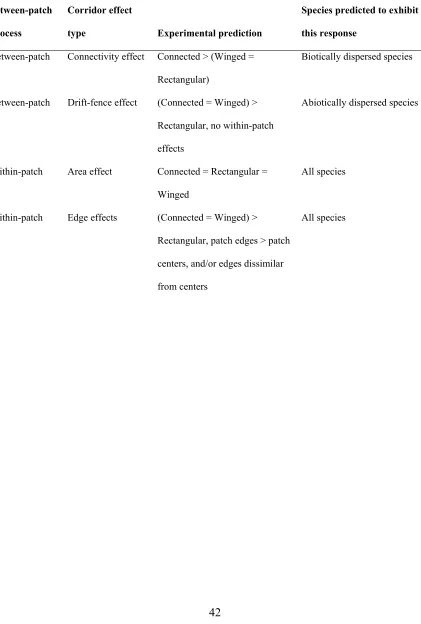
Table 1.1 Predictions for plant community response to corridors 42 Table 1.2 Results from repeated measures ANOVA for total species richness in the
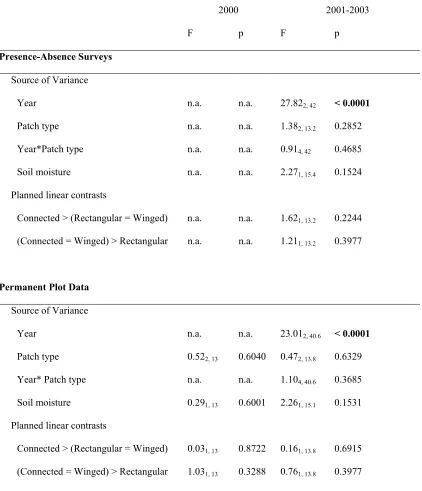
central 100 x 100 m of each patch 43
Table 1.3 Results from repeated measures ANOVA for total species richness by
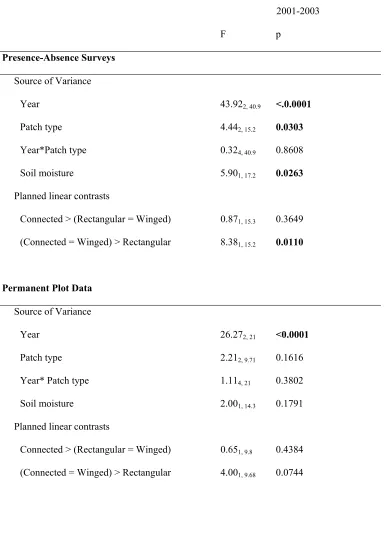
dispersal mode in the central 100 x 100 m of each patch 44 Table 1.4 Results from repeated measures ANOVA for species richness in the whole
patch 45
Table 1.5 Results from repeated measures ANOVA for species richness by dispersal
mode in the whole patch 47
Table 1.6 Results from repeated measures ANOVA for total species richness of all species in Poaceae, Cyperaceae, Juncaceae, and Asteraceae in the whole
patch 49
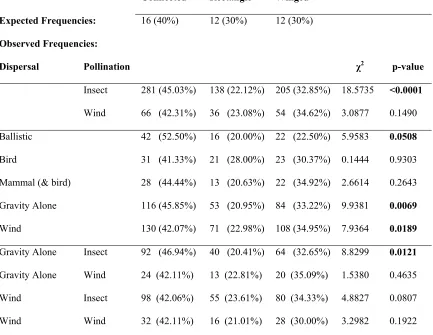
Table 1.7 Chi-square analyses of species traits by patch type for rare and intermediate
species 50
Table 2.1 Results from ANOVA for total number of individuals and species richness
in seedbank 81
Table 3.1 Names and characteristics for the nine species used in the edge study 118 Table 3.2 Standardized canonical coefficients from MANOVA analyses for plant
LIST OF FIGURES
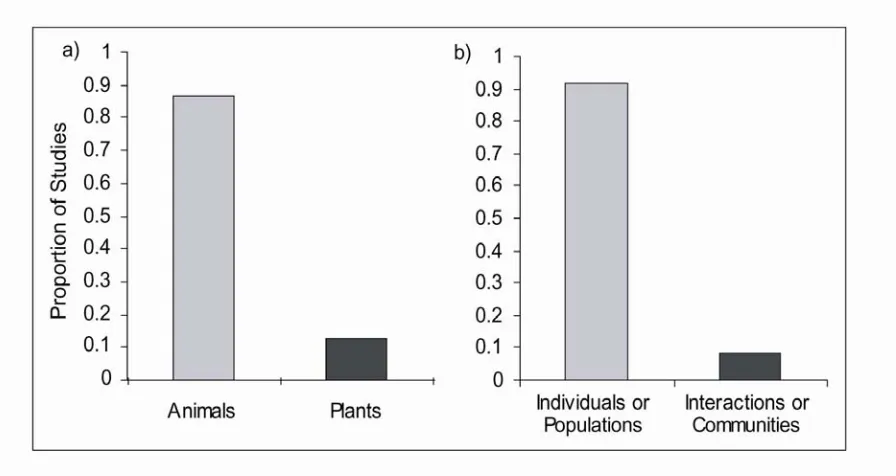
Page Figure 1.1 The proportion of corridor studies that have focused on: a) animals vs.
plants, and b) individual- or population-level processes vs.
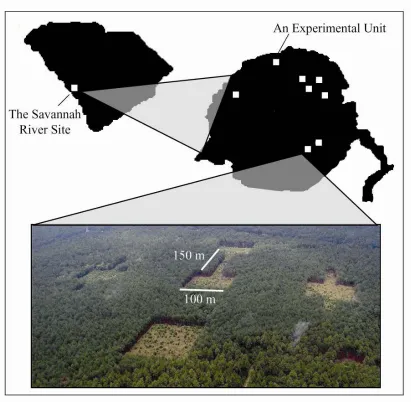
multiple-species or community processes 51 Figure 1.2 Experimental landscape located at the Savannah River Site near
Aiken, SC 52
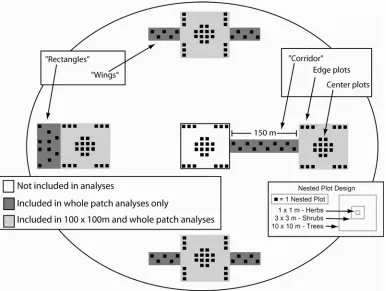
Figure 1.3 Patch and plot design 53
Figure 1.4 Species richness measured by 544 permanent plots in edge and center plot
locations only during July-August 2000 54
Figure 1.5 Species richness measured from patch-level presence/absence suveys (a, c, e) and a cumulative list of species from permanent plots (b, d, f) for the
whole patch 55
Figure 1.6 Species richness measured from patch-level presence/absence suveys (a, c, e) and a cumulative list of species from permanent plots (b, d, f) for the central
100 x 100 m of each patch 56
Figure 1.7 Species richness measured from patch-level presence/absence surveys of
graminoids and asters in the fall of 2002 57
Figure 1.8 The proportion of total patches (40) occupied by each species found in
presence/absence surveys from 2001-2003 58
Figure 2.1 Conceptual diagram showing how the spatial configuration of habitat can affect processes that determine seedbank composition 82 Figure 2.2 Study design for seedbank study in an experimental landscape at the
Savannah River Site, South Carolina 83
Figure 2.3 The percentage of unique and overlapping species between the seedbank and
standing vegetation 84
Figure 2.4 NMS ordination of the seedbank and established vegetative community in
2001, 2002, and 2003 85
Figure 2.5 Species richness and total number of individuals in the seedbank of patch
Figure 3.2 Location of edge study sites at the Savannah River Site near Aiken, SC 121
Figure 3.3 Plot layout at each site 122
CHAPTER 1:HOW CORRIDORS INCREASE PLANT DIVERSITY
A paper to be submitted to Ecology
Ellen I. Damschen and Nick M. Haddad
Abstract
Corridors are a popular reserve design tool used extensively to preserve biodiversity. Land managers often create reserve networks that incorporate the use of landscape corridors, linear strips of habitat connecting isolated patches, to reduce species loss. However, corridor use is controversial and most empirical tests of corridors have been limited to individuals and populations. In addition, only a handful of studies have examined corridor effects on plants, which may be especially sensitive to the abiotic changes resulting from alterations in patch shape. Using the best-replicated, large-scale habitat fragmentation experiment, we
distinguished among the three possible ways corridors can affect between-patch processes: by acting as a movement conduit between connected patches (“connectivity effects”), by increasing area alone (“area effects”), and by intercepting organisms moving across the landscape and filtering them into connected patches (“drift-fence effects”). We provide evidence that corridors increase plant species richness through multiple mechanisms:
Introduction
Habitat fragmentation, corridors, and biodiversity
Landscape corridors were originally proposed as a reserve design tool to preserve biodiversityby connecting two isolated habitat patches with a thin linear strip of habitat (Diamond 1975). Corridors are based on two of the most fundamental theories in
conservation biology, island biogeography and metapopulation theory, which gives them intuitive appeal and has led to their widespread use in reserve design (Mann and Plummer 1993, Mann and Plummer 1995). Despite the common use of corridors, however, empirical tests of corridor effects are generally lacking and the efficacy of corridors has remained controversial (Noss 1987, Simberloff 1987, Hobbs 1992, Simberloff et al. 1992, Rosenberg et al. 1997, Beier and Noss 1998, Haddad et al. 2000). Empirical evidence for corridor effects comes mainly from studies of individuals and populations (Figure 1.1) and shows that corridors can increase movement rates (Haas 1995, Sutcliffe and Thomas 1996, Gonzalez et al. 1998, Haddad 1999a, Haddad et al. 2003), population sizes (Fahrig and Merriam 1985, Haddad and Baum 1999), and rates of gene flow (Aars and Ims 1999, Hale et al. 2001) between the patches they connect. However, studies have also shown that corridors can have neutral (Rosenberg et al. 1998, Haddad and Baum 1999, Danielson and Hubbard 2000) or even negative effects for some species, through processes such as disease transmission or predation (Hess 1994, Burkey 1997, Orrock et al. 2003, Orrock and Damschen 2005, Weldon and Haddad 2005). These studies show that corridor effects can be species and life-stage specific, making ultimate outcomes for community composition unclear.
Hoyle and Gilbert 2004, Rantalainen et al. 2004a, Rantalainen et al. 2004b, Rantalainen et al. 2005). Studies of this type are difficult to implement because they require specific spatial configurations of habitat, posing logistical and ethical challenges, especially for
experimentally controlled and replicated designs.
The first evidence of corridor effects on diversity was provided by MacClintock et al. (1977), who found that bird species richness was higher in a single forest fragment as a result of supplementation from other forested habitat through a corridor. This study, however, was observational and unreplicated. Schmeigelow et al. (1997) also examined how patch size and connectivity affected avian species richness and found weak effects of corridors, but higher diversity in the smallest of their patches. This was likely because the corridors in their study were wider than the smallest patches, making it impossible to separate corridor effects from the increased patch area associated with corridors. In addition, their study was
conducted over a short time span and patches were non-randomly located so that connected patches were always adjacent to riparian areas. In an experimental grassland system, Collinge (2000) also found weak corridor effects on insect diversity. While this study was well controlled and replicated, the authors attributed the weak corridor effects they observed to a lack of contrast between the patch habitat and surrounding matrix and to the high dispersal ability of many insects relative to the size and isolation of patches.
Experimental microcosm studies provide the most conclusive support for theoretical predictions of corridor effects on diversity (Gilbert et al. 1998, Gonzalez et al. 1998,
Chaneton 2002). However, a recent study in this same microecosystem found no evidence that corridors slowed the rate of extinction or increased species richness (Hoyle and Gilbert 2004), likely because of temporal changes in weather relative to their previous studies. A recent series of small-scale experiments using soil decomposer organisms as a model system (Rantalainen et al. 2004a, Rantalainen et al. 2004b, Rantalainen et al. 2005) found that corridors increased the species richness of soil fungi in the patches they connected and that that corridors also sometimes increased the abundance of enchytraeid worms, the species richness of bacteria (dispersed by enchytraeid worms), and the number of microarthropod taxa. These relatively small-scale studies provide rigorous tests of corridor effects on diversity, but their applicability to larger spatial and temporal scales is unknown. Here, we present results from the first large-scale experimental test of corridors on plant community diversity in a well-replicated landscape that has a high degree of contrast and controls for area effects.
Corridor effects and plants
Studies of corridor effects have almost exclusively used animal study organisms. Less than 10% of all corridor studies have explicitly examined effects of corridors on plant species (Figure 1.1, ISI Web of Science search, March 22, 2005). There are several additional studies examining the effects of other “corridor-like” habitats, such as hedgerows,
There are six empirical studies that examine corridor effects on plants within and between patches. Kirchner et al. (2003) found that the presence and number of corridors in a naturally patchy wetland system could explain, in part, the number of ponds colonized by a rare
wetland plant, Ranunculus nodiflorus, as a result of increased seed dispersal. The remaining five studies of corridor effects for upland terrestrial plants all come from the experimental system that is the focus of this study (see Methods for study site description), which have shown that corridors can increase positive effects such as pollination and dispersal
(Tewksbury et al. 2002, Haddad et al. 2003, Townsend and Levey 2005) and negative effects such as increased predation rates (Orrock et al. 2003, Orrock and Damschen 2005),
suggesting that corridor responses for plants can be species and life-stage specific. Past research (Haddad and Baum 1999, Danielson and Hubbard 2000, Tewksbury et al. 2002, Orrock et al. 2003, Fried and Levey, Orrock and Damschen 2005) has led to three main hypotheses for how corridors affect between-patch processes. First, and most commonly, corridors are thought of as movement conduits facilitating the dispersal and movement rates of organisms between the patches they connect (“connectivity effects”). Second, by
increasing the total habitat area of connected patches, corridors could operate through “area effects”. Third, corridors could operate through “drift-fence effects”, where organisms are filtered from the surrounding matrix into connected patches (defined by Anderson and Danielson (1997) and Haddad and Baum (1999)); corridors might increase this probability because of their expanse across the landscape. Additionally, while corridors have
relatively sessile organisms like plants. Other studies have shown that edge effects can lead to changes in plant survivorship, reproduction, and composition (e.g., Murcia 1995, Fox et al. 1997, Didham and Lawton 1999, Restrepo and Vargas 1999, Euskirchen et al. 2001, Bruna 2002, Benitez-Malvido and Martinez-Ramos 2003, Ries et al. 2004). Thus, between-patch corridor effects must be separated from within-patch edge effects.
Theoretically, corridors are predicted to increase species diversity by reducing between-patch isolation, increasing colonization rates, and decreasing extinctions (e.g., through rescue effects, Brown and Kodric-Brown 1977). Colonization rates are tightly linked to dispersal ability, which has been correlated with seed dispersal mode for plants (Westoby et al. 1996, Yao et al. 1999, Dupré and Ehrlén 2002). Therefore, testing for effects of corridors on plants with similar dispersal modes may be especially useful for making predictions for corridor responses. The theoretical importance of colonization for corridor effects makes this
interaction most important for testing predictions of corridor effects on plant diversity and is our primary focus for testing how corridors function.
(Hoppes 1987, 1988, Herlin and Fry 2000, Dupré and Ehrlén 2002, Gardescu and Marks 2004). This evidence leads us to the conceptual prediction that the diversity of biotically dispersed species will increase in connected patches because of the connectivity corridors provide by facilitating foraging movement behavior
On the other hand, predicting corridor effects for abiotically dispersed (e.g., wind, gravity) plants is not as clear. Wind-dispersal has been assumed to be a superior and far-reaching dispersal agent, a perspective that was supported by Dupré and Ehrlén (2002), who saw a strong trend (but statistically insignificant) toward wind-dispersed species being least affected by habitat isolation when compared to other dispersal modes. Under this assumption, we would generally not expect corridors to increase colonization rates. In contrast, recent models have shown that the long-distance dispersal of wind-dispersed plants is most affected by changes in wind speeds and directions (Nathan and Muller-Landau 2000, Nathan et al. 2003, Tackenberg et al. 2003, Soons et al. 2004a, Soons et al. 2004b).
Alterations in patch shape (i.e., changing the prevalence and arrangement of edges) could alter wind speeds and directions, an idea supported by previous studies that have found that edges affected wind patterns and the deposition of seeds carried by wind (Greene and Johnson 1996, Cadenasso and Pickett 2001, Morse et al. 2002, Brandford et al. 2004). Therefore, for abiotically dispersed species, we have two alternative conceptual predictions. First, the diversity of abiotically dispersed species will be the same in all patch types,
Predictions
We use a well-replicated experimental landscape (see Figures 2 and 3 and Methods for study description) to test several predictions for corridor effects on plant species diversity (Table 1.1). If corridors function through connectivity effects, diversity should be higher in connected patches than in unconnected patches of any shape (Table 1.1). If corridors instead operate by increasing area (“area effects”), then connected and unconnected patches with the same area and any shape should be equally diverse. If corridors function through “drift-fence effects”, then diversity in both connected and unconnected patches with the same shape and landscape expanse (high edge-to-area ratios) should be equal, but greater than in patches of equal area and less expanse (lower edge-to-area ratios) and within-patch effects should not be responsible for this difference. Finally, if within-patch edge effects are driving diversity patterns, two conditions must be met: 1) patches with the highest edge-to-area ratios should have much higher or lower diversity than patches with the lowest edge-to-area ratios (connected or unconnected); and 2) within individual patches, diversity should increase or decrease and/or composition should change with distance from the edge (Table 1.1).
alter resources and/or habitat heterogeneity, within-patch edge effects are predicted to affect all types of plant species (Weathers et al. 2001, Ries et al. 2004).
Secondary hypotheses
While our strongest predictions are based on dispersal mode, corridors may also may have other effects through alterations of other interactions such as pollination, herbivory, and seed predation. Furthermore, it is possible that corridors affect common and rare species
differently. We secondarily focus on testing for the strength of corridor effects as a function of species rarity. Some species will occur nearly everywhere, others will be intermediately common, and some will be quite rare across the 40 patches that we examine. Because species that occur ubiquitously across all patches are likely the least dispersal-limited and therefore the least likely to respond to corridors, we expect corridors to most strongly affect those species with intermediate or rare frequencies of occurrence. Furthermore, examining the life history traits of such species might provide additional insight as to what other life history traits might predict corridor response.
Methods
Study site
United States, the SRS is managed mostly for Pinus taeda (loblolly pine) and Pinus palustris
(longleaf pine). The Forest Service has helped to create open habitat patches, which are either connected or isolated, in a matrix of mature pine forest. While corridors are typically thought of as forested strips of land connecting two patches of forest, our design is the inverse of this. The key element is the contrast that exists between habitat types. In our system, the openings create conditions that permit a lush community of herbs, shrubs, and trees to germinate and persist, while the densely planted monocultures of pine forests do not. In fact, many species that occurred historically in native longleaf pine forests occur only inside forest openings, including our study patches (personal observation, personal communication Don Imm, Appendix A).
An “experimental unit” contains five patches: one center patch surrounded by four peripheral patches (Figures 1.2 and 1.3). The center patch is 100 x 100 m (1 ha) and is connected by a 150 x 25 m corridor to another 100 x 100 m peripheral patch. Three additional unconnected peripheral patches are also located 150 m from the central patch. “Rectangular patches” are 137.5 x 100 m and are equal in area to the center patch plus a corridor to test for “area effects”. “Winged patches”, also equal in area to the center patch plus a corridor, have two 75 x 25 m projections off each side of a 100 x 100 m patch to test for “drift-fence effects”. Each of the patch types also differs in the ratio of edge:area habitat. Winged and connected patches have edge:area ratios (0.050 and 0.049 respectively) that are 50% higher than rectangular patches (0.034).
random cardinal direction and the position of each patch type was assigned randomly. Patch and corridor areas were chosen because the dimensions fall within the range of typical Forest Service management units and because the entire patch and corridor areas are not shaded by trees along patch edges, which alone could impact plant community composition.
Presence/absence surveys
We recorded the presence or absence of all plant species in each patch, which included the central 100 x 100m patch area plus the area of a corridor, two wings, or the additional area in the rectangle. Surveys took place during 15 May – 30 June in 2001, 2002, and 2003. An established grid system of 10’ tall PVC poles allowed us to determine our location within 12.5m at any point in the patch. We started in a random corner of the patch and walked back and forth within 12.5m wide sections, visually covering the entire area of the patch. All new species were recorded, effectively censusing the presence of all plant species in the patch. Separate surveys were conducted for the central 100 x 100 m area of each patch and for the “other” areas (e.g., the corridor, wings, or extra area in the rectangle; see Figure 1.3) so that species richness could be quantified for both this central area or for the whole patch.
From 17 September – 29 October 2002, we also conducted the survey described above for only species in Poaceae, Cyperaceae, Juncaceae, and Asteraceae. We did this because species in these families comprise a large proportion of the total species pool in the
Permanent plot surveys
Plant species richness and abundance were measured within permanently established nested plots in each patch (Figure 1.3). The size and number of plots was modeled after another study on successional dynamics in a system similar to ours (Phillips and Shure 1990). Each center patch contained 24 plots and each peripheral patch contained 34 plots, for a total of 1280 plots. We distributed plots in three locations within each patch: 1) 12 plots within the center 50 x 50 m of each patch (center plots), 2) 12 plots within 12.5 m from the edge of a patch (edge plots), and 3) 10 plots in each peripheral patch located in other areas (corridor, wings, or rectangles, depending on patch type). Plots were apportioned this way to determine how responses to connectivity and patch shape are affected by habitat edges.
Surveys took place during the height of plant production from 15 July – 20 August 2000-2003. Nested plots were used to sample in a way that accommodated plant species with different vegetative habits. Three plots of different sizes were layered concentrically around a permanent stake: Herbs (herbaceous species, 1 – 30 cm tall) were surveyed in 1 x 1 m plots, shrubs (woody species > 30 cm tall and < 2.5 cm dbh) in 3 x 3 m plots, and trees (woody species > 2.5 cm dbh) in 10 x 10 m plots (Figure 1.3). In 2000, plots were permanently established and 544 plots were sampled in a pilot survey by counting the
consistency among multiple observers. We used the median value of each cover class in abundance analyses as recommended by Peet et al. (1998).
Supplemental edge survey
Other studies of edge effects have shown varying distances of edge responses into a clearing from a surrounding pine forest. In addition to shading, root competition is thought to be one of the most important for limiting herbaceous species abundances and diversity (Brockway and Outcalt 1998, Harrington et al. 2003, see Chapter 3). These studies have observed areas where the herbaceous understory is severely reduced or eliminated up to 18 m away from a mature pine. While the comparisons of our permanent edge and center plots are well within this observed 18 m edge effect (and should therefore capture any edge response), we supplemented these analyses with another edge study in 2005. Using only rectangular patches in six experimental units, four identical transects were used to record the presence or absence of all species. Transects were 100 m long and 2 m wide. Two were located directly against the forest-clearing border and two were evenly spaced along the central 12.5 m of the patch. A list of all species was created for each transect.
Plant species identification
All plants were identified using the nomenclature of Radford et al. (1964). For the genera
verified with regional botanical experts (pers. comm. T. Wentworth, J. Stucky, B. Miley, and A. Krings). If we were still unable to identify plant species (less than 3% of all species could not be identified), they were removed from all datasets prior to analyses. Fourteen species could not be identified to species, however, these unknown species were able to be
recognized consistently as unique in the field. These species were given unique names as unknown species (Appendix A) and retained in the datset.
In a few cases two or more species were lumped into a single group for analyses because they could not be differentiated in the field. Species groups that were combined were: 1)
Centrosema virginianum and Clitoria mariana, and 2) Cyperus retrorsusand another unknown Cyperus spp. Also, because Dichanthelium spp. are notoriously difficult to distinguish in the field, all questionable individuals of Dichanthelium spp.were categorized with four easily recognizable species (listed in Appendix A) based on size and morphology. Analyses were conducted without removing or lumping species, confirming that these changes did not alter the direction or significance of our results.
Plant species were categorized by dispersal mode by searching regional flora and guides (Radford et al. 1964, Miller and Miller 1999, Weakley 2005), conducting a primary literature search for each species (ISI Web of Science and Biological Abstracts), and searching for each species in three plant databases: 1) USDA PLANTS Database (USDA 2004), 2) NatureServe Explorer (NatureServe 2005), and 3) The Illinois Plant Network (Iverson et al. 1999). If species dispersal modes could not be found using these methods (~25%), they were deduced from seed morphology and congener comparisons. All species could be classified with reasonable certainty.
species as those actively dispersed through the ingestion of fruits or seeds by birds or
mammals, and 2) abiotically dispersed species as those dispersed passively by wind, gravity, or explosive seed capsules (e.g., some pods in Fabaceae). Species were not broken into more specific dispersal modes (e.g., bird, mammal, wind, gravity, etc.) because the number of species within subgroups became too small to analyze separately. There were eight species dispersed by adhesion to animals that were eliminated from analyses because these seeds readily attached themselves to observers in our system, possibly altering dispersal pathways.
Soil Moisture
periods that can be biased by weather events and climatic conditions. At large experimental scales (over 25 km between some sites in our system), this method allows for the feasible estimation of soil moisture holding ability with a limited number of observers. Averages of the soil moisture by weight for all plots in each patch were used as covariates in analyses. This is an appropriate covariate because estimates were obtained for how much water the soil could potentially hold rather than over discrete time intervals, which would have possibly been influenced by our treatment effect (patch type).
Data analysis
Total species richness
To test our predictions about how corridors affect species diversity, we used species richness (the cumulative count of all species in each patch) as our response variable. We calculated species richness separately from each of our two survey types: 1)
presence-absence, and 2) a cumulative list from all permanent plots within a patch. To test for corridor effects on groups of species that vary with dispersal mode, we also subdivided total richness into groups of species with biotic or abiotic dispersal and analyzed these groups separately. All response variables were checked for normality and homogeneity of variances prior to conducting analyses.
The center patch in each experimental unit was removed from analyses so that
central 100 x 100m area of each patch (dark gray only in Figure 1.3). We did this to assess the relative importance of additional areas (i.e., the corridors, extra area in rectangles, or the wings) in contributing to the patterns we observed.
Species richness was used as a response variable in a repeated measures randomized block design ANOVA with year as the repeated measure, each of the eight experimental units as blocks, patch type (connected, rectangular or winged) as a treatment effect, and the natural log of soil moisture by weight as a covariate. We also tested for an interaction between year and patch type. We used a mixed model design with block as a random effect and year, patch type, and the year by patch type interaction as fixed effects. When overall F-values for patch type were significant, we used two planned linear contrasts to test our hypotheses about corridor functioning (Table 1.1) by 1) comparing connected to winged and rectangular
patches, and 2) comparing both winged and connected patches to rectangular patches. The Dunn-Šidák procedure was used to adjust the alpha level according to the number of post-hoc comparisons (α’ = 1 - (1 - α) 1/k for k comparisons, Sokal and Rohlf (1995)).
Species richness by dispersal mode
effects for biotically dispersed species to test this clear directional prediction. All other analyses use two-tailed tests. All of the above analyses were conducted using SAS v. 8.02.
Within- and between-patch effects on species richness, evenness, and similarity
We determined the impact of within-patch edge effects on diversity and evenness by calculating species richness and evenness for each 1 x 1 m plot using Williams’s evenness index (Williams 1964), measured as [ (1 / D) / S ] where D = ∑ (the proportion of individuals in the ith species)2 and S is the number of species in the sample. Williams’s evenness index is a robust measure of evenness that is independent from species richness (Smith and Wilson 1996). We used the PC-Ord Software System (McCune and Mefford 1999) to calculate D and S prior to determining William’s index. Plots were compared between three locations: edges, centers, and other areas depending on the patch type (i.e., either corridors, wings, or rectangles; see Figure 1.3 for plot locations). To analyze these response variables, we used a mixed model repeated measured randomized block design with year as the unit of replication, the experimental site as the block (a random effect), patch type as a treatment effect (fixed effect), plot location nested within patch type (fixed effect), and the natural log of soil moisture as a covariate. Species richness was natural log transformed and William’s evenness index was square root transformed prior to analyses to improve normality and the homogeneity of variances.
the same plot locations). We measured the similarity between plots at different locations (edge, center, other) to see if there were gross differences in the composition of these locations. Two similarity measures were used: Bray-Curtis, which incorporates species abundances, and Sorensen’s, which is based on presence-absence data. We generated similarity values between each plot and every other plot within and between locations using EstimateS software (Colwell 2005). We averaged the similarity values obtained from all pairwise comparisons of plots between groups (edge to center, edge to other, and center to other) and used these three means as multiple response variables in the MANOVA. We included experimental unit and patch type as independent variables, and the variance in soil moisture at the patch level as a covariate.
Supplemental edge survey
We determined the impact of patch edges by conducting two analyses. First, species richness was used as a response variable in a mixed model ANOVA. Experimental unit was used as a random block effect and transect location as a fixed treatment effect. We utilized a repeated measures analysis to account for the multiple transects within each patch. Second, we calculated the species similarity using the number of overlapping species between each transect and its same location as well as between the opposite location (center, center-edge, edge-edge). Since there were four possible center-edge comparisons, we used the average of the four comparisons in our analyses. We used a mixed model ANOVA with the number of overlapping species as the response variable, experimental site as a random
independent variable. All response variables were checked for normality and homogeneity of variances.
Occurrences of rare and common species by patch type
For each species, we calculated the proportion of all patches (40 total) it occupied from 2001-2003 during our presence-absence surveys. We then created a list of all species, rank-ordered by the frequency of patches each species occupied (from 40/40 to 1/40 patches). We conducted chi-square analyses for four groups of species to determine if species rarity was related to increased frequencies in connected, winged, or rectangular patches. The first chi-square analysis used species that occur in 75% or more of the patches, the second used those in 50-74% of the patches, the third included species occurring in 25-49% of the patches, and the fourth used species in 24% or less of the patches. For those groups that occurred more often than expected in any patch type, we subsequently examined the frequency of species with different dispersal and pollination modes, again using chi-square analyses. In addition to dispersal, we examined pollination because it is essential for sexual reproduction to occur and pollination modes can be easily assigned to species.
Results
Total species richness
During a pilot study in 2000 (see Permanent Plot Surveys for methods), no difference in overall species richness was found between any patch type (Tables 1.2 and 1.3, Figure 1.4), suggesting that the patterns we see later in the study are a result of our experimental
types (Appendix A). Experimental units differed in their species richness and composition, however, since we included this as a random effect, we do not report means or significance values. The fact that different sites (experimental units) varied in their diversity and
composition strengthens our finding since our treatment effects were still strongly significant after accounting for these site-to-site differences in our statistical model.
In the whole patch, total species richness in presence-absence surveys differed
significantly by patch type with greater richness in winged and connected patches than in rectangular patches (Table 1.4, Figure 1.4). There were also significant year effects (Table 1.4), but there was no interaction between year and patch type. Species richness from the central 100 x 100 m of each patch did not significantly differ (Table 1.2), but the trends were in the same direction as analyses of the whole patch (Figure 1.5). Likewise, patch species richness measured from the accumulation of all species recorded in permanent plots resulted in non-significant, but similar directional trends (Figures 1.5 and 1.6).
Species richness by dispersal mode
biotically dispersed species, richness was lower in rectangular patches than in the other two patch types, but was also significantly higher in connected patches than winged patches (Table 1.5, Figure 1.5e). Species richness from the central 100 x 100 m area of each patch did not significantly differ (Table 1.3), but the trends were in the same direction (Figure 1.6d). Our survey of species in Poaceae, Juncaceae, Cyperaceae, and Asteraceae in the late summer-fall of 2002 also shows a trend for increased species richness of abiotically
dispersed species in connected and winged patches vs. rectangular patches, but in this case, the pattern was only significant when analyzing the central 100 x 100 m area of each patch (Table 1.6, Figure 1.7).
When analyses were conducted using patch species richness from a cumulative list of species from permanent plots, there was no significant difference between patch types for total richness or for either dispersal mode group (either for the whole patch or for the central 100 x 100 m). However, the directional trends were consistent with the patch-wide presence-absence survey (Tables 1.4 and 1.5, Figures 1.5b, 1.5d, 1.5f and 1.6b, 1.6d, 1.6f)
corroborating the patterns we found.
Within- and between-patch effects on species richness, evenness, and similarity
Mean species richness per meter2 was 11.47 ± 1.063 in 2001, 12.16 ± 1.06 in 2002, and 15.10 ± 1.06 in 2003. Species richness/m2 did not differ by patch type (F = 1.112, 17.2, p =0.3526 and F = 1.602, 14.7, p = 0.2348 respectively) or plot location (F = 0.626, 33.4, p = 0.7106 and F = 0.626, 45.6, p = 0.7105 respectively), but did differ by year
The average similarity in composition between plots located in different groups (edge, center, other) was not affected by patch type when measured using either Bray-Curtis (Pillai’s trace, F = 0.956, 38, p = 0.4694) or Sorensen (Pillai’s trace, F = 1.526, 38, p = 0.1991) similarity measures. Pairwise similarities between any two plots always differed in
composition, however, the similarity between plots within the same location (e.g., all center plots) and plots between different locations (e.g., between edge and center plots) were the same (Bray-Curtis ~0.23, Sorensen ~0.39). This indicates that from one 1 x 1 m plot to the next, there is always some amount of compositional dissimilarity, but this difference does not change because of specific locations or patch types.
Supplemental edge study
Species richness did not differ between edge and center locations (37.49 species at centers, 34.08 at edges, F = 4.681, 3.61, p = 0.1039). In addition, the number of overlapping species also did not differ between location types (22.00 overlapping species between center locations, 18.83 between edge locations, and 19.04 between edge and center locations; F = 1.262,10, p = 0.3256). This pattern did not change when other similarity measures, such as the Sorensen or Jaccard Indices, were used.
Occurrences of rare and common species by patch type
significant influence (χ2 = 2.00, p = 0.3687). Two life history traits, dispersal mode and pollination mode, were significantly different between rare and intermediately distributed species (χ2 = 23.72, p < 0.0001 and χ2 = 5.3703, p < 0.0205 for dispersal and pollination modes respectively), while no difference existed for common species. We subsequently evaluated the frequency of species with different dispersal (bird, mammal, ballistic, gravity, and wind) and pollination (insect, wind) modes in each patch type (Table 1.7) and found that rare and intermediate species with ballistic, gravity, and wind dispersal as well as species pollinated by insects (vs. wind), were more likely to be found in connected and winged patches. Some combinations of these traits could also be analyzed together (e.g., gravity dispersed and insect pollinated species), which indicated that insect pollination is important for generating responses in gravity and wind-dispersed species.
Finally, we examined the importance of within-patch edge effects for these species by assessing the distribution of rare and intermediate species in permanent plot locations. We used a chi-square analysis to compare the frequency of species occurrences at edge, center, and other plots and determined that these species did not occur in any plot type more than in the others, corroborating our previous findings. In other words, within-patch edge effects do not seem to driving the distribution of intermediate and rare species occurrences.
Discussion
Corridors increased plant species richness through both connectivity and patch shape effects. The degree to which each of these effects increased species richness was related to dispersal modes. Actively-dispersed species responded to corridors mainly through
responded mainly to patch shape effects. Plant community evenness and composition were unaffected by corridors or patch shape. The higher species richness in connected and winged patches can be explained by the increased presence of species with rare and intermediate patch occupancy frequencies, suggesting that corridors operate by increasing the probability of uncommon events that lead to greater colonization or persistence and that there may be specific life history traits or interactions that are more or less affected by corridors.
Separating drift-fence and edge effects
We did not detect effects of edges on species richness, evenness, or similarity in either our permanent plots or in our supplemental edge study. Rare and intermediately common species were equally common in all plot types (edge plot frequencies = center plot frequencies), suggesting that the increased amount of edge in connected and winged patches is not driving the increase in diversity that we observe. This was surprising, given that other studies have found strong impacts of edges on community composition of plants (e.g., Murcia 1995, Fox et al. 1997, Didham and Lawton 1999, Restrepo and Vargas 1999, Euskirchen et al. 2001, Bruna 2002, Benitez-Malvido and Martinez-Ramos 2003, Ries et al. 2004, Chapter 3) and other species (Davies et al. 2001). Nearly all of these studies, however, have been performed in late-successional environments such as tropical forests. In early-successional
edge and core habitat locations within clearcuts (Euskirchen et al. 2001). In light of the findings of these other studies, the fact that we detect corridor and patch shape effects above this “ecological noise” makes our seemingly small total effect sizes quite large in
comparison.
The lack of a discernable edge effect suggests that the increased species richness in winged patches is not because of dissimilarity in plant communities at edges and center locations within the patch. It also suggests that “drift-fence effects” may be operating. This could be due to increased colonization probabilities caused by changes in wind dynamics at edges. If edges increase wind turbulence, an important factor for dispersal of wind-dispersed plants (Soons et al. 2004a, Soons et al. 2004b), then patches that have more edge could more effectively redistribute seeds from plants within the patch. This could increase species diversity by increasing the proportion of seeds that remain in a patch that would otherwise be lost to the surrounding landscape matrix.
Applicability of island biogeography
The idea of corridors initially arose from applying island biogeography to terrestrial landscapes, and these theoretical underpinnings have given corridor implementation intuitive appeal and led to their widespread use. However, many empirical studies have found
evidence that runs contrary to theory (e.g., Jules et al. 1999, Holl and Crone 2004), casting doubt on the ability of island biogeography to be applied in terrestrial settings. The results from our study suggest that applied island biogeography indeed operates in terrestrial
relative to environmental processes can depend on the organism of interest and may be largely predictable by life history traits. For plants in our study system, the effects of applied island biogeography were relatively strong for biotically dispersed species when compared to abiotically dispersed species. It is possible that the degree to which island biogeography can be applied to any particular organism depends on its dispersal mode in conjunction with the scale of the landscape and the quality and degree of contrast between the habitat of interest and the surrounding matrix. Theoretical predictions of applied biogeography may be met for species that can actively direct their dispersal through a landscape via behavioral choices. But, species that are dispersed passively through a landscape are subject to the speed and direction of winds or currents and any landscape feature (i.e., patch shape) that alters these conditions may be more important than connectivity effects per se. Additionally, life stage specific processes may be differentially affected, making some life history traits or species interactions more or less limiting. The frequency of rare and intermediate species with abiotic dispersal not only is limited by dispersal, but also pollination. Other studies in our system have also suggested that traits such as seed size can differentially impact predation rates in different patch types (Orrock and Damschen 2005). Further studies are needed to assess the relative importance of each of these processes for specific species groups.
Generality of observed patterns
provide a conservative test of the effects of corridors. That is, if corridors can impact species that are generally not considered to be dispersal limited, then they may have greater impacts on those species that are less mobile, especially over long time periods. Additionally, most of the species found in our study sites are native to the region (Appendix A) and over half of the species are native to longleaf pine forests, a threatened ecosystem once covering the coastal plain of the southeastern United States (Frost 1993, Smith et al. 2000). As early-successional communities, our experimental patches may be much closer to historical environmental conditions of longleaf pine forests, which had low tree densities, high light penetration, and open understories (Frost 1993, Smith et al. 2000). The planted pine
plantations surrounding our experimental patches, on the other hand, do not allow for many of the species dependent on these historical conditions to germinate or persist due mainly to increased root competition with mature trees (Brockway and Outcalt 1998, Battaglia et al. 2003, Chapter 3, Harrington et al. 2003). For these reasons, it is likely that the results we observe from 285 species in our experimental landscapes are generally applicable to other systems, especially those dependent on open habitats such as longleaf pine forest, tallgrass prairie, or oak savanna. Our results for abiotically dispersed species may also have
implications that extend beyond terrestrial environments to marine systems, where a large proportion of organisms also experience passive dispersal and where alterations of currents and flow could occur with changes in the spatial configuration of habitat.
Conservation implications and recommendations for future work
community types need to be considered carefully in conjunction with any proposed reserve design.
While we have primarily shown that dispersal and pollination modes can be useful categories for understanding the ways corridors function, there are many other traits that could be affected by corridors. Such traits may be more important for individual species or at specific successional stages (i.e., dispersal traits initially important after a disturbance, but competitive and reproductive traits later becoming more important). For example, other studies have shown that seed predation is affected by corridors and patch shape (Orrock et al. 2003, Orrock and Damschen 2005), so advantages in dispersal could be outweighed by losses due to predation. Thus far, studies have either considered specific mechanisms individually (e.g., Haddad 1999b, Haddad and Baum 1999, Haddad 2000, Tewksbury et al. 2002, Orrock et al. 2003, Orrock and Damschen 2005, Townsend and Levey 2005, Levey et al. In Review) or have examined general patterns in community composition (described here).
Additionally, most studies span only a few years, making it difficult to understand the relative importance of specific mechanisms, like dispersal, pollination, or predation,
temporally over the course of succession. Future research should experimentally test for the relative importance of specific mechanisms (e.g., dispersal, species interactions, local environment, etc.) to community diversity and composition over longer time periods.
Acknowledgements
Literature Cited
Aars, J., and R. A. Ims. 1999. The effect of habitat corridors on rates of transfer and interbreeding between vole demes. Ecology 80:1648-1655.
Anderson, G. S., and B. J. Danielson. 1997. The effects of landscape composition and physiognomy on metapopulation size: the role of corridors. Landscape Ecology
12:261-271.
Battaglia, M. A., R. J. Mitchell, P. P. Mou, and S. D. Pecot. 2003. Light transmittance estimates in a longleaf pine woodland. Forest Science 49:752-762.
Beier, P., and R. F. Noss. 1998. Do habitat corridors really provide connectivity? Conservation Biology 12:1241-1252.
Benitez-Malvido, J., and M. Martinez-Ramos. 2003. Influence of edge exposure on tree seedling species recruitment in tropical rain forest fragments. Biotropica 35:530-541. Brandford, D., D. Fowler, and M. V. Moghaddam. 2004. Study of aerosol deposition at a
wind exposed forest edge using Pb-210 and Cs-137 soil inventories. Water, Air and Soil Pollution 157:107-116.
Brockway, D. G., and K. W. Outcalt. 1998. Gap-phase regeneration in longleaf pine wiregrass ecosystems. Forest Ecology and Management 106:125-139.
Brown, J. H., and A. Kodric-Brown. 1977. Turnover rates in insular biogeography: effect of immigration on extinction. Ecology 58:445-449.
Bruna, E. M. 2002. Effects of forest fragmentation on Heliconia acuminata seedling recruitment in central Amazonia. Oecologia 132:235-243.
Cadenasso, M. L., and S. T. A. Pickett. 2001. Effect of edge structure on the flux of species into forest interiors. Conservation Biology 15:91-97.
Clench, M. H., and J. R. Mathias. 1992. Intestinal Transit - How Can It Be Delayed Long Enough for Birds to Act as Long-Distance Dispersal Agents. Auk 109:933-936. Collinge, S. K. 2000. Effects of grassland fragmentation on insect species loss, colonization,
and movement patterns. Ecology 81:2211-2226.
Colwell, R. K. 2005. EstimateS: Statistical estimation of species richness and shared species from samples. Version 7.5. User's guide and application published at
http://purl.oclc.org/estimates.
Corbit, M., P. L. Marks, and S. Gardescu. 1999. Hedgerows as habitat corridors for forest herbs in central New York, USA. Journal of Ecology 87:220-232.
Danielson, B. J., and M. W. Hubbard. 2000. The influence of corridors on the movement behavior of individual Peromyscus polionotus in experimental landscapes. Landscape Ecology 15:323-331.
Davies, K. F., B. A. Melbourne, and C. R. Margules. 2001. Effects of within- and between-patch processes on community dynamics in a fragmentation experiment. Ecology
82:1830-1846.
Diamond, J. M. 1975. The island dilemma: lessons of modern biogeographic studies for the design of natural preserves. Biological Conservation 7:129-146.
Didham, R. K., and J. H. Lawton. 1999. Edge structure determines the magnitude of changes in microclimate and vegetation structure in tropical forest fragments. Biotropica
Dupré, C., and J. Ehrlén. 2002. Habitat configuration, species traits and plant distributions. Journal of Ecology 90:796-805.
Euskirchen, E. S., J. Q. Chen, and R. C. Bi. 2001. Effects of edges on plant communities in a managed landscape in northern Wisconsin. Forest Ecology and Management 148 :93-108.
Fahrig, L., and G. Merriam. 1985. Habitat Patch Connectivity and Population Survival. Ecology 66:1762-1768.
Fox, B. J., J. E. Taylor, M. D. Fox, and C. Williams. 1997. Vegetation changes across edges of rainforest remnants. Biological Conservation 82:1-13.
Fried, J. H., and D. J. Levey. 2005. Habitat corridors function as drift-fences and movement conduits for dispersing flies. Oecologia.
Frost, C. C. 1993. Four centuries of changing landscape patterns in the longleaf pine ecosystem. Pages 17-43 in S. M. Hermann, editor. Proceedings of the Tall Timbers Fire Ecology Conference, No. 18, Tall Timbers Research Station, Tallahassee, FL. Gardescu, S., and P. L. Marks. 2004. Colonization of old fields by trees vs. shrubs: seed
dispersal and seedling establishment. Journal of the Torrey Botanical Society 131 :53-68.
Gilbert, F., A. Gonzalez, and I. Evans-Freke. 1998. Corridors maintain species richness in the fragmented landscapes of a microecosystem. Proceedings of the Royal Society of London Series B-Biological Sciences 265:577-582.
Gonzalez, A., J. H. Lawton, F. S. Gilbert, T. M. Blackburn, and I. Evans-Freke. 1998. Metapopulation dynamics, abundance, and distribution in a microecosystem. Science
281:2045-2047.
Greene, D. F., and E. A. Johnson. 1996. Wind dispersal of seeds from a forest into a clearing. Ecology 77:595-609.
Haas, C. A. 1995. Dispersal and use of corridors by birds in wooded patches on an agricultural landscape. Conservation Biology 9:845-854.
Haddad, N. M. 1999a. Corridor and distance effects on interpatch movements: a landscape experiment with butterflies. Ecological Applications 9:612-622.
Haddad, N. M. 1999b. Corridor use predicted from behaviors at habitat boundaries. The American Naturalist 153:215-227.
Haddad, N. M. 2000. Corridor length and patch colonization by a butterfly, Junonia coenia. Conservation Biology 14:738-745.
Haddad, N. M., and K. A. Baum. 1999. An experimental test of corridor effects on butterfly densities. Ecological Applications 9.
Haddad, N. M., D. R. Bowne, A. Cunningham, B. J. Danielson, D. J. Levey, S. Sargent, and T. Spira. 2003. Corridor use by diverse taxa. Ecology 84:609-615.
Haddad, N. M., D. K. Rosenberg, and B. R. Noon. 2000. On experimentation and the study of corridors: Response to Beier and Noss. Conservation Biology 14:1543-1545. Hale, M. L., P. W. W. Lurz, M. D. F. Shirley, S. Rushton, R. M. Fuller, and K. Wolff. 2001.
Harrington, T. B., C. M. Dagley, and M. B. Edwards. 2003. Above- and belowground competition from longleaf pine plantations limits performance of reintroduced herbaceous species. Forest Science 49:681-695.
Harvey, C. A. 2000. Windbreaks enhance seed dispersal into agricultural landscapes in Monteverde, Costa Rica. Ecological Applications 10:155-173.
Herlin, I. L. S., and G. L. A. Fry. 2000. Dispersal of woody plants in forest edges and hedgerows in a Southern Swedish agricultural area: the role of site and landscape structure. Landscape Ecology 15:229-242.
Hess, G. R. 1994. Conservation Corridors and Contagious-Disease - a Cautionary Note. Conservation Biology 8:256-262.
Hobbs, R. J. 1992. The role of corridors in conservation: solution or bandwagon? Trends in Ecology and Evolution 7:389-392.
Holl, K. D., and E. E. Crone. 2004. Applicability of landscape and island biogeography theory to restoration of riparian understorey plants. Journal of Applied Ecology
41:922-933.
Honnay, O., W. Verhaeghe, and M. Hermy. 2001. Plant community assembly along dendritic networks of small forest streams. Ecology 82:1691-1702.
Hoppes, W. G. 1987. Pre-Foraging and Post-Foraging Movements of Frugivorous Birds in an Eastern Deciduous Forest Woodland, USA. Oikos 49:281-290.
Hoppes, W. G. 1988. Seedfall Pattern of Several Species of Bird-Dispersed Plants in an Illinois Woodland. Ecology 69:320-329.
Iverson, L. R., D. Ketzner, and J. Karnes. 1999. Illinois Plant Information Network. Database at http://www.fs.fed.us/ne/delaware/ilpin/ilpin.html. in. Illinois Natural History Survey and USDA Forest Service.
Jordano, P. 1995. Angiosperm Fleshy Fruits and Seed Dispersers - a Comparative-Analysis of Adaptation and Constraints in Plant-Animal Interactions. American Naturalist
145:163-191.
Jules, E. S., E. J. Frost, L. S. Mills, and D. A. Tallmon. 1999. Ecological consequences of forest fragmentation in the Klamath region. Natural Areas Journal 19:368-378. Kirchner, F., J. B. Ferdy, C. Andalo, B. Colas, and J. Moret. 2003. Role of corridors in plant
dispersal: an example with the endangered Ranunculus nodiflorus. Conservation Biology 17:401-410.
Kirkman, L. K., R. J. Mitchell, R. C. Helton, and M. B. Drew. 2001. Productivity and species richness across an environmental graident in a fire-dependent ecosystem. American Journal of Botany 88:2119-2128.
Levey, D. J., B. M. Bolker, J. J. Tewksbury, S. Sargent, and N. M. Haddad. 2005. Bird foraging behaviors scale up to predict corridor effects on seed dispersal. Science
309:146-148.
MacClintock, L., R. F. Whitcomb, and B. L. Whitcomb. 1977. Evidence for the value of corridors and minimization of isolation in preservation of biotic diversity. American Birds 31:6-13.
Mann, C. C., and M. L. Plummer. 1995. Are wildlife corridors the right path? Science
270:1428-1439.
McCollin, D., J. I. Jackson, R. G. H. Bunce, C. J. Barr, and R. Stuart. 2000. Hedgerows as habitat for woodland plants. Journal of Environmental Management 60:77-90. McCune, B., and M. J. Mefford. 1999. PC-ORD: Multivariate Analysis of Ecological Data.
Version 4.14.
Metzger, J. P., L. C. Bernacci, and R. Goldenberg. 1997. Pattern of tree species diversity in riparian forest fragments of different widths (SE Brazil). Plant Ecology 133:135-152. Miller, J. H., and K. V. Miller. 1999. Forest plants of the southeast and their wildlife uses.
Southern Weed Society and Craftmaster Printers, Inc., Auburn, Alabama.
Morse, A. P., B. A. Gardiner, and B. J. Marshall. 2002. Mechanisms controlling turbulence development across a forest edge. Boundary-Layer Meterology 103:227-251.
Murcia, C. 1995. Edge effects in fragmented forests: implications for conservation. Trends in Ecology and Evolution 10:58-62.
Murray, K. G. 1988. Avian Seed Dispersal of 3 Neotropical Gap-Dependent Plants. Ecological Monographs 58:271-298.
Nathan, R., and H. C. Muller-Landau. 2000. Spatial patterns of seed dispersal, their determinants and consequences for recruitment. Trends in Ecology and Evolution
15:278-285.
Nathan, R., G. Perry, J. T. Cronin, A. E. Strand, and M. L. Cain. 2003. Methods for estimating long-distance dispersal. Oikos 103:261-273.
Noss, R. F. 1987. Corridors in real landscapes: a reply to Simberloff and Cox. Conservation Biology 1:159-164.
Orrock, J. L., and E. I. Damschen. 2005. Corridors cause differential seed predation. Ecological Applications In press.
Orrock, J. L., B. J. Danielson, M. J. Burns, and D. J. Levey. 2003. Spatial ecology of predator-prey interactions: corridors and patch shape influence seed predation. Ecology 84:2589-2599.
Peet, R. K., T. R. Wentworth, and P. S. White. 1998. A flexible, multipurpose method for recording vegetation composition and structure. Castanea 63:262-274.
Phillips, D. L., and D. J. Shure. 1990. Patch-size effects on early succession in southern Appalachian forests. Ecology 71:204-212.
Radford, A. E., H. E. Ahles, and C. R. Bell. 1964. Manual of the vascular flora of the Carolinas. The University of North Carolina Press, Chapel Hill, NC.
Rantalainen, M. L., H. Fritze, J. Haimi, O. Kiikkila, T. Pennanen, and H. Setala. 2004a. Do enchytraeid worms and habitat corridors facilitate the colonisation of habitat patches by soil microbes? Biology and Fertility of Soils 39:200-208.
Rantalainen, M. L., H. Fritze, J. Haimi, T. Pennanen, and H. Setala. 2005. Colonisation of newly established habitats by soil decomposer organisms: the effect of habitat corridors in relation to colonisation distance and habitat size. Applied Soil Ecology
28:67-77.