CSEIT1726100 | Received : 08 May 2017 | Accepted : 20 May 2017 | May-June 2017 [(2)3 938-942]
International Journal of Scientific Research in Computer Science, Engineering and Information Technology © 2017 IJSRCSEIT | Volume 2 | Issue 3 | ISSN : 2456-3307
938
A Complementary Review on Various Content Based Image
Retrieval System Techniques
Dr. M Ekambaram Naidu
1, Ravi Kumar Chandu
21Professor, Department, CSE, SRK Institute of Technology, Vijayawada, Andhra Pradesh, India 2 Research Scholar, Rayalaseema University, Kurnool, Andhra Pradesh, India
ABSTRACT
In digital image processing finding or searching, an image in huge database of digital images is big task for designing more efficient image and shape matching Algorithm. In data storage and image acquisition technologies, we have to enable the creation of large image datasets. In this type, it is necessary to develop appropriate information systems to efficiently manage these collections. The common approaches use the so-called Content-Based Image Retrieval (CBIR) systems. These systems try to retrieve images similar to a user-defined specification or pattern (e.g., shape sketch, image example). In this paper, we see the different type’s techniques of content based image retrieval for different application purpose.
Keywords: Content-Based Image Retrieval, Image Database, Image Descriptors, Indexing, Query Specification, Query Visualization, Effectiveness Measures, Colour, Texture, Shape, Semantic Retrieval, Relevance Feedback
I.
INTRODUCTION
Content-based image retrieval (CBIR), also known as query by image content (QBIC) and content-based visual information retrieval (CBVIR) is the application of computer vision techniques to the image retrieval problem, that is, the problem of searching for digital images in large databases (see this survey for a recent scientific overview of the CBIR field).
Content-based image retrieval is opposed to traditional concept-based approaches (see Concept-based image indexing)." Content-based" means that the search analyzes the contents of the image rather than the metadata such as keywords, tags, or descriptions associated with the image. The term "content" in this context might refer to colors, shapes, textures, or any other information that can be derived from the image itself. CBIR is desirable because searches that rely purely on metadata are dependent on annotation quality and completeness. Having humans manually annotate images by entering keywords or metadata in a large database can be time consuming and may not capture the keywords desired to describe the image. The evaluation of the effectiveness of keyword image search is subjective and has not been well defined. In
the same regard, CBIR systems have similar challenges in defining success
II.
LITERATURE SURVEY
successive steps. In the first step, the most uncertain (i.e., ambiguous) images are selected from the archive on the basis of the margin sampling strategy. In the second step, the images that are both diverse (i.e., distant) to each other and associated to the high-density regions of the image feature space in the archive are chosen from the most uncertain images. This step is achieved by a novel clustering-based strategy. The proposed AL method for driving the RF contributes to mitigate problems of unbalanced and biased set of relevant and irrelevant images. Experimental results show the effectiveness of the proposed AL method.
Wei Du “Content-based music similarity computation with relevant component analysis” Content-based music similarity is becoming important because of the millions of songs with online distribution. However, current methods have to treat the same attention on unrelated information or different informative information. In this paper, a new method is proposed to compute the music similarity with relevant component analysis. Considering the different weights for different parts, this method pays more attention on those parts with informative features by ranking the Mel-frequency spectral coefficients frames on energy, and masters the song features more precisely compared with other methods. Experimental results on public dataset Musi Clef show that this method works faster on music similarity computation task without sacrificing the accuracy of the similarity measurement.
Mohd Sollehudin Md Said “Preservation of gelatin-based phantom material using vinegar and its life-span study for application in microwave imaging” Gelatin-based material can be used in phantom modeling for microwave imaging applications, but unfortunately, this type of phantom has a short life span. Formaldehyde has been used previously to preserve gelatin-based material, but it might be hazardous. This paper presents a life-span study for gelatin-based material that has been preserved by vinegar in different amounts, observed through the conducted dielectric measurement from 1 GHz to 6 GHz. The Debye parameters are derived to define a Debye relaxation model of the acid contents in a solution of water and vinegar. The study is then focused on dielectric trends prior to and after the addition of different amounts of vinegar into a gelatin-based material. The life-span study concentrates on changes in the sample’s dielectric properties over a storage period of six weeks.
The obtained findings in this study are useful to validate the suitability of vinegar to be used as preservative in gelatin-based material for microwave imaging purposes.
F. Sabahi “An unsupervised learning based method for content-based image retrieval using Hopfield neural network”, corporations and individuals have large image databases due to the explosion of multimedia and storage devices available. Furthermore, the accessibility to high speed internet has escalated the level of multimedia exchanged by users across cyberspace every second. Accordingly, it has increased the demand for searching among large databases of images. Conventionally, text-based image retrieval is used. The major problems in text-based image retrieval are related to annotation that is often impossible due to human perception of images being subjective, and also due to the size of the information that needs indexing. To overcome such limitations, content-based image retrieval systems have been proposed. However, there is a key hindrance, namely, the need to match the human visual system to overcome the semantic gap between human perception and low-level features. In this paper, we propose a new unsupervised method based on Hopfield neural networks that seek to model human visual memory to increase the efficacy of retrieval and reduce the semantic gap. A comparative study with other neural-network based methods, such as the feed forward back propagation and Boltzmann deep learning, shows the effectiveness of our method.
fusion approach has the best and high precision value and outperformed both individual color and texture retrieval model in both top10 and top20 retrieved images.
Xu Tang “SAR Image Content Retrieval Based on Fuzzy Similarity and Relevance Feedback”, This paper presents a new content-based synthetic aperture radar (SAR) image retrieval method to search out SAR image patches, which consists of two essential parts: an initial retrieval and later refined results. To obtain the proper initial retrievals, we develop a similarity measure named region-based fuzzy matching (RFM) to evaluate the similarities between SAR image patches. First, to reduce the negative influence of speckle noise, we segment the SAR image patches into brightness-texture regions at the super pixel level rather than the pixel level. Second, a multistage edge detector is utilized to resolve the multiscale property of the SAR image patches, and then the edge regions of the SAR image patches are defined by those edge features. Third, to overcome the segmented uncertainty and the blurry boundaries, the obtained regions are described by fuzzy features. Finally, the RFM similarity between two SAR image patches is converted into the linear summation of the resemblance between different fuzzy feature sets.
III.
Overview
The term "content-based image retrieval" seems to have originated in 1992 when it was used by T. Kato to describe experiments into automatic retrieval of images from a database, based on the colors and shapes present. Since then, the term has been used to describe the process of retrieving desired images from a large collection on the basis of syntactical image features. The techniques, tools, and algorithms that are used originate from fields such as statistics, pattern recognition, signal processing, and computer vision. The earliest commercial CBIR system was developed by IBM and was called QBIC (Query by Image Content). Recent network and graph based approaches have presented a simple and attractive alternative to existing method. The interest in CBIR has grown because of the limitations inherent in metadata-based systems, as well as the large range of possible uses for efficient image retrieval. Textual information about images can be easily searched using existing technology, but this requires humans to manually describe each image in the database. This can be
impractical for very large databases or for images that are generated automatically, e.g. those from surveillance cameras. It is also possible to miss images that use different synonyms in their descriptions. Systems based on categorizing images in semantic classes like "cat" as a subclass of "animal" can avoid the mix categorization problem, but will require more effort by a user to find images that might be "cats", but are only classified as an "animal". Many standards have been developed to categorize images, but all still face scaling and mix categorization issues. Initial CBIR systems were developed to search databases based on image color, texture, and shape properties. After these systems were developed, the need for user-friendly interfaces became apparent. Therefore, efforts in the CBIR field started to include human-centered design that tried to meet the needs of the user performing the search. This typically means inclusion of: query methods that may allow descriptive semantics, queries that may involve user feedback, systems that may include machine learning, and systems that may understand user satisfaction level.
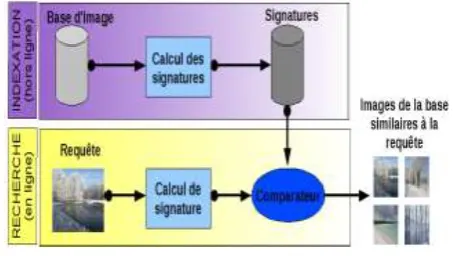
Figure 1. General scheme of content-based image retrieval
IV.
Techniques of CBIR
Many CBIR systems have been developed, but the problem of retrieving images on the basis of their pixel content remains unsolved
1.1 Query techniques or Query based techniques
Options for providing example images to the system include
A preexisting image may be supplied by the user or chosen from a random set.
The user draws a rough approximation of the image they are looking for, for example with blobs of color or general
Shape
A. Semantic retrieval
Semantic retrieval starts with a user making a request like "find pictures of Abraham Lincoln". This type of open-ended task is very difficult for computers to perform - Lincoln may not always be facing the camera or in the same pose. Many CBIR systems therefore generally make use of lower-level features like texture, color, and shape. These features are either used in combination with interfaces that allow easier input of the criteria or with databases that have already been trained to match features (such as faces, fingerprints, or shape matching). However, in general, image retrieval requires human feedback in order to identify higher-level concepts.
B. Relevance feedback (human interaction)
Combining CBIR search techniques available with the wide range of potential users and their intent can be a difficult task. An aspect of making CBIR successful relies entirely on the ability to understand the user intent. CBIR systems can make use of relevance feedback, where the user progressively refines the search results by marking images in the results as "relevant", "not relevant", or "neutral" to the search query, then repeating the search with the new information. Examples OF this type of interface have been developed.
C. Iterative/machine learning
Machine learning and application of iterative techniques are becoming more common in CBIR
D. Other query methods
Other query methods include browsing for example images,avigating customized/hierarchical categories, querying by image region (rather than the entire
image), querying by multiple example images, querying by visual sketch, querying by direct specification of image features, and multimodal queries (e.g. combining touch, voice, etc.)
4.2 Content comparison using image distance
measures
The most common method for comparing two images in content-based image retrieval (typically an example image and an image from the database) is using an image distance measure. An image distance measure compares the similarity of two images in various dimensions such as color, texture, shape, and others. For example, a distance of 0 signifies an exact match with the query, with respect to the dimensions that were considered. As one may intuitively gather, a value greater than 0 indicates various degrees of similarities between the images. Search results then can be sorted based on their distance to the queried image. Many measures of image distance (Similarity Models) have been developed.
A. Color
Computing distance measures based on color similarity is achieved by computing a color histogram for each image that identifies the proportion of pixels within an image holding specific values. Examining images based on the colors they contain is one of the most widely used techniques because it can be completed without regard to image size or orientation. However, research has also attempted to segment color proportion by region and by spatial relationship among several color regions.
B. Texture
Texture measures look for visual patterns in images and how they are spatially defined. Textures are represented by texts which are then placed into a number of sets, depending on how many textures are detected in the image. These sets not only define the texture, but also where in the image the texture is located.
identifying patterns of co-pixel variation and associating them with particular classes of textures such as silky, or rough. Other methods of classifying textures include:
Co-occurrence matrix
Laws texture energy
Wavelet transform
Orthogonal transforms (Discrete moments)
C. Shape
Shape does not refer to the shape of an image but to the shape of a particular region that is being sought out. Shapes will often be determined first applying segmentation or edge detection to an image. Other methods use shape filters to identify given shapes of an image. Shape descriptors may also need to be invariant to translation, rotation, and scale.
4 Applications
Potential uses for CBIR Architectural and engineering design
Art collections
Crime prevention
Geographical information and remote sensing systems
Intellectual property
Medical diagnosis
Military
Photograph archives
V.
CONCLUSION
Content based image retrieval is a technique to retrieve more relevant images. Retrieve similar images only is a standing problem in digital image processing. The performance of CBIR system is improved by introducing relevance feedback techniques in the system. Several feature modification and subspace learning based relevance feedback methods are studied. Various systems use feature modification of each image and tries to retrieve relevant images. But these systems do not suitable for high dimensional images. Several subspace learning relevance feedback methods provides more relevant images compared with feature modification based methods. It also considers local information of images and aims those similar images close to but dissimilar images are far away from query image. This paper focuses on the different relevance feedback techniques in digital image processing.
VI.
REFERENCES
[1].Content-based Multimedia Information Retrieval: State of the Art and Challenges (Original source, 404'd) Content-based Multimedia Information Retrieval: State of the Art and Challenges, Michael Lew, et al., ACM Transactions on Multimedia Computing, Communications, and Applications, pp. 1–19, 2006.
[2].Eakins, John; Graham, Margaret. "Content-based Image Retrieval". University of Northumbria at Newcastle. Retrieved 2014-03-10.
[3].Rui, Yong; Huang, Thomas S.; Chang, Shih-Fu(1999). "Image Retrieval: Current Techniques, Promising Directions, and Open Issues". Journal of Visual Communication and Image Representation. 10: 39–62. doi:10.1006/jvci.1999.0413. Retrieved 2July 2016.
[4].Shapiro, Linda; George Stockman (2001). ComputerVision. Upper Saddle River, NJ: Prentice Hall. ISBN 0-13-030796-3.
[5].Datta, Ritendra; Dhiraj Joshi; Jia Li; James Z. Wang (2008). "Image Retrieval: Ideas, Influences, and Trends of the New Age". ACM Computing
Surveys. 40 (2): 1–60.