International Journal of Scientific Research in Computer Science, Engineering and Information Technology © 2017 IJSRCSEIT | Volume 2 | Issue 4 | ISSN : 2456-3307
Traffic De-Correlation Techniques for Countering A
World Eavesdropper in Wireless Sensor Networks
Yenumal. Sankara Rao*1,
Vinjamuri Gayathri2*1Assistant Professor, Department of MCA, St. Mary’s Group of Institutions, Guntur, Andhra Pradesh, India 2PG Student, Department of MCA, St. Mary’s Group of Institutions, Guntur, Andhra Pradesh, India
ABSTRACT
We address the issue of keeping the induction of relevant data in occasion driven remote sensor systems (WSNs). The issue is considered under a worldwide busybody who investigates low-level RF transmission qualities, for example, the number of transmitted parcels, between bundle times, and movement directionality, to deduce occasion area, its event time, and the sink area. We devise a general activity examination technique for deducing relevant data by connecting transmission times with listening in areas. Our investigation demonstrates that most existing countermeasures either neglect to give satisfactory insurance, or bring about high correspondence and defer overheads. To moderate the effect of spying, we propose asset productive movement standardization plans. In contrast with the cutting edge, our strategies diminish the correspondence overhead by over half, and the end-to end delay by over 30%. To do as such, we segment the WSN to least associated ruling sets that work in a round-robin mold. This enables us to lessen the quantity of movement sources dynamic at a given time, while giving steering ways to any hub in the WSN. We additionally diminish bundle delay by freely planning parcel transferring, without uncovering the movement directionality.
Keywords: Wireless Sensor Networks (WSN), listening stealthily, logical data, security, obscurity, diagram hypothesis.
I.
INTRODUCTION
Wireless sensor networks (wsns) have shown tremendous ability in revolutionizing many packages inclusive of military surveillance, patient monitoring, agriculture and business monitoring, smart homes, cities, and smart infrastructures. Numerous of these packages contain the communiqué of sensitive statistics that have to be protected from unauthorized events. as an example, consider a navy surveillance wsn, deployed to hit upon bodily intrusions in a limited area [21], [25]. the sort of wsn operates as an event-pushed network, whereby detection of a bodily event (e.g., enemy intrusion) triggers the transmission of a record to a sink.
Even though the wsn communications may be secured through preferred cryptographic techniques, the conversation patterns on my own leak contextual records, which refers to event-related parameters that are inferred without ac-cessing the record contents.
event parameters of hobby encompass: (a) the occasion area, (b) the prevalence time of the occasion, (c) the sink region, and (d) the path from the source to the sink [10], [20], [23], [29]. leakage of contex-tual records poses a extreme chance to the wsn mis-sion and operation. within the navy surveillance state of affairs, the adversary can hyperlink the events detected with the aid of the wsn to compromised assets. moreover, he may want to correlate the sink vicinity with the region of a command center, a group chief, or the gateway. destroying the vicinity around the sink ought to have a ways more damaging impact than targeting some other area. comparable operational issues arise in non-public applications including smart houses and body place networks. the wsn conversation patterns may be connected to at least one’s sports, whereabouts, scientific conditions, and other personal information.
transmission attributes, together with inter-packet instances, packet.
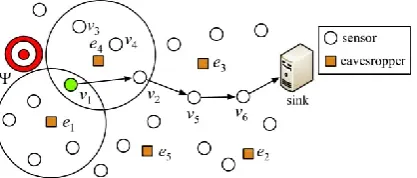
Figure 1: Detection of event by eavesdroppers
Source and goal IDs, and number and sizes of transmitted parcels. For instance, consider the de-tection of occasion by sensor v1 in Fig. 1. Sensor v1 advances an occasion answer to the sink by means of v2, v5, and v6: Transmissions identified with this report are caught by busybodies e1 e5. The occasion area can be approximated to the detecting zone of v1. The last can be assessed as the capture of the gathering regions of e1 and e4, which catch v1's transmissions. Additionally, the occasion event time can be approximated to the catching time of v1's first transmission.
Safeguarding against listening stealthily postures noteworthy difficulties. To start with, busybodies are inactive gadgets that are difficult to recognize. Second, the accessibility of ease ware radio equipment makes it reasonable to de-ploy an expansive number of spies. Third, regardless of the possibility that en-cryption is connected to cover the parcel payload, a few fields in the bundle headers still should be transmitted free for adjust convention operation (e.g., PHY-layer headers utilized for outline recognition, synchronization, and so forth.). These decoded fields encourage precise estimation of transmission qualities.
The issue of safeguarding relevant data pri-vacy has been considered under different ill-disposed scenar-ios. Danger models can be grouped in view of the adver-sary's system see (neighborhood versus worldwide) or the abilities of the listening in gadgets (bundle disentangling, neighborhood ization of the transmission source, and so forth.). Under a neighbourhood version, eavesdroppers are assumed to intercept most effective a fragment of the wsn traffic [12], [16]–[20]. hiding meth-ods encompass random walks, adding of pseudo-resources and pseudo-destinations [14], [17]–[19], [27], advent of routing loops [12], and flooding [12]. those
techniques can handiest provide probabilistic obfuscation ensures, due to the fact eavesdroppers locations are unknown. below a worldwide version, all communications within the wsn are assumed to be intercepted and together analyzed [7], [20], [29]. latest countermeasures conceal traffic related to actual activities by using injecting dummy packets in step with a predefined distribution [4], [20], [23], [28]. in these methods, actual transmissions take place by means of substituting scheduled dummy transmissions, which decorrelates the incidence of an event from the eavesdropped site visitors styles. however, concealment of contextual facts comes at the fee of excessive verbal exchange overhead and multiplied stop-to-quit de-lay for reporting occasions. our contributions: we observe the trouble of resource-efficient traffic randomization for hiding contextual in-formation in occasion-driven wsns, below a global adver-sary. our predominant contributions are summarized as follows:
We present a standard visitors evaluation method for inferring contextual facts that is used as a baseline for comparing strategies with various as-sumptions. our method is predicated on minimum informa-tion, particularly packet transmission time and eaves-losing place.
We endorse traffic normalization strategies that disguise the event place, its occurrence time, and the sink vicinity from worldwide eavesdroppers. as compared to existing processes, our methods reduce the
com-munication and postpone overheads via
proscribing the injected bogus traffic. that is performed by way of construct-ing minimum connected dominating sets (mcdss) and mcdss with shortest paths to the sink (ss-mcdss). we represent the algorithmic complicated-ity for building ss-mcdss and develop green heuristics.
To reduce the forwarding postpone, we layout a charge control scheme that loosely coordinates sensor trans-missions over multi-hop paths with out revealing actual traffic patterns or the traffic directionality.
extracting contextual statistics are supplied in segment 4. in phase five, we introduce our mitigation techniques.
II.
RELATED WORK
Previous artwork on contextual information privateness can be clas-sified primarily based on the privacy type and the eavesdropper abilties. widespread literature critiques can be observed in recent surveys [5], [6]. right here, we gift related paintings for countering nearby and international eavesdroppers. neighborhood eavesdropper: a local adversary can intercept a restrained range of transmissions in the wsn. normally, this adversary deploys a single or some cellular devices that try to localize source with the aid of backtracing the intercepted transmissions. in [16], the authors proposed using a couple of routing paths to save you nearby adver-saries from tracing packets to their source. a sensor with a real packet for transmission forwards it to 1 neighbor at the shortest path to the sink. any overhearing sensor that doesn't belong to the shortest path, broadcasts a dummy packet with some probability. this opportunity is customized to maintain the identical common communique overhead according to sensor.
Mahmoud et al. [17]–[19] considered a enormously-capable adversary that could exactly localize the supply of a transmission using radiometric hardware. they pro-posed the hotspot-finding attack for figuring out regions with high transmission hobby and analytically confirmed that the supply may be placed thru backtracing. to cover the source vicinity, the authors proposed the creation of dummy traffic from sensor clouds that turn out to be lively only for the duration of real transmissions.
In [22], the authors proposed a -stage routing technique called phantom flooding. inside the first stage, the source divides its associates into units, located in opposite guidelines (e.g., north-south). the supply for-wards a packet to a randomly selected neighbor in a single course. this neighbor keeps to forward the packet in the identical way, however in the opposite direction. the process is repeated until h hops are traversed. inside the 2d degree, the packet is forwarded to the sink the use of probabilistic flooding. in [14], [15], [27], real packets are diverted to a fake source placed numerous hops away, the usage of unicast transmissions. the fake source forwards packets to the sink using flooding or over the shortest path. these works vary in the choice
system of the fake source. in megastar [15], an intermediate node is chosen from a sink toroidal place. this region forms a ring around the sink, beginning from radius r and ending at r. to report an event, the supply routes packets to a random destination in the toroidal place. the intermediate faux source relays the packet to the sink via the shortest course.
International eavesdropper: in [20] the authors proposed site visitors normalization techniques: periodic series and supply simulation. in periodic series, each sensor generates bogus packets at a set charge. actual packets are transmitted via substituting bogus ones, whilst hold-ing the equal total price (bogus and real). this technique hides the source place, the route to the sink, and the sink area, at the cost of big communi-cation and put off overheads. in the source simulation approach, the communique overhead is decreased by using proscribing dummy site visitors to a subset of fake resources. the fake supply vicinity is selected to comply with the distribution of real activities. but, the spatial and temporal occasion distribution ought to be recognised a priori.
The authors in [23] proposed the transmission of bogus traffic by means of all sensors the usage of a pre-determined opportunity distribution. to lessen the stop-to-end put off, sensors with real packets “rush” their
transmissions rela-tive to scheduled dummy
transmissions. future dummy transmissions are not on time to atone for the rushed real packets. this method is not effective while multiple actual packets should be transmitted via the equal source. similarly, the authors in [2] proved that the quick-long inter-packet time styles discovered due to the rushed transmissions can be used to become aware of time periods that incorporate real packets. to deal with this vulnerability, they delivered faux quick-lengthy styles.
(tfs), proxies are organized as a tree rooted on the sink to expedite packet delivery and decrease the filtered dummy packets. how-ever, tfs reveals the sink vicinity. in [4], the authors proposed the premier filtering scheme (ofs), wherein proxies are prepared into a directed graph as opposed to a tree. this allows every proxy to filter packets from every proxy as well as from man or woman sensors.
An aggregation-primarily based scheme changed into added in [28]. the wsn is split into clusters, each with one clus-terhead (ch). the chs are prepared in a tree rooted on the sink. every sensor transmits dummy visitors to its respective ch. the ch is liable for filtering dummy packets, aggregating real packets, and relaying them to the sink. this method does now not conceal the sink location, which corresponds to the foundation of the ch tree.
III.
MACHINE AND HOSTILE VERSION
Machine version : we take into account a hard and fast of sensors v; deployed to experience physical occasions within a given area. while a sensor detects an event of hobby, it sends a record to the sink through a unmarried-hop or a multi-hop direction (relying on the relative sensor-sink position). the confidentiality of the record is blanketed the usage of general cryptographic techniques. packet transmissions are re-encrypted on a in step with-hop foundation to prevent tracing of relayed packets [3], [17], [19]. sensors are privy to their one- and -hop acquaintances by the use of a neighbor discovery provider [24]. the sensor verbal exchange areas might be heterogeneous and comply with any version. the wsn is loosely synchronized to a not unusual time reference [1], [26]. the most network-extensive synchronization error is t: ultimately, the wi-fi medium is thought to be lossy opposed version: we undertake a international opposed model, much like the only assumed in [2], [20], [23], [29]. The adversary deploys a set of eavesdropping devices a that passively reveal all wsn transmissions. an eaves-dropper e 2 a; placed at `e, has a reception area ce, that can have any form (reception areas may be heterogeneous and need no longer follow the unit-disc version). we emphasize that this worldwide antagonistic version is a relevant one even if a fragment of the wsn transmis-sions can be intercepted. inside the absence of eavesdropper vicinity records, one has to account for all feasible eavesdropping places to provide privacy ensures, that's
equivalent to a global antagonistic version. the adversary collectively analyzes the eavesdropped traffic at a fusion middle to infer the subsequent data: (a) the region of a physical event, (b) the occurrence time of that occasion, and (c) the sink location.
To formally outline the statistics at the disposal of the adversary, we introduce the notions of a transmission set and an statement set. the transmission set is a fact-ful illustration of all wsn transmissions taking location over a period of time. the observation set represents the actual records this is captured via the adversary for a specific eavesdropper deployment and assumed functionality. especially, every packet pi is associated with
A unique signature (pi) = fh(pi); t(pi); `(pi)g; where h(pi) is a hash digest of pi; t(pi) is the transmission time of pi, and `(pi) is the region of the originating sensor. the signature (pi) constitutes the floor truth for the transmission of pi. this ground reality might also differ from the observation of pi by using an eavesdropper e, who tags pi with tage(pi) = fh(pi); t(pi); `eg. a tage(pi) differs from (pi) inside the place attributed to the source of pi. instead of `(pi), an eavesdropper e could as a minimum characteristic pi to its personal place `e and approximate `(pi) with accuracy identical to e’s reception place ce. the use of the packet signatures and tags, we define the transmission set and observation set as follows.
Definition 1 (transmission set): for a sensor v 2 v, the transmission set v(w ); defined over an epoch w is:
Definition 2 (Observation Set): For an eavesdropper e, the observation set Oe(W ) over W; is:
Definition 3 (Privacy Distance): Let 2 Rn be some private information of interest, estimated as 2 Rn based on eavesdropping. The privacy distance of is
where s( ) is the Euclidean distance between and 2 ; and P ( ) a probability measure over the points in .
We note that Euclidean distance is a natural measure for evaluating location privacy as it yields the straight-line distance between the source location and its estimate in any dimensional space. As sn example, ; 2 R2 for when location privacy is measured and sensors are deployed in two dimensions. For the WSN of Fig. 1, v1 reports the occurrence of event during epoch W by transmitting v1 (W ) to the sink. Eavesdroppers e1 and e4 capture Oe1 (W ) and Oe4 (W ) respectively. By jointly analyzing the collected observation sets, the adversary localizes the event source to = Ce1 Ce4 . All points within are assumed equally likely event sources (there is no further information to bias the event location within ). Therefore P ( ) = 1=area( ). For this case,
For a more meaningful evaluation of ; it must be normalized to some application parameter. We leave the normalization function up to the application designer. In our evaluations, we have opted to normalize with the sensor communication range.
IV.
TRAFFIC ANALYSIS
This segment, we propose a general activity analy-sister strategy for deriving relevant data. Our technique is implied as a benchmark for assessing the per-formance of insurance instruments with changing un-derlying suppositions. Along these lines, it depends on insignificant data, to be specific the parcel capture times and busybodies' areas. Our technique is freethinker to the system topology (however it is induced) and to the spe-cific instrument used to counter activity examination, with the goal that it can be extensively connected. We underscore that our objective is not to make the most refined assault. Such an assault is very subject to the insurance component and may require extra from the earlier learning. For instance, the techniques in [2], [23] utilize complex
sta-tistical deduction strategies to recognize genuine occasions. Be that as it may, these are particular to factual secrecy approaches and accept the from the earlier learning of the likelihood dis-tribution used to draw between bundle times. Our strategy continues in the two phases: a movement purifying stage took after by a logical data surmising stage. Since our strategy is connected on a for each age premise, we exclude the W documentation when it is excess.
4.1 Traffic Cleansing
The perception sets recorded by the scattered overhang droppers are probably going to contain copy labels. This is on account of more than one busybodies may catch a similar bundle transmission. In the movement purging stage,
The foe utilizes copy labels in the perception set O to get a superior estimation of transmission set.
4.2 Contextual Information Inference
In the second stage, the adversary performs timing anal-ysis on O. The adversary takes advantage of the bursty nature of traffic in event-driven WSNs to link traffic streams with physical events. We organize tags in O into disjoint sets Y1; Y2; : : :, where Yj is attributed to event j (j = 1; 2; : : :). The division depends on the temporal and spatial tag correlation. For instance, consider packets p1and p2; from v and u in V: These packets are assigned to the same event if jt(p1) t(p2)j is between certain bounds dependent on the distance between u and v. Details are given in Algorithm 2.
To estimate the number of sensors associated with each label and the number of packets x that report . The latter is estimated as the size of the smallest transmission set in Yj. Once the number of sensors per label is found, a topology approximation is obtained by establishing links between labels. Details are given in Algorithm 3.
The value of n^v, as estimated in Step 2, is incorrect if there are inactive sensors in the label area (e.g., v4 in Fig. 2), or if a single sensor concurrently relays traffic of more than one events. Finally, based on sets Yj, the adversary can infer the source and sink location, the routing path to the sink, and the event’s occurrence time associated with event j; using Algorithm 4.
V.
EFFICIENT TRAFFIC NORMALIZATIN
To counter traffic analysis, maximum current solutions in-troduce bogus traffic at every sensor [4], [20], [23], [29]. this is due to the fact all sensors are capacity resources and the eavesdroppers’ locations are unknown. furthermore, the normalized visitors styles can cause the accumulation of packet postpone on a in step with-hop foundation. for instance, take into account the route p(s; d) shown in fig. 3. anticipate that the traffic fee of each sensor is normalized to at least one packet per t . the worst-case forwarding postpone is same to jp(s; d)jt , wherein jp(s; d)j is the course duration in hops. this postpone happens whilst downstream sensors transmit in advance than upstream ones within every interval. inside the great case, the forwarding delay reduces to t , whilst upstream sensors transmit earlier than downstream. proposition 1 indicates that a packet can be forwarded over much less than two hops in step with t , on common.
Proposition 1: when sensors transmit one packet uni-formly according to c language t , the common range of hops that a packet can traverse in line with t is 1.72.
5.1.1 network partition–units of minimum size
We first consider the partition of v into mcdss. such a partition is not assured to exist for arbitrary graphs (e.g., a topology with a minimal vertex cut of 1). furthermore, the hassle of computing a single mcds is np-entire [9]. to address those limitations, we loosen up the partition requirement and permit nodes to be a part of a couple of mcdss.
a minimum DS based on a well-known approximation (the problem of computing a minimum DS is also NP-complete [9]). In Stage 2, we connect the DS to generate a CDS. The nodes selected to connect the DS minimize the CDS size in a greedy fashion. In Stage 3, we repeat stages 1 and 2 to obtain a partition of V to CDSs.
Message Complexity Analysis
In this area, we break down the message many-sided quality for parceling the WSN to MCDS and SS-MCDSs (algo-rithms 5 and 6, separately).
Recommendation 4: The message multifaceted nature for parcelling the WSN to MCDSs utilizing Algorithm 5 is O( max3jVj). Parceling the WSN to SS-MCDSs (Algorithm 6) yields a similar multifaceted nature.
Verification: The evidence is given in Appendix D. We watch that calculations 5 and 6 have direct mes-sage multifaceted nature to the measure of the WSN. The
system parcel overhead is of an indistinguishable request from the repeating overhead to normalize movement designs. The WSN needs to transmit jVj false messages occasionally to standardize the activity designs at every sensor, while the WSN segment to subgraphs must be connected just once.
5.1.2 Privacy Analysis
In this section, we analyze the privacy achieved by the MCDS partition. This analysis is performed assuming that the adversary is fully aware of the application of the MCDS partition, the MCDS rotation, and the normalization of the traffic in active sensors. Let an event occur at time t( ) 2 W and be reported by a sensor v 2 Di who is located at `v:
Source location and occurrence time privacy:
To report , sensor v replaces dummy packets with real ones, while maintaining its transmission schedule. Note that real packets are indistinguishable from dummy ones due to the application of per-hop packet re-encryption. Downstream sensors receiving v’s report continue to for-ward it by substituting dummy packets with real ones. By applying Algorithm 1, the eavesdropper can reduce the locations of the dummy transmissions to location ap-proximation areas of the sensors in Di. However, events cannot be meaningfully distinguished by the application of Algorithm 2. Moreover, the set of candidate sources cannot be reduced below the set of sensors in Di.
5.2 Direction-Free Assignment Scheme (DFAS)
ALGORITHM DFA
5.3 Routing Over Multiple CDSs
CDSs are rotated periodically per epoch to allow all sensors report events to the sink. A real packet m that originated from v 2 Di, may be in transit while another CDS Dj becomes active. The CDS property guarantees that at least one node in Dj would overhear the last relay of m by a node in Di. We develop a simple routing scheme to forward packets over multiple CDSs. Here we assume that Di is active during epoch Wk; and Dj in the next epoch Wk+1: The steps of our scheme are as follows.
A l g o r i t h m : M u l t i p l e C D S F o r w a r d i n g S c h e m e ( M C F S )
VI.
CONCLUSION
We addressed the hassle of contextual data privateness in wsns under a worldwide eavesdropper. we pre-sented a wellknown site visitors analysis technique for collectively processing the packet interception times and eavesdrop-in line with places at a fusion middle. the technique is agnostic to the safety mechanism and may be used as a base-line for comparing extraordinary schemes. to mitigate international eavesdropping, we proposed traffic normalization meth-ods that alter the sensor site visitors styles of a subset of sensors that form mcdss. we evolved two algorithms for partitioning the wsn to mcdss and ss-mcdss and evaluated their
overall performance thru simulations. compared to previous techniques able to protecting against a international eavesdropper, we confirmed that restricting the dummy traf-fic transmissions to mcds nodes, reduces the communi-cation overhead due to traffic normalization. we further proposed a unfastened transmission coordination scheme that reduces the end-to-give up delay for reporting activities
VII.
REFERENCES
[1] M. Akhlaq and T. R. Sheltami. RTSP: An accurate and energy-efficient protocol for clock synchronization in wsns. IEEE Trans-actions on Instrumentation and Measurement, 62(3):578– 589, 2013.
[2] B. Alomair, A. Clark, J. Cuellar, and R. Poovendran. Toward a statistical framework for source anonymity in sensor networks. IEEE Transactions on Mobile Computing, 12(2):248– 260, 2013.
[3] F. Armknecht, J. Girao, A. Matos, and R. Aguiar. Who said that? privacy at the link layer. In Proc. of the INFOCOM Conference, pages 2521–2525, 2007.
[4] K. Bicakci, H. Gultekin, B. Tavli, and I. Bagci. Maximizing life-time of event-unobservable wireless sensor networks. Computer Standards & Interfaces, 33(4):401–410, 2011.
[5] G. Chinnu and N. Dhinakaran. Protecting location privacy in wireless sensor networks against a local eavesdropper–a survey. International Journal of Computer Applications, 56(5):25–47, 2012.
[6] M. Conti, J. Willemsen, and B. Crispo. Providing source location privacy in wireless sensor networks: A survey. Communications Surveys Tutorials, 15(3):1238–1280, 2013.
[7] J. Deng, R. Han, and S. Mishra. Decorrelating wireless sensor network traffic to inhibit traffic analysis attacks. Pervasive and Mobile Computing, 2(2):159–186, 2006.
[8] M. Fruth. Probabilistic model checking of contention resolution in the IEEE 802.15.4 low-rate wireless personal area network protocol. In Proc. of the Symp. on Leveraging Applications of Formal Methods, Verification and Validation, pages 290–297, 2006.
[10] B. Greenstein, D. McCoy, J. Pang, T. Kohno, S. Seshan, and D. Wetherall. Improving wireless privacy with an identifier-free link layer protocol. In Proc. of the ACM Conference on Mobile Systems, Spplications, and Services, pages 40–53, 2008.
[11] J. Gross and J. Yellen. Handbook of Graph Theory. CRC, 2004.
[12] A. Jhumka, M. Leeke, and S. Shrestha. On the use of fake sources for source location privacy: Trade-offs between energy and privacy. The Computer Journal, 54(6):860–874, 2011.
[13] L. Jia, R. Rajaraman, and T. Suel. An efficient distributed algorithm for constructing small dominating sets. Distributed Computing, 15(4):193–205, 2002.
[14] Y. Li and J. Ren. Source-location privacy through dynamic routing in wireless sensor networks. In Proc. of the INFOCOM Conference, pages 1–9, 2010.
[15] L. Lightfoot, Y. Li, and J. Ren. Preserving source-location privacy in wireless sensor network using STaR routing. In Proc. of the IEEE GLOBECOM conference, pages 1–5, 2010. [16] X. Luo, X. Ji, and M. Park. Location privacy
against traffic analysis attacks in wireless sensor networks. In Proc. of the IEEE Conference on Information Science and Applications, pages 1–6, 2010.
[17] M. Mahmoud and X. Shen. A cloud-based scheme for protecting source-location privacy against hotspot-locating attack in wireless sensor networks. IEEE Transactions on Parallel and Distributed Systems, 23(10):1805–1818, 2012. [18] M. Mahmoud and X. Shen. A novel
traffic-analysis back tracing attack for locating source nodes in wireless sensor networks. In Proc. of the IEEE ICC Conference, pages 939–943, 2012. [19] M. Mahmoud and X. Shen. Secure and efficient
source location privacy-preserving scheme for wireless sensor networks. In Proc. of the IEEE ICC Conference, pages 1123–1127, 2012.
[20] K. Mehta, D. Liu, and M. Wright. Protecting location privacy in sensor networks against a global eavesdropper. IEEE Transactions on Mobile Computing, 11(2):320–336, 2012.
[21] D. N. Ngo. Deployment of 802.15.4 sensor networks for C4ISR operations. Technical report, DTIC Document, 2006.
[22] C. Ozturk, Y. Zhang, and W. Trappe. Source-location privacy in energy-constrained sensor network routing. In Proc. of the ACM SASN Workshop, pages 88–93, 2004.
[23] M. Shao, Y. Yang, S. Zhu, and G. Cao. Towards statistically strong source anonymity for sensor networks. In Proc. of the INFOCOM Conference, pages 51–55, 2008.
[24] K. Sohrabi, J. Gao, V. Ailawadhi, and G. Pottie. Protocols for self-organization of a wireless sensor network. IEEE Personal Communications, 7(5):16–27, 2000.