A Study of Novice Programmer
Performance and Programming Pedagogy
Michael Edwin Dacey BEng MSc
Director of Studies: Dr Carlene Campbell
Supervised by: Dr Kevin Palmer,
Dr Glenn Jenkins
Submitted in partial fulfilment for the award of
the degree of Doctor of Philosophy
University of Wales Trinity St David
i
Author’s Declaration
This work has not previously been accepted in substance for any degree and is not being concurrently submitted in candidature for any degree.
Signed ... (candidate)
Date
17/09/18
STATEMENT 1
This thesis is the result of my own investigations, except where otherwise stated. Where correction services have been used the extent and nature of the correction is clearly marked in a footnote(s). Other sources are acknowledged by footnotes giving explicit references. A bibliography is appended.
Signed ... (candidate)
Date
17/09/18
STATEMENT 2
I hereby give consent for my thesis, if accepted, to be available for photocopying and for inter-library loan, and for the title and summary to be made available to outside organisations.
Signed ... (candidate)
Date
17/09/18
STATEMENT 3
I hereby give consent for my thesis, if accepted, to be available for deposit in the University’s digital repository.
Signed ... (candidate)
ii
Abstract
Identifying and mitigating the difficulties experienced by novice programmers is an active area of research that has embraced a number of research areas. The aim of this research was to perform a holistic study into the causes of poor performance in novice programmers and to develop teaching approaches to mitigate them. A grounded action methodology was adopted to enable the primary concepts of programming cognitive psychology and their relationships to be established, in a systematic and formal manner. To further investigate novice programmer behaviour, two sub-studies were conducted into programming performance and ability.
The first sub-study was a novel application of the FP-Tree algorithm to determine if novice programmers demonstrated predictable patterns of behaviour. This was the first study to data mine programming behavioural characteristics rather than the learner’s background information such as age and gender. Using the algorithm, patterns of behaviour were generated and associated with the students’ ability. No patterns of behaviour were identified and it was not possible to predict student results using this method. This suggests that novice programmers demonstrate no set patterns of programming behaviour that can be used determine their ability, although problem solving was found to be an important characteristic. Therefore, there was no evidence that performance could be improved by adopting pedagogies to promote simple changes in programming behaviour beyond the provision of specific problem solving instruction. A second sub-study was conducted using Raven’s Matrices which determined that cognitive psychology, specifically working memory, played an important role in novice programmer ability. The implication was that programming pedagogies must take into consideration the cognitive psychology of programming and the cognitive load imposed on learners.
Abstracted Construct Instruction was developed based on these findings and forms a new pedagogy for teaching programming that promotes the recall of abstract patterns while reducing the cognitive demands associated with developing code. Cognitive load is determined by the student’s ability to ignore irrelevant surface features of the written problem and to cross-reference between the problem domain and their mental program model. The former is dealt with by producing tersely written exercises to eliminate distractors, while for the latter the teaching of problem solving should be delayed until the student’s program model is formed. While this does delay the development of problem solving skills, the problem solving abilities of students taught using this pedagogy were found to be comparable with students taught using a more traditional approach. Furthermore, monitoring students’ understanding of these patterns enabled micro-management of the learning process, and hence explanations were provided for novice behaviour such as difficulties using arrays, inert knowledge and “code thrashing”.
For teaching more complex problem solving, scaffolding of practice was investigated through a program framework that could be developed in stages by the students. However, personalising the level of scaffolding required was complicated and found to be difficult to achieve in practice.
In both cases, these new teaching approaches evolved as part of a grounded theory study and a clear progression of teaching practice was demonstrated with appropriate evaluation at each stage in accordance with action research.
iii
Table of Contents
Author’s Declaration ... i
Abstract ... ii
List of Tables ... viii
List of Figures ... x
1 Introduction ... 1
2 Literature Review ... 7
2.1 Abstraction in Programming ... 8
2.2 Cognitive Psychology ... 11
2.2.1 Short Term Memory (STM) ... 12
2.2.2 Working Memory (WM) ... 13
2.2.3 Episodic Memory (Long Term Memory) ... 19
2.2.4 Semantic Memory (Long Term Memory) ... 20
2.3 Cognitive Psychology and Programming ... 22
2.3.1 Perceptual Learning and Teaching ... 27
2.4 Software Comprehension ... 28
2.4.1 Pennington’s Program Model: Programming Plan Knowledge ... 31
2.4.2 Pennington’s Situation Model: Domain Plan Knowledge ... 33
2.4.3 Program Goals ... 34
2.4.4 Cues or Code Beacons ... 35
2.4.5 Cognitive Strategies used to Read and Write Code ... 37
2.4.6 The Nature of Expertise ... 43
2.5 Problem Solving Skills ... 46
2.6 The Relationship between Problem Solving and Programming... 52
2.6.1 The Notional Machine ... 54
2.6.2 The Situation Model and the Problem Statement ... 55
iv
2.6.4 Divide and Conquer ... 58
2.7 Taxonomies of learning behaviours ... 59
2.7.1 Bloom’s Taxonomy ... 59
2.7.2 Structure of Observed Learning Outcomes (SOLO) Taxonomy ... 62
2.7.3 Software Comprehension, Perceptual Learning and Teaching ... 64
2.8 Teaching Approaches ... 69
2.8.1 Constructivism ... 69
2.8.2 Moderate Constructivism ... 73
2.8.3 Constructivism and Programming ... 76
2.8.4 Scaffolding ... 77
2.8.5 Problem-Based Learning ... 81
2.9 Overview of Teaching Related Decisions ... 84
2.10 Summary of Literature Review ... 86
3 Research Methodology ... 88
3.1 Grounded Theory ... 88
3.2 Action Research ... 91
3.3 Grounded Action Research... 97
3.4 The Research Process ... 98
4 Grounded Theory Analysis ...103
4.1 Research Phases ...113
5 Identifying Common Indicators of Programming Success during Continuous Practice 115 5.1 Methodology ...116
5.2 The Worksheets ...119
5.3 The Performance Metrics ...122
5.4 Analysis of Metrics ...123
v
5.6 Results of Mining Worksheet Data ...130
5.6.1 Analysis of Results ...131
5.6.2 Relationship between Final Grade and Worksheet Metrics ...132
5.7 Confirmation Trial ...135
5.8 Conclusions ...136
6 Predicting Potential Programming Success ...138
6.1 The Testing Methodology ...138
6.2 Results of Programming and Raven Tests ...141
6.2.1 A Comparison of Code Test Results with Final Assignment Marks ...143
6.2.2 A Comparison of Code Test and Raven Matrices Test Results ...149
6.2.3 Analysis of Individual Questions ...157
6.3 Conclusions ...158
7 Pattern-Based Learning in Programming ...159
7.1 The Proposed Abstracted Construct Instruction Pedagogy ...163
7.2 Teaching Problem Solving Skills ...170
7.2.1 Incomplete Solutions are Acceptable ...177
7.3 Methodology ...177
7.4 Observations during ACI ...178
7.5 Observations during Problem Solving ...181
7.6 Student Test Results ...182
7.6.1 Initial Assessment of Variable Knowledge ...184
7.6.2 Assessment of Program Branch Knowledge ...184
7.6.3 Assessment of Loop and Array Knowledge ...185
7.6.4 Assessment of Function and Problem Solving Knowledge ...185
7.7 Student Interviews ...189
7.7.1 Analysis of ACI Interviews ...190
vi
7.8 Conclusions ...193
8 Teaching Advanced Programming Problem Solving Skills for Programming ...197
8.1 A Structured Problem Solving Approach to Teaching Programming ...197
8.1.1 What is a Structured Problem Based Programming Exercise? ...198
8.2 Methodology ...201
8.3 The Framework ...201
8.4 Instructional Scaffolding for Teaching Using a Framework ...203
8.5 Survey Results ...204
8.6 Conclusions ...211
9 Discussion of Action Research and Results ...212
9.1 Suggested Structure for Programming Content within a Computer Science Programme ...221
10 Conclusions and Future Work ...224
10.1 Conclusions from Action Research ...228
10.1.1 Teaching Using Worksheets ...228
10.1.2 Accelerated Teaching of Computational Thinking ...228
10.1.3 Abstracted Construct Instruction Pedagogy ...229
10.1.4 Structured Problem Based Learning Pedagogy ...229
10.2 Future Work ...230
10.2.1 Further Considerations Suggested by Related Research ...232
References ...236
Appendices ...253
Appendix 1 Computational Thinking Test ...253
Appendix 2 ACI and Problem Solving Tests ...257
Test 1: Test for Assessing Student’s Knowledge of Variables ...257
Test 2: Test for Assessing Student’s Knowledge of Branch Statements...257
vii Test 4: Comparison Test for ACI and Non-ACI Focus Group Prior to Problem Solving Instruction ...262 Test 5: Comparison Test for ACI and Non-ACI Focus Group Post Problem Solving Instruction ...263 Appendix 3 Structured Problem based Programming Online Survey ...265
viii
List of Tables
Table 2-1 Blooms Taxonomy ... 59
Table 2-2 Revised Blooms Taxonomy ... 60
Table 2-3 The SOLO Taxonomy ... 62
Table 2-4 SOLO Levels with Additional Sub-Levels ... 64
Table 2-5 Observations based on the Software Comprehension Models from the work of Schulte et al [120] ... 66
Table 2-6 Ben-Ari’s Phenomena of Computer Science Education [22] ... 76
Table 2-7 The Five Criteria for Effective Instructional Scaffolding ... 78
Table 4-1 Example of Dimension in Records Contained in a Database ...104
Table 4-2 Dimension Frequency List ...105
Table 5-1 Programming Features and Metrics ...123
Table 6-1 Results of Coding and Raven Test (Final Assignment Mark also shown) ...141
Table 6-2 Comparison of Distributions of Code and Assignment Results ...146
Table 6-3 Sign Test Results ...147
Table 6-4 Non Attempts and Effect on Sample Sizes ...148
Table 6-5 Centroid Values from the Cluster Analysis of the Overall Code Test Results With Respect to the Final Assignment Marks Obtained ...149
Table 6-6 Table Produced by Two Way Chi Squared Test ...153
Table 6-7 Effect Sizes for Cramer’s V [339] ...155
Table 6-8 Correlations Obtained for Individual Questions in Code Test ...157
Table 7-1 Wallingford’s Programming Patterns [347] ...161
Table 7-2 Course Outline based on ACI ...165
Table 7-3 Problem Solving Techniques ...171
Table 7-4 Map of Current Student Knowledge ...174
Table 7-5 Structure of Student Testing and Results ...182
Table 7-6 Student Error Counts...184
Table 7-7 Final Test Marks for Focus Groups ...189
Table 7-8 Student Experience Prior to Course ...190
Table 7-9 List of ACI Interview Questions ...190
Table 7-10 List of Problem Solving Interview Questions ...192
Table 8-1 The Potential Influence of Different Theories of Aptitude[373] ...203
ix Table 8-3 Student Response to Q16: Review of Provided Solutions ...209 Table 9-1 A Comparison of the Traditional to the ACI Programming Pedagogical Approach ...219 Table 9-2 Summary of Benefits of Structured Problem Solving ...221
x
List of Figures
Figure 2-1 Overview of Concepts ... 7
Figure 2-2 The Baddeley and Hitch Working Memory Model ... 13
Figure 2-3 Overview of Working Memory Concepts ... 17
Figure 2-4 Example of a Raven Matrix with Answer ... 18
Figure 2-5 ACT-R Encoding of the Letter H [84] ... 21
Figure 2-6 Information Processing [30] ... 22
Figure 2-7 Example Code for Sum of Array ... 26
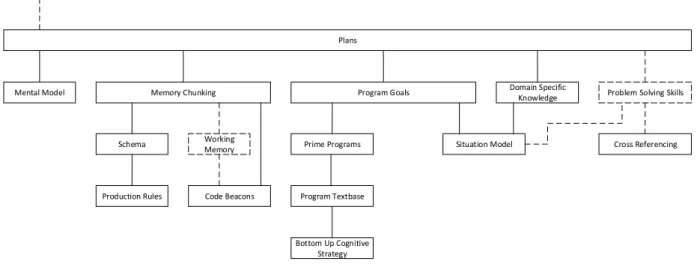
Figure 2-8 Overview of Memory Chunking and Related Concepts ... 27
Figure 2-9 Generic Software Comprehension Model ... 28
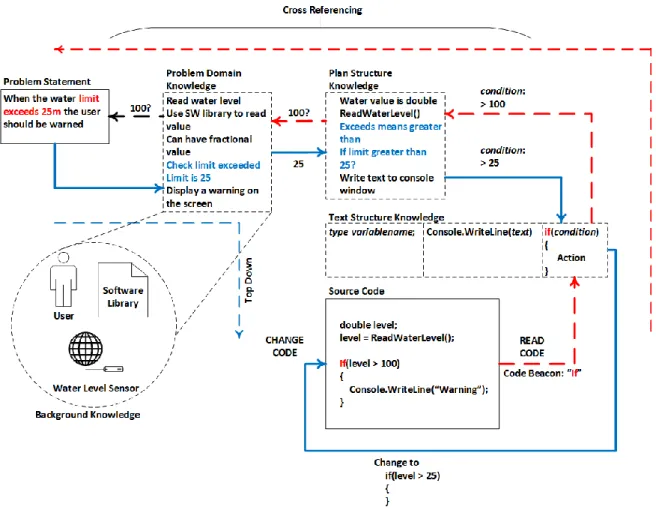
Figure 2-10 Model of Program Understanding in which Developers Search, Relate and Collect Information. [125] ... 36
Figure 2-11 Cognitive Strategy for Reading Code ... 38
Figure 2-12 Cognitive Strategy Concentrating on Data Flow when Writing Code ... 39
Figure 2-13 Cognitive Strategy for Modifying Code Showing Cross-Referencing Behaviour ... 40
Figure 2-14 Overview of Software Comprehension Concepts ... 43
Figure 2-15 Code Snippet for a for-loop ... 48
Figure 2-16 Overview of Problem Solving Skills and Software Comprehension Concepts.. 53
Figure 2-17 An “explain in plain English” Question [137] ... 63
Figure 2-18 The Block Model [222] ... 67
Figure 3-1 The Paradigm Model [283] ... 91
Figure 3-2 Five Stages of the Action Research Cycle ... 94
Figure 3-3 Generalized Documentation of Research ... 95
Figure 3-4 Evaluating an Action Research Report ... 96
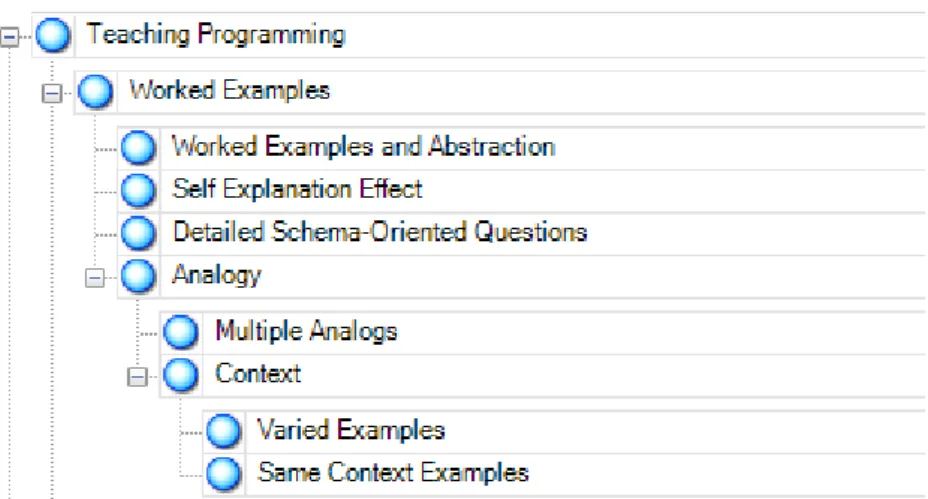
Figure 3-5 A Fragment of the NVivo Tree Structure Arranged to Show the Node Relationships ...100
Figure 3-6 Dimensional Analysis in NVivo ...101
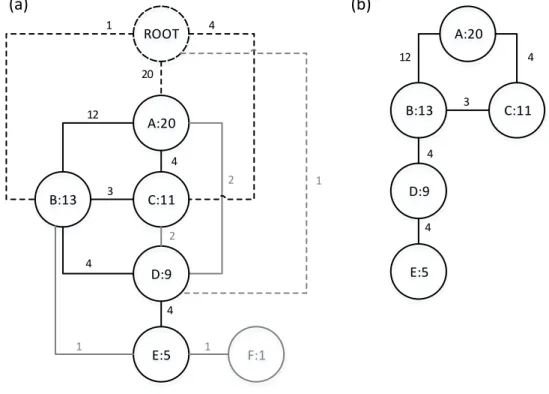
Figure 4-1 The FP-Tree (shaded nodes and edges fall below the threshold and are removed) ...106
Figure 4-2 Example Weighted Graph ...108
Figure 4-3 The Node, Number of Edges and their Associated Support (frequency) ...110
xi
Figure 4-5 Graph produced with edge threshold value of 6 ...111
Figure 5-1 Overall End of Year Course Marks obtained by the Students ...117
Figure 5-2 Grades Awarded to Students for Each Worksheet ...118
Figure 5-3 Student Numbers across Worksheets ...119
Figure 5-4 Relationship between Lectures, Tasks and Worksheets (derived from [324]) 120 Figure 5-5 A Typical Worksheet Exercise ...121
Figure 5-6 An Example of a Variable Table ...121
Figure 5-7 A Task Introducing Function Declaration ...122
Figure 5-8 Analysis of the Metrics for Good and Average Students ...125
Figure 5-9 Analysis of the Best Solution and Problem Solving Metrics ...126
Figure 5-10 The Average Students Coding Performance ...127
Figure 5-11 Comparison of Metric Frequency Counts within Itemsets at K=5 for Students Gaining Good, Average and Poor Grades in a Worksheet ...133
Figure 5-12 Comparison of Metric Frequency Counts within Itemsets at K=5 for Students Obtaining Good, Average and Poor Final Grades ...134
Figure 5-13 Overall End of Year Course Marks Obtained by the Students in Confirmation Trial ...135
Figure 5-14 Grades Awarded to Students for Each Worksheet in Confirmation Trial...135
Figure 5-15 Analysis of the Problem Solving Metric in Confirmation Trial ...136
Figure 6-1 Assessment of Natural Language Reasoning and Structured Logical Thinking 139 Figure 6-2 Extract from Question 2 Flow Chart Requirements Presented to Student ...139
Figure 6-3 Extract from Question 3 ...140
Figure 6-4 Distribution of Test Scores ...142
Figure 6-5 Distribution of Test Scores using Larger Bin Size ...142
Figure 6-6 Distribution of Overall Code Test Results ...143
Figure 6-7 Normal Q-Q Plot of Overall Code Test Results ...144
Figure 6-8 Distribution of Assignment Marks (Excluding Zeroes)...144
Figure 6-9 Q-Q Plot of Assignment Results (Excluding Zeroes) ...145
Figure 6-10 Distribution of the Differences between Overall Code Test and Assignment Results ...147
Figure 6-11 Cluster Analysis of Code Test and Assignment Results ...148 Figure 6-12 Comparison of Raven APM Scores to Student Results using APM 14 Norms 150 Figure 6-13 Comparison of Raven APM Scores to Student Results using APM 13 Norms 152
xii
Figure 6-14 Normal Q-Q Plots form Raven APM13 and APM14 Tests ...153
Figure 6-15 Graphical Representation of Table Produced by the Two Way Chi-Squared Test ...154
Figure 6-16 Graphical Representation of Table Produced by the Two Way Chi-Squared Test for Reduced Categories ...156
Figure 6-17 Comparison of Bimodal Distributions of Raven vs Code Test ...156
Figure 6-18 Results for Question 4 in Code Test Correlated Against Raven Matrices Scores ...157
Figure 7-1 The Counting Pattern ...161
Figure 7-2 The Abstract Construct Patterns for Variables ...165
Figure 7-3 Initial Exercises in Variable Declaration and Initialisation ...166
Figure 7-4 An Exercise for Using a Branch Statement ...167
Figure 7-5 The Generic Function Pattern ...169
Figure 7-6 An Exercise in Writing a Function ...169
Figure 7-7 Two Exercises for Demonstrating the Use of Nested Functions ...169
Figure 7-8 A Presentation Slide Illustrating the Mapping between Student’s Knowledge Domain and the Problem Space...175
Figure 7-9 Number Range Condition Test ...179
Figure 7-10 Example of Student’s Incorrect Use of Array in Counting Down Loop ...186
Figure 7-11 Student Analysis of Lottery Ball Problem ...187
Figure 7-12 Student Analysis of Reversing Array of Numbers ...188
Figure 8-1 Comparison of Student Responses to the Presentation of Problems ...208
Figure 8-2 Comparison of Student Responses to the Provided Learning Material ...210
Figure 8-3 Comparison of Student Reflection ...210
Figure 9-1 Suggested Overall Structure of Programming Content in a Computer Science Degree ...223
1
1
Introduction
As Sheared, et al. [1] have observed:
“Programming is clearly a difficult topic for many students, and is understandably a key area of computing education research.”
An important starting point in grounded theory study is maintaining an open mind and avoid imposing preconceptions on the development of the theory while “…ensuring that the knowledge and experience you possess is used effectively…”[2]. A researcher must begin by acknowledging their existing assumptions, experience and knowledge of the area as an “effective mechanism for establishing where you stand in relation to your proposed study”[3]. In the author’s experience over a number of years of teaching programming to first year undergraduate students the bimodal nature of student results has been quite notable. This reflects the similar experiences of many teachers across many courses across institutions, and in research studies[4]. For a significant percentage of students the art of programming proves overly challenging. The problems of high failure rate was the subject of a detailed investigation in 2001 by the McCracken working group in what has become the most cited paper [5] in the SIGCSE section in the ACM library [6]. In this paper, the McCracken working group assessed the programming ability of a large number of first year computer science students across four universities. The students were required to write programs that parsed and evaluated arithmetic operations. Most of the students performed poorly, with the average student score being 21%. They concluded that the majority of programming students failed to gain even the most rudimentary skills required to get a program ready to run. Furthermore, the results were independent of country and education system. Although this study was unable to identify specifically why these students struggled, they did note that the students were weak in problem solving skills i.e. following the five step iterative process:
1. Abstract the problem from its description. 2. Generate sub-problems
3. Transform sub-problems into sub-solutions 4. Re-compose
2 Programming requires abstraction of a problem into a form suitable for conversion into a program. As Lui, et al [7] observes:
“Computer programming is all fabricated and finds few parallels in the physical world…”
The abstract nature of programming has been the subject of a number of research papers [8, 9]. There is broad agreement that abstract thinking is a core component of programming and a difficult skill for novice programmers to develop.
But, how do we define abstract thinking in the context of programming? To investigate this, we have to consider the role of cognitive psychology [10], working memory [11], fluid intelligence (gF) [12] and the mental models constructed by programmers [13]. The questions posed are:
Is success or failure predictable? If so can those identified as being at risk of failure be given additional assistance?
Is it possible that these students may have benefited from a different teaching approach?
Research such as that conducted by the McCracken working group[5], has found no single explanation for the difficulties experienced by novice programmers. Thus, the research contained in this thesis started with no preconceived ideas that a “silver bullet”[14] would be found to solve all novice programmers’ problems. A more holistic viewpoint was taken, and as such a broad overview of the research area was conducted using a grounded theory approach. Originally, grounded theory espoused the idea that the research problem itself must “emerge” from the research [15]. However, a more middle ground approach is to “state your research question broadly and in terms that reflect a problem-centered perspective of those experiencing or living the phenomenon to be studied”[3]. The “general” aim of the research presented in this thesis was to conduct a study into the process of learning to program, and to determine whether any factors or patterns of behaviour were associated with or indicative of success.
Grounded research allows us to create theories that may help explain the poor performance of students. These theories can be further explored, confirmed and if validated form the basis of approaches to mitigate the underlying causes of the problems. The action research methodology addresses the process by which an individual’s practice
3 (or work), is modified and the effects of these changes are evaluated. Applying a mixed methodological approach, the changes to be made are driven by the theories generated from the grounded action research. In the context of the research presented here, this involved studying the problem(s) encountered in teaching programming through grounded research and determining the actions to be taken to try to improve the teaching approach (practice). Thus, the rationale for change was developed and documented during the grounded theory phase, while the actions taken as a result of this research and the effects of those changes were documented to form the action research [16]. The aim and objectives of the research presented here, have been refined as a result of the research itself.
The aim of this study is to investigate the causes of poor novice programmer performance and develop approaches to mitigate them. To meet this aim, three objectives had to be met:
1. To develop a systematic understanding of the cognitive psychology associated with learning to program and to review current pedagogy to identify limitations in the current approaches.
2. To analyse the factors associated with poor performance and to develop an understanding of how these relate to cognitive psychology and how they impact on the student learning experience.
3. To change current teaching practice by applying principles and concepts from the cognitive psychology and to critically evaluate the effectiveness of the new approaches adopted.
In Chapter 2, the Literature Review begins by investigating existing background research to set the context for this study. It contains discussion of research into abstraction, cognitive psychology, software comprehension, problem solving and pedagogy. The structure of this review reflects the results of the grounded theory research, since this is the most appropriate way of exploring those results. Hence, a number of concepts and their relationships are illustrated by figures generated from that research.
Chapter 3 discusses the research methodology used for the research undertaken and presented in this thesis. In this case, a mixed methodology was “selected” and this chapter presents arguments for this approach. Perhaps a more accurate description is that the work was inspired by this methodology since some modifications were made.
4 One implication of the selected approach was that notes or memos were made as secondary data sources were analysed. These have been written into the literature review, but in-line with grounded theory these notes were first coded and classified. The primary research contains a number of experiments that were performed to obtain more data in order to refine the analysis. In grounded theory terms this process is referred to as theoretical sampling, and provides support for the theories generated. These experiments are documented in Chapters 5 and 6.
Chapter 4 describes the grounded research process employed and a new approach to visualizing the incident data gathered using an edge-weighted graph. An overview of the results of the grounded research is provided and the resultant research phases are introduced.
Chapter 5 identifies a number of metrics to assess student performance and analyses their effectiveness in measuring and predicting student difficulties. The research involved using data mining pattern analysis to determine whether specific patterns of behaviour could be associated with good student performance.
Chapter 6 evaluates the role of working memory in programming, by using code and Raven Matrices tests to determine if there is a correlation between the results. A correlation would suggest that some students have an inherent advantage in problem solving within a programming context.
Chapter 7 and Chapter 8 apply the grounded research findings to the development of teaching approaches aimed at overcoming the constraining factors affecting student performance. In the first instance, by abstracting the teaching of software constructs and concentrating on building the student’s mental model of them. The problems presented at this level, were very short and basic with an emphasis on repetition to aid recall. While in Chapter 8, the focus switches to the more advanced problem solving required for more real-world problems and the provision of appropriate scaffolding to support this learning. Chapter 9 outlines the stages of development of teaching practice and the research that influenced and motivated these changes. This chapter also suggests a course structure for teaching programming based on the action research conducted.
5 Chapter 10 provides an overview of the results, overall conclusions and describes areas where future research should be conducted to expand upon the findings presented in this thesis.
The contributions to knowledge are summarised below:
Problem solving is the key indicator of good novice programmer performance, and no other patterns of behaviour, as measured by common performance metrics, are associated with or are predictors of coding ability.
A correlation is demonstrated between Fluid intelligence (gF) (and working memory) to programming ability, providing evidence of both the importance of problem solving skills in programming and also offering an explanation for the bimodal distribution of marks often seen at the completion of programming courses aimed at novice programmers. An interesting conclusion being that some novice programmers have an initial inherent disadvantage that must be overcome.
A new Abstracted Construction Instruction pedagogy can be used to teach software constructs as patterns, supporting a more gradual learning of programming skills based on an analysis of software comprehension in the development of expertise. This research also investigated the teaching of problem solving skills in programming, and found that a key aspect of novice difficulties is the failure to recognise the difference between coding and problem solving, with many issues arising due to poor mapping between the problem definition (or domain) and the student’s mental model of the solution.
A new Structured Problem Solving pedagogy can be used to promote the development of advanced problem solving, by developing software frameworks to support scaffolding for practice. A clear motivational advantage of this approach is the creation of an environment within which problems emerge and can be identified by the students themselves. However, some limitations of the scaffolding for practice were also identified.
In universities it is common to refer to the course being studied by a student as the “programme” and the individual units of study within it as “modules”. Thus a student may be enrolled on a Computer Science degree programme as part of which they are studying a module of introductory programming. For other institutions or educational sectors these terms may be alien. Given this thesis only considers the study of programming, any
6 potential confusion will be avoided by only using the term “course” and defining it as a unit of study forming part of the students’ overall studies.
7
2
Literature Review
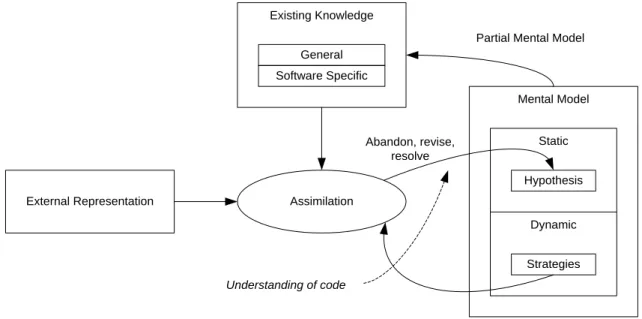
The literature review presented here is divided broadly into two halves. The first half is structured to reflect the grounded theory analysis and explores the relationships between the identified concepts. As illustrated in Figure 2-1 code abstraction was the most commonly occurring theme and is discussed in Section 2.1. Two concepts that are directly related to abstraction are software comprehension and problem solving skills i.e. mental models [17] , plans [18] and program goals [13, 19]. These are covered in Sections 2.4 and 2.6 respectively. The nature of expertise and a comparison of novice and expert programmer behaviour is the subject of Section 2.4.6. Figure 2-1 also illustrates that there are different characteristics associated with novice and expert programmers. There is a relationship between expertise, the mental picture of the code and the background knowledge acquired through solving similar problems or from working in a similar context. Novices are more associated with weak problem solving skills and fixating on unnecessary details that prevent them from seeing the generic abstract solution. Memory, domain specific knowledge, the impact of surface features in problem solving and the effect of loading working memory when solving problems, are all topics related to cognitive psychology and are described in Section 2.2.
8 The second half of the literature review (starting at Section 2.7) discusses programming methodologies and teaching approaches, and investigates possible approaches to address the issues raised in the grounded theory analysis.
2.1
Abstraction in Programming
The importance of abstraction to programming is summed up by Dijkstra in his Turing Award lecture “The Humble Programmer” [20]:
“It has been suggested that there is some law of nature telling us that the amount of intellectual effort needed grows with the square of program length. But, thank goodness, no one has been able to prove this law. And this is because it need not be true. We all know that the only mental tool by means of which a very finite piece of reasoning can cover a myriad of cases is called “abstraction”; as a result the effective exploitation of his powers of abstraction must be regarded as one of the most vital activities of a competent programmer.”
Abstraction allows programmers to develop solutions to a multitude of problems, and makes programs short and efficient to write. The challenge is to convert real-world problems into abstract solutions that can be executed as a program. By using abstraction a complicated problem can be reduced to a simpler concept which succinctly encapsulates the essential details of the problem. Being able to identify the key requirements of a solution is a difficult skill that requires practice [21].
“Understanding that computation is merely symbol manipulation, and that the power of computers is predicated on a tremendous amount of abstraction, is crucial in understanding what computers can, and cannot, do.” [21]
Unfortunately, as Ben-Ari [22] points out:
“Abstraction is essential as a way of ‘forgetting’ detail, and software development would be impossible without it, but it seems to me that there must be an object oriented paradox: how is it possible to forget detail that you never knew or even imagined?”
It seems reasonable to argue that Object Oriented Programming should be taught after standard procedural programming. Often introductory programming courses make use of GUI libraries, but this suggests a potential problem [22]. If students are struggling to build viable mental models for simple concepts such as variables, how will they build viable mental models for objects like radio buttons [22]. Furthermore, when abstraction is taught, it must not be assumed that the student will construct the same mental model the instructor has [22].
9 Adelson [23] found that when recalling code, expert programmers used abstract representations while novices focused on the syntax of the code. The participants were asked to recall 16 random lines of code using a Multitrial Free Recall (MTFR) procedure. The code they were shown could be organised either conceptually into three programs or syntactically into five categories according to the key words that they contained. In the trial, experts clustered the lines into programs while the novices clustered them according to syntactic categories.
“With increasing expertise , there is a gradual change in people’s focus of attention from aspects that are not relevant to the solution to those that are” [24]
Corritore et al [25] observed that novices develop concrete mental representations of program text, while more advanced novices use more abstract concepts. Hence, an important aspect of learning to program is the ability to apply abstract thinking to real-world problems. Research by Koppleman et al [26], found that experienced programmers were able to separate and concentrate on individual levels of abstraction e.g. by creating separate functions to handle different aspects of the problem. However, novice programmers are unlikely to come up with these abstract solutions because they will “see” the concrete solutions first [26]. The difficultly novices have in seeing abstract solutions is related to their inability to see beyond the concrete surface features of the problem (Figure 2-1) [27, 28]. Indeed, many textbooks reinforce this idea by asking students to solve a problem “by hand”. Often when teaching programming the flow of control of the program is emphasized, typically accompanied by flow charting exercises. Flow charting is simply an alternative approach to simulating the flow of a program “by hand”. Therefore, students need to be taught abstraction because forces exist to prevent them spontaneously developing abstract solutions [26].
“More generally, there is a gap between the way introductory programming is taught and mastering the skills of abstraction.” [26]
For example, students should be taught that a function call is not only a way of sub-dividing code by transferring flow of control to a separate code segment but also a way of suppressing irrelevant detail. They should resist the inclination to determine how a function works and instead concentrate on the effect of the function call [26].
This process of subdivision of code is identical to the process of subdividing problems into smaller sub-problems using a divide and conquer approach [5, 29]. Functions in essence
10 are just “smaller” problems to solve. Unsurprisingly then, there is significant evidence that problem solving skills are an important factor [30-34] in learning to program (Figure 2-1), including new research presented in this thesis.
Koppleman et al [26] made three recommendations: 1. Teach abstraction early using simple problems.
2. Teach abstraction consciously. Instructors must highlight where abstraction is being used and illustrate it with a concrete example.
3. Stress the benefits of abstraction. Many students see abstraction as hard and obscure, so instructors must demonstrate the benefits that it brings and that it makes life easier once mastered.
Mostrom et al [35] asked the question “How is abstraction manifested in students’ transformative experiences?”. Students were asked to write a description (a biography) of how a computing concept had transformed the way they saw or experienced computing. The study included 86 students from five institutions across three countries. Of these students, 47 discussed topics related to abstraction. The general areas of these topics were Modularity, Data Abstraction, Object Oriented Concepts, Code Reuse, Design Patterns and Complexity. Although abstraction per se may not be an indicator of likely success, this research suggests that these topic areas exhibit the characteristics of such indicators. In terms of abstraction, many of the students in the study developed an appreciation of abstraction as their programs became larger or more complex.
“….they were unable to deal with the complexity of programming without the concept, and applying the concept makes the complexity manageable.” [35]
In cognitive development terms we would say they moved from “late concrete operational” to “formal operational” stage [36]. Other students discussed learning an abstract concept but having to implement it concretely in order to gain a full understanding of it. In fact, all of the students discussed “Applying” the concept concretely. This suggests that many of the students learnt gradually about abstraction by applying it in concrete examples [26]. The process of extracting a generic or abstract solution by reviewing or developing solutions to a number of problems requiring a similar solution is related to analogous transfer of knowledge [37]. However, the implication from this particular study is that students will only develop an understanding of
11 abstraction when the scale and the complexity of programs become too great to solve in simpler ways.
“… students were transformed after facing a level of complexity where their normal practices no longer were effective. Finding approaches that did not require this level of failure could be less frustrating and more efficient” [35]
Unfortunately, the results of attempting to measure the effectiveness of directly teaching abstraction have been mixed. Starting with the hypothesis “General abstraction ability has a positive impact on learning computer science”, Bennedsen et al [38] conducted a number of tests and found hardly any correlation between cognitive development (abstraction ability) and the final grades obtained by the students. They repeated this study over three years and again found hardly any correlation [39]. Their conclusion was that “abstraction” in a computer science context is very hard to define, and that further research is required into how it can be measured.
Clearly abstract thinking is a critical element of programming, but it is primarily developed by practice through solving larger problems that demand more generic solutions. This leads to the chicken and the egg causality dilemma: to learn abstraction the student needs to be able to solve fairly large programming problems, but to program the student needs to be able to learn to create abstract solutions. Overcoming this issue requires the development of a more effective teaching methods that must take into consider the role of cognitive psychology and software comprehension in the creation of a programmer’s abstract mental model.
2.2
Cognitive Psychology
During the 1940s, Craik and Bartlett [10] proposed that theoretical models for human memory could be developed and modelled in a computer (which were analogue at the time). This led to a new approach in psychology based on the computer metaphor, and during the 1950s and 60s this information processing approach to psychology became very influential [40] and was summarised by Ulric Neisser[41] in his book “Cognitive Psychology” which gave its name to this field of research. The fundamental concept is that any memory system requires the ability to encode (enter information into the system), the capacity to store it and the ability to retrieve it [40]. Although these are distinct stages, they do interact. Typical of these models was the modal model [42]. Broadly this model assumed that we experience the world through our senses involving
12 sensory memory, through which information is passed into temporary short term memory (STM) before being stored in long term memory (LTM).
“Short-term memory consists of the information that is maintained at the surface level of coding within the grasp of immediate consciousness or the focus of attention. Thus, short-term memory is a subset of working memory, which in turn is a subset of long-term memory” [43]
The latest research [44] suggests that memories are actually simultaneously formed in both short and long term memory. Over time, the short term memories decay while the long term memories become stronger.
Based on the assumption that learning and reasoning depend on a mental work space, working memory (WM) is related to STM and provides storage for information used for performing complex tasks [40]. It is also thought to be related to attention and is able to draw on resources from both short term and long term memory [40]. LTM stores data over long periods of time and consists of both explicit and implicit memory [40]. Implicit memory is associated with skills such as riding a bike. Explicit memory is involved in the remembering of facts or information, and it is sub-divided into both episodic and semantic memory. Semantic memory stores general knowledge or real-world facts while episodic memory allows us to remember single episodes or events [40]. For example, if you hear that a friend has won the lottery that information becomes part of your semantic memory but where and when you heard the news becomes part of your episodic memory. Hence, the event (the lottery being won) becomes part of both types of memory. One possible explanation for this relationship is that information enters semantic memory as a result of one or more episodic events [40]. Learning the same information through multiple events or sources reinforces the memory of that information.
2.2.1 Short Term Memory (STM)
Short term memory (STM) is a subset of working memory [43] and is an active area of research with a number of competing theories [40]. A simple test for short term memory is the digit span test [40]. This test involves remembering short sequences of numbers of increasing length until the test subject fails to accurately recall the numbers. Increasing the number of items to be recalled also increases the total time required to rehearse them, which in turn increases the chance of them fading before recall. The longest sequence of numbers that can be recalled is the memory span for that individual and for
13 most people this span is about six or seven [40]. This was first described by Miller in his 1956 article “The Magical Number Seven, Plus or Minus Two: Some Limits on Our Capacity for Processing Information” [45] , which hypothesized that there is a fixed capacity for the information received by the human brain i.e. the brain can only receive a certain amount of information per unit time. Miller termed this the “channel capacity” which is a kind of mental bandwidth [17]. He [46] suggested that our capacity to remember is based not on the number of items but the number of chunks to be recalled. The generic definition of a memory chunk is “a collection of elements having strong associations with one another, but weak association with elements within other chunks” [47]. For example, splitting numbers into groups of threes [48] makes them easier to remember, probably because we are familiar with this from the natural flow of speech. This is also true for letters [40], for example CONTRAPOSTABLE is much easier to remember than ECTPANRSLBOTPO even though the letters are identical. Given the role that STM plays in natural language processing, we may conclude that it must play a similar role programming. For example, spaces are not allowed in variable names leading to quite cryptic but hopefully descriptive names that are meaningful to the programmer. Using meaningful names is important for program comprehension, especially for novice programmers [49].
2.2.2 Working Memory (WM)
Baddeley et al [11] modelled working memory as three components (Figure 2-2) consisting of a phonological loop, a visual-spatial sketchpad and a central executive. However, only the central executive is of interest to us.
Central Executive
Visuo-spatial Sketchpad
Phonological Loop
Figure 2-2 The Baddeley and Hitch Working Memory Model
A major function of the Central Executive is focus or concentration. The executive provides two modes of control, an automatic mode and a second mode that depends on a Supervisory Attentional System [50]. People tend to perform many tasks either
14 automatically or semi-automatically. During a semi-automatic task, actions are performed unconsciously requiring little attention until something out of the ordinary occurs, at which point the executive can resolve the issue through learned procedures. Alternatively, when people are unable to make an automatic unconscious decision or they are faced with a novel situation or problem then they have to pay attention to it and a Supervisory Attentional System [50] has to intervene to make a conscious decision or select a strategy for finding an alternative solution.
As Clarke [51] puts it:
“Attention is the gateway to our brain. That’s why gaining and sustaining attention is an early and ongoing central consideration in any learning event”
If we want to understand the limitations on complex mental challenges we need to understand how attention is controlled. There is much discussion in psychology of how attention works [51] and there are a number of mental models [17]. Hidi [52] refers to early attention as responsible for automatic detection and prioritization, while late attention is responsible for focused effort devoted to learning [51]. A simplified model is described by Klingberg [17] and consists of controlled attention, stimulus-driven attention and arousal. Stimulus-driven attention describes the involuntary attraction to an unexpected event, while controlled attention requires conscious focus. Controlled attention in related research [53] is also referred to as selective or goal-driven attention. As the load on working memory increases people become more easily distracted [54, 55]. People with higher working memory are more able distinguish between relevant and irrelevant information [56]. In effect, the distractors get stored in working memory instead of the relevant information [17], resulting in people with lower working memory being more easily distracted [57, 58] i.e. higher working memory makes it easier to ignore distractions [56].
The importance of working memory in education must not be underestimated. As Kirschner et al [59] note:
“Any instructional theory that ignores the limits of working memory when dealing with novel information or ignores the disappearance of those limits when dealing with familiar information is unlikely to be effective.”
Kyllonen et al [60] compared working memory tests with a number of tests taken from standard IQ tests and found a high correlation. Engle et al found a similar result [12] when
15 studying fluid intelligence (gF), because the ability to solve problems also depends significantly on the amount of information that can be stored in working memory. He found that the correlation was usually between 0.6 and 0.8 [61] a similar result was obtained through latent variable analysis [62]. Thus, when comparing people who are good at solving problems against those who are not, half the variance can be attributed to working memory capacity [17]. Halford et al [63] also hypothesise that working memory and intelligence share a common capacity constraint. This constraint is determined either by the working memory span or by the “number of interrelationships between elements in a reasoning task” [64]. The common capacity constraint is thought to arise because of a common demand for attention that is required when forming representations in reasoning tasks [63].
“At present, working memory capacity is the best predictor of intelligence that has yet been derived from theories and research on human cognition” [65]
Although this research will not enter into the debate about measurement of intelligence, it is generally accepted that there are two types crystallized (gC) and fluid (gF) [66] with evidence that they exist being found in studies involving university students [67] and when using MR scanners to monitor brain activity [68]. The term “g” was first described by Spearman [69] who believed that there was one central intellectual ability “g” and numerous specific abilities [69]. “g” is a numerical score-factor (general factor) that was generated after performing factor analysis to examine a number of mental aptitude tests i.e. it refers “to the determinants of shared variance among tests of intellectual ability” [70]. However, it should be noted that there is a strong relationship between crystallized and fluid intelligence, and consequently they are not mutually exclusive [71]
It might be expected that programming could enhance students’ general cognitive ability, given that it is a skill that requires characteristics such as rigorousness, systematicity, the usage of problem sub-division (i.e. a divide and conquer strategy) and the diagnosis/debugging of problems. [72]. Programming languages may indeed promote procedural thinking and reveal more about how the mind works [72]. However, there are a number of studies that have shown that programming produces little cognitive enhancement [73, 74]. Although, Mayer et al [75] noted that learning to program can lead to improvement in a specific aspect of fluid intelligence:
“...learning a programming language – even a language with as many critics as BASIC has – can result in changes in thinking skills. The improvement appears to be
16 limited to thinking skills that are specifically tied to specific concepts underlying BASIC, however, and there is no evidence of any enhancement of intellectual ability in general” [75]
Given the complexity of the process of programming, is there a relationship between working memory and programming? Shute [76] investigated the relationship between programming skills acquisition and a number of measurements of individual abilities including prior knowledge and cognitive skills, the ability to decompose problems into constituent parts and learning styles (e.g. the priming required in the form of hints). This study looked at teaching Pascal programming using a tutorial application, to determine if learning programming skills could be predicted from measures of specific problem solving abilities which were assumed to be:
i. understanding: of the problem and being able to identify the basic elements. Establishing the initial and final state then hypothesizing the operations required to achieve the solution.
ii. method-finding: decomposing and sequencing the problem elements into an outline solution to a programming problem that identifies and arranges the relevant operators of commands.
iii. coding: translate the natural language solution from the previous stages into code.
Two sets of data were used to assess prior knowledge. Firstly general vocabulary and mathematical ability was assessed using the Armed Services Vocational Aptitude Battery (ASVAB) tests. Secondly cognitive processes including working memory capacity and information processing speed were measured using computerized tests developed in the Learning Abilities Measurement Program (LAMP) by the US Air Force. An algebra word problem test battery was used to estimate problem solving abilities. A statistical approach was used to determine if there was anything unique to the problem solving as estimated from this test, that would predict who would succeed in learning to program.
The study consisted of 260 test subjects who had no prior Pascal programming experience. A Pascal programming intelligent tutoring system (Pascal ITS) was used to assess programming ability and the test consisted of 25 questions of increasing difficulty. There were 3 learning phases associated with each question, firstly to generate a natural language solution to problem, secondly to convert it into a program implementation plan and flowchart then finally to translate the solution to Pascal code. Subjects could ask for
17 unlimited hints from the tutor, and there were three levels of hints which became more specific and less abstract. Three progressively more complex programming post-tests consisting of 12 problems per test, were used to assess the subjects programming abilities.
After factor analysis (principal axis with varimax rotation) was conducted working memory was found to be the best predictor of Pascal programming skill acquisition. Similar results were also obtained for a course on logic gates [77]. A limitation of this study is that it did not use the more formally recognised Raven Matrices tests when measuring performance. However, a similar study conducted in this thesis using these matrices also found similar results (Chapter 6).
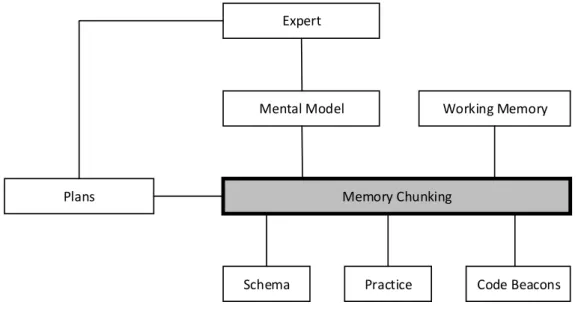
We conclude that there is a relationship between working memory and programming. Poor working memory is likely to limit the learning of novice programmers when the working memory load increases. Furthermore, the relationship between working memory, gF and problem solving [60] may also explain why low problem solving skills are also associated with poor programming performance. Through grounded theory analysis, an overview of working memory and related concepts is shown in Figure 2-3. This figure also suggests that there is a relationship between working memory to both memory chunking [46] which is the ability to memorise patterns, and the related concept of recognising software keywords or function names known as “Code Beacons” [78]. These concepts will be discussed later.
Expert Problem Solving Skills Memory Chunking Novice Code Beacons Lack of Working Memory High Working Memory Load Lack of Code Abstraction
Edge Support Threshold = 3
18
2.2.2.1 Testing Working Memory
A classic problem solving test used by psychologists to measure general intellectual ability is Raven Progressive Matrices test. The test subject is presented with a 3x3 matrix of symbols one of which is missing and the subject must deduce the rules required and specify the missing symbol. Thus, each matrix represents a visual analogy problem [70]. An example question is shown in Figure 2-4.
?
Answer
Figure 2-4 Example of a Raven Matrix with Answer
This test relies on working memory [17], since solving a matrix requires retaining and manipulating visual information in working memory while also remembering the instructions. These matrices have been found to be strongly correlated with gF [17] and that they measure processes that are central to analytical thinking [70]. Individual differences in the Raven test have been found to highly correlate with those found in other complex cognitive tests [70]. More difficult Raven test tend to involve more abstract rules, and the level of abstraction also appears to differentiate tests intended for children from those intended for adults [70]. In studying the test subjects Carpenter et al [70] found that all the test subjects processed the matrices in the same way, by breaking it into progressively smaller problems and then proceeding to solve each sub-problem. The induction of the rules was incremental in two respects, firstly each rule was induced one at a time and secondly the induction of each rule required a number of small steps generated by a pair-wise comparison of elements of adjoining entities. During the pair-wise comparison, the subjects were encoding some of the figural elements and comparing their attributes in an attempt to identify the “rule tokens” i.e. differences that might contribute to a new rule. The error rate was found to increase with the number of “rule tokens” in a problem, suggesting that the test subject’s ability to keep track of the figural attributes and rules accounted for their individual performance. Here “keeping
19 track” means creating new sub-goals in working memory and remembering when they have been attained. Schraw et al [67], also showed that these matrices loaded the verbal crystallized ability of subjects confirming the findings of Prabhakaran et al [68]. Actually, Prabhakaran et al [68] also studied the brain activity of students while they were performing Raven tests. They concluded that these matrices reflected the status of many working memory systems because they activated many of the domain-dependent and domain-independent working memory systems [68]. This explains the strong correlation between these matrices with working memory and their ability to predict performance in many other tasks [68]. It may be common for the performance of many tasks to rely on multiple working memory systems [68] or a core cognitive ability that spans fluid and crystallized intelligence [67].
A study comparing coding performance to Raven test results was conducted and is included in this thesis (Chapter 6).
2.2.3 Episodic Memory (Long Term Memory) Tulving [79] defines episodic memory as:
“Episodic memory is recently evolved, late-developing, and early-deteriorating past-oriented memory system ... It makes possible mental time travel through subjective time, from the present to the past, thus allowing one to re-experience, through autoneotic awareness, one’s own previous experiences”
Of most interest is the relationship between episodic memory, semantic memory and learning. The episodic details learned during a task eventually form the semantic structures (or schema) of expertise and an understanding of episodic memory may help improve how experts are trained [80]. There is thought to be an Episodic Buffer [40, 81] in working memory that links together short term, working, episodic and semantic memory. A detailed understanding of this process is not required for this study, but it is an area of active research.
Expertise is developed by repeated exposure programming through a series of programs over long periods of time, months, years or decades [82]. When reading source code a programmer may come across a familiar code fragment which may trigger a memory e.g. of a previous mistake or when modifying code they will remember the file and last modification made yesterday. Furthermore, programmers may “associate development
20 activities with actions and episodic events that may take place outside the world of the text editor or debugger” [82].
2.2.4 Semantic Memory (Long Term Memory)
Semantic memory stores concepts of various kinds. The spreading activation model [83] describes how concepts are organised in semantic memory and assumes that semantic memory is organized based on semantic relatedness or semantic distance i.e. how closely related concepts are.
More complex concepts may also be stored in semantic memory as large structures in what are known as schema. A schema is a well-integrated chunk of knowledge about the world, events, people or actions [40] and includes scripts and frames. Scripts contain knowledge of events and consequences of events e.g. actions/events in a restaurant such as sitting down, ordering and eating. Frames have knowledge of structures e.g. buildings have floors and walls. Events which do not conform to the schema are unexpected so become distinctive and memorable. This of course relates back to episodic memory. For Anderson [84], cognition depends on the knowledge encoded and the effective deployment of that encoded knowledge. In the Adaptive Character of Thought (ACT-R) theory [84], complex cognition arises from the interaction of two types of long-term knowledge [84, 85], procedural and declarative. Procedural knowledge is represented by production rules and declarative knowledge is represented by chunks. These chunks are initially simple encoding of objects in the environment (or facts) while production rules are encodings of transformation in the environment (how things should be done) that can transform previously stored chunks. In transforming these chunks, new declarative structures (i.e. chunks) may be created [84].
“All there is to intelligence is the simple accrual and tuning of many small units of knowledge that in total produce complex cognition. The whole is no more than the sum of its parts, but it has a lot of parts” [84]
This is the process by which learning from worked examples occurs, thus allowing related problems to be solved [84]. This knowledge acquisition process is very simple as it just requires “modest inferences about the rules underlying the transformations” from chunk(s) to chunk [84].
21 “To get behaviour, general interpretative productions must convert this [declarative] knowledge into behaviour....problems arise because of this indirection through these interpretative productions” [86]
Learning then is just a matter of slowly acquiring more and more production plans and declarative knowledge [84]. Current research [84, 86, 87] does not specifically describe how this long-term knowledge is stored in semantic memory or the role of episodic memory. However, the most likely scenario is that as production rules are reinforced by repeated exposure (e.g. by multiple worked examples [88]) and they are transferred from episodic memory to semantic memory. Likewise, declarative knowledge starts as chunks in working memory but some must be transferred to semantic memory to allow later recall of production rules. Some support for these assumptions is provided by Anderson’s own description of how ACT-R would account for the learning of the letter “H” [84]. On seeing “H” it is encoded in a chunk as shown in Figure 2-5.
object
isa H
left-vertical bar1 right-vertical bar2 horizontal bar3
Figure 2-5 ACT-R Encoding of the Letter H [84]
This chunk assumes that another chunk describing what a “bar” is, already exists or as Anderson puts it:
“We assume that before the recognition of the object, these features (the bars) are available as parts of the object but that the object itself is not recognized” [84]. Therefore, it seems reasonable to assume that the declarative structure defining “bar” must be stored in long-term memory i.e. semantic memory.
Interestingly, Anderson goes on to say that:
“A basic assumption is that the process of recognizing a visual pattern from a set of features is identical to the process of categorizing an object given a set of features” [84]
Clearly, this provides support for the role of perceptual learning in which perceptual chunks are used to recognize incoming stimuli that then develop to allow experts to quickly recognize patterns.
Cheng et al [89]proposed reasoning involves clusters of generalized abstract rules defined with respect to classes of goals and types of relationships known as pragmatic reasoning
22 schemata [90]. Errors in reasoning can be induced by manipulating the semantic features of a problem and corrected by presenting the problem based on an abstract description of a situation that mapped to a schema [90]. Thus, the number of errors that occur depend on the mapping between the pragmatic schema and the concrete situation, and the degree to which the schema rules allow inferences to be made that conform to the standard logic [90].
In programming the relationship between episodic and semantic is neatly captured by Kolodner [91]:
“...even if a novice and an expert had the same semantic memory..., the expert’s experience would have allowed him to build up better episodic definitions of how to use it.”
Through experience and practice the expert programmer builds up the episodic knowledge of how to program [92].
2.3
Cognitive Psychology and Programming
It is now possible to begin to see how programming is related to cognitive psychology and Figure 2-6 summarises the steps by which programming is learnt [30]:
(a) The programmer reads the code which represents a new stimulus to which they must pay attention
(b) Appropriate pre-requisite concepts must be found from Long Term Memory (LTM) and the new information is then assimilated.
(c) Actively using this pre-requisite knowledge causes the new information to be associated with it.
STM (a) Stimulus Response LTM (b ) (c )
Figure 2-6 Information Processing [30]
Although not specified, it can be inferred that this pre-requisite knowledge [30] is gained firstly through offline activities such as programming manuals [30], training materials and software design and secondly by analysis of software through reading and writing code.
23 Information is encoded into episodic memory within LTM as an episodic event [80]. These events may be hours, days or week apart, each event adding new nodes or cues to semantic memory storing and reinforcing long term memory of that knowledge. For example, a student may attend a lecture during which the definition of a variable is explained and days later read a book describing the same concept reinforcing and supplementing it. Eventually, the lecture and the book may both be forgotten but the concept remains in semantic memory [93]. Code is inherently abstract [21], so each episodic event enables the programmer to infer more about the abstract coding constructs and principles they are learning. These must be encoded in semantic memory as schema [13] to allow them to be applied in solving future programming problems. Episodic memory also allows programmers to remember previous code and which file contained it [94]. Working memory plays a role in both allowing the student to focus on the required details [56] and in the fluid intelligence required to extract the abstract principle [12].
In reading and writing code, learning progresses in a similar way through worked examples or the student’s own code. However, as the tasks become more complex two additional constraints arise [80]. Firstly as the complexity increases so does the quantity and diversity of information that must be stored, demanding a less selective approach to the storage of information. In addition, a continual encoding process is required because any item processed may become important to remember later. By implication:
“...memory contains vast amounts of information, much of which is never retrieved, but any of which could be retrieved and could critically affect the course of behaviour” [80]
Secondly the retrieval of information for a complex task may involve a problem solving search or a dynamic environment in which any item can be required at any time. Encoding specificity suggests that the more time spent elaborating on an item the better the chance of recalling it [95]. Unfortunately, expert problem solving generally affords little time for such elaboration limiting the storage of item cues that are critical to retrieving details about the task.
These constraints were identified by Altman [80], who proposed a variation of the traditional model of memory that used a construct called “near-term memory” that was developed using computational behavioural simulation of a programmer at work. Altman was interested in the cognitive processes a programmer uses when browsing, scrolling