
INTRODUCTION
Promising innovations by First Nations communi-ties in rural British Columbia are demonstrating the potential of early childhood care and development (ECCD) centres to serve as hubs for a range of pro-grams and services that promote wellness, social co-hesion, and cultural continuity. This paper reports findings to date of a research study to document inno-vations in inter-sectoral service delivery in First
Na-tions communities and, in a later phase of the re-search, evaluate the impacts of innovations in com-munity-based service delivery on First Nations chil-dren’s health and development and on community wellness overall.
In all of the First Nations participating in the study, the creation of inter-sectoral service centres began with a long-term goal to strengthen community capac-ity to provide licensed, centre-based child care
pro-Early C
Childhood C
Care aand
Development PPrograms aas H
Hook aand
Hub ffor IInter-ssectoral SService D
Delivery
in FFirst N
Nations C
Communities
Jessica Ball
University of Victoria School of Child and Youth Care
Abstract
Consistent with recommendations in the Royal Commission on Aboriginal Peoples, many
Aboriginal communities are investing in early education, cultural transmission, and health for the youngest generation to secure the future well-being of their communities. A demographically young Aboriginal population–combined with a wish to support parents pursuing education, employment, and healing–has led many communities to prioritize early childhood care and development programs.
This paper reports findings of a research study of promising practices in three groups of rural First Nations that are building integrated service models centred around early childhood care and development programs as part of their community development approach. The findings suggest a conceptual model of early childhood care and development programs as a hook for mobilizing community involvement in supporting young children and families and as a hub for meeting a range of service and social support needs of community members.
Child care and development programs in these communities include strong emphases on culture, socialization, English and heritage language proficiency, and nutrition. Co-location of child care with other services enables ready access to health monitoring and care, screening for special services and early interventions. Once parents are involved in bringing a child to a community centre-based program, many learn about and access programs for themselves and other family members. The research showed how multi-purpose, community-based service centres can become a focal point for social cohesion and can provide a cultural frame around service usage that informs external service providers and offers cultural safety for community members.
Key Words
First Nations, child development, inter-sectoral services, integrated services/integration, community wellness, community-based service delivery, child health, early childhood
ment, and positive cultural identity. For each First Na-tion, the first step toward this goal was training. They each initiated a partnership with the University of Vic-toria to co-deliver a bicultural, community-based, uni-versity-accredited training program in child and youth care to prepare community members to mount and op-erate the planned ECCD program. At the same time, each First Nation raised funding and invested capital and human resources in the design and construction of a facility for their anticipated ECCD program. Subse-quently, they mounted ECCD programs guided by ex-plicit, community-derived goals of supporting the de-velopment of the whole child and of keeping the family, community, and cultural ecologies of children clearly in focus.
What has now evolved from these foundations varies across communities because of their specific goals, resources, and geographic circumstances. In each case, there are lessons that can be learned about overcoming the challenges of working across jurisdic-tions, professional turfs, and regulatory spheres. There are also principles to inspire explorations by other in-digenous and non-inin-digenous communities about the real possibilities for mounting comprehensive and ac-cessible developmental support systems for children and families.
ABORIGINAL WAYS
Our initial assumptions about health and wellness profoundly influence how we design, implement, and evaluate systems of supports for health and develop-ment. Rich and diverse philosophical systems for un-derstanding the nature and purpose of human life and how best to support it reside within Aboriginal com-munities in Canada.1 These knowledge systems are beginning to find their way into discussions about how to move forward to improve the health and well-ness of indigenous peoples.
In British Columbia, there is a major transition un-derway with 82 per cent of eligible First Nations as-suming control over some or all of the community health, primary health, and children’s services for their members. With this shift, chronic unmet needs for training Aboriginal people in health and human services have become serious. In provincial and re-gional meetings of Aboriginal leaders about ways to strengthen the capacity of their communities to mount and operate new services or to take over existing ser-vices, a point repeatedly heard is that Aboriginal peo-ple want to learn from the mistakes of non-Aboriginal people. They do not want to replicate the
fragmenta-Canada. In 2003, one of the regional inter-tribal health authorities in British Columbia met with a group of university-based researchers to discuss initiatives that could be developed that would implement the Ro-manow Commission Report recommendations for Aboriginal health. One Aboriginal representative commented:
Yes, we need training. But what do we want to train our people to do and to become? The transition to Aboriginal control should not mean simply Aboriginal people taking over White jobs, doing things in White ways. We want to do things in Aboriginal ways and we need training that will support our members in remembering their cultures and creating Aboriginal services that are really Aboriginal.
Aboriginal Ways as an
Original Population Health
Conceptual Framework
The First Nations participating in the current re-search and earlier training partnerships with the Uni-versity of Victoria each engaged in two years of com-munity-wide discussions about the meanings of child and family wellness within the culture and lifestyles of their own people. Across all the communities, the themes of holism, community beliefs and practices, and the importance of culture were heard again and again. Indeed, it would seem that Aboriginal ideas about how to support the survival, healthy growth, and optimal development of their own peoples have long embodied the assumptions, aims, and approaches that society is now calling population health. Non-Aboriginal and Non-Aboriginal Peoples can learn a lot from exploring the possibilities inherent in Aboriginal ways of caring for health.
Holism
In these First Nations, child development is viewed holistically. The many aspects of a child’s body, mind,
A
AU
UTTH
HO
ORR’’SS N
NO
OTTEE
TThhee ccoommmmuunniittiieess aanndd tthhee iinnddiivviidduuaallss w
whhoo ppaarrttiicciippaatteedd iinn tthhee rreesseeaarrcchh eenntteerreedd iinnttoo tthhee pprroocceessss wwiitthh tthhee uunnddeerrssttaannddiinngg
tthhaatt tthheeyy wwoouulldd rreemmaaiinn aannoonnyymmoouuss.. TThheeyy aarree nnoott nnaammeedd iinn tthhiiss aarrttiiccllee
and spirit are seen as intertwined and requiring nurtur-ing, guidance, and respect. This view permeates com-munity decisions about what child care and develop-ment programs should entail–namely, a proactive, developmental approach to the whole child that in-cluded nutrition, preventive health, socialization, edu-cation, and Aboriginal language and culture.
Family and Community-Centred
Practice
The goal of improved community conditions for children’s health and development in these First Na-tions was seen as dependent upon the goal of sup-porting family wellness. Thus, it was conceived that child care and development programs should include extensive outreach to secure the active involvement of parents and others who care for children. As an Aboriginal child care practitioner in one of the com-munities that participated in the research said in her interview:
When a child comes back [to our centre] on Monday morning, we can usually tell how the parents are doing, and what’s been happening over the weekend.
Thus, a goal of the child care and development strategies in these communities has been to provide a culturally-safe (i.e., free of racism and culturally re-spectful), socially-supportive centre for parents to be consulted about their children and offered opportuni-ties to participate in the child care program, parent ed-ucation and support programs, and service referrals as needed.
Community-Specificity,
Not Best Practices
Effective population health strategies are not uni-form. They are based on geographical, political, and cultural understandings of what health is and how to achieve it in particular populations. Given the enor-mous diversity among First Nations, the notion of best practices is a false hope based on over-simplified un-derstandings. The concept itself is reminiscent of modernist ideals of truth and one-size-fits-all ap-proaches to community development and population health. These notions contradict the understanding of health as both a process and an outcome that varies depending on population and setting. The language of best practices is foreign to a community’s understand-ing of wellness. Communities recognize the ethics and effectiveness of grounding wellness programs in
Aboriginal knowledge, cultural concepts, socializa-tion practices, needs, and goals of a community.
Further, the concept of population health should not be misinterpreted as promoting universal applica-tion of the same program objectives, models, and evaluation criteria for all people everywhere as has sometimes been implied. On the contrary, population health initiatives need to be based on an intimate knowledge, not only of the demographics, but also of the social conditions, circumstances, resources, and readiness of groups within the fabric of society as a whole who define themselves or can be defined as a distinct population. Thus, support for targeted pro-grams such as Aboriginal Head Start for Aboriginal children and hot meals programs for malnourished children are consistent with a population health framework.
The First Nations that participated in the current re-search clearly understood this. They rejected a one-size-fits-all approach to training and the possibility of any imported best practice model that would be suit-able for adoption in their communities. Instead, they sought training. They designed child care programs that would draw upon Aboriginal knowledge retained by their Elders and other community members. The programs would address the specific needs, circum-stances, and goals of children and families in their communities.
These ideas were not all clearly expressed before the participating First Nations embarked on their jour-neys through training and service implementation. These guiding principles were only gleams in the eyes of a few community members–most conspicuously Elders–when the training programs began. Their ideas about combining and co-locating services with their child care programs were explored and debated before they were clearly defined by the end of two years of community-based training in ECCD. (The nature of this innovative approach to strengthening capacity in communities will be described later.)
Throughout the two years of capacity building, community members worked to recover, uncover, and construct understandings of child and family care and development that fit well to describe their communi-ties; worked to explain the current health status and conditions for development of their children; and yielded insights into what needed to be done to inno-vate promising practices for achieving community-identified goals for improved health and well-being for all of the children in their communities. These ideas provided the conceptual foundation for subse-quent development of community-based services. The
term “promising practices” is used in this paper to de-scribe these.
Conceptual Propositions
The program of research on ECCD as a hub for in-ter-sectoral service delivery rests on three assump-tions.
1. Services appropriate to Aboriginal people should be based on the idea of child and family wellness as holistic and embedded within specific commu-nity development and health needs, goals, and cul-tural knowledge.
2. Training and services must recognize the socio-his-torical experiences that have negatively predis-posed many Aboriginal people towards formal health, social and education services and certain cultural, financial and geographic factors that in-crease the likelihood of success of integrated, com-munity-based service delivery with families as a whole.
3. Aboriginal communities must drive initiatives to improve Aboriginal population health and well-being.
THE GOAL OF INTER-SECTORAL
SERVICE DELIVERY
In 2002, the Romanow Commission was appointed by the federal government to provide a status report on health care in Canada and to offer direction for the future of health care.2The resulting Romanow Report was the first national report ever to devote specific attention to Aboriginal health. The Romanow Com-mission concluded that the state of health and well-being, and the conditions of life for Aboriginal Peo-ples in Canada, is inexcusably low and must be addressed.
Inter-sectoral service delivery was strongly recom-mended by the Romanow Commission, particularly for improving the health of Aboriginal people and Canadians residing in rural and remote settings. In its report, the National Aboriginal Health Organization is quoted as submitting to the Commission that:
. . . one of the essential ingredients in creat-ing effective Aboriginal health systems is a multi-jurisdictional approach to health service reform.3
Key recommendations of the Romanow Commis-sion for improving the health of Aboriginal people in-clude:
• Consolidate Aboriginal health funding from all sources and use the funds to support the creation of Aboriginal health partnerships to manage and orga-nize health services for Aboriginal Peoples and promote Aboriginal health.
• Establish a clear structure and mandate for Aborigi-nal health partnerships to use the funding to ad-dress the specific health needs of their populations, improve access to all levels of health care services, recruit new Aboriginal health care providers, and increase training for non-Aboriginal health care providers.
• Ensure ongoing input from Aboriginal people into the direction and design of health care services in their communities.
Key recommendations of the Romanow Commis-sion for improving the health of rural and remote pop-ulations similarly emphasize inter-jurisdictional co-or-dination and pooled resources. They include the establishment of a new Rural and Remote Access Fund to support new approaches for delivering health care services and improve the health of people in rural and remote communities.
While the philosophical and practical rationale for breaking down jurisdictional boundaries and co-ordi-nating training and service efforts may only recently have been realized here in Canada, there is abundant international literature advocating inter-sectoral and integrated service delivery for promoting maternal health and child health, growth, and development.4 Unfortunately, the international literature on inspiring examples in practice is much more sparse.5 Chronic disappointments in moving forward on the inter-sec-toral agenda in Canada and abroad can be attributed to a number of political, conceptual, and practical barri-ers. These include:
• the overwhelming dominance of European world views and forms of governance;
• reluctance to share authority over health care ex-penditures and accountability for health outcomes with communities;
• out-dated, fragmented bureaucracies;
• competing theories about the determinants of health;
• a persistent emphasis in health theory, research, and practice on the individual as the unit of analy-sis;
• a reliance on the western medical model to inter-pret health status and health care; and
• professional turf wars.
With reference to British Columbia, S. de Leeuw, J. Fiske, and M. Greenwood concluded that the
frag-mented system of social, health, and education ser-vices is the most significant barrier to population health in rural, northern, and First Nations communi-ties.6
Given these substantial challenges, the innovative approaches of the First Nations participating in the current research are particularly worth examining.
CHILDREN ARE OUR FUTURE:
EARLY CHILDHOOD AS A HOOK FOR
COMMUNITY MOBILIZATION
There are strong arguments to give priority to ECCD as a population health initiative. In many First Nations, the reason is simply and frequently stated: Children are our future. The Meadow Lake Tribal Council in Saskatchewan, who co-developed the com-munity-based training program in Child and Youth Care with the University of Victoria,7gave the follow-ing account:
The First Nations of the Meadow Lake Tribal Council believe that a child care pro-gram developed, administered, and operated by their own people is a vital component of their vision of sustainable growth and devel-opment. It impacts every sector of their long-term plans as they prepare to enter the twenty-first century. It will be children who inherit the struggle to retain and enhance the people’s culture, language and history; who continue the quest for economic progress for a better quality of life; and who move for-ward with a strengthened resolve to play their own destiny.8
Increasing numbers of First Nations in Canada identify ECCD training and services as priorities within a comprehensive vision of community devel-opment, population health, and economic advance-ment. ECCD is seen as essential for protecting and enhancing the physical and psychosocial health and well-being of Aboriginal children and their families. This need is particularly urgent for First Nations peo-ple living on-reserve where access to children’s pro-grams and family supports is limited by geographic distances, social and cultural barriers, and eligibility regulations. The Assembly of First Nations has long urged that caregivers be trained to deal in a culturally-appropriate manner with the large pool of First Na-tions children needing comprehensive care.9 Simi-larly, in British Columbia, an Aboriginal Committee
Report on Family and Children’s Services Legislation in 1992 stated that:
Our main goals are to preserve and strengthen our culture; to support and main-tain the extended family system; to promote the healthy growth and development of our children and to develop community-based programs conducive to the realization of these goals.10
ABORIGINAL DEMOGRAPHICS
The demographic numbers for Aboriginal people in Canada provide another reason to focus population health strategies on Aboriginal children and youth in a bid to improve their overall life expectancies, health status, and developmental chances. First Na-tions and Inuit populaNa-tions are expected to grow at double the rate for the general population. Among the 700,000 First Nations people and 50,000 Inuit in Canada reported by Statistics Canada in 1998, the av-erage age was 25.5 years. This was 10 years younger than the average age of all Canadians. The proportion of First Nations people and Inuit under five years of age is 70 per cent greater than for the general popula-tion. The First Nations and Inuit Health Branch re-ports that, as of 1998, there were 54,225 First Na-tions and Inuit children in Canada under four years of age.11 In British Columbia, as of 2001, there were 9,573 First Nations and Inuit children under four years of age.12 Although the national birth rate for First Nations people fell between 1979 and 1999, it remained twice the national average. Of First Nations women giving birth, 58 per cent were under 25 years of age, with 23.7 per cent being 15 to 19 years of age. As of 1999, almost one third (32 per cent) of Aborigi-nal children under the age of 15 years lived in a sin-gle-parent family.13
In British Columbia, although recently reported health data show Aboriginal health is improving alongside improvements in the health of all British Columbians,14 significant gaps between Aboriginal and non-Aboriginal health and well-being remain. Aboriginal children are over represented on nearly every indicator of health, social, and education risk. Fifty-two per cent of Aboriginal children in British Columbia live below the poverty line. Aboriginal children are seven times more likely than non-Abo-riginal children to be in government care. Between 40 and 50 per cent of children apprehended for child protection and placed in out-of-home care are Abo-riginal.
A more conservative, and more frequent, argument for increased support for ECCD is that it enables more women’s participation in the labour force. Indeed, the barrier First Nations parents most often cite as pre-venting them from obtaining or holding employment, completing their education, or undertaking employ-ment training is the absence of child care. While child care cannot resolve the multiple reasons for low levels of employment among First Nations people, child care is generally considered a foundation of labour force attachment. In 1995, the Canadian Minister of Foreign Affairs made this argument in addressing the Assembly of First Nations Forum on Child Care:
We can’t help deal with the early develop-ment needs of children and we can’t respond to what is going on in the economy unless we have in this country an effective child care system.15
Research over the past 15 years has confirmed what many parents and development specialists have long known: good health, stimulation and affection in infancy, and early childhood are critical determinants of survival, growth, and development throughout one’s lifespan.16The early years of a child’s life are important across many domains of development, in-cluding physical growth, motor co-ordination, emo-tional health, social competence, memory and think-ing skills, language, and literacy. The seeds of cultural and ethnic identity are also sewn in these early years.17 Infants and toddlers are dependent on social belonging and relationships for survival; formation of a sense of self; ability to form attachments to others; and capacity to engage in trusting, affectionate rela-tionships characterized by empathy and mutual con-sideration.18 It is in these early years that a child be-gins to learn what it is to belong to a social group and absorbs many of the mannerisms, ways of life, values, and forms of interaction that are hallmarks of their culture.19
The First Nations participants in the current re-search saw that ECCD could play a central role in their consolidation as stable, healthy, cohesive, and culturally robust Aboriginal societies within the larger ecologies of life in Canada. When community leaders held forums for their members to discuss the idea of making ECCD a focal point of community ca-pacity building and infrastructure development, the value of assuring quality care for babies and preschoolers was an easy hook for mobilizing posi-tive community action.
ABORIGINAL CHILD CARE
STRATEGY IN CANADA
Jurisdiction, and therefore funding and service for Aboriginal child care in Canada, is caught between federal responsibility for reserves and provincial juris-diction for health and social services.20At the same time, each province has its own distinct policies gov-erning child care programs and has unique relation-ships with First Nations. In practical terms, this has meant that until 1995, First Nations reserves had no access to child care funds, there was no strategic plan, and there were few ECCD services.21
In 1988, the federal government provided funds for the development of pilot projects to address First Nations and Inuit needs for child care. In 1989, a Re-port of the National Inquiry into First Nations Child Care was published. It outlined the need for an Abo-riginal child care strategy.22In 1995, the Assembly of First Nations hosted a National Forum on Child Care. This was followed in the same year by the introduc-tion of the First Naintroduc-tions and Inuit Child Care Pro-gram and the Urban and Northern Aboriginal Head Start program for First Nations people living off-re-serve. Aboriginal Head Start was established to help enhance child development and school readiness of Aboriginal children living in urban centres and large northern communities. By 2000, 168 Aboriginal Head Start programs were operating in 300 off-re-serve communities serving about 7,000 children up to the age of six. In 1998, the Aboriginal Head Start program was announced for children and families liv-ing on-reserve.
Regulation and licensing of child care centres varies widely from province to province including whether each provincial government regulates child care services on reserves. In 1999, a legal decision was made that the Province of British Columbia could exercise provincial regulations on reserves by invita-tion of First Nainvita-tions communities. This meant that child care facilities, whether on- or off-reserve, could opt to be licensed according to provincial standards. They would then be eligible for certain funding and other resource support. At the same time, the federally funded Aboriginal Child Care Society of British Co-lumbia began working toward a framework for appro-priate Aboriginal standards.
While 20 years ago there were virtually no licensed child care programs on reserve, there are now licensed child care programs and Aboriginal Head Start pro-grams. In British Columbia, both programs are now eligible for operating grants–one from the province and the other from Aboriginal Head Start. The two
programs have separate training requirements with Aboriginal Head Start offering an in-house cultural training program with basic professional development in nutrition and early childhood stimulation. Child care staff in licensed facilities on reserve must include one certified Early Childhood Educator.
In 2002, federal, provincial, and territorial govern-ments (with the exception of Quebec, which instituted universal child care in 1998) reached an agreement to improve and expand the services and programs they provide for children under six years of age and their families. The Federal/Provincial/Territorial Early Childhood Development Agreement is a long-term commitment to help young children reach their full potential and to help families and the communities in which they live to support their children.23The Gov-ernment of Canada announced it will invest an addi-tional $320 million over the next five years to support and enhance the early childhood development of Abo-riginal children. This new funding will be used to en-hance programs such as Aboriginal Head Start and the First Nations and Inuit Child Care Initiative. It will also be used to support research on the health and de-velopmental status of Aboriginal children and factors accounting for these developmental outcomes.24
CHALLENGES IN RURAL AND
REMOTE COMMUNITIES
Particular kinds of challenges face small, rural, and geographically isolated communities. The Ro-manow Commission report, The Future of Health Care in Canada,25devotes a chapter to health issues in rural Canada. It notes that rural populations are un-der served, at risk of poorer health, and in need of in-novative models of health promotion and service de-livery. The First Nations and Inuit population in Canada is spread over 800 communities (605 regis-tered First Nations) with 77 per cent of these com-prised of less than 1,000 people. Transport models of health care and specialized services for children are costly in terms of lost wages, travel and accommoda-tion expenses, family disrupaccommoda-tions affecting continuity of care for children, and discontinuity in the roles adults play in maintaining their community. Models of child and family support and health care that may be acceptable or effective in urban centres in Canada are frequently not acceptable nor effective in rural and remote circumstances, especially when these are compounded with significant cultural and lifestyle differences.
In British Columbia, a Report of the Northern and Rural Health Task Force26 highlighted specific
chal-lenges for rural settings including: lack of qualified personnel; difficulties retaining qualified personnel; the tendency for government bureaucracies and pro-fessionals to plan health services for Aboriginal peo-ple without seeking their early and compeo-plete involve-ment; gaps and confusing overlaps in service provision because of overlapping federal and provin-cial jurisdiction; the arbitrary nature of provinprovin-cial health region boundaries that often do not appropri-ately reflect tribal boundaries; and the need to recog-nize and respect Aboriginal traditions in health pro-motion and care.
Need for a Population Health
Framework Based on Community
Beliefs
In a study exploring ways to reduce risks to rural and northern children and youth due to substance abuse, S. de Leeuw, J. Fiske, and M. Greenwood noted that:
When, as is currently the case, the over-whelming focus on special needs children is on one condition [substance abuse], northern and remote communities find it difficult if not impossible to address the full range of service needs. . . . Currently, child welfare policies, women’s programs and health initiatives fail to offer comprehensive approaches to meeting the unique needs of the communities.27
Similar difficulties have been reported from the perspective of population health issues facing indige-nous peoples in Australia:
Medical mysteries are relatively rare. The current patterns of Aboriginal morbidity and mortality can be explained . . . individual health can be profiled against key indicators such as diet, level of education, financial comfort, adequate housing, unpolluted envi-ronment and access to a range of goods and services. In Western societies this means that the richer you are, the more educated you are, the healthier you are likely to be. This stark reality is not good news for Aboriginal people whose education participation is low and for whom wealth isn’t a likely possibility. . . . we need a model that acknowledges the cultural, social and emotional dimensions that impact on sickness and health. When we talk about health for any society, we must adopt the
broadest possible definition. One that consid-ers communities as well as individuals . . . and . . . environmental health issues like sani-tation, adequate sewerage systems, a clean water supply and adequate housing.28
The key message of the Romanow Commission in reference to rural and remote communities is to move toward a population health approach charac-terized by pooled funding and co-ordinated actions across jurisdictions. A broad scope of goals includes improving environmental conditions that will lead to health such as adequate housing, assured supplies of clean water and fresh food, and recreation, in addi-tion to primary health services. The recommenda-tions of the Romanow Commission provide strong support for initiatives that place child care and de-velopment of a community’s children at the hub of a co-ordinated, inter-sectoral system of programs and services for children, families, and the community as whole.
PROGRAM OF RESEARCH:
FOLLOW-UP CASE STUDIES
First Nations Demonstration Sites
As described earlier, three First Nations are cur-rently partnered with a university-based team in a pro-gram of research to document and evaluate commu-nity-driven innovations in ECCD. Members of these First Nations completed two years of diploma-level course work in Child and Youth Care. Their goal was to advance community development by improving conditions for young children and their families. In a series of steps conceived as a post-secondary educa-tion and career ladder, students enrolled in this part-nership program become eligible for certification by the Ministry of Health in British Columbia in Caring for Children (Basic Certification); Caring for Infants and Toddlers (Post-Basic Certification I); and Caring for Children with Special Needs (Post-Basic Certifi-cation II). All of the courses had Elders and other
community resource people involved in instruction, dialogue, and learning using a community of learners approach. The curriculum is bicultural with First Na-tions as well as European-heritage knowledge and practice co-considered by community members.29 In each community, this process has generated commu-nity-specific, culturally-grounded knowledge and ideas for moving forward with actions to support child well-being.30
Evaluation research showing the unique success of this partnership program with seven other groups of First Nations has been reported elsewhere.31Previous research showed that this program was more success-ful than any other post-secondary program in Canada in terms of Aboriginal student completion rates; com-munity-involvement in training; incorporation of Abo-riginal knowledge; revitalization of intergenerational teaching and learning; and retention of graduates in employment in their communities.32
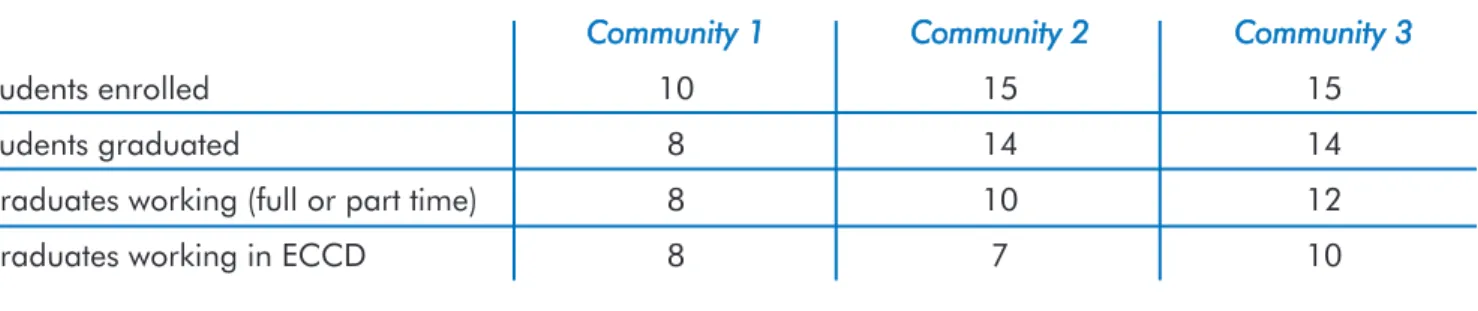
Table 1 shows the community capacity built in the training partnerships involving the three First Na-tions in the current program of follow-up research. Across the three groups of communities 40 commu-nity members enrolled in the program; 36 (90 per cent) students completed the two years of full-time course work; 30 (75 per cent) of the original en-rolees are currently working in a human service ca-pacity; and 25 (63 per cent) of the original enrolees are employed specifically in the area of ECCD in their communities.
All three First Nations that initiated and co-deliv-ered the training partnerships have now developed community-based ECCD programs. Over time, these ECCD programs have evolved to deliver services that are new in the community; encompass services tradi-tionally fragmented in other locations in the commu-nity using different funding sources, facilities, and personnel; and bring home services that previously had been located at some distance, often very far, be-yond the community.
Each of these three communities offers insight into successful models of service delivery in communities ranging in size from 120 to 1,800 members.
Table 1: Community Capacity from Community-University Training Partnerships in Child and Youth Care
Community 11 Community 22 Community 33
Students enrolled 10 15 15
Students graduated 8 14 14
Graduates working (full or part time) 8 10 12
METHOD
In 2002, a research program was initiated in collab-oration with three groups of First Nations partner communities with the following objectives:
• to document the evolution and elaboration of ECCD initiatives in First Nations communities lo-cated on reserves;
• to examine community-level determinants of sus-tainable ECCD programs that are perceived by community members as meeting the needs of chil-dren and families; and
• to assess the impacts of community-led ECCD ini-tiatives on child development outcomes.
For the First Nations partner communities, the goal of this research is to contribute to knowledge among Aboriginal leaders about effective principles and prac-tices for:
• engaging in partnerships with external organization such as universities, service agencies, and funding bodies;
• ensuring training and service delivery enhances rather than depletes cultural continuity and self-governance in communities; and
• achieving a co-ordinated strategy for supporting the health and development of Aboriginal children. The goal of this research was to add to the under-standings about the potential for positively influenc-ing the health and development of Aboriginal children through training and funding strategies that strengthen Aboriginal community capacity to deliver ECCD. An-other goal is to identify ways in which institutions and individuals outside of First Nations communities can support and serve as allies as First Nations communi-ties develop capacity and move forward with their community development strategies. Finally, a goal of the research is to provide a context for mentoring Aboriginal researchers.33
Thus, the three First Nations and a university-based team have embarked on a multimethod, multicompo-nent program of research to document, evaluate, pro-vide feedback to community members, and share in-formation about their explorations in ECCD as a hook and hub for promoting population health.
This research program is in its early stages. Details of the various data collection methods and findings on specific themes will be reported at a later stage. Early findings reported in this paper are derived from a se-ries of group forums and individual interviews with a broad range of community members and external ser-vice professionals involved in the ECCD programs operating in each of the communities. Using a social participatory approach, questions for these forums and
interviews were developed with community-based re-search collaborators. The focus has been on commu-nity members’ definitions of child health and develop-ment; their perceptions of the determinants of child health and development; their evaluation of the effec-tiveness of their community’s approach to supporting child health and development; their own experiences with ECCD and related social service programs; and their recommendations for sustaining and improving child health and development in their community.
Collaborative information gathering to date has fo-cused on what each community is currently doing as part of its child care and development strategy; to what extent and how these initiatives work together; how they are funded; the logistics of administration and accountability; and similar information to com-plete a rich description of each community’s model for implementing population health strategies targeted at young children. The stage reached at the time of current writing has yielded detailed portrayals of the use of ECCD as a hub for inter-sectoral service deliv-ery. A synopsis of these findings, focusing especially on one community, follows.
FINDINGS:
THREE MODELS IN COMMUNITIES
USING ECCD AS HUB
Community 1:
Integrated Services
Community 1, located on a Carrier-Sekani reserve in north central British Columbia, received funding in 1996 for construction of a child care facility in a wing of the public school located on-reserve. A con-dition of funding for construction was that the com-munity would also mount a training program to pre-pare community members to operate the child care program. The training program was completed at nearly the same time as the child care facility was completed. The graduates immediately mounted a centre-based child care and development program. Shortly thereafter, the community received funding for Aboriginal Head Start. This enabled an expansion in the numbers of children served. Both the child care and the Aboriginal Head Start programs are run by community members. Both have received excellent evaluations from the regional child care licensing of-ficer and a Health Canada Aboriginal Head Start evaluation team.
Inter-sectoral service delivery occurs through the integration of health promotion programs on-site in
the child care centre and Aboriginal Head Start pro-gram. These include nutritious meals; preventive dental care; primary health care including immu-nization, vision, hearing, and speech screening; and specialist services such as supported child care for children with fetal alcohol spectrum disorder, and speech-language therapy. In addition, children who have been identified by the regional child protec-tion worker as requiring protective intervenprotec-tion may be required to attend the child care program where they can be kept safe during the day and their well-being can be monitored. This is reducing the number of children placed in foster care away from the community.
Community 2:
Pooled Resources
Located in northeast British Columbia, Commu-nity 2 is actually a coalition of six culturally distinct First Nations ranging in size from 120 to 600 mem-bers. These on-reserve communities joined together to acquire the funding, hire the instructors, and share facilities for the two-year training program in Child and Youth Care. Each community selected three community members to undertake the training, which was delivered in the largest community in partnership with the University of Victoria. Not all of the communities have been able to mount their own ECCD program yet. However, they are pooling funding from various sources and sharing resources. One community received funding to start an Aborigi-nal Head Start program, which was conceived as a Cree language immersion program. Cultural trans-mission is a top priority in this ECCD initiative, while school readiness is a close second priority. With only 120 community members, additional ser-vices delivered from this site are possible because of pooled funding and service agreements with neigh-bouring First Nations.
Each community in this group of First Nations has its own community health representative. They all share a family support worker, a wellness worker, and a public health nurse. Travelling specialists such as speech-language therapists and consultants from the child development centre in the nearest town are con-veniently able to meet and monitor children attending the Aboriginal Head Start program, consult with par-ents and provide specialized support services as needed. The Aboriginal Head Start has thus become a hub for inter-sectoral service delivery to improve sup-ports to a dispersed rural population of Aboriginal children and families.
Community 3:
ECCD as hub in an inter-sectoral
service multiplex
Community 3 is part of the group of First Nations called the Stl’atl’imx Nations. Their traditional terri-tory spans a large mountainous region in southwest-ern British Columbia. The population centre of Com-munity 3 consists of about 1,400 members, which is mid-sized among First Nations communities in rural areas in Canada. Several First Nations and other small communities are in valleys radiating out from the community so that it serves as a hub for much smaller communities.
Although the community is only three hours drive to a metropolis, difficult winter driving conditions mean that it meets Health Canada’s definition of semi-isolated. Residents also identify it as semi-iso-lated, noting transportation as a major barrier to ac-cessing both routine and occasional services. There is little traffic through the community. An emergency health clinic is 20 minutes from the reserve. Hospital beds are 60 minutes away, located in a small health clinic. The maternity clinic is 90 minutes away.
Child and Youth Care Training
This community initiated a partnership with the team based at the University of Victoria School of Child and Youth Care in 1997. This community was unique among the First Nations partners with the Uni-versity of Victoria in that there were enough qualified community members to meet university admission criteria so the community did not need to recruit ex-ternally.
As part of a comprehensive child care strategy, the community mounted the training program at the same time they broke ground for a child care facility. The child care facility was conceptualized architecturally as part of a multiplex that has grown over time. It now houses an infant and toddler care centre, child care centre for preschool-aged children, indoor and outdoor after-school care facilities, cultural centre, health centre, social service centre, administration of-fices, community kitchen, and community gathering space.
In May 1999, 14 of the 15 community members who enrolled in the diploma training program were honoured in a community graduation ceremony that drew a crowd of several hundred community mem-bers. On the following day, the community celebrated the grand opening of the multiplex. The centre and the ECCD programs housed there were given Aboriginal names. The new generation of graduates form the
foundation for services for the community’s young children.
As part of the training program, students undertook community consultations to plan the desired elements of the infant, toddler and preschool programs they would initiate ensuring the program was designed with the involvement and explicit needs of commu-nity members in clear focus. They also developed a manual of child care policies and procedures and learned the basic principles of administration of child care facilities and community development. Thus, within weeks of graduating from the training pro-gram, the community was ready to enrol children for the child care programs, which were soon fully sub-scribed. Many more children in the community have been turned away from the service due to insufficient spaces.
Culture
A cohesive group of Elders, most of whom are fluent in their Aboriginal language, actively support the ECCD staff. Intergenerational relationships are particularly easy here since many Elders played substantial roles in the ECCD training program. Staff work hard to bring many cultural activities–such as drumming, dancing, singing, and speaking their Aboriginal language–into the daily curriculum. They also involve children in seasonal activities that teach the skills that have traditionally provided sustenance for this community such as smoking and drying fish, berry picking and basket making. The children also receive advance prepara-tion to take part in community festivals and other events throughout the year.
Culture is transmitted in less visible ways as well. At the child care centre, children come to know their relatives and they develop relationships with their ex-tended families. Elders, staff, and parents explained that it is important to be proud of who you are. This process can begin in their community child care pro-gram where children are learning about themselves, their heritage, and their community starting with their own relations.34Also, several staff and parents identi-fied children’s opportunity to develop healthy social-ization as one important outcome of having children cared for in a group setting composed of their own community members. For example, children were learning to take turns, wait for others, help others, and play with other children with whom they will share in community life for years to come.
Parents reported they were proud of the cultural knowledge and pride their children were learning. Many parents said they were learning many words
and songs in their Aboriginal language from their children.
Parent Involvement
In this particular First Nation, a majority of parents bring their children to the centre for care because they are working or continuing their education on a full-time basis. A small number are using the full-time while their child is at the centre to pursue their own healing such as substance abuse treatment programs and other rehabilitation and support programs. As a result, there is a low level of parent involvement in the ECCD pro-grams.
However, there is a high degree of attachment of parents to various programs and services offered at the multiplex. For example, more than 60 parents of children enrolled in the child care program have par-ticipated in one or more early language facilitation programs for parents. A registered speech-language pathologist on secondment to the community from the regional Children and Family Development office provides this service. Many parents have participated in Best Babies programs and other parent education and support programs. They have been exposed to health information displayed on bulletin boards and resource tables at the entrance to the multiplex.
Nutrition
The multiplex has a kitchen for community meals. Snacks are prepared for children attending the preschool and infant and toddler programs. Children bring their own lunch. Observing that a few children lack nutritious foods from home, staff hope to add a funded nutritious meal program in the near future.
Integrated Services
As previously described, when the multiplex centre opened, it was envisioned as a multiservice delivery site that would include Elders, youth, and children and be a site of wellness and primary health services. Programs and services, in addition to a culturally-rich, developmental ECCD curriculum, that are delivered inside the child care centre have gradually evolved to include:
• occupational therapy provided by a professional on secondment from a regional child care service; • supported child care provided by certified child
care practitioners assigned to individual children with diagnosed special needs;
• developmental monitoring, assessment and referral provided by a special needs professional assigned from a regional child care service;
• speech-language pathology services including training and consultation to staff and monitoring,
diagnostic and early intervention services to chil-dren; and
• preventive dentistry provided by a denturist and the community health nurse who consult with ECCD staff on dental care, monitor children’s dental health and provide referrals.
Co-Located Services
Programs and services that are delivered in the multiplex so they are co-located with the ECCD pro-gram, now include:
• Mother Goose, a pre-literacy skills enhancement program for children and their primary care-givers;
• Best Babies, a support and education group for par-ents of infants;
• other parenting education and support groups; • parent information bulletin board, resource table
and computer with Internet access for information search and retrieval;
• community health representative;
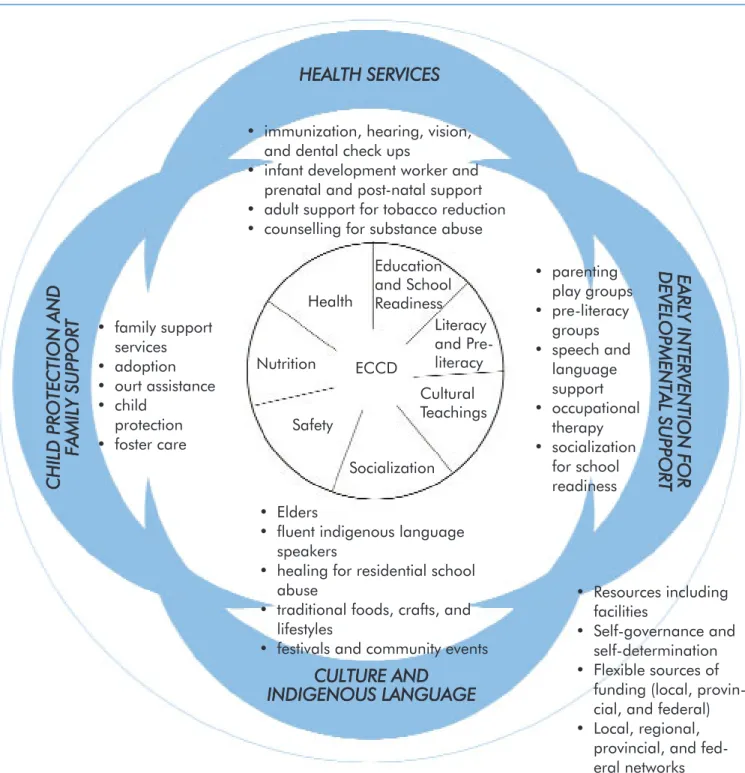
Figure 1: Early Childhood Care and Development Programs as a Hub for Inter-sectoral Service Delivery in one British Columbia First Nation
HEALTH SSERVICES
CULTURE A
AND
INDIGENOUS LLANGUAGE
EEAA
RRLL
YY II
NN
TTEE
RRVV
EENN
TTIIOO
NN
FF
OO
RR
DD
EEVV
EELL
OO
PPMM
EENN
TTAA
LL SS
UU
PPPP
OO
RRTT
C
H
IL
D
PP
RO
TE
C
TI
O
N
AA
N
D
FA
M
IL
Y S
SU
PP
O
RT
• immunization, hearing, vision, and dental check ups
• infant development worker and prenatal and post-natal support • adult support for tobacco reduction • counselling for substance abuse
• parenting play groups • pre-literacy groups • speech and language support • occupational therapy • socialization for school readiness • Elders
• fluent indigenous language speakers
• healing for residential school abuse
• traditional foods, crafts, and lifestyles
• festivals and community events • family support services • adoption • ourt assistance • child protection • foster care ECCD Health Education and School Readiness Literacy and Pre-literacy Cultural Teachings Socialization Safety Nutrition • Resources including facilities • Self-governance and self-determination • Flexible sources of
funding (local, provin-cial, and federal) • Local, regional,
provincial, and fed-eral networks
• support groups facilitated by community employ-ees such as the community health representative or staff from contracted agencies such as the regional family support services non-profit agency;
• public health nurse;
• Hanen early language facilitation programs;
• National Native Alcohol and Drug Abuse Program (NNADAP) counsellor;
• meeting space for several 12-step programs (e.g., Alcoholics Anonymous, Narcotics Anonymous); • tobacco reduction support worker;
• diabetes prevention worker; and • optometry service.
The multiplex includes a large multipurpose gath-ering room. Although this room was intended initially for Elders, it quickly became a community centre for special community programs and events. There are also several other meeting rooms around the central gathering space. These are typically booked through-out the week for meetings addressing a range of as-pects of child and family life.
Co-ordination with Other
Community Services
Two other family-serving structures are located near the ECCD facility. These include a wellness cen-tre that houses a child protection worker, two family support workers, the tribal police, and a large, full-service, band-operated school.
The Foundational Role of ECCD
in Communities
The evolution of community services–beginning with a partnership to deliver community-based train-ing in Child and Youth Care and subsequent initiation of ECCD programs–was part of a considered plan for community self-sufficiency. A community administra-tor explained that the journey to achieving this vision began with a declaration of independence made by the hereditary chiefs of the Stl’atl’imx People in 1911.
The community cherishes goals of cultural revital-ization, increased health and wellness, improved edu-cation outcomes at all levels, and economic develop-ment. The community is unified in its understanding of optimal developmental conditions for children as the foundation for achieving these goals. The child care program was planned as part of a foundation ele-ment for a comprehensive, integrated, community health centre that would proactively promote optimal health and development throughout the lifespan within a community setting infused with the commu-nity’s culture and Aboriginal language.
Figure 1 shows the location of the centre-based ECCD program within an inter-sectoral service
sys-tem in the First Nation that is the focus of the current research report.
CONCLUSIONS
ECCD as a Hook and Hub for
Community Renewal and Consolidation
The cases documented in this paper illustrate how, when a community begins a development process with the well-being of its children as the starting point, the focus on children can work as a hook to at-tract and secure community commitment and action and the ECCD program can become a hub of commu-nity-serving programs and activities. The well-being of children is a top priority for many adults in First Nations, as it is in non-Aboriginal communities. Many adults may be willing to seek services for their infant or child even though they may be reluctant to seek services for themselves. When parents or grand-parents bring children for child care or drop by a child care centre for a parenting class, they are exposed to community service providers and the variety of ser-vice available through the centre. When the centre is located in their own community and it is culturally safe, the services available are both geographically and culturally accessible. This increases participation by community members in programs such as parent support groups, counselling, health education, and preventive health services as well as to cultural and community events. This in turn promotes social inclu-sion of children and families who may otherwise be isolated. It builds community cohesion and facilitates cultural and Aboriginal language transmission. As one young Aboriginal man in Community 3 said in his in-terview for the research:
Ever since this place happened, I feel like people can come out more and get the help and support they need. This child care pro-gram has been like a magnet that has drawn us together and keeps us here, doing things to help and heal ourselves and that will hope-fully make our community stronger and a bet-ter place for our children and everyone who lives here and even some people who want to move back here.
The community initiatives described in this paper illustrate the three assumptions outlined initially: 1. Services appropriate to Aboriginal people should
as embedded within community history, conditions, development, and health;
2. Training and services to support the holistic, munity-embedded goals of many Aboriginal munities must be based on a recognition of com-munity members’ prior experiences with health, social, and education services since colonial domi-nation. They must also recognize the increased likelihood of success of population health ap-proaches that involve and support the whole family and are community-based, community-operated and culturally safe; and
3. Aboriginal communities whose goal is to improve health should be involved in planning, operating, and evaluating population health initiatives from the outset.
The circumstances, resources, and goals of a com-munity combine to create certain possibilities and ways of working to promote health and well-being in a community of children and families. Each region or community faces a unique set of barriers, goals, and assets. The need for bureaucracies to recognize and support flexible program strategies and use of funding is a strong recommendation of the Romanow Com-mission in reference to rural, remote, and Aboriginal health.35
The three groups of First Nations who participated in the research described in this paper have evolved systems of program delivery that have some common-alities and unique features. They have each used dif-ferent funding sources, administrative structures, pur-poses, and ways of working. These distinctive features result in different kinds of benefits and achievements. But all three communities have demon-strated how using ECCD as hook and hub can assure developmental supports for children, enable primary health service delivery, and provide a portal for fami-lies to access and receive specialized services in a co-ordinated way.
The stories of the communities described in this pa-per hold promise, not only for other Aboriginal com-munities, but for all of Canada and beyond as well. These stories can inspire other communities to persist toward the goal of accessible, affordable, integrated, logically-cohesive, and socio-culturally suitable sys-tems of services to promote child and family wellness.
ACKNOWLEDGMENTS
The research reported in this paper was supported by grants from Human Resource Development Canada, Social Development Partnerships Program, Project No. 9573-10-01/022, and the Social Sciences
and Humanities Research Council of Canada, Major Collaborative Research Initiatives Program, Project CHILD.
The author thanks the three groups of First Nations communities in British Columbia who participated in the research reported in this paper and whose efforts to serve children and families provide examples for everyone. Thank you also to individual community members and service providers who were interviewed for the research. The author also expresses apprecia-tion to Silvia Vilches who has assisted in the project.
ENDNOTES
1. See Marie Battiste (Ed.), Reclaiming Indigenous Voice and Vision (Vancouver: UBC Press, 2000); David Alan Long and Olive Patricia Dickason, Visions of the Heart: Canadian Aboriginal Issues(Toronto: Harcourt Brace, 1996); and Peter H. Stephenson et al., A Persistent Spirit: Towards Under-standing Aboriginal Health in British Columbia (Victoria, B.C.: Canadian Western Geographical Series, Vol. 31., Uni-versity of Victoria, 1995).
2 Roy J. Romanow, Building on Values: The Future of Health care in Canada, Final Report of the Commission on the Fu-ture of Health Care in Canada(Ottawa: National Library of Canada, 2002).
3. Romanow, Building on Values, p. 224.
4. For example: L. Haddad, An Integrated Approach to Early Childhood Education and Care: A paper prepared under the sponsorship of UNESCO/Swedish Ministry of Education and Science Conference on Early Childhood Education and Care (Stockholm, Sweden: June 13-15, 2001); UNICEF (C. Bel-lamy), The State of the World’s Children Report for 221 (New York, NY: United Nations Children’s Fund, UNICEF, 2001); and M. Woodhead, In Search of the Rainbow: Path-ways to Quality in Large Scale Programmes for Young Dis-advantaged Children (The Hague: Bernard van Leer Founda-tion, 1996).
5. C. O’Gara et al., Qualities of Caring: Good Practices in In-fant and Toddlers Care Group(Washington, D.C.: Early Child Development Education, the World Bank, 1999). 6. S. de Leeuw, J. Fiske and M. Greenwood, Rural, Remote and
North of 51: Service Provision and Substance Abuse Related Special Needs in the British Columbia’s Hinterlands (Prince George, BC: Substance Abuse Task Force of the Centre of Excellence for Children and Adolescents with Special Needs, 2002).
7. This bicultural, community-based, university accredited training program in Child and Youth Care was conceived in 1989 in a partnership between the Meadow Lake Tribal Council in Saskatchewan and the School of Child and Youth Care at the University of Victoria. The initiating leader at MLTC was Ray Ahenahew, and the founding coordinator at UVic was Alan Pence. The author is currently the coordinator of this program, called the First Nations Partnerships Pro-gram, at UVic. For more information, see http://www.fnpp.org or contact the First Nations Liaison: Onowa McIvor at [email protected].
8. A. Pence, “‘It takes a village . . . ,’ and New Roads to Get There,” D.P. Keating and C. Hertzman (eds.), Developmental Health and the Wealth of Nations(p. 322-336) (New York: Guilford Press, 1999).
9. Assembly of First Nations, Recommendation 39: Report of the National Inquiry into First Nations Child Care (Summer-stown, Ont.: Assembly of First Nations National Indian Brotherhood, 1989).
10. Aboriginal Committee, Community Panel, Liberating Our children, Liberating our Nation (Victoria, B.C.: Family and Children’s Services Legislation Review, 1992).
11. Canada, Health Canada, First Nations and Inuit Health Branch, Second Diagnostic on the Health of First Nations and Inuit People in Canada, 1999.
12. British Columbia, Vital Statistics, Regional Analysis of Sta-tus Indians in British Columbia, 1991-2001: Birth Related and Mortality Summaries for British Columbia and 16 Health Service Delivery Areas (2001).
13. Canada, Health Canada, Second Diagnostic, 1999.
14. British Columbia, Vital Statistics, Regional Analysis, (2001). 15. Lloyd Axworthy as cited in M. Greenwood, “Aboriginal
Child Care in Review, Part 2,” Caring for Our Children Newsletter, Vol. 3, No. 1, p. 6-11 (British Columbia: Aborig-inal Child Care Society of B.C., 1998).
16. J.P. Shonkoff and D.A. Phillips (Eds.), From Neurons to Neighborhoods: The Science of Early Childhood Develop-ment (Washington, D.C.: National Academy Press, 2000). 17. B. Rogoff et al., “Toddlers’ Guided Participation with Their
Caregivers in Cultural Activity,” M. Woodhead, D. Faulkner and K. Littleton (Eds.) Cultural Worlds of Early Childhood
(London: The Open University, 1998) p. 225-249.
18. C.M. Super and S. Harkness, “The development of Affect in Infancy and Early Childhood,” M. Woodhead, D. Faulkner and K. Littleton (Eds.) Cultural Worlds of Early Childhood
(London: The Open University, 1998) p. 34-47.
19. R. Kantor, P.M. Elgas and D.E. Fernie, “Cultural Knowledge and Social Competence within a Preschool Peer-Culture Group,” M. Woodhead, D. Faulkner and K. Littleton (Eds.).
Cultural Worlds of Early Childhood(London: The Open Uni-versity, 1998) p. 133-154.
20. M. Greenwood and P. Shawana, Whispered Gently Through Time: First Nations Quality Child Care—A National Study (Ottawa: Assembly of First Nations, 2000).
21. Greenwood and Shawana, Whispered Gently Through Time; and Child Care Resource and Research Unit, Child Care in Canada: Provinces and Territories 1995 (Victoria, B.C.: 1997). As printed May 15, 2003, from http://www.childcare-canada.org/resources/prov_terr/prvtrr63.html.
22. Greenwood and Shawana, 2000.
23. Canada, Federal/Provincial/Territorial Early Childhood De-velopment Agreement: The Well-Being of Canada’s Young Children, 2002. Available at http://www.socialunion.gc.ca. 24. Canada, Federal/Provincial/Territorial Early Childhood
De-velopment Agreement: Early Childhood DeDe-velopment Activ-ities and Expenditures, 2002. Available at http://www.so-cialunion.gc.ca.
25. Romanow, Building on Values.
26. Northern and Rural Health Task Force, Report of the North-ern and Rural Health Task Force (Victoria, B.C.: Province of British Columbia, 1995).
27. de Leeuw, Fiske, and Greenwood, Rural, Remote and North of 51, p. 13.
28. L. O’Donoghue, “Towards a Culture of Improving Indige-nous Health in Australia,” Australian Journal of Rural Health, Vol. 7 (December 1998) p. 65.
29. A. Pence and J. Ball, “Two Sides of an Eagle’s Feather: Co-Constructing ECCD Training Curricula in University Partner-ships with Canadian First Nations Communities,” in H. Penn (Ed.), Theory, Policy and Practice in Early Childhood Ser-vices (Buckingham, United Kingdom: Open University Press, 1999) p. 36-47.
30. Jessica Ball and Alan R. Pence, “Beyond Developmentally Appropriate Practice: Developing Community and Cultur-ally Appropriate Practice,” Young Children(March 1999) p. 46-50; and J. Ball, C. Leo and M. Pierre, “Profile: Mount Currie First Nation: Aboriginal Child and Youth Care Pro-gram,” Interaction/Ideas(Canadian Child Care Federation, 2000).
31. J. Ball and A. Pence, “Beyond Developmentally Appropriate Practice: Developing Community and Culturally Appropriate Practice,” Young Children, March 1999, p. 46-50.
32. J. Ball, “A Generative Curriculum Model for Early Child-hood Care and Development in Indigenous Communities in Canada,” in K. Boven (Nuffic) and J. Morohashi (UN-ESCO/MOST) (Eds.), Best Practices Using Indigenous Knowledge(The Hague: Nuffic-OS/IK Unit, 2002) p. 198-216, available at http://www.nuffic.nl/ik-pages.
33. J. Ball and M. Simpkins, “The Community Within the Child: The Integration of Indigenous Knowledge into First Nations Child-Care Process and Practice,” American Indian Quar-terly (in press).
Call ffor PPapers
The
Journal of Aboriginal Health
is seeking papers that focus
on Aboriginal health issues
from a variety of writers including:
• Academics and scholars
• Students
• Community health professionals
• Traditional healers
• Community members
The
Journal of Aboriginal Health’s Editorial Advisory Board identifies
important Aboriginal health issues to be the theme of each issue. The
Board selects a Guest Editor, who is an expert in the theme, to solicit
appropriate papers from a variety of perspectives.
However, this is a general call for papers to be submitted to the Journal of
Aboriginal Health. Starting with the third issue (The Health of Urban
Aboriginal People: From Woundedness to Resilience), some general
Aboriginal health research papers will be accepted to complement the
theme. Papers may also fit into the theme of future issues.
Submit papers suitable for peer review to:
Journal of Aboriginal Health
National Aboriginal Health Organization
220 Laurier Ave. W., Suite 1200
Ottawa, ON K1P 5Z9
Phone: (613) 233-1543 or Toll-Free 1-877-602-4445
Fax: (613) 233-1853
E-mail: [email protected]
Writing style guidelines and more information about the
Journal of Aboriginal Health
are available online at:
CULTURAL WORLDS OF EARLY
CHILDHOOD
Edited by Martin Woodhead, Dorothy Faulkner, and Karen Littleton
Routledge Falmer Education and Routledge Sport and the Open University, 1998
ISBN 0-41517-372-8 296 pages
Cultural Worlds of Early Childhood contains source material for an up-to-date study of child devel-opment as it applies to major issues in child care and education. The emphasis is on studying early child-hood in cultural contexts–in families and in preschool settings.
Part 1 elaborates a socio-cultural approach to early development, taking emotional attachment, communi-cation and language, and daycare as examples.
Part 2 considers how children’s growing abilities for empathy, inter-subjectivity, and social understand-ing enable them to negotiate, talk about, and play out relationship themes, both in the family and preschool.
Part 3 concentrates on early learning, with chapters on the way parents support children’s development of new skills, young children negotiating their role in learner-teacher relationships, and toddlers learning to collaborate with each other.
Part 4 continues the theme of children’s initiation into socio-cultural practices from a cross-cultural per-spective, with studies drawn from such diverse con-texts as Cameroon, Guatemala, Italy, Japan, and the United States.
Cultural Worlds of Early Childhood is the first of three books that have been specially prepared as read-ers for the Open Univread-ersity MA Course: ED840 Child Development in Families, Schools, and Society.
Further RReading
EED
DIITTO
ORR’’SS N
NO
OTTEE
BBooookk aabbssttrraaccttss aarree pprriinntteedd wwiitthh ppeerrmmiissssiioonn ffrroomm tthhee ppuubblliisshhiinngg ccoommppaannyy tthhaatt pprroodduucceedd eeaacchh bbooookk.. AAbbssttrraaccttss pprroovviiddee ffuurrtthheerr iinnffoorrmmaattiioonn oonn ssoommee ooff tthhee rreessoouurrcceess rreeffeerreenncceedd iinn tthhee pprreecceeddiinngg
rreesseeaarrcchh ppaappeerr oorr aarree ggeenneerraallllyy rreellaatteedd ttoo tthhee tthheemmee ooff tthhiiss iissssuuee..
VOICE AND VISION
Edited by Marie Battiste
University of British Columbia Press, 2000 ISBN 0-7748-0745-8
314 pages
The essays in Reclaiming Indigenous Voice and Vi-sionspring from an International Summer Institute on the cultural restoration of oppressed indigenous peo-ples. The contributors, primarily indigenous, unravel the processes of colonization that enfolded modern society and resulted in the oppression of indigenous peoples.
The authors–among them Gregory Cajete, Erica-Irene Daes, Bonnie Duran and Eduardo Duran, James Youngblood Henderson, Linda Hogan, Leroy Little Bear, Ted Moses, Linda Tuhiwai Te Rina Smith, Gra-ham Hingangaroa Smith, and Robert Yazzie–draw on a range of disciplines, professions, and experiences. Addressing four urgent and necessary issues–mapping colonialism, diagnosing colonialism, healing colo-nized indigenous peoples, and imagining post-colo-nial visions–they provide new frameworks for under-standing how and why colonization has been so wide spread and relentless among indigenous peoples. They also envision what they would desire in a truly post-colonial context.
In moving and inspiring ways, Reclaiming Indige-nous Voice and Vision discuss a new inclusive vision of a global and national order and detail new ap-proaches for protecting, healing, and restoring long-oppressed peoples and for respecting their cultures and languages.
Editor Marie Battiste is a Mi’kmaq educator from Potlo’tek First Nation in Nova Scotia. She is a pro-fessor in the Indian and Northern Education Program at the University of Saskatchewan. She is co-editor of First Nations Education in Canada: The Circle Unfolds.
![2,4 Bis(4 ethoxyphenyl) 3 azabicyclo[3 3 1]nonan 9 one](data:image/gif;base64,R0lGODlhAQABAIAAAP///wAAACH5BAEAAAAALAAAAAABAAEAAAICRAEAOw==)