Rajeev K. Varshney
Manish K. Pandey
Naveen Puppala
Editors
The Peanut
Genome
Compendium of Plant Genomes
Series editorProf. Chittaranjan Kole, Raja Ramanna Fellow, Department of Atomic Energy, Government of India, Kalyani, India
millennium. Since the first genome sequencing of the model plant Arabidopsis thaliana in 2000, whole genomes of about 70 plant species have been sequenced and genome sequences of several other plants are in the pipeline. Research publications on these genome initiatives are scattered on dedicated web sites and in journals with all too brief descriptions. The individual volumes elucidate the background history of the national and international genome initiatives; public and private partners involved; strategies and genomic resources and tools utilized; enumeration on the sequences and their assembly; repetitive sequences; gene annotation and genome duplication. In addition, synteny with other sequences, comparison of gene families and most importantly potential of the genome sequence information for gene pool characterization and genetic improvement of crop plants are described.
Interested in editing a volume on a crop or model plant?Please contact Dr. Kole, Series Editor, at [email protected]
Rajeev K. Varshney
Manish K. Pandey
Naveen Puppala
Editors
The Peanut Genome
Rajeev K. Varshney Center of Excellence in
Genomics (CEG)
International Crops Research Institute for the Semi-Arid Tropics (ICRISAT) Patancheru
India
Manish K. Pandey Center of Excellence in
Genomics (CEG)
International Crops Research Institute for the Semi-Arid Tropics (ICRISAT) Patancheru
India
Naveen Puppala
Agricultural Science Center at Clovis New Mexico State University Clovis, NM
USA
ISSN 2199-4781 ISSN 2199-479X (electronic) Compendium of Plant Genomes
ISBN 978-3-319-63933-8 ISBN 978-3-319-63935-2 (eBook) DOI 10.1007/978-3-319-63935-2
Library of Congress Control Number: 2017952509
©Springer International Publishing AG 2017
This work is subject to copyright. All rights are reserved by the Publisher, whether the whole or part of the material is concerned, specifically the rights of translation, reprinting, reuse of illustrations, recitation, broadcasting, reproduction on microfilms or in any other physical way, and transmission or information storage and retrieval, electronic adaptation, computer software, or by similar or dissimilar methodology now known or hereafter developed.
The use of general descriptive names, registered names, trademarks, service marks, etc. in this publication does not imply, even in the absence of a specific statement, that such names are exempt from the relevant protective laws and regulations and therefore free for general use. The publisher, the authors and the editors are safe to assume that the advice and information in this book are believed to be true and accurate at the date of publication. Neither the publisher nor the authors or the editors give a warranty, express or implied, with respect to the material contained herein or for any errors or omissions that may have been made. The publisher remains neutral with regard to jurisdictional claims in published maps and institutional affiliations. Printed on acid-free paper
This Springer imprint is published by Springer Nature The registered company is Springer International Publishing AG
my wife Phullara, and our children
Sourav, and Devleena
Preface to the Series
Genome sequencing has emerged as the leading discipline in the plant sci-ences coinciding with the start of the new century. For much of the twentieth century, plant geneticists were only successful in delineating putative chro-mosomal location, function, and changes in genes indirectly through the use of a number of‘markers’physically linked to them. These included visible or morphological, cytological, protein, and molecular or DNA markers. Among them, thefirst DNA marker, the RFLPs, introduced a revolutionary change in plant genetics and breeding in the mid-1980s, mainly because of their infinite number and thus potential to cover maximum chromosomal regions, phe-notypic neutrality, absence of epistasis, and codominant nature. An array of other hybridization-based markers PCR-based markers, and markers based on both facilitated construction of genetic linkage maps, mapping of genes controlling simply inherited traits and even gene clusters (QTLs) controlling polygenic traits in a large number of model and crop plants. During this period a number of new mapping populations beyond F2were utilized and a number of computer programs were developed for map construction, map-ping of genes, and for mapmap-ping of polygenic clusters or QTLs. Molecular markers were also used in studies of evolution and phylogenetic relationship, genetic diversity, DNA-fingerprinting, and map-based cloning. Markers tightly linked to the genes were used in crop improvement employing the so-called marker-assisted selection. These strategies of molecular genetic mapping and molecular breeding made a spectacular impact during the last one and a half decades of the twentieth century. But still they remained “indirect”approaches for elucidation and utilization of plant genomes since much of the chromosomes remained unknown and the complete chemical depiction of them was yet to be unraveled.
Physical mapping of genomes was the obvious consequence that facili-tated development of the ‘genomic resources’ including BAC and YAC libraries to develop physical maps in some plant genomes. Subsequently, integrated genetic-physical maps were also developed in many plants. This led to the concept of structural genomics. Later on, emphasis was laid on EST and transcriptome analysis to decipher the function of the active gene sequences leading to another concept defined as functional genomics. The advent of techniques of bacteriophage gene and DNA sequencing in the 1970s was extended to facilitate sequencing of these genomic resources in the last decade of the twentieth century.
As expected, sequencing of chromosomal regions would have led to too much data to store, characterize, and utilize with the-then available computer software could handle. But development of information technology made the life of biologists easier by leading to a swift and sweet marriage of biology and informatics and a new subject was born—bioinformatics.
Thus, evolution of the concepts, strategies and tools of sequencing and bioinformatics reinforced the subject of genomics—structural and functional. Today, genome sequencing has traveled much beyond biology and involves biophysics, biochemistry and bioinformatics!
Thanks to the efforts of both public and private agencies, genome sequencing strategies are evolving very fast, leading to cheaper, quicker and automated techniques right from clone-by-clone and whole-genome shotgun approaches to a succession of second generation sequencing methods. Development of software of different generations facilitated this genome sequencing. At the same time, newer concepts and strategies were emerging to handle sequencing of the complex genomes, particularly the polyploids.
It became a reality to chemically—and so directly—define plant genomes, popularly called whole-genome sequencing or simply genome sequencing.
The history of plant genome sequencing will always cite the sequencing of the genome of the model plant Arabidopsis thaliana in 2000 that was followed by sequencing the genome of the crop and model plant rice in 2002. Since then, the number of sequenced genomes of higher plants has been increasing exponentially, mainly due to the development of cheaper and quicker genomic techniques and, most importantly, development of collab-orative platforms such as national and international consortia involving partners from public and/or private agencies.
As I write this preface for thefirst volume of the new series“Compendium of Plant Genomes”, a net search tells me that complete or nearly complete whole-genome sequencing of 45 crop plants, eight crop and model plants, eight model plants, 15 crop progenitors and relatives, and three basal plants are accomplished, the majority of which are in the public domain. This means that we nowadays know many of our model and crop plants chemically, i.e., directly, and we may depict them and utilize them precisely better than ever. Genome sequencing has covered all groups of crop plants. Hence, infor-mation on the precise depiction of plant genomes and the scope of their utilization is growing rapidly every day. However, the information is scat-tered in research articles and review papers in journals and dedicated web pages of the consortia and databases. There is no compilation of plant gen-omes and the opportunity of using the information in sequence-assisted breeding or further genomic studies. This is the underlying rationale for starting this book series, with each volume dedicated to a particular plant.
Plant genome science has emerged as an important subject in academia, and the present compendium of plant genomes will be highly useful both to students and teaching faculties. Most importantly, research scientists involved in genomics research will have access to systematic deliberations on the plant genomes of their interest. Elucidation of plant genomes is not only of interest for the geneticists and breeders, but also for practitioners of an array of plant science disciplines, such as taxonomy, evolution, cytology,
physiology, pathology, entomology, nematology, crop production, bio-chemistry, and obviously bioinformatics. It must be mentioned that infor-mation regarding each plant genome is ever-growing. The contents of the volumes of this compendium are therefore focusing on the basic aspects of the genomes and their utility. They include information on the academic and/ or economic importance of the plants, description of their genomes from a molecular genetic and cytogenetic point of view, and the genomic resources developed. Detailed deliberations focus on the background history of the national and international genome initiatives, public and private partners involved, strategies and genomic resources and tools utilized, enumeration on the sequences and their assembly, repetitive sequences, gene annotation, and genome duplication. In addition, synteny with other sequences, comparison of gene families, and, most importantly, potential of the genome sequence information for gene pool characterization through genotyping by sequencing (GBS) and genetic improvement of crop plants have been described. As expected, there is a lot of variation of these topics in the volumes based on the information available on the crop, model, or reference plants.
I must confess that as the series editor it has been a daunting task for me to work on such a huge and broad knowledge base that spans so many diverse plant species. However, pioneering scientists with life-time experience and expertise on the particular crops did excellent jobs editing the respective volumes. I myself have been a small science worker on plant genomes since the mid-1980s and that provided me the opportunity to personally know several stalwarts of plant genomics from all over the globe. Most, if not all, of the volume editors are my longtime friends and colleagues. It has been highly comfortable and enriching for me to work with them on this book series. To be honest, while working on this series I have been and will remain a studentfirst, a science worker second, and a series editor last. And I must express my gratitude to the volume editors and the chapter authors for pro-viding me the opportunity to work with them on this compendium.
I also wish to mention here my thanks and gratitude to the Springer staff, Dr. Christina Eckey and Dr. Jutta Lindenborn in particular, for all their constant and cordial support right from the inception of the idea.
I always had to set aside additional hours to edit books besides my pro-fessional and personal commitments—hours I could and should have given to my wife, Phullara, and our kids, Sourav, and Devleena. I must mention that they not only allowed me the freedom to take away those hours from them but also offered their support in the editing job itself. I am really not sure whether my dedication of this compendium to them will suffice to do justice to their sacrifices for the interest of science and the science community.
Preface
Genome contains a set of genetic instructions coded in the form of just four letters (A, C, G, T) which defines the basic behavior of every plant species. Since the discovery of DNA, researchers have continuously been trying to understand the instructions encoded in the genome andfinding out ways to manipulate these instructions for achieving desirable phenotype in a crop species. The pace of such understanding for desirable traits in peanut has been extensively slow because of the genetic complexity and large-sized genome. The availability of reference genome sequences for both the diploid progenitor species has provided acceleration to this process of understanding and deploying modern approaches for candidate gene discovery and marker development for key traits in peanut. Genomics research has revolutionized the pace of genetics and breeding research due to low-cost sequencing and high throughput genotyping technologies. These resources not only helped in developing better understanding the basic biology of the crop plants but also used together with other genetic resources for developing genomics tools to deploy them in breeding for developing improved varieties.
The peanut, also known as groundnut (Arachis hypogaea), is an important legume crop mainly utilized for cooking oil and confectionary and table purpose. This crop is widely cultivated in >100 countries with a total pro-duction of million tons during 2014. The cultivated peanut came into existence from hybridization between two diploid species (A. duranensisand A. ipaensis) possessing different genomes. The current understanding is that the hybridization event gave rise initially to a wild form of tetraploid peanut species,A. monticola, which after the long domestication process gave rise to the cultivated tetraploid species, dramatically different from its wild relatives. This crop has unique feature of geotropism and skotomorphogenesis, i.e.,flowering happens above ground and seed development happens below the ground. The year 2016 has been a very significant year for peanut research community as reference genome sequence for both the diploid progenitors as well as a high throughput genotyping array with 56K single nucleotide polymorphisms (SNPs) have become available for genomics studies, candidate gene discovery, high resolution trait-mapping, and marker development and breeding.
This book is very timely in peanut as part of the genome compendium series for different crops. It contains 11 different chapters providing detailed overview on different aspects of botanical classification, genetics, genomics,
and breeding. This book not only provides information on recent advances on genome sequencing, genome architecture, genetic mapping for few traits and marker identification, but also presents case studies of developing molecular breeding products for foliar diseases, nematode resistance, and oil quality.
A total of 30 authors from Argentina, Brazil, China, India, and USA have contributed 11 chapters for this volume (see“Contributors”). The editors of this volume are grateful to all the authors for their contribution in writing chapters of high quality of their area of expertise and reviewers (see “Reviewers”) for their constructive suggestions and corrections helping in improving the quality of the chapters further. The editors are also thankful to Dr. David Bergvinson, Director General, ICRISAT and Dr. Peter Carberry, Deputy Director General—Research, ICRISAT for their support. The editors thank Prof. C. Kole, Series Editor for his invitation and help in editing this volume. The cooperation received from Abirami Purushothaman, Jega-deeswari Diravidamani and Nareshkumar Mani from Springer has been a great help in completion of this book and is gratefully acknowledged. The cooperation and encouragement from publisher have been of great help in completion of this book and are gratefully acknowledged.
In addition to above, we also appreciate and recognize cooperation and moral support from our family members for sparing us precious time for editorial work that we should have spent with our respective families. RKV acknowledges the help and support of wife (Monika), son (Prakhar), and daughter (Preksha) who allowed their time to be taken away to fulfill RKV’s editorial responsibilities in addition to research and other administrative duties at ICRISAT. Similarly, MKP is grateful to his wife (Seema) for her help and moral support while doing editorial responsibilities in addition to research duties at ICRISAT with special thanks to his brave daughter (late Tanisha) who has been alive for only a short period of time (3 months) after birth. NP also acknowledges his wife (Vani) and son (Kunal) for their cooperation and understanding in not fulfilling the family responsibilities during the evenings and weekends due to editorial commitment.
We hope that our efforts in compiling the information on different aspects of peanut will help the peanut genomics and breeding researchers in devel-oping better understanding and research strategies. This book will also benefit students, academicians, and policy makers in updating their knowledge on recent advances in peanut research.
Patancheru, India Rajeev K. Varshney
Patancheru, India Manish K. Pandey
Contents
1 The Peanut Genome: An Introduction. . . 1 Rajeev K. Varshney, Manish K. Pandey and Naveen Puppala
2 Economic and Academic Importance of Peanut. . . 7 Murali T. Variath and P. Janila
3 Peanut: Origin and Botanical Descriptions . . . 27 Shyam P. Tallury
4 Cytological Features of Peanut Genome . . . 37 Guillermo Seijo, Sergio S. Samoluk, Alejandra M. Ortiz,
María C. Silvestri, Laura Chalup, Germán Robledo and Graciela I. Lavia
5 Germplasm Characterization and Trait Discovery
in Peanut. . . 53 Boshou Liao
6 Genomics Resources for Peanut Improvement. . . 69 Peggy Ozias-Akins, Ethalinda K.S. Cannon and
Steven B. Cannon
7 Classical and Molecular Approaches for Mapping
of Genes and Quantitative Trait Loci in Peanut. . . 93 Manish K. Vishwakarma, Spurthi N. Nayak, Baozhu Guo,
Liyun Wan, Boshou Liao, Rajeev K. Varshney and Manish K. Pandey
8 History and Impact of the International Peanut Genome Initiative: The Exciting Journey Toward
Peanut Whole-Genome Sequencing. . . 117 Hui Wang, Xiaohong Guo, Manish K. Pandey, Xiangyun Ji,
Rajeev K. Varshney, Victor Nwosu and Baozhu Guo 9 Sequencing Ancestor Diploid Genomes for Enhanced
Genome Understanding and Peanut Improvement. . . 135 Spurthi N. Nayak, Manish K. Pandey, Scott A. Jackson,
Xuanqiang Liang and Rajeev K. Varshney
10 Functional Genomics in Peanut Wild Relatives . . . 149 Patricia M. Guimarães, A.C.M. Brasileiro, A. Mehta and
A.C.G. Araujo
11 Future Prospects for Peanut Improvement . . . 165 Rajeev K. Varshney, Manish K. Pandey and Naveen Puppala
Contributors
A.C.G. AraujoEmbrapa Genetic Resources and Biotechnology (Cenargen) -Parque Estação Biológica (PqEB), Brasília, DF, Brazil
A.C.M. BrasileiroEmbrapa Genetic Resources and Biotechnology (Cenargen) - Parque Estação Biológica (PqEB), Brasília, DF, Brazil Ethalinda K.S. Cannon Department of Computer Science, Iowa State University, Ames, IA, USA
Steven B. Cannon Corn Insects and Crop Genetics Research Unit, US Department of Agriculture–Agricultural Research Service, Ames, IA, USA Laura Chalup Instituto de Botánica del Nordeste (CONICET-UNNE), Corrientes, Argentina
Patricia M. Guimarães Embrapa Genetic Resources and Biotechnology (Cenargen) - Parque Estação Biológica (PqEB), Brasília, DF, Brazil Baozhu GuoUSDA-ARS, Crop Protection and Management Research Unit, Tifton, USA
Xiaohong Guo USDA-ARS, Tifton, GA, USA; University of Georgia, Tifton, GA, USA; Heilongjiang Bayi Agricultural University, Daqing, China
Scott A. Jackson Center for Applied Genetic Technologies, University of Georgia (UGA), Athens, USA
P. Janila International Crops Research Institute for the Semi-Arid Tropics (ICRISAT), Patancheru, Telangana, India
Xiangyun JiUSDA-ARS, Tifton, GA, USA; University of Georgia, Tifton, GA, USA; Ecological Environment Protection Research Institute, Shanghai Academy of Agricultural Sciences, Shanghai, China
Graciela I. Lavia Instituto de Botánica del Nordeste (CONICET-UNNE), Corrientes, Argentina; Facultad de Ciencias Exactas y Naturales y Agri-mensura, Universidad Nacional del Nordeste, Corrientes, Argentina
Xuanqiang LiangCrop Research Institute, Guangdong Academy of Agri-cultural Sciences (GAAS), Guangzhou, China
Boshou LiaoOil Crops Research Institute (OCRI) of Chinese Academy of Agricultural Sciences (CAAS), Wuhan, China
A. Mehta Embrapa Genetic Resources and Biotechnology (Cenargen) -Parque Estação Biológica (PqEB), Brasília, DF, Brazil
Spurthi N. NayakInternational Crops Research Institute for the Semi-Arid Tropics (ICRISAT), Patancheru, India
Victor Nwosu Plant Science Program Research and Development, MARS Chocolate North America, Hackettstown, NJ, USA
Alejandra M. OrtizInstituto de Botánica del Nordeste (CONICET-UNNE), Corrientes, Argentina; Facultad de Ciencias Exactas y Naturales y Agri-mensura, Universidad Nacional del Nordeste, Corrientes, Argentina
Peggy Ozias-Akins Institute of Plant Breeding, Genetics and Genomics, University of Georgia, Tifton, GA, USA
Manish K. PandeyInternational Crops Research Institute for the Semi-Arid Tropics (ICRISAT), Patancheru, India
Naveen PuppalaNew Mexico State University, Agricultural Science Center, Clovis, USA
Germán Robledo Instituto de Botánica del Nordeste (CONICET-UNNE), Corrientes, Argentina; Facultad de Ciencias Exactas y Naturales y Agri-mensura, Universidad Nacional del Nordeste, Corrientes, Argentina
Sergio S. SamolukInstituto de Botánica del Nordeste (CONICET-UNNE), Corrientes, Argentina
Guillermo Seijo Instituto de Botánica del Nordeste (CONICET-UNNE), Corrientes, Argentina; Facultad de Ciencias Exactas y Naturales y Agri-mensura, Universidad Nacional del Nordeste, Corrientes, Argentina
María C. SilvestriInstituto de Botánica del Nordeste (CONICET-UNNE), Corrientes, Argentina
Shyam P. TalluryPlant Genetic Resources Conservation Unit, USDA-ARS, Griffin, GA, USA
Murali T. VariathInternational Crops Research Institute for the Semi-Arid Tropics (ICRISAT), Patancheru, Telangana, India
Rajeev K. Varshney International Crops Research Institute for the Semi-Arid Tropics (ICRISAT), Patancheru, India; University of Western Australia (UWA), Crawley, Australia
Manish K. Vishwakarma International Crops Research Institute for the Semi-Arid Tropics (ICRISAT), Patancheru, India
Liyun WanOil Crops Research Institute (OCRI) of the Chinese Academy of Agricultural Sciences, Wuhan, China
Hui Wang USDA-ARS, Tifton, GA, USA; University of Georgia, Tifton, GA, USA
Reviewers
Bera, S.K., ICAR-Directorate of Groundnut Research (DGR), Junagadh, India
Bhat, Ramesh, University of Agricultural Sciences (UAS), Dharwad, India Chen, Xiaoping, Crop Research Institute (CRI), Guangdong Academy of Agricultural Sciences (GAAS), Guangzhou, China
Dutta, Manoranjan, ICAR-National Bureau of Plant Genetic Resources (NBPGR), New Delhi, India
Guo, Baozhu, Crop Protection and Management Research Unit (CPMRU), US Department of Agriculture–Agricultural Research Service (USDA-ARS), Tifton, Georgia, USA
Janila, P., International Crops Research Institute for the Semi-Arid Tropics (ICRISAT), Patancheru, India
Radhakrishnan, T., ICAR-Directorate of Groundnut Research (DGR), Junagadh, India
Rathnakumar, A.L., ICAR-Directorate of Groundnut Research (DGR), Junagadh, India
1
The Peanut Genome: An Introduction
Rajeev K. Varshney, Manish K. Pandey
and Naveen Puppala
Abstract
Peanut is an important oilseed and legume crop with global relevance to food and nutritional security in addition to source of income to millions of stallholder farmers of the Sub-Saharan Africa and Asia. Low genetic diversity in cultivated genepool and ploidy differences between different genepools have been the two important genetic bottlenecks hampering use of molecular breeding approaches for peanut improvement. Nevertheless, recent advances in genomics research have elevated the status of peanut from“resource-poor”to“genomic resource-rich”crop and therefore, it is an obligation to the peanut research community across the world to adopt a holistic approach including use of genomics information and tools in crop improvement programs. In this context, this book provides up-to-date information on the progress made in last 5 years in peanut genomics with a particular focus on the latest genomic findings, tools, and strategies employed in genome sequencing, transcriptomics, trait mapping, and molecular breeding approaches. This chapter by providing an overview of the contents of the book presents a big picture on the current status of peanut genome and allied information and its potential applications for peanut improvement.
1.1
Introduction
Peanut (Arachis hypogaea L.), also known as groundnut, is a global crop being cultivated in >100 countries while consumed by almost all the human societies across the world. Currently, peanut is grown in 26.5 million hectares (Mha) globally which yields 43.9 million tons (Mt) with the productivity rate of 1.65 tons/hectare (t/ha) (http://www.fao.org/ R.K. Varshney (&)M.K. Pandey
International Crops Research Institute for the Semi-Arid Tropics (ICRISAT), Patancheru, India e-mail: [email protected]
R.K. Varshney
University of Western Australia (UWA), Crawley, Australia
N. Puppala
New Mexico State University, Agricultural Science Center, Clovis, USA
©Springer International Publishing AG 2017 R.K. Varshney et al. (eds.),The Peanut Genome,
Compendium of Plant Genomes, DOI 10.1007/978-3-319-63935-2_1
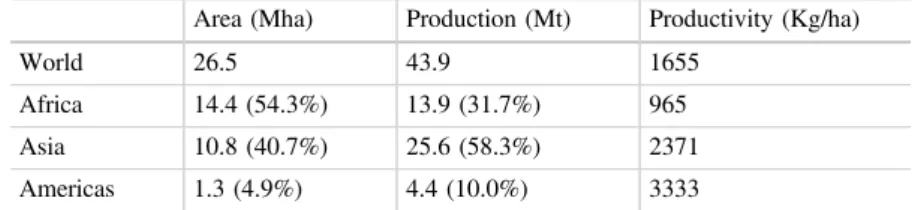
faostat/en/#data/QC). There is a huge difference in productivity between Americas (3.3 t/ha), Asia (2.4 t/ha) and Africa (0.96 t/ha) regions (Fig. 1.1). It is important to note that the pro-ductivity rate in Asia is better than Africa because of higher productivity achieved in China, while India’s productivity is close to the global productivity rate. In other words, Africa produces mere 31.5% of global produce from 54.3% peanut growing area, while Asia produces just 58.3% of global production from 40.7% area in contrast to Americas which produces 10.0% of global produce just from 4.9% of global peanut-producing area (Table1.1).
This crop is consumed in multiple forms (roasted seeds/oil/confectionary) throughout the world and has different significance to different regions of the world. For example, this crop only serves the table purpose/confectionary in Amer-icas; as vegetable oil and confectionary/table purpose in Asia; while as nutritional supplement and confectionary/table purpose in Africa (Pan-dey et al.2012; Janila et al.2016). Further, this crop matters a lot to the resource-poor farmers in Africa by contributing significantly toward achieving food and nutritional security in addi-tion to the financial security through income generation. Further, the limiting natural resources (land, water, genetic diversity, etc.,), unsolved existing biotic and abiotic stress and expected climate change problems in future will make the conditions for plants even difficult than ever. The highest reduction in yield and quality of the produce may occur in thefields of small-holder and resource-poor farmers in the developing countries. Therefore, it is an obligation to the peanut research community across the world to adopt a holistic approach including the use of genomics information and tools in the crop
improvement programs to develop climate-smart peanut varieties that can help in improving livelihood of poor farmers in developing countries.
The last decade has witnessed path-breaking discoveries using next-generation sequencing and genomics technologies in several crops. Genomics is becoming an integral part of breeding programs to facilitate accelerated development of improved varieties. Peanut has also witnessed significant development (espe-cially in last 5 years) including sequencing gen-ome of both the diploid progenitors, huge transcriptome resources, large-scale genomic variations to use as genetic markers, genetic populations (bi- and multi-parent populations and germplasm sets), marker-trait associations, and molecular breeding products (Pandey et al. 2016). The immediate availability of genome sequence for tetraploid cultivated peanut will be the most useful genomic resource for better understanding of traits and use in breeding pro-gram. It will be interesting to see the greater and effective role of genomics information in trans-ferring the superior alleles from wild species/un-adapted germplasm to elite varieties in order to rule out the inherent problem of linkage drag (Varshney et al.2013). Therefore, it is the high time to adopt and deploy integrated breeding approach wherein the information on genomics, proteomics, bioinformatics, and phe-nomics will be used for breeding improved peanut varieties which can withstand in the farmer’sfield. In view of above, Editors planned this book to provide one-stop shop for providing all information related to peanut genome and its application for crop improvement. This chapter provides a summary of different chapters inclu-ded in the book under the following sections.
Table 1.1 Current global peanut cultivated area, production, and productivity scenario
Area (Mha) Production (Mt) Productivity (Kg/ha)
World 26.5 43.9 1655
Africa 14.4 (54.3%) 13.9 (31.7%) 965 Asia 10.8 (40.7%) 25.6 (58.3%) 2371 Americas 1.3 (4.9%) 4.4 (10.0%) 3333
% indicates against global peanut cultivation area and production by Africa, Asia, and Americas
1.2
Importance, Botanical
Description, and Cytogenetics
Chapter 2 entitled “Economic and Academic Importance of Peanut” provides detailed infor-mation on current global production, its yield constraints and use of different plant parts (plant as fodder, kernel, skin, shell, cake, and roots). This chapter also discusses on different aspects of demand for peanut and peanut-based products in the international market, especially for confec-tionary types. The trend of peanut consumption is going toward confectionary and table purpose as there is a sharp demand for diversified peanut products as confectionary and table purpose in addition to competition from other sources of vegetable oils available in the market. Further, aflatoxin contamination poses a very serious concern in international market in the selling produce to the countries across the globe having very high stringent quality criteria. The chapter also provides enough information which proves peanut a rich source of nutrition and provides several health benefits. Further information were also provided on botanical classification and botanical types of cultivated peanuts along with current status on developing improved varieties across different breeding programs of the world. Chapter3,“Origin and Botanical Descriptions of Peanut”, authored by Shyam Tallury fromUSDA-ARS, Griffin (USA) provides information on the genetic structure of the genus including its origin, variability, and geographical distribution of various species. This chapter emphasizes the importance of preserving the genetic diversity and characterization of the germplasm resources for efficient utilization in peanut improvement programs. The origin and botanical classification of the cultivated species have been revisited in the chapter to summarize our current knowledge of the taxon. This chapter reports the existence of few taxonomic and phylogenetic ambiguities, and provides hope for better clarification and understanding of the genetic structure of genus Arachis and cultivated species, A. hypogaea using the recent advances in peanut genome sequencing and the availability of improved genomics tools.
Chapter 4 entitled “Cytological Features of Peanut Genome” authored by Guillermo Seijo and colleagues provides detailed information on the chromosomal features of peanut by using classical and molecular cytogenetic technologies. This chapter discusses in detail about different karyotyping studies to unravel the taxonomy of the genus and to establish relationships among species. Critical information on chromosome morphology, heterochromatin, and genome sizes of Arachis species has also been presented to understand origin of cultivated peanut (A. hypo-gaea) from A. monticola, a direct tetraploid Fig. 1.1 Peanut area,
production and productivity in different continents of the world during 2014
antecessor of peanut. The cytogenetic studies not only clearly proved thatA. duranensis (A gen-ome) andA. ipaënsis(B genome) are the diploid progenitors of the AABB tetraploids, but also established the relations among other genome groups (A, B, D, F, G, and K).
1.3
Germplasm and Genomics
Resources for Trait Mapping
Boshou Liao from Oil Crops Research Institute of Chinese Academy of Agricultural Sciences (CAAS) provides information on the conserva-tion and characterizaconserva-tion of peanut germplasm in Chap.5,“Germplasm Characterization and Trait Discovery in Peanut”. The chapter discussed development of core and minicore collections for better utilization of diverse germplasm in routine breeding program. The chapter also men-tioned research priorities for important traits such as yield, resistance to biotic stress (late leaf spot, early leaf spot, rust, tomato spotted wilt virus, groundnut rosette virus, bacterial wilt, nema-todes, and aflatoxin contamination), tolerance to drought stress, and oil quality. Further deploy-ment of modern genomics approaches has been suggested for accelerated trait/gene discovery and development of appropriate genomics tools for key traits to deploy them in routine breeding program to utilize germplasm collection across the globe.Peggy Ozias Akins from University of Geor-gia, Athens (USA) and her collaborators from USDA-ARS, Ames (USA) provide detailed information on different types of genomic resources in Chap.6 (“Genomics Resources for Peanut Improvement”). The chapter deals with genome sequence of diploid ancestors and soon to be available tetraploid genome along with huge transcriptome sequences, resequencing data for cultivated and wild genotypes, and marker-trait associations for use in breeding. The availability of a large number of structural vari-ations facilitated development of high throughput genotyping array with 58 K SNPs to conduct multiple genetic and breeding studies (Pandey et al.2017; Clevenger et al.2017). This chapter
also presents on use of publicly available refer-ence genome sequrefer-ence of peanut’s diploid pro-genitors (peanutbase.org) for enabling expansion of genotyping tools for genetic mapping to facilitate gene-based selection in breeding.
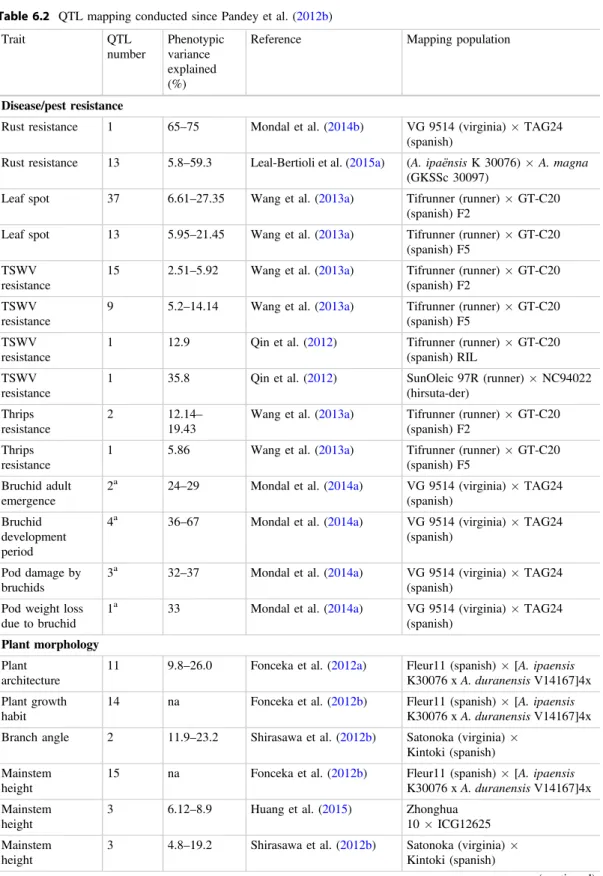
Chapter 7 entitled “Classical and Molecular Approaches for Mapping of Genes and Quantita-tive Trait Loci in Peanut”authored by scientists from ICRISAT (India), USDA-ARS Tifton (USA), and OCRI-CAAS (China) provides updates on cytological studies, molecular markers, genetic linkage maps, and trait-linked QTL iden-tification using linkage and association mapping/linkage disequilibrium mapping approaches. This chapter also emphasizes on development and deployment of next-generation genetic populations such as MAGIC (multi-parent advanced generation intercross) and NAM (nested association mapping). Further information is pro-vided on different strategies for NGS-based SNPs identification linked to gene/QTLs for concerned traits using modern high-resolution trait mapping and gene discovery approaches. Also, examples have been provided for successful development and deployment of diagnostic markers for improving selected traits in peanut.
1.4
Genome Sequence and Beyond
Although rice was the first crop genome to be sequenced in 2002 (Goff et al. 2002), it took 14 years to have the genome sequence of peanut. This can be attributed to the complexity of gen-ome as well as small community of peanut researchers. Therefore, several scientists from China, USA, and ICRISAT involved in sequencing projects present“History and Impact of the International Peanut Genome Initiative: the Exciting Journey toward Peanut Whole-genome Sequencing”in Chap.8. Authors take readers to a nice journey from the launch of U.S. Peanut Genome Initiative (PGI) in 2004 to the currently functioning International Peanut Genome Initia-tive (IPGI) thatfloated Peanut Genome Consor-tium (PGC). The IPGI initiated the peanut genome sequencing project in 2010 leading to availability of the genome sequences of twodiploid peanut progenitors in 2014 and were published in 2016. This chapter reviewed the background and history of IPGI, its accom-plishments in sequencing of peanut as well as advancing of peanut genomics research including sequencing of tetraploid peanut genome.
In Chapter9entitled“Genome Sequencing of Ancestor Diploid Genomes for Enhancing Gen-ome Understanding and Peanut Improvement”, scientists from ICRISAT, USA, and China pre-sent in detail about the approaches and technical details of two genome sequencing initiatives for developing genome assemblies for diploid pro-genitors (A genome—Arachis duranensisand B genome—A. ipaensis). The IPGI reported the sequencing of both A and B genomes, while Diploid Progenitor Peanut Arachis Genome Sequencing Consortium (DPPAGSC) reported the sequencing of only A genome. This chapter provides information generated by these two efforts on the genome architecture, organization, size, genes, geocarpy, oil biosynthesis, and allergens besides providing information about evolution and polyploidization.
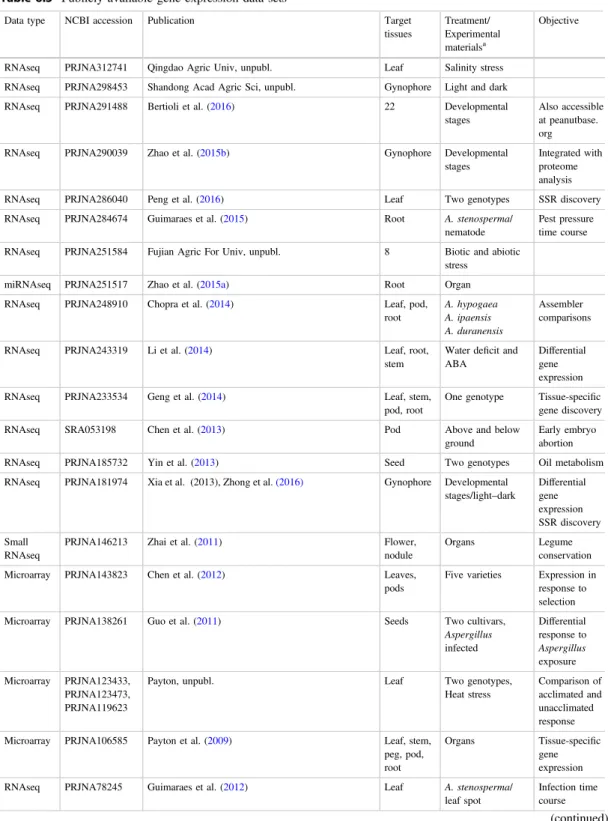
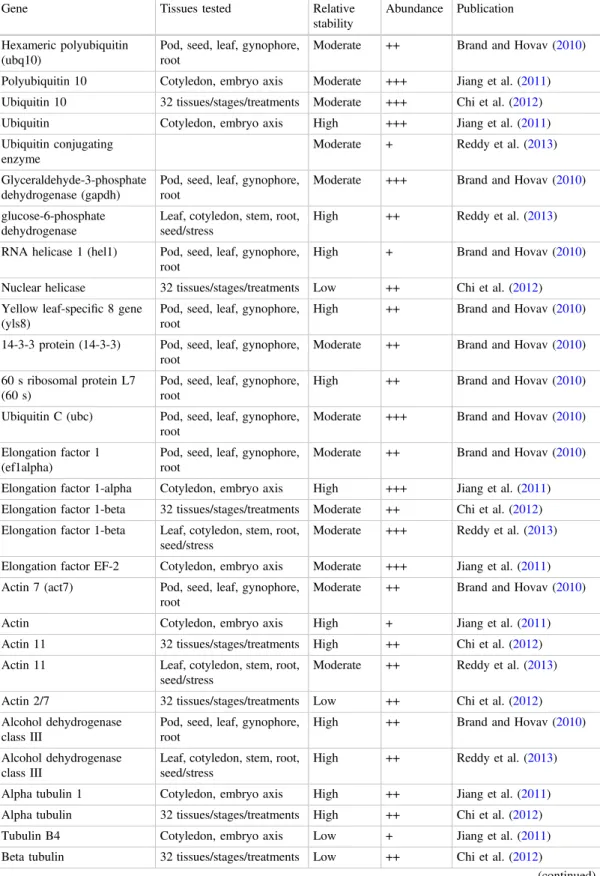
Besides genome sequencing, it is essential to identify the candidate genes for different traits. Chapter 10 entitled “Functional Genomics in Peanut Wild Relatives” by Patricia Guimarães and her colleagues from Embrapa Genetic Resources and Biotechnology (Cenargen), Brazil presents functional genomics approaches by using peanut wild relatives as these species are rich source of desirable traits including disease resistance that is not available in cultivated genepool. The chapter summarizes information on different studies related to functional geno-mics including ESTs, unigenes, full-length cDNA clones, and proteins. In recent years, unprecedented amounts of genomic information for wild and cultivated Arachis have become available leading to the discovery of genes and regulatory sequences, and enlarging the collec-tions of molecular markers. To maximize these valuable assets, further studies on candidate gene identification and validation are required to find
out the functional variation which can be deployed to develop improved varieties using modern science technologies such as genome editing, finding a way out to avoid the genetic barriers of ploidy and genome differences.
Finally, Editors of the book present the opportunities and approaches for peanut improvement in Chap. 11 entitled “Future Pro-spects for Peanut Improvement”. The chapter emphasizes the importance and opportunities arisen due to availability of genome sequences, resequencing, millions of structural variations as genetic markers, next-generation genotyping platforms, and complex multi-parental genetic populations. These genomic and genetic resour-ces will facilitate faster discovery of candidate genes and development of diagnostic markers to breed improved varieties by pyramiding desir-able alleles for multiple traits. In addition to marker-assisted backcrossing, the other modern breeding approaches such as genomic selection need more attention to reap benefits for achieving higher genetic gain by improving complex traits such as yield under rainfed conditions.
1.5
Conclusion
This book provided an up-to-date information about peanut genome and its improvement by using modern genomics and breeding approaches by a panel of expert and eminent peanut scien-tists across the world. This book does not just provide the current landscape of peanut geno-mics at international level in terms of tools and strategies employed in genome sequencing, transcriptomics, functional analysis, trait map-ping and molecular breeding but also potential approaches for accelerating genetics and geno-mics research and enhancing genetic gains in crop improvement. Editors are very much hope-ful that this book will be helphope-ful to the peanut research community to develop a road map for deploying genomics technologies for peanut improvement.
References
Clevenger J, Chu Y, Chavarro C, Agarwal G, Bertioli DJ, Leal-Bertioli SCM, Pandey MK, Vaughn J, Aber-nathy B, Barkley N, Hovav R, Burow M, Nayak SN, Chitikineni A, Isleib T, Holbrook C, Jackson SA, Varshney RK, Ozias-Akins P (2017) Genome-wide SNP genotyping resolves signatures of selection and tetrasomic recombination in peanut. Mol Plant 10:309–322
Goff SA, Ricke D, Lan TH et al (2002) A draft sequence of the rice genome (Oryza sativa L. ssp. japonica). Science 296(5565):92–100
Janila P, Variath MT, Pandey MK, Desmae H, Motagi B, Okori P, Manohar SS, Rathnakumar AL, Radhakrish-nan T, Boshou Liao, Varshney Rajeev K (2016) Genomic tools in groundnut breeding program: status and perspectives. Frontiers in Plant Science 7:289. doi:10.3389/fpls.2016.00289
Pandey MK, Monyo E, Ozias-Akins P, Liang X, Guimarães P, Nigam SN, Upadhyaya HD, Janila P, Zhang X, Guo B, Cook DR, Bertioli DJ, Michel-more R, Varshney RK (2012) Advances in Arachis genomics for peanut improvement. Biotechnol Adv 30 (3):639–651
Pandey MK, Roorkiwal M, Singh V, Lingam A, Kudapa H, Thudi M, Chitikineni A, Rathore A, Varshney RK (2016) Emerging genomic tools for legume breeding: current status and future perspec-tives. Frontiers in Plant Sci 7:455. doi:10.3389/fpls. 2016.00455
Pandey MK, Agarwal G, Kale SM, Clevenger J, Nayak SN, Sriswathi M, Chitikineni A, Chavarro C, Chen X, Upadhyaya HD, Vishwakarma MK, Leal-Bertioli S, Liang X, Bertioli DJ, Guo B, Jack-son SA, Ozias-Akins P, Varshney RK (2017) Devel-opment and evaluation of a high density genotyping ‘Axiom_Arachis’array with 58K SNPs for accelerat-ing genetics and breedaccelerat-ing in groundnut. Sci Rep 7:40577
Varshney RK, Mohan SM, Gaur PM, Gangarao NVPR, Pandey MK, Bohra A, Sawargaonkar S, Kimurto PK, Janila P, Saxena KB, Fikre A, Sharma M, Pratap A, Tripathi, S Datta, SK Chaturvedi, G Anuradha, A Babbar, RG Chaudhary, MB Mhase, CH Bharadwaj S, Mannur DM, Harer PN, Guo B, Liang X, Nadarajan N, Gowda CLL (2013) Achievements and prospects of genomics-assisted breeding in three legume crops of the semi-arid tropics. Biotechnol Adv 31:1120–1134
2
Economic and Academic Importance
of Peanut
Murali T. Variath and P. Janila
Abstract
Peanut is an important oil, food and feed crop of the world. The kernels are rich in fats and protein, and 100 g of kernels provide 567 kcal of energy and 8.5 g of dietaryfiber. Peanuts are source of minerals, vitamins and antioxidants and health improving bioactive compounds such as resveratrol, tocopherol, arginine etc. and hence are touted as functional food. Consumption of peanuts can reduce risk of inflammation, diabetes, cancer, alzheimer’s and gallstone disease. Peanut is cultivated in over 100 countries, with over 95% of cultivated area in Asia and Africa. Aflatoxin and allergens are major health deterrents in peanut and more research efforts are needed to develop aflatoxin and allergen free peanuts. There is a great demand for peanut and peanut-based products in the international market, especially for confectionary types. Breeding new cultivars that meet the needs of the producers, consumers and industry is an important research area with implications along the value chain. Conventional breeding approaches and phenotyping tools were widely used to breed several varieties and in the last decade, genomic tools are integrated for making selections. The advent of next-generation sequencing (NGS) tools and the availability of the draft genome sequence of the diploid progenitors of peanut A. duranensisand A. ipaensis is expected to play a key role in sequencing the genome of cultivated peanut. Transgenic peanuts with resistance to herbicide, fungus, virus, and insects; tolerance to drought and salinity and improved grain quality are under testing at different containment levels. The availability of sophisticated tools for both genotyping and phenotyping will lead to an increase in our understanding of key genes involved and their metabolic regulatory pathways.
M.T. VariathP. Janila (&)
International Crops Research Institute for the Semi-Arid Tropics (ICRISAT), Patancheru, Telangana, India
e-mail: [email protected]
©Springer International Publishing AG 2017 R.K. Varshney et al. (eds.),The Peanut Genome,
Compendium of Plant Genomes, DOI 10.1007/978-3-319-63935-2_2
2.1
Introduction
2.1.1
Name, Nomenclature, and Uses
of Different Plant Parts
Peanut or groundnut is an economically impor-tant oilseed, feed, and food crop and widely cultivated in tropical and subtropical regions of the world. It is known by many local names such as earthnut, goober pea, pindas, jack nut and monkey nut. The botanical name for peanut, Arachis hypogaea Linn. is derived from the Greek words‘arachos’meaning a weed and hy-pogaea meaning below ground/underground chamber, referring to a weed/plant that pro-duces fruit/pods in the soil. It belongs to the Leguminosae family, tribeAeschynomeneae, and subtribe Stylosanthenae. It is an annual herba-ceous plant, growing 30–50 cm tall and bearing tetrafoliate leaves in a 2/5 phyllotaxy (two opposite pairs; no terminal leaflet). Although peanut pods/kernels are the most important pro-duct of peanut plant, all parts of the plant are useful and can be utilized in a variety of ways.
Plant: The dried haulms after harvest consti-tute an energy rich fodder for cattle or in manure. A few species of peanut such asA. glabrataand A. pintoi are cultivated especially for forage purpose in South America, North America, and Australia. Another species A. repens is being utilized as a ground cover in South America.
Seed (kernel): The peanut seeds are con-sumed directly as raw, roasted, and boiled or processed into confections and peanutflour for flavor enhancement or crushed for oil for edible and industrial uses. It is also widely used in the preparation of ready to use therapeutic and sup-plementary foods (RUTF and RUSF) to combat malnutrition in developing countries. The peanut kernels are a source of high-quality edible oil (44–56%), easily digestible protein (22–30%), carbohydrates (10–25%), vitamins (E, K, and B complex), minerals (Ca, P, Mg, Zn and Fe) and fiber. The inferior quality oil has a variety of industrial uses. Paint, varnish, lubricants, leather dressings, furniture polish, insecticides, nitro-glycerine, soap, and cosmetics are all prepared from the oil. The protein portion of the oil is
utilized in the manufacture of some textilefibers (Bell2008).
Peanut skin: Peanut skins are obtained from processed nuts, broken nuts and sometimes from nuts not foundfit for human consumption. They are a good source of several bioactive com-pounds mainly phenolics and have long been used in China as a traditional Chinese medicine for the treatment of chronic hemorrhage and bronchitis. They are also added as supplements to processed food products such as peanut paste and peanut butter to improveflavor, stability and antioxidant capacity (Hathorn and Sanders
2012).
Peanut cake:This byproduct of oil extraction is used in animal feed industry, in making weaning foods for children, invalid foods for aged people and as fertilizer.
Shell:The shells are used as fuel, animal feed, cattle litter, filler in feed and fertilizer industry and in making particle boards, and alcohol and acetone after fermentation. They are also used to make cellulose (used in rayon and paper) and mucilage (glue) (Bell2008).
Roots: Being a legume crop the roots add nitrogen (100–152 kg/ha N) and organic matter to the soil (Nigam2015).
2.1.2
Area, Production, and Growing
Regions
Peanut is cultivated in 25.70 million ha world over with a total production of 42.32 million tons of in-shell peanuts during 2014 (FAOSTAT
2015). China (22%), India (19%), Nigeria (11%), and the USA (2%) are the major peanut growing countries. China (42%) and India (18%) account for about 60% of the total production globally followed by Nigeria (7.7%), the USA (4.3%) and Indonesia (1.8%) (Rathnakumar et al. 2013). Africa with 12.40 m ha area and 11.54 m tons of production, and Asia with 11.87 m ha and 29.95 m tons, together account for 95% global peanut area and 91% of global peanut produc-tion. Since 1980, the global peanut production increased by 2.67% annually until 2014 and this increase was contributed by an increase in both
cultivated area (0.93%) and yield (1.74%) (FAOSTAT 2015). In Asia, the annual growth rate in terms of area cultivated and production increased by 0.05% and 2.60% during the same period while that of Africa was much higher with 2.46% and 3.62% increase in area and produc-tion. In terms of peanut oil production, China with 2.74 m tons in 2015/16 was the top pro-ducer followed by India (1.1 m tons) and Myanmar (0.27 m tons). India’s share in global production of peanut oil is expected to be around 20% in 2015–2016.1
Peanut is cultivated in more than 100 coun-tries across the world under different agroeco-logical environments. However, the major cultivation is confined to the developing coun-tries of Asia and Africa which accounts for a bulk of the total peanut area as well as produc-tion. The share of Asia in global peanut area and production in 1990 was 65.70 and 70.52% respectively while in 2014 it was 43.62 and 59.79% respectively, indicating a declining trend (Fig.2.1). In comparison, the African share increased from 27.68 and 19.31% in 1990 to 51.01 and 29.79% respectively in 2014 (Fig.2.2). China in East Asia, India in South Asia and Myanmar, Indonesia, Vietnam, and Thailand in Southeast Asia are the major Asian peanut producing regions.
2.1.3
Yield and Production
Constraints
Peanut yields increased worldwide by 1.74% per annum between 1980 and 2014. In 2014 the world average productivity of in-shell peanuts was 1648 kg/ha which was lower as compared to 1823 kg/ha in 2013. Cyprus, Israel, Barbados, Nicaragua, and USA were the top 5 highest yielders during 2013–2014 (FAOSTAT2015). In the Asian context, China was the top yielder in 2014 with an annual yield of 3490 kg/ha, as compared to 1261 kg/ha of India. During the period of 1980–2014, China showed 4.71%
positive annual growth rate while it was 1.40% for India (FAOSTAT 2015). Vietnam (145%), Indonesia (33%), Thailand (32%) and Myanmar (81%) in Southeast Asia experienced spectacular increase in yield during 1981–1983 to 2012– 2014 and most of this increase was contributed by the introduction of high-yielding, stress-resistant varieties and improved production practices such as balanced fertilization, efficient weed and chemical pest control, use of polythene mulches and improved technology dispersal systems. The yield increase in China and India during the same period was 116 and 53%, respectively. As compared to regional variation, considerable yield difference is also observed between developed and developing countries which are mainly due to the different production systems being practiced. Peanut is grown in two distinct production systems—low-input system practiced by the farmers of Africa and South Asia and the high-input production systems. In the low-input system, farmers cultivate low-yielding, late-maturing varieties on marginal lands with no irrigation and limited inputs with average yields ranging from 800 to 1000 kg/ha. In high-input production systems practiced in the USA, Aus-tralia, Argentina, Brazil, China and South Africa, peanut yields can vary from 2 to 4 t/ha. Here cultivation of peanut is commercialized using improved varieties, modern crop management practices, irrigation and high resource inputs along with fully mechanized farming.
Productivity levels of peanut in most of the developing countries have remained low due to several production constraints which include biotic and abiotic stresses, lack of efficient seed dispersal systems, technological knowhow, market accessibility, low-input use and factors related to socio-economic infrastructure. Insect pests, diseases, drought, and low soil fertility are the major biotic and abiotic stresses. Most of the peanut cultivation in the developing countries is carried out by smallholder farmers who lack adequate resources or access to novel technolo-gies to improve productivity. Additionally, lim-ited market access and low producer prices reduce the incentive for producers to invest in productivity-enhancing technologies such as 1http://www.agricoop.nic.in/Admin_Agricoop/Uploaded_
improved seed, fertilizers, and pesticides result-ing in low yields. One major constraint is the lack of improved varieties suited to different agroecological zones and availability of effective seed dispersal systems. Due to non-availability of seeds or efficient dissemination on information of new varieties, the majority of smallholder farm-ers still grow traditional landraces/outdated varieties that are adapted to local environments but have low genetic yield potentials and are, in
many cases, susceptible to drought, pests, and diseases. Lack of efficient storage structures and low storability of peanut seeds under ambient conditions is another important constraint. Seed being a costly resource, many smallholder farmers tend to retain seeds from previous har-vests for use in subsequent season. However, poor storage conditions and low use of seed-treatment chemicals further reduce the quality of the seed. The private seed sector 0 5 10 15 20 25 30 35 1990 1991 1992 1993 1994 1995 1996 1997 1998 1999 2000 2001 2002 2003 2004 2005 2006 2007 2008 2009 2010 2011 2012 2013 2014 Area (m h a), Pr oduc Ɵ on (m t) and Yield (q/ha) Year
Area ProducƟon Yield
Fig. 2.1 Yearly average variation for area, production and yield of peanut in Asia during the period from 1990 to 2014 0 2 4 6 8 10 12 14 1990 1991 1992 1993 1994 1995 1996 1997 1998 1999 2000 2001 2002 2003 2004 2005 2006 2007 2008 2009 2010 2011 2012 2013 2014 Area (m ha), Produc Ɵ on (m t) and Yield (q/ha) Year
Area ProducƟon Yield
Fig. 2.2 Yearly average variation for area, production and yield of peanut in Africa during the period from 1990 to 2014
companies are hesitant to invest in peanut seed multiplication and distribution because the crop has high seed requirement, low multiplication factor, the bulky nature of the seed and low storability under normal conditions. Aflatoxin contamination of peanut by the fungiAspergillus flavus and A. parasiticus is an important con-straint affecting the quality of peanut in most producing countries in Africa and Asia. Aflatoxin contaminated peanuts are potent carcinogens for both humans and livestock and many importing countries have placed strict restrictions on acceptable levels of aflatoxin in peanut. Besides, the policy regulations restricting movement of seeds and marketable peanut products have hampered the development of the peanut sector, in many producing countries and especially in Africa.
2.1.4
Trading of Peanut
There is a great demand for peanut and peanut-based products in the International mar-ket, especially for confectionary types. In 2010– 2013 an estimated 42 MMT (million metric tons) of peanuts were utilized annually in the world which was an increase of approximately 134% from 18 MMT in the 1970s (Fletcher and Shi
2014). Export or import to any country is guided by regulations and requires strict adherence to consistency in supply and in quality of the pro-duce. Increasing the exports quantity is the pri-mary objective as it earns foreign exchange for the country and also benefits the supply chain comprising of producers, processors, and traders. International trade of peanut is primarily in the form of pods (in-shell), shelled (kernels), meal (cake) and as oil. Over the past decades trade volumes have increased substantially for con-fectionary peanut but fallen for peanut oil and meal due to availability of cheaper substitutes such as soybean and raising concerns over afl a-toxin contamination. Besides the higher nutri-tional quality of peanuts for food purpose, development of novel peanut-based food prod-ucts and initiatives by the American Peanut Council for export promotion and education has
led to improvements in existing peanut markets and developing new peanut-based markets for food use. In 2010–2013, about 41% of the world annual peanut production was crushed for domestic use, 45% for domestic food use and the remaining 14% was exported, used for feed or lost. Food use of peanut has increased by about 265% and crushing use increased by about 75% since the 1970s (Fletcher and Shi2014). 2.1.4.1 Peanut Oil
International trade of edible oil has declined over time as the major producers of the cropviz. China, India, and USA consume substantial amounts of edible oil in their domestic markets leaving very little surplus for export. The export trade of oil in the developing countries is con-centrated mainly in Senegal and Sudan accounting for one-third of global exports. Among the developed countries, USA with 13% of world exports is the only significant exporter of peanut oil (Freeman et al. 1999). In 2008– 2009, the USA, Argentina, Sudan, Senegal, and Brazil took about 71% share of the global export and the European Union (EU), Canada and Japan 78% share of global import in international trade of peanut (Rathnakumar et al.
2015).
2.1.4.2 Peanut Kernels
Trading of shelled peanut has increased in recent times. Developing countries accounted for much of this increase. However, the utilization pattern varied across the regions. Fast-growing Asian economies such as China are devoting more peanuts to consumption due to rising per capita incomes and urbanization. During 2013, the global import of shelled peanut was 1.68 m tons estimated at US$ 2467 million while the global export stood at 1.67 m tons estimated at US$ 2195 million. India (388 k tons), Argentina (190 k tons), USA (177 k tons) and China [China (176 k tons), China mainland (176 k tons)] were the top five exporters of shelled peanuts during 2005–2013 while EU (448–497 k tons) was the top importer of shelled peanut followed by Netherlands (288 k tons) in the same period (FAOSTAT2015).
2.1.4.3 Peanut Meal
Peanut meal is an important source of protein for livestock. The production and trade of peanut meal is directly influenced by demands for pea-nut oil, competing prices between other oilseed meals and cereal-based-substitutes and the existing tariff barriers. During the period, 1979– 1981 to 1994–1996, world utilization of peanut meal increased by 45% with most of the increase coming from Asia. The demand was more pro-nounced in Thailand, Indonesia, and some other rapidly developing Asian countries due to increased consumption of meat and livestock rearing. In the developed countries consumption declined by 60% during the same period, because of developments in the European market, which show the share of European Community in glo-bal utilization of peanut meal fall from 22% in 1979–1981 to 5% in 1994–1996. This decline was mainly due to increase in peanut meal prices, presence of aflatoxins in imported products beyond the permissible limit and its subsequent substitution by cheaper feed alternatives such as soybean meal.
The trading of peanuts in the International market requires strict adherence to aflatoxin content levels and is recognized as the primary non-tariff trade barrier for export of peanut by the developing countries such as Asia and Africa. The magnitude of losses incurred due to trading of aflatoxin contaminated peanuts is not known, but they have serious economic implications in terms of visible and invisible costs both at national and international level. The permissible limit varies among the countries—35 ppb (total) by Malaysia; 30 (ppb) total by India, Indonesia and Brazil; 20 ppb (total) by the USA, Kenya, and the Philippines; 15 ppb (total) by Canada, UAE and Australia; 10 ppb (B1) by Japan,
Korea, Taiwan and Singapore; 10 ppb (total) by Egypt and Vietnam; 5 ppb (B1) by the Russian
Federation and Turkey. However, the EU coun-tries have set a very stringent maximum per-missible limit of 2 ppb for B1and 4 ppb for total
aflatoxins in peanuts. This new trade regulations led to decline in imports of peanut meal to EU countries from 0.91 Mt in 1979–1980 to 0.43 Mt
in 1989–1990 (Bhat1991). Similarly, the export of peanut meal from India declined from 550 t valued at US$ 42.5 million in 1977–1978 to 265 t valued at US$ 32.5 million in 1985–1986, mainly because of aflatoxins (Bhat and Rao
1990).
2.2
Nutritional Value
2.2.1
Kernels, Meals and Haulms
Peanut seeds (kernels), the most important pro-duct of peanut are a rich source of nutrition and provide several health benefits. The kernels contain 40–55% oil, 20–35% protein and 10– 20% carbohydrate. They provide 567 kcal of energy from 100 g of kernels (Jambunathan
1991). The peanut oil contains seven fatty acids of which palmitic (7–12%), oleic (40–50%) and linoleic (25–35%) together account for approxi-mately 90% of total fatty acids. High oleic lines containing >80% oleic acid are also available. Also, the seeds are good source of minerals like calcium, phosphorus, iron, and zinc; vitamins like E, and the B-complex groups of thiamin, pantothenic acid, riboflavin, foliates and niacin; antioxidants likep-coumaric acid and resveratrol; and biologically active polyphenols, flavonoids and isoflavones. Peanut meal obtained after oil extraction is a high protein rich feed for livestock and poultry. The primary constituents are crude protein (45.6%), sugar (32.50%), fat (2.5%), fiber (8.3%) and ash (5.0%). It is also a rich source of amino acids- lysine, methionine, cys-teine, threonine and arginine, and minerals such as calcium, phosphorus, sodium, and potassium. The metabolizable energy of peanut meal is 2664 kcal/kg (Batal et al.2005). Peanut haulms (the above ground vegetative part) is a good source of nutritious fodder for livestock, and contains protein (8–15%), lipids (1–3%), miner-als (9–17%), crude fiber (22–38%) and carbo-hydrates (38–45%). It is used as cattle feed in fresh or dried stage, or by preparing hay or silage. Nutrient digestibility in the case of peanut haulms is around 53% and that of crude protein
is 88% when fed to animals (Nagaraj 1988). Haulms are capable of releasing energy up to 2.337 cal/kg of dry matter.
2.2.2
Food Products
Several value-added products developed from peanut are available around the world such as peanut flour, roasted and boiled peanut (in-shell/kernel), peanut butter, peanut candy etc. Local delicacies have also been developed for localized consumption purpose. For example, in many parts of Western Africa and Sudan partially defatted or full-fat peanut is a local delicacy and the most common form of utilization. Partially defatted peanut paste is produced after the oil has been extracted, and is used for makingkuli-kuli in Nigeria andcoura-courain Burkina Faso. The full-fat peanut paste is a common food ingredient in Western Africa, Sudan and Southern Africa (Freeman et al.1999).
2.2.3
Consumption Pattern
There is a visible divergence in the consumption pattern of peanut both in the developed and developing countries. Most of the peanut pro-duced in the developing countries is crushed for extraction of oil to meet the domestic consump-tion needs, while in the developed countries such as USA it is mainly consumed as a food source. Over the years, even in developing countries, the trend has shifted more towards food source with increasing international market demands for confectionary grade peanuts and the availability of other cheaper alternative oils. In Africa, pea-nuts are consumed as roasted, boiled or raw and as peanut paste. In Argentina and Brazil, large quantities of confectionary peanut are consumed as roasted nuts or in packaged form as snack foods such as peanut candy. In USA, peanut consumption is mainly in the form of peanut butter, packaged snack nuts (salted, unsalted, flavored and honey-roasted) and peanut candies. Even among countries, diversity exists in terms of regional preferences. For example, the
food consumption of peanut dominates in North America and the oil consumption dominates in the South. In East and West Africa, both food and oil uses dominate while in South Africa the food use of peanut is dominant. In Southeast Asia, the food use dominates while in Southwest Asia, which is dominated by India, oil use is more important over food use (Rathnakumar et al.2015).
2.2.4
RUTF and Food Supplements
Malnutrition is one of the most serious issues threatening the global community and especially in the developing countries. Globally it is esti-mated that about 20 million children suffer from severe acute malnutrition (SAM) of which about 8.1 million children are from India. One way of combating malnutrition issues is to provide the affected individuals with essential nutrients, minerals and vitamins in an easily available and ready to use form. Therapeutic foods are nutri-tionally enhanced food products, supplied in emergency situations for the treatment of SAM symptoms. Peanut is one of the important constituent of such product due to its balanced nutrient composition. Ready to use therapeutic food or RUTF originally referred to a nutrient dense and energy-dense peanut-based paste designed specifically for the treatment of SAM in young children. There are different types of RUTF currently available in the market, among which the ‘Plumpy nut’ patented product by Nutriset is widely recommended by UNICEF. This nutritional paste (peanuts, powdered milk, vegetable oil, sugar, vitamin and mineral mix) contains the right mix of nutrients to treat a child with SAM, and in a form that is easy to consume and safe. RUTFs provide 520–550 kcal/100 g (Kapil2009; Dubey and Bhattacharya2011).
Another product line Ready to use Supple-mentary Food (RUSF) is produced and marketed by Nutriset. RUSFs are foods that are fortified with micronutrients as a remedy for malnutrition and can be consumed without cooking or the addition of water. This product aims to tackle malnutrition at early stages (moderate acute
malnutrition, or in prevention of acute malnutri-tion or chronic malnutrimalnutri-tion) and are used in addition to breastfeeding (for young children above 6 months of age) and traditional comple-mentary food. The RUSF product line includes Plumpy doz, Supplementary Plumpy, QBMIX, and Delphia infant milk (Latham et al.2011).
2.2.5
Functional Food Use of Peanuts
Peanuts are a good source of wide range of nutrients and bioactive compounds with health benefits. Most of these compounds are either present in the skin, the extracted oils and the kernels. Even the methanolic extracts from pea-nut hulls were reported to have strong antioxi-dant activity (Duh and Yen1995) and ability of scavenging free radical and reactive oxygen species (Yen and Duh1994). They are touted as functional foods due to the presence of numerous functional components like Coenzyme Q10. These bioactive components are widely recog-nized for their disease preventative properties. Some of the bioactive compounds such as toco-pherols, tocotrienols, flavonoids and resveratrol function as antioxidants while others promote longevity.
2.2.5.1 Tocopherols
Tocopherols (TCP) are a class of organic chem-ical compounds having vitamin E activity. Pea-nut oils are a good source ofaandc- tocopherols with contents varying from 50–373 ppm and 90– 390 ppm respectively (Firestone 1999). The diversity depends on the origin (Sanders et al.
1992), variety, maturity and the growing condi-tions. Higher tocopherol content was consistently reported from US developed peanuts as com-pared to those produced in China or Argentina. Under same growing conditions runner varieties have higher levels ofa-,c- and d- tocopherols than the Spanish varieties.
2.2.5.2 Resveratrol
Resveratrol (3, 5, 4’-trihydroxystilbene) is a naturally occurring stilbene phytoalexin polyphenol. It is naturally produced by several
plants in response to injury, stress, infection, or ultraviolet (UV) radiation (Jeandet et al. 2012). Resveratrols is reported to play positive roles in reducing cancer risks, heart diseases, tumor and inflammation (Arya et al. 2016). Peanuts are excellent sources of resveratrol with the southern style boiled peanuts having the most abundant, even more than that found in red wine and red grape juice on a part per million basis (Sanders et al. 2000) followed by peanut butter (Ibern-Gomez et al.2000). All parts of the peanut contain resveratrol from the roots to the skins and even the shell (Francisco and Resurreccion
2008).
2.2.5.3 Phytosterols
Phytosterols or plant sterols, a naturally occur-ring compound found in plant cell membranes are minor components of all vegetable oils and constitute major portion of the unsaponifiable fraction of the oil. Peanut oil contains 900– 3000 ppm total phytosterols of which b-sitosterol (>80%), campesterol (10%) and stigmasterol (<5%) together constitute 95% (Firestone 1999). Phytosterols due to their structural similarity with cholesterol block the absorption of cholesterol in the digestive system thereby reducing the risk of cardiovascular dis-eases. People who consume small amounts of peanut daily were found to have lesser instance of heart-related diseases (Awad et al. 2000). Emerging evidence has shown that they also reduce inflammation and reduce the growth of various cancers (Woyengo et al.2009).
2.2.5.4 Arginine
Arginine is an amino acid that plays an important role in strengthening the body’s immune system, regulating hormone and blood sugar levels and promoting male fertility. It is considered semi-essential because, although the body can manufacture its own supply, dietary supplemen-tation may become essential under certain situa-tions of severe injury and illness. Peanuts have the highest level of arginine among foods (USDA SR-21). Arginine is the precursor to nitric oxide which helps to keep the arteries relaxed, improve