Via Sapientiae
Via Sapientiae
College of Science and Health Theses andDissertations College of Science and Health
Spring 6-12-2017
The Benefits of a Science Support Program for Low-Income
The Benefits of a Science Support Program for Low-Income
Latina/o Students
Latina/o Students
Alison L. MroczkowskiDePaul University, [email protected]
Follow this and additional works at: https://via.library.depaul.edu/csh_etd Part of the Community Psychology Commons
Recommended Citation Recommended Citation
Mroczkowski, Alison L., "The Benefits of a Science Support Program for Low-Income Latina/o Students" (2017). College of Science and Health Theses and Dissertations. 206.
https://via.library.depaul.edu/csh_etd/206
This Dissertation is brought to you for free and open access by the College of Science and Health at Via Sapientiae. It has been accepted for inclusion in College of Science and Health Theses and Dissertations by an authorized administrator of Via Sapientiae. For more information, please contact [email protected].
The Benefits of a Science Support Program for Low-Income Latina/o Students
A Dissertation Presented in Partial Fulfillment of the Requirements for the Degree of
Doctor of Philosophy
By
Alison L. Mroczkowski May 23rd, 2017
Department of Psychology College of Science and Health
DePaul University Chicago, IL
Table of Contents
Acknowledgements ...4
Abstract ...5
Introduction ...7
Latina/os and STEM Participation in the US ...7
Positive Youth Development ...9
Social Cognitive Career Theory...10
The Role of STEM Programs in Youth Development ...11
Rationale ...19 Method ...21 Researcher’s Perspective ...22 Context ...25 Participants ...27 Procedure ...29 Interview Protocol ...30 Data Analysis ...31 Results ...35 Activities ...35
Benefits of Participating in STEMulate ...43
Discussion ...66
Strengths and Limitations ...74
Recommendations for Future Research ...76
References ...79
Table 1: List of Activities and Benefits ...85
Figure 1: Social Cognitive Theory of Career Development ...11
Figure 2: Links between the activities and benefits of participating in STEMulate ...86
Figure 3: Links between the lab activities and benefits of participating in STEMulate ....87
Figure 4: Links between the mentoring activities and benefits of participating in STEMulate ...88
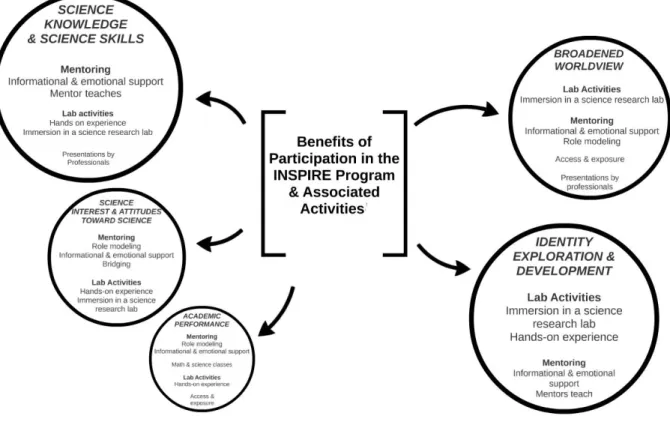
Figure 5: Benefits of participating in STEMulate and related activities ...89
Acknowledgements
I would like to thank my dissertation chair, Dr. Bernadette Sánchez, and my committee members, Dr. Ida Salusky, Dr. Kathryn Grant, Dr. Luciano Berardi, and Dr. Nell Cobb, for their support and encouragement throughout this project. I would also like to thank the staff, students, and mentors in the STEMulate program for inviting us into your program and participating in our study. I am forever grateful for the constant love, support, and encouragement from my husband, Steve, my son, Wyatt, my parents, family, and friends. Finally, thank you to Zoe, who kept me company through every “all-nighter.”
Abstract
A current national priority is to increase the number of students prepared for careers in science, technology, engineering, and math (STEM; U.S. Department of Education, 2015). Unfortunately, Latina/os are underrepresented in STEM fields (National Science Foundation, 2010). STEM support programs may be one avenue for increasing the number of Latina/o students who enter the STEM pipeline (Afterschool Alliance, 2011), but few studies have examined the benefits of participation in a STEM program for Latina/o youth, and very little is known about the specific program activities that are related to beneficial outcomes. Social cognitive career theory offers a model of career development that emphasizes the importance of learning experiences, which in the context of STEM programs are program activities.
In the current study, one-on-one, in-depth qualitative interviews were conducted with 39 participants who were involved in a science support program to investigate the following
research questions: 1) What are the benefits of a science support program for Latina/o youth? and 2) What are the program activities that are related to these benefits? Results revealed 12 benefits of program participation: 1) access and exposure, 2) mastering science knowledge and skills, 3) academic outcomes, 4) broadened worldview, 5) confidence, 6) exploration
opportunities, 7) higher order thinking, 8) professional development, 9) science interest, 10) science self-efficacy, 11) science is achievable, and 12) technical skills. Six activities were found to be related to the benefits: 1) math and science coursework, 2) oral presentations, 3) college visits and field trips, 4) presentations by professionals, 5) lab activities, and 6) mentoring. The results of this study provide important information about the activities, or learning experiences, that are related to the benefits of participating in a science support program, and they have
important implications for the development and refinement of STEM programs for youth who identify with groups that are underrepresented in STEM.
Keywords: Latina/o youth; science programs; STEM; positive youth development; social cognitive career theory; benefits; program activities; qualitative study
The Benefits of a Science Support Program for Low-Income Latina/o High School Students
A current national priority in the United States is to dramatically increase the number of students prepared for careers in science, technology, engineering, and math (STEM; U.S.
Department of Education, 2015). It is expected that there will be one million new jobs created in STEM fields in the US between 2012 and 2020 (Vilorio, 2014). In order for the US to maintain its competitive position in a global economy, the US needs to produce enough skilled STEM workers to fill these newly created positions. This would require a 35% per year increase in the number of students earning STEM degrees compared to current rates (Crisp & Nora, 2012; President’s Council of Advisors on Science and Technology, 2012). Unfortunately the US has one of the lowest rates of STEM bachelor’s degree production worldwide—17% compared to the international average of 26% (Kuenzi, 2008), and several racial/ethnic minority groups in the US, including Latina/os, are severely underrepresented in STEM fields (National Science
Foundation, 2010). In order to increase Latina/o representation in STEM, and thereby address the increasing demand for skilled STEM workers in the US, it is imperative that Latina/o youth are given meaningful opportunities to explore STEM during childhood and adolescence, before their career interests stabilize in late adolescence or early adulthood (Lent, Brown, & Hackett, 1994).
Latina/os and STEM Participation in the US
Latina/os are the largest and youngest ethnic minority group in the US. Currently, Latina/os represent 17.4% of the U.S. population, and it is expected that Latina/os will represent 28.6% of the population by 2060 (Colby & Ortman, 2014). The median age of Latina/os in the US is 27 years old, which is a full decade younger than the median age of all people in the US (37 years old; Krogstad, 2014). Consequently, Latina/o representation in the U.S. work force will increase substantially in the near future.
Despite being the largest ethnic minority group in the US, Latina/os are
disproportionately underrepresented in STEM education and careers, making up only 7% of the STEM workforce (Landivar, 2013). Latina/o students are equally as likely as White students to major in STEM subjects in college, but they are significantly less likely to persist and earn a degree or certificate in a STEM field. Among students who began college in 1995 as STEM majors, only 16% of Latina/o students completed a bachelor’s degree in a STEM field by 2001, compared to 30% of White students (Chen & Weko, 2009).
Interestingly, research on ethnic group differences in STEM students’ pathways toward a bachelor’s degree revealed that it is not until after the third year of college that Latina/o students start to fall behind their White and Asian peers (Anderson & Kim, 2006). A closer examination of this trend suggested that the students who failed to earn a bachelor’s degree in a STEM field within a six-year period tended to be less academically prepared for college, older, from a lower socioeconomic background, worked more hours per week, and were less socially and
academically integrated at their university than those students who earned a bachelor’s degree in a STEM field within six years (Anderson & Kim, 2006). Latina/os were overrepresented in the group that failed to earn a bachelor’s degree in a STEM field within six years, and the authors argued that this was predominately due to socioeconomic status—Latina/o students are more likely to come from lower income backgrounds and are less likely to have at least one parent who attended college (Anderson & Kim, 2006; National Poverty Center, 2010). Socioeconomic status is an important indicator of whether one will earn a bachelor’s degree in science because low-income students are less likely to attend academically rigorous high schools and their parents may have fewer college financing options to fund their education (Anderson & Kim, 2006). As a result, students from low-income backgrounds may have to work more hours each
week to pay for their education, and the more hours students spend working the less time they have to foster positive academic and social connections within their institutions, which
negatively affects the likelihood of degree completion (Anderson & Kim, 2006). Although there are certainly other explanations, these factors help to explain why Latina/o students are
underrepresented in STEM fields in the US.
In response to the underrepresentation of Latina/o students in STEM education and careers is the development of out-of-school time (OST) programs designed to provide exposure to and experiences in STEM. In general, OST programs and staff utilize a positive youth
development perspective in their approach to working with youth (Zeldin, 2000). Thus, positive youth development is one framework that is appropriate for examining the benefits of
participating in an OST science support program for low-income Latina/o students.
Positive Youth Development
Historically, research on adolescent development has tended to focus more on the elimination of pathology and deficit in developing adolescents rather than on the promotion of attributes, skills, and competencies that they need in order to become productive members of society (Benson, Scales, Hamilton, & Sesma, 2006a). Critics of the deficit-based model of adolescent development argued that this perspective was insufficient because “problem free does not equal fully prepared” (Benson et al., 2006a). From this dissatisfaction emerged positive youth development (PYD), which is an approach to adolescent development that focuses on the promotion of youth’s strengths, skills, and possibilities (Benson et al., 2006).
The interaction between the developing adolescent and his/her community is a core principle of PYD. PYD posits that adolescents affect their communities just as much as the communities affect adolescents’ development (Benson et al., 2006a). An important issue in PYD
research is identifying nurturing community contexts, such as OST programs, that promote adolescent wellbeing and social good and provide adolescents with meaningful opportunities to develop their strengths and positively impact those around them (Benson et al., 2006a).
STEM programs are an example of a supportive community context in which young people can grow, thrive, and develop their innate strengths. STEM programs can be particularly beneficial for low-income Latina/o youth because they typically have access to fewer resources and opportunities to explore science than their peers from higher socioeconomic strata (Anderson & Kim, 2006; National Poverty Center, 2010). Hence, a positive youth development perspective is critical to increasing Latina/o students’ representation in the STEM pipeline, as is social cognitive career theory, which helps to explain how Latina/o youth may choose to pursue a STEM career.
Social Cognitive Career Theory
The overarching goal of STEM programs is to prepare and encourage youth to pursue education and careers in STEM fields. Social cognitive career theory (SCCT) provides a framework for understanding the process of choosing an academic major and/or career (see Figure 1; Lent, Brown, & Hackett, 1994), and it identifies factors that may influence an
adolescent’s decision to pursue a career in a STEM field. SCCT highlights the mechanisms that shape career related interests and decisions, and it acknowledges the influence of demographic factors (e.g., race/ethnicity and gender) that can cause variations in the career development process for people from historically underrepresented backgrounds. Given the attention to the role of race/ethnicity and the emphasis on explanatory mechanisms (i.e., learning experiences) in the SCCT framework, SCCT provides a particularly helpful model to consider when exploring
the activities that lead to the benefits of participation in STEM programs for low-income Latina/o adolescents.
Figure 1. Social Cognitive Theory of Career Development (Lent et al., 1994).
SCCT proposes five steps in the career development process that begins with the environment in which a child is raised (Lent et al., 1994). During childhood, an individual is exposed to an array of activities related to potential careers, they see and hear about the jobs and careers of important people in their life, and they are reinforced when engaging in particular play activities that have implications for future career development. Then, through these activities, they begin to form ideas about the jobs or careers they may one day attain. In the second step, children begin to refine their skills and self-appraise their strengths and weaknesses, which leads to a sense of self-efficacy and expectations about the outcomes of their performance on certain tasks. The third step in career development is the formation of interests. The self-efficacy and outcome expectations formed in step two lead to interest development. Lent and colleagues (1994) posit that individuals form interests in activities that they believe themselves to be efficacious in and in which they anticipate positive outcomes. In the fourth step, individuals develop intentions and set goals for themselves related to a particular career, and these goals lead to the fifth step, which relates to action, or engagement in career-related activities. Involvement in these activities will produce successes and/or failures, and oftentimes, steps two through five
repeat themselves throughout adolescence and early adulthood as individuals reappraise their sense of self-efficacy and outcome expectations.
This process is susceptible to repeat itself throughout the lifespan, but it is particularly important that children and adolescents are given opportunities to engage in this process because interests regarding broad domains of work tend to stabilize in late adolescence (Lent et al., 1994). A foundational component of the SCCT framework is the role of learning experiences, which directly influence the development of self-efficacy and outcome expectations. Lent and colleagues (1994) describe four types of learning experiences: personal performance
accomplishments, vicarious learning, social persuasion, and physiological states and reactions. Personal performance accomplishments refer to an individual’s experiences of success or failure while partaking in an activity, and vicarious learning takes place as an individual observes similar others (people to whom the individual perceives him/herself as being similar) succeed or fail at a given activity. Social persuasion refers to the influence of people and settings on
attitudes and behaviors, and physiological states and reactions refer to the positive feelings (e.g., happiness, satisfaction, or accomplishment) or negative feelings (e.g., anxiety, depression, boredom) that one feels while engaged in a given activity. These learning experiences are important in determining the direction of an individual’s career development.
The activities that take place in STEM programs are examples of learning experiences that affect the development of STEM self-efficacy and outcome expectations, STEM interest, goals and intentions to achieve a career in a STEM field, and ultimately STEM career related activities. Given the dearth of research on the activities, or learning experiences, in STEM programs that contribute to benefits such as science self-efficacy and science interest, a primary
aim of the current study was to identify the activities that are related to the benefits of participation in a science support program for low-income Latina/o youth.
The Role of STEM Programs in Youth Development
The benefits of extra-curricular participation on youth development are well documented (Mahoney, Vandell, Simpkins, & Zarrett, 2009). There is less known, however, about how STEM programs in particular affect youth development. In 2010, the U.S. government invested over $3 billion in 209 programs focused on increasing knowledge of STEM fields and attainment of STEM degrees (Mathematica Policy Research, 2011). Unfortunately, these programs have been largely unmonitored—66% of those programs had not been evaluated since 2005 (Mathematica Policy Research, 2011). Therefore, little is known about the effects of these programs on youth.
There are, however, OST STEM programs that have employed evaluation strategies to monitor the progress of their youth participants. Afterschool Alliance (2011) analyzed evaluation reports from STEM programs across the US to identify common trends and strengths of these programs. The 19 programs that provided evaluation reports targeted primary and secondary school aged youth (K-12) and had a focus on science. The gender, race/ethnicity, and geographic location of the youth in these reports varied, as did the program characteristics (e.g., duration, intensity). Therefore, it was not possible to know which program activities were related to particular outcomes. Three clear outcomes did emerge, however. The results of Afterschool Alliance’s (2011) analyses revealed that STEM programs positively affected youth in three ways: 1) increased interest in and improved attitudes toward STEM fields and careers, 2)
increased STEM knowledge and skills, and 3) a higher likelihood of graduating from high school and pursuing a STEM career. Due to the lack of information about the methodologies employed,
however, it is difficult to know if these programs are causing these positive outcomes, or if they are simply co-occurring with program participation and would have occurred regardless. For example, it is possible that these programs attracted students who were academically inclined and would have graduated from high school and gone to college with or without participating in the STEM program.
In response to the increased number of STEM programs developed for youth, there is a growing body of literature that is focused on exploring the impact of STEM programs on youth. In general, the results of these studies corroborated the results reported in the Afterschool Alliance evaluation (2011), suggesting that STEM programs positively impact youth by
increasing STEM interest and improving attitudes toward STEM, increasing STEM knowledge and skills, and positively affecting academic outcomes. Each of these areas is discussed further.
STEM interest and attitudes. Two ways in which STEM programs consistently affect youth are by increasing youth’s interest in STEM fields (Bystydzienski, Eisenhart, & Bruning, 2015; Christensen, Knezek, & Tyler-Wood, 2015; Duran, Hoft, Lawson, Madjahed, & Orady, 2014; Murray, Opuni, Reininger, Sessions, Mowry, & Hobbs, 2009; Sahin, Ayar, & Adiguzel, 2013; Tyler-Wood, Ellison, Lim, & Periathiruvadi, 2012) and by influencing their attitudes toward STEM fields and careers (Christensen et al., 2015; Sorge, Newsome, & Hagerty, 2000; Tyler-Wood et al., 2012).
In a large-scale comparison study of three different types of STEM programs, the authors assessed participants’ attitudes toward STEM (Christensen et al., 2015). One program focused on energy monitoring activities, another program was an afterschool robotics program, and the last program was a highly competitive residential STEM program for junior and senior high school students. The authors concluded that participation in these programs was associated with
improved attitudes toward science for girls and maintenance of already positive attitudes toward science for boys. With regard to science interest, the authors concluded that a variety of hands-on, active learning STEM activities relevant to the real world can be effective in promoting and retaining interest in STEM content and careers for youth.
Similar findings were reported in two other studies of programs designed to increase opportunities for underrepresented students to learn about and have hands-on experiences in the information technology (FI3T program; Duran et al., 2014) and health sciences fields (HEADS UP; Murray et al., 2009). Participants engaged in hands-on activities alongside high school teachers and local STEM experts, and in both cases participants’ STEM interest increased. In the FI3T program participants’ interest in math and science increased, with 55% of participants reporting increased or sustained interest in IT and/or STEM fields at the end of the program (Duran et al., 2014). In the HEADS UP program, results revealed that despite initially reporting lower levels of interest in science in 6th-grade, program participants reported significantly higher science interest in 8th-grade than their peers in the control group (Murray et al., 2009).
Because women are underrepresented in STEM fields, some STEM programs are
developed specifically for girls and young women. Two of these programs, Bringing Up Girls in Science (BUGS; Tyler-Wood et al., 2012) and Female Recruits Exploring Engineering (FREE; Bystydzienski et al., 2015), provided participants with OST programming that focused on environmental science (BUGS) and engineering (FREE). These programs were effective in increasing participants’ interest in STEM fields and helped to improve their attitudes toward science and science careers. In both studies, program participants’ STEM interest and attitudes were compared to those of similar peers who did not participate in the programs, and in both
cases, the program participants’ STEM interest and STEM attitudes were significantly higher than those of the control group.
Not every program is successful in maintaining participants’ positive attitudes toward STEM. In a science program focused on space exploration, both male and female middle school students reported significantly more positive attitudes toward science and scientists midway through the program than at the beginning of the program (Sorge et al., 2000). This increase in positive attitudes toward science persisted only for male participants, however. The positive attitudes among female participants witnessed midway through the program disappeared by the end.
In one of only two qualitative studies of STEM programs, Sahin et al. (2013) explored the effects of six OST STEM programs for students in grades five through nine. The interview data revealed that students demonstrated increased interest in STEM majors and careers, and they developed collaboration and communication skills. More examples of STEM knowledge and skills that students developed while participating in STEM programs are described in the next section.
STEM knowledge and skills. The FI3T program was aimed at increasing participants’ opportunities to learn, experience, and use IT in STEM fields, and it was successful in increasing participants’ IT/STEM knowledge and skills in several ways (Duran et al., 2014). Participants improved their common technology skills (e.g., using word processing software), developed advanced IT/STEM technology skills (e.g., using robotics simulation software), and increased the frequency with which they used these skills in their daily lives (Duran et al., 2014). The participants in the FI3T program gained a better understanding of what IT as a field entailed,
learned more about IT/STEM careers, and they gained a better understanding of how IT and STEM can be applied to real world settings.
In a qualitative study aimed at understanding students’ experiences in a summer STEM and career development program, Blustein and colleagues (2013) found that the nine high school students they interviewed increased their STEM content knowledge and began to think about STEM more broadly. They also gained more knowledge of STEM careers, and they became more motivated to explore STEM careers in the future.
Academic benefits. The last major area in which STEM programs benefited students was in their academic performance, including high school GPA, standardized test performance, high school graduation, and college enrollment (Bystydzienski et al., 2015; Murray et al., 2009; Olsen, Seftor, Silva, Myers, DesRoches, & Young, 2007; Tyler-Wood et al., 2012; Winkleby, 2007). In the FREE program for girls, among those who remained in and completed the FREE program at the end of their senior year, approximately one fifth (21%) enrolled in an engineering program in college, and one third enrolled in another STEM discipline (Bystydzienski et al., 2015). However, many of these participants experienced a variety of barriers and discontinued their studies in either engineering or STEM.
In the BUGS program, the girls in the program scored significantly higher on the science section of the Iowa Test of Basic Skills than a comparison group of demographically similar peers. Similarly, in their investigation of the HEADS UP multimedia health education program, Murray and colleagues (2009) found that the HEADS UP students reported significantly higher scores on the SAT 10 science test than the comparison group of demographically similar peers.
The Stanford Medical Youth Science Program (SMYSP) is a biomedical pipeline program aimed at diversifying the health professions by providing very low-income students
with academic support and opportunities to explore the medical sciences during a five-week residential summer program (Winkelby, 2007). Since 1998, 100% of the 405 participants have graduated from high school, and 99% are attending (or have attended) a two- or four-year college. Among those participants who were admitted to and not currently attending college, 81% graduated from college, and 52% of those college graduates were either attending or
graduated from medical school or another graduate program. Similar to some of the other studies reviewed (Bystydzienski et al., 2015; Duran et al., 2014; Sorge et al., 2000), a limitation of this study of the SMYS program is the lack of a comparison group. It is possible that the students who chose to participate in the program were more motivated to attain higher education than their peers. Despite the lack of a comparison group, the statistics surrounding student success are impressive given the fact that participants in the SMYS program come from backgrounds that are underrepresented in STEM fields.
The Upward Bound Math and Science program (UBMS; Olsen et al., 2007) is a STEM support program for low-income and/or first-generation youth. As of 2007, the UBMS evaluation (N = ~1500) was one of the first to use an experimental design to measure the effects of a
federally funded STEM program. Results revealed that UBMS students were more likely to take upper-level high school courses in science, their average GPA in math courses increased from 2.7 to 2.8, and their average GPA in science courses increased from 2.7 to 2.9. Program participation also contributed to an increased high school graduation rate (from 96%-99%), increased the likelihood that participants would attend a postsecondary institution from 90% to 95%, increased the likelihood that participants would attend a four-year institution instead of a two-year institution by 11%, and reduced the likelihood that participants would attend a two-year institution by 5%. For female participants in particular, UBMS program participation increased
their bachelor’s degree attainment rate from 32% to 40%, and it increased the likelihood that they would major in, or intend to major in, math and science from 23% to 33%.
In sum, the literature on STEM support programs suggests that STEM programs
positively impact youth by increasing students’ interest and improving students’ attitudes toward STEM, increasing youth’s STEM knowledge and skills, and positively affecting students’
performance in high school and college. One of the limitations of this body of literature is the absence of research that identifies the particular program activities that contribute to these benefits. Without this information, it is unclear how these science support programs positively affect youth development.
Rationale
There is an increasing demand for skilled STEM workers in the US, but there are not enough STEM graduates to fill the increasing number of newly created STEM jobs (Crisp & Nora, 2012; U.S. Department of Education, 2015). Latina/os are underrepresented in STEM fields, and they continue to graduate from college with STEM degrees at lower rates than White and Asian American students (Anderson & Kim, 2006). In order to increase the number of underrepresented students in the STEM pipeline, OST STEM programs have been implemented to target these students. Guided by a positive youth development perspective and SCCT, the present study explored the role of a science support program in promoting positive youth developmental outcomes in a sample of low-income, Latina/o youth.
The literature on STEM support programs suggests that students benefit from
participating in these programs. There are limitations to this literature, however. First, only three studies focused on Latina/o students’ experiences in STEM programs (Bluestein et al., 2013; Murray et al., 2009; Sorge et al., 2000). Because Latina/o students are underrepresented in
STEM fields, it is particularly important that more research investigates their experiences in STEM programs to better understand the unique factors that promote or inhibit their continued participation in the sciences. Of the three studies that explored Latina/o students’ experiences, two utilized a quantitative methodology (Murray et al., 2009; Sorge et al., 2000), while only one took a qualitative approach (Bluestein et al., 2013). Many quantitative studies are confirmatory rather than exploratory in that the researcher chooses measures based on preconceived ideas about what s/he expects to find. In the predominately quantitative research on STEM programs, researchers tend to investigate variations of the same types of variables (e.g., interest, attitudes, knowledge, and academic performance), and there has not yet been a comprehensive qualitative exploration of all the possible ways in which students benefit from participating in a science support program.
Another limitation of the literature is that there are no studies that have linked STEM program activities to outcomes. Therefore, it is unclear how STEM programs are contributing to outcomes. A study that identifies the “active ingredients” of a STEM program and links those program activities to outcomes would provide a more comprehensive understanding of how STEM programs positively affect students, and it would greatly assist with STEM program development and refinement. Finally, all the published studies on STEM programs focus
exclusively on student perspectives. A strength of this approach is that it gives students voice and an opportunity to share their perspectives on their own experiences, but a study that assesses other stakeholder perspectives (i.e., student, instructor, staff) as well would contribute to a fuller understanding of how students benefit from participating in science support programs.
In the current study, I addressed these gaps in the literature by conducting an in-depth, qualitative exploration of the benefits of a STEM program for Latina/o youth. In this study, the
perspectives of multiple groups (e.g., students, graduate student mentors, faculty mentors, and staff members) were considered. Finally, this investigation helped to expand the literature on STEM programs by explicitly linking program activities to program outcomes (i.e., benefits of participation). The research questions explored were 1) What are the benefits of a science support program for Latina/o youth? and 2) What are the activities in a science support program for Latina/o youth that are related to these benefits?
Method
The current study was part of a larger investigation that evaluated STEMulate, a science support program for low-income Latina/o students. The purpose of the larger investigation was to learn more about what students gained from participating in the program, students’
educational and career aspirations, the relationships that participants had with others in the program, and participants’ perceptions of the roles of gender and race/ethnicity in science. An external team of evaluators (including myself) who were unaffiliated with the STEMulate program conducted the larger investigation. My role on the evaluation team was that of project coordinator, and I was involved in the study design and tool development activities, recruitment, and data collection. Although the larger investigation assessed several topics, the current study focused on the benefits of participating in STEMulate and the activities that were related to those benefits.
A qualitative methodology was used to explore the research questions in the current study. A qualitative approach was particularly useful because it allows for an in-depth
understanding of the issue, which was needed to further develop the literature on science support programs. A qualitative approach is also well suited for understanding processes, which was
helpful in the current study given the aim of understanding the processes (i.e., activities) through which the science support program positively affected student outcomes.
Further, qualitative research seeks to empower individuals to share their personal stories and experiences, and it acknowledges the importance of understanding the context in which the topic of interest takes place (Creswell, 2007). Most of the preexisting research studies on science support programs used a quantitative methodology, and because there is great variation in
science support programs, a detailed understanding of the context in which the science support program takes place is integral in gaining a comprehensive understanding of how youth benefit from participating in these programs.
The qualitative approach used in the current study is a modified grounded theory approach that allowed for both an in-depth exploration of the benefits of participating in a science support program, as well as the development of a framework that linked specific activities to particular benefits. Grounded theory is a qualitative methodology in which the primary goal is to produce a theory, or general explanation, of a process, action, or interaction that is grounded in data from participants who have all experienced a shared process (Creswell, 2007; Charmaz, 2006). Oftentimes the theory that emerges from grounded theory helps to explain practice and/or provides a framework for future research (Creswell, 2007).
Researcher’s Perspective
One of the benefits of using a qualitative methodology is the explicit acknowledgement of the influence of the researcher’s perspective in the development of the research study and in the interpretation of the results. Therefore, I provide a brief description of my background and beliefs that are related to the proposed research study.
I am a White woman who was born and raised in a predominately White, politically conservative, upper-middle class suburb of Chicago. I was raised Catholic in a very loving and supportive home environment, and most of life’s difficult questions were discussed and
explained from a religious perspective. Outside of family vacations, I did not spend much time outside of my hometown. Each year, however, I did spend a few long weekends with my aunt who lived in Chicago. Each time I visited her I was both enamored by allure of city life and upset by the homelessness that I witnessed. I could not understand how it was permissible for fellow human beings to live in such deleterious conditions. I realized from these trips that the world wasn’t as simple and straightforward as I believed it to be.
Since before I was born, my mom has worked in the restaurant industry. Over the past 30 years, she has met and formed friendships with many undocumented workers from Mexico. My mom has a natural inclination toward helping others, and I remember several instances in which she assisted her undocumented friends with issues related to housing, childcare, education, or employment. Even as a child, I could tell that my mom was different than many of the other adults in my community, and I admired her for that. I believe she sparked a desire within me to do my part to help others less privileged than myself.
I excelled in high school and college, and when it came time to choose a topic to research for my undergraduate honors thesis, I knew that I wanted to investigate the educational
experiences and decision-making of Latina/o students. I took an individual-focused perspective when designing my research study and expected that I would uncover individual difference variables that explained why fewer Latina/o students chose to go to graduate school than White students. I was a bit perplexed to find no differences between Latina/o students’ and White
students’ intentions to go to graduate school. What else could be causing the disparity in the educational attainment rates of White and Latina/o students?
Midway through my honors thesis research, I was fortunate to meet a newly hired
assistant professor, a Community Psychologist, who introduced me to an ecological perspective. She familiarized me with systems-level thinking and engaged me in difficult, yet invigorating conversations that challenged the ways in which I was taught to view the world. For the first time in my life I was thinking about intangible societal forces that differentially affected various groups of people. This change in thinking was a pivotal point in my development as a human being, student, and researcher, and I was convinced that Community Psychology was the field I should pursue.
My first few years of graduate school were incredibly overwhelming, in part because I was exposed to new perspectives that challenged my worldview and identity. For the first time in my life I found myself in settings in which I was no longer part of the racial/ethnic majority group. I had to think deeply about what it meant to identify as White and the implications of that identity, and I reflected on issues of privilege, power, and powerlessness. Although difficult, this transformation was both necessary and productive in that my default perspective became
ecological, and I began to think critically about potential solutions to social problems rather than thinking of them as inevitable misfortunes. I recognize the power of affluence and privilege associated with my White, middle class identity in promoting positive developmental outcomes, and I acknowledge that non-White and/or lower socioeconomic groups experience less privilege.
This perspective has permeated my research and led me to strongly endorse the belief that all children have the potential to succeed if given the resources and opportunities to develop their innate talents and strengths. Unfortunately, the reality in the US is that fewer opportunities and
resources are available to those in lower socioeconomic strata than those in higher
socioeconomic strata, and Latina/os are overrepresented among those who live in poverty (National Poverty Center, 2010). This suggests that Latina/o children and adolescents are less likely to have access to the resources and opportunities that can help them develop their innate strengths and talents. In terms of the present study, I believe that science support programs (such as the one investigated in the present study) can positively affect underrepresented students’ science education development and serve as a resource that can provide these students with greater opportunities in the future.
Philosophical worldview. Given the central role of the researcher in qualitative research, it is important to acknowledge my philosophical worldview, which influenced the design and interpretation of the results in the current study. This study takes on a social constructivist approach (Charmaz, 2006; Creswell, 2007) in that I acknowledge the existence of multiple realities and believe that people develop subjective meanings of their experiences, which are influenced by their identities and social forces. Given this assumption, I expected that the participants in the current study would have diverse experiences in STEMulate, and open-ended interview questions were asked to encourage participants to share their perspectives and
interpretations of their experiences.
Context
The science support program that is the focus of the current study is STEMulate. The program takes place at a medical university in the Midwest. STEMulate was developed by a faculty member who recognized the need for an intensive science support program for low-income Latina/o high school students in order to increase the number of Latina/o students who enter the STEM pipeline. The long-term goal of STEMulate is to increase the number of
qualified students from underrepresented populations who complete advanced degree health programs and serve the community as practicing health professionals.
STEMulate is a multi-year, paid program that students typically begin the summer after their sophomore year of high school and continue each summer until they graduate from college. The program takes place for eight weeks each summer, and students are expected to participate on Monday through Thursday from 9:00 a.m. until 4:00 p.m. Students are typically given Fridays off, but there are occasional fieldtrips scheduled on Fridays that students are required to attend. Throughout the summer, students engage in applied research experiences in the field of
biomedical science while receiving mentoring from faculty advisors and graduate students. Students also receive other supportive services, such as math and science courses, life skills training (e.g., CPR, emergency response skills), and information about different science careers and educational trajectories that lead to those careers. When designing the program, the
STEMulate staff recognized that many students who are targeted for the STEMulate program are expected to work during the summer and contribute financially to their families. To acknowledge this and ensure that it did not impede qualified students from participating, students receive an hourly wage to compensate them for their time in the program.
The participants in STEMulate are students who identify as Latina/o, come from low-income households, and live in the surrounding area of the university. The students are recruited from three local high schools—two public schools and one private school. At the time the data were collected, the college readiness rates of the two public high schools were 7% and 19%, which were both substantially lower than the Illinois state average of 46% (Illinois State Board of Education, 2015). Students are considered college ready if they score 21 or greater on the ACT. In order to be eligible for STEMulate, students were required to have a 3.0 grade point
average and be at least a sophomore in high school. The program was presented to students in their high school science classes, and interested students were given applications. The
STEMulate staff reviewed applications, and students whose applications passed the first screening were then invited to an interview with at least one parent or guardian. After the interviews, the staff decided which students would be offered admission into the program, and then accepted students began STEMulate in the summer following their sophomore year of high school. Typically, about four students are accepted each year.
Participants
All people who were involved or previously involved with STEMulate at the time of data collection were invited to participate in the current study. Members of the research team
conducted recruitment presentations at orientation sessions in the beginning of the summer of 2015 to inform participants about the study, and recruitment emails were sent to every potential participant. Of the 57 people who were involved, or had formerly been involved with
STEMulate, 39 (68%) chose to participate. Participants fell into one of four groups: STEMulate students, STEMulate staff members, graduate student mentors, and faculty advisors. One staff member was also a faculty advisor. For the purposes of the present study, this individual was considered a faculty advisor because he discussed his role as a faculty advisor and his
interactions with both his mentees and the other STEMulate students extensively during his interview. There were 20 students who had ever participated in the STEMulate program. There were four active students who chose not to participate, and there were five former STEMulate students who dropped out of the STEMulate program and did not participate in the study. Although we worked with program staff to contact these five individuals, we were unable to get
in touch with them. Therefore, former STEMulate students who discontinued their participation in the program are not represented in the current study.
STEMulate students. There were 11 STEMulate students who participated in the current study. The STEMulate students were 55% male (n = 6) and 45% female (n = 5). All students (n = 11) identified as Latina/o. In terms of ethnicity, 82% (n = 9) of the students identified as
Mexican/Mexican-American, one (9%) identified as Puerto Rican, one (9%) identified as Belizean, and one (9%) identified as Salvadorean. Students were able to report more than one ethnicity. The mean age of students was 18.00 years old (SD = 1.84) and the ages ranged from 16 to 21 years. All students were enrolled in STEMulate during data collection, and the mean
number of years students had been involved in the program was 2.55 years (SD = 1.44; range = 1 to 5).
STEMulate staff members. There were 3 STEMulate staff members who participated in the current study. The STEMulate staff members were 100% female (n = 3). In terms of
ethnicity, one staff member (33%) identified as White and Native American, one (33%)
identified as White, and one (33%) identified as Mexican/Mexican-American. One staff member declined to provide her age, but the mean age of the other two staff members was 38.50 years old (SD = 2.12). The mean number of years that the staff members had been involved in the program was 3.67 years (SD = 1.15; range = 3 to 5).
Graduate student mentors. There were 12 graduate student mentors who participated in the current study. The graduate students were 58% male (n = 7) and 42% female (n = 5). Most of the graduate students (75%; n = 9) identified as White, two (17%) students identified as
Asian/Pacific Islander (one of these students specified that s/he was Taiwanese and one student did not specify his/her ethnicity), one student (8%) identified as Mexican/Mexican American,
and one (8%) student identified as “Other,” but did not specify a particular ethnicity. Graduate students were able to report more than one ethnicity. The mean age of the graduate student mentors was 28.92 years old (SD = 3.06; range = 25 to 35), and the mean number of years that graduate student mentors had been involved in the program was 2.67 years (SD = 1.50; range = 1 to 5).
Faculty advisors. There were thirteen faculty advisors who participated in the current study. The faculty advisors were 69% male (n = 9) and 31% female (n = 4). The majority of faculty advisors (77%; n = 10) identified as White, one (8%) faculty advisor identified as Korean American, one faculty advisor (8%) identified as Mexican/Mexican American, and one (8%) faculty advisor identified as African American/Black. Faculty advisors were able to report more than one ethnicity. The mean age of the faculty advisors was 51.92 years old (SD = 8.96; range = 37 to 64), and the mean number of years that the faculty advisors had been involved in the
program was 3.00 years (SD = 1.54; range = 1 to 5).
Procedure
Once participants indicated that they were interested in taking part in the study someone from the research team scheduled an interview with them. Members of the research team who were trained to conduct one-on-one, in-depth interviews (including myself) conducted the interviews. All interviews took place at the medical university in private offices or conference rooms. Informed consent was conducted with each participant. Participants were informed of their rights as research participants, and they were told that their participation was voluntary, the information that they shared would remain confidential, and that there would be no negative consequences if they chose to discontinue their participation in the study. Participants completed the informed consent process by signing a consent form that stated they agreed to participate in
the study. Participants who were younger than 18 years old signed an assent form, and they were also required to have their parent or guardian sign a parent/guardian permission form.
All interviews were completed during the summer of 2015. Participants completed one-on-one, in-depth qualitative interviews that ranged from 30 minutes to 150 minutes. All
interviews were conducted in English and were audio-recorded. After participants completed the interview, they completed a brief survey about their demographic information, and then they were given a $25 gift card to Target for completing the interview. Interviews were transcribed verbatim by a professional transcription company and then sent back to the research team in a Microsoft Word document. All transcripts were kept in a private folder on a computer that could only be accessed by the research team. Transcripts were de-identified and labeled with a
randomly assigned ID number. A separate document that linked participants and ID numbers was password protected and stored in private folder that could only be accessed by the research team.
Interview Protocol
A semi-structured interview protocol (see Appendix A) was developed for the larger study that inquired about several aspects of the participants’ experiences in STEMulate. The interview protocol began with a series of initial open-ended questions. Then after establishing rapport with the participant we moved into more specific intermediate questions, and then we followed with reflective ending questions. The interviewers avoided asking closed-ended questions and tried to ensure that the participant did most of the talking. Although the interview protocol guided each interview, the interviewer asked follow-up or probing questions that were not part of the protocol when necessary.
The various sections of the protocol inquired about participants’ perceptions of the skills that students gained from participating in the program, the relationships that participants had
with their respective mentors or mentees, and participants’ perceptions of the roles of gender and race/ethnicity in science. Student participants were also asked about their educational and career aspirations. Finally, participants were asked to share any suggestions they had for improving STEMulate. The focus of the current study is on the section of the interview protocol that directly assessed the skills and benefits that students gained from participating in the program. Specific questions asked about the technical and “soft” (e.g., communication, leadership) skills that students developed, students’ attitudes toward science and school, students’ confidence and science self-efficacy, and students’ interest in science. Although we did not directly ask about skills and benefits in other sections of the protocol, many participants discussed the skills that students developed and ways in which students benefited in other sections as well.
Data Analysis
The data analysis in this study was guided by a two-phase, modified grounded theory approach described by Charmaz (2006). In Charmaz’s (2006) approach there is an emphasis on diverse worldviews, multiple realities, and the influence of the researcher in steering the coding process rather than an emphasis on the adherence to strict coding methods. In this flexible approach to grounded theory coding, there are two steps: initial coding and focused coding. In her description of the coding process, Charmaz (2006) explains that she sometimes finishes the coding process with a modified version of Strauss and Corbin’s (1990) axial coding, which results in a framework that demonstrates links between categories and subcategories. Charmaz’s (2006) process of initial coding, focused coding, and modified axial coding was ideal to
sufficiently explore the two research questions in the current study.
Dedoose, a web-based qualitative coding software, was used to complete the initial coding, the focused coding, and the modified axial coding phases. In the initial coding phase, a
trained research assistant and I closely analyzed each line of text in the transcripts and coded any text that had to do with the benefits of participation in the program and the activities related to those benefits using the Comments tool in Microsoft Word. Although certain sections of the interview transcript focused on the benefits of participating in the program, the research assistant and I read each transcript in its entirety to identify all relevant data. The research assistant and I met weekly to discuss the coding process and resolve any coding disagreements that may have arisen. In the initial coding phase, we created detailed, descriptive codes that reflected the particular benefit or activity that was described to ensure that we remained open to all possible theoretical directions that might have emerged as we read the transcripts (Charmaz, 2006). This coding strategy we used is compatible with an inductive approach because it allowed for the creation of descriptive and detailed codes that were necessary in the initial phase of coding. During the initial coding phase, I shared the emerging results with a STEMulate faculty mentor and asked him for suggestions regarding the categorization of the emerging activities because many of the activities were highly technical and specific to biomedical research.
After the initial phase of coding was complete, I began the focused coding phase. The initial coding phase had given me a sense of the themes and subthemes that emerged. The next step was to sift through the descriptive codes produced during the initial coding phase, identify the themes and subthemes that were present in these codes, and organize them in a framework that was used to guide the focused coding phase. The result was a detailed and lengthy coding framework. During the focused coding phase, I reviewed each of the transcripts and revised the codes and framework as necessary. I identified larger themes in the data and combined some of the more detailed themes, which resulted in a more parsimonious coding framework. Themes were included in the final coding framework if they 1) represented benefits of program
participation and/or activities related to the benefits, and 2) reflected common experiences shared by multiple participants. The focused coding phase helped me to ensure that the themes and subthemes that emerged in the initial coding phase accurately reflected the data.
After the initial and focused coding phases were complete, I conducted the modified axial coding to link the benefits and activities. Specifically, I conducted a qualitative “code x code” analysis in Dedoose, which resulted in a series of charts that revealed the frequencies with which each activity co-occurred with each benefit. These frequencies, along with memos that I had written throughout the initial and focused coding processes, guided the development of the links that identified the activities that were related to each benefit. Given the nature of the grounded theory approach, all coding was inductive, which means that the themes and subthemes that emerged were rooted in the data rather than from a preconceived framework.
Establishing credibility of research findings. An important step in qualitative research is establishing the credibility of the research findings that emerge (Lincoln & Guba, 1986). Because the researcher is an active participant in the interpretation of the data, it is important that the conclusions made by the researcher are reflective of the participants’ experiences (Charmaz, 2006). In the present study, several steps were taken to establish the credibility of the research findings. First, we conducted a series of member checks (Lincoln & Guba, 1986) after the initial coding phase was complete. Member checking is the process of testing the emerging results by sharing them with participants and assessing their reactions. We conducted four feedback
sessions, one with each group of participants, during which we shared the emerging benefits and activities that were identified in the initial coding phase and asked them for their feedback. We asked for general reactions and questions, and we specifically asked if the findings were reflective of their experiences in the program. In each of the feedback sessions participants
tended to validate the emerging findings and confirm that they were indeed reflective of their experiences. Although participants asked some clarification questions, there were no instances in which participants disagreed with the benefits and activities that had emerged.
Another way in which I worked to establish the credibility of the research findings was by engaging in peer debriefing (Lincoln & Guba, 1986), a process in which I discussed the emerging results with “disinterested professional peers” who are not directly involved in the research process (e.g., graduate students, undergraduate students, and psychology faculty members outside the community psychology program). Although not a strategy explicitly recommended by Lincoln and Guba (1986), I also discussed the findings as they emerged with those who were involved in the research process (e.g., dissertation chair, lab members).
Discussing the results as they emerged with a variety of people, some of whom were involved in the research and others who were not, helped to counter researcher bias and helped me think critically about my results.
I also regularly engaged in negative case analysis (Lincoln & Guba, 1986) to establish the credibility of the results. Negative case analysis is a strategy in which the researcher actively searches for examples in the data that contradict the conclusions or results. The researcher uses these contradictions to think critically about the results and revise them if necessary. In the present study, I noted instances in which interviewees suggested that students did not experience certain benefits. I also conducted negative case analysis in the modified axial phase of coding while analyzing the links between activities and benefits.
Finally, I took notes (i.e., memos) throughout the coding process that described coding decisions or framework revisions that I made, as well as recurrent and co-occurring themes. I also saved every iteration of each coding framework to keep track of its evolution. I periodically
reviewed these notes and previous iterations of the coding frameworks to reflect on the data analysis process.
Results
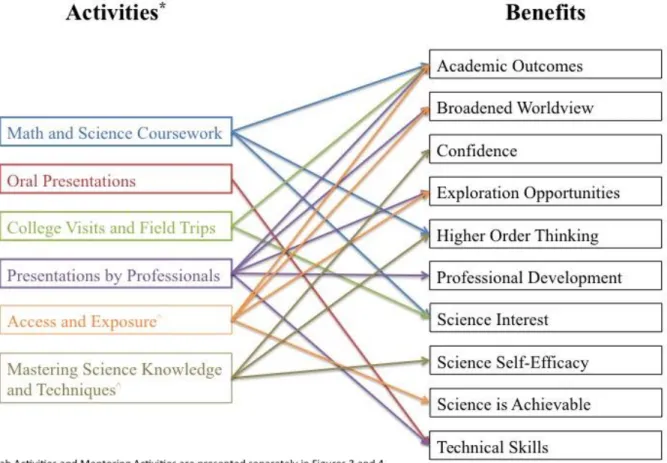
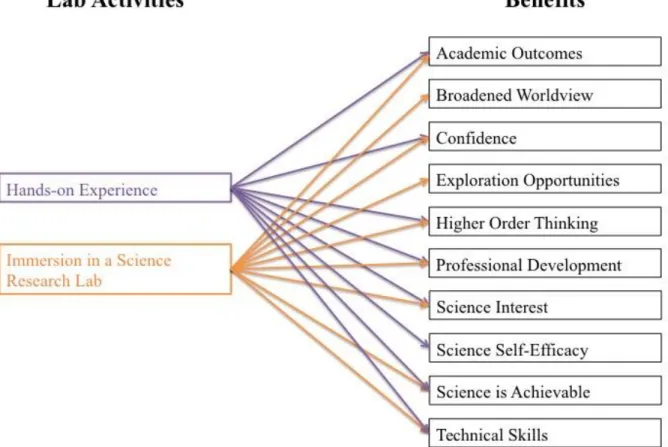
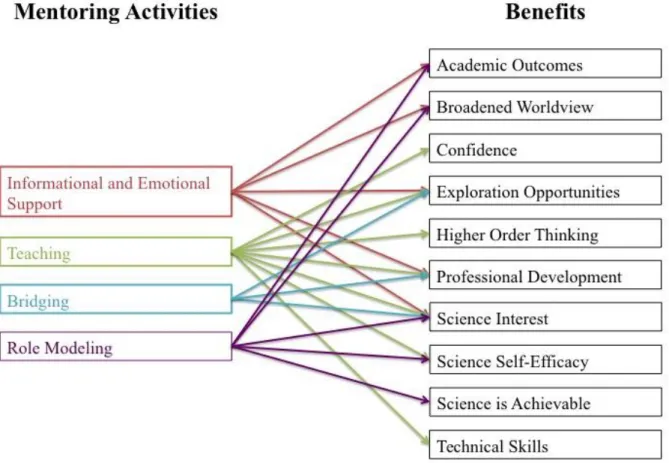
The purpose of the present study was to identify the ways in which students benefited from participating in a science support program, as well as to identify the activities that were associated with those benefits. The perspectives of each group of participants (staff, students, graduate student mentors, and faculty mentors) are represented in this section. First, the activities that were associated with beneficial outcomes for students are described, and then, the benefits students experienced are described. The relations among the activities and the benefits are discussed throughout this section. A list of the activities and benefits that emerged can be found in Table 1, and the links between the activities and benefits are presented in Figures 2, 3, and 4. To maintain confidentiality, pseudonyms are used for each participant throughout this section.
Activities
The STEMulate program engaged students in various activities during each eight-week summer session. Students took part in several program activities, and they worked in science research labs while receiving mentorship from graduate students and faculty members. Described in this section are six activities that were related to the benefits of participating in STEMulate: 1) math and science coursework, 2) oral presentations, 3) college visits and field trips, 4)
presentations by professionals, 5) lab activities, and 6) mentoring.
Math and science coursework. A core component of the STEMulate curriculum is the math and science courses that take place every day for one hour in the afternoon. Graduate student mentors teach these courses, and they are largely responsible for choosing the topics and developing the lesson plans. The primary purpose of these courses is to provide students with
lessons about foundational concepts in math and science that students need to grasp in order to be successful in their high school and college math and science courses. As one staff member, Mia, explained,
“The students have daily classes in math and science and the graduate-student mentor creates the curriculum and its lessons based on things that they’ll encounter in the labs and things that they will encounter in higher-level math and science classes that they’ll hopefully be taking in college. They do it and they try to do it in a way that’s a little more fun than you would maybe find in your typical classrooms. Discussing current events or articles and things on the topic.”
For some students (typically first-year students), the information presented in these courses is brand new. The students who have already been introduced to these concepts benefit from these lessons as well, however, because they serve as a helpful review and reinforce these core concepts. The secondary purpose of these courses is to introduce students to new and exciting topics in science. For example, one graduate student mentor decided to teach students about core concepts in genetics by discussing research related to the cloning of thoroughbred racehorses.
Oral presentations. Students are expected to give at least one oral presentation each summer. All students give a research presentation at the end of each summer, and returning students give an additional presentation at Journal Club. These presentations are described in the following paragraphs.
End-of-the-year research presentation. At the end of each summer, students are expected to prepare and give an oral presentation. First-year students prepare and give a PowerPoint presentation about their summer research activities, while more advanced students give an abstract presentation, a 15-minute talk designed to mimic a conference presentation in which students summarize their summer research activities, data, and results. Students present to a group of their peers, graduate student and faculty mentors, STEMulate staff members, and
other members of the university community who choose to attend. Although most students agreed that giving their end-of-the-year research presentation was a nerve-wracking experience that pushed them outside of their comfort zone, it was also described as having an impactful and positive effect on their development.
Journal Club. Each summer, all returning STEMulate students give a presentation at Journal Club. All students and graduate student mentors meet on Mondays during lunch for Journal Club. At each Journal Club meeting, a student gives a presentation about an empirical journal article that they read. Students choose the empirical journal article that they would like to present, and graduate student mentors often assist the students in selecting and analyzing the article and preparing their presentation.
College visits and field trips. Because STEMulate only meets Monday through
Thursday, students have Fridays off. On some Fridays, however, the STEMulate staff members organize field trips to local colleges and universities or science research labs. The college visits were particularly helpful for the younger high school students because some of the college visits that were planned by their high schools were cancelled due to a strike. For some students, the college visits organized by STEMulate staff were the only opportunity they had to visit a college or university. Students also had the opportunity to visit science research labs, including a
national science research lab where Nobel Award winning science research had been conducted. During these visits, students met professional scientists and learned more about their research and careers.
Presentations by professionals. Through their participation in STEMulate, students are exposed to professionals who are invited to come and present on a variety of topics. These presentations take place on Wednesday afternoons, and the topics are typically focused on career
exploration and skill development. Professionals from the medical and science research fields came and talked to students about their careers and the paths they took to achieve their career. STEMulate staff members also arranged for professionals to come and lead workshops aimed at helping students learn specific skills, such as emergency response and first aid skills (e.g., CPR, the use of an AED, and stroke response), chemical safety training, and human ethics training. Finally, a STEMulate faculty mentor led a workshop about presentation skills.
Lab activities. A foundational component of STEMulate is the laboratory research experience. Each summer, students are assigned to work in a science research lab alongside a faculty member, and oftentimes, alongside other researchers, including graduate students, postdoctoral students, undergraduate student interns, and/or laboratory technicians. Some students return to the same lab year after year, while others join a different lab each year.
Students are in their labs Monday through Thursday for approximately five hours each day (with the exception of Wednesday when they spend three hours in the lab). While in the lab, students’ experiences vary. Some students (especially first-year students) spend the majority of the time learning through observation, while other students (typically more advanced students) are responsible for conducting their own independent science research project. Most students are assigned to basic science research labs, but a few students who express interest in medical careers work in applied clinical labs where they also interact with patients. The lab activities that were beneficial to students fell into two categories: hands-on experience and immersion in a science research lab.
Hands-on experience. The types of hands-on experiences students had during their laboratory research experiences depended on whether they were in a clinical research lab or a basic research lab. Students who were assigned to a clinical research lab had opportunities to
practice clinical skills while interacting with patients. For example, these students were able to bandage the foot of a patient who had recently received a skin graft, irrigate a wound during a surgery, conduct back-to-school physicals for high school students, and work side-by-side with medical students on cadavers in the anatomy lab. The majority of students worked in basic science research labs, and in these labs they engaged in a wide variety of activities including data analysis using specialized computer programs, working with animal models (e.g., mice and sea slugs), using laboratory equipment (e.g., pipettes and microscopes), conducting specialized science techniques (e.g., Western Blotting, Real-Time Polymerase Chain Reactions, and preparing standard curves, solutions, and buffers), and reading empirical journal articles. The common theme across these clinical and basic laboratory research assignments was that the STEMulate student was actually doing science as opposed to observing or learning about science.
Immersion in a science research lab. Often when participants talked about their research experience, they simply referred to the overall experience of being immersed in a science
research lab rather than referring to a particular activity that they did while working in the lab. For all students, STEMulate provided them with their first exposure to a science research lab, and as a result, they became familiar with the day-to-day activities, goals, culture, and people of a professional science research lab. The immersion in this unique culture often led to positive outcomes for students.
Mentoring. Faculty members and graduate students serve as formal mentors for the students during their time in STEMulate. Each summer, students are assigned to work in a faculty member’s research lab, and that faculty member serves as the student’s faculty mentor. Students are also assigned to a graduate student mentor. Sometimes the students work in the
same lab as their graduate student mentor, but that is not always the case. Sometimes students end up being informally mentored by graduate students, postdoctoral researchers, or lab technicians who work in the lab to which the student is assigned, but who are not formally involved with STEMulate. If students do not work in the same lab as their graduate student mentor, the graduate student mentor and the STEMulate student are encouraged to spend time together outside of the student’s lab time, such as at “Lunch with Mentors” on Wednesday afternoons. Mentors are critical to the success of STEMulate. Interviewees often described the mentors as being helpful and supportive. Specifically, mentors a) provided informational and emotional support, b) taught students, c) engaged in “bridging” behaviors, and/or d) served as role models. Each of these is described in greater detail below.
Informational and emotional support. Interviewees described various ways in which mentors provided the STEMulate students with informational and emotional support. The most common way in which mentors provided students with informational and emotional support was by having one-on-one conversations with them. These conversations varied greatly in content, but the common theme was that mentors engaged in face-to-face, one-on-one conversations with the students, thereby communicating that they cared about them and were interested in their thoughts and opinions. Students talked to their mentors about science, personal problems or concerns, major life decisions (e.g., choosing a college), and their interests. In return, mentors provided information, listened to students, shared personal experiences, gave advice, and encouraged and reassured them. Some interviewees shared that there were instances in which these one-on-one conversations helped mentors and students to bond with one another. When asked if there was a moment when he felt like he was making a difference for his mentee, Evan, a graduate student mentor explained: