Performance comparison of Downlink Packet
Scheduling Algorithms in LTE Network
Mohd. Algharem1, Mohd. Hasbullah Omar1, Muhammed I. Alghamdi2, Rahmat Budiarto2 1
InterNetWorks Research Group, School of Computing, UUM College of Arts and Sciences, Universiti Utara Malaysia, Kedah, Malaysia
2College of Comp. Science and Information Technology, Albaha University, P.O. Box 1998 Albaha, Kingdom of Saudi Arabia
E-mail: {algharem, mhomar}@internetworks.my, {mialmushilah, rahmat}@bu.edu.sa Abstract—Long Term Evolution (LTE) was introduced
by the Third-Generation Partnership Project (3GPP) and is considered as the latest step towards the fourth generation of radio technology. This paper investigates the performance of well-known packet scheduling algorithms such as Proportion Fair (PF), Maximum- Largest Weighted Delay First (M-LWDF), Exponential Proportion Fair (EXP/PF), Frame Level Scheduler (FLS), Exponential rule (EXP rule), and Logarithmic rule (LOG Rule) in terms of delay, throughput, and packet loss ratio (PLR) by using the LTE-Sim open source simulator. Different traffic types are used, and Simulation results show that in video traffic, FLS and EXP algorithms provide a higher system throughput compared to other algorithms while keeping the delay and packet loss ratio small. However, in the case of best-effort traffic, results show a high delay and PLR with low throughput. The main contribution of this paper is to determine the appropriate downlink scheduling algorithm for VOIP, video, and best-effort traffics in 3GPP LTE.
Index Terms--- downlink scheduling; LTE; OFDMA; QoS; video traffic
I. INTRODUCTION
Due to the increasing number of wireless cell phone users and the Internet creating an increased traffic volume, as well as bandwidth scarcity [1], the existing networks became unable to satisfy their users, forcing telecommunication companies and researchers to find a way or to develop solutions that can improve the performance of cellular communication networks. One of these solutions is LTE which was introduced by the 3GPP and is considered to be the latest step towards the fourth generation of radio technology.
LTE supports carrier bandwidths starts from 1.4 MHz and goes up to 20 MHz, and increases to 100 MHz in LTE Advanced. LTE introduces a high throughput with low latency and at a low cost. While Universal Mobile Telecommunication Systems (UMTS) and High Speed Packet Access (HSPA) still use circuit-switching for voice calls and the IP network for other data services such as internet access; in contrast, LTE uses a simple architecture with all IP networks [2].
The aim of this paper is to investigate the performance of the well-known packet scheduling algorithms in the downlink 3GPP LTE system, such as PF, EXP/PF, M-LWDF, FLS, LOG rule, and EXP.
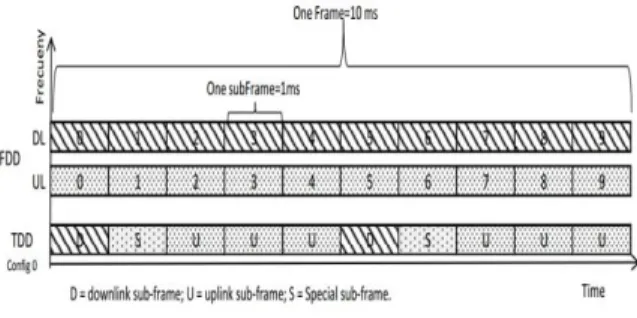
Figure 1. Uplink/downlink structure for the FDD and TDD frames
Their performance was measured in terms of packet loss ratio, delay, and throughput in the case of a video, VOIP, and best-effort application.
The remainder of the paper is organized as follows. Section II describes the downlink model in the LTE system, followed by a brief discussion about most well-known downlink packet scheduling algorithms in the LTE network. Network topology, simulation environment, and simulation results are highlighted in section IV. Finally, section V concludes this paper.
II. DOWNLINK MODEL IN LTE SYSTEM
Orthogonal Frequency Division Multiplexing (OFDM) has been used for the downlink where
various users’ data is multiplexed in frequency and time domains, known as Orthogonal Frequency Division Multiple Access (OFDMA). On the uplink
side, and because of the limitation in users’ equipment
power, Single Carrier-Frequency Division Multiple Access (SC-FDMA) has been used [3], [4]. There are actually two modes of multiplexing known as Frequency Division Duplexing (FDD) and Time Division Duplexing (TDD). There are two carrier frequencies in the FDD mode, one for uplink channels and the other for downlink channels, which means that uplink and downlink can both work at the same time. In contrast, in the TDD mode, both the uplink and downlink use the same frequency but at different times. As listed in Table. I, there are seven frame configurations which allow for varying allocation of resources dedicated to downlink or uplink channels. Radio Resource Management (RRM) will choose the right TDD configuration depending on the ratio between downlink and uplink traffic. As illustrated in Fig.1, in TDD configuration number (0), two sub- frames are assigned for downlink, and six sub-frames
for uplink, while two sub-frames are left as a special sub-frame. Therefore, TDD can work in
TABLE I. TDDFRAMECONFIGURATIONS
Config. number Sub-frame number 0 1 2 3 4 5 6 7 8 9 0 D S U U U D S U U U 1 D S U U D D S U U D 2 D S U D D D S U D D 3 D S U U U D D D D D 4 D S U U D D D D D D 5 D S U D D D D D D D 6 D S U U U D S U U D D = downlink sub-frame; U = uplink sub-frame; S = special sub-frame.
Figure 2. LTE Frame structure
an unpaired spectrum, while FDD requires a paired spectrum.
In OFDMA, the full frequency bandwidth is divided into orthogonal subcarriers, subcarriers where each subcarrier is allocated 15 kHz. The LTE frame consists of 12 consecutive subcarriers and 10ms duration. Each frame consists of 10 sub sub-frames; each sub-frame is 1ms, which is equal to the Transmission Time Interval (TTI); and then each sub-frame is equal to two time slots, where each slot is 0.5 ms in the time domain and 12 subcarriers in the frequency domain. However, each slot is composed of a resource block (RB), which is the minimal radio resource allocation unit in the LTE [5], [6] (see Fig.2). Each RB consists of seven symbols when the normal Cycle Prefix (CP) is used or six symbols when the extended CP is used, such as the evolution Multimedia Broadcast Multicast Service (eMBMS) sub- frame.
III. DOWNLINK PACKET SCHEDULING
ALGORITHMS
The evolved NodeB (eNodeB) is responsible for sharing available RBs between users depending on some rules and respecting the resource allocation
strategies, which play a fundamental rule in increasing spectrum efficiency and system performance [7], since maximizing the system throughput is one of the most
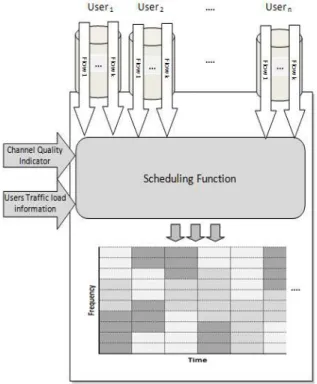
Figure 3. Generic view of a resource scheduler.
important challenges in the design of the downlink 3GPP LTE system packet scheduling algorithms. At each TTI, and for each sub-carrier carrier, each user
sends feedback about their downlink channel’s
channel condition to its eNodeB [8] (see Fig. 3). In fact, each time and frequency domain has an
effect on the channel’s quality for many reasons, for example, the effects of fading, multipath propagation, the Doppler effect, , and so on. So, different users experience distinctive Channel Quality Indicator (CQI) at different times. For this reason, in OFDMA, channel aware solutions are used to give a higher priority to those users who are experiencing a better channel condition.
One of the RRM main functions is packet scheduling, that is, the smart assignment of a user to use the available system RBs while taking into the account the many QoS parameters needed to satisfy the performance matrices. The designing of packet scheduling algorithms in the LTE network has become more difficult and complex with the need to support the variable QoS requirements of different traffic, while raising the efficiency of the system as much as possible.
However, there are many techniques carried out in the LTE network that attempt to satisfy the end users and network providers by performing a high cell capacity, decreasing packet delay and packet loss while maintaining fairness between users. In the
following subsection, we will briefly restate and discuss the most well-known downlink packet scheduling algorithms in the LTE network.
A. Proportional Fair Scheduling
One of the most recognized packet scheduling algorithms is Proportional Fair (PF), which assigns free system resources to a user whose average feedback CQI is high. It allocates user jm in RBm in any given sub-frame, f , if:
where is the average throughput of user j calculated in the sub-frame f and is the achievable rate by user j in RB m and the sub-frame f [9].
B. Modified Largest Weighted Delay First
Another well-known scheduling algorithm is the modified largest weighted delay first (MLWDF) which was developed to support a range of data users with a variety of QoS requirements. A user is selected according to the following equation [10][14]:
where Wi (t) denotes the Head of Line (HOL) packet delay, denotes the weight factor, is the delay threshold for user i, is the acceptable packet loss rate for user i.
C. Frame Low Scheduling
Frame Level Scheduling (FLS) focuses on the QoS for a video multimedia application in the downlink side. Two levels scheduling have been used to design an FLS algorithm, both upper level and lower level. In the upper level, discrete time linear control theory is exploited. In the lower level, a proportional fair scheduling algorithm (PF) is used. In other words, FLS works together with PF, where FLS works in the upper level with frames to decide how much data should be transmitted by each resource block; while in the lower level, PF has been used to maintain fairness and keep system throughput at the maximum as possible. However, according to the FLS rules, the best-effort flows can be served just after all the video flows have been served [11].
D. Exponential Rule and EXP/PF
The adaptive Exponential PF rule (EXP/PF) was first developed for multimedia traffic in the TDD system over the OFDMA system. It uses channel state and
queue information explicitly and could offer a streaming service as well as best-effort data services to mobile users [12]. EXP rule was implemented to support video streaming services to guarantee specific delay constraints.
In EXP/PF, the properties of PF and the exponential function of the end-to-end delay are both taken into the account. EXP/PF can work with video and best-effort applications. The metric for video can be calculated as:
where
(6) and Nrt denotes the number of active downlink video applications, as in eq. 4, is the last average throughput achieved by the user i until time t , and is the expected data-rate for the user i at time t on the RB k [13].
E. The Logarithmic Rule
The logarithmic rule (LOG rule) is one of most well-known scheduling algorithms in the LTE system as it proposed a radical sum-rate monotone (RSM), firstly was proposed in [14]. The LOG rule algorithm has some policies that deal with both the mean delay and robustness. For the LOG rule algorithm, the following equation is used to calculate the metric:
(5) where bi, c, and are tunable parameters; and is the spectral efficiency for a user i on the sub-channel k.
IV. SIMULATION
A. Simulation Setup
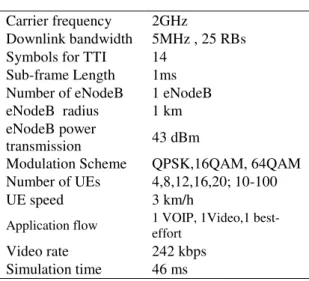
We have evaluated the performance of different scheduling algorithms using the LTE-Sim simulator, which is an open source simulator developed by Telematics Lab at the Electrical & Electronics Engineering Department, the Technical University of Bari [15]. Simulation parameters are listed in Table II.
The simulation was ran 150 times to evaluate well-known algorithms such as PF, EXP/PF, MLWDF, FLS, EXP rule, and LOG rule, in terms of delay, packet loss ratio (PLR), and throughput, using different types of traffic. For each algorithm, a varying number of users and different traffic was experimented.
The experiment starts with 4 users and is performed 5 times repeatedly, and then the average was taken in order to ensure accurate results. After that, the same scenario was conducted with 8, 12, 16, and 20 users. Each user has 1 video flow with a 242 bit rate, 1 VOIP flow, and 1 best-effort flow. Moreover, a high number of users has been used to
evaluate the performance of the well-known algorithms in term of packet loss.
In fact, it takes a long time to run 150 experiments with different scenarios (30 scenarios, each scenario was repeated 5 times) and calculate the average delay, PLR, and throughput. However, by using the powerful tool of Shell Script, it becomes easier to perform many experiments with different scenarios in one click.
TABLE II. SIMULATION PARAMETERS Carrier frequency 2GHz
Downlink bandwidth 5MHz , 25 RBs
Symbols for TTI 14
Sub-frame Length 1ms
Number of eNodeB 1 eNodeB
eNodeB radius 1 km
eNodeB power
transmission 43 dBm
Modulation Scheme QPSK,16QAM, 64QAM
Number of UEs 4,8,12,16,20; 10-100
UE speed 3 km/h
Application flow 1 VOIP, 1Video,1 best-
effort
Video rate 242 kbps
Simulation time 46 ms
B. Simulation Results
1. Delay:
As shown in Fig. 4 and Fig. 5, in case of VOIP traffic, a high delay was found when the FLS algorithm was used while the other algorithms
Figure 4. Video Delay vs. Number of Users
provided low delay. In contrast, the FLS achieved the lowest delay compared to other algorithms when video traffic was used.
2. Throughput
As shown in Fig. 6, all algorithms resulted in almost the same QoS requirement for VOIP services. In Fig. 7, in the case of video traffic, it can be observed that the FLS resulted in the highest throughput, followed by the EXP rule algorithm; while the LOG rule, MLWDF, and the EXP/PF displays almost the same QoS requirement as video
Figure 5. VOIP Delay vs. Number of Users
Figure 6. VOIP Throughput vs. Number of Users
Figure 7. Video Throughput vs. Number of Users
streaming services. In PF, the throughput decreased as the number of users increased and exceeded 8 users. As illustrated in Fig. 8, in the case of best-effort traffic, the system throughput decreased when the FLS algorithm was used. This phenomena occurred because in the FLS algorithm, RBs are reserved to the video stream first, then the free RBs are reserved to other traffic.
3. Packet Loss
As shown in Fig. 9 and Fig. 10, in the case of video traffic, it can be observed that both the FLS and
the EXP rule algorithms achieved low packet loss ratio while the other algorithms provided a higher PLR. Actually, the PLR increase in all algorithms as the number of users increase.
Figure 8. Best-Effort Throughput vs. Number of Users
Figure 9. VOIP Packet Loss Ratio vs. Number of Users
Figure 10. Video Packet Loss Ratio vs. Number of Users
V. CONCLUSION
In this paper, the performance of the most well- known packet scheduling algorithms in the LTE system were evaluated in the downlink side. Their performances are evaluated using an open source simulator called LTE-Sim. Simulation results
demonstrated that, in the case of using video streams, the FLS and EXP rule algorithms achieved high throughput with low delay and PLR; and achieved low throughput with high delay and PLR in the case of using non video applications.
As for future work, we are thinking of working on mechanisms that support high throughput with low latency to run smoothly the Evolved Multimedia Broadcast Multicast Service (E-MBMS), through reducement of the feedback rate and efficient selection of the optimal Modulation and Coding Scheme (MCS) level based on its standard deviation.
REFERENCES
[1] I.U. Ltd., Mobile Internet Traffic: Analysing Global Usage Trends,<http://media2.telecoms.com/downloads/mobile-internet-traffic-trends.pdf>, 2010.
[2] 3GPP, Tech. Specif. Group Radio Access Network - Requirements for Evolved UTRA (E-UTRA) and Evolved UTRAN (E-UTRAN), 3GPP TS 25.913.
[3] J. Zyren, "Overview of 3GPP Long Term Evolution Physical Layer," freescale semiconductor 2007.
[4] Dahlman, E., S. Parkvall, and J. SkÄold, 4G LTE/LTE-Advanced for Mobile Broadband, 100{137, Elsevier Ltd., UK, 2011.
[5] Rinne, M., & Tirkkonen, O. (2010). LTE, the radio technology path towards 4G. Computer Communications,
33(16), 1894–1906. doi:10.1016/j.comcom.2010.07.001 [6] 3GPP Tech. Specif. Group Radio Access Network; Physical
Channel and Modulation (Release 8), 3GPP TS 36.211. [7] International Telecommunication Union (ITU), Overall
network oper-ation, telephone service, service operation and human factors,ITU-T Recommendation E.800 Annex B, Aug. 2008.
[8] N. Kolehmainen, J. Puttonen, P. Kela, T. Ristaniemi, T. Henttonen, and M. Moisio, “Channel Quality Indication Reporting Schemes for UTRAN Long Term Evolution
Downlink,” inProc. IEEE Veh. Tech. Conf., VTC-Spring,
Marina Bay, Singapore, May 2008, pp. 2522 –2526. [9] G. Caire, R. Müller and R. Knopp, ‘Hard Fairness Versus
Proportional Fairness in Wireless Communications: The Single-cell Case’.IEEE Trans. on Information Theory, Vol. 53, pp. 1366–1385, April 2007.
[10] B.Sadiq,S.J.Baek,andG.deVeciana,“Delay optimal opportuis-
tic scheduling and approximations: the Log rule,” in Proceedings of the 27th Annual Joint Conference on the IEEE Computer and Communications Societies (INFOCOM ’09),pp.1–9, April 2009.
[11] Piro, G., Grieco, L. A., Boggia, G., & Camarda, P. (2010, April). A two-level scheduling algorithm for QoS support in the downlink of LTE cellular networks. In Wireless Conference (EW), 2010 European (pp. 246-253). IEEE. [12] J.-H. Rhee, J. Holtzman, and D.-K. Kim, “Scheduling of
real/nonreal time services: Adaptive EXP/PF algorithm,”in Proc. IEEE Vehicular Technology Conf. (VTC2003), Apr. 2003, pp. 462–466.
[13] F. Capozzi, G. Piro, L. A. Grieco, G. Boggia, and P.
Camarda, “Down-link packet scheduling in lte cellular
networks: Key design issues and asurvey,”IEEE Commun. Surveys Tuts., 2012.
[14] H. Ramli, R. Basukala, K. Sandrasegaran, and R.
Patachaianand, “Per-formance of well known packet
scheduling algorithms in the downlink 3GPP LTE system,” inProc. IEEE 9th Malaysia Int. Conf. Communi-cations (MICC), 2009, 2009, pp. 815–820.
[15] G. Piro, L. Grieco, G. Boggia, F. Capozzi, and P. Camarda,
“Simulating LTE Cellular Systems: An Open-Source
Framework,”IEEE Trans. Veh.Technol., vol. 60, no. 2, pp. 498 –513, Feb. 2011.