warwick.ac.uk/lib-publications
Original citation:Kushwaha, Manish, Rostain, William, Prakash, Satya (Researcher in Life Sciences), Duncan, John and Jaramillo, Alfonso. (2016) Using RNA as molecular code for programming cellular function. ACS Synthetic Biology.
Permanent WRAP URL:
http://wrap.warwick.ac.uk/78015
Copyright and reuse:
The Warwick Research Archive Portal (WRAP) makes this work by researchers of the University of Warwick available open access under the following conditions. Copyright © and all moral rights to the version of the paper presented here belong to the individual author(s) and/or other copyright owners. To the extent reasonable and practicable the material made available in WRAP has been checked for eligibility before being made available.
Copies of full items can be used for personal research or study, educational, or not-for profit purposes without prior permission or charge. Provided that the authors, title and full bibliographic details are credited, a hyperlink and/or URL is given for the original metadata page and the content is not changed in any way.
Publisher’s statement:
“This document is the Accepted Manuscript version of a Published Work that appeared in final form in ACS Synthetic Biology, copyright © American Chemical Society after peer review and technical editing by the publisher.
To access the final edited and published work
http://pubs.acs.org/doi/abs/10.1021/acssynbio.5b00297?journalCode=asbcd6 http://pubs.acs.org/page/policy/articlesonrequest/index.html .”
A note on versions:
The version presented here may differ from the published version or, version of record, if you wish to cite this item you are advised to consult the publisher’s version. Please see the ‘permanent WRAP url’ above for details on accessing the published version and note that access may require a subscription.
Title
Using RNA as molecular code for programming cellular function
Authors
Manish Kushwaha1, William Rostain1,2, Satya Prakash1, John N. Duncan1, and Alfonso Jaramillo1,2,*
Affiliations
1 Warwick Integrative Synthetic Biology Centre and School of Life Sciences, University of Warwick, Coventry, CV4 7AL, U.K.
2 iSSB, Genopole, CNRS, UEVE, Université Paris-Saclay, Évry, France.
Abstract
Introduction
Many diverse roles of RNA in organisms from all kingdoms and lifestyles have been uncovered in the last few decades1–6. Consequently, the understanding of RNA has transformed from that of primarily an informational molecule to that of one with diverse functions: regulatory, enzymatic, and structural7–12. RNA’s involvement in all major molecular processes of the cell– including replication, transcription, and translation– allows it to control various aspects of genetic information processing and function. This, in turn, enables synthetic biologists and biotechnologists to use RNA as a tool for reprogramming cellular machinery towards a range of metabolic, diagnostic, therapeutic and environmental applications13–16.
Central to our ability of being able to design RNA tools for biological engineering is the fact that intra- and inter-molecular RNA interactions, as well as DNA:RNA interactions, follow simple base-pairing rules that can be used to computationally predict cis- and trans- secondary structures for a given sequence using free-energy minimization algorithms17–19. Conversely, it is also possible to design by inverse folding RNA sequences that meet specific structural constraints20–22. The available set of computational methods has successfully bridged the gap between sequence and RNA secondary structure, although its de novo tertiary structure
regions within a given part26–31. RNA predictive power is in stark contrast to de novo prediction of protein structure, much less protein:protein interactions or protein:nucleic acid interactions, computational solutions for which remain elusive or highly resource intensive32–35.
The programmability of RNA has led to the development of a large repertoire of genetic parts, natural and synthetic, that can control wide-ranging functions within the cell27,31,36–38. In addition, a number of advanced computational tools have been constructed that predict and design the functionality of these parts based on higher-order mathematical models incorporating RNA interaction energies22,39–43. In this review, we start with conducting an examination of the various RNA parts, methods and computational tools available for use in synthetic biology. We elucidate their design principles, and consider their input-output potential for interfacing with each other in multi-component circuitry for onward information processing and signal conversion. Next, we look at examples of successful circuit design using one or more RNA part types together. Finally, we present a range of applications facilitated by RNA parts and circuits, focusing on those that exploit the “programmable” features of RNA, and expand on the challenges and potential for the future.
RNA Parts and Tools
“protein cost” that depletes the cell of ribosomal resource51–53. Consequently, despite comparable output, genetic designs with higher mRNA transcription rates have better efficiency than those with higher protein translation rates since the latter divert more ribosomal resource54. RNA production being less costly allows the advantage of achieving higher abundance of effector RNAs relative to the target, in turn, reducing chances of retroactivity55. Here we discuss the key RNA parts and associated tools that have advanced RNA circuit programming to a whole new level13,56 (Figure 1).
Figure 1.RNA parts can be used to regulate a wide range of genetic control functions. (A) Strength of interaction between the anti-Shine Dalgarno (aSD) sequence and the ribosome binding site (RBS) is an important determinant of translation initiation. By modelling these interactions, the RBS Calculator model can predict the TIR of mRNA ORFs across multiple species40. (B) Ligand-binding aptamers can be placed upstream of a gene of interest to create
riboswitches, such that binding-induced conformational change alters access of the translation machinery to the gene's RBS. Shown below are the ligand-bound secondary structures of six aptamers41. (C) By modelling the energetics of RNA:RNA interaction, trans-activating small
RNA regulators of translation can be designed computationally22. (D) Aptamers can be fused
with ribozymes to create aptazymes, which can regulate translation of a downstream gene upon ligand binding. (E) Small transcription activating RNAs prevent transcription termination by disrupting the terminator hairpin loop that would otherwise cause RNAP dislocation38. (F)
Binding of the dCas9 protein can also block transcription by preventing RNAP translocation along the DNA template.
Ribosomes are large multi-subunit ribonucleoproteins (RNPs) composed of ribosomal proteins and RNAs (rRNAs) that translate protein coding mRNAs. Although the tertiary structure of rRNAs forms the bulk of the ribosome57, to the biological engineer interested in regulating protein expression, bacterial ribosomes can be abstracted to be represented by their anti-Shine Dalgarno (aSD) sequence, the 16S rRNA 3’end that interacts with the ribosome binding site (RBS) on the 5’UTR of the mRNA to form the translation initiation complex. By manipulating the interaction between the aSD and the RBS, the rate of binding of the ribosome to the mRNA, and hence the translation initiation rate (TIR) can be altered. This was previously achieved by mutating the RBS sequence towards a desired protein expression level58.
Of late, de novo design of RBS sequences has been made possible by various
The above tools also provided evidence that the same RBS sequence can have vastly different translation rates (530-fold in one example59) for two different ORF sequences, underlining the importance of building good mathematical models and the limits of standardized parts libraries as used in synthetic biology25,59. Since these tools report TIR on a relative scale specific to a given ORF, the effects of independent variables like DNA copy number, transcription rate, codon usage, protein size, protein solubility or other factors affecting translation elongation or termination can be ignored. However, this also implies that comparing TIR values across different ORFs is unlikely to correlate with protein abundance, as was recently found by ribosome profiling66. Although much progress has been made in the predictable tuning of protein expression, further improvements could include the kinetics of mRNA folding and ribosome:mRNA interaction in the initiation model, account for differences in mRNA and protein half-lives, and incorporate elongation and termination into a comprehensive translation model67,68.
Riboswitches
riboswitches have been designed from ligand-binding aptamers in parts by rational design and functional screening74–77. However, despite SELEX-driven identification of a number of aptamer molecules de novo design of riboswitches remains considerably
challenging78,79. A recent computational biophysical model was used to design 62 translation-regulating riboswitches from six ligand-binding aptamers, achieving up to 383-fold activation41. Like the RBS Calculator model, the Riboswitch Calculator (Table 1) considers the free energy change from a folded mRNA state unbound to the ligand and the ribosome to a ligand-bound mRNA in complex with the ribosome, and uses it to calculate the activation fold of the riboswitch. The work leading up to the thermodynamic model confirms previous observations that riboswitch activation requires co-transcriptional kinetic trapping of the mRNA in the ligand-bound state75, and uncovers the role of molecular crowding in riboswitch activation. It also calculates the theoretical limits of using a hypothetical ideal riboswitch as a biosensor, predicting that based on thermodynamic considerations the best translation riboswitch will only activate ~20-fold at nanomolar ligand concentrations. However, these theoretical thermodynamic limits could be circumvented by the kinetics of the various steps involved in riboswitch activation: (1) mRNA folding, including transcription rate, (2) ligand binding, including aptamer preorganization and kinetic proofreading, and (3) ribosome binding to the mRNA80–84.
Translation Riboregulators
occludes the RBS in the OFF state, and only allows ribosomal access upon conformational change induced by sRNA binding22,87.
In addition to the advantage of RNA programmability, sRNA-based regulators have faster regulation kinetics than proteins due to their shorter half-lives48. Additionally, translation regulators have quicker response times than transcriptional ones since all the interacting molecules have already been transcribed88. The sRNA:mRNA interaction is initiated at a seed site of sequence complementarity between the two molecules and proceeds along the thermodynamic energy gradient. The energetics of these interactions and the RNA structural constraints were used to build a thermodynamic model of sRNA-mediated translation activation and design many synthetic riboregulators of up to 10-fold activation22,89 (Figure 1C). The model was also published as an online tool for riboregulator design, the Ribomaker (Table 1)89. While the original strategy employed structural constraints to position the RBS in a hairpin stem as a way of maintaining the OFF state, later work has employed a different strategy in the design of “toehold switches” where the RBS is maintained in the unpaired loop of the folded hairpin but translation initiation is prevented by burying the translation start site in the paired stem. The latter design has the advantage that the folding energies of the hairpin-loop structure and the RBS strength can be tuned relatively independently.
repressing sRNA can bind it with sufficient strength to prevent translation initiation or elongation15,91.
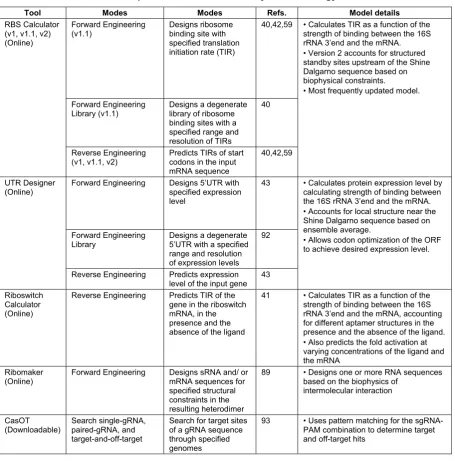
Table 1: Computational tools for RNA synthetic biology
Tool Modes Modes Refs. Model details
RBS Calculator (v1, v1.1, v2) (Online)
Forward Engineering (v1.1)
Designs ribosome binding site with specified translation initiation rate (TIR)
40,42,59 • Calculates TIR as a function of the strength of binding between the 16S rRNA 3’end and the mRNA. • Version 2 accounts for structured standby sites upstream of the Shine Dalgarno sequence based on biophysical constraints.
• Most frequently updated model. Forward Engineering
Library (v1.1)
Designs a degenerate library of ribosome binding sites with a specified range and resolution of TIRs
40
Reverse Engineering (v1, v1.1, v2)
Predicts TIRs of start codons in the input mRNA sequence
40,42,59
UTR Designer (Online)
Forward Engineering Designs 5’UTR with
specified expression level
43 • Calculates protein expression level by calculating strength of binding between the 16S rRNA 3’end and the mRNA. • Accounts for local structure near the Shine Dalgarno sequence based on ensemble average.
• Allows codon optimization of the ORF to achieve desired expression level. Forward Engineering
Library
Designs a degenerate 5’UTR with a specified range and resolution of expression levels
92
Reverse Engineering Predicts expression level of the input gene
43
Riboswitch Calculator (Online)
Reverse Engineering Predicts TIR of the gene in the riboswitch mRNA, in the presence and the absence of the ligand
41 • Calculates TIR as a function of the strength of binding between the 16S rRNA 3’end and the mRNA, accounting for different aptamer structures in the presence and the absence of the ligand. • Also predicts the fold activation at varying concentrations of the ligand and the mRNA
Ribomaker (Online)
Forward Engineering Designs sRNA and/ or
mRNA sequences for specified structural constraints in the resulting heterodimer
89 • Designs one or more RNA sequences
based on the biophysics of intermolecular interaction CasOT (Downloadable) Search single-gRNA, paired-gRNA, and target-and-off-target
Search for target sites of a gRNA sequence through specified genomes
93 • Uses pattern matching for the
sgRNA-PAM combination to determine target and off-target hits
Ribozymes
by the insertion of an aptamer whereby the necessary structural confirmation required for catalytic activity is met only when the aptamer binds to a small molecule ligand. Such ligand-induced ribozymes, called aptazymes, can be designed to regulate gene expression and therefore act as molecular sensors of small molecules97–99 (Figure 1D). Using similar principles of conformational switching, computational methods have been used to calculate secondary structure of the ribozyme molecules to engineer ribozymes for ligand-induced release of riboregulators37. These sRNA-releasing ribozymes, called “regazymes”, can also be re-programmed to sense specific sRNAs, converting them into signal relay molecules. As with riboswitches, induced conformational changes in aptazymes are often co-transcriptional, making kinetic RNA folding method like Kinefold more useful for their design100,101.
Transcriptional Regulators
Rho-independent or intrinsic transcriptional terminators represent one of the most well-known example of functional structured RNAs, and are responsible for ~80% of all transcription termination events in E. coli102. They consist of a conserved RNA
Since transcriptional termination requires the slowing down of RNA polymerase and the formation of a destabilizing hairpin-loop, different anti-termination strategies have also evolved in nature to regulate termination108–110. These have subsequently been adapted to design multiple orthogonal parts for regulating transcription termination. Inspired by the pT181 attenuator, researchers have designed antisense sRNAs that can effectively repress transcription by stabilizing an otherwise weak terminator hairpin, resulting in premature termination of mRNA30,111. Conversely, small transcription activating RNAs (STARs) have been designed that activate transcription by sequestering the 5’proximal arm of the terminator hairpin, resulting in onward transcription of the mRNA38,112 (Figure 1E). Both these sRNA-triggered methods of transcriptional regulation can be used in many combinations for genetic circuitry involving RNA-only signal propagation. Furthermore, E. coli’s
leader-peptide regulatory element from its tna operon has been adapted to activate
transcription by translation-mediated anti-termination31. Therefore, the synthetic tna -derived adaptor acts as a signal converter in a genetic circuit, converting a translation signal to a transcription signal by closely interfacing the ribosome and the RNA polymerase. Viewed from an electronics perspective, this is analogous to a translation current expressed as ribosomal flux (RiPS, ribosome per second) being converted to a transcription current expressed as polymerase flux (PoPS, polymerase per second) via “common signal carriers”– the ribosomes and the RNA polymerases113,114.
CRISPR/Cas9
RNA) to direct the Cas9 to its complementary DNA sequence115,116. The natural dual RNA complex has been engineered to a simpler single small guide RNA (sgRNA) that contains the region complementary to the target DNA sequence near a recognition motif called PAM116,117. The rest of the sgRNA consists of a Cas9-handle that facilitates its docking into the Cas9 protein118. The Cas9-sgRNA pair are self-sufficient and do not require any other host factors, as evidenced by their standalone application in diverse prokaryotic and eukaryotic hosts119–121. By modifying the sequence-specificity region of the sgRNA, it is possible to target it to any location in the genome or a plasmid. While the catalytically active version of Cas9 has been applied in diverse genome engineering applications119,122, the inactive dCas9 has been used or reprogrammed, by fusion with other domains, for use as a sequence-specific activator or repressor with high specificity123,124 (Figure 1F). The high programmability and specificity of sgRNA sequence as well as the availability of mutually orthogonal Cas9 proteins with different PAM recognition motifs has facilitated parallel application of the Cas9 technology for targeting of multiple DNA loci simultaneously using orthogonal sgRNAs125–127. Inducible reconstitution of split-Cas9 protein has allowed greater temporal control over its activity128,129. Furthermore, antisense RNA-mediated regulation of sgRNA function, and engineering additional RNA motifs onto the sgRNA has made possible the recruitment of other effector proteins with diverse functions, expanding the range of Cas9-mediated regulatory action130–132.
RNA Circuits
has also allowed construction of many hybrid parts with composite functions37,38,130,134. Furthermore, RNA parts are relatively universal and can be easily ported from one species to another135. The improved dynamic ranges of RNA parts have also improved their ability to interface with other parts, further enhancing their composability. As a result, RNA-based circuits have now been successfully used to implement logic gates, feedback controls, feed-forward loops, and regulatory cascades37,88,136 (Figure 2). Here we discuss some RNA circuit designs to provide better appreciation of the achievements and potential of RNA-based circuitry, putting in context the previously discussed RNA parts.
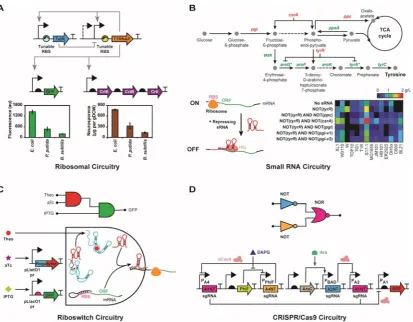
Figure 2. RNA parts can be assembled into multi-layered circuitry. (A) Computational
design of tunable RBS sequences allows construction of a mixed feedback loop of orthogonal
polymerase (T7RNAP) and repressor (TetR) molecules, enabling gene expression in a
host-promoter independent manner135. (B) Hfq-chaperoned binding between sRNA and mRNA
results in translation repression of the latter. This has been used for metabolic engineering in
E. coli to increase tyrosine production15. Genes in red were targeted for sRNA-mediated
[image:15.595.93.507.323.645.2]3-input AND gate demonstrated here37. (D) Orthogonal sgRNAs, together with the dCas9
repressor, have been used to build higher order genetic circuits125.
Ribosomal circuitry
While proteins are the specialized reservoirs of the bulk of enzymatic activity in the cell, by leveraging the role of RNA in protein expression we can gain greater programmable control over their function. As discussed earlier, by engineering ribosome:mRNA interactions using translation initiation models, we can tune protein expression over a large dynamic range within the cell42,43,59. The RBS Library Calculator and the UTR Library Designer, add-on tools to the respective computational models, can design a degenerate RBS sequence to span a range of protein expression space, further enhances this ability40,92. This methodology has been used to tune the knobs of multi-dimensional enzyme expression spaces to determine the optimal stoichiometry of individual enzymes that achieve a balanced pathway for neurosporene, NADPH, lysine and hydrogen production40,63,92. Total enzyme expression can be subsequently increased, while maintaining relative enzyme stoichiometry, to further improve production. The ability to engineer multi-dimensional tunable protein expression has also been used to create mixed feedback loop transcriptional genetic circuits for autonomous regulation of the orthogonal T7 RNA polymerase to cap toxicity, allowing conversion from a RiBS signal to a PoPS signal, and facilitating inter-species portability of genetic parts and pathways135 (Figure 2A).
engineer, facilitating otherwise difficult to implement design paradigms like synthetic amino acid incorporation into peptides or quadruplet-codon decoding ribosomes139–141. rRNA engineering has recently led to the development of a single subunit ribosome (Ribo-T) that has the potential to further expand RNA control over protein regulation142.
Small RNA circuitry
As seen earlier, sRNA binding to the mRNA can abolish translation initiation or elongation, thereby allowing direct control over protein expression in the cell. Recent work has expanded this approach to implement a combinatorial knockdown of multiple genes using synthetic sRNAs for metabolic engineering of biosynthetic pathways in
E. coli. In order to redirect flux through the tyrosine production pathway, four genes
(csrA, pgi, ppc and tyrR) were targeted for repression in a number of cell lines,
improving tyrosine production dramatically15 (Figure 2B). In the most productive strain, the simultaneous application of sRNAs results in a genetic NOT-AND-NOT gate for tyrR and csrA genes. In the same study, repressing six of eight target genomic loci
by sRNAs led to an increase in cadaverine production by ~55%. sRNA circuits have also been built for activating translation of genes with structurally repressed 5’UTRs. A combination of these trans-activating riboregulators has been used to build RNA circuits that trigger physiological responses like λ-phage lysis, integrate simple 2-input or more complex 4-input AND gate logic, and implement transcriptional cascades in vitro22,87,133,143.
activating STARs have been used to design many orthogonal activating RNAs reaching activation folds of up to 94-fold, and the implementation of novel RNA-only AND and NIMPLY logic gate organisations38.
Riboswitch circuitry
As reviewed recently, simple logic gate circuit functionality already exists in a number of naturally occurring riboswitches144. The glmS riboswitch integrates glucose-6-phosphate and glucosamine-glucose-6-phosphate signals, while the add riboswitch integrates
adenine and temperature signals in an OR gate fashion145,146. Similarly, the metE riboswitch responds to S-adenosylmethionine and vitamin B12 in a NOR gate logic147. Synthetic riboswitches have also been built using design and selection methodologies to process AND and NAND gate logics, or act as band pass filters134,148. More generalizable strategies have also been used to implement additional logic gate functions like OR and NOR, and signal filters149.
Riboswitches can also be combined together, or joined with other RNA parts, to make composite parts with novel functionalities134. By fusing a ligand-binding riboswitch to a ribozyme, researchers have been able to create a larger array of logic gate circuits: AND, NOR, and NAND gates149,150. Similarly, researches have created an sRNA-emitting ribozyme, called regazyme, that responds to a small molecule or a specific sRNA trigger by cleaving to release another sRNA for downstream function. The regazyme can also be activated by an sRNA, acting as a signal relay inside cells37. The regazymes have been used to build 2- and 3-input AND gate logic circuitry (Figure 2C).
The CRISPR/Cas9 system uses a small guide RNA (sgRNA) sequence for recognition specificity for binding to its DNA target, facilitating the use of orthogonal sgRNA sequences for targeting multiple locations in the DNA. Using the catalytically dead dCas9 protein, this has enabled the development of genetic circuitry with complex logic gate functions like NOT-NOT, NOR, NOR-NOT, NOR (NOT-NOT) where dCas9 acts as a programmable repressor in bacteria125 (Figure 2D), repressing a gene by blocking the access of RNA polymerase (RNAP) to its promoter. Moderate success has also been achieved in turning dCas9 into a transcriptional activator by fusing it to the omega subunit of bacterial RNAP123. It may be possible to further improve this strategy by using stronger activation domains, or harnessing transcriptional activity from an orthogonal RNA polymerase fragment151.
dCas9 has also been used to build higher-order layered genetic circuits for decision-making in eukaryotic cells, including yeast and mammalian152,153. Unlike in bacteria, dCas9 binding on its own is quite inefficient for transcriptional repression in eukaryotes154,155, where most successful CRISPRi strategies have relied on using one or more repressor domains fused to dCas9154–156, or a repressor protein recruited via an RNA-binding domain130, to inactivate a promoter at the chromatin level. However, a recent report in Drosophila has demonstrated efficient transcriptional knockdown by
positioning that blocks the RNA polymerase from progressing downstream from the nucleosome free region162,163.
Applications
The versatility of structure and function of RNA devices, along with their programmable nature, has permitted their use in a multitude of biological, biotechnological and medical applications (Figure 3). Many of these applications use parts and circuitry discussed earlier in this review. We consider some of them here, focusing on those applications where the programmable aspects of RNA function have been harnessed.
Riboswitch sensors for bio-production
The ability of riboswitches to control gene expression in response to small molecule binding has found them use in bio-production as sensors of desired molecular products or of metabolic intermediates. The possibility of identifying novel small-molecule binding aptamers by in vitro selection78, followed by building artificial
riboswitches or other aptamer-regulated RNA parts11,37, makes them appealing as control circuits during biotechnological production of useful chemicals. Successful riboswitch-mediated enrichment of cells able to sense theophylline after mixing with non-sensing cells first hinted at the possibility of linking riboswitch based selection to directed evolution164. Riboswitches have subsequently been used to differentiate E. coli cells producing vitamin B12 from non-producers, to screen libraries of caffeine demethylase variants in yeast for higher enzyme activity, and to evolve a chimeric aspartate kinase sourced from Bacillus subtilis and Thermus thermophilus for higher
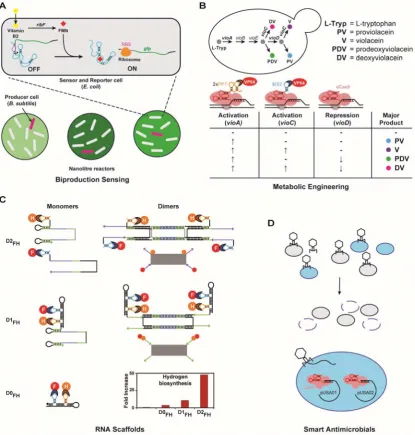
enzymes to redirect metabolic flux towards a product of interest in both bacteria168 and yeast169. Similarly, aptazyme riboswitches have been used for enhanced xanthine and vitamin B2 production in yeast and Bacillus, respectively170,171 (Figure 3A).
Figure 3.RNA function has been harnessed for a number of biological applications.(A)
A library of vitamin B2 producing B. subtilis variants was screened using alginate beads as
nanolitre reactors. E. coli cells, with an engineered riboswitch, were used for sensing and
reporting B2 in the beads171. (B) Cas9-based repression and activation was used in yeast to
enable programmable routing of metabolic flux from L-tryptophan to one of four different pigments produced in the violacein pathway130. RNA motifs MS2 and PP7 were added to the
sgRNA to act as bait for the recognition domains fused to VP64 trans-activator to attract it to the relevant gene. (C) RNA can be used as scaffold for spatial organization of enzymes. Using RNA motifs MS2 and PP7 to recruit enzymes ferredoxin (F) and hydrogenase (H) to RNA molecules with 0D, 1D and 2D higher order structures (D0FH, D1FH and D2FH) increases
hydrogen yield by up to 4-fold, 11-fold and 48-fold, respectively, compared to unscaffolded proteins (leftmost bar)172. The RNA-protein monomers and dimers that assemble into larger
RNA directionality for pairing. (D) Cas9 nuclease with programmable sequence-specificity has been employed with engineered phagemids to selectively kill methicillin resistant S. aureus173. The CRISPR array sequence was designed to target both resistance plasmids pUSA01 and pUSA02 for curing.
Small RNA regulators for metabolic engineering
sRNA regulators of gene expression can be easily directed against natural genes as they work through base pairing with their target sequences. As such, they can be designed with relatively high throughput, and large scale knockdown of key genes in metabolic pathways can be programmed to divert carbon fluxes and increase production. This was originally achieved using asRNAs (long antisense RNAs), and later improved by the use of PTasRNAs (paired termini asRNA)174,175. As discussed previously, synthetic sRNA negative riboregulators have also been used to knockdown regulators of metabolic pathways and achieve high titers of tyrosine (2 g/L) and of cadaverine (12.6 g/L)15. Since sRNA-mediated gene regulation can function without modifying the genome, such RNAs can be used to rapidly engineer microbial cell-factories across different species of bacteria176. In addition to regulating translation, CRISPRi sgRNAs can also be used in a similar way for rapid and multiplexed transcriptional repression of flux genes using the dCas9 protein, as was done for the polyhydroxyalkanoate pathway in E. coli177. Fusion of the sgRNA with other RNA
motifs for accessory protein recruitment has permitted activation or repression of genes based on the sgRNA input, allowing rerouting of metabolic flux to different pigment outputs depending on the RNA program input in yeast130 (Figure 3B).
RNA scaffolds for biotechnology
The base pairing properties of RNA allow it to be assembled into different shapes in vitro178. These properties have also been used in vivo to create scaffolds on
hydrogen producing enzymes in E. coli172. The authors fused different RNA binding
domains (MS2 and PP7) to the two enzymes required for hydrogen production in E. coli, to immobilize them to a specific region of the RNA scaffold. By incorporating
RNA binding domains onto different RNA scaffolds that assembled into 1 or 2 dimensional structures, they were able to increase hydrogen output by up to 48-fold (Figure 3C). This method was expanded to increase pentadecane titers up to 140% and succinate up to 88%, allowing the co-localization of up to four enzymes179.
Molecular diagnostics
The ability of RNA circuits to detect small molecules and specific RNA sequences, as well as the possibility of using the circuits in cell free extracts, has led to the exciting development of paper-based “toehold switch” riboregulators, which can be freeze-dried on a paper matrix with cell free extract and functionalized after rehydration87,133. These sensors can detect specific RNA sequences through binding of complementary regions and strand-displacement. Early examples include differentiating between two different Ebola virus strains, although the strategy can
easily be expanded to detect other RNA sequences. The cell-free nature of the system makes it cheap, portable, and better suited to a regulatory environment where genetically engineered material could not be used in the field.
Smart therapeutics
and CRISPR/Cas9 nuclease have been delivered into E. coli to either repress antibiotic
resistance genes and restore sensitivity, or to kill bacteria in a sequence specific manner173,181,182 (Figure 3D). These proof of principle examples demonstrate the antimicrobial potential of RNA circuits for specific bacterial targeting. In addition, more complex responses based on devices that sense small molecules and other RNAs, as well as layered circuits that integrate multiple inputs, are also possible in mammalian cells. Delivered though specialized vectors183, such circuits can read the cellular state and integrate multiple signals like viral RNAs or cancer-associated metabolites to produce conditional outputs like apoptotic or immune-stimulatory response184. To improve half-lives and reduce immunogenicity of the delivered RNA molecules modified bases such as pseudouridine can be substituted into them185, while also continuing to assist RNA programmability by improving existing secondary structure prediction models to capture the altered biophysics of molecular interaction by such bases186.
Cellular RNA editing
Group I self-splicing introns can be used to engineer trans-splicing ribozymes for directed editing of RNAs using base-pairing programmable “guide sequences”187– 189. These have been used to repair the disease form of mRNAs, in sickle cell ß-globin mRNA190,191 and myotonic dystrophy DMPK mRNA192 for example, or target dengue virus conserved RNA genome193. Other trans-splicers create specific cytotoxins194 in response to mRNA presence or cause cell death upon viral infection195. They have also been used to target cancer-linked mRNAs16, and can be delivered using viral vectors196. Furthermore, they can be combined with aptamers, resulting in small-molecule activated trans-splicers197.
CRISPR/Cas9 nuclease allows programmable genome editing by effecting RNA-guided double strand break at a precise target site that is later repaired by homologous recombination (HR) or non-homologous end joining (NHEJ) introducing recombinant DNA at the cut site122. However, target recognition by the small 17-20 nt gRNA often results in many off targets, particularly in large genomes198,199. This has promoted the development of many methodologies to deal with the undesirable off-targets. Cas9n, a nickase mutant that can only nick a single strand of the target DNA, necessitates making two separate DNA nicks for HR, eliminating NHEJ mediated repair and reducing off-target effects200. Systems have been developed to regulate the active time of Cas9, inducible by small molecule or light, in order to reduce off-target effects201,202. A recent high-fidelity Cas9 mutant has reduced strength of binding to DNA that reduces off-target effects to undetectable levels in the human genome203. Other methods include using bioinformatics tools, like CasOT (Table 1)93, and computational models to predict off-target effects, and design sgRNAs to avoid them93,204. Due to its portability and precision programmability, the CRISPR/Cas9 genome engineering method has found widespread use for generating mouse models of disease205, disrupting latent HIV206, and repairing defective genes207, among others. Future directions
together, presumably as a relic from the old RNA world. As RNA engineering can only be used to affect those functions in the cell that are carried out or regulated by it, either alone or in combination with protein effectors, this functional versatility allows for wider control to the RNA coder. Secondly, RNA is a highly programmable molecule whose intra- and inter-molecular interactions rely on simple base-pairing rules and can be readily predicted. Together with the fact that most RNA functions depend on its primary sequence or its secondary structure, this predictability allows an RNA coder to rewrite these functions de novo.
The RNA properties of versatility and predictability are also closely related with the 'parts' and 'models' paradigms of synthetic biology. The standardized parts paradigm aims to characterize biological parts to determine their functional specifications and catalogue them. The versatility of RNA therefore results in large libraries of RNA parts that can be re-used in biological circuits where their functions are needed. While the parts paradigm improves programmability using RNA, it is effective only for modular and composable parts. When parts crosstalk or influence each other in unexpected ways, the utility of the parts paradigm gets limited. This is where the predictability of RNA interactions can be very useful. In the 'models' paradigm of synthetic biology, the functional specifications of an RNA part can be predicted from its sequence using a computational model that can determine the sequence-structure-function relationship of the part. This expands the design space for RNA circuits by allowing the coder to design novel and orthogonal parts that do not crosstalk with each other. The ability to predict RNA behavior de novo is closely linked to the strengths of the computational
sequences on part behavior. Overall, RNA synthetic biology will benefit by a judicious use of parts and models for building biological systems.
With considerable expansion in the number and type of RNA parts and models in the past few years, as well as their improved dynamic ranges, we have reached the stage in biological engineering where RNA programmability is already being leveraged for complex biological design. The development of RNA devices capable of converting one form of signal to another31,135, and those able to emit RNA in response to a trigger (like light, a small molecule, or another RNA) could standardize the use of sRNAs as signal mediators in gene circuits37,47,88,133. Such RNA-only circuits driven by broad host-range viral promoters could be transplanted across species by only replacing the interface with the host gene expression135. However, many further steps are necessary for achieving RNA precision control over design-to-specification for biological systems for more predictable engineering.
range of operation, and their metabolic load and quantitative expression must be monitored in vivo52,210.
As the use of the popular CRISPR/Cas9 technologies is expanded to larger circuits and genomes, it will be important to build accurate genome-wide models for predicting targeting and off-targeting efficiencies to reduce cross-talk effects of mis-targeting211. To expand Cas9 specificity and functionality, it will also be important to continue the search for Cas9 homologs that use longer recognition sequences and have less stringent PAM sequence requirements.
An important theoretical assumption that underlies almost all computational models describing sequence-structure-function relationships in RNA synthetic biology is that of thermodynamic equilibrium of RNA secondary structures22,37,39,41,42,106,107. While this may be a reasonable assumption for some applications, many RNA processes such as riboswitch activation41,75 and ribozyme folding212,213 are co-transcriptional and their accurate modelling requires incorporation of RNA folding kinetics100,101. Similarly, accurately designing switching dynamics for inducible systems will require dynamic modelling of these systems214. As larger RNA-only or RNA-protein genetic circuits are rationally designed125,135, it will also be important to have an accurate characterization of their model parameters. For these purposes, in vitro
transcription-translation systems will be a useful resource88. Acknowledgments
References
(1) Papenfort, K., and Vogel, J. (2010) Regulatory RNA in bacterial pathogens. Cell Host Microbe8, 116–27.
(2) Wiedenheft, B., Sternberg, S. H., and Doudna, J. a. (2012) RNA-guided genetic silencing systems in bacteria and archaea. Nature482, 331–8.
(3) Horvath, P., and Barrangou, R. (2010) CRISPR/Cas, the immune system of bacteria and archaea. Science327, 167–70.
(4) Storz, G., Vogel, J., and Wassarman, K. M. (2011) Regulation by small RNAs in bacteria: expanding frontiers. Mol. Cell43, 880–91.
(5) Towler, B. P., Jones, C. I., and Newbury, S. F. (2015) Mechanisms of regulation of mature miRNAs. Biochem. Soc. Trans.43, 1208–14.
(6) Kim, M. Y., Hur, J., and Jeong, S. (2009) Emerging roles of RNA and RNA-binding protein network in cancer cells. BMB Rep.42, 125–30.
(7) Mattick, J. S. (2004) RNA regulation: a new genetics? Nat. Rev. Genet.5, 316–23.
(8) Sharp, P. A. (2009) The centrality of RNA. Cell136, 577–80.
(9) Holoch, D., and Moazed, D. (2015) RNA-mediated epigenetic regulation of gene expression. Nat. Rev. Genet.16, 71–84.
(10) Chujo, T., Yamazaki, T., and Hirose, T. (2016) Architectural RNAs (arcRNAs): A class of long noncoding RNAs that function as the scaffold of nuclear bodies.
Biochim. Biophys. Acta1859, 139–46.
(11) Serganov, A., and Nudler, E. (2013) A decade of riboswitches. Cell152, 17–24.
(12) Jimenez, R. M., Polanco, J. A., and Lupták, A. (2015) Chemistry and Biology of Self-Cleaving Ribozymes. Trends Biochem. Sci.40, 648–61.
(13) Peters, G., Coussement, P., Maertens, J., Lammertyn, J., and De Mey, M. (2015) Putting RNA to work: Translating RNA fundamentals into biotechnological engineering practice. Biotechnol. Adv.33, 1829–44.
(14) Gallagher, R. R., Patel, J. R., Interiano, A. L., Rovner, A. J., and Isaacs, F. J. (2015) Multilayered genetic safeguards limit growth of microorganisms to defined environments. Nucleic Acids Res.43, 1945–54.
(15) Na, D., Yoo, S. M., Chung, H., Park, H., Park, J. H., and Lee, S. Y. (2013) Metabolic engineering of Escherichia coli using synthetic small regulatory RNAs. Nat. Biotechnol.31, 170–4.
(16) Watanabe, T., and Sullenger, B. A. (2000) Induction of wild-type p53 activity in human cancer cells by ribozymes that repair mutant p53 transcripts. Proc. Natl. Acad. Sci. U. S. A.97, 8490–4.
(17) Markham, N. R., and Zuker, M. (2005) DINAMelt web server for nucleic acid melting prediction. Nucleic Acids Res.33, W577–81.
(18) Lorenz, R., Bernhart, S. H., Höner Zu Siederdissen, C., Tafer, H., Flamm, C., Stadler, P. F., and Hofacker, I. L. (2011) ViennaRNA Package 2.0. Algorithms Mol. Biol.6, 26.
(19) Dirks, R. M., Bois, J. S., Schaeffer, J. M., Winfree, E., and Pierce, N. a. (2007) Thermodynamic Analysis of Interacting Nucleic Acid Strands. SIAM Rev.49, 65–88.
(20) Garcia-Martin, J. A., Clote, P., and Dotu, I. (2013) RNAiFOLD: a constraint programming algorithm for RNA inverse folding and molecular design. J. Bioinform. Comput. Biol.11, 1350001.
(21) Lyngsø, R. B., Anderson, J. W. J., Sizikova, E., Badugu, A., Hyland, T., and Hein, J. (2012) Frnakenstein: multiple target inverse RNA folding. BMC Bioinformatics13,
260.
of small RNA circuits for engineering synthetic riboregulation in living cells. Proc. Natl. Acad. Sci. U. S. A.109, 15271–6.
(23) Bida, J. P., and Maher, L. J. (2012) Improved prediction of RNA tertiary structure with insights into native state dynamics. RNA18, 385–93.
(24) Bottaro, S., Di Palma, F., and Bussi, G. (2014) The role of nucleobase interactions in RNA structure and dynamics. Nucleic Acids Res.42, 13306–14.
(25) Arkin, A. (2008) Setting the standard in synthetic biology. Nat. Biotechnol. 26,
771–4.
(26) Vinkenborg, J. L., Karnowski, N., and Famulok, M. (2011) Aptamers for allosteric regulation. Nat. Chem. Biol.7, 519–527.
(27) Mutalik, V. K., Qi, L., Guimaraes, J. C., Lucks, J. B., and Arkin, A. P. (2012) Rationally designed families of orthogonal RNA regulators of translation. Nat. Chem. Biol.8, 447–54.
(28) Win, M. N., Liang, J. C., and Smolke, C. D. (2009) Frameworks for programming biological function through RNA parts and devices. Chem. Biol.16, 298–310.
(29) Ceres, P., Trausch, J. J., and Batey, R. T. (2013) Engineering modular “ON” RNA switches using biological components. Nucleic Acids Res.41, 10449–61.
(30) Takahashi, M. K., and Lucks, J. B. (2013) A modular strategy for engineering orthogonal chimeric RNA transcription regulators. Nucleic Acids Res.41, 7577–88.
(31) Liu, C. C., Qi, L., Lucks, J. B., Segall-Shapiro, T. H., Wang, D., Mutalik, V. K., and Arkin, A. P. (2012) An adaptor from translational to transcriptional control enables predictable assembly of complex regulation. Nat. Methods9, 1088–94.
(32) Pabo, C. O., and Nekludova, L. (2000) Geometric analysis and comparison of protein-DNA interfaces: why is there no simple code for recognition? J. Mol. Biol.301,
597–624.
(33) Halperin, I., Ma, B., Wolfson, H., and Nussinov, R. (2002) Principles of docking: An overview of search algorithms and a guide to scoring functions. Proteins47, 409–
43.
(34) Floudas, C. A., Fung, H. K., McAllister, S. R., Mönnigmann, M., and Rajgaria, R. (2006) Advances in protein structure prediction and de novo protein design: A review.
Chem. Eng. Sci.61, 966–988.
(35) Brewster, R. C., Jones, D. L., and Phillips, R. (2012) Tuning promoter strength through RNA polymerase binding site design in Escherichia coli. PLoS Comput. Biol. 8, e1002811.
(36) Qi, L., Haurwitz, R. E., Shao, W., Doudna, J. a, and Arkin, A. P. (2012) RNA processing enables predictable programming of gene expression. Nat. Biotechnol. 30,
1002–6.
(37) Shen, S., Rodrigo, G., Prakash, S., Majer, E., Landrain, T. E., Kirov, B., Daròs, J.-A., and Jaramillo, A. (2015) Dynamic signal processing by ribozyme-mediated RNA circuits to control gene expression. Nucleic Acids Res.43, 5158–5170.
(38) Chappell, J., Takahashi, M. K., and Lucks, J. B. (2015) Creating small transcription activating RNAs. Nat. Chem. Biol.11, 214–20.
(39) Tian, T., and Salis, H. M. (2015) A predictive biophysical model of translational coupling to coordinate and control protein expression in bacterial operons. Nucleic Acids Res.43, 7137–51.
(40) Farasat, I., Kushwaha, M., Collens, J., Easterbrook, M., Guido, M., and Salis, H. M. (2014) Efficient search, mapping, and optimization of multi-protein genetic systems in diverse bacteria. Mol. Syst. Biol.10, 731.
aptamers. Nucleic Acids Res.44, 1–13.
(42) Espah Borujeni, A., Channarasappa, A. S., and Salis, H. M. (2014) Translation rate is controlled by coupled trade-offs between site accessibility, selective RNA unfolding and sliding at upstream standby sites. Nucleic Acids Res.42, 2646–59.
(43) Seo, S. W., Yang, J.-S., Kim, I., Yang, J., Min, B. E., Kim, S., and Jung, G. Y. (2013) Predictive design of mRNA translation initiation region to control prokaryotic translation efficiency. Metab. Eng.15, 67–74.
(44) Bernstein, J. a, Khodursky, A. B., Lin, P.-H., Lin-Chao, S., and Cohen, S. N. (2002) Global analysis of mRNA decay and abundance in Escherichia coli at single-gene resolution using two-color fluorescent DNA microarrays. Proc. Natl. Acad. Sci. U. S. A.99, 9697–702.
(45) Schwanhäusser, B., Busse, D., Li, N., Dittmar, G., Schuchhardt, J., Wolf, J., Chen, W., and Selbach, M. (2011) Global quantification of mammalian gene expression control. Nature473, 337–42.
(46) Maier, T., Schmidt, A., Güell, M., Kühner, S., Gavin, A.-C., Aebersold, R., and Serrano, L. (2011) Quantification of mRNA and protein and integration with protein turnover in a bacterium. Mol. Syst. Biol.7, 511.
(47) Takahashi, M. K., Chappell, J., Hayes, C. A., Sun, Z. Z., Kim, J., Singhal, V., Spring, K. J., Al-Khabouri, S., Fall, C. P., Noireaux, V., Murray, R. M., and Lucks, J. B. (2015) Rapidly characterizing the fast dynamics of RNA genetic circuitry with cell-free transcription-translation (TX-TL) systems. ACS Synth. Biol.4, 503–15.
(48) Shimoni, Y., Friedlander, G., Hetzroni, G., Niv, G., Altuvia, S., Biham, O., and Margalit, H. (2007) Regulation of gene expression by small non-coding RNAs: a quantitative view. Mol. Syst. Biol.3, 138.
(49) Diaz Ricci, J. C., and Hernández, M. E. (2000) Plasmid effects on Escherichia coli metabolism. Crit. Rev. Biotechnol.20, 79–108.
(50) Jones, K. L., Kim, S. W., and Keasling, J. D. (2000) Low-copy plasmids can perform as well as or better than high-copy plasmids for metabolic engineering of bacteria. Metab. Eng.2, 328–38.
(51) Shachrai, I., Zaslaver, A., Alon, U., and Dekel, E. (2010) Cost of Unneeded Proteins in E. coli Is Reduced after Several Generations in Exponential Growth. Mol. Cell38, 758–767.
(52) Carrera, J., Rodrigo, G., Singh, V., Kirov, B., and Jaramillo, A. (2011) Empirical model and in vivo characterization of the bacterial response to synthetic gene expression show that ribosome allocation limits growth rate. Biotechnol. J.6, 773–83.
(53) Klumpp, S., Dong, J., and Hwa, T. (2012) On ribosome load, codon bias and protein abundance. PLoS One7, e48542.
(54) Ceroni, F., Algar, R., Stan, G.-B., and Ellis, T. (2015) Quantifying cellular capacity identifies gene expression designs with reduced burden. Nat. Methods12, 415–8.
(55) Del Vecchio, D., Ninfa, A. J., and Sontag, E. D. (2008) Modular cell biology: retroactivity and insulation. Mol. Syst. Biol.4, 161.
(56) Chappell, J., Watters, K. E., Takahashi, M. K., and Lucks, J. B. (2015) A renaissance in RNA synthetic biology: new mechanisms, applications and tools for the future. Curr. Opin. Chem. Biol.28, 47–56.
(57) Wimberly, B. T., Brodersen, D. E., Clemons, W. M., Morgan-Warren, R. J., Carter, A. P., Vonrhein, C., Hartsch, T., and Ramakrishnan, V. (2000) Structure of the 30S ribosomal subunit. Nature407, 327–39.
(58) Wilson, B. S., Kautzer, C. R., and Antelman, D. E. (1994) Increased protein expression through improved ribosome-binding sites obtained by library mutagenesis.
(59) Salis, H. M., Mirsky, E. A., and Voigt, C. A. (2009) Automated design of synthetic ribosome binding sites to control protein expression. Nat. Biotechnol.27, 946–50.
(60) Zhang, Y.-Y., Bu, Y.-F., and Liu, J.-Z. (2015) Production of L-ornithine from sucrose and molasses by recombinant Corynebacterium glutamicum. Folia Microbiol. (Praha).60, 393–8.
(61) Markley, A. L., Begemann, M. B., Clarke, R. E., Gordon, G. C., and Pfleger, B. F. (2015) Synthetic biology toolbox for controlling gene expression in the cyanobacterium Synechococcus sp. strain PCC 7002. ACS Synth. Biol.4, 595–603.
(62) Kim, S. C., Min, B. E., Gyu Hwang, H., Seo, S. W., and Jung, G. Y. (2015) Pathway optimization by re-design of untranslated regions for L-tyrosine production in Escherichia coli. Sci. Rep.5, 13853.
(63) Ng, C. Y., Farasat, I., Maranas, C. D., and Salis, H. M. (2015) Rational design of a synthetic Entner-Doudoroff pathway for improved and controllable NADPH regeneration. Metab. Eng.29, 86–96.
(64) Na, D., and Lee, D. (2010) RBSDesigner: software for designing synthetic ribosome binding sites that yields a desired level of protein expression. Bioinformatics 26, 2633–4.
(65) Bonde, M. T., Pedersen, M., Klausen, M. S., Jensen, S. I., Wulff, T., Harrison, S., Nielsen, A. T., Herrgård, M. J., and Sommer, M. O. A. (2016) Predictable tuning of protein expression in bacteria. Nat. Methods13, 233–6.
(66) Li, G.-W., Burkhardt, D., Gross, C., and Weissman, J. S. (2014) Quantifying absolute protein synthesis rates reveals principles underlying allocation of cellular resources. Cell157, 624–35.
(67) Li, G.-W. (2015) How do bacteria tune translation efficiency? Curr. Opin. Microbiol.24, 66–71.
(68) Reeve, B., Hargest, T., Gilbert, C., and Ellis, T. (2014) Predicting translation initiation rates for designing synthetic biology. Front. Bioeng. Biotechnol.2, 1.
(69) Winkler, W., Nahvi, A., and Breaker, R. R. (2002) Thiamine derivatives bind messenger RNAs directly to regulate bacterial gene expression. Nature419, 952–956.
(70) Suess, B., Hanson, S., Berens, C., Fink, B., Schroeder, R., and Hillen, W. (2003) Conditional gene expression by controlling translation with tetracycline-binding aptamers. Nucleic Acids Res.31, 1853–8.
(71) Winkler, W. C., and Breaker, R. R. (2005) Regulation of bacterial gene expression by riboswitches. Annu. Rev. Microbiol.59, 487–517.
(72) Mandal, M., and Breaker, R. R. (2004) Gene regulation by riboswitches. Nat. Rev. Mol. Cell Biol.5, 451–63.
(73) Dixon, N., Duncan, J. N., Geerlings, T., Dunstan, M. S., McCarthy, J. E. G., Leys, D., and Micklefield, J. (2010) Reengineering orthogonally selective riboswitches. Proc. Natl. Acad. Sci. U. S. A.107, 2830–5.
(74) Davidson, M. E., Harbaugh, S. V., Chushak, Y. G., Stone, M. O., and Kelley-Loughnane, N. (2013) Development of a 2,4-dinitrotoluene-responsive synthetic riboswitch in E. coli cells. ACS Chem. Biol.8, 234–41.
(75) Mishler, D. M., and Gallivan, J. P. (2014) A family of synthetic riboswitches adopts a kinetic trapping mechanism. Nucleic Acids Res.42, 6753–61.
(76) Weigand, J. E., Sanchez, M., Gunnesch, E.-B., Zeiher, S., Schroeder, R., and Suess, B. (2008) Screening for engineered neomycin riboswitches that control translation initiation. RNA14, 89–97.
(78) Cruz-Toledo, J., McKeague, M., Zhang, X., Giamberardino, A., McConnell, E., Francis, T., DeRosa, M. C., and Dumontier, M. (2012) Aptamer Base: a collaborative knowledge base to describe aptamers and SELEX experiments. Database (Oxford). 2012, bas006.
(79) Berens, C., and Suess, B. (2015) Riboswitch engineering - making the all-important second and third steps. Curr. Opin. Biotechnol.31, 10–5.
(80) Wacker, A., Buck, J., Richter, C., Schwalbe, H., and Wöhnert, J. (2012) Mechanisms for differentiation between cognate and near-cognate ligands by purine riboswitches. RNA Biol.9, 672–80.
(81) Noeske, J., Buck, J., Fürtig, B., Nasiri, H. R., Schwalbe, H., and Wöhnert, J. (2007) Interplay of “induced fit” and preorganization in the ligand induced folding of the aptamer domain of the guanine binding riboswitch. Nucleic Acids Res.35, 572–83.
(82) Garst, A. D., Edwards, A. L., and Batey, R. T. (2011) Riboswitches: structures and mechanisms. Cold Spring Harb. Perspect. Biol.3, 1–13.
(83) Serganov, A., and Patel, D. J. (2012) Metabolite recognition principles and molecular mechanisms underlying riboswitch function. Annu. Rev. Biophys. 41, 343–
70.
(84) Flamm, C., Fontana, W., Hofacker, I. L., and Schuster, P. (2000) RNA folding at elementary step resolution. RNA6, 325–38.
(85) Kang, Z., Zhang, C., Zhang, J., Jin, P., Zhang, J., Du, G., and Chen, J. (2014) Small RNA regulators in bacteria: powerful tools for metabolic engineering and synthetic biology. Appl. Microbiol. Biotechnol.98, 3413–24.
(86) Isaacs, F. J., Dwyer, D. J., Ding, C., Pervouchine, D. D., Cantor, C. R., and Collins, J. J. (2004) Engineered riboregulators enable post-transcriptional control of gene expression. Nat. Biotechnol.22, 841–7.
(87) Green, A. a, Silver, P. a, Collins, J. J., and Yin, P. (2014) Toehold switches: de-novo-designed regulators of gene expression. Cell159, 925–39.
(88) Hu, C. Y., Varner, J. D., and Lucks, J. B. (2015) Generating Effective Models and Parameters for RNA Genetic Circuits. ACS Synth. Biol.4, 914–26.
(89) Rodrigo, G., and Jaramillo, A. (2014) RiboMaker: computational design of conformation-based riboregulation. Bioinformatics30, 2508–10.
(90) Desnoyers, G., and Massé, E. (2012) Noncanonical repression of translation initiation through small RNA recruitment of the RNA chaperone Hfq. Genes Dev.26,
726–39.
(91) Yoo, S. M., Na, D., and Lee, S. Y. (2013) Design and use of synthetic regulatory small RNAs to control gene expression in Escherichia coli. Nat. Protoc.8, 1694–707.
(92) Seo, S. W., Yang, J.-S., Cho, H.-S., Yang, J., Kim, S. C., Park, J. M., Kim, S., and Jung, G. Y. (2014) Predictive combinatorial design of mRNA translation initiation regions for systematic optimization of gene expression levels. Sci. Rep.4, 4515.
(93) Xiao, A., Cheng, Z., Kong, L., Zhu, Z., Lin, S., Gao, G., and Zhang, B. (2014) CasOT: a genome-wide Cas9/gRNA off-target searching tool. Bioinformatics30, 3–5.
(94) Kruger, K., Grabowski, P. J., Zaug, A. J., Sands, J., Gottschling, D. E., and Cech, T. R. (1982) Self-splicing RNA: autoexcision and autocyclization of the ribosomal RNA intervening sequence of Tetrahymena. Cell31, 147–57.
(95) Gao, Y., and Zhao, Y. (2014) Self-processing of ribozyme-flanked RNAs into guide RNAs in vitro and in vivo for CRISPR-mediated genome editing. J. Integr. Plant Biol.56, 343–9.
(96) Lou, C., Stanton, B., Chen, Y.-J., Munsky, B., and Voigt, C. A. (2012) Ribozyme-based insulator parts buffer synthetic circuits from genetic context. Nat. Biotechnol.
switches containing natural riboswitch aptamer domains. Angew. Chem. Int. Ed. Engl. 48, 2715–8.
(98) Ogawa, A., and Maeda, M. (2007) Aptazyme-based riboswitches as label-free and detector-free sensors for cofactors. Bioorg. Med. Chem. Lett.17, 3156–60.
(99) Rehm, C., and Hartig, J. S. (2014) In vivo screening for aptazyme-based bacterial riboswitches. Methods Mol. Biol.1111, 237–49.
(100) Carothers, J. M., Goler, J. A., Juminaga, D., and Keasling, J. D. (2011) Model-driven engineering of RNA devices to quantitatively program gene expression. Science 334, 1716–9.
(101) Isambert, H. (2009) The jerky and knotty dynamics of RNA. Methods49, 189–
96.
(102) Reynolds, R., Bermúdez-Cruz, R. M., and Chamberlin, M. J. J. (1992) Parameters affecting transcription termination by Escherichia coli RNA polymerase. I. Analysis of 13 rho-independent terminators. J. Mol. Biol.224, 31–51.
(103) Gusarov, I., and Nudler, E. (1999) The mechanism of intrinsic transcription termination. Mol. Cell3, 495–504.
(104) Peters, J. M., Vangeloff, A. D., and Landick, R. (2011) Bacterial transcription terminators: the RNA 3’-end chronicles. J. Mol. Biol.412, 793–813.
(105) Yarnell, W. S., and Roberts, J. W. (1999) Mechanism of intrinsic transcription termination and antitermination. Science284, 611–5.
(106) Chen, Y.-J., Liu, P., Nielsen, A. A. K., Brophy, J. A. N., Clancy, K., Peterson, T., and Voigt, C. A. (2013) Characterization of 582 natural and synthetic terminators and quantification of their design constraints. Nat. Methods10, 659–64.
(107) Cambray, G., Guimaraes, J. C., Mutalik, V. K., Lam, C., Mai, Q.-A., Thimmaiah, T., Carothers, J. M., Arkin, A. P., and Endy, D. (2013) Measurement and modeling of intrinsic transcription terminators. Nucleic Acids Res.41, 5139–48.
(108) Brantl, S., and Wagner, E. G. (1994) Antisense RNA-mediated transcriptional attenuation occurs faster than stable antisense/target RNA pairing: an in vitro study of plasmid pIP501. EMBO J.13, 3599–3607.
(109) Heidrich, N., and Brantl, S. (2003) Antisense-RNA mediated transcriptional attenuation: importance of a U-turn loop structure in the target RNA of plasmid pIP501 for efficient inhibition by the antisense RNA. J. Mol. Biol.333, 917–29.
(110) Gong, F., and Yanofsky, C. (2002) Instruction of translating ribosome by nascent peptide. Science297, 1864–7.
(111) Lucks, J. B., Qi, L., Mutalik, V. K., Wang, D., and Arkin, A. P. (2011) Versatile RNA-sensing transcriptional regulators for engineering genetic networks. Proc. Natl. Acad. Sci. U. S. A.108, 8617–8622.
(112) Meyer, S., Chappell, J., Sankar, S., Chew, R., and Lucks, J. B. (2016) Improving fold activation of small transcription activating RNAs (STARs) with rational RNA engineering strategies. Biotechnol. Bioeng.113, 216–25.
(113) Marchisio, M. A., and Stelling, J. (2009) Computational design tools for synthetic biology. Curr. Opin. Biotechnol.20, 479–485.
(114) Endy, D. (2005) Foundations for engineering biology. Nature438, 449–453.
(115) Gasiunas, G., Barrangou, R., Horvath, P., and Siksnys, V. (2012) Cas9-crRNA ribonucleoprotein complex mediates specific DNA cleavage for adaptive immunity in bacteria. Proc. Natl. Acad. Sci. U. S. A.109, E2579–86.
(116) Jinek, M., Chylinski, K., Fonfara, I., Hauer, M., Doudna, J. A., and Charpentier, E. (2012) A programmable dual-RNA-guided DNA endonuclease in adaptive bacterial immunity. Science337, 816–21.
RNA-directed adaptive immunity in bacteria and archaea. Nat. Rev. Genet.11, 181–190.
(118) Larson, M. H., Gilbert, L. A., Wang, X., Lim, W. A., Weissman, J. S., and Qi, L. S. (2013) CRISPR interference (CRISPRi) for sequence-specific control of gene expression. Nat. Protoc.8, 2180–2196.
(119) Cong, L., Ran, F. A., Cox, D., Lin, S., Barretto, R., Habib, N., Hsu, P. D., Wu, X., Jiang, W., Marraffini, L. A., and Zhang, F. (2013) Multiplex genome engineering using CRISPR/Cas systems. Science339, 819–23.
(120) Niu, Y., Shen, B., Cui, Y., Chen, Y., Wang, J., Wang, L., Kang, Y., Zhao, X., Si, W., Li, W., Xiang, A. P., Zhou, J., Guo, X., Bi, Y., Si, C., Hu, B., Dong, G., Wang, H., Zhou, Z., Li, T., Tan, T., Pu, X., Wang, F., Ji, S., Zhou, Q., Huang, X., Ji, W., and Sha, J. (2014) Generation of Gene-Modified Cynomolgus Monkey via Cas9/RNA-Mediated Gene Targeting in One-Cell Embryos. Cell156, 836–843.
(121) Mandal, P. K., Ferreira, L. M. R., Collins, R., Meissner, T. B., Boutwell, C. L., Friesen, M., Vrbanac, V., Garrison, B. S., Stortchevoi, A., Bryder, D., Musunuru, K., Brand, H., Tager, A. M., Allen, T. M., Talkowski, M. E., Rossi, D. J., and Cowan, C. A. (2014) Efficient Ablation of Genes in Human Hematopoietic Stem and Effector Cells using CRISPR/Cas9. Cell Stem Cell15, 643–652.
(122) Cong, L., and Zhang, F. (2015) Genome engineering using CRISPR-Cas9 system.
Methods Mol. Biol.1239, 197–217.
(123) Bikard, D., Jiang, W., Samai, P., Hochschild, A., Zhang, F., and Marraffini, L. A. (2013) Programmable repression and activation of bacterial gene expression using an engineered CRISPR-Cas system. Nucleic Acids Res.41, 7429–37.
(124) Qi, L. S., Larson, M. H., Gilbert, L. a, Doudna, J. a, Weissman, J. S., Arkin, A. P., and Lim, W. a. (2013) Repurposing CRISPR as an RNA-guided platform for sequence-specific control of gene expression. Cell152, 1173–83.
(125) Nielsen, A. A. K., and Voigt, C. A. (2014) Multi-input CRISPR/Cas genetic circuits that interface host regulatory networks. Mol. Syst. Biol.10, 763.
(126) Didovyk, A., Borek, B., Hasty, J., and Tsimring, L. (2015) Orthogonal Modular Gene Repression in Escherichia coli Using Engineered CRISPR/Cas9. ACS Synth. Biol.
150930102638002.
(127) Esvelt, K. M., Mali, P., Braff, J. L., Moosburner, M., Yaung, S. J., and Church, G. M. (2013) Orthogonal Cas9 proteins for RNA-guided gene regulation and editing.
Nat. Methods10, 1116–21.
(128) Nihongaki, Y., Kawano, F., Nakajima, T., and Sato, M. (2015) Photoactivatable CRISPR-Cas9 for optogenetic genome editing. Nat. Biotechnol.33, 755–60.
(129) Zetsche, B., Volz, S. E., and Zhang, F. (2015) A split-Cas9 architecture for inducible genome editing and transcription modulation. Nat. Biotechnol.33, 139–42.
(130) Zalatan, J. G., Lee, M. E., Almeida, R., Gilbert, L. A., Whitehead, E. H., La Russa, M., Tsai, J. C., Weissman, J. S., Dueber, J. E., Qi, L. S., and Lim, W. A. (2015) Engineering complex synthetic transcriptional programs with CRISPR RNA scaffolds.
Cell160, 339–50.
(131) Mali, P., Aach, J., Stranges, P. B., Esvelt, K. M., Moosburner, M., Kosuri, S., Yang, L., and Church, G. M. (2013) CAS9 transcriptional activators for target specificity screening and paired nickases for cooperative genome engineering. Nat. Biotechnol.31, 833–8.
(132) Lee, Y. J., Hoynes-O’Connor, A., Leong, M. C., and Moon, T. S. (2016) Programmable control of bacterial gene expression with the combined CRISPR and antisense RNA system. Nucleic Acids Res. gkw056.