warwick.ac.uk/lib-publications
Original citation:
S. Johnston-Wilder, S. Pardoe, H. Almehrz, B. Evans, J. Marsh, S. Richards (2016)
DEVELOPING TEACHING FOR MATHEMATICAL RESILIENCE IN FURTHER EDUCATION,
ICERI2016 Proceedings, pp. 3019-3028.
Permanent WRAP URL:
http://wrap.warwick.ac.uk/95263
Copyright and reuse:
The Warwick Research Archive Portal (WRAP) makes this work by researchers of the
University of Warwick available open access under the following conditions. Copyright ©
and all moral rights to the version of the paper presented here belong to the individual
author(s) and/or other copyright owners. To the extent reasonable and practicable the
material made available in WRAP has been checked for eligibility before being made
available.
Copies of full items can be used for personal research or study, educational, or not-for-profit
purposes without prior permission or charge. Provided that the authors, title and full
bibliographic details are credited, a hyperlink and/or URL is given for the original metadata
page and the content is not changed in any way.
Publisher’s statement:
Published version: https://doi.org/10.21125/iceri.2016.1652
A note on versions:
The version presented here may differ from the published version or, version of record, if
you wish to cite this item you are advised to consult the publisher’s version. Please see the
‘permanent WRAP URL’ above for details on accessing the published version and note that
access may require a subscription.
Final Paper Submission Deadline: October 11th, 2017. (included) (*) Conference Dates: Seville (Spain), November 16th-17th-18th, 2017.
DEVELOPING TEACHING FOR MATHEMATICAL RESILIENCE IN
FURTHER EDUCATION: DEVELOPMENT AND EVALUATION OF A
4-DAY COURSE
S. Johnston-Wilder, S. Pardoe, J. Marsh, H. Almehrz, B. Evans, S. Richards
University of Warwick (UNITED KINGDOM)
Abstract
The construct ‘Mathematical Resilience’ [1] has been developed to describe a positive stance towards mathematics whereby learners develop approaches to mathematical learning which help them to overcome the affective barriers and setbacks that can be part of learning mathematics for many people. A resilient stance towards mathematics can be engineered by a strategic and explicit focus on the culture of learning mathematics within both formal and informal learning environments. As part of that engineering, we have developed the notion of ‘Teaching for Mathematical Resilience’. The work described here is focused on developing teachers who know how explicitly to develop resilient learners of mathematics.
This paper discusses the development and evaluation of a 4-day course developed and delivered by a team of mathematics educators and professional coaches (referred to as the PD leads); the paper is a sequel to a previous paper in which we concluded that many teachers would benefit from more than a 1 day introduction due to high levels of personal mathematics anxiety and increased expectations on teachers of mathematics in Further Education in England.
The course was developed in 2015; first presentations ran between January 2016 and March 2016 and recruited participants who work as teachers of numeracy or mathematics in the Further Education (FE) sector in the Midlands of the UK. Many of these teachers were being required to teach beyond their own level of mathematical confidence.
Although there are always aspects of a course than can be improved by reflective practitioners, the overall impact of the project as expressed by the participant teachers who received it was very positive. Teachers’ awareness was increased of negative past experiences as a possible cause of difficulty with mathematics; teachers became aware of how patterns of behaviour such as avoidance and disruption may have developed as safe-guarding habits and how mathematics anxiety can be transmitted from teacher to student in a vicious cycle.
Teachers were supported to work through personal anxieties towards mathematics in a safe and collaborative environment, which included a professional coach, and to develop elements of personal mathematical resilience and awareness of the affective domain. Teachers developed an extensive range of tools, strategies and approaches to ‘take off the emotional handbrake’ of learners, to recognize and address anxiety, re-engage learners and build resilience. The tools included tasks designated ALIVE (Accessible, Linked, Inclusive, Valued and Engaging). The strategies included coaching skills.
A common theme was just how much such a course was needed and appreciated by participants. The work is being further extended and developed through local mathematics teacher networks
(MathsHubs).
Keywords: Mathematical resilience, growth zone model, mathematics anxiety, ALIVE tasks, coaching
1 THE CONTEXT
Final Paper Submission Deadline: October 11th, 2017. (included) (*) Conference Dates: Seville (Spain), November 16th-17th-18th, 2017.
grade. Sadly, the UK government does not appear to recognise the scale of the affective barriers and the psychological harm involved.
Around 50% of young people starting FE courses in England have experienced previous failure at Maths GCSE [4]. Consequently, many FE students adopt strategies of avoidance and passive non-compliance; student attendance in FE mathematics is often low, student expectations are low and anxiety levels are high. In the experience of the authors, people often lack awareness of the impact of the affective domain on progress in mathematics and why so many people are not proficient in apparently ‘basic’ maths.
2 THE AFFECTIVE DOMAIN
By the affective domain, as opposed to the cognitive domain, we mean values, beliefs, attitudes and emotions as they affect learning. The particular importance of the affective domain in relation to mathematics has been powerfully expressed by Jo Boaler:
'Maths, more than any other subject has the power to crush children’s confidence and to deter them from learning important methods and tools for many years to come’ [5, p. 1].
‘Within the UK, girls in particular tend to dislike mathematics; they are often anxious when asked to solve mathematical problems and underperform compared with boys’ [3, p.1].
Particular teaching methods, such as an emphasis on speed and accuracy can often produce anxiety and stress in learners [6], but mathematics anxiety is also prevalent amongst teachers, and maths anxiety spreads [7]. In the UK, maths is typically viewed as a largely abstract subject, expressed symbolically, with little regard either to Bruner’s enactive and iconic stages or to its practical application. Teaching of mathematics is often characterised by isolated skills, rather than deeper understanding of the connections between topics [1]; the need for learners to persist in a struggle with maths is often downplayed [8]; and learners are not allowed agency. Nardi and Steward [9] have described this as ‘TIRED’ maths (tedious, isolated, rote, elitist and de-personalised); students respond with avoidance, and if that isn't possible, with helplessness and anxiety [10].
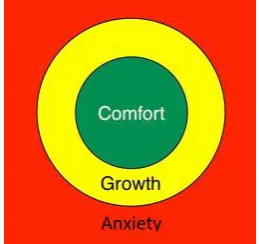
[image:3.595.69.199.491.613.2]Anxiety depresses an individual’s ability to process cognitively [11], creating a vicious cycle of failure [12]. Thus maths anxiety is acquired, and disabling; it is also treatable. Using the growth zone model (figure 1), learners can begin to distinguish between the feelings that occur when faced with a challenge that requires persistence and perseverance [13] with initially uncertain results (growth zone), and those that arise when a threat to well-being is perceived (anxiety zone) when the anxiety interferes with thought and needs addressing before trying to do any more maths.
Figure 1: The growth zone model
The problem is that teachers with maths anxiety are being asked to teach students who also have maths anxiety, without the skills and training to support their students or themselves. Maths anxiety in teachers is associated with lower self-efficacy in mathematics teaching [14], transmission of more maths anxiety to students [7] and teachers who expect students, especially girls, to find mathematics difficult [15] resulting in teachers having low expectations and, rather than offering students challenge and development, they give them rules and routines, encouraging expectations of “do this and you will pass the exam”.
Final Paper Submission Deadline: October 11th, 2017. (included) (*) Conference Dates: Seville (Spain), November 16th-17th-18th, 2017.
mathematical resilience in their learners. Mathematical resilience has been developed to describe a positive stance towards mathematics whereby learners develop approaches to mathematical learning which help them to overcome the affective barriers and setbacks that can be part of learning
mathematics for many people [1], and develop confidence, persistence and perseverance [13]. A resilient stance towards mathematics can be engineered by a strategic and explicit focus on the culture of learning mathematics within both formal and informal learning environments [1]. Thus, in 2015 a team developed and delivered a series of 1-day courses with first presentations running between January 2016 and March 2016. The course, “Teaching for Mathematical Resilience”,
developed by teachers who know how explicitly to develop resilient learners of mathematics, recruited participants who work as teachers of numeracy or mathematics in Further Education (FE) and work-based learning institutions in the Midlands of the UK. Our findings from this course concluded that many teachers would benefit from more than a 1-day introduction due to high levels of personal mathematics anxiety and increased expectations on teachers of mathematics in Further Education in England.
3 PLANNING THE FOUR DAY COURSE
Following the success of the one-day course [2], feedback, and with further funding from the Education & Training Foundation, a four-day CPD intervention was planned, adding three days on to the original one-day course, to further address the needs of maths teachers in the FE and skills sector. This paper, a sequel to a previous one written about the 1-day courses, discusses the development and evaluation of the 4-day course, developed by a team of mathematics educators (mostly FE specialists) and professional coaches with a background in teaching mathematics. According to one of the team members: “research shows that one-day courses tend to not have very much impact unless it’s followed up on”. Setting up a four-day course was risky: “It is difficult because we’d like everybody to come in for 10 day courses but in reality there is not enough money. Teachers are too busy and colleges won’t let them out, especially with the shortage of maths teachers.”
The aim of the four-day programme was twofold. First we wanted to support teacher-participants to develop their own mathematical resilience as they developed their own personal maths skills (e.g. in preparation to teach GCSE maths). At the same time, we aimed to equip the teacher-participants with strategies to develop a growth mindset and mathematical resilience in their learners and improve learner progression.
Each four-day course was co-led by an FE maths trainer and an experienced coach. This model of delivery has a history of successfully supporting maths anxious adultsto become skilled helpers for maths learners [4,16], whereas in this paper we focus on developing awareness of the role of coaching in teachers of mathematics. One team member reported: “The four day course was new to me because it had coaching.” And another said that it was “very interesting to look at a course that would look explicitly at [coaching]”.
The first day was largely the same as the day reported in [2] and included an introduction to mathematical resilience and the growth model, with a particular emphasis on maths being ‘ALIVE’: accessible, linked, inclusive, valuable, engaging [2]. Subsequent days utilized coaching approaches, focusing on different parts of the GCSE curriculum (number, algebra, ratio/proportion/rates of change, geometry & measures, probability and statistics) and each from the perspective of ALIVE maths. As with the one-day course, the course content was developed, amended and updated throughout the delivery period in response to feedback from teacher-participants and from the PD leads delivering the CPD.
Final Paper Submission Deadline: October 11th, 2017. (included) (*) Conference Dates: Seville (Spain), November 16th-17th-18th, 2017.
teachers’ own mathematical resilience; sharing ALIVE activities that teachers can use to re-engage learners with maths.
There were features in the structure of the programme that were in common with the one-day course:
Reflecting, sharing & discussing experiences of mathematics learning, to raise awareness of affective factors in mathematics learning and, in particular, how the behaviour of teachers can impact on learners’ attitudes, beliefs and behaviours.
Growth mindsets in relation to mathematics.
Mathematical resilience: as a construct to address affective barriers to learning mathematics
Growth zone model, as a framework for viewing responses to different kinds of learning situation, and to encourage reflection on the feelings and emotions associated with each zone.
Accessible activities, using:
o ‘low floor-high ceiling’ open problems that allow a variety of approaches at different levels
o artefacts and visual representations to develop understanding, rather than reliance on just symbols
o meaningful contexts which encourage more intuitive approaches, rather than standard algorithms.
Exploratory questioning, to support learners’ perseverance with mathematical problem solving.
Reflections & action planning.
The data presented in this paper comes from two sources: written feedback sent in by PD leads who led the courses and post-course interviews with the FE maths specialist PD leads at the end of the courses.
4 RUNNING THE FOUR DAY COURSES
Three courses were run, each co-led by a coach and an FE maths trainer who had taken part in the team development of the programme.
4.1 Day 1
The team knew from experience that it was important to create explicitly a safe learning environment. The data shows that many participants had strongly negative prior experiences of maths and were worried about being ‘put on the spot’; also some were highly maths avoidant to the point of describing themselves as phobic.
The day started with groups of teachers being asked to look at a collection of numbers and sort them into ‘friendly’ unfriendly’ and neutral’; this was found to be ‘perfect as an introduction to the ideas of maths having an affective aspect’. Participants recorded their hopes and fears for the course: many hoped to find out about ways of engaging their learners; helping learners to overcome very negative feelings about maths; incorporating maths into lesson plans for students on vocational courses. Examples of previous negative experiences with maths included: not being able to understand what they were being asked and feeling inadequate, stupid, pressured, bullied or bored.
Participants were introduced to what we call Bruner’s ladder of accessibility (enactive–iconic– symbolic) and given a range of artefacts that can be used with students, including two-way look up tables and a ‘Toblerone’ ruler [2] to support teaching of fractions, decimals and percentages.
One PD lead commented on the planned course: “another thing that developed my confidence was returning to the fundamental concepts. I realised (with the help of concrete materials) some very basic things, such as that square numbers could be represented as squares. In fact multiple representations and analogies have been mind-expanding and essential to me.”
Final Paper Submission Deadline: October 11th, 2017. (included) (*) Conference Dates: Seville (Spain), November 16th-17th-18th, 2017.
cognition in the ‘red zone’. Participants “genuinely wanted to explore the concept of maths anxiety and resilience but also observed how the concepts applied to other aspects of their own lives”. From a team member’s feedback, “there clearly are a lot of people out there who have been really hurt by their early experiences with maths and may enjoy a deeper exploration” as suggested in Johnston-Wilder and Marshall [17]. It was interesting that one delivering pair reported: “Those who were more confident initially [with the maths] found it quite hard to work in an MR-building way in the group activities - a couple of them either wanted to teach by telling or just do it quickly themselves. [As course deliverers] we kept identifying this though and the reflections at the end of the day showed that a great deal of self awareness had taken place”.
As an example of a task being found engaging, most participants “seemed shocked to be interrupted so quickly from ‘4 fours’ as they were getting really stuck in’”. Exemplifying inclusion, one team member contrasted two activities saying: “The mathematicians felt uncomfortable with all the uncertainty and so the less mathematical [participants] had a chance to take the lead.”
4.2 Day 2
In the initial feedback, everyone reported that they had found something from Day 1 personally useful; most participants indicted they were already using some of the ideas and approaches. A variety of ingredients from Day 1 were mentioned in this context, but the idea of the growth zone model seemed to have made a particular impression; several participants reported telling colleagues, friends or family about this idea, as well as using the idea of growth mindset with students. Participants sometimes used the term ‘in the red zone’ spontaneously.
During Day 2, ‘participants often became very involved with the maths and didn’t want to be moved on’. One task in particular was found to be ‘a nice equaliser in terms of those who are maths confident and those who are maths reticent; everyone could have a go and the ‘mathematically confident’ weren’t necessarily either more confident or competent than anyone else. Using algebra tiles to work
on quadratic expressions such as x2 +3x+2 ‘provided different challenges – some of the more
‘mathematically confident teachers found it hard to connect with concrete materials’ which is an important finding as they are required to make maths accessible for their learners.
The PD leads thought the day went well and one pair reported: “it is evident that the [participant] group has bonded very well. This has contributed to the sense of a safe environment where mistakes and humour are welcomed. They really enjoy each other’s company.”
Another pair reported: “Lots of talking and laughter – a good start to the day. Likewise the 4 fours exercise was very inclusive. In reflections on their past week they all reflected on how they were already changing their practice within the arena of maths teaching but also outside of it too. This was very exciting to hear.”
Those participants who identified as ‘maths phobic’ presented as needing more personal attention regarding their maths skills. However, the leaders observed what they interpreted as “the participants appear to be relieved that they were being listened to”. One team member commented: “I think there is more to be explored regarding the growth zone model as the experience of many students
sometimes appears to be less about ‘panic’ but more about frustration, anger, irritation, impotence, isolation, withdrawal, resentment. Of course, for some panic is an accurate word”.
4.3 Day 3
Final Paper Submission Deadline: October 11th, 2017. (included) (*) Conference Dates: Seville (Spain), November 16th-17th-18th, 2017.
Whilst working on the ALIVE mathematical tasks, participants appeared comfortable with disclosing and discussing which zone they were in and several engaged in suggesting ways of adapting the tasks so as to make them more relevant to particular learners.
One task involved making pie charts and bar charts out of coloured sweets to represent the distribution of colours in each box. Another involved comparing box plots showing levels of maths anxiety in boys and girls in a class. One team member reported: “The ‘sweets’ activity went very well and was a great contrast to the box plot activity. The fact that the context for the box plots was maths anxiety made it interesting to participants. However, some participants found themselves in their ‘red zone’ and this gave an opportunity for the coach to give demonstration about how to support a learner out of the red zone through coaching.”
Sharing reflections at the beginning of the day evidenced the extent to which participants were adopting the ideas of the growth zone model and coaching techniques across their professional practice and personal life (one used a timing formula to prepare a roast dinner for Mothering Sunday!). All talked about seeing maths in a new way and experimenting with how to work with their learners. Great strides in self awareness were shown by a number of the participants. One team member reported a participant who said “we need to turn around learned helplessness”.
4.4 Day 4
The emergent coaching skills of teachers have a really important part to play in developing MR. As the PD leads were new to the course, one reported: ‘it wasn’t until the 4th week that we really made explicit the role of coaching in the classroom and the links between coaching, MR and best practice generally in maths teaching – so that what we were focusing on could be seen and understood in the wider context.” She went on: “Personally I loved delivering the course [as the maths trainer]. It was great to work with my coach and I learnt a lot about coaching. It was a treat seeing how the participants engaged with such enthusiasm with new ideas and gave them a go. Having such a rich mix of content meant that there was something for everyone – as can be seen by the end of course posters.”
Some participants reported giving their students more time to explain their understanding of the problem before saying anything. Others reported increased awareness of the role of mathematical discovery. According to one team member, whilst undertaking two of the activities: “participants took it in turns to coach one another. The participants engaged deeply and were reluctant to stop! All participants used trial and improvement. During the activity participants questioned and tested assumptions about the relationships … It was also a good demonstration of a rich task with multiple entry points and a variety of approaches to finding a solution. Very rich post-activity discussion.”
Another activity was found to illustrate well how the same thing can be seen differently by different people: “the participants frequently commented that they hadn’t seen it like that before”.
The PD leads delivering the courses found it a challenge to balance the needs for depth and breadth in delivery. One pair reported: “From a coaching perspective we really focused on the approach to take when students were attempting questions e.g. GCSE exam questions and the investigations in the morning. We explored the type of questions they could use, highlighting a need for balance between questioning and giving space to process information. Students will also need support in different ways and at different times. Therefore, considerations need to be made between using directive v non directive coaching. If we withhold the right amount of support when students are really struggling (believing that to be a coaching approach!) they will likely go into the very zone we are aiming to keep them out of. It is nuanced work and as with everything else we get better with experience and learn from our own mistakes.
We really emphasised the need to develop a coaching style to teaching in an organic way where the teachers are paying attention to what works and what doesn’t in each context. We were very keen that they did not go away with a dogmatic idea of what coaching is and isn’t. Coaching is simply about ‘unlocking potential’ and helping people succeed.
Final Paper Submission Deadline: October 11th, 2017. (included) (*) Conference Dates: Seville (Spain), November 16th-17th-18th, 2017.
5 EVALUATION
The impact of the course as perceived by the PD leads delivering was immediate, significant and sustained.
Individual participants showed increased acknowledgement of their own mathematics anxiety, and of the impact that their own anxieties and those of their students were having upon their students’ progress. This increased awareness affected the team members also: “One of the things I haven’t taken sufficient account of was the impact of maths anxiety on working memory.” The growth zone model was found to be an effective way of making explicit the difference between challenge and threat: “what a good way to view where the anxiety comes in but also where the growth comes in, so you’re going to be challenged a bit or you’re not going to get anywhere, but if you go too far then it is a bad thing so you try to push people and challenge them and support them but also make sure that they’re not drowning, and you do so explicitly.”
The explicit focus of the course on affective factors “really reached like a call with them in that it was
something that they haven’t thought about before”. Skills to help people manage the affective domain
were much appreciated: “[the teachers] are keen to help, they are so anxious to remove the anxiety to ease the passage for learners that their attitude has been ‘right let me show you, I can take tell you, I can do this for you, this is how you should do it. If you start from here, this is the way. … It might remove temporary anxiety but what it’s done is to encourage maths helplessness. So instead of building resilience in the learners by encouraging them to think about what they’re doing to move forward themselves, ... it has been much more tutor led instead of learner led. … and that has
encouraged maths helplessness”. Being a good listener, encouraging learners to become more aware of where to get support was appreciated as important: “I think the main one that people seem to pick on was that of the tutor stepping back and being less directive and letting the students support each other and take more responsibility for their own learning and feel empowered.”
A particularly pertinent observation came from the post-course interviews with the maths specialist PD leads: “I noticed that tutors who are confident in their own maths skills tend to encourage maths helplessness. And those tutors who are less confident in their maths skills tend to be passing on the maths anxiety and the abhorrence of maths generally”.
The presence and modelling of the coaches impacted on maths specialist PD leads as well as the participants: one team member said “although I thought about questioning techniques with students and ... not explaining things to them and ... getting them independent and doing thinking which obviously would create a good mathematician, I did not actually know how to do it. Apart from what I said, I just sort of intuitively developed myself. So I learned about coaching from working with colleagues delivering it”
As in all courses, there were a few participants who did not fully engage: “a little pocket of people who enjoyed the maths resources because they could see the value of ‘oh yeah that is great’ but they have not quite got to grips with the ideas of resilience, of accessibility. I think they maybe just won’t be interested in the theory … and ... the idea. I mean they were interested in ‘this is practical and I want something practical to do!’”
Feelings of maths anxiety and exclusion were normalised; the importance of emotions and talking about them was understood. The course offered “a real opportunity for tutors to talk in a structured way about the negative feelings that they themselves or their students have.” And what might be done. “I feel this is providing an outlet but also a solution.” “Teachers are always talking about a student being scared or being disaffected or being negative about maths … but it’s never in my experience been attacked so explicitly ...we are going to deal with this problem.”
Final Paper Submission Deadline: October 11th, 2017. (included) (*) Conference Dates: Seville (Spain), November 16th-17th-18th, 2017.
awareness of past experiences as a cause of difficulties with maths and that patterns of behaviour could be the result of personal safe-guarding. Participants reported ‘changing their [teaching] style, asking questions, getting learners to do thinking themselves with some support’. Participants also reported changed opinions and anxiety about maths.
Participants became aware that personal anxiety could be passed to students and also that by saying to learners things like ‘I don’t see the point of doing this’ ‘I don’t want to do it anymore than you do’ they were perpetuating the negative approach to maths. One participant said to a leader: “I realise now that I am a big part of the problem because of my attitude to maths that I pass on directly to the students. So I’m going to make sure I don’t do that anymore, but I’m going to adopt a positive
approach and look for the positive effects on learning maths.”
PD leads appreciated the advantage of making the affective domain explicit: “As I'm sure we all have, I've always looked at the anxiety and emotional barriers associated with maths when I've been delivering training - particularly with known vulnerable groups such as vocational trainers. This has been much more explicit since working on the maths resilience courses.”
PD leads continued to develop their thinking around the course: “In the MR courses I have not yet found the coloured cards to work particularly well in practice - fine in theory and discussion afterwards and the Growth Zone itself has certainly hit a chord - but I've found that people tend to forget about them and don't use them to reflect their feelings. Yesterday I was delivering a vocational vitaliser course ... During the course I talked about maths anxiety and the impact it had on brain function and we discussed being in the red zone and what it looked/felt like. I had put out just the red cards on the tables and suggested that they might like to use these if they felt themselves beginning to become anxious, uncomfortable or struggling too much. It worked really well - they felt much more able to use them and resulting discussion was very illuminating in terms of support required to get back into growth zone etc”
Another team member reported: “I feel it would be helpful to link in the guidance for developing maths resilience to wider guidance about best practice in maths education, e.g., formative assessment; Swan guidelines; OFSTED criteria for outstanding even …”. There is clearly more work to be done. But the team have evidence to suggest that a good start has been made. One team member reported: “I was at X last week and the staff were raving unprompted about the impact of their 4-day courses, and how effective the techniques had been. I don’t think they knew I was directly involved in it!”
6 CONCLUSIONS
Although there are always aspects of a course than can be improved by reflective practitioners, the overall impact of the project, as expressed by course participants who received it, and by the PD leads who delivered it, was very positive. Teachers’ awareness of negative past experiences as a possible cause of difficulty with mathematics was raised; teachers became aware of how patterns of behaviour such as avoidance and disruption may have developed as safe-guarding habits and how mathematics anxiety can be transmitted from teacher to student in a vicious cycle.
Teachers were supported to work through personal anxieties towards mathematics in a safe and collaborative environment, which included a professional coach, and to develop elements of personal mathematical resilience and awareness of the affective domain. Teachers developed an extensive range of tools, strategies and approaches to ‘take off the emotional handbrake’ of learners, to recognize and address anxiety, re-engage learners and build resilience. The tools included tasks designated ALIVE (accessible, linked, inclusive, valued and engaging); the strategies included coaching skills.
A common theme was just how much such a course was needed and appreciated by participants. The work is being further extended and developed through local mathematics teacher networks (Maths Hubs).
Final Paper Submission Deadline: October 11th, 2017. (included) (*) Conference Dates: Seville (Spain), November 16th-17th-18th, 2017.
introduce the growth zone diagram and develop a language for describing the experience of being in each zone
draw on wider experiences of growth and challenge, such as sport, climbing, walking trip, cooking ... and seek insight and parallels with maths
be explicit about maths capability being ‘like a muscle’ which can be developed through effort and perseverance.
agree class ground rules for safeguarding each other
introduce ‘Stuck Posters’ to promote different sources of support for learners (other than their teacher)
introduce Bruner’s ladder of accessibility (enactive-iconic-symbolic) and explore how new topics can be made more accessible
introduce a coaching model rather than just explaining the answer
encourage a narrative around each topic to make it more meaningful and accessible (Why is it important? What does it look like in everyday life?)
explore mathematical inclusion explicitly
encourage co-operation/shared responsibility for understanding.
It is important to reflect on the impact on a group of mathematics teachers who are less aware of the affective domain and to notice when the behaviour of the mathematically confident encourages maths helplessness in others. It is important to reflect on the impact of the mathematically anxious teachers who tend to pass on anxiety and abhorrence of mathematics. In working towards increased
mathematics resilience in the wider community, it seems important to have more courses such as the one described here.
REFERENCES
[1] Johnston-Wilder, S. and Lee, C. (2010). Mathematical Resilience. Mathematics Teaching. 218, pp. 38–41.
[2] Johnston-Wilder, S., Pardoe, S., Almehrz, H., Evans, B., Marsh, J. and Richards, S. (2016) Developing teaching for mathematical resilience in further education. In: 9th International Conference of Education, Research and Innovation, ICERI2016, Seville (SPAIN), 14-16 of Nov 2016. Published in: ICERI2016 Proceedings pp. 3019-3028.
[3] OECD (2013). PISA 2012 Results: Ready to Learn: Students’ Engagement, Drive and Self-Beliefs (Volume III), PISA, OECD Publishing. http://dx.doi.org/10.1787/9789264201170-en
[4] Johnston-Wilder, S., Lee, C. , Brindley, J. Garton E. (2015). Developing Mathematical Resilience in School Students who have experienced repeated failure. In Proceedings of 8th International
Conference of Education, Research and Innovation, Seville, Spain.
[5] Boaler, J. (2009). The Elephant in the Classroom: Helping Children Learn and Love Maths. London: Souvenir Press.
[6] Boaler, J. (2005). The ‘Psychological Prison’ from which They Never Escaped: the role of ability grouping in reproducing social class inequalities. FORUM. 47(2-3), pp. 135–144.
http://dx.doi.org/10.2304/forum.2005.47.2.2
[7] Beilock, S. L. Gunderson, E. A. Ramirez, G. and Levine, S. C. (2010). “Female teachers’ math anxiety affects girls’ math achievement”, Proceedings of the National Academy of Sciences, 107(5), pp. 1860–1863.
Final Paper Submission Deadline: October 11th, 2017. (included) (*) Conference Dates: Seville (Spain), November 16th-17th-18th, 2017.
[9] Nardi, E. and Steward. S. (2003). Is Mathematics T.I.R.E.D.? A profile of quiet disaffection in the secondary mathematics classroom. British Educational Research Journal 29(3), pp. 345–366.
[10] Tobias, S. (1978). Overcoming math anxiety. Boston, Massachusetts: Houghton Mifflin Company.
[11] Ashcraft, M. H. and Moore, A. M. (2009). "Mathematics anxiety and the affective drop in performance", Journal of Psychoeducational Assessment. 27(3), pp.197–205.
[12] Ernest, P. (2015). “The Social Outcomes of Learning Mathematics: Standard, Unintended or Visionary?”, International Journal of Education in Mathematics, Science and Technology. 3(3), pp. 187–192.
[13] Williams, G. (2014). Optimistic problem-solving activity: enacting confidence, persistence, and perseverance. ZDM. 46(3) pp. 407–422. doi:10.1007/s11858-014-0586-y
[14] Bates, A.B., Latham, N., & Kim, J. (2011). Linking preservice teachers’ mathematics self-efficacy and mathematics teaching efficacy to their mathematical performance. School Science and
Mathematics, 111, 325-333.
[15] Ramirez, G., Gunderson, E. A., Levine, S. C. and Beilock, S. L. (2013). Math Anxiety, Working Memory, and Math Achievement in Early Elementary School, Journal of Cognition and Development, 14:2, 187-202
[16] Johnston-Wilder, S., Lee, C., Garton, E., Goodlad, S., and Brindley, J. (2013). Developing Coaches for Mathematical Resilience. In Proceedings of 6th International Conference of Education, Research and Innovation, Seville, Spain 18-20 November, 2013, pp. 2326–2333.
[17] Johnston-Wilder and Marshall (2017).Overcoming affective barriers to mathematical learning in practice. Paper presented at IMA and CETL-MSOR 2017: Mathematics Education beyond 16: Pathways and Transitions Birmingham 10-12 Jul 2017.