COMPARATIVE EVALUATION OF ANTIMICROBIAL PROPERTIES
OF AQUEOUS AND ALCOHOLIC EXTRACTS OF TERMINALIA
CHEBULA WITH CHLORHEXIDINE AGAINST STREPTOCOCCUS
MUTANS AND ENTEROCOCCUS FAECALIS - AN INVITRO STUDY
1
Bhat Chetan, 2*Bethapudy Dinah Rachel, 3Patil Smita S., 4Chowdhary Shweta, 5Kunte
Sanket and 6Lakade Laxmi
1,4,6
MDS. Associate Professor, Department of Paediatric Dentistry, Bharati Vidyapeeth
Dental College and Hospital, Pune.
2
MDS (PG Part II), Department of Paediatric Dentistry, Bharati Vidyapeeth Dental College
And Hospital, Pune.
3
MDS. Assistant Professor, Department of Paediatric Dentistry, Bharati Vidyapeeth Dental
College and Hospital, Pune.
5
MDS. Professor, Department of Paediatric Dentistry. Bharati Vidyapeeth Dental College and
Hospital, Pune.
ABSTRACT
Backgroud: Dental caries is known to be one of the most widespread,
chronic infections affecting all ages and populations worldwide. The
plethora of oral microbial population (specially Streptococcus Mutans
and Enterococcus Faecalis) paves way for various endogenous
infections and plays a crucial role in polymicrobial interactions
contributing to biofilm-mediated diseases like caries and periodontal
diseases. Aim and Objectives: To evaluate the antimicrobial potential
of Terminalia Chebula against oral microorganisms namely S. Mutans
and E. Faecalis and to determine the zones of inhibition at 10%
concentration. Materials and Methods: The antimicrobial efficacy of
the aqueous and alcoholic extract concentrations of Terminalia
Chebula were tested against S. Mutans and E.Faecalis strains with
Chlorhexidine control using agar well diffusion method. Results: The results showed that it
Volume 8, Issue 9, 1387-1397. Research Article ISSN 2277– 7105
Article Received on 10 June 2019,
Revised on 01 July 2019, Accepted on 22 July 2019
DOI: 10.20959/wjpr20199-15559
*Corresponding Author
Dr. Bethapudy Dinah
Rachel
MDS (PG Part II),
Department of Paediatric
Dentistry, Bharati
Vidyapeeth Dental College
39.2±2mm and for Chlorhexidine 25.4±2mm. For E. Faecalis were with Aqueous extract
21±2mm, for Alcoholic extract 29.1±2mm, for Chlorhexidine 29.4±2mm. Conclusion: These
promising findings suggest the presence of antibacterial activity in Terminalia Chebula which
can be involved in the caries preventive and the treatment regime for the pediatric population.
Hence, this study paves the way to a safe and economical method of preventing dental caries
without side effects especially in developing countries like India where more has 50 percent
of the children’s parents cannot afford the dental treatment.
KEYWORDS: Terminalia Chebula, Dental caries, Antibacterial activity, Zone of inhibition.
INTRODUCTION
“Let food be thy medicine and medicine be thy food”
Hippocrates
Most of us would have preferred to take herbal home cure for minor ailments routinely in our
daily life because of the medicinal effects exhibited by them.[1] As herbal remedies have long
history of use, even today, in many parts of rural India, people use various herbal tooth
cleaning aides.[2]Dental caries is one such common oral bacterial pathology that is caused
mainly by Streptococcus and Enterococcus species.[1]Today, there is a need for improved
diagnostic and therapeutic procedures in dentistry as most of the school children and a large
proportion of adults in India especially and around the world have dental caries. The
incidence of multidrug resistant bacteria which is a manmade problem has inspired scientists
for the research on plant based antimicrobial agents especially in children.[3] Terminalia
Chebula of the family Combretaceae is a flowering evergreen tree which is native to India,
Pakistan, Nepal and China.[6] In addition to treating oral disease like gingivitis and stomatitis,
the dried ripe fruits have also been used in the treatment of asthma, sore throat, vomiting,
hiccups, bleeding piles, gout, heart and bladder diseases.[7] In view of these reported
medicinal values and also the plant being inexpensive and readily available, the present work
was carried out to evaluate the antimicrobial potential of T. Chebula against oral
microorganisms namely S. Mutans and E. Faecalis and to determine the zones of inhibition at
10% concentration.[1]
MATERIALS AND METHODS
Extract of dried fruit of Terminalia Chebula
Distilled water
Ethanol
Vernier Calipers
Brain Heart Infusion Broth.
Tested Microorganisms: The Microorganisms used in this study were Streptococcus Mutans
(MTCC 890) and Enterococcus Faecalis (MTCC 439).
Institutional ethical Committee approved the study.
METHODOLOGY
The total samples were divided into the following 3 groups
Group 1: 10%Aqueous extract of Terminalia Chebula
Group 2: 10% Alcoholic extract of Terminalia Chebula
Group 3: 0.2% Chlorhexidine Gluconate (Control)
A total of 36 samples will be prepared as under
12 samples will be prepared in each group
18 samples for each each bacterial strain
Preparation of Aqueous Extract
The dried fruits were bought from a taxonomist. After washing and air drying, they were
ground into a fine powder. The powder was weighed into 10g using a digital weighing
machine and stored in airtight sterile containers. Cold aqueous extract was prepared by
adding 100 ml of distilled water to the pre-weighed amounts of the powdered plant extract.
The constituents then were stirred thoroughly and soaked separately in 250 ml conical flasks
for 48 hrs at 4°C. Crude aqueous extract was prepared using a Whatman filter paper No.1.
Preparation of Alcoholic Extract: A 10g amount of pulverized fruit was separately soaked
in 100ml of Ethanol for 24 hrs. The preparation was filtered through a sterilized Whatman
No.1 filter paper. The preparation was freezed at 40c until further use.
Antimicrobial Assay
After procuring the strains, they were cultured on brain heart infusion broth. Agar well
diffusion method was employed in anti-microbial susceptibility testing. The whole procedure
is done under Laminar Air Flow chamber to avoid air contamination. Agar media (100 ml)
was sterilized in separate conical flasks, cooled and inoculated with 0.1 ml of the respective
test bacterial suspension. After thorough mixing, the inoculated medium was transferred into
sterilized Petri dishes. On solidification of agar medium, holes with a diameter of 6 to 8 mm
were punched aseptically with a sterile cork borer or a tip. Prior to the addition of the test
samples, wells were marked as for 10% aqueous extract, 10% alcoholic extract and 0.2%
Chlorhexidine (control) as designated by the groups. A (20–100 µL) of the antimicrobial
agent at 10% w/v was added to the respective wells. The inoculated bacterial plates were
incubated at 37°C and the diameter of inhibition zones were measured after 24 hr of
[image:4.595.146.450.429.683.2]incubation.[2]
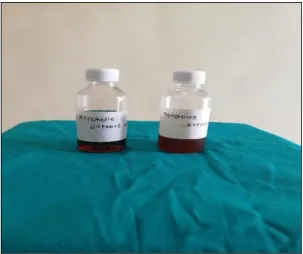
Figure 2: Armamentarium in Laminar Air Flow Chamber.
Statistical Analysis
The Intargroup analysis was done by Unpaired t test. There was a difference observed
between three groups and it is found to be statistically significant. Further, using Post Hoc
Analysis, significant difference was observed between Group A and Group B and Group B
and Group C for both the bacteria with a p value of < 0.001.But for E.Faecalis, no difference
was observed between Group B and Group C.
RESULTS
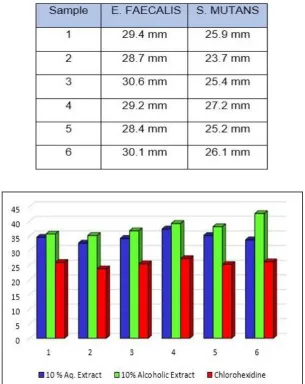
The results revealed that T. Chebula had a good potential to be an anticariogenic agent. The
results were varying for S. Mutans and E. Faecalis. The Zones of Inhibition were
comparatively greater for S. Mutans than E. Faecalis indicating that Mutans is more sensitive
than E.Faecalis to the plant extract. The Zones of Inhibition for S. Mutans at 10%
Concentration in the decreasing order were for Alcoholic Extract < Aqueous Extract <
Chlorhexidine. For E. Faecalis, the diameter of Zones of Inhibition was same for Alcoholic
Extract and Chlorhexidine followed by Aqueous Extract. The results imply that alcoholic
extract of T. Chebula is effective against S. Mutans when compared to E. Faecalis. This study
paves the way for further research where in higher concentrations of the extract can be used
for E.Faecalis to achieve the desired results as this is a pure natural product and has no side
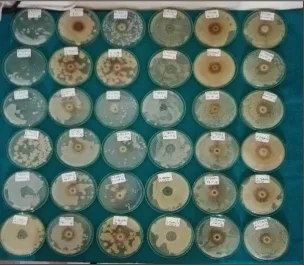
Figure 3: Zones of Inhibition with S.Mutans and E.Faecalis.
Figure 4: Total Samples.
DISCUSSION
S. Salivarius, S. Mitis, and S. Oralis have been identified as the first and most dominant oral
microbes to colonize the oral cavities of new-born infants. With the eruption of primary teeth,
the number and complexity of the micro-flora in the oral environment increase.[11] There is an
increasing tendency in the medical field to opt for therapeutic agents from natural sources and
this is also reflected in the management of dental caries, which is one of the oldest diseases of
[image:6.595.146.451.309.575.2]management of periodontal disease and dental caries. T. Chebula is one of the exceptions, in
that its extract was being used for the prevention of dental caries. This study was designed to
find out the efficacy of T. Chebula on dental caries causing pathogens.[10]
The emergence of multi drug-resistant bacterial and fungal strains has increased substantially
in the recent years and is posing a serious therapeutic problem worldwide. One of the
methods to reduce the resistance to antibiotics is by utilizing antibiotic resistant inhibitors
produced from medicinal plants. Researchers stated that plant extracts show target sites other
than those used by antibiotics, which will be active against drug-resistant pathogens.[12] As
rightly said by Hippocrates “Let food be thy medicine and medicine be thy food”, plants
contain phytochemicals such as alkaloids, tannins, essential oils, flavonoids etc., which have
pronounced antimicrobial activity and other properties. The phytoconstituents present in the
plants exhibit anti-cariogenic effects through various modes of action, including bactericidal
effects on oral bacteria, prevention of adherence of bacteria to the tooth surfaces, inhibition of
glucan production, and inhibition of amylases.[13]
T. Chebula commonly called as “Black myrobalan” is listed in the Ayurvedic Materia medica
as the King of Medicine. It is used as a rejuvenative drink, laxative (unripe), astringent (ripe),
and anti-helminthic, expectorant, carminative, appetite stimulant. Tannic acid, gallic acid, and
chebulic acid are the major constituents of its ripe fruit. The amount of tannic acid in the
aqueous extract of T. Chebula is 13% and few authors reported that tannic acid is
bacteriostatic or bactericidal to some Gram positive and Gram negative pathogens. Tannic
acid is well adsorbed to the hydroxyapatite of the tooth or to the salivary mucins,
alternatively it can bind to the anionic groups on the surface of the bacterial cells, which
results in protein denaturation and ultimately bacterial cell death.[15] According to earlier
studies, the aqueous extract of T. Chebula prevents plaque formation on the surface of tooth
by inhibiting sucrose-induced adherence and glucan-induced aggregation, two processes
which foster the colonization of S. Mutans on the surface of tooth.[16]
Mutans streptococci have shown to be highly associated with caries in humans. The
bis-biguanide chlorhexidine, which has been studied extensively for over 25 years represents the
modern medical model of caries treatment and has been referred to as a non-surgical
demonstrated that Chlorhexidine at low concentrations is a potent membrane active agent
against both gram positive and gram-negative bacteria. It abolishes the activity of the
phosphoenolpyruvate-phosphotransferase sugar transport system, and thereby markedly
inhibits acid production, in oral streptococci cariogenic bacteria in subjects with a high risk of
developing caries.
The study done by Nayak Sushma. S, Ankola Anil V. et al to determine the effect of
ethanolic extract of Terminalia Chebula on S. Mutans concluded that there is substantial
antimicrobial activity displayed by this herbal extract and can be used as an effective
anticaries agent.[18] Also, a similar study done by Lee Jongsung, Nho Youn Wan et al on the
Ethanolic Extract of T. Chebula (EETC) proved to be effective against the growth of oral
bacteria by reducing the induction of inflammatory cytokines and proteases, abolishing the
expression of PGE2 and COX-2 and inhibiting matrix damage. Thus, the study concluded
that EETC may be a beneficial supplement to help prevent periodontal disease.[19]
In the present study, Chorhexidine has been taken as control group. The Zones of Inhibition
of Ethanolic followed by Aqueous extracts of T.Chebula against S.Mutans were better than
the Chlorhexidine control which is a strong positive point for this study. Similarly for
E.Faecalis, the zones of inhibition for alcoholic extract showed equal efficacy with
Chlorhexidine control. The literature shows studies done with this plant extract on several
oral microbes. But, this is a preliminary study done on a combination of S. Mutans and
E.Faecalis which has been used extensively in endodontic research because it has been found
to be present in 38% of teeth with failed root canal treatment.
Table 2-Zones of Inhibition when treated with 10% aqueous extract.
Table 3. Zones of Inhibition when treated with Chlorhexidine.
Graph 2: Comparative Antibacterial Activity of Aqueous, Alcoholic Extracts and CHX
control with intergroup post hoc analysis on E.Faecalis.
Acknowledgement: Nil.
Conflicts Of Interest: There are no conflicts of interest.
CONCLUSION
Terminalia Chebula (Ethanolic Extract) has shown better antimicrobial property at 10%
concentration against Streptococcus Mutans and Enterococcus Faecalis when compared with
the gold standard Chlorhexidine. Anti-bacterial activity of these medicinal herbs, if translated
into clinical practice would lead to the development of indigenous, chemical free, cost
effective antimicrobial compounds which can be incorporated into various oral hygiene
formulations like dentrifices, mouth rinses, gum paints, irrigating solutions etc; However,
further in-vivo studies need to be conducted in order to validate the antimicrobial potential of
T.Chebula so that it can be clinically applied to the pediatric population.
REFERENCES
1. Aneja KR, Joshi R. Evaluation of antimicrobial properties of fruit extracts of Terminalia
Chebula against dental caries pathogens. Jundishapur J Microbiol, 2009; 2: 105–11.
2. Pratap Gowd, M. J., Manoj Kumar, M. J. Evaluation of three medicinal plants for
anti-microbial activity, 2012; 33: 423–428.
3. Petersen, PE, Bourgeois D. The global burden of oral diseases and risks to oral health.
Bull World Health Organ, 2005; 83: 661-9.
4. Oncag O, Cogulu D. Efficacy of propolis as an intracanal medicament against
5. Erturk O. Antibacterial and antifungal effects of alcoholic extracts of 41 medicinal plants
growing in Turkey. Czech J Food Sci, 2010; 28: 53–60.
6. Bag A, Bhattacharyya SK, Bharati P, Pal NK, Chattopadhyay RR. Evaluation of
antibacterial properties of Chebulic myrobalan (fruit of Terminalia Chebula Retz.)
extracts against methicillin resistant Staphylococcus aureus and trimethoprim
sulphamethoxazole resistant uropathogenic Escherichia coli. Afr JPS, 2009; 3(2): 025-9.
7. Kirtikar K.R, Basu B.D. Terminalia Chebula In Indian Medicinal Plants. Lolit Mohan
Basu Publication, 1935(2); 1020-23.
8. Nadkarni A.K. Terminalia chebula. In: Dr. K.M. Nadkarni’s Indian Materia Medica.
Bombay, Popular Prakashan Pvt. Ltd., 1976; 3: 1202-11.
9. Das B. Materia Medica of Ayurveda. New Delhi, Jain Publishers, 1991; 8.
10.Carounanidy U., Satyanarayanan R., Velmurugan A. Use of an aqueous extract of
Terminalia Chebula as an anticaries agent: A clinical study. Indian J Dent Res, 2007; 18:
152–6.
11.Law, V., Seow, W.K., Townsend, G. Factors influencing oral colonization of Mutans
streptococci in young children. Aus Dent J, 2007; 52: 93–100.
12.Prabhat, Ajaybhan, Navneet, Chauhan. A. Evaluation of antimicrobial activity of six
medicinal plants against dental pathogens. Report and Opinion, 2010; 2: 37–42.
13.Parimala Devi B, Ramasubramaniaraja R. Dental caries and medicinal plants-an
overview. J Pharm Res, 2009; 2: 1669–75.
14.Kumar M, Agarwal RCet al. Antimicrobial activity of aqueous extract of Terminalia
chebula. Int J Curr Pharm Res, 2009; 1: 56–60.
15.Jagadish L, Anand Kumar VK, Kaviyarasan V. Effect of triphala on dental bio-film.
Indian J Sci Technol, 2009; 2: 30–3.
16.Jagtap AG, Karkera SG. Potential of the aqueous extract of Terminalia chebulaas an
anticaries agent. J Ethnopharmacol, 1999; 68: 299–306.
17.Pallavi SK. Effect of Chlorhexidine on Mutans Streptococci and dental caries. Journal of
the Indian Association of Public Health Dentistry, 2011; 17: 678-83.
18.Nayak S, Ankola A. An invitro study to determine the effect of Terminalia Chebula
Extract and its formulation on streptococcus mutans. J Contempt Dent Pract, 15: 278-82.
19.Lee Jongsung., NhoYoun Hwa et al. Use of ethanol extracts of Terminalia chebula to