© AMPEX CORP. 1964
Special introductory offer: 1.8 microseconds for the price of a 6.
Introducing the Ampex RZ, up to 16,384 words
of core memory with a complete cycle time of
only 1.8 microseconds. And a price tag lower than
many 4 and 6 microsecond memories. The latest
in the highly successful Ampex R series (RVQ,
RQA, RQL, RVS), the RZ also offers a longer word
length: 8 to 56 bits. With no redundancy in drive
circuitry. Access time is faster: 650 nanoseconds.
And the RZ has a wide environmental range:
+ 10°C to +45°C. The RZ is fast, big and flexible
enough to be used as a main-frame memory, an
auxiliary memory or for high-speed bulk storage.
AMPEX
IN 1774, one year before the outbreak of the Revolutionary War, Great Britain banned the exportation of arms to the colonies. It was not until the war was under way that the colonists took measures to provide a weapons arsenal. In Virginia, the legislature solved the problem by establishing their own forge on the Rappahannock River. Here, the first
official American military pistols were manufactured and used throughout the colonies
in the fight for independence. - Today, solutions to the problems of defense are infinitely more complex and often directly related to the practical implementation of the computer sciences. - At COMPUTER SCIENCES CORPORATION, experience and craftsmanship are basic
capabilities applied to such areas as the design and development of a communication
system for the nation's space program; problem-solution in atomic energy research; weapon systems studies; war gaming, and analysis of bombing systems for supersonic
aircraft. - A few of csc's clients include IBM, RCA, Douglas Aircraft, Lockheed Missiles & Space Co., Jet Propulsion Laboratory, Litton Industries, Hughes Aircraft, Astrodata,
and the U. S. Government. - Write for a brochure describing csc services.
650 N. SEPULVEDA BLVD.
EL SEGUNDO, CALIFORNIA
WASHINGTON, D. C . • HOUSTON SAN FRANCISCO· LONDON
A SOLUTION IN DEFENSE
Officer's pistols carried by Major General Charles Lee of the Continental Army. Lock plates are marked "Rap Forge." The .62-caliber pistols are smooth bore with 8~" barrels.
Smithsonian Institution Collectioll May 1964
2
SDS MAGPAK TAKES THE GRIEF OUT
BEFORE MAGPAK To assemble a program
1. Mount paper tape and load assembler. 2. Run source program cards.
3. Rerun cards with source program. 4. Punch out object code.
S. Rewind paper tape. 6. Load object program. 7. Load tape subroutines. 8. Load data.
9. Execute the program.
Magpak is a magnetic tape system developed by Scientific Data Sys-tems specifically to fit SDS 900 Series software. It takes seven inconvenient, time consuming, error-causing steps out of small computer operation. With Magpak, budget-limited computer users can have large computer convenience and efficiency at half the cost.
SOS Magpak, a compact, low cost, automatic programming oriented magnetic tape system, is available with all SOS 900 Series Computers. It has the functional capability of four SOS standard IBM-compatible magnetic tape units at a fraction of the cost. Magpak consists of two
independently controlled magnetic tape drives mounted on a 10Y2" by 19" panel that fits any standard SOS 900 Series Computer rack. Each tape drive holds a self-contained, dual track, magnetic tape cartridge with
a
total capacity of more than 4 million characters. All Magpak controls and programming functions are identical to the controls and functions of standard SOS high-speed IBM-compatible tape units. Any program written for these standard units can be run on Magpak.Magpak system costs
A typical SOS Magpak system, including an SOS 910 computer with a 4,096-word memory, card reader: typewriter and a comprehensive soft-ware package (FORTRAN II, SYMBOL Assembly System, META-SYMBOL and MONARCH Monitor Routine plus a complete library of subroutines and utility programs) costs only $81,000 ($2,350 per month on lease). A competitive system with comparable convenience and
OF
SMALL COMPUTER
OPERATION
WITH MAGPAK
To assemble a program
1. Load single card deck containing source program and data.
2. Execute the program.
performance costs twice as much, yet operates up to ten times slower. inh(;lrent to paper tapes and cards. With Magpak, you simply load a punched card source program and execute your problem in a manner identical to operating a large, expensive computer sy~tem.
Magpak convenience saves money
In addition to its low original cost, Magpak greatly reduces operating
Ma.y 1964
For more information
If you would like additional information about SDS 900 Series Magpak systems, contact your nearest SDS sales and service office, or write on your letterhead for our Magpak Data Bulletin.
costs. Most small, scientific/engineering com-puters are used on an open shop basis. They are generally operated by high salaried tech-nical personnel with only moderate computer usage skills. This results in lost time and operating errors. With Magpak, both the time
required to operate the computer and the
S;\.
-It;;
900 SERIES/MAGPAK
opportunities for human error are greatly SCIENTIFIC DATA SYSTEMS 1649 Seventeenth Street, Santa Monica, Calif.reduced. And the easy to carry, easy to store, Sales offices in New York, Boston, Washington, Philadelphia, Huntsville,
easy to mount Magpak tape cartridges elimi- Orlando, Chicago, Houston, San Francisco. Foreign representatives: Instronics,
nate the wear, tear and sequencing problems Ltd., Stittsville, Ontario; CECIS, Paris; F. Kanematsu, Tokyo; RACAL, Sydney. CIRCLE 8 ON READER CARD
4
I
This is Computape reel #8741-11
: Reel #8741-11 was part
of an order shipped to the Engineering
Department of a leading University. There
it was selected at random and subjected
to a continuous wear test. In 268,853
passes no permanent dropouts were
ex-perienced.
@
Yes,
outstanding . . . But
another example of the longer wear
qualities of Computape. Longer wear, less
static build-up, greater reliability than
ever before.
Test
it
yourself. Against any other tape.
1+)
COMPUTRON INC.
122 CALVARY STREET, WALTHAM, MASSACHUSETTS
CIRCLE 9 ON READER CARD
DRTRMATION
volume 10 number
Staff
President FRANK D. THOMPSON
Publisher GARDNER F. LANDON
Editor ROBERT B. FOREST
Managing Editor & Art Director CLEVE MARIE BOUTELL
Assistant Editor EDWARD YASAKI
News Editor VALERIE ROCKMAEL
Washington Reporter
JAMES McCROHAN
Editorial Advisers
DANIEL D. McCRACKEN ROBERT L. PATRICK LOWELL AMDAHL
Technical Consultant DON B. PRELL
Production Manager
MARILEE PITMAN Circulation Mgr. ALGENE TRAINA
Eastern District Managers
FELIX CHARNEY JAMES M. MORRIS 141 E. 44th St., New York 17, N.Y. MUrray Hill 7-5180
New England District Manager WARREN A. TIBBETTS
112 West Haven Rd., Manchester, N.H., NAtional 5-9498
Midwest District Manager
JOHN BRENNAN 201 N. Wells St., Chicago 6, III. Financial 6-1026
Western District Manager
& V ice President
HAMILTON S. STYRON 1830 W. Olympic Blvd., Los Angeles 6, Cal., 385-0474
EDITORIAL OFFICES 1830 WEST OLYMPIC BLVD.
LOS ANGELES 6, CALIF.
Microfilm copies of DATAMATION may be ob-tained from University Microfilms, Inc., 313 No. First St., Ann Arbor, Mich.
the automatic handling of information
Feature Articles
Operatillg SYSICIIIS:
2n All IlIlrodllclioll, by T. B. Steel Jr.
2D For the H-800/1800, by Jacques Bouvard
:m For the IBM 1410/7010, by Nelson L. Barnett & A. Kenneth Fitzgeral, 42 For the B SOOO, by Clark Oliphint
46 The AF's Electronic Systems Division, by Robert B. Forest 52 Non-Decision Theory, by D. D. Bourland Jr.
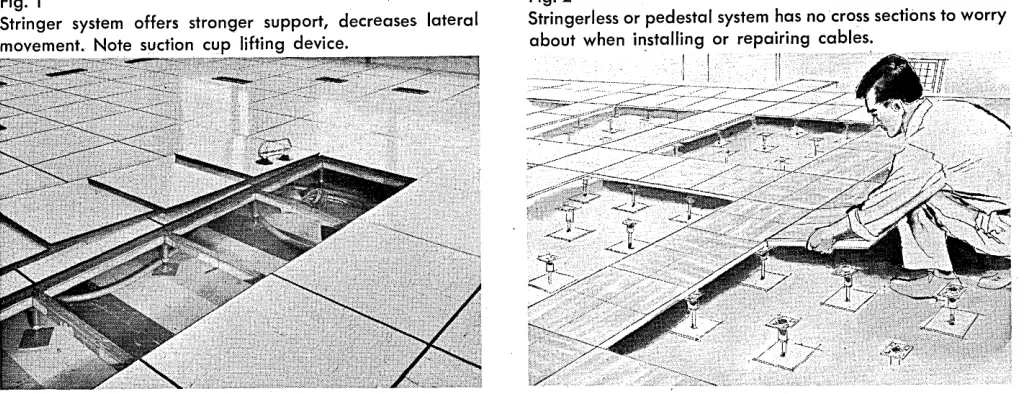
56 Floors for Computers, by C. T. Potts
63 A Federal EDP Study
68 Syste~1 360's Initial Impact, by Robert B. Forest 73 The RCA 3488: Random Access Cards
76 International DP Conference
77· Computing in Secondary Schools, by Fred Gruenberger
Departments
10 12 17 21 23 61 83 91 95 103
Datamation Calendar Letters to the Editor
Datamation in Business & Science Washington Report
The Editor's Readout People in Datamation News Briefs in Datamation
New Products in Datamation
New Literature in Datamation Advertisers' Index
THIS ISSUE -
46,800 COPIES
(over
Keeping a directive eye on traffic flow into, out of, and through a computer is the operat-ing system, featured this month with three descriptive articles preceded by a tutorial piece. Suggesting the various functions of these com-plex software systems is the cover, designed by Art Director Cleve Boutell.
Circulation audited by Business Publications Audit
Member, National Business Publications
DATAMATION is circulated without charge by name and title to individuals who qualify by our standards and are employed by manufacturers or users of automatic information-handling equip· "," ... " " .. , ment in all branches of business, industry, gov-ernment and the military. Available to others by subscription at the rate of $15.00 annually; single issues (when available) $1.50. Foreign subscrip-tions are on a paid basis only at· a rate of $25.00 annually. No subscription agency is au-thorized by us to solicit or take orders for subscriptions.
DATAMATION is published monthly on or about the tenth day of every month by F. D. Thompson Publications, Inc., Frank D. Thompson, presicolent. Executive, Circulation and Advertising offices, 141 East 44th St., New York 17, N.Y. (MUrray Hill 7-5180). Editorial offices, 1830 W. Olympic Blvd., Los Angeles, 6. Published at Chicago, III. Controlled Circulation paid
at Columbus, O. Form 3579 to be sent to F. D. Thompson Publications, Inc., 201 N. Wells St., Chicago 6, III. Copyright 1964, F. D. Thompson Publica-tions, Inc.
\NHICH
PAGE PRINTER
DO YOU NEED?
With several new and different lines of Teletype send-receive and
re-ceive-only sets, how do you decide which is best for you? While they
may seem alike at first glance, there are actually many differences.
4-row keyboard
Let's begin with the most obvious difference. The Model
32 send-receive set has a 3-row keyboard, like the familiar Model 28, but the Model 33 and 35 have 4-row keyboards. Why the shift to a 4-row key-board when the 3-row keykey-board has been standard for many years? To avoid the shift! That is, to avoid the need to shift in order to type numbers and common punctuation marks. Besides saving strokes and cutting down on errors, the 4-row keyboard is familiar to any typist.
Now, for the not so obvious differences. The Model 32
page printer operates on the 5-level, 7.50 unit code, but the Models 33 and 35 handle an 8-level, ll-unit message and data code which conforms to the newly approved American Standard Code for information interchange. Both the 32 and 33 units are available with a friction feed platen. The Model 35 can have either a friction or sprocket feed platen, the latter for use with multiple~copy business forms.
5- and S-/evel tape
The Model 35 has the exclu-sive "stunt box" that can per-form a wide variety of switch-ing duties includswitch-ing "editswitch-ing" incoming messages, as well as turning on and turning off un-attended Teletype equipment. The Models 32 and 33 are equipped with a simplified "stunt box."
What do these Teletype machines have in common?
Many things. They operate at 100 wpm; have pneumatic shock absorbers for smooth, quiet carriage return; all-steel clutches that engage at high, positive pressures to insure slip-free operation; and quieter nylon gears and pulleys that last longer and cut maintenance to a minimum.
What about optional features? The Model 35 offers
many modification kits to serve individual needs. Included
are vertical tab. horizontal tab, page feed-out, and a variety of different width platens for printing on business forms.
stunt box
Now, which machine should you use? Though your specific
needs have to be taken into consideration, the following will serve as a guide: Where the traffic ranges from normal to light, Models 32 and 33 are the most economical. The Model 35 is designed for handling a much larger volume of mes-sages and data, as well as offering increased versatility for on-line and off-line communications.
What are some typical applications? This Teletype
equipment is used to handle a variety of business needs, such as to link sales offices with customers, production plants with company headquarters, warehouses with dis-tribution outlets, purchasing with outside suppliers.
multiple-copy forms
All business forms can be typed on this equipment, such as invoices, payroll checks, per-sonnel records, sales orders, freight bills, tracers, and reser-vations. In addition, they can be used to gather information for sales reports, expense fig-ures, production schedules, and account facts.·
This kind of equipment is made for our parent company, Western Electric, Bell System affiliates, and others who require the utmost reliability at the lowest possible cost.
To obtain a new and informative brochure on the uses of the Model 32, 33, and 35 equipment, write: Teletype Corporation, Dept. 81E, 5555 Touhy Avenue, Skokie, Illinois 60078.'
TE,LETVPE
, IIlJI
~
Solution by simulation
CONTROL SYSTEM OPTIMIZATION ATTAINED ·IN
RECORD TIME WITH HYBRID SIMULATION
A new generation of problems hav'e emerged in recent years, exceeding the complexity and accuracy require-ments of those which had previously challenged equipment and personnel capabilities of major computing labo-ratories. Traditional computing tech-niques, i.e. analog or digital, were unable to handle them. New tech-niques and equipment were required. One form of hybrid computation is the association of a' general purpose analog computer with a complement of general purpose digital logic, mem-ory and conversion components. Its genesis was rooted in the desire to exploit the high-speed integration ca-pability of the analog computer. The consequent need to control and change the analog's program on the basis of previous results at correspond-'ingly high-speed, led to the adop-tion of parallel digital devices pro-grammed to exercise the necessary logic, control, timing and data storage functions.
Optimizing the Real Time and 1000 X Real Time
Simulations
Advanced Hybrid Computing Systems
EAI undertook in 1961 the develop-Optimizing response to pilot input ment of a hybrid system that would commands can significantly improve meet the requirements specified in its the performance of high-speed air- own and customer computer labora-craft. A recent study at the EAI Prince- tories. These advanced computing ton Computation Center confirmed tools extend the science of simulation this. An aircraft adaptive control sys- by: 1. enabling complete system simu-tem was simulated on a HYDAC 2000 lation. Onboard digital computers, hybrid computing system. actuators, etc., may be readily
includ-The analog portion of HYDAC 2000 ed within the simulation. Transport de-simulated dynamics of the aircraft both lay simulation, accurate function stor-in real time and at 1000 times real time. age, multi-variant function generation, A reference model representing the partial differential equation solution idealized aircraft response was also and other complex functions and cal-simulated at 1000 times real time. The culations are now practical. 2. digital portion of the computer made increased simulation laboratory effi-an efficient multi-parameter search ciency. logic control, high-speed iter-through a decision making sequence ative techniques permit automatic pa": accomplished with programmed logic rameter search, optimization, stability
elements. 'studies, parameter sensitivity
analyz-For a given pilot command, the re- ing, etc.
sponse of the reference mode'l and EAl's series of integrated hybrid the actual aircraft were computed at 'computers includes: HYDAC 2000-high speed and compared. Gains in comprising the 231 R-1Z analog com-the control loop for pitch, roll and puter and the Series 350 digital oper-yaw were systematically varied until ations system; HYDAC 2400-compris-values were determined which gave ing the 231 R-1l, DOS~350 and the 375 ~ the greatest correspondence between (DDP-241 general purpose digital
~ these two high-speed systems. These computer.
~Ptimizedvalues
were determined~
-4;3
~
*
. The employment of such a hybrid '
~
53:>
~
__
~
compu.ting system significantly extends ~
y
the simulation capabilities of the mod-ern computing laboratory. It permits the actual "automating" of certain classes of problems and achieves im-pressive savings in computation time and engineering evaluation effort.
within 0.1 second after the pilot initi-ated his comman'd. The gain settings were then implemented in the, real time model of the aircraft. This proc-ess continued to occur with gain
val-~es being upped ten times a second as the input signals changed.
The study is described in EAI Appli-cation Study 3.4.5H, available on re-quest.
EA I
:LECTRONIC ASSOCIATES, INC., Long Brllnch, New JerseyFor detailed information on HYDAC 2000 or 2400 and their application, or for research support services avail-able at EAI Computation Centers, write today ..
ADVANCED SYSTEMS ANALYSIS AND COMPUTATION SERVICES/ANALOG ',COMPUTERS/HYBRID ANALOG-DIGITAL COMPUTATION EQUIPMENT/SIMULATION SYSTEMS/, SCIENTIFIC AND lABORATORY INSTRUMENTS/INDUSTRIAL PROCESS CONTROl SYSTEMS/PHOTOGRAMMETRIC EQUIPMENT/ RANGE INSTRUMENTATION SYSTEMS/TEST AND CHECK-OUT SYSTEMS/MILITARY AND INDUSTRIAL RESEARCH AND DEVElOPMENT SERVICES/FiElD ENGINEERING AND EQUIPMENT MAINTENANCE SERVICES,
CIRCLE 11 ON READER CARD
Learn
~hat
others say
about it
r
--._-_ .... _
... ---
--.-.--.---~----- --.. ---.. ---..
-.---(~(~
~)
, ,
One reason is that MAC Panel puts extra measures
of quality into the production of its Heavy-Duty
Computer Tape. And it's not just a white glove
treatment. It's white hat, coat and shoe covers
as well. Overdoing it? Maybe by some standards,
but these extra steps help assure reliable tape.
performance. MAC Panel's gravure coating
pro-cess, MAGNE-FLO coating, is another step that
results in uniformly consistent signal output,
better wear characteristics. In short, greater tape
reliability. Your MAC Panel representative has
more facts, up his sleeve ... and testimonials, too.
MAC PANEL COMPANY
MAC~High Point, North Carolina
Representatives throughout. the United states,' Canada, Latin America and Europe
CIRCLE 12 ON READER CARD
The Friden* 6010 Computer is a small, solid state business computer. . It's priced low enough for many firms to make the first step to automating all routine office work.
As you see it above, the 6010 will cost you under $20,000.
Its capabilities are similar to larger computers. It is faster than any other computer its size.
The 6010 will accept directions from punched tape or cards, or from its typewriter keyboard. It prints data directly on forms and produces a punched tape for further data proc-essing. It offers random access stor-age and performs logical functions. It will do a variety of jobs.
Your own people will find the 6010
*A TRADEMARK OF FRIDEN, INC.
easy to use. Ifyo'u wish,'
we
will p~o-gram it for you,; .To switch from payroll to cost ac-counting, for example, just plug in a different program panel. .
The 6010's efficiency is so high, yet its cost so low, that companies with one overloaded computer may find this compact'machine tobe a wel-' come addition·:in· key operations, . such as q'ualitycontro,l; billing or
numerical controL·; , ~',
We offer
sales,'se~vice',and
instruc-tion throughout·the world. Call your local Friden Systems man to see how inexpensively"the 6010 Computer can~~t~~ftt:~~~~f~~f~"F
. •den
to F rid en, Inc.,fl
San Leandro, Calif.
A Subsidiary of The Singer Company
CIRCLE 13 ON READER CARD
10
DDD
[JDDDDDD
• Automatically Programmed Tools (APT) and numerical control tech-nology will be' made available to industry in a series of seminars. The first will be held on symbolic control technology, May 21-22, at the ITT Research Institute, Chicago.
• The Assn. of Management Consul-tants Inc. will hold its annual con-ference, May 21-23, at the Hotel Continental, Chicago.
• The National Telemetering Con-ference will take place at the Biltmore Hotel, Los Angeles, June 2-4.
• The Systems Engineering Confer-ence and Exposition will be held con-currently at the New York Coliseum, June 8-1l.
• The Univ. of Southern Calif., Los Angeles, will hold a short course on hybrid computation, June 8-19. Topics will include partial differential equa-tions, system optimization, sampled-data control systems and man-machine . systems.
• Five intensive courses on digital computers in real time, digital com-puter engineering, automatic program-ming, numerical analysis and auto-mata theory, sponsored by the Univ. of Michigan, Ann Arbor, will be held June 8-19.
• The Graduate School of Business of the Univ. of Chicago will conduct· a faculty seminar, sponsored by the Ford Foundation, June 22-July 31. Mathematical models and digital computers in business is the subject of the seminar.
• A course in Advanced Techniques of Programming Digital Computers, sponsored by Physical Sciences Ex-tension and Engineering ExEx-tension, UCLA, Los Angeles, will be held June 22-26.
• The Fifth Joint Automatic Control Conference, sponsored by the IEEE, will be held at Stanford Univ., Stan-ford, Calif., June 24-26.
• The 19th annual meeting .of the Association for Computing Machin-ery will be held at the Sheraton Hotel, Philadelphia, August 25-27.
BREAK THE SOFT\vARE PERFORMANCE BARRIER
When the chips are down and the only thing that counts is performance, call SPC, the one company that always delivers, the one company with total software competence ... over 100 computer specialists in systems, in real time, in software, in scientific applications.
That's why the tough problems go to SPC ... the big ones, the dirty ones, the ones never tried before. Performance-:-wise, SPC routinely cracks computer and engineering software systems assignments that would break the backs of giants.
CASE IN POINT: Douglas Aircraft Company, Missile and Space System Division, where the S-IVB stage of the SATURN vehicle is under development. In support of this massive effort, directed by NASA Marshall Space Flight Center, one of the world's most advanced and complex automatic checkout and ground data acquisition systems is now taking shape.
The systems use three CDC-924-A computers; continuously monitor over 800 analog, digital, and discrete data points; accept commands through an engineering-oriented automatic checkout and test compiler; initiate stimuli and provide automatic conditional test alternatives according to responses; permit automatic control of static test firing; control emergency shutdown and restart; and provide both a continuous running picture and quick-look analysis of test status.
SPC systems programming specialists, together with Douglas and Mesa Scientific Corporation systems engineers, are providing the advanced analysis program system design, and unprecedented systems programming perform-ance needed to get the big bird off the ground.,,,,:,,,, """""'>
Exceptionally sticky problem? Sure. But
sma~hirig.performanc~'}ec()rds
is as regular as clockwork at SPC. TotalCompetence where it really counts -
in,~ysf~ms,inreal
time, in~ofhyare,
in scientific applications -substan-tially reduces the conventional norm,{of"time and cost. ' , ' , """""""
In real time engineering control sy~tems;'comp'{~ter software systems";""'diita;;:'acquisition systems, multiple com-puter systems, simulators, process control systefns, informatidn systems, management systems, command and
control systems - wherever the systems and programming
pro~lems
are toughest - for complete projectrespon-sibility or expert on-site assistance - SPC outp~rforms all ,Oth~rs.
For your computer system problem, call SPC. SPC wants ydur business and a chance to demonstrate what expert knowledge and superior performance re~iiy'"'~~h~:,··'''''''''''''''
An Equal Opportunity Employer, SPC wants
moree~pert,
hard-charging people who live to outperform. If that'syou, if this is your kind of company and you'd-li.ke
tosharein~'ur,growth,
write personally to:J.
N. Graham,Vice President and General Manager. " ""'~,
SYSTEMS PROGRAMMING CORPORATION
1833 East 17th Street, Santa Ana, California. Phone: (714) 547·0069· Offices in Inglewood, Pasadena, Washington, D,C., Boston. An affiliate of Mesa Scientific Corporation
CIRCLE 14 ON READER CARD
[j
n n... t 1 t J .. , ~:>
.
(~
,,_II
JII
.J\.~~r&~' ~)
U
c;.v
0 0 0 0 0 0
0 0 0 0
0 0 0
0 0
knights in real time landSir:
As a Champion of the Underdog, I, Sir Modred, shall undertake the defense of the ogres slain by the gallant knight encased in Junior Steel ("The Fabulous World of Real Timeland" by T. B.
Steel Jr., March, p. 24). A sword moulded from what Copi calls "the Irrelevant Conclusion" should be easy to shatter. Consider the plight of the Naive Beginner who was attempting to relate system time to "real world" time. Our hero concluded that all systems are subject to external time constraints, simply because a job must be finished in a reasonable period of time. But surely our Naive Hero should have concluded that our Beginner expected there to be a continual series of time constraints which may even be clearly defined. By an "extremely clever act," the Humble Author rendered the Naive Beginner speechless.
\Vhat of the Practical Realist? He is unfortunately not a "common fel-low," for he is the one who follows the Holy Grail, PROFIT. Of course, the future is of great concern to the
sllccessflll Practical Realist. Here the lance of Specious Reasoning is shar-pened to a fine point. Is it true that if one says there are time constraints from the external environment, one implies it is hard to meet the speci-fications? Surely neither statement follows from the other. Perhaps the system can easily meet the external time constraints, even though these constraints are of great concern to the user.
How can we revive that slain dragon, the Knowledgeable Expert? This terrible creature was crushed by one irrelevant question: "Can we quantify the deadline and save the phenomenon?" The answer given is an incorrect "No," rather than a cor-rect "Sometimes no." But in those cases in which one can't quantify, perhaps one can find a dependence between deadlines, or perhaps one can plan for surprise deadlines.
I am glad that the "Sin of Sloppy Thinking" has not affected Sir Galahad. I agree with him in spirit, but not in practice, that deadlines imposed by
Hey, look me over ...
The Anelex High Speed Ribbon that is . . . and you won't overlook the results you get with your Anelex High Speed Printer when an Anelex Ribbon is on the job . . . more good copy, faster, longer.Ask for the details, price list and quantity discounts. Anelex Corporation, 155 Cause-way Street, Boston, Massachusetts 02114.
CIRCLE 15 ON READER CARD 12
A N
E LEX®
HIGH SPEED
RIBBONS
system designers are not important. But a rejection of deadlines imposed by the customer or user is tragic. This rejection is based on the assump-tion that the customer is a "liar" or perhaps only a "fool." Perhaps the user is a blind machine who is not interested in a "ton' of listings," but is ready to use the results, if presented in Braille.
LOUIS A. RAPHAEL Scientific Data Systems Santa Monica, California
Sir:
To restrict our thinking to the idea of a mere deadline seems very strange indeed. Rather, we must think in terms of computational rates, input rates and output rates that must be com-patible with the mechanical rates of a plant.
A definition of real-time systems incorporating the idea of dynamics accepts a computer and a business corporation as such a system . . . I am sure that any company that has had a computer shift the digits on a cheque several places to the left appreciates this coupling more than Mr. Steel.
JAMES D. KENDALL DCF Systems Limited Malton, Ontario, Canada
Sir:
From the taxonomical jungle of Real-Timeland, Humble Author Steel has brought back, alive and squirming, a definition of "real-time" that includes payroll applications and excludes air-line reservation systems. Such a defini-tion is contrary to tradidefini-tional usage, to say the least.
. . . Perhaps the proper approach toward definition would be to abstract from a sample of exemplary systems those attributes uniquely "real-time." Here are some attributes I find useful in telling the r~al-time systems from nonreal-timers.
1. Real-time systems are continuously operating systems. They cannot be arbitrarily interrupted without the. high probability of seriously degraded performance.
2. . .. are those.in which the current time (not just the date) enters as a factor into the calculations. They have to keep track of minutes and seconds, not just months and days. (An hour-counting system, then, would be a borderline case) .
3. . . . are those whose inputs are automatically collected from their sources and whose outputs are
matically distributed to their users. 4. . .. are those whose inputs cannot adequately be scheduled and whose outputs are constrained by response-time limitations (severe enough to make processing delays ~igh~y~ _lln~
desirable). ;
I should be very much surprised if,
from this short list of attributes, there could . not be constructed a useful definition, in high agreement with traditional usage, of that much abused term, "real-time."
CHRlSTOPHEH.
J .
SHAW System Development Corp. Santa Monica, Californianorbert wiener: in memoriam
Sir:
The death of Norbert Wiener in Stockholm will leave a void in the world that may not be assessed for many years .. He lived as prophets always do: ignored by most in his own country; venerated by his disciples; often ridiculed by the press and its readers; and rarely believed. Outside his own country, Wiener has been revered as one of the very few very great men of this century.
We, at home, who take some pride that we revered his genius and who have known his prophecies to be the truth, shall miss the great master. We feel keenly that we have lost his guidance, his inspiration and his wis-dom. But we also know that he will live as long as there is a civilization in which human beings can strive to achieve what he worked for: the human use of human beings.
ALICE MARY HILTON New York, New York
fortran VI
Sir:
Regarding your story on the IBM/ SHARE committee (April, p. 17) , on March 6, the SHARE Executive Board by unanimous resolution ad-vised IBM as follows:
The Executive Board has reported to the SHARE body that we look for-ward to the early development of a language embodying the needs that SHARE members have requested over the past 3~~ years. We urge IBM to proceed with early implementa-tion of such a language, using as a basis the report of the SHARE Ad-vanced Language Committee.
BEN R. FADEN
For the SHARE Executive Board North American Aviation El Segundo, California
May 1964
. CIRCLE 16 ON READER CARD
This
14
is
a new··product!
rFM-202 MAGl/fTIC fIlM M£MOR~
Fabri-Tek's 300-nanosecond thin-film memory system has been on the market
for well over a year now, so we refuse to call it "new." Some people are just
catching up to the memory system technology we offered last year, but they
still haven't caught up with the Fabri-Tek Series FFM-202 Magnetic Film
Memory System.
If
you have such applications as scratch pad storage, index registers, real time
data processing, or any of the new exotic data processing problems where high
speed with reliability is needed, then here is your answer .
• 300 nanoseconds full cycle .200 nanoseconds read or write only • 150
nanoseconds access time. Read only, write only, read-restore,
read-modify-write operating modes • Capacities up to 512 words of 36 bits each • Full
Fabri-Tek quality, realiability, and maintenance ease
Why wait for others to announce their new products when you can have the
answer to your high-speed memory problems today. Write, call, or wire Robert
E. Rife, Fabri-Tek Incorporated, Amery, Wisconsin. COngress 8-7155 (Area
715). TWX: 715-292-0900.
~ABR.II==TIEI~
CIRCLE 17 ON READER CARD
r' --, .. _ .. --_ .. _._... ...._-_._ ... _ .. -... ., ... _ ... _ ... _" ... .
I
Burroughs-TM
May 1964
.. they're
starting
to copy
us
Its e ems t hat i n
-p-r-o-v-i~n...:...g~t-o-~;::.::::---'---,business and government that
multi-processing really works,
we convinced the competition
too! They used to knock us. Now
they're knocking themselves out
~
..
trying to develop multi-proces- -(
sors of their own. But remember
this: only the Burroughs B 200,
, B 5000 and D 825 are right now
routinely running production
programs for their users, utilizing
effective multi-processing. The
' - - - !proof is yours for the asking.
Burroughs Corporation
Detroit, Michigan 48232
:'/'.~-
..
-~.'=:"
Ll 0 '"
Burroughs ....<
'0-)
CIRCLE 18 ON READER C~RD
The new
fully-militarized 500 RM Tape Reader
At last! ... a reader conceived, designed and built specifically for military applications - the tape reader that meets all applicable MIL specs including require·
ments for low temperature operation.
It's Photocircuits' new high-speed 500 RM ..•• the fully-militarized photoelectric reader that gives you
n~ading speeds up to 1,000 char/sec. and 8" reels for maximum data storage. The new 500 RM's exclusive printed-motor direct-capstan drive eliminates com-pletely all the brake and pinch-roller problems typical of today's hybrid or conventional units - giving you
accuracy plus reliability unequalled by any ordinary tape reader.
Details and specifications on the fully-militarized 500 RM are yours for the asking ... or, if commercial/in-dustrial applications are your interest, ask about Photocircuits' new high-speed 500 R. Write today to:
•
P~qfq~i{~~JJs
TAPE READER DIVISION
GLEN. COVE, NEW YORKCIRCLE 19 ON READER CARD
-I
-BO B6 ~2 ~8 )3 )7 .1SYSTEMS
ANALYSTS
PROGRAMMERS
. . . with Scientific or Business Computer ex-perience in the application of data process· ing systems for the collection, programming and dissemination of information at a high input·output level. Orientation in large Com-munications Systems desirable. B.S., M.S., or Ph.D. in EI ectrical Engineering, Mathematics, or Physics essential.
HIGHLY DESIRABLE ASSIGNMENTS IN
• PENNSYLVANIA • CALIFORNIA • MASSACHUSETIS • FLORIDA • WASHINGTON, D.C. • MARYLAND
• PROGRAM SYSTEMS
ANALYSTS
To develop requirements and prepare specifica-tions for design evaluation tests, to examine operation of experimental and production mod· els of the system. Design of system tests and special test operating procedures. Will particl· pate in live system testing of various complex systems. Will analyze test data and prepare documents which spell out results and con· clusions to be derived from system tests. These conclusions should cover adequacy of the de· sign logic and implementation of equipments, computer programs, and control manning.
• SENIOR PROGRAMMERS
Will be responsible for the overall planning and supervision of computer programs. Will assign, outline and coordinate work of programmers and write and debug complex programs involv· ing mathematical equations. Requires experl· ence in the operation and programming of large electronic data processing systems, such as the AN/FSQ-7 or 8, IBM 700 or 1400 series, RAMAC 1301, or Philco 2000 series.
• COMPUTER
PROGRAMMERS
To develop and/or analyze logic diagrams, translate detailed flow charts into coded mao chine instructions, test run programs and write descriptions of completed programs. Requires experience in the operation and programming of large electronic data processing systems, such as the AN/FSQ·7 or 8, IBM 700 or 1400 series, RAMAC 1301 or Philco 2000 series.
Direct Resumes in Confidence To Dept. 801 G. T. EVANS
ElTlployment Manager
PHILeo
A SUBSIDIARY OF FORD MOTOR COMPANY
TECH REP DIVISION
P.o. BOX 4730 PHILADELPHIA, PA, 19134
An Equal Opportunity Employer
DATAMATION
BUSINESS
&
SCIENCE
COMPUTERS, COMMUNICATIONS
IN HEAD-ON CLASH
ASCII,established as an American standard code
for information interchange last summer, may be
headed for trouble in its implementation cycle.
Although ASA's BEMA-sponsored X.3 has voted to
publish a proposed standard for high-order-first
transmission, low order can't be counted out yet.
And even if high order gains the standards nod,
it's doubtful that the federal government or the
communications industry would use it.
GSA has specified low order first for a big '64
Western Union communications system; DOD has
specified low order for its successor to FIELDATA;
the Bureau of Standards favors low order, as do
international communications interests. Even with
publication, no consensus for high order is foreseen.
But if it did pass, it might be a non-standard
standard.
FORTRAN VI
VERY MUCH ALIVE
The SHARE executive committee says its carefully
worded statement to IBM (see this month's letters)
on npl (new programming language, or F-6) was not
tentatively negative, but "as enthusiastic as we
could make it" after only three or four days of
study. "It's definitely a good language ... contains
nearly all we'd been asking for,"
say~one member.
The committee hurried its recommendation to IBM
so work could proceed; no floor motions were made to
shoot it down, despite some criticism resulting ...
maybe from confusion about the aims of npl, which
originated from desires to extend and improve
FORTRAN. Now it looks to SHARE leaders like something
quite different ... not a FORTRAN replacement, but
a language for scientific applications with data
processing overtones. They doubt it will prove
attractive to GUIDE, a user group with stronger
COBOL leanings.
The npl specs were made available to ASA's X.3.4
programming languages subcommittee, but even serious
preliminary standards study is months away. Although
SHARE says it did not consider the 'question of
standards implications in making its evaluation, the
implications loom large. IBM competitors must now
decide to push implementation of npl for their
machines
or wait to see its fate as the third
language for the 360. Decisions, decisions.
360 TRIGGERS ANNOUNCEMENTS,
NEW MARKETING GIMMICKS
Evidence of 360's impact was strong at the SJCC,
where several new machines were unveiled, including
3 C's DDP-224 and DEC's PDP-7. The 7, featuring a
1.75-usec memory, is program-compatible with the
PDP-4, sells for maybe 10% more. With a $95K price
ANELEX MODEL 800
RANDOM ACCESS DISK FILE
GIVES MORE FOR THE MONEY
Capacity, speed of access and reliability are provided at a cost which
makes Model 800 the most practical Memory System for virtually all
computers currently being built ... as well as those planned for the near
future. The eight disk system has a capacity of more than 200,000,000
bits. Access time averages 100 msec. Reliability is assured by Anelex's
reputation for excellence in producing peripheral equipment for the
data processing industry. The efficient design of the Model 800
substan-tially reduces size, weight and complexity of the file while providing
sim-plicity of operation and ease of maintenance. Write today for further
. information on how the
A N E L E
~
Model 800 can suit your
"""
design requirements.
8£ _ _ _
~ 155 Causeway St., Boston 14, Mass..VMIIOL all' QUAL.ITV
CIRCLE 20 ON READER CARD
18 CRTRMRTICJN
computer
careers
Our clients have present critical needs in the $9,000·$25,000 class for Managers and Seniors and men who can accept management reo sponsibility and professional growth.
EUROPEAN and
NATIONWIDE CHOICE
N.Y., N.J., MASSACHUSETTS, WASH· INGTON, D.C., BALTIMORE, PHILA· DELPHIA. HUNTSVILLE, HOUSTON,
DALLAS, FLORIDA, OHIO, UTAH, CALI FORNIA & OTHERS
Contact us you some expene.nce or interest in any of the follOWing:
o
Scientific Computation or An· alysis-For unusual Aerospace and Lunar programs. IBM 7000 type ex· perience & strong Mathematics oReal Time- Programmingo
Software Development-Lan· guages, Compi1ers, Assemblers, Monitors or Sub Routineso Operations Research/Analysis -Linear Programming plus Com· puter Applications
o
Systems-Planning, Design, Analysi.) of State of the Art Massive Data Handling Systemso
Programming-Large Scale Computerso
SYSTEMS DESIGN/DVMT-New Military on·line D.P. Systems work with sales/mktg/ customer engi· neeringPersonalized individual service by our technically trained staff helps you locate that unique position.
newest
newest
COBOL &
FORTRAN
Software Implementation &
'Techniques, Programming I
Analysis-$9-21,OOO
Write in confidence outlining Para· meters or call (collect) Mr. Albert
(Area Code 212) PLaza 9·1720
a·~
.
n
aLBeRT. neLLlssen. IOC.
leading Consultants to Management in the Data Processmg Field
510 MADISON AVENUE, N.Y. 22, N.Y.
CIRCLE 7S ON READER CARD
-
NTi
C
A
C
--
PR.,-10 19 28
37
46
55
64
73
-T
(
~
(
--
PR1 10 19 28
37
46
55
64
IlUSINESS L\ SCIENCE
Cr:::===="=======================================================::::::ll ..
SJCC SOCIETY GLEANINGS
May 1964
RUMORS AND
RAW RANDOM DATA
tag for a typical system, the 7 will compete with
the likes of the 224 ... SDS 920 and 930.
GE, meanwhile, privately pushed its new family,
the "600/compatibles," featuring new airborne
(A-605) and military machines (M-605, M-625), to go
along with the previously leaked 625
&
635.
GEhopes the 600 will help it capture a hunk of the
command
&
control market, estimated at 900
mega-bucks/yr by '65 and $1.2-billion by 1970.
Honeywell was busy. Besides demonstrating its 200
Liberator and discussing the new 1.75-usec-memory
300, the company set up a weather service. A recorded
message at a NYC phone number predicted sunny skies·
over Washington, "clearing fog." Earlier messages
had been more pointed: "Temperatures of minus 360
degrees in Poughkeepsie," falling due to a cold .
front caused by customers asking if the 360 was
designed to satisfy their needs or the
manufacturer's. Privately Honeywell says it will
be building 60 200's a month by the end of the year.
AFIPS re-elected its·officers (chairman is Don
Madden), decided to continue its search for a
voice-of-the-industry secretary . . . . ACM heard the
report of its committee of thoughtful persons, who
think the Association might want to change its
name, also start worrying about dwindling membership ..
Why? Fear that time sharing, other new techniques,
will automate the programmer out of existence. The
answer: an education program to upgrade applications
programmers to systems programmers . . . . The IEEE
merged the old computer committees of its founding
societies (IRE, AlEE) into a new one: Society for
Computey Sciences, headed by Keith Uncapher . . . .
ASA's X.3.4 subcommittee made a recommendation that
the U.S. representative to the forthcoming
international standards meeting recommend concurrent
and equal-favor development of ALGOL, COBOL and
FORTRAN standards . . . . The recently revised COBOL
committee may be revised again.
EA Industrial Group,NYC, has been formed to design,
manufacture and peddle industrial control systems.
The firm is also sale U.S. distributor·for the
computer products of England's Elliott Automation.
Now quoting Elliott computers in its bids, EAIG
plans to announce its own digital control computer
"soon." Now 10 people strong, the firm will
manufacture out of LA.
Another new firm, U.S. Magnetic Tape, Chicago,
is getting ready to market a new "super tape."
Digital Equipment Corp. says it's sold more PDP-6's
since the 360 announcement than before ... Ampex
will build an IBM-compatible nine-channel tape unit
which should be available this year. Look for all
else to follow suit . . . . In addition to
s~artingits own institute, CEIR will offer to market
products of information processing firms. The deal
would include sales promotion, advertising and PR,
would represent the industry's first nationwide
rep effort . . . . IBM is negotiating for contracts to
build two super 360's (mod 90), probably for the
AEC . . . . A DEC employee is said to have met a
minister in an-Australian pub who asked him his line.
When the American said computers, the minister said,
"My grandfather was in that line." That's right, he
meant Charles Babbage . . . . One 7090 user estimates it
might cost him $3-million at each of three
installations to reprogram for the 360.
M~et
a $41,000 multiparameter analyzer ... and general
purpose computer
By combining the PDP-5 computer and a dual channel
analog-to-digital converter, Digital has developed a dual-purpose machine that's priced lower
than many special-purpose analyzers-and less capable computers. Unique among analyzers, its
parameters are programmed in rather than built in. This way, parameters may be easily altered.
There is an ample core memory for a 56 by 64 matrix. And although each channel
has a capacity of 4096 counts, channels may be made double
length through programming to achieve a count capacity in excess
of 16 million. A built-in data channel permits a 12-bit
event to be entered in six microseconds. • As a computer,
the PDP-5 can be used for such functions as peak area
integration, spectrum stripping, curve fitting, and a wide
variety of other mathematical analyses. The machine has
a 55,555 additions-per-second computation rate, a 1024- or
4096-word random access magnetic core memory, 12-bit word
length, 24-bit arithmetic, two-megacycle bit input via built-in
data channel, external device program interrupt, input-output
buss for direct connection of as many as 64 external devices, .
and a complete software package-including programs to
perform standard one- and two-parameter data taking and data
display functions. The $41,000 price tag includes the PDP-5,
CRT display, analog-to-digital converter, keyboard printer,
paper tape reader, and punch. • If these facts have
whetted your appetite for more detailed information, we'd
be happy to talk to you about the PDP-5 at your convenience!,
CIRCLE 21 ON READER CARD
20
EQUIPMENT
CORPORATION
MAYNARD, MASSACHUSETTSlos Angeles • Palo Alto • Park Ridge, III. • Washington, D. C. • Parsippany, N. J. • Pittsburgh, Pa .• Ottawa, Canada • Munich, Germany • Sydney, Australia
THE SERIES 360:
SALES. BY OSMOSIS
NEW TARGET FOR GAO
May 1964
REPORT
No wild enthusiasm was kindled among Government
computer users by IBM's 360 announcement. The 18
to 24 month hiatus before any hardware will be seen
made for a somewhat soggy initial reaction. But
Government folk, like their commercial counterparts,
are well attuned psychologically to acceptance of
IBM's latest as the "logical next step."
One sidelight: The 360's modularity features may
in part answer cries of "oversold" that frequently
emanate from the General Accounting Office. It's
even possible that leasing, a bad word lately aroulld
Government agencies, might come back in style.
Will the transition to the 360 be automatic?
That's probably the way to bet, but since the 360
is such a departure from its immediate predecessors,
especially in software, a number of Government users
"are thinking radical thoughts about other
manufacturers. "When the time comes to turn in our
7094," noted one astute Federal computer shop
operator, "our operating continuity will be
disrupted in any event by the 360, so we may just
as well look over what the other manufacturers have
got to offer. Maybe we'll find a computer that'll
do our job better,."
The openminded approach, however, is likely to
be confined to the more sophisticated
scientific-type users within the Government.
The General Accounting Office has focused its
gimlet eyes on the costs borne by the Federal
Government on behalf of Government contractors who
maintain large in-house computing complexes and bill
their costs back to Uncle Sam. Ordinarily the
expense involved in maintaining these computers is
buried in overall project costs, but GAO gumshoes
have been dredging up some of the fiscal facts. Big
dough is involved. People who ought to know say that
the amount of money spent on computers in this
fashion by the Government exceeds the amount it
spends directly for EDP gear,which places the figure
in the $700-million-annually ,ball park.
First large contractor to be tied to the stake
and baited on these charges in a GAO report was
Martin Marietta Corporation, at whose Aerospace
Division facilities GAO claims the Government will
be paying unnecessary costs of $7.7 million over a
five-year period, $13 million over a six-year period.
This, says GAO, is because Martin Marietta leased,
rather than bought, several oodles of IBM equipment.
"Nonsense," Martin Marietta has in effect answered,
but the Congressional watchdog agency remains
convinced it's on the trail of something big.
The GAO report also contains its usual
recommendation that the President establish a central
source, facilit"y, agency or §,o!!!gt1!ing for Government
computer acquisitions and their utilization. H. R.
5171 - the Brooks bill - meanwhile languishes in
Continued on page 101
If you're using
your telephone service
only for "people talk" ... you may be only half using it!
Once, business phones were strictly for people-to-people communicating.
Not so today. Bell System DATA-PHONE service has changed that. It has made it possible to speed volumes of operating data-payrolls, invoices, in-ventories-over the same telephone lines you use to plan a meeting or arrange a business luncheon. Combine DATA-PHONE transmission with your regular telephone service-and you achieve an inte-grated information-handling system that can help you save time, control oosts and. minimize paper-work throughout your operation.
One of our Communications Consultants will bring you all the details. Just call your Bell Tele-phone Business 'Office and ask for his services.
Bell Telephone System
Serving you
DATAMATION
D~
.
OV
EDITOR'S READOUT
May 1964
LEST WE FORGET
SEAC retired last month with all the fanfare befitting the last official public ap-pearance of a vigorous teen-age pioneer. Put to work at the National Bureau of Standards in 1950 (what were you contributing to computing then?), SEAC has since performed nobly, with dutiful precision - if not always with grace and elegance - in a wide range (perhaps not quite 3600
) of important problem
solving and information processing experimentation. SEAC graduates constitute a Who's Who of numerical analysis and computing. The machine helped in the development of linear programming . . . and the H-bomb.
The farewell party was fun. Old SEAC friends told stories that would have made a human retiree laugh and cry. Like the day they proclaimed a "Very Good Friday" because "SEAC can addl" The next Monday, said Dr. Ralph Slutz, they di'scovered "it couldn't subtract." This was corrected, as was the strange malfunctioning characteristic which 'could be resolved only by jumping on the wooden floor supporting SEAC. There was the day the typewriter ran out of paper. So the printout of prime numbers was recorded on toilet paper. To those who worked with the machine at all hours of the day, SEAC took on a human personality . . . female, of course. She became the "good old girl" who performed faithfully even though her adder was deSigned backward and upside down, whose weak joints sometimes made jiggling fatal.
Ida Rhodes, first studying the description of the machine, couldn't figure out the meaning of the Greek letter mu before the word "seconds." The week that was to be devoted to a study of a "scatter-brained scheme" stretched to three years, and a beautiful relationship with "that beautiful, precious, precocious SEAC . . . a little darling who performed beautifully from the start."
"Bewildered, bewitched and bothered" by what she called a miraculous birth, Ida felt it was "a mirage, a trick . . . that her senses were being duped. But," she added, "it has been for the past 15 years a most diligent, faithful and com-petent servant." And it taught her that the efforts of dedicated people can create what their senses tell them is impossible.
To this enchanted observer of SEAC's swan song, the ceremony underlined a couple of key ideas. John Todd, chief of the computer lab at NBS in SEAC's early days, stressed one of them when he pointed out that the first computer user was an engineer or mathematician. Today he is a bank manager. He described modern computing as a "mail order business," fit for "spades and shovels" . . . and added that "the best and most interesting work will be done with the mathematician close to the console."
Time-sharing and the remote console open a door to a closer relationship between man and machine than has been possible lately. But we doubt that it will ever approach the good old days. But if it allows the people with the problem to do some direct, dynamic, creative work without hours of coding or educating a programmer, it will be a step backwards in the right direction. The farewell party re-enforced another of our pet notions: that it's the people behind the machine who count. We learned that the bright, creative people who built, developed and tutored SEAC were especially warm human beings . . . not the stiff, learned stereotype egghead of popular legend. To these people -to the Sam Alexanders and Ida Rhodes' - the computing profession owes continuing gratitude.
Data processing is speeded up when source documents are used as input to activate· machines, whether by MCR, OCR, or punched cards. Extremely close tolerances in input documents are a 'must' for perfect results.
Moore forms are manufactured to serve as accurate input media for all types of data processing equipment. For example, Moore Tab Card forms are made with the
grain long, offering maximum rigidity along card length, affording greatest dimensional stability.
Moore MCR printing meets exacting ABA specifications for accuracy in reading-sorting operations. OCR forms made by Moore meet the highest standards for correct readings by all optical scanning equipment.
Moore precision products are the result of years of
•
Ie
experience in practically every type of form construction. 32 modern plants, close to you for service, have the most modern equipment, the most knowledgeable, personnel. The Moore man knows equipment and the proper form construction for each machine. Rely on him for recom-mendations on forms and forms systems to get the utmost from your equipment.
Ask the Moore man for suggestions- he can help. If you work with forms, we can show you how to make forms work for you.
'The right business form for every form of business'
Niagara Faits, New York Park Ridge, III. Denton, Texas Emeryville, Calif. Over 500 offices and factories in North America
MOORE BUSINESS
,FORMS~
OPERATING
SYSTEMS
by T. B. STEEL, JR.
D
When a group of computing old timers gathers'
together, the conversation often turns on some harrowing experience of console debugging. Viewed through the mists of eight or 10 years such ex-periences tend to take on a poetic character. One is led to the conclusion that only here is found true rapport 'be-tween men and machines;, only in this way is real comput-ing done. There is a key truth in this point of view and we shall explore it in a moment. Naive advocacy of this position, however, ignores an elemental fact of life. Scores of man-hours can be purchased' for the cost of one ma-chine hour.
Operating systems were born from this observation. The sole purpose of early operating systems was elimination of idle ti~e. Modern operating systems attempt a great deal more than minimization of idle time, and the history of the development of operating systems is largely
a
story of this changing philosophy. To see this development in perspective it is important to' keep in' mind the original problem. 'Even a casual observer could easily discern the primary sources of idle time in an environment where' the pro-grammer marched into the machine room with his card decks and listings, preparatory to an extended session of playing with the console keyboard. First, an inordinate amount of time was wasted whenever the machine hung up and the programmer scratched his head, trying to fig-,ure out what to do next. Second, nothing at all happened
-not even constructive thinking-when a job was done. The departing programmer had' to gather all his material and insure that nothing was left undone. The new user had to get himself and his material properly emplaced.1
1 It was during this hasty transfer of authority that the worst calamity
would occur-a dropped card deck (often unsequenced). If this deck
be-. longed to the oncoming' user, idle time mushroomedbe-. Paper tape has its virtues.
~ It certainly helped to cut down the time t~at the run light was off. It is
26
boon or
boondoggle?
The growth of problem size and the attendant increase of magnetic tape usage further complicated the problem of logistics.
The initial step toward a solution to this problem was obvious: get the programmer back to his coding sheets by hiring professional machine operators and instructing them to take a standard action on unanticipated machine stops. This helped by streamlining the logistics and elimi-nating head scratching at the conso]e,2 but even operators took a noticeable amount of time to remove one job and initiate another. The next step-automation of as many of the operators' functions as possible-is apparen!.today; in
Mr. Steel is a computer systems scientist in the Advanced Tech-nology & Research Directorate of System Development Corp., Santa Monica, Calif., and a senior research leader of the Information Processing Re-search staff. He;s particularly
conce~ned with applications of mathematical logic to dp theory. He is AFIPS rep to the IFIP TC-2 Programming
Lan-guage committee, and secre-tary of X3.4 Common Pro-gramming Languages subcom-mittee. He holds a SA and MA in math from U. of California.
problematical whether it really cut cost. To the author's knowledge no
study was ever made to see if the machine time saved was worth the cost
of the operators. It doesn't really matter because total machine time
avail-able had already become a problem by the time operators were widely employed.